
Beverages from scratch…

Wine

Wine is as old as civilization itself and it has a significant place in many ancient cultures. Many experts agree that wine probably dates to 6000 B.C., to Mesopotamia where wild vines grew in abundance. The popularity of wine eventually spread to Egypt, along the Nile Delta. Wine came to Europe with the spread of the Greek civilization around 1600 B.C. It was an important article of Greek commerce and Greek doctors including Hippocrates, were the among the first to prescribe it. The Greeks also learned to add herbs and spices to mask spoilage.

Starting about 1,000 B.C., the Romans made major contributions in classifying grape varieties and colours, observing and charting ripening characteristics, and popularizing the growing of vines and manufacturing of wines. As time progressed, the wealthy enjoyed the fruits of the vine. After the collapse of the Roman Empire, Europe’s wine industry was saved by the church as monks planted vines to provide wine for Mass. Before long, France emerged as a leader, with some of the world’s finest wines.

Did you know that an ancient Persian fable credits a lady of the court with the discovery of wine? This princess lost favour with the king and attempted to poison herself by eating some table grapes that had ‘spoiled’ in a jar. She became intoxicated and fell asleep. When she awoke, she found that she felt much more relaxed and stress free and wine was discovered!

Coffee

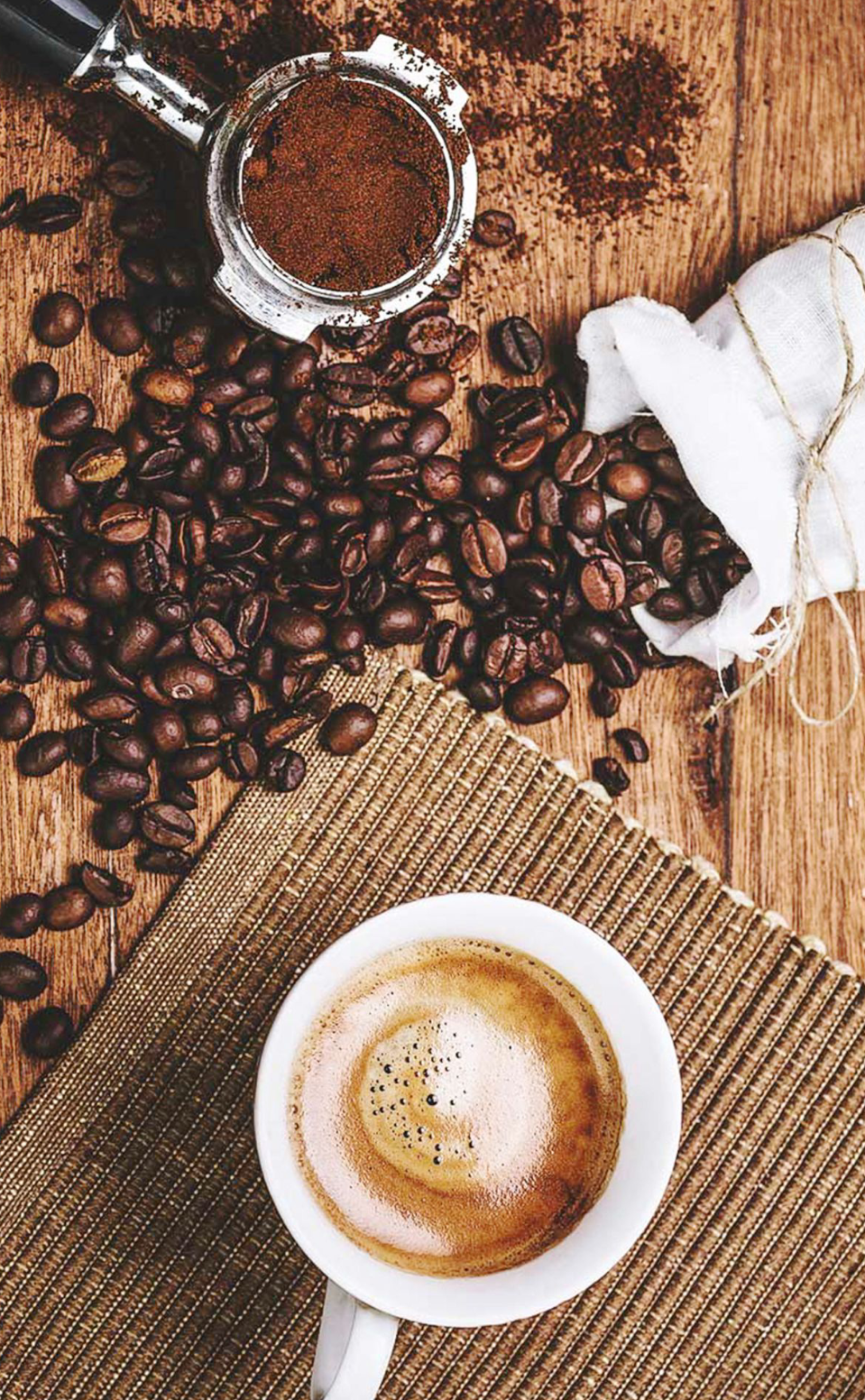
According to legend, an Arabian shepherd named Kaldi found his goats dancing joyously around a dark green leafed shrub with bright red cherries in the southern tip of the Arabian Peninsula. Kaldi soon determined that it was the cherries on the shrub that were making them act this way. After trying the cherries himself, he learned of their powerful effect. These were coffee berries and monks at a local monastery started using a drink made of these berries to stay awake during extended hours of prayer. And so, coffee was born.

The ancient Ethiopians made balls of crushed coffee beans and fat to give them energy during long journeys. The coffee we are familiar with originated in Arabia, where roasted beans were first brewed around A.D. 1,000. Later, coffee was brought to the rest of Asia from where it was taken to Europe by a merchant from Venice.

Did you know that the name coffee is derived from the Arabic term ‘gahwa’ which means ‘that which prevents sleep’?
Tea

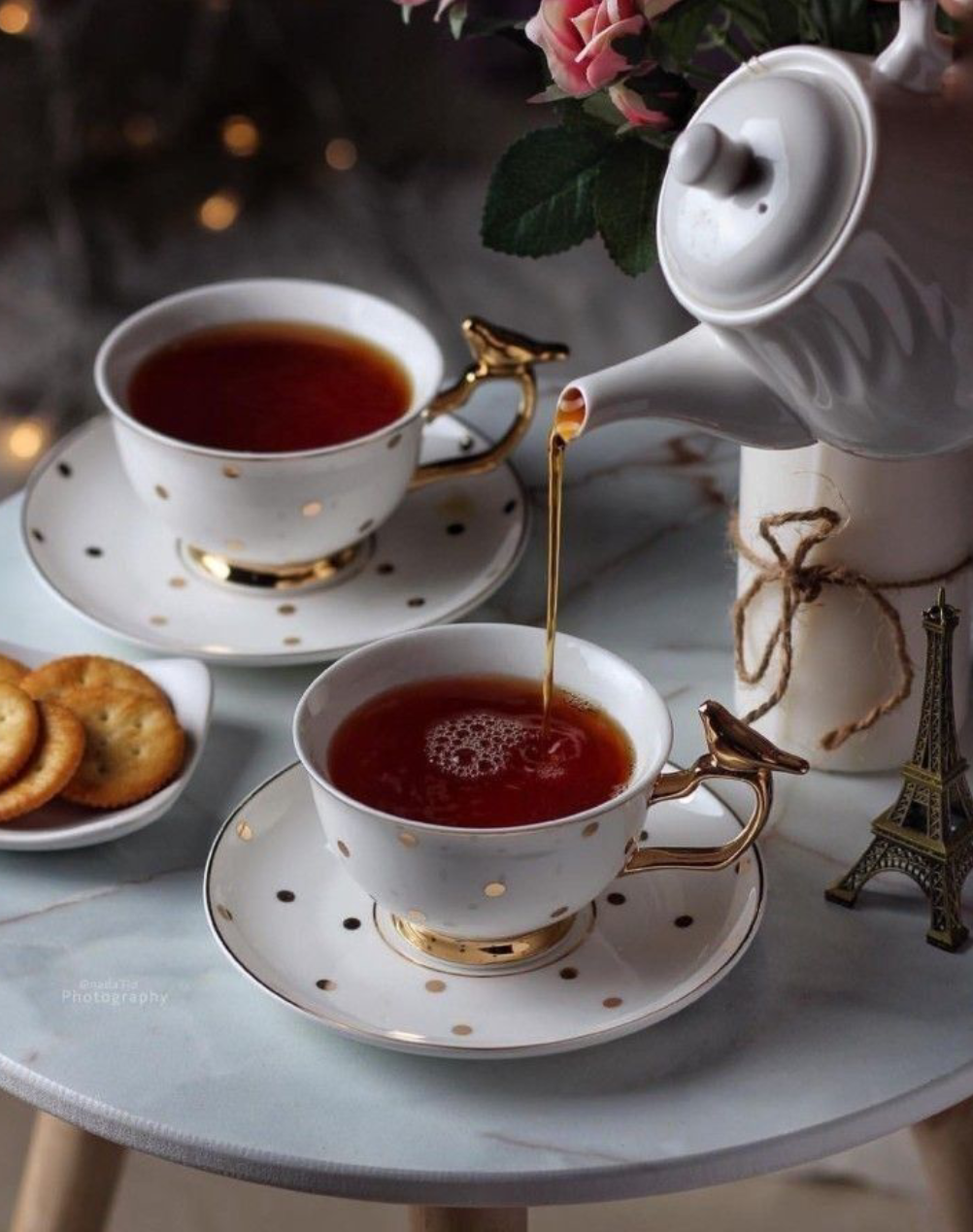
Did you know that tea is 5000 years old? According to legend, it was discovered in 2737 B.C., by a Chinese emperor when some tea leaves accidently blew into a pot of boiling water. The emperor was interested in the new liquid, drank some, found it very refreshing, and tea was created!

Tea consumption spread throughout Chinese society reaching into every strata. In time, drinking tea became part of the social and cultural life in the far East and India. Tea was introduced to India by the silk caravans travelling from the Orient to Europe. It was a Buddhist priest who brought the first tea seeds from China to Japan. In Japan, tea received almost instant imperial sponsorship, and spread rapidly from the royal court and monasteries to the other sections of Japanese society. Dutch traders and Portuguese missionaries brought tea into Europe and tea became an extremely fashionable drink in the court of Charles II of England. Tea has played a very important role in the history of England for it brought fortune to the British empire and at the same time, it was a tax levied on tea that led to the loss of her colonies in the New World.

Today, tea is grown on tea estates, and 70% of the tea we drink is grown in Sri Lanka, India, Indonesia, Kenya, Argentina and China. Amazing, we drink virtually the same tea today that the Chinese emperor drank the day he discovered it!
Carbonated soft drinks

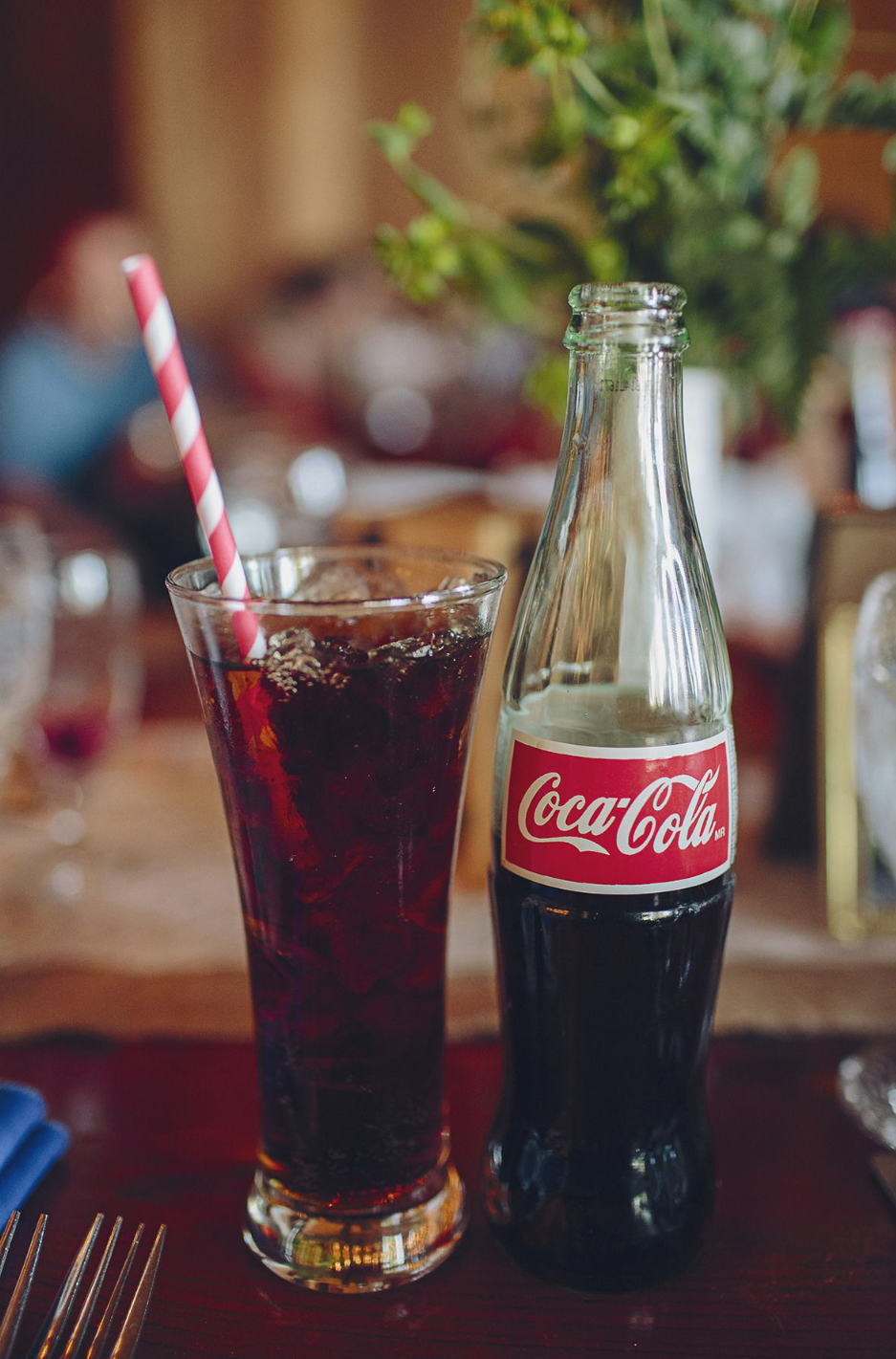
Do you love fizzy soft drinks? Well, even the ancient Romans loved to drink the bubbling waters of mineral springs and they believed that this water was very good for health as well. Later, scientists discovered that it was the carbon dioxide in the water that caused these bubbles and tried to find a way to introduce this gas into plain water to give the same effect. Thanks to the efforts of such scientists as Joseph Riestley and John Nooth, this feat was accomplished and carbonated water was available for sale by the end of the 1700.

The next step was to flavour this sparkling water. In 1784, citric acid was developed from lemon juice and by 1833, carbonated lemonade was on sale in England. Soon, other flavours were introduced and in 1886, Coca Cola entered the market and created soft drink history.
Thank you for reading. Have a nice day!🌼

Food from scratch…

Noodles

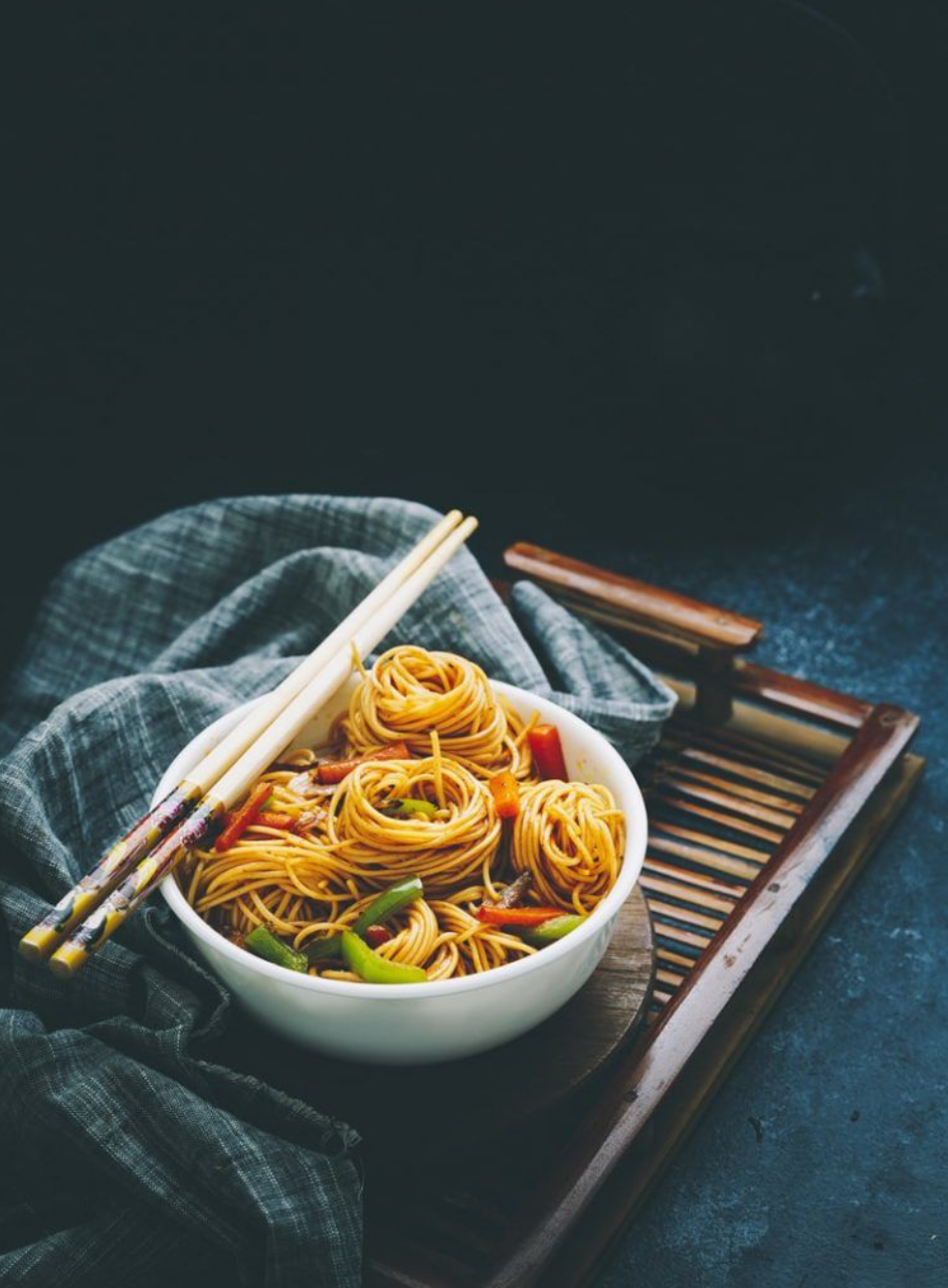
A 4000 year old bowl of noodles unearthed in China is the earliest example ever found of one of the world’s most popular foods. Noodles have been a staple food in many parts of the world for at least 2000 years. But who inverted the noodle? This is a hotly contested topic – with the Chinese , Italian and Arabs all staking a claim.

Ice cream

The first ice cream was probably made by chance when someone left some milk outside on a cold night and it froze!

Alexander the great enjoyed ice cream made with milk, fruit juice, honey and snow in the 4th century B.C. and the Roman emperor Nero ordered ice to ne brought from the mountains and combined it with fruit toppings. The Chinese also had a method of making ice creams and some believe that ice cream came to Europe from China.

It was Quintus Maximus, a roman general, who first wrote down a recipe for ice cream. Marco Polo brought the Chinese recipe to Venice after his visit to Peking. The king of England, Charles I is supposed to have offered his chef a handsome reward to keep his ice cream recipe a secret!

You favourite ice cream cone was invented by a pastry maker Ernest Hamwi in 1904, at the World Fair in St. Louis. He put a scoop of ice cream on his pastry when an ice cream seller in a neighbouring stall ran out of dishes- and it became an instant hit!

Chocolate

Cocoa, from which chocolate is made is said to have originated in the Amazon atleast 4000 years ago. The origins of chocolate can be traced back to the ancient Mayan and Aztec civilization in central America, who first enjoyed ‘chocolatel’, a much prized spicy drink made from roasted cocoa beans, the Aztecs believed that the cocoa tree was a gift from their God, Quetzalcoatl. According to legend, He had been banished by the other gods for giving the tree to mankind, but he promised to return to them one day.

The Spanish, led by Hernando Cortez, invaded Mexico in the 16th century. When the Aztecs saw Cortez, they believed their god had returned and welcomed him with a golden cup of chocolate! When Cortez returned to Spain in 1528, he loaded his galleons with cocoa beans and equipment for making the chocolate drink. Soon ‘chocolate’ became a fashionable drink enjoyed by the rich in Spain.

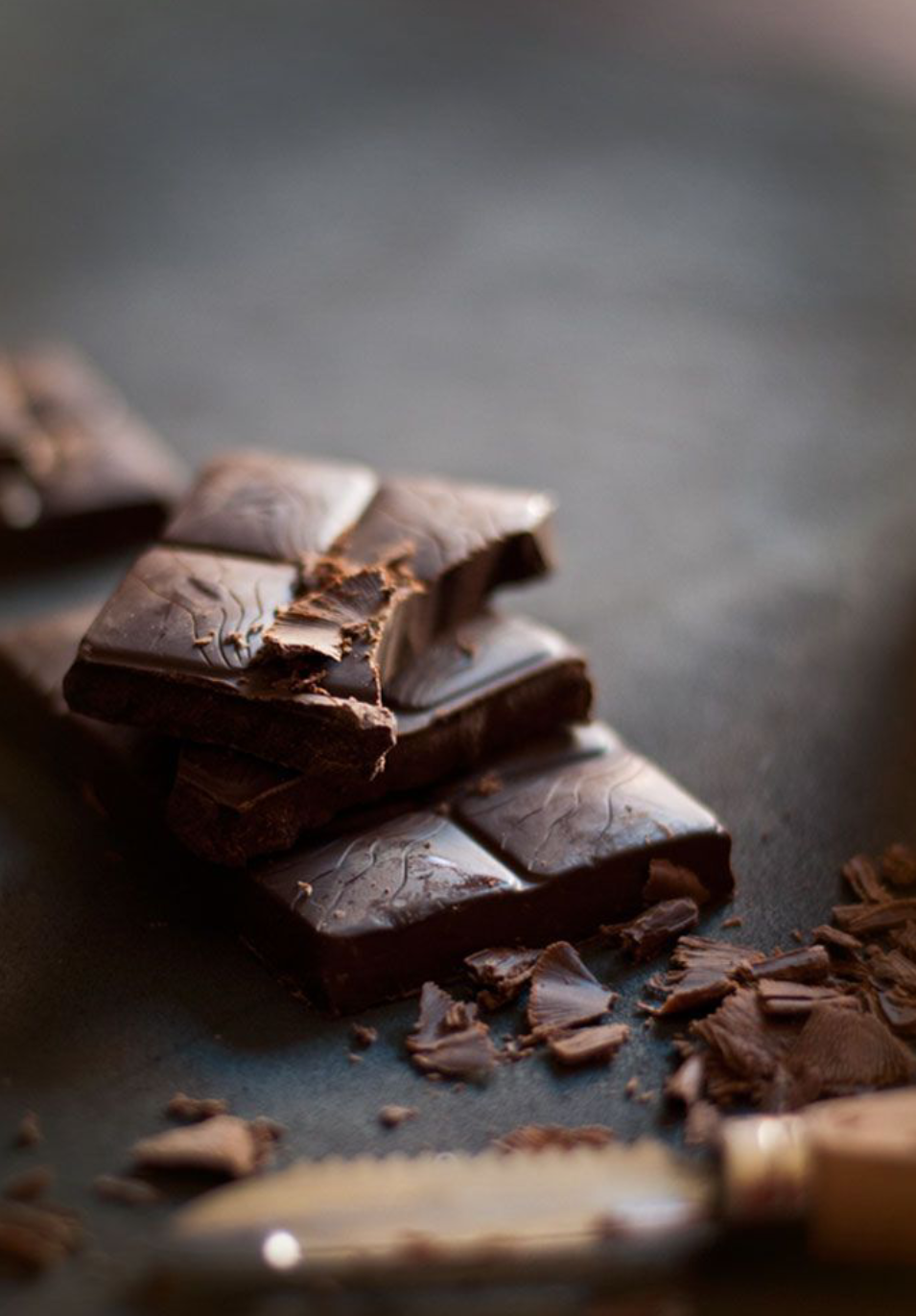
It was in 1847 that solid chocolate, as we know of today, was made by Fry and sons of Bristol by mixing sugar with cocoa powder and cocoa butter and your favourite treat was born.

Chewing gum

Thousands of years ago people chewed gum in it’s natural form. The most common ancient chewing gum was tree resin lumps, but people chewed various sweet grasses, leaves, grains and waxes also. The first commercial Chewing gum was made and sold in 1848 by John Bacon Curtis. He made a sticky, rubbery material from the spruce tree which could be chewed. In the 1860’s, Thomas Adams began selling chicle, a gum from the sapodilla tree of Mexico’s Yucatan desert.

Thank you for reading. Have a nice day!🌼
Lockdown or Unlock rumours: what’s next on the brink

a message about a complete lockdown is going viral on social media platforms. Reports that the National Disaster Management Authority (NDMA) had recommended the Centre to impose another lockdown from September 25 have gone viral on social media, along with a screenshot claiming to be of the NDMA’s order.

“In order to contain the spread of Covid-19 and decrease the mortality rate in the country, the National Disaster Management Authority, along with the Planning commission, hereby urges the government of India and directs the Prime Minister office, ministry of home affairs to re-impose a strict nationwide lockdown of 46 days starting from midnight September 25, 2020. Maintaining the supply chain of essential commodities in the country, therefore hereby NDMA is issuing a prior notice to the ministry to plan accordingly,” said the “order”.

PIB tweeted that the NDMA ‘order’ in circulation was fake.

“Claim: An order purportedly issued by National Disaster Management Authority claims that it has directed the government to re-impose a nationwide lockdown from 25th September. PIB Fact Check: This order is Fake. NDMA has not issued any such order to re-impose lockdown,” PIB tweeted.
Amid rising coronavirus COVID-19 cases in India, the government on Monday (September 14) rejected reports that another lockdown had been recommended from September 25 to curb the spread of the coronavirus in the country. The news was denied by Press Information Bureau in a post with a “Fake News” alert.

India was under a strict lockdown from March 25 to slow down the spread of the coronavirus. Prime Minister Narendra Modi had imposed a nationwide lockdown in March-end to contain the spread of the coronavirus. All activities were prohibited except essential activities during the lockdown period.

The coronavirus-induced restrictions and the lockdown measures have been eased in a phased manner since June.

The lockdown is being eased in a phased manner since June. The rumours of another lockdown come amidst a surge in coronavirus cases in the country. India is currently the second worst-hit country in the world and has recorded over 48 lakh infections. The country is also registering over 90,000 cases daily for the past few days.

In last few weeks many such fake news was revolving around the corner, stating different rules regarding the next phase being imposed in India. Most of the news was about the rules of unlock guidelines. However, the clicking part was some regulation regarding sectors that will be opened from coming days. There were no proper circular regarding what will open when what other portion of market will remain shut.

The Health Ministry had on September 8 issued a standard operating procedure (SOP) for a partial reopening of schools for students of classes 9 to 12 for taking guidance from their teachers on a voluntary basis.

The SOP follows Unlock 4 guidelines of Home Ministry which came into effect from September 1.

The health ministry issued the Standard Operating Procedures (SOP) for Skill training institutes, Higher Education Institutes conducting courses in technical programs requiring lab work to be permitted from September 21. As per the guidelines, the seating arrangement should be done in an order to ensure a distance of 6 feet between chairs, desks.

Union Minister of State for Health and Family Welfare, Ashwini Kr. Choubey shared a picture of the guidelines on his Twitter handle on Sunday. Prime Minister Narendra Modi said despite “unlock” measures to open up the economy, citizens must follow all precautions including masks and social distancing until a vaccine is found.

Arignar Anna-The Great tamil politician

Will is victory if Knowledge is Power

Anna,Tamilnadu

Conjeevaram Natarajan Annadurai (15 September 1909 – 3 February 1969), popularly Arignar Anna (“Anna, the scholar”), was an Indian politician who served as 1st Chief Minister of Tamil Nadu for 20 days in 1969 and fifth and last Chief Minister of Madras State from 1967 until 1969 when the name of the state of Madras was changed to Tamil Nadu. He was the first member of a Dravidian party to hold either post.

He was well known for his oratorical skills and was an acclaimed writer in the Tamil language. He scripted and acted in several plays. Some of his plays were later made into movies. He was the first politician from the Dravidian parties to use Tamil cinema extensively for political propaganda. Born in a middle-class family, he first worked as a school teacher, then moved into the political scene of the Madras Presidency as a journalist. He edited several political journals and enrolled as a member of the Dravidar Kazhagam. As an ardent follower of Periyar E. V. Ramasamy, he rose in stature as a prominent member of the party.

Hindi was first recommended to be an apt language for official purposes in India by a committee headed by Motilal Nehru in 1928. This move was opposed by people and politicians of Tamil Nadu, since they considered that it would make them second class citizens when compared to that of native Hindi speaking North Indians.

Madras Anti Hindi agitation, 1965

When India became a republic with its own constitution in 1950, the constitution had given special status to the Hindi language, which was to gain official status after 15 years in 1965. This move was regarded with anxiety by students in Tamil Nadu. Speaking of making Hindi as official language of India, Annadurai said It is claimed that Hindi should be the common language because it is spoken by the majority. Why should we then claim the tiger as our national animal instead of the rat which is so much more numerous? Or the peacock as our national bird when the crow is ubiquitous?. In view of continued threat to impose Hindi, the DMK held an open-air conference against Hindi imposition at Kodambakkam, Chennai in August 1960, which Annadurai presided over. He gave black flags to leading functionaries, to be shown to the President of India during his visit to the state. Sensing an uprising, Prime Minister Jawaharlal Nehru assured in the Parliament that English would continue to be the official language of India, as long as non-Hindi speaking people desire. DMK gave up the plan of showing black flags and Annadurai appealed to the Union Government to bring about a constitutional amendment incorporating the assurance.

On 10 September 1968 Annadurai travelled to New York for medical treatment and he was operated for Cancer in the gullet at the Memorial Sloan Kettering Cancer Center. He returned to Chennai in November and continued to address several official functions against medical advice. His health deteriorated further and he died on 3 February 1969. His cancer was attributed to his habit of chewing tobacco. His funeral had the highest number of attendees until then, as registered with The Guinness Book of Records. An estimated 15 million people attended it.His remains were buried in the northern end of Marina Beach, which is now called Anna Memorial

Bharathiyar-Epitome of Tamil Literature

Rowthiram Pazhagu

Mahakavi Barathi

Subramanian Bharathi also known as Bharathiyar (11 December 1882 – 11 September 1921), was a Tamil writer, poet, journalist, Indian independence activist, social reformer and polyglot. Popularly known as “Mahakavi Bharathi” (“Great Poet Bharathi”), he was a pioneer of modern Tamil poetry and is considered one of the greatest Tamil literary figures of all time. His numerous works included fiery songs kindling patriotism during the Indian Independence movement.

Born in Ettayapuram of Tirunelveli district (present day Thoothukudi) in 1882, Bharathi had his early education in Tirunelveli and Varanasi and worked as a journalist with many newspapers, including The Hindu, Bala Bharata, Vijaya, Chakravarthini, the Swadesamitran and India. In 1908, an arrest warrant was issued against Bharati by the government of British India lived until 1918.

After his father’s demise with help from his relatives, he went to Varanasi or Kasi to learn about the religious customs. There he was educated in all areas of Hindu spirituality and gained the reputation of being a rebel. Once his education was over, Bharathiyar came back to Ettayapuram to continue his life with his wife. He abandoned many of the customs specific to his community. He cut his hair short, wore a turban or Mundasu, and refused to wear the Punool a white thread across his chest. His actions of not abiding by community rules caused a lot of protests from people from his community. Some close to him even regarded him as losing his mind. Though he criticized customs, he was a staunch devotee of Kalli Devi.

After a few years, he moved to Chennai and continued to work in a magazine and wrote against the British. His health saw no signs of recovery and slipped into more distress. One day while feeding the temple elephant of Triplicane temple, the elephant pushed him away. He fell on the ground and sustained head injury. His weak health status and head injury combined made him bedridden. And he passed away peacefully.

His words are way ahead of his time, and he is a strong supporter of violence if needed. He attended meetings organized by V.O.C.People used to gather in his session to hear his passionate speech and his attacks on the British. He participated at the Surat congress conference, where he met Bala Gangadhar Tilak.

Bharathiyar started to work in a newspaper published from Pondicherry and distributed across Tamilnadu, which carried the seeds of freedom and sometimes violence. His health was also deteriorating during this period and his earnings too. During his stay in Pondicherry, he met many of the extremists who were taken up weapons to bring down British rule in India. One of the crucial people was Savarkar, who was one of the accused in the collector Ashe murder case. Bharathiyar wanted to learn a sword fight, but his health was not in good shape to accommodate it. He coined the famous phrase.

Vanchinathan-Proud freedom fighter

Vanchinathan was born in 1886 in Sengottai to Raghupathy Iyer and Rukmani Ammal. His actual name was Shankaran. He did his schooling in Sengottai. He married Ponnammal and got into a lucrative government job.

On 17 June 1911, Vanchi who was just 25, assassinated Robert Ashe, the district collector of Tirunelveli, who was also known as Collector Dorai. He shot Ashe at point-blank range when Ashe’s train had stopped at the Maniyachi Station, en route to Madras. He committed suicide thereafter. The railway station has since been renamed Vanchi Maniyachi.

The mastermind behind the assassination was Nilakanta Brahmachari who went around the Madras presidency in 1910 recruiting cadres and hatching plots against the British. In this venture, he was accompanied by Shankar Krishna Iyer, Vanchinathan’s brother-in-law, who introduced the men to each other. Along with a few other men, Nilakanta Bramhachari, Vaanchinathan, and Shankar Krishna Aiyar found an organisation called Bharatha Matha Sangam which plots the assassination of influential British men. On 17 June 1911, Ashe boarded the 9:30 am Maniyachi Mail at Tirunelveli Junction. With him was his wife, Mary Lillian Patterson, who had arrived from Ireland only a few days earlier. They had married on 6 April 1898, in Berhampore; Mary was about a year older than Ashe. They were on their way to Kodaikanal where their four children, Molly, Arthur, Sheila, and Herbert, lived in a rented bungalow. At 10:38 am, the train pulled in at Maniyachi. The Ceylon Boat Mail was due to arrive at 10:48 am. As the Ashes sat facing each other in the first class carriage, waiting for the Boat Mail to arrive, a neatly dressed man with tufted hair and another young man wearing a dhoti approached the carriage. The former boarded the carriage and pulled out a Belgian-made Browning automatic pistol. The bullet hit Ashe in the chest and he collapsed. The sound of the pistol shot was absorbed by the howling wind. 

The reason for the selection of Ashe as the target was his role in the suppression of Swadeshi movement led by V.O. Chidambaram and others in Tirunelveli and Tuticorin. His suppressive action also led to the collapse of the Swadeshi Steam Navigation Company. Fourteen persons were charged in the Ashe murder case, which came to be known as the Tirunelveli conspiracy case.

After the shooting, Vanchinathan ran along the platform and took cover in the latrine. Sometime later he was found dead, having shot himself in the mouth. The pistol recovered from him was empty without any bullets as he just planned to kill himself after killing Ashe and had no intention to hurt anyone other than Ashe.In his pocket was found a letter

I dedicate my life as a small contribution to my motherland. I am alone responsible for this.

The mlechas of England having captured our country, tread over the sanathana dharma of the Hindus and destroy them. Every Indian is trying to drive out the English and get swarajyam and restore sanathana dharma. Our Raman, Sivaji, Krishnan, Guru Govindan, Arjuna ruled our land protecting all dharmas, but in this land, they are making arrangements to crown George V, a mlecha, and one who eats the flesh of cows.

Three thousand Madrasees have taken a vow to kill George V as soon as he lands in our country. In order to make others know our intention, I who am the least in the company, have done this deed this day. This is what everyone in Hindustan should consider it as his duty.

I will kill Ashe, whose arrival here is to celebrate the crowning of cow-eater King George V in this glorious land which was once ruled by great samrats. This I do to make them understand the fate of those who cherish the thought of enslaving this sacred land.

I, as the least of them, wish to warn George by killing Ashe.


Vande Mataram. Vande Mataram. Vande Mataram

The railway station Vanchi maniyachi is named after the Tamil freedom fighter Vanchinathan and was the site of assassination of the British Collector, Robert Ashe. Today the station is a significant station in the Madurai railway division of the Southern Railway Zone, one of the six divisions established within the Southern Railway Zone others being Chennai, Tiruchchirappalli, Salem, Palakkad and Thiruvananthapuram.

MORNING WALK IS MUST

Ever wonder what motivates those droves of people who sneak out of their houses at the crack of dawn every day and set off briskly for their morning walk? Well, they are clearly on to a good thing because research shows that while exercise at any time of the day is beneficial; getting your cardio rhythms up and pumping early in the morning offers your mind and body some added benefits. When you wake up in the morning, movement might not be your first priority.

But starting your day with a walk — whether it’s around your neighborhood or part of your commute to work or school — can offer your body a number of health benefits.The best part about incorporating a morning walk into your daily routine is how easily it can be done. There is no expensive fitness center membership to be bought and no major rejigging of your schedule required; all it takes for you to get started on your morning walks is some motivation and a good pair of trainers.

You might argue that walking is walking, regardless of what time of the day you choose to do it; and you wouldn’t be wrong. However, working up a cardio sweat with a morning walk will up your metabolism for the entire day and keep you feeling energized and ready to take on anything. Also, taking the morning walk habit is easy because there are fewer disruptions to distract you from your daily routine. Studies also say that endurance levels are higher in the mornings than evenings so you will be able to push yourself more and burn more calories during a morning walk than at some other time of the day.

Morning walks may seem like a very easy form of exercise when you compare it to gym routines or more intensive forms of working out. However, studies have shown that morning walks are very effective when it comes to burning fat. In fact, low-intensity cardio like walking burns 60 percent of calories from fat. While high-intensity exercises may give you better fat loss results overall, morning walking can help get you back into shape by raising your heart rate and giving you a great cardio workout.

Besides being a great way to get some exercise right at the start of your day, morning walks also make you feel happier and set a positive tone for the rest of the day. There are a number of ways in which morning walk improves your mental well-being. For starters, the brisk exercise releases endorphins — happy hormones that give you a mood boost; the rush of energy revs you up for the rest of the day, and studies have shown that walking briskly  for half an hour to an hour has a significant positive effect on those suffering from depression.

Walking can also help protect your memory and improve your cognitive skills. The rush of oxygen and blood to your brain when you walk makes your brain alert and improves brain function. In fact, as far as brain function is concerned,walking has more significant benefits for people over the age of 60, preventing age-related memory decline and degeneration.

Regular morning walks to improve your overall health parameters and as a result, you may find yourself popping fewer meds than you used to. In fact, experts say that going for regular morning walks may make you live longer by a year. Walking improves blood circulation and oxygen supply in the body and it leads to better immunity.

Beauty of Kerela

KERALA: The god’s own country is one of the major tourist attraction as well as the best honeymoon destination in India. The land of God, Kerala is believed to be a gift of the Arabian Sea. The pride of Kerala are Gorgeous and Exotic Beaches , Breathtaking hill Stations,Enchanting waterfalls, Beautiful lagoons, Meandering rivers and Amazing natural scenarios. These colors are made Kerala as a land of beauty and paradise on earth. Kerala is also famous for its Ayurvedic treatments, high mountains, gorges and deep-cut valley, lush and evergreen rain forest and coconuts water and oil and foods items. Kerala houseboats are first and best preference of the tourist to enjoy their moments in beautiful lakes of Kerala. The Idukki dam is the first Indian arch dam in Periyar river Kerala and the largest arch dam in Asia. Shopping, museums and markets are also best way to explore Kerala. 

Reasons to visit KERELA

Beaches: Sea, Sand and Sun are the gifts given by the god, which makes Kerala the land of most delightful beaches in the world. Kerala Backwaters offers a series of beaches that are perfect for a relaxing time with your love one. Some of the best beaches in Kerala are Kovalam, Cherai, Varkala, Kappad, Muzhappilangad and Bekal. Watch the sunset along with the blue water beaches of Kerala is the best way to end your day and start a romantic night.

Natural beauty: Kerala the land of beauty is describes as the favourite child of nature, and famous for its breath-taking natural beauty. Major attraction are includes long coconuts tree, the blue mountain and rivers makes Kerala one of the greenest places ever seen. The beautiful milky falls of water splashing through the rocks should not be miss. Other attraction are Vembanad lake India’s longest lake, Sasthamkotta lake.

Hill Stations: There are many hill stations in Kerala which offers the best spectacular views of the nature. Munnar one of best hill destination in kerala and one of the famous hill station in India. The other beautiful hill stations are Ponmudi,Nelliampathi, Ponmudi and Wayanad Hill Station. These hill stations of Western ghats are one of the best place for trekking in India .

Wildlife: The Land of God, Kerala has a rich culture in Flora and Fauna. Kerala is the only state in India where highest number of Indian Elephants are found. The best place for wild animals are Silent Valley,Periyar national park and Tiger Reserve,which is situated high in the ranges of the western ghat.

Cuisines: After the enjoyments, foods are the next thing in mind. Kerala has a rich and unique flavor of foods like sea food , malayali cuisines and banana dishes. Kerala is famous for its spices and its spicy recipes of vegetarian and non vegetation food. Best cuisine of Kerala is Meen curry – Kerala style fish curry made in fried coconut.

Mountains of tea:It’s the plant behind another beverage that gives the area around the hill station town of Munnar, in east Kerala, its famously vibrant shade of green. In this part of the Western Ghats mountain region, the steep hillsides are covered with about 60,000 acres of tea plantations — an industry begun by the British, who established the plantations in the late 19th century.

India- Unity In Diversity

             
  The phrase is an expression of harmony & unity between dissimilar individuals or groups. It means “unity without uniformity and diversity without fragmentation.” The idea and related phrase is very old and dates back to ancient times in both Western and Eastern Old World cultures. 

The country located in South Asia is the second-most populous country in the world. It is bounded by the Indian Ocean on the South, the Arabian Sea on the Southwest & Bay of Bengal on the southeast. Pakistan, China, Bangladesh, Myanmar, Nepal & Bhutan being the countries around it. 

  The country is an absolute example to portray the concept of unity in diversity. Housing all the geographical varieties like sea, oceans, mountains, forest, desert, hills & plateaus. People of different caste, creed, religion reside here. A variety of dialects are spoken & so are the residing communities like The Hindus, The Buddhists, The Sikhs, The Jains, The Muslims & The Christians & tribals like the Garo, the Khasi, the Koles, the Nagas & the Bheels. 

  The sense of unity struck people’s minds, in the period of crisis. Thus, during the British colonial system, the Indians established a sort of unity to fight against their persecution & begin a struggle for freedom. The National anthem ‘Vande Mataram’ & the non-obedient civil disobedience act ‘Dandi March’ are some instances that instilled a sense of patriotism among the citizens thus had a wide influence over the freedom fighters then. A type of unity was also cited during the reign of Chandragupta, Ashok, the Mughals & the Pathans. 

 Thus the concept should be maintained at any cost. The Central Government must face the secessionists with an iron hand. The Government should do away with the laws that create discrimination & differences among different religious groups & linguistic communities. In this connection, a uniform code of rule & conduct should be encouraged. 

 A range of selection of dressing sense & food habits can be observed as one moves from one place to the other. For instance, the traditional dhoti worn by males in Northern India is draped in some way while in South India, especially in Tamil Nadu & Karnataka is worn as a “Lungi.” Similarly, women drape sarees in different styles varying with the states. Like, Mekhela Chador from Assam, Nauvari from Maharashtra, Kappullu from Andhra Pradesh & Athepourey from West Bengal. On the other hand, the Tribal community possesses their peculiar forms of dress & customs. 

Kappalotiya tamizhan-The tamil Helmsman

Vallinayagan Ulaganathan Chidambaram (5 September 1872 – 18 November 1936), popularly known by his initials, V.O.C. (spelled வ.உ.சி in Tamil), also known as Kappalottiya Tamizhan “The Tamil Helmsman”, was an Indian freedom fighter and leader of Indian National Congress. Founder of Swadeshi Steam Navigation Company in 1906 to compete against the monopoly of the British India Steam Navigation Company (BISNC) He launched the first indigenous Indian shipping service between Tuticorin and Colombo with the Swadeshi Steam Navigation Company, competing against British ships. Tuticorin Port Trust, one of India’s thirteen major ports, is named after him. At one time a member of the Indian National Congress, he was later charged with sedition by the British government and sentenced to life imprisonment, and his barrister license was revoked.

V. O. Chidambaram Pillai was born on 5 September 1872 in a vellalar family in Ottapidaram, Tuticorin District to Ulaganathan Pillai and Paramayee Ammal. When Chidambaram was six years old, he learned Tamil from teacher Veeraperumal Annavi. He heard stories about Shiva from his grandmother and stories from the Ramayana from his grandfather. He heard stories from Mahabharatha told by Allikulam Subramanya Pillai. As a child, he played goli (mkarbles), kabaddi, horse riding, swimming, stilt walking, archery, wrestling, silambattam and chess.

He learned English from a Taluk officer named Krishnan in the evenings. When Krishnan was transferred, Chidambaram’s father built a school with the help of villagers and appointed Aramvalarthanatha Pillai from Ettayapuram as the English teacher. The school was run by a priest at Pudhiamuthur. At fourteen, Chidambaram went to Thoothukudi to continue his studies. He studied at CEOA High School and Caldwell High School and in Thoothukudi at the Hindu College High School, Tirunelveli.

Chidambaram worked as Taluk office clerk for some time before his father sent him to Tiruchirappalli to study law. He passed his pleadership exam in 1894, returning to Ottapidaram to become a pleader in 1895.

In Chennai, Chidambaram met Swami Ramakrishnananda, a saint who belonged to Swami Vivekananda Ashram (monastery), who advised him to “do something for the nation”. Here he met the Tamil poet Bharathiyaar who shared his political ideology. The two men became close friends.In the 1890s and 1900s India’s independence movement and the Swadeshi movement, which confirms the politic parcel initiated by Bal Gangadhar Tilak and Lala Lajpat Rai of the Indian National Congress (INC), were at their peak. From 1892 Chidambaram was influenced by Tilak Maharaj and became his disciple. Along with Subramanya Siva and Subramanya Bharathi, he became a prominent spokesperson for the cause in the Madras Presidency. Following the partition of Bengal in 1905, Chidambaram entered politics, joining the Indian National Congress and taking a hardliner stance. He also presided at the Salem District Congress session.

Chidambaram moved to Kovilpatti and practiced as a lawyer. He rejoined the Congress party in 1927 and presided over the third political conference held at Salem. He said that he wanted to join Congress again because he noticed a remarkable change in the policies of Congress and was happy to note that the policies of which he did not approve were withdrawn one by one. However, after the Salem conference Chidambaram again severed his contact with Congress.

In 1929 he moved to Thoothukudi, where he spent his time writing and publishing Tamil books. By 1935, he had written commentary on the first book of the Tirukkural (Book of Virtue) and was published under a different title. However, it was only in 2008 that the complete work of his commentary on the Kural was published.

If you are interested check out the part two here.

Nethaji- Respected Leader

It is our duty to pay for our liberty with our own blood

Subash Chandra Bose,India

Subhas Chandra Bose, byname Netaji (Hindi: “Respected Leader”), (born c. January 23, 1897, Cuttack, Orissa , India—died August 18, 1945, Taipei, Taiwan?), Indian revolutionary prominent in the independence movement against British rule of India. He also led an Indian national force from abroad against the Western powers during World War II. He was a contemporary of Mohandas K. Gandhi, at times an ally and at other times an adversary. Bose was known in particular for his militant approach to independence and for his push for socialist policies.

The son of a wealthy and prominent Bengali lawyer, Bose studied at Presidency College, Calcutta (Kolkata), from which he was expelled in 1916 for nationalist activities, and the Scottish Churches College (graduating in 1919). He then was sent by his parents to the University of Cambridge in England to prepare for the Indian Civil Service. In 1920 he passed the civil service examination, but in April 1921, after hearing of the nationalist turmoils in India, he resigned his candidacy and hurried back to India. Throughout his career, especially in its early stages, he was supported financially and emotionally by an elder brother, Sarat Chandra Bose (1889–1950), a wealthy Calcutta lawyer and Indian National Congress (also known as the Congress Party) politician.

In 1921, Bose worked under Chittaranjan Das, a powerful politician in Bengal. He worked as the editor for Das’s newspaper, Forward, and later started his own newspaper, Swaraj. In 1923, Bose was elected the President of the All India Youth Congress and also the Secretary of Bengal State Congress. He also served as the Chief Executive Officer of the Calcutta Municipal Corporation, with Das as mayor of Calcutta. He was regarded as a vigilant and charismatic youth icon in the Indian National Congress. Bose was arrested countless times, and deported to Burma (Myanmar) in 1925 because he was suspected of connections with secret revolutionary movements. During the mid-1930s Bose travelled in Europe, visiting Indian students and European politicians, including Benito Mussolini. He observed party organisation and saw communism and fascism in action. In this period, he researched and wrote the first part of his book The Indian Struggle, which covered the country’s independence movement in the years 1920–1934.

With Japanese support, Bose revamped the Indian National Army (INA), then composed of Indian soldiers of the British Indian army who had been captured in the Battle of Singapore.To these, after Bose’s arrival, were added enlisting Indian civilians in Malaya and Singapore. The Japanese had come to support a number of puppet and provisional governments in the captured regions, such as those in Burma, the Philippines and Manchukuo. Before long the Provisional Government of Free India, presided by Bose, was formed in the Japanese-occupied Andaman and Nicobar IslandsBose had great drive and charisma—creating popular Indian slogans, such as “Jai Hind,”—and the INA under Bose was a model of diversity by region, ethnicity, religion, and even gender. However, Bose was regarded by the Japanese as being militarily unskilled, and his military effort was short-lived. In late 1944 and early 1945, the British Indian Army first halted and then devastatingly reversed the Japanese attack on India. Almost half the Japanese forces and fully half the participating INA contingent were killed.The INA was driven down the Malay Peninsula and surrendered with the recapture of Singapore. Bose had earlier chosen not to surrender with his forces or with the Japanese, but rather to escape to Manchuria with a view to seeking a future in the Soviet Union which he believed to be turning anti-British. He died from third-degree burns received when his plane crashed in Taiwan. Some Indians, however, did not believe that the crash had occurred, with many among them, especially in Bengal, believing that Bose would return to gain India’s independence.

Route Mobile IPO: After Subscription duration

The IPO, which is being sold at Rs 345-350 per share, is seeking a valuation of 29 times PE on FY20 basis (fully diluted). Analysts are positive on the issue and believe the IPO can offer listing pop as well as long-term gains.
Analysts are positive on the issue and believe the IPO can offer listing pop as well as long-term gains.

Route Mobile Ltd.’s initial public offering (IPO) was fully subscribed on the very first day of bidding as it attracted a large influx of retail investors oversubscribing their portion. The Rs 600-crore issue includes a fresh issue of Rs 240 crore and an Offer For Sale (OFS) of up to Rs 360 crore. It enters the market at a time when liquidity is abundant and IPOs are being welcomed with an overwhelming response, as is evident from the Happiest Minds Technologies issue which was subscribed 151 times. Route Mobile has already managed to collect Rs 180 crore from anchor 15 investors, before the issue opened yesterday.

Route Mobile provides cloud-communication platform as a service to enterprises, over-the-top (OTT) players and mobile network operators (MNOs). Its range of enterprise communication services includes application-to-peer (A2P)/peer-to-application (P2A)/2-Way Messaging, RCS, OTT business messaging, voice, email, and omni-channel communication.
The Rs 600 crore IPO by Route Mobile received 5 times bids so far on Day 3 of the bidding process. As per data available with BSE and NSE, the issue received bids for 6,15,32,960 shares by 11 pm on Friday, which was 5.05 times the total issue size of 1,21,73,912 shares.

The company has no listed peers. The proxy peers, which have a small presence in services offered by Route Mobile, are Tanla Solutions and Tata Communications. Continuous development of omni-channel digital communication offerings and innovative solutions focus on developer community program, service offerings through inorganic opportunities and growing presence in additional markets to serve clients locally augurs well with the company going ahead,” said Ashika Institutional Equities.

Route Mobile is going to use the net fresh issue proceeds for repayment or prepayment of certain borrowings, acquisitions and other strategic initiatives, purchase of office premises in Mumbai and general corporate purposes.

The Rs 600-crore public issue witnessed strong subscription of 73.3 times during September 9-11 as the portion set aside for qualified institutional investors was subscribed 89.76 times, non-institutional investors 192.8 times and that of retail investors 12.66 times on final day. “As expected, Route Mobile received an overwhelming response from all the category of investors. We are positive on the future outlook for the industry as well as the company. We expect good listing,” Keshav Lahoti- Associate Equity Analyst at Angel Broking told in Moneycontrol’s release.

Ahead of the IPO, Route Mobile had raised ₹180 crore from 15 anchor investors, including Goldman Sachs, SBI Life Insurance, and SBI Mutual Fund. Route Mobile offered 1.71 crore shares at a price band of ₹345-350 apiece. According to brokerages, Route Mobile shares are likely to get listed on 21st September. KFintech Pvt Ltd is the registrar of the issue. ICICI Securities, Axis Capital, Edelweiss Financial Services and IDBI Capital Markets & Securities are the managers to the issue.

MUMBAI – A SENSATIONAL CITY

I will always cherish my visit to Mumbai, the city of dreams, and a city after my heart. Known for beautiful places and some UNESCO heritage sites like Gateway of India, Elephanta Caves, Juhu Beach, Marine Drive, Chhatrapati Shivaji Maharaj Terminus, Galleries, Victoria and Art Deco buildings and Colaba Causeway, the iconic Crawford Market, Amazing Street food, and a lot more. The people of Mumbai are termed as “Mumbaikar”. Mumbai surrounded by the Arabian Sea was first known as Bombay which is located in a peninsular on the Western coast of Maharashtra state. Mumbai has tropical humidity, from March to May the weather is hot and dry, from June to November Mumbai has heavy rains, and from December to February, the temperature is cool.

Mumbai is the financial capital of India, making it one of the expensive cities in Asia. I think Mumbai is the best place to restart your life in India but you’ll have to work on your budget. For fitness freaks in the dawn to enjoying the nightlife, Marine Drive is the best place you will see in Mumbai. The soothing sound of waves helps you to unwind, well you can enjoy the beauty of the sea, but not relax as the emotion-struck couples engaged in PDA will make you gag, and believe me, it’s not at all romantic as you see in Bollywood films and speaking about movies. Mumbai is the base of the Bollywood industry with the largest producer of films, making Mumbai India’s largest entertainment capital, and who knows you may spot an actor in a diner or club. Acting and Drama hold special interest for Mumbaikars and one famous place is NCPA (National Center Of Performing Arts). People here are helpful and friendly and makes sure that you feel comfortable. Shopping buffs will love this place from Colaba Causeway to Bandra Linking road to Crawford Market for the street shopping. Each building has a history behind it, Be it Gateway of India or the Taj Hotel. Street food is one popular sensation of Mumbai. Mouthwatering Vada pav, Pani puri Falooda, Pav Bhaji, Ragda puri, Missal Pav, Snow Cones (Gola), Sev puri, to Chines food, and the list goes on. To budget-friendly eateries to posh Restaurants and Bars, Mumbai has it all. Some 5 Star hotels such as Trident, The Oberoi, Taj Mahal Hotel are just so classy.

Well, there are a lot more facts to know about, like Mumbai has a Coastline of about 150 Kilometers, Dharavi in Mumbai is the biggest slum in Asia, The famous network of Dabbawalas (lunchbox delivery system) that is only seen Mumbai, first bus service in India was started in Mumbai, etc. Even though Mumbai is a beautiful place, there are a lot of disadvantages too. The dense population has been causing a lot of damage to the environment like Land pollution, Air pollution, Water Pollution, Deforestation leading to drastic climate change. With proper care, awareness, and solution, we can restore its natural beauty. Mumbai will always remain my forever favorite. Even though there are problems within the city, I would say heaven is where your heart is.

Leading the Way: K.K. Shailaja, Torchbearer of COVID-19 Containment in India

COVID-19 is on a roll across the whole country. With an alarming increase in the number of cases per day, Central and State governments are employing all possible measures so as to curb the spread of this virus, and parallely, to restore normalcy in the life of the general public. Amongst all the people fighting against COVID, directly or other-wise, one name stands out, K.K. Shailaja, Health and Social Welfare Minister of Kerala. With her critical thinking, timely actions and reasonable yet effective techniques to identify and contain the spread of the virus, K.K.Shailaja had flattened Kerala’s case growth curve at the time where there was an exponential increase in the number of cases across the country. 

Life At A Glance

K.K. Shailaja, also known as Shailaja Teacher hails from Kannur district of Kerala and was born on 20th November, 1956. She completed her Bachelor in Science (B.Sc.) from Pazhassi Raja N.S.S College, Mattanur and achieved a degree in Bachelors in Education (B.Ed) from Visvesvarayya College in 1980. Then, she was in service for seven years as a Science teacher at Shivapuram High School, Kannur. She retired in 2004 to pursue a full fledged political career.

Students Federation of India (SFI) paved the entry of K.K. Shailaja in the politics. She represented Koothuparamba and Peravoor constituencies in Kerala Legislative Assembly in the years 1996 and 2006 respectively. She is a CPI (M) Central Committee Member and also the Janadhipathya Mahila Association State Secretary and also its Joint Secretary in the Central Committee. In Pinarayi Vijayan government, she is serving as minister of Health and Social Welfare. 

Apart from all these, she is the secretary of All India Mahila Association. She had graced the Chief Editor’s post of ‘Sthree Sabdam’ and  also has authored two books, ‘Indian Varthamanam Sthreesamoohavum’ and ‘China- Rashtram, Rashteeyam,Kazhchakal’.

Tackling The Crisis

K.K. Shailaja has established a model structure for COVID containment by stringently implementing and following guidelines regarding testing and treatment. These included a strict contact-and-trace program, rapidly equipping for the patients by setting aside 2 hospitals and 500 beds in medical colleges per district, and planned diagnosis on the basis of symptoms and vulnerability. She kept a transparent process by having daily press briefings to inform the masses about the prevailing situations and the measures taken. She also had taken care of the appropriate arrangements for the migrants, those who were stuck in Kerala during the lock-down. Widespread rapid testing has also been done by the Kerala government. In an interview, she had revealed that being vigilant and proactive had helped to hold down the number of cases in the initial phase. 

The surge in number of the cases due to the influx of migrant citizens returning in the state is being taken care of. On the same page, measures are being taken so that medical professionals can be provided with some rest. Psychological and emotional counselling is also being provided by the government, over phone, for the elder people,individuals under home quarantine and those who are in need of it.

She has also tackled the 2018 Nipah virus outbreak in Kerala with fast diagnosis and equipped medical response. She was widely lauded for her extremely efficient manner and management. 

Applauds and Accolades

K.K Shailaja has been widely recognized, nationally and internationally, for her contribution in handling the COVID crisis in Kerala. Most recently, she has won the title of ‘Top Thinker’, which has been bestowed by the British Magazine ‘Prospect’. She has achieved this title by defeating Jacinda Ardern, Prime Minister of New Zealand. Apart from that, she had also been invited by the UN to take part in a panel discussion on June 23rd, 2020.BBC news has featured her in the list of Asian women Corona fighters, The Guardian and Vogue had also featured and mentioned  her in their print media.  

Website referred

https://en.wikipedia.org/wiki/K._K._Shailaja

https://minister-health.kerala.gov.in/about/

Chinese Troops along LAC

Chinese troops have been found to be increasing by the day along the LAC.

China has deployed bombers, armoured vehicles and heavy artillery besides special forces as well as infantry units along the border with India, state media reports said on Wednesday, in a rare acknowledgment of what seems like a massive mobilisation of troops and equipment along the disputed boundary.

Usually, official media highlights exercises in Tibet Autonomous Region (TAR) to demonstrate its military might along the border with India like it did last August, and repeatedly during the Doklam (Donglang) standoff in 2017.

The words ‘deployment’ or ‘mobilisation’ are seldom used in the context of the border with India.

The news reports did not specify since when the troops were being mobilised from different parts of China to the border. But they attributed the movement of troops and equipment to the ongoing boundary tension in eastern Ladakh.

The reports added that soldiers, guns and aircraft were moved near the border areas not only from different parts of China but also different theatre commands.India has repeatedly and consistently rejected China’s allegations that Indian troops crossed over to the Chinese side of the Line of Actual Control (LAC) in eastern Ladakh, asserting that New Delhi has always taken a responsible approach towards border management and maintaining peace and tranquility in the border areas.

The Indian Army has further bolstered its dominance over a number of strategic heights overlooking key Chinese-held positions around Pangong lake area in eastern Ladakh even as brigade commanders and commanding officers of the two militaries held separate talks to cool tensions in the region, government sources said.

Tension escalated manifold in eastern Ladakh following fresh face-offs between Indian and Chinese troops in Mukhpari area of Rezang-La ridgeline on Monday evening.

The Indian Army on Tuesday said Chinese troops attempted to close in on an Indian position near the southern bank of Pangong lake in eastern Ladakh the previous evening and fired shots in the air, a first such instance of bullets being used along the LAC after a gap of 45 years.

The army said this in a statement after the Chinese People’s Liberation Army (PLA) late on Monday night alleged that Indian troops crossed the LAC and “outrageously fired” warning shots near the Pangong lake.

The incident of Monday evening was considered serious as the previous instance of shots being fired at the de-facto border was in 1975.

Provisions of an agreement of 1996 and another signed in 2005 mandate the two sides not to use firearms during any confrontation.

“Both India and China are in regular touch through diplomatic and military channels to resolve the situation. This was the consensus when the two defence ministers met,” he said.

The border situation deteriorated again after China unsuccessfully attempted to occupy Indian territory in the southern bank of Pangong lake on the intervening night of August 29 and 30.