A brief history of India’s NAM

While looking at India’s foreign policy [IFP], one of the foremost aspects that one studies is the Non-Alignment Movement. This is because it invariably shaped India’s vision and international behavior for long periods of time.

Primarily, there were three kinds of factors that contributed to the choice of IFP. These were Personal, National and Systemic.  At a personal level, Nehru sought to pursue an ideational foreign policy and to this end he supported multilateral institutions, cut down defence spending and advocated the process of decolonisation. This doctrine of his called for going down a diplomatic path free from the dominance of superpowers but over the years, in practice, the policy proved to be more critical of American policies over those of the Soviet Union.

The policy was in keeping with the national experience of colonialism. To this end, India was reluctant to limit its foreign policy options through an alignment with either superpower. The moral stance of NAM was in keeping with India’s historical and cultural legacies as well as Gandhian heritage.

At the systemic level, the foreign policy made sense, for it enabled a materially weak state to play a role more significant than expected. It allowed for the turning of ‘limitation into asset’. Even though this worked well for India at the global level and allowed the country to play a significant role in UN peacekeeping operations, the policy fell short on a number of occasions. The stubborn opposition to defence spending led to a drastic ill preparedness of Indian military which in turn culminated in a major defeat following the dispute and war of 1962 with China.

Amidst the war and its aftermath, the three factors contributed again to a shift in IFP and security policies. At a personal level, Nehru’s hitherto unchallenged status in the political arena came under fire. There were demands of political opposition and also the abandonment of NAM, but despite these calls, the policy makers did not abandon NAM formally. On the national front, the political outcry and perceived threat from China led to a significant military modernisation programme, despite Nehru’s earlier reluctance. At the systemic level, India found support from US during and also after the China crisis.

India’s military modernisation helped India’s military intervention in East Pakistan during the war of 1971, which led to the break-up of Pakistan and the emergence of India as a dominant power in the subcontinent. However, personal factors (some of Indira Gandhi’s economic policies), national factors (oil crisis) and systemic factors (material weakness), all prevented it from playing a significant role in global affairs.

It was only after the collapse of the Soviet Union and end of the Cold War that India’s foreign policy could undergo a shift and boast of a new relevance. As always, an amalgam of personal, national and systemic factors induced these new changes. On the national front, there was a financial crisis while systemic forces such as the inability to rely on the Soviet Union etc led to dramatic transformation.

Indian Railways go Solar: Clean Energy

Indian Railways has over 960 solar powered railway stations and placed an order for 198 MW solar rooftop capacity for 550 stations. This is going to speed up Indian Railways’ goal of becoming ‘Net Zero Carbon Emission Railway’ and being100% self-sustainable for its power consumption.

The Railways recently organised a meet of leading solar power developers who shared their expectations of being partners in the journey of Indian Railways to become “net zero carbon emitter” before 2030. About 51,000-hectare vacant land is available for the Indian Railways to extend support to the developers for installing solar power plants.

Some solar powered stations are New Delhi, Old Delhi, Jaipur, Varanasi, Kolkata, Guwahati, Secunderabad, Hyderabad and Howrah.

Railways is also seeking for 100% electrification by the year 2023 by utilizing solar energy to meet its traction power needs and become a complete ‘Green mode of transportation.’ This will contribute to national solar power needs.

All this is in line with the recent orders of Prime Minister Narendra Modi to solarise railway stations and use vacant railway land for renewable energy projects. These solar projects will also protect the land by the construction of boundary walls along the track.

GDP: Why India’s growth rate is shrinking rapidly?

India’s economy posted the biggest contraction among major economies last quarter, with a recent surge in coronavirus infections weighing on the outlook for any recovery.

Gross domestic product shrank 23.9% in the three months to June from a year earlier, the Statistics Ministry said in a report Monday. That’s the sharpest decline since the nation started publishing quarterly figures in 1996, and was worse than any of the world’s biggest economies tracked by Bloomberg. The median estimate in a survey of economists was for an 18% contraction.

Once the world’s fastest-growing major economy, India is now on track for its first full-year contraction in more than four decades. While there are early signs that activity began picking up this quarter as lockdown restrictions were eased, the recovery is uncertain as India is quickly becoming the global epicenter for virus infections.

Economists had anticipated the economy shrinking anywhere between 15-25% while an ET Now Poll projected Q1FY21 GDP at -19% YoY.

As largely expected, agriculture was the only silver lining among all sectors as it grew by 3.4% in the April-June quarter.  

Manufacturing, construction and trade (hotels, transport, communication & services related to broadcasting) shrank by 39.3%, 50.3% and 47% during the quarter. Interestingly, governmetn expenditure during the quarter also contracted by 10.3% as per NSO figures.   

Let us find the reasons in this article that what are the reasons behind the decline in the Indian GDP

1. Sharp decline in overall demand:

Increment in the employment opportunities leads to further demand of the other products in the economy. Since last few months Indian economy is facing the problem of lower demand which ultimately trapped the whole economy.

2. Sharp fall in consumption

Consumption has accounted for 55-58% of GDP. Remember consumption is at the core of domestic demand in India. Indian economy experienced a sharp decline in private final consumption expenditure from 7.2% in the March quarter to 3.1% in the June.

3. Decline in investment

The value of declared investments in the same quarter is Rs 71,337 crore, which is also the lowest since September 2004. This is a big indication that industries are not yet confident in India’s economic future.

4. Poor condition of banking sector

The recent announcement of the mergers of the banks may further create the atmosphere of anarchy in the mind of the investors and depositors.

Muharram Procession Of Only 5 Persons With One Videographer

Considering the dangerous, dreaded and deadly corona virus impact especially in Maharashtra and in Bombay in particular, the Bombay High Court most recently on August 28, 2020 in a noteworthy case titled All India Idara-E-Tahafuz-E-Hussainiyat Vs The State of Maharashtra & Ors. in AD-HOC No. WP-LD-VC-350 of 2020 has in a significant order allowed only five persons with a videographer to carry Tazia, replica of the tomb of Husain who was the martyred grandson of Prophet Muhammad in processions during Muharram on August 30 from 4.30 pm to 5.30 pm from Zanabia Bhendi Bazar to the Shia Cemetry at Mazgaon. The Bombay High Court in this notable case also clarified that it will be the only Tazia to be carried in the entire State of Maharashtra! This restriction has been made primarily to ensure that this Covid-19 pandemic does not spread rapidly due to contact among many people! Very rightly so!

                                   To start with, the ball is set rolling by  a two Judge Bench of  Justice SJ Kathawalla and Justice Madhav J Jamdar of the Bombay High Court in para 1 wherein it is observed that, “The Petitioner All India Idara-E-Tahafuz-E-Hussainiyat through its General Secretary Shri Habib Nasir has stated in the above Petition that they are one of the oldest organization of the Shia Community.”

                              While stating the purpose of the petition, it is then pointed out in para 2 that, “By the above Writ Petition, the Petitioner is seeking appropriate writ, order or direction to allow the rituals of Muharram to be performed during the present pandemic from 27th August, 2020 till 30th August, 2020 daily for two hours.”

                             To put things in perspective, it is then enunciated in para 3 that, “In the above Petition, this Court passed an order in the present matter on 27th August, 2020 whereby the Principal Secretary, Home Department and Secretary, Disaster Management Department were directed to hear the President and the General Secretary of the Petitioner Organization at 5.00 p.m. yesterday itself. Both the aforesaid Secretaries were directed to submit their decision with reasons to this Court by 11.00 a.m. today.” 

                           As a corollary, it is then stated in para 4 that, “Accordingly, the parties have been heard by both the aforesaid Secretaries and they have taken a decision with detailed reasons today i.e. on 28th August, 2020. The same has been submitted with this Court at 11.00 a.m. as directed. A copy thereof, has also been served on the learned Advocates for the Petitioner.”

                                  To be sure, it is then stated in para 5 that, “We have perused the aforesaid decision dated 28th August, 2020 and we have heard the learned Senior Advocate for the Petitioner, as also the learned Advocate General for the State of Maharashtra, who was requested to appear in the matter for the State, along with the learned Government Pleader and Additional Government Pleader.”

                              For the sake of clarification, it is then made clear in para 6 that, “Both the parties have agreed that in view of the limited order, that is being passed hereunder, no reasons in support of this Order be recorded, especially since this Order is being passed as and by way of as exception, which is not intended to be used as a Precedent by other persons, to seek permissions, to hold any festival/festivities, which would involve by their very nature congregation of people.”

                                          Be it noted, it is then stated in para 7 that, “On behalf of the Petitioner, the General Secretary Shri Habib Nasir, has attended the hearing and we have heard him personally via Video Conferencing, though limited to the extent mentioned hereunder.”

                                 Most significantly, the Bench then makes it known in para 8 that, “The said General Secretary, Mr. Habib Nasir has given following undertakings to this Court, which are hereby accepted:

i.                  In a representative capacity for and on behalf of the entire Shia community residing in the State, there will be only one Taziya, which will be carried from Zainabia (Bhendi Bazar) Mumbai to Byculla Mazgaon, Shia Cemetry, situated at Mumbai, in the entire State. No other Taziya other than the one mentioned hereinabove, will be carried anywhere in the State.  

ii.               The aforesaid one Taziya will be carried/transported from Zainabia (Bhendi Bazar) Mumbai to Byculla Mazgaon, Shia Cemetry, situated at Mumbai, via J.J. Hospital, Prince Ali Khan Hospital, Sales Tax Office circle in a trust i.e. transport vehicle large enough to accommodate it. These will not be any procession as such, for carrying the said one Taziya, in the aforesaid manner.

iii.             In no case whatsoever, any congregation of people at any point from the beginning till the end of the said journey of aforesaid one Taziya will be allowed.

iv.            The aforesaid one Taziya will be carried along strictly aforesaid one route.

v.               The aforesaid one Taziya will be carried along the aforesaid route on Sunday 30th August, 2020 from 4:30 p.m. to 5.30 p.m.

vi.            Not more than five persons will carry the aforesaid one Taziya on a truck, as aforesaid along with one videographer. However, after taking the aforesaid one Taziya down near the graveyard, it will be carried on foot, for a distance of not more than hundred meter. The names, ages and addressed of these five persons will be submitted with the office of the Commissioner of Police, Mumbai by 5.00 p.m., on 29th August, 2020.

vii.         The Petitioner and all its members will strictly abide by the rest of the guidelines issued by the Home Department, State of Maharashtra, regarding Muharram-2020, dated 19th August, 2020, a copy of which is annexed to the above Writ Petition as Exhibit-A.”

                                   In addition to what has been stated above, it is then also added further in para 9 that, “The State Government shall, if not already imposed, impose a restriction over gathering of people at the appropriate places, by issuing appropriate orders, including the point where aforesaid one Taziya is to start its journey, up to and including the graveyard, where its aforesaid journey will and, by passing appropriate orders under Section 144 of the Code of Criminal Procedure, 1973. The State shall also provide an escort as also a pilot car for the aforesaid truck, carrying aforesaid one Taziya and will take appropriate measures to keep the traffic away and the road clear along the aforesaid route, which is hereinabove prescribed as a route for carrying aforesaid one Taziya.” 

                                          Needless to say, it is then observed in para 10 that, “The Writ Petition is accordingly disposed of.”

                                       Finally, this notable judgment is concluded in para 11 wherein it is stated that, “This order will be digitally signed by the Personal Assistant of this Court. All concerned will act on production by fax or email of a digitally signed copy of this order.”

                                        To sum up, we thus see that when corona pandemic has hit worst Bombay and the State of Maharashtra in particular, the Bombay High Court Bench of  Justice SJ Kathawalla and Justice Madhav J Jamdar of the Bombay High Court has permitted one Taziya to be carried out in the entire State of Maharashtra and Muharram procession of only 5 persons with one videographer! This is certainly a right step in the right direction also! The religious sentiments of Shia Muslims have been taken into account but simultaneously many terms and conditions have also been imposed which the petitioner “All India Idara-E-Tahafuz-E-Hussainiyat” through its General Secretary “Shri Habib Nasir” has accepted also as has already been discussed also hereinabove! Very rightly so!  

Sanjeev Sirohi, Advocate,

s/o Col BPS Sirohi,

A 82, Defence Enclave,

Sardhana Road, Kankerkhera,

Meerut – 250001, Uttar Pradesh

Are Online Classes Being Able To Replace Traditional Classrooms?

With the rise of the pandemic and the extended lockdown, educational institutions have been prompted to shift towards online teaching. While initially digital classrooms seem to be a great alternative, whether it can successfully replace traditional classroom teaching is a question yet to be answered. Online teaching has also posed a threat to students belonging to the economically backward sections of the society. In a country like India, a great percentage of students do not have the access to such means or find it difficult to avail those options.

Photo by Startup Stock Photos on Pexels.com

According to survey findings there is a noticeable change in behavior and habits following the forced lockdown among the school goers. The sleep cycle and sleeping pattern of nearly 50 per cent children have been disturbed. It also indicates that 13 per cent of children have no regular pattern of sleeping. As a result, 67 per cent of parents think that their child’s screen time has gone up by at least 50 per cent during the lockdown. Increased screen time is known to severely affect concentration levels and leading to insomnia and other sleep disorders. The fear of pandemic has affected children in the worst way, nearly 40 per cent of the children who were surveyed, have been known to have mental health and unaddressed anxiety issues.

Schools and Colleges have set timetable in such a way so that there are breaks in between classes but because of network connectivity issues, students have started logging in earlier, which have lessened the break times. A teacher said in an interview, “In the first month, things were fine but with time students are losing interest and a kind of boredom is setting in even for the bright kids. For students in senior classes or those who will appear for board exams there is pressure from teachers and parents which is taxing.” After attending classes online, many students are also sitting for online tuition or extracurricular activity classes.

Teachers of many schools have reported that students have become “more subdued” in class and their energy levels have decreased than before. According to psychiatrists and teachers, months of being inside and attending classes from within the screen has made students “fatigued” and “demotivated.” Even students who are academically strong have not been responding in class like before, teachers said. They have observed that the “naughty and mischievous” ones who would always be up to some mischief in classrooms have become “quiet and subdued” during online classes.

Photo by Yan on Pexels.com

Psychiatrist Jai Ranjan Ram said to a newspaper, “Teachers are trying but online classes are not the same as what school was for children. No wonder they are feeling demotivated and fatigued. They have to attend continuous classes on the screen, at times not on laptops but on phones. All this while there is monotony of the same environment. It’s difficult to maintain a sense of well-being. In an online class the nuances of non-verbal communication are completely lost.”

Sneha Priya S, Co-Founder & CEO of SP Robotic Works, has said, “Covid has proven to be the turnstile for education in India. The current situation has unearthed the immense potential of platforms with experiential and interactive learning which engage children in practical tasks and logical reasoning.”

In a physical classroom, students and teachers would even discuss things not related to academics and eagerly share their experiences. While there are downsides, there are also some positive aspects to it. Educational institutions have been closed for months at a stretch. With online classes there is the possibility to catch up with studies. Many students feel that at least in an online mode there is some form of interaction which helps them in these trying times. Online classes have made possible for students and teachers to get back to their routines within safe conditions. They also provide students with something to look forward to everyday. But amidst the current social conditions, students long to go back to their campuses. As we adjust to the ‘new normal’ many young people who are at the beginning of their career are also uncertain of what challenges they might face in the future.

UNLOCK 4

India on Saturday issued fresh guidelines of lock down in ‘Unlock 4’, allowing opening up of more activities in areas outside the containment zones, marking gradual opening of the country and economy amid coronavirus disease (Covid-19) outbreak. Many features of this unlock down had changed or improved than previous ones. New guidelines had make many shut down industry to give a new start. According to MHA the new guidelines are based on feedback received from states and UTs and extensive consultations held with related central ministries and departments.

Here is the list of institutions which are free to have a start-

  • Metro trains will be allowed to resume services in a graded manner from September 7.
  • Open air theaters will be allowed to open from September 21.
  • Social, academic, sports, entertainment, political, cultural and religious functions and gatherings will be allowed with a maximum of 100 people from September 21. Face masks and social distancing are however mandatory in all such gatherings.
  • No restrictions on inter-state and intra-state movement of people and goods. No separate permission or e-permits will be required.
  • Schools and educational institutions will remain shut till September 30 and online classes will continue. However students of classes 9 to 12 may be permitted to visit their schools, outside containment zones only, to take teachers’ guidance. This will require a written consent of their parents.
  • 50 per cent of teaching and non-teaching staff can be called to schools at a time for online teaching.
  • Skill or entrepreneurship training will be allowed in institutes registered with the government.
  • Research scholars and post-graduate students of technical and professional programmers who need laboratory practicals will be permitted by the government.
  • Movie theaters, swimming pools, entertainment parks will remain shut.
  • International air travel of passengers will remain banned, except for those allowed by the centre.
  • Only essential services will be allowed in containment zones. Lock down will continue in the containment zones till September 30.

This is a huge step taken by centre to create an environment of safety and spirit to fight this virus. The wait for vaccine is still not known but one thing which we all can do is to follow these guidelines to keep our self and others safe.

Unlock 4 : New Covid Rules

The Government of India had announced a lockdown over the last few months due to the Coronavirus pandemic. A lockdown was imposed on the whole country from the month of April. The lockdowns were imposed as a preventive measure for the pandemic. Since rates of infection have still not gone down, these measures are being continued.. Recently there has been a change in the guidelines and a new system of “Unlock” is being introduced in the country. Today, a new set of guidelines were announced regarding the unlock. The Ministry of Home Affairs has issued a new guideline about the opening up of more institutions and activities. Metro train services and open air theatres are to be allowed in areas other than Containment Zones. A new set of lockdowns is being extended in the country and the rules will apply to zones where there are active cases and places labelled as containment zones. Other zones will have less strict Unlock rules. These guidelines will be extended in the country till 30 September.

Photo by Nandhu Kumar on Pexels.com

The Centre has said,”The new guidelines, issued today, are based on feedback received from States and UTs, and extensive consultations held with related Central Ministries and Departments.” After issuing the guidelines, the Home ministry also announced opening up of more activities, like the resumption of Metro train services and open air theatres. Closed theatres have not been permitted to be kept open. Until further notice they will be closed. The re-opening of activities rule will only be applicable in areas outside the Containment Zones, said the Ministry. The Centre has allowed the states and Union Territories to permit up to 50 per cent of its teaching and non-teaching staff to be allowed to go to the schools for online teaching and other official and related work. States will also be allowed to permit students of classes 9 to 12 to visit their schools, but only in areas which are not included under the containment zones, said the government order. The Centre, however, has allowed reopening of higher education institutions. But this is only for research scholars and post-graduate students of technical and professional programmes which require necessary laboratory or experimental works in labs or other institutions. The previous Unlock3 guidelines which were issued on July 29 had allowed the opening up of yoga institutes and gymnasiums. It had also removed restrictions on movement of individuals during night curfew.

School, colleges and other educational institutions will continue to remain closed for students, said the Centre on Saturday as it issued the guidelines for the month-long fourth phase of easing down the restrictions for the pandemic – “Unlock4” – which begins from September 1. The Home Ministry, issuing the guidelines, announced opening up of more activities, like restarting of Metro train services and open air theatres. The re-opening of activities will only be allowed in areas outside the Containment Zones, according to the Ministry guidelines.

The Unlock3 guidelines issued on July 29 had allowed opening of yoga institutes and gymnasiums and removed restrictions on movement of individuals during night curfew. In its latest order, the States have also been asked not to impose any local lockdown restrictions in places outside Containment Zones. According to the government data, India’s COVID-19 numbers rose to 34,63,972 with a single-day spike of 76,472 new infections, while the death count climbed to 62,550 in 24 hours.

Dreadful Climate Change Scenario of India

The first climate change assessment report of India

A research conducted by the Ministry of Earth Sciences a week ago concludes a very dreadful image of climate change and its effect on the nation in the coming decades. It is the first climate change evaluation report developed for India by specialists in the nation’s research institutions.

The research is led by the experts of climate at India Meteorological Department (IMD) and Indian Institute of Tropical Meteorology (IITM). Reports of the UN’s IPCC and different organizations have seen climate change in India as a major aspect of a worldwide phenomenon, and concentrated in some biologically significant areas like the Himalayas.

The report ‘Assessment of Climate Change over the Indian Region’ investigates of all the climate change phenomena in the past few years and is exceptionally exhaustive. Its study and conclusions need an immediate thought and action process. It concludes:

  • The normal temperature in India, before this current century is over, will rise by approximately 4.4 degrees Celsius comparative with the 1976-2005 normal. The normal ascent during the 1901-2018 period was 0.7 degrees Celsius.
  • The ocean surface temperature in the Indian Ocean during the 1951-2015 period was one degree Celsius, which was more than the worldwide normal.
  • There will be an abatement in rainstorm precipitation and a rise in temperatures which will raise ocean levels and cause more serious dry spells and tornadoes.
  • The progressions will prompt a decrease in horticultural yield and freshwater assets and harm the infrastructure.

There are many other dangerous climate change effects which need a serious plan and action step taken by the government and the citizens together to fight the adversities to life and property.

Environment News: India

  • National Green Tribunal (NGT) slams the Ministry of and Forests (MoEF) over its report on Clean Air Programme. They say that the report was against the constitutional mandate under Article 21. It denies the fundamental Right to Life and has no supportive data.
  • People in Visakhapatnam celebrate Ganesh Chaturthi in an eco-friendly way. They make their own idols out of clay and biodegradable substances instead of buying large festival items and idols from crowded and not so eco-friendly markets.
  • This year’s carbon emissions are predicted to fall down by approximately 8% due to the COVID-19 lockdown across India, a senior official of the environment ministry has said.
  • The incidents of hunting and poaching of wild animals and birds, including the endangered chinkara, have seen a high rise in some districts of Rajasthan during the COVID-19 lockdown. The hunters are taking advantage of lesser or no monitoring and less public movement in the remote areas.
  • Experts welcome UN secretary general António Guterres’s advice to India for phasing out fossil fuel usage to fight climate change. Environmentalist and founder of NGO Social Action for Forest and Environment (SAFE) Vikrant Tongad, said that our leaders should take it seriously and the UN should help the developing countries like India and provide technological solutions and funding for the same.
  • Amidst COVID-19, the northeastern state of Assam is now fighting with the Lumpy Skin Disease (LSD). LSD is an infectious viral disease in cattle transmitted by arthropod vectors such as mosquitoes and ticks. The LSD cannot transmit from cattle to humans.

Cultural Heritage Sites in India

India is a country which has a host of spectacular sites, ranging from glorious historical monuments to diverse natural heritage sites. UNESCO World Heritage Convention has recognised many sites across the world for their cultural heritage. India has the 6th largest number of world heritage sites with 38 such sites. Here are some sites among those, which one shouldn’t miss while exploring the country.

Taj Mahal, Agra

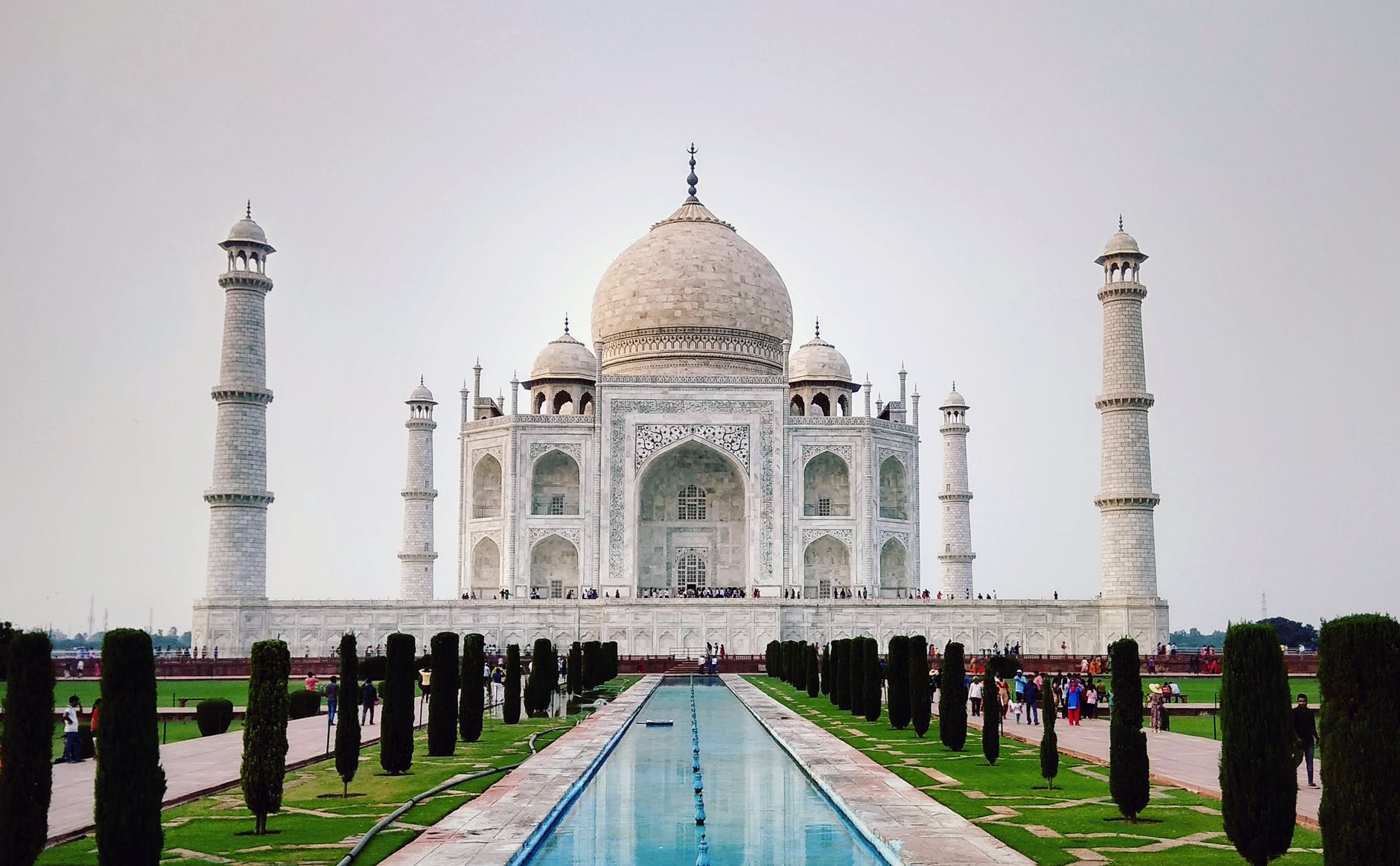
The Taj Mahal is a funerary mosque, built by Emperor Shah Jahan in memory of his third wife Begum Mumtaz Mahal. Set against the Mughal Gardens, it is a pristine architectural monument made of white marble. It was built in 16 years by thousands of artisans under the Chief Architect Ustad Ahmad Lahauri and is considered as a masterpiece.

Photo by Roney John on Pexels.com

Khajurao, Madhya Pradesh

The Khajurao is a group of monuments located in Madhya Pradesh and is attributed to the Chandela dynasty. It is known for its unique artistic architecture which has survived since the 10th century. Out of the 85 temples built originally, only 22 temples are there at present.

The PInk City, Jaipur

Jaipur is a fort city in Rajasthan, built according to grid plans of Vedic architecture. The urban planning of the city shows influence of ancient Hindu, modern Mughal and western cultures. Originally built as a commercial capital, the city is an intersection of commercial, artisanal and traditional center.

Elephanta Caves, Maharashtra

The Elephanta Caves is a group of sculpted caves on Elephanta island, located in Mumbai harbour. It is dated to 5th century and it consists of 5 Hindu caves and 2 Buddhist caves. The architecture is characterized by rock cut stone sculptures.

Sundarbans, West Bengal

The Sundarbans are the largest mangrove forests in the world and is both a national park and a tiger reserve. It is situated in the Sundarbans Ganges river delta and is formed by the deposition of sediments from 3 rivers – the Ganges, Brahmaputra and Meghna. It consists of dense mangrove forests which is the home to the Bengal tiger, the salt water crocodile and various birds.

Fatehpur Sikri

Also known as the City of Victory, the Fatehpur Sikri was built by the Emperor Akbar. It includes a set of mosques, monuments and temples built in Mughal architectural style. It was built as a city which had several monuments, buildings, palaces, public spaces and courts. The site has monuments like – the Jama Masjid, the Buland Darwaza, the Panch Mahal, and the Tomb of Salim Chishti which are popular tourist attractions.

Monuments at Hampi, Karnataka

These are a group of monuments in the Hampi town in Karnataka. Located on the banks of the river Tungabhadra, it consists of Dravidian temples and palaces. It has been admired by travelers of the 14th and 16th century and is still a very important cultural and religious center for Hindus and Jains.

Sun Temple, Konark, Odisha

The Konark Sun temple is a renowned temple, located on the coast of the Bay of Bengal and built in the form of the chariot of Surya, the sun god. It is constructed with sandstone and decorated with beautiful stone carvings. It was constructed under the rule of King Narasimhadeva I of the Eastern Ganga Dynasty.

STATES IN LOSS OF GST !

ALL THE STATES OF INDIA ARE IN HUGE LOSS OF GOODS AND SERVICES TAX , COMPLAINING THAT THE CENTRE IS N’T GIVING THEM GRANTS OF THEIR SHARE OF GOODS AND SERVICES TAX. IT IS ALSO SPOTTED THE GST RECEIVED BY THE GOVERNMENT IS SMALL IN NUMBER , COMPARING TO THE CASH RECEIVED FROM GST LAST YEAR , THAT IS , IN 2019 . IN THE FIRST QUARTER OF THIS YEAR , WE HAVE SEEN A RAPID INCREASE IN INCOME TAX PAYMENT BY THE PEOPLE , WHICH IS BENIFICIAL FOR THE INVESTMENT IN EXPENDITURES .

BUT , AGAIN , THERE IS SHARP DECLINE IN TAX PAYMENT , WHICH IS PUTTING PRESSURE ON ALL THE STATE AND THE CENTRAL GOVERNMENT FOR THE GRANTS .

THE DELAY PAYMENTS OF GOODS AND SERVICES TAX ARE WITNESSED , GOVERNMENT HAS DECIDED IT TO BE CHARGED ON NET TAX LIABILITY WHICH WILL BE INITIATED FROM SEPTEMBER 1 . RS 64000 CRORES CAN BE RECOVERED FROM THE UNPAID INTRESTS . EARLIER , THE INTEREST WAS CHARGED ON GROSS TAX LIABILITY, BUT , FROM SEPTEMBER 1 , IT WILL BE CHARGED ON NET TAX LIABILITY .

CENTRE IS NOT ABLE TO GIVE THE GRANTS TO THE STATES , ALL THE STATES ARE DEMANDING THEIR SHARE OF GST FOR THE PAYMENT OF THE SALARIES OF THE LABOURS , CONDUCTORS , DRIVERS OF DTC BUSES , DOCTORS , ENGINEERS AND TEACHERS .

CENTRE HAS MADE THE DECISION TO BORROW FROM RESERVE BANK OF INDIA TO BRIDGE THE GAP OF GOODS AND SERVICES TAX . OUR FINANCIAL MINISTER NIRMALA SITHARAMAN , SAID THAT THE STATES ARE LIKELY TO FACE RS 3LAKH CRORES GST REVENUE GAP WITH THE CONTRACTION IN THE ECONOMY DUE TO COVID-19 . OUT OF RS 2.35 LAKH CRORES , 97000 CRORES DUE TO THE GST IMPLEMENTATION .

OUR FINANCE MINISTER HAS GIVEN TWO CHOICES TO THE STATES :

  • A SPECIAL WINDOW WILL BE PROVIDED TO THE STATES BY RESERVE BANK OF INDIA CONSULTATION , STATES CAN GET THIS RS 97000 CRORES AT THE REASONABLE RATE WHICH CAN BE REPAID BY THE STATES TO RBI AFTER FIVE YEARS THROUGH THE COLLECTION OF CESS.
  • THE ARRANGMENTS FOR THE STATES CAN BE MADE FOR THEIR BORROWINGS FROM RESERVE BANK OF INDIA ALONG WITH FACILITIES PROVIDED.

INDIA’s GDP ?

WE ALL ARE IN LIGHT OF THE STATEMENTS THAT ARE HIGHLIGHTING IN THE MEDIA ABOUT ECONOMIC SLOWDOWN AND INDIA’s GDP . IT IS ALEARDY PREDICTED INDIA ‘s ECONOMIC GROWTH IS GOING TO FACE MORE DECLININGS , AS SAID BY THE GREAT SCHOLARS , HOW MUCH OUR COUNTRY’s GDP WILL DOWN AND MAY STRIKE NEGLEGIBLE.

INDIA RISKS STAGNATION IF THE GDP DOES N’T GROW ANNUALLY THAT TOO AT THE RATE OF 8% PER ANNUM . THE GROWTH HAS HAVE TO OCCUR AT A GREAT PACE BUT NOT AT THE SLOW PACE .

IF OUR GROWTH RATE TOUCHES 8% PER ANNUM FOR THREE YEARS CONSECUTIVELY THEN INDIA CAN SAVE ITSELF FROM MANY CHALLENGING CONSEQUENCES .

IT HAS BEEN HIGH TIME , NOW GOVERNMENT SHOULD ATLEAST FOCUS ON THE SOCIO-ECONOMIC CHANGES AND NOT ON POLITICAL ONES. WE ARE FACING UNEMPLOYMENT AND POVERTY IN A STRETCH . THE GOVERNMENT HAS IMPLEMENTED ATMA NIRBHAR BHARAT BUT I THINK IT SHOULD BE IMPLEMENTED EARLIER , THEN , WE WOULD HAVE NOT FACED THIS SITUATION WHAT WE ARE FACING NOW . YES ! SELF RELIANT IS THE KEY BUT WE HAVE DELAYED ITS IMPLEMENTATION . AND WE ARE INCURRING THE COST OF OUR DELAY IN COVID-19 IN THE FORM OF WEAK HEALTH INFRASTRUCTURE , POVERTY AND UNEMPLOYMENT . THEY ARE STANDING AS ICEBERGS IN OUR PATH , JUST BECAUSE OF OUR INEFFICIENT DECISION MAKING.

INDIA IS NEED OF THE GROWTH OF 8% TO 8.5% ANNUALLY TO CREATE THE OPPORTUNITIES AFTER COVID-19 AS THERE IS A RISK OF THE STAGNATION OF ECONOMIC GROWTH , INCOME AND GOOD QUALITY LIFE FOR A DECADE , WHICH IS A HUGE LOSS ! .

THERE IS NEED TO FABRICATE ALL THE REFORMS AND SCHEMES DESIGNED , A GOOD IMPLEMENTATION OF ALL IS MANDATORY TO CATCH THE ROPE OF THE GOOD ECONOMIC GROWTH.

THE NEXT TWELVE TO EIGHTEEN MONTHS ARE VERY CRUCIAL FOR US AS IT HAS BECOME A LIMMITED PERIOD OFFER FOR A GROWTH TO OCCUR AND THEESE ARE THE MONTHS .

IF WANTING TO INCREASE THE PRODUCTIVITY , CREATING EMPLOYMENT OPPORTUNITIES FOR THE PEOPLE , MINIMISING POVERTY BECAUSE POVERTY CAN NEVER BE FINISHED , IT JUST CAN BE MINIMISED , LIVING GOOD QUALITY OF LIFE , DEVOLOPMENT , GROWTH , SOCIETAL OBJECTIVES THEN , YOU HAVE TO HAVE ……

THE EMOTION FOR THE SOCIETY AND SOCIO-ECONOMIC OBJECTIVES !!

Final Year Exams: Supreme Court to Announce Verdict Tomorrow

University Grants Commission’s (UGC) had passed on a circular on July 6, regarding the conduction of the final term university examinations during the novel covid 19 pandemic. The Supreme Court will pronounce its verdict on the pleas challenging the UGC circular.

UGC had earlier approached universities to view and get the status about the exams. It received responses from about 818 universities (121 deemed universities, 291 private universities, 51 central universities, and 355 state universities). Out of the 818 universities, 603 have either conducted the examination or are planning to conduct it in some time. While 209 others have already conducted examination on either on-line or off-line mode and 394 are planning to conduct examination in on-line or off-line or in a blended hybrid mode towards August or September.

A bench headed by Justice Ashok Bhushan, R Subshash Reddy and MR Shah, had reserved its judgment for the matter on August 18. They will be pronouncing their judgement after a detailed hearing continuing for 2 days.

Last week, four states and Union territories – Maharashtra, Delhi, West Bengal and Odisha – had urged the apex court to give directions to the UGC to not impose examinations on lakhs of final year university students during the present condition. The court had concluded the hearing but deferred a judgement on the issue. Many states said they were not consulted before taking the decision regarding examinations and selecting the UGC guidelines. They have also said that the state governments have the power to take health related decisions in the interest of the people. The UGC Guidelines did not make sure of this and the opinion of the states were not taken into consideration while the guidelines were constructed.

Photo by Andrea Piacquadio on Pexels.com

A group of as many as 31 students from different universities across the country had approached the Supreme court and opposed the UGC circular dated 6 July. In that plea, the students have opposed the direction given to all universities in the country to finish taking the final year examinations before 30 September. The students have made a petition and requested for the examinations to be cancelled. They have suggested that the results of students could be calculated on the basis of their internal assessment or mid-term exams and past performance in previous years/semesters. In the petition it was requested that mark sheets of students should be issued before July 31. The petition was filed by students from across 13 states and one union territory. One of the students, among the 31 petitioners, who had tested positive for Coronavirus have asked for directions from the UGC about the examinations. He has asked the UGC to adopt the CBSE model and conduct an examination at a later date. This is specially for the students who are not satisfied with their marks and the assessment of the papers. The plea suggested that previously planned examinations should be cancelled, keeping in mind the interests and health of the students in such a situation of the country, when the number of cases were rising every day. All educational educations across India were closed for the past few months due to the pandemic situation and the lockdown. Most institutions have however started taking classes for intermediate students in the form of online classes/ lectures.

The Supreme Court will give its judgement and provide a verdict for the students, in a batch of petitions submitted for challenging the revised guidelines of the University Grants Commission (UGC) to conduct final year exams by September 30 of this year.

NATIONAL SPORTS DAY 2020

“Most people give up just when they’re about to achieve success. They quit on the one-yard line. They give up at the last minute of the game one foot from a winning touchdown.”

– Ross Perot

The National Sports Day in India is celebrated on 29 August, on the birth anniversary of hockey legend Major Dhyan Chand. It creates a spirit of leadership and sportsmanship in an individual.

It emphasized being healthy, fit, and stress-free. It put forward the legacy of the introduction of new sports along with enhancing the different messages given by old ones.

The day is celebrated with great fanfare with walkathons and football tournaments held across the country. In 2019, Prime Minister Narendra Modi has launched ‘Fit India Campain’ on the occasion of National Sports Day. The nationwide campaign aims to encourage people to inculcate physical activity and sports in their everyday lives. The Ministry of AYUSH has issued guidelines to implement the Fit India Active Day Programme. The programme is launched to make sure children practice fitness even when they stay home. The programme also intends to create immunity against COVID-19.

Live sessions are to be conducted under the programme. These live sessions shall be accessed by students through Instagram and Facebook. The programme has been launched under the partnership of CBSE.

This day is remarked every sports person who made India in various national and international levels. The day mark a connection between fitness with patriotism. Everyone on this day should do at least one activity related to fitness maybe it is walking, jogging, or cycling. Lets together but separated enjoy the day and bring a change.  

DELHI FOR PREGNANT WOMEN !

IT’S ALMOST MIDNIGHT AND I HAVE LEFT THE NEWSPAPER READING JUST FIVE MINUTES BEFORE AS THE SCHEDULE TODAY WAS SO BUSY , WAS NOT PLANNING TO WRITE THE ARTICLE , BUT , AFTER READING THE NEWS OF GETTING SUPPORTIVES TO THE PREGNANT WOMEN , I JUST COULD N’T STOP MYSELF FROM SHARING THE NEWS WITH YOU ALL . IT HAS GLITTERED MY EYES WITH TEARS AND FILLED MY HEART WITH PRAYERS .

DELHI ‘s THAT IS OUR CHEIF MINISTER HAS LAUNCHED AN APP FOR WOMEN WHO ARE PREGNANT DURING COVID-19 TIMES , EASING THEIR PROCESS OF APPOINTMENT IN OPD’s ESPECIALLY PREGNANT WOMEN.

ON MONDAY CM ARVIND KEJRIWAL HAS LAUNCHED THIS APP AVAILING THE SPECIAL FACILITIES TO THE PATIENTS .PEOPLE CAN TAKE APPOINTMENTS THROUGH ONLINE MODE WITH A GREAT EASE . THERE IS NO NEED TO STAND IN THE QUEUE FOR LONG HOURS . WHENEVER WE GO TO THE HOSPITAL FOR OUR CHECK UP WE ALL HAVE SEEN WOMEN WHO ARE PREGNANT STANDING IN THE QUEUE FOR THE APPOINTMENTS , IN STRETCH OF LONG HOURS , AT TIMES . MOST OF THEM ARE FROM LOWER CLASS AND DON’T HAVE ENOUGH MONEY TO SPEND FOR THEIR TREATMENT IN A PRIVATE HOSPITAL . THIS APP IS PROMINENT FOR THEESE , THEIR HEALTH WILL NOT GET AFFECTED AND WILL GIVE THEM A FORESIGHT TO THE TECHNOLOGY AND DEVOLOPMENT . I THINK THIS APP SHOULD BE INSTALLED IN ALL THE STATES AS THIS PROBLEM RESIDES IN EVERY CORNER OF OUR COUNTRY . IF THIS MOVE IS INITIATED IN OTHER STATES OF THE COUNTRY , IT HAS THE POWER TO FILL THE VOIDS IN THEM WHICH ALL ARE UNFILLED YET .

THIS SCHEMES INCLUDES :

  • HOSPITAL MANAGEMENT INFORMATION SYSTEM , TO HAVE IN DELHI BY 2021 , WHICH BRINGS ALL THE HOSPITALS IN DELHI ON ONE PLATFORM AND FEATURES ARE INTEGRATED IN THE APP TO MAKE ITS WORKING EFFICIENT . HMIS INCLUDES MOHALLA CLINICS , POLYCLINIC, MULTISPECIALITY AND SUPER SPECIALITY .
  • NO QUEUE APPOINTMENT
  • NO WAITING TIME
  • ONLINE FLU CLINIC REGISTRATION FOR COVID-19 INFECTION BY ENSURING MINIMAL CONTACT WITH HEALTH CARE PROVIDERS
  • THE TIME THAT THE GOVERNMENT ILL TAKE TO COMPLETE IT , CAN BE WITHIN ONE YEAR .

ALONG WITH IT , HE HAS ALSO PROVIDED SHRI DADA DEV MATRI AVAN SHISHU CHIKITSALAYA WITH 106 BEDS IN THE SOUTH WEST DISTRICT . THE GOVERNMENT OF DELHI IS ALSO TRYING TO INCREASE THE BED CAPACITY IN THE HOSPITALS TO 281.

GOOD DECISION MAKING !!