Weakening Labour Laws

The Covid-19 pandemic has influenced the economy harshly, bringing about development stoppage in significant segments. The horticulture, vehicle, lodging, travel and the travel industry, assembling and administrations segments are completely hit. The suspension of monetary exercises during the national lockdown time frame in India has cost the economy $235 billion, Barclays Company evaluated. As per the Chicago Booth’s Rustandy Centre for Social Sector Innovation, which broke down information from the Centre for Monitoring Indian Economy (CMIE), has seen that over 84% of family units in India lost salary during the lockdown time frame.

In this time, some state governments have passed statutes and new guidelines influencing the work laws and their application. Nearly 10 states have achieved changes in the labour laws, for the most part in The Factories Act, 1948, The Industrial Disputes Act, 1947, and The Labour Laws (Exemption from Furnishing Returns and Maintaining Registers by Certain Establishments) Act, 1988. The state governments have asserted that these measures are important (I) to launch financial exercises (ii) to draw in outside speculation and (iii) to support development possibilities.

Not long after proclamation of these statutes, worker’s guilds the nation over, rights activists, work specialists and even industrialists censured these measures as being in opposition to laborers’ privileges. These measures disregard the set up guidelines of International Labor Organization (ILO) and the Fundamental Rights and Directive Principles of State Policy of the Indian Constitution. Numerous PILs (Public Interest Litigation) were documented in the separate state high courts and in the Supreme Court. The Allahabad High Court sent notification to the Uttar Pradesh government, following which the UP government pulled back one request, that on the 12-hour work move.

Labour is a subject in the Concurrent List and subsequently both Union and state governments are equipped to authorize enactments relating to work government assistance. Thing 24 on the Concurrent List explicitly makes reference to arrangements for the “government assistance of work, including states of work, fortunate assets, bosses’ obligation, laborers’ pay, shortcoming and mature age annuities and maternity benefits” of Article 246 of the Constitution. Any adjustments in the laws identified with the subjects recorded in the Concurrent List must be made in counsel with the Union government. Something else, the law passed by the Union government stands substantial according to Article 254(1). The state governments appear to have disregarded this while giving their laws. The debilitating of work laws have seriously obliged the government assistance and equity plan inserted in the Constitution.

The utilization of the law to suitable the privileges of average workers individuals is the plan of neoliberal administration systems. In the period of contractualisation of work, laborers’ privileges are seriously undermined as the administering power has moved from State to the private division. The withdrawal of the State from government assistance is in progress, as is obvious from these laws. These measures will remove the respect of work and its related rights. In “A Tale of Three States: Labour Reforms in the States of Gujarat, Madhya Pradesh and West Bengal,” Kingshuk Sarkar says that consideration was given to “guaranteeing simplicity of working together instead of securing laborers’ privileges and qualifications.”

The genuine issue lies not with the labour laws yet with the idea of the State. With these mandates, the state governments have disintegrated the standards of ‘helpful federalism’. With regards to the Covid-19 emergency, it would be judicious for the for the Indian State to maintain laborers’ privileges and poise to upgrade its own social authenticity and open trust.

The Third Gender: The Everyday Struggle as “Other”

Before the case of National Legal Services Authority v. Union of India affirmed the term ‘The third gender’, India had different expressions for people who tick on the ‘other’ checkboxes. The gender is defined as people who do not conform to the organic sex’s identification or conduct. After this ostracised gender went through derogatory behaviours and name calling, our society has finally changed a lot to accept their existence. But the acceptance is still bound by “what they are” and “how they are”. This estimated one million community has never got a ‘first class’ lifestyle. The disparities are not restricted to the societal stigma on their existence but also every day discrimination and denial of human rights.

The Constitution of India guarantees rights and protections to all humans in general. The only distinction in this regard are the reasonable restrictions except which no discrimination on the grounds of sex, religion, caste or creed is not tolerated. Even after the constitutionally guaranteed political and other benefits, the third gender community still finds itself in the same position. The issue that these laws are not implemented, that the gender finds itself more often than not without a job in the respectable positions is an unavoidable truth in which inequality is an everyday affair.

This particular issue took the light when Air India was brought to the court for refusing an airhostess job claiming she was a transgender and that the post was only reserved for women. The denial is an act which is banned by law. The question on how the gender forms a reasonable nexus with the description of job calibre is arbitrary and undoubtedly, is an infringement of equality under Article 14. The denial also violates Article 15 for infringing the prohibited discrimination on the basis of sex. Article 21 fnds as the personal dignity of the gender stands into question. The struggle as ‘other’ is not merely the name calling but also the opportunities since that lies as the only one through which the gender would be respected and could also afford to grow in their lives. Most of this gender related issues are not only connected to the societal issue but also because of their lifestyle due to the lack of resources and opportunities limiting them to only begging, which more often than not, is a bad business with no security.

When the Constitution sought to remove the untouchability issues, along with the guaranteed rights under Article 17, there were also reservations and job opportunities that the issue has almost been demolished and seen in only backward areas.

But a major issue that crosses between the blinking of an eye is the fact that the reservations bring lifelong recognition under the same society. The passing of Transgender Protection Act, 2019 starts on the wrong foot. The various instances where the Act does not take in the consideration of trans-activists puts the first question on the upliftment.

The most serious flaw that remains is the process of trans-people changing their documents to reflect the identity. The new law sets up a two-step process. Firstly, it requires the person to apply for a “transgender certificate” from the District Magistrate of the particular location. This specific part can be done on the basis of the person’s self-declared identity. Only for this step does the certificate holder gets eligible to apply for a “change in gender certificate,” which is to change the legally declared gender to a male or female. However, this second step requires the person to provide different documents such as surgery proof, issued by a hospital official, which is again sent to the District Magistrate for a second evaluation. It also requires the officials to be “satisfied with the correctness of such certificate.”

One important factor to notice here is that it sets an extraordinary amount of power with one government officer who might have the only power to abuse the position or arbitrarily “qualify” to the gender as required to be recognized as who they are. It also pressurizes people into medical procedures they might not want or might be comfortable with. Such a forceful act is in itself a fundamental rights violation made by the government officials.

Repetitively the Indian courts have long held that trans people deserve the government’s recognition on their own terms and with actions which are assimilated from their demands, without mandatory intervention or discrimination but the same has been dismissed.

Improvement in the status of the transgender community needs to be a collective effort in order to empower the discussed community in the workplace and to reduce the social stigmas which could also end up improving their economic position. Although the Act only puts an onus and does not place legal requirements on the people concerned, in view of the changing the dynamic status. However, preparing such an Indian workspace for an inclusive approach towards transgender individuals is going to be a continuing uphill task and accommodating such societal change of this magnitude is definitely going to be a slow process in India.

Civil Society and Covid19

The ongoing COVID-19 pandemic has given us something that the majority of us haven’t found in the course of our lives: Large quantities of individuals are not able to have two meals every day.

The disaster is that the administration has enough and more food grains to take care of individuals during this time; the main problem is of dissemination—both as far as broken gracefully chains, just as the request of the legislature to restrain circulation to recipients under the National Food Security Act (NFSA), ie, need proportion card holders. This methodology is defective on the grounds that the NFSA has numerous avoidance, with probably the most unfortunate of poor people, itinerant or Adivasi people group, and the urban poor being forgotten about. Additionally, proportion cards are of no utilization to vagrant specialists stuck outside their home state. There are comparative issues of rejection in different administrations too, for example, vocations and human services. This is the place common society must advance in—to squeeze the legislature to universalize these administrations.

Network of civil society

Civil society should construct a system that cuts the nation over. We should plan the various associations and gatherings giving help in each area, square, and down to each town. We can do this since we have volunteers and laborers—from field staff of not-for-profits to government teachers—everywhere throughout the nation, and we know whom we can contact for any data or help at wherever.

The quality of Civil society lies in knowing and being the little, decentralized units that have assumed liability for their whole region—recognizing the quantity of individuals in the zone, the help required, the holes in government alleviation, the difficulties on the ground, etc. By uniting them and shaping a system, we can empower these units to call upon one another for help, for example, securing material or revamping flexibly chains. Above all, the system can have a voice at the national-level that says everybody is qualified for benefits, regardless of whether they are not apportion card holders or dynamic specialists under NREGA.

Work with the government

The job of civil society doesn’t stop at squeezing the legislature. There are numerous zones that the legislature can’t reach; we need to reach there. We need to utilize our straightforwardness and responsibility systems to screen the administration’s work and ensure state assets are all around utilized. We additionally need to proactively discover the holes, and help fill those holes.

The administration structure is functioning admirably in certain zones and not working in others. In a portion of those spots, the legislature is itself requesting our assistance. Given the hugeness of the intercession required, the administration can’t do it all alone, and common society can’t supplant the huge job of the legislature in confronting this emergency. While civil society associations can assume liability for one zone and completely guarantee the prosperity of the individuals there, we should likewise work with nearby governments, assist individuals with getting to help quantifies down to each country and urban ward, and fill the holes in the administration’s reaction. Panchayats and nearby self-governments additionally have an extremely enormous task to carry out in this exertion.

What’s more, ultimately, let us not overlook democratic system as of now—right to speak, the right to challenge, the right to argue—in light of the fact that today, the main thing a large number of needy individuals have is a voice. We have to enhance that voice to guarantee that the most defenceless get the most help, and the individuals who are well-off possibly get something on the off chance that it helps the most powerless. How much consideration we pay to the millions who have been most exceedingly terrible influenced by COVID-19 and the lockdown will decide if we come out of this emergency.

Saying No To China, Could It Be A Tough Road For India?

What happened at Galwan valley of Indian Ladakh had raised tensions between India and China to all time high. The clash between Indian and Chinese forces led to nationwide outburst against China.

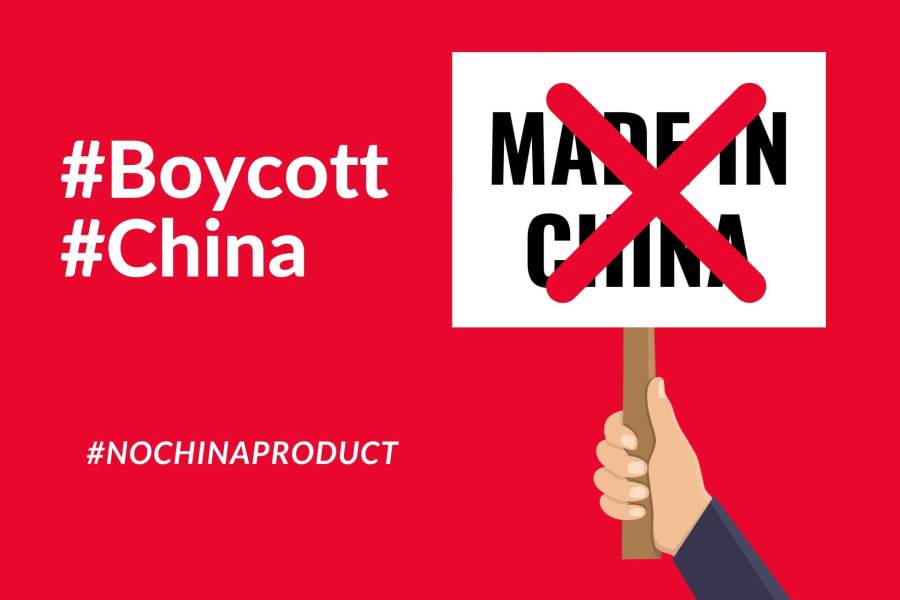
Fuelling this, there had been a sudden disagreement for buying any Chinese product or services. This is to make sure that Chinese economy doesn’t receive a single penny from India and its citizens, making it obvious after China bearing malice towards its neighbours, specifically India. The initiative has greatly boosted with GOI’s (Government of India) decision of banning 59 Chinese applications in India and by increasing the import taxes on Chinese goods or services. The Indian armed forces had already been deployed at disputed regions of border and are ready for any surprise from counter side.

With Governments and Armed forces holding tight on attempts to self-reliant India, the dice of responsibility falls our side too. By us I mean, all the common or less common citizens of India whose decision of just boycotting Chinese products could shatter its trade. Already many huge economies of the world have turned against China, amid Corona virus outbreak and deaths of 600,000 (still rising) innocent people.

Boycotting Chinese items won’t be that easy as it sounds, one has to spend a little more of their money while switching to non-chinese brands, as the only PSP (product selling protocol) of Chinese products is its cheap pricing. This pricing gets balanced with its poor quality and doesn’t last any longer. Yet, Chinese products have kept its dominance in certain sectors of Indian market.

The mobile phone sector

India had imported mobile phones worth $11.3 billion from China in 2016-17, and that was about 68 per cent of all mobile phones (both push-button feature phones and smart devices) imports into the nation that year. In 2017-18, even as the duties were imposed, the value of mobile phone imports from China climbed to $15.6 billion, or 71 per cent of the mobile phones imported. As the tax measure began to hurt and local manufacturing of mobile phones gathered momentum, imports of these devices from China halved to $7.4 billion and about 41 per cent of all mobile phone imports in 2018-19. Imports of phones, by value, from China declined further in 2019-20 but not the share, which remains at 40 per cent. If we just speak of alternatives, we have few options of some Korean, Taiwanese, American and just few Indian tech companies. These options are:

  • LG
  • Samsung
  • Nokia
  • Apple
  • Asus

The drop in electronic imports gradually implemented by the GOI in recent years but this won’t be enough and buyers need to push their expenses to continue supporting the campaign of #boycottchina.

Other imports from China include toys, gift items, fabrics and garments, and thousands of small value items that are popular with consumers. CAIT (Confederation of All India Traders) estimates that there are some 3,000 items that can be easily substituted with India-made products in the first phase of the boycott of Chinese goods campaign. The list of China-made items popular with consumers includes fairy lights with tiny LED bulbs that are used to decorate homes during festivals, idols of deities, home decors, kite strings and even incense sticks (agarbattis). It is estimated that about 80 per cent of the incense sticks sold in India are imported from China.

For all of it to happen, for this campaign to succeed we all should hold our horses and should maintain an adequate transition of market into indigenous domain. This would be the only secure and once for all time solution to problems India facing with the dragon as war could never be a solution. It would just tear up economies at both ends and loss of Brave Indian soldiers shouldn’t happen any further.

FIRING THE BLAME BULLET

The popular game PUBG has weapon attachments that reduces weapon recoil. It makes life easier for the players. Recoil is the backward movement of a gun when a bullet is discharged. It is helpful to know which attachments help players to shoot better and more effectively without hurting themselves in the process due to the tremendous force at which the shots are fired.

In real life when we point the gun at someone, how badly are we affected?

Well fortunately for us, in India, there exists some tight Gun laws except for the water guns’ kids play with during Holi and Gangsters. Hence here I talk about the abstract gun which fires the Bullets of Blame on others. Pointing finger at anybody who is in sight, was my favorite thing to do in any situation.

The blaming gun can also point upwards or inwards. When it points upwards, we blame the Creator for being unintelligent or uncaring or even non-existent. When it points inwards, we beat ourselves down with self-recrimination, “I am good-for-nothing,” ending up unnecessarily with inferiority complex.

How many of you, like me; are blamers? How many of you, when something goes wrong, the first thing you want to know is whose fault it is? Well Hello there, I’m the former winner of the Miss Blamer Pageant and the magnitude to which I blamed others with respect to everything that went wrong in my life was comical.

I’m in my house. I have on white slacks and a pink sweater. I’m drinking a full cup of coffee in my kitchen. I drop it on the tiled floor. It goes into a million pieces and splashes up all over me. And a millisecond after it hit the floor, right out of my mouth comes this: “DAMN YOU CHINA!” For purposefully making these cups so shiny and slippery. Now my entire kitchen is infected by the tiny pieces of ceramic (China clay). The kitchen has to be quarantined until I clean it up…or somebody else cleans it up, never mind.

Now as I have aged, I realized- I’d rather it be my fault than no one’s fault. BUT WHY? Cause it gives me some semblance of control. Blame is simply the discharging of discomfort and pain. It has an inverse relation with accountability. What is the difference? Well accountability by definition is a vulnerable process wherein I confide to you, “Hey my feelings were really hurt by the things you said/did.” Blaming is simply a way to express anger.

People who blame a lot seldom have the tenacity and grit to actually hold people accountable because we spend all of our energy raging for 15 seconds and figuring out whose fault something is. Blaming’s very corrosive in relationships and it’s one of the reasons we miss our opportunities for empathy. Because when something happens and we hear the story, we’re not really listening, we’re in the place where I was – making the connections as quickly as we can about whose fault it was.

SO, DO I START BLAMING MYSELF FOR EVERYTHING?!

In the spiritual path, self-blame is the most dangerous thing. Firstly, stop blaming yourself and others. We don’t have to point the gun at others or our own heads. Let us drop the gun and never pick it up, ever again.

Secondly, we need to come out of the Destiny’s Illusion. Never focus on what you can’t do, focus on what you can do. If we keep on focusing on what we can do- Then even if you believe in destiny, it will be a good one for you. Blaming your destiny will close doors to all the wonderful opportunities waiting for you.

A child runs a race with his full speed & energy and yet comes last in it. Losing the race was not his fault but taking part in the wrong race is definitely a mistake worth correcting. To simplify- Making a mistake is not your fault but doing it without your interest in it, is a mistake that can be rectified.

To solve the problem, we need; not a blaming bullet, but a helping hatchet. Not a blaming finger but a helping hand. Making mistake is in our nature. Acceptance of mistake shows our culture and correcting the mistake is progress. I do accept that spilling that damn coffee was my fault, however damn you CHINA for making the cup which broke and spread on the entire floor leaving my kitchen dangerous to walk on freely. * Gun drop * I meant MIC DROP…..phew!

Economic cost of COVID-19

On 12 January 2020, the World Health Organization (WHO) confirmed that a novel coronavirus was the cause of a respiratory illness in a cluster of people in Wuhan City, Hubei Province, China, which was reported to the WHO on 31 December 2019.
The case fatality ratio for COVID-19 has been much lower than SARS of 2003, but the transmission has been significantly greater, with a significant total death toll.
Indian prime minister Narendra Modi has announced lockdown in the country to fight against the deadly virus. Indian economy is witnessing a huge loss because of COVID 19.

Economic impact

The economic impact of the 2019–20 coronavirus pandemic in India has been hugely disruptive. World Bank and credit rating agencies have downgraded India’s growth for fiscal year 2021 with the lowest figures India has seen in three decades the since economic liberalization in the 1990s. The Indian economy is expected to lose over ₹32,000 crore (US$4.5 billion) every day during the 21-day-lockdown which was declared following the coronavirus outbreak. Up to 53% of businesses in the country will be affected Supply chains have been put under stress with the lockdown restrictions in place; initially there was a lack of clarity in streamlining what is an “essential” and what isn’t. Those in informal sectors and daily wage groups are the most at risk. A large number of farmers around the country who grow perishables are also facing uncertainty. Various businesses such as hotels and airlines are cutting salaries and laying off employees. The live events industry has seen an estimated loss of ₹3,000 crore (US$420 million).
In India, with a share of almost 90 per cent of people working in the informal economy, about 400 million workers or 40 crores in the informal economy are at risk of falling deeper into poverty during the crisis, according to ILO.

Let us have a look on the different sectors :

Unemployment Rate (of IT & other sectors)


While India does not have official high frequency labour market data, the unemployment rate put together by the Centre For Monitoring Indian Economy, or CMIE, shows a spike in the last week of March and the first week of April. The unemployment rate during the last week of March rose to 23.8 percent and stayed around those levels in the first week of April. The lockdown in India has left tens of millions of migrant workers . The coronavirus pandemic would have a debilitating impact on India’s tourism sector with the industry estimating an overall loss of Rs 5 lakh crore and job cuts for 4-5 crore people.
Of the total losses, the organised sector in the industry — branded hotels, tour operators, travel agencies which are the mainstay of the sector – may be hit the hardest with an estimated loss of around Rs 1.58 lakh crore, according to Confederation of Indian Industry estimates.

The industry body has said that branded hotel groups are set to lose as much as Rs 1.10 lakh crore, online travel agencies Rs 4,312 crore, tour operators (inbound and domestic) Rs 25,000 crore, adventure tour operators Rs nearly 19,000 crore and cruise tourism Rs 419 crore.
Consumer durables, automotive, auto components, white goods, capital goods, IT, startups and MSMEs sectors will be among the worst affected. The IT sector, which employs around 4 million engineers, is likely to witness around 5% job losses according to professionals.

About 1.5 crore people face job losses in India’s export sector following the cancellation of over half of the orders and a gloomy forecast for global trade due to the Covid-19 pandemic.

Electricity Consumption


With factories closed and power demand coming mostly from households, peak demand has plunged. The average demand during peak evening hours, i.e. 7 pm, contracted by 26.6 percent for April 1-10 2020 over last year, according to daily reports published by the Power System Operation Corporation Limited. Likewise, maximum demand during the day has seen a drop of 24.5 percent.

Consumption of Petroleum Products


With fewer vehicles plying on roads, consumption of petrol fell by 16.4 percent in March 2020 over a year ago, according to data from the Petroleum Planning and Analysis Cell. Diesel, consumed in factories and for plying commercial vehicles, saw a sharper hit as consumption fell by 24.2 percent year-on-year in March 2020. Analysts believe that fuel demand may fall by 2.3% in FY21.

PMI Barely In Expansion Zone
The two Purchasing Managers’ Indices complied by IHS Markit India showed slightly diverging trends. The Services Business Activity Index fell to 49.3 in March, down from February’s 85-month high of 57.5. The Manufacturing Activity Index saw a more modest fall to 51.8 in March, from 54.5 in February. This is because non-government services were the first to be hit even before a complete lockdown was announced. The Composite PMI stood at 50.6 in March compared to 57.6 in February 2020. A level above 50 denotes expansion, while a level below it suggests contraction.

Cargo At Major Ports


Cargo handled by Indian ports fell the most in five months, dragged down by a drop in liquid cargo and container volumes. Ports across the country handled 618.7 lakh tonnes of cargo in March, a decline of 5 percent over the year-ago period, according to data compiled by BloombergQuint.

Farm Arrivals


Farm Arrivals of agricultural commodities at key markets have fallen to a fraction of levels seen before a 21-day nationwide lockdown was imposed, data analysed by BloombergQuint showed. This, because of supply chain disruptions despite food items being classified as essential commodities. Data collated by BloombergQuint from Agmarknet, a government portal on agricultural marketing, showed a 15-76 percent decline in arrivals in the week of April 1-6 compared to the week of March 1-6. Overall, the total arrivals of major cereals, fruits and vegetables recorded across market centres fell to 3.09 lakh tonnes in the first week of April. This was 55.6 percent lower than arrivals seen a month ago. The drop in arrivals of agricultural commodities signals a disrupted supply chain ahead of the crucial harvesting season.

Manufacturing

Major companies in India such as Larsen and Toubro, Bharat Forge, UltraTech Cement, Grasim Industries, the fashion and retail wing of Aditya Birla Group, Tata Motors and Thermax have temporarily suspended or significantly reduced operations in a number of manufacturing facilities and factories across the country. Nearly all twowheeler and four-wheeler companies have put a stop to production till further notice. Many companies have decided to remain closed such as Cummins which has temporarily shut its offices across Maharashtra. Hindustan Unilever, ITC and Dabur India have shut manufacturing facilities expect for factories producing essentials.

E-commerce

In the third week of March, Amazon announced that it would stop sale of non-essential items in India so that it can focus on essential needs. Amazon has followed the same strategy in Italy and France. On 25 March, Walmart-owned Flipkart temporarily suspended some of its services on its e-commerce platform and will only be selling and distributing essentials. BigBasket and Grofers also run restricted services, facing disruptions in services due to the lockdown. Delhi Police began issuing delivery agents curfew passes to make it easier for them to keep the supply chain open. E-commerce companies also look for legal clarity related to what are “essentials. By this, they’re facing economic loss.

Stock markets

On 23 March 2020, stock markets in India post worst losses in history. SENSEX fell 4000 points (13.15%) and NSE NIFTY fell 1150 points (12.98%). However, on 25 March, one day after a complete 21 day lockdown was announced by the Prime Minister, SENSEX posted its biggest gains in 11 years, adding a value of ₹4.7 lakh crore(US$66 billion) crore for investors. On 8 April, following positive indication from the Wall Street that the pandemic may have reached its peak in the US, the stock markets in India rose steeply once again.

Tea


Due to logistical problems following the lockdown tea estates were unable to harvest the first flush. The impact of this on the second flush is not known. The entire Darjeeling tea based tea industry will see significant fall in revenue. Tea exports could drop up to 8% as a result.

Night lights


Night lights and economic activity are connected. In Delhi, night light radiance fell 37.2% compared to 1-31 March 2019. This was the biggest fall for any metro in India. Bangalore fell 32% while Mumbai dropped by 29%.

Chemical Industry


Some chemical plants have been shut down in China. So there will be restrictions on shipments/logistics. It was found that 20% of the production has been impacted due to the disruption in raw material supply. China is a major supplier of Indigo that is required for denim. Business in India is likely to get affected so people securing their supplies. However, it is an opportunity. US and EU will try and diversify their markets. Some of the business can be diverted to India which can also be taken as an advantage.

Auto Industry:
Its impact on Indian companies will vary and depend upon the extent of the business with China. China’s business no doubt is affected. However, current levels of the inventory seem to be sufficient for the Indian industry. If the shutdown in China continues then it is expected to result in an 8-10% contraction of Indian auto manufacturing in 2020.
Pharmaceuticals Industry:
Despite being one of the top formulations of drug exporters in the world, the pharma industry of India relies heavily on import as of bulk drugs. Due to the coronavirus outbreak, it will also be impacted. Textiles Industry:
Due to coronavirus outbreak, several garments/textile factories in world have halted operations that in turn affecting the exports of fabric, yarn and other raw materials from India.


Solar Power Sector:
Indian developers may face some shortfall of raw materials needed in solar panels/cells and limited stocks from China.

The real estate body Naredco has estimated that the sector would incur losses of Rs 1 lakh crore on account of COVID-19 and the subsequent lockdown and sought a $200-billion package from the government to kickstart the economy.

Estimate of economic losses

The Indian economy is expected to lose over ₹32,000 crore (US$4.5 billion) every day during the 21 day lockdown, according to Acuité Ratings, a RBI approved credit rating agency. Barclays said the cost of the 21 day shutdown as well as the previous two shorter ones will be total to around ₹8.5 lakh crore (US$120 billion).


On 27 March, Moody’s Investors Servicedowngraded its estimate of India’s GDP growth for 2020 from 5.3% to 2.5%. Fitch Ratings revised its estimate for India’s growth to 2%. India Ratings & Research also downgraded the FY21 estimate to 3.6%. On 12 April 2020, a World Bank report focusing on
South Asia said that India’s economy is expected to grow 1.5% to 2.8% for FY21. This will be the lowest growth for India in 30 years. The World Bank report said that the pandemic has “magnified pre-existing risks to India’s economic outlook”.


Confederation of Indian Industry (CII) has sought an economic fiscal stimulus package of 1% of India’s GDP amounting
to ₹2 lakh crore(US$28 billion). The fiscal package and fiscal policies approach is being compared to what has happened in other countries such as Germany, Brazil and Japan. Jefferies Group said that the government can spend ₹1.3 lakh crore(US$18 billion) to fight the impact of coronavirus. Bloomberg’s economists say at least ₹2.15 lakh crore (US$30 billion) needs to be spent. It is estimated that the loss to the tourism industry will be ₹15,000 crore (US$2.1 billion) for March and April alone. CII, ASSOCHAM and FAITH estimate that a huge chunk of the workforce involved with tourism in the country faces unemployment.

The government has to take some measurements to save the economy.

Surrogacy

What is Surrogacy

Surrogacy refers to a contract in which a woman carries a pregnancy “for” another couple. Number of infertile couples from all over the World approach India where commercial surrogacy is legal. Although this arrangement appears to be beneficial for all parties concerned, there are certain delicate issues which need to be addressed through carefully framed laws in order to protect the rights of the surrogate mother and the intended parents.

The ever-rising prevalence of infertility world over has led to advancement of assisted reproductive techniques (ART). Herein, surrogacy comes as an alternative when the infertile woman or couple is not able to reproduce. Surrogacy is an arrangement where a surrogate mother bears and delivers a child for another couple or person. In gestational surrogacy, an embryo, which is fertilized by in vitro fertilization, is implanted into the uterus of the surrogate mother who carries and delivers the baby. In traditional surrogacy, the surrogate mother is impregnated with the sperms of the intended father artificially, thus making her both genetic and gestational mother. Surrogacy may be commercial or altruistic, depending upon whether the surrogate receives financial reward for her pregnancy.

Commercial surrogacy is legal in India, Ukraine, and California while it is illegal in England, many states of United States, and in Australia, which recognize only altruistic surrogacy. In contrast, countries like Germany, Sweden, Norway, and Italy do not recognize any surrogacy agreements. India has become a favourite destination of fertility tourism. Each year, couples from abroad are attracted to India by so-called surrogacy agencies because cost of the whole procedure in India is as less as one third of what it is in United States and United Kingdom (10-20 lakhs).

Is Surrogacy Profitable for All

At a glance, surrogacy seems like an attractive alternative as a poor surrogate mother gets very much needed money, an infertile couple gets their long-desired biologically related baby and the country earns foreign currency, but the real picture reveals the bitter truth. Due to lack of proper legislation, both surrogate mothers and intended parents are somehow exploited and the profit is earned by middlemen and commercial agencies. There is no transparency in the whole system, and the chance of getting involved in legal problems is there due to unpredictable regulations governing surrogacy in India.

Although in 2005, ICMR issued guidelines for accreditation, supervision, and regulation of ART clinics in India, these guidelines are repeatedly violated. Frustration of cross border childless couples is easily understandable who not only have to cope up with language barrier, but sometimes have to fight a long legal battle to get their child. Even if everything goes well, they have to stay in India for 2-3 months for completion of formalities after the birth of baby. The cross border surrogacy leads to problems in citizenship, nationality, motherhood, parentage, and rights of a child. There are occasions where children are denied nationality of the country of intended parents and this results in either a long legal battle like in case of the German couple with twin surrogate children or the Israeli gay couple who had to undergo DNA testing to establish parentage or have a bleak future in orphanage for the child. There are incidences where the child given to couple after surrogacy is not genetically related to them and in turn, is disowned by the intended parent and has to spend his life in an orphanage.

If we look upon the problem of surrogate mothers, things are even worse and unethical. The poor, illiterate women of rural background are often persuaded in such deals by their spouse or middlemen for earning easy money. These women have no right on decision regarding their own body and life. In India, there is no provision of psychological screening or legal counseling, which is mandatory in USA. After recruitment by commercial agencies, these women are shifted into hostels for the whole duration of pregnancy on the pretext of taking antenatal care. The real motive is to guard them and to avoid any social stigma of being outcast by their community. These women spend the whole tenure of pregnancy worrying about their household and children. They are allowed to go out only for antenatal visits and are allowed to meet their family only on Sundays. The worst part is that in case of unfavorable outcome of pregnancy, they are unlikely to be paid, and there is no provision of insurance or post-pregnancy medical and psychiatric support for them. Rich career women who do not want to take the trouble of carrying their own pregnancy are resorting to hiring surrogate mothers. There are a number of moral and ethical issues regarding surrogacy, which has become more of a commercial racket, and there is an urgent need for framing and implementation of laws for the parents and the surrogate mother.

Two Types of Surrogacy

A traditional surrogate is a woman who donates her own egg and then carries the pregnancy. The surrogate’s egg is fertilized through artificial insemination with the sperm of the father or a sperm donor. Traditional surrogates are genetically related to the baby because their own eggs are donated.

A gestational surrogate is not biologically related to the child she carries. Gestational carriers become pregnant through the process of in-vitro fertilization, where an embryo created from the gametes (sex cells) of the intended parents are implanted in the uterus for the gestational period of 40 weeks.

Altruistic Surrogacy

In the approach of altruistic surrogacy (where no payment for a baby is made; only those to cover pregnancy costs), it is evident that willing surrogates would be acting in the Post-Conventional Level, at Stage Six. An altruistic surrogate performs the miraculous task of carrying a baby, then delivering and handing it over to the intended parents. To accomplish such a difficult venture requires compassion, a sense of self-worth and self-sacrifice. This is evident in the case of parents Luke and Amanda, whose surrogate mother Lisa displayed an awe-inspiring act of kindness through carrying their baby. This act illustrates Lisa’s characteristics of Stage 6 – despite the controversy the pregnancy may have caused, she was able to act upon her own morals to surrender a baby to deserving parents.

Conclusion

It seems ironical that people are engaging in the practice of surrogacy when nearly 12 million Indian children are orphans. Adoption of a child in India is a complicated and a lengthy procedure for those childless couples who want to give a home to these children. Even 60 years of Independence have not given a comprehensive adoption law applicable to all its citizens, irrespective of the religion or the country they live in as Non-Resident Indians (NRIs), Persons of Indian Origin (PIOs) or Overseas Citizens of India (OCIs). As a result, they resort to the options of IVF or surrogacy. The Guardian and Wards Act, 1890 permits Guardianship and not adoption. The Hindu Adoption and Maintenance Act, 1956 does not permit non-Hindus to adopt a Hindu child, and requirements of immigration after adoption have further hurdles.

There is a strong need to modify and make the adoption procedure simple for all. This will bring down the rates of surrogacy. Altruistic and not commercial surrogacy should be promoted. Laws should be framed and implemented to cover the grey areas and to protect the rights of women and children.

Should India Worry About Its Diversity

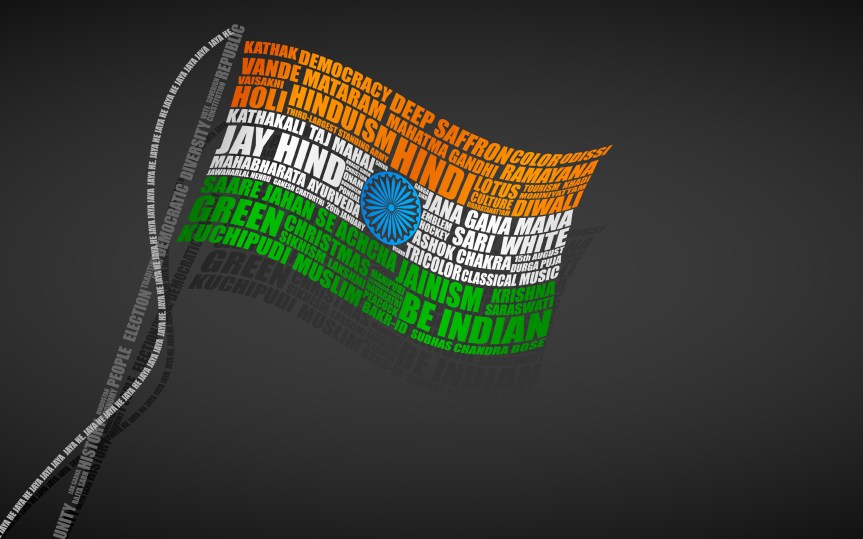
The Indian Flag Portraying Diversified Culture of India

India, the world’s most diversified country, 565 princely states united by Sardar Vallabhbhai Patel (former Home Minister of India). These states with their own set of languages, food cuisines, apparels, climates, race, skin shades, religions, traditions and cultures make India vibrant and colourful. A nation that is alternate to rainbows and unexpected surprises. The only nation with a demography including almost all sets of the religions in the world, the super minority religious group of Parses too. Now the question arises, does this variance divide us or its just mix of spices that unites us with delicious flavour of nationalism, i personally prefer the latter option.

Now let us see how it is according to the recent activities in the nation. With the high tensions among certain communities in India and dozens of riots among them in the past, shows us that there had been some sort of hatred pumping into veins of many Indians. Definitely some are not happy with the partition and some seek another partition but the biggest difficulty arises when we try to see all under same umbrella, which is indeed not appropriate measure to be followed by any responsible citizen of India. Yes, there is communal hatred in India and we cannot hide it anymore, the truth should prevail over emotions and need to see where India is lagging behind, what is pulling her back from developing. With this another question arises, how do we solve it, we cannot cut another piece of land to satisfy any particular community and we know it well that 1947’s partition resulted in the biggest failure of mankind ever. It turned into huge loss for both India and Pakistan and the purpose to completely divide Hindus and Muslims could not work out.

Coming back to our topic, we certainly understand this that there’s shouldn’t be any more partitions and we are actually good with a mix of all religions living with harmony and peace. The law & order should dominate over any religion and law breakers shouldn’t be judged on the basis of their skin shade, race, state or religion.

Religion isn’t the only problem that causes distress in India. There are certain cases of cultural biases. Certain states that are unable to generate enough revenue to sustain its domiciles within the state are responsible for migration of millions. These unfortunate poor citizens of India are forced to leave their states, to be into developed cities of India for earning their bread. Who are they and why do they have leave their homes, their villages and walk thousands of miles and live in exile. The one word answer is poverty. The all the diversifying elements we discussed earlier does not divide humanity as much as poverty does. The gap between rich and poor, strong and weak, literate and illiterate, fortunate and unfortunate, happy and unhappy is unfortunately increasing day by day, year by year. There’s a saying that nothing goes for vain but life of a poor in India, yes it goes for waste.  The biharis in general always discriminated in India and their lives are counted as meaningless. We saw a good example of this during recent impact of Covid-19 in India, where millions of labours migrated miles on their way home, majority by walk.

Does diversity really divide us or is it poverty that does so. Readers of this article should ask this question to themselves and others. Let us understand this for real, India’s diversity is not dividing, we should see it as a blend of brilliant tastes, south and north, Hindi and tamil, Idli and Paratha, Chai and Coffee, Bengali sweet and Rajasthani Salty, Delhi Rajma and Pune’s Poha and this list goes on because there’s no ending to tastes and cultures in India. India is a garden of most beautiful flowers and some weeds like any other nation would have. All we have to do is nourish these flowers so to blossom India into rich fragrance and for weeds we have use our wisdom as weedicide and should kill our differences and see every citizen of this Nation as Indian first.

The good and The bad

We often judge or categorise people on the basis of there caste, colour, creed, gender and nowadays even on the basis of their region. Since the ancient times people have categorised the society into multiple categories and worked according to it, it’s 2020 and people are still not able to identify who are the good and the bad people. Let me be specific with this thing, I am talking about religion or caste, for instance: These days half of the society is against Muslims, because of some facts that I cannot mention, but why can’t they understand that a coin has two faces, and war always takes place between two people so this means that you cannot blame only one group, you can also be wrong, at least look at yourself before blaming someone else. Let me tell you some unknown facts in which Muslims have also set an example of humanity.

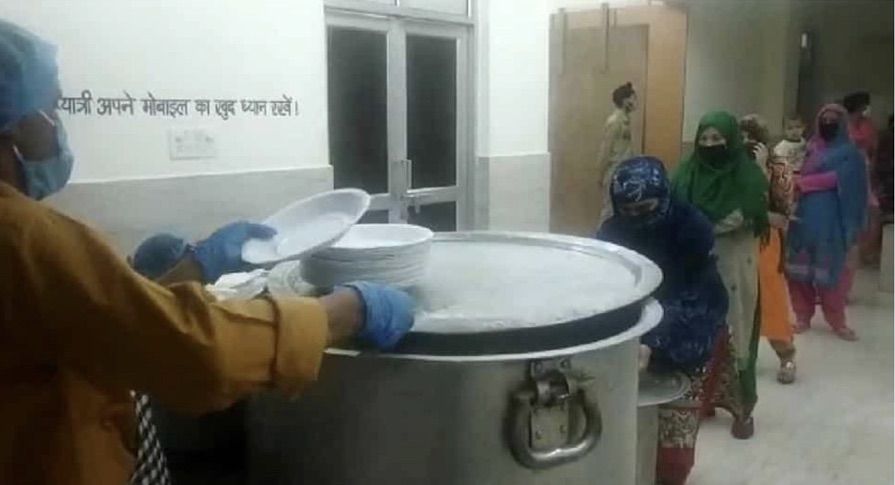
In Mumbai “Food- ek choti si asha” is a community led by Nikhat Mohamedy, who took an initiative to help the needy people in this pandemic and several others from different religion joined hands and came forward to help each other. Today the kitchen is serving 15,000 meals per day.

“This is about recognising the fact that we are all children of Adam and Eve, and feeding those brothers and sisters who are hungry and deprived is fundamental to expressing our humanity”, says Mohamedy.

Facebook.com

Another example of this is when Vaishno Devi Shrine Board served recipes to Muslims housed in quarantine centres on the occasion of Eid, March 25th. The Shrine Board said that they have been providing Sehri and Iftari meals to the Muslims after changing their schedule to meet the requirement of food for those fasting early morning and in the evening.

Hindustan times

Instances like these help me to understand that we should never judge people specially on the basis of religion or caste, we should always look upon them either as a good person or a bad person. If the world is good with you, be good to the world, if it is bad just turn your back, learn a lesson and focus on yourself, just don’t be like them. It is 2020 stop judging people, stop discriminating them, stop calling them with unwanted names, God has created people but it us who have separated ourselves into various divisions and factors. Just treat everyone equally and respect everyone. Smile and greet them be it a sweeper or a rich man. Play your part and leave the rest upon them. Change your sight of looking at the world, world will change itself automatically.

Global Diplomacy: The United Nations.

  • The name “United Nations” appears true only in books but in reality it seems like a contest for nations to prove their dominance and power individually. The diplomacy comes off to be biased. The World today is owned by corporate and the UN follows through. The actual role of united nations should be to rise above the competition and work as ONE UNITED PLANET towards climate change, global pandemic, poverty and financial slavery.

Though it is non-arguable that UN has helped bring forward issues like Women Empowerment, Poverty, Health, Education, etc. on a global platform. The real question is, are these issues solved or they have been piled upon by newer issues day by day.

But on a positive note, the UN has made progress in its peace making strategies and providing financial and healthcare aids to the countries in need. If not for this organisation then there would have not been a diplomatic relationship between nations and war would be the ultimate solution to all inter-nation problems.

Just because a medicine has side-effects does not mean it cannot be used for treating the illness in hand. Similarly, it is easy for anybody to make war but only the united front can make peace and prosperity!

  • The UN came from the minds of some of the renowned politicians of the western countries. When the super power nations felt their security and peace was under threat they collaborated with like-minded ones against the equally powerful nations. Powerful only in military and vengeance and the greed to conquer. According to human psychology (basic), a man desires power more than water for thirst.

From all the glorifications I read about this organisation, UN rose from the ashes of the war like a phoenix bird. Very beautiful and powerful bird- a phoenix-their tears have healing powers. One can say that United Nations came into existence to act as the panacea to diseases like violence, death and fading humanity.

But is the origin really important to determine its worth in the present scenario is something to ponder upon. Today UN works for a cause which it was originally built upon; irrespective of its results, – promotion of peace with its symbol the white dove soaring high, its wings flapping, freeing itself from the shackles of slavery of power, money, greed and hate.

Born in times of desperate times it can be regarded as an invention by man in the time of dire need. As we all know – “NECESSITY IS THE MOTHER OF ALL INVENTIONS!”

  • The UN Security Council consists of 5 permanent members and 10 temporary members all with a right to vote however only the permanent five have the right to veto. The word itself suggests that the council was made to resolve the security concerns of nations and to make peace among them.

 Today, the Council responds to three types of situations:

  • (1) chemical, biological, radiological and nuclear weapons proliferation; (2) international conflict; and (3) intra-state conflict. More recently, the Council has also developed a (4) cross-cutting and (5) quasi-legislative agenda.

The above decisions and powers in the hands of the council sounds safe however it is not the situation in reality. There has to be an expansion of the members instead of giving all the authority in the hands of the few. This will help in avoidance of partiality or constant disagreement that has been happening since the council has been formed. Though it has never successfully managed to make any notable reforms , it is one of our best option to resolve the security threats and war like situations in many countries and their estranged borders.

  • Human rights are the rights we are all entitled to irrespective of the place of birth or the time of birth. The core of United Nations is built upon the protection and service towards human rights and its associated freedoms. However due to international politics and superpower nations greed to stay on top of others and world domination has endangered the human rights of developing and under developed nations. Human rights have become a selective freedom provided to only those who can afford it without any restrictions. In my country citizens think that they are not worthy of having human rights as they think only the rich and developed nations are fortunate enough to have human rights that too the basic one’s. In recent events of racism ad discrimination on the basis of colour and financial status, what is the united nations enforcing laws to stop the fights  to avail basic human rights. People have to come on streets and protest later developing into riots in order to practise their rights and enjoy the freedom of being born as a human on this planet.
  • The united nations in the past has failed in crisis management because of the disagreement between it’s member nations and security councils. Due to the interference of the security council the  situation was aggravated rather than being put out or quite down. Rather than focusing on the crisis at hand it focuses on the political relations of that country with the members of the united nations and then it takes the necessary actions that too not quick or decisive but slow and of poor quality. However by putting the past back the united nations can improve on its crisis management skills by being in constant touch with the country and states local administration and education people on a personal and more localised manner rather than representing it as a political agenda or foreign policy which puts the civilians in a mind-set of confusion and feeling of unsafe and non trustable environment.
  • Today a question arises on the future of the United Nations and will it still prevail in the modern world where people are becoming rather too aware and will want a more secular council, one which works one which provides solutions, one which is actually true to its purpose of being formed.
  • During the 2020 Global Pandemic the true face of UN is being put to test and how it acts now to maintain peace among nations will say a lot about its existence in the future or will it be left to be just pages in history textbooks.

Just wishing for once if we had leaders who cared about the upliftment of the entire nation and not just the name of their political agenda and parties. The world needs educated and selfless leaders and hopefully in the future with my generation in the front we will represent a better council than these old ways and barbaric wars.

Sachin Tendulkar

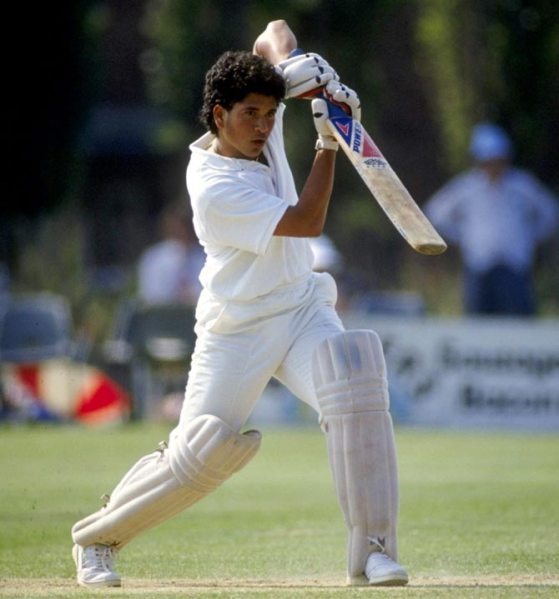
Sachin Ramesh Tendulkar, popularly referred to as the God of cricket is a former international cricketer from India and former captain of the Indian national team. He is considered as the greatest batsman in the history of cricket. The famous batsman had set many records in his 24 years long and illustrious career. He is the only player to have scored one hundred international centuries, the first batsman to score a double century in a One Day International (ODI), the holder of the record for the most runs in both Test and ODI cricket, and the only player to complete more than 30,000 runs in international cricket.

Early life

Tendulkar was born at Nirmal Nursing Home in DadarBombay on 24 April 1973 to a Maharashtrian family. His father, Ramesh Tendulkar, was a well-known Marathi novelist & poet and his mother, Rajni, worked in the insurance industry. Ramesh named Tendulkar after his favourite music director, Sachin Dev Burman. Tendulkar has three elder siblings: two half-brothers Nitin and Ajit, and a half-sister Savita.

 Ajit introduced the young Sachin to cricket in 1984. He introduced him to Ramakant Achrekar, a famous cricket coach and a club cricketer of repute, at Shivaji Park, Dadar. Achrekar was impressed with Tendulkar’s talent and advised him to shift his schooling to Sharadashram Vidyamandir High School, a school at Dadar which had a dominant cricket team and had produced many notable cricketers. Achrekar was the man who helped him to shape his career as a cricketer.

Career

Sachin made his International debut at the age of 16 in the year 1989 against arch rivals Pakistan, scoring 15 runs before being bowled by Waqar Younis. In his ODI debut, he was dismissed for a duck by Waqar against Pakistan in Gujranwala in 1989.

Tendulkar’s performance through the years 1994–1999 coincided with his physical peak, in his early twenties. He opened the batting at Auckland against New Zealand in 1994, making 82 runs off 49 balls. He scored his first ODI century on 9 September 1994 against Australia in Sri Lanka at Colombo. Tendulkar’s rise continued when he was the leading run scorer at the 1996 World Cup, scoring two centuries. He was the only Indian batsman to perform well in the semi-final against Sri Lanka. 

In the 2003 World Cup, Tendulkar helped his team advance as far as the finals. Though India was defeated by Australia, Tendulkar, who averaged 60.2, was named the man of the tournament. A tennis elbow injury then took its toll on Tendulkar, leaving him out of the side for most of the year, coming back only for the last two Tests when Australia toured India in 2004. This was a major low point in his career.

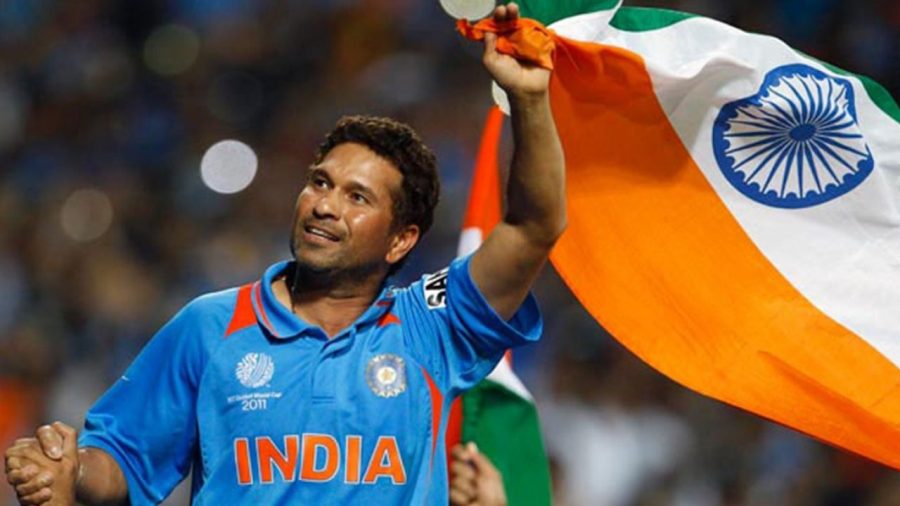
Later in his career, Tendulkar was a part of the Indian team that won the 2011 World Cup, his first win in six World Cup appearances for India.

Records and achievements

Sachin Tendulkar is the leading run scorer in Tests, with 15,921 runs, as well as in One-Day Internationals, with 18,426 runs. He is the only player to score more than 30,000 runs in all forms of international cricket (Tests, ODIs and Twenty20 Internationals). He also holds the record of the highest number of centuries in both Tests (51) and ODIs (49) as well as in Tests and ODIs combined (100). On 16 March 2012, Tendulkar scored his 100th international hundred. It came against Bangladesh in the league matches of Asia Cup 2012. He is also the only player to score fifty centuries in Test cricket, and the first to score fifty centuries in all international cricket combined. He also holds the world record for playing the highest number of Test matches (200) and ODI matches (463). In November 2011, he scored a historic “double century” in a contest against South Africa, becoming the first man in history to record 200 runs in a single innings of ODI play.

Tendulkar recieved the Rajiv Gandhi Khel Ratna award in 1997, India’s highest sporting honour, and the Padma Shri and Padma Vibhushan awards in 1999 and 2008, respectively. In 2012 Tendulkar became a member of the Rajya Sabha, the upper chamber of the Indian parliament—the first active athlete to join that body; he was nominated to the post. In 2014, he became the first sportsman to receive India’s highest civilian honour, the Bharat Ratna.

Retirement

In December 2012, Tendulkar announced his retirement from ODIs. He retired from Twenty20 cricket in October 2013 and subsequently retired from all forms of cricket on 16 November 2013 after playing his 200th Test match, against the West Indies in Mumbai’s Wankhede Stadium.

Republic day

India celebrates Republic Day on January 26 annually with a lot of pride and fervor. It is a day that is important to every Indian citizen. It marks the day when India became truly independent and embraced democracy. In other words, it celebrates the day on which our constitution came into effect. On 26 January 1950, almost 3 years post-independence, we became a sovereign, secular, socialist, democratic republic.

History of Republic Day

While we got independence from British rule on August 15, 1947, our country was still lacking a concrete constitution. Moreover, India also did not have any experts and political powers which would help in the functioning of the state affairs smoothly.  Up until then, the 1935 Government of India Act was basically modified in order to govern, however, that act was more bent towards the colonial rule. Therefore, there was a dire need to form an exclusive constitution that would reflect all that India stands for. Thus, Dr. B.R. Ambedkar led a constitutional drafting committee on August 28, 1947.  After drafting, it was presented to the Constituent Assembly by the same committee on November 4, 1947. This whole procedure was very elaborate and took up to 166 days to complete. Moreover, the committee organized sessions were kept open to the public. No matter the challenges and hardships, our constitutional committee left no stone unturned to include rights for all. It aimed to create the perfect balance so all citizens of the country could enjoy equal rights pertaining to their religions, culture, caste, sex, creed and more. At last, they presented the official Indian constitution to the country on January 26, 1950.

Moreover, the first session of the India Parliament was also conducted on this day. In addition to that, 26th January also witnessed the swearing-in of India’s first president, Dr. Rajendra Prasad. Thus, this day is very important as it marks the end of the British rule and birth of India as a Republic State.

Republic Day Celebrations

Indians celebrate January 26 each year with lots of enthusiasm and zeal. On this day, people forget their religion, caste, creed, sex, and more. It brings together the country as a whole. It truly shows the diversity of our country. The capital city of India, New Delhi, celebrates it with a Republic Day Parade that showcases the might of the Indian Military and the cultural diversity of our country.These parades take place in other cities as well, where a lot of schools participate in. It is a delight to watch the children and professionals put in so much effort. The way they grace the parade makes one proud of their country.  We also do National Flag Hoisting on this day. In New Delhi, after the President of India hoists our National Flag, 21 guns salute follow it with the national anthem played by the military band.Further, in schools, March Past takes place and it is mandatory for every student to attend the celebrations. In many schools, they distribute sweets on this day as well. While it is a very joyous day, we must not forget the struggle of freedom that our forefathers took part in. Moreover, it is a day to celebrate the spirit of freedom and make sure to help India reach greater heights in the future.

Paternity Benefit Bill: The Gender We Talk About, The Benefit We Don’t

Amidst all the expectations around the male gender since his birth, there is secretly an expectation which every spouse hopes for. Time has developed since the only job of the male co-partner remained until the “sperm fertilised the egg”. The couples grow in love as they call themselves ‘pregnant’ and not just the technical one. The change in the ideologies was very well understood by the law presenters of the country. The idea to give chances to the father to be able to be completely devote to the upbringing of his junior. The benefits to be able to not lose work, not to miss deadlines but to be able to absorb the presence of a new member in the family.

‘Paternity Benefit Bill’ made rounds in the corner of the Parliament in 2017 with a view to benefit the fathers to oblige to their parental duties. It stated to give all workers, including men in the unorganised and private sector, to be benefitted with a paternity leave of fifteen days which could be extended up to three months.

The bill introduced stated for the employees to receive payment at the same rate as the average daily wage or even so, on a minimum rate of wage as revised. The same could be availed from an organisation if he had already served not less than eighty days in the last twelve months immediately preceding the delivery date of the child. However, the clauses require fathers with only less than two surviving children to opt for the same.

The gender benefits do not end here as the bill further stated to introduce proper guidelines in order to provide benefits to every man. A crucial affair that the bill brought was the Parental Scheme Benefit Fund. Under this, the government would create a fund specifically for purposes of paternity benefits where employers irrespective of genders would contribute. It was to meet the costs which would be induced through the availing of the particular benefit and the loss of work. Not to forget to mention on how the bill boldly announces that on death of the man during the following tenure, the nominee has rights of receiving payments till the end of it.

The beauty of the bill is not restricted to the birth fathers. The Bill allows the adoptive father of a child below three months of age or the legal husband of a mother in the cause, to be given the same benefits.

The objective of the bill is to ensure to the mother gets constant support in the process. It is not only through looking after the child together but when the father gets time with the child, the mother gets a chance to resume her work. Usually during the commissioning period, the mother develops a distant connection with her work until her child grows to handle himself. Such an act of love unfortunately also throws the woman out of the race of the market. Her positions degrade after she resumes and the restoration is more often than not, impossible. The option of choosing between the newborn and the profession is unjust and the bill certainly helps the attain the goal.

Through the bill, the perception of gender roles gets on hold. It creates an aura of gender equality at home. The shifts of looking after the child when divided among the two parents can lead to none of them having major deviations from their works to only allow the emotions of seeing their child grow into a form of their own reflection.  

Despite the benefits kept in front, a lot of issues persisted to not allow the bill to go further. The Maternity Benefit Act shifts the entire financial burden on the employers and through an introduction of system which would allow funds, the work place might discourage the driving force of the other objectives of women employment. Furthermore, the Paternity Bill necessitates to be extended to all sectors whereas the Maternity Act has only limited applications. It creates inequality, not only with the Maternity Benefit Act but also with the fact that the objective of the Paternity Bill is not merely paternal benefits but also equal opportunities to both the genders.

However, this creation of inequality is amendable.There can be similar benefits to both the parents and if it requires anything urgently, it is the mindset to evolve that both of it can co-exist.

Juvenile Justice

In order to achieve the objectives of the United Nations Convention on the Rights of the Child as ratified by India on 11 December 1992, the Juvenile Justice Act has been promulgated. The procedural guarantees applicable to children in conflict with the law are specified in this law. The current law addresses the problems of the existing law, such as delays in adoption processes, the high number of pending cases, the accountability of institutions, and so on.
The law also addresses the growing number of crimes committed by children aged 16 to 18 in recent years and by children in conflict with the law. Since January 15, 2016, the Juvenile Justice (Care and Protection of Children) Act, 2015 has come into force. It repeals the Juvenile Justice (Care and Protection of Children) Act, 2000.


Who is a juvenile as recognised by law?


In the Indian context, a juvenile or child is any person who is below the age of 18 years. However, the Indian Penal Code specifies that a child cannot be charged for any crime until he has attained seven years of age.


The Historical Evolution of Juvenile Justice Act in India


The United Nations Minimum Rules for Administration of Juvenile Justice of 1985 ratified by the United Nations Member States in Beijing in 1985, also known as the Beijing Rules, set out the rules, general principles and rules governing investigation and prosecution, adjudication, delivery, noninstitutional treatment and institutional treatment. Two essential concepts are explained in these principles. They are-

  1. Diversion– If children are treated in the criminal justice system, stigmatizing criminality increases the authority of the child, whose authority has been established from Rule 11 of the Criminal Code. Therefore, these principles aim at minimizing the contact of minors with the criminal justice system. To divert the child from the system, the second part of the rule legitimizes police officers, prosecutors and other authorities. This is why juvenile court judges do not wear the black coat and other judicial officials also try not to be as formal and put the child or minor at ease.
  2. Detention– A deliberate sentence imposed on minors but imposed for the shortest possible period and called “detention as a last resort”.

Juvenile Justice Act, 1986


Following the adoption of the United Nations Minimum Rules for Administration of Juvenile Justice of 1985, the term “minor” used in international law was coined for the first time. With the adoption of the Juvenile Justice Act of 1986, this change in terminology had a considerable effect on domestic law.


Before 1979, while Lakshadweep, Arunachal Pradesh, Tripura, Chandigarh and Sikkim had the Children’s Act but they did not apply it. In the case of Assam and Himachal Pradesh, although the laws have been enforced, no institution has been created to deal with the same thing and Nagaland does not even have a separate law for children. The Children’s Acts have been applied in 236 of the 334 districts in the case of other Indian states. In the mid-1980s, out of 444 districts, the number of children’s laws was increased to four hundred and forty-two.


As from October 2, 1987, the Juvenile Justice Act 1986 was applied by notification in all areas where it was extended. The need is for uniform laws over time for juvenile justice throughout the country and for the need to implement uniform laws that are fulfilled by the Juvenile Justice Act of 1986. In addition, there are States with no law in the area of justice of the sixteen, as well as uniformity at the national level. The Juvenile Justice Act, 1987 is nothing more than a full copy of the Children’s Act, 1960 which makes only minor and valueless changes here and there.


Juvenile Justice Act of 2000


The Indian legislator made a sincere effort in adopting the 2000 Act to inculcate the principles set out in the UN Conventions, such as the CRC, the Beijing Rules and the 1990 Rules. minors were promulgated to deal with offences committed by minors in a manner supposed to be different from the law applicable to adults according to the Supreme Court of India. The rehabilitation of the minor is the main concern of the Juvenile Justice Act, 2000 and not the adversarial procedure to which the courts are generally accustomed. A complete change in the mentality of those with the power to do so is necessary for its implementation, without which it will be almost impossible to achieve its goals.

Juvenile Justice Act of 2015


The increase in the number of crimes (including rapes) committed by juveniles (aged 16 to 18) was the main reason to introduce the new legislation. More retributive than reforming, the new law raised several questions. The new law is considered retributive because it contains provisions for teenagers who commit a heinous crime (punishable by 7 years or more) must be tried as adults but in the juvenile court. The child found guilty of the heinous crime is sent to a safe place until the age of 21, after which he is transferred to prison. The children’s court ensures it. This means that the benefit of a child is not granted to the minor when found guilty of committing a heinous crime.
Many protesters criticized the new law on minors for being unconstitutional. The Court noted that in Rule 4 of the United Nations Standard Minimum Rules for the Administration of Juvenile Justice, in the case of Pratap Singh v. the State of Jharkhand, one had to give all its importance to the moral and psychological elements even when responsible for a crime.
Many activists have raised another problem, namely that the 2015 law violates the spirit of article 21 (A), which states that a person can not be sentenced to a harsher sentence than that which would have been applied to him or her. by the law of the country. Under the new law, if a sentenced minor reaches the age of 21 but has not completed his entire sentence, he can be sent to prison if deemed appropriate. This new law undermines the spirit of Article 20(1).

What is the Institutional Care provided for the juveniles?

Rule 3 of the Juvenile Justice (Care and Protection of Children) Rules of 2007 states that “the institutionalization of a juvenile must be a measure of last resort after a reasonable inquiry and this also for the minimum possible duration.”


Observation Homes


Section 8 of the Juvenile Justice Act of 2000provides that the state government may establish and operate observation houses in each district or group of districts. A minor is temporarily received in these homes. For the duration of any investigation into them under the Juvenile Justice (Care and Protection of Children) Act 2000, minors are detained in observation houses. Minors are kept for a few weeks in the observation houses for the social study of minors.


Special Homes


Section 9 of the Juvenile Justice Act of 2000, states the state government may establish and maintain special homes in each district or group of districts. When the offence committed by a minor is proven and condemned by the competent authority, it is placed in the special home established by the state governments. In the special home, minors are treated for a long time or until their age ceases. Children’s Home
Section 34 of the Juvenile Justice Act of 2000 states “The state government may establish and maintain children’s homes in each district or group of districts.” The children’s home is a home where children in need of care and protection are placed on the order of a competent authority.


Shelter Homes


According to Section 37 of the Juvenile Justice Act of 2000, Shelters Homes as for children in need of urgent support. Shelter homes provide children with space where they can play and engage in creative activities. Children are engaged in music, dance, theatre, yoga and meditation, computers, indoor and outdoor games, etc, to spend their time productively. These creative activities are designed to encourage meaningful participation and interaction among peer groups.


What is the Non-Institutional Care provided for the juveniles?

Section 40 in The Juvenile Justice (Care and Protection of Children) Act, 2000 talks about the process of rehabilitation and social reintegration. The rehabilitation and social reintegration of a child must begin during his stay in a children’s home or special home monitoring organization.


Foster Care


Foster care is one of the non-institutional measures used for the temporary placement of children in accordance with Section 42 of the Juvenile Justice Act of 2000. Homeless, abandoned, neglected and deprived children benefit from a foster family. He replaces parents with others to provide care outside their own home. The child is placed in foster care when natural parents are faced with problems such as sentencing, life-threatening illnesses and being abroad.
The actual parents pay the corresponding price.


Adoption


Restoring family care for children deprived of their real family life Adoption is another non-institutional measure. Section 2(2) of the Juvenile Justice Act of 2015 defines adoption as the process by which the adopted child is permanently separated from his biological parents and becomes the legal child of his adoptive parents with all rights, privileges and responsibilities that are attached to a biological child.


Sponsorship


Another type of non-institutional measure called the Sponsorship Program provides additional assistance to families, children’s homes and special homes to meet the medical, nutritional, educational and other needs of children. Sponsorship is given to improve their quality of life. There are many types of sponsorship programs for children, such as individual-to-individual sponsorship, group sponsorship or community sponsorship.


After-care Organisations


The juveniles are taken care of in the organization of the aftercare, which is a transition home, after leaving the special homes and the children’s home. Minors in conflict with the law and children in need of care and protection, both categories are placed in aftercare organizations. Monitoring organizations allow minors to lead an honest and industrious life. Follow-up agencies are committed to the primary goal of enabling children and youth to adapt to society. In child care agencies, children and adolescents are motivated to stay in the wider society of their lives in institutional homes.

The increasing rates of juvenile crime in India in very concerning issue and need to be focused upon. Although government has laid various legislation and rules to stop the incidents of juvenile crimes but the present laws on juveniles is not creating a deterrent effect on the juveniles and thus the results are not fruitful and legislative intent is not accomplishing.

The ASEEM Portal

In a move planned for connecting the interest flexibly hole in the talented workforce post the relocation of laborers to their towns and give business chances to a huge number of individuals who have lost their positions The Ministry of Skill Development and Entrepreneurship (MSDE)  has built up the Aatmanirbhar Skilled Employee Employer Mapping (ASEEM) gateway that will help skilled individuals find feasible occupation openings.

“ The ASEEM portal has been envisioned to give a huge impetus to our persistent efforts to bridge the demand-supply gap for skilled workforce across sectors, bringing limitless and infinite opportunities for the nation’s youth.The initiative aims to accelerate India’s journey towards recovery by mapping skilled workforce and connecting them with relevant livelihood opportunities in their local communities, especially in the post Covid era ,” said Mahendra Nath Pandey, Minister of Skill Development and Entrepreneurship

The Ministry of Skill Development and Entrepreneurship (MSDE) has propelled ‘Aatamanirbhar Skilled Employee Employer Mapping (ASEEM)’ entryway to help skilled individuals find feasible livelihood openings. The Portal is required to improve the data stream and extension the interest gracefully hole in the skilled workforce market.

It will give ongoing information investigation about the interest and gracefully designs including – industry necessities, expertise hole examination, request per area/state/cluster​​, key workforce providers, key consumers​, relocation patterns​ and different potential vocation possibilities for competitors. It will empower policymakers to take an increasingly target perspective on different segments in the economy. Driven by Prime Minister’s declaration of ‘India as an ability force to be reckoned with’ at the India Global Week 2020 Summit, it will facilitate re-engineer the professional preparing scene in the nation guaranteeing a skilling, up-skilling and reskilling in an increasingly composed set up.

The Artificial Intelligence-based ASEEM will give bosses a stage to survey the accessibility of gifted workforce and figure their recruiting plans. ASEEM alludes to all the information, patterns and examination which depict the workforce advertise and will plan request of talented workforce to gracefully. ASEEM likewise accessible as an APP, is created and overseen by NSDC in a joint effort with Bengaluru-based organization Betterplace gaining practical experience in industrial representative management. Database of work vagrants in Indian states and abroad residents who came back to India under the Vande Bharat Mission and filled SWADES Skill Card has been coordinated with the ASEEM entrance.

The ASEEM portal targets supporting choice and policymaking through patterns and examination created by the framework for automatic purposes. It will help in giving continuous information examination to NSDC and its area aptitude boards about the interest and flexibly designs including industry necessities, ability hole investigation, request per region, state and bunch, key workforce providers, key buyers, movement designs and various potential vocation possibilities for up-and-comers. The portal will have all the information, patterns and examination which depict the workforce market and guide request of gifted workforce to flexibly. It will give constant granular data by distinguishing pertinent skilling prerequisites and business possibilities.

“Migrant labour has been severely impacted by the socio-economic fallout of the Covid pandemic. In the current context, National Skill Development Corporation (NSDC) has taken up the responsibility of mapping the dispersed migrant population around the country and providing them the means to re-build their livelihood by matching their skill-sets to available employment opportunities. The launch of ASEEM is the first step on that journey,” said AM Naik, Chairman, NSDC.