
Pride Month 2020: #21daysallychallenge

Pride march

Every year, in the month of June, the LGBTQ community hosts pride celebration in various ways. It is a month long celebration of diversity, love, acceptance, inclusion and unabashed self-pride. Various events are held across the globe during this commemorative month as a way of recognising the LGBTQ community and their influence around the world.

Why the month of June?

The month of June was chosen for LGBTQ pride month to memorialise the riots held by LGBTQ community members against a police raid that occured at the Stonewall Inn, a gay club, in New York City on June 28, 1969.

The message was clear; to peacefully protest and raise political and social awareness of the issues facing by the community. The queer community wanted to be open about their sexual orientation and be free to go anywhere without the fear of being arrested.

Pride Month 2020: #21daysallychallenge

This year, because of the social distancing norms across the world, many pride parades and events are on hold. But still we would not be restricted to celebrate all forms of love. Due to the global pandemic concerns, this year a different approach have been taken by the Pride Circle to take aware and conscious steps to acknowledge and redress stereotypes and biases about the LGBTQ community and bring about social change.

The aim of the challenge is to bring together individuals and influencers from over 28 countries and 70 organisations to establish a global community of LGBTQ allies. It started on June 1, there will be 21 mini-challenges extended over a period of 21 days in the month of June. As per the Pride Circle’s Statement, “this is based on science that it takes 21 days to form a new habit. Anyone can participate free-of-cost and sign up for it by clicking on the link – https://thepridecircle.com/21daysallychallenge/

Some of the challenges of the initiative include building awareness about the existence and journey of an LGTBQ person, for instance, read or watch or find out about the coming out story of an LGTBQ person, laws associated with the community; show your allyship, test your biasness- have you ever made fun of or discriminated an LGBTQ. Wear something symbolic or just shout out, let the world know that you’re an ally. Build your knowledge about the community. Learn about the art and literature by them and go all out. Don’t hold back, talk about the stigma and bias against LGBTQ persons.

In our country, decriminalisation of homosexuality is yet to complete 2 years, this initiative which has sprouted in India could become our leap of faith to ignite a global movement to look out for equal rights and fair treatment for the people belonging to that community. Allies would be able to contribute in creating a safe space where people of every sexual orientation is welcome and respected. It will help bridge the gap and let people understand the importance of treating others, who may be different from them, with equality, fairness, acceptance and mutual respect. The #21daysallychallenge could be a favourable step in the direction of building and inclusive and conscientious society with support and trust.

The movement is supported by various organisations, along with eminent academic institutions such as IIMs, IITs, NMIMS, MICA and the only school in India participating in Pride month celebrations, Tagore International School, Vasant vihar. This is a great achievement towards creating safer schools, workplaces and society for the coming generation. Such support from organisations like these is the need of the hour as it plays a vital role in the bigger fight to advance the community and promote inclusion in all spheres of life.
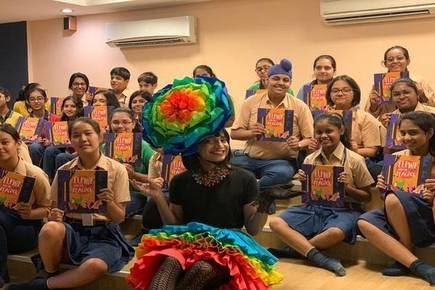
Pic credit: The Hindu

https://www.google.co.in/amp/s/www.thehindu.com/society/celebrating-pride-month-in-june-with-the-21daysallychallenge/article31720256.ece

Now, more than ever, we, the people of India, should encourage everyone who believes in LGTBQ equality to come out and be an ally or support in the best possible way. It’s time we move towards being a more accepting society and initiatives like these is the fundamental step towards that larger goal of “vasudhaiva kutumbakam”, i.e. “the world is one family”.

APOCALYPSE – Are u afraid to die?

Humans have a macabre fascination with the end of the world — will humankind go out with a bang or disappear with a whimper? Are we the architects of our own demise or cosmic pawns in a game we can’t control?

Apocalypticism is the religious belief that there will be an apocalypse, a term which originally referred to a revelation, The original word in Greek — apokalypsis means an unveiling, a revelation i.e. to disclose , but now it is usually referred to the belief that the end of  the world is impending, This credence is usually accompanied by the idea that civilization will soon come to a tumultuous end due to some sort of catastrophic global event.

ORIGIN

The notion of apocalypse originated from The Book of Revelation (often called the Revelation to John, Apocalypse of John, the Revelation from Jesus Christ ,which is the final book of the New Testament which is the final book of the Christian bible. Revelation is an apocalyptic prediction and  is the only book of the New Testament classified as apocalyptic literature with extensive use of visions, symbols etc. especially in connection with future events. The Book of Revelation was written probably in around the year 96, right at the end of the first century.

The book spans three literary genres: the epistolary, the apocalyptic, and the prophetic. The Revelation of John, the Apocalypse, also must be looked at from the perspective that it’s not the only such piece of apocalyptic writing  that we have. In fact there are lots of writings from the ancient world that we know by name and we can actually read today also.  So when the author of the Book of Revelation sat down to write, there was a very strong paradigm of what revelation literature should look like and sound like.

But the story of apocalypse is an old one, one of the oldest humans tell. In ancient religious traditions beyond Christianity — including Judaism, Islam and Buddhism — it is a common narrative that arises in moments of social and political crisis, as people try to process unusual or shocking events.

HERE ARE SOME APOCALYPTIC BELIEFS OF VARIOUS FAITHS:

Christianity: Some Christians believe that the New Testament’s book of Revelation(the second part of the Christian Bible), isn’t just metaphorical, but a literal description of a final battle on Earth between God and the forces of Satan. Before that happens, there is a series of horrific events—including an earthquake, lightning, and a fiery hailstorm that burns up a third of the trees on Earth etc.it is also believed by the idea that Christ will return.

Islam: Prophet Muhammad—describes the events that lead to the end of the world. Natural disasters increase, and society undergoes a moral decline that leads to a surge in violence, bloodshed, anarchy, and sexual immorality. In the Islamic tradition, the Quran tells stories of plagues and of a final earthquake that will tear the earth apart. Amir Hussain, professor of theology at Loyola Marymount University, said, “Apocalypse also includes what happens when one’s eyes are opened”.

Hinduism: Hindus apocalyptic beliefs are different from other religions, because they believe that the universe goes through endless cycles of creation and destruction. In that cycle, three gods—Brahma, Vishnu and Shiva—all play a role. Brahma is the creator of the universe, while Vishnu preserves it during its existence. Shiva’s job is destroying the universe, so that it can be recreated.

 Buddhism: In Buddhism, time is cyclical, not linear, making apocalypse both an end and a beginning. “Apocalypse happens and then a new order starts, a new social order, new moral order,” said Vesna Wallace, professor of Buddhism at the University of California, Santa Barbara. “The story repeats itself.”

Modern, secular American life is filled with its own apocalyptic visions. Movies and television shows depict civilization on the brink of extinction. “The Walking Dead” explores life amid the zombie apocalypse. “The Hunger Games” presents a dystopian future after conflict and ecological disasters have destroyed much of the world.

WHY DO PEOPLE BELIEVE IT ?

I think history will tell you that end time predictions increase when people are being ill-treated  or feel oppressed and this increases when despair hits – in terms of how the world is experiencing economic and political turmoil.   The people who are most likely to believe in doomsday predictions are those who are religious, because there are many religious texts that  indicates end of days.  Even today, people continue to make predictions about dates in the future in which the world will inevitably end.  It is an extraordinary belief because there is little proof to back these claims, and they are often the result of someone trying to interpret ambiguous information that is in religious or other ancient texts. 

Very popular source of doomsday predictions is the Mayan Calendar.  One of the most famous end of world predictions was for December 21st, 2012.  People took this prediction seriously, and they stocked up on food and read up on survival skills.  The reason that the Mayan Calendar was proof of this end was because the most popular Mayan calendar abruptly ended on December 21st, 2012. Whether one believes in doomsday predictions or not, it is hard to deny that it is a very common belief that has scared all of us at one point or another.

 According to psychologists, possible explanations for why people believe in modern apocalyptic predictions include an innate human fascination with fear, personality traits of paranoia and powerlessness and a modern romanticism involved with end-times due to its portrayal in contemporary fiction.

HOW TRUE ARE THESE PREDICTIONS ?

Predictions of apocalyptic events that would result in the extinction of humanity or the destruction of the planet have been made since at least the beginning of the Common Era. The 2012 phenomenon predicted the world would end by Earth getting destroyed by an asteroid,or an alien invasion; or a supernova. Scientists from NASA, along with expert archaeologists, stated that none of those events were possible.

Every year, new apocalyptic predictions waft through the the internet and the tabloid media. In 2019, for example, the world was predicted to end in a nuclear war, an asteroid impact, and a new ice age, Modern doomsayers have been predicting climate and environmental disaster since the 1960s. They continue to do so today. None of the apocalyptic predictions with due dates as of today have come true.  More than merely spotlighting the failed predictions, this collection shows that the makers of failed apocalyptic predictions often are individuals holding respected positions in government ,science or hold strong religious beliefs . While such predictions have been and continue to be enthusiastically reported by a media eager for sensational headlines, the failures are typically not revisited.

APOCLYPSE 2020

Nostradamus, the world’s most famous 16th-century prophet and mystic, is believed to have prophesied the year 2020 and has called for both disasters and revelations. A year marked with both favorable and dangerous results. Pandemics are surrounded by a sense of impending apocalypse. Throughout history, they have been understood as final tribulations, a sign of the end time, It is also quite extraordinary to believe that you can pinpoint, to the exact day, when the entire world will end.

The end of the world is near—again! For centuries, doomsdayers have prophesied the apocalypse. But there’s a tiny catch: None of the end-of-world predictions ever come true.

GDP does not reveal much

GDP is the measure of the market value of all final goods and services produced in an economy during any particular year. In India the central statistical office calculates the GDP.

Importance of GDP:

  1. GDP helps in knowing the size of the economy. GDP shows the total production in an economy so one can know the performance of an economy through GDP.
  2. GDP tells the expenditure and income of an economy this helps the policymakers to formulate monetary and fiscal policy accordingly.
  3. A high performing has got the ability to attract foreign investments leading to further expansion in income and employment.
  4. It also gives an idea about sectors which are lagging behind in their performance so that policy makers can initiate appropriate corrective measures to achieve the goal.

Limitations of GDP:

  1. GDP does not include non-material aspects like crime rate, industrial safety standards, mortality rate etc.
  2. It does not reveal the amount of income inequality in our country. It shows the per capita income which is only an average number; it does not mean every individual in the economy is getting the same per capita income.
  3. GDP fails to take into account the environmental and ecological damage caused due to economical development.
  4. It does not encourage countries to adopt Sustainable development.

  Development is a process that creates growth, progress, positive change or the addition of physical, economic, environmental, social and demographic components. Noble laureate Amartya Sen has defined development as a process of expanding the real freedoms that people enjoy.

 GDP measures only the economic expansion of a country it fails to take into account the other aspects of development. It is concerned purely with materialistic aspect does not speak about other aspects of life that make it meaningful and wholesome. So GDP alone cannot be sufficient to measure the development of a country. There are other alternative measures which include both income and non-income variables like life expectancy, literacy rate, mortality rate, freedom form choice etc.

Other alternative indicators include:

 The human development index- This was devised by UNDP (United nations development programme) and developed by Mahbud ul Haq and Amartya Sen. This approach measures education, health, life expectancy at birth and various other crucial variables.

The social progress index- It is a better way of measuring societal development. It takes into account access to water and sanitation, educational and health outcomes, public criminality, housing, access to information, communication and political liberties.

Genuine Progress indicator- It is used to measure the economic growth of a country. It takes everything that GDP takes into account but addition to this it also takes into account the cost of crime, cost of ozone depletion and cost of resource depletion etc.

Happy planet index- It was introduced by New economics foundation in 2006. It takes into account human well-being and environmental impact. 

                The goal of all countries especially the developing countries is to attain a higher level of GDP accordingly the fiscal, monetary and other policies of the government are naturally intended to promote this goal. However the goal of achieving higher GDP has become older concept. National governments have become more and more aware of other goals that constitute the true development of mankind. Materialistic affluence alone cannot assure the societies a comprehensive welfare environment. Awareness of this goal has become more and more pronounced especially in economies that had already achieved a high level of development especially G7 countries. But Asian and African countries that are grouped under third world countries could not afford to make use of their scares resources in pursuit of achieving the important goals other than achieving higher GDP and economic development.   Making the world safer and happier, the lofty goals stressed by modern thinkers and world environment leaders should become the responsibility of the developed nations and international institutions affiliated to UN. The burden rests upon the affluent nations who are the real polluters and threat to a safe  and happy world.

Indian Cinema: A Hostage to Controversies

Bollywood is a traditional Indian movie. Vector illustration with marquee lights

Bollywood never runs out of issues that capture the nation’s headlines. Anyone who is a Bollywood fan knows that controversies and cinemas go hand in hand. The issues can be related to anything to everything in a movie, be it, the cast of the film or their personal beliefs to their personal lives, everything revolves around it.

Every time there is a movie that will attract politicians, certain communal groups or even the Indian censor board and it is not easy for a film to go down the throat of the sensitive people.

Over 63 movies have faced controversies by different communities since 2008 according to an internet source. The reasons range from religious (PK gained criticism for the projection of Hindu God in a manner unacceptable to people), political (Ae Dil Hai Mushkil was in the fire for casting a Pakistani actor, Fawad Khan), historical (Bajirao Mastani was accused of distorting facts related to the ruler Peshwa Bajirao and his wives) and community (Ek Thi Daayan has a report filed against it for the projection of witches in a bad light).
Lately, filmmakers have been struggling to make movies, a smooth run but the protestors have it all. Be it blackmailing to burning down the school bus, nothing seems to be enough for the haters to calm down their ‘pride’ and ‘ego’.
Moreover, there was a threat to chop off Deepika Padukone’s nose referring to the epic Ramayana where chopping off nose was a punishment.
Madhur Bhandarkar, a filmmaker said “Let’s accept that making historical and political films is a problem in India,” who refers to an old experience with Indu Sarkar (July, 2017) as a nightmare.
Nonetheless, the truth remains that the real issues that need peoples’ concern are lacking behind and are considered shameful to talk about.
We show rejection, intolerance for a movie being released who casts a Pakistani actor. Why? Was this reaction to be made over the issues like dowry, poverty or even women protection?
The humor is getting lost and people are becoming a hard rock statue that reacts only when it opposes ‘their’ sentiments or beliefs.

The thought needs to change, let the 1.3 billion people decide whether the movie is worth it or not.
Chief Justice Dipak Misra says”Cinemas are an inseparable part of the right to free speech and expression, States cannot issue notifications prohibiting the screening of a film.”
A movie despite controversies and hatred of certain groups still remains purely INDIAN, purely BOLLYWOOD that has the hard work of lakhs of people who worked day and night to get good results not anger and anguish of people.
Let’s think whether the ”VIRODH PRADARSHAN” is fair enough on part of being an Indian and a responsible human being.


How far lockdown extension will implicate the Educational system?

Both schools and colleges are facing a tremendous loss of learning. As that of the recent situation, summer vacations are going on and the HRD ministry is formulating another alternative calendar for the coming months in case the situation doesn’t improve.

Online classes as an alternative!

The educational system decided to opt for online classes for the students but it actually didn’t work and was not up to the mark. Also, these lectures have failed to influence students.

https://timesofindia.indiatimes.com/city/bhopal/online-classes-not-up-to-the-mark-finds-new-study/articleshow/75416080.cms

A study conducted by Principal in an architecture college, Professor Sharma came up with a conclusion that offline classes are better than online ones.

What problems were faced?

Just imagine yourself sitting inside a classroom with your earphones plugged in and not able to be part of the classroom! Exactly, same happened with the students who were studying in cities have returned back to their homes belonging to rural areas are not able to access the online classes due to lack of internet connectivity, they were marked present but not able to listen and learn, which eventually headed students to a complete loss.

What can be improved?

Most probably nothing can be done with the students living in rural areas. But what about the one’s living in the cities? Students also complained that they were informed at the very last moment of starting the class. Sometimes the students have to wait, mostly the teachers keep waiting.

So the problem can be resolved by maintaining the time table for lectures the same as that was done in offline classes. The classes should be conducted according to the time table with exact timing so no one has to wait. The best thing which can be done is to improve the educational system by adopting the technology.

Post lockdown solutions-

Careful planning helps you limit the long term significance of this shutdown. Reopening of schools to be allowed in green zones. Also, the schools in the yellow zone should also open as soon as the zone turns green. Students should be allowed to visit the school in shifts, this will not equalize the previous education but it will ensure that at least some education is given to every student while taking care of social distancing. Proper sanitization after finishing with one shift should also be carried out.

Relaxation to students!

“All India Council for Technical Education (AICTE) and the University Grants Commission (UGC) will also issue a revised academic calendar soon and Prof. Rajive Kumar directed colleges to continue online classes for the current semester under the extended lockdown”.

Overwhelming updates regarding fees acted as a huge relief to students as colleges and institutions are not allowed to demand any sort of fee payments until the ongoing COVID lockdown is lifted and conditions become normal.

No money to pay salaries!

Deputy Chief Minister Manish Sisodia said that the Delhi Government is left with no money. They don’t have money to pay their employees. The Deputy Chief Minister has also written to Union Finance Minister Nirmala Sitaraman regarding this issue.

https://www.timesnownews.com/delhi/article/no-money-to-pay-salaries-delhi-govt-seeks-rs-5000-crore-aid-from-centre-to-deal-with-covid-19-crisis/599452

Unite and fight! The only possible way to fight against this pandemic.

Junk this food

One of the most doable memory of everyone’s school life is the joy of hearing the arrival of those hawkers and peddlers selling spic & spicy snacks and mouth watering sweets.

But it’s a thorny pricky fact too, tgat due to the consumption of all these flavor boosters or mood swingers, our lovely little Angels are sitting and playing in the lap of deadly diseases known to all as obesity and food poisoning.

brown woven basket on brown brick floor
Photo by Ajay Singh on Pexels.com


Throughout the developed world, with every passing second, with every single tik-tok of your clock, obesity is becoming a grave problem. Many greybeards are offering a suggestion to confort this issue i.e. debarring those unhealthy food (read junk) hawkers from entering the school premises. This way one can stop them to lure the Little education seekers towards theirnasty and unhygienic snacks.

This cumbersome suggestion needs to be executed in a well planned manner. Firstly, teachers and proffs are needed to make students aware about the fact that rather than helping in growth, that delicious looking all sort of mouth watering snack is harmful for their well being.

Just like every thing has two sides, one good and another dark and pitch black, similarly one can say that all this of shunning and restricting sort of stuff’s not good. Thinking as a child, by banning the presence of hawkers , you are basically denying the children of enjoyment (which they think is their birthright). Or, at worse the schools may resemble an Olympic size swimming pool filled with tears of those little Angels.

All and all, instead of a strick prohibition, a regular monitoring of street vendors can be done to ensure that the snacks they’re offering are not stale or made in unhygienic way. Many other diamond solid steps should be taken to ensure that the youth of your nation mustn’t fall in the hands of the demon of diseases like obesity and food poisoning.

Odisha under “Jal Jeevan Mission (Har Ghar Jal)

Through ‘Jal Jeevan Mission’, Government of India is making all efforts to provide every rural household in the country a Functional Household Tap Connection for water in adequate quantity of prescribed quality on regular and long-term basis. Following the true spirit of cooperative federalism, State Governments are steering this flagship programme to realise the objectives of the Mission so as to bring cheers in the lives of rural people by providing potable water at their doorstep and ensure ‘ease of living’. It is envisaged that through this life changing Mission, each household will get potable water supply of 55 lpcd of prescribed quality on regular and long-term basis.

The estimated outlay of the mission is Rs 3.60 Lakh Crore with Central and State share of Rs. 2.08 Lakh Crore and Rs.1.52 Lakh Crore respectively.

Odisha state presented their Annual Action Plan before the National Committee headed by Secretary, Drinking Water & Sanitation, Ministry of Jal Shakti for consideration and approval for 2020-21. Govt of India approved Rs 812 Crores for implementation of the Mission in the State for the financial year. This allocation is a significant jump from last year’s allocation of Rs 297 Crore. Out of 81 lakh rural households in the State, Govt of Odisha plans to provide 16.21 lakh household connections in 2020-21. The State is planning 100% household tap connections by the year 2024. Priority is being given for 100% coverage of villages under water scare areas, quality-affected areas, Sansad Adarsh Gram Yojna villages, villages in aspirational districts and SC/ ST dominated habitations.

Laying emphasis on capitalising on ‘low-hanging fruits’ i.e. in the villages/ habitations where piped water supply schemes already exist, State is making all out efforts to immediately provide household tap connections to remaining households belonging to weaker and marginalised sections on priority. A roadmap is prepared for the effective implementation of Village Action Plan (VAP) with the active participation of the rural community. Strengthening of existing drinking water sources for long-term sustainability of drinking water supply systems through convergence of various programmes like MGNREGS, SBM (G), 15th FC Grants to PRIs, District Mineral Development Fund, CAMPA, Local Area Development Fund, etc. at village level is planned for judicious use of all available resources. The State has been allocated Rs. 2,258 Crore under 15th Finance Commission Grants to PRIs during 2020-21; 50% of this amount has to be mandatorily spent on water and sanitation.

To implement the mission, institutional arrangements at various levels have been made and State’s PHE Department is to play a critical role. To instil sense of ownership among the village community, Mission strives to involve the community in planning, managing, implementing, operation and maintaining the water supply schemes meant for them for long-term sustainability. State Government will start engaging the Self Help Groups and voluntary organisations for community mobilization.

Jal Jeevan Mission encourages participation of local community in surveillance of water quality. For this, action plan carried out to incorporate the timely procurement of kits, supply of kits to the community, identification of at least five women in every village, training women for use of Field Test Kits and reporting and collating the reports with laboratory-based findings of the water sources. State also proposed taking NABL accreditation for 18 of its water testing labs. At present, it has one state-level lab and 32 district level labs. 

Odisha state reels under two extreme conditions of water scarcity and also excess of it. There is one part which is water-stressed for most of the year, while the other part is marooned in monsoon. With the mercury soaring above 40 degrees Celsius, and during the prevailing Covid–19 pandemic, it is important that people don’t crowd public stand posts/ drinking water sources to fetch drinking water. Therefore, State was advised for taking up water supply works in villages to provide household tap connections, which will help in practicing social distancing, and will additionally help local people in getting employment and boost rural economy.

In the present context, when lot of migrants are returning to the State, it has become very important to provide livelihood to them. These personnel could be utilized in water supply related works especially plumbing, fitting, water conservation works, etc. in every village to ensure sufficient ground water availability leading to water security, water availability for agriculture and most importantly will help in provision of drinking water to every rural household as per the objective of Jal Jeevan Mission.

20 States under ONOC to commence national/ inter-State portability transactions to benefit migrants

The Union Minister of Consumer Affairs, Food & Public Distribution Shri Ram Vilas Paswan today announced the inclusion of three more states namely – Odisha, Sikkim and Mizoram in the scheme on ‘Integrated Management of Public Distribution System’ (IM-PDS).Under this system nation-wide portability of the benefits under NFSA through “One Nation One Ration Card” plan is implemented to enable the NFSA ration card holders to lift their entitled quota of subsidised foodgrains from any ePoS enabled FPS of their choice anywhere in the country, by using the existing/same ration card after Aadhaar authentication on ePoS device.

The facility so far is enabled in 17 States/UTs, namely – Andhra Pradesh, Bihar, Dadra & Nagar Haveli and Daman & Diu, Goa, Gujarat, Haryana, Himachal Pradesh, Jharkhand, Kerala, Karnataka, Madhya Pradesh, Maharashtra, Rajasthan, Punjab, Telangana, Tripura and Uttar Pradesh. Further, constant efforts are being made by this Department of Food & Public Distribution to expand the reach of national portability to the beneficiaries of other States/UTs also in association with respective State/UT Governments. In this endeavour, necessary preparatory activities to integrate these three new States with the national cluster viz. upgradation of ePoS software, integration with central IM-PDS and Annavitran portals, availability of ration cards/beneficiaries data in Central Repository, requisite testing of national portability transactions has also been completed with the support of central NIC team. After completing all these arrangements, the national/ inter-State portability transactions under ‘One Nation One Ration Card’ plan has been enabled in these States w.e.f distribution month of June 2020. By August 2020 three more States namely – Uttarakhand, Nagaland and Manipur will also be added to the national cluster. Department is doing all necessary arrangements to include remaining all 13 States namely – West Bengal, Arunachal Pradesh, Assam, Meghalaya, Delhi, J&K, Ladakh, Chandigarh, Puducherry, Tamil Nadu, Chhattisgarh, Andaman&Nicobar and Lakshadweep island to the national cluster. It is confirmed that by 31st March 2021 all States will be added to One Nation One Ration Card scheme and the scheme will be operational all over India.

Shri Paswan highlighted that central technical team has imparted the requisite orientation trainings to the technical team and concerned officers of these States/UTs through Video Conferencing and necessary guidelines/ instructions for the implementation of national/inter-State portability were also provided to them. It is reiterated that those NFSA ration cards which have recorded atleast one Aadhaar authenticated transaction during the last 6-months shall be eligible for the national portability transactions under this plan. This feature has been enabled through the central repository of ration cards/beneficiaries maintained by NIC. Further, it is mentioned that requisite web-services for reporting of portability transaction details to central dashboard are also enabled for these States with immediate effect and the central NIC team shall be continuously assisting the State Governments in seamless rollout of ‘One Nation One Ration Card’ plan.

Shri Paswan requested all these States to commence the national/ inter-State portability transactions in June 2020. This would also enable the beneficiaries of these States anywhere in the national cluster of States/UTs to access their quota of foodgrains through national portability with immediate effect. In this regard, efforts/activities to generate necessary awareness among the NFSA beneficiaries and FPS dealers may also be undertaken on priority.

Ministry of Environment, Forest and Climate Change on Issues Related to Air Quality in Urban Areas

The 15th Finance Commission headed by Sh. N. K. Singh and including its Members and senior officials held a detailed meeting with the Ministry of Environment, Forest and Climate Change headed by the Union Minister for  Environment, Forest and Climate Change, Shri Prakash Javadekar, senior officers on issues relating to Air Quality(AQ) specially that in Urban Areas. It may be recalled that the XVFC Report 2020-2021 was the first time that any Commission has given attention to air quality (AQ) as a major focus and this FC had not only recommended grants for 2020-21 and also provided road map for its award period. The meeting started with the Minister applauding the Commission for this path breaking step.

The Commission is currently deliberating the recommendations to be made for the next five years from 2021-22 to 2025-26 and needs to formulate suitable provisions for continuing the grants for these cities/UAs for improving ambient air quality in a sustainable manner. In this regard it needed to understand the procedure and operational guidelines finalised in administering these grants and monitoring the outcomes for 2020-21, the meeting with the MoEF&CC was called for.

            The objective of the meeting focused was to was to discuss on the status of the implementation of the FC’s recommendations for 2020-21 for administering the grants to improve AQ in million-plus cities and also to seek inputs from the Ministry on what should be considered for the next five years from 2021 to 2026 and this was elaborated by the Chairman, Shri N. K. Singh to the Minister and the officials.

            The Commission was given the following information: 

  • Regarding reliable data on AQ measurement, it was explained that there is a network of around 984 stations covering a wide range of cities and towns, around 779 manual stations and 205 continuous monitoring stations in around 500 cities which were set up under the National  Control  of   Air   Pollution   (NACP)  to meet its  objectives. Though a network of AQI monitoring stations are in place, there is a need for strengthening and expanding these along with the geographical area to cover the air-shed areas in order to make it more robust and accurate. 
  • The Ministry has begun this work earlier as part of roll-out of NACP and various think-tanks like IITs, IIMs and NITs have been made local partners for different cities/towns. Ministry will also seek their expert guidance on what the Commission need to consider for the five years from 2021.
  • As the problem of AQ is mostly not a localized phenomenon and is influenced by many factors beyond the control of a particular region, the Central Pollution Control Board (CPCB) is now focusing on air-shed management approach.
  • Construction & Demolition Waste Management was a priority of the Government and that the Government would seek the support of the Commission for the same.

The Minister (MoEF&CC) Shri Prakash Javadekar, appreciated the inclusion of Air Quality(AQ) of Delhi in the XVFC’s Report of 2020-2021 and added that there would be a basic structural change in sources of AQ in the next few years and particularly in larger cities of the country due to the new regime to emission norms which would lead to a estimated reduction of 30 to 40 per cent in vehicular emission. 

He opined that strict implementation of pollution and emission laws with harsh punishment and penalties to the defaulters is the pre-requisite for ambient AQ. 

He informed that with the launching National AQ Index in 2015, we now have reliable data of AQ with respect to 42 million plus cities from 2017 onwards. 

The Minister also informed the Commission that his Ministry was coming up with the rules for implementation of Construction and Demolition Waste Control so as to control dust, a major source of pollution in cities.

The Minister emphasized that the grants by FC-XV should continue for the next five years to strengthen the network and coordination between SPCBs of various cities for enforcement of AQ improvement measures. Third party assessment could be done through institutes like IITs and IIMs. He also stated that the Ministry is planning to hold a conference with the SPCBs to ensure effective implementation of this programme, to which the Chairman XVFC has been invited as a participant.

He also briefed about various reforms are being taken up by the Ministry at a break-neck speed and stated that the time delays in approval of application/liences were drastically brought down from earlier 640 days  to 108 days now. Further, this period will be brought down to 50 days within next six months. As regards ease of doing business, the Ministry is coming up with an amendment to the notification of environment impact assessment. He also mentioned the various reforms Page 6 of 7 implemented in the coal washeries that brought down the pollution by several fold and many other steps have been initiated by the Ministry as part of ease of doing business at national and international level.

The Commission unilaterally appreciated the Ministry’s effort in building up capacity to monitor Air Quality.  The Commission also stressed on the need for controlling agricultural pollution.

It will be recalled that the 15th Finance Commission in its report for the Financial Year 2020-2021 had  recommended grants of Rs. 4,400 crore for the year 2020-21 to improve the ambient air quality in fifty million plus cities/Urban Agglomerations (UAs). For this, Ministry of Environment, Forest and Climate Challenge has been entrusted with the responsibility to facilitate the desired outcomes through these urban local bodies.

The Chairman while stressing on the need for consistent and reliable data on AQ, stated that Commission was concerned about the pollution of NCR and would address the same within the mandate of the Finance Commission.  He assured that MoEF&CC that the XVFC would continue it consultations with the Ministry on this critical issue of AQ in million plus cities to firm up its recommendations.

Date of Poll and Counting of Votes for Deferred Rajya Sabha Poll

On 25.02.2020, Election Commission of India announced elections to the Council of States to fill 55 seats of Members from 17 States, retiring in the month of April,2020, which were notified vide Notification No. 318/CS-Multi/2020(1) dated 06.03.2020. After the last date of withdrawal on 18.03.2020, respective Returning Officers declared 37 seats from 10 States filled in uncontested. Further, as per the reports received from the concerned Returning Officers, the biennial elections for 18 seats from the States of Andhra Pradesh, Gujarat, Jharkhand, Madhya Pradesh, Manipur, Meghalaya and Rajasthan were to be conducted on 26.03.2020 (Thursday) and the date before which election was to be completed as earlier announced by the Commission was 30.03.2020 (Monday) as per the notification dated 06.03.2020.

          Section 153 of the Representation of the People Act, 1951 specifies that the Election Commission for reasons which it considers sufficient, may extend the time for the completion of any election by making necessary amendments in the notification issued by it under section 30 or sub-section (1) of section 39 of the said Act. Accordingly, considering the prevailing unforeseen situation of public health emergency due to COVID-19 and related advisories in the country, the Election Commission, vide its press note, dated 24.03.2020, deferred the poll and extended the period of said election under the provisions of section 153 of the said Act and decided that the announcement of fresh date of poll and counting for the said biennial elections will be made by the ECI after reviewing the prevailing situation. The Press Note also specified that the list of contesting candidates already published for the said election by the respective Returning Officers, is to remain valid for the purpose of remaining activities as was prescribed under the said notification (dated 06.03.2020).

          Now, Commission has reviewed the matter in detail. Considering all factors, including the guidelines dated 30.05.2020 issued by Union Home Secretary and Chairman, national Executive Committee (NEC) under the National Disaster Management Act, 2005, and taking into account the inputs obtained from the Chief Electoral Officers concerned, the Commission has decided that the date of poll and counting of votes in respect of the biennial elections for 18 seats from the States of Andhra Pradesh (4 seats), Gujarat (4 seats), Jharkhand (2 seats), Madhya Pradesh (3 seats), Manipur (1 seat), Meghalaya (1 seat) and Rajasthan (3 seats) shall be as per the following schedule: 

EventsDate
Date of Poll19th June, 2020 (Friday)
Hours of Poll09:00 am to 04:00 pm
Counting of Votes19th June, 2020 (Friday) at 05:00 pm
Date before which election shall be completed22th June, 2020 (Monday)

          Commission has also decided that the Chief Secretaries shall depute a senior officer from the State to ensure that the extant instructions regarding COVID-19 containment measures are complied with while making arrangements for conducting the elections.

          Further Commission has appointed Chief Electoral Officer concerned as Observer for the election in the respective State.

Extension of repayment date for short term loans for agriculture and allied activities by banks

The Union Cabinet chaired by the Prime Minister, Shri Narendra Modi has given its approval to extend repayment date upto 31.08.2020 for Standard Short-Term loans upto Rs.3 lakh advanced for agriculture and allied activities by banks, which have become due or shall become due between 1st March, 2020 and 31st August, 2020 with continued benefit of 2% Interest Subvention (IS) to Banks and 3% Prompt Repayment Incentive (PRI) to farmers.

Benefit:

Extension of repayment date upto 31.08.2020 for Standard Short-Term loans upto Rs.3 lakh for agriculture and allied activities by banks falling due between 1st March, 2020 and 31st August, 2020 with continued benefit of 2% IS to Banks and 3% PRI to farmers, shall help the farmers to repay/renew such loans upto the extended repayment date of 31.08.2020 at 4% p.a., interest without attracting any penalty and thus help them in avoiding travelling to banks for such renewal during this COVID pandemic period.

Background

Govt. is providing concessional Standard Short-Term Agri-loans to farmers through banks with 2% p.a, interest subvention to banks and 3% additional benefit on timely repayment to farmers thus providing loans upto Rs,3 lakh at 4% p.a. interest on timely repayment.

In the wake of lockdown due to ongoing Covid 19 pandemic, there have been restrictions imposed on movement of people. Many farmers are not able to travel to bank branches for payment of their short term crop loan dues. Moreover, due to restrictions on movement of people, difficulty in timely sale, receipt of payment of their produce and the necessity of adhering to social distancing norms, farmers are finding it difficult to arrange the amount to be deposited for renewal and are unable to visit the banks to deposit and draw fresh loans.

25th Foundation Day of the Rajiv Gandhi University of Health Sciences

Prime Minister today addressed the 25th Foundation Day of the Rajiv Gandhi University of Health Sciences at Bengaluru via video conferencing.

Prime Minister appreciated the efforts of the Karnataka Government in handling the COVID-19 situation.

Shri Modi said the World is facing one of the biggest crisis since the two World Wars. Like the world changed pre and post-World Wars, the same way the pre and post Covid world will be different, he said.

Shri Modi said at the root of India’s brave fight against Covid-19 is the hard-work of the medical community and our Corona warriors. He likened the doctors and medical workers as soldiers but without the soldiers’ uniform.

Prime Minister said the virus may be invisible enemy but our corona warriors are invincible and in the battle against the invisible vs invincible our med workers are sure to win.

Prime Minister expressed concern at violent incidents, owing to mob mentality, against the front-line workers and said several steps have been taken by the Government to curb them. He said that the Government also provided an insurance cover of Rs. 50 Lakhs to those on the front-line.

Prime Minister called for a focus on human centric aspects of development instead of debates on economic issues in the era of globalisation.

He said, advancements nations make in the health sector will matter more than ever before and that the Government had taken many initiativesin health-care and medical education, in the last 6 years.

Prime Minister called for a four pillared strategy to improve the health care, its infrastructure and its access to one and all.

He said the first pillar would be Preventive Health Carewhere in the emphasis would be importance of Yoga, Ayurveda and General Fitness. He said more than 40,000 Wellness Centres were opened with a key focus on controlling life style related diseases. The success of Swachch Bharat mission is another key area of preventive health care.

The second pillar is – Affordable Healthcare. Prime Minister highlighted the success of Ayushman Bharat- the world’s largest healthcare scheme and how in less than two years, One crore people have benefitted from it, especially women and those living in rural areas. 

The third pillar is- Improvements on the supply side.  Prime Minister said that a nation like Indai has to have proper medical infrastructure and medical education infrastructure. 

He said, Work is under-way to ensure a medical college or post-graduate medical institute in every district of the country.  Prime Minister underlined the fact that the country has seen rapid progress in setting up 22 more AIIMS. 

He said over the last five years, we have been able to add over 30,000 seats in MBBSand 15,000 seats in post-graduation.   This has been the largest increase in the five year term of any government since independence. 

Prime Minister also spoke of the setting up of National Medical Commission to replace The Medical Council of India through an Act of the Parliament. 

The fourth pillar, he said would be  Mission mode implementation of all the schemes and that it is very crucial for the success of a good idea.

He cited how the implementation of National Nutrition Mission is helping youngsters and mothers and also how India is determined to eliminate Tuberculosis by 2025, which is 5 years ahead of the global target of 2030.

He also spoke of Mission Indradhanush where the annual rise in vaccination coverage has increased by four times.

Prime Minister said that the Central Government has recently approved the introduction of a new law for expanding education of more than 50 different allied and healthcare professionals, which will address the shortage of shortage of para-medical personnel in the country.  

He urged the gathering to discuss and ideate on three issues namely how to make advances in Tele-Medicine; how to make gains in health sector through ‘Make In India” and how to bring about more of IT related services into health care.

He was appreciative of how the initial gains in the area of Make in India where the domestic manufacturers started production of PPEs and N-95 Masks and already supplied over 1 Crore of PPEs and 1.5 Crore of Masks.

Prime Minister also appreciated how the ArogyaSetu App is helping in the fight against Corona virus.

RISE AND SHINE BEFORE YOU TIE A KNOT

Since you were a baby girl, you always had plans and dreamt about your perfect marriage and certainly your life after that. Isn’t it? But, it’s time to rethink and live your life before someone else enters in it forever. Love yourself and never give yourself a chance to think “I wish I did this before”.  You might never get a chance to live and enjoy as much as you want after your big day. Set yourself free and be ready to rise above all. SO, girls the clock is ticking, grab your notepad and pen to add these things on your checklist before you happily tie a knot-

images (1)

Know yourself – This is the first and most basic thing that you need to do. Know and discover yourself. Be aware of what you want from life and what your expectations from it are.  Make mistakes and grow out of it. Don’t stick to your past. Observe things around you and let it tell you where you belong.

Be independent– Live life the way you want to. Do things you always thought of. Be financially independent and spend the money the way you want. Pamper yourself. Take decisions for yourself. Even if the decisions are bad, they are yours and you will only gain out of it. Learn from your own experiences.

Solo trips– Every girl has this on their checklist. But how many actually do this?  It’s high time you do what you feel like. Go on solo trips, adventure life. Make new friends, learn and explore the world. It’s time to reconnect you from the world and live life without restrictions.

Become fearless – Face your anxieties and fears. Come over it. Do things you never thought you could. Surprise yourself and the world. Go hiking, driving, or learn a new sport. Know that it’s your time to rise and no one can stop you from this.

Follow your heart– Do what your heart says, follow your hobbies, and your passion. Give yourself a break and know that not all things are supposed to fall into the correct order. Life is messy but it’s a beautiful one. Sing, write, or just lay around and read your favorite book.


PDS system or DBT system:

PDS(Public distribution system) is India’s flagship food security programme which sells subsidised food grains, including wheat, rice and sugar, and kerosene through fair price shops in states and union territories. DBT (Direct Benefit Transfer) is a scheme launched by Government of India to transfer the benefits and subsidies of various social welfare schemes directly in the bank account of the beneficiary. Both PDS system and DBT has benefits and suffers from some deficiencies. Now lets us see the merits and demerits of both the systems.

Merits of PDS:

  1. PDS provides food grains in a subsidized rate so this acts as a safeguard for beneficiaries against inflation and price fluctuation. In normal course the people will be forced to consume less of food and other items during inflationary situation affecting the productivity and efficiency of the household sector. The PDS system acts as a safeguard against such price fluctuations providing a cushion against decline in consumption.
  2. The farmers have the advantage of an assured demand for their produce since the government is procuring these produce for public distribution. Thus there is an assured market for the farmers produce.
  3. Under this mechanism there is an assured employment for workers, provides for the procurement of services by way of transporting the produce from procurement area to the point of distribution, and creating the necessary infrastructure in the form of the storage facilities, marketing centers and other associated services. This system is envisaged as a well fare system unlike a commercial attempt which is based on profit.

Demerits of PDS:

  1. The materials supplied under PDS are generally substandard and sometimes even not fit for human consumption.
  2. Materials supplied are under weighted and thus the consumers are cheated by providing reduced quantity of rice, sugar, wheat etc.
  3. The system involves large scale wastage of materials because of improper storage facilities. Lack of sheltered storage facilities leads to wastage of grains due to rain and other climatic conditions, rodents play a predominant role in the loss of grains, grains are infected by insects like cockroaches.
  4. Corruption in the procurement centers where factors like weight, the moisture content etc are conveniently ignored. This system happens to be unwieldy requiring a vast administrative work involving heavy expenditure to the Government and thus inherently an inefficient mechanism.
  5. Consumers have no choice in the purchase of food grains and other materials from PDS. They have to buy what is provided by the government.

Merits of DBT:

  1. Food grains provided in PDS are of low quality and only few food products are available in PDS shops. By direct cash transfer method beneficiaries can buy the food products of their choice in open market.
  2. PDS spends most of its revenues in holding and maintain the food grains; by adopting DBT system government can reduce the administrative cost.
  3. DBT will encourage more people to open bank accounts there by making proper monetary transaction without pilferage.
  4. Government can also make target specific approach under DBT.

Demerits of DBT:

  1. There is a chance that beneficiaries spend their money in unproductive way by way of gambling, drinking and other harmful ways, depriving the family members of their necessities and comforts. The general tendency of poor and uneducated is spending their income in irresponsible way affecting the general welfare of the family which is the co-principle of this system.
  2. India has a very weak banking infrastructure in rural areas. Not every rural household will have bank branches within 5km radius, so beneficiaries will face difficulty in accessing their cash benefits.
  3. Regular and assured marketing of their produce to the government agencies will become absent.           

Way forward:

                Government can introduce bar-coded ration cards for beneficiaries like done in Gujarat this will reduce duplicate ration cards.

                Periodic checking in procurement points and selling points should be done to reduce corruption and leakages.

                Government may establish more banking infrastructure facilities for rural people to inculcate banking habits to the rural household.

PM NARENDRA MODI MANN KI BAAT(31/5/2020)

Prime Minister Narendra Modi addressed the nation on Sunday through his Mann Ki Baat where he said that it’s going to be a long way in the fight against the coronavirus. He began with saying that the means of transport were suspended the last time he addressed. This time many areas are in operation along with Shramik Special trains, airflights, miniature industries which has lead to the gradual rise in the economy. Still no leniency has to given while following the protective measures.

With mutual contribution, we are able to fight against corona. If we compare with other countries, we’ve accomplished a lot. Inspite of having more challenges, we are able to fight corona better than other countries. We feel sorrow over the losses caused but we are successful in saving a lot due to the united power of the countrymen. Every individual is contributing to its best. This whole cause is people driven. The most important feature of the people which lead to moving ahead is ‘Seva Shakti’ or the power to help. In reality, in this pandemic we have shown that ‘SERVICE’ and ‘SACRIFICE’ are not only our ideals but also our ways of life. It is said that, ‘Seva Parmo dharma’ which means that there is pleasure and satisfaction in service. We have witnessed that one who is involved in service activities is free from depression and stress. Servicing others leads to Confidence and Positivity.

Our doctors, nurses, cleaners, workers, and media body are contributing their limitless efforts towards the pandemic. He quoted example of Mr. C Mohan of Tamil Nadu who runs a saloon in Madurai. He donated his 5 lacs of money for service which he has saved for his daughter’s education. Similarly, in Agartala, Gautam Das, a cart-puller, gave his savings to the needy by providing food. In Punjab, a differently-abled person, donated his amount to make masks. Mr. Narendra Modi appreciates such people. In this pandemic, people are innovating in the labs and small startups. Nasik’s Rajendra Yadav, a farmer has created a sanitizing machine using his tractor. Innovations are also seen in the field of education. The strong will power of the people is leading such innovations. This pandemic is long, we are inexperienced facing new challenges and problems. Yet the most affected are poor sections of the society. We can share their pain. The whole India is making efforts. Railway employees are also corona warriors as they strive hard to send the people to their locations.

This situation is also an opportunity to learn. The countrymen are making efforts to develop the eastern India. The Central Government is taking steps to look after the job opportunities in the villages. If the villages and small districts would have been self-dependent, then these problems would have been minimised. He quoted, ‘It’s human behaviour to move from darkness to light’. He is happy to see that being self-dependent is taken as a challenge. ‘Vocal for local’ is also being adopted widely. ‘Make in India’ should grow by individual efforts. We must minimise the use of outside commodity. In this pandemic, he has also talked to various foreign ministers. He got to know that they are also giving priority to ‘Yoga and Ayurveda’. In India too, people are getting themselves involved in doing yoga at home and learning about ayurveda. Yoga community, immunity and unity are beneficial for all. Yoga is important as corona affects the respiratory system. Ministry of AYUSH has started ‘MyLifeMyYoga’ which is a video blog competition where people can participate by posting a 3 minutes video of performing yoga asanas and sharing their experiences.

The fear of falling sick is the nightmare of the poor people. ‘Ayushman Bharat Yojana’ which started 1.5 yrs ago, has treated more than 1 crore people for free. If poor people would have spent money in their treatment then they would have been in loss. Portability has bound the country together. Any person of Bihar can avail the treatment in Karnataka too. Among the 1 crore people, 80 percent of them are the villagers. Some even had critical diseases and 70 percent underwent surgeries. He said that we must talk to the people being treated by Ayushman. People after treatment have become optimistic and motivated to fight the challenges of life. He has also appreciated the honest tax payers of the country.

He kept on mentioning about the super cyclone which has hit West Bengal and Orissa. Homes are destroyed. He even visited the place. India stands with them. The current locust attack reminds us that small creatures are also capable enough to destroy. People are innovating to fight against such critical situations. On 5th June, World Environment Day will be celebrated and the theme is Biodiversity. This theme is especially important in the present scenario. Since the last weeks, we have slowed down, but this has given us an opportunity to understand the rich biodiversity around us. People are able to hear chirps of many birds who were once considered lost in noise and pollution. We are getting news of animals walking freely. People are sharing photos that they can see mountains and wonder that whether they would continue to see such beauties of nature or not.

He concluded by saying that we can draw inspiration to coexist with nature by creating balance. We must conserve water through simple processes. We can save water in this rainy season. At individual level, we can take initiatives to plant trees and hence save nature. After such hardwork, we must keep fighting and don’t become negligent. It’s our duty to save every ones life. Take all the necessary precautions. At last he said that he would be meeting next month through ‘MANN KI BAAT’.