• Gondwanaland – S.P. – India (without the Himalayas) ; S. America ; Africa ; Australia.
• 200 Mya – Gondwanaland broke up and the land masses started drifting.
• India – moved northward – position across the equator about 50 Mya.
• Movement – further northward and collided with northern Asia which gave rise to the present Himalayan mountains.
• Indian climate – Monsoon type .
• Evolution of monsoon climate in India is not fully understood.
• Monsoon – a tropical phenomenon
• First appeared –entering the subtropical belt of the southern hemisphere .
• Research – monsoon system dates back to about 25 million years. • Fossil leaves : morphological characters were analyzed Deccan Volcanic Province East Garo Hills of Meghalaya Gurha mine in Rajasthan Makum Coalfield in Assam collected.
• Fossils – different geological ages like 65, 57, 54, and 25 Mya.
• Note : Morphological characters of leaves get altered according to the prevailing weather and climatic conditions.
Study of the fossil leaves.
• Dated back – 65, 57, 54, and 25 Mya .
• Adapted – Australian type of monsoon and not the current Indian monsoon system.
• Fossil sites had warm climates – 16.3–21.3 degrees C.
• High rainfall between 191.6 cm to 232 cm
• India – only subcontinent to have crossed from the southern hemisphere to the northern hemisphere.
• Aim – better understanding Evolution of Indian monsoons Role in the evolution of biodiversity hot spots ⮚ Help in the conservation of modern biodiversity hot spots ⮚ The future monsoon prediction
• Factors that led to the issue: 2015 – Jet acquired Air sahara – with huge price – led to huge loses. Competition from low budget airlines like Indigo, Go-air. Rising fuel prices.
• Debt – ₹8,000 crore to lessors, suppliers, pilots and oil companies.
• Lenders were searching for prospective buyers.
• Denied ₹400 crore as emergency fund – later it was jet grounded. • A Resolution Plan: rehabilitation plan for a Corporate Debtor (CD) going in insolvency. Section 5 (26) of IBC 2016 – “Resolution plan means a plan proposed by resolution applicant for insolvency resolution of the corporate debtor as a going concern in accordance with Part II” • Mandatory contents of the resolution plan: Financial creditors and Operational creditors. Financial creditors: relationship with the entity is a pure financial contract – loan or a debt security. Operational creditors – liability from a transaction on operations.
• Committee of creditors (CoC) is set up – comprising of financial creditors. Appoint a resolution personal/ professional.
• Resolution personal Appointed by CoC Presents a resolution plan to the CoC CoC must approve a resolution plan. Resolution process must be completed within 180 days – may be extended by a period of up to 90 days after NCLT’s approval.
Jet Airways Resolution Plan.
• Mumbai Bench of the NCLT has approved it.
• Resolution plan from a consortium. UAE-based businessman Murari Lal Jalan and U.K.- based Kalrock Capital. • Details Total claims – ₹15,432 crore Jalan-Kalrock consortium – to pay creditors & banks – ₹1,183 crore over a 5 period. First tranche of ₹280 crore – paid in cash after 180 days of the new promoters taking ownership of the jet airline.
Second instalment of ₹195 crore – paid in next 730 days. Balance – paid through a mix of cash, proceeds generated from the sale of assets and annual cash flows generated by airline. Stock the distribution Banks – 9.5% Consortium – 89.79% Employees – 0.5% Public shareholding – 0.21% • Challenge – Getting the slots back for the jet airlines is going to be difficult and expensive.
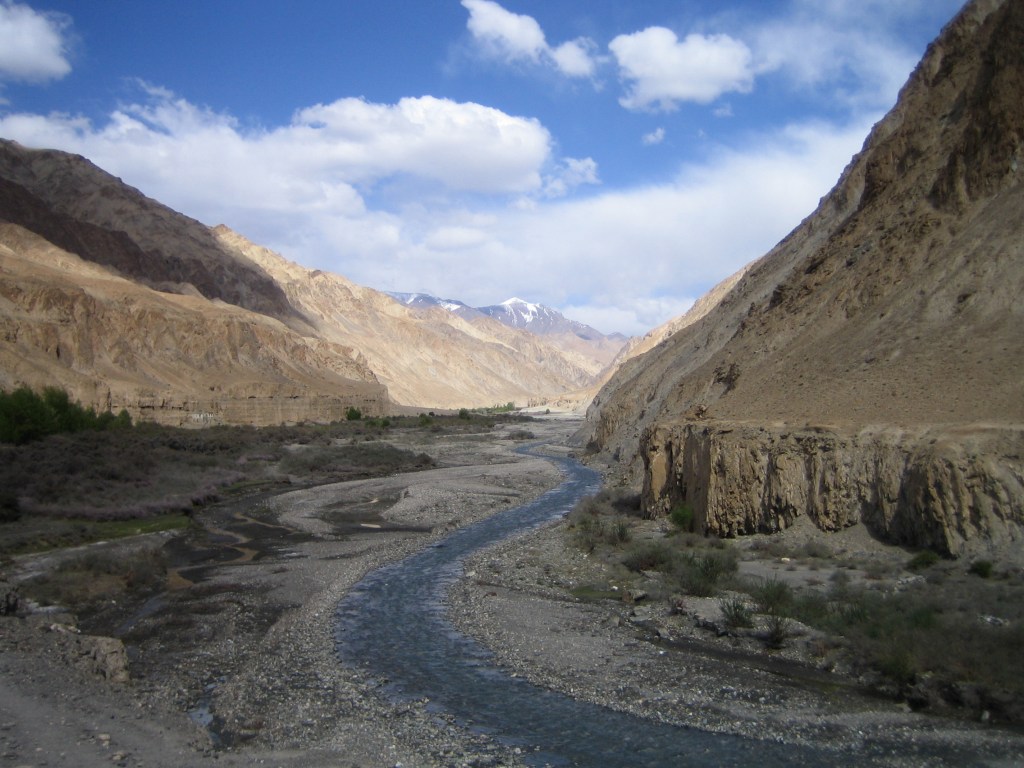
The barren but enchanting landscapes of Ladakh have many enthralling places to trek but arguably the best of them is the Markha Valley situated on the river of the same name. The Markha River is a tributary of the Zanskar river, who is the first major tributary of the great Indus River. It lies within the Hemis National Park just on the outskirts of the capital, Leh and the valley is the largest in the Union Territory. The River starts at the junction of Langtang and Nimaling with the villages along the river valley including Skyu, Hangkar, Rumbak, Yurutse and Markha.
The Route
Markha Valley is one of the most popular trekking routes in Ladakh. Leh is the starting point of this trek. The valley is accessible near Spituk in the west which is generally the starting point of the trek and Gongmaru La pass near Hemis, where the trek ends. There are many tiny hamlets present throughout the valley. The villages in the valley have preserved monasteries, temples and ruined forts. The Tacha Gompa is the most important Buddhist monastery in Markha Valley.
Views of the Heights
Kang YatzeStok Kangri
As the trail goes through Hemis National Park, all it’s cherished fauna, mountain sheep, rabbits and even snow leopards can be spotted. The majestic K2 Peak, Stok Kangri and the Kang Yatze peaks are visible from the valley. Even the region of Tibet is visible on a clear day.
Today’s topic is going to be refreshing and entrancing.
I am sure you guys know about photography as skill of capturing the world that we see with our eyes in a photo. Photography is a very broad topic, based on how the photo is taken the feelings ,the emotions that the photo shows also changes.
But have you guys ever heard about Kirlian photography?
Never heard about it, no problem cause I am going to brief you guys on this topic.
Kirlian photography is also known as AURA photography.
Although the kirlian photography is not so well known among beginners or non photographers it is definitely popular quirk and that is its believed by people that through the technique of kirlian photography “aura “of the objects can be captured.
Kirlian photography is possible through only by following a certain techniques and due to that technique the possible result is believed to be the aura of the thing that is captured.
The other name aura photography also came due to many myths formed around Kirlian photography .
It is believed that the soul of the body and aura which cannot be seen with our naked eye can be captured through Kirlian photography
Even the Kirlian couple Semyon and Valentina who discovered Kirlian photography in 1939 , also believed it to be that the Kirlian photography is capturing the objects aura, which intrigued many scientists curiosity into this field and many researches started taking place.
But sadly the truth is Kirlian photography only appears to capture aura and the crux lies in the technique the photography uses, the mechanism of the photos is the high voltage corona effect. In this effect when the photographic films encounters changes in the chemical composition which in turn alters due to the light producing the aura effect.
Although there is no particular Kirlian camera you can still produce this effect using a transparent electrode in modern cameras
Its believed that every object in this universe has distinct energies and the mental, emotional states of that person can effect those auras.
So the Kirlian photography is used in many therapies and is used to detect various diseases, they also used in treating psychiatric patients
Kirlian photography unlocked a new page for the subject called photography ,it showed the effects of light can totally change the result, and stills there are many mysteries to unravel.
Recently many applications were also developed , so that we can also enjoy the Kirlian photography .
Some people believe the aura photography is true and some people only believe in facts ,whatever it maybe for me its just fun to enjoy these unique things rather than contemplate ,at last my opinion is that
“Kirlian photography is fascinating”
THANKYOU^^
Please visit the below websites for more information^^
The day that I decided to quit my last job and the day that I handed in my notice were almost 90 days apart. In those three months, I worried — a lot. I decided to pursue my desire to become a full-time writer. But shit was getting scary.
Things like “what if I can’t pay my bills?” and “what if I fail?” went through my head. I freaked out, but as it turned out, the solution to my excessive worries was easier than I expected.
Many of us worry about all kinds of things: Work, relationships, money, health. Some concerns are real, but many are unnecessary.
No matter what kind of worry you have, the response in your body is always the same: It increases your cortisol levels.
And an increased cortisol level is something you definitely do not want. Cortisol compromises your immune system. As a result, you will become more susceptible to disease.
Researchers have also found a relationship between cortisol and diabetes, osteoporosis, and heart disease. Also, stress and fear can cause depression, bipolar disorder, panic disorder, and burn-out.
Let’s face it: If you don’t stop worrying, you will die. That’s not me talking. That’s your body talking.
In the past year and a half, I’ve studied worry, stress, fear and anxiety almost every day. I even wrote a book about how you can live a stress-free life. My findings? Don’t try to relieve stress and worry, but eradicate it. Address it — head on.
“Fear defeats more people than any other one thing in the world.” — Ralph Waldo Emerson
Relief Doesn’t Work
This is what most people do when they experience stress and worry:
Take it out on your partner of family
Drink alcohol, take drugs, or both
Binge-watch Netflix
Play video games
Go on a holiday
Party all night
Have sex
Be honest, how long do these things make you forget about your worries? 10 minutes, half hour, a day? It doesn’t last. As soon as you get back to the reality of your life — worry and stress smack you in the face.
Distracting yourself from your life doesn’t work — and yet, many of us keep doing it. I’ve read many books and scientific papers on this behavior. Some say it’s because we have too much free time, some say it’s because of culture, some say it’s because how we are wired.
To be frank, it’s not important to understand the why. We just have to look at the facts: People worry too much, and that can destroy your life. It’s more important to focus your attention on addressing worry.
“Never let the future disturb you. You will meet it, if you have to, with the same weapons of reason which today arm you against the present.” ― Marcus Aurelius
Turn Worry Into Constructive Process
Worry is often about the future. It goes something like this: What if…
“She doesn’t like me anymore?” “I lose my job?” “I can’t pay my bills?” “I fail this exam?” “I don’t get this promotion?” “My business doesn’t take off.”
And then we make up consequences. It goes something like this: I have to…
“Be single.” “Find a new job.” “Borrow money from my parents.” “Quit school because I failed.” “Stay at this job another year.” “Be ashamed because everyone thinks I’m a failure.”
Then we think: “I can’t handle that.” And finally, we think: “The world is going to end.”
If your thought process is the way described above, worry controls you.
The good news is there is a simple solution: Self-monitoring, which turns worry into a constructive process. In a 2002 study, done by Szabo & Lovibond, students were asked to record their worries.
The results of that study demonstrated that you can turn worrying into a constructive process by focusing on finding a solution to your concerns.
“You have to learn the rules of the game. And then you have to play better than anyone else.” — Albert Einstein
How I Use Self-monitoring To Address Worry
I’m a pragmatic person. I do think that things like meditation and mindfulness help with worry — but not for me. It’s too intangible. Instead, I prefer to take a practical approach like self-monitoring. Here’s how I do it.
Use a note-taking app and create a new note. I call my note “Things that I worry about.”
List everything you worry about — and keep adding things to the list. Everything that you worry about goes on this list, no matter how small.
Think of a solution for all your perceived problems. For example, if your financial situation makes you anxious, you need to create a plan to earn more or spend less.
Then, start executing. Do one thing every day that brings you closer to solving your perceived problem.
Finally, don’t worry about things you have zero control over — those things you have to accept. If you know more about how you can do this; read Meditations by Marcus Aurelius.
This process focuses on action. It forces you to learn the skills you need to overcome your perceived problems. Because problems don’t disappear out of themselves.
In India, every year Teacher’s day is celebrated on 5 September. On this day all the students decorate the schools and organise special programs in honour of the teachers all over the country. Along with students, teachers also participate in these programs with full enthusiasm. On this day we are discharged from our school activities so that we can participate in other programs.
Why is Teacher’s Day celebrated on 5 September ?
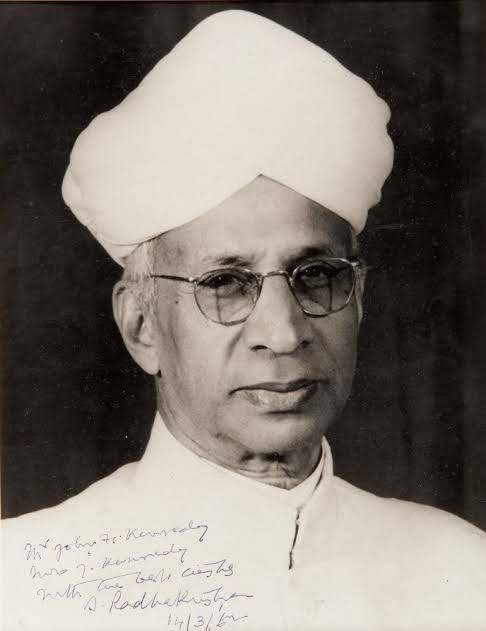
Dr. Sarvepalli Radhakrishnan was born on 5th September. He was the first Vice-President of independent India. He served the country as Vice-President from 1952 to 1962. He served as Second President of the country from 1962 to 1967. Worked as well.
Dr. Radhakrishnan greatly respected the teachers. Before joining politics, he taught in many institutes like Calcutta University, University of Mysore and Oxford University. He was highly appreciated for his work and was also loved by all his students. He believed in the fact that the teacher is the person who prepares the youth as the future of the country. This was the reason that he fulfilled this responsibility of the professor so diligently and always tried to give good values to his students.
When he became the President of our country, his students expressed their wish to celebrate his birthday every year. In response to this, Dr. Radhakrishnan said that he would be more happy if his students celebrated his birthday as Teachers ‘Day. From that day 5th September, his birthday is celebrated as Teachers’ Day.
Importance of teachers day
Teacher’s day is a very important day for both the students as well as the teacher’s life. On this day we celebrate the honour of all the teachers as a tribute to their efforts and works of theirs. Teaching is one of the most difficult tasks in the world because they have the responsibility of educating the youth. There are children in the whole class and because each student is different from the other and has his own ability, this task becomes even more difficult, some students are good in sports and some in mathematics. Some are interested in English. A good teacher always keeps the interest of his students in mind and recognizes their abilities. The teacher teaches them to hone their subject or work skills and also takes care so that their other activities or subjects are not affected.
That is why this day has been dedicated to show respect and gratitude to the teachers.
Teachers’ Day celebration in schools
Teacher’s day programs are celebrated with great enthusiasm in schools across India. On this day, the students wear the costumes of their favorite teachers and go to lower classes than themselves. On this day, senior students go to different junior classes and teach them. It is a very fun day for all of the students. During this, senior students take care that the discipline of the school is maintained and for this junior students support them.
In many schools, junior students also play their role as teachers. On this days students organise various programs for the teachers. They organise programs like singing show, dancing show, quiz competition, dance-drama, ramp walk etc. These programs are normally organized after break time i.e., in the second half of the day. In the first half the senior students take the classes till the lunch break . The teachers relax in the classes and enjoy all these activities.
On this special day, students bring greeting cards, flowers and all sorts of gifts for their teachers. Teachers also feel very happy after receiving all such gifts from their students and they also give treats to their students.
Conclusion
In India, Teachers’ Day is celebrated in honor of teachers, as they work hard throughout the year and want their students to do well in school and other activities. On this day different types of programs are organized in schools across the country. These types of programs strengthen the attitudes of students and teachers. In fact, it is a special day for both students and teachers.
Mahatma Gandhi’s philosophy of Sarvodaya aimed at rural reconstruction and uplifting the people of rural India by peaceful and cooperative means.
Sarvodaya, in simple terms, means welfare and upliftment of people and of all living beings . It means the welfare of not only oneself but of others as well. Sarvodaya stresses coexistence and love.
Ideals of Sarvodaya:
Economic implications-Under this philosophy, one should be given the opportunity to contribute to national production. The surplus should be distributed equally and inequalities of wealth should be reduced. Sarvodaya also emphasizes that industries should be decentralized and land should be redistributed.
Based on Trusteeship-This philosophy involves that everyone must utilize only that part of his wealth that enables him to lead an honorable livelihood and the rest of the wealth belongs to the community and must be used for its welfare. So all industrialists must act as trustees of wealth and not its owners.
Social implications- In the social aspect, this philosophy believes in individual freedom, opposes untouchability, and promotes widow remarriage. It believes in the promotion of brotherhood and human dignity Sarvodaya believes in functional education and decentralized society.
Political implications- In Sarvodaya philosophy, political power is not an end in itself but it is only means to an end, the end is human welfare. It believes in the universal adult franchise and favors decentralized democracy. Sarvodaya condemns the majority rule and centralization of power and majorly believes in self-sufficiency.
Hence, the philosophy of Sarvodaya is an example of the Gandhian philosophy of ‘Simple living and high thinking. It envisages a new pattern of life-based on the decentralization of economic and social power, ensuring the moral freedom of man.
It is one of the inevitable topics of the millennial generation and that is, “Mental Illness”. It has become one of the terminal topics of all yet it’s high time to focus on our young minds!
So the question here is, why every fourth out of seven has a mental illness? Is it due to a new way of living life? Or is it the society? Well, we can’t blame society for every cause, right? Instead of living in a society, it is us who should be blamed. Yes, the destruction is due to unawareness which we didn’t appreciate.
These young minds are an asset to our bright future, but what they are suffering from is the worst disease of all. Medically, there is a cure to all sorts of diseases but the question is, where is the essence of this disease? Why is this happening in excess amount to our young buds? Here are some of the elements which can be the reasons for the illness present in our young minds :
Giving more priority to the unrealistic world of social media: Teenagers are the most popular groups of all ages who dedicate most of their time to social media and thus, for them, it’s ‘The second home’. They dwell so much in these media platforms that the unrealistic world makes them feel like it is reality.
Specially they tend to create fake personalities in front of their friends and colleagues and when they are avoided or not popular then they think of themselves as ‘worthless’.
It is highly observed that teenagers are dwelling so much into the ocean of social media life that; they start to judge themselves based on; number of likes they got, followers, and people’s comments. This makes them feel depressed and their minds start to break down in this fake world.
Many times, these youngsters are targeted and bullied on social media through certain comments and unknown threats that they don’t even communicate with their parents to provide no harm to their parents.
Fractured child-parent relationship: Contemporary parenting can be one of the elements which lead to their child to depression. Since parents are working 24/7, they don’t give much emphasis on their children and often there is a barrier of communication between the parent and child. Due to the unavailability of the parent’s presence, the child feels more ignorance and often lives in his/her thoughts which leads them to have a mental illness.
We can also see that; these ignorant kids are often lured to follow the wrong path which leads them to devastation as a result.
Academic pressures and Moral dilemmas: Kids these days are often pressurised by their parents to score high marks, study in a decent university, and earn pounds which will raise their status in society.
Often, due to this academic pressure children don’t feel themselves and rather they are distracted and even take difficult steps at a tender age. As we can see those suicides are due to academic pressures is in high rates which are also one of the common factors on the mental health in millennials.
Pandemic – A Misery to the Millennial generation: This is one of the latest reasons why kids these days feel depressed about the new normal. The social interactions which made them feel positive are gone in the realms of social distancing and quarantine.
Attending online classes is one of the tiring jobs also several factors for them not being productive and lack in the concentration of academia. This leads to a very high amount of stress as we are humans and when we are clutched or burdened in result we act opposite to it, so the impact of online classes makes them vulnerable when they are facing so many pressures at the same time.
Addiction leads to depression among youngsters: It is very unfortunate but a fact that the present generation youngsters face different types of addiction in different platforms and therefore they tag themselves as ‘FREAKS’; notably, these addictions vary from one kid to another, some are addictive to social media, some with games, some mislead their minds to pornography world and some are highly addictive towards drugs and sedatives, etc.
There are endless reasons why kids are being addictive but one of the central reasons is due to the exposure to technology at a very tender age. Often, they are misled by their friends and colleagues and due to fewer interactions with elders, they indulge themselves in these forms of bad impact on themselves.
The cure to the sickness among youngsters:
Every disease has a cure at its end and to find this cure is that we should look into the core or the root of the disease. As rightly said, love and acceptance is a human need. The kids these days need parent’s support and guidance and a sense of belongingness so that they wouldn’t feel they are alone.
To bring them to their right place it is the elders who can try some old traditions to introduce among the young minds and let them know about the authenticity of their predecessors. As being together, loving each other and living in harmony can make youngsters feel accepted and so the cause of this disease can soon end.
Youngsters on the other side can also sense their responsibility by being positive and having a good relationship with their family and creating kindness more instead of hatred.
In todays world , management is the base of any organization or administration to accomplish the desired goals . It is not a new term or a new skill because it has always been a part and parcel of all the ancient civilizations in the world.
Ancient texts and scriptures of many countries like India, china, America throws the important light on management. We can find the fundamentals of management in the ancient scripture of Bhagwat Gita. Bhagwat Gita contains rich of managerial techniques which was written a thousands of years ago.
During the first pre world war phase (1870-1974) there is a rapid change in economies in terms of trade, transportation and communication which indeed led to globalization. Globalization made management as one of the important aspect of development where the classical management theories were developed.
Classical Theories Of Management :
SCIENTIFIC MANAGEMENT THEORY :
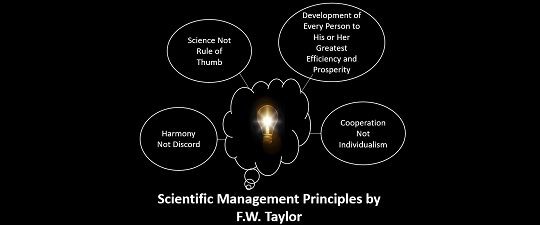
Scientific management theory was developed by “FREDRICK WINSLOW TAYLOR”. This theory got popularity in the period of 1880s and 1890s in U.S manufacturing industries with its analyzing techniques of work flow .
The Principles Of Scientific Management Theory are:
Taylor theory was mostly concentrated on shop floor level and suggested functional foremanship to the industries.
1:Science not a rule of thumb, this principle specifies that organizations should constantly develop new methodologies which makes work easier, faster and quicker rather than sticking to the old methods.
2:Harmony,not discord, this principle specifies that maintaining a positive atmosphere in the organization improves the productivity.
3:Cooperation, not individualism, all the activities of the organization must carried with mutual coordination in order to get improved results.
4:Development of each and every person to his (or) her greatest efficiency, this principle specify that organization should ensure the growth of every individual according to their performance.
ADMINISTRATIVE THEORY:
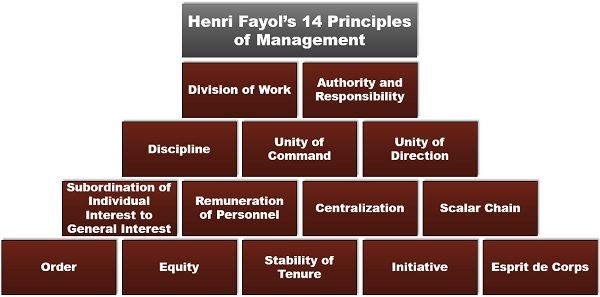
Administrative theory was developed by “HENRY FAYOL(1841-1925)” .Fayol mainly focused on the administrative management of the organization and structure of work tasks.
Fayol concentrated on top level management and he suggested unit of command. Administrative theory is quite opposite to the scientific theory.
Fayol’s generalized principles ofmanagement:
Fayol developed 14 principles for the organizational development. Fayol consider that effective management of an organization would lead to efficient results.
Fayol’s five functions of management:
Fayol considered that categorizing the functions of management helps the organization in day to day progress of work. The five management functions are:
Planning: This function is used to classify the needs of an organization and arranging them into tasks to develop strategies in order reach the desired goals.
Organizing: This function is used to determine the appropriate process to complete a task.
Commanding: This function is used to supervise the subordinates in completion of day to day tasks.
Coordinating: This function helps in integrating with different kind of groups and making things get done efficiently.
Controlling: This function ensures in evaluating the overall tasks according to the plan set and making changes if needed.
BUREAUCRATIC THEORY:
Bureaucracy theory was developed by “MAX WEBER(1864-1920)” .This theory was generated during the industrial revolution of Germany to manage it’s growing industrial enterprises.
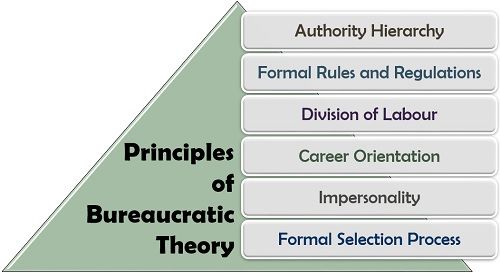
Weber mainly concentrated on the top level management of an organization. According to weber the bureaucratic organization is more rational and can get control over every individual employ. He developed six ideal principles of bureaucracy.
Six principles of bureaucratic theory:
Authority Hierarchy: It is a chain of command to promote individual’s effort to accomplish the organizational goal.
Formal rules and Regulations: These are rules and procedures that are to be followed by the employ’s of entire organization .
Division of Labour: The whole work flow is divided into tasks and distributed among the employees according to their ability.
Career Orientation: Promotion of loyalty among the employs and making the long term relations with the organization.
Impersonality: Making decisions according to the facts rather than personal interests.
Formal selection process: Hiring employ’s according to their skills, qualification , experience etc…
CONCLUSION:
As management & leadership are closely related to each other which has been provided since ages. With globalization management studies has undergone changes in formal study of management which needs a constant experimenting. These classical theories enhance the management abilities and predicts the control behavior of an organization.
Please ensure to read the part 1 of the Restoration Literature.
Restoration Tragedy – Heroic Tragedy – combination of Epic and tragedy; Tragedy – a tragic flaw but Heroic Tragedy, not because of tragic flaw but by Failure, hero failing by his failure may be in a duel/battle, in Restoration Tragedy – hero’s failure isn’t something inherent from the beginning of the play, but when he tries something –an act, he fails – Nicholas Rowe, John Dryden, Thomas Otway.
Epic – a lengthy poem – often poets never able to completely write it, due to its extreme length – a stylised life off a person, dictated in a formal manner, not a person existing alone but connected to society – it begins in media rest – not a liner progression of events but could begin anywhere. Alexander Pope wrote a Mock Epic, written using the style of the Epic, making fun of it.
Restoration Comedy – Comedies in Elizabethan Period – love and its tribulations – romances written in the Elizabethan Period is congratulatory praises the Monarch – Elizabeth mainly. With restoration, comedy comes back, but a different set; a class bound comedy – to deal with the upper classes, Shakespearean plays enacted by Shakespearean Company, which in Jacobean period the company was renamed under Jing James – ‘Kings Men’ – which catered to the needs on general people and not aristocracy, but was later seen to align to the needs of Aristocracy, therefore the comedies written during Restoration was class bound, and lot of upper class people were represented in that way. Metropolis – London, urbanised metropolitan – filled with stereotypes – innocent with faulty characters; ‘predatory widows’ looking for men with money, as well as men looking for women with good estates – money. Restoration Comedy emphasis on love triangle and rivalries, among parallel plots. Restoration Comedy – marriages are regarded as a boring restrictive system, ‘looking for estates’ as well as a boring restrictive system. Both narratives existed the latter was unique, where women had a voice of their own and men objecting towards the institution of marriage. Adultery/Carnality/Folly and Vices/ Proviso Scene – ‘Way of the World’ by William Congreve – a prenup – a marriage bargaining scene. William Congreve, George Etherege, William Wycherley, George Fraquhar, John Vanburgh – Big five of Restoration Comedy – portraying the upper class yet critiquing – subverting them. London – the urban side is a setting for all of them and there would be a juxtaposition between the urban and rural side of London.Attacks on Immorality – genre of drama is declining, Theatre Licensing Act of 1737, granting license to any play or refuse on any grounds – the initial half of 18th Century; revival of this particular form of writing – 1770’s Restoration Comedies – Oliver goldsmith – 1773, ‘She stoops to Conquer’ and Sheridan in 1775 and 1777 ‘Rivals’ ways in which the RC is revived in the 1770’s. And Oscar Wilde in ‘the Importance of Being Ernest’.
Setting financial goals is essential for personal finance management and budgeting. In order to efficiently manage spending, savings and investments and be financially secure, one must set financial goals.
Being unprepared and spending mindlessly can be quite risky. One should be as prepared as they can be in case of emergencies or financial crises.
Moreover, saving and investing your earnings can help you grow your wealth and utilise your earnings in a profitable manner.
Before setting goals
Financial goals and objectives can vary from person to person depending on their income, investments, expenses, life stage/age, needs etc. Hence, it is important to assess the objective and duration of the goal by following the steps mentioned below-
Identify starting point: Set a date for implementing the plan and its duration
Set priorities: Identify your objectives; Are you saving to invest or to buy or to set up an emergency fund?
Document your spending: Calculate your monthly expenditure. Analyse them and try to reduce them.
Pay down your debt:Reduce your debt and pay it off first to reduce your interest expenses.
Secure financial future: Implement the plan to become financially secure.
Most importantly, financial goals should be S.M.A.R.T – Specific, Measurable, Attainable, Relevant, Time-based.
Specific: Financial goals should be specific in terms of objective, time and amount.
Measurable: Goals should be measurable and expressed in monetary terms. For example, goal to be rich is not measurable as it is a subjective term. Hence, an amount limit suitable for every person should be set.
Attainable: A reasonable amount and time and limit should be set so it is possible to achieve them. For example, saving up to buy a car on a monthly salary of ₹30,000-₹40,000 within one year is not realistic and attainable.
Relevant: Every individual’s financial goal should be relevant to and in sync with their individual financial needs and objectives. For example, if a person wants to save up for retirement, they should focus on saving to invest in schemes specially designed for retirement planning.
Time-based: In order to achieve a goal, it should have an end period which motivates one to achieve it. They cannot be never ending as different stages of life have different financial requirements. At the end of the time period, one should evaluate and see if they were successful in achieving it or not.
Duration of Financial goals
As mentioned above, setting time-based goals is very important. Duration of each goal varies and is dependent on its nature and the income and expenses of the individual. For example, saving up to buy a TV should take between 3-6 months depending on the saving capacity of each individual. However, saving up for retirement takes years of planning, saving and investing.
Financial goals can be classified into Short-term, Mid-term and Long-term goals.
Short-term goals have a duration of 2 or less than 2 years. Example- Stick to weekly/monthly budget, reduce unnecessary expenses.
Mid-term goals have a duration of 2-years. Example- Build and diversify portfolio.
Long-term goals have a duration of more than 5 years. Example- Make a retirement plan and implement it.
Restoration Period is during 1660 and the monarch and its influence in England. This period marked the return of Charles II as King (1660–85) following the period of Oliver Cromwell’s Commonwealth
history writing – a significant contribution made during the Restoration Period, documenting the religious and political history of England. The English Prose written to popularise Science – in Renaissance – emergence of new cosmos and science able to release from the clutches of religion, and during the Restoration Period – The Royal Society of London – for the improvement of Natural Knowledge – a learned society thinking about rationality, factual interpretation, empirical reasoning, clearly the opposite of the Medieval Period, where we don’t question authority – a significant thread carried forward in the Restoration is the spirit of Science and Technology. The Royal Society of London – a scientific advisor to the British Government, a principal advisor as well. Thomas Sprat – history piece, on The History Royal Society of London. Gilbert Burnet.
Diary writing – Pepys and Evelyn diaries- social documents – presenting grant details, gossip and rumours of 17th Century intellectuals, discussing events like – coronation of Charles II, Fire of London (1666) Plague of England (1665), wars fought.Evelyn’s work – Fumifugium – smokiness of London, how it was becoming increasingly populated , Sylva – reforestation, and pollution, how river Thames was becoming increasingly populated.
Travel Writing – sponsored by The Royal Society of London to make a systematic documentation and collection of natural knowledge, funding foreign travels – only condition is to report the travels. Samuel Smith, Benjamin Walford, William Dampier – traveler belonging to the Restoration Period, connection is restoration science and travellers as they work hand in hand, beyond providing data but also their direct interaction with a new land would impact – direct experience of the new land and not just the marvels of travel documentation. Richard Haklyut and Thomas Roe (India is a very rich country and they sell Jewels on the streets of India).
Biographies – secular as well as religious people as well – Izeak Walton ‘Lives’, John Dryden– the History of particular mens life. Hagiography – biography of a christian Saint – the pious life of a saints life.
Let me start it here by pointing out that, if you’re here already and reading, it simultaneously becomes an activity you engage into.. so yes, reading is important.
But the question is how important; am I right? Education doesn’t have to be what you have studied over the years inside an institution; it could be beyond that — books, per se, they have the ability to enable you with a education that knows no bounds, be it a sci-fi comic, a text on Newton’s thesis, or just some legal content; the best thing about reading is you get to choose what you like, what you prefer, what interests you, beyond institutionalised barriers. Reading is essentially a generic term, panning across undefined boundaries, anything could be considered a text, and you just read it. Nothing is good or bad, you have to just invest yourself into it, and surely over a period of time human brain will adapt into what is becoming the ew normal, and you’ll noting changes — good changes, within yourself. You’ll be moving towards a plane where you have the level of objectivity, where you are aware, and won’t be swayed by anyone around you, you will have the power for yourself to act like how you want to.. and isn’t that almost an ultimate goal amongst us beings, to be liberated and be this autonomous being?
Its also significant to not label what you read, because no matter what genre, or what kind of a text you read, the essence of it would always be to analyse it, not just absorb the words at face value, but rather delve deeper into what or why an author writes the way they do, or what does if a certain section written differently could do to a text, brush up your imagination, glide smoothly with any text you adopt, but absorb a lot more, nothing can ever be set-in-stone, people change, time changes, though written words can’t; they have the potential to be perceived the way someone wants to perceive it, and no one can fight over one’s views, that’s counterproductive to what we’ve been trying to establish. However, don’t forget; if someone’s entitled to their opinion, you are entitled to yours and you have the power to keep on bettering it, to be better and as much you exercise reading into your daily existence, you are stepping closer to what I would consider is being a better being — for that, make sure to keep your eyes and brain open, and not rigid.
A few years ago, I gave up my excessive pursuit of happiness. I used to think that the purpose of life was happiness. But that philosophy didn’t work for me. I realized that happiness is always a byproduct.
When you spend time with people you love, you feel happy. When you invest four years in getting a degree, you feel happy and accomplished when you graduate. You feel happy when you come up with a useful idea at work. You feel happy when you finish a hard workout. You feel happy when you listen to good music.
You see? Happiness is the byproduct of an action. It can be as simple as having a conversation with someone or listening to a song.
But happiness doesn’t last.
It’s a feeling that comes and goes. Some people disagree with that and say you can always be happy. I think you can be happy the majority of time—not all the time. Why? Because even the best life has bad times.
When You Try Too Hard
If you’re unhappy or frustrated, it doesn’t mean you should do everything to become happy again.
When you try too hard to be happy, you become impatient. You’re more likely to chase pleasure. And that can lead you to a negative cycle that only raises your bar of pleasure. You will need more pleasure to satisfy your desires.
In the book Positive Emotion, there’s a chapter called ‘Paradoxical Effects of Pursuing Positive Emotion’ that talks about this principle. In that chapter, written by two UC Berkley professors, Brett Q. Ford and Iris B. Mauss, I read the following:
“Those pursuing happiness may set high standards for their levels of happiness. When their happiness falls short of their standards—which is likely when the standards are high—the resulting disappointment and frustration impedes the experience of happiness.”
Increasing your standards of happiness is a dangerous game. Instead of trying too hard to be happy, seek the truth.
If you’re unhappy, a different job or city is not the answer. You can travel to every country in the world, but if you don’t have inner peace, your problems will follow you wherever you go.
Daily life is the same for every individual. We all have to wake up, eat, wash, go to the toilet. We will all experience death, loss, and grief. We all get rejected. We all get injured and ill. And your level of happiness will not change anything about being human.
Sometimes we forget that. We think that everything will be better if we only feel happy. That’s not the case.
Build A Life Around Things You Value
You will never be truly happy when you live a shitty life of your own making; if you live below your potential, give up on life, and don’t reach for something better, you will be miserable.
By contrast, if you’ve built a life you’re in control of and have goals you’re working towards, you will be mostly happy.
One of my close friends has 3 kids. He works as a network engineer and many people count on him at a telecom provider. If he doesn’t solve certain network issues, thousands of people will be affected.
But despite his responsibilities, his boss gives him a lot of freedom. Why? Because my friend made arrangements with him.
A lot of people assume you have to work for yourself to be free. That’s not true. If you’re employed, your company or organization wants you to do your job.
If you’re happy and free, you do a better job. That’s why it’s important to have an open discussion at your workplace about the way you work and live. My friend drops off his kids at school and comes home for lunch. He has enough freedom to enjoy his life. That wasn’t always the case.
Just two years ago he complained a lot about his work situation. But now his life has more balance because he made a few clear decisions. He didn’t even switch jobs. He simply committed to freedom. That means no more spending time with negative co-workers. Instead, he’s doing his best and prioritizing family and health. He no longer “hangs out” with everybody he knows.
He works, spends time with his family, and goes to the gym. That’s his decision. Sure, he can’t pick up his kids from school when they are done, but he has peace with that. He’s still around a lot in the morning and for lunch. You can’t have everything. But as long as you have freedom, you will be happy.
After Rain Comes …
Look, no matter how free you are, no one is immune to being unhappy at times. But regardless of how bad life is at times, unhappy moments always pass.
Time moves in one direction. And even the worst times are not here to stay. If you’re unhappy, you don’t have to fight it. Accept it. And go through it. Know that everything will pass. That’s also true for good times. Everything we do or experience is temporarily.
In The Netherlands, we have this saying, “After rain comes sunshine.” We use it to remind ourselves and others that good times are on the horizon.
That’s the nature of life. Sometimes it’s good, sometimes it’s bad. Once we accept that, we become free from trying too hard to change how our life is during a specific moment.
Some things, we have to endure. But it doesn’t mean that you can’t change your life. Since all life situations are temporary, you get a new chance every hour and day. You can commit to making your life better by taking action. No matter what your circumstances are, you can build a life that gives you inner joy.
Gender equality – When the term is said, we immediately start thinking of men and women and the differences between them in our society. Do we think of other genders? Do we know how many genders are there apart from male and female? No or maybe few. But the actuality is there are different genders of people living all over the world. Without being aware of this, we just speak only about males and females or transgender at times. When we speak about the difficulties faced by them, are we also adding the opportunities and recognition they got along with this? No. It is our responsibility to give equal importance to the good and bad in our society. So, let’s try to understand the myths and facts about the some more commonly known genders – male, female and transgender.
MALE AND FEMALE
I would like to start with the good changes in society for women that are left unrecognized most of the time. Starting with the change in family backgrounds, we had certain roles and responsibilities to be played, as men should work in the outside world, and women were stereotyped to carry out household chores in the olden times. But now we live in the era where both men and women work in the corporate world and share the household responsibilities equally. So, no longer there exists a male chauvinistic society. Still, we talk about the olden scenario rather than the reality. Talking about social development is as important as raising a voice for the differences.
Moving on to the traditional differences, I already said women are stereotyped to play certain roles which are being criticized as a major difference. But the reality is women are said to carry out household chores as they are the physical exercises a woman can do. Those days there were no corporate jobs. All the men had to do physical work which women couldn’t carry out and she shouldn’t do as it affects her uterus. This was the scientific reason behind the traditional practices. And again, this is also misinterpreted as women are made to sit in their houses.
The next one is about male-dominant domains – Women emerge and maintain their place in every field making every domain equal for both genders. They work in prominent roles in the so-called male-dominant domains such as Army, Navy, Airforce, and many more. Still, certain fields come under the dominance of men even after women laid their step into it. For example, they have already started driving autos changing the tag “male dominant domains”. But we recognize this as their special talent than treating them equally. All men and women are equally bestowed by the lord and there is nothing special when a woman does the same a man does.
TRANSGENDERS
Coming to the transgenders, the myth is they are not given enough support and chances to prove themselves. But the fact is they are provided with opportunities to showcase their talents. The difference is between whether they utilize it effectively or not. They are persons like Kalki Subramaniam who changed her identity from transgender to an entrepreneur cum inspirational speaker and some individuals are asking alms from the people in public places instead of standing on their legs.
So, many such good things are happening around in our society. We should feel proud and accept the changes taking place rather than complaining blindly. NGOs are working for different genders other than the above-mentioned to grant the place they deserve in society. It all depends on how we perceive them. Let us look deep into them and together build a better society.






















 Eduindex
You must be logged in to post a comment.