Fifth Schedule of the Indian Constitution: Scheduled Areas Articles-244(1)

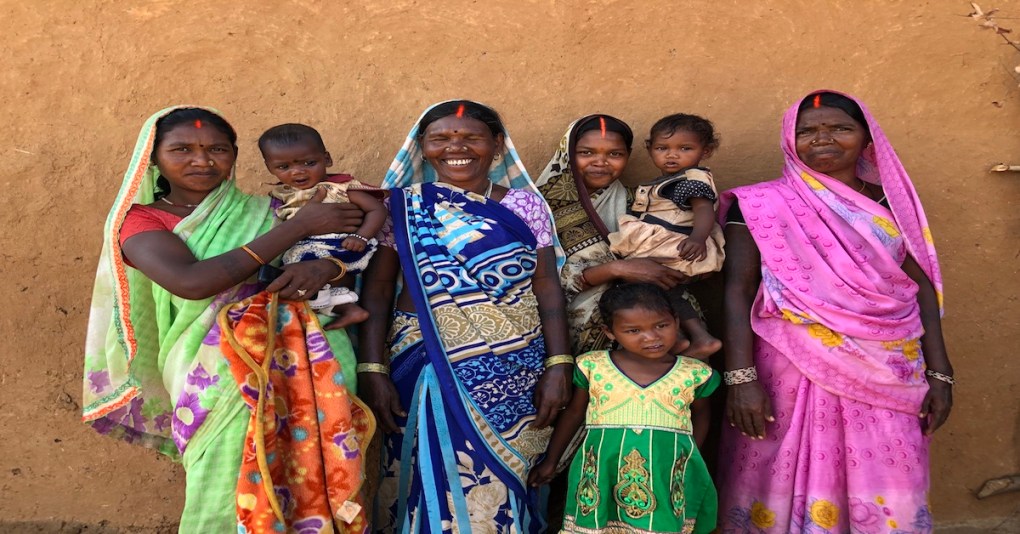
Scheduled Areas:- The Fifth Schedule Article-244(1), being a very important provision of the Constitution deals with the control and administration of the Scheduled Areas. The Constitution makes special provisions for the administration of certain areas called Scheduled Areas in the states other than Assam, Meghalaya, Tripura, Manipur despite such areas are situated within a State or Union Territory A- 244(1), probably because of the backwardness of the people of these areas.

Criterion:-

The criteria for declaring any areas as Scheduled Areas under the Fifth Schedule are as follows :

(1) Preponderance of Tribal population in such area.

(2) Compactness and reasonable size of the area.

(3) Viable administration entity such as a district, block, or Taluk, etc.

(4) Economic backwardness of the area as compared to the neighboring areas.

Features of the 5th Schedule-

(1) Declaration of Scheduled Areas- The Constitution empowers the President to declare any areas as Scheduled Areas. He can increase or decrease or even alter the boundaries of a Scheduled Area. He can also cancel such designation after consultation with the Governor of the concerned State or can make fresh orders to redefine any Scheduled Area.

(2) Executive powers of State and Union- Subject to the provisions of this schedule the executive powers of State extend to the Scheduled Areas therein. The executive powers of the Union are limited to giving directions to the State for the administration of such areas.

(3) Tribal Advisory Council- Any state having a Scheduled Area needs to establish a Tribal Advisory Council consisting of not more than 20 members of whom about 3/4 members should be the representative of the Scheduled Tribes in the Legislative Assembly of the State.

(4) Law Applicable to Scheduled Areas– The Governor is empowered to direct that any particular Act of Parliament or the Legislature of the State, does not apply directly to a Scheduled Area and is subject to such exceptions and modifications as he may specify in the notification:

(a) Prohibit the transfer of land by or among members of the Scheduled Tribe in such areas;

(b) Regulate the allotments of land to the members of the Scheduled Tribes in such areas;

(c) Regulate the carrying out of businesses as money lenders by persons who lend money to members of the Scheduled Tribes in such areas.

• States Under Fifth Schedule:-

The Fifth Schedule designates Tribal majority areas in the ten Tribal minority States within peninsular India including:

(1) Andhra Pradesh

(2) Himachal Pradesh

(3) Madhya Pradesh

(4) Odisha

(5) Rajasthan

(6) Jharkhand

(7) Gujarat

(8) Chhattisgarh

(9) Telangana

(10) Maharashtra

Some Important points:-

(1) Tribal Advisory Council(TAC) in Scheduled Areas do not perform administrative actions directly and do not have much autonomy.

(2) Panchayat Extension to Scheduled Areas is applicable here.

(3) PRIs in non-6th Scheduled Areas are liberally funded so direct funding of the Council is done under Article 280 of the Constitution.

(4) The Council in the 5th Schedule is the creation of the State Legislature.

(5) 5th Schedule Areas have an implementation of various schemes like MGNAREGA ( Mahatma Gandhi National Rural Employment Guarantee Act) 2005.

#Thepurestbond : “A father-daughter bond”

Everyone has different relationship with their parents , but the most purest bond that one will find is of a father- daughter . Each one of have witnessed it , dads taking care of their little girls , making their hairs , paint their nails , trying new makeup hacks on their daddy , doing their dad’s makeup , etc. Their is something so sweet & beautiful to watch both of them interact . A father protects her daughter from every things which is bad for her , he tends to make her girl the prettiest & the most perfectionist in the world . It is important for girls to have good relationship with their father , as it impacts their personality , their success , their behavior.

FATHER DAUGHTER BOND IS THE PURREST !

Women who have a good relationship with their fathers are lucky enough to look back at their fond memories when they grow up. Having a good relationship with her father not only shapes a girl’s childhood experience but also influences her behavior towards other men later in life. If a girl’s father is erratic or completely absent by nature, then it creates a feeling of low self-esteem in her, and she might have trouble trusting men in general.

A girl’s father act as a hero for her , this is because he is the first man she is introduced to , he is the first man who holds her , her perception about a man is developed the way her father treats her . This perception is important for a girls’ growth . A girl calls her dad her hero because , he gives a sense of security , he tends to protect her from every thing , dads tends as he would take here girl’s each & every problem .

The father’s connection and communication will help the daughter make the right decisions. A father should provide stability and moral guidance to his daughter because that is the time( teenage ) when she is surrounded and tempted by bad influences. Daughters learn more about relationships by observing their father’s actions and behavior. They judge men based on the standard their father sets. Happy marriages are connected to a warm parent-child relationship. If the parents have marital problems, the girl tends to be insecure, anxious, and aggressive.

Father’s presence not only directs girls in the early stage of life but also assure her that what ever the problem is her father is standing as an iceberg in front of her & will protect her from every problem .

“SHOULD OTT BE REGULATED ?”

Regulation of OTTS is a matter of great concern for government.

OTT platforms have grown rapidly in India, especially during the coronavirus-induced lockdown period, when the closure of film theatres led several production houses to release their films directly on OTT platforms. And this allows them to conveniently bypass even the basic scrutiny of a film regulatory authority. Many also believe that OTT platforms often perpetuate sexual crimes and soft porn, amplify bloodshed and gore which can potentially inflame passions, especially in young minds. Unregulated content can be damaging especially for a country like ours where communal tensions are not uncommon. Content on OTTs are age restricted , since their is no censor board for such & everyone can watch it , the content is influencing young minds in wrong way , which is why they need to be regulated.

Regulated OTT content could also imply missed opportunities for filmmakers and actors who are lured to the medium for the creative freedom it offers. This is the only drawback of regulation of OTTs . Filmmakers comes to this platform because this platform offers freedom of creativity , they can make whatever they want to , yes it is true that they make what is real , but this reality often brings problems among young minds because these minds are not able to take the message behind the content but grasp the things which are not meant for them .

In my view, self-regulation is highly preferred to strict censorship as the latter will curtail the creative freedom of OTT video platforms. If OTT platforms self-regulate and take adequate measures to ensure prohibited content is not watched by children and carry content descriptors, among other safeguards, they would emerge as the best platforms for content watchers

Broadcasters Association (NBA) regulates news channels, and the Central Board of Film Certification (CBFC) regulates film content. There is no such regulatory authority operating to scrutinize digital media content. So unregulated content that is now widely accessible owing to cheap data connections and the proliferation of smartphones has become a cause of concern. So there must be a regulatory body for OTTs , so that without violating the rules & guidelines & without showing content which is not good , they can give content which is meant for all & loved by all

A Reliable Learning Via Robotics and machines….

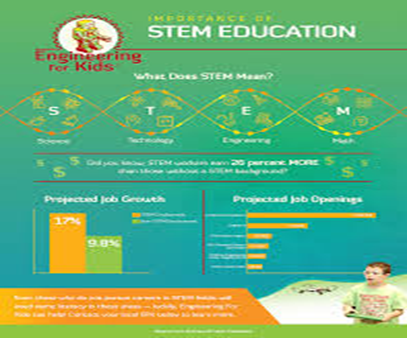
                                    IMPORTANCE OF STEM EDUCATION FOR AN ENHANCED LEARNING

  • Definition Of Stem

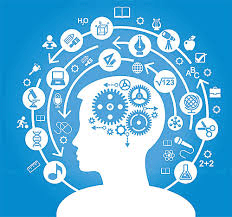
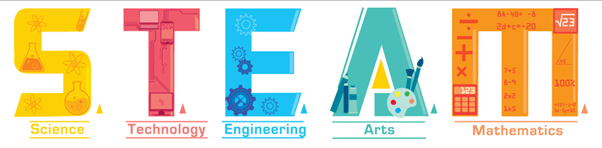
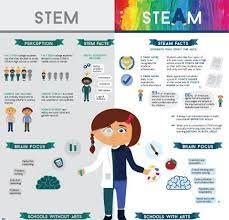
STEM is an artificial intelligence related to Science, Technology, Engineering and mathematics but it is a vast concept of more than these. It integrates and builds an advanced system of education taking into account every individual’s attention. STEM kind of learning needs to be paid attention as it has an improved technology with enclosing subjects that teaches moral values and discipline in inter-relating one another.

The main motive is to build advanced geniuses in the teenage able to tackle subject and real-time oriented issues. This tech unites with pupils making them to be well-versed and multi-talented in all occasions.

  • Benefits of STEM related education

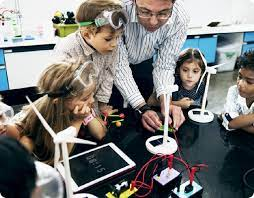
This kind of learning is focused on building higher order of thinking among students by connecting them a classroom experience to the modern world. A future model is built under campuses for upgrading their problem-solving ability, thinking skill, communication skills and creativity to sort out various critical circumstances in reality.

Generally, focuses on practical experience with real-time applications that gradually builds the skills ability level and shaping them to utilize a sense od outstanding creativity in a competitive world of 21st century.

The students brought up from this kind of teaching can tackle the reality as well as social media/virtual world simultaneously with their brilliance and social skills that comprises of curiosity, social skills, leadership, management and acceptance of up and downs in life.

In a specific period of life people will undergo circumstances where they become puzzled to take decision as choices will cause effects on their career which has to be made wisely. At that stage without realizing they randomly choose a false decision making them fall in a pit, which will be realized on later times by the same individual after which nothing can be undone.

This system basically concentrates on those kinds of cases so the growing kids can be exclusively intelligence while handling such experiences. This AI creates a similar kind illusion to make them think and decide their choices accordingly so they can adopt to changes or select a decision more preciously.

  • Differences from normal learning and AI integrated learning

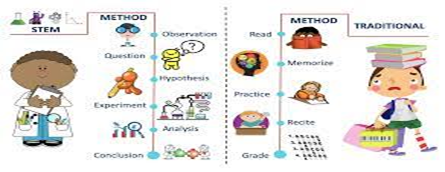
In a standard learning taught by faculties they can give you their knowledge ask them to explore it on your way but mostly pupils memorize concepts that will be totally vanished in this type of system where a machine will broaden every word and concept of subject and explaining the facts deeper by triggering your anxiety to grasp the entire knowledge.

They also become as Book-worms instead of knowing the working behind every concept thus it becomes like mugging/memorizing and vomiting/producing in exam papers just for marks rather than knowledge or skill developed education.

STEM education is the path of future learning making upcoming generation as innovative ones.

These AI models create crucial real-time happenings thus testing their initial level of thinking and providing solutions to the same. By doing this they actually promote their working of brain at a younger age which we call as maturity and experience at small ages.

It is also a known to contribute steps towards economic growth by this deep level thinking knowledge (innovation) which is unique in every kid. That is why each one is special but as they discover their innovative skill it becomes too late for individuals so by enhancing them to bring up their key skills so they are ready to face out life and unavoidable circumstances.

  • Ways to spread an idea to enlarge the importance about it to the Society

There are various ways through which you can advertise and spread the initiative taken by you. The only thing you require is an account in media platforms that will enroll your ads in various random posts that people may be searching for.

 The only purpose of using social media is because the reach is tremendous while compared manually or just by recommendations. You need to focus on how you can market them by discussing their features and how it helps in the improvement of a teenager.

By adding relevant pictures or short clips of the same, people can get to know about the functionalities and capabilities of the system and the working.

Awareness can also be made and posters shall be published to keep a track of viewers and connect with them mutually to improve a knowledge of better learning among several institutions in exploring the skills of a teenager in their adolescent ages that support them vitally.

The base of any product to be recognized is how you explain and elaborate the advantages and benefits that grasps attention to every single student in a whole crowd or in a classroom.

If you are self-motivated to prove and provide minute specifications for the useful machine integrated model (AI/STEM education) it can be an added information for users so they support and promote in various different ways.

  • Social Media Channels

The enlarged platform of these trending applications has several unique features under each portal those are different from one another. From audience till owners of some companies have adopted to this virtual world that helps growing merchants to develop and stand tall of their product.

The only difficulty is not all the things are encouraged in these sites, if you want a product to be wide-spread then its uniqueness and features must grab the reader/visitor’s attention in such a way so they start marketing your brand as an affiliate or recommend your goods in some required places.

 You as a producer can share things that will be helpful for any individual before trying it out. Social platforms like helps you to enrich with the fruitfulness of customers especially YouTube. There are millions of people from various continents utilizing this open platform for various entertainment.

From this article you can get to know some ideas and the importance of the STEM education as an effective way of building up the mental thinking ability by teaching them in a provoking way that enhances of building an IQ that is an advanced level for teenagers to think in a multi-tasking way.

STRATEGY PLANS FOR THE DEVELOPMENT OF INDIA AND ITS ACHIEVEMENTS:

India has achieved self-sufficiency in almost all basic and capital good industries and consumer good industries. There is a considerable rise in net domestic product, saving and investment. Self sufficiency in food grain production is achieved. There is a good deal of diversification in industrial structure.

STRATEGY PLANS :

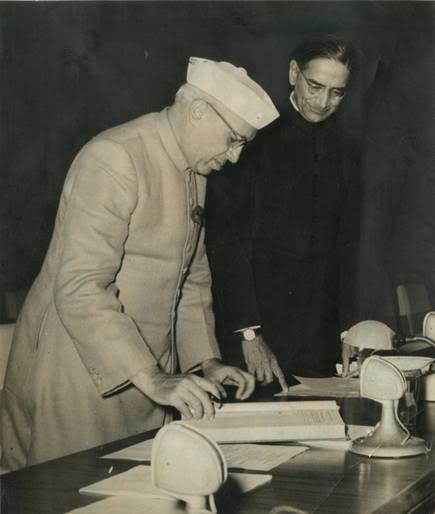
1. Nehru-Mahalanobis Model of Growth: Prof. P.C Mahalabonis is under the guidance of Prime Minister Jawaharlal Nehru developed the heavy industry model based on the Soviet experience. This model is popularly known as Nehru-Mahalanobis model formed the basis of the second plan. Jawaharlal Nehru emphasised that “The development of heavy industry in synonymous with industrialisation”. Mahalanobis was of the opinion that without adequate investment in basic heavy industries, it would not be possible to achieve a rapid self reliant economic growth. to achieve rapid economic growth and self reliance, it is necessary to give the highest priority to basic capital goods industries in the development strategy of a plan. It was during the second plan major steel plants were set up at Durgapur, Bhilai and Rourkela. ONGC, Ranchi Heavy Engineering Corporation, Neyveli Lignite Corporation were also set up during this plan.

JAWAHARLAL NEHRU AND MAHALABONIS

2. Gandhian Model of Growth: Gandhi called his ideal society Sarvodaya. It is a society that ensures the welfare and well-being of all its members. It emphasizes is on all the three components of well being material, mental and more spiritual he believed that “India lives in its villages”. This plan was based on truth and nonviolence. village is considered as the focal point of development and it is considered to be self-sufficient and self regulating economy. Importance given to small scale and cottage industries to reduce unemployment. Mechanization was opposed as it would displaced people out of employment.

3. Wage Goods Strategy of Growth: According to Vakil and Brahmananda, for removal of poverty, promotion of economic growth or capital accumulation alone in is not enough. “The way out of poverty is, therefore, to pay immediate attention to making good the capital gap in respect of wage goods capacity.

4. Rao- Manmohan Model of Growth: This growth model was introduced in 1991 with emphasis on privatisation and globalisation. There was severe economic crisis since 1990 in the Indian economy issues such as low foreign exchange reserves, balance of payments problem, public sector undertaking losses compelled the then Finance Minister Manmohan Singh and Prime Minister P.V Narasimha Rao to initiate various reforms. A market driven and pattern of development was adopted. Manmohan model of development in emphasized a bigger role for the private sector. A strategy of export led growth was propagated rather than import substitution.

5. Providing Urban-Amenities in Rural Areas: A strategy of developing rural areas this model of development was initiated by the former President APJ Abdul kalam. His vision was to transform rural areas and bring it on par with urban areas. Dr. A.P.J Abdul kalam visualised for connectivities namely physical electronic knowledge that would lead to economic connectivity of rural areas. In the first phase The ministry of Rural development implemented seven pirate projects from 2004 to 2005 and 2006 to 2007 with a total outlay of rupees three billion in the states of Assam, Andhra Pradesh, Bihar, Maharashtra, Rajasthan, Orissa and uttar Pradesh. The scheme was also relaunched as a central government scheme during the remaining period of Eleventh five- year plan.

6. Five year plans: From 1947 to 2017, the Indian economy was premised on the concept of planning. This was carried through the Five-Year Plans, developed, executed, and monitored by the Planning Commission (1951-2014) and the NITI Aayog (2015-2017). With the prime minister as the ex-officio chairman, the commission has a nominated deputy chairman, who holds the rank of a cabinet minister. The first year plan was Harrod – Domar model of development economics. FYP had a target of 2.1% PA growth in national income. Top priority was given to the development of agricultural sector. The idea was agricultural development would lead to higher rate of economic growth.

ACHIEVEMENTS:

1. A Higher Growth Rate: The Indian economy has reached rapid development in all sectors. India’s macroeconomic performance has been only moderately good in terms of GDP growth rates.

2. Increase in National Income: The national income of India has increased manifold. The average annual increase in national income was registered to be 1.2% from 1901 to 1947, 3% in 1950-70, 4% in 1970-80, 5% in 1980-90 and 5.8% in 1980-81 to 2000-01. the Gross income is estimated to have risen by 7% during 2016-17 in comparison to the growth rate of 8% in 2015-16.

3. Increase in per capita: Before independence increase in per capita income was almost zero. But after the adoption of economic planning in free India per capita income has continuously be increased.

4. Growth of Economic infrastructure: India’s performance in building up the necessary economic infrastructure is really praiseworthy At the Inception of economic planning, road kilometre was 4 lakh km. India has now more than 3 million km of road network making it one of the largest in the world.

5. Development of Basic and Capital Goods Industries: Major area of success of Indian planning is the growth of basic and capital goods industries. With the adoption of the Mahalanobis strategy of the development during the second plan period some basic and capital good industries like iron and steel witnessed spectacular growth.

6. Higher Growth of Agriculture: The most significant aspect of India’s five year plans is that their overall rate of growth of food production has now exceeded the rate of growth of population. Although in the early years of planning agricultural performance was measurable resulting in the emergence of food crisis.

7. Savings and Investment: The rise in the domestic savings rate from 10 % of GDP (Gross Domestic Capital) at the initial stages of planning to around 19% in 1980-81 is definitely impressive. The GDP of India has started to increase step by step in the following years and it rose to 36% in 2006 to 2007.

Those strategy plants also faced major failures, in spite of planning, poverty also exists and unemployment has risen. Inequalities of income have not been reduced. There is unequal land ownership, land reforms are inadequately implemented.

” HOW I LEARNT KINDNESS ” based on true incident .

It was a rainy day . The monsoon was on its peak , I was getting ready for my school as it was my economics exam . I need to reach at my school campus at 10:00 O’clock & my school was 3 km away. At 9:45 , I asked my father to drive me to my school as fast as he could . My father took his bike & asked me to come fast . I took my umbrella , we were just crossing our flooded streets , my father stopped hi bike , & asked me to see a girl . I saw that girl , she was from my school only . Dad said she was waiting for rikshaw & every one listening to me right now can imagine how difficult is to get rickshaws in rainy season. I was getting angry because I was getting late for my exam as i can’t afford to leave my exam . I asked him to leave that place. He said , if you are so much concerned about your exam she would also be . He stopped his bike in front of her , asked her to come with us . She got scared . I could feel what what she was feeling . Everybody’s parents aske them the same thing ” DON’T TALK TO STRANGERS”. I looked at her face , I was angry , but could feel that she want some assurance , I asked her to come with us , she hesitated , I said politely ” come ! we are from same school & your security is in my hand “. she smiled . she sat with me, I put my umbrella on her head .

i reached at my school gate at 10:10 , i came off from the bike , so did she . She ran towards the school gate as it was about to close. While she was running , she turned towards us & said ” Thankyou uncle , thankyou Didi ” . On that day I learnt kindness from my dad . Smile on her face can clearly tells us how grateful she was to us or she would have left her exam . If I would be at my dad’s place. I would never stop my bike as it was raining heavily & her daughter is continuously shouting on him to drive fast . But he did , I learnt a lesson that in this world which is full of people who care for themselves , we should be the one who care for others , we should be the one who care for others , we should be the one who have to look & sense others problem . I learnt that people are always concerned about their own problems like me , I was concerned about my exam only , but their are people who are looking at others & their are people who are concerned about others . We should devote few hours of our day to look for others problem , this is what I learnt on that day .

Olympics

The modern Olympic Games or Olympics (French: Jeux olympiques) are leading international sporting events featuring summer and winter sports competitions in which thousands of athletes from around the world participate in a variety of competitions. The Olympic Games are considered the world’s foremost sports competition with more than 200 nations participating. The Olympic Games are normally held every four years, alternating between the Summer and Winter Olympics every two years in the four-year period.

Their creation was inspired by the ancient Olympic Games (Ancient Greek: Ὀλυμπιακοί Ἀγῶνες), held in Olympia, Greece from the 8th century BC to the 4th century AD. Baron Pierre de Coubertin founded the International Olympic Committee (IOC) in 1894, leading to the first modern Games in Athens in 1896. The IOC is the governing body of the Olympic Movement , with the Olympic Charter defining its structure and authority.

The evolution of the Olympic Movement during the 20th and 21st centuries has resulted in several changes to the Olympic Games. Some of these adjustments include the creation of the Winter Olympic Games for snow and ice sports, the Paralympic Games for athletes with disabilities, the Youth Olympic Games for athletes aged 14 to 18, the five Continental games (Pan American, African, Asian, European, and Pacific), and the World Games for sports that are not contested in the Olympic Games. The IOC also endorses the Deaflympics and the Special Olympics. The IOC has needed to adapt to a variety of economic, political, and technological advancements. The abuse of amateur rules by the Eastern Bloc nations prompted the IOC to shift away from pure amateurism, as envisioned by Coubertin, to the acceptance of professional athletes participating at the Games. The growing importance of mass media has created the issue of corporate sponsorship and general commercialisation of the Games. World wars led to the cancellation of the 1916, 1940, and 1944 Olympics; large-scale boycotts during the Cold War limited participation in the 1980 and 1984 Olympics; and the 2020 Olympics were postponed until 2021 as a result of the COVID-19 pandemic.

The Olympic Movement consists of international sports federations (IFs), National Olympic Committees (NOCs), and organising committees for each specific Olympic Games. As the decision-making body, the IOC is responsible for choosing the host city for each Games, and organises and funds the Games according to the Olympic Charter. The IOC also determines the Olympic programme, consisting of the sports to be contested at the Games. There are several Olympic rituals and symbols, such as the Olympic flag and torch, as well as the opening and closing ceremonies. Over 14,000 athletes competed at the 2016 Summer Olympics and 2018 Winter Olympics combined, in 35 different sports and over 400 events. The first, second, and third-place finishers in each event receive Olympic medals: gold, silver, and bronze, respectively.

The Games have grown so much that nearly every nation is now represented. This growth has created numerous challenges and controversies, including boycotts, doping, bribery, and a terrorist attack in 1972. Every two years the Olympics and its media exposure provide athletes with the chance to attain national and sometimes international fame. The Games also provide an opportunity for the host city and country to showcase themselves to the world

Ancient Olympics

The Ancient Olympic Games were religious and athletic festivals held every four years at the sanctuary of Zeus in Olympia, Greece. Competition was among representatives of several city-states and kingdoms of Ancient Greece. These Games featured mainly athletic but also combat sports such as wrestling and the pankration, horse and chariot racing events. It has been widely written that during the Games, all conflicts among the participating city-states were postponed until the Games were finished. This cessation of hostilities was known as the Olympic peace or truce.[7] This idea is a modern myth because the Greeks never suspended their wars. The truce did allow those religious pilgrims who were travelling to Olympia to pass through warring territories unmolested because they were protected by Zeus.[8] The origin of the Olympics is shrouded in mystery and legend; one of the most popular myths identifies Heracles and his father Zeus as the progenitors of the Games.According to legend, it was Heracles who first called the Games “Olympic” and established the custom of holding them every four years. The myth continues that after Heracles completed his twelve labours, he built the Olympic Stadium as an honour to Zeus. Following its completion, he walked in a straight line for 200 steps and called this distance a “stadion” (Greek: στάδιον, Latin: stadium, “stage”), which later became a unit of distance. The most widely accepted inception date for the Ancient Olympics is 776 BC; this is based on inscriptions, found at Olympia, listing the winners of a footrace held every four years starting in 776 BC.[14] The Ancient Games featured running events, a pentathlon (consisting of a jumping event, discus and javelin throws, a foot race, and wrestling), boxing, wrestling, pankration, and equestrian events. Tradition has it that Coroebus, a cook from the city of Elis, was the first Olympic champion.

The Olympics were of fundamental religious importance, featuring sporting events alongside ritual sacrifices honouring both Zeus (whose famous statue by Phidias stood in his temple at Olympia) and Pelops, divine hero and mythical king of Olympia. Pelops was famous for his chariot race with King Oenomaus of Pisatis. The winners of the events were admired and immortalised in poems and statues. The Games were held every four years, and this period, known as an Olympiad, was used by Greeks as one of their units of time measurement. The Games were part of a cycle known as the Panhellenic Games, which included the Pythian Games, the Nemean Games, and the Isthmian Games.

The Olympic Games reached the height of their success in the 6th and 5th centuries BC, but then gradually declined in importance as the Romans gained power and influence in Greece. While there is no scholarly consensus as to when the Games officially ended, the most commonly held date is 393 AD, when the emperor Theodosius I decreed that all pagan cults and practices be eliminated Another date commonly cited is 426 AD, when his successor, Theodosius II, ordered the destruction of all Greek temples.

Modern Games

Forerunners

Baron Pierre de Coubertin

Various uses of the term “Olympic” to describe athletic events in the modern era have been documented since the 17th century. The first such event was the Cotswold Games or “Cotswold Olimpick Games”, an annual meeting near Chipping Campden, England, involving various sports. It was first organised by the lawyer Robert Dover between 1612 and 1642, with several later celebrations leading up to the present day. The British Olympic Association, in its bid for the 2012 Olympic Games in London, mentioned these games as “the first stirrings of Britain’s Olympic beginnings”.

L’Olympiade de la République, a national Olympic festival held annually from 1796 to 1798 in Revolutionary France also attempted to emulate the ancient Olympic Games. The competition included several disciplines from the ancient Greek Olympics. The 1796 Games also marked the introduction of the metric system into sport.

In 1834 and 1836, Olympic games were held in Ramlösa (Olympiska spelen i Ramlösa), and an additional in Stockholm, Sweden in 1843, all organised by Gustaf Johan Schartau and others. At most 25,000 spectators saw the games.

In 1850, an Olympian Class was started by William Penny Brookes at Much Wenlock, in Shropshire, England. In 1859, Brookes changed the name to the Wenlock Olympian Games. This annual sports festival continues to this day. The Wenlock Olympian Society was founded by Brookes on 15 November 1860.

Between 1862 and 1867, Liverpool held an annual Grand Olympic Festival. Devised by John Hulley and Charles Melly, these games were the first to be wholly amateur in nature and international in outlook, although only ‘gentlemen amateurs’ could compete.The programme of the first modern Olympiad in Athens in 1896 was almost identical to that of the Liverpool Olympics. In 1865 Hulley, Brookes and E.G. Ravenstein founded the National Olympian Association in Liverpool, a forerunner of the British Olympic Association. Its articles of foundation provided the framework for the International Olympic Charter. In 1866, a national Olympic Games in Great Britain was organised at London’s Crystal Palace.

WHAT MAY BE THE REASONS BEHIND INCREASING NUMBER OF DIVORCES ?

The society went through number of shifts in attitude and behavior over the past 80 years and with all these shifts and transitions, the definitions, meanings, lifestyle etc. of people and the life events have also changes. There is change in the beliefs of the people and the meaning of marriage is also redefined and beliefs relating to marriage have also changed significantly. Marriage requires lifelong commitment and is dependent on an individuals fulfillment and satisfaction. With all these shifting’s, the stigma related with divorce has also been eliminated.

With the help of qualitative and quantitative studies it had been seen that there are number of reasons for divorce and some of the major reasons for divorce are lack of commitment, infidelity, and conflict/ arguing. And the most common final straw is domestic violence, infidelity and substance use. In recent decades, there is an increase in number of divorces. The increasing number of divorce is related to various social aspects.

  1. LACK OF PROPER COMMUNICATIONS : Communication is very important when we’re interacting with someone and bad communication can have many impacts on a marriage. It is important to clarify each other’s meanings and concerns, otherwise, it will lead into suspicion, mistrust and arguments and many times it can affect the marriage severely. Arguments in any relationship is not a bad thing and can have healthy results but they can have bad impacts due to lack of communication.
  2. LACK OF COMMITMENT : According to various studies, the major reason behind divorces is the lack of commitment. The commitment gradually erodes until there was not enough commitment for sustaining the relationship and also due to negative events such as infidelity.
  3. ABUSE : When there is abuse in a marriage or in a family then divorce is the best ending and result possible. In some cases it is the husband. While there are some spouses who are able to end and overcome abuse and sometimes with the help of involvement of in laws and elders, the issues can be solved. But everything depends on the attitude and mindset of the person in relationship.
  4. INFIDELITY : Infidelity is considered as a critical turning point in a destroying a relationship and majority of couples end their relationship if they are cheated and due to infidelity. In some cases it is also seen that couples overcome this challenge and find strength to stay together.
  5. ADDICTIONS : Addictions can be in many forms. It can be in the form of alcohol, gambling etc. In many cases it was found that the addicted partner can recover from it and the marriage can be continued but if there is no change and recovery from addictions then it is best for the spouse and children to separate and see if progress is possible. Depending on the circumstance, it can be decided what to do and when to do.
  6. WOMEN’S INDEPENDENCE : Women have become more independent over these years and they are no more dependent on anyone and are no more mere housewives. Women have now become financially, socially, physically and mentally independent and this affects the old aged mentality of many people who believed that women have only one function to play that is nurturing the family. Besides so much advancements, there are many people who have still been hesitant to see women’s progress. And there men who cannot see the progress of women. There are ego clashes which cause dissatisfaction in marriage and lead to divorce.

Evolution of ‘Tragedy’ in English Drama

Tragedy as known in Dramas is one of the earliest forms of Drama that you can trace back in the history of Drama. With the passage of time ‘Tragedy’ continued to be redefined in history by many famous philosophers as well as playwrights. Both leading us to the present day contemporary Drama which portrays Tragedy in a whole different aspect as compared to the past.

The beginning of Tragic Drama first took place in Greek culture. The well-known stories and myths were the main sources of inspiration for the Tragic plays. The features of the Greek Tragic Drama were as followed. The play involved few actors who themselves played several characters on-stage. There was a norm that tragedy and comedy were never supposed to be mixed. The play strictly followed the three unities in drama known as the unity of place, unity of action and unity of time.

I will now talk about the description of Tragedy in Drama as approached by the early philosophers as well as modern day playwrights. Thus, proving the variations and evolution that took place in the Tragic category of Drama.

As first defined by the great Greek Philosopher Aristotle, a Tragic Drama was a good Tragic Drama if it followed the certain rules as laid out by the Philosopher. The first rule describing the characters of the Drama. According to Aristotle the character had to be good but not too good. This was because the main purpose of the ‘Tragedy’ play was to evoke feelings of pity and sympathy and not any other. This purging of emotions was what he called Catharsis. He also talked about presence of Hamartia in the lead character, which refers to the presence of flaws that later paved way to the tragic aspect of Drama known as the downfall of the protagonist. Aristotle also believed that apart from all this, the action of the play itself had to be proper and of high magnitude.

Geoffrey Chaucer, one of the great poets and writers of the middle English times, gave us why the subjects of tragedy were of ‘High Society’. He explained that the idea of tragedy was to show falseness of human power and wealth. Unlike Aristotle he believed that humble and meekness were the feelings that had to be purged out through tragic plays.

G.W. Hegel a modern philosopher stressed that ‘Tragedy’ in English Dramas had to have a moral conflict. A conflict between two rights.

The present day modern dramas are highly influenced with the ideas of William Shakespeare about Tragedy in Dramas. William Shakespeare was one of the first playwrights to break away from the restrictions about Tragedy as described by the Greeks, the early philosophers and the playwrights. Though he still followed Aristotle’s concepts of tragedy to some extent but he did not completely follow all of his ideas with regard to Tragedy.

The modern-day Dramas today revolve not just around people of high society but also around the stories of ordinary people, leading to a more realistic feeling in Tragedy. It also breaks away the norm of Tragedy not being mixed up with others genres of Drama. Thus, providing the audience with a combination of genres and a great source of entertainment and learning through Dramas.

How Much Does India Invest In Olympic Athletes?

Postponed by a year due to the pandemic, the Tokyo Olympics is now less than a month away. Last week, the Union Sports Minister Kiren Rijiju urged the people to extend their support to India’s Olympic-bound athletes, the same way they back India’s cricketers. However, India’s abysmal performances at the Olympics is in striking contrast to India’s immense success at cricket. The model of sports governance and financial irregularities are often blamed for the lack of competitive edge in sports other than cricket. So, the most obvious question that comes to our mind is, how much does India invest in the Olympics?

Money allocated for Sports

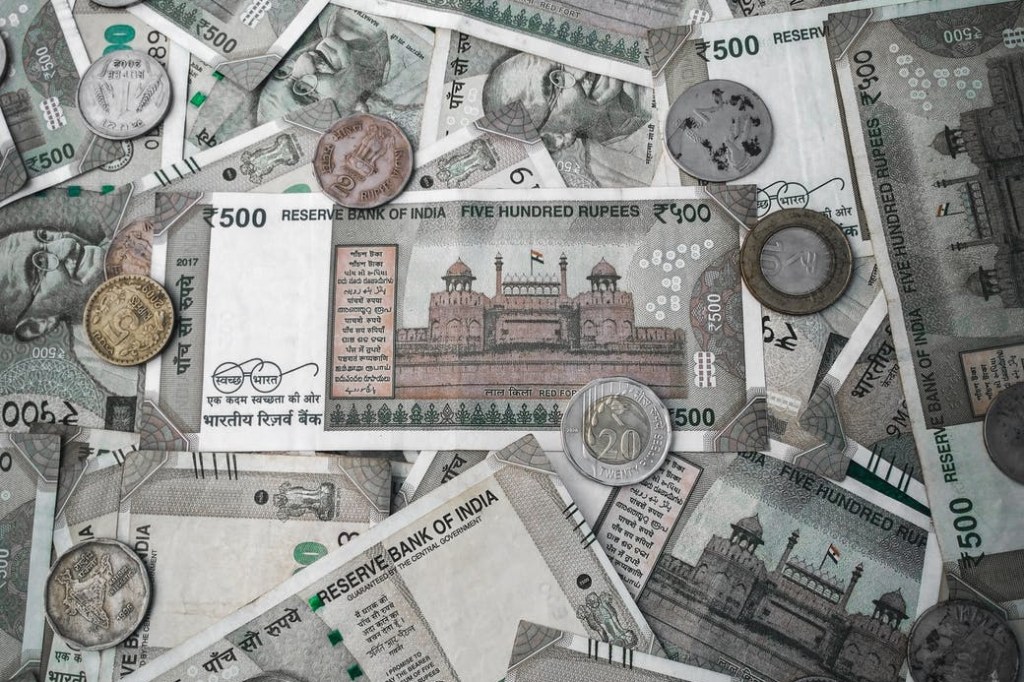
In the 2020-21 annual budget, the Government of India allocated Rs 2826.92 crore for sports, which meant an increase of mere ₹ 50 crore from the revised estimates of the financial year 2019-20. The Modi government’s flagship sports programme ‘Khelo India’ received a substantial hike of ₹ 312.42 crore and was allocated ₹ 890.42 crore compared to ₹578 crore in 2019-20. On the other hand, the National Sports Development Fund saw a reduction of ₹ 27.15 crore from ₹77.15 crore in 2019-20 to ₹ 50 crore in 2020-21. National Sports Federations saw the highest decrease after Finance Minister allocated ₹ 245 crore, ₹ 55 crore less than the previous financial year, according to The Wire. Even the budget for meritorious sportspersons saw a 40% reduction from the last financial year. It is important to note that the 2020-21 annual budget was presented in January 2020, when the government had no idea of the coming pandemic. It was also supposed to be the year of the Tokyo Olympics.

Target Olympic Podium Scheme

While these are the broad schemes under which Indian sportspersons are funded, the Target Olympic Podium Scheme (TOPS) provides financial assistance to potential Olympic medal winners. Launched in 2014, TOPS is the flagship programme of the Sports Ministry of India. The top-up funding scheme considers the performance of Indian athletes in the past three years. They are provided with personal coaches and other staff fees, cost of travel during competitions, purchase of equipment, and pocket allowance.

Looking Back At The Last Olympics

In the 2016 Rio Olympic, India spent ₹ 36.85 crore under TOPS, as per Financial Express. Nearly half of that amount was spent on shooting, which was India’s most successful Olympic sport in the previous three games. Shooting is also very expensive, which requires importing equipment from other countries. But shooting failed to bring any medal. Athletics received the second-highest funding of ₹ 7.80 crore in 2016, but India failed to make a mark in the sport. Unfortunately, out of the ₹ 36.85 crore, ₹30.49 crore had gone to disciplines that fell short of goals. Only 1.66 per cent of the total TOPS fund went to the fields that brought India two medals – PV Sindhu in Badminton and Sakshi Malik in wrestling.

Comparison With Other Countries

The United Kingdom allocated close to Rs 9000 crore on sports infrastructure and training in the annual sports budget, whereas India spent only one-third of the UK, Rs 3,200 crore, on youth affairs and sports, before 2016. The UK won 67 medals against India’s two at the Rio Games 2016. Abhinav Bindra had also tweeted back in 2016 that a medal cost UK 5.5 million pounds, and that is the kind of investment India needs to make. Otherwise, we cannot expect much. In the USA, a large number of athletes are privately funded. Individual athletes had started their own funding portal for donations from the general public. Therefore, only 10% of the US Olympic Committee’s finance was spent on athletes in Rio 2016, and the USA finished first. China, on the other hand, is known for its aggressive state-sponsored promotion of sports.

Private Investment In India

Before the 2016 Olympics, Indian Olympic Association (IOA) received donations from Reliance Jio, Amul, Tata Salt, Edelweiss Financial Services, Herbalife, Li Ning, and SBJ. Sakshi Malik had also thanked JSW Sport, a foundation funded by the OP Jindal group, after becoming India’s first medal winner in Rio Games, as reported by Hindustan Times.

However, unlike NSDF, where the contributions and sponsorships are open and documented, private funding to individual athletes is not. And most recently, the JSW Group has come on board to be the official sponsor of Team India in the Tokyo Olympics and has agreed to pledge sponsorship support of ₹ 1 crore to IOA. In 2018, the Sports Ministry earmarked ₹ 100 crore for funding of the athletes for the preparation of Tokyo Olympics 2020, which will take place this year. While the number of medals won cannot be equated to the investments made, since medals are not the only measure of success, India nonetheless needs to invest more and put in a new model of sports governance in action. A

Biomedical Wastes

Our environment is degrading day by day. India with its growing population is also keeping up with the waste generation.

Nowadays pollution is everywhere whether its air pollution, water pollution, land pollution, noise pollution, radioactive pollution and the pollution from E waste what not?

Biomedical Waste( BMW) is any waste produced during the diagnosis treatment or immunization of human or Animal Research activities retaining threat or in the production the testing of biological or in health camps.

Let the waste of the ‘sicks’, not ruin the life of the ‘healthy’

Common generator of Biomedical wastes are :-

  • Hospital
  • Emergency Medical Services
  • Medicinal Research Laboratories
  • offices of physician , dentist, veterinarians
  • home Health Care
  • funeral homes

From WHO stats 2000,the improper treatment of medical waste( primary use of infected needles and syringes) caused 21 million hepatitis B infection and 2, 60, 000 HIV infections worldwide.

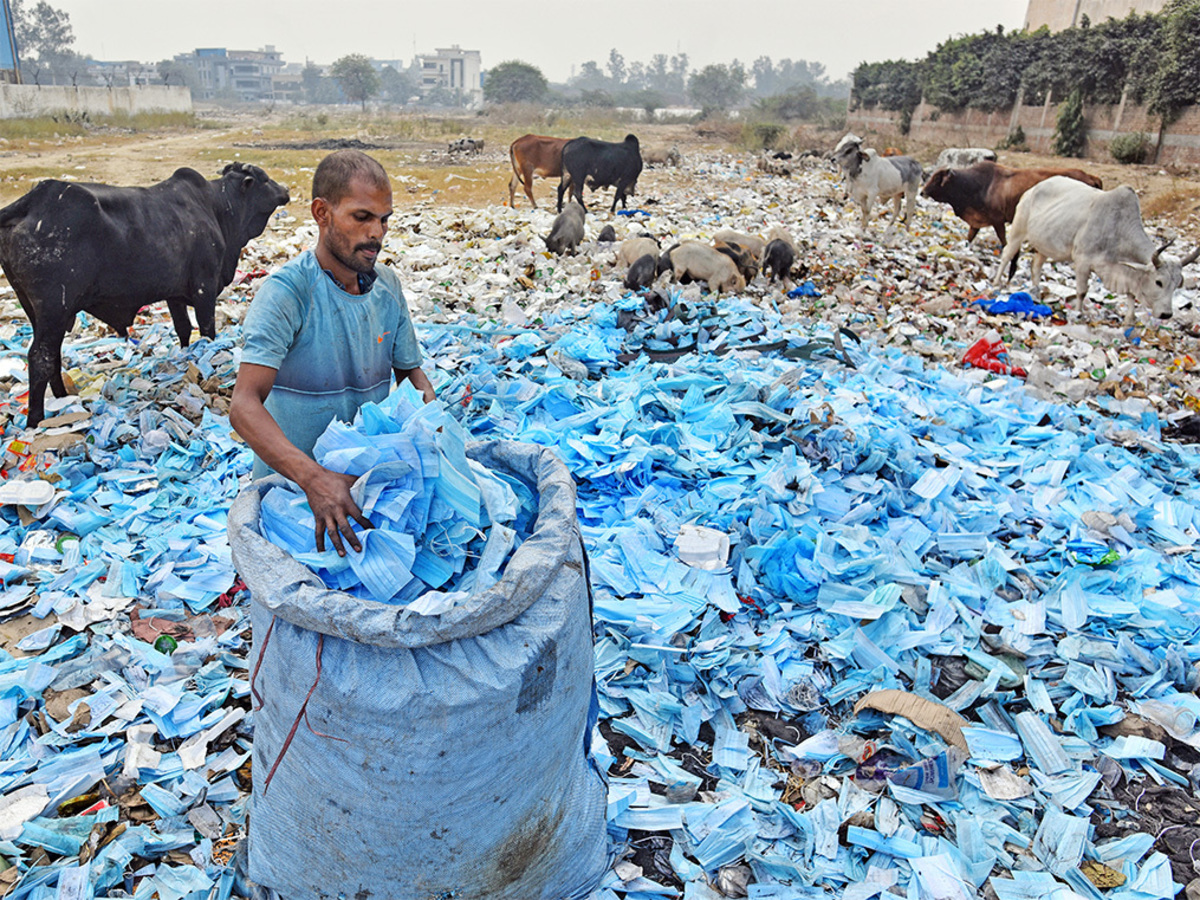
During this pandemic situation, we have witnesses another huge list of Biomedical Waste generation in India. India generated over 18000 tons of covid-19 related biomedical waste in starting 4 months of this pandemic. This includes personal protective equipment (PPE), gloves, face mask, head cover, plastic coverall, hezmet suit and syringes among others.

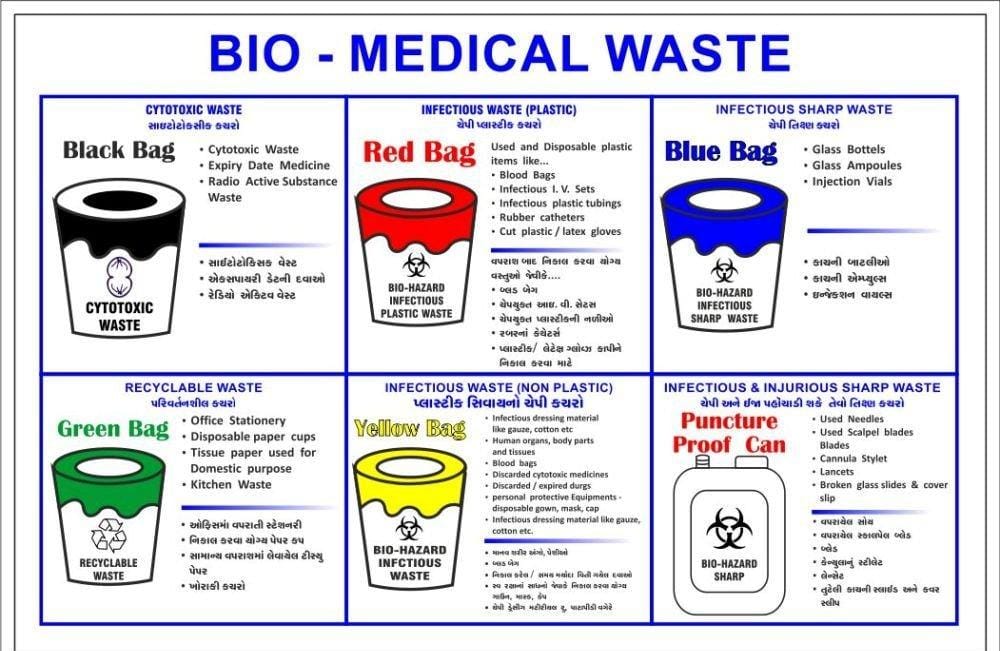
Types of Biomedical Waste

Infectious waste

  • Suspected of containing pathogen in a sufficiently large quantity or concentration to result in disease in susceptible host.
  • Cultures and stock of infectious Agent from laboratory.
  • Waste from operation and autopsies on patient with infectious disease.
  • Waste having come into contact with infected hemodialysis patient.

Pathological waste

  • Infectious material containing dead tissue may conceal specially dangerous and communicable infectious Agent.
  • Include – blood, body fluid, tissues, organs, body parts, human foetus etc.
  • Subcategory of pathological waste is Anatomical waste.
    • Consist of identifiable human or animal body parts healthy or otherwise.

Radioactive waste

  • Waste generated during the different application of radioisotopes in biological research on medicine.
  • May contain infectious biological components from Anatomical, research or clinical sources.
  • By product of various nuclear Technology process.
  • Include-
    • Nuclear medicine
    • nuclear research
    • Nuclear power
    • Manufacturing
    • construction
    • Caol
    • Rare Earth mining
    • Nuclear weapon reprocessing

Pharmaceutical waste

  • Contaminated or expired drugs and vaccine as well as antibiotics and pills.
  • Result from many activities and location in health care facilities.
  • Small quantities at households can often be thrown away in the municipal waste stream.
  • But large quantities kept at pharmacies distribution Centre, Hospital etc. be managed to minimise the risk of release or to exposure to the public.

Genotoxic waste

  • Waste from drugs that are used in radiotherapy and units.
  • One of the type of hospital waste that are extremely dangerous and may cause cell mutation or cancer.
  • Cytotoxic drugs are main components.
  • Include –
    • Urine
    • Faeces
    • Vomit treated with Chemicals or cytotoxic drug.

Sharps

  • Object that are Sharp enough to cut or puncture the skin.
  • Transmit infections directly into the bloodstream.
  • Generally treated as highly hazardous medical waste regardless of whether they are contaminated or not.
  • Includes –
    • knife
    • Blades
    • Infusion set
    • Needles
    • Broken Glass
    • Nails
    • Scalpel

Chemical waste

  • Contain radioactive element poses particularly difficult problem of disposal.
  • Includes –
    • Heavy metal from Medical appliance
    • Disinfectant
    • Solvent
  • Difficulty in disposal are partly technical and partly political
    • The radioactive constituent that find their way into groundwater and surface water must be kept to exceedingly small amount for very long time.
    • Fear of mysterious effect of radiation, politician reluctant to consider disposal of radioactive waste in the area of their constituent.

Mawlynnong- India’s pride

Located in the east Khasi hills 90 kilometers away from Shillong, in the state of meghalaya is this small village with around 600 inhabitants , which was acclaimed to be the cleanest village in India in 2005. In 2003, it was also acclaimed as the cleanest village in Asia. Known as “God’s own garden” , this small village has already made a big impact on the world by showing the world how the following of all the rules and living in harmony with the nature can help in making this world a beautiful place to co-exist.

How did Mawlynnong became the cleanest village

Back in 1887 when India was still under the British rule, Mawlynnong suffered from a devastating plague which the villagers believed to be the wrath of evil witches and didn’t knew what to do. According to history, Welsh Christian missionaries from Bangladesh were sent to help the people recover from the plague there. The missionnaries took care of the people and started to educate them. They also told them that the plague was not the result of wrath of evil witches, rather it was extreme uncleannliness in the village which caused that plague. The villagers then started to clean their houses as well as every nook and corner of the village . The tradition continues till date. Interestingly, villagers link the tradition of cleanliness to Christianity. They say it is the missionaries that changed their lives and taught them ways to reach God through cleanliness and since then they follow the religion of Christianity. This is the true model of how the superstitions if used positively can bring a large impact.

The villagers also decided to have drainpipes to efficiently remove the filth from their houses and now every single house has a proper and efficient drainage system.

The streets there have beautifully carved bamboo dustbins outside every house and in every public place. The villagers turn the wet compost from the domestic use into manure which they use to grow the vegetables and fruits. The village is a model of the adequate use of every resource available and the best example of recycle and reuse.
Other highlights of this wonderful village

Rain water harvesting is another feature of the village. When it rains, which is a verycommon thing in the state of Meghalaya people collect rainwater even in bottles. The base of the bottle is cut and the inverted bottle is then hanged at the place where it can capture rain drops. The mouth of the bottle is attached to a pipe which is then connected to the washroom and is used in toliets and to clean the floor.

Proper sanitization is another prominent feature here where every house has proper toilets and even the public toilets are healthily maintained.

Also, the village has a 100% literacy rate. Nelson Mandela once rightly said that EDUCATION IS THE ONLY WEAPON WHICH CAN BE USED TO CHANGE THE WORLD. Mawlynnong being the best example of this proverbial fact.

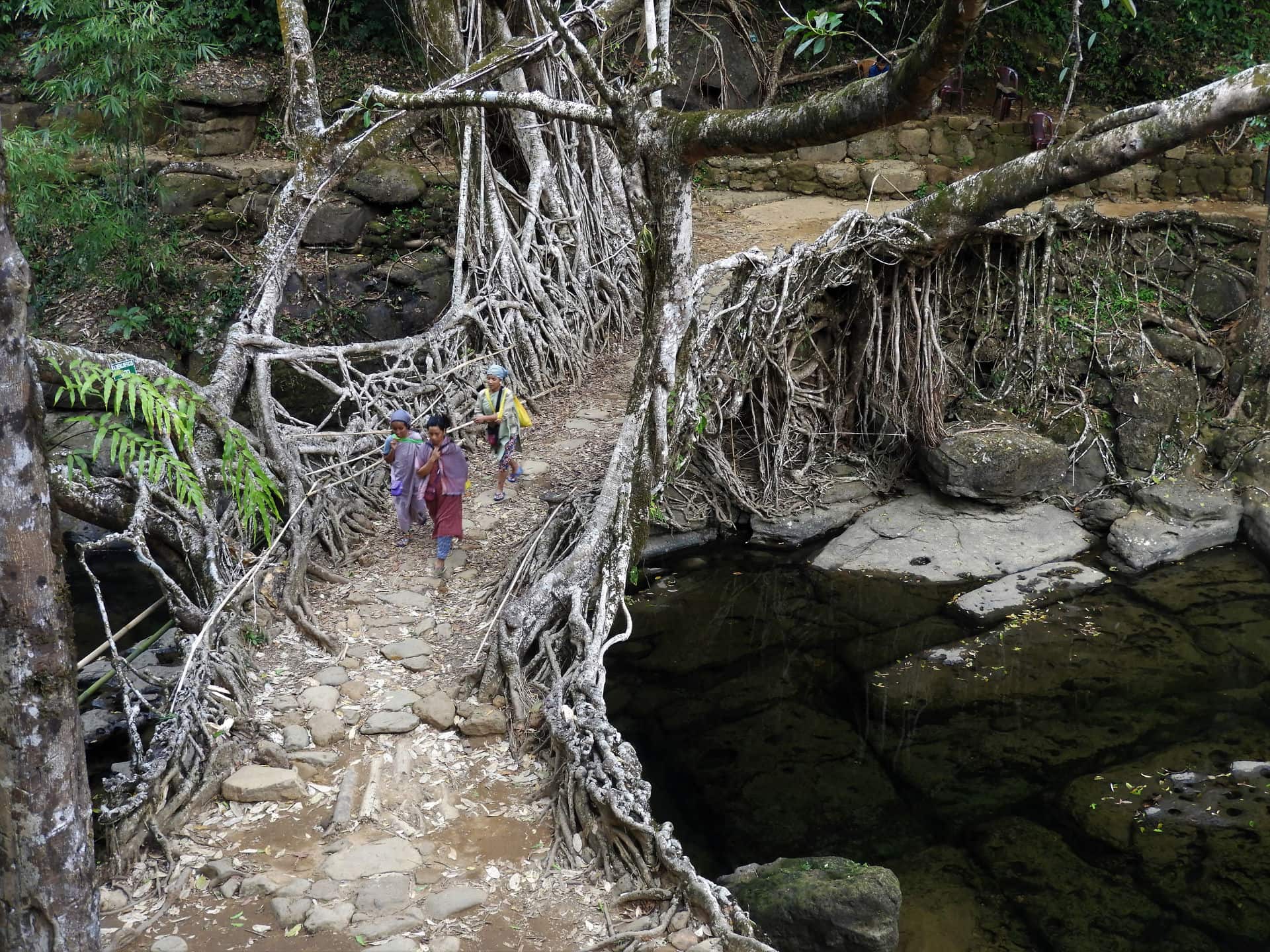
Last but not the least, The living root bridges are the classic feature of the place which also attracts a large number of tourists every year from across the globe. At a time , when humans talk about science and innovation here is an extra ordinary example of bio engineering made by humans in joint partnership with the nature. This man made root bridge was originally constructed by the villagers to cross the overflowing stream during monsoon by intertwining the thick roots of a variety of rubber tree (Ficus elastica), grown on the other side of the stream. The intertwined roots were then kept in a position over the stream such that it can be crossed. The roots were then covered by large rocks and mud to complete the path. Over the years , as the roots grew the bridge became stronger. Each day when any villager spot a new root merging , they immediately join it with the bridge and hence it continued to become strong and stay still bearing the heavy rains of the North Eastern Monsoon.

To see the bridge, one has to take a simple downward trek where the entry fee of Rs. 10 is taken from each visitor to see the bridge which is used for the village development.

How it manages cleanliness even today

Every day at a designated time no matter what the weather is , an appointed set of sweepers come and clean the nook and corner of the village which takes them around an hour. It is the dedication of the people and the fear that if they violate cleanliness even for a day, curse will fall upon them, is the thing which drives them to continuously strive hard to continue with the old age tradition even today.

A place like Mawlynnong which attracts a large number of tourists each year , the cleanliness and the sanitization is hard to maintain but they do it. Plastic bags, smoking and littering is completely banned in the area. Any violators are bound to pay a mandatory hefty fine and sometimes also serve the prison sentence.

It won’t be wrong to say that MAWLYNNONG IS THE TRUE MODEL OF AN IDEAL BEAUTIFUL PLACE which inspires us in so many ways. It tells us that every effort counts .

Economic Benefits of Biodiversity

All of us live in a world where we depend on each other for our needs. Almost all of our needs are met through biodiversity, directly or indirectly. Biodiversity refers to the variability among living organisms from all sources including terrestrial, marine and other aquatic ecosystems and the ecological complexes of which they are part, this includes diversity within species, between species and of ecosystems. Biodiversity in short is our whole environment including flora, fauna, microbes, gases and everything that constitutes our planet earth. It is the foundation of life.


Biodiversity is of great importance when it comes to its economic benefits. Here are some of the economic benefits of biodiversity.


(1) Biodiversity provides us with potential raw materials – Biodiversity provides a great diversity of materials for the construction and fuel including wood, biofuels and plant oils that are directly derived from wild and cultivated plant species.


(2) Food and fresh water – The most important services for the survival of human beings like food and water are provided by the biodiversity. Biodiversity regulates the flow and purification of water.
(3) Organic waste disposal – Biodiversity acts as an organic disposal ground for waste materials, as many things are naturally decomposed in the environment with the help of microbes present in the soil.


(4) Climate and air quality control – Trees provide shade while forests influence rainfall and water availability both locally and regionally. They also play an important role in regulating air quality by removing pollutants from the atmosphere.


(5) Nitrogen fixation – Nitrogen fixation is essential for plant growth and an insufficient quantity of it frequently limits biomass production in both natural and agricultural ecosystems. To increase production of crops, a process called biological nitrogen fixation is implemented through chemical uses, however natural biological nitrogen fixation proves to be healthier and more yielding than the commercial one.


(6) Moderates natural disasters – Extreme weather events or natural hazards include floods, storms, tsunamis, avalanches and landslides. Ecosystems and living organisms create buffer against natural disasters, thereby preventing possible damage. E.g. wetlands can soak up floodwater while trees can stabilize slopes.


(7) Species Habitat – Habitats provide everything that an individual plant or animal needs to survive. Each ecosystem provides different habitats that can be essential for species’ lifecycle.


(8) Medicinal Resources – Ecosystems and their biodiversity provide many medicinal plants used in traditional medicine and as well as provide raw materials for the pharmaceutical industry.


(9) Pollination – Insects and wind pollinate plants and trees, which is essential for propagation and development of fruits, vegetables and seeds.


(10) Biotechnology- Biodiversity has led to an important field of study in science known as biotechnology. Biotechnology refers to the technologies produced from animals, plants and microbes. Biotechnology is of utmost importance because it provides us with various beneficial products and inventions that lead to an advance in our economy and in human life.

(11) Tourism – Ecosystems and biodiversity play an important role for many kinds of tourism, which in turn provides considerable economic benefits and is a vital source of income for many countries.


These are only a few important economic benefits of biodiversity. Biodiversity as a whole has a lot more benefits and is our main sustainer of life. Therefore, we must strive to conserve our biodiversity.

HOW TO CONTROL YOUR EMOTION ?

Benefits of Meditation 101: How To Meditate In Less Time

There is no doubt that emotions play a very important role in the field of games and sports but it is also essential for a sportsperson to have enough control over emotions . If a sportsperson is unable to control his emotion during the competition , it can damage or ruin his sports career . If there is appropriate control over emotions, the emotional energy may be utilised into proper and constructive channels. A number of research studies have shown that we can control our emotions well before the provoking situation occurs. We can prepare ourselves ahead of time. We can take some physical actions , can learn new ways of thinking and understanding how emotions work . Emotions can be controlled up to a desired level by the following methods.

  • Control your breathing : For appropriate control over your emotions you should try to control your breathing whenever you note certain physiological changes such as dry mouth and elevated heart rate . Find a comfortable place. Take a normal breathe first , then start inhalation. Allow your chest to expand as you fill air into your lungs. Take six to ten deep breaths per minute . In this way, you can control your breathing which will ultimately control your emotions .
  • Meditation : Meditation can be used for controlling your emotions. It can be ideal for staying calm in between the rounds of competition . First of all, sit in a comfortable position . After that pick or select a short focus word that has significant meaning for you and that you associate with relaxation . The word may be relax , smooth , calm or easy, etc . Then close your eyes slowly. After that breathe slowly repeating the focus word. Be passive and avoid other thoughts which come into your mind . Continue this process for 10 to 15 times.
  • Repression: Repression means to avoid the undesirable emotions when these arise in an individual . However , there may be some problems in using this method because sometimes the undesirable emotions may enter into unconscious mind and later on these burst spontaneously with greater force.
  • Introspection: It may be applicable for educated individuals . They can introspect themselves in the stages of different emotions. As soon as they start introspection into themselves, emotions are usually vented out .
  • Redirection: Redirection means the change of direction in the display of emotions.

Books- Our best companion

INTRODUCTION

Our best companies are books because they provide us with knowledge and comfort of mind.

Despite the fact that we have family and friends with whom we may discuss our opinions, we believe that books are the finest way to live a life full of wisdom and without explanation.

A book may be the one thing that one may read all day and leave all of their difficulties behind.

Photo by Mau00ebl BALLAND on Pexels.com

Although a book might provide us with knowledge, we should never expect us to remain obedient to the information provided. Books can also teach you about other facets of life.
Books are regarded for providing unbiased and reliable information. Books provide us with reliable research and information on a subject.

Like a wonderful buddy, good books approach our minds with knowledge and nice thoughts.

It is true that books are our best friends. Books will not abandon us in the face of adversity. They will be a terrific company for us at all times.

There are a lot of fantastic books out there that can help us modify our minds. To be motivated and inspired in our daily lives, we need a lot of good thoughts.

Learning new abilities by reading a book is a great approach to do so.

We can gain a comprehensive understanding of a subject. When we are feeling lonely, we can curl up with a nice book. I can assure you that you will begin to feel better. We must constantly avoid reading terrible novels.

A poor book can destroy your head and cause you to think negatively. That is why, before selecting a book, we should seek recommendations from friends or the internet.

Books can be expensive to purchase at times, but investing in a good book is well worth it. Money cannot be used to measure knowledge. That is why you should never stop purchasing books.

The public library has a lot of free books. If you like to read, you can also borrow books from your friends and elders. When you’re having a bad day and are feeling down, books can assist. Books can help you get out of a bind.

Photo by Leah Kelley on Pexels.com

We can learn many good things while reading a good book.

Books written by famous and experienced people helps us to become a better human being and also teach us how to serve the society in the best possible way.

When we are alone, we can always pick up a book and start reading to feel relax.

FAMOUS QUOTES

Good friends, good books, and a sleepy conscience: this is the ideal life.- Mark Twain

A great book should leave you with many experiences, and slightly exhausted at the end. You live several lives while reading.- William Styron

QUALITIES WE CAN LEARN FROM GOOD BOOKS

Being smart entails having a strong learning ability.


Brave: Willing to tackle challenges head on.


Nothing is impossible if you keep trying.

Demonstrate compassion by expressing positive thoughts toward people.

Don’t Insult Anyone: Be humble.

Always be grateful for what others have done for you.

Help others: Be a source of assistance to everyone.

Be Positive: Enjoy yourself in whatever you do.

Respect for people and their property is one of the most important moral values.

REFERENCES

http://www.vowelor.com

http://www.paragraphbuzz.com