Size range – 0.21nm(0.008inch)-5cm(2inch) in length.
Usually 4 membranous wings
Forewing and hindwing are held together by small hook.
Hind pair smaller than front pair
Complete metamorphosis (Holometabolous).
Mouthparts modified for chewing and sucking
In some form especially bees, certain Mouthparts (labium and maxillae) form a structure for sucking liquid food.
Antennae usually with 10 or more segment.
Larvae usually maggot like(i.e. Leg less)
Large compound eyes, usually 3 simple eyes(ocelli) present.
Females typically have a special ovipositor for inserting eggs into host or places that are otherwise inaccessible.
Most have constriction between the first 2 segment of the abdomen which is known as a wasp waist.
Worldwide there are over 100,000 species included in the Hymenoptera.
In Australia, there are about 1275 ant, 10,000 wasp, 2000 bee and 176 sawfly species.
Habitat
Found in all terrestrial habitat throughout Australia.
May occur in soil, leaf litter and range of vegetation types especially flowers.
Life Cycle
Some female produce young one without mating, while other can store sperms and spread out their egg laying to coincide with available food.
Most species lay their egg to the host plant or paralysed food sources they have gathered into specially constructed nest.
The Larvae will moult several times before they pupate.
Development may range from a few weeks for some parasitoid to much longer in social species.
Feeding Habit
Feed on a wide range of foods depending on the species.
Adult wasp mostly feed on nectar and honeydew.
Some species are predator or parasites and spend their time searching out invertebrate hosts to lay their eggs on.
Some are predator, scavenger, omnivores, seedeaters, fungus feeders or honeydew feeders
Suborder of hymenoptera :
1) Symphyta(sawflies and horntails)
2)Apocrita(ants, bees and wasps)
Symphyta :(sawflies)
Most primitive Hymenoptera
Have a broad junction between thorax and abdomen.
Body has no waist.
Paraphyletic group
Females have a saw-like egg laying device for cutting slits in plants into which eggs are laid.
Larvae are caterpillar-like and feed on outside and inside of plant tissue.
There are one or two parasitic families
lack of constriction at the base of the abdomen
fly-like appearance and more extensive wing venation.
They are often confused with lepidopteron larvae but it include–six or more pair of abdominal prolegs(which lack chrochet ), one lateral ocellus on each side of head.
Apocrita :(wasps,bees,ants)
The body has a distinct waist.
The first segment of the abdomen is incorporated into the thorax. A narrow region called the petiole joins this to the rest of the abdomen, called the gaster.
Characterized by Larvae that feed on other Arthropods.
The larvae are maggotlike.
Have narrow junction between thorax and abdomen.
Contain largest no. of species.
Node is usually present.
Further divided into:- Terebrantia(parasitica) which use their ovipositor for egg laying and the Aculeata, which have the ovipositor modified as a sting.
Gender refers to the widely shared set of expectations and norms linked to how women and men, and girls and boys, should behave. Unlike ‘sex’ which refers to the biological and physiological characteristics that define men and women, gender refers to the socially constructed roles, behaviours, activities, and attributes that are assigned to men and women in any given society. These expectations are are not fixed but are continually being constructed and reinforced through social relationships and economic and political power dynamics.
It is commonly assumed that your gender is determined by your biological sex. You are masculine because you are male, for example. The separation of gender and sex is most apparent in the experience of people who feel that their ascribed gender-identity is not aligned with their biological sex. Those people, who may identify as transgender, some will opt to change their biological sex while others may change their gender-identity but not their sex. The sexual orientation of those whose gender identity does not match their biological sex is not self-evident. Biological males who live as females may be attracted to males, females or other trans individuals. This is evident, for example, among travestis In Brazil, as Mountian observes in the policy audit conducted on the country’s ‘Brazil without Homophobia’ education policy, launched in 2004. Mountian found that travestis were discriminated against because they challenge the idea that gender identity is directly related to biological sex. Not all biological males feel themselves to have a masculine identity, and vice versa.
Gender equality is when people of all genders have equal rights, responsibilities and opportunities. Everyone is affected by gender inequality – women, men, trans and gender diverse people, children and families. … Societies that value women and men as equal are safer and healthier. Gender equality is a human right.
Gendered sexuality is the way in which gender and sexuality are often viewed as likened constructs, whereby the role of gender in an individual’s life is informed by and impacts others’ perceptions of their sexuality. For example, both the male and female genders are subject to assumptions of heterosexuality.
Sociology offers a unique perspective on gender and sexuality and their importance in our social world. A sociological perspective transcends biological notions of sex and emphasizes the social and cultural bases of gender. Sociological research points to the ubiquity of gender’s influence in both private and public spheres, and it identifies differences—and similarities—in how genders are treated socially and factors that change this treatment.
The sociological study of gender is often combined with the study of sexuality. Like gender, sexuality is not just biologically constructed, but is shaped by social and cultural factors. Empirical research on sexual identity and behavior reveals such great variation that sociologists refer to multiple sexualities rather than a single sexuality.
Gender equality is achieved when women, men, girls and boys have equal rights, conditions and opportunities, and the power to shape their own lives and contribute to the development of society. It is a matter of equitable distribution of power, influence and resources in society.
Gender equality, also known as sexual equality or equality of the sexes, is the state of equal ease of access to resources and opportunities regardless of gender, including economic participation and decision-making; and the state of valuing different behaviors, aspirations and needs equally, regardless of gender.
Disability etiquette is a set of guidelines dealing specifically with how to approach persons with disabilities . Before knowing about disability etiquettes , it is essential to understand certain basic things such as if someone has a disability don’t assume he/she needs help . In fact , adults with disabilities wants to be treated as an independent persons , So offer help only if the person with disability seems to need it . Physical contact should be avoided . Always speak directly to the person with a disability , not to his/her friend . Persons with disabilities are the best judge of what they can or can’t do .
General Disability Etiquettes
The general disability etiquettes are stated below :
Always put the person first , i.e., say ‘person with disability ‘ rather than ‘disabled person’ . Always avoid the outdated words like handicapped , retarded , physically challenged or differently – abled . For example , refer to ‘person who are blind ‘ rather than ‘ blind person ‘.
In case of introduction to a person with a disability , it is appropriate to shake hands .
When you meet a person with a visual impairment , always identify yourself and others who may be with you .
Leaning or hanging on a person ‘s wheelchair should always be avoided because such act is generally considered annoying . In fact , the chair is the part of the personal body space of the person who uses it.
Always listen carefully as well as attentively when you are having conversations with a person who has difficulty in speaking . Have patience and wait for the person to finish rather than correcting or speaking for that person . Generally , ask short questions that require short time .
When talking with a person who is on a wheelchair or person who uses crutches , keep yourself at eye level in front of the person to facilitate the talk .
To get the attention of a person who is deaf or having hearing impairment , tap the person on the shoulder or wave your hand . You should look directly at the person and speak clearly .
Never patronize person who use wheelchairs by patting them on the head or shoulder .
Always introduce yourself to persons who are blind using your name .
Always avoid asking personal questions to an individual who is differently-abled .
Always give additional time to a person with any disability to do or to say something .
Always have conversation at a normal tone of voice . Don’t talk in high pitch to such individuals .
Don’t pretend to understand if you are facing problem in doing so .
If you need to leave a person who is blind , inform him that you are leaving and ask him if he needs anything before you leave .
Mental health includes our emotional, psychological, and social well-being. It affects how we think, feel, and act. It also helps determine how we handle stress, relate to others, and make choices. Mental health is important at every stage of life, from childhood and adolescence through adulthood.
Mental health therapists in the past dealt mostly with psychological diseases and the health issues that came from it. Their focus was less on individual factors like motivation, positive thinking, happiness, and emotional resilience, and more on the manifested symptoms of mental illness.
George Vaillant, a pioneer in the field of positive psychology, said that old literary works on psychiatry and mental health have a myriad of discussions on anxiety, depression, stress, anger, and fear, and almost nothing about affection, compassion, and forgiveness (Vaillant, 2009). But this is all a matter of the past now.
With the advent of the science of happiness, or positive psychology, a significant shift in the focus of mental health research and practice has been noticed. Positive psychology has opened a new way of looking into problems. It recognizes happiness and well-being as an ‘essential human skill’ (Davidson).
As a composite of clinical psychology, positive science helps in understanding how we can work on enhancing our internal capabilities and make the best of our present. Rather than focusing on symptomatic therapy and treatment, positive psychology centers around emotional stability, expectation management, and fruitful thinking, which is why it is referred to as the ‘study of ordinary strengths and virtues’ (APA, 2001).
Positive psychology goes hand in hand with traditional mental health interventions. In this article, we will explore the semblance and the association between positive psychology and mental health and discuss how the combination of both is essential for the successful outcome of any psychiatric disorder.
Incorporating neuroscience in mental health had numerous benefits —
• Neuroscience made it easier for therapists and professionals to dig into the root causes of the disorder.
• It helped in promoting mental well-being, happiness, and quality of life.
• Neuroscience paved the way for early diagnosis and a brighter prognosis of any psychological treatment plan.
• It helped in understanding the relationship between the mind and the body with more accuracy.
• Neuroscientific research made way for extending the areas of research on mental health and happiness.
For the past few years, scientists have been studying a dust cloud near the centre of our Milky Way Galaxy. If there is a God out there, it seems that he decided to get creative – this dust cloud , named Sagittarius B2, smells of rum and tastes like raspberries… This gas cloud consists largely of ethyl formate. This large cloud is said to contain a billion , billion, billion liters of the stuff, which would be great , if it wasn’t rendered undrinkable by pesky particles like propyl cyanide. The creation and distribution of these more complex molecules is still a mystery to scientists.
Pollution is not just an undesirable outcome that causes environmental deterioration in India; it is also a major roadblock to growth and development in the country. It would have a negative effect on economic growth if it is not addressed properly and managed.
This resulted in a major shift in people’s attitudes and political will. Significant advances in clean energy technologies have opened the path for commercial possibilities arising from the ‘green economy transformation.’ Clean technology will be in high demand. Countries that adequately upskill and establish industry sectors to manufacture it stand to benefit greatly. They may earn profit from clean technology exports and earn access to global markets.
While India already is trying to make tremendous progress in the field of sustainability, there seems to be an imperative need to involve our country’s youth in order to fulfil our sustainable development goals.
Sustainability became one of the most defining terms of the twenty-first century, and for valid reason: the contemporary world is now struggling with the consequences of unrestricted consumption and production tendencies. Simply stated, even as our population grows and technology advances at a breakneck pace, our quality of life is progressively deteriorating. India, which is on the verge of a new age of growth, is at an important crossroads in terms of its approach to sustainability. While our nation has some of the lowest per-capita emissions in the world, we are the third-largest emitter globally. The two most significant hurdles to our approach to sustainability are our population and the swift pace of our economic progress.
India, though, has made significant progress as an aspiring change-maker in addressing climate change and developing development plans which are in line with the Sustainable Development Goals, that were implemented in September 2015 and encapsulate the social, environmental, and social dimensions of sustainability, as well as the abolition of all forms of poverty.
To that aim, attempts have been made to include all stakeholders – public and private – in the development of successful guidelines, implementation methods, and best practises. For example, in February 2018, a nationwide seminar on capacity building was organised with the objective of localising the SDGs. In December 2018, the NITI Aayog released the SDG India Index — Baseline Report 2018 to monitor the progress the states and union territories have made on the strategies and initiatives launched by the central government.
The country was also a significant participant in formulating the Paris Agreement and has implemented a variety of energy-efficiency initiatives. Sustainability is also an important aspect of Indian culture, thought, and beliefs. Rural areas, which accounted for about 70% of the nation’s population in 2011, maintain a modest and inexpensive way of living. According to Greendex, an international study on sustainable living which analyses how individuals respond to environmental issues in their housing, transportation, food, and products choices, India ranks first among 18 countries, including China and the United States.
India has also had one of the most effective programmes in terms of eliminating single-use plastic and promoting the Swachh Bharat campaign, an initiative launched by the central government. This has aided in increasing awareness beginning in primary school, with children asking their parents about their right to cleanliness.
That being said, as the economy develops and grows, there is a noticeable change in socio-economic patterns. The nation still has to confront several significant environmental challenges, particularly in terms of building sustainable communities.
Being one of the world’s youngest countries — 42% of India’s population is between the ages of 15 and 35, and this estimate is expected to rise to 55% in the coming 30 years — the youth in our country should be encouraged to develop environmentally friendly economic solutions.
India is ranked third in the world in terms of building large dams, of the over 5,200 large dams built so far, about 1,100 large dams have already reached 50 years of age and some are older than 120 years.
Minor and medium dam shelf-life is lower than large dams for example Krishna Raja Sagar dam built in 1931 is 90 years old and Mettur dam built in 1934 is 87 years old.
Implications of ageing dams:
In a paper ‘supply-side hydrology last gasp’ Rohan D’Souza writes the siltation rate of Bhakra dam is 130.86 % so at this rate it will function for merely 47 years as against the original estimate of 88 years.
When when the dams ages the soil replaces water, the supply of water decreases and this in turn leads to reduction in the cropped area as less water is received and which increases dependency on on the rain which is erratic in nature and groundwater is overexploited, the crop yield increases and farmers income thereby decreases.
By 2050 this will pose difficulties such as scarcity of water to feed the ever increasing population.
The flawed siltation rates reinforce the argument that designed flood cushions within several reservoirs across many river basins may have already depleted substantially due to which floods become more frequent downstream of dams. For example the flooding of Bharuch in 2020, Kerala in 2018 and Chennai 2015 a few examples attributed to downstream releases from reservoirs.
Way forward:
The way forward in the situation can be the building of medium or minor irrigation based small storage structures, identifying mechanisms to recharge aquifers and store water underground.
Hence, India will eventually feel difficulty in finding sufficient water in the 21st century to feed the rising population by 2050, grow abundant crops, create sustainable cities, or ensure growth. Therefore all stakeholders must come together to address this situation urgently.
Astrophysics is a branch of space science that applies the laws of physics and chemistry to explain the birth, life and death of stars, planets, galaxies, nebulae and other objects in the universe. It has two sibling sciences, astronomy and cosmology, and the lines between them blur.
In the most rigid sense: Astronomy measures positions, luminosities, motions and other characteristics Astrophysics creates physical theories of small to medium-size structures in the universe Cosmology does this for the largest structures, and the universe as a whole.
In practice, the three professions form a tight-knit family. Ask for the position of a nebula or what kind of light it emits, and the astronomer might answer first. Ask what the nebula is made of and how it formed and the astrophysicist will pipe up. Ask how the data fit with the formation of the universe, and the cosmologist would probably jump in. But watch out — for any of these questions, two or three may start talking at once! Goals of astrophysics Astrophysicists seek to understand the universe and our place in it. At NASA, the goals of astrophysics are “to discover how the universe works, explore how it began and evolved, and search for life on planets around other stars,” according NASA’s website.
NASA states that those goals produce three broad questions:
How does the universe work?
How did we get here?
Are we alone?
It began with Newton
While astronomy is one of the oldest sciences, theoretical astrophysics began with Isaac Newton. Prior to Newton, astronomers described the motions of heavenly bodies using complex mathematical models without a physical basis. Newton showed that a single theory simultaneously explains the orbits of moons and planets in space and the trajectory of a cannonball on Earth. This added to the body of evidence for the (then) startling conclusion that the heavens and Earth are subject to the same physical laws.
Perhaps what most completely separated Newton’s model from previous ones is that it is predictive as well as descriptive. Based on aberrations in the orbit of Uranus, astronomers predicted the position of a new planet, which was then observed and named Neptune. Being predictive as well as descriptive is the sign of a mature science, and astrophysics is in this category.
Milestones in astrophysics
Because the only way we interact with distant objects is by observing the radiation they emit, much of astrophysics has to do with deducing theories that explain the mechanisms that produce this radiation, and provide ideas for how to extract the most information from it. The first ideas about the nature of stars emerged in the mid-19th century from the blossoming science of spectral analysis, which means observing the specific frequencies of light that particular substances absorb and emit when heated. Spectral analysis remains essential to the triumvirate of space sciences, both guiding and testing new theories.
Early spectroscopy provided the first evidence that stars contain substances also present on Earth. Spectroscopy revealed that some nebulae are purely gaseous, while some contain stars. This later helped cement the idea that some nebulae were not nebulae at all — they were other galaxies!
In the early 1920s, Cecilia Payne discovered, using spectroscopy, that stars are predominantly hydrogen (at least until their old age). The spectra of stars also allowed astrophysicists to determine the speed at which they move toward or away from Earth. Just like the sound a vehicle emits is different moving toward us or away from us, because of the Doppler shift, the spectra of stars will change in the same way. In the 1930s, by combining the Doppler shift and Einstein’s theory of general relativity, Edwin Hubble provided solid evidence that the universe is expanding. This is also predicted by Einstein’s theory, and together form the basis of the Big Bang Theory.
Also in the mid-19th century, the physicists Lord Kelvin (William Thomson) and Gustav Von Helmholtz speculated that gravitational collapse could power the sun, but eventually realized that energy produced this way would only last 100,000 years. Fifty years later, Einstein’s famous E=mc2 equation gave astrophysicists the first clue to what the true source of energy might be (although it turns out that gravitational collapse does play an important role). As nuclear physics, quantum mechanics and particle physics grew in the first half of the 20th century, it became possible to formulate theories for how nuclear fusion could power stars. These theories describe how stars form, live and die, and successfully explain the observed distribution of types of stars, their spectra, luminosities, ages and other features.
Astrophysics is the physics of stars and other distant bodies in the universe, but it also hits close to home. According to the Big Bang Theory, the first stars were almost entirely hydrogen. The nuclear fusion process that energizes them smashes together hydrogen atoms to form the heavier element helium. In 1957, the husband-and-wife astronomer team of Geoffrey and Margaret Burbidge, along with physicists William Alfred Fowler and Fred Hoyle, showed how, as stars age, they produce heavier and heavier elements, which they pass on to later generations of stars in ever-greater quantities. It is only in the final stages of the lives of more recent stars that the elements making up the Earth, such as iron (32.1 percent), oxygen (30.1 percent), silicon (15.1 percent), are produced. Another of these elements is carbon, which together with oxygen, make up the bulk of the mass of all living things, including us. Thus, astrophysics tells us that, while we are not all stars, we are all stardust.
Astrophysics as a career
Advertisement
Becoming an astrophysicist requires years of observation, training and work. But you can start becoming involved in a small way even in elementary and high school, by joining astronomy clubs, attending local astronomy events, taking free online courses in astronomy and astrophysics, and keeping up with news in the field on a website such as Space.com.
In college, students should aim to (eventually) complete a doctorate in astrophysics, and then take on a post-doctoral position in astrophysics. Astrophysicists can work for the government, university labs and, occasionally, private organizations.
Take math and science classes all through high school. Make sure to take a wide variety of science classes. Astronomy and astrophysics often blend elements of biology, chemistry and other sciences to better understand phenomena in the universe. Also keep an eye out for any summer jobs or internships in math or science. Even volunteer work can help bolster your resume.
Pursue a math- or science-related bachelor’s degree. While a bachelor in astrophysics is the ideal, there are many other paths to that field. You can do undergraduate study in computer science, for example, which is important to help you analyze data. It’s best to speak to your high school guidance counselor or local university to find out what degree programs will help you.
Take on research opportunities. Many universities have labs in which students participate in discoveries — and sometimes even get published. Agencies such as NASA also offer internships from time to time.
Finish a doctorate in astrophysics. A Ph.D. is a long haul, but the U.S. Bureau of Labor Statistics points out that most astrophysicists do have a doctoral degree. Make sure to include courses in astronomy, computer science, mathematics, physics and statistics to have a wide base of knowledge.
Natalie Hinkel, a planetary astrophysicist who was then at Arizona State University, gave a lengthy interview with Lifehacker in 2015 that provided a glimpse into the rewards and challenges of being a junior astrophysics researcher. She described the long number of years she has put into doing her research, the frequent job switches, her work hours and what it’s like to be a woman in a competitive field. She also had an interesting insight about what she actually did day to day. Very little of her time is spent at the telescope.
“I spend the vast majority of my time programming. Most people assume that astronomers spend all of their time at telescopes, but that’s only a very small fraction of the job, if at all. I do some observations, but in the past few years I’ve only been observing twice for a total of about two weeks,” Hinkel told Lifehacker.
“Once you get the data, you have to reduce it (i.e. take out the bad parts and process it for real information), usually combine it with other data in order to see the whole picture, and then write a paper about your findings. Since each observation run typically yields data from multiple stars, you don’t need to spend all of your time at the telescope to have enough work.”
Device for harnessing terahertz radiation might help power some portable electronics.
Terahertz waves are electromagnetic radiation with a frequency somewhere between microwaves and infrared light. Also known as “T-rays,” they are produced by almost anything that registers a temperature, including our own bodies and the inanimate objects around us.
Terahertz waves are pervasive in our daily lives, and if harnessed, their concentrated power could potentially serve as an alternate energy source. However, to date there has been no practical way to capture and convert them into any usable form.
Now physicists at MIT have come up with a blueprint for a device they believe would be able to convert terahertz waves into a direct current, a form of electricity that powers many household electronics.
Their design takes advantage of the quantum mechanical, or atomic behavior of the carbon material graphene. They found that by combining graphene with another material, in this case, boron nitride, the electrons in graphene should skew their motion toward a common direction. Any incoming terahertz waves should “shuttle” graphene’s electrons, like so many tiny air traffic controllers, to flow through the material in a single direction, as a direct current.
The researchers have published their results today in the journal Science Advances, and are working with experimentalists to turn their design into a physical device.
“We are surrounded by electromagnetic waves,” says lead author Hiroki Isobe, a postdoc in MIT’s Materials Research Laboratory. “If we can convert that energy into an energy source we can use for daily life, that would help to address the energy challenges we are facing right now.”
Isobe’s co-authors are Liang Fu, the Lawrence C. and Sarah W. Biedenharn Career Development Associate Professor of Physics at MIT; and Su-yang Xu, a former MIT postdoc who is now an assistant professor chemistry at Harvard University.
Breaking graphene’s symmetry
Over the last decade, scientists have looked for ways to harvest and convert ambient energy into usable electrical energy. They have done so mainly through rectifiers, devices that are designed to convert electromagnetic waves from their oscillating (alternating) current to direct current.
Most rectifiers are designed to convert low-frequency waves such as radio waves, using an electrical circuit with diodes to generate an electric field that can steer radio waves through the device as a DC current. These rectifiers only work up to a certain frequency, and have not been able to accommodate the terahertz range.
A few experimental technologies that have been able to convert terahertz waves into DC current do so only at ultracold temperatures — setups that would be difficult to implement in practical applications.
Instead of turning electromagnetic waves into a DC current by applying an external electric field in a device, Isobe wondered whether, at a quantum mechanical level, a material’s own electrons could be induced to flow in one direction, in order to steer incoming terahertz waves into a DC current.
Such a material would have to be very clean, or free of impurities, in order for the electrons in the material to flow through without scattering off irregularities in the material. Graphene, he found, was the ideal starting material.
To direct graphene’s electrons to flow in one direction, he would have to break the material’s inherent symmetry, or what physicists call “inversion.” Normally, graphene’s electrons feel an equal force between them, meaning that any incoming energy would scatter the electrons in all directions, symmetrically. Isobe looked for ways to break graphene’s inversion and induce an asymmetric flow of electrons in response to incoming energy.
Looking through the literature, he found that others had experimented with graphene by placing it atop a layer of boron nitride, a similar honeycomb lattice made of two types of atoms — boron and nitrogen. They found that in this arrangement, the forces between graphene’s electrons were knocked out of balance: Electrons closer to boron felt a certain force while electrons closer to nitrogen experienced a different pull. The overall effect was what physicists call “skew scattering,” in which clouds of electrons skew their motion in one direction.
Isobe developed a systematic theoretical study of all the ways electrons in graphene might scatter in combination with an underlying substrate such as boron nitride, and how this electron scattering would affect any incoming electromagnetic waves, particularly in the terahertz frequency range.
He found that electrons were driven by incoming terahertz waves to skew in one direction, and this skew motion generates a DC current, if graphene were relatively pure. If too many impurities did exist in graphene, they would act as obstacles in the path of electron clouds, causing these clouds to scatter in all directions, rather than moving as one.
“With many impurities, this skewed motion just ends up oscillating, and any incoming terahertz energy is lost through this oscillation,” Isobe explains. “So we want a clean sample to effectively get a skewed motion.”
One direction
They also found that the stronger the incoming terahertz energy, the more of that energy a device can convert to DC current. This means that any device that converts T-rays should also include a way to concentrate those waves before they enter the device.
With all this in mind, the researchers drew up a blueprint for a terahertz rectifier that consists of a small square of graphene that sits atop a layer of boron nitride and is sandwiched within an antenna that would collect and concentrate ambient terahertz radiation, boosting its signal enough to convert it into a DC current.
“This would work very much like a solar cell, except for a different frequency range, to passively collect and convert ambient energy,” Fu says.
The team has filed a patent for the new “high-frequency rectification” design, and the researchers are working with experimental physicists at MIT to develop a physical device based on their design, which should be able to work at room temperature, versus the ultracold temperatures required for previous terahertz rectifiers and detectors.
“If a device works at room temperature, we can use it for many portable applications,” Isobe says.
He envisions that, in the near future, terahertz rectifiers may be used, for instance, to wirelessly power implants in a patient’s body, without requiring surgery to change an implant’s batteries.
“We are taking a quantum material with some asymmetry at the atomic scale, that can now be utilized, which opens up a lot of possibilities,” Fu says.
This research was funded in part by the U.S. Army Research Laboratory and the U.S. Army Research Office through the Institute for Soldier Nanotechnologies (ISN).
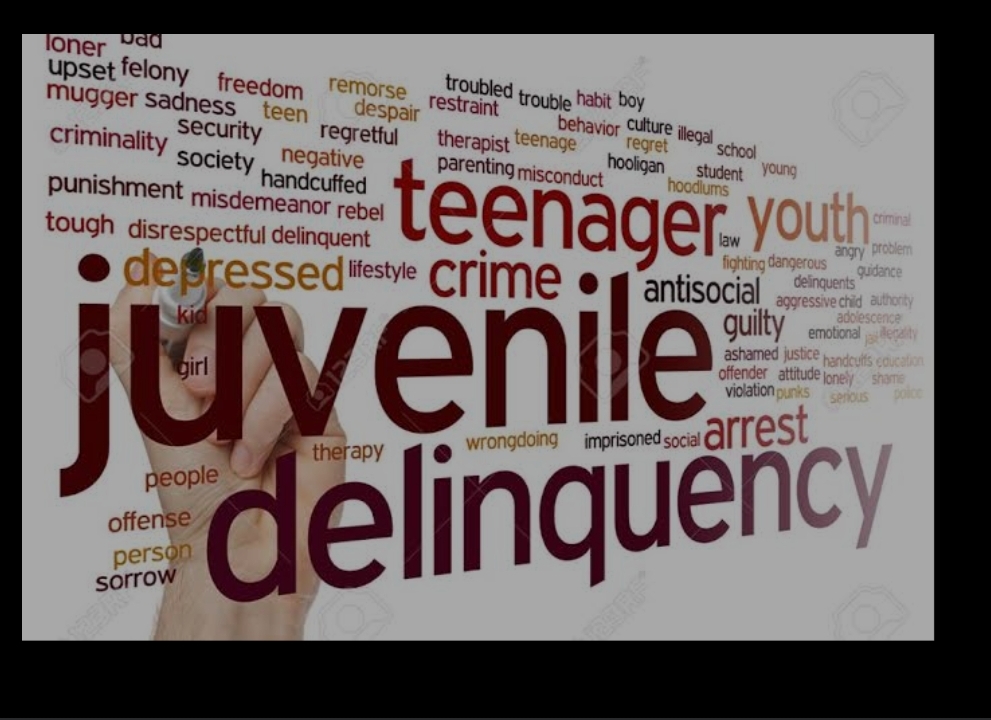
Juvenile Delinquency is one of the most serious problems of the society , a huge cause of disorganisation.
Mr. G.C.Dutt states, “Juvenile Delinquency is rapidly becoming a serious menace in India and with the progressive industrialization of many parts of the country , this problem will soon assume the same proportion as many of the Western Countries . ”
What is Juvenile Delinquency ?
Delinquency undoubtedly is a social evil. It is a socially unacceptable behaviour .Delinquency in general means misconduct . When an individual deviates from the course of normal social life ,his behaviour is called delinquency. Delinquency implies conduct that does not conform to the legal or moral standards of society; it usually applies only to acts that, if performed by an adult, would be termed criminal.
Delinquency in the view of Coleman (1981) refers to “behaviour of youths under 18 years of age which is not acceptable to society and is generally regarded as calling for some kind of admonishment, punishment or corrective actions”.
Delinquency includes all sorts of crimes committed by children. Starting from the business and use of illegal drugs and homicide murder, it may include various types of dangerous criminal offences.
It is a crime categorized mainly based on age. The age of juvenile delinquency has not been similarly determined in all countries . It varies from country to country but is within the usual limits of 16 and 20 .
Definitions :-
Cyril Burt defines delinquency as occurring in a child ” When his antisocial tendencies appear so grave that they become the subject of official action .”
Friedlander says , ” Delinquency is a juvenile misconduct that might be dealt with under the law .”
The Second United Nations Congress on the Prevention of Crime and Treatment of Offenders (1960) states , ” By juvenile Delinquency should be understood the commission of an act which , if committed by an adult , would be considered a crime .”
C.B Mamoria writes , ” The phrase ‘ juvenile delinquency ‘ may be loosely used to cover any kind of deviant behaviour of children which violates normative rules , understanding or expectations of the social system .”
In simple words , juvenile delinquency is a type of abnormal or antisocial behaviour by a juvenile who is below an age specified by statute .
Who is a juvenile delinquent ?
Juvenile delinquents are minors, usually defined as being between the ages of 10 and 18, who have committed some act that violates the law. Read on to learn about different types of delinquent acts as well as how to detect and prevent juvenile delinquency. Deliquescent acts may include running away from home , spending time idly beyond limits , visiting gambling centers , committing sexual offences etc.
Offence Committed :-
Offenses committed by juveniles aren’t called “crimes” as they are for adults. Rather, crimes committed by minors are called “delinquent acts.” Instead of a trial, the juvenile has an “adjudication,” in which they receive a “disposition” and a sentence.
Juvenile proceedings differ from adult proceedings in a number of other ways as well.
Delinquent acts generally fall into two categories.
The first type of delinquent act is one that would be considered a crime had an adult committed it. For particularly serious crimes, some jurisdictions will even try children as adults. When children are tried as juveniles, on the other hand, parents are often required to pay the court costs for the child.
The second type of delinquent act is one that wouldn’t normally be a crime had an adult performed it. These are typically known as “status” offenses since it’s considered an offense because of the person’s age. The most common examples of status offenses are staying out past curfew, alcohol possession or consumption, and truancy, which is the continued failure to attend school.
Causes of Juvenile delinquency :-
There’s no single cause or simple reason for the development of delinquent behaviour . Causes can be external factors including social elements or internal factors including physical and psychological Causes.
In the book , “ Approach and Concept of Criminology “ , the causes of Juvenile delinquency may be classified under two major factors • Social Factors • Personality Factors
1) Social Factors includes :–
• Family:- The major situations in the family that cause many factors that may lead to juvenile delinquency . Situations such as a broken house , attitude of parents , conduct of parents etc.
A study of juvenile delinquency has revealed that the greatest number of delinquents come from broken families . A broken family ,as the term indicates home where all ties are broken ,where there’s no interaction or family love to make one feel like they belong . Interaction in home is a very important means for teaching the child socialisation . Lack of parents’ affection , security , absence of loving mother or father etc. has a huge contribution in factors in spreading juvenile delinquency.
• Poverty :-
Crime and poverty are intimately related. Study conducted by Shaw , McKay and Elliot revealed that among juvenile delinquents a majority belonged to families with a high poverty ratio . According to Bonger and Fornasiri , poverty acts as an incentive to crime .
Poverty compels the children to consciously or unconsciously join hands with gangsters and become delinquents. Poverty leads to family quarrels and dissensions , inadequate education , lack of affection from parents , necessity of basic life products etc. which are more active factors that lead to juvenile delinquency behaviour .
• Delinquency Areas :-
The delinquents come mostly from the areas that are underground , crime dominated , liquor shops , motels and clubs etc. Such a neighborhood places a high influence upon a child .
• Bad Company :-
Charles Shaw said ,” delinquency is a product of community forces ” .
As a child grows older he goes into the neighborhood and becomes a member of the peer group . If by chance he joined the group or the gang that fosters delinquent attitudes he is likely to become a delinquent. In slum areas peculiar social groups called gangs are found . These gangs are found to be associated with crime in all aspects like delinquency , rioting , corrupt politics , etc.
According to famous criminologist Edwin H. Sutherland , criminal behaviour is acquired through interactions with others . Hence , bad companionship leads to juvenile delinquency behaviour.
• School Dissatisfaction :- Some students get dissatisfied with school life and such dissatisfaction makes them regularly absentee , wandering around in the streets forming gangs if their own , gambling , eve teasing , pickpocketing , smoking , drugs etc. leads them on .
2) Personality Factors
Personality factors are mainly factors related to mental deficiency and emotional disturbances .
• Mental Deficiency
It has been observed that a good number of delinquents are mentally deficient . Some Psychiatrists and neurologists believe that the psychopathic personality is a cause of crime . According to Tappan , psychopathic children are very crude , obstinate , suspicious , self centered , lonely , revengeful , hyper sexual , etc . Such persons are devoid of repentance over their own crude doing and the pain and suffering of others.
• Emotionally/ Psychological Problems of the Individual :-
Emotional instability is one of the most common causes of crime . A child’s personality is rendered unbalanced through lack of love and affection, emotional insecurity , strict discipline , feeling of insufficiency and inferiority, such factors that inspire the mind of the child to criminal behavior.
From a psychological point of view , “Delinquency is a rebellion and an expression of aggression which is aimed at destroying , breaking down or changing the environment .” This rebellion is mostly against the social conditions which deny the individual his basic rights and the satisfaction of his fundamental needs . Thus delinquents are not born but they become so due to social circumstances and personal deficiencies .
The delinquent individual who is governed by the “pleasure principle “ wants to get immediate pleasure and immediate satisfaction for his needs and so they become a victim to his own impulses.
Remedies For Juvenile Delinquency
It is said , “ a delinquent child today may turn out to be a chronic criminal tomorrow “. Discussions have been made at national and international level by scholars to seek out effective remedies for this problem .
The three most suggested methods are • Preventive measures • Rehabilitative or curative measures. • Legislative Measures
1) Preventive Measures
• Giving proper training to the members and staff of all organisations concerned with delinquency control .
• Establishing child guidance clinics to give appropriate treatment to the disturbed and maladjusted children.
• Educating the family so as to help the parents to realise the importance of giving proper attention to the needs of their young children .
• Establishing wholesome recreational agencies to prevent young children from becoming law abiding .
• Improving the social environment – slum areas , busy market places , gambling centers etc .
• Spotting potential delinquents by predictive tests in schools or society and giving treatment to such cases.
• The problem of beggary and poverty are to be removed or controlled and the general economic standards of the people must be increased to prevent children from becoming delinquents due to economic exigencies.
2) Rehabilitation or Curative Measures
The main purpose of the method of rehabilitation is not to punish or to treat them mentally disabled but the intention is to help the delinquent children to get proper guidance and training so that they don’t become victims of their own impulses and lead a normal life .
Some institutions to rehabilitate Juvenile Delinquents :-
• Juvenile Courts :- Juvenile Courts are established in order to treat Juvenile delinquents and adult criminals separately. There are currently 39 Juvenile Courts in India . This court is different from the normal civil courts . Juvenile delinquents cannot be chained or produced to courts by police , no advocate arrangements are made for plead . The intention behind this treatment is to create positive feelings in the minds of juveniles .
• Remand Homes :- When a child is arrested under the Act ,he is produced before the magistrate within 24 hours and kept in Remand Homes till the case is investigated. The child is kept until the final disposal of the case .. Sometimes persons convicted are sent to Remand Homes for a few days and released later .
• Certified School :- Certified Schools are established to give some general education and technical training to children . Children are sent for long term treatment and voluntary bodies or local authorities with financial assistance of the government and the public . There are two types of schools :- • Junior School for under 12 • Seniors Schools for under 16
The children are confined here for about 2 to 3 years . After the release they are put under the charge of a Welfare or Probation officer who watches their activities .
• Auxiliary Homes :- The auxiliary homes are attached to Certified Schools just like remand homes are to juvenile courts . Here the convicted delinquents are kept for some time and studied by a social worker and sent later to certified school on the basis of their attitude and behaviour.
• Reformatory Schools :- In states where there are no Children Acts , Reformatory Schools are established . They are meant for the education and vocational training of delinquent children. The young convicted offenders below 15 years are detained here for 3to 7 years . The delinquents are removed from bad environments through these schools .
• Borstal Institutions :- Under Borstal Institutions special treatment is provided for adolescent offenders between the ages of 15 to 21 years . Offenders are sent to Borstal Institutions for rehabilitation rather than kept under imprisonment . The term of Borstal Institutions are 2 to 3 year but may exceed in any serious case . Separate arrangements are made for offenders , training , physical and education are given to prevent them from committing offences again .
Fit persons Institutions and Uncared Children Institutions :- These two non government institutions managed by private bodies and give refuge and protection to destitutes , neglected children and children in pre – delinquent stage .
3) . Legislative Measures :-
Various legislations have been made in India from time to time to deal with juvenile delinquency . Some acts are :-
• Apprentices Act of 1850 • Reformatory Schools Act 1897 • Children Acts • Juvenile Smoking Acts • Suppression of Immoral Traffic Acts . • Probation of Offenders Act • Borstal Schools Act for Adolescents. • Provision in the Criminal Procedure Code ( under section 399 of ICPC )
A grave problem such as juvenile delinquency cannot be solved by means of legislation , government or private institutions efforts alone . The public attitude towards juvenile delinquents must also change to make them feel accepted and initiate their treatment as a cure not abnormality . A juvenile delinquent is a product of unwholesome environmental factors hence in order to change his attitude he needs to be supported emotionally , mentally and physically by all .
In India Caste System consists of two different concepts that are Varna and Jati, the real concept of Varna has almost disappeared in the present context and has changed into Jati. Caste is such a deep-rooted and pervasive concept, it is a rigid form of stratification system, in which mobility of rank and status is not allowed. The members of backward classes are not a part of Hindu society even then, they had started observing untouchability towards Dalits- who themselves have a caste hierarchy. During his lifetime Dr. Ambedkar had played three roles: caste leader, untouchable spokesman, and that of a national statesman. He was a guide, guru, and decision-maker for his caste, the Mahars of Maharashtra.
According to him, no civilized society other than Indian one practices rituals of the remote past even today. Its religion is essentially primitive, and its tribal code, despite the advancement of time and civilization, operates with all its pristine vigor even today. The prevalence of exogamy was well-known in the primitive world. The caste system has made Hindu society stagnant which creates hurdles in integration with outsiders. Even internally, Hindu society fails to satisfy the test of a homogeneous society, as it is just a conglomeration of different castes. The caste system does not allow lower castes to prosper which led to moral degradation. The battle for the removal of untouchability becomes the battle for human rights and justice. Dr. Ambedkar criticized old Law books like Manusmriti and Arthshastras who showed the inferiority and bitterness towards the suppressed class. He also criticized the higher standard of Brahmans who are category above of all. The Brahmans are somehow responsible for social exploitation and the backwardness of untouchables.
How can you describe a great leader? Great leaders aren’t always found with title CEO or manager on their business card.
Anyone can demonstrate leadership qualities.
It’s not about winning a popularity contest. You don’t have to be liked to be respected. It’s about serving and influencing others regardless of their job title in the effort to achieve a certain goal. More than anything, it’s about creating harmony in an environment where people want to work together.
In one study, leadership qualities such as assertiveness, adaptability, intelligence, and conscientiousness were cited as the most important. Transformational leaders are positive, empowering, and inspiring. They value followers and inspire them to perform better. So what can you do to embrace these valued leadership qualities and become a stronger and more effective leader?
Transformational leadership are usually described as enthusiastic, passionate, genuine and energetic. These leaders are not just concerned about helping the group achieve its goals; they also care about helping each member of the group reach his or her full potential.
Leadership can be a struggle to develop, as there are intrinsic qualities that are tough to cultivate.
But if you’re willing to face the challenge, and follow these guidelines, then you’ll be on the right path to becoming the leader your business needs to succeed.
Encourage Creativity
Intellectual stimulation is one of the leadership qualities that define transformational leadership. Followers need to be encouraged to express their creativity. Effective leaders should offer new challenges with ample support to achieve these goals.
Serve as a Role Model
Idealized influence is another of the four key components of transformational leadership. Transformational leaders exemplify the behaviors and characteristics that they encourage in their followers. They walk the walk and talk the talk. As a result, group members admire these leaders and work to emulate these behaviors.
Be Passionate
You can develop this leadership quality by thinking of different ways that you can express your zeal. Let people know that you care about their progress. When one person shares something with the rest of the group, be sure to tell them how much you appreciate such contributions.
Listen and Communicate Effectively
By keeping the lines of communication open, these leaders can ensure that group members feel able to make contributions and receive recognition for their achievements.
Have a Positive Attitude
Even when things look bleak and your followers start to feel disheartened, try to stay positive. This does not mean viewing things through rose-colored glasses. It simply means maintaining a sense of optimism and hope in the face of challenges.
The Constitution of India provides for a parliamentary system of government or Cabinet form of government modelled on the British pattern, the council of ministers headed by the prime minister is the real executive authority.
Salient Features of Cabinet form of government
•Dual executive: There are two executives – the real executive and the Nominal executive.
•Nominal executive is the head of state (president)
•Real executive is the head of government (Prime minister)
•The party with the greatest representation forms the government
•Dual Membership – ministers are members of both legislature and executive
•Collective Responsibility- PM and his council of ministers are collectively responsible to the Loksabha
The word Cabinet has not been mentioned anywhere in the constitution except in Article 352. Instead, the constitution gave detailed provisions regarding Council of ministers
•Art 74
◆There shall be a Council of Ministers with the Prime Minister at the head to aid and advise the President who shall, in the exercise of his functions, act in accordance with such advice
◆The advice tendered by Ministers to the President shall not be inquired into in any court
●Art 75
Appointment: The Prime Minister shall be appointed by the President and the other Ministers shall be appointed by the President on the advice of the Prime Minister
A person who is not a member of either House of Parliament can also be appointed as a minister. But, within 6 months, he must become a member of either House of Parliament, otherwise, he ceases to be a minister
EXAMPLE : Recent example of Uttarakhand CM
Strength: The total number of ministers, including the Prime Minister, in the Council of Ministers shall not exceed 15% of the total strength of the LokSabha. This provision was added by the 91st Amendment Act of 2003
Tenure: The ministers shall hold office during the pleasure of the President
Collective responsibility: The council of ministers shall be collectively responsible to the LokSabha
Every minister shall have the right to speak and take part in the proceedings of either House, any joint sitting of the Houses and any Committee of Parliament of which he may be named a member. But he shall not be entitled to vote.
Composition of the Council of ministers:
●The council of ministers consists of three categories of ministers are
1. Cabinet ministers
2.Ministers of state
3. Deputy ministers
The difference between them lies in their respective ranks, emoluments, and political importance
Cabinet ministers head the important ministries of the Central government like home, defence, finance, external affairs, and they play an important role in deciding policies.
Ministers of state are attached to cabinet ministers and they work under the guidance of cabinet ministers. However, MoS can also be given independent charge of the Ministry. They are not members of the cabinet and do not attend the cabinet meetings unless specially invited.
Deputy Ministers-Next in rank are the deputy ministers. They are not given independent charge of ministries but are attached to the cabinet ministers or ministers of state and assist them in their administrative, political, and parliamentary duties. They are not members of the cabinet and do not attend cabinet meetings.
parliamentary secretaries- They are the members of the last category of the council of ministers. They have no department under their control. They are attached to the senior ministers and assist them in the discharge of their parliamentary duties.
According to the Transaction of Business rules (1961), Prime Minister can constitute cabinet committees for smooth functioning of business of the government.
At present there are 8 Cabinet committees
•Cabinet Committee on Political Affairs
•Cabinet Committee on Economic Affairs
•Cabinet committee on Appointments
•Cabinet Committee on Security
•Cabinet Committee on Parliamentary Affairs
•Cabinet Committee on Accommodation
•Cabinet committee on Investment
•Cabinet committee on Employment and skill development
Cabinet secretariat:
The Cabinet Secretariat facilitates smooth transaction of business in Ministries/ Departments through enforcement of Transaction of Business Rules, 1961. The Secretariat assists in decision-making in Government by ensuring Inter-Ministerial coordination. Cabinet Secretariat also provide secretarial assistance to Cabinet committees
Object-oriented programming (OOP) is a fundamental programming paradigm used by nearly every developer at some point in their career. OOP is the most popular programming paradigm and is taught as the standard way to code for most of a programmers educational career. OOP focuses on the objects that developers want to manipulate rather than the logic required to manipulate them. This approach to programming is well-suited for programs that are large, complex and actively updated or maintained.
Example
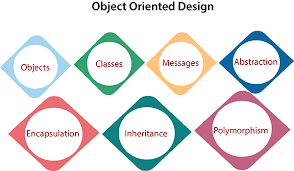
Following are the Basic Concepts Of OOP
Objects
Classes
Data Encapsulation
Data Abstraction
Inheritance
Polymorphism
Message Passing
Dynamic Binding
1. Object
•Objects are the basic run-time entities in the object-oriented system. •They may represent a person, a place, a bank account, a table of data etc. •They may also represent user-defined data such as vectors, time and lists. •Programming problem is analyzed in terms of objects and the nature of communication between them. •Objects take up space in the memory and have an associated address •Each object contains data and code to manipulate the data
2. Class
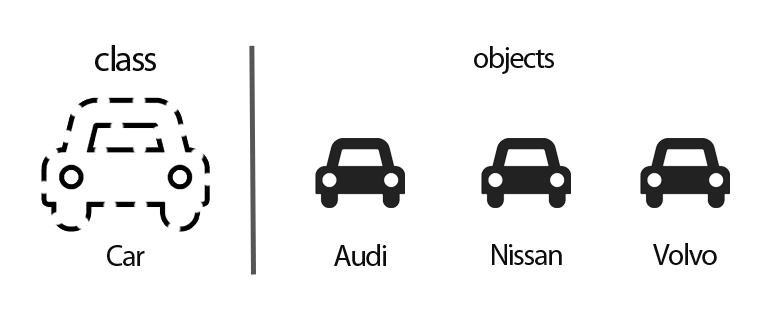
•Class is defined as an abstract data type characterized by a set of properties (attributes and functions) common to its objects •Class is a user defined data type for object •Objects are the variables of the type class •Thus class is a group of objects of similar type •e.g. Mango, apple, pineapple, orange are objects of class Fruit •Class is defined first and then objects are created of the type class
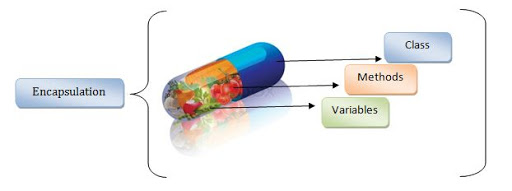
3. Data Encapsulation
•The fundamental idea behind OOP approach is to combine the data and functions operate on that data, into a single unit •The wrapping up of data and functions into a single unit (called class) is known as encapsulation •The data is not accessible to the outside world •The encapsulation (protection) of Data from direct access by outside functions in a program is called Data hiding or Information hiding
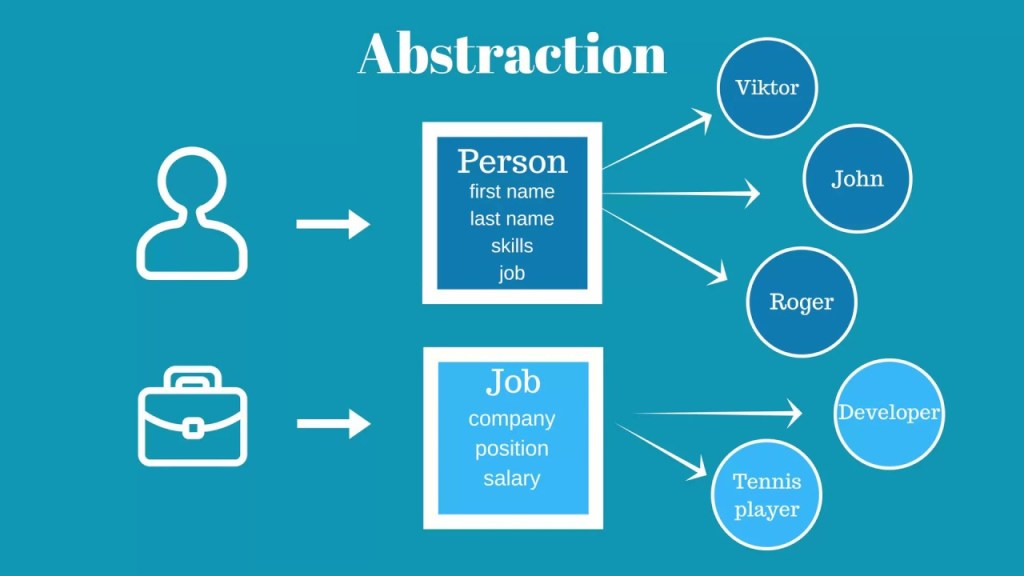
4. Data Abstraction
•Abstraction refers to the act of representing essential features without details •Abstraction is also defined as hiding an implementation details from user •Classes use the concept of data abstraction and hence they are also known as Abstract Data Types (ADT) •Classes are defined as a list of abstract attributes such as size, weight, cost, and function to operate on these attributes
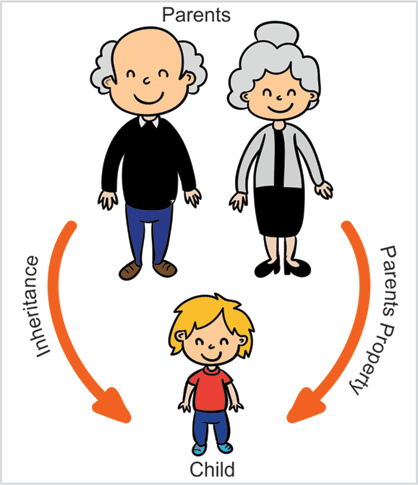
5. Inheritance
•Inheritance is the process by which objects of one class acquire the properties of objects of another class •In OOP, the concept of inheritance provides the idea of reusability •Reusability allows to add additional features to an existing class without modifying it •It is possible by defining a new class from the existing class •The new class will have combined features of both the classes •The mechanism of deriving a new class from existing class is called as Inheritance
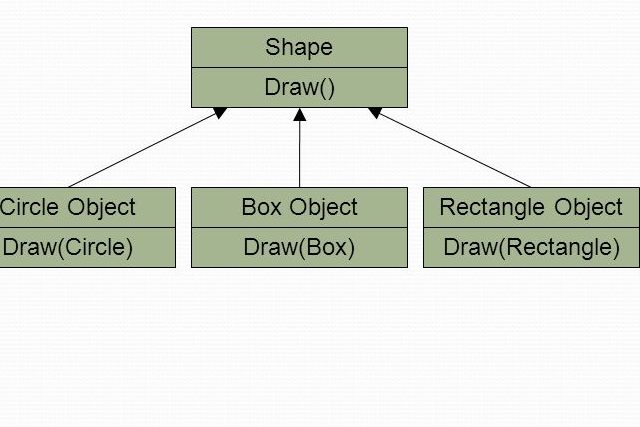
6. Polymorphism
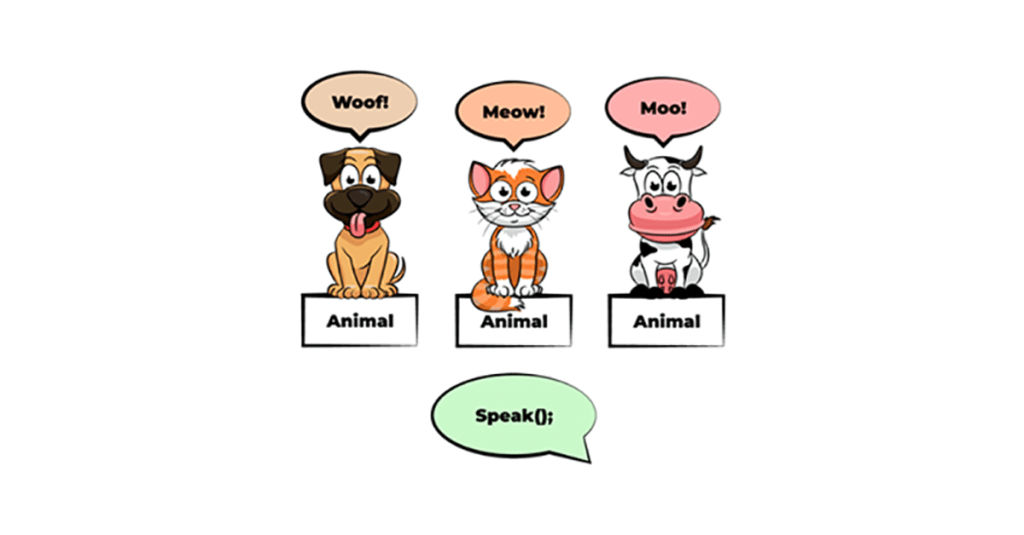
•Polymorphism means the ability to take more than one form •An operation may exhibit different behavior in different instances and this behavior depends upon the types of data used in the operation •Polymorphism can be implemented using function overloading, function overriding and operator overloading •It allows the objects with different internal structures to share the same external interface
In the above example all animals are performing the same task of speaking but it is different for every animal.
7. Message Passing
•The Objects communicate with one another by sending and receiving information (Messages) •A message for an object is a request for execution of a function •Message passing involves specifying the name of the object, the name of the function and the information to be sent
8. Dynamic Binding
•Dynamic binding means that the code associated with a given function call is not known until run-time. •The code to be executed is selected at the run-time •The same function executes different code dynamically depending on data entered at run-time •It is associated with polymorphism and inheritance. •A function call associated with a polymorphic reference depends on the dynamic type of that reference.
The Bermuda Triangle is a region in the north-western part of the Atlantic Ocean, near the USA. It is also called the ‘Devil’s Triangle’, because of all the disappearances and supernatural activity that is associated with it. Till date, around 50 ships and 20 airplanes have gone missing in the Bermuda triangle, never to be heard of again. Not even the wreckage or debris of any vessel has been found. One such case was in 1945, when a squadron of US Navy bombers became disoriented while flying over the area and thereafter disappeared, never to be found again. Even the rescue plane sent after them disappeared with no trace. No one knows what happens to the vessels, or the people inside them after entering the Bermuda triangle. Oftentimes the boats and planes have vanished without even sending out a distress call or signal, and planes have been known to go off the radar in this region of the ocean.
What are the possible explanations?
Many people like to suggest supernatural or other-worldly causes as possible explanations, like alien abductions or some mythical sea creature. However, it is more likely to have a scientific explanation, with geophysical and environmental factors at play. One such factor is that the agonic line (imaginary line connecting the earth’s north and south magnetic poles) passes through this area, which pilots may fail to account for. This may have caused discrepancies in interpreting the magnetic compass and thereby led to significant navigational error, resulting in catastrophe. Another scientific explanation is that the region often has massive rogue waves passing through it (reaching up to 100 feet) which are enough to carry away and engulf any evidence of a ship or airplane, which is why none has been found. Since multiple storms may converge in the Bermuda triangle, and hurricanes often sweep by in that area, it is possible to form massive waves and winds that destroy, carry away, and leave no sign of any vessels.
Furthermore, the National Oceanic and Atmospheric Administration of America has said that “There is no evidence that mysterious disappearances occur with any greater frequency in the Bermuda Triangle than in any other large, well-travelled area of the ocean,” This means that though there have been mysterious disappearances, a larger number of ships and airplanes have travelled through the region, and continue to do so today, without any incident. So, the few cases in which disappearances did occur might have been due to certain unfortunate circumstances and events.
Conclusion
There is a lot of mystery and fantasy involved when talking about the Bermuda triangle, but this is because human minds are drawn towards things that are bizarre and memorable, and we are more likely to remember things that seem exceptional in nature. In this process, however, we often disregard the ordinary things that offer a more realistic view. We prefer to think about a mysteriously disappearing ship rather than a ship that simply sank in a hurricane. This leads to something known as the ‘frequency illusion’ where once we’re introduced to something, we tend to notice it more often in our lives. This makes us believe that that thing is more common and frequent than it really is. Hence, the world may suffer from a frequency illusion that makes us want to think that the Bermuda triangle keeps swallowing up vessels very often, when in reality it has been a select few cases. In fact, mysterious disappearances happen in every part of the world, and not just the Bermuda triangle. The classic example of this being Malaysia Airlines flight 370.
Regardless, the Bermuda triangle has managed to capture human imagination with the unexplained disappearances in its area, and has also been referenced in may pop-culture pieces of media like the Gulliver’s Travels and Percy Jackson movies. This shows the impact that any strange phenomenon can have on human minds, and its ability to impress us. Today the Bermuda triangle is a safe destination that even tourists can visit to see for themselves, without any risk of disappearing.























 Eduindex
You must be logged in to post a comment.