Money Management

“Money” is a medium of economic exchange in which prices and values are expressed. It is very important to live a life. Just like the three basic units of life- “food, cloth and shelter”. Money is also can be said to be the basic unit as we can but food, cloth and shelter with money only. So its management is also important. “Money Management” means budgeting, saving, investing, earning, spending money in the best way possible. Spending money to satisfy cravings/needs is a natural human phenomenon. The idea of managing money has been developed to reduce the amount of money that is spend on items that add no significant value to one’s living standards. In a nut shell money management means spending money carefully on the needs rather than on wants and wishes and also saving it for the better future.

In Indian Society, if we take a look, we can see that indian society people/groups were divided into different categories on the basis of their earning and living standards. People are divided on assets and income/expenditure. Based on these parameters there are broadly three categories (sub categories are also there) i.e., rich/upper class people, middle class people and poor/lower class people.

Rich/upper class refers to a group of individuals have highest place and status in society. These people are considered the wealthiest, lying above the poor and middle class in the social hierarchy. Middle class people fall between the poor class and upper class. They are neither poor nor rich. These people have a simple living and their earning are mostly equal or less than their expenditure resulting to short debts. Poor/lower class people are those who live under poverty. They are homeless, living on roads and slums, don’t have food to eat, usually dependent on begging and daily wage activities.

People ending up in the same category in which they are born, it is very less likely that a poor class person becomes a middle class one in this life span. There are chances that a rich person becomes a middle class one due to many reason but the chances of upgradation in class is very less.

The reason for such situations- “Wrong money management” and less/no knowledge of managing money. Rich people become more rich and poor become more poor and middle class reamains in debt, the reason behind this phenomenon is that knowledge of money management is not being taught in school and if we talk about poor class children dont even go to school. They don’t even know how to read and write. Money management is taught at home rather than in school. Many of us usually learn about money from our parents.

Talking about poor people, how can you say that they can teach their children about money when they themselves don’t have money to fill their stomach. Poor people just teach their children to go school and work hard. It might happen that the child will pass with excellent grades in his/her academic career but even after this their economic status and mindset remain poor and they keep running in the vicious cycle of poverty like a rat.

Children of upper class are given exposure and knowledge of money management from their childhood. As their parents have more than enough money and seeing their parents earning and managing money they also learn and their intellectual development happens in the same matter but it is not possible in the case of middle and lower class as they themselves don’t have enough money so how can they teach their children about the importance of the same.

Money management should be a topic of concern as it is an important aspect of one’s life which determines his/her status and standard of living. Money management be taught from school level only then children can understand the importance of it. Both government and private schools should organise lecture and seminars on the topic “money management”. If they can manage then parents should also be invited to attend such seminars and lectures. Parents should also give opportunities to their child to learn about the money, its expenditures, saving and management. Parents should send their children to the nearby shops to purchase small goods.

Tips for Money Management

1.Every child should be given the opportunity to go to schools. 2.Budgeting should be done to save money. 3.One should create a realistic monthly budget. 4.Everyone must track their spending. 5.One should build up their savings 6.Must pay your bills on time. 7.Have an investment plan. 8.Know your money priorities. 9.Differentiate between needs and wants.

Money is important to live a good life so as its management also. Money management is a skill that everyone must know to have a good present and better future. Children should be taught about money management at school from the very beginning. It is effectively must to manage money to have a good lifestyle. So don’t waste your time and manage your money now to have a healthy, happy and wealthy lifestyle.


The crazy ball and the crazy me

Photo by NEOSiAM 2021 on Pexels.com

The balls above bring back memories. Don’t they? Well, they definitely do for me. When I was a kid, mobiles weren’t very popular and so we had to look for other sources of entertainment that included many board games, those plastic bats, plastic cars and later on those remote controlled ones, a soap bubble maker, stuffed cartoons and bears, cartoon characters in balloons and balls- football, stumper ball, leather balls, table tennis balls, plastic balls, even golf balls, balloon balls and my personal favourite -the crazy balls.

Well, what’s so special about them, you ask. Nothing much, except that once thrown they bounce back soo high and the fact that they come in such attractive colors- neon, green, pink, blue, a mixture of pink and blue, green and yellow and soo many more and the rubber like texture of the balls. You couldn’t help but love it.

And this one fine day, when I was out with my mother and visited a stationery, I saw these crazy balls. Not one or two, but a whole packet. I couldn’t believe they still sell this. Now-a-day, kids have so many sources of entertainment and when they do play outside, it’s usually in those professional stadiums. I thought they had stopped making them. So anyways, when I saw the packet, I couldn’t help but want one. With the best puppy like face I could muster, I looked at my mother and pleaded to have one. My mother looked at me in all her seriousness and she said and I directly quote- “Why do you need one? Are you a kid?”. It was when it stuck me, I wasn’t a kid anymore. I was supposed to be all serious and mature. But then again, feeling that child like excitement once again, after soo long felt strange but it felt soo good. I couldn’t help but want it- both that feeling and the crazy ball. And so I looked at my mother and said, “Yes, I am only a kid “. She smiled. What more could she have said and when I didn’t budge she allowed me to have one. Just like those old days, choosing one was soo difficult. There were soo many colors- neon, green, pink, blue, a mixture of pink and blue, green and yellow, red and green. I took the pink and blue ball and clutched it tightly in my hand all the way back home. The crazy ball sure has me crazy over it. So, gotta go. I still have to play with it. And so, if you ever come across any of those or any of your personal favourites, embrace them. Be a kid. Life is short, the pandemic has taught us this, but our childhood was even shorter. And we all miss it somewhere, sometimes. So when life gives you moments like these, don’t just sit and recollect. Go ahead and relive.

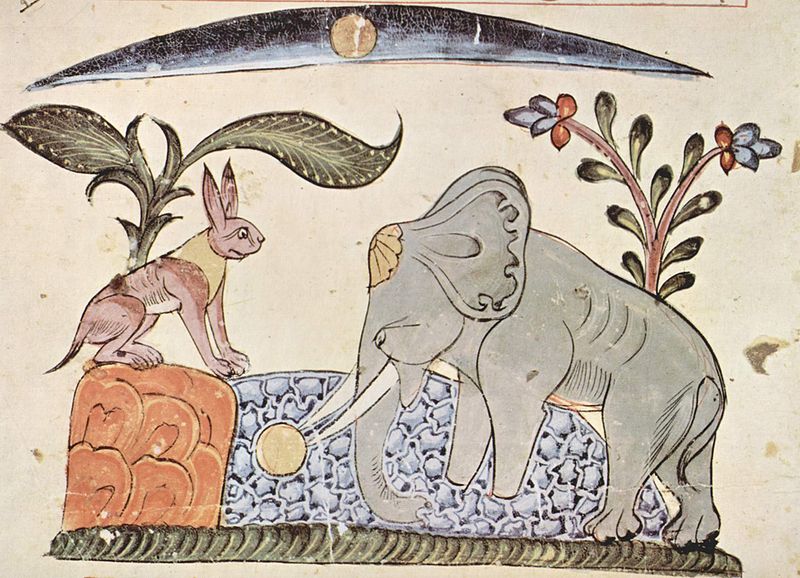
Panchatantra : The Older Aesop Fables

A certain king Sudarshan had three sons – neither of them willing to take responsibility or learn anything. The dejected king went to a scholar named Vishnu Sharma who used animals as characters to weave five treatises – sets of interwoven stories – “The Loss of Friends”, “The Winning of Friends”, “Of Crows and Owls”, “Loss of Gains” and “Imprudence” – that taught the princes about politics, life, justice etc. and came to be known as the Panchatantra.

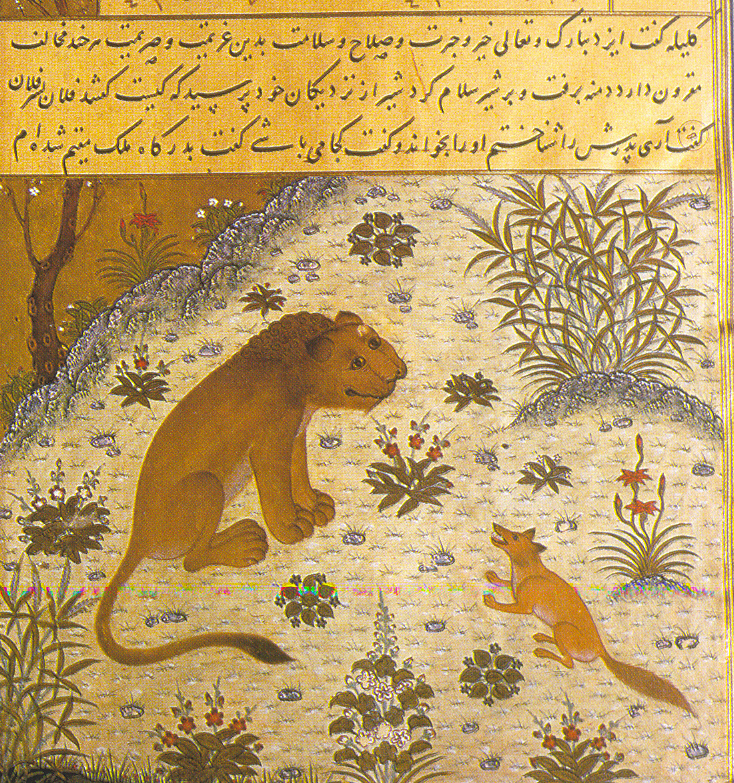
Panchatantra to this day remains the most published, circulated and translated non-religious text in human history. The Arabs carried the book to their lands to be translated as Kalīlah wa Dimnah in the 7th century. By that time, it already existed in Sanskrit, Persian, Greek and the local Indian languages like Pali and Prakrit. By the 17th century, it existed in French, Italian, German, Chez, English and Slavic languages as well.

Ibn al-Muqaffa' by Khalil Gibran.png
Ibn al-Muqaffa, the scholar who translated the book in Arabic.
The Persian Panchatantra

The Aesop Fables of Greece carries a similar taste in story telling – simple and straightforward stories with talking animals often holding the traits identified with humans. But weirdly enough, that is a more famous set of stories in the modern day despite all the historic achievements the Panchatantra holds.

In the modern day, when society is increasingly pushing itself and its members – including kids and adults into its new evolving definitions of justice, crime and conduct – Panchatantra offers a freshness of simplicity despite being 2500 years in age and in lore.

We were Liars: A book review

Cadence is a girl born to rich family that owns large estates and an island. Her best friends are her cousins and the son of the manager. This group together is called the liars. The liars are the best of friends, and enjoy each other more than their families which are bound quite unlovingly in threads of race and economic dependencies. One day Cadence is found unconscious near the shore and is not allowed to visit the island again for the next couple of years. The worst part is she remembers nothing of what happened to her. Her mother even forces her to improve relationships with her estranged father. She returns however to the island only to find the liars living in a far end of the island and her family broken down and her once strong headed and commanding grandfather suffering from dementia.

She roams around the island and is saddened that the liars do not want to get very close to her. She discovers not only the ugly relationships and secrets of her family but also slowly comes to remember and accept the fate that she has given to her friends and her family.

Awarded the Good Reads Book of the year in young adult literature in 2015, We were liars is a book that deals with love, romance, a decaying aristocracy and the decaying state of mind within it, not to forget issues like mental health and defenses.

Buy We Were Liars Book Online at Low Prices in India | We Were Liars  Reviews & Ratings - Amazon.in

Happy Reading!!!

WHAT IS TRAGEDY?

Drama presents fiction or fact in a form that could be acted before an audience. It is imitation by action and speech. A play has a plot, characters, atmosphere and conflict. Unlike a novel, which is read in private, a play is intended to be performed in public. Traditionally drama is divided into two categories tragedy and comedy. Tragedy deals with the dark side of the life and the other with its light side. In tragedy the characters are involved in circumstances and situations that force them towards an unhappy end. Thus a tragedy usually ends in happiness for the central characters and sometimes in their death.

HOW TRAGEDY WAS ORIGINATED:

In ancient Greece both tragedy and comedy originated in the rustic festivals which were held in honour of the nature-god Dionysus. Tragedy dealt with the more somber aspects of life exemplified by the stories and legends chosen from mythology. In ancient Greece, Aeschylus, Sophocles and Euripedes composed tragedies. Traditionally a tragedy required an exposition and complication or conflict, a climax or crisis, a denouement or resolution and a catastrophe at the end.

ARISTOTLE ABOUT TRAGEDY:

Aristotle thought that tragedy was the noblest form of literature. He laid down certain percepts to be followed by the tragic poet. They form the basis of the classical approach to tragedy. According to this a tragedy should have a plot, characters, structure and spectacle, catastrophe and catharsis. Only lives of famous and powerful men like kings and warriors were fit subjects for tragedy. The sufferings and death of such characters raves about their common plane evoked pitty and terror in the mind of the spectators. Aristotle spoke of the effect of tragedy as the evocation of pity and awe and the achievement of catharsis or cleansing of our emotions. However in the great tragedies of Marlowe and Shakespeare the insistence on great themes and illustrious persons was often violated. In modern times we have several tragedies of low and humble life.

HOW TRAGEDY AND COMEDY ARE SAME?

Like comedy, tragedy also aims giving pleasure. The pleasure tragedy provides is of a lofty order. The spectacle of a noble character caught in the cause of circumstances presented with artistrt of language raise higher passions in the spectators. The effect is rather exalted and enabled rather than distressing.

TYPES OF TRAGEDY:

Tragedy can be divided into two types the classical and romantic.

The Classical tragedy: It was based on Greek inventions like the observance of the unity of time, unity of action and unity of place and the employment of the chorus. The classical tragedy dealt with the great legends of mythical age, its chief characters were majestic heroes. An ideal tragic which was maintained in the dialogue and the rendering was marked by a stateliness and nobility of expression.

The Romantic tragedy: it reach its perfection in Shakespeare was not always limited by the observance of the three unities. It also dispensed with the chorus. In the romantic tragedy the plot may stretch over a long period of time there; may be subplots and there is usually mixing up of tragic and comic elements. That Romantic tragedy is generally concerned with matters remote from ordinary life. It is both a idealistic and realistic. It is not written to a set pattern and is never didactic. On the basis of themes there were several types of tragedy is like the horror and revenge tragedy of Kyd and Webster, heroic tragedies of Dryden and the domestic tragedies of George Lillo.

The Elizabethan Romantic tragedy was essentially poetic. However in the 18th century poetry give place to prose. In the 20th century poetic drama has been revived in the plays of W.B. Yeats, T.S. Eliot and Christopher Fry.

THE LYRIC

Introduction:

The Lyric is the most delightful and pleasing form of poetry. It is generally subjective. Lyric poetry, in its original meaning, was poetry composed to be sung to the accompaniment of a lyre. The lyre was a simple Greek musical instrument. The Greek idea of the lyric suggests its intimate connection with music.

A lyric is defined as a poem that Expresses a single emotion. Over elaboration of emotion results in the loss of effectiveness. So a lyric is generally short. In a lyric the quality of emotion is important. It must embody emotion and it must impress us by the sincerity of its utterance. The language and imagery of a lyric must be characterized by beauty, propriety, and harmony.

Personal poetry touches almost all aspects of experience. As a result, there are various types of lyric poetry such as the love lyric, the lyric of patriotism, the lyrics of religious emotion, the lyric of joy, and so on. The essence of a lyric is the personality of a poet, the majority of the world’s good lyrics express also what is typically human. The reader finds in them the expression of experiences that he can share with the poet. The reader finds this experience in the poetry of Keats, Shelley, and the metaphysical poets like Donne and Marvell

In lyric poetry, the poet is occupied with himself. His thoughts, feelings, and emotions constitute the subject matter of his lyric. The lyric becomes a mirror to his personality. Even the titles of poems are no indication as to their themes. “Ode to a Nightingale” and “An ode to a skylark” are not about birds. In highly composite poetry it is difficult to distinguish between subjective and objective. So it is generally said that the Epic, The ballad and dramatic poetry are objective and lyric is subjective. Some forms of lyrics lead us to meditative and philosophic modes as in them the elements of thought and reflection or dominant.

Another trait of a lyric is its unity. A lyric is self-contained and everything in it it is related to the central idea or emotion. So there is hardly any place for descriptions or elaborations in a lyric. Since the lyric is a unified experience, generally, it is not very long. Edgar Allen Poe said, “a long poem does not exist” this is true of a lyric.

It is difficult to identify the I in a lyric poem. Through the poet express his own emotions and feelings, they are also universal. Thus, Wordsworth Tintern Abbey lines or Milton’s Sonnet on his blindness, express universal emotion. Most of the Elizabethan songs, poems of the metaphysical like Donne and the short poems and the dramatic monologues of Browning and Tennyson come under the category of lyric.

Three parts of Lyric:

Structurally, a lyric can be divided into three parts.

Motive:

The first is the motive. It states the emotion and comprises the first few lines. The motive is the sudden provocation for the poet to compose. It may be Nightingale’s song as in the case of kids are the song of reaper girl as in the case of Wordsworth. The motive is only an excuse for the poet to express his own emotions and feelings.

Statements:

The second part of the lyric consists of the poet’s emotions and feelings. These may be termed as statements. In “the ode to the west wind” Shelley muses over evolution. In “The Ode to Nightingale” Keats meditates over the weariness of life and the ease of death.

Conclusion:

The third part of the lyric is the conclusion that comes when the emotions subside. It is a conclusion, reflection, or resolution. Keats reflects on beauty at the end of the famous Ode on a Grecian urn” Herrick reflects on the fragility of beauty and power of death towards the close of “To blossoms”.

Much of the beauty of a lyric depends on its expression. So the poet has to choose words and their arrangements with great care. The combination of lines, rhyme scheme, and rhythm are important. Each stanza should correspond to the mood expressed. Smoothness or hardness of the words, slowness or rapidity of the movements, alliteration, rhyme, rhythm, melody, and even some irregularities get hold upon the reader’s imagination and intensify his enjoyment of the lyric. Every lyric poet must be conscious of this fact.

What is a short story?

Traits of an Epic

Bailment

Section 148 defines the terms ‘bailment’, ‘bailor’ and ‘bailee’.

A bailment is the delivery of goods by one person to another for some purpose upon a contract that they shall when the purpose is accomplished be returned or otherwise disposed of according to directions of the person delivering them. The person delivering the goods is called the bailor and the person to whom the goods are delivered is called the bailee.

Essentials of Bailment

1.Delivery of the goods for some purpose

2.Return of the goods after the purpose is achieved, or their disposal according to the bailor’s directions.

Kinds of Bailment

  1. Gratuitous Bailment: In gratuitous bailment it is without any consideration for benefit of bailor or bailee.
  2. Non-Gratuitous Bailment: Benefit for both bailor and bailee. Also known as bailment for reward.
  3. Bailment for benefit of bailor: Bailor delivers his goods to bailee for safe custody without any benefit or reward.
  4. Bailment for benefit of bailee: Bailor delivers his goods to a bailee without any benefit for his own use.
  5. Bailment for benefit of bailor and bailee: It is beneficial for both i.e. bailor and bailee.

Duty of Bailor

Section 150 mentions the following duty of bailor in respect of the goods bailed by him:

  1. The bailor is bound to disclose the faults to the bailee in the goods bailed, of which the bailor is aware and materially interfere with the use of them, or expose the bailee to extraordinary risks; and if he does not make such disclosure, he is responsible for the damage arising to bailee directly from such faults.
  2. If the goods are bailed for hire, the bailor is responsible for such damage, whether he was or was not aware of the existence of such fault in the goods bailed.

Duties of Bailee

  1. Duty to take reasonable care of the goods bailed (Section 151 and 152).
  2. Duty not to make unauthorised use of the goods bailed (Section 153 and 154).
  3. Duty not to mix the bailor’s goods with his own goods ( Section 155,156,157).
  4. Duty to return the goods on fulfillment of the purpose (Section 160,161 and 165,166,167).
  5. Duty to deliver to the bailor increase or profit on the goods bailed (Section 163).

Nature of Partnership

When two or more persons join hands to set up a business and share its profits and losses it is called Partnership. Section 4 of the Indian Partnership Act 1932 defines partnership as the ‘relation between persons who have agreed to share the profits of a business carried on by all or any of them acting for all’.

Partners are the persons who have entered into partnership individually with one another. Partners collectively are called ‘firm’. The essential features of the partnership are as follows:

Two or More Persons:
There should be at least two persons coming together to form the partnership for a common goal. In other words, the minimum number of partners in a partnership firm can be two.
Indian Partnership Act, 1932 has put no limitations on maximum numbers of partners in a firm. But however, Indian Companies Act, 2013 puts a limit on a number of the partners in a firm as follow:
1.For Banking Business, Partners must be less than or equal to 10.
2.For Any Other Business, Partners must be less than or equal to 20.
3.If the number of partners exceeds the limits, the partnership becomes illegal.

Agreement
The partnership is an agreement between two or more persons who decided to do business and share its profits and losses. To have a legal relationship between the partners, the partnership agreement becomes the basis. The agreement can be in written form or oral form. An oral agreement is equally valid. But, preferably the partners should have a written agreement, in order to avoid disputes in future.

Business
To carry on some business there should be an agreement. Mere co-ownership of a property does not amount to the partnership. The business must also be legal in nature, a partnership to carry out illegal business is not valid.

Mutual Agency
The business of a partnership firm may be carried on by all the partners or any of them acting for all. This statement has two important implications. First, to participate in the conduct of the affairs of its business, every partner is entitled. Second that a relationship of mutual agency between all the partners exists.
For all the other partners, each partner carrying on the business is the principal as well as the agent. He can bind other partners by his acts. And also is bound by the acts of other partners with regard to the business of the firm.

Sharing of Profit
The agreement between partners must be to share profits and losses of a business. Sharing of profits and losses is important. The partnership is not for the purpose of some charitable activity.

Liability of Partnership
Each partner is liable jointly with all the other partners. And also when is a partner, severally liable to the third party for all the acts done by the firm. Liability of the partner is not limited. This implies that for paying off the firm’s debts, his private assets can also be used.

Partnership Deed
Agreement to carry on a business between the partners, partnership comes into existence. The partnership agreement can be either oral or written. The Partnership Act does not require that the agreement must be in writing. But when the agreement is in written form, it is called ‘Partnership Deed’. Partnership deed should be duly signed by the partners, stamped & registered.

Partnership deed generally contains the following details:
1)Names and Addresses of the firm and its main business;
2)Names and Addresses of all partners;
3)A contribution of the amount of capital by each partner;
4)The accounting period of the firm;
5)The date of commencement of partnership;
6)Rules regarding an operation of Bank Accounts;
7)Profit and loss sharing ratio;
8)The rate of interest on capital, loan, drawings, etc;
9)Mode of auditor’s appointment, if any;
10)Salaries, commission, etc, if payable to any partner;
11)The rights, duties, and liabilities of each partner;
12)Treatment of loss arising out of insolvency of one or more partners;
13)Settlement of accounts on the dissolution of the firm;
14)Method of a settlement of disputes among the partners;
15)Rules to be followed in case of admission, retirement, a death of a partner; and
16)Any other matter relating to the conduct of business. Normally, all the matters affecting the relationship of partners amongst themselves are covered in partnership deed.

Termination Of Agency

Introduction

In a contract of agency, a person appoints another to act on his behalf with the third party it is called ‘Agency’. According to Section 183 of the said Act, Principal must be competent to contract. Any person may be an agent (Section 184). According to Section 185, in the contract of agency, consideration is not necessary. Termination of agency means putting an end to the legal relationship between principal and agent. Section 201 to 210 of the Indian Contract Act 1872 lay down the provision relating to the termination of Agency.

As above said termination of agency means putting end to the legal relationship between principal and agent. Section 201 to 210 of the Indian Contract Act 1872 lay down the provision relating to the termination of Agency.

Section 201, Indian Contract Act 1872 provides for termination of an agency –

An agency is terminated by the principal revoking his authority, or by the agent renouncing the business of the agency; or by the business of the agency being completed; or by either the principal or agent dying or becoming of unsound mind; or by the principal being adjudicated an insolvent under the provisions of any Act for the time being in force for the relief of insolvent debtors.

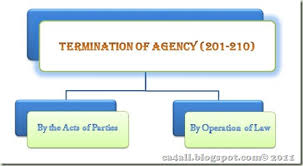
Agency may be terminated two ways –
1) By the Act of the Parties
2) By Operation of Law

1) By the act of the parties
i) By agreement – The Contract of Agency can be terminated at any time by mutual agreement between the principal and agent.
ii) By revocation of the principal – The Principal revoke agency at any time by giving notice to the agent.
iii) By Renunciation of an agent – Renunciation which means withdrawing from responsibility as Agent. Like Principal, Agent can also renounce the agency. According to Section 206 of the Indian Contract Act 1872, the agent must give to his Principal reasonable notice of renunciation. Otherwise, he will be liable to make good for the damage caused to the principal for want of such notice.

2) By operation of law
Agency can be terminated by operation of law-
i) By the completion of agency – Agency can become to an end after the completion of work for which the agency is created.
ii) By expiry of the time – Agency can also be terminated by the expiry of time. if the agency is created for the specific period, it is terminated after the expiry of the time.
iii) Death or insanity of principal or agent – Section 209 of the Indian Contract Act 1872 imposes an agent, duty to terminate the contract of agency on the death of the principal. In other words, Agency comes to an end on the death or insanity of the principal or agent.
iv) Insolvency of principal – According to Section 201 of the Indian Contract Act 1872, an insolvent or bankrupt is a person who is unable to run the business due to Excess of liabilities over assets. In this way, if the principal becomes an insolvent agency can be terminated.
v) Destruction of the subject matter – If this subject matter of the agency is destroyed agency comes to an end.
For example – Any agency is created for sale of an Airplane if the Airplane caught fire before the sale the agency comes to an end. In this contract Airplane is the subject matter.
vi) Principal becoming an alien enemy – If the Principal becomes an alien enemy the contract of agency comes to an end. vii) Dissolution of company or firm – A Firm or company may be regarded as a Principal in the contract of Agency. If the company or firm is dissolved the agency comes to an end.

Relationship between Principal agent and sub agent

Relationship between principal agent and sub-agent depends on the question whether the agent has an authority to appoint sub-agent and whether the sub-agent is properly appointed.
If then sub-agent is properly appointed:
1) The principal is bound by and responsible for the acts of a sub agent;
2) the agent is responsible to the principal for the acts of the sub-agent;
3) the sub agent is responsible for his acts to the agent, but not to the principal except in case of fraud or willful wrong.

It is of interest to observe clause (3) above. Sub-agent is responsible and accountable to the agent and not to the principal by clause (1). Principal is liable for acts of the sub-agent if he is properly appointed. Sub-agent is not responsible to the principal because there is no privity of contract between the principal and sub agent. It is case of fraud or willful wrong that the principal can proceed against the sub-agent. Principal can, however, against the agent for acts of a sub-agent. As far as the rights of a third party are concerned, he can enforce the wrongs of a sub-agent on the principal if the sub-agent is properly appointed. Principal is therefore liable for acts of the sub-agents if he is properly appointed.

If the sub-agent is not properly appointed: Where an agent has appointed a person to act as sub agent without having authority to do so, the principal shall not be deemed to be represented or responsible for the acts of the sub-agent so employed, nor is such a sub-agent responsible to the principal. The agent is responsible for the acts of such a sub- agent both to the principal and to third persons.

Sub-agent is said to be improperly appointed where agent delegates his powers without authority from the principal or where none of the circumstances stated above exist which necessitate appointment of a sub agent.

It will be observed that where a sub-agent is not properly appointed, the liability of agent is also towards third parties. As a rule, we have seen that an agent is responsible to the principal and it is the principal who is responsible for the acts of his agent to the third party. However, the section throws additional liability on the agent where he has improperly appointed a sub-agent. Agent stands liable to the third party for the acts of a sub-agent.

Termination of sub-agent’s authority: (Sec 210) Lastly it must be noted that the termination of the authority of an agent causes the termination of the authority of all sub-agents appointed by him

Liabilities of principal, agent and sub-agent: The agent is responsible to the principal for the acts of a sub-agent and the sub-agent is responsible for his acts to the agent but not the principal, except in cases of fraud and willful wrong.

Where an agent improperly appoints a sub-agent, the agent is responsible for his acts both to the principal and to third parties. The principal in such cases is not responsible for the acts of the sub-agent nor is the sub-agent responsible to the principal. But where a sub-agent is properly appointed, the principal as regards third person, is represented by the sub-agent, and is bound by and responsible for his acts, as if he were an agent originally appointed by the principal.

Where an agent under an express or implied authority has named another person to act for the principal, such a person is not a sub-agent, but an agent of the principal. There is no liability on the agent appointing him provided the agent so appointing exercises discretion as a man of ordinary prudence would exercise is his own case (Sec 194 & 195). Such an agent is called a substitute agent.


Come, Join me!!

Photo by JAMES WESTMAN on Pexels.com

Come, join me on the path of this river as it begins its journey from the mountain top, travels through the various stages and merges with the sea meeting its end, or is it the beginning of its new life in a new form? Well, it is debatable and a lot about perspective but what stands true is the fact that it goes through various stages, experiences several changes- in itself, in its surroundings and is itself the cause of soo many.

So, come let us join the river in its life course.

The river originates from the mountain top, from the glaciers. This river then travels down the slope, young and full of energy, erosion being its prime activity(vertical corrasion). It, thus, cuts deep through the valley forming gorges and canyons. It is young and naive and arrogant, believes it can do anything. On the way, it meets some hard rocks. They are strong and experienced and do not budge. But the river is adamant and so travels above them, forming rapids and cataracts. It, now, reaches the end of the mountain and has to plunge through a great height. The height could have been the result of the relatives of the above hard rock, who were persistent even when everything else surrounding them was destroyed or it could have been due to the cracks formed between the two plates of the earth, who had seen a lot together but knew it was time to let go or it might have very well been the end of the plateau the river was traversing: maybe, it was time for a new beginning. The river, hence, formed a waterfall, diving towards its new life.

The river has now reached the middle course. It has now lost a lot of its energy, but fairly traded it for wisdom. It again meets the same hard rocks. But now the river knows engaging with them is aa wastage of its energy. And so, it changes its path, curving every time it encounters one. Here, it forms a meander. During the formation of a meander, according to its requirements, it erodes the mud of the outer bank to make space for the water, forming a steep river cliff. It also ends up depositing the mud in its inner bank and mid stream when its needs for space are met. Though, on its path it meets several one of its relatives and some new additions to its family(the tributaries) and has to make space for them(horizontal corrasion). The life here is good. But the river cannot go on this way forever. It has entered the plains and its energy is draining. It has to meet the ocean.

And so , the river now enters its lower course. It, in the beginning, leaves behind the most accommodating waters (forming the ox-bow lake). After all, the world, today, is not a place for the easily bending ones. The river now bears the burden accumulated throughout its life, it sediments. It cannot travel any further carrying the burden. Thus, the river, starts renouncing the burden on its final path. The more silt it deposits, the lighter it feels an the easier it gets to travel. The friends and companions it had accumulated throughout its life, all one-by-one leave it. They will meet again in the sea, but for now each of them has their own journey to make (here, they form a delta).

And this marks the end of life of the river. But, its water is now part of the sea. There, it experiences new challenges in a new place and in a new form.

TIPS FOR STUDYING EFFECTIVELY ONLINE

How many times have we opened our books to study, only to discover that even sitting for hours, we are still unable to grasp the material? Because of our sub-conscious mentality, we sometimes attend class yet don’t understand anything. We are physically there in class, but not psychologically.

Here are some study suggestions to help you get the most out of your time:

1.Select a study location that has reliable Internet access.

Making a Good Study Place For Board Exam : Good environment highly..

When studying, you will most likely need to refer to online lectures and notes. As a result, you’ll need a study location where your Internet connection won’t be disrupted. Internet access will be especially vital for things like class study sessions.

2.Make a schedule for studying.

How to Create a Study Schedule: 14 Steps (with Pictures) - wikiHow


In order to succeed in an online course, you must stick to a rigid timetable. You must keep up with the course material on your own time even if you are not expected to attend courses or lectures at specific times. As a result, self-discipline is critical. Make a weekly schedule for logging into the class and studying the information.

3. Be disciplined.

Becoming a Disciplined Person | Little Things Matter

It can be hard to stick to a schedule for an online course. However, be strict with yourself about adhering to your schedule. Self-discipline is vital to your success in an online course.

It can be difficult to focus on your online course if you have a social media account open in another tab on your computer. When you’re doing classwork, avoid browsing the Internet, checking your email, and other distractions.

4.Actively learn

When the neurons in your brain are active, you can learn. You must engage your intellect in order to learn properly. Write notes in your own words, recollect knowledge, and speak about what you know about a subject without referring to notes.

5.Staying Motivate

How to stay motivated on We Heart It


To achieve your goals, employ motivational techniques. You may study while listening to music you enjoy, or imagine yourself finishing the assignment in an hour and taking a well-deserved vacation.

6.Any materials should be printed.


The internet or your computer can be a source of distraction at times. When you’re studying, it’s a good idea to switch your laptop off. You should also print out course materials such as the curriculum and timetable.

7.Test yourself

Test Yourself: Psychology Cheats For PlayStation 3 - GameSpot

Even if you don’t have access to practice tests, you can still test yourself by writing down everything you remember after each new chapter or frequently asking yourself questions about what you’re learning.

Duties Of An Agent

Agent and Principal

An “agent” is a person employed to do any act for another, or to represent another in dealing with third person. The person for whom such an act is done, or who is so represented, is called the “principal”. The contract between Principal and Agent is called ‘Contract of Agency’. Section 182 of the act defines the terms “Agent” and “Principal”.

Types of an Agent

  1. Brokers
  2. Factors
  3. Del Ceredere Agents
  4. Auctioneers

Duties Of An Agent

  1. Agent’s duty in conducting principal’s business (Section 211): An agent is bound to conduct the business of his principal according to the directions given by the principal, or, in the absence of any such directions, according to the custom which prevails in doing business of the same kind at the place where the agent conducts such business. When the agent acts otherwise, if any loss be sustained, he must make it good to his principal, and, if any profit accrues, he must account for it. Illustration: B, a broker in whose business it is not the custom to sell on credit, sells goods of A on credit to C, whose credit at the time was very high. C, before payment, becomes insolvent. B must make goods the loss to A.
  2. Skill and diligence required from an agent (Section 212): An agent is bound to conduct the business of the agency with as much skill as is generally possessed by persons engaged in similar business, unless the principal has notice of his want of skill. The agent is always bound to act with reasonable diligence, and to use such skill as he possesses; and to make compensation to his principal in respect of the direct consequences of his own neglect, want of skill or misconduct, but not in respect of loss or damage which are indirectly or remotely caused by such neglect, want of skill or misconduct.
  3. Duty to render proper accounts (Section 213): According to Section 213 of the Indian Contract Act 1872, an agent is bound to render proper accounts to his principal on demand.
  4. Duty to communicate with principal (Section 214): It is the duty of an agent, in cases of difficulty, to use all reasonable diligence in communicating with his principal, and in seeking to obtain his instructions.
  5. Not to deal on his own account: Section 215 of the Indian Contract Act 1872 deals with rights of principal when the agent deals, on his own account, in the business of agency without principal’s consent. Section 215 runs as follows- If an agent deals on his own account in the business of the agency, without first obtaining the consent of his principal and acquainting him with all material circumstances which have come to his own knowledge on the subject, the principal may repudiate the transaction, if the case shows either that any material fact has been dishonestly concealed from him by the agent, or that the dealings of the agent have been disadvantageous to him.
  6. Not to make Secret Profits: Section 216 of the Indian Contract Act, deals with Principal’s right to benefit gained by the agent dealing on his own account in the business of agency. An agent, without the knowledge of his principal, should not deal in the business of agency on his own to make secret profit. Illustrations: A directs B, his agent, to buy a certain house for him. B tells A it cannot be bought, and buys the house for himself. A may, on discovering that B has bought the house, compel him to sell it to A at the price he gave for it.
  7. Duty to pay sums received for principal: According to Section 218 of the said act, an agent is bound to pay to his principal all sums received on his account. It is the duty of an agent to maintain secrecy of the business of agency and should not reveal the confidential matters.
  8. Duty not to delegate his duties (Section 190): When an agent has undertaken to perform certain duties personally, he is not allowed to delegate his duties to another person.

Safety Of Women In Public Transport

Have you ever travelled in a public transport or in any bus, train, or metro train? Do you think public transports are safe for women? Being a women do you feel safe while travelling in any mode of public transport? Public transport is on essential service that provides individuals with access to work, to an education and to all of life’s opportunities. And yet, the access of many women and girls to safe public transport options is threatend by the potential of being assaulted or victimised. The findings revealed that 59% of women use public transport like buses, trains and on demand taxis as it is affordable but only 9% of women feel public transport is completely safe, while 3% claim it is completely unsafe and rest 47% claiming that they felt somewhat safe using it during the day, but not at night. The fear of molestation, assault, eve-teasing and male-gaze makes women feel unsafe in modes of public transport. Everyday 7 out of 10 women face some kind of bad behaviour, molestation, male-gaze while travelling in a public transport. Travelling late at night alone in train, bus, on demand taxis is a topic of concern for women. As you remember the Nirbhaya case happened in 2012, a 23 year old girl was beaten, gang raped and tortured in a bus in which she was travelling. Lack of road lighting is a key factor behind feeling unsafe, with 40% women stating only major roads were well lit. Sanitisation is also a problem for women in public transport/bus. Train stations and trains are vulnerable spaces for women due to crowded space or, due to isolated areas where there is no one available to intervene and help in case of emergency. Sexual assault, molestation and even rape are reported on trains and have been on the rise. Not reporting sexual harassment is also a common occurence. Only 30% women report the case of molestation as the women fears that reporting the case will degrade her family’s reputation. More than 50% of the cases remain upreported and the culprit live freely in the society.

The cases against women in public transport are on a rise but the following written measures can be taken to stop the increasing and high pace of these evil acts. Improving the lighting on the roads and on railways; bus and metro stations will have a direct influence over the perception of safety. Having more entry and exit prints to ease congestion. Improving infrastructure including toilets; staircase and pedestrain bridges; publicising helpline numbers; having functional and visible helpdesks where women can get immediate assistance; Making reporting incidents simple and easy so that more women do it- this can help show the patterns and trends and lead to pre-emptive solutions.

In conclusion, i would like to say that the world is changing at a rapid pace and we are living in the 21st century in a technological world but still the women in our society doesn’t feel safe while travelling in a public transport. Women fear molestation, rape, assault and male-gaze in public transport. Measures should be taken to safeguard women as women are the important pillar of our society and safeguarding them is the need of the hour. Men and boys should also be taught to respect women instead of disrespecting them and seeing them as a sex object. Both women and men are equal in society and should be treated equally and respected to make the society a better place for living.

Rights Of An Agent

An “agent” is a person employed to do any act for another, or to represent another in dealing with third persons. The person for whom such an act is done, or who is so represented, is called the “principal”. Section 182 of the act defines the terms “Agent” and “Principal”.

Rights of an Agent

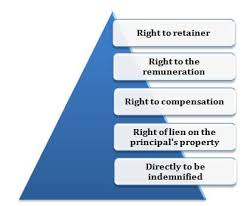
  1. Right to Receive Remuneration: According to Section 219 of the Indian Contract Act, an agent is entitle to his remuneration. But Section 220 of the said act says that, an agent who is guilty of misconduct in the business of an agency is not entitled to any remuneration in respect of that part of the business which he has misconducted.
  2. Right of Lien (Section 221): Agent’s lien on principal’s property- In the absence of any contract to the contrary, an agent is entitled to retain goods, papers and other property, whether movable or immovable, of the principal received by him, until the amount due to himself for commission, disbursements and services in respect of the same has been paid or accounted for to him.
  3. Right to Indemnity: Agent to be indemnified against consequences of lawful acts. Indemnity means promise make good the loss. According to Section 222 of the Indian Contract Act, 1872 “The employer of an agent is bound to indemnify him against the consequences of all lawful acts done by such agent in exercise of the authority conferred upon him. Illustrations: B, at Singapore, under instructions from A of Calcutta, contracts with C to deliver certain goods to him. A does not send the goods to B, and C sues B for breach of contract. B informs A of the suit, and A authorities him to defend the suit. B defends the suit and is compelled to pay damages and costs and incurs expenses. A is liable to B for such damages, costs and expenses.
  4. Right to Compensation: According to Section 225 of the said act, an agent is entitled to claim compensation for the injuries suffered as a consequence or want of skill of the principal. Section 225 reads as follows- “The principal must make compensation to his agent in respect of injury caused to such agent by the principal’s neglect or want of skill. Illustration: A employs B as a bricklayer in building a house, and puts up the scaffholding himself. The scaffholding is unskillfully put up, and B is in consequence hurt. A must make compensation to B.
  5. Right to Retain Sums (Section 217 and 218): The agent has a duty to pay to his principal all sums received on principal’s account. But he also has a right to retain, out of any sums received on account of principal in the business of agency, all money due to himself in respect of advances made or expenses properly incurred by him in conducting such business and also such remuneration as may be payable to him for acting as agent. Similarly, when an agent sells his principal’s goods, he may detain the money received, for his remuneration on account of the goods sold by him. Such right can be exercised by an advocate also but lien must be confined to the costs incurred in that particular case.

Indian Education System

Education plays an important role in the development of an individual and making him a knowledgeable citizen. It is the education that makes an individual self-reliant, helps to suppress the social evils and contribute towards the development of the society and nation as a whole. Education helps in unravelling the mystery of nature. It enables us to understand and improve the working of our society. It creates conditions for a better life. Education brings out the capabilities to fight injustice happening in society. Every individual has the right to education. 

Indian Education is one of the largest and complex education systems in the world along with China. India is committed to providing basic education to its citizens, the framework of which is defined in the National Policy of Education. Elementary education is now compulsory in India. At the time of Independence, only 14% of India’s population was literate. Now after so many decades since Independence, the number of literates has increased by fivefold.

History of Education System

The history of Indian education system comes from the times of Ramayana and Mahabharata. The historic Indian education system is also called the Gurukula system. There were gurus then who are now known as teachers and shishyas who are called students now. The gurus and the shishyas lived together under one roof in Gurukula until the completion of their education. The shishyas were expected to help the guru in all the daily chores as part of their learning. The children belonging to higher strata of the society were taught all the subjects from Sanskrit to Holy Scriptures and mathematics to metaphysics by the gurus. The Gurukulas during those times focused on the practical aspects of life. The students were taught in the open classroom in the surrounding area of nature. This early system of education in India continued for many years until the modern education system came into the picture in the nineteenth century.

In the early 19th century, during the British period, the modern education system was brought into our country by Lord Thomas Babington Macaulay. The basic strength of this modernized education system was the examinations and a well-defined curriculum, which gave importance to subjects like science and mathematics and subjects like philosophy, metaphysics were given a back seat. The brick and mortar classrooms replaced the open classrooms in the Gurukulas. The essence of the guru shishya bond was taken over by a more formal relationship between the teacher and the student. To understand the progress of any student, examinations were conducted at frequent intervals. The focus of the education system shifted from learning to memorizing of the concepts to score good marks in the examinations.

Problems of Indian Education System

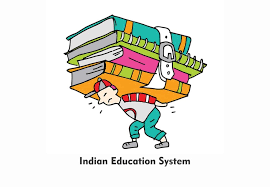
Over a period of time, it has been observed that there are many loopholes in the system of education in India. Instead of understanding the concepts, students started cramming and memorizing the lessons. Knowledge is given a backseat and scoring in high rankings takes importance. The modern parents have tuned their mindsets accordingly and their goal is to ensure that their children score good marks instead of acquiring knowledge right from the primary level. 

Private schools and colleges have been rapidly increasing in the country but the results produced by them are far beyond satisfactory. It has also been observed that the quality of teachers deteriorated with the passing of time. Our examination system is responsible for the wide skill gap. India is producing lakhs of engineers and professionals every year but only a fraction of this number is actually getting employed. This is because the Indian examination system focuses more on scoring good percentages rather than the actual continuous comprehensive evaluation. 

Research and development, which should be the cornerstone of our system, are given the least importance. The private schools and colleges focus on the admission of more students and are least interested in the quality of their education. This is the major reason why the faculties and the teachers lack skills and specialization. This is quite evident from the fact that a single professor is assigned to teach multiple subjects. 

How Can We Improve the Indian Education System?

First and most importantly we should improve the grading system. Rote learning should be discouraged completely. Teachers and faculties should focus more on the analytical skills of the students and grade them accordingly. There should be more focus on comprehensive evaluation instead of scoring only good marks. Workshops must be organized for teachers on a regular basis to keep them updated about the latest developments in the sector of education. At the same time, the curriculum should be reframed according to the present needs of education in India. 

The payroll structure of the teachers and the faculties especially in the government institutions should be improved. This step will help in motivating the teachers to develop their skills and they will take a keen interest in grooming or shaping up a student’s life and career. The government and other entities who are associated with the education sector, need to understand the importance of quality of education. Education should be a holistic process that must focus on the overall development of the physical, emotional, social and cognitive skills of a child. It needs to be a slow and cyclic process and must take place gradually to help the child develop into an autonomous, independent and knowledgeable individual.

Conclusion

An educated individual is an individual who should be able to contribute towards the betterment of the economic and social development of the society as well as the country. The true goal of education must exceed awarding the degrees and certificates to the students. Education is not a tool to earn livelihood but it is a way to liberate the mind and soul of an individual.