A Dallas lady started off an American Carriers departure from Texas to Orlando in the wake of going ballistic on video had the option to get back to the solid side of the air terminal after various endeavors to go through a Transportation Security Organization designated spot, police records uncover.
Tiffany Gomas, a 38-year-old promoting leader, was accused of intruding after the viral implosion before departure from Dallas-Post Worth Worldwide Air terminal July 2.
She deliberately got off the plane and left the terminal, however at that point supposedly attempted on numerous occasions to help back through air terminal security.
In spite of the fact that her ticket had been repudiated, evidently it was as yet dynamic in the TSA framework, as per a police report.
On December 10,2020 when PM Narendra Modi laid the foundation stone of the new parliament building, the deadline for the completion of the project was October 2022 which was shifted to March, 2023. The March deadline was also not met, but everybody knows that the project is near completion, and the inauguration date could be announced any time and as per expectations 28 May is decided as the date for the inauguration of the new Parliament.
It was not surprising that as soon as the announcement was made, many opposition parties started firing allegation towards government. What came as a surprise for many of us was the pacing of ‘Sengol’ in the new parliament building. Many questions hits in mind one by one. What is Sengol? Where was it all the time? Who made it? What does it signify? Where will it be placed? Don’t worry. Your mind will be free from question related to Sengol after reading this write up as it contains answers to all your question.
The historic ‘Sengol’ that is going to be installed in the new parliament building was received by the first PM of India Jawaharlal Nehru from the then Viceroy of India Lord Mountbatten on 14 August 1947 at around 10:45 PM at his residence in the presence of many other prominent leaders of the time. PM Nehru received this as the symbol of the transfer of power from British at his residence. When the decision of the independence of India was final, Lord Mountbatten was sent as the viceroy to complete the process of independence without hinderance. Mountbatten being unaware of rituals and customs of Indian culture he asked PM Nehru about the special ceremony to be organized for the transfer of power. Nehru discussed this with C. Rajagopalachari fondly known as Rajaji, and after extensive research of Indian culture Rajaji told Pandit Nehru about the tradition of transfer of power during Chola dynasty and how ‘Sengol’ was used to mark this.
The Sengol gets its name from the Tamil word ‘semmai’, meaning righteousness. The sceptre is a historical symbol of Independence as it signifies the transfer of power from the British to the Indians. “The Sengol signifies justice, integrity and unfailing good governance of the king who holds it,” said Mani Maran, a Tamil Pandit at Saraswathi Mahal Library in Thanjavur in an interview given to Times of India on Wednesday. “Tamil emperors like Cholas were usually holding a sceptre in their hands. After crowning the new king, his predecessor or the rajaguru handed over the sceptre during the ceremonial occasion. Thiruvalluvar mentions the sceptre while referring to the rule of law. Sangam works like the Silapathikaram mentions the superiority and importance of the sceptre,” he added. Union Home Minister Amit Shah addressing a press conference on Wednesday said, “The ‘sengol’ represents values of fair and equitable governance.”
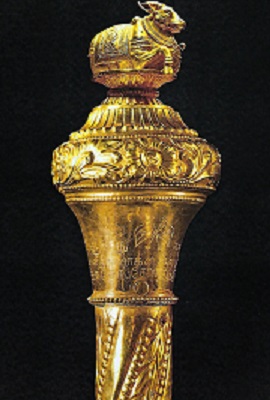
The responsibility of arranging a sceptre was handed to Rajaji by Pandit Nehru. Rajaji reached out to Thiruvaduthurai Atheenam, a well-known mutt in Tamil Nadu’s Tanjore district for assistance and its leader commissioned the manufacturing of the Sengol to Chennai-based “Vummidi Bangaru Chetty” jewelers, as per the official document. It was crafted by two men namely, Vummidi Ethirajulu and Vummidi Sudhakar. It is made of silver with a coat of gold. The sceptre is five feet tall and has a ‘Nandi’ bull on top, symbolizing justice and goddess Laxmi is inscribed on it. It was made in 30 days. According to the official documents, the sceptre was handed to Lord Mountbatten by the Deputy high priest of the Adheenam and was taken back. It was then taken to Pandit Nehru’s house in procession and handed over to him. A special song was rendered, as specified by the high priest. The ceremonial sceptre was kept at the Allahabad Museum, along with several other historical objects associated with Jawaharlal Nehru, as part of the Nehru Gallery of the museum.
Now the Sengol has been moved to Delhi and would be placed near the Lok Sabha speaker’s chair in the new parliament building. Citing resources India Today reported that the Sengol will be ceremoniously transported to the House in a grand procession. The occasion is likely to be steeped in Tamil tradition. The Nadaswaram, would lead the procession with a group of musicians will be playing Tamil Nadu’s traditional instrument. Modi is expected to walk along with the procession. “Adheenams,” or priests from Shaivite mutts in Tamil Nadu, will be present in the Lok Sabha’s Well. The priests will sanctify the Sengol with holy water after Modi greets them at the well, India Today added. The “Oduvars,” or Tamil temple singers, will lyrically recite the “Kolaru Padhigam” in the background as the Nadaswaram musicians enchant with their soulful music. The Sengol will be presented to the prime minister after this revered ceremony and placed in a glass case next to the Speaker’s seat in the House.
After decades of anonymity, this holy sceptre will quadruple the magnificence of new parliament building. and always remind us of the hardship that our forefathers had while fighting for independence and will motivate us to defend this independence.
Gold futures on the Multi Commodity Exchange hit an all-time high of Rs 57,099 per 10 grams on 24 January. Gold prices jumped tracking gains in overseas markets and a depreciation in the rupee currency. However, the surge dampened demand in the world’s second biggest consumer of the precious metal.
Gold prices have inverse correlation with the dollar index. The index has fallen nearly 15% in the past three months, which has pushed up the prices of gold. A rise in index value denotes that the dollar is gaining against its counterparts and a fall in index value denotes a depreciation in the dollar’s value.
Residents in China have been scouring the market for generic COVID-19 drugs and India seems to be the answer to their problem. In the recent past, the Chinese authorities have approved two Covid antivirals – Pfizer’s Paxlovid and Azvudine – for the treatment. While China has ran out of the medicine, the Indian market is filled with it and is slowly becoming the next favourite destination.
In the past few months, topics like “anti-Covid Indian generic drugs sold at 1,000 yuan (US$144) per box” has been making the rounds of the Chinese social media. Platforms like Weibo and WeChat are filled with such queries and experts believe that black market deals are being conducted on them.
While the distribution of drugs which are not approved in China is not illegal, there can be penalties imposed on the illegal imports. Even the doctors in China have warned the public against buying drugs on the black market with several patients displaying massive side effects to the medicines.
On Monday, 19 December, the Centre informed the Lok Sabha that the National Council of Education Research and Training (NCERT) should include Shlokas from Shrimad Bhagavad Gita and knowledge from Vedas in textbooks in Sanskrit from classes 11th to 12th. Besides, references from Bhagavadgita should be incorporated in NCERT textbooks of classes 6th to 7th.
Annapurna Devi, Minister of State for Education, stated in a written response that the ministry formed the Indian Knowledge System (IKS) Division in the All India Council for Technical Education (AICTE) in 2020 with the goal of promoting interdisciplinary and trans-disciplinary research on all facets of Indian Knowledge Systems (IKS), preserving and disseminating IKS knowledge for further research and societal applications.
Minister Devi stated that NCERT has begun the development of National Curriculum Frameworks (NCF) where inputs from various ministries, departments, states, and union territories are invited from grass root levels.
She added that the National Education Policy (NEP) 2022, paragraph 4.27, refers to Indian traditional knowledge that is both sustainable and strives for the welfare of all. She also laid emphasis on teaching the world the “Indian way of doing things.”
The Modhera village, located in the Mehsana district of Gujarat, declared as India’s first solar-powered village.
Modhera has a deep, historical Sun connection, thanks to the Sun Temple, or Surya Mandir, it hosts on the banks of river Pushpavati.
The renowned temple was built close to a thousand years ago, in 1026-27 CE, during the reign of Chalukya King Bhima I (1022-1063 CE). Connecting the old and the new, Modhera, which hosts this ancient architectural marvel, is heading into a modern, renewable future through the production of electricity using the energy of the Sun.
This initiative came about from a programme led by both the centre and state, called the “Solarisation of Modhera Sun Temple and Town.” As part of the project, they developed a ground-mounted solar power plant in addition to installing 1,300 rooftop solar systems on top of residential and government buildings. The solar systems are integrated with a 15Mwh battery energy storage system. This makes up a 6MW grid.
Solar energy is thus available to Modhera round the clock. According to the Gujarat government, the village residents will be able to save 60 to 100 per cent on their electricity bills with the solar push.
The Supertech twin towers were demolished on Sunday (August 28). The demolition of the Emerald Court project in Noida is leading to a loss of about Rs 1,000 crore to developer Supertech. It also took nearly Rs 20 crore to raze the building.
A part of Supertech’s Emerald Court project, the two 40-story towers, that stand on Noida-Greater Noida expressway, houses over 900 flats in an area of around 7.5 lakh sq. feet. The twin towers (namely Apex and Ceyane) are located at Sector 93A in Noida. One of the buildings has an altitude of 103 metres, while another is around 97-metre tall.
The twin towers are being demolished because of serious violations of building codes. Supreme Court said, the Noida Authority and Supertech had engaged in “nefarious complicity” and ordered the company to demolish the buildings at its own expense under the guidance of the Noida Authority.
The ‘Supertech Emerald Court’ housing society was proposed to be built in Noida’s Sector 93A in 2004. The next year, the Noida authority sanctioned the building plan that showed 14 towers and nine floors.
But this plan was later revised. And in 2012, the Noida authority reviewed the new plan, in which the height of the twin towers was fixed at 40 floors.
Following this, Residents’ Welfare Association (RWA) of the society moved to Allahabad High Court stating that the construction was illegal. Accordingly, in 2014, the court directed the authority to demolish the twin towers within four months (at its own expense) from the date the order was filed.
Later, in August 2021, Supreme Court upheld the Allahabad HC order, and ordered the demolition, noting that the structures had come up violating construction norms.
The Supreme Court’s decision was the result of a number of petitions submitted by homebuyers in support of and opposition to the Allahabad High Court’s ruling. According to the Supreme Court, August 28 had affirmed as the date of destruction.
For the demolition, about 3,700 kg of explosives were brought from Palwal (Haryana) to be used. It was a mix of dynamite, emulsions and plastic explosives.
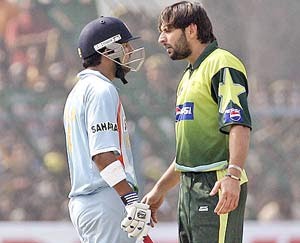
Pakistan’s Shahid Afridi and India’s Gautam Gambhir in an argument during a 2007 ODI in Kanpur
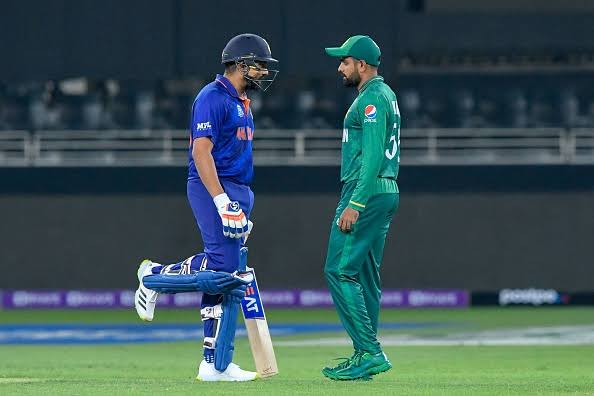
Sunday evening will be spiced up as the two arch-rivals India and Pakistan will lock horns in the T20 Asia cup match, to be played in the Dubai international stadium at 7:30 pm.
While India is Playing without Jasprit Bumrah and Harshal patel. Pakistan will have to carry on without the services of Shaheen afridi and Mohammad Wasim Jr.
Team India
Team india practice session
The revival of Indian batting has reached a turning point. Since the lethargic Tournament that occurred last October in the UAE, much exertion has been put into attaining a do-over. Commencing on Sunday, there seems to be an opportunity to try it for the very first time in a cross competition. India could use an adversary that regularly wins in the UAE as a beginning point to determine whether their 180 degree batting turnaround will break their 15-year T20 WC winless streak subsequently this year.
With such a decent top, India currently has the chance to adhere to this destruction strategy after improving their batting results over the past ten months in every part of the Twenty20 game by accepting the dangers and benefits about not performing cautiously. After their respective sabbatical, KL Rahul and Virat Kohli return, giving VVS Laxman and Rohit Sharma a crucial decision to make at the start of this campaign. Hardik Pandya, Dinesh Karthik, and Ravindra Jadeja make up India’s 5-6-7 finishing axis, with Suryakumar Yadav and Rishabh Pant acting as useful floaters. However, with their back to regular fortitude and as a sign of the batsman dominance hierarchy, this strategy may need to be adjusted.
Tactics: In this year’s T20Is, 12 of Bhuvneshwar Kumar’s Twenty strikes had arrive inside the PowerPlay. India will seek to utilise this skill against a team with a top-3 and middle-order batting average of 42.35 and 15.59, accordingly, since January 2021, which shows a noticeable talent gap amongst sides. Since January 2021, Babar Azam and Mohammad Rizwan have scored 1000 or more runs in T20I, therefore breaking that opening partnership should be India’s top bowling priority.
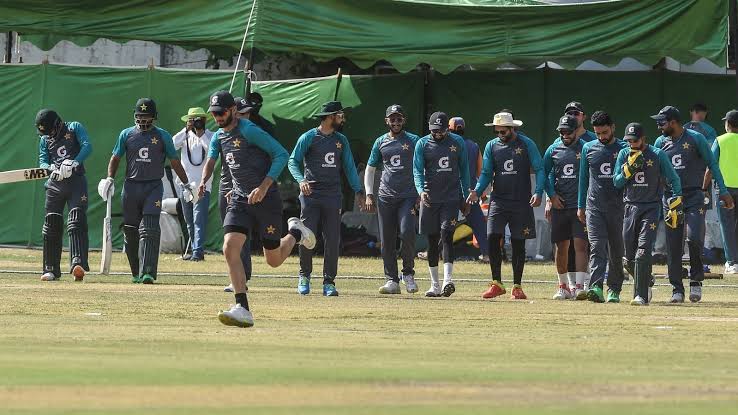
Team pakistan
Team pakistan practice session
All tempo issues and decision-making difficulties for Pakistan are related to its bowling. Due to Shaheen Afridi’s injuries, Pakistan has now been hindered vs an outfit that has had trouble handling the left-hander in previous matches. Mohammad Wasim Jr. is now unavailable due to injuries sustained during practise.
Shahnawaz Dahani and Naseem Shah are Pakistan’s two quick bowlers, and they have a cumulative total of two T20 Internationals of encounter. Hasan Ali, who had not been initially selected after a lacklustre year with ball, is now returned to the side. With his left-armer-free bowling options, Babar Azam must be precise, while leggie Shadab Khan, making his first Limited – overs match since December 2021, must also get going right away.
Tactics: Babar must use his skills wisely in Shaheen’s absence against an enthusiastic Indian batting lineup. It is important to wisely utilise the large sizes of the Dubai stadium, especially in the PowerPlay overs, when India has struck 71 sixes in 37 innings since January 2021. Pakistan has only hit 30 of them throughout this time period (in 10 less innings), which helps put the level of risk-taking into perspective. Timing the insertion of leggies Shadab and Usman Qadir will also be crucial, depending on where Rishabh Pant bats.
Head to head encounter
India has a better 8-5 win ratio over Pakistan at Asia Cups. Five of 6 Asia Cup competitions among the two teams since 2010 have been won by India.
Expectations
Dew’s effect causes problems for teams that bowl second. However, India has prepared for this possibility by electing to bat first if it is feasible since their last participated overseas. In 16 T20Is played following the 2021 World Cup, India has batted first 12 times and has lost just three of those contests.
Key players
Virat Kohli, Babar Azam,Rohit Sharma, Mohammad Rizwan,Bhuvneshwar Kumar and Haris Rauf.
What Captains have to say before match
Rohit Sharma (India): “The mood in the camp is buzzing. It will be a challenge to play against Pakistan without a doubt. We do talk about our losses, that’s how we improve as a team. That loss [in Dubai last year] did hurt us at that point, but I think it’s been a while since that game has been played. We learn from our mistakes. For now, it’s a fresh start for us and obviously, the team is coming out of playing a lot of T20 cricket. We will not think too much about what happened in October, that was a long time back.”
Babar Azam (Pakistan): “No heat at all [between the two sides]. It’s normal and we have to adjust to everything as a professional. Every match is important for me and it is my responsibility as captain that I give my 100 percent. Injuries are part of the team. We have a good bench strength and we have a young battery of fast bowlers who have performed well and I have belief in them.”
Pakistan : Babar Azam(c), Mohammad Rizwan(w), Fakhar Zaman, Iftikhar Ahmed, Khushdil Shah, Asif Ali, Mohammad Hasnain, Shadab Khan, Usman Qadir, Haris Rauf, Naseem Shah, Shahnawaz Dahani, Mohammad Nawaz, Hasan Ali, Haider Ali
The RBI discussion paper issued earlier this month said, UPI as a fund transfer system is like IMPS and therefore, it could be argued that the charges in UPI need to be similar to charges in IMPS for fund transfer transactions.
To clarify, Ministry of Finance quoted “UPI is a digital public good with immense convenience for the public and productivity gains for the economy. There is no consideration in government to levy any charges for UPI services,” the Ministry of Finance said in a statement.
The clarification came amid speculations that UPI transactions could be charged, as a discussion paper released by the Reserve Bank of India (RBI) on August 17 sought feedback related to the subject. “Charges for payment services should be reasonable and competitively determined for users while also providing optimal revenue stream for the intermediaries,” the central bank said in a release. The feedback received would be used to guide policies and intervention strategies.
In the context of UPI, the RBI, in the discussion paper, has questioned if UPI transactions are charged, they should be administered by the regulator, or whether they should be market determined. While clarifying it was not considering any service charge on UPI transactions, the finance ministry reiterated its support for the further adoption of the digital payments system.
India will remove the fare caps it imposed on domestic airlines in 2020 during the COVID-19 pandemic from August 31, the country’s civil aviation ministry said on Wednesday, lifting restrictions on ticket prices. The government, in a rare move, had regulated fares by imposing a minimum and maximum band based on the flight’s duration to prevent ticket prices from spiking due to pent-up demand arising from restrictions on air travel easing. Given the current situation, airfares may go up as carriers as jet or aviation turbine fuel (ATF) prices have almost tripled in the last two years.
The ministry had imposed lower and upper limits on air fare after the resumption of services in May, 2020 following the two-month nationwide lock-down to contain the spread of Covid-19. Thereafter, the limits were relaxed in a phased manner as per the improvement in air traffic in the country. The lower caps were meant as a relief for airlines struggling after the pandemic. At the same time, the upper caps on air fare were fixed ensuring that passengers do not have to pay a hefty amount for air travel.
Earlier, discussions on removing the fare bands for domestic air fare were held among the stakeholders, including the government authorities and airlines. The airlines were of the view that removal of the pricing cap is required for the full-fledged recovery of domestic air traffic.
Wherever you go, you hear the terms of budget, loans, bonds, stocks, crypto, and many more. Finance has become one of the highest searched topics that people want to learn. People want to get control, build different streams of income, build passive income, buy real estate, buy bonds and increase their wealth. Compared to 1980s to the present day, finance has developed and spread its branches across the world. With technology, finance has become easier to access.
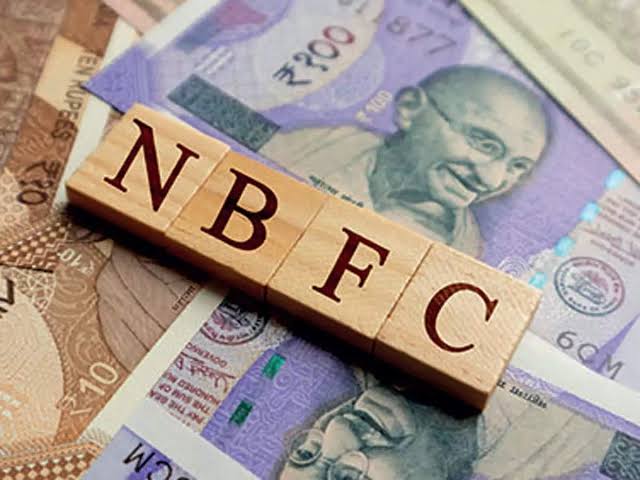
Small NBFCs( Non-Banking Financial Corporations) have created apps that people can get for small amounts of loan. From 100₹ to 1,00,000₹, these corporations have found an untouched market in loan requirements, small loans. The term may be quite little, but it has huge potential. A lot of people take loans or borrow money from loan sharks at high interest rates, but do they always have money to give?
This question itself has created this part of market. With technology, payments have become quicker and able to move in a matter of minutes. NBFCs found this to be their best advantage of all time. People sign up on these apps with all their details and take the loan at exorbitant rates. They charge interest for each passing day ( 3% or more) and disburse the amount with the click of a button.
As many people are, no one wants to go through the terms & conditions because it is long and boring. Here lies the secret to the destruction of your reputation between you and the world. Many think that these apps are to be taken simply and not to be minded when the payment date comes. These NBFCs aren’t banks so they don’t give repeated notices for the payment, instead, they send your contacts all your details, with the amount of money you have taken and ask them to pay. They use godawful ways to get the payment.
Few messages are so disgusting and low that it breaks your reputation into pieces. You cannot rebuild your reputation and it keeps going on till the payment has been done. It’s a small yet such powerful blow that you cannot recover from. After the payment has been made, they don’t send a message stating that you have made the payment which doesn’t help you in any way but makes you droop down more. These interest rates on meager amounts is how they make the most money on.
Every time you borrow money, you are robbing time from your future self.
Nathan W. Morris
Loans are not a joke. You learn from the mistakes you make. Scars are lessons for what we have gone through. Learn from your experiences, teach them to your kith and kin, no matter what they are aged. If an 18 year old with a bank account, comes across the app and doesn’t know the effect of not paying on time, it’s not a wound that they can recover from easily.
Teach your younger ones about finance, how to maintain, when and where to use them but not teaching them leads to a higher damage. Be careful and do not go down this path unless you know how to come back from it.
According to a new report, Xiaomi is planning to supercharge displays in its mid-range Android phones. The company is looking to bring LTPO displays that go down to 1Hz to its mid-range smartphones.
Xiaomi is planning to supercharge displays in its mid-range smartphones This will, of course, help with power consumption. Those displays can dynamically raise or lower their refresh rates, from 1Hz to the max they offer, usually 120Hz. Pretty much all LTPO panels we’ve seen go all the way up to 120Hz.
This information comes from Digital Chat Station, a well-known tipster. Xiaomi is seemingly testing such a display in one of its mid-range smartphones. That display supports a 120Hz refresh rate, can go down to 1Hz, and it also offers DC dimming.
Xiaomi has been offering 120Hz displays in its mid-range smartphones for a while now. That includes Redmi and POCO phones as well. So, this move is not surprising, LTPO panels were expected to be offered in some mid-range devices sooner or later.
Xiaomi is a company that tends to offer really well-specced phones for reasonable price tags, so this is their forte. It remains to be seen what phone will break the ice, though.
LTPO displays have been around for quite some time now, and they keep evolving LTPO displays have been around for quite some time now, and we’re seeing the third-gen of this tech in flagship smartphones these days. Not all LTPO displays can go way down to 1Hz, though, keep that in mind.
Many people value great displays, high refresh rates, and certainly displays that require less power to run at the same time. Some OEMs are still way behind in that regard, but Xiaomi is not one of them.
We also don’t know when will the first mid-range Xiaomi smartphone with such a display see the light of day, nor how much will it cost. Such a phone is now in testing, so it may take Xiaomi a bit of time to deliver it.
A beta firmware update seems to show testing for Android 13 could begin soon for the Samsung Galaxy S22.The test could start in some parts of the world in July 2022.The beta will also include Samsung’s latest One UI 5.0 skin.
Android 13 is currently in its third beta version for Google’s Pixel phones. However, there’s word that a beta for the OS could soon be made available for the Samsung Galaxy S22 family of smartphones.
Read more: Android 13 schedule – When will it launch?
According to Tizenhelp, it has spotted beta firmware for the Galaxy S22 series in South Korea. The firmware beta, with the user number of S906NKSU2ZVF6 is for the Android 13 beta, which is also for the company’s own One UI 5.0 skin. The story says that the firmware’s appearance could mean that beta testing for the Galaxy S22 Android 13 update could begin in South Korea, and perhaps other parts of the world, as soon as July 2022.
While many of Android 13’s new additions and improvements have been revealed, there hasn’t been much in the way of news for Samsung’s One UI 5.0. Hopefully, we will get some concrete info about that phone skin’s new features soon as well. While the Galaxy S22 phones will get first crack at the Android 13 beta, it’s expected that other high end Samsung phones will be allowed to enter the beta testing program in the weeks and months to come.
Traditionally, the Senate filibuster was reserved for only the most controversial issues, but its use has escalated in recent years, often slowing business in the chamber to a halt. Some lawmakers acknowledge that the filibuster, which has effectively set a 60-vote supermajority requirement for passing legislation in the Senate, could doom many of the proposals they have championed, including meaningful reforms on issues ranging from health care to climate change to gun control. Behind this dysfunction, the filibuster also has a troubling legacy: it has often been used to block civil rights legislation intended to combat racial discrimination.
As advocates push for pro-democracy legislation, calls for eliminating the filibuster have grown louder. In his remarks at the funeral of civil rights hero and congressman John Lewis in July 2020, former President Barack Obama called the filibuster a “Jim Crow relic,” arguing that the procedure should be eliminated if it is used to block voting reforms. Others note that certain types of legislation are already exempt from the filibuster’s supermajority requirement and argue that a similar exemption should be made for voting rights.The stakes were raised in March 2021, when the For the People Act — a comprehensive democracy reform bill — was passed by the House of Representatives and introduced in the Senate, where the filibuster may determine its fate. Whether through elimination or reform, the filibuster cannot be allowed to impede the expansion of Ameican democracy or the rights of all eligible voters.
What is the filibuster?
The filibuster is a 19th-century procedural rule in the Senate that allows any one senator to block or delay action on a bill or other matter by extending debate. While a final vote in the Senate requires a simple majority of 51 votes, a supermajority, or 60 votes, is needed to start or end debate on legislation so it can proceed to a final vote. Therefore, even if a party has a slim majority in the Senate, it still needs a supermajority to even move forward with legislation a tall task for a hyper-partisan Washington. The House of Representatives does not use the filibuster. Instead, a simple majority can end debate.
How can the filibuster rule be changed?
Senators have carved out exceptions to the filibuster rule before.One option to do so is called “going nuclear” — when senators override an existing rule, such as the number of votes needed to end debate. This is usually done by lowering the threshold needed to end a filibuster to 50 votes.In 2017, then-Senate Majority Leader Mitch McConnell, R-Ky., eliminated the filibuster for Supreme Court nominees, clearing the way for then-President Donald Trump’s first nominee to be confirmed.
Why a call for change now?
In the last 50 years, the filibuster has been used more and more to kill major legislation. And with Biden’s agenda stalled, Democrats are calling for a carve out to pass voting rights legislation. In the last year, at least 19 states passed 34 laws restricting access to voting, according to the Brennan Center for Justice. If the threshold to end debate on a bill is lowered to 50 votes, for instance, Democrats could end debate on their voting reform bill and eventually move to a final vote, with Vice President Kamala Harris serving as a tie-breaking vote in the 50-50 Senate to pass the legislation. Incidentally, Harris, as president of the Senate, would play a key role in any potential rules change. She would be expected to occupy the chair and preside over any rule change action.
What’s the difference between “talking” and “silent” filibusters?
Filibusters traditionally involved long speeches in which a senator attempted to block a vote from proceeding by refusing to yield the floor. To stage such a “talking” filibuster, a senator would hold the floor by standing and talking for as long as they could, sometimes overnight. This was popularized in the 1939 film Mr. Smith Goes to Washington. The longest filibuster ever recorded, by South Carolina Sen. Strom Thurmond in opposition to the Civil Rights Act of 1957, lasted for more than 24 hours. But since the early 1970s, senators have been able to use a “silent” filibuster. Anytime a group of 41 or more senators simply threatens a filibuster, the Senate majority leader can refuse to call a vote.
How has the filibuster changed over time?
The use of the filibuster, once reserved for only the most controversial issues, has increased dramatically in recent years alongside growing polarization in Washington. There have been more than 2,000 filibusters since 1917; about half have been in just the last 12 years. Critics argue that this increased use has slowed business in the Senate to a halt, often entangling the chamber in procedural maneuvering instead of substantive debate and, ultimately, lawmaking.
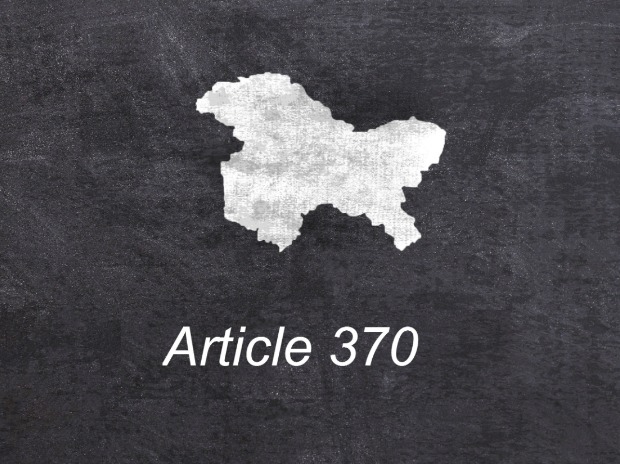
On October 17, 1949, Article 370 was added to the Indian constitution, as a ‘temporary provision’, which exempted Jammu & Kashmir, permitting it to draft its own Constitution and restricting the Indian Parliament’s legislative powers in the state. It was introduced into the draft constitution by N Gopalaswami Ayyangar as Article 306 A.
Under Article 370: The Constituent Assembly of Jammu & Kashmir was empowered to recommend which articles of the Indian Constitution should apply to the state,The J&K Constituent Assembly was dissolved after it drafted the state’s constitution. The article allowed the state a certain amount of autonomy – its own constitution, a separate flag and freedom to make laws. Foreign affairs, defence and communications remained the preserve of the central government.As a result, Jammu and Kashmir could make its own rules relating to permanent residency, ownership of property and fundamental rights. It could also bar Indians from outside the state from purchasing property or settling there.
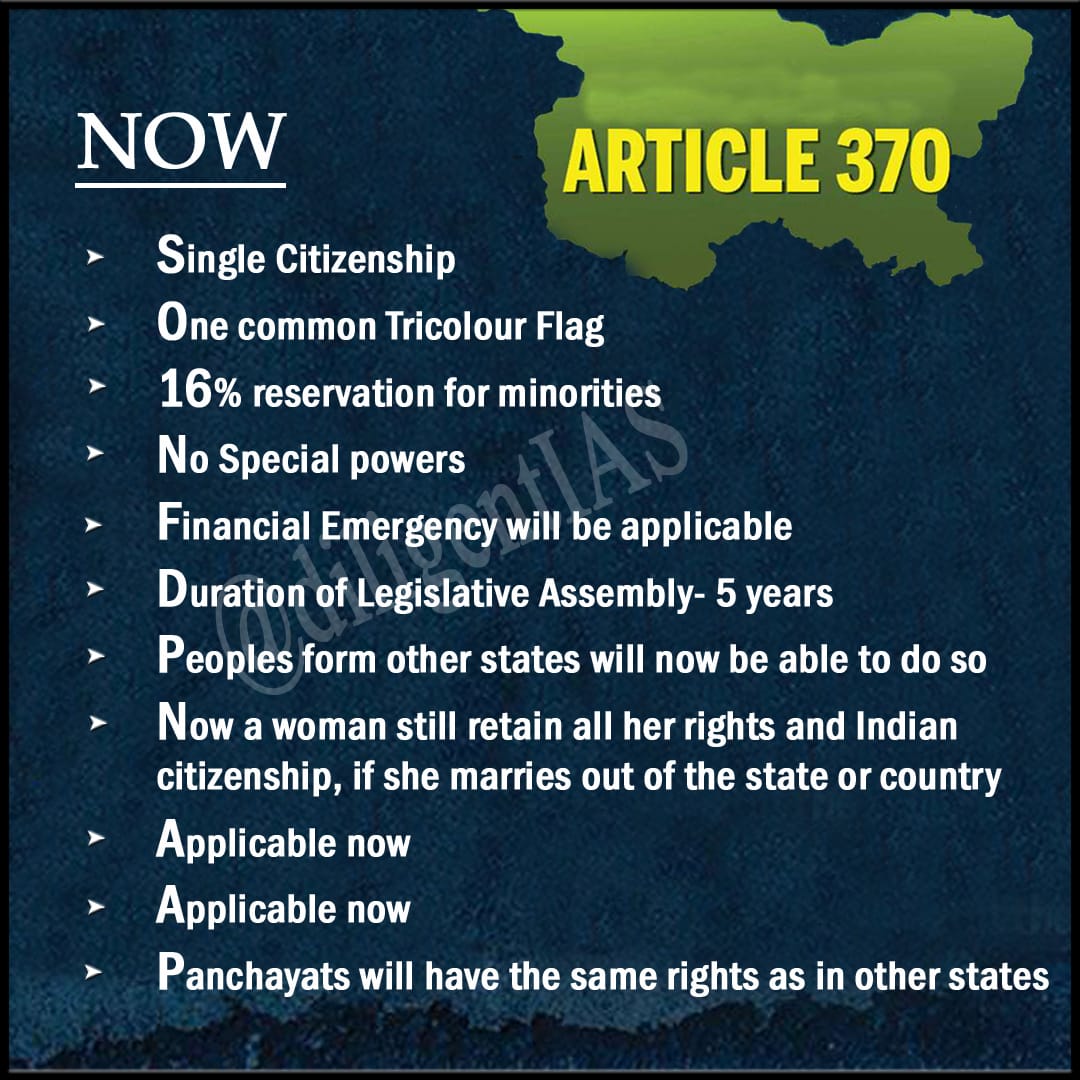
On 5th August 2019, President of India in the exercise of the powers conferred by Clause (1) of Article 370 of the Constitution had issued the Constitution (Application to Jammu and Kashmir) Order, 2019. Through this, Government of India has made modifications in Article 370 itself (not revoked it).With this, the Government of India has dramatically altered the relationship between the state of Jammu and Kashmir and the Indian Union. Order, 2019 has replaced Presidential Order of 1954.Subsequently, the Jammu and Kashmir Reorganisation Bill, 2019, passed by Parliament divides the state of Jammu and Kashmir into two new Union Territories (UTs): Jammu & Kashmir, and Ladakh.This is the first time that a state has been converted into a UT.Of the six Lok Sabha seats currently with the state of Jammu and Kashmir, five will remain with the union territory of Jammu and Kashmir, while one will be allotted to Ladakh.The UT of Jammu and Kashmir will have an Assembly, like in Delhi and Puducherry.Instead of 29, India will now have 28 states. Kashmir will no longer have a Governor, rather a Lieutenant .The special status provided to J&K under Article 370 will be abolished. Jammu & Kashmir will no longer have the separate constitution, flag or anthem. The citizens of Jammu and Kashmir will not have dual citizenship. As the new union territory of Jammu and Kashmir will be subject to the Indian Constitution, its citizens will now have the Fundamental Rights enshrined in the Indian constitution. Article 360, which can be used to declare a Financial Emergency, will now also be applicable. All laws passed by Parliament will be applicable in Jammu and Kashmir, including the Right to Information Act and the Right to Education Act. The Indian Penal Code will replace the Ranbir Penal Code of Jammu and Kashmir. Article 35A, which originates from the provisions of Article 370 stands null and void. Since Presidential Order has extended all provisions of the Constitution to Jammu and Kashmir, including the chapter on Fundamental Rights, the discriminatory provisions under Article 35A will now be unconstitutional.
The Need for Changes in abolishing A370 was dire. Article 370 was added in the Indian constitution to provide autonomy to J&K.However, it failed to address the well-being of Kashmiris who have now endured two generations of insurgency and violence. It contributed to the gap between Kashmir and the rest of the nation. In the newly-formed Union Territory of J&K, the central government is trying to formulate new rules that will give domicile rights to residents over land and in government jobs. This has been a response to the perception that the unemployment rate in J&K is higher than the national average.Domicile rights have also been a long-standing demand of the Dogras of Jammu and the Buddhists of Ladakh. While most of those interviewed by this author chose to remain silent on the issue of domicile rights, a few expressed their fears that such a move will further limit the employment opportunities for the local youth and also lead to a demographic disruption in the Valley.
Possible Consequences include rise in militancy as Article 370 was seen by Kashmiris as a marker of their separate identity and autonomy. Widespread protests and violence as a reaction to the dilution of Article 370 are bound to take place .Terror elements in Pakistan would find Kashmir to be the most fertile ground for breeding terrorism. The unrest can affect the democratic progress that has been made so far. Opposition political parties could launch a legal challenge but Kashmir is an emotive issue with many Indians, and most parties would be wary of opposing the move lest they be branded anti-India. All in all, Kashmir and the people there are reaching towards normalcy after 2 years of removing article 370, but for how long will peace prevail? India is hoping for a long one.








 Eduindex
You must be logged in to post a comment.