Online degree courses are by definition, those courses which can offer a degree certificate from an accredited university or college upon completion of the course by a student through the online or digital medium of the Internet. Online courses are preferred by many students who want a flexible course where they can study at their own time and place.
Indians saw a sudden rise in online education in recent times, bringing one of the most debated subjects in the field of e-learning. There are several Indian universities offering online courses in India, thus putting an end to the drawbacks of classroom-based learning, such as location, accessibility, transport, and cost. Moreover, thousands of students in India move to different countries to get higher education and professional prospects. With Indian universities providing online courses, students can gain world quality education at the comfort of their home. For many online learning has become a way to complete their higher education. It has become a boon for working professionals as well as anyone who has other engagements to opt for online courses as it doesn’t carve into their already busy schedule. Some of the most enrolled online courses by students are :
Online BA
Online B.Com
Online BSc
Online BBA
Online MBA
Online MCA
Online MSc
Online Accounting Courses
Online Language master course
Online Content Writing course
Various websites that are providing these certified courses are.
Online teaching platforms are learner focused and it helps to construct new knowledge. Many multimedia platforms are used. Online platforms help students to self learn. They are always flexible in nature.
Coursera is a platform that provide online courses and professional courses and after completion of the course every student will be provided with course completion certificate. Anyone can join courses of their choice no restrictions of qualifying subjects. Students can complete the course according to their flexibility. The subjects offered are, professional courses
1.Master of Applied Data Science offered by Michigan University. It is famous ranked university. Any student can enroll the course any time and from anywhere.
2.MBA in Business Analytics offered by O.P Jindal Global University.
3. Bachelor of Science in Computer Science from London University.
4. Master of Science in Data Science offered by University of Colorado Boulder.
DEFINITION OF ENVIRONMENT: The environment can be defined as a sum total of all the living and non-living elements and their effects which influence human life. While all living or biotic elements are animals, plants, forests, fisheries, and birds, etc. The non-living or abiotic elements include water, land, sunlight, rocks, and air, etc. The environment offers resources for production which includes both renewable and non-renewable resources. The environment includes the sun, soil, water, and air, which are essential for human life. It sustains life by providing genetic and biodiversity. The environment enhances the quality of life.
DEFINITION OF POLLUTION: Pollution introduces us to the world of hazardous products. These hazardous materials are called Pollutants. Pollutants, such as volcanic ash, may be normal. Human activity such as garbage or runoff created by factories may also generate them. The quality of air, water and land are impaired by contaminants.
ENVIRONMENTAL POLLUTION: Environmental pollution occurs when in due course of time, the environment is unable to absorb and neutralize toxic byproducts of human activities. Environmental Pollution is not a new phenomenon, yet it remains one of the greatest threats to the health and well-being of humanity and one of the major environmental causes of death and morbidity. In environmental pollution, pollutants originate from a source, are transported by air or water, and are dumped into the soil by human beings.
The long-term impacts of pollution are still being felt despite global attention to the issue. Day by day, our atmosphere is becoming more and more polluted due to anthropogenic activities. It is usually due to the pollutants released into the air, water, soil, etc., through many human activities. Types of Environmental Pollution Based on the part of the environment that is polluted, Pollution is of the following types: 1. Air Pollution 2. Water Pollution 3. Soil Pollution 4. Noise Pollution 5. Radioactive Pollution
AIR POLLUTION: Air Pollution occurs due to undesirable changes in the physical, chemical, or biological characteristics of air that exert harmful effects on all living beings. Harmful effects caused by air pollution depend on the Concentration of pollutants, Duration of exposure to the pollutants and Type of the organism it affects. Effects of Air Pollution: An increased risk of heart disease, wheezing, coughing, and respiratory problems and skin, nose, and throat irritation can be caused by high levels of air pollution. Air Pollution affects human health in different ways, Air pollution may also cause heart attacks, asthma, and other respiratory complications. Like humans, animals can also suffer from a variety of health problems because of air pollution, including birth defects, reproductive failure and diseases. Besides the impact on humans and livestock, air pollution causes a variety of environmental effects. Acid rain includes high levels of nitric and sulfuric acids that are formed by the burning of fossil fuels by the oxides and sulfur oxides released into the air. Acid rain kills trees and acidifies soils and bodies of water, making survival difficult for fishes and other marine organisms.
WATER POLLUTION: Water Pollution is defined as any undesirable change in physical, chemical, or biological properties of water that may affect living beings adversely. Due to human activities, ponds, rivers, oceans, and estuaries are getting polluted in several parts of the world. Effects of Water Pollution: The consequences of water pollution depend on where contaminants are dumped. Water pollution is a significant danger to humans, animals and marine life. Water sources near urbanized areas tend to be highly contaminated by the legal and illegal dumping of waste and chemicals by industrial facilities, health centres and individuals. The death of marine animals, which can destroy the whole food chain, is by far the greatest consequence of water contamination. In drinking water supplies, fertilizer contamination can cause toxic algae blooms that destroy fish and other aquatic animals. Direct exposure to this poisonous algae causes significant human health issues, including neurological symptoms, breathing problems and stomach and liver diseases. When disinfectants used to treat drinking water enter water contaminated with toxic algae and respond to the production of dioxins, a consequential problem is developed.
SOIL POLLUTION: Soil Pollution is the build-up of persistent toxic compounds, chemicals, salts, radioactive materials, or disease-causing agents in the soil, which have adverse effects on plant growth and animal health. Effects of Soil Pollution: For humans, plants, microorganisms and marine life, land and soil contamination have significant implications. Different skin problems, respiratory problems and even various types of cancers may result from polluted land and soil. These poisonous substances come into direct contact with the human body by eating fruits and vegetables grown in polluted soils, direct contact with the skin and breathing in air polluted by particles and dust.
NOISE POLLUTION: The unpleasant, discomfort-causing sound from any source is called noise. The sustained presence of harmful, unwanted, or annoying noise in the environment is called noise pollution. Any object that produces noise is a potential source of noise pollution. Examples are television and radio (when played at a loud volume), air coolers, automobiles, blaring loudspeakers, and air conditioners. Effects of Noise Pollution: Noise has a jarring effect on us. One should not underestimate the impact of noise pollution on people. Some of the harmful effects of noise pollution are Irritation and loss of concentration, Sleep disturbance and stress (which can lead to high blood pressure) and Ear damage and loss of hearing.
RADIO POLLUTION: It is the release of radioactive waves into the environment which are harmful for the environment. This is considered one of the most dangerous pollution because of its permanent effects. It can cause cancer, infertility due to exposure, congenital disabilities, and blindness. It can permanently change the soil, air, and water. It can even cause mutation in species which can propagate for ages.
Global Warming Definition: “Global warming is a gradual increase in the earth’s temperature generally due to the greenhouse effect caused by increased levels of carbon dioxide, CFC’s, and other pollutants.”
The Earth is warming up, and humans are at least partially to blame. The causes, effects, and complexities of global warming are important to understand so that we can fight for the health of our planet. Global warming is the long-term warming of the planet’s overall temperature. Though this warming trend has been going on for a long time, its pace has significantly increased in the last hundred years due to the burning of fossil fuels. As the human population has increased, so has the volume of fossil fuels burned. Fossil fuels include coal, oil, and natural gas, and burning them causes what is known as the “greenhouse effect” in Earth’s atmosphere. The greenhouse effect is when the Sun’s rays penetrate the atmosphere, but when that heat is reflected off the surface cannot escape back into space. Gases produced by the burning of fossil fuels prevent the heat from leaving the atmosphere. These greenhouse gasses are carbon dioxide, chlorofluorocarbons, water vapor, methane, and nitrous oxide. The excess heat in the atmosphere has caused the average global temperature to rise overtime, otherwise known as global warming.
Global warming has presented another issue called climate change. Sometimes these phrases are used interchangeably, however, they are different. Climate change refers to changes in weather patterns and growing seasons around the world. It also refers to sea level rise caused by the expansion of warmer seas and melting ice sheets and glaciers. Global warming causes climate change, which poses a serious threat to life on earth in the forms of widespread flooding and extreme weather. Scientists continue to study global warming and its impact on Earth.
Movies play
a pivotal role in our lives. Regardless, whether it is a 5-year-old or an
elderly watching, each has its own tastes and preferences in movies. For some
binge watching might be a stress buster, likewise, for a few, it might be a
source of entertainment in family gatherings. There are various OTT platforms
streaming blockbuster movies. For example, Netflix is the biggest platform,
where people all over the world binge-watch. Apparently, there are various
genres, like as example, rom-com, mystery, thriller, animations, and many
more.
On a Sunday evening, a family usually plans to
watch a movie, which acts as a source of entertainment and binds them together.
There are various instances in the movies where we relate ourselves to the
protagonist, and aspire to live as heroically as them. Although not all of them
play a positive and detrimental impact. Some prove to be wretched. There might
be a few, which seem efficacious to us but on the other side be impractical to
others. Therefore, one must be mindful of the content that they are
consuming.Cause we adapt habits and
activities which are portrayed in the content. Movies can also be a source to
spread awareness regarding various social topics. It can be used as a medium to
educate and make people aware of social issues. A large proportion of the
population in India is under the impression that the things being done and said
in the movies are always realistic and accurate because it is performed by
their favorite artists. But what they do not envisage is the impact it is
creating in their lives. Intending to maintain communal and religious harmony,
the movies in India go through a process of censorship. So that it is accepted
by all the communities and does not hurt the religious sentiments of any.
Having said that, there are a few movies that seem to be on screen, even though
it has not been accepted well by the audience. In such a case various
inter-communal riots come into view.
Media can act as a boon as well as a bane for
an individual. Rest the decision lies on the audience, whether to make that
3-hour watch worthwhile and actually learn about a plethora of new events
rather than simply consuming impractical content and not being conscious of
what they are consuming. Movies can act as escapism which gets us off reality
for sometime and dive into some really crazy tale that interests us the most.
Make in India is a programme of the Government of India to encourage the people of India to manufacture in our own country. Mainly the programme aims to the growth of the manufacturing industry. This programme was launched by our honourable Prime Minister Narendra Modi on September 25, 2015, in New Delhi.
The main importance of the Make in India programme is on 25 sectors. They are shipping railways, biotechnology, thermal power, automobile components, roads and highways, oil and gas, tourism and many more.
Prime Minister Narendra Modi said while delivering the speech from the Red Fort that Comes and makes in India, people of our India have many skills and talents to do our own thing at its best to make in India and also manufacture in India. This will help to raise our economic growth and a chance to prove ourselves that the people of India can do anything.
If you want to know more about this Make in India scheme please visit http://www.makeinindia.com for more details.
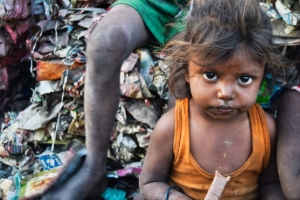
What is Poverty? Poverty is the state of one who lacks a usual or socially acceptable amount of money or material possessions. Poverty is said to exist when people lack the means to satisfy their basic needs. When a person is unable to get minimum basic necessities of life this situation is known as poverty. When parents are not in a condition to send their children to school or a situation where sick people cannot afford treatment and families do not have proper clean water, sanitation facilities, and regular jobs. Poverty, according to the World Bank, is a severe lack of well-being that has various aspects. Low earnings and the inability to obtain the essential commodities and services required for a dignified existence are examples. Poverty also includes poor health and education, a lack of access to safe drinking water and sanitation, a lack of physical security, a lack of voice, and a lack of capacity and chance to improve one’s life.
Causes of Poverty: Poverty is a consequence of the uneven distribution of material resources and wealth on a global scale and within nations. Sociologists see it as a social condition of societies with an unequal and inequitable distribution of income and wealth, of the de-industrialization of Western societies, and the exploitative effects of global capitalism Poverty is not an equal opportunity social condition. Around the world and within the U.S., women, children, and people of color are far more likely to experience poverty than are white men.
Sociologists recognize Poverty into few different types: • Absolute poverty is what most people probably think of when they think of poverty, especially if they think about it at the global level. It is defined as the total lack of resources and means required to meet the most basic standards of living. It is characterized by a lack of access to food, clothing, and shelter. The characteristics of this type of poverty are the same from place to place. • Relative poverty is defined differently from place to place because it depends on the social and economic contexts in which one lives. Relative poverty exists when one lacks the means and resources required to meet a minimum level of living standards that are considered normal in the society or community where one lives. • Income poverty is the type of poverty measured by the federal government in the U.S. and documented by the U.S. Census. • Cyclical poverty is a condition in which poverty is widespread but limited in its duration. This type of poverty is typically linked to specific events that disrupt a society, like war, an economic crash or recession, or natural phenomena or disasters that disrupt the distribution of food and other resources. • Collective poverty is a lack of basic resources that are so widespread that it afflicts an entire society or subgroup of people within that society. This form of poverty persists over periods of time stretching across generations. • Concentrated collective poverty occurs when the kind of collective poverty described above is suffered by specific subgroups within a society, or localized in particular communities or regions that are devoid of industry, good-paying jobs, and that lack access to fresh and healthy food. • Case poverty occurs when a person or family is unable to secure resources required to meet their basic needs despite the fact that resources are not scarce and those around them are generally living well. • Asset poverty is more common and widespread that income poverty and other forms. It exists when a person or household does not have enough wealth assets (in the form of property, investments, or money saved) to survive for three months if necessary.
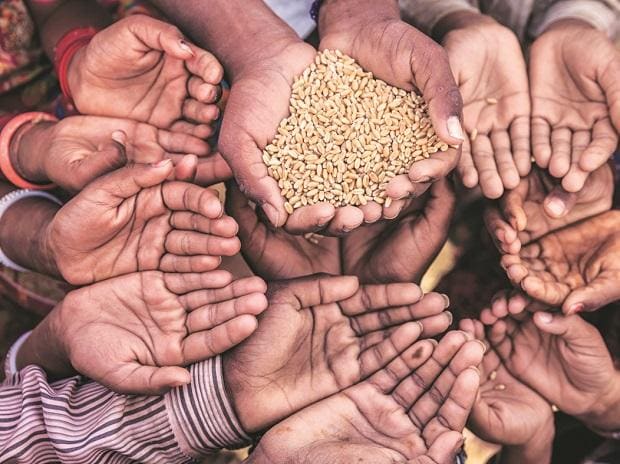
HUNGER: Rises in the costs of living make poor people less able to afford items. Poor people spend a greater portion of their budgets on food than wealthy people. As a result, poor households and those near the poverty threshold can be particularly vulnerable to increases in food prices. For example, in late 2007 increases in the price of grains led to food riots in some countries. The World Bank warned that 100 million people were at risk of sinking deeper into poverty. Threats to the supply of food may also be caused by drought and the water crisis. Intensive farming often leads to a vicious cycle of exhaustion of soil fertility and decline of agricultural yields. Approximately 40% of the world’s agricultural land is seriously degraded. In Africa, if current trends of soil degradation continue, the continent might be able to feed just 25% of its population by 2025, according to United Nations University’s Ghana-based Institute for Natural Resources in Africa. Every year nearly 11 million children living in poverty die before their fifth birthday. 1.02 billion people go to bed hungry every night. According to the Global Hunger Index, Sub-Saharan Africa had the highest child malnutrition rate of the world’s regions over the 2001–2006 period.
What are Land Reforms? Land Reforms refer to the redistribution of Lands from the rich class to the poor class. It includes operations, leasing, regulations of ownership, sales, and the inheritance of Land since Land redistribution requires legal changes.
In an agrarian economy like India with massive inequalities of wealth and income, great scarcity and an unequal distribution of land, coupled with a large mass of people living below the poverty line, there are strong economic and political arguments for land reforms.Due to all these compelling reasons, Land reforms had received top priority by the governments at the time of independence. The Constitution of India left the adoption and implementation of the land reforms to the state governments. This has led to a lot of variations in the implementation of land reforms across states.
The pattern of agriculture is always irregular in India. In the pre-independence era, tenants, peasants, and small farmers suffered a lot due to the revenue systems of Mahalwari, Zamindari, ryotwari. One of the major reasons was the unequal distribution of land. Landholdings were concentrated in few hands. The majority of farmers were being exploited. The struggle of class between the bourgeoisie and the proletariat was not a new thing. After independence, it was pivotal and need of an hour to focus upon land distribution checks. Especially, it was the rural population that was facing the maximum hindrance in socio-economic development.India under the British Raj had witnessed a lot of such atrocious regulations that exploited the poor and helpless in many aspects. Among them, land ownership contributed significantly to preventing the socio-economic growth of the backward population.The government of independent India came up with acts and laws to establish equal rights and ownership of land, which now constitutes a crucial episode of India’s economy. In the following lesson, you will come across a detailed discourse on land reforms in India after independence and their importance. The instruments that are visualized for social justice are known as Land Reforms. Land Reforms refer to the redistribution of Lands from the rich class to the poor class. It includes operations, leasing, regulations of ownership, sales, and the inheritance of Land since Land redistribution requires legal changes. After independence in 1947, an inadequate agricultural output was apparent. In order to fix this situation, the Indian government took measures to alter existing regulations for a better outcome.
These acts formed agrarian reforms in India after independence. he Land Reforms in post-independent India had various components: • Abolition of Intermediaries: The first step taken by the Indian government under land reforms post-independence was passing the Zamindari Abolition Act. The abolition of the zamindari system was done that removed the layer of intermediaries who used to stand between the state and the cultivators. In many areas, superior rights were taken away from the zamindars and weakened their economic and political power. The primary reason of a backward agrarian economy was the presence of intermediate entities like, jagirdars and zamindar who primarily focussed on collecting sky-rocketing rents catering to their personal benefits, without paying attention to the disposition of farms and farmers. Abolition of such intermediaries not only improved conditions of farmers by establishing their direct connection with the government but also improved agricultural production.
• Regulation of Rents This was in direct response to the unimaginably high rents which were charged by intermediaries during British rule, which resulted in a never-ending cycle of poverty and misery for tenants. Indian government implemented these regulations to protect farmers and labourers from exploitation by placing a maximum limit on the rent that could be charged for land.
• Tenancy Reform: The tenancy Reform led to the introduction of regulation of rent, providing security tenure, and conferring ownership to the tenants. In the pre-independence period, the rent which was paid by the tenants was exorbitant producing 35% to 75% of gross throughout the country. The primary attempt of the Reform was either to regulate rents and give some security to the tenants or outlaw tenancy altogether. Legislations were passed in all states of the country to grant tenants with permanent ownership of lands and protection from unlawful evictions on expiry of the lease. This law protects tenants from having to vacate a property immediately after their tenure is over unless ordered by law. Even in that case, ownership can be regained by tenants with the excuse of personal cultivation.
• Ceilings on Landholdings- This Reform referred to the legal stipulation of maximum size after which no farm household or farmer can hold any Land. By the year 1961-62 the government of all states passed the Land ceiling acts and in order to bring uniformity across states, a totally new ceiling policy was evolved in 1971. This law was enacted to prevent the concentration of land ownership in a few hands. It placed an optimum limit on the total measure of land which an individual or a family can hold. Along with fixation of land ceilings, this rule enables the government to take ownership of the additional or extra amount of land, which in turn, is given to minor tillers or farmers with no land. With the help of these Reforms, the states were able to identify and take possession of Lands exceeding the ceiling limits from the households and redistribute them to the Landless families.
• Consolidation on Land Holdings- The term consolidation referred to the redistribution or reorganization of the fragmented Lands into one single plot. The trend of the fragmentation of Land increased because of the growing population and fewer work opportunities and this fragmentation made the personal supervision and the irrigation management tasks very difficult. Therefore, the act of Landholdings consolidation was introduced which states that if there are few plots of Lands of a farmer then those Lands were consolidated in one bigger piece which was done by the process of exchanging or purchasing.
A major problem of the agrarian structure of India is land fragmentation, which hinders large-scale farming and production. This problem was solved with this regulation which permitted farmers to consolidate minor fragments of land owned by them into a singular piece of land. This enabled tenants to carry out agricultural operations in a larger field, which could be done by exchanging land or purchasing additional pieces.
The first thing that comes to mind when we hear the term Artificial intelligence is, what exactly is AI? We see computers workaround for us all the time but we don’t truly understand what AI actually is and how it works, so read along to find out.
The purpose of Artificial intelligence is to give machines, especially computer systems the ability to simulate human intelligence processes. What is often referred to as AI is nothing more than machine learning when only one component among many others that AI has.
Python, java, etc. are some of the popular programming languages which are used to write machine learning algorithms that serve as the foundation to build specialized software and hardware required by AI to achieve specific goals it has been programmed to do.
Ai works by gathering large amounts of data, analyzing them to find patterns and correlations present, and subsequently using them to make predictions about the future as accurately as possible. For example, an image recognition tool can be fed millions of images to look for certain objects present in it. the perfect example of AI is the mars curiosity rover, as it is on an entirely different planet collecting samples analyzing them and sending the results back to earth.
Categories of AI
AI can be categorized in two ways i.e. weak or strong
Weak/narrow AI is usually designed and trained to complete a particular task for e.g. Apple’s Siri is a really good example of a software program that uses weak AI.
Strong AI also referred to as Artificial General Intelligence (AGI), is used to perform tasks that require cognitive abilities to do so. The tasks performed by them tend to be much more complex in nature. A really good example of software that utilizes a strong AI can be found in self-driving cars, hospital operating rooms, etc.
The four types of AI
There are mainly four types of AI which can range from intelligence systems that are task-specific and widely in use all around the world to sentient systems which have not yet been developed.
1) Reactive machines- they are the most basic type of artificial intelligence. It uses algorithms that enable it to give optimized output, which will be the same if the inputs are identical. For e.g. Chess-playing AIs are based on reactive AIs.
2) Limited memory AI- they are the type of AIs that have the ability to utilize past experiences to improve their future decisions but they can store limited amounts of data and have a relatively short length of memory. For e.g. self-driving cars are the best example of a machine that utilizes limited memory AI.
3) Theory of Mind AI- this type of AIs has social intelligence enabling them to understand human emotions. They will be able to understand human emotions and have the ability to predict behavior which can be extremely helpful in making a Chabot that could potentially have the ability to even fool humans into believing that the Ai was an actual human being. The only thing they lack is that they are not self-aware.
4) Self-aware AI- this is the future of artificial intelligence, these machines will have their own consciousness, sentiments, and will be self-aware and will be a lot like us humans in terms of emotions behavior patterns, etc. a lot of scientists believe that AI will never become self-aware or as one might say ‘Alive’.
Applications of Artificial intelligence
1) AI in healthcare
With the availability of large and complex data in healthcare implies that Artificial intelligence will be used to process and analyze it to help us in many ways. One of the most useful and common applications of AI will be in diagnosis and treatment recommendations. IBM Watson is one of the best-known healthcare AI software which can mine a patient’s data and data from other sources to formulate a hypothesis and it even gives it a confidence scoring scheme as well.
2) AI in business
AI is the best thing to happen for business owners because AI can help you automate the routine tasks which would normally take hours to do and it can do it with great accuracy too. Not only routine tasks but AI can also be used to analyze and interpret data which can be very useful for analyzing customer behavior to help you improve your marketing strategies and it is extremely cost efficient as well.
3) AI in finance
AI can be used by individuals to help manage their personal finances and can also be used by financial institutions to manage and analyze large amounts of data. These types of software can help to conduct fundamental and technical analyses on different companies and funds by automatically taking information from their balance sheets. these types of AI software are also capable of executing trades on the stock exchange on behalf of you and with greater accuracy and results as they remove the emotional aspect which would affect your trades if you execute them by yourself
4) AI in law
AI in law can help save hundreds of man hours which are spent sifting through documents and analyzing them manually for discrepancies by automating this process. This helps to make the entire process a lot more efficient, time-saving and improves customer service.
5) AI in manufacturing
In its early stages of development, AI was only being used to perform a single task and still required some form of human intervention at all stages of the production process but, with the recent advancement in technology, entire production lines can now be replaced by AI machines and the whole process can now be automated as the AI is now capable of multitasking. It can now produce and assemble the product all while performing quality checks on each and every product which was simply not possible earlier when the human workforce was used for everything.
The famous word ” youtube ” everyone knows about it. Every age of people watches YouTube videos related to their interests. From a small children to aged people all of them watch YouTube because on YouTube we can get all the things we want to learn or we watch for any entertainment purpose.
What is Youtube Marketing?
YouTube’s marketing purpose is to make videos promoting any business for the company and also they can promote on their channel. YouTube is a very good place to show your business from where people will know about your product that it exists.
You can create your channel and you can upload your videos related to your interest and from that, you can earn money after you are applying the rules and regulations they have. This is a very good earning source if you want to make YouTube your main priority.
If you are making mind to open your YouTube channel and get into it. Then you have to work hard for your channel. Nowadays competition is very high on YouTube or in any other field.
Advantages of YouTube Marketing
* YouTube is a very large platform to promote your business and people can find you easily.
* People will understand you properly through your videos
* You can get most of the traffic boost
* You can earn money from YouTube
* You can work with influencers to better growth of your business and channel
YouTube is a big platform for everybody who is thinking to get settled in YouTube.
The RBI discussion paper issued earlier this month said, UPI as a fund transfer system is like IMPS and therefore, it could be argued that the charges in UPI need to be similar to charges in IMPS for fund transfer transactions.
To clarify, Ministry of Finance quoted “UPI is a digital public good with immense convenience for the public and productivity gains for the economy. There is no consideration in government to levy any charges for UPI services,” the Ministry of Finance said in a statement.
The clarification came amid speculations that UPI transactions could be charged, as a discussion paper released by the Reserve Bank of India (RBI) on August 17 sought feedback related to the subject. “Charges for payment services should be reasonable and competitively determined for users while also providing optimal revenue stream for the intermediaries,” the central bank said in a release. The feedback received would be used to guide policies and intervention strategies.
In the context of UPI, the RBI, in the discussion paper, has questioned if UPI transactions are charged, they should be administered by the regulator, or whether they should be market determined. While clarifying it was not considering any service charge on UPI transactions, the finance ministry reiterated its support for the further adoption of the digital payments system.
Entrepreneurship is the act of creating a business or businesses while bearing all the risks with the hope of making a profit.
But as a basic definition, that one is a bit limiting. The more modern entrepreneurship definition is also about transforming the world by solving big problems like bringing about social change or creating an innovative product that challenges the status quo of how we live our lives on a daily basis.
Enterpreneurship is what people do to take their career into their hands and lead it in the direction they want.
It’s about building a life on your own terms. No bosses. No restricting schedules. And no one holding you back. Entrepreneurs are able to take the first step into making the world a better place—for everyone in it, including themselves.
Importance of enterpreneurship
Entrepreneurs create jobs : Without entrepreneurs, jobs wouldn’t exist. Entrepreneurs take on the risk of employing themselves. Their ambition to grow their business eventually leads to the creation of new jobs. As their business continues to grow, even more jobs are created.
Entrepreneurs innovate : Some of the greatest technologies in today’s society have come from businesses. Technological advances come from a need to solve problems, create efficiencies, or improve the world. In periods where there’s more advancement in technology, there’s usually an entrepreneur to thank for it.
Entrepreneurs create change : Entrepreneurs dream big—many aim to make the world better with their products, ideas, or businesses. So naturally, some of their ideas will make a worldwide change. They might create a new product that solves a burning problem or takes on the challenge of exploring something never explored before.
Entrepreneurs give to society : While some have a notion of the rich being evil and greedy, they often do more for the greater good than the average person. They make more money and thus pay more taxes, which helps fund social services. Entrepreneurs are some of the biggest donors to charities and nonprofits for various causes. Some seek to invest their money in creating solutions to help poorer communities have access to things we take for granted, like clean drinking water and good health care.
Entrepreneurs add to national income: Entrepreneurship generates new wealth in an economy. New ideas and improved products or services from entrepreneurs allow for the growth of new markets and new wealth.
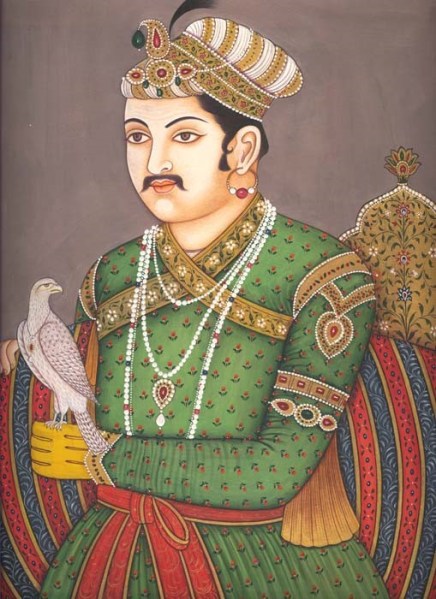
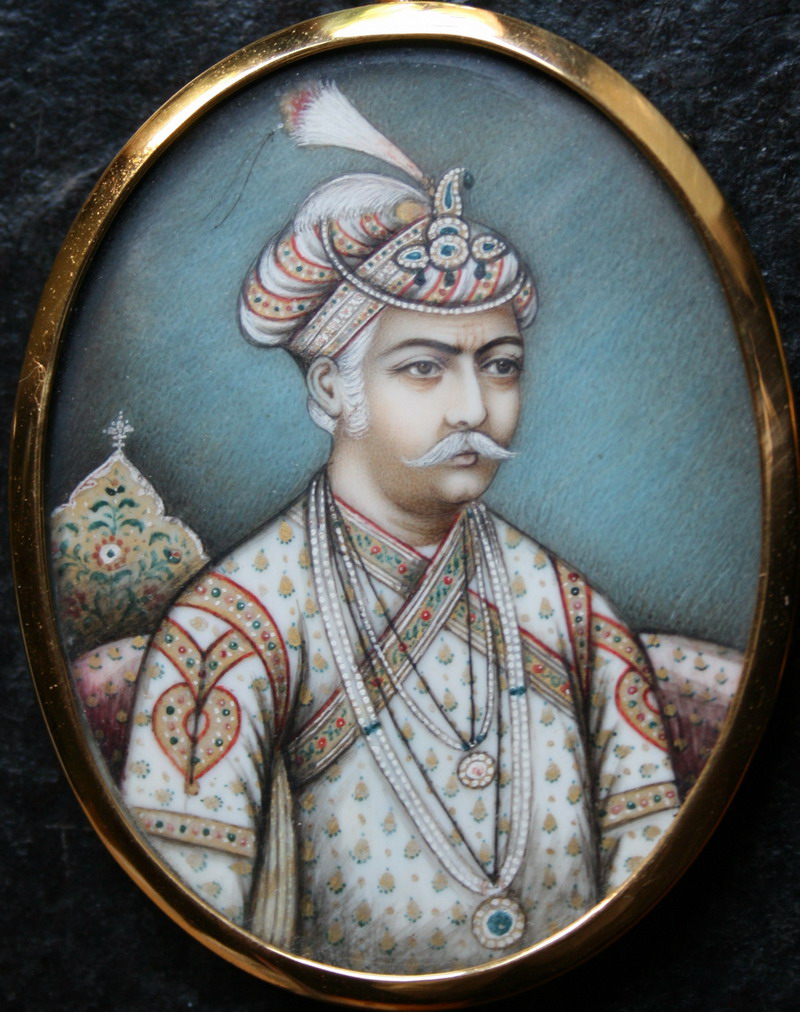
Abu’l-Fath Jalal-ud-din Muhammad Akbar Akbar was born on October 15,1542.He was popularly known as Akbar The Great.
Akbar succeeded his father, Humayun, under a regent, Bairam Khan, who helped the young emperor expand and consolidate Mughal domains in India. Bairam Khan taught him the ruling and war techniques which made him a strong personality and a successful general. Akbar gradually enlarged the Mughal Empire to include much of the Indian subcontinent. His power and influence, however, extended over the entire subcontinent because of Mughal military, political, cultural, and economic dominance. To unify the vast Mughal state, Akbar established a centralised system of administration throughout his empire and adopted a policy of conciliating conquered rulers through marriage and diplomacy. To preserve peace and order in a religiously and culturally diverse empire, he adopted policies that won him the support of his non-Muslim subjects. Mughal India developed a strong and stable economy, leading to commercial expansion and greater patronage of culture. Akbar himself was a patron of art and culture. Although he could not read and write, he was fond of literature, and created a library of over 24,000 volumes in several languages. Akbar dedicated the first decade of his rule towards expanding his empire. Under the regency of Bairam Khan, Ajmer, Malwa and Garhkatanga were annexed into the Mughal territories. After consolidating the empire, Akbar concentrated on establishing a stable and subject-friendly administration at the center to govern his vast empire. The principles of Akbar’s administration were based on moral as well as material welfare of his subjects. He brought about several changes in existing policies to establish an environment of uniform opportunities to people irrespective of religion. The Emperor himself was the supreme governor of the empire. He retained ultimate judicial, legislative and administrative power above anyone else. After consolidating the empire, Akbar concentrated on establishing a stable and subject-friendly administration at the center to govern his vast empire. The principles of Akbar’s administration were based on moral as well as material welfare of his subjects. He brought about several changes in existing policies to establish an environment of uniform opportunities to people irrespective of religion. The Emperor himself was the supreme governor of the empire. He retained ultimate judicial, legislative and administrative power above anyone else. Akbar introduced reforms in judicial system as well and for the first time, Hindu customs and laws were referred to in case of Hindu subjects. The Emperor was the highest authority in Law and the power to give capital punishment rested solely with him. The major social reform introduced by Akbar was the abolition of the Pilgrimage Tax for Hindus in 1563 as well as the Jazia tax imposed on the Hindu subjects. He discouraged child marriage and encouraged widow remarriage. Akbar was probably the first Islamic ruler in India who sought stable political alliances through matrimony. He married several Hindu Princess including Jodha Bai. Akbar’s rule was marked by wide religious tolerance and liberal outlook. Akbar was profoundly religious himself, yet he never sought to enforce his own religious views on anyone; be it prisoners of war, or Hindu wives or the common people in his kingdom. He gave great importance to choice and abolished discriminatory taxes based on religion. He encouraged building of temples and even churches his empire. Out of reverence for the Hindu members of the Royal Family he banned the cooking of beef in the kitchens. He took several steps to unite the Muslim and Hindu society. For his contribution he was fondly called as Akbar by the people.
In 1605, at the age of 63, Akbar fell ill with a serious case of dysentery. He never recovered from it and after three weeks of suffering, he passed away on October 27, 1605 at Fatehpur Sikri. He was buried at Sikandra, Agra.
On the occasion of senior citizen’s day August 21, 2022, I salute senior citizens because I believe senior citizens are still the guiding spirit of any country, any society, or even any family. Senior citizens as per Income Tax’s interpretation in India, “An individual resident who is 60 years or above in age but less than 80 years at any time during the previous year is considered as Senior Citizen for Income Tax purposes. A Super Senior Citizen is an individual resident who is 80 years or above, at any time during the previous year”. According to the law in India, a “senior citizen” means any person being a citizen of India, who has attained the age of sixty years or above. The concept of World Senior Citizen Day was initiated by the former President of the United States, Ronald Reagan. He instituted it the day after signing a Proclamation on August 19, 1988. Later on December 14, 1990, the United Nations General Assembly (UNGA) declared August 21 as World Senior Citizens Day. Anyway, in the context of India, it may be mentioned that “according to Population Census 2011 there are nearly 104 million elderly persons (aged 60 years or above) in India; 53 million females and 51 million males. A Report released by the United Nations Population Fund and HelpAge India suggests that the number of elderly persons is expected to grow to 173 million by 2026. According to the Report of the Technical Group on Population Projections for India and States 2011-2036, there are nearly a 138million elderly persons in India in 2021 (67 million males and 71 million females) and is further expected to increase by around 56 million elderly persons in 2031. Both the share and size of the elderly population are increasing over time. From 5.6% in 1961 the proportion increased to 8.6% in 2011. The proportion increased to 10.1% in 2021 and is further likely to increase to 13.1% in 2031. For males, it was marginally lower at 8.2%, while for females it was 9.0%”. (vikaspedia.in/social-welfare/senior-citizens-welfare).
In the context of world senior citizens, I wish to mention a few points from the Report on “World Population Ageing 2019” published by the Department of Economic and Social Affairs of the United Nations, New York, 2020. “Globally, there were 703million persons aged 65 or over in 2019. 1 The region of Eastern and South-Eastern Asia was home to the largest number of older persons (261million), followed by Europe and Northern America (over 200 million)”. Another important finding is “Over the next three decades, the number of older persons worldwide is projected to more than double, reaching more than 1.5 billion persons in2050. All regions will see an increase in the size of the older population between 2019 and 2050. The largest increase (312 million) is projected to occur in Eastern and South-Eastern Asia, growing from 261 million in 2019 to 573million in 2050. The fastest increase in the number of older persons is expected in Northern Africa and Western Asia, rising from 29 million in 2019 to96 a million in 2050 (an increase of 226 percent). The second fastest increase is projected for sub-Saharan Africa, where the population aged 65 or over could grow from 32 million in 2019 to 101 million in 2050 (218 percent). By contrast, the increase is expected to be relatively small in Australia and New Zealand (84 percent) and in Europe and Northern America (48 percent), regions where the population is already significantly older than in other parts of the world”. It may be noted here that “Not only has the absolute number of older persons increased globally but also the share of older persons in the total population has increased and is projected to continue to grow in all regions. The percentage of persons aged 65 or over worldwide has grown from 6 percent in 1990 to 9 percent in 2019 and is projected to increase further to 16 percent in 2050”. Lastly, I wish to mention from the Report that, “In 2019, the largest numbers of persons aged 80 or older were found in Europe and Northern America (53.9 million) and in Eastern and South-Eastern Asia (48.6 million). By 2020, more than half of the population at ages 80 years and above will live in Eastern and South-Eastern Asia (177 million), followed by Europe and Northern America (109 million.). The largest increments in the population at ages 80 and above – in all cases over 250 percent – are projected for Northern Africa and Western Asia, for Oceania, and for Eastern and South-Eastern Asia”. From the UN Report, it is evident that the longevity of senior citizens (65 years and above, UN has taken into account 65 years as a senior citizen) in the world has been increasing.
I was born in a joint family and observed the behaviour of some citizens in our family and still cherishing their knowledge, wisdom, and guidance, which in one word is fantastic.
On the occasion of senior citizen’s day August 21, 2022, I salute senior citizens because I believe senior citizens are still the guiding spirit of any country, any society, or even any family. Senior citizens as per Income Tax’s interpretation in India, “An individual resident who is 60 years or above in age but less than 80 years at any time during the previous year is considered as Senior Citizen for Income Tax purposes. A Super Senior Citizen is an individual resident who is 80 years or above, at any time during the previous year”. According to the law in India, a “senior citizen” means any person being a citizen of India, who has attained the age of sixty years or above. The concept of World Senior Citizen Day was initiated by the former President of the United States, Ronald Reagan. He instituted it the day after signing a Proclamation on August 19, 1988. Later on December 14, 1990, the United Nations General Assembly (UNGA) declared August 21 as World Senior Citizens Day. Anyway, in the context of India, it may be mentioned that “according to Population Census 2011 there are nearly 104 million elderly persons (aged 60 years or above) in India; 53 million females and 51 million males. A Report released by the United Nations Population Fund and HelpAge India suggests that the number of elderly persons is expected to grow to 173 million by 2026. According to the Report of the Technical Group on Population Projections for India and States 2011-2036, there are nearly a 138million elderly persons in India in 2021 (67 million males and 71 million females) and is further expected to increase by around 56 million elderly persons in 2031. Both the share and size of the elderly population are increasing over time. From 5.6% in 1961 the proportion increased to 8.6% in 2011. The proportion increased to 10.1% in 2021 and is further likely to increase to 13.1% in 2031. For males, it was marginally lower at 8.2%, while for females it was 9.0%”. (vikaspedia.in/social-welfare/senior-citizens-welfare).
In the context of world senior citizens, I wish to mention a few points from the Report on “World Population Ageing 2019” published by the Department of Economic and Social Affairs of the United Nations, New York, 2020. “Globally, there were 703million persons aged 65 or over in 2019. 1 The region of Eastern and South-Eastern Asia was home to the largest number of older persons (261million), followed by Europe and Northern America (over 200 million)”. Another important finding is “Over the next three decades, the number of older persons worldwide is projected to more than double, reaching more than 1.5 billion persons in2050. All regions will see an increase in the size of the older population between 2019 and 2050. The largest increase (312 million) is projected to occur in Eastern and South-Eastern Asia, growing from 261 million in 2019 to 573million in 2050. The fastest increase in the number of older persons is expected in Northern Africa and Western Asia, rising from 29 million in 2019 to96 a million in 2050 (an increase of 226 percent). The second fastest increase is projected for sub-Saharan Africa, where the population aged 65 or over could grow from 32 million in 2019 to 101 million in 2050 (218 percent). By contrast, the increase is expected to be relatively small in Australia and New Zealand (84 percent) and in Europe and Northern America (48 percent), regions where the population is already significantly older than in other parts of the world”. It may be noted here that “Not only has the absolute number of older persons increased globally but also the share of older persons in the total population has increased and is projected to continue to grow in all regions. The percentage of persons aged 65 or over worldwide has grown from 6 percent in 1990 to 9 percent in 2019 and is projected to increase further to 16 percent in 2050”. Lastly, I wish to mention from the Report that, “In 2019, the largest numbers of persons aged 80 or older were found in Europe and Northern America (53.9 million) and in Eastern and South-Eastern Asia (48.6 million). By 2020, more than half of the population at ages 80 years and above will live in Eastern and South-Eastern Asia (177 million), followed by Europe and Northern America (109 million.). The largest increments in the population at ages 80 and above – in all cases over 250 percent – are projected for Northern Africa and Western Asia, for Oceania, and for Eastern and South-Eastern Asia”. From the UN Report, it is evident that the longevity of senior citizens (65 years and above, UN has taken into account 65 years as a senior citizen) in the world has been increasing.
I was born in a joint family and observed the behaviour of some citizens in our family and still cherishing their knowledge, wisdom, and guidance, which in one word is fantastic.











You must be logged in to post a comment.