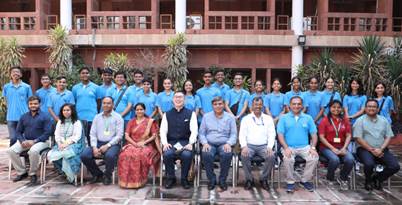
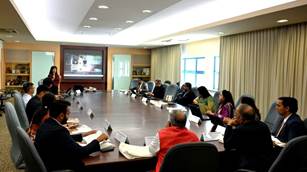
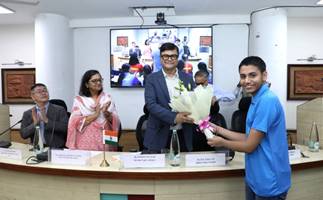
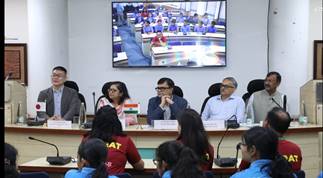
The Department of School Education & Literacy, Ministry of Education (DoSEL), is sending 20 school students and 2 supervisors to Japan to participate in the Sakura Programme 2024 along with 5 other countries from 20-26 October 2024. The enthusiastic and excited children were flagged off by Shri Charanjt Taneja, Deputy Secretary, DoSEL; Dr. Amarendra Prasad Behera, Joint Director, CIET-NCERT; and Ms. Kirti Panwar, Deputy Commissioner, Navodaya Vidyalaya in a ceremony at CIET-NCERT organised by DoSEL. The event was also attended by Mr. Kemmochi Yukio, Manager of the Japan Science and Technology Agency, and officials from DoSEL-MoE. These 20 students (10 boys and 10 girls) are from Navodaya Vidyalayas and alumni of the PRERANA program from across the country.
To develop the intellectual horizon and scientific exploration among young learners, the Japan Science and Technology Agency (JST) has been implementing the “Japan-Asia Youth Exchange Program in Science” also known as the “Sakura Science Programme” since 2014. India was added to the Sakura Program in 2015. The students are invited under the programme for short-term visits to Japan, giving them the opportunity to experience Japan’s cutting-edge science and technology as well as its culture.
The National Education Policy (NEP) 2020, while emphasizing the importance of curriculum and pedagogy in schools, endorses that “Learning should be Holistic, Integrated, Enjoyable and Engaging in itself. Also, NEP-2020 states that in all stages, experiential learning will be adopted as standard pedagogy within each subject, and with explorations of relations among different subjects. It is in this context that educational trips and excursions to various places of importance in terms of historical, cultural, social and technological development are of paramount importance. Japan as a developed nation, a friendly country, along with technological advancements, is also a favourite destination for educational exposure. Therefore, visiting a country like Japan is always enriching and provides an opportunity for the exploration of innovative practices.
India participated in the program for the first time in April 2016. So far, 553 students and 85 supervisors have visited Japan under this programme. The last batch visited Japan in June 2024.
In a significant move to enhance bilateral cooperation in the education sector, Union Minister for Education Shri Dharmendra Pradhan will visit Singapore and Australia from 20 to 26 October 2024. The visit is expected to foster collaboration, participation, and synergy in critical areas of mutual interest in education.
During the two day visit in Singapore, Shri Dharmendra Pradhan will address the members of Indian diaspora on 20th October 2024. The next day, Shri Dharmendra Pradhan will meet the Prime Minister of Singapore, H.E. Lawrence Wong; Deputy Prime Minister, H.E. Gan Kim Yong; Education Minister, H.E. – Chan Chun Sing; and Foreign Minister H.E. Vivian Balakrishnan. Shri Pradhan will visit the National University of Singapore ranked No.1 in Asia. He will also visit a local secondary school to discuss the scope of syllabus integration, keeping AI in focus. He will meet academicians, eminent representatives from alumni of IITs and IIMs and engage in discussions related to the education ecosystem of both countries.
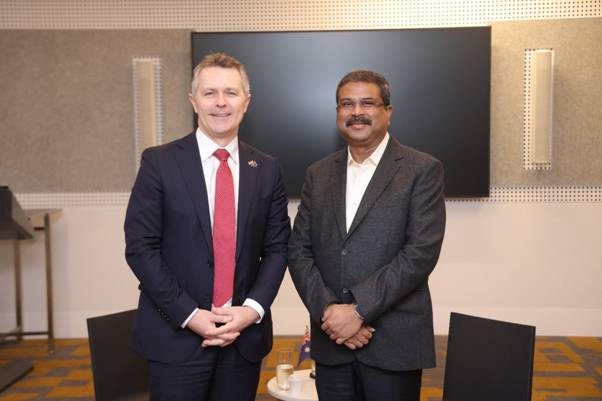
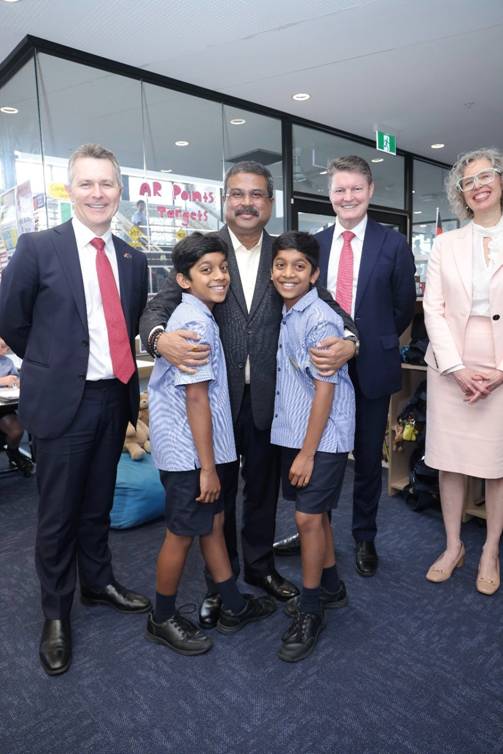
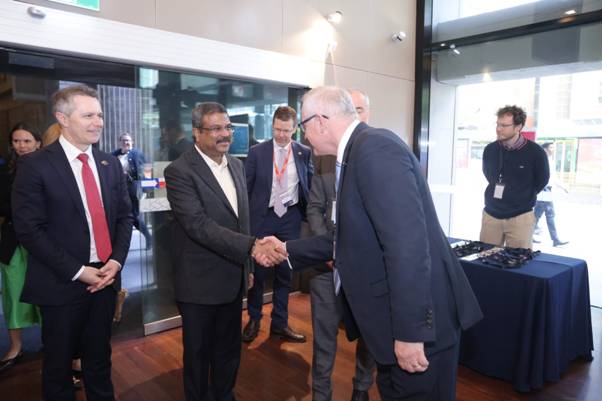
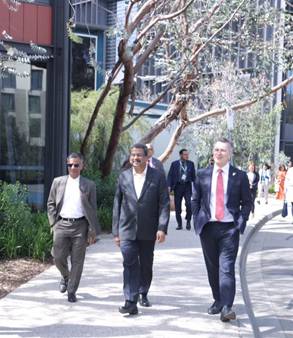
During the 3-day visit to Australia, on 23rd October 2024, the Minister, in Melbourne, will meet Hon. Jason Clare MP, Minister for Education. Shri Pradhan will also deliver the Plenary address at the Australian International Education Conference. The Minister will be visiting the South Melbourne Primary School which is known for integrated approaches to learning.
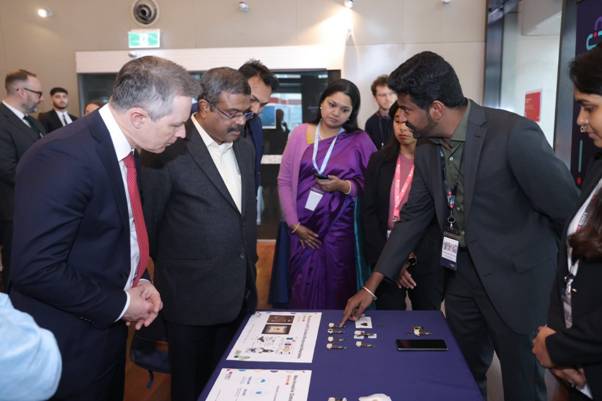
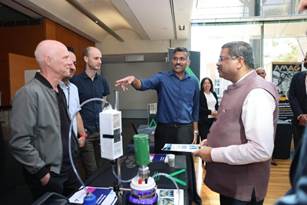
He will visit ‘Discovery to Device’ at RMIT University which is a unique centre for MedTech prototyping and manufacturing. The visit will explore collaborative approaches to the commercialisation of medical technologies and role of industry-academia linkages in driving innovation..
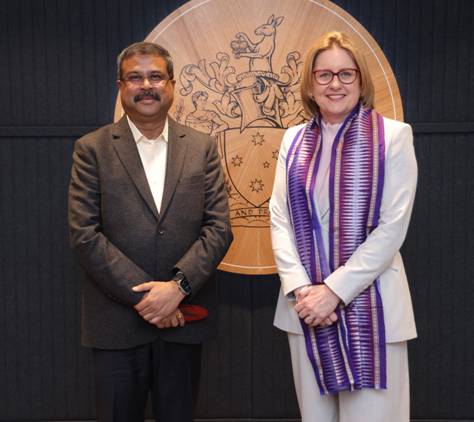
Shri Pradhan will meet Hon. Jacinta Allan MP, Premiere of Victoria along with Australian Education Minister Hon Jason Clare MP. He will also visit Monash University to observe their Innovation Lab and Centre for Nano-fabrication.During his stay in Melbourne, Shri Pradhan will also interact with senior academics of Indian origin.
To explore opportunities for partnerships in educating early childhood education workforces, Shri Pradhan will visit Auburn Long Day Child Care Centre in Sydney on 24th October 2024. The Minister will interact with the representatives of the Innovative Research Universities (IRU) and will attend the 2nd Australia India Education and Skills Council.
On 25th October 2024, he will visit the Granville South Creative and Performing Arts High School.Shri Pradhan will visit the site of the Macquarie Park Innovation District (MPID). As home to over 180 multinational companies, MPID facilitates the practical application of research across telecommunications, digital industries, medical technology and pharmaceuticals for economic benefit.
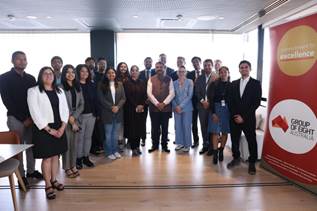
Later in the day, Shri Pradhan will interact with Indian research students hosted by the Group of Eight, Australia’s most research intensive universities.
Shri Pradhan will visit the UNSW Energy Institute and the Trailblazer for Recycling and Clean Energy (TraCE) at the Tyree Energy Technologies Building, Kensington. Here, he will observe real-world examples of practical research applications with commercial impact through the UNSW Energy Institute, which brings together world-leading researchers and the energy industry.
He will also visit UTS Moore Park Sports and Exercise Precinct to explore cooperation in sports education and sports research. UTS’s Moore Park Precinct is a state-of-the-art teaching, research and sporting facility.
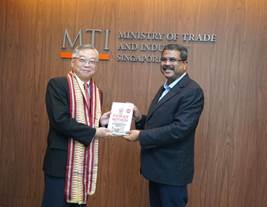
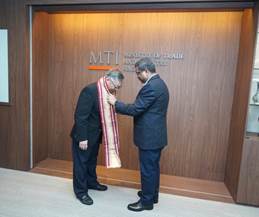
Union Minister for Education, Shri Dharmendra Pradhan, met the Deputy Prime Minister and Minister for Trade & Industry of Singapore, H.E. Gan Kim Yong.
Shri Pradhan had an engaging conversation with H.E. Gan Kim Yong on cooperation in skills-based education and training to build competencies of the future generations.
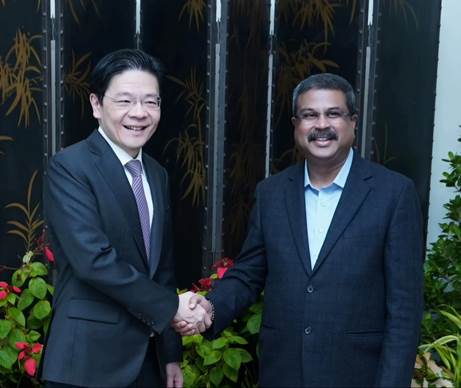
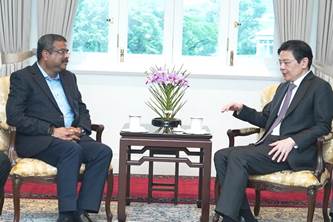
Earlier in the day, Shri Pradhan met the Prime Minister of Singapore, H.E. Lawrence Wong, and had meaningful conversations on elevating and expanding the bilateral cooperation in school education, vocational education and research, between the two nations.
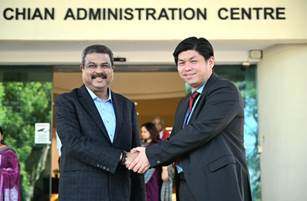
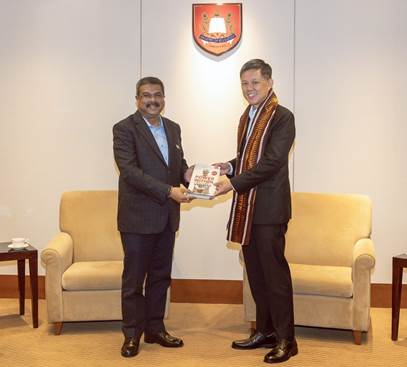
Shri Pradhan also met Singapore’s Minister for Education, Mr. Chan Chun Sing, to discuss strengthening bilateral cooperation across various areas of education. The Minister also met with Singapore’s Minister for Foreign Affairs, Mr. Vivian Balakrishnan, to discuss deepening the India-Singapore Knowledge Partnership.
Shri Pradhan visited the Hwa Chong Institution (HCI) in Singapore, to explore best practices for building ‘schools of the future’. He commended the school’s use of cutting-edge technologies, such as AI, to enhance student experiences, strengthen learning outcomes, and nurture the unique strengths, talents, and creative pursuits of each student. Shri Pradhan also observed several similarities between the educational approaches outlined in India’s National Education Policy (NEP) 2020 and the curriculum, pedagogy, and student development strategies at HCI. He reiterated India’s commitment to shaping responsible global citizens by providing students with access to world-class education.
The Minister’s visit to Singapore, followed by a trip to Australia, from 20 to 26 October 2024, aims to foster collaboration, participation, and synergy in critical areas of mutual interest in education.
Union Minister for Education, Shri Dharmendra Pradhan met the Prime Minister of Singapore, H.E. Lawrence Wong today.
The Ministers had meaningful conversations on elevating and expanding the bilateral cooperation in school education, vocational education and research, between the two nations. The discussions focused on strengthening the partnership through three key pillars—‘Talent, Resource & Market.’
Shri Pradhan emphasized that India views Singapore as a trusted knowledge partner, particularly in advancing deep tech, startups, and innovation ecosystems.
Shri Pradhan also highlighted that Prime Minister Narendra Modi and Prime Minister Mr. Wong have outlined a robust framework to elevate India-Singapore cooperation into a comprehensive partnership, including collaboration in critical and emerging sectors.
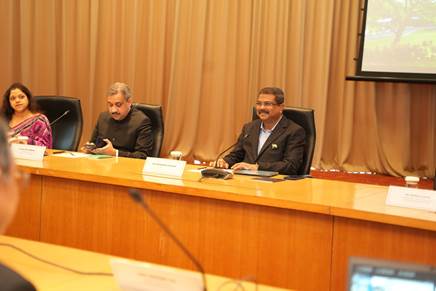
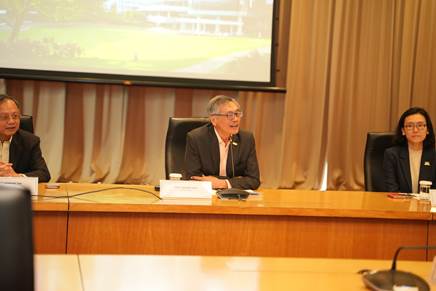
Earlier in the day, Shri Pradhan met his counterpart, Singapore’s Minister for Education, Mr. Chan Chun Sing, to discuss strengthening bilateral cooperation across various areas of education. Shri Pradhan emphasized the significance of the National Education Policy 2020 in facilitating the internationalization of India’s education system. The two ministers explored avenues for overseas internship programs, allowing Indian students to gain practical experience in Singaporean companies.
To further strengthen cultural connect between students of both countries the possibility of twinning of schools in India and Singapore was discussed. Joint Research collaboration in areas of mutual interest like deep tech, medicine, advance materials, etc. was also discussed.
They also deliberated on fostering academic and research collaboration through the twinning of schools and universities in both countries. Shri Pradhan highlighted opportunities for collaboration between Singapore’s National Institute of Education and NCERT in areas such as curriculum development, pedagogy, and teacher capacity-building.
Extending an invitation to Minister Chan to visit India, Shri Pradhan expressed his commitment to advancing shared goals and enhancing educational ties between the two nations.
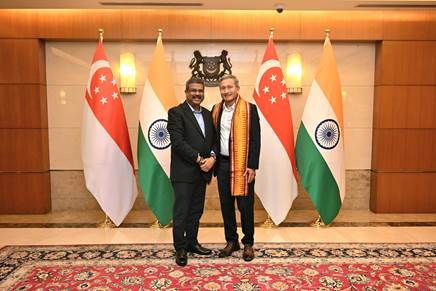
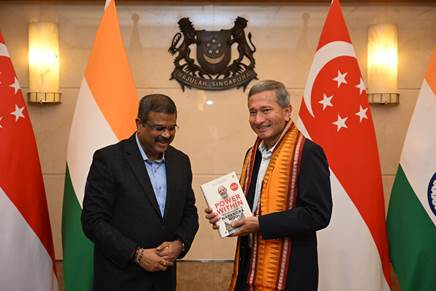
Shri Pradhan also met with Singapore’s Minister for Foreign Affairs, Mr. Vivian Balakrishnan, to discuss deepening the India-Singapore Knowledge Partnership.
Both leaders emphasized the importance of working closely to elevate bilateral cooperation in education and expand collaborative efforts to achieve shared objectives.
Shri Pradhan also visited the National University of Singapore and met with Prof. Tan Eng Chye, President of the university. They discussed leveraging complementary strengths to build knowledge bridges, strengthen academic and research collaborations, and deepen engagements between NUS and top Indian higher education institutions across all academic fronts.
Shri Pradhan emphasized that NUS and Indian HEIs can collaborate to create value in areas such as deep start-ups, healthcare, advanced materials, digitalization, and sustainability, among others. The Minister also highlighted that a key focus area of NEP 2020 is enhancing access to quality higher education for the youth of India and the internationalization of its education system.
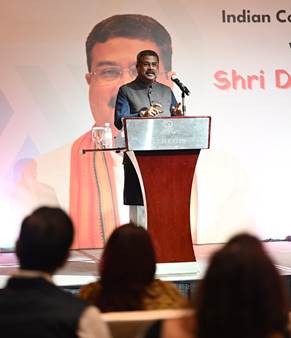
On the first day of his visit on 20th October 2024, Shri Pradhan had engaged with the members of the Indian diaspora in Singapore. He highlighted NEP 2020’s role in upskilling India’s youth and the enormous scale and magnitude of education in India.
The Minister’s visit to Singapore, followed by a trip to Australia, from 20 to 26 October 2024, aims to foster collaboration, participation, and synergy in critical areas of mutual interest in education.
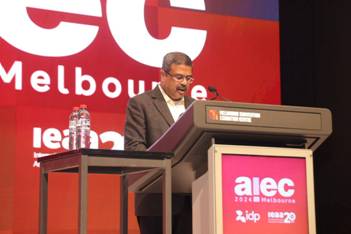
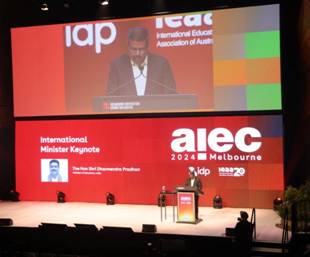
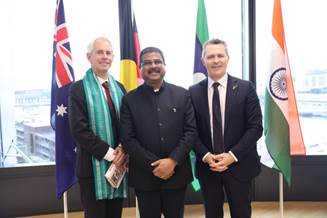
Union Minister for Education, Shri Dharmendra Pradhan, delivered the plenary speech at the Australian International Education Conference in Melbourne, Australia, today. Shri Pradhan also held a Bilateral Meeting with his counterpart Minister for Education, Government of Australia, Mr. Jason Clare MP. Members of the Indian delegation, heads of the universities of both countries, and other dignitaries were also present at the event.
Shri Pradhan in his speech commended the strong and evolving partnership between India and Australia that ties the history of the two countries and will also pave the way for a brighter future together. He also reaffirmed the further strengthening of these ties under the visionary leadership of Prime Minister Shri Narendra Modi and Prime Minister of Australia Mr. Anthony Albanese.
Shri Pradhan also highlighted that in the 4th Industrial Revolution, education must prepare students to be creators and managers of technology. India’s National Education Policy provides a framework emphasising digital literacy, soft skills, critical thinking, and interdisciplinary studies to adapt to evolving job markets, he added.
Shri Pradhan emphasized that cooperation in education is the fulcrum of the India-Australia relationship. He stated that the main objective is to enhance India’s education system into a competency-based framework, focusing on skills-based education as outlined in India’s National Education Policy (NEP).
The Minister spoke about how NEP 2020 has transformed India’s learning landscape into a powerhouse of possibilities, the enduring India-Australia ties and the remarkable strides made in education cooperation powered by NEP 2020. The establishment of Australian university campuses in India is just the beginning, with much more potential to be realized, he added.
He also added that together, the countries can advance knowledge, leverage technology for global challenges, and create endless opportunities for innovation and entrepreneurship for the students.
The Minister also expressed that as a ‘Vishwa-Bandhu’, India is committed to being a trusted partner in human-centric development. The idea is to build and nurture global citizens, contributing to a brighter future for the next generation, he said.
Mr. Jason Clare MP, in his speech, emphasised the importance of a good education system that can change more than just lives. It can change nations, he added. Commending India’s education systems, he said that by 2035 one in four people around the world who get a university degree will get it in India. He mentioned how Australian universities like Deakin had been in India for 30 years and now Wollongong has one campus. He expressed his gratitude to Shri Pradhan for encouraging these initiatives. He also praised the work the six Innovative Research Universities are doing by exploring options for a consortium campus in India.
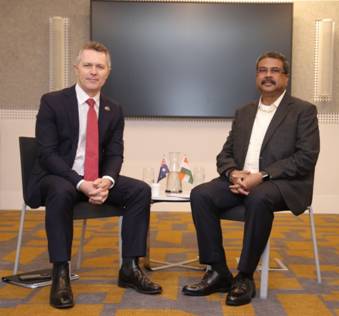
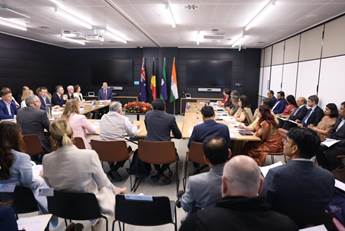
Earlier in the day, Shri Pradhan also met Mr. Jason Clare MP for a discussion regarding shared priorities of India and Australia in early childhood care, capacity building of teachers, and the potential for school twinning initiatives. Building on the strong institutional linkages between Indian and Australian higher education institutions, they agreed to further strengthen the partnership in critical and emerging technologies. They also explored the possibility of establishing branch campuses of Australian universities in India.
During these discussions, Shri Pradhan also met the Assistant Minister of Foreign Affairs, Mr. Tim Watts MP.
Shri Pradhan met Mrs. Jacinta Allan MP, Premier of Victoria, Australia. He highlighted that Victoria is home to the largest Indian diaspora in Australia. They had engaging conversations on ways to strengthen institutional linkages of schools and universities in Victoria with India.
Shri Pradhan also visited South Melbourne Primary School and engaged with young learners. He explored the school’s innovative approaches to early childhood education. He emphasized how NEP 2020 in India places a strong focus on Early Childhood Care and Education (ECCE), which is essential for a child’s holistic development. He reaffirmed his commitment to adopting global best practices to make early learning universal, enjoyable, and stress-free.
Shri Dharmendra Pradhan visited the Royal Melbourne Institute of Technology (RMIT), a hub for technology, design, and enterprise. He explored their ‘Discovery to Device’ med-tech facility, fast-tracking ideas to products. He also appreciated the university’s emphasis on industry experience, hands-on skills, and focus on transforming ideas into products. Shri Pradhan explored how RMIT can partner and work with top Indian HEIs to equip Indian students with future skills and jobs.
Discovery to Device transforms ideas into products, through prototyping and scale-up manufacture, to create real-world impact.
Shri Pradhan also visited Monash University, which has notably welcomed Indian students since the late 1960s. Shri Pradhan received key insights into the university’s research & innovation ecosystem and their plans to strengthen educational ties with Indian institutions through its New India Plan. He also toured the Innovation Lab & Center for Nanofabrication— commending their impressive facilities supporting talent in driving ideas into impactful innovations.
In a significant move to enhance bilateral cooperation in the education sector, Shri Pradhan is visiting Australia from 22 to 26 October 2024. The visit is expected to foster collaboration, participation, and synergy in critical areas of mutual interest in education. Earlier this week from 20-21 October, Shri Pradhan visited Singapore and met the Prime Minister, Deputy Prime Minister, Education Minister and other dignitaries to expand bilateral cooperation in skill-based education and research.
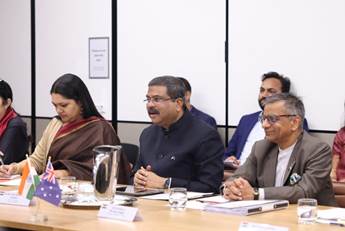
Union Minister for Education, Shri Dharmendra Pradhan, attended the 2nd Australia-India Education and Skills Council (AIESC) meeting in Sydney, Australia today alongside Minister for Education, Government of Australia, Mr. Jason Clare MP and Minister for Skills and Training, Government of Australia, Mr. Andrew Giles MP.
Addressing the event, Shri Pradhan emphasized that the AIESC meeting has become a crucial platform for strengthening knowledge bridges, advancing shared priorities in education and skills development, breaking new ground, and envisioning a brighter future for Australia and India.
Shri Dharmendra Pradhan said that education and skills will be the driving force for building economic prosperity for India and Australia and also forging lasting connections between our people and institutions.
The Ministers held discussions focused on forecasting future workforce, education needs, bridging skill gaps through education and training, and strengthening research collaboration between the two countries’ higher education institutions. He hoped that AIESC would further strengthen the bilateral partnership between Australia and India at all levels of education: school, skills and higher education. He also informed that the next AIESC meeting will be in India in 2025.
Earlier in the day Shri Pradhan interacted with high level administrators from Innovative Research Universities (IRU) – a coalition of Universities in Australia, where he engaged in enriching discussions with its members. During his visit, he learned about their collaborative approaches to education delivery and efforts to facilitate impactful research for society. The Minister also explored the scope for potential collaborations between the IRU and Indian higher education institutions to advance the education agenda. The IRU is a group of Australian universities committed to inclusive excellence in education and research that advances the communities.
In a significant move to enhance bilateral cooperation in the education sector, Shri Pradhan is visiting Australia from 22 to 26 October 2024. The visit is expected to foster collaboration, participation, and synergy in critical areas of mutual interest in education. Earlier this week from 20-21 October, Shri Pradhan visited Singapore and met the Prime Minister, Deputy Prime Minister, Education Minister and other dignitaries to expand bilateral cooperation in skill-based education and research.
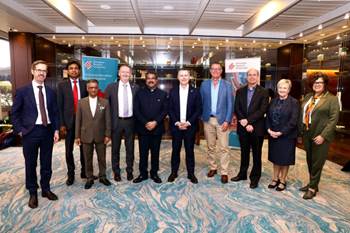
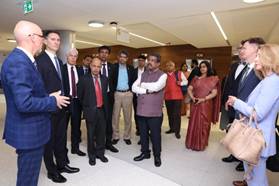
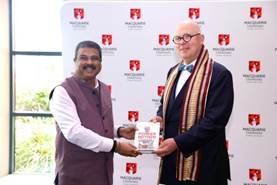
Union Minister for Education, Shri Dharmendra Pradhan, visited the Macquarie Park Innovation District at Macquarie University, Sydney, Australia. He was received by the Vice-Chancellor and President of the University Prof. S. Bruce Dowton and other officials.
Shri Pradhan explored how the University supports researchers and entrepreneurs in developing and scaling their ideas. He appreciated the University’s unique approach to collaborating with industry experts and communities to create a holistic learning experience. The Minister also noted that the University has been partnering with Indian educational institutions and industries. He emphasized that strong industry-academia links like these are crucial for driving innovation and preparing students for success.
Later in the day, Shri Pradhan interacted with Indian students studying across Australia in an event held by the Group of Eight. He noted that they are working on cutting-edge research in robotics, chemicals, astrophysics, superconductivity, AI in manufacturing, healthcare, med-tech, climate change, water management and urban planning. He highlighted that research collaboration is the bedrock of collaboration between Australia and India and said that the insightful interaction has given him several points to ponder and has also convinced him that broader and deeper research collaboration is required between both countries. He appreciated and encouraged all the Indian students in Australia to contribute passionately to the future of Australia and India.
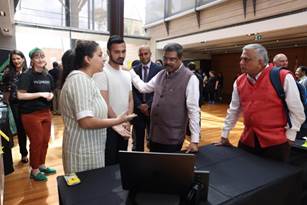
Shri Pradhan visited the campus of University of New South Wales (UNSW). He congratulated UNSW on completing 75 years and noted that Indian students have been in UNSW since its third year of inception. Shri Pradhan also interacted with start-ups incubated by various schools of the UNSW. He explored their products and services and appreciated their spirit and passion for innovation and change. He encouraged the start-ups to tailor their solutions to Indian society and the market. He also interacted with Indian students in UNSW.
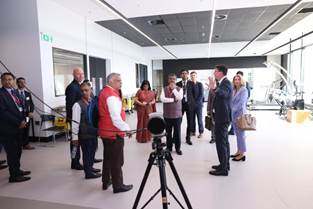
The Minister visited UTS Moore Park, a sporting precinct housed at the University of Technology, Sydney. He noted that this is first-of-its-kind in Australia where university programs in sports are integrated within elite sporting facilities, providing a fertile base for a holistic learning experience in sports management, sports research, and allied health. He also discussed potential partnerships between UTS and Indian higher education institutions to deliver cutting-edge sports management and research programs.
In a significant move to enhance bilateral cooperation in the education sector, Shri Pradhan is visiting Australia from 22nd to 26th October 2024. The visit is expected to foster collaboration, participation, and synergy in critical areas of mutual interest in education. Earlier this week from 20-21 October, Shri Pradhan visited Singapore and met the Prime Minister, Deputy Prime Minister, Education Minister and other dignitaries to expand bilateral cooperation in skill-based education and research.
Shri Sanjay Kumar, Secretary, Department of School Education & Literacy (DoSEL), Ministry of Education, inaugurated a series of initiatives implemented by the Department under Special Campaign 4.0 on 28.10.2024 including a revamped garden space at Shastri Bhavan. These initiatives include the installation of eco-friendly recycled plastic benches and rejuvenation of the garden area, adornment of walls with paintings etc. undertaken in collaboration with Bisleri International under its CSR Programme.
The garden area at Shastri Bhavan, New Delhi now dons a completely revamped, green and pleasant look. The entire garden patch has been uplifted by putting grass cover, placement of lights with covers made from recycled plastic, repairing and painting of tree guards and setting up of circular sitting areas around trees carved from recycled plastic.
During the event, Shri Sanjay Kumar also explored new initiatives within the building where the traditional furniture in the common sitting areas for visitors has been replaced with sustainable benches and tables crafted from recycled plastic. These benches not only providing good utility but also catching the attention of one and all with serene colour and striking message which reads, ‘Bench made from recycled plastic’. These benches also feature paintings by Mouth and Foot Painting Artists (MFPA). Further enhancing the eco-friendly environment, rows of potted plants have been placed throughout corridors and common areas. It is intended that these natural additions, purify the air and provide a calming ambience at the workplace.
The occasion also witnessed the unveiling of vibrant corridors adorned with paintings by MFPA. The paintings not only enhance the ambience but also add a spirit of inclusivity.
At the Ministry’s Conference hall, beautiful artwork has been placed showcasing the Indian Institute of Science and Banaras Hindu University skilfully painted by artists from National Bal Bhavan. The conference hall also has exhibits of vibrant photographs capturing the spirit of school education from schools across the country. These inspiring images embody the Department’s mission to make quality education accessible to every child.
Aligned with the goals of Special Campaign 4.0, these initiatives highlight the importance of cleanliness, waste reduction and recycling while serving as an educational tool to promote environmental responsibility.
DoSEL is also proud to share the remarkable success of Special Campaign 4.0. So, far 32,037 cleanliness campaigns have been conducted by schools and institutions nationwide. The enthusiastic participation of these institutions is setting a strong example, furthering the message of Swachhata and inspiring others to take action.
As of 29.10.2024, the following milestones have been achieved:
Imparting of environmentally friendly practices to students, following the 3 R formula: Reduce, Reuse, and Recycle. Students are also taught to create arts and craft from waste materials and design functional pieces from salvaged items.
1,44,338 sq. feet of space has been freed up and put to productive alternative use.
Out of 61,100 physical files identified for review, all have been examined. So far, 40,106 files have been marked for weeding, with 38,997 already weeded out.
The enthusiastic participation of institutions and schools in Special Campaign 4.0 is significantly contributing to the promotion of Swachhata and environmental sustainability.
The last date for submission of applications by the selected meritorious students on the National Scholarship Portal (NSP) for the National Means-cum-Merit Scholarship Scheme (NMMSS) for the year 2024-25 has been extended up to 15.11.2024. The NSP portal is open for submission of applications by students with effect from 30th June 2024. In this project year 2024-25, the selected students are first to do a One-Time Registration (OTR) on the NSP, after which they have to apply for the scholarship scheme that they have selected. The FAQ details for registration on NSP can be accessed at https://scholarships.gov.in/studentFAQs.
Through the ‘National Means-cum-Merit Scholarship Scheme’ implemented by the Department of School Education & Literacy, scholarships are awarded to meritorious students from economically weaker sections to arrest their drop-out after elementary level, i.e., Class VIII and encourage them to complete their school education up to higher secondary level, i.e., Class XII.
The scheme provides one lakh fresh scholarships every year for Class IX students who clear the qualifying exam for the scholarship conducted by the State/UT governments. The scholarship is continued through renewal mode from Classes X to XII based on the student’s academic performance. The scheme is applicable only to students studying in State Government, Government-aided, and local body schools and the scholarship amount is Rs. 12000 per annum per student.
The National Means-cum-Merit Scholarship Scheme (NMMSS) is implemented through the National Scholarship Portal (NSP) – the one-stop platform for scholarship schemes disbursed to students by the Government of India. As of 01.11.2024, 86323 fresh and 162175 renewal applications have been finally submitted by applicants. NMMSS scholarships are disbursed directly into the bank accounts of selected students by electronic transfer through the Public Financial Management System (PFMS) following DBT mode. The eligibility parameters for availing the scholarship include parental income not more than Rs. 3.50 lakh per annum and a minimum of 55% marks or equivalent grade in the Class VII examination for appearing in the selection test for award of scholarship (relaxable by 5% for SC/ST students).
On the NSP portal, there are two levels of verification of the scholarship application of selected students: Level-1 (L1) verification is at the Institute Nodal Officer (INO) and Level-2 (L2) is with the District Nodal Officer (DNO). The last date for INO level (L1) verification is 30.11.2024 and for DNO level (L2) verification is 15.12.2024.
Union Minister for Education, Shri Dharmendra Pradhan, lauded the Union Cabinet’s approval of the PM Vidyalaxmi scheme, a significant initiative to provide financial support to meritorious students under the Central Sector.
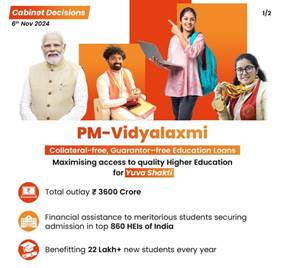
Expressing his gratitude to Prime Minister Shri Narendra Modi, Shri Pradhan said that the scheme will help universalise access to 21st-century higher education for India’s talented youth. He also mentioned that with an outlay of ₹3,600 crore, the scheme will remove obstacles to higher education and enable the yuva shakti of the country to pursue their dreams. Collateral-free and guarantor-free education loans under PM Vidyalaxmi will maximise access to higher education for meritorious students and ensure that financial constraints do not prevent students from pursuing education, he highlighted.
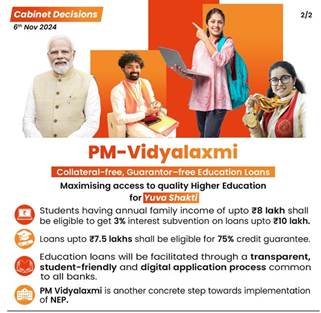
Shri Pradhan mentioned that students having annual family income of up to ₹8 lakh shall be eligible to get 3% interest subvention on education loans up to ₹10 lakh and loans up to ₹7.5 lakhs shall be eligible for 75% credit guarantee. Education loans will be facilitated through a transparent, student-friendly and digital application process that will be common to all banks, he mentioned.
He said that education loans under PM Vidyalaxmi will be facilitated to students securing admissions in the top 860 HEIs of the country based on NIRF. This will cover more than 22 lakh students every year.
The Minister also said that financial assistance to meritorious students is a key recommendation of NEP 2020 and PM Vidyalaxmi is another concrete step towards implementation of NEP. PM Vidyalaxmi will empower millions of students from the poor and middle class, he said.
The Union Cabinet, chaired by Prime Minister Shri Narendra Modi, has approved the PM Vidyalaxmi scheme, a new initiative under the Central Sector aimed at providing financial support to meritorious students, ensuring that financial constraints do not hinder access to higher education. This scheme is a significant step in realizing the vision outlined in the National Education Policy (NEP) 2020, which emphasises the need for financial assistance to be made available to deserving students through various mechanisms in both public and private higher education institutions (HEIs).
The Union Cabinet, chaired by Prime Minister Shri Narendra Modi, has approved PM Vidyalaxmi, a new Central Sector scheme that seeks to provide financial support to meritorious students so that financial constraints do not prevent anyone from pursuing higher studies. PM Vidyalaxmi is another key initiative stemming out of the National Education Policy, 2020, which had recommended that financial assistance should be made available to meritorious students through various measures in both public and private HEIs. Under the PM Vidyalaxmi scheme, any student who gets admission in quality Higher Education Institution (QHEIs) will be eligible to get collateral free, guarantor free loan from banks and financial institutions to cover full amount of tuition fees and other expenses related to the course. The scheme will be administered through a simple, transparent and student-friendly system that will be inter-operable and entirely digital.
The scheme will be applicable to the top quality higher educational institutions of the nation, as determined by the NIRF rankings – including all HEIs, government and private, that are ranked within the top 100 in NIRF in overall, category-specific and domain specific rankings; state government HEIs ranked in 101-200 in NIRF and all central government governed institutions. This list will be updated every year using the latest NIRF ranking, and to begin starts with 860 qualifying QHEIs, covering more than 22 lakh students to be able to potentially avail benefits of PM-Vidyalaxmi; if they so desire.
For loan amount up to ₹ 7.5 lakhs, the student will also be eligible for a credit guarantee of 75% of outstanding default. This will give support to banks in making education loans available to students under the scheme.
In addition to the above, for students having an annual family income of up to ₹ 8 lakhs, and not eligible for benefits under any other government scholarship or interest subvention schemes, 3 percent interest subvention for loan up to ₹ 10 lakhs will also be provided during moratorium period. The interest subvention support will be given to one lakh students every year. Preference will be given to students who are from government institutions and have opted for technical/ professional courses. An outlay of ₹ 3,600 Crore has been made during 2024-25 to 2030-31, and 7 lakh fresh students are expected to get the benefit of this interest subvention during the period.
The Department of Higher Education will have a unified portal “PM-Vidyalaxmi” on which students will be able to apply for the education loan as well as interest subvention, through a simplified application process to be used by all banks. Payment of interest subvention will be made through E-voucher and Central Bank Digital Currency (CBDC) wallets.
PM Vidyalaxmi will build on and further enhance the scope and reach of the range of initiatives undertaken by the Government of India over the past decade in the domains of education and financial inclusion, for maximizing access to quality higher education for the youth of India. This will supplement the Central Sector Interest Subsidy (CSIS) and Credit Guarantee Fund Scheme for Education Loans (CGFSEL), the two component schemes of PM-USP, being implemented bythe Department of Higher Education. Under the PM-USP CSIS, students with annual family income up to ₹ 4.5 lakhs and pursuing technical/ professional courses from approved institutions get full interest subvention during moratorium period for education loans up to ₹ 10 lakhs. Thus, PM Vidyalaxmi and PM-USP will together provide holistic support to all deserving students to pursue higher education in quality HEIs and technical/ professional education in approved HEIs.
The Department of School Education & Literacy, Ministry of Education, is proud to announce the successful completion of Special Campaign 4.0, with active participation from all Autonomous Bodies and schools across the country. Inspired by Prime Minister Shri Narendra Modi’s vision to improve workplace efficiency and institutionalize cleanliness (Swachhata), the campaign focused on key objectives such as disposal of public grievances and public grievances appeals, reducing pendency, record management and promoting the optimum utilization and beautification of office spaces.
Launched on 2nd October , 2024 the campaign has led to significant, focused improvements, contributing to a cleaner, more organized, and efficient work environment. This initiative has not only enhanced the physical spaces but also fostered a culture of sustainability and responsibility towards the environment across institutions and schools nationwide.
In addition to the on-ground efforts, extensive awareness campaigns were carried out through social media platforms under the hashtag #SpecialCampaign4. These campaigns successfully garnered widespread attention and encouraged greater public engagement, furthering the message of cleanliness and organizational efficiency. Through these combined efforts, the campaign has left a lasting impact on both the work environment and the overall experience for staff members.
Key achievements during Special Campaign 4.0:
A total of 2,90,845 cleanliness drives were organized by institutions and schools across the country, demonstrating enthusiastic participation that reinforces the message of Swachhata and encourages others to join in the mission.
Over 1,44,000 square feet of space was cleared, generating more than Rs. 40 lakhs in revenue as a join effort by the Department and its Autonomous Bodies.
During this period, 887 out of 904 Public Grievances (98.11%), 253 out of 273 MP References (92.7%), 30 out of 33 State Government References (91%), 3 out of 4 PMO References (75%), and 5 out of 6 Parliament Assurances (83.3%) were disposed of.
A comprehensive Records Management initiative was undertaken, fully meeting the target. A total of 61,100 physical files and 1,367 e-Files were reviewed i.e. 100% of the target. The review exercise resulted in the weeding out of 40,244 physical files and the closure of 893 e-Files.
One of the best practices under Special Campaign 4.0 is the sustainability initiatives to foster awareness of environment related issues as well as environment friendly behaviour. These initiatives include the installation of eco-friendly benches made of recycled plastic and rejuvenation of the garden area at Gate No. 6 of Shastri Bhavan, New Delhi. The corridors have been adorned with paintings by Mouth and Foot Painting Artists etc. in collaboration with Bisleri International under its CSR Programme.
Students have been educated on environmentally friendly habits aligned with the “3R” formula: Reduce, Reuse, and Recycle in schools across the nation under Eco Clubs for Mission LiFE. They also learned to create art and craft from waste materials and design practical items from repurposed materials.
The achievements of Special Campaign 4.0 at the Department of School Education & Literacy (DoSE&L) highlight its dedication to establishing an efficient, well-organized, cleaner, and supportive workplace for employees. DoSE&L is steadfast in its goal to deliver effective public service and create positive community impact.
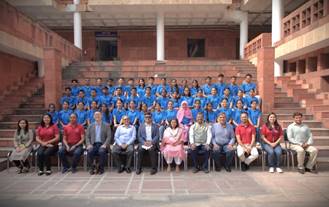
Shri Sanjay Kumar, Secretary, (DoSEL), Ministry of Education, flagged off a group of 47 enthusiastic and excited school children, who have been invited to participate in Sakura Programme 2024 from India along with 5 countries (Indonesia, Marshall Islands, Micronesia, Palau and Peru) from 10th-16th November 2024. The ceremony at CIET-NCERT, New Delhi, was organised by DoSEL and was attended by Prof. Dinesh Prasad Saklani, Director, NCERT; Smt. Archana Sharma Awasthi, Joint Secretary, DoSEL; Mr. Kemmochi Yukio, Manager, Japan Science and Technology Agency, Japan; Dr. Amarendra Prasad Behera, Joint Director, CIET-NCERT; and officials from DoSEL.
In this group, Japan Science and Technology Agency (JST) has invited 47 school students and 4 supervisors. These 47 students (18 boys and 29 girls) are from Kasturba Gandhi Balika Vidyalaya and Government Schools of Telangana, Jharkhand, Sikkim, Chandigarh, Kerala, Manipur, Meghalaya, Haryana, Arunachal Pradesh, Jammu & Kashmir, Uttar Pradesh and Maharashtra and Kendriya Vidyalayas.
To develop the intellectual horizon and scientific exploration among young learners, the JST has been implementing the “Japan-Asia Youth Exchange Program in Science” also known as the “Sakura Science Programme” since 2014. India was added to the Sakura Program in 2015. The students are invited under the programme for short-term visits to Japan, giving them the opportunity to experience Japan’s cutting-edge science and technology as well as its culture.
The National Education Policy (NEP) 2020, while emphasizing the importance of curriculum and pedagogy in schools, endorses that “Learning should be Holistic, Integrated, Enjoyable and Engaging in itself. Also, NEP-2020 states that in all stages, experiential learning will be adopted as standard pedagogy within each subject and with explorations of relations among different subjects. It is in this context that educational trips and excursions to various places of importance in terms of historical, cultural, social and technological development are of paramount importance. Japan, as a developed nation, a friendly country, along with technological advancements, is also a favourite destination for educational exposure. Therefore, visiting a country like Japan is always enriching and provides an opportunity to explore innovative practices.
India participated in the program for the first time in April 2016. So far, 572 students along with 87 supervisors have visited Japan under this programme. The last batch visited Japan in October 2024.
The QS World University Rankings: Asia 2025 reflect the dynamic landscape of higher education across the continent, spotlighting the top institutions excelling in academic and research excellence, innovation, and internationalization. This year’s rankings emphasize the growing competition among Asian universities and showcase the region’s commitment to advancing global educational standards.
This edition highlights India’s impressive upward trajectory in higher education across the continent. India boasts two institutions within the top 50 and seven in the top 100 of the QS Asia Rankings 2025, with the Indian Institute of Technology Delhi (IITD) leading at 44th place. The University of Petroleum and Energy Studies (UPES) achieved the most significant improvement among Indian institutions, climbing 70 spots to 148th, driven by notable advancements in nine of the 11 ranking metrics, especially in International Research Network, Citations per Paper, and Papers per Faculty. India’s strongest average indicator scores are in Papers per Faculty and Staff with PhD.
Key Insights from QS World University Ranking: Asia 2025
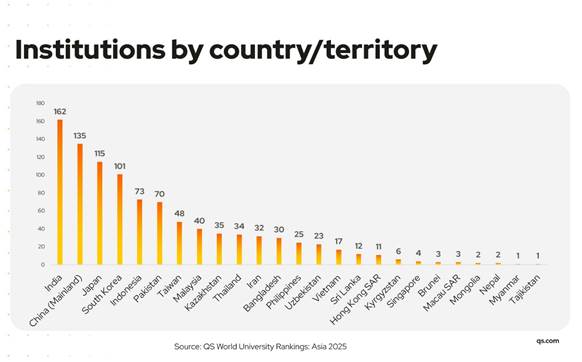
This ranking assesses 984 institutions covering 25 countries in Eastern, Southern, South-Eastern and Central Asia. The QS World University Rankings: Asia 2025 allows institutions and students to make direct comparisons on institutional performance within their region, with a more granular approach to metrics. Ranng
India stands out with the highest number of institutes in the latest rankings, showcasing a diverse array of both emerging and well-established universities.
The country dominates the top ten universities in Southern Asia, with seven institutions making the list.
Top 50: India features two institutions — IIT Delhi (44th) and IIT Bombay (48th).
Top 100: Five institutions, including IIT Madras (56), IIT Kharagpur (60), Indian Institute of Science (62), IIT Kanpur (67), and University of Delhi (81), showcase India’s robust academic standing.
Top 150: Institutions such as IIT Guwahati, IIT Roorkee, Jawaharlal Nehru University, Chandigarh University (120), UPES (148), and Vellore Institute of Technology (150) highlight the depth of quality education.
Indian Institute of Technology Delhi (IITD) has achieved the highest ranking for India, moving up to 44th place from 46th last year, with an impressive employer reputation score of 99%.
Indian Institute of Technology Bombay (IITB) follows closely at 48th and boasts an employer reputation score of 99.5% and an academic reputation score of 96.6%.
The University of Delhi has improved its ranking, moving up from 94th to 81st, achieving a high score of 96.4% in the International Research Network.
Anna University achieved a perfect score of 100 in the Papers Per Faculty indicator, emphasizing high research output.
15 universities scored above 99% in the staff with PhD indicator, underscoring the high standard of education and teaching.
North Eastern Hill University and University of Agricultural Sciences, Bangalore attained a perfect score of 100 in faculty-student indicator, demonstrating top-tier academic credibility.
The Indian education sector has made impressive strides, both globally and within Asia, as evidenced by the QS World University Rankings 2025. India earlier saw the inclusion of 46 institutions in the 2025 edition compared to just 11 in 2015 edition showcasing a 318 per cent increase in last 10 years among G20 nations. This growth underscores India’s commitment to fostering academic excellence and enhancing global competitiveness. India’s educational landscape shines as a model of growth and resilience at Asia level also with two institutions in the top 50 and seven in the top 100 in Southern Asia region. Led by the Indian Institute of Technology Delhi (IITD), ranked 44th, India showcases strengths in key areas such as “Papers per Faculty” and “Staff with PhD,” underlining its dedication to quality education and impactful research. This achievement emphasizes India’s ability to balance research productivity with high-caliber teaching, establishing it as a formidable competitor among global education powerhouses and solidifying its reputation as an emerging hub for higher learning in Asia.
For more detailed information on the QS World University Rankings, please visit:
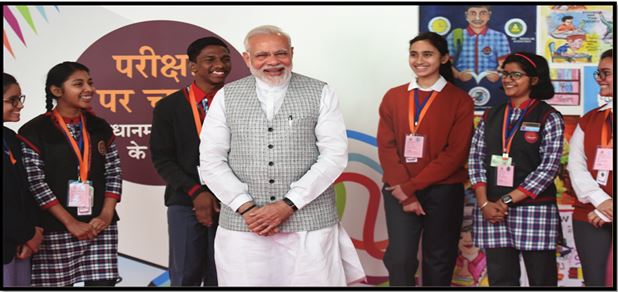
National Education Day is celebrated on November 11 every year in honor of Maulana Abul Kalam Azad, the first Education Minister of independent India and a prominent educationist. This day highlights the importance of education in shaping India’s future. With 65% of the nation’s population under the age of 35, it is crucial to provide them with opportunities for quality education and skills development. The Government of India is dedicated to building strong education infrastructure that fosters the holistic development of students and empowers the youth to drive the nation towards progress.
Transforming India through Education
The Government of India has taken significant strides to promote access to education through various initiatives and constitutional provisions. The introduction of free primary education, reinforced by the 86th Amendment of the Constitution through Article 21-A, guarantees free and compulsory education for children aged six to fourteen as a Fundamental Right. The Rights to Education (RTE) Act, 2009, which came into effect on April 1, 2010, further supports this by ensuring that every child receives quality elementary education in a formal school that meets prescribed norms. These legal frameworks, backed by government schemes and initiatives, reflect India’s commitment to building an inclusive and equitable educational system for all.
NEP 2020: Under the dynamic leadership of Prime Minister Narendra Modi, the Union Cabinet of India approved the National Education Policy (NEP) 2020 on July 29, 2020. The NEP seeks to overhaul India’s education system to better align with the needs of the 21st century, fostering a more inclusive and forward-thinking approach.[3]
PM SHRI: Prime Minister Shri Narendra Modi approved the PM SHRI Schools (PM Schools for Rising India) scheme on 7th September 2022. The initiative aims to strengthen over 14,500 schools across India, showcasing the components of the National Education Policy 2020. The scheme will foster quality education, cognitive development, and 21st-century skills in students. With a total project cost of ₹27,360 crore, it will be implemented over five years (2022-2027), with a central share of ₹18,128 crore.[4]
Samagra Shiksha: Aligned with the NEP 2020 recommendations, Samagra Shiksha aims to provide quality education with an inclusive and equitable classroom environment for all children, addressing their diverse backgrounds and needs. The scheme, launched on April 1, 2021, will continue for five years, ending on March 31, 2026. It focuses on fostering active participation and enhancing academic abilities across various student groups.[5]
PRERNA: Launched its pilot phase from January 15, 2024, to February 17, 2024, at a vernacular school in Vadnagar, Gujarat. The initiative is a week-long residential program designed for selected students from class IX to XII. It aims to offer an experiential and inspirational learning experience, blending heritage with innovation through state-of-the-art technology. Each week, a batch of 20 students (10 boys and 10 girls) from across the country will participate in the program.[6]
ULLAS: Also known as Nav Bharat Saaksharta Karyakram (New India Literacy Programme – NILP), ULLAS was launched by the Government of India for the period FY 2022-2027. This centrally sponsored initiative aligns with the National Education Policy (NEP) 2020 and aims to empower adults aged 15 and above, especially those who missed out on formal schooling. The program seeks to enhance their literacy, enabling them to better integrate into society and actively contribute to the nation’s development.[7]
NIPUN Bharat: The National Initiative for Proficiency in Reading with Understanding and Numeracy (NIPUN Bharat) was launched by the Department of School Education & Literacy on 5th July 2021. The mission aims to ensure that every child in the country achieves foundational literacy and numeracy by the end of Grade 3, with a target completion by 2026-27.[8]
Vidya Pravesh: The VIDYA PRAVESH guidelines for the Three-month Play-based School Preparation Module for Grade-I children were released on 29th July 2021. The initiative aims to provide a warm and welcoming environment for children entering Grade-I, ensuring a smooth transition and fostering a positive learning experience.[9]
Vidyanjali: The School Volunteer Management Program, launched by Prime Minister Shri Narendra Modi on 7th September 2021, aims to enhance the quality of education in schools by fostering community involvement, and encouraging contributions from corporate social responsibility (CSR) initiatives and the private sector across the country.[10]
DIKSHA: It was launched on 5th September 2017 by Hon’ble Vice President of India, Shri M. Venkaiah Naidu. The platform aims to enhance teacher training and professional development by accelerating innovative solutions and experiments in education. DIKSHA empowers states and Teacher Education Institutes (TEIs) with the flexibility to customize the platform to meet their specific needs, benefiting teachers, teacher educators, and student teachers across the country.[11]
SWAYAM Plus: SWAYAM Plus, which was officially launched on 27th February 2024 by Shri Dharmendra Pradhan, Hon’ble Minister of Education. The initiative seeks to revolutionize higher education and improve employability by implementing an innovative credit recognition system for industry-relevant courses, emphasizing skill development, employability, and forging stronger industry partnerships.[12]
NISHTHA: The NISHTHA (National Initiative for School Heads’ and Teachers’ Holistic Advancement), launched by the Ministry of Education on 21st August 2019, aims to enhance the professional development of 42 lakh elementary teachers and school heads. In response to the COVID-19 pandemic, the program was transitioned to NISHTHA-Online on 6th October 2020, delivered through the DIKSHA platform. Building on this success, in 2021-22, NISHTHA 2.0 was launched for secondary school teachers, while NISHTHA 3.0, focusing on Foundational Literacy and Numeracy, was introduced on 7th September 2021.[13]
NIRF Ranking: The National Institutional Ranking Framework (NIRF), launched by the Ministry of Education on 29th September 2015, marked a pivotal step toward enhancing the quality and accessibility of higher education in India. NIRF introduced a structured and transparent system for assessing and ranking universities, colleges, and other institutions, fostering healthy competition and encouraging improvements in education and infrastructure.[14]
PM-Vidyalaxmi scheme: The Union Cabinet, led by Hon’ble PM Shri Narendra Modi, has approved the PM-Vidyalaxmi scheme to support meritorious students by providing financial assistance for quality higher education. This scheme offers education loans for students admitted to the top 860 institutions across India, benefiting over 22 lakh students each year. With a budget allocation of Rs. 3,600 crore from 2024-25 to 2030-31, the scheme aims to assist an additional 7 lakh students. Implemented through a fully digital, transparent, and student-centric platform, PM-Vidyalaxmi ensures easy access and smooth interoperability for students nationwide.[15]
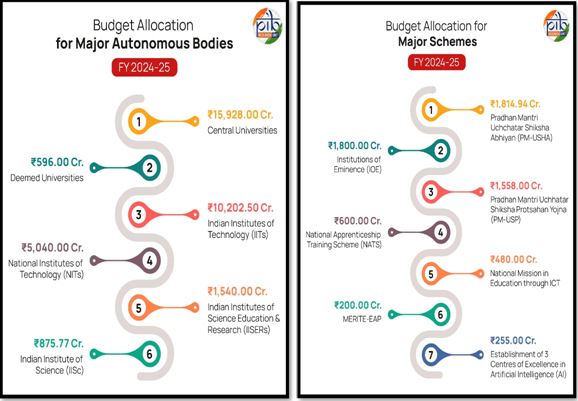
India’s path to global leadership is closely linked to the strength of its education system. To expand access to quality education and build a resilient learning environment, the Department of School Education & Literacy has been allocated a record ₹73,498 crore in the FY 2024-25 budget. This represents a substantial increase of ₹12,024 crore (19.56%) over the Revised Estimate for FY 2023-24, highlighting the government’s commitment to bolstering the education sector.
Notably, the highest-ever allocations have been made to key autonomous bodies, with ₹ 9,302 crore allocated to Kendriya Vidyalayas (KVS) and ₹ 5,800 crore to Navodaya Vidyalayas (NVS). This substantial investment reflects a clear intent to further elevate India’s education system.
For FY 2024-25, the Department of Higher Education’s budget allocation is set at Rs. 47,619.77 crore, with Rs. 7,487.87 crore dedicated to schemes and Rs. 40,131.90 crore for non-scheme expenses. This reflects a significant increase of Rs. 3,525.15 crore, or 7.99%, over the previous fiscal year. Notably, the allocation for specific schemes has risen by Rs. 1,139.99 crore, underscoring a strengthened focus on targeted initiatives within higher education.
Increase in Enrolment in Higher Education Institutions: AISHE Report 2021-22[17]
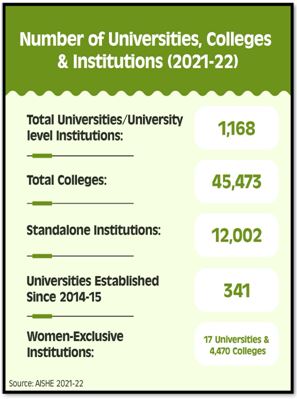
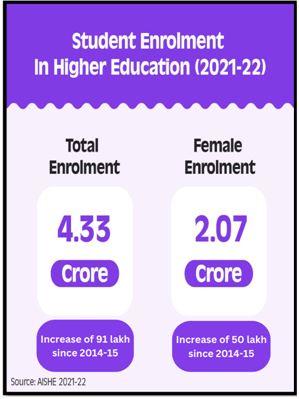
The Ministry of Education, Government of India, released the All India Survey on Higher Education (AISHE) 2021-2022 in January 2024. Since its inception in 2011, AISHE has been collecting comprehensive data from all registered Higher Educational Institutions (HEIs) across the country, covering key parameters such as student enrolment, faculty, and infrastructure. The survey highlights significant improvements over the years, reflecting the positive advancements in India’s education sector, with increased enrolment, enhanced inclusivity, and stronger infrastructure, contributing to a more robust and dynamic higher education system.
Female enrolment has also shown remarkable growth, rising from 1.57 crore in 2014-15 to 2.07 crore in 2021-22, an increase of 32%. The enrolment of students from disadvantaged groups, including SC, ST, OBC, and minorities, has grown significantly, with notable increases in female enrolment across all categories. In 2021-22, the Gender Parity Index (GPI) reached 1.01, reflecting a consistent trend of more female students enroling in higher education than males.
In terms of fields of study, enrolment in STEM disciplines has seen a steady rise, with 98.5 lakh students enroled in UG, PG, and Ph.D. levels in 2021-22. Despite challenges, women are leading in disciplines such as Medical Science, Social Science, and Arts. The dropout rate at the secondary level has also decreased significantly from 21% in 2013-14 to 13% in 2021-22.
In FY 2024-25, the Department of Higher Education saw a budget increase of ₹3,525.15 crore (7.99%) compared to FY 2023-24, underlining the government’s commitment to further strengthening the higher education sector and supporting inclusive growth.
Conclusion
Education holds the power to break barriers, open doors of opportunity, and empower individuals to contribute meaningfully to society. India’s educational landscape has evolved significantly, building a robust system through continuous innovation and comprehensive reforms. By embracing a holistic, 360-degree approach that integrates new ideas, technologies, and teaching methods, India is creating an environment where youth can thrive, transforming them into key assets for the nation’s growth. As we honor the legacy of Maulana Abul Kalam Azad, let us reaffirm our commitment to education as the cornerstone of a brighter, more inclusive future for all.




 Eduindex
You must be logged in to post a comment.