Food Waste – The Social , Economical and Environmental Issue

Do you know that more than 40% of food produced in India is wasted ?

Inspite of adequate food production , India’s ranking is 103 in global hunger index. According to UN approximately 190 million Indians remain undernourished. Estimated value of food wastage in India is ₹ 92,000 crore per annum.

Why the data seems so much scarious ? Do you know how much you contribute to this wastage of food ?

Well , next time if you go to a wedding , or a party , or function , just observe everyone around you , you yourself”ll get the answers of these questions. Just observe people in restaurants or observe everyone in your house.

And if you want to see the dark side of India , then just move out of your house , & observe people around the bins. There’re a lot who just eat food from the dustbins. Can you just imagine about them ?

For some it’s waste , for some a day’s Meal

There’s a lot of leftover but edible food which can be provided to those who need this. Many NGOs work in this direction. They collect the leftover edible food from restaurants , households , weddings & from other sources & provide them to the needy.

It’s not always like that , one can also leave some food in their plates when it’s simply not edible or when she/he isn’t feeling good.

And this leftover food from your plates then go to dustbins & then it decompose in landfills. This leads to the emission of green house gases like CO2 & CH4 .

The impacts of food waste on the global scale are huge. According to the World Resources Institute, if food waste was a country, it would be the world’s third largest carbon emitter after the USA and China.

Food waste rotting in landfills produce millions of tonnes of methane in CO2 equivalents , a measure that directly compares the global warming potential of pollutants.

But do you know that wasted food can be used effectively ?

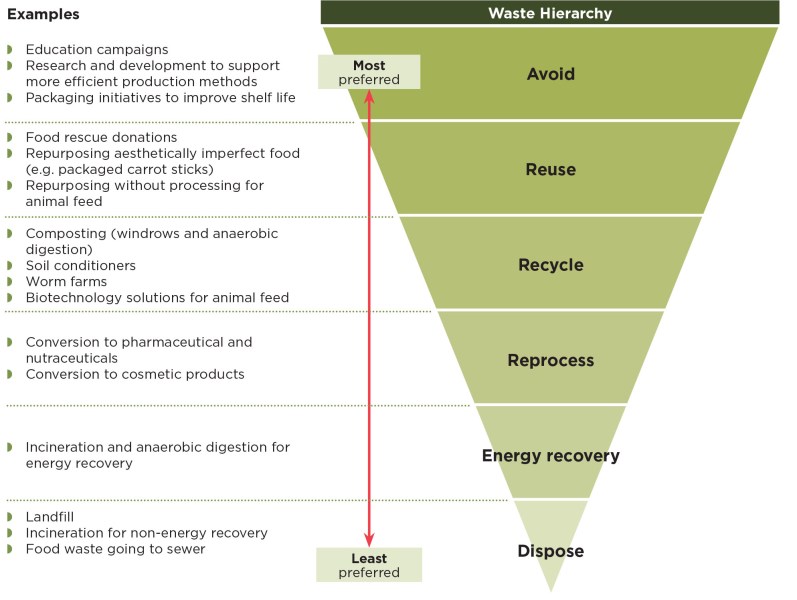
Yes , food waste can be transformed into valuable resources. It can be used as fertilizer , can be transformed into energy , & can be transformed into a bunch of innovative products , from pharmaceuticals to building materials.

Food waste can be recycled to produce nutrient rich fertilisers. Household composting recycles food waste in an environment where lot of oxygen is available. Fungi and bacteria break down the proteins, fats and carbohydrates in the waste into compost and CO2. The CO2 released from the breakdown of organic materials returns to the atmosphere , which is then captured by the plants. So it’s a carbon-neutral process.

Food waste can generate sustainable energy through waste-to-energy processes , where organic waste is used to generate electricity or heat. It is categorised as renewable energy. Various technologies are available to generate such energy ,although they do produce greenhouse gases like CO2, methane and nitrous oxide, so measures should be taken to reduce these emissions.

Extractions from the food waste can be used in production of biofuels like biodiesel & bioethanol.

Fruits and vegetables have the highest wastage rates of any food products. The Food and Agriculture Organization of the United Nations  estimates that globally, 45 per cent of fruits and vegetables are wasted along the supply chain. But these scrapped by-products can be reprocessed into functional and valuable products.

There are researches investigating how mango seeds could be used to make surfboard wax & fibres in root vegetables could be used in super strong concrete. Rice husks have variety of applications , such as cement, insulators, adsorbents and various construction material.They can also be ground with glass to create lightweight bricks that are resistant to fire and termites.

Discarded parts of fruits & vegetables are often rich in bioactive phytochemicals. These extracts can be used in pharmaceuticals , dietary supplements & food preservatives. Extracts & oils derived from food waste also be used in cosmetics.

The essential chemicals needed to create bioplastics include various carbs, fats and cellulose fibre that can be extracted from food waste using methods like freeze drying and hydrodynamic shockwave technology. Bioplastics ,are plastics produced from renewable sources and can be used for packaging, coatings and adhesives.Turning food waste into bioplastics can reduce food and plastic waste. It could also minimize the emissions associated with plastic production.

There’s need to reliase that this waste is not only causing social & economical problem but is also a cause of green house gases emissions, & thus is a harm for the environment.

Obviously , we should think of alternate ways to transform the waste into resource but our first priority should be to minimize the waste.

Avoid wastage of food. Provide the leftover edible food to those who need this instead of throwing this out. Use the leftover food as fertilizer

Love & Food are meant for sharing not for wasting
🙂 Don’t waste Food 🙂

Social media and Eating Disorders- does it have a connection?

Eating disorder describes conditions in which individuals engage in disordered eating. Eating disorders are not simply poor eating habits but are recognized mental health disorders in which emotional issues manifest in harmful eating habits. Eating problems in childhood and adolescence are very common.

It usually starts to be a problem in teenage years. It is not known for certain what causes them, but many factors could play a part such as Social pressure, particularly caused by the social media idealizing being thin, losing weight can make us feel good and in control, others include puberty, family problems, trauma, bullying, depression and low self-esteem.

The messages people get from society about how they should look, how much they should weigh especially western culture (particularly, the social media) promotes extreme thinness as the epitome of body perfection, success and happiness. Bullying others when they fail to be perfect since bullying others over the internet is easier due to anonymity so people do it without feeling guilty without worrying about the consequences. This leads people to become dissatisfied with their own bodies, their self-esteem suffers and they turn to dieting as they feel the pressure to be thin.

Our generation has become so obsessed with taking picture perfect selfies, having the perfect body and weight just like they see on the internet and thinking a person can only be happy if they have large number of followers and likes on social media that they fail to realize that social media only shows the good side of a person’s life and nobody knows what goes on the inside.

A lot of effort goes into becoming like those people or what we call “influencers” and not everything we see or hear on the internet is the truth and as the saying goes “comparison kills the joy” we see them and get disappointed with what we have when we compare ourselves to them. A lot of people start taking shortcuts just achieve those unrealistic goals like excessive dieting or starving and in turn ruining their overall health. Sometimes it leads into developing an eating disorder.

Eating disorders can develop from the desperation to live up to unrealistic cultural expectations, strained relationships within the family, other pressures arising from school or in the work place. Some people eat to curb their loneliness, anxieties and sometimes even to pass the time. A lot of people with eating disorders do not have other effective coping strategies, so, they turn to their eating disorder to help them cope and without even realizing it, many of these individuals actually end up harming their health and the quality of their lives.

The most common types of eating disorders are anorexia nervosa, bulimia nervosa, and binge eating disorder.

There are a lot of causes of eating disorders including stress from a variety of external factors such as some sort of crisis or disappointment to the individual. The loss of a loved one or life changes, lack of communication as people who are unable to communicate clearly and effectively often prefer to hold in their emotions, sometimes described as “swallowing” their emotions, many individuals choose to remain silent but express their feelings and frustrations in other ways, including through abnormal eating disorders.

Signs of Eating Disorders vary, but here are some of the signs and symptoms to look out for an eating disorder are only eating certain types of food, using the bathroom immediately after eating, making excuses not to eat at meal times, obsession with body weight/being overweight.

Anorexia Nervosa

Anorexia nervosa is an eating disorder in which an individual becomes so afraid of gaining weight and/or having body fat that they severely limit the amount of food that they eat or they exercise excessively in an attempt to burn off the calories that they do eat so that they will not gain any extra weight. Self-induced vomiting, the misuse of diet pills, diuretics, or laxatives is often found in them.

There are many health risks of Anorexia such as if weight becomes dangerously low, there is the risk of vital organs shutting down and anorexia nervosa has the highest death rate. Others include malnutrition and dehydration, anemia, amenorrhea.

Bulimia Nervosa

Bulimia nervosa, which is more commonly known as bulimia, is an eating disorder marked by binges and then purges. During a binge a bulimic will eat a great amount of food in one sitting, then purge by either inducing vomiting or taking a laxative or diuretic to expel the food. For bulimics, bingeing and purging becomes a cycle but they may never lose or gain enough weight to make it obvious that they have an eating disorder.

Damage to the digestive tract, mouth, teeth, and salivary glands is common among bulimics and the constant bingeing and purging mean that bulimics rarely keep in enough vitamins and minerals to remain healthy. Others include changes in body chemistry, erosion of tooth enamel due to vomiting and, in extreme cases, stomach rupture and death.

People suffering with bulimia are often of a normal weight so it may go undetected for many years, with those close to them often having no idea they have the disease or that their health is suffering.

Binge Eating Disorder

Binge eating disorder is a common eating disorder in which an individual regularly consumes a large amount of food in one sitting, or “grazes” constantly even when they are not hungry or become physically uncomfortable from consuming so much food.

Binge eaters do not purge after over-eating, nor do they routinely exercise excessively in an attempt to burn off the calories.

Binge eating disorder can occur in individuals of any gender, race, age and because binge eaters often become overweight or clinically obese, they put themselves at risk for a wide variety of health conditions such as high blood pressure, diabetes, heart disease, gallbladder disease, kidney disease, fertility problems, high cholesterol, and some types of cancer.

Treatment for Eating Disorders

The type of eating disorder treatment that is most appropriate will depend on the severity and type of eating disorder and the length of time it has continued, as well as, the patient’s individual preferences about the type of treatment they would like.

Getting professional help is a good idea. Various therapies are available, including psychotherapy, family counselling, group therapy, and self-help groups, in which patients can explore their issues with food and learn to develop healthy eating habits. They might suffer relapses once eating disorder treatment has begun, but early treatment makes a far greater chance of recovering successfully.

Coping with Stress

Developing efficient coping skills may prevent the development of an eating disorder. Some of the simple coping skills include:

-Accepting that life brings disappointments

-Avoiding stressful situations. If reading fashion magazines makes people feel bad about themselves, then, they should stop looking at them and focus on another activity instead.

-Scheduling time for hobbies that are enjoyable and relaxing.

-Building a support system of friends and family who support their hopes and dreams, and accept them for who they are.

Family and friends can help individuals stay strong and prevent an eating disorder by praising an individual’s talents and strengths, listening to and discussing an individual’s thoughts, feelings, and fears, supporting an individual’s hopes and dreams, reminding an individual that a healthy body, not necessarily a slim body, is most important, barring unrealistic and unhealthy diets and excessive exercise regimes.

Overuse of social media can become an addiction which might lead to anxieties, damage to eyesight after staring at the screen for long periods of time, unhealthy sleep patterns leading to insomnia and other health problems so we should always keep a check on the content and the amount of our usage of social media. If it goes out of hand and you feel like its impacting you negatively you can always quit it, since you are in control of what should be a part of your life, take a social media detox. And always know that in whatever form and whenever you need help it is always available.

BIO-TERRORISM AND CLIMATE GETTING WORSE- TWO MORE PANDEMICS WAITING FOR US IN THE FUTURE

In 2015, when Bill Gates warned us about a possible global pandemic occurring in the future, which could kill above 10 million people, he predicted that it would not be because of a nuclear war but it would come in the form of a deadly virus. He warned us that we are not prepared enough to face the pandemic head-on and our unpreparedness will result into very adverse outcomes.

Looking back at it, he was right wasn’t he. We remained unprepared ignoring the warnings and then coronavirus hit us, and it hit us so bad that even developed countries like China, Italy, USA and UK took a serious blow and the death toll is still increasing. Vaccines are being developed but we still have a long way to go.

And while we are still recovering, we are facing the danger of two more pandemics which are- Bio-terrorism and Climate change. In his recent interview, Bill Gates talked about these issues, he warned about increasing death toll in future due to changing climate and spread of biological weapons in form of infectious bacteria and viruses with the intention to cause damage globally. Many physical impacts of climate change are already visible, including extreme weather events, glacier retreat, increase in level of sea water, drought and wildfires etc. And he also suggested us the ways in which we could better prepare ourselves to fight effectively against these future pandemics, they are-

  1. Field based activity- Appointing a team of epidemiologists so that they could go to the affected locations and collect data about the problems and difficulties they are facing because vaccine research begins only after a careful assessment of public health priorities. Work conducted in the basic research laboratory forms the scientific foundation for all subsequent investigation.
  2. R&D activity- Investing more in the Research and development for the solutions to the pandemics, like in case of an infectious virus developing mRNA vaccines and developing warning systems using technology.
  3. Contact Tracing- Contact tracers use clear protocols to notify, interview, and advise close contacts to patients with confirmed or probable infections . Jurisdictions can use the following steps and considerations as a framework when developing a protocol for the tracing of close contacts.

To prevent climate change we have to take some important steps ourselves to save our environment and sustain our resources by-

  1. Planting more trees & Stop deforestation
  2. Using resources like water and fuels responsibly
  3. Using energy efficiently and minimizing wastage
  4. Using natural resources like solar power to generate electricity.
  5. Recycling and using renewable resources
  6. Informing and educating others of these dangers and ways to fight against it

Twinkle Twinkle little star – Now I wonder why so far

You must have read & recited the poem ‘Twinkle Twinkle Little Star’ in your childhood days. Kids still read & recite the poem. But there’s a difference in their recitation.While we used to recite it in starry nights, they just watch twinkling stars in a youtube video.What else can they do ?

Those starry nights are no longer visible. Even in a small town , there are only a few stars you can see by naked eyes. Future generations will see the starry nights only in pictures.

Now you can’t just point out your finger in the north to show someone the pole star.

Now the question is why ? Why the night sky is vanishing ? Why the Milky Way is fading ? Why the stars are no longer visible ?

Well , the reason is light pollution. With the advancement of more & more LEDs , the milky way is now no longer visible to more than a third population of the world. Those thousands of stars have just turned into hundreds.

Buildings’ lights , residents’ lights , street lights, vehicles’ lights , neon signs. Well , this much amount of light is creating a permanent ‘skyglow’ at night,which is obscuring that beautiful sight.

Is it only about the stars ? No , excessive lighting at night has other adverse consequences too –

1. It can disrupt our sleep , or in long run can cause stress.

2. It is waste of energy , not all the lights you see in cities at night , are needed. A lot of buildings or streets just glow for the sake of beauty.Thus , a lot of energy get wasted.

3. It’s not good for animals , birds & ecosystem. Migratory birds often get bewildered by lighting buildings , sea turtles lose their ability to navigate in ocean due to the confusion lighting from coastal create. There’re evidences that artificial lighting make it harder for the zooplankton to eat harmful algae in lakes , thus degrades the water quality.

And of course this one consequence is also there , from which I started the blog. Future generation will not be able to see the milky way without a telescope , thus it”ll lessen their interest in astronomy. It”ll lessen their sense about vastness of Universe.

Of course , the street lighting is necessary , but not for the show off. Unnecessary lighting can be avoided. Street lights can be replaced by more focused LEDs which only send light downward rather than those lights which scatter the lights in all directions. There can be other ways to reduce the light pollution. As it is said “Where there’s a will , there’s a way”.

How Video Games Can Improve Your Life?

We love video games with their fun and exciting nature, but whether we put the controls down, video games or at least thinking like a gamer can have a positive impact on our entire lives. Here are ten video features that do us good.

  • Learn Personal Accountability
    The best video games are a challenge. Pushing those challenges can teach us patience and self-accountability – we learn how to focus on our actions and what we can control to improve the conditions around us. It may not be an obvious lesson from video games, and it requires self-examination, but lessons like these continue from play to real life.
  • Learn How To Deal With People In Real Life
    Online games offer many opportunities to connect with other players. One of these experiences can teach you a few things about how to interact with others in real life – you can work well with anyone, perhaps, if you have the same goal (whether ending a prison or working with a presentation) and how clear past communication is important because others can’t read our minds.
  • Relax and reduce anxiety and stress
    For many people, playing video games is a much-needed leisure time. The psychological benefits of playing video games can extend to real life as it relieves stress and anxiety. Some studies have shown that immersion games can cure post-traumatic stress disorder. Of course, this depends on us not playing games that provoke anger.
  • Meet Young People
    Some games take the social environment of the game to a whole new level. Ingress, for example, is a real game that helped our Alan Henry explore new places and get out of the real world to meet new people. Even if you don’t play one of those realistic games that is unpopular with the taxpayers we see, you can make friends in real life with this same interest, whether you’re attending a sports conference or just joining an online community of players. (Seriously, making friends is hard work, but video games can be very fun.)
  • Be better at multi-tasking
    Doing a lot of work is not good for our overall production, but you may be better at it, even if you are not a “big boss” of nature. Cognitive researcher Daphne Bavalier found that older people playing video games such as Call of Duty were better able to deal with visual and auditory disturbances at the same time.
  • Learn how to restart and release
    One thing that all video players can learn is the sadness of ending a favorite game or calling it quitting the one that no longer gives you that pleasure. Whether it’s World of Warcraft or Happy Bird, games force us to deal with the frustration of starting over or walking away. These are the same emotions we have to deal with at some point in real life — and video games can be a good habit of knowing when to stop normally.
  • Get into a good workflow
    You can also use video game rules to adjust your workflow: set time limits to create a sense of urgency, divide work into different “levels” or stages, and reward yourself for each level of progress. Video game music may be the best music you can listen to while working or studying and put you in that state of focused flow.
  • Upgrade Your Lifetime
    Whether you are a hardcore player or not, when you think of a life like a video game, it can be easy to improve your stamina and achieve some of your goals. Think of yourself as a character starting at level 1, work on your skills (yes, sometimes it will be grinding), and keep track of your progress. You can play with almost every aspect of your life and learn to use the best “winning” game

Who I am and Why I’m here

Hey there, I am Disha Mitra, currently pursuing my Master’s degree in Molecular Biology, Biophysics and Bioinformatics from the University of Calcutta. I did my graduation in Microbiology and am a keen lover of the subject biology. I like reading and writing during my past-time.

I am totally an introvert and like to pen down my thoughts whenever I feel down. I love singing which actually lights up my mind when things go wrong. Writing on various enthusiastic topics by gaining in-depth knowledge on them and conveying them to others through my writing skills is what I enjoy a lot.

I’m here to gain and explore new experiences on writing and to challenge my own writing and blogging skills.

Importants of Chess in life

You already know a lot of ways you can improve your brain health. You can exercise to be more productive, eat better brain food, and make sure you get enough sleep by falling asleep. And you can keep your brain in good shape with puzzles and even learning another language.

But what about chess?

It is known worldwide, and it is often associated with tact and ingenuity. But does chess make you more creative?

If you are already a chess lover, the following article should make you feel good about your favorite game. If you are not present, this article may just get you started. Here are 10 ways that chess can make you smarter.

1. Chess can increase your IQ
Chess has always had an image problem, seen as a game for brainiacs and people with high IQ already. So there has been a bit of a chicken and egg situation: Do smart people tend to tackle chess, or does chess make them smarter?

At least one study has shown that moving those knights and rooks around can actually increase the level of human intelligence. In reviewing the educational benefits of chess, Robert Ferguson describes a study of 4,000 Venezuelan students that made a significant increase in IQ schools for boys and girls after four months of teaching chess. Other studies have confirmed these effects of skills transfer.

2. It helps prevent Alzheimer’s disease
Because the brain works like a muscle, it needs to exercise like any bicep or quad in order to stay healthy and prevent injury. Review of the number of key subjects received

A study published in The New England Journal of Medicine found that more than 75 people who engage in brainstorming activities such as chess are less likely to develop dementia than their peers who play the game. As unused tissue is depleted, Dr. Robert Freidland, one of the authors of the study, found that unused brain tissue leads to loss of brain power. So that has more reason to play chess before you turn 75.

These results are confirmed by a major review concluding that chess is a protective factor in dementia.

3. It uses both sides of the brain
In a German study, researchers showed chess experts and novices simple geometric shapes and positions in chess and measured the reaction of subjects to self-identification. They expected to find that the left brain specialist was very active, but they did not expect the right part of the brain to do the same.

The results of the study suggested that novice and experts had the same moments of response in simple situations, but experts were using both sides of their brains to quickly answer chess position questions, and novices were absent.

4. Increase your intelligence
Since the right hemisphere of the brain is responsible for art, it should come as no surprise that activating the right side of your brain helps improve your creative side. Specifically, chess magnifies the real thing.

Robert Ferguson’s four-year study included students from Grades 7 to 9 playing chess, using computers, or doing other activities once a week for 32 weeks to see which activity promoted the greatest growth in artistic thought. The chess team received high marks in all art forms, which is their main source of profit.

5. Improves your memory
Most critical chess players know — at least anecdotally — that playing chess improves your memory. Being a good player means remembering how your opponent has worked in the past and remembering the steps that helped you win before.

But there is hard evidence to support an anecdotal experience. In a two-year study in 1985, young students who were given regular opportunities to play chess increased their grades in all subjects, and their teachers saw better memory and better planning skills in children. The same study made Pennsylvania’s sixth graders get the same results. Even students who have never played chess have improved their memory and speaking skills after playing.

6. Increases problem-solving skills
The game of chess is like one big puzzle that needs to be solved, and solved on a plane, because your enemy is constantly changing boundaries. About 450 fifth graders were divided into three groups in a 1992 study conducted in New Brunswick. Group A was the control group and passed the traditional mathematics curriculum. Group B added numbers with chess orders after first grade, and Group C started chess in first grade. In the standard test, Group C scores rose to 81.2% from 62% and surpassed Group A by 21.46%.

7. Improves reading skills
In a landmark study of 1991, Dr. Stuart Margulies studied the learning style of 53 elementary school students who participated in the chess program and tested them compared to non-chess students in the region and nationally. You have found clear results that playing chess has led to an increase in learning. In a district where middle school students are tested below the national average, children from the region who played the game were tested on it.

8. Improves concentration
The masters of chess may come out as scattered nutty professors, but the fact is that their antics during the games are often the result of intense torture demanded and developed for their players. Looking away or thinking of something else for even a moment can lead to losing the game, as the opponent does not have to tell you how to move if you are not careful. Numerous studies by students in the U.S., Russia, China, and elsewhere have repeatedly shown that young people’s ability to concentrate is sharpened by chess.

[See our great guide to find other ways to improve your focus.]

9. It grows neuron dendrites
Dendrites are tree-like branches that move signals from other neural cells to the neurons attached to them. Think of them as horns picking signals from other brain cells. The more antennas you have and the bigger, the more signals you pick up.

Learning a new skill like playing chess causes dendrites to grow. But that growth does not stop once you have learned the game; interacting with people in challenging activities also increases the growth of dendrite, and chess is a good example.

10. Teaches planning and foresight
Having teens play chess can save their lives. It goes like this: one of the last parts of the brain to develop the prefrontal cortex, the area of the brain responsible for planning, judgment, and self-control. So teens are not scientifically mature until this part grows up.

Strategic games like chess can stimulate the development of the cerebral cortex and help them make better decisions in all areas of life, perhaps preventing them from making stupid, dangerous choices related to youth.

So, yes, there is some good evidence to suggest that playing chess can improve your brain and improve your cognitive skills. If you are interested in other ways to improve your ability, intelligence, and brain health, keep checking EDUindex.

IMPACT OF PORN ON MODERN SOCIETY

We are living in the 21st century where the term ‘sex’ is considered as a taboo by our society. Since sex, a very basic human necessity, has been dealt so covertly, people ended up being hesitant to talk or discuss it openly in public. Sex education was included in the school curriculum as a result of relentless demands by the liberal and freethinking blocks of the society but has ended up more like a human biology and anatomy education rather than actual sex education. This has led to the scenario of people being poorly aware of the topic even after being taught about it.

Unlike a few years ago, with the advent of modern technologies like the internet, smartphone etc, porn has become a readily accessible material to everyone, especially teenagers. The lack of proper sex education and overexposure to pornographic contents set forth a complex scenario of our young generation mistaking the fantasies portrayed in porn for real. Porn often manipulates one’s idea of an ideal partner with unrealistic expectations which eventually leaves a considerable impact on our relationships with one another. As time passes, the enticing fantasies of porn drag one into the psychological traps of darker themes such as incest, rape, racial stereotypes, child porn etc. 

Though many studies and researches are yet to be conducted on the effects of porn and porn addiction, the report from the American Psychology Association provides us with a short insight into the topic. The annual traffic statistics of popular porn websites reported that an average Indian spent around eight minutes watching porn at a stretch. Another entrancing insight is that one-third of porn viewers are women and 48% are of the age group 18-24. Many consider porn as a private and harmless way through which people can enhance their sex life and relieve tension by releasing latent sexual energy. But watching porn regularly develops addictive behaviour resulting in an unhealthy lifestyle and broken relationships. The male-centric porn culture deceives its viewers into the devious mentality of objectifying women as mere sex tools to satisfy their urges. Porn drains love, respect and intimacy off a human being when he gets addicted to it and seeks for aggressive sex they’ve been exposed all their lives through porn. Lack of interest, sexual dissatisfaction, body image issues etc are a few among the list of relationship issues caused by porn addiction.

A revamping of the sex education imparted in schools by experts along with medical professionals, school managements and parents is essential to reduce the negative impacts of porn on teenagers to an extend. In addition to biology, sex education should consider the socio-psychological factors to ensure the eradication of taboo and reticence that persists regarding the topic. Setting a clear cut distinction between fact and fiction is necessary to prevent our children from having damaging unrealistic sexual fantasies. It is a natural instinct of teenagers to explore their sexuality and have sexual curiosity. Instead of blaming them for their sexual inclination and muffling the discussions regarding sex, timely guidance is what our society should provide our teenagers with.

Porn is a multi-billion dollar industry spread across the web which makes it nearly impossible to reduce or cut off the exposure to it. It’s just like any other commercial movie industry, a definite work of fiction with actors and directors producing contents for a targeted audience. One should realize that what porn showcases are an exaggerated product which is far from reality and attempts to imitate it in real life will result in issues with confidence and self-esteem. While you might learn a thing or two from watching porn or reading a sexy book, it shouldn’t be considered an alternative to sex education. A doctor or sex therapist should be the ones to be approached to clarify your queries rather than porn sites.

INFERTILITY AND THE IMPACT OF GADGETS

We live in a century where technology and gadgets are closely knitted to our everyday life and it is hard for us to imagine that the generations before our’s existed with near to zero exposure to the kind of technologies we have today. With the introduction of modern technologies, a significant change in the basic routine of people’s lives is clearly visible. Though these technologies are meant to make life easier and better, they do come with several drawbacks as well. Many aspects of the modern lifestyle have severe impacts upon our health both mentally as well as physically. 

While new technologies are introduced every day, simultaneous attempts are made by the researchers to understand its various health impacts. Of all the identified threats caused by the excessive use of technology, especially electronic gadgets, infertility stays high in the order followed by cancer, poor mental being etc. People often overlook the health consequences and carry these gadgets most of the time because of the convenience it provides. Many have a habit of scrolling through their phones right before they go to sleep. Apart from sleep deprivation, studies have revealed that this habit can cause far more shocking repercussions like reproductive disorders in both males and females.

According to studies, the electromagnetic radiations are transferred directly to the reproductive organs when cell phones are kept in trouser pockets for a longer period. Evening or late-night exposure to short-wavelength light(SWL) emitted from electronic gadgets and digital media devices can result in poor sperm quality, reducing sperm motility, sperm progressive motility and sperm concentration. The long-term exposure and its proximity affect the ovarian activity in women leading to infertility. The radiation from mobile phones affects one’s DNA destroying our cell’s natural ability to recover and might result in abortions.

Abstinence from electronic gadgets is not practical but their excessive use must be reduced. The people suffering from fertility issues must consider reducing the use of electronic gadgets. Cutting down the screen time helps one to avoid health consequences like sleep deprivation, fatigue, headache caused by the overexposure to digital gadgets. Pregnant women should limit their exposure to cell phones as it is known to affect the growth of the fetus. Exposure to EMF radiation / RF from laptops, cell phones, Wi-Fi and other personal devices are known to be key detriments to the mental health of a child in its pre-term and neonatal days.

Modern technologies and gadgets are invented to reduce physical efforts and make life easier and better for. The introduction of new technologies every day is revolutionising our world and lifestyle. But the comforts provided by these technologies should never be the ground for us to move away from our basic instincts. Exploiting these technologies without its proper and limited usage will be similar to digging our own grave.

KERALA’S BIGGEST SOLAR FLOATING POWER PLANTS COMMISSIONED AT COCHIN INTERNATIONAL AIRPORT

Cochin International Airport, the largest and busiest airport in Kerala which handles about 10 million passenger movements in and out the state annually, is located at Nedumbassery in the outskirts of Cochin city. With the inauguration of a dedicated solar plant in 2015, Cochin International airport won the title of world’s first fully solar-powered airport. The CIAL solar power project comprises 92,150 solar panels laid across 94 acres, generating 100,000 units of electricity on a daily basis. The airport authority has been honoured with the Champion of Earth award by the United Nations in 2018 for their excellence in the large-scale introduction of sustainable energy sources.

On 17th January 2021, CIAL crossed yet another glorious milestone with the commission of one of the biggest floating solar power plants in Kerala. The cost-effective high-density polyethylene floats, using most modern French technology, are laid over two artificial lakes in the CIAL golf course. The floats consist of 1300 photovoltaic cells and have a capacity of 452 KWh helping the airport to produce around 1.60 lakh units of power a day as against its daily consumption stands around 1.30 lakh units, the authorities said.

CIAL sets an example of Total Sustainability Management by treating the sewage water for water harvesting in its golf course with the help of 12 artificial lakes. The water from these lakes was earlier used for irrigating the lawns but now with the installation of these floating solar panels, they have taken another step forward in sustainable and environment friendly resource management.

The Managing Director of CIAL, Mr V J Kurian said, “The pre-commissioning trials showed that these panels which cost around Rs 2 crore to the company are producing power with maximum output efficiency among the eight solar power plants installed by CIAL at various locations in the airport premises. CIAL has been reinventing itself since its formative days. One of our innovations which proved that relying upon green energy is possible even for the high energy consumers like an airport has won us the champions of the earth award instituted by the United Nations. We are committed to the protection of nature and trying our best to reduce carbon footprints.” 

The installation of floating solar panels are usually very expensive when compared to the ground-mounted and rooftop ones. CIAL was able to overcome these limitations and bring down the cost using the novel technology as the  French company CIEL TERRA provided technical assistance. The solar panels are also connected to the KSEB power grid which helps them to bank the excess energy produced.

RESEARCHES REVEALS POTENTIAL COLLAPSE OF MARINE ECOSYSTEM BY 2050

Marine Biodiversity is a complex biological organization consisting of diverse levels of genes, species and other elements that forms a highly convoluted ecosystem having its own structural and functional  attributes. Since these elements contribute to form a larger structure, even a slight disturbance caused to one of its integrands can have a tremendous impact on the system as a whole. Analysis of local experiments, long term regional time series and global fisheries data over the past few decades have revealed an alarming rate of marine biodiversity depletion due to overfishing, pollution and global warming.

It is estimated that within 50 years from now, a major source of wild seafood will face a collapse; i.e., a 90 percent depletion of the species’ baseline abundance. The extensive depletion of the marine ecosystem and its biodiversity happening across the globe will affect the production of seafood, resistance to diseases, filtering of pollutants etc, resulting in the decline of their productivity and stability. According to marine ecologist Palumbi, the ocean is a great recycler which takes sewage and recycles it into nutrients. But to provide these services, he added, the ocean needs all of its working parts—the millions of plant and animal species that inhabit the sea. With the loss of marine species’, human lives will also be affected by notable consequences as the chances of disease outbreaks, noxious algal blooms, and the presence of invasive species will get higher. 

Each species bears a lot of significance in an interlinked ecosystem which points to the need  of preserving the marine ecosystem altogether rather than continuing with single species management. This century might encounter the end of wild seafood unless we fundamentally change the way we manage all the ocean species together as working ecosystems. Researchers still believe that this situation can be turned around; though only one percent of the ocean is effectively protected now. Measures like integrated fisheries management, pollution control, maintenance of essential habitats and creation of marine reserves can help in stabilising and improving the quality of marine ecosystems. Though a rapid recovery is not possible, in many cases the species resurged more quickly than anticipated. 

Climate change and oceanic resource depletion is real and it’s high time for us to undertake actions to prevent the marine biodiversity loss that would have a serious impact not only on humans but also the entire  biome.

DISEASE X: DEADLIER THAN CORONA

Life has been unreal for everyone around the globe during the past one-year accounting to the outbreak of COVID 19 pandemic. The world is on its path to recovery from the pandemic which has utterly upturned our lives. Though new strains of the virus have emerged in the UK and other parts of the world, life was almost getting back to normal with the invention of COVID 19 vaccines. However, the end of coronavirus may not be an end to the pandemic outbreaks as WHO has revealed the discovery of a new deadly virus which might be as deadly as Ebola and as contagious as Corona. The World Health Organization (WHO) has named the new virus “Disease X”, where “X” stands for unexpected. The presence of the virus is hypothetical for now but an outbreak that scientists and public health experts fear could lead to serious disease around the world if and when it occurs.

Professor Jean-Jacques Muyembe Tamfum, the scientist who discovered the African Ebola virus admonished that ‘Disease X’ could be more fatal and rapidly spreading. Scientists have found out that this new virus has originated in the tropical rain forests of Africa. “If a pathogen emerged from Africa it would take time to spread all over the world. So, if this virus is detected early — like in my institution here — there will be an opportunity for Europe [and the rest of the world] to develop new strategies to fight these new pathogens,” said Muyembe. 

Disease X was added earlier to the priority list by the World Health Organization to stimulate research and precautions regarding the possible outbreak. “Disease X represents the knowledge that a serious international epidemic could be caused by a pathogen currently unknown to cause human disease,” WHO said. With the outburst of COVID 19 pandemic, all countries are prudent upon their health care sector. In addition to this, WHO has raised an alert around the globe to strengthen the primary health care provisions in every country to prevent, detect and mitigate emergencies.

WHY MENSTRUAL CUPS ARE A NEED OF THE DAY?

Menstruation is one of the most natural and healthy affairs of a woman’s life. Though we live in a modern society, menstruation is still considered as a taboo and menstrual hygiene is of great concern. Majority of the women have been depending on menstrual products like sanitary pads, tampons etc for decades without knowing the health hazards behind their use. 

Sanitary napkin is one of the most widely used feminine hygiene products due to its convenience in usage and availability at an affordable cost. This ‘easy to use’ product is not only a potential threat to the environment but also causes severe health problems. These sanitary pads are made up of 90 per cent plastic that is non-biodegradable and non-recyclable which makes it difficult to be disposed of. The chemicals that are added for increasing absorption and reducing the odour can cause significant impacts on one’s health. Over time, the BPA present in the sanitary napkins and tampons along with other chemicals can enter one’s body and increase the risk of cancer in reproductive organs. The deodorants and fragrances directly enter the bloodstream and interfere with the embryonic development thus affecting one’s fertility.

Tampons are equally or more dangerous than sanitary napkins. The strings and applicators of tampons are made from polyethylene and polypropylene which makes them non-biodegradable. Studies have shown that longtime use of highly absorbent tampons can cause bacterial infections leading to fatal conditions like toxic shock syndrome. The disposal of the sanitary wastes is a big crisis as an average person who menstruates throws away up to 200 kg of menstrual products in their lifetime and they end up in landfills, on beaches or polluting our oceans for decades.

Menstrual cups come as an alternative for various problems generated by sanitary napkins and tampons. Unlike other products which absorb the menstrual blood, menstrual cups instead collect the discharge. They are made of medical-grade silicone or rubber which makes them easy to clean and durable for more than 5 years. This reusability of the menstrual cup itself is its major advantage which enables it to be cost beneficiary and eco-friendly. The proper use of a menstrual cup can reduce the chances of period hassles, rashes, skin infections and allows more physical movements without leakage. It can collect almost double the amount of blood than any other method making it more convenient to be used while travelling. Menstrual cups are getting more popular in western countries accounting its reusability and comfort. Proper practice and maintenance of hygiene can reduce the chances of risk caused by menstrual cups. The benefits of menstrual cups over other products makes it clear that they are a sustainable alternative barring certain drawbacks.

CNG: A SINE QUA NON OF THE PRESENT DAY

In the current rapidly evolving world where exploitation of nature and its resources are taking place under the tag of development, what we need is sustainable development through which we can meet the needs of today without compromising the needs of tomorrow. Developing countries like India are more prone to severe air pollution compared to developed countries accounting to the rapid urbanization, fast-paced industrial development, underdeveloped combustion technologies and continued use of traditional fuels. The deterioration of ambient air quality has been attributed with 1.24 million premature deaths and 38.7 million disability-adjusted life-years (DALYs) loss in India resulting in a national public health crisis. The national capital New Delhi is one of the most polluted cities in the world where the population is literally living in a gas chamber with noxious air quality. According to studies, 28 % of the total pollution in Delhi is contributed by vehicular emissions which necessitated the monitoring of PM measurement of outdoor air pollution. The air quality index of Delhi hit an all-time low as the pollution levels crossed seventy times the safe limit last year.

Several management plans were implemented to better the air quality of the city and various control measures were introduced to minimize the pollution. The Delhi government launched a broad CNG programme to convert the city’s public transportation to CNG and the national capital ended up the cleanest public transportation system in the world by replacing the diesel buses with CNG by 2002. This transformation has brought a significant impact on air quality and pollution levels as it helped reduce the premature death rate in the city.

CNG (Compressed Natural Gas) is one of the least toxic and cleanest burning eco-friendly fuel available.  The use of CNG reduces carbon monoxide emissions up to 97 per cent as it is processed from biological waste, marking it as a sustainable replacement to fossil fuels. When compared to other fuels, CNG is safe to store and transport. Besides being eco friendly, CNG provides numerous economic benefits as well. The cost of CNG when compared to other traditional fuels is considerably low and its abundant presence in nature promises its availability for future purposes. 
India is setting an example of sustainable development by reducing the use of fossil fuels and shifting to eco-friendly fuels like CNG. On Tuesday, Prime Minister Narendra Modi has inaugurated a 450 km natural gas pipeline between Kochi and Mangalore built by Gas Authority of India Limited, which will supply safe and affordable fuel to households in the form of piped natural gas (PNG) and compressed natural gas (CNG) to the transportation sector. The pipeline is a part of the country’s journey towards ‘one nation-one gas grid’, said the Prime Minister. A total of 1,544 km pipeline had been laid as part of the National Gas Grid in 2020. India plans to spend $60 billion in creating gas infrastructure till 2024. These projects are incorporated as India plans on developing a gas-based economy, reducing the use of traditional fossil fuels and thereby aiming to cut down its greenhouse gas emission levels to improve the environmental and climatic conditions.

PRESENCE OF MICROPLASTICS IN ENVIRONMENT; A RISING CONCERN

Microplastics have become one of the greatest threats to the entire planet. Their presence has been identified from arctic snow to alpine soil in the deepest trenches of oceans. Scientists are yet to find out the impacts of microplastics in the human body but have recognized their intake by people both directly and indirectly through the food they have, the water they drink and the air they breathe.

Instead of biodegradation, plastic undergoes physical breakdown resulting in the formation of particles smaller than 5mm in size known as microplastics and particles having a diameter less than 0.001mm known as nanoplastics. Microplastics are usually discarded while washing synthetic clothes, vehicle tyres and emissions of plastic pellets from industries.

The existence of microplastics in the marine sediments and bottom-living creatures of the sea is a serious indication of the potential environmental hazards due to pollution. Once ingested by small creatures, the microplastics move through the food chain affecting the entire biodiversity and the exposure of wildlife to tiny particles of plastics can lead to infertility, inflammation, cancer etc. Studies on marine animals have reported an increasingly alarming rate of microplastics in every one of 50 marine mammals washed up on the shores. They have also been found in insects and birds. Apart from the identified health impacts on animals and marine life, very little is known about its health effects on humans.

The omnipresence of plastic in our environment is equally treacherous to humans even though its consequences are yet to be identified. Analysis of bottled drinking water across the globe conducted by WHO in 2018 has detected the potential risks of microplastic in 90% of the world’s most popular bottled water brands.

The studies conducted by WWF in 2019 shows that the average human eats around 2000 microplastics weakly and 90% of rainwater samples collected from various regions contain a considerable amount of microplastic in it. 

Reports on recent research conducted on deceased human organs have discovered the traces of numerous types of plastic in almost all major organs including kidney, lungs, liver etc and it also suggests that microplastics can persist in the human body. These harmful chemicals in plastic materials can cause adverse health imbalances including cancer, birth defects, developmental and reproductive issues, endocrine disruption, and compromised immunity.

The most shocking fact is that the microplastics have made their way into the human body, even in the placenta of several unborn children. Long term health hazards caused by extremely small particles of plastic in the placenta of the babies and their mothers is a serious concern. These particles are likely to have been consumed or breathed in by mothers that could carry chemicals that may upset the foetus’s developing immune system.

The inventions humans have made through the overexploitation of nature without taking the harmful effects into consideration now seems to bite back at them one by one as the maker of plastic seems to be made of plastic. It’s high time for us to respect nature and live within its bounds.