ANTIBACTERIAL CHEMOTHERAPY-INTRODUCTION AND DEVELOPMENT

Antibacterial Chemotherapy refers to the use of any chemical or drug for the treatment of bacterial diseases. It is the part of antimicrobial chemotherapy.
Antimicrobial chemotherapy can be divided into several branches on the basis of type of pathogen, for e.g.
For bacterial pathogen – Antibacterial Chemotherapy
For viral pathogen – Antiviral Chemotherapy
For fungal pathogen – Antifungal Chemotherapy, etc

ANTIMICROBIAL CHEMOTHERAPY –
Chemotherapy may either mean involvement of any drug that fight against any cancerous cell or it may involve the use of any antimicrobial drug to cure diseases caused by infectious microorganisms or pathogens.
Antimicrobial drugs work by different mechanisms for different type of organisms. The overall mechanism by which any antimicrobial drug functions is by interfering with the structure and/or function of microorganisms. They either directly kill microbial cell or function by inhibiting their growth.

DEVELOPMENT OF ANTIMICROBIAL CHEMOTHERAPY
The development of chemotherapy has been known to begin with the successful research of a German physician, Paul Ehrlich (1854-1915).
Ehrlich was always fascinated to learn more about the dyes that bind to and stain the microbial cells. He was sure and stated that one of the dyes could be used as a chemical that would selectively destroy or kill the infectious pathogen inside the human body without making any harm to human cell and he named it “Magic Bullet”. Working more on this, he was able to find that the dye, trypsan red was active against the trypanosome that causes African Sleeping Sickness. Later, Ehrlich with his assistant Sahachiro Hata tested a variety of arsenic-based chemicals on Syphilis-infected rabbits and was successful in finding that Arsphenamine (an arsenic based chemical compound) was active against the Syphilis spirochete which was then made available in the market.
The other German scientist, Domagk in 1927 found the another Magic Bullet to treat diseases. He observed the antimicrobial activity of a synthetic dye, Prontosil Red which was able to cure Streptococcal and Staphylococcal infections with very limited toxicity. Sulfanilamide (one of the active breakdown products of prontosil in body) was the first synthetic antimicrobial drug.

A Synthetic Antimicrobial is a drug that is developed from any type of a chemical compound that is not found in nature.

Penicillin was the first naturally synthesized antibiotic which was initially discovered by a 21 years old French medical student. No one remembered his work until Alexander Fleming in September 1928 accidently rediscovered the antibiotic. The petri plate of Staphylococcus which was inoculated by Fleming was found to develop certain molds which made the clear zone of inhibition of staph-bacterial species around them. It was meant that the mold infected the petri plates even before the bacteria were inoculated. Fleming suggested that the mold (probably the strain of Penicillium notatum) produced a substance which inhibited the bacterial growth surrounding it and hence had an antibacterial property.
Further experiment results concluded that Penicillin was active against streptococci, meningococci and Corynebacterium diphtheriae, which is the causative agent of diphtheria.
The isolation, mass production and purification of penicillin were accomplished by Howard Florey and Ernst Chain for which they got the nobel prize. They found that the penicillin once pured was effectively able to show antimicrobial properties against streptococcal infection in mice.
Later, Dorothy Hodgkin observed and analyzed the structure of various naturally synthesized products using X-rays. Because of her observation on the chemical structure of naturally synthesized penicillin, it was easier for many scientists to produce a variety of semi synthetic penicillin.

A semisynthetic antimicrobial is defined as the chemically modified product of a natural antibiotic.

After the discovery of penicillin, other scientists got the determination for the discovery of more antibiotics by natural or chemical synthesis.
Selman Waksman developed a new antibiotic, Streptomycin which was produced by the actinomycete, Streptomyces griseus. This antibiotic was discovered by the soil microorganisms, particularly bacteria and fungi. It was the first discovery of antibiotic- producing soil microorganism. It was found that streptomycin was successful in treating tuberculosis.
Other microorganisms producing chloramphenicol, neomycin, terramycin and tetracycline were also isolated later.

Human – The Monsters

After the recent incident, where a pregnant elephant died in Kerala after a fruit filled with firecrackers burst in her mouth, triggered nation-wide outrage, a video of a pregnant cow injured in a similar fashion has been circulating on social media. In the video being shared online, one Gurdiyal Singh, a resident of Himachal Pradesh, who claims to be the owner of the injured pregnant cow, describes how the cow’s mouth had been injured after one Nandlal fed her explosives.

Owner of the preganant cow blames neighbour for the brutal act

Meanwhile, Gurdiyal Singh confirmed that Nandlal, the alleged accused, works as a mechanic in Singh’s neighbourhood. Singh said that Nandlal has no remorse for his action. Nandlal has said that he is not scared of the repercussions and that he will continue to do whatever he deems fit. “Even the village sarpanch cannot harm me”, challenged Nandlal when confronted by Singh.

The video of this brutal act was circulated soon after social media was aflutter with outrage and anger over the demise of an elephant in Kerala. Amid outrage, the district police on Thursday (June 4) constituted a special investigation team under a DSP-rank officer to probe the matter.

One suspect arrested in Kerala elephant killing case

The forest department in Kerala has arrested one suspect in the case of death of a pregnant wild elephant in Kerala. The person is being interrogated in the matter. The elephant had died after she was fed a pineapple filled with firecrackers by some villagers.

The autopsy report of the dead elephant has revealed that the crackers stuffed in the pineapple which was fed to the elephant burst in her mouth leading to severe injuries. The elephant was not able to eat anything due to the deep wounds, due to which she fell and drowned due to weakness. The elephant’s preliminary post-mortem examination was conducted at the Mannarkkad Forest Division. It revealed that the animal died as a result of drowning, followed by inhalation of water which led to lung failure. This has been identified as the immediate cause of the death of the elephant.

The investigation in the case has been moving on a faster pace and the forest department has started interrogating the suspect in custody. As per reports, three people are under suspicion of feeding the pineapple full of crackers.

Pregnant elephant dies in Kerala after cracker-filled pineapple burst in its mouth

Recently, in an act of utmost cruelty, a pregnant elephant had died after some locals fed her cracker-filled pineapple which later exploded in her mouth. The incident took place in Malappuram district of Kerala when the elephant had wandered into a village in search of food. It is being believed that some villagers stuffed pineapples filled with firecrackers on her tusks while she was walking on the streets.

From anybody who throws stones at stray dogs to anybody hurting a living soul,choose one face. A lot of these animals trust  humans because the have been helped by them in past. This is cruel beyond measure. When you lack empathy and kindness,you don’t deserve to be called a buman. To hurt someone is not human . Just stricter laws won’t help. We need a descent execution of law too.
Until the guilty are punished in the worst possible way, these wicked monsters will never fear law. Though it’s difficult, i hope they are able to find out the  one who committed this crime and  punish them  accordingly.

Corona Vaccine Update!!!

The situation in the world are very worse and so our hope for vaccine also. Scienticts are trying hard and hard to discover the vaccine. Scientist and pharma industry from all over the world are in danger in terms of health and wealth.

Here are some updates related to corona virus vaccine;

Moderna Therapeutics‘ invented mRNA-1273 vaccine prototypes which is heading towards success with high speed. The vaccine, is currently in its second phase of testing is more likely to be tested ahead on its third phase of clinical testing, Moderna therapeutics plans to involve about 30,000 participants between the ages of 18-55 and those who are at high risk of corona virus. If the trials are successful than it would be much relief for the people all around the world, by the time, Moderna promised to manufacture 100 million doses of the vaccine. The third phase of the testing is most likely to start in July.

Oxford University & AstraZeneca of Brazil which is worst affected country due to COVID-19 are jointly working to develop the corona virus vaccine. Once they tried to develop the vaccine but it failed in testing, now after much of research and time they again got hope and now they are soon ready to begin the trails on humans. To speed up the development of vaccine and minimizing the clinical trial time they are conducting both phase I and phase II trials at the same time.

Serum Institute of India (SII) India is also leading in development of  vaccine it has already tested for 18-55 age but side effects were observed and is again under development and testing. If India is able to development the vaccine first than India will become super nation as India will show to world that still India can do better in health sector and obvious youth is also at great potential so, ultimately it will attract many of the MNCs to India.

Age of motherhood, imperatives of lowering MMR, improvement of nutritional levels

The Government of India in a gazette notification issued on 04th June 2020, has set up a Task Force to examine matters pertaining to age of motherhood, imperatives of lowering MMR, improvement of nutritional levels and related issues.

Union Finance Minister, during her Budget Speech for 2020-21 in the Parliament stated that “Women’s age of marriage was increased from fifteen years to eighteen years in 1978, by amending erstwhile Sharda Act of 1929. As India progresses further, opportunities open up for women to pursue higher education and careers. There are imperatives of lowering MMR as well as improvement of nutrition levels. Entire issue about age of a girl entering motherhood needs to be seen in this light. I propose to appoint a task force that will present its recommendations in six months’ time..” (Ref.: Para 67 of the Budget Speech for FY 2020-21).

CeNS synthesises novel photo-sensitive cholesteric liquid crystals for display devices at room temperature

Scientists from Centre for Nano and Soft Matter Sciences (CeNS), Bengaluru an autonomous institute of the Department of Science & Technology have synthesised a series of novel photo-sensitive cholesteric liquid crystals at room temperature for widest thermal range which can be used to make optical storage devices such as optically rewritable boards, advertising boards and so on. 

Liquid crystals have become an integral part of human life, for example, the most modern display devices such as computers, mobiles, TV screens, and so on are made up of liquid crystals. Cholesteric liquid crystals are special kind of materials which have the property of reflecting the light of wavelength equal to its pitch length, and this pitch length is temperature-sensitive. So, they are generally used as thermal sensors. If such cholesteric liquid crystals are made photo-sensitive, then these materials can be used for optical storage devices and other related applications.

The team of scientists from CeNS headed by Dr Veena Prasad have synthesised these novel photo-sensitive cholesteric liquid crystals for temperature range from -10oC to 160oC. Hence, the devices made using these liquid crystals can be used in Syberia to Saudi Arabia where extreme temperatures were reported. A simple, cost-effective procedure was adopted to synthesise such materials. These room-temperature liquid crystals can be used for creating optical storage devices, liquid crystal displays and so on.

The phenomena driving such optical storage device lies in tuning the molecules with light. Energetically more stable trans-state of azobenzene based photosensitive molecules turned to metastable cis configuration with the illumination of suitable UV light. Bringing them back to the original trans-state can be done using either by shining light of higher wavelength (~ 450nm) or by keeping it in a dark state. The later process is known as thermal back relaxation, where only room temperature is playing the role. The idea behind the phenomena is to increase such thermal back relaxation to retain the optically written images for a long time.

An optical storage device based on above phenomena was fabricated, in collaboration with Dr Gurumurthy Hegde from BSN Centre for Nano-materials and Displays, BMS College of Engineering, Bengaluru, using one of these materials. The device has shown very high thermal back relaxation with good contrast between the illuminated region (dark state) and masked region (bright state). This process took almost 5 hours to relax back to its original configuration (i.e., trans-state). Such devices are extremely useful in creating rewritable advertisement boards where one can store the images for several hours and then can be rewritten or in some cases can be kept as permanent storage device. Then can also be used as optical rewritable boards for schools and colleges.

This invention will definitely help to bring down the cost of the devices with a very simple yet powerful photoisomerisation concept. An Indian patent has been filed for this invention.

Figure: High contrast images with masked regions (bright in colour) and dark regions (exposed regions) showing good contrast between bright and dark states. The image took almost 5 hours to relax to its original state.

[For further details, contact Dr Veena Prasad (veena@cens.res.in).]

*****

NB/KGS/(DST release)/ (DBT release) (CSIR Release)/(India Science Wire)/ (vigyansamachar)

Fabrication of Transparent Conducting Glass can bring down cost of smart windows, touch screens, solar cells

In recent years, the demand of transparent conducting glasses (TCG) with high light transparency has tremendously increased due to its wide range of applications in optoelectronic devices such as smart windows, solar cells, touch screen/ touch sensors, and so on.

Recently scientists from Centre for Nano and Soft Matter Sciences (CeNS), Bengaluru an autonomous institute of the Department of Science & Technology, Government of India have developed a novel recipe for fabrication of TCG which brings down its production cost by 80% compared to tin-doped indium oxide (ITO) based technology which is currently in use. Their current work has been published in the journal Materials Chemistry and Physics.

Industrially relevant TCG came up with conducting coatings such as tin-doped indium oxide (ITO) with a few hundred nanometres of thicknesses, where significant cost is attached to the slow deposition rates adopted for high-quality films.

The newly fabricated TCG consists of metal mesh on a glass substrate with thin overlayers of metal oxides. The design is attractive as the hybrid electrode possesses the excellent conductive property of the metal mesh (having a sheet resistance of about 5 ohms/square) while offering an oxide surface finish for the conductive glass, which makes it relate well with the existing industry requirements based on ITO.

The team lead by Prof. G U Kulkarni, along with his co-workers from CeNS and industrial partner Hind High Vacuum (HHV) Pvt. Ltd. have set-up a semi-automated production plant funded by DST-Nanomission in CeNS-Arkavathi campus for production of low-cost TCG.

Dr. Ashutosh K Singh, Scientist-C at CeNS who is working on this project, said, “We are fabricating various prototypes such as transparent heaters, transparent Electromagnetic Interference shields, smart window, etc. based on TCG to showcase its potential applications. Further, these electrodes have been sent out for field tests in various industries and R&D laboratories”.

These TCGs have been exhibited in various prestigious meetings and conferences such as Bengaluru INDIA NANO-2018 & 2020, ICONSAT-2018 & 2020, SPIE-2019, etc. for dissemination and marketing purpose and are also available for onsite testing and validation purposes.

Figure 1 (a) Reduction in the production cost of hybrid electrode wrt. ITO in (%) with sheet resistance values, (b) digital image of hybrid transparent electrode demonstrating its transparency and clarity.  

Thus, the TCG developed by CeNS have the potential to bring down the overall production cost of devices like smart windows, touch screens, solar cells, and so on due to its low-cost processing cost.

(Publication details:Ashutosh K. Singh, R. K. Govind, S. Kiruthika, M. G. Sreenivsasn, and G. U. Kulkarni, “Hybrid transparent conducting glasses made of metal nanomesh coated with metal oxide overlayer,” Materials Chemistry and Physics, 239, 121997 (2020)

DOI: https://doi.org/10.1016/j.matchemphys.2019.121997

For more details, Dr. Ashutosh K Singh (aksingh@cens.res.in) can be contacted).

E-LEARNING-CHANGING THE WAY OF EDUCATION.

ABOUT

In this era of Technological boom, e-learning has placed knowledge right at our finger tips, no matter where we are and at what time of the day we wish to study. Literature, Science, Math, Geography, History – you name it; we have it on the display screen of our tablets or phones at the swipe of our fingers.

Just one smart device and some nominal charge for internet connection would take us from the primary level of learning to even college education!e-learning doesn’t In this era of Technological boom, e-learning has placed knowledge right at our finger tips, no matter where we are and at what time of the day we wish to study.

E-learning doesn’t differentiate between a slow learner or a studious one because it helps set up an individualized pattern according to the pace of every student. It doesn’t even matter what our life situation is or how old we are, and is an affordable option for people who can’t meet expenses to purchase lots of books or enroll for tuition or coaching classes website.

WHAT E-LEARNING PROVIDES?

Online learning provides us with an audio-visual treat and 3-dimensional perception that help us comprehend concepts in a much better way. We are open to taking tutorials not only from Indian teachers, but also from people belonging to different parts of the world.

We also get to divide study timings as per our convenience. Literally, no more carrying around books and bags – just sit, stand and walk while learning!

Yet, online learning tempts one to browse through various subjects on a superficial level, rather than going into deep study. This practice, in turn, leads to insufficient understanding of certain basic concepts which might affect our advanced learning.

This is because most online courses do not follow a structured pattern or work assessment. So some students might fail to meet the expected standard of education.

Also, using technology has its own issues like slow internet connection, power shortage crises and cyber security concerns.

If learners use e-learning software, they require devices that are only compatible with that software which is quite a costly investment, at least initially.

One ought to admit though , communication via human connections is a different pleasure altogether, that cannot be substituted by electronic devices in which computer proficiency is essential.

E-LEARNING OVER CLASSROOM LEARNING :

In traditional classroom settings, getting to share ideas with friends, playing with them during break-time, spending some time with nature and listening to encouraging talks from elderly teachers do develop kids’ social skills and empathetic approach.

We cultivate mutual respect and take responsibility for our actions and become better individuals through human connections.

Speaking of health issues, prolonged screen time and sedentary habits eventually lead to dry eyes and obesity. Unhealthy sitting postures cause backache and stiff neck too.

When bored with studies, students play online games and watch inappropriate stuff that could lead them to bad ways or unhealthy lifestyle. Online addiction has been lately categorized as a mental disorder.

In short, e-learning can either shape us into brilliant personalities or can degrade us to lazy and indifferent individuals, depending on our responsible usage & proper supervision of students by adults

 between a slow learner or a studious one because it helps set up an individualized pattern according to the pace of every student.

It doesn’t even matter what our life situation is or how old we are, and is an affordable option for people who can’t meet expenses to purchase lots of books or enroll for tuition or coaching classes.

Online learning provides us with an audio-visual treat and 3-dimensional perception that help us comprehend concepts in a much better way. We are open to taking tutorials not only from Indian teachers, but also from people belonging to different parts of the world.

We also get to divide study timings as per our convenience. Literally, no more carrying around books and bags – just sit, stand and walk while learning!

Yet, online learning tempts one to browse through various subjects on a superficial level, rather than going into deep study. This practice, in turn, leads to insufficient understanding of certain basic concepts which might affect our advanced learning.

This is because most online courses do not follow a structured pattern or work assessment. So some students might fail to meet the expected standard of education.

Also, using technology has its own issues like slow internet connection, power shortage crises and cyber security concerns.

If learners use e-learning software, they require devices that are only compatible with that software which is quite a costly investment, at least initially.

One ought to admit though , communication via human connections is a different pleasure altogether, that cannot be substituted by electronic devices in which computer proficiency is essential.

In traditional classroom settings, getting to share ideas with friends, playing with them during break-time, spending some time with nature and listening to encouraging talks from elderly teachers do develop kids social skills and empathetic approach.

We cultivate mutual respect and take responsibility for our actions and become better individuals through human connections.

Speaking of health issues, prolonged screen time and sedentary habits eventually lead to dry eyes and obesity. Unhealthy sitting postures cause backache and stiff neck too.

When bored with studies, students play online games and watch inappropriate stuff that could lead them to bad ways or unhealthy lifestyle. Online addiction has been lately categorized as a mental disorder. In short, e-learning can either shape us into brilliant personalities or can degrade us to lazy and indifferent individuals, depending on our responsible usage & proper supervision of students by adults.

Journey of the Technologies that shaped today’s world : Steam Engine

Ever since the discovery of steam engine which set off the industrial revolution in 18th century, the science and technology has advanced life consistently. The first technological revolution was brought by steam engines. They revolutionized how people and things moved around.

Till then people depended on manual labour by humans or animals. Such method was heavily dependent on the availability and condition of the roads. Often uncomfortable and it would take a daring man or woman to make arduous journeys. For carrying the things around it would take days. The medium available were unreliable and a patch of bad weather could have totally “derailed” the plans- if that word was even available in dictionary then. 😊

One of the earliest applications of the steam engines was removing of water from the mines. Mines in that period were highly unsafe due to undetected poisonous or combustible gases like Methane and sudden flooding of mines by ground water. Flooding claimed lives and forced mines to shut down. As mines were thousands of feet deep, manually removing the water was next to impossible. Steam engines came as a godsend for the industry.

The steam engines also changed the way people travelled and worked. The ubiquitous coal and water became the resources to do works that would have required hundreds of humans or animals. In fact, the earlies unit to measure the power of machine was “horsepower”. To make people understand how efficiently the machines worked, the inventor of steam engine- James Watt used the term Horsepower to express the power of the machine. 1 horsepower which is equal to 745.7 Watts in SI unit, was an estimate of how much power an adult horse puts in. Even today, many automobiles express the rating of their engines in terms of horsepower.

The potential of the steam engine was soon realised by other sectors as well. Governments and businesses invested in building tracks to connect remotest of areas to ensure smooth movement of people and goods. In fact, India was one of earliest country to get a railway track and a train. This was despite having the oppressing British rulers who probably never had anything good in their hearts for India to see the rays of development. Sole purpose of the track was to facilitate movement of goods especially the raw materials for the British industries from the remote parts of India to the ports to be carried out in ships. The tracks must have speeded the depletion of the resources of India, but the sunshine in the cloud was the railway tracks.

In fact, to this date Indian Railways is one of the most efficient and largest travel organization in the world. Before pandemic brought the wheels to a halt, Indian Railways stopped work on only two days in their history of 167 years. Ferrying hundreds of thousands of passengers and thousands of tonnes of raw materials and finished goods on a daily basis, Indian Railways is truly a lifeline for the Indians.

Jal Jeevan Mission in Punjab

Union Minister of Jal Shakti, Shri Gajendra Singh Shekhawat has complimented the Chief Minister of Punjab, Captain Amarinder Singh for taking steps to provide tap connections to all rural households by March, 2020. In his letter he thanked the Chief Minister for showing his commitment towards the ethos of Jal Jeevan Mission.

         Minister expressed optimism that the State will not only provide remaining households with tap connections, but potable water service delivery in adequate quantity of prescribed quality on regular & long-term basis will be ensured to all households as envisaged under the Jal Jeevan Mission (JJM).

Minister stressed that funds to the State is provided by Government of India based on output in terms of number of FHTCs provided and utilization of funds. To that effect in 2019-20, Punjab was allocated and provided Rs. 227.46 Crore as Central share, out of which the State could utilize only Rs. 73.27 Crore. With opening balance of Rs. 257 Crore along with allocation of Rs. 362.79 Crore in 2020-21, Punjab has assured availability of Rs. 619.89 Crore Central fund. With State’s matching share, Rs. 1,239.78 Crore will be available under Jal Jeevan Mission to provide tap connections to families in rural areas of Punjab in 2020-21.

Union Minister requested the State to expedite the planning and implementation, in order to ensure that every household is provided with tap connections by March, 2022. He impressed upon the CM to focus on retrofitting/ augmentation of existing water supply systems in villages to provide household tap connections to the remaining households, mostly belonging to poorer section of the society. He urged the CM to provide remaining households with tap connections in next 4–6 months in a ‘campaign mode’ to provide 14 lakh tap connections by taking up augmentation and retrofitting of such schemes and these villages can become ‘Har Ghar Jal Gaon’.  While planning, priority should be given on saturating villages in water scarce areas and aspirational districts, & villages covered under Sansad Adarsh Gramin Yojana.

Since, potable water supply to water quality-affected habitations is a top priority under JJM and in the light of interim order of National Green Tribunal, Union Minister requested the CM to ensure piped water supply to all households in Arsenic and Fluoride affected habitations before December, 2020. In case, potable water piped connections cannot be ensured before December, 2020, as an interim measure potable water @ 8-10 lpcd for drinking and cooking purpose is to be provided by installing community water purification plants (CWPP).

Keeping the 73rd Constitutional Amendment, Jal Jeevan Mission mandates that local village community/ Gram Panchayats and or its sub-committee/ user groups are involved in planning, implementation, management, operation and maintenance of water supply systems in villages to ensure long-term sustainability of water supply schemes to achieve drinking water security.

In 2020-21, under 15th FC Grants to PRIs, Rs.1,388 Crore  is allocated  to the State, 50% of which is to be spent mandatorily on water and sanitation The State has been requested to utilize all available resources through convergence of various programmes like MGNREGS, SBM (G), 15th Finance Commission Grants to PRIs, CAMPA, CSR Fund, Local Area Development Fund, etc. for water supply works at village level and Village Action Plan of every village is to be prepared by dovetailing all such resources.

In the wake of COVID-19 pandemic situation, issue of drinking water gains prominence. At present, there is perhaps no higher priority but to ensure citizens have access to clean water for drinking and multifarious domestic uses. A tap at home will not only help practicing social distancing, but will also ensure better hygiene and hand-washing routine. Besides, the State will also help its local people and migrant workers in providing them with employment through Jal Jeevan Mission.

Clarification over Tiger Deaths in the Country during last 8 years.

It has come to light that some section of media has presented the figure of tiger deaths in the country, in a manner which is a lopsided view of tiger conservation in the country and has apparently attempted to malign efforts of the Government of India in this regard and sensationalize the issue.

The National Tiger Conservation Authority(NTCA),a statutory body of the Ministry of Environment, Forest and Climate Change would like to put across the following :

Due to efforts of the Government of India thorough the National Tiger Conservation Authority, the tiger has been taken from the brink to an assured path of recovery, which is evident in findings of the quadrennial All India Tiger Estimation conducted in 2006,2010,2014 and 2018.These results have shown a healthy annual growth rate of tigers at 6%, which offsets natural losses and keeps tigers at the habitats carrying capacity level, in the Indian context. For the period 2012 to 2019, one can observe that the average tiger deaths per year in the country hover around 94, which is balanced by the annual recruitment as highlighted by this robust growth rate. In addition, the National Tiger Conservation Authority has taken several steps under the ongoing Centrally Sponsored Scheme of Project Tiger to address poaching,which too,is significantly controlled as seen in the confirmed poaching and seizure cases.

The National Tiger Conservation Authority maintains the highest standards of transparency in so far as making tiger death statistics available to the citizen through its website as well as dedicated portal – www.tigernet.nic.in, so that people can make a logical assessment, if they desire. The presentation of data over a long time frame spread across 8 years indicates an intent to imprint the gullible reader with large numbers which may cause undue alarm. Also, not adequately covered is the fact that 60 percent of tiger deaths in India are not attributable topoaching.

It is also pertinent to mention that the NTCA, through a dedicated Standard Operating Procedure, has a stringent protocol to ascribe cause to a tiger death, which is treated as unnatural, unless otherwise proved by the State concerned through submission of necropsy reports, histopathological and forensic assessments besides photographs and circumstantial evidences. It is only after a detailed analysis of these documents that cause is ascribed to a tigerdeath.

While it is appreciated that figures as available on the NTCA’s website and as provided in the RTI reply have been used in these reports, the manner in which it has been presented causes alarm and does not take into account the gamut of processes that go into dealing with tiger death in the country and the natural gains that have been made in tiger conservation,as a result of sustained technical and financial interventions by the Government of India under its Centrally Sponsored Scheme of Project Tiger being steered by the NTCA.

It is expected that media, will inform the aforesaid facts, to the country so that there is no sensationalism and citizens are not led to believe that there is cause for alarm.

We are not lonely in the Universe : CETI World Exclusive Report >>>>>>

We are alone in the Universe ! It’s one of the biggest questions that haunts our imaginations. Astrobiologist Adam Frank argues in his new book “Light of the Stars” that we have never been in a better position to answer that question, thanks to a revolution in our knowledge gained by powerful telescopes like Hubble and space probes like Voyager. Indeed, the chances that there has never been another civilization in the universe are as low as one in ten billion trillion. But whether there is still one out there today is a more complicated question.

Your book centers on a relatively new field of study known as Astrobiology, which you call revolutionary. Explain what it means and why it is giving us new insights into our place in the universe.

Astrobiology is the study of life in its planetary or astronomical context. People will say we have only one example of life—here on Earth. But, if you take that position, you miss three revolutions that have happened in the last 30 years.

The first revolution is that we have been visiting other planets in our solar system. We have now sent probes to pretty much every kind of object in our solar system, including Mars. And from this we’ve learned about climate and how planets work in a generic sense. There’s an app you can pull up that will give you the weather on the Mars. We have climate models for Mars, Venus, and Saturn, and we know a huge amount about climate as a generic planetary phenomenon, not just on Earth.

Credit: Third Party Reference

The second revolution is studying the Earth’s history going back 4.5 billion years. We have been able to unspool in some detail the long history of the Earth and its life co-evolving over that time. We see that Earth has been many different kinds of planets, sometimes a snowball world, sometimes a hothouse world without ice. In the beginning there were no continents; it was pretty much a water world.

The last big revolution is the  revolution. When I was a school student in 2006, I did not know whether there were any stars in the universe with planets around them. Now we know that the universe has ten billion trillion planets that are in the right place for life to form. Those three revolutions completely changed not only how we think about life and planets, but also leads us to think very differently about exo-civilizations.

There are two possibilities, we are either alone in the universe or we are not. Both of these are equally terrifying.” Arthur C Clarke.

Workers in the search for extraterrestrial intelligence (SETI) would have needed more than a little luck in the first 45 years of the modern hunt for like-minded colleagues out there. Radio astronomer Frank Drake’s landmark Project Ozma was certainly a triumph of hope over daunting odds. In 1960, Drake pointed a 26-meter radio telescope dish in Green Bank, West Virginia, at two stars for a few days each. Given the vacuum-tube technology of the time, he could scan across 0.4 megahertz of the microwave spectrum one channel at a time.

Credit: Third Party Reference

Almost 45 years later, the SETI Institute in Mountain View, California, completed its 10-year-long Project Phoenix. Often using the 350-meter antenna at Arecibo, Puerto Rico, Phoenix researchers searched 710 star systems at 28 million channels simultaneously across an 1800-megahertz range. All in all, the Phoenix search was 100 trillion times more effective than Ozma was.

If Other beings live out there, if we’re to find them, we must do so before one or either of us is expired by the universe.” ~ Simon Farnell

Time as I have said before is such a relative thing, based on what we can perceive and measure with our minds. If we imagine the universe as a giant entity existing in its place we can maybe imagine that our existence is a fleeting and insignificant thing, a moment of time too short to measure and other races that may or may not exist will also be a similar fleeting moment.

Reference- divyanspacetech.wordpress.com and nationalgeographic.com

Should we use a smartphone?

Mobile is the essential thing nowadays, we all know that food, clothes, and shelter these are the basic requirement of the human cycle, however, in this cycle human added mobile phone as a basic need, because of the advancement of the technology, furthermore, majority people on earth have own smartphone from old age people to a small child have it.

in modern times, no one can live without a cellphone, people forget to eat and take care of their child, but never lost or forget their phone. According to the article which was published by Global System for Mobile Communications, in that post, they declared the ratio of cellphone user around the globe, and the ratio is 5.13 billion people have owned a mobile phone, and the ratio is increasing day by day. from around the globe, many companies like GSMA have an eye on the users and what they surf on the cellphone and how much time people spent on it in the day.

As we all know that without the internet, mobile is like empty and codless phone, which our grandparents use at their young age, we can find each and everything on the internet, whenever we stuck any were in education or on the place at the time mobile phone help us, by finding the solution, google has all answer of the question, which we have in our mind, just we have to ask to google and it displays on the screen, and the speed is like no one can beat it.

Capture

Here are some advantages of using a smartphone:

1) Communication: with the help of a cellphone one can connect themselves with others ever living far distance with the help of audio as well as video call.

2) Social media: in the age of social media, the whole world is like a small global village, people can share a post, communicate by messaging, and displaying the timeline, many time people make their friends online, chat with them and enjoy the company and never get bored in free time.

3) Daily News: on the mobile phone there are many news applications, where we are connected to the things happening around the world, we can find news regarding sports, politician, current affairs, daily stories, and we also get pop-up notification daily morning and a whole day, so we do not have to turn on the television and change the channels.

4) Photography: with the help of mobile phone all youngster becomes the photographer, additionally, mobile companies also focus and endorse the features of the camera with high resolution, which capture the important and long life memories, whenever people see in future they can recognize well.

5) Online services: nowadays each and every item available online on our phone, by playing games on can earn money, on can maintain their financial balance, banking also be done online, shopping, booking a ticket for holidays, and ordering food. and these all things can be done by just tapping on the screen.

6) Education: Parents and children can learn many things online from anywhere and every ware at any place and the choices of times is according to us. in the situation like COVID-19 we can see that all classes held online even student who studied in 6th grade they also have online classes on that way it will help us.

If we consider the downside of mobile phone:

1) when people use a mobile high rate then they may be addicted to the cell phone they never left this addiction and it will affect the time and health like insomnia.

2) If people use a smartphone till late night, they will not gonna have proper sleep and rest, so,it will harm full for their eyesight

3) sometimes people use a phone for the whole day, they will miss the outdoor fun with friends, or if they are in the home, they will miss the quality time with there family, and it will lead to the communication gap between family members.

4) whenever we use the smartphone touch screen, there may behave millions of micro germs, and when we use those hands while eating, it will spread in the whole body and our body might be infected.

Every people, know the famous personality steve jobs, the owner of the Application company. in the year 2011, the new york times published the interview of the MR.steve and he told that “he prohibited his kids from using the newly launched IPad and other product” and he also limited the technology in his house. he also told, ” he knows that he made monster in the form of Apple product”. Furthermore, Bill Gates also said in the public press “he never allows their child to use the smartphone until the child becomes over 14 years old.

So, by taking motivation from those two legends parents should restrict the usage of mobile phone at their home.

thanks for reading.


APOCALYPSE – Are u afraid to die?

Humans have a macabre fascination with the end of the world — will humankind go out with a bang or disappear with a whimper? Are we the architects of our own demise or cosmic pawns in a game we can’t control?

Apocalypticism is the religious belief that there will be an apocalypse, a term which originally referred to a revelation, The original word in Greek — apokalypsis means an unveiling, a revelation i.e. to disclose , but now it is usually referred to the belief that the end of  the world is impending, This credence is usually accompanied by the idea that civilization will soon come to a tumultuous end due to some sort of catastrophic global event.

ORIGIN

The notion of apocalypse originated from The Book of Revelation (often called the Revelation to John, Apocalypse of John, the Revelation from Jesus Christ ,which is the final book of the New Testament which is the final book of the Christian bible. Revelation is an apocalyptic prediction and  is the only book of the New Testament classified as apocalyptic literature with extensive use of visions, symbols etc. especially in connection with future events. The Book of Revelation was written probably in around the year 96, right at the end of the first century.

The book spans three literary genres: the epistolary, the apocalyptic, and the prophetic. The Revelation of John, the Apocalypse, also must be looked at from the perspective that it’s not the only such piece of apocalyptic writing  that we have. In fact there are lots of writings from the ancient world that we know by name and we can actually read today also.  So when the author of the Book of Revelation sat down to write, there was a very strong paradigm of what revelation literature should look like and sound like.

But the story of apocalypse is an old one, one of the oldest humans tell. In ancient religious traditions beyond Christianity — including Judaism, Islam and Buddhism — it is a common narrative that arises in moments of social and political crisis, as people try to process unusual or shocking events.

HERE ARE SOME APOCALYPTIC BELIEFS OF VARIOUS FAITHS:

Christianity: Some Christians believe that the New Testament’s book of Revelation(the second part of the Christian Bible), isn’t just metaphorical, but a literal description of a final battle on Earth between God and the forces of Satan. Before that happens, there is a series of horrific events—including an earthquake, lightning, and a fiery hailstorm that burns up a third of the trees on Earth etc.it is also believed by the idea that Christ will return.

Islam: Prophet Muhammad—describes the events that lead to the end of the world. Natural disasters increase, and society undergoes a moral decline that leads to a surge in violence, bloodshed, anarchy, and sexual immorality. In the Islamic tradition, the Quran tells stories of plagues and of a final earthquake that will tear the earth apart. Amir Hussain, professor of theology at Loyola Marymount University, said, “Apocalypse also includes what happens when one’s eyes are opened”.

Hinduism: Hindus apocalyptic beliefs are different from other religions, because they believe that the universe goes through endless cycles of creation and destruction. In that cycle, three gods—Brahma, Vishnu and Shiva—all play a role. Brahma is the creator of the universe, while Vishnu preserves it during its existence. Shiva’s job is destroying the universe, so that it can be recreated.

 Buddhism: In Buddhism, time is cyclical, not linear, making apocalypse both an end and a beginning. “Apocalypse happens and then a new order starts, a new social order, new moral order,” said Vesna Wallace, professor of Buddhism at the University of California, Santa Barbara. “The story repeats itself.”

Modern, secular American life is filled with its own apocalyptic visions. Movies and television shows depict civilization on the brink of extinction. “The Walking Dead” explores life amid the zombie apocalypse. “The Hunger Games” presents a dystopian future after conflict and ecological disasters have destroyed much of the world.

WHY DO PEOPLE BELIEVE IT ?

I think history will tell you that end time predictions increase when people are being ill-treated  or feel oppressed and this increases when despair hits – in terms of how the world is experiencing economic and political turmoil.   The people who are most likely to believe in doomsday predictions are those who are religious, because there are many religious texts that  indicates end of days.  Even today, people continue to make predictions about dates in the future in which the world will inevitably end.  It is an extraordinary belief because there is little proof to back these claims, and they are often the result of someone trying to interpret ambiguous information that is in religious or other ancient texts. 

Very popular source of doomsday predictions is the Mayan Calendar.  One of the most famous end of world predictions was for December 21st, 2012.  People took this prediction seriously, and they stocked up on food and read up on survival skills.  The reason that the Mayan Calendar was proof of this end was because the most popular Mayan calendar abruptly ended on December 21st, 2012. Whether one believes in doomsday predictions or not, it is hard to deny that it is a very common belief that has scared all of us at one point or another.

 According to psychologists, possible explanations for why people believe in modern apocalyptic predictions include an innate human fascination with fear, personality traits of paranoia and powerlessness and a modern romanticism involved with end-times due to its portrayal in contemporary fiction.

HOW TRUE ARE THESE PREDICTIONS ?

Predictions of apocalyptic events that would result in the extinction of humanity or the destruction of the planet have been made since at least the beginning of the Common Era. The 2012 phenomenon predicted the world would end by Earth getting destroyed by an asteroid,or an alien invasion; or a supernova. Scientists from NASA, along with expert archaeologists, stated that none of those events were possible.

Every year, new apocalyptic predictions waft through the the internet and the tabloid media. In 2019, for example, the world was predicted to end in a nuclear war, an asteroid impact, and a new ice age, Modern doomsayers have been predicting climate and environmental disaster since the 1960s. They continue to do so today. None of the apocalyptic predictions with due dates as of today have come true.  More than merely spotlighting the failed predictions, this collection shows that the makers of failed apocalyptic predictions often are individuals holding respected positions in government ,science or hold strong religious beliefs . While such predictions have been and continue to be enthusiastically reported by a media eager for sensational headlines, the failures are typically not revisited.

APOCLYPSE 2020

Nostradamus, the world’s most famous 16th-century prophet and mystic, is believed to have prophesied the year 2020 and has called for both disasters and revelations. A year marked with both favorable and dangerous results. Pandemics are surrounded by a sense of impending apocalypse. Throughout history, they have been understood as final tribulations, a sign of the end time, It is also quite extraordinary to believe that you can pinpoint, to the exact day, when the entire world will end.

The end of the world is near—again! For centuries, doomsdayers have prophesied the apocalypse. But there’s a tiny catch: None of the end-of-world predictions ever come true.

Missions to exploring Sun: World Exclusive Report @2020-21

The Indian Space Research Organization (ISRO) is preparing for its first scientific expedition to study the Sun, Aditya-L1. It would be placed into a point in space known as the L1 Lagrange point.

  • Aditya L1 will be ISRO’s 2nd space-based astronomy mission after AstroSat, which was launched in 2015.
  • Aditya 1 was renamed as Aditya-L1. The Aditya 1 was meant to observe only the solar corona.

AstroSat

  • AstroSat, was launched in September, 2015, by PSLV-C30 from Sriharikota (Andhra Pradesh).
  • It is the first dedicated Indian astronomy mission aimed at studying celestial sources in X-ray, optical and UV spectral bands simultaneously.

Key Points

  • Launch Vehicle: Aditya L1 will be launched using the Polar Satellite Launch Vehicle (PSLV) XL with 7 payloads (instruments) on board.
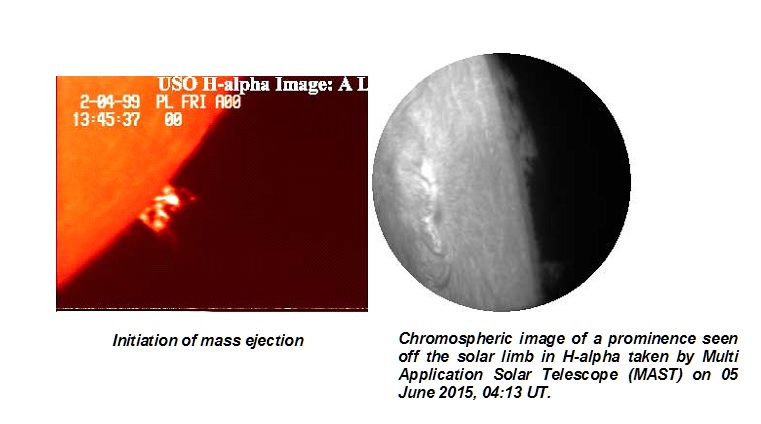
  • Objective: Aditya L1 will study the Sun’s corona (Visible and Near infrared rays), Sun’s photosphere (soft and hard X-ray), chromosphere (Ultra Violet ), solar emissions, solar winds and flares, and Coronal Mass Ejections(CMEs), and will carry out round-the-clock imaging of the Sun.
  • Challenges: The distance of the Sun from Earth ( approximately 15 crore kms on average, compared to the only 3.84 lakh kms to the Moon).This huge distance poses a scientific challenge.
    • Due to the risks involved, payloads in earlier ISRO missions have largely remained stationary in space; however, Aditya L1 will have some moving components which increases the risks of collision.
    • Other issues are the super hot temperatures and radiation in the solar atmosphere. However, Aditya L1 will stay much farther away, and the heat is not expected to be a major concern for the instruments on board.
Credits- Third Party Reference

Importance

  • Evolution of every planet, including Earth and the exoplanets beyond the Solar System, is governed by its parent star i.e the Sun in our case. The Solar weather and environment affects the weather of the entire system. Therefore, it is important to study the Sun.
  • Effects of Variation in Solar Weather System: Variations in this weather can change the orbits of satellites or shorten their lives, interfere with or damage onboard electronics, and cause power blackouts and other disturbances on Earth.
  • Knowledge of solar events is key to understanding space weather.
  • To learn about and track Earth-directed storms, and to predict their impact, continuous solar observations are needed.
  • Many of the instruments and their components for this mission are being manufactured for the first time in the country.

Lagrange Point 1

  • Lagrange Points, named after Italian-French mathematician Josephy-Louis Lagrange, are positions in space where the gravitational forces of a two-body system (like the Sun and the Earth) produce enhanced regions of attraction and repulsion.
  • The L1 point is about 1.5 million km from Earth, or about 1/100th of the way to the Sun.
  • L1 refers to Lagrangian/Lagrange Point 1, one of 5 points in the orbital plane of the Earth-Sun system.
  • These can be used by spacecraft to reduce fuel consumption needed to remain in position.
  • A Satellite placed in the halo orbit around the Lagrangian point 1 (L1) has the major advantage of continuously viewing the Sun without any occultation/ eclipses.
  • The L1 point is home to the Solar and Heliospheric Observatory Satellite (SOHO), an international collaboration project of National Aeronautics and Space Administration (NASA) and the European Space Agency (ESA).

Aditya L1 Mission

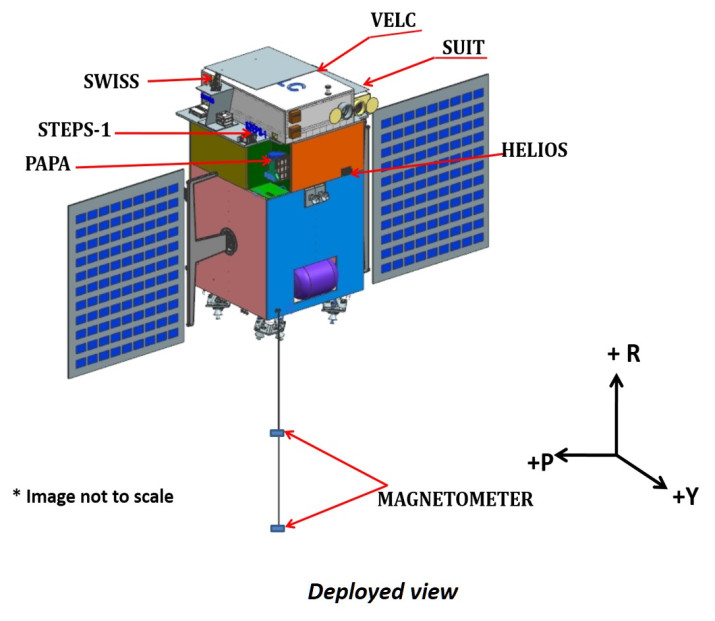
The Aditya-1 mission has conceived as a 400kg class satellite carrying one payload, the Visible Emission Line Coronagraph (VELC) and was planned to launch in a 800 km low earth orbit.  A Satellite placed in the halo orbit around the Lagrangian point 1 (L1) of the Sun-Earth system has the major advantage of continuously viewing the Sun without any occultation/ eclipses.  Therefore, the Aditya-1 mission has now been revised to “Aditya-L1 mission” and will be inserted in a halo orbit around the L1, which is 1.5 million km from the Earth.  The satellite carries additional six payloads with enhanced science scope and objectives.

The project is approved and the satellite will be launched during 2019 – 2020 timeframe by PSLV-XL from Sriharikota.

Aditya-1 was meant to observe only the solar corona.  The outer layers of the Sun, extending to thousands of km above the disc (photosphere) is termed as the corona.  It has a temperature of more than a million degree Kelvin which is much higher than the solar disc temperature of around 6000K. How the corona gets heated to such high temperatures is still an unanswered question in solar physics. 

Aditya-L1 with additional experiments can now provide observations of Sun’s Corona (soft and hard X-ray, Emission lines in the visible and NIR), Chromosphere (UV) and photosphere (broadband filters).  In addition, particle payloads will study the particle flux emanating from the Sun and reaching the L1 orbit, and the magnetometer payload will measure the variation in magnetic field strength at the halo orbit around L1.   These payloads have to be placed outside the interference from the Earth’s magnetic field and could not have been useful in the low earth orbit.

Credit- Third Party Reference

The main payload continues to be the coronagraph with improved capabilities.  The main optics for this experiment remains the same.  The complete list of payloads, their science objective and lead institute for developing the payload is provided below:

  • Visible Emission Line Coronagraph (VELC): To study the diagnostic parameters of solar corona and dynamics and origin of Coronal Mass Ejections (3 visible and 1 Infra-Red channels); magnetic field measurement of solar corona down to tens of Gauss – Indian Institute of Astrophysics (IIA)
  • Solar Ultraviolet Imaging Telescope (SUIT): To image the spatially resolved Solar Photosphere and Chromosphere in near Ultraviolet (200-400 nm) and measure solar irradiance variations – Inter-University Centre for Astronomy & Astrophysics (IUCAA)  
  • Aditya Solar wind Particle Experiment (ASPEX) : To study the variation of solar wind properties as well as its distribution and spectral characteristics – Physical Research Laboratory (PRL)        
  • Plasma Analyser Package for Aditya (PAPA) : To understand the composition of solar wind and its energy distribution – Space Physics Laboratory (SPL), VSSC        
  • Solar Low Energy X-ray Spectrometer (SoLEXS) : To monitor the X-ray flares for studying the heating mechanism of the solar corona – ISRO Satellite Centre (ISAC)
  • High Energy L1 Orbiting X-ray Spectrometer (HEL1OS): To observe the dynamic events in the solar corona and provide an estimate of the energy used to accelerate the particles during the eruptive events – ISRO Satellite Centre (ISAC)and Udaipur Solar Observatory (USO), PRL
  • Magnetometer: To measure the magnitude and nature of the Interplanetary Magnetic Field – Laboratory for Electro-optic Systems (LEOS) and ISAC.

With the inclusion of multiple payloads, this project also provides an opportunity to solar scientists from multiple institutions within the country to participate in space based instrumentation and observations.  Thus the enhanced Aditya-L1 project will enable a comprehensive understanding of the dynamical processes of the sun and address some of the outstanding problems in solar physics.

Other Missions to the Sun

  • NASA’s Parker Solar Probe’s aim is to trace how energy and heat move through the Sun’s corona and to study the source of the solar wind acceleration.
    • It is part of NASA’s ‘Living With a Star’ programme that explores different aspects of the Sun-Earth system.
  • The earlier Helios 2 solar probe, a joint venture between NASA and space agency of erstwhile West Germany, went within 43 million km of the Sun’s surface in 1976.

A more recent technical report on this topic by Dr. Angel, in which the idea is taken to another stage in development using only electromagnetic launch from Earth and no construction on the Moon or at L1

So we hope these mission will able to unveiled the secret of Sun’s Atmosphere and its Corona. Aditya L1 mission will create history for Indian Space Program and proved to be landmark as expected.

Reference- https://www.drishtiias.com/

Stories of Tragedy: Chernobyl

Sky documentary The Real Chernobyl tracks the true tragedy | Metro ...

Hello Reader.

Today we look back at one of the worst man made disasters of our civilization. The Chernobyl Nuclear Accident. Late 20th century, times of nuclear expansion. Soviet Union, under the leadership of General Secretary Mikhail Gorbachev, was steaming forward with their nuclear policy. Several nuclear plants were setup to harness clean energy. But several policy decisions and human elements came back to haunt mankind after the reactor 4 of the Vladimir Ilyich Lenin Nuclear Power Plant, Chernobyl, Ukraine, exploded early in the night of April 26, 1986, giving out huge quantities of radiation in the surrounding areas.

Town of Pripyat

Chernobyl and Pripyat: where time came to a standstill in 1986 ...

The plant was located 130 km North of Ukraine capital Kiev, near the Belarusian border. To accommodate the families of people working at the plant, a new town was built about 3 km away in 1970. They called it Pripyat. During the accident it was host to nearly 49,000 souls. The town was surrounded by woodland and was a pleasant place. There were several schools, parks, theaters, hospital. Everything a town can ask for. This was the worst affected human settlement in the accident. Everyone was forced to evacuate within three days of the accident. People were told it would be for a couple of weeks. But they never returned. Radiation level to this day remains too high for this place to be inhabited. Today this town stands covered by the woods, infested by wild animals and everything it’s inhabitants left behind, a true ghost town.

April 26, 1986

What went wrong on that fateful night? Some human error coupled with some huge design flaws of the reactor put a question mark in global nuclear safety for decades to come. Chernobyl, like most Soviet nuclear power plants back in the day, used Soviet made RBMK-1000 reactors with Uranium as it’s chief fuel. This fuel when starts reacting through fission generates huge amount of energy in form of heat. That heat is used to convert water into pressurized steam and then steam is channeled on to turbines to generate electricity. Simple. But there’s a catch. The energy rising from fission is too high if remained unchecked and this energy release is continuous as Uranium neutrons doesn’t stop reacting. So to control this high rate they had something called Control rods. These are columns made of Boron which enters the reactor and reduces this huge energy surge. So when there was too much output, you simply push the control rods in and reduce reactivity.

Scientists Develop New Theory on Chernobyl Blasts

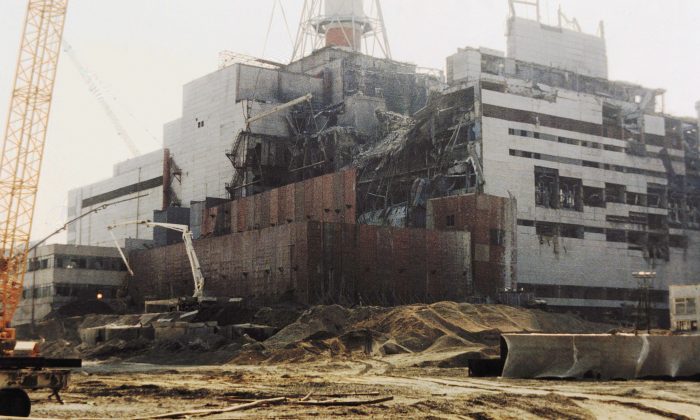
But this system had a design flaw. For a fraction of second control rods increased reactivity, instead of reducing it. They were lined with graphite as a measure to cut costs. This was not known to the operators. And on the day of accident, a test was going on to reduce the output of the reactor to see if it can still support the water pumps through turbine. The output went too low, but the management still went ahead with the test and the result was a huge surge. Seeing this, the operator decided to push the control rods to kill the reactor function, unaware of the hidden consequence. Just as he pushed the button, the reactivity skyrocketed, converting every bit of water into steam and under high pressure there was an explosion. Hydrogen was produced from the fuels reaction with the steam and another explosion blew the roof off. Oxygen from outside rushed in and several fires started. Reactor with a capacity of 3200 MW output showed a last recorded output of 12000 MW before going off. Open roof carried the radioactive vapor into the atmosphere and wind distributed it all over Europe. It was felt in far away places like Sweden and England.

Consequences

Chernobyl New Safe Confinement - Wikipedia

2 operators died due to the explosion. 28 others died due to radiation related causes within few weeks. Thousands were exposed to radiation. There was an instant spike in cancer rates in the areas of Ukraine and Belarus after this accident. A 30 km Chernobyl exclusion zone was declared by Soviets. Thousands had to leave never to return. State did their best to hide the actual causes and consequences. Eventually had to give in and review the safety norms. The world scientific community blamed the Soviet isolation policy of the cold war era as a catalyst for this disaster. Maybe they were right. 34 years have passed since. Life has moved on. A steel structure, called New Safe Confinement, has recently been mounted over the old sarcophagus of Reactor 4 to keep the radiation in check. But Chernobyl still stays one of the most costly and haunting tragedies of the era.

Until next time…