Mobile Phones and Its Evolution

Introduction

A
mobile 
phone is a portable mode of telephone that can make and receive calls.
What makes it different from telephone is its wireless mode of communication as
it allows the user to move while communicating.  
Phones have come a long way since Bell made the first call. Now we have
cellphones which need no wires. The early cellphones were bulky, hard to use
and could do only calling. However with evolution of technology, we have now
camera, music and even internet in mobiles. While the radiations from mobile
have not been proved to be substantially harmful, judicious use of mobiles is
only wise.

The First Phone

 The first
cellular mobile [1] that came in practice was invented in 1980s by Motorola.
This device was named Motorola DynaTAC 8000X. it was the first commercialized
phone that was developed by efforts begun at Bell Labs, which first proposed
the idea of a cellular system in 1947. A series of phone was manufactured in US
from 1983 to 1994 under the name in United States of America. It was first
introduced in market on September 21, 1983.
It was having normal feature of receiving and
sending messages but it was a revolution then as it took communication to a new
height. Undoubtedly it was a revolution then as it changes the concept of
interaction accelerating development at an amazing scale.  Early Cellular phones used analog CDMA technology.
The first commercially available handheld cellular
phone, Motorola DynaTAC 8000x, which hit the market in 1983 weighed in at 2
pounds. It was priced at $3,995 and offered a half-hour of talk per batter
charge.

2G, GSM, mobile internet

CDMA technique of mobile continued its regime for
almost a decade and was later replaced by Global System for Mobile
Communications (GSM) in original termed as Group Special Mobile). It was the forerunner
of the mobile data bloom. It made its first debut in Finland and termed as 2G
network [2].
Phones like the 5110 and 3300 from NOKIA became
iconic and dominated the market during 1992. Till 90s Nokia was supreme leader
in the market. Primarily internet service was availed via GPRS (General Packet
Radio Service) and moving to the faster EDGE (Enhanced Data rates for GSM
Evolution, or EGPRS).

Camera phone

Cell phone later introduced a special feature in
2000 having tiny 0.11-0.35 megapixel resolutions cameras fitted in back cover
of the mobile. In India, the earliest camera phone was the Nokia 7650.

Bluetooth, WiFi

Bluetooth was another unique feature that is still popular.
With the help of Bluetooth user can send receive text and files, photos and videos?
There is no wire needed; only devices must interconnect across short distance.
The first Bluetooth-enabled phone became available in 2000 was Ericsson T36.

3G

 3G is termed
as the third-generation of mobile phone technology standards. The main service
that 3G is associated with wireless voice telephony and broadband wireless
data, all in a mobile environment. Initially introduced in japan, in 2001 [3],
it- is very fast, efficient mobile network. 
With its varying level of speed it allowed addition of numerous applications
on mobile phone making it multitasking device.
 For example,
using 2g to download a 10 MB video or song takes usually 10 to 12 minutes but
with 3G it can be done in a minute. This made the cellphone a utility device.

 Android

It’s an operating system owned by Google and came
into existence in 2005. It runs on majority of phone these days with its
upgraded version. The first Android touchscreen device (G1) came out in 2008
for the US market. It is the modified version of Linux [4].

4G or LTE

The first 4G network, made its début in 2009 in
Sweden based on the LTE standard. Airtel, a cellular company introduced 4G
network in India. 4g relies heavily on internet as most Indian have their
strong focus on music, video and social media.

The Present of Cellular Phones

Cellular phone is now the part and partial of our life.
With upcoming features and high focus on internet availability, gave a massive
boost to mobile usage. From android phone to I phone, the significant change in
cellphones has made it a strong utility device. From keypad to smartphone,
people have witnessed a considerable change in, appearance and efficacy of cell
phones.

The Criticism

Cellular phones work on high
frequency radio waves, which essentially are radiations. These radiations are
non-ionizing. And though it has not been substantially proved, the radiations
of mobile phones have been blamed to cause many diseases including cancer.
While these claims can be neither
accepted nor rejected [5], it is wise to use mobile phones
carefully. Avoid unnecessary usage, keep it at safe distance from body, use
hands-free whenever possible- are some best practices of cellphone use.
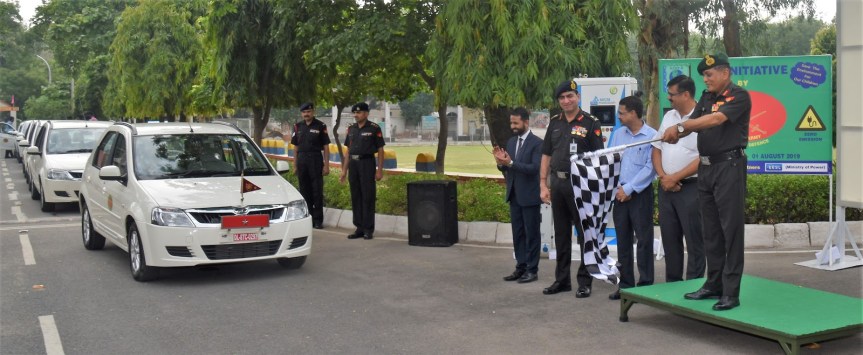
Army Launches E Car to Combat Pollution

The
Indian Army in step with government policies on environmental
protection has launched an ecological initiative with employing E Cars
for use of its officials in New Delhi in partnership with Energy
Efficiency Services Ltd (EESL), a joint Venture of Central PSUs under
Ministry of Power. The introduction of E-Car in Army at Delhi was
visualised on World Environment Day and launched on 01 Aug 2019 with
flagging off the first lot of E-Cars for Indian Army by QMG, Lt Gen
Gopal R. Army plans to operate the first batch of 10 E-Cars as a pilot
project and develop further on this initiative and increase the number
of E Cars in Delhi to ensure economy, efficiency and minimal emissions.
It
is pertinent to mention that Army has always been at the forefront of
environmental initiatives. Indian Army has a large number of Territorial
Army Battalions (ECO) which have done a yeoman service in environmental
protection initiatives such as forestation. Army units posted in remote
and ecologically sensitive areas from Kashmir to Kanya Kumari have been
carrying out various activities in close coordination with local
populace to conserve the ecological balance and protect the environment.
Air
pollution has been a major challenge in Delhi. Governments across the
World are investing a lot of resources in fighting this menace. Electric
vehicle technology has proved to be a viable alternative by reducing
the carbon emission footprint. Indian companies like Tata Motors and
Mahindra have taken a lead in R&D and manufacturing of Electric
Cars. EESL has been the main facilitator in providing these vehicles to
various Government agencies. Army’s initiative in encouraging these
electric vehicles will go a long way in further development of this
technology and its adoption for the general public in near future.

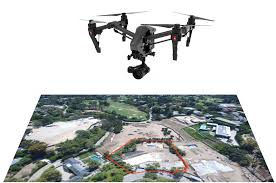
Drones to undertake Large scale Mapping of Village areas in Maharashtra

Survey
of India ,the national mapping agency of the country under the Min of
Science & Technology has signed an MoU with Department of revenue
& Land records, Govt of Maharashtra to undertake the Large scale
Mapping of Village Gaothan (Aabadi)  areas in the State of Maharashtra
using drones.
Chief
Minister of Maharashtra ,Shri Devendra Fadnavis inaugurated the Drone
based Mapping Project being carried out by Survey of India at Nimgaon
Korhale in Ahmednagar district on 31st July, 2019. Minister
of Rural Development, Women and Child Welfare Pankaja Gopinath Munde;
Surveyor General of India Lt Gen Girish Kumar, VSM; Commissioner Revenue
& Land Records; Commissioner Rural Development and Secretary, RDD
from Govt of Maharashtra along with other officials were also present
during the launch of the project. This large scale mapping project is
being carried out by Survey of India, Min of Science & Technology,
Govt of India for Dept of Revenue and Land Records, Govt of Maharashtra
using Professional Survey grade Drone covering more than 40,000 Village
Gaothan (Aabadi) areas in Maharashtra State. 
These
village Gaothan areas not been surveyed earlier will be mapped at 1:500
scale covering all land parcels in the village for preparing the
accurate revenue maps and GIS database. Drone survey will be pivotal to
fix locations of village boundaries, canals, canal limits and roads in
these villages.
A detailed presentation about this Large scale Mapping Project was also made in the National Workshop and Conference of Sarpanch and Upsarpanch organized
jointly by Department of Rural Development, Govt of Maharashtra and All
India Sarpanch Association Shirdi, Ahmednagar district on 31st July. This national conference was organized under the guidance of  CM Shri Devendra Fadnavis, presided by Minister
of Rural Development, Women and Child Welfare Pankaja Gopinath Munde
and attended by other Ministers, MP, MLAs and other dignitaries. This
conference was attended by thousands of Sarpanch, Upsarpanch and farmers
across the country and the Maharashtra state.

Draft Notification Issued Allowing Motor Vehicles and their Parts to be Affixed with Microdots

The Ministry of Road Transport & Highways has issued a draft notification GSR 521(E) dated 24thJuly
2019, amending Central Motor Vehicle Rules,allowing motor vehicles and
their parts, components, assemblies, sub-assemblies to be affixed with
permanent and nearly invisible microdots that can be read physically
with a microscope and identified with ultra violet light source.
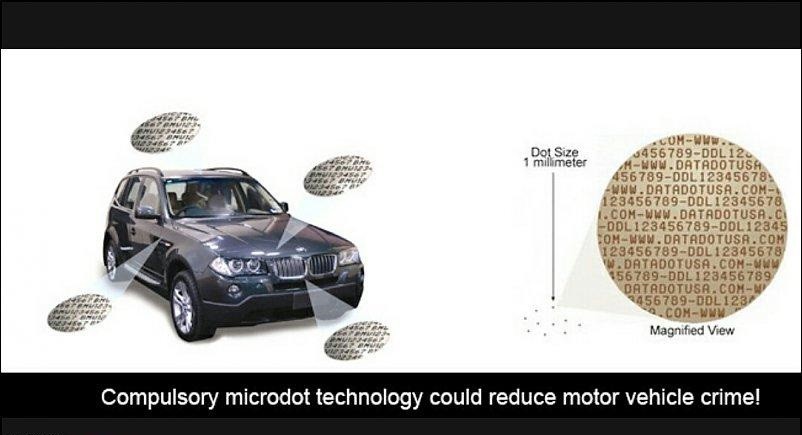
Microdot
technology involves spraying the body and parts of the vehicle or any
other machine with microscopic dots, which give a unique identification.
Use of this technology will help check theft of vehicles and also use
of fake spare parts.   
The
microdots and adhesive will become permanent fixtures/affixationwhich
cannot be removed without damaging the asset, that is the vehicle
itself. The notification says that the microdots, if affixed,will have
to comply with AIS 155 requirements.

Digitisation of Anganwadi Centres

The
ICDS Scheme has an in-built monitoring system since its inception to
track the physical progress of the scheme in respect of various input
process, output and impact indicators through a standardized Management
Information System (MIS) through regular reports on monthly, quarterly
and half yearly basis. To strengthen the monitoring of Anganwadi
Services Scheme revised MIS known as ICDS-Rapid Reporting System (RRS)
has also been introduced for capturing the data of AWCs online. Under
the ICDS-RRS each Anganwadi Centre is assigned a 11digit unique code and
login password is allotted at the supervisor level to submit the
monthly progress report. As on 31st March 2019, out of
13,72,872 operational AWCs 13,61,714 AWCs have been assigned the 11digit
unique code. The State-wise detail is given at Annexure-I.   Assigning the 11 digit unique code to the remaining AWCs is already on.
In addition, the digitization of physical registers has been taken up with roll-out of ICDS-CAS Software Application under POSHAN Abhiyaan
Mission of Ministry of Women and Child Development.  The ICDS-CAS
mobile based software enables the identification of underweight children
based on auto-plotting of Growth Charts. The drill-down dashboard
available at National, State, District, Block level contributes towards
identifying and addressing the problem of nutrition. Thus, improve
overall service delivery. As on 30th June, 2019 more than
3,55,000 Anganwadi Workers are using ICDS-CAS Application across 21
States/UTs. The State-wise details are at Annexure -II.
Under
POSHAN Abhiyaan Smart Phones are provided to Supervisors and Anganwadi
workers to provide online data. The mechanism to implement the project
in State/UTs include regular review through Video Conferencing, meetings
and visits by officers to the States/UTs. The timeline to implement the
activities under POSHAN Abhiyaan is March 2020 for all State/UTs.
The
child beneficiaries under the Anganwadi Services Scheme are provided
Supplementary Nutrition as per the guidelines. Monthly Village Health
and Sanitation Day and Community Based Events are organised by
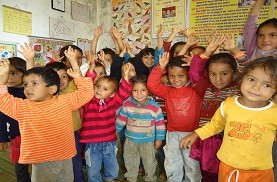
States/UTs to improve status of nutrition of children. Pre-school
Education is another service provided under the Anganwadi Services
scheme.This covers non-formal education to the children in the age group
of 3-6 years.  State/UTs are provided with the funds for Pre-School
Education Kits for each Anganwadi Centre at Rs. 5,000/- per annum.
Training is imparted to Anganwadi Workers so that they can improve the
literacy and numeracy skills of children of their respective AWC.

Improving Milking Capacity of Cows

n
order to complement and supplement the efforts made by the States and
Union Territories for enhancing milk production and productivity of
bovines Government has been implementing following schemes:


(i)        
Rashtriya Gokul Mission has been implemented throughout the country
including Uttar Pradesh for development and conservation of bovine
population thereby enhancing their production and productivity.
(ii)       
National Dairy Plan-I has been implemented in 18 major dairy states
including Uttar Pradesh for enhancing milk production and productivity
of dairy animals in order to meet demand of the milk in the country.
(iii)      
Breed Improvement Institutes comprises of seven Central Cattle Breeding
Farms, four Central Registration Units and Central Frozen Semen
Production and Training Institutes. These institutes are playing crucial
role in supply of breeding inputs in the form of High Genetic merit
bulls for Artificial Insemination and semen doses of bulls with high
genetic potential in all the States including Uttar Pradesh.
Unproductive
animals with intact reproductive efficiency can be used as recipient
(surrogate mothers) under Embryo Transfer Technology (ETT) and IVF.   In
Uttar Pradesh projects for establishment of two ETT labs with IVF
facility have been sanctioned.
    
This
information was given in a written reply by the Minister of State for
Fisheries, Animal Husbandry and Dairying, Shri Sanjeev Balyan in Rajya
Sabha today.

How are we Destroying our Environment

By dumping huge quantities of polythene at tourist places we are directly affecting our present and future generations

Kashmir known as Paradise on Earth bestowed with scenic beauty attracts people at local, national and international levels to gain peace of mind. Recreational activities have gained impetus at local level; Kashmirs. especially on holidays, plan outings with friends and family to hill stations.

 
Unfortunately the visit to any scenic spot begins by spending on junk food. People visiting the places start routine behavior by purchasing soft drinks, chips and ice-cream, without noticing the small silent killers behind them. The aforementioned items are consumed without taking care of environment. After reaching the destination the routine exercise starts by finding a neat and clean spot to spread the carpet bought from home by arranging the items and leaving the place filthy.

 The process is followed by purchasing “Bag of Happiness” either from home or local markets. The People consume junk food and dispose off plastic waste without using dustbins installed by the concerned authorities. Silent killers are spread on ground everywhere. In comparison we use to maintain a hygienic atmosphere at our homes by cleaning surroundings, using dustbins. Outside people dispose off household waste even in water bodies. Traditionally canals provided drinking water and now they have become dumping yards.

  As sun starts to set the hill stations start crying: “please take your belongings back”. But visitors leave the place without reflecting any sense of social responsibility. Consuming junk foods may have health issues, but they are directly affecting our present and future generations. Small plastic covers and plastic bottles remain littered over ground.

On inquiring about the negligence, local shopkeepers blame concerned departments by saying that from last 4 to 5 days nobody has cleaned the place, official in charge talks about outsourcing of cleanliness drive. But the fact is that nothing moves and the place is still covered with plastic waste. We, the people of Kashmir have lost the sense of social responsibility, enjoying nature is everybody’s right but we as humans forget about our responsibilities in keeping our surroundings neat and clean.

The problem needs an immediate attention from authorities. This can be done by banning sale of plastic items at hill stations. People can resort to native cuisine. We all need to encourage sustainable tourism.

UGC Notification For Mid-Career Award, BSR Faculty Fellowship

Check out the notification for the UGC Notification For Mid-Career
Award, BSR Faculty Fellowship & Start-Up Research Grant, that is
open and available for this year. Interested and eligible candidates
check out all of the details on the same below, this scheme is available
throughout the year:
Introduction
Creation
of knowledge through research, and dissemination of a better
understanding through teaching, are the primary objectives of a
University. While both teaching and research are central to the
realization of the objectives of these places of higher learning,
research is often neglected in the University, particularly in India.
Taking
note of steep decline in the research environment in Indian
Universities, the Government of India, through the University Grants
Commission, has taken several initiatives to arrest this trend and
strengthen Basic Scientific Research in Indian Universities.
The
Faculty Research Promotion Programme is one such innovative program,
under which research support is provided at three levels to the
faculties of the science departments (including medical and engineering
sciences) at Indian Universities, which are eligible to receive
developmental grants from the UGC.
Schemes
The Programme comprises 3 different Schemes. Entry-level faculty is supported by a Start-Up Research Grant; active, research-oriented mid-career faculty by a Mid-Career Award; and active, talented senior faculty nearing superannuation by a BSR Faculty Fellowship.
While the Start-Up Research Grant provides seed money for research to
new faculty members at the time of commencement of their career, and
benefits the fresh faculty members of a University; the Mid-Career Award
aims to augment the research efforts of active mid-career faculty
members and support them with this research incentive;The BSR Faculty
Fellowship is meant for successful (with proven track record) and active
senior faculty nearing superannuation. It enables continuance of their
productive research career and mentorship role in Universities for a
longer period.
he
Empowered Committee selects the candidates after scrutiny and
evaluation of the applications by the National Coordinator of this
Programme.
Eligible Categories of Research
This
support is available only to faculty members in the Basic Sciences,
including Medical and Engineering Sciences. The following disciplines
are eligible:
  • Physical Sciences
  • Chemical Sciences
  • Mathematical Sciences
  • Biological Sciences
  • Engineering Sciences
  • Earth Sciences
  • Medical Sciences
Nature of Assistance
Start-Up Grant
A grant of Rs. 10.00 lakhs is provided, which can be utilised for items like minor equipment, consumables, contingencies (maximum Rs. 50,000/-pa), fieldwork (maximum Rs. 50,000/- pa), travel, etc.
The quantum of funds under each head can be decided by the PI depending
on his/her need maintaining the maximum limit prescribed above for
contingencies & fieldwork.
No Research Fellow, Project
Assistant etc. can be appointed using this grant, as it is expected that
the Assistant Professor, as a young researcher, will initially conduct
the bench work by himself/herself. The grant cannot be utilized for
foreign travel.
The grant will be released in 2 installments.
Initially, 80% of the grant will be released. The remaining grant will
be released after the receipt of the UC of first installment. The grant
is to be utilized within two years from the date of issue of sanction
letter of the first installment.

Apply here for Start-Up Grant

Mid-Career Award
A grant of of Rs. 10.00 lakhs
is provided, which can be utilized towards minor equipment,
consumables, chemicals, glasswares, contingencies, fieldwork, travel,
etc.
The grant cannot be used for international travel, purchasing
furniture items and appointing project assistant or research fellow.
The quantum of funds under these heads is flexible and the same can be decided by the recipient depending on his/her needs.
The
grant will be released in 2 installments. Initially, 80% of the grant
will be released. The remaining grant will be released after the receipt
of the UC of first installment. However, the entire grant must be
utilized within 2 years from the date of issue of sanction letter of the
first installment.

Apply here for Mid-Career Award

BSR Faculty Fellowship
Under this Scheme, a Research Grant of Rs. 5.00 lakhs per annum, and a Fellowship of Rs. 50,000 per month (exclusive of the pension and/or other retirement benefits), is provided for a maximum duration of 3 years.
The
Research grant can be utilized for purchase of equipment,
computer/laptop, printer, chemicals, glasswares, consumables,
contingency, hiring project/technical assistant, field work, travel
(within India), etc.
The grant cannot be utilized for International travel and purchase of furniture.
The recipient can decide the quantum of funds under these heads depending on his/her needs.

Sri Krishna Arts and Science College

Sri Krishna Arts and Science College