YouTube Marketing and its benefits.

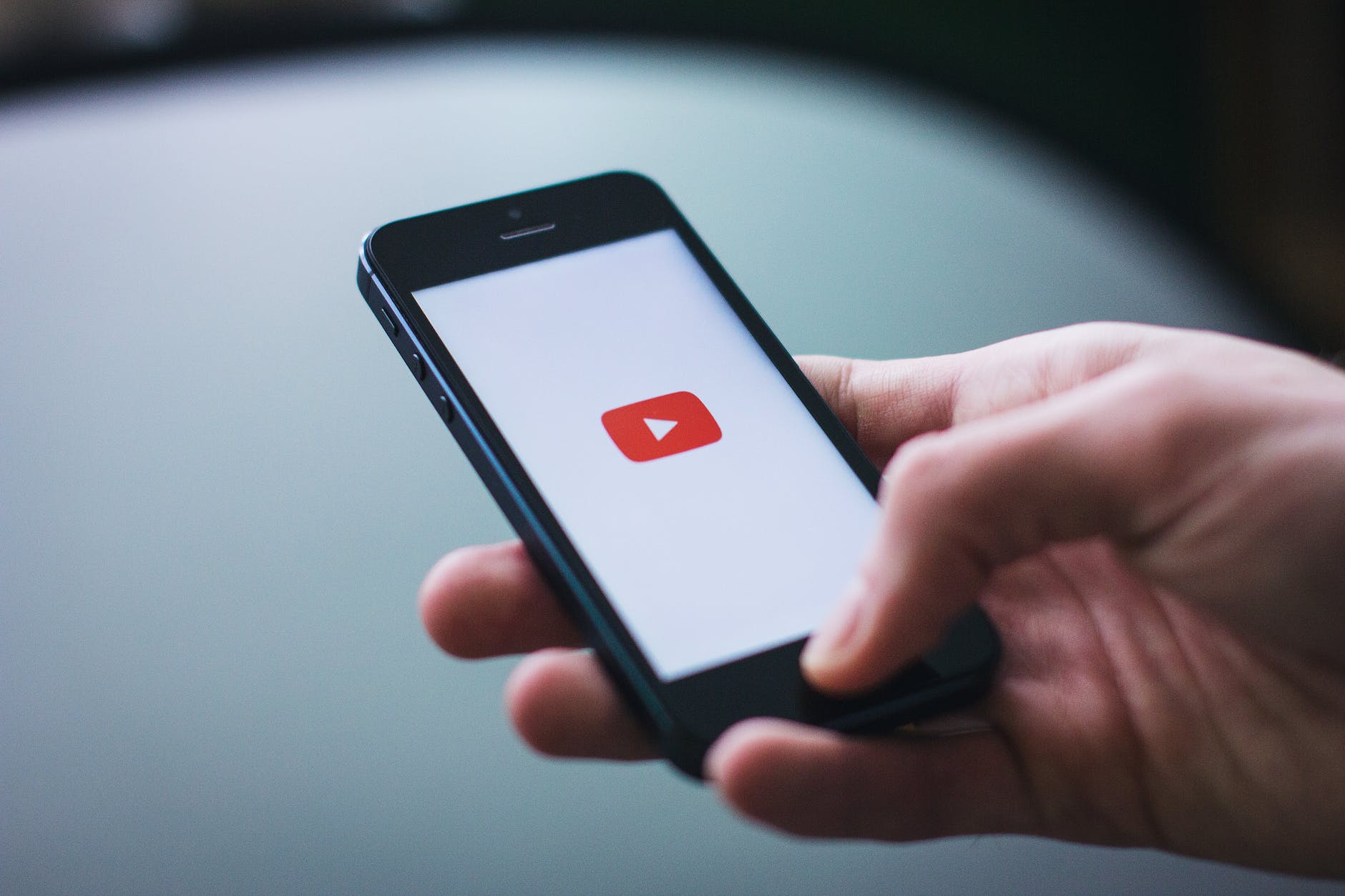
YouTube marketing is a strategy that involves creating videos and uploading them on YouTube to promote a brand or a product and gain more exposure. It helps companies boost traffic, increase their customer base, and reach new audiences.

Since YouTube’s 22.8 billion visits a month make it the second most visited site in the world after Google, it’s able to bring many benefits to businesses nowadays. The platform isn’t just a famous entertaining channel but a powerful marketing tool, and companies can develop YouTube channels for advertising. YouTube channels help get more views from new geographic, promote a product or a company, build a large customer base, and increase a brand’s sales volume. YouTube is also a famous educational platform. Companies can achieve greater exposure, which expands their customer base. By making detailed tutorials, live streams, guides, and lessons, brands can rank higher on Google. 

The platform can serve as one of the most effective marketing channels. Optimizing keywords in titles and creating tutorials, commentary, product reviews, Q&A, and video listicles allow businesses to achieve higher exposure and reach new audiences. Brands can’t predict who and when will access their videos. If the content contains the necessary keywords in the title and description, all people who look for information might stumble upon a certain video, stay on the channel, and buy the product it advertises. Besides, adding watermarks and company logos to videos enables businesses to improve brand awareness.

Benefits of YouTube marketing :

Heavy Traffic

YouTube is growing exponentially, with more than 5 billion videos consumed every single day. This is much more traffic than any other platform out there. Even if one don’t create many videos for own business, one can still easily reach an audience by advertising one’s content on other people’s videos. There is so much traffic on YouTube that it is  guaranteed to find potential customers as long as you cater to their needs. 

Higher Visibility on Google

By utilizing YouTube marketing, businesses are also increasing the online authority of their business. The more authoritative they are on Google, the higher their page will rank on the Google search engine result page. 

Higher Conversion Rates

If a picture speaks a thousand words, a video makes up for a million words. Moreover, videos can evoke emotion more than any other form of content. They take your messages from static text to dynamic and engaging, and bring your business to life. They also help to build trust and authority among people in a unique way. This entertaining and engaging form of content has the power to increase your conversion rate by 80 percent.

Multiple Video Types Another crucial advantage of YouTube marketing is the different types of videos you can create to showcase your brand online. The most common types of videos on YouTube are explainer videos, sales videos, social media videos, presentation videos

Understanding Artificial Intelligence(AI) and its Application.

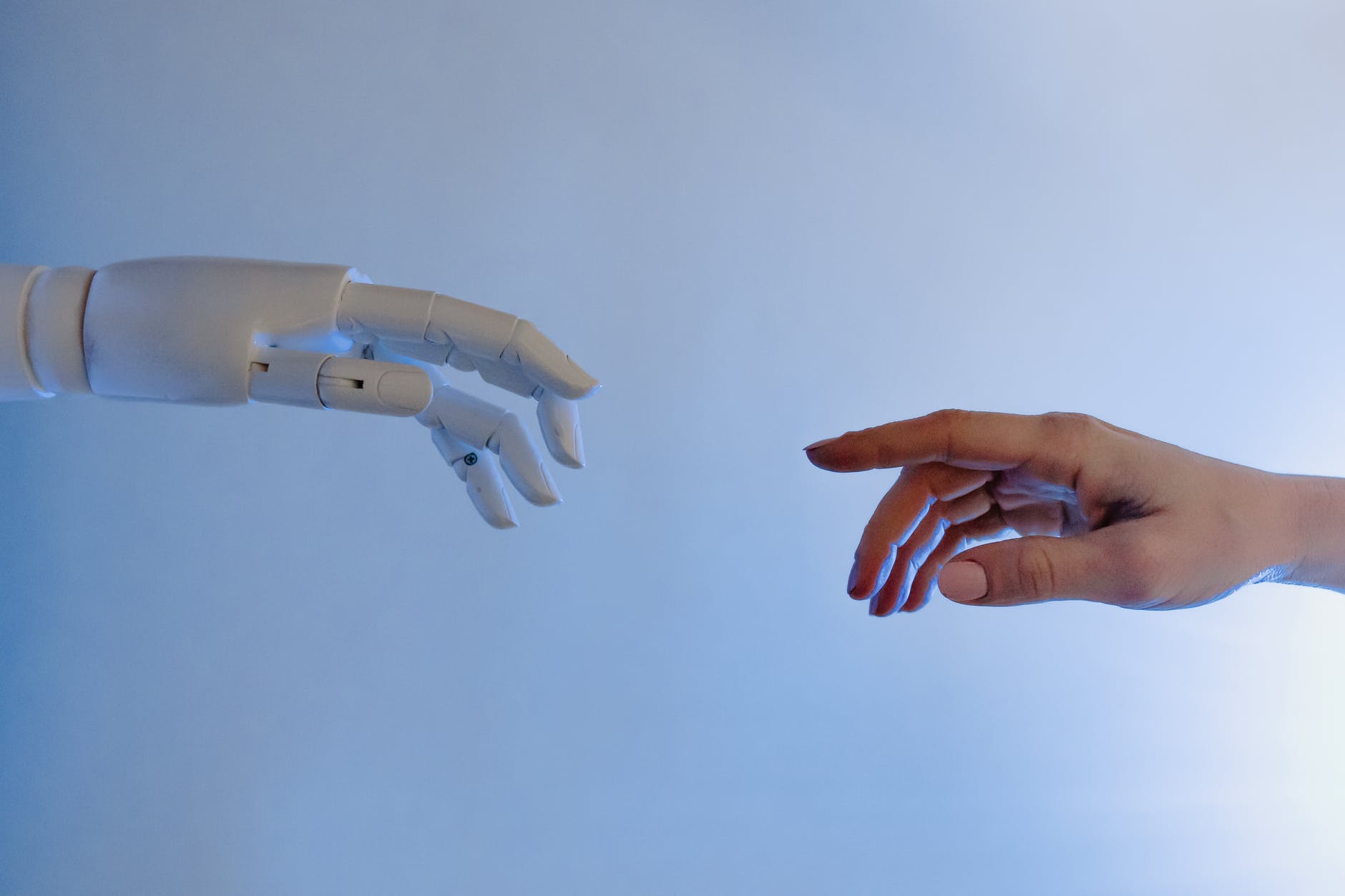
Artificial intelligence (AI) refers to the simulation of human intelligence in machines that are programmed to think like humans and mimic their actions. The term may also be applied to any machine that exhibits traits associated with a human mind such as learning and problem-solving.

The ideal characteristic of artificial intelligence is its ability to rationalize and take actions that have the best chance of achieving a specific goal. When most people hear the term artificial intelligence, the first thing they usually think of is robots. That’s because big-budget films and novels weave stories about human-like machines that wreak havoc on Earth. But nothing could be further from the truth. Artificial intelligence is based on the principle that human intelligence can be defined in a way that a machine can easily mimic it and execute tasks, from the simplest to those that are even more complex. The goals of artificial intelligence include learning, reasoning, and perception.

Application of AI in different fields.

Personalized Online Shopping.

Personalizing users’ experience has become the latest pantheon for all the leading tech giants. Ecommerce stores aren’t behind either, and have been the biggest platforms to implement the personalization domain of AI. 

Marketing.

One of the greatest artificial intelligence examples applications, Marketing, has been a key area for improvement and the latest trends in AI. With the growing advancement in AI, in the near future, it may be possible for consumers on the web to buy products by snapping a photo of it.

Social Media.

The most common use of AI in social media is for face verification and to detect facial features. AI in social media can be associated with big data and machine learning where deep learning is used to extract every minute detail from an image by using a bunch of deep neural networks. On the other hand, machine learning algorithms are used to design your feed based on your interests.

Agriculture.

The latest artificial intelligence applications in the form of image recognition identify possible defects in the crops through images captured by the user’s smartphone camera. Users are then provided with soil restoration techniques, tips, and other possible solutions to deal with the identified defects.

Video Games.

The gaming world is the best example of intelligent applications of artificial intelligence as it is at this platform where there are a lot of alterations in the purpose. AI is used for designing the game, developing the characters, and also frame the story to a certain extent.

Healthcare.

The Healthcare sector has been amongst the top adopters of AI technology. It boils down to the power of AI to crunch numbers fast and learn from historical data, which is critical in the healthcare industry. AI has taken a critical step in helping people with looking after patients as well. The automated bots and healthcare applications ensure proper medication and treatment of patients in the facilities.

Smart Homes.

The most advanced form of applications of artificial intelligence in the real-world are being implemented in homes, and are becoming smarter every day. Various devices like smart locks, smart switches, ect., are increasingly becoming compatible with various devices, and the application of smart homes is becoming more accessible to the general population every day.

Banks.

A lot of banks have already adopted AI-based systems or software to provide customer support and detect anomalies and credit card fraud. By tracing card usage and endpoint access, security specialists are more effectively preventing fraud. Organizations rely on AI to trace those steps by analyzing the behaviors of transactions.

Prevailing Semiconductor Crisis.

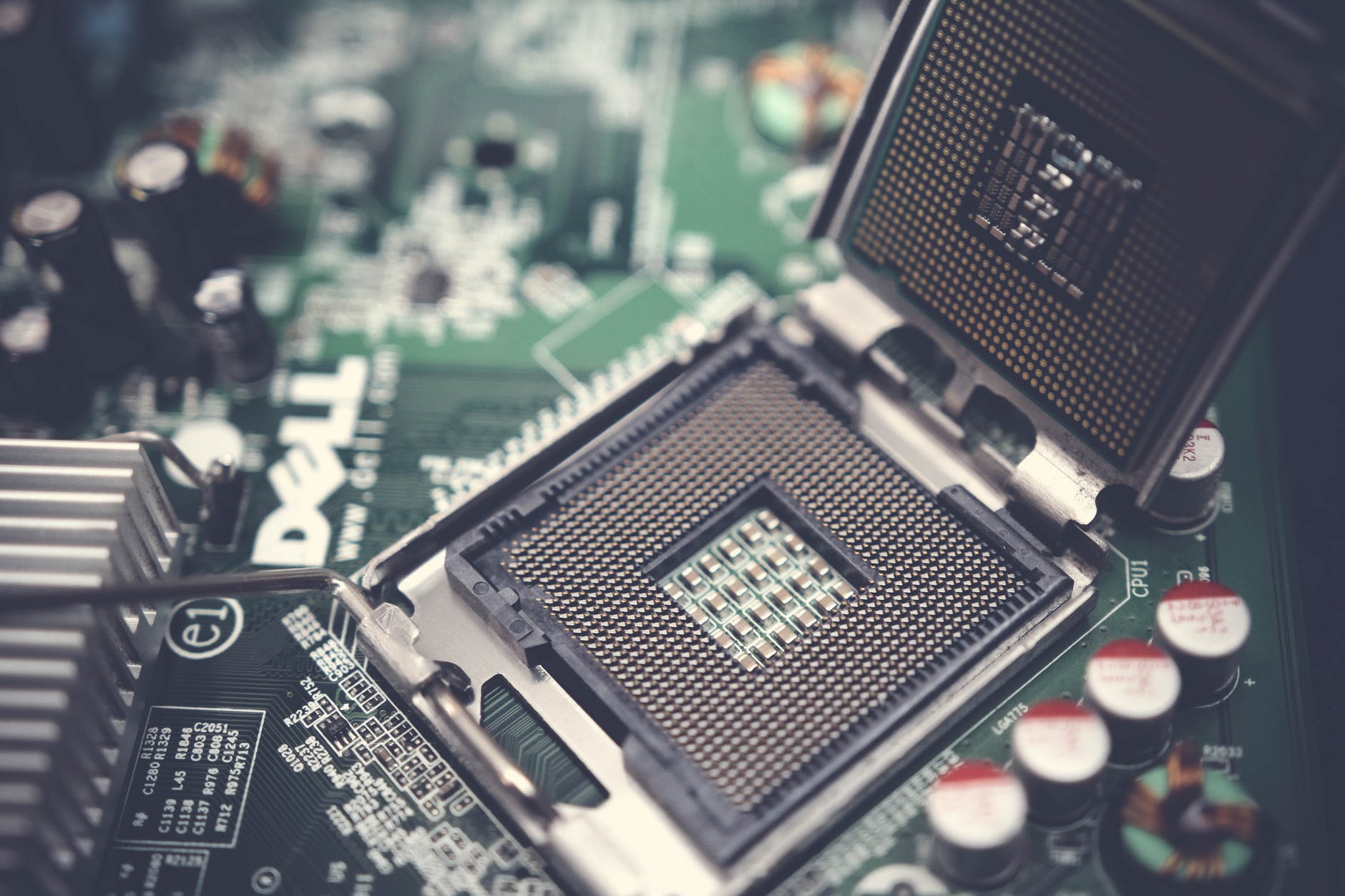
Already under pressure due to the surging demand for semiconductors amid the COVID-19 pandemic followed by the Russia-Ukraine war and now inflation, the chip industry is now witnessing signs of stress following US House Speaker Nancy Pelosi’s visit to Taiwan.

The effects of the global chip shortage last year, highlighted the world economy’s reliance on Taiwan. The semiconductor shortage had massive knock-on effects for the auto industry, for example, forcing many large firms to halt production. Taiwan Semiconductor Manufacturing Company (TSMC) is the world’s largest chip foundry and it’s Apple’s main producer of chips. During her visit to Taiwan, Pelosi met Mark Liu, chairman of the TSMC.

Cutting TSMC off from the rest of the world would currently be a major threat to the global economy, so tensions are obviously high. If production were to stop at the Taiwanese manufacturer, supply shortages would inevitably occur. These shortages could cause a global recession and stock market crash, which would likely lead to a spike in unemployment numbers at a time when many countries like the UK are currently enduring an ongoing cost of living crisis. 

The negative consequences that dependencies such as these can have are currently being demonstrated more clearly than ever before by the war in Ukraine. To avoid the downside of globalization, countries are therefore increasingly turning to their own chip or semiconductor production. This is not only the case in China. In the USA and Europe, too, there are programs with the Chips Act for America and the European Chips Act, respectively, which are intended to ensure local semiconductor production.

Seeing the situation, the Indian government has launched the ‘Semiconductor Mission’ to establish a self-reliance and give boost to India’s fast-expanding electronics manufacturing and innovation ecosystem. The Union Cabinet has approved the ‘Semicon India’ programme with a total investment of Rs 76,000 crore in the growth of the country’s semiconductor and display manufacturing ecosystem. Through India Semiconductor Mission (ISM), the central government wants to encourage the use of secure microelectronics and the establishment of a reliable semiconductor supply chain, including raw materials, speciality chemicals, gases, and production equipment.

Web 3.0 : Financial Service Industry

How will the evolution of the web have an effect on Financial Services? This is a question that puts many financial institutions in peril but is it really something that will put banks out of business? 

What is Web 3.0?

Web 3.0 is a new evolution phase that is coming into reality. The web as we know, is evolving into something more secure with more opportunities and various features. A lot of people don’t understand Web 3.0 and are scared of it. This will be a massive change on how we see the internet and how we will use it. It is going to be a decentralized platform and it will be individualized wherein you can customize your internet browsing experience. 

The Royal Bank of Canada is utilizing millions of data points to train its own AI, resulting in fewer client calls and faster application delivery. Meanwhile, BNY Mellon, the world’s largest cross-border payments service provider, improved its fraud prediction accuracy by 20%. By researching real-time market data within nanoseconds, AI and high-performance computing (HPC) are combining to provide better and faster trading intelligence.

What does this mean for Financial Services?

Web 3.0 is transforming the finance sphere slowly into a decentralized place. Basically, you don’t need a financial institution governing your transaction or authorizing them. The transaction will only be initiated by you and reaches the receiver, in a matter of moments, without any middlemen. Using cryptocurrency, you can make transactions over blockchain that eliminates that bank server from between. Cryptos are digital assets that let users transact directly without a payment service provider in the intermediary, which means that they enable new forms of capital. Although Bitcoin remains comparatively low now, it still may provide effective money governance by preserving and protecting the data or memory of what our money represents. Then there is the unparalleled manipulation of fiat money. We can observe how central banks have significantly extended their balance sheets since the GFC and the ongoing pandemic COVID-19. 

DeFi

DeFi is short for decentralized finance where there are no middlemen between you and the receiver. The transaction will be on the blockchain where the transaction time is reduced from time of hours/days, to moments that you can count on your hands. With DeFi, you can perform all transactions and services that are offered by traditional banks, without the bank in between. Now, you might wait for your transaction to be passed through because your bank should allow it and then it has to pass through the bank’s server. 

DeFi uses cryptocurrency as the main currency because they are programmed using blockchain technology. There is a huge difference between CeFi and DeFi. 

Effect on Financial Services

Undoubtedly, Web 3.0 has opened its doors for infinite opportunities and many FinTechs are utilizing them while traditional institutions are being left behind. These organizations are investing in their technology and its improvement in this rapidly changing market. These FinTechs’ major part of investment is into AI which are being programmed to understand the different problems faced by people and able to give out the solutions in a matter of seconds. This dependance on AIs is being constantly improved which are learning from their own errors and giving better and more efficient solutions. A survey by NVIDIA , according to it, nearly 83% of finance service professionals say that AI is essential for the companies’ success. It is also said that AI can improve company growth by 20%.

Conclusion

Web 3.0 is bringing so many opportunities while improving the present technology and organizations that are utilizing it will not be taking rest anytime soon. This technology is just going to become better and better. Every single day that we see this technology step up just shows that we are not done with technology, it can be better and more efficient and these companies are proving that to use everyday. Web 3.0 is showing more freedom of speech and thoughts than the present restricted web 2.0, decentralization is going to put back the control back in the hand of the User.

“Where there is life, there is growth

Where there is age, there is evolution.”

~Charles Darwin

Thank you so much for reading this article. I have added information from different websites and I thank them for their view on this topic. Do leave comments on different aspects of Web 3.0 that you think will change us.

The links to pages that helped me understand Web 3.0 better:

Financialit.net: How web 3.0 is transforming the financial services industry?

https://www.finextra.com/the-long-read/231/how-ai-is-powering-the-future-of-financial-services

https://n26.com/en-eu/blog/what-is-defi#:~:text=How%20does%20DeFi%20work%3F,are%20secured%20through%20blockchain%20technology.


Xiaomi Looking To Supercharge Displays In Its Mid-Range Phones.

According to a new report, Xiaomi is planning to supercharge displays in its mid-range Android phones. The company is looking to bring LTPO displays that go down to 1Hz to its mid-range smartphones.

Xiaomi is planning to supercharge displays in its mid-range smartphones
This will, of course, help with power consumption. Those displays can dynamically raise or lower their refresh rates, from 1Hz to the max they offer, usually 120Hz. Pretty much all LTPO panels we’ve seen go all the way up to 120Hz.

This information comes from Digital Chat Station, a well-known tipster. Xiaomi is seemingly testing such a display in one of its mid-range smartphones. That display supports a 120Hz refresh rate, can go down to 1Hz, and it also offers DC dimming.

Xiaomi has been offering 120Hz displays in its mid-range smartphones for a while now. That includes Redmi and POCO phones as well. So, this move is not surprising, LTPO panels were expected to be offered in some mid-range devices sooner or later.

Xiaomi is a company that tends to offer really well-specced phones for reasonable price tags, so this is their forte. It remains to be seen what phone will break the ice, though.

LTPO displays have been around for quite some time now, and they keep evolving
LTPO displays have been around for quite some time now, and we’re seeing the third-gen of this tech in flagship smartphones these days. Not all LTPO displays can go way down to 1Hz, though, keep that in mind.

Many people value great displays, high refresh rates, and certainly displays that require less power to run at the same time. Some OEMs are still way behind in that regard, but Xiaomi is not one of them.

We also don’t know when will the first mid-range Xiaomi smartphone with such a display see the light of day, nor how much will it cost. Such a phone is now in testing, so it may take Xiaomi a bit of time to deliver it.

Samsung Could Start Beta Testing Android 13 On The Galaxy S22 Soon.

A beta firmware update seems to show testing for Android 13 could begin soon for the Samsung Galaxy S22.The test could start in some parts of the world in July 2022.The beta will also include Samsung’s latest One UI 5.0 skin.

Android 13 is currently in its third beta version for Google’s Pixel phones. However, there’s word that a beta for the OS could soon be made available for the Samsung Galaxy S22 family of smartphones.

Read more: Android 13 schedule – When will it launch?

According to Tizenhelp, it has spotted beta firmware for the Galaxy S22 series in South Korea. The firmware beta, with the user number of S906NKSU2ZVF6 is for the Android 13 beta, which is also for the company’s own One UI 5.0 skin. The story says that the firmware’s appearance could mean that beta testing for the Galaxy S22 Android 13 update could begin in South Korea, and perhaps other parts of the world, as soon as July 2022.

While many of Android 13’s new additions and improvements have been revealed, there hasn’t been much in the way of news for Samsung’s One UI 5.0. Hopefully, we will get some concrete info about that phone skin’s new features soon as well.  While the Galaxy S22 phones will get first crack at the Android 13 beta, it’s expected that other high end Samsung phones will be allowed to enter the beta testing program in the weeks and months to come.

Comments.

SpaceX Claims 5G Plan Could ‘render Starlink Unusable For Most Americans’

SpaceX has said its U.S.-based Starlink customers will see their broadband service badly disrupted if Dish Network is allowed to use the 12GHz band for its 5G cellular network.

The decision is in the hands of the Federal Communications Commission (FCC) as Dish Network and others such as New York-based RS Access lobby the agency to let them use the 12GHz band. But SpaceX isn’t happy.

“If Dish’s lobbying efforts succeed, our study shows that Starlink customers will experience harmful interference more than 77% of the time and total outage of service 74% of the time, rendering Starlink unusable for most Americans,” the company said in a message posted on its website on Tuesday, June 21.

The long-running dispute involves a number of companies that are trying to gain access to the 12GHz band that SpaceX already uses for its internet-from-space Starlink service.

Dish has previously published data suggesting that ground-based 5G networks could comfortably share the frequency with low-Earth orbit satellite networks operated by the likes of SpaceX for its Starlink service.

But this week, SpaceX said that technical studies “dating back as far as 2016” suggest that opening up the band to ground-based 5G networks could adversely impact its Starlink service, and it even accused Dish of attempting to “mislead the FCC with faulty analysis in hopes of obscuring the truth.”

The company led by billionaire entrepreneur Elon Musk also shared a 12-page technical analysis explaining how mobile services envisioned by Dish would “cause massive disruptions to users of next-generation satellite services,” such as Starlink.

It explained that a high-gain antenna, like the SpaceX user terminal, is “designed with sufficient sensitivity to receive very weak signals coming from a desired transmitter,” adding that “such antennas do not, however, ‘reject’ interference coming from other directions.” The result is that interference would “completely wipe out the desired signal.”

In widely reported comments, a Dish spokesperson said its “expert engineers are evaluating SpaceX’s claims.”

Dish announced last week that it has launched commercial 5G services in more than 100 U.S. Cities — covering around 20% of the nation’s population — by using frequencies in other spectrum bands. But whether it can access the 12GHz band as part of its 5G rollout remains to be seen.

SpaceX has launched more than 2,500 Starlink satellites into orbit for its broadband service, which currently serves more than 400,000 customers in 34 countries.

Apple Releases New Safari Technology Preview With MacOS Ventura Features

AppleInsider is supported by its audience and may earn commission as an Amazon Associate and affiliate partner on qualifying purchases. These affiliate partnerships do not influence our editorial content.

Apple has released a new version of Safari Technology Preview with features included in the company’s upcoming macOS Ventura update.

Safari Technology Preview is an experimental browser designed to test features that could be released in new versions of Safari. The company on Tuesday released Safari Technology Preview 147, with several macOS Ventura features.

The new browser version includes Live Text, support for Apple Passkeys, and improved Safari Web Extensions, among other features. However, some features are missing, such as Tab Groups syncing, Website Settings, and Web Extensions.

With the release, users who are currently on macOS Monterey will be able to test out some of those new features without downloading the beta version of macOS Ventura.

Apple’s full release notes for the Safari Technology Preview version are available below.

Live Text. Select and interact with text in videos or translate text in images on the web in macOS Ventura betas on Apple Silicon-based Macs.

Web technologies. Experience and test the HTML, CSS, JavaScript, and other web technologies that are available in Safari 16 Beta and included in previous Safari Technology Preview releases.

Web Push. Send notifications to people who opt-in on your website or web app with Safari Technology Preview on macOS Ventura betas.

Passkeys. Preview the new type of phishing-resistant credential that makes signing in to websites safer and easier. Available through Safari’s WebAuthn platform authenticator. To learn more about passkeys, see Meet passkeys.

Improved Safari Web Extensions. Test out API improvements including the ability to open a Safari Web Extension popover programmatically.

Web Inspector Extensions. Build custom tooling or convert existing developer tools extensions to use in Web Inspector.

Flexbox Inspector. Use the new visualization overlay in Web Inspector to help you more quickly and easily understand the layout of elements with Flexbox. It marks both the free space and gaps between flex items to reveal how they affect the result.