The Secret Garden: A book review

A girl is born to a rich household of a British officer in the times of the Raj. As customary to apparently the then tradition of rich households in British India, the child was raised by the local servants. The father and the mother never really bothered to spend some time with her. However, a deadly plague breaks in and everyone dies. Everyone, but the girl child who is now a bitter, unkind girl who has spent a large part of her growing time simply commanding people and repressing her emotions and has a habit of being fed, and bathed and clothed – all by others. The death of her family means she has to now live with her uncle – a lord in the British Isles.

In that cold, dead and open manor, she discovers the meaning of work, expression, friendship and love – not only nurturing back his cousin to health, but also helping her uncle rediscover happiness and let the garden where her wife passed away – the secret garden with no doors open to anyone.

The Secret Garden by Frances Hodgson Burnett - Land of Tales

The secret garden – a British children’s classic for more than a century now – is some of those books which one might not necessarily complete in one go, but would be pressed innately to return to it. The story is very much of a child but it builds up in ways that often evade even adult and contemporary literature. Imagination, revelations and most importantly the fact that the protagonist is but a child – all of it is simply touching. A movie was made on the book in 2020 starring Collin Firth and Julie Walters.

The Secret Garden (2020 film) - Wikipedia

Remember to give it a read!!!

Best places to eat in Delhi

1. Ama café

It is situated in Tibetan colony at Majnu ka tila which is easily reachable from vidhan sabha metro station. It has a different vibe as it is surrounded by Tibetan culture that one can experience while visiting the place. Now, let’s talk about food. Ama café has aced in all departments i.e., ambience, service, quality of food etc., and not to forget, it’s pocket friendly. This café has a variety of menu i.e., from sandwiches, pizza, pancakes to tea, coffee, shakes, this café has covered everything. This café is very famous for its bakery menu, especially mud cake and blueberry cheese cake. You can hang out with your friends and have a nice evening or start your day with their delicious breakfast.

Address – House no. 6, 1st Floor, Majnu-ka-tilla, New Aruna Nagar, New Delhi, Delhi 110054

2.Yum yum cha

It has 4 outlets in Delhi (Saket, khan market, vasant Kunj and Gurgaon). The restaurant is popular for its Pan Asian/Modern Asian cuisines. If you are looking for best variety of sushi’s and good steaming dim sums, you should definitely visit this place. They don’t believe in saying no, whether you ask for half portions or customization. The place has very welcoming and friendly vibe which makes you feel very comfortable and satisfied. one must go and have a yum yum finger licking experience at this place.

3. Nazeer

The ambience of this fine dining multi-cuisine restaurant is elegant and classy with pictures of Mughal emperors on the walls. The place is huge with comfortable seating space. It is perfect for family gatherings or even a quiet lunch or dinner with friends. Nazeer Delicacies specializes in North Indian, Mughlai and Chinese cuisine. You must try some of their signature dishes like ‘Nazeer Special Roasted Chicken’, ‘Murg Musallam’, ‘Special Mutton Bara’ or ‘Tandoori Raan Mutton’. Their ‘Chicken Seekh Roll’, ‘Mutton Seekh Roll’ and ‘Paneer Tikka Roll’ are a must try. End your meal with their ‘Nazeer’s Special Phirni’ or ‘Gulab Jamun’. This place is a must visit if you crave for good and authentic Mughlai food and have a great time with your family and friends. It has many outlets in Delhi.

Address –1. M block, Connaught place. 2. V3S mall, Laxmi Nagar, East Delhi.

4. Saravana Bhavan

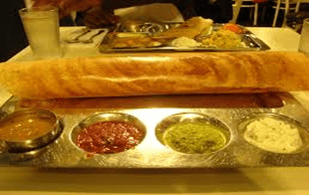
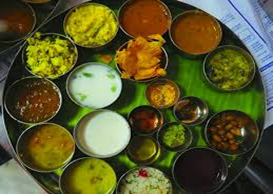
Hotel Saravana Bhavan is the largest South Indian restaurant chain in the world. They have 33 locations in India and 77 across 22 countries in Southeast Asia, Australia, New Zealand, the Middle East, Europe, and North America. It’s worth waiting in a long cue to get a table to have a bite of crunchy masala dosa dipped in chutney as the restaurant is always full with admirers of authentic south Indian food. It’s always a treat to be there as they serve you authentic flavors of south on a banana leaf. What’s more, its pocket friendly as well.

Address – P-13, Connaught Circle, Connaught Place, New Delhi

5. Desi vibe

Whether your order is Dal and Roti or a kingly repast, you will be served a welcome drink and a choice of about a dozen pickles with a smile. The staff is quite good at recommending dishes. Large tables to accommodate entire families make it a good option for a family gathering. Pick up your favorite cocktail from their extensive cocktail menu and accompany it with ‘Dahi K Kebabs’ and ‘Achari Paneer Tikka’. Do not miss the ‘Khas Tandoori Chaap’ and the ‘Paneer Lababdar’. End on a sweet note with ‘Phirni’ and ‘Moong Dal Halwa’.

Address – N-95, 2nd Floor, Connaught Place, Delhi 110001

What Is Fast Fashion?

Clothes shopping used to be an occasional event—something that happened a few times a year when the seasons changed or when we outgrew what we had. But about 20 years ago, something changed. Clothes became cheaper, trend cycles sped up, and shopping became a hobby. Enter fast fashion and the global chains that now dominate our high streets and online shopping. But what is fast fashion? And how does it impact people, the planet, and animals?

It was all too good to be true. All these stores selling cool, trendy clothing you could buy with your loose change, wear a handful of times, and then throw away. Suddenly everyone could afford to dress like their favourite celebrity or wear the latest trends fresh from the catwalk.

Then in 2013, the world had a reality check when the Rana Plaza clothing manufacturing complex in Bangladesh collapsed, killing over 1,000 workers. That’s when consumers really started questioning fast fashion and wondering at the true cost of those affordable t-shirts. If you’re reading this article, you might already be aware of fast fashion’s dark side, but it’s worth exploring how the industry got to this point—and how we can help to change it.

What is fast fashion?

Fast fashion can be defined as cheap, trendy clothing that samples ideas from the catwalk or celebrity culture and turns them into garments in high street stores at breakneck speed to meet consumer demand. The idea is to get the newest styles on the market as fast as possible, so shoppers can snap them up while they are still at the height of their popularity and then, sadly, discard them after a few wears. It plays into the idea that outfit repeating is a fashion faux pas and that if you want to stay relevant, you have to sport the latest looks as they happen. It forms a key part of the toxic system of overproduction and consumption that has made fashion one of the world’s largest polluters. Before we can go about changing it, let’s take a look at the history.

How did fast fashion happen?

To understand how fast fashion came to be, we need to rewind a bit. Before the 1800s, fashion was slow. You had to source your own materials like wool or leather, prepare them, weave them, and then make the clothes.The Industrial Revolution introduced new technology—like the sewing machine. Clothes became easier, quicker, and cheaper to make. Dressmaking shops emerged to cater to the middle classes.

Many of these dressmaking shops used teams of garment workers or home workers. Around this time, sweatshops emerged, along with some familiar safety issues. The first significant garment factory disaster was when a fire broke out in New York’s Triangle Shirtwaist Factory in 1911. It claimed the lives of 146 garment workers, many of whom were young female immigrants. By the 1960s and 70s, young people were creating new trends, and clothing became a form of personal expression, but there was still a distinction between high fashion and high street.

In the late 1990s and 2000s, low-cost fashion reached its zenith. Online shopping took off, and fast-fashion retailers like H&M, Zara, and Topshop took over the high street. These brands took the looks and design elements from the top fashion houses and reproduced them quickly and cheaply. With everyone now able to shop for on-trend clothes whenever they wanted, it’s easy to understand how the phenomenon caught on.

How to spot a fast fashion brand

Some key factors are common to fast fashion brands:

  • Thousands of styles, which touch on all the latest trends.
  • Extremely short turnaround time between when a trend or garment is seen on the catwalk or in celebrity media and when it hits the shelves.
  • Offshore manufacturing where labour is the cheapest, with the use of workers on low wages without adequate rights or safety and complex supply chains with poor visibility beyond the first tier.
  • A limited quantity of a particular garment—this is an idea pioneered by Zara. With new stock arriving in store every few days, shoppers know if they don’t buy something they like, they’ll probably miss their chance.
  • Cheap, low quality materials like polyester, causing clothes to degrade after just a few wears and get thrown away.

What’s the impact of fast fashion?

On the planet: Fast fashion’s impact on the planet is immense. The pressure to reduce costs and speed up production time means that environmental corners are more likely to be cut. Fast fashion’s negative impact includes its use of cheap, toxic textile dyes—making the fashion industry the second largest polluter of clean water globally after agriculture. That’s why Greenpeace has been pressuring brands to remove dangerous chemicals from their supply chains through its detoxing fashion campaigns through the years.

Cheap textiles also increase fast fashion’s impact. Polyester is one of the most popular fabrics. It is derived from fossil fuels, contributes to global warming, and can shed microfibers that add to the increasing levels of plastic in our oceans when washed. But even ‘natural fabrics’ can be a problem at the scale fast fashion demands. Conventional cotton requires enormous quantities of water and pesticides in developing countries. This results in drought risks and creates extreme stress on water basins and competition for resources between companies and local communities.

The constant speed and demand mean increased stress on other environmental areas such as land clearing, biodiversity, and soil quality. The processing of leather also impacts the environment, with 300kg of cehmicals added to every 900kg of animal hides tanned. The speed at which garments are produced also means that more and more clothes are disposed of by consumers, creating massive textile waste. In Australia alone, more than 500 million kilos of unwanted clothing ends up in landfill every year.

On workers: As well as the environmental cost of fast fashion, there’s a human cost. Fast fashion impacts garments workers who work in dangerous environments, for low wages, and without fundamental human rights. Further down the supply chain, the farmers may work with toxic chemicals and brutal practices that can have devastating impacts on their physical and mental health, a plight highlighted by the documentary The True Cost.

On animals: Animals are also impacted by fast fashion. In the wild, the toxic dyes and microfibres released in waterways are ingested by land and marine life alike through the food chain to devastating effect. And when animal products such as leather, fur, and even wool are used in fashion directly, animal welfare is put at risk. As an example, numerous scandals reveal that real fur, including cat and dog fur, is often being passed off as a faux fur to unknowing shoppers. The truth is that there is so much real fur being produced under terrible conditions in fur farms that it’s become cheaper to produce and buy than faux fur!

On consumers: Finally, fast fashion can impact consumers themselves, encouraging a ‘throw-away’ culture because of both the built-in obsolescence of the products and the speed at which trends emerge. Fast fashion makes us believe we need to shop more and more to stay on top of trends, creating a constant sense of need and ultimate dissatisfaction. The trend has also been criticized on intellectual property grounds, with some designers alleging that retailers have illegally mass-produced their designs.

Role Of Todays Youth In Building A Self Reliant India

“Self-reliance is the key to a vigorous life.”

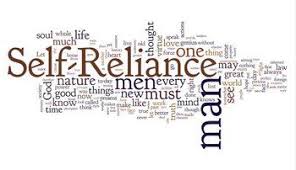
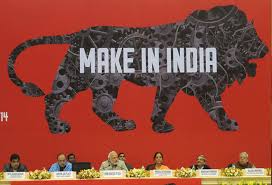
Self-reliant India is the vision of the Prime Minister of India Narendra Modi of making India a self-reliant nation. The first mention of this came in the form of the ‘Self-Reliant India Mission’ during the announcement of the coronavirus pandemic related economic package on 12 May 2020. This self-reliant policy does not aim to be protectionist on nature and as the Finance Minister clarified, ” Self-reliant India does not mean cutting off from rest of the world”. The largest fund in the country worth Rs. 21,000 crore was setup by the IIT Alumni Council with the aim of supporting the mission towards self-reliance.

Everybody knows, that the youth are the future of any country. But India can take lead over many other nations because about 65 percent of the country’s population is below 35 years and 50 percent is below 25 years. With huge, educated young population, India is very uniquely poised to realise the demographic potential amd reap the advantage of this vast powerhouse of human resource talent. The need of the hour is to upgrade the skill or upskill the youth to meet the emloyment needs of technology driven 21st century and accelerate the pace of self-reliance.

The uncertainity created by the pandemic is being seen by many as an opportunity to upgrade knowledge and acquire new skills that will cater to the post-corona virus job scenario. The skills required for tomorrow’s jobs will be completely different from the skill-sets youth possess today.

So, its high time now, we have to make India self-reliant and youth plays the most important role in this mission.

International Workers Day

“Without labour nothing prospers.”

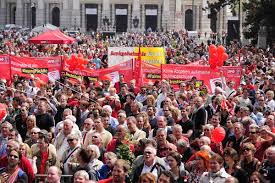
Labour Day or International Workers Day is celebrated annually on 1 May to celebrate the working class and labourers across the world. Socialist and labour unions celebrate this day by organising programmes to improve wages and working conditions of the workforce. In more than 80 countries Labour Day is a national holiday.

Before a formal Labour Day came into place, deaths, injuries and dangerous working conditions were very common among the working class globally. During the rise of industrialisation, the U.S. exploited the working class during the nineteenth century and made them work upto 15 hours a day under rigorous conditions. The rising death of the workforce in industries forced the working class to raise their voices for their safety. After efforts made by the workers and socialists, eight hours was declared as the legal time for the workers in the late nineteenth century by the American Federation of Labour.

The origin of Labour Day goes back to an incident in Chicago on May 4, 1886 known as the Haymarket Affair. On this day workers assembled as part of a peaceful rally in a strike demanding an eight hour work day. An unknown person threw a dynamite bomb at the police as they acted to disperse the meeting, and the bomb blast and ensuing gunfire resulted in the deaths of seven police officers and atleast four civilians; dozens of others were wounded. The Chicago protests led to many countries and at last they got the proper labour rights.

So, they had a long repression from the society. So, now the time has come to live respectfully and safe. Without labour no country can prosper. They are the ones who make a way towards country’s development. Their hardwork, dedication cherishes the path of development of country. So, respect them and provide safe working conditions to them. The below mentioned lives are aptly quoted;” A worker is a creator and a great asset to every nation”.

Theories of Punishment in Indian Penal Code,1860

Introduction

Punishment is the sanction imposed on an accused for the infringement of the established rules and norms of the society.

Objective

The object of punishment is to protect society from mischievous and undesirable elements by deterring potential offenders, by preventing the actual offenders from committing further offences and by reforming and turning them into law abiding citizens.

Types of Theories

  1. Deterrent Theory
  2. Preventive Theory
  3. Retributive Theory
  4. Reformative Theory
  5. Multi Approach Theory

a) Deterrent Theory: According to this theory, the object of punishment is not only to prevent the wrong-doer from doing a wrong second time, but also to make him an example to others who have criminal tendencies. Salmond considers deterrent aspects of criminal justice to be most important for control of crime. Deterrent punishment is likely to harden the criminal instead of creating in his mind a fear of law. Hardened criminals are not afraid of imprisonment.

b) Preventive Theory: According to Paton:’The theory concentrates on the prisoner and seeks to prevent him from offending again in the future. The death penalty and exile serve the same purpose of disabling the offender’. Critics point out that preventive punishment has the undesirable effect of hardening first offenders, or juvenile offenders, when imprisonment is the punishment, by putting them in association of hardened criminals.

c) Retributive Theory: In primitive society punishment was mainly retributive. The person wronged was allowed to have revenge against the wrong-doer. The principle of ‘an eye for an eye’, ‘a tooth for tooth’, was the basis of criminal administration. According to Justice Holmes: ‘It is commonly known that the early forms of legal procedure were grounded in vengeance’. The advocates of this theory plead that the criminal deserves to suffer.

d) Reformative Theory: According to this theory, the object of punishment is reformation of criminals. The object of the punishment should be to reform the offender. The criminal must be educated and taught some art and craft or industry during his term of imprisonment, so that he may be able to lead a good life and become a responsible and respectable citizen after release from jail.

e) Multi Approach Theory: In fact, a perfect system of criminal justice could never be based on any single theory of justice. Every theory has its own merits and every effort should be made to extract the good points of each and integrate it so that best of all could be achieved. Punishment should be proportionate to the nature and gravity of the crime. The object of any concession given to an offender should be to convince him that normal and free life is better than life in jail.

In California, Argo AI may now provide public rides in its self-driving vehicles.

Argo AI, the Ford and VW-backed autonomous vehicle technology firm, has received a permit in California that will allow it to provide free rides in its self-driving vehicles on public highways.

According to the accepted application, the California Public Utilities Commission gave the so-called Drivered AV pilot permit earlier this month. It was published on its website on Friday, a little over a week after Argo and Ford revealed plans to debut at least 1,000 self-driving cars on Lyft’s ride-hailing network in a variety of locations over the next five years, beginning with Miami and Austin.

The authorization, which is part of the state’s Autonomous Vehicle Passenger Service pilot, adds Argo to a small but increasing group of businesses looking to go beyond standard AV testing — a hint that the industry, or at least some companies, are getting ready to go commercial. Since 2019, Argo has been testing its self-driving technology in Ford cars in Palo Alto. In California, the company’s test fleet consists of around a dozen self-driving test vehicles. In addition to Miami, Austin, Washington, D.C., Pittsburgh, and Detroit, it has autonomous test cars.

Aurora, AutoX, Cruise, Deeproute, Pony.ai, Voyage, Zoox, and Waymo have all been granted licences to participate in the CPUC’s Drivered Autonomous Vehicle Passenger Service Pilot program, which necessitates the presence of a human safety operator behind the wheel. This permission does not allow companies to charge for rides.

Cruise is the only business that has obtained driverless authorization from the CPUC, allowing it to transport people in its test cars without the presence of a human safety operator.

Obtaining a Drivered authorization from the CPUC is only the first step on the road to commercialization in California. Before charging for rides in robotaxis without a human safety operator behind the wheel, the state needs firms to clear several regulatory barriers from the CPUC and the California Department of Motor Vehicles, each with its tiered system of licences.

The DMV is in charge of regulating and issuing licenses for autonomous vehicle testing on public roads. The DMW issues three types of permits, the first of which allows businesses to test autonomous vehicles on public roads with a safety driver. This basic testing authorization is held by more than 60 businesses.

The next permission allows for driverless testing, followed by a commercial deployment permit. Permits for driverless testing, in which no person is behind the wheel, have become the new benchmark and a need for firms looking to start a commercial robotaxi or delivery service in the state. The DMV has issued autonomous permits to AutoX, Baidu, Cruise, Nuro, Pony.ai, Waymo, WeRide, and Zoox.

Nuro is the only person who has gotten deployment permission from the DMV. Nuro may now deploy on a commercial basis thanks to this permission. Nuro’s trucks can only carry freight and not passengers, allowing the firm to avoid the CPUC approval procedure.

Meanwhile, in May 2018, the CPUC approved two pilot projects for autonomous vehicle passenger transportation. The Drivered Autonomous Vehicle Passenger Service Pilot program, which Argo just obtained, permits firms to run a ride-hailing service utilizing autonomous vehicles as long as they adhere to certain guidelines. Companies are not permitted to charge for rides, and a human safety driver must be present at all times. Additionally, specific data must be provided quarterly.

The second CPUC pilot will allow Cruise to launch an autonomous passenger service in June 2021.

It’s worth noting that getting to the holy grail of commercial robotaxis necessitates obtaining all of these permissions from the DMV and CPUC.

Digital Banking

Digital Banking has completely changed the way we bank in today’s times. With Digital Banking, you can transact with higher speed, ease and convenience.

What is Digital Banking? 

In simple terms, Digital Banking means availability of all banking activities online. Here, you have the luxury to freely access and perform all traditional banking activities 24*7 without having to personally go to a bank branch to get your work done. Some of the major online banking activities include-

(1) Money Deposits, Withdrawals, and Transfer
(2) Checking/Savings Account Management
(3) Applying for Financial Products
(4) Loan Management
(5) Bill Payment
(6) Account Services

Many banks also offer other integrated services like investing in Mutual Funds and other investment options online. Thus, making Digital Banking a widely used concept.

Digital Banking in India

Digital Technology has drastically changed the way banks interact with us. Similarly, it has completely changed the way we transact and interact with the bank. This is especially true in the case of a booming technological and financial economy like India, where more and more people are being connected to Digital Banking Platforms with each passing day. 

With Digital Banking you can perform every transaction, from start to end in a seamless, secure manner. You can withdraw money, deposit money, apply for loans, invest in Mutual Funds- all at a click of a button.

With the introduction of mobile banking you can perform transactions on the go. Mobile banking is a convenient and easy way to finish your transactions. For example, you can do over 125 transactions through HDFC Bank’s mobile banking app. 

The latest addition to mobile banking feature is the Mobile Banking LITE app.The HDFC Mobile Banking app can work without an internet connection, italso doesn’t take up too much space and is quick to install over slow connections. It’s a safe and secure way of making transactions on the go.

Digital Banking services are offered by all major retail banks in the country today and have, in fact, become an integral part of their services. So, one can now bank from the ease of one’s home, with the convenience of smartphone screens.

(1) Indian Financial System Code (IFSC)
The Indian Financial System Code (IFSC) is an 11-character code in alphanumeric format to uniquely identify all bank branches within the NEFT, RTGS, and the Immediate Payment Service (IMPS) network within India. This code is printed on every cheque leaf in your personal or company chequebook. To transfer funds to an account electronically, the receiver must share his IFSC code as it identifies the receiver bank and branch.Magnetic Ink Character Recognition (MICR)
Magnetic Ink Character Recognition (MICR) is a technology used to verify the legitimacy or originality of paper documents, especially cheques. A special ink sensitive to magnetic fields is used in the printing of certain characters. Every bank branch has a unique MICR code, which helps the RBI speed up the cheque clearing process, with MICR readers.

(2)Magnetic Ink Character Recognition (MICR)
Magnetic Ink Character Recognition (MICR) is a technology used to verify the legitimacy or originality of paper documents, especially cheques. A special ink sensitive to magnetic fields is used in the printing of certain characters. Every bank branch has a unique MICR code, which helps the RBI speed up the cheque clearing process, with MICR readers.

(3) Electronic Clearing Service (ECS)
Electronic Clearing Service (ECS) is another method of transferring funds from one bank account to another. It is most often used to pay regular bills (telephone, mobile, credit card, electricity, etc, to make EMI payments (Personal, Car, Home Loan), and SIP investments. This is done by invoking the auto debit facility. ECS is also used by entities for payment of salaries, pensions, distribution of dividend interest etc.

(4) Immediate Payment Service (IMPS)
Since NEFT may not be available for use on weekends and bank holidays, you could try using IMPS or Immediate Payment Service. The service is available 24X7. The minimum transfer value is Rs 1 and the maximum value is Rs 2 lakh.
But to use this service, you will need to register via your bank and provide the mobile number and MMID of the beneficiary as IMPS transfer can also be done through mobile phones. Mobile Money Identifier (MMID) is a seven-digit unique number issued by the bank.

(5) National Electronic Funds Transfer (NEFT)
The National Electronic Funds Transfer (NEFT) system allows individuals, companies, and other entities to transfer funds electronically from one bank to another within India. Normally, funds from the remitting bank will be sent to the RBI within three hours of the transaction. However, the time taken to credit the beneficiary bank’s branch account depends on how long it takes the bank to process the transaction. It should be noted that NEFT operates only during business hours on weekdays. NEFT transactions cannot be done on Sundays, bank holidays, and second and fourth Saturdays of the month. The minimum transfer value is Rs 1 and there is no upper limit.

(6)Real Time Gross Settlement (RTGS)
Another method for transferring money electronically, from bank to bank, within the Indian banking system is Real Time Gross Settlement (RTGS) scheme, where the minimum amount for each transaction is Rs 2 lakh and there is no upper limit. The beneficiary account receives the money immediately.
The RTGS system is primarily meant for large value transactions.With effect from 00:30 hours on December 14, 2020, RTGS facility is available round the clock on all days i.e. 24 hrs. India one of the few countries to operate the system 24×7. This comes within a year of the Reserve Bank of India (RBI) operationalising NEFT 24×7. NEFT is the popular mode for small-value transactions. RTGS, which started on March 26, 2004 with a soft launch involving four banks, presently handles 6.35 lakh transactions daily for a value of Rs 4.17 lakh crore across 237 participant banks. The average ticket size for RTGS in November 2020 was Rs 57.96 lakh, making it a truly large-value payment system. RTGS uses ISO 20022 format which is the best-in-class messaging standard for financial transactions. The feature of positive confirmation for credit to beneficiary accounts is also available in RTGS.
Earlier, the RBI had decided not to levy charges on transactions through NEFT and RTGS in order to promote digital transactions, and had asked banks to pass on the benefits to customers. The RBI used to levy minimum charges on banks for transactions routed through RTGS and NEFT. Banks, in turn, levied charges on their customers. RTGS is meant for large-value instantaneous fund transfers, while NEFT is used for fund transfers of up to Rs 2 lakh.
It should be noted that NEFT, RTGS and IMPS impose transaction fees in slab rates.

(7) Society for Worldwide Interbank Financial Telecommunication (SWIFT)
SWIFT is an acronym for Society for Worldwide Interbank Financial Telecommunication. It is an internationally recognised identification code forbanks worldwide, and is usually used for international wire transfers. Only those banks that are SWIFT-enabled can take part in this system. In EU nations SWIFT is also known as BIC or Bank Identification Code. When dealing with international transfers also be aware of IBAN or International Bank Account Number. IBAN (International Bank Account Number) appears in bank statements and the bank’s online systems. IBAN and BIC (Bank Identification Code ) contain your bank account number and sort code written in an internationally recognised format. All these numbers can make your wire transfers happen quickly and securely.


Covid -19, Society and Law

Introduction

Humankind is going through a new and unprecedented experience with the rapidly spreading Covid-19 pandemic. We still do not know who ‘patient zero’, the first person to be infected and transmit it to others, was. The severity of this virus, which has caught the world by surprise, lies not only in the delay of laboratories in finding an effective and efficient vaccine, but also in the fact that the measures taken to counter it differ considerably from what was previously adopted to confront various acute crisis, whether health, political, social or economic.

There is no doubt that the Covid-19 pandemic will change the face of human society, but it forces us to ask some important questions. Will this change only affect the healthcare systems, or will it extend to consumption patterns, value systems, political regimes and legal systems, thus leading to the fall of the huge financial and economic empires? Will the major transformations the world will undergo be determined by how we recover from the effects of this situation?

According to the World Health Organization, the problem does not lie in Covid-19 alone but rather in the fear, panic and terror caused by the spread of this virus, and amplified by the media, which has been presenting the situation as if it were the end of the world. Barring the measures adopted by China, where the virus originated, the methods used to manage the crisis around the world are somewhat similar. To some extent, China succeeded in curtailing the spread of the virus, thanks to the spirit of discipline in its people, and due to its health infrastructure, the plethora of research centres and laboratories, and the ability to control the sources of information from the onset. Most other countries have wasted precious time after the first cases appeared, relying on legal and security control in dealing with the pandemic and information about it, rather than establishing a single entity to disseminate information backed by science.

The current crisis is not of the pandemic alone. Rather, it is of the far-reaching consequences on human behaviour. Addressing these repercussions should not be limited to taking ad-hoc costly measures limited to the current situation but should prompt us to think about putting into place innovative measures and actions that go beyond the pandemic. Measures like imposing quarantines, enacting new laws to manage the pandemic, using modern tools for e-learning and telework, ensuring a minimum standard of living for all, granting loans, exemptions from paying water and gas bills and taxes, assisting the unemployed, and using the military to assist in security measures during the epidemic have cost countries billions of dollars. These are funds that could have been invested in infrastructure or other major projects, but instead have now been used to respond to the immediate needs of the people.The pandemic will radically change the modern world, leading to three likely outcomes.

The first outcome

A new theory will be integrated within political science in the future. Indeed, traditional legitimacies in the systems of government, which are derived from ballot boxes, hereditary legitimacy or religion, are beginning to decline, leaving room for a new theory called the “theory of achievements”. Since the Cultural Revolution of Mao Zedong in the 1960s, China has worked on this emerging legitimacy, as the Chinese Communist Party has distinguished itself from the rest of the Communist parties in the world.

The second outcome

The traditional conflict between wrong information and right information will transform into a conflict between convincing information and unconvincing information, as legal arsenals and control tools are no longer effective in the spread and prevalence of correct information. The method of producing information and choosing its dissemination channel is becoming a means of turning it into convincing information, regardless of if it is true or false.

The third outcome

The process of monitoring people will transition from external to internal control using smartphones. This is also what happened in China, to curb down on misinformation on Covid-19 during its early stages and as a preventive measure in the absence of a vaccine. These smart devices have become effective tools for measuring citizens’ reactions at home to what is happening in their surroundings.

A coming human revolution

Humankind is going through a humanitarian revolution, the kind that has occurred only thrice before: first, after the discovery of fire; second, with the advent of agriculture; and third, following the industrial revolution. The most prominent sign of this ‘fourth revolution’ is the predominance of new technology and the supremacy of modern means of communication, which have spawned a conflict between two major concepts of using the internet. The first can be described as social perception with a human connect, while the second is non-social perception, and can be termed as wild and unbridled. The humanitarian-minded perception is likely to win this conflict, as this human revolution is making its mark on our social existence and old behaviours. This will impact the current value system and will have political andeconomic implications.

The post-epidemic stage will see the emergence of a new human being, whose daily behaviour and thinking will differ from what it was before the Covid-19 outbreak. The political, legal and economic systems will have to adapt to this new human being. Despite the timely importance of the current safety measures being put into action around the world, there is a great need for these to be integrated into a comprehensive post-pandemic thinking. In fact, we will find ourselves faced with a generation who thinks differently from the pre- pandemic generation.

In light of the impact of Covid-19 on the individual and collective behaviours of society and State, and people’s continued thirst for information, it is necessary to keep in mind the post- pandemic world when it comes to decision-making. The Covid-19 storm will pass and mankind will survive, despite the loss of many lives. Humankind will soon live in a world that is very different from the one before the virus. However, the pandemic will succeed where the other movements of the 20th century have failed in their struggle to establish democracy and human rights, and preserve a safe environment for all.

Doctrine of Notice

INTRODUCTION

The concept of Notice for the purpose of The Transfer of Property is given under Section 3 of Transfer of Property Act, 1882 (TPA). Notice means to have knowledge of something i.e. to know something. In law, it means knowledge of a fact. It is used to decide on conflicting claims of two parties. In law, the Notice or Knowledge of a fact affects one’s legal rights and liabilities.

Under Section 3 of TPA Notice can be; “Actual or express Notice” or “Constructive Notice”, or it may be imputed to the transferee when information of the fact has been obtained by his Agent.

Constructive notice

It is based on the law of presumption or it is presumed that in certain circumstances that the person knows the fact. He cannot afterwards say against it. This type of notice can be divided into five.

  1. Notice imputed by wilful abstention from enquiry
  2. Notice from gross negligence
  3. Notice by registration
  4. Notice by possession
  5. Notice by agent

Actual notice.- Actual notice, to constitute a binding force, must be definite information given by a person interested in the thing in respect of which the notice is issued, as it is settled rule that a person is not bound to attend to vague rumours or statements by mere strangers, and that a notice to be binding must proceed from some person interested in the thing. A mere casual conversation in which knowledge of a certain thing is imparted, is not notice of it, unless the mind of a person has, in some way been brought to an intelligent apprehension of the nature of the thing, so that a reasonable man or any normal man of business would act upon the information, and would regulate his conduct accordingly. In other words, the party imputing notice must show that the other party had knowledge which would operate upon the mind of any rational man, or man of business, and make him act with reference to the knowledge he has so acquired. A vague or general report or the mere existence of suspicious circumstances is not in itself notice of the matter to which it relates. A general claim is not sufficient to affect a purchaser with notice of a deed of which he does not appear to have knowledge. If a person knows that another has or claims an interest in property for which he is negotiating he is bound to inquire what his interest is, and if he omits to do so, he will be bound, although the notice was inaccurate as to the particulars to the extent of such interest.

The notice must be given in the same transaction. A person is not bound by notice given in a previous transaction which he may have forgotten. Notice to a purchaser by his title papers in one transaction will not be notice to him in an independent subsequent transaction in which the instruments containing recitals are not necessary to his title, but he is charged constructively with notice merely of that which affects the purchase of the property in the chain of title of which the payer forms the necessary link.

Constructive notice.- Constructive notice is the knowledge which the Courts impute to a party upon a presumption so strong that it cannot be allowed to be rebutted, that knowledge must have been communicated. “The doctrine of constructive notice” said Lord Brougham in Kennedy v. Green, depends upon two considerations first that certain things existing in relation or the conduct of parties, or in the case between them, begets a presumption so strong of actual knowledge that the law holds the knowledge to exist because it is highly improbable it should not, and next, that policy and safety of the public forbids a person to deny knowledge while he is so dealing as to keep himself ignorant or so as that he may keep himself ignorant, and yet all the while let his agent know, and himself perhaps, profit by that knowledge. The broad principle underlying the doctrine of constructive notice is that a person who is bound to make an inquiry and fails to do it should be held to have notice of all facts which would have come to his knowledge had he made the inquiry. Where, on the other hand, a person is not bound to make an inquiry he cannot be charged with constructive notice of the facts that might havebeen ascertained on such inquiry. Again, where a fact, of which a person has notice, would not put him on inquiry as to the matters in question, it cannot be constructive notice of such matter.

Classes of constructive notice

(1) Wilful abstention from search which one ought to make.
(2) Gross negligence.
(3) Registration as a notice.
(4) Possession as notice.
(5) Notice to agent
(5.1)Notice should have been received in his capacity as agent.
(5.2)Notice must have been given in the course of agency business.
(5.3)Notice must be of a fact which is material to the Agency Business.
(5.4)Fraud by an agent.

Conclusion

Thus it can be said that Constructive notice is a manifestation of the rule of Caveat Emptor. This is because according to Constructive notice, a person ought to have known a fact as if he actually does know it. It presupposed that in property translation a transferee ought to ascertain and verify certain facts for safeguarding his own interest. Thus he must be aware of the nature of the transaction. These facts may relate to property or the transferor, like whether the property is free of any charge or encumbrances or whether the transferor is competent to transfer the property or not.

If the property is encumbered, then the exact nature of the encumbrance ought to be ascertained by the transferee. Law puts it as the duty of the transferee, as a reasonably prudent person to be reasonably vigilant and diligent to ascertain the facts, inspect the documents relating to property in possession of the transferor, inspecting concerned persons, even with relevant statutory authorities, if required. Failure to do this would result in the imposition of Constructive notice.

Internet and Mobile Association of India v. Reserve Bank of India

Statement of Facts

  1. On 5th April,2018 Reserve Bank of India issued a press release raising the concern about the consumer protection from trade of virtual currencies. They were of the view that trading in virtual currency also referred as crypto currency are prone to hacking and therefore would lead to money laundering, terrorist activities, etc. In this view RBI asked the banks to not to deal with the transactions related to the trading of virtual currency.
  2. The services which RBI directed the bank not to deal with were – maintaining the accounts, registering, trading, settling, clearing, giving loans against virtual currencies, accepting virtual currency as collateral, opening accounts of exchanges dealing with them and transfer of sale/purchase of virtual currencies.
  3. The matter was challenged by Internet and Mobile Association of India. The Supreme Court of India allowed the petition on the ground of proportionality. Earlier in 2013 the Reserve Bank of India do issued a public caution to the traders and holders of virtual currency in context with the legal and security related risks associated with it.

Issues Raised

  1. Whether the Reserve Bank of India had the jurisdiction to disallow the trade of virtual currency?
  2. Whether the Respondent had the powers to regulate virtual currency as they were not equivalent to money or legal tender?
  3. Whether the circular which was issued by the RBI was proportional?

Critical Analysis of the Case

A step in the right direction was taken by the Supreme Court of India, in the judgment of Internet and Mobile Association v. RBI. The court quashed the circular of the RBI that directed financial agencies to disocciate themselves from entities involved in virtual trading or transactions relating to VC’s. Some of the concerns that led to the issuance of circular include the anonymity of the transactions and the protection of investors when dealing in cryptocurrency. The major apprehension of the RBI was the inherent difficulty in tracking the source of money which has led to an increase in the number of cryptocurrency scams in the country. Still a very volatile technology, we have not had enough discussion around its shortcomings, leading to an adverse preference of this technology in the monetary circuit.

The Petitioner relied on the case of MS Gill v. Chief Election Commissioner, which led that there was an express prohibition of any authority to do anything which may improve its case. The contention of the petitioners rested on the premise that denial of banking services to those activities of trade recognized by law, would be extremely disproportionate, leading to the violation of extremely disproportionate, leading to a violation of Article 19(1)(g) of the Constitution. Therefore, an understanding of whether there was an infringement of this constitutional right was necessary and to this end, the court relied on the case of Md. Yasin v. Town Area Committee, which makes it amply clear that the right under article 19(1)(g) would be affecyted “In effect and in substance” when there is a complete stoppage of a particular business activity, owing to a certain measure that was undertaken. In Keshavlal Khemchand and Sons Pvt. Ltd. v. Union of India, the court pointed out that “Reserve Bank of India is an expert body to which the responsibility of monitoring the economic system of the contry is entrusted, under various enactments like the RBI Act, 1934, the Banking Regulation Act, 1949.”

The judgement of the court has started an effective discussion on lines that were never traversed before, and while that is indeed commendable, we need to look ahead and anticipate the potential risks on the economy. With that in mind, VC’s promise a more feasible future, especially in this era where people are connected through technology in ways previously unimaginable. Various stakeholders have posted many suggestions, particularly with regarding to creating a model that can monitor and regulate crypto currency, without bringing a blanket ban of the same, which ought to be considered by the government in the light of pending bill. What we need to do is find a balance and not discourage startups from adopting this technology, and if this is ignored, India could be handicapped from exploring opportunities that crypto currencies have to offer. Instead of shying away from addressing these concerns, we need to be proactive and have a structured policy in pace to assuage any potential concerns in the future.

Globalisation

Introduction

Globalisation is the process of international integration arising from the interchange of world views, products, ideas and other aspects of life. The vital element of globalisation is ‘worldwide interconnectedness’ that is created and sustained as a consequence of these constant flows. Globalisation is a multi-dimensional concept. It has political, economic and cultural manifestations and these must be adequately distinguished. The impact of globalisation is vastly uneven- it affects some societies more than others and some parts of some societies more than others and it is important to avoid drawing general conclusions about the impact of globalisation without paying sufficient attention to specific contexts.

Causes of Globalisation

  • There are many causes of it but technology affects it more than anything else. Invention of printing, integrated chip(IC), telephone, internet has revolutionized communication between people in different parts of the world.
  • Due to faster communication and transportation, ideas, commodities, capital move more easily to any part of the globe than ever. As people got the technology of better communication and transportation they recognise these mediums to connect rest of the world.
  • The Ebola virus is not confined to only African continent but it affects other nations too.
  • It has mainly 3 types of consequences:-
    1. Political : Globalisation results in discomfort in functionality and working of government. The increased role of MNC all over the world leads to reduction in the capacity of govt. to take decisions on their own. But at the same time globalisation does not always reduce state capacity. The importance of state continues to be unchallenged basis of political community. Indeed in some manner state capacity has recieved a boost as a consequence of globalisation. Due to advancement in technology available in state, it can collect information about its citizens. With this information, the state is better governed. State becomes powerful than earlier due to emergence of new technology.
    2. Economic : The economic globalisation involves greater economic flows or exchange of commodities among different countries of the world. The mention of economic globalisation draws our attention to the role of international institutions like IMF and WTO in determining economic policies across world. The restrictions imposed by different countries on capital across countries and allowing imports of other countries have been reduced. Capital across countries means that investors in prosperous countries can invest in other countries including developing countries where they might get good returns. There is less movement of people across the globe because developed countries have carefully guarded their borders with visa policies to ensure that citizens of other countries cannot take away the jobs of their own citizens.
    3. Cultural : It refers to impact of globalisation in what we eat, wear, drink, watch and think. The cultural effect of globalisation poses a threat to different cultures in the world other than western culture. There is a cultural homegenisation which means rise of uniform culture, as we notice the popularity of American things like McDonald’s, Pizza, KFC, GOOGLE, blue jeans and hollywood movies has spreaded across the globe. This is dangerous not only for the poor countries but for the whole of humanity because it leads to the shrinkage or extinction of the rich cultural heritage of the entire globe. But cultural consequences of globalisation is not always negative as sometimes external culture influences simply enlarge our choices and sometimes they modify our culture without overwhelming the tradition. The Maggi is no substitute for noodles, therefore, does not pose any real challenge. Globalisation leads to each culture becoming more distinctive and different. This phenomenon is called Cultural Hetergenisation. Those who are concerned about social justice are worried about the extent of state withdrawal caused by process of economic globalisation. They point out that it is likely to benefit only a small section of population while impovershing those who were dependent on govt. for jobs and welfare. They have emphasised the need to ensure institutional safeguards to minimise the negative effects of globalisation on those who are economically weak. Many movements all over the world feel that safety nets are insufficient or unworkable. They have called for a stopping to forced economic globalisation, for its results would lead to economic ruin for the weaker countries, especially for the poor within these countries. Some economists have described economic globalisation as re-colonisation of the world. Advocates of economic globalisation argue that it generates greater economic growth and well-being for larger sections of population when there is de-regulation. Greater trade among countries allows each economy to do what it does best. This would benefit the whole world. They also argue that economic globalisation is inevitable.

India and Globalisation

From the colonial period, India became an exporter of primary goods and raw materials and a consumer of finished goods. After independence, because of the experience with British, we decided to make things ourselves rather than depending on others. We also decided not to allow others to export to us so that our own producers could learn to make things. This step generated its own problem. India had a fairly sluggish rate of economic growth (due to ignoring other sectors such as health, housing, etc.). In 1991, responding to a financial crisis and to the desire for higher rates of economic growth, India began programme of economic reforms that opened doors for trade and FDI.

India and Resistance to Globalisation

Resistance to globalisation in India has come from political parties as well as through forums like the Indian Social Forum. Trade Unions of industrial workforce as well as those representing farmers interests have organised protests against the entry of multinationals. The patenting of certain plants like Neem by American and European firms has also generated considerable opposition.

IS BEING AN INTROVERT AWFUL ?

Above all else, let me clear out that one ought not get befuddled between the words “introvert” and “being shy”. An outgoing/ extrovert person can likewise feel timid here and there and that doesn’t imply that he/she is an introvert. An Introvert is a tranquil individual that doesn’t prefer to talk definitely and likes to remain quiet about their contemplations for the most part. They are somewhat individual that returns home just to unwind and have the opportunity to think. However, that doesn’t imply that a friendly individual can’t be a contemplative/introvert person. Similarly as they partake in the calm opportunity to get themselves, they’re probably a contemplative person somewhat. Being a contemplative person is regularly viewed as frail. They aren’t exactly on par with the social butterflies, who simply appear to float through life.

OPINION: Introverts still make great leaders – The Lancer Feed

However, that is false, there isn’t anything amiss with being a introvert. The primary issue is with society, which doesn’t see it similarly. Society has instructed us that being an introvert or thoughtful person is the most exceedingly terrible thing you can be and that everybody should need to be outgoing.

The Perks Of Being An Introvert | Writers Write

They are informed that being active is acceptable and being modest and calm is terrible. They are advised in schools to lift hands, take an interest in a class or we lose marks. For introverts, those are a portion of the exceptionally hard principles to accomplish. Insights say that half of Indian populace is comprised of introverts. So society is saying that 675 Million individuals need to change what their identity is to be acknowledged, to be effective and to be content. I’m additionally told this thing since youth that I should change myself and become a outgoing individual. Indeed, presently likewise my companions, educators and direct relations bother me as a bashful individual and they request that I go along with them in their discussion which I don’t need. Furthermore, some of the time it’s truly irritating.

How to Know If and Why You're an Extreme Introvert | SocialPro

Continuously recollect inside this enormous gathering of self observers are individuals like Emma Watson, Michael Jordan, Albert Einstein, Elton John, Audrey Hepburn thus a lot additional moving individuals. Being an Introvert has not prevented any of them from accomplishing their objectives or being cheerful. Pioneers like Abraham Lincoln, Rosa Parks and Mahatma Gandhi. Every inconceivable pioneer and all are introverts. Being a thoughtful/introvert person has no impact on how glad you or fruitful you will be the length of you see it in the correct manner. In the event that you consider yourself to be a thoughtful person and think its the most exceedingly awful thing on the planet, you are never going to be really content with yourself. In any case, in the event that you acknowledge yourself as a introvert and you’re cheerful, there isn’t anything in your method of you accomplishing your objectives.

Introverted Leadership
INTROVERT LEADERS

So in conclusion there is noting wrong in being an introvert. I am an introvert myself and I don’t feel like to change myself for the society and so should you. As long as you are happy others opinion doesn’t matter.

Also, in case you are an extrovert and you see an individual sitting at the side of your working environment simply contemplate what incredible thoughts he/she is coming up with.

In a World of Extroverts, What Does it Mean to Be an Introvert at School

RESOURCES:

https://timesofindia.indiatimes.com/readersblog/wakeup-india/is-being-an-introvert-bad-23079/

What is a short story?

A short story may be defined as a story that can be read in a single sitting. Edgar Allan Poe considered the short story as a prose narrative ‘requiring from half an hour to one or two horse in its perusal. Thus brevity is one of the essential characteristics of a short story. However, a short story is not Merely a novel on a reduced scale. the short story has a distinct, well-marked organizational structure different from that of a novel.

Theme of a short story:

Firstly, the theme of a short story must be one that can efficiently be developed within the prescribed limits. The story should impress the reader as clear in outline and well proportioned. It should not give the impression of crowding. This does not mean that the story must necessarily be confined to a single incident. It only means that even when the story covers a wide field of time and a large sequence of events, it should give a concentration of interest. Most of the stories of Maupassant and Washington Irving’s famous story “Rip Van Winkle” illustrate this point.

Unities of short stories:

Secondly, a short story should have unity which means unity of purpose, motive, action, and impression. a short story should contain only one informing idea and it should be worked out with singleness of purpose. No scattering of attention is allowed in a short story as it may be allowed in a novel.

Opinions of various authors:

Writers and critics hold different opinions on the art of the short story. Edgar Allan Poe thought that the short story should present only a ‘slice of life’ suggestively. it should have neither a beginning nor an end. However, the modern story writer and novelist Somerset Maugham thinks that ‘a short story should be a finished product of art with the beginning, middle, and end. another critic compares the short story with the horse race in which the start and the finish count most. Such contradictory definitions are more or less reconciled in what Hugh Walpole says “a short story should be a story, a record of things happening, full of instance an accident, Swift movement, unexpected development reacting through a suspense to a climax and satisfying denouement.”

Famous works:

A short story may deal with any motive and material. Poe’s story “Gold bug” turns on a puzzle whereas Stockton’s ‘The lady and the Tiger” is contrived to give a dramatic surprise at the end. Most stories of O’ Henry are interesting because of their unexpected surprise endings. Short stories of Chekhov, Maupassant, Tolstoy, and Hemingway illustrate the wide variety of themes and motives that can be successfully employed by a short story writer. WH Hudson says “a dramatic incident or situation; a telling scene; a closely coordinated series of events; a phase of character; a bit of experience; an aspect of life; a moral problem any of these, and innumerable other motives which might be added to the list, maybe made the nucleus of a thoroughly satisfactory story.

Conclusion:

R.L Stephenson speaks of three kinds of short stories – the story of the plot, the story of character, and the story of impression. however, to most story writers, the idea of a story comes as something like an abstract thought or impression and later they work it up into the shape of a story inventing the required plot, character, and incidents.

Traits of an Epic

The social novel

Traits of an epic

An Epic is a long narrative in verse on a great and serious subject related in an elevated style. An epic tells a generally well-known story and is centered around a heroine or semi-divine figure whose actions depend on the faith or a tribe, a nation are a human race.

types of epics

Historically, there have been two types of epics the primitive a big for the epic of growth, and epic of art all literary epic.

The main traits of an epic are the following:

  1. The subject matter of an epic is heroine ok or mythical kind full stop the hero is a figure of national or even cosmic importance as an Achilles in Homer’s Iliad, Aeneas in Virgil’s Aenid, Adam or Christ in Milton Paradise Lost and Rama in Ramayana.
  2. The setting of an epic is vast and comprises several worlds. In Odyssey, the whole known word is the scene of action of Ulysses. In Virgil’s Aeneid and Dante’s Divine comedy, Earth, heaven, and hell are the scenes of action. In paradise lost also the scene of action has cosmic dimensions embracing Earth, heaven, and hell.
  3. The action in an epic involves superhuman deeds such as the deeds of Achilles or the journey of Ulysses. Paradise Lost presents The War and heaven, Satan’s journey through chaos, and his audacious attempts to outwit God by corrupting mankind. The Ramayana presents several wars and the prolonged wanderings of the hero.
  4. The action of an epic is often controlled by supernatural agents. Gods and Goddesses mingle with the humans and fight on both sides. In Homer, the Olympian gods participate in all activities and Paradise Lost devils, Angels, and God himself are involved.
  5. The Epic contains several thrilling episodes like battles, duals, wanderings, ordeals, and the like.
  6. In most Epics, there is a moral purpose. The hero represents a cause and the victory of good over evil is ensured. Sometimes characters themselves are personifications of good or evil.
  7. In the narration of an epic, certain conventions are followed. It is narrated in an ornate, ceremonial, and grand style that is deliberately distanced from ordinary speech. Epic similes, figures of speech, classical allusions and references, and repetitions are used. The characters are given set speeches. The narration usually begins with an invocation to the muse or a guiding Spirit. Both ‘Aenid’ and Paradise Lost begin with such invocations. Usually, the narrative starts in the middle of the story as in Paradise Lost which begins with the fallen angels gathering their Forces for revenge. Only later does Milton tell tells us what happened before the Fall.
  8. The Epic is usually divided into twelve books through Iliad and Odyssey have 24 books each. Spencer’s fairy Queen was planned in 12 book’s and Milton’s Paradise Lost also has 12 books.

Some of the famous Epics:

  • Milton’s “Paradise Lost”
  • Spenser’s “Faerie Queen”
  • Arnold’s “Sohrab and Rustom”
  • “Hyperion” by Keats
  • The Epic of Gilgamesh
  • The Homeric Poems – The Odyssey
  • The Mahabharata
  • Virgil – The Aeneid The Aeneid
  • Ovid – Metamorphoses
  • Firdawsi – The Shahnameh
  • Beowulf

The Epic

The Farce