A.P.J. Abdul Kalam was born in a necessitous and little educated Tamil family on 15 October 1931, at Rameswaram district of Tamil Nadu, India. His father, Jainulabdeen Marakayar, was a boat owner and imam of a local mosque; and his mother, Ashiamma Jainulabiddin, was a homemaker.
Dr. APJ Abdul Kalam’s vision for the Nation:
Vision of the Nation from India 2020 India vision,2020 is a planned proposal by former Indian President Dr. A.P.J. Abdul Kalam ,to make India a developed country by 2020
Overview :
India vision 2020 was initially a document prepared by the Information Technology,Forecasting & Assessment Council (TIFAC) of India's Department of science & Technology under the chairmanship of Dr.A.P.J. Abdul Kalam & a team of 500 experts. The plan is further detailed in the book India 2020 ; a vision for new millennium,which Dr.A.P.J. Abdul Kalam co-authoref with Dr.Y.S. Rajan.
Kalam describes the plan as follows :
“In transforming the Nation into a developed country,five areas in combination have been identified.Based on India’s core competencies , natural Resources & Talented manpower for integrated action to double the growth eate of GCD and realize the vision for developed India.
The fiver Areas :
⭐ agriculture & food processing; Aimed at doubling the present production of agricultural processing &food
⭐ Infrastructure with relible electric power; Providing urban amenities to rural areas,& increasing solar power operations
⭐ Education & health care; Directed towards abolishing illiteracy ,social security & and overall health for all.
⭐ Information & Communication Technology ; Increased E-governance to promote education, Telecommunication & Telemedicine (in Remote Areas,)
⭐ Critical Technology & Strategic Industries ; The growth of nuclear technology, spacy technology &defence technology.
The land of snow :
Trekking is an exciting adventure. Athushi Despande travels to the Land of snow,the Himalayas,aware of it's dangers. He walked to the Milam Glacier on the edge of Tibet. He took a guide , Mr.Khem Nam and a sturdy Porter, Laxmi with him.
The path :
The Indo-China war had affected the villages and the people had field from the path to Milam. Most if the villages were abandoned and appeared to be the ghost villages (Burfu and Bilju) His four day trekking was adventure.
The Weather Conditions :
On their sixth day of trekking,it had rained a whole day and night that made the conditions worse for further travel. They took shelter in a cave Occasional sunshine,Hailstorms,wind chases one another.
The View of glaciers :
The summit of Mandayo spiralled up the blue sky like a cork screw. It had steep cliffs on all faces it looked surmountable. There was the Nanda pal glacier which had icy waters below. It was snow everywhere. To their trained eye,their goal was near. They saw nine small glaciers. Crevasse dotted their way. They marked their route carefully with black stones. They reached twin ponds of Dudh and Suraj Kund with a stunning ice fall as the back drop. The author drank the sweetest water of the pond.
Conclusion :
The author was fortunate to see the deity,Nanda Devi. He paid his obeisance to the Goddess and returned Munnusiyari happily. He cherishes his experiences happily.
One of the most famous experiments in physics is the double slit experiment. It demonstrates, with unparalleled strangeness, that little particles of matter have something of a wave about them, and suggests that the very act of observing a particle has a dramatic effect on its behaviour.
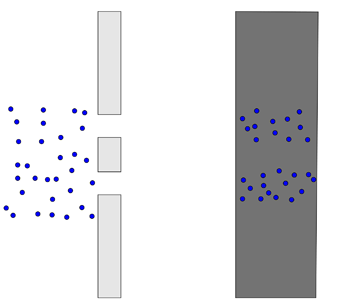
To start off, imagine a wall with two slits in it. Imagine throwing tennis balls at the wall. Some will bounce off the wall, but some will travel through the slits. If there’s another wall behind the first, the tennis balls that have travelled through the slits will hit it. If you mark all the spots where a ball has hit the second wall, what do you expect to see? That’s right. Two strips of marks roughly the same shape as the slits.
In the image below, the first wall is shown from the top, and the second wall is shown from the front.
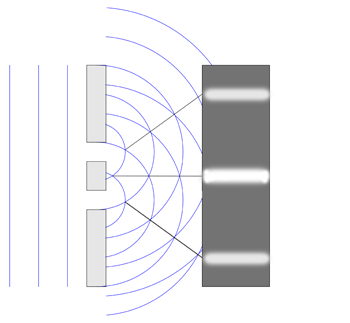
Now imagine shining a light (of a single colour, that is, of a single wavelength) at a wall with two slits (where the distance between the slits is roughly the same as the light’s wavelength). In the image below, we show the light wave and the wall from the top. The blue lines represent the peaks of the wave. As the wave passes though both slits, it essentially splits into two new waves, each spreading out from one of the slits. These two waves then interfere with each other. At some points, where a peak meets a trough, they will cancel each other out. And at others, where peak meets peak (that’s where the blue curves cross in the diagram), they will reinforce each other. Places where the waves reinforce each other give the brightest light. When the light meets a second wall placed behind the first, you will see a stripy pattern, called an interference pattern. The bright stripes come from the waves reinforcing each other.
Here is a picture of a real interference pattern. There are more stripes because the picture captures more detail than our diagram.
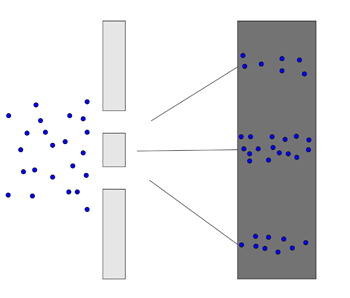
Now let’s go into the quantum realm. Imagine firing electrons at our wall with the two slits, but block one of those slits off for the moment. You’ll find that some of the electrons will pass through the open slit and strike the second wall just as tennis balls would: the spots they arrive at form a strip roughly the same shape as the slit.
Now open the second slit. You’d expect two rectangular strips on the second wall, as with the tennis balls, but what you actually see is very different: the spots where electrons hit build up to replicate the interference pattern from a wave.
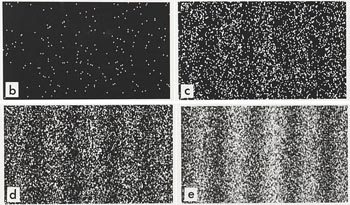
Here is an image of a real double slit experiment with electrons. The individual pictures show the pattern you get on the second wall as more and more electrons are fired. The result is a stripy interference pattern.
What does the experiment tell us? It suggests that what we call “particles”, such as electrons, somehow combine characteristics of particles and characteristics of waves. That’s the famous wave particle duality of quantum mechanics.
• NIA Act, 2008– established the National Investigation Agency (NIA).
• Extends to the whole of India. Applies to Citizens of India outside India.
• Government servants wherever they may be.
• Persons on ships and aircrafts registered in India wherever they may be.
• NIA is the Central Counter Terrorism Law Enforcement Agency in India.
• Can investigate and prosecute for offences under the following Schedule.
National Security Guard (NSG)
• 1984: Union Cabinet decided to create a Federal Contingency Force to tackle terrorism.
• NSG formally came into being in 1986: the NSG Act 1986.
• Modelled on the pattern of Special Air Service (SAS) of the UK and GSG9 of Germany.
• NIA Act, 2008- established the National Investigation Agency (NIA).
• Two complementary elements: Special Action Group (SAG)- comprising Army personnel. Special Ranger Group (SRG)- comprising personnel drawn from CAPF/State police forces.
Have you ever wondered how you contributed to sabotaging the environment? If not it’s high time to dig deeper into the treasure, which is a greener Earth. You know what I’m speaking about. Yes, it’s about the fashion industry and the need for sustainable fashion. The fashion industry is one of the top industrial sectors in the world, with a value of 3 trillion dollars and produces 2% of the global GDP according to global fashion industry statistics. Accordingly, 1 in 6 people work in fashion or related industry Furthermore moving closer, the Indian fashion and apparel industry produces 1586 dollars in GDP per capita and enabled 45 million recruitments within the country. It is presently the second-largest employer within the country. Hence proving to be one of the top industries carrying out Apparel manufacturing process involving Product Design, Fabric Selection and Inspection, Patternmaking, Grading, Marking, Spreading, Cutting, Bundling, Sewing, Pressing or Folding, Finishing and Detailing, Dyeing and Washing, QC etc. 100 billion items of clothing are produced annually.
Adding onto the positives, there are many drawbacks to the very fortunate industry. It had been and is still on the top list of the contaminating industries in the world. Say, the textile industry is the second largest pollutant in the economy. The facts that had been put into due negligence till now is being brought to the limelight by Brands and fashion enthusiasts.
Blights of the fast fashion
1.Savagery towards animals
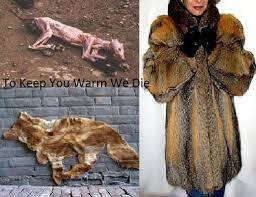
It is not a new fact to us that animals are manipulated to produce clothes or apparel items that seems to be a top trend. Most items produced from fur, leather, wool, feathers are obtained from the mass pestering of innocent animals. Sumanthran tigers and American alligators in the endangered category were still poached for cloth production.
2. Unfair wages and working conditions
As to the latest protests and struggles to achieve a full-fledged fashion revolution, we see the campaigns with people holding placards written ‘who made my clothes’ and ‘i made your clothes’. It wasn’t any happy day speech, they are the behind the scene labour workers under hardships produce all the commodities as to the recent demands. We often tend to forget them blindsided by the white-collar workers.it had been brought to the mainframe that blue-collar workers of Bangladesh, India, China, Indonesia, Vietnam, etc had minimal protection towards worker’s rights. Under prevailing pandemic conditions, these marginal workers were reported losing jobs, being underpaid, cancelled from orders or being not even adequately paid in which they suffered meeting even the food demands of their family. On the other hand, it has become a custom to exploit farmers to the company and middle-men needs.
3. Customer attitude
The next crucial factor towards non-circular fashion is the growing needs of customers for top quality, yet cheap and mind-blowing colourful garments. consumers are well aware of the upcoming trends and glams of the industry, leading to the fast adoption of these newbies. Speaking of which is a necessary evil. It is brought to the view that one in every three young women restricts herself from wearing a cloth multiple times. As to its blitzscaling, fashion companies are compelled to showcase more attire than the actual need.
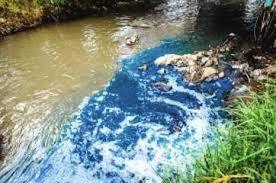
We have come to the major part of the discussion on fast fashion. It is every living being’s responsibility to safeguard the natural resources and pass on the same to the forthcoming generations. Water consumption of the textile industry had met its way beyond the danger zone. It takes 2720 litres of water to manufacture one cotton shirt and 7000 litres to make a pair of jeans. The pollution made to the water bodies doesn’t end there, the chemicals used for the mass production of the garments are disposed of directly or indirectly to the same. It is estimated that one-third of microplastics prolonging in the oceans is the impact of synthetic textiles. These are more deadly as the tiny they are, wouldn’t pass through the filters. The Aral sea, renowned as the world’s fourth-largest lake, has almost dried up as a result of the nearby cotton cultivation. The Kitex industry was recently accused of dumping excessive waste into the nearby waterbody.
5. Excessive carbon emissions
It is said to be true that the fashion industry is responsible for 8-10% of the total greenhouse gas emissions in the atmosphere. The major cause of this is the extensive use of synthetic fabrics like polyester, nylon and acrylic, spandex, faux fur, rayon, etc. Polyester ranks top on the intake of crude oil compared to all others by 70 million barrels annually. Transportation is the other means of carbon ejaculation contributed by the global distribution strategies.
6. Textile waste
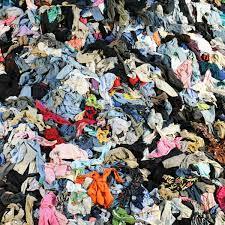
It is said that one garbage truck of textile waste is disposed of every second. This breathtaking fact does prove the intensity of the issue we are dealing with. This directly points out the rising rage for unsustainable fashion culture. For example, polyester is made from the polymerization of petroleum-derived ethylene glycol and purified terephthalic acid, which meltdown to produce polyethylene terephthalate (PET). As such many synthetic fibres are either termed plastic or made out of non-renewable substitutes that concern the ecology.
How can changes be made? How would fashion statements or the industry as a whole regain its fortune? Is the zero-waste fashion possible? Would buyers change their outlook on fashion?
It is time to join hands on the fashion revolutions put forth by fashion creators and promoters on ideas like sustainability, circular economy, zero waste fashion and so on. The idea of the fashion economy sabotaging ecology is given a better view as a result in modern days. Brands now are looking into logical practices to ensure sustainability and restrain themselves from misfortune. Let’s get to know the efforts taken by the industry dignitaries to achieve a stable eco-friendly fashion culture.
Overhaul to fad fashion
1. Sustainable brands
Brands that prove accountable to safeguard bionomics, sacrificing the trend sets should be promoted. Brands those prioritise natural fibres, work with local artisans and so on to gain environmental, economic and social well being. These companies tend to visualise customers as creatives. For example Reff jeans and Girlfriend collective
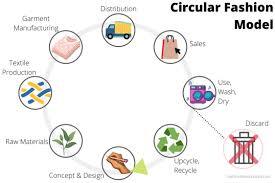
2. Circular fashion
‘Circular fashion’ can be defined as clothes, shoes or accessories that are designed, sourced, produced and provided with the intention to be used and circulate responsibly and effectively in society for as long as possible in their most valuable form, and hereafter return safely to the biosphere when no longer of human use. (Anna Brismar, Green Strategy, 2017). This is the basic idea of the longevity of any garment cycle.
“The circular economy refers to an industrial economy that is restorative by intention; aims to rely on renewable energy; minimize, tracks and eliminates the use of toxic chemicals; and eradicates waste through careful design.” (Ellen MacArthur Foundation)
3. Zero waste fashion
It is the concept of reducing the waste produced with the garment during its life cycle. Furthermore, it is divided into two categories, pre-consumer zero-waste fashion and post-consumer zero-waste fashion. Pre-consumer zero-waste fashion is a holistic approach towards the removal of waste during the manufacture of garments. post-consumer zero waste fashion, on the other hand, is the approach towards post-consumer garments, what more the garment could be used for.
4. Natural dyeing
These are the ancestral dyeing methods using degradable and natural materials like plant sources like roots, fruits, etc. yet the wide-ranging possibilities of this are still in doubt. Whereas a bit of sacrifice towards betterment wouldn’t hurt.
5. Mutating customer attitude
Nowadays customers are more aware of the rising issues on the planet and do agree to take responsive mutation to the outbreaking situations. Social media has had a great influence in making this change possible. When buying an outfit, consumers should ask themselves questions like how is this made, is it a need, how long it would stand, and what to do after. Renting and swapping is too given better focus
6. Personal style
Rather than buying all the so-called latest trends, customers should be aware of their personal style. Personal style does mean the unique way you dress, determining what suits you well, colours favouring, vulgar eliminating, defining yourself and gives you much confidence.
7. Recycling commodities
Brands have come up with the idea of accepting their old products in store. Moreover, specific recycling methods are being conducted and succeeded to a certain level that includes unbinding the fibres to yarns and reforming them to new ones so the focus centralises virgin fibres. As of now, only 13% of clothing and footwear is recycled but in the near future, this is to be a big number. And take care the brands don’t blindside you with mere greenwashing recycling programs.
8. Aquatic treatment
Brands now maintain a ‘water budget’ to not exceed the water demands. It is also noted that natural fibres take in less water for manufacture. There are more ethical ways to dye clothes without the use of water is a plus. Whereas to solve the issue of microplastics, using guppy friend washing bags and installing Girlfriend Collectives microfibre filters in laundry machines is recommended.
9. Ban on poaching
This year London fashion week has been announced prohibiting animal fur due to the rising concerns and brands like Burberry, Gucci and Versace guaranteed to go fur-free. At the same time, Adidas and G-Star RAW introduced apparel produced of ocean plastic. Companies now are developing materials that substitute animal-based leather to the ones made with grape and orange skins which are more laboratory-made.
10. Reducing carbon outrush
The profound carbon emissions are put to a stop by altering synthetic fabrics made of crude oil to natural ones like peach palm fabrics. Transportation caused pollution could be eliminated by procuring and sourcing local resources and employing local artisans.
11. Neat and intact employment
Sustainability couldn’t be possible without fair wages, constant job opportunities with regular and stable working hours. Meanwhile, farmers and blue collars should ensure a safe environment with right protecting laws and policies from the government. So that they could be self honoured with at least meeting the daily living standards which every person of the democracy should enjoy.
12. Minimalism
This isn’t a very pleasing method compared to others on the list. Yet leading a simplistic life could make a big change. Demand is directly proportional to supply. So when demand decreases supply decreases and so will production. Less production leads to the concentration of ones being produced and existing ones, this is where the difference would be visible.
Organ Trafficking is a illegal crime of transporting,harbouring of living persons or deceased persons or their organs by means of abduction ,fraud that makes the abuse of power of a professionals position.Human Trafficking holds a critical place with transactional organized crime groups due to demand of organs at low rates of law enforcement.Organ Trafficking is considered to be dark form of illicit that causes destruction to the medical norms.Global Financial Integrity(GFI) estimates that 10 % of all the organtransplants includes lungs,Hearts and Liver.
According to the sources this illicit invloves a huge groups ,the donors of the organs are mostly targeted to be the orphans. This crime is a planned act which is against law and medical norms.The orphans are easy for this illicit as they have no identity to recognise from their legit.so this loophole is made as business by many Traffickers for operating from various locations.Desperate patients in need of Organ may fall as a prey for the Traffickers who could praise a high Ransom for the organ matching .The Medical reforms involved in this illicit are involves many skilled professional doctors,medicos etc.This professionals perform various Opeartions ,surgeries are a part of Financial exploitation creating multilevel equation of crime.
It is Extremely difficult to know exactly how much Transplantations Laundering generates annually WorldWide But it is estimated that the Illegal trade Conservatively generates around $800 millions to $1.7 Billions annually according to GFI,it is difficult for both law enforcement agents and anti-money Laundering(AML)professionals to detect related Financial activity.This is due to the bulk Groups involving in the crime and Transparency nature of the crime.The main scapegoats made for this illicits are the medical captives includes hospitals and the drug pharmacies.The pharamaceuticals required for the Transplantations are also acquried from various sources from several agencies.
Todays Digital world made easy menthod of transfers through various websites,agencies and medical tourisms that offer transplant services with transparency.Method of payments such as email money transfer,bulk and cash withdrawl,credit card Payments to agencies.
Some Economists generally claim and lean for arguments for organ legalization is the one way to overcome this Red market illicit.Although Governments have Imposed and Implemented initiatives with legal definitions to increase Organ donation through public awareness Campaigns,consent laws.Legalizing payments for organs would encourage more people to donate organs.criminal Middlemen often take large sums of money cut for the payment of the organ leaving a little money left for the donor,this had to be avoided to reduce harm for the donors.After the donors often do not receive any medical followup because they are afraid that their role in crime will be discovered.considering all the facts there is still a quest for this question whether this” Red market Crime can be Exposed or not?”.
Major considerations for this question also have a claim thought of making Organ Transplantation as a Legal Model.One of this model include Free market Model system to Combat the organ shortage that helps to drive the illegal Trade.Although it doesn’t still attain a clear attention as advocates counter these claims by saying that death or murder for financial gain already happens.The main motto to expose this crimes is to protect and prohibit medical professionals and drug Pharmacies from performing such illicit organ transplantations all over the world.
Source: Department of Consumer Affairs, Hunger Watch
• Impacts of Covid-19 pandemic, lockdown – on personal income and food consumption.
• Hunger watch report analysed to provide important information. Income drop.
• In October 2020 – compared to pre lockdown level 27% of respondents lost their income due to the national lockdown 24% of its respondents record that they lost 50% of their income 6% responded that their income did not change despite the lockdown Source: Department of Consumer Affairs, Hunger Watch
Retail inflation
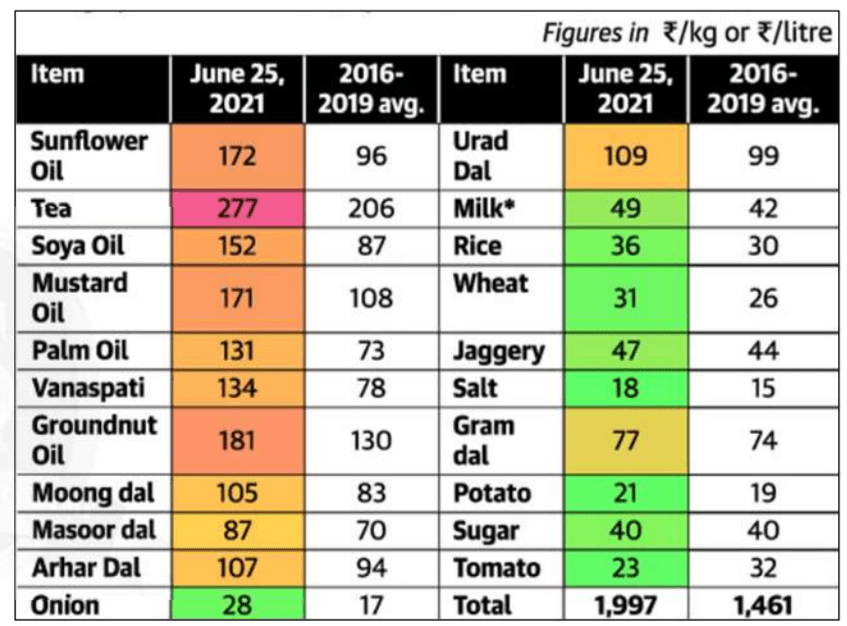
• In June 2021 – the prices of edible oil and pulses are increasing significantly .
• retail price analysis of 21 essential items across India.
• In June 2021- a Consumer – to buy a kg of essential item – has to spend rs.500 more compared to average cost between the year 2016 and 2019 .
• table given – indicates the retail price difference in various occasions .
• with retail inflation – the drop in income level has burdened the consumers.
hold Consumption of Commodities
• the impact of income factor and inflation factor can be seen from the change in consumption level data of October 2020 is compared with March 2020.
• Report – level of household consumption of all commodities listed have decreased.
• In October 2020 – 38% of households reported that the consumption of vegetables decreased a lot.
• consumption of egg/meat commodities have also decreased – another problem in ensuring nutrient security.
Conclusion
adequate policy responses are the need of the hour to address both food and nutrition security in the country.
Go for it, if you are curious of the process of International Relations among nations.
I’ve already provided my simplest version of the answer, but to dig deeper into this notion of taking up such an interesting, and recently developing subject choice has to do so much with the socio-political situation alongside the increasing globalisation we have encountered with changing times.
The subjects holds weird fascination to me, when I first encountered it, and I hope it does the same to you.
But do make your self aware that you won’t directly jump into knowing what Russia or China is handling it’s relations with India, there isn’t anything direct that could give you an eureka movement, but there are these tiny steps you get to take to understand each and every detail when it come to the subject of International Relations.
From Realism, and Trade Policies to tonnes of agreements, and UN and it’s branches, you slowly understand the subject and then next you deal with Diplomacy and its multitudinous types to how a mere decision over their actions on a global scale is surely going to affect someone else. This leads to another set of trials and tribulations but nonetheless the whole idea or the fascination behind this subject lies, for me, is in the knowledge that someone could hole so much power to change something, or some region could change course to appease and pacify another region, all as an act to not create a situation that is surely going to get out of hands, if not monitored.
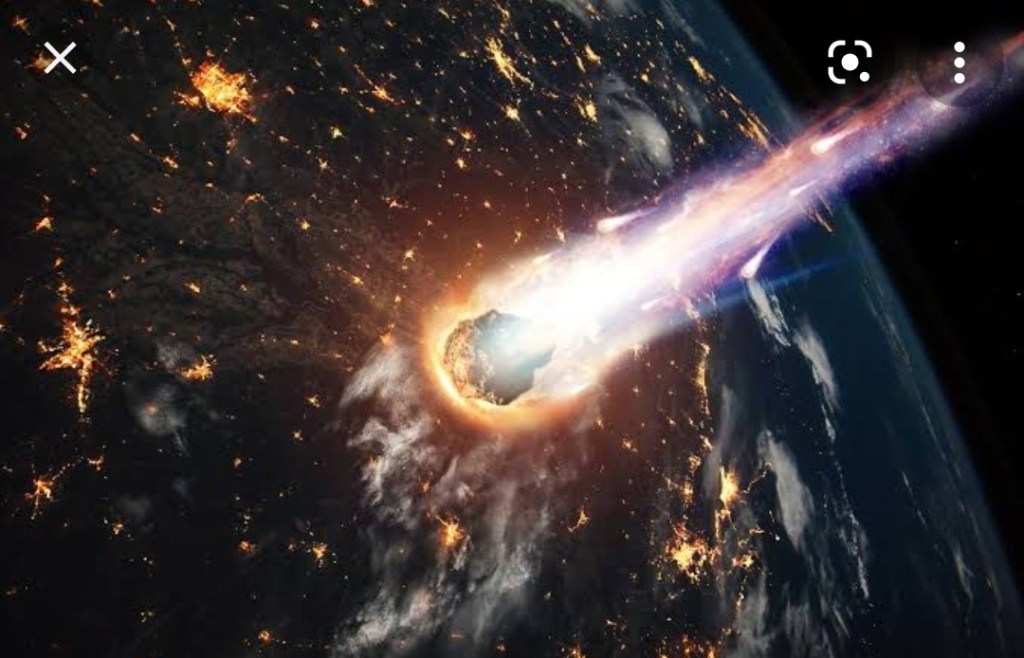
An asteroid is a minor planet of the inner Solar System. Historically, these terms have been applied to any astronomical object orbiting the Sun that did not resolve into a disc in a telescope and was not observed to have characteristics of an active comet such as a tail.
As minor planets in the outer Solar System were discovered that were found to have volatile- rich surfaces similar to comets, these came to be distinguished from the objects found in the main asteroid belt.
The term “asteroid” refers to the minor planets of the inner Solar System, including those co- orbital with Jupiter. Larger asteroids are often called “Planetoids”.
Asteroids vary greatly in size from almost 1000km for the largest down to rocks just 1 meter across. The three largest are very much like miniature planets : they are roughly spherical, have at least partly differentiated interiors, and are thought to be surviving protoplanets.
“This planet is 15 million years overdue for an asteroid strike like the one that killed the dinosaurs.” – L Niel Smith
“If the Earth gets hit by an asteroid, it’s game over. It’s control-alt-delete for civilization.” – Bill Nye
The vast majority, however, are much smaller and irregularly shaped; they are thought to be either planetesimals or fragments of larger bodies.
The four largest asteroid-
Ceres – 939km
Vesta – 525km
Pallas – 512km
Hygiea – 434km
International Asteroid Day
Asteroid Day is an annual global event which is held on the anniversary of the Siberian Tunguska event that took place on June 30, 1908, the most harmful known asteroid- related event on Earth in recent history.
Asteroid Day aims to raise awareness about asteroids and what can be done to protect the Earth, it’s families, communities and future generations.
“The idea is to raise awareness of, not only the dangers of asteroids but also the fact that we have solutions in hand to find dangerous asteroids and do something about it.” – Tom Jones
“Sooner or later disasters such as an asteroid collision or a nuclear war could wipe us all out, but once we spread out into space and establish independent colonies, our future should be safe”. – Stephen Hawking
When it comes to knowing about a particular word it is better to break it and understand the half-half syntax to get the whole picture. So content marketing which seems a complex term to get, turns out to be a simple one. Content is any written form of piece and marketing is selling of a particular commodity therefore when we talk about content marketing we refer to writing valuable and relevant content for a good which depicts its value and give entire information about it.
It is not as straightforward as it seems as writing content that attracts the reader is very important. Simple tips to write a good content for a product and for making content marketing successful:
Answer your audience questions and write according to giving every answer possible. providing them something of value keeping them wanting more.
Do audience segmentation to divide different goals people considering their interests and write accordingly.
Content writing goals are of four categories- entertain, inspire, educate, convence
Think for which media are you writing for, types of media- owned, earned, and paid. Write the necessary information required for the three.
Optimize list content- The featured snippets for listicles show a bulleted or numbered list on the results page. They are great for “best” and “how-to” searches. With a list, searchers get a quick and easy-to-understand answer.
Read value-added materials like books, magazines, newspapers to enhance your vocabulary and to come across new styles of writing.
There are many more things you can do just reseach, get aware, take your thoughts and pen and get started.
It seems difficult and vast until the beginning so doesn’t worry if you like writing and can think of innovative lines this field is for you, you can do wonders!
Java is one in all the foremost standard programming languages wont to produce internet applications and platforms. it absolutely was designed for flexibility, permitting developers to write down code that may run on any machine, in spite of design or platform. Java may be a artificial language, designed to be coinciding, class-based and object-oriented, similarly as a computing platform 1st discharged by Sun Microsystems in 1995. a colossal quantity of applications and websites won’t work unless you’ve got Java put in, and additional ar created daily. Denying yourself Java is equivalent to denying yourself access to a technological infrastructure. Java is publicised, and honored for its quick performance, security, and dependability.
About Career Hub Diploma Program Education Partners Log in Contact What is Java and why is it important?
What is Java Photo Credit epSos.de
What is Java and why is it important? Java, not not like several of the technologies that influence our everyday lives to the present terribly day, originated in Golden State, below the reach of Sun Microsystems, a corporation supported in 1982 by Andreas Bechtolsheim, Vinod Khosla, and Scott McNeally. thereupon aforesaid, tech-savvy varieties tend to seem additional to the longer term than the past, thus if you discover yourself additional interested by the trendy world of cryptography, or end up questioning simply however cogent Java has been to the planet of technology, you don’t notably need a lesson. You’re presumably searching for the trendy relevance and influence of a technology that has continuing to evolve systematically so as to stay up with the days.
Java may be a artificial language, designed to be coinciding, class-based and object-oriented, similarly as a computing platform 1st discharged by Sun Microsystems in 1995. a colossal quantity of applications and websites won’t work unless you’ve got Java put in, and additional ar created daily. Denying yourself Java is equivalent to denying yourself access to a technological infrastructure. Java is publicised, and honored for its quick performance, security, and dependability.
From laptops to datacenters, game consoles to scientific supercomputers, cell phones to the web, Java is omnipresent. ‘Java may be a artificial language expressly designed to be used within the distributed setting of the web. it absolutely was designed to possess the “look and feel” of the C++ artificial language, however it’s less complicated to use than C++ associate degreed enforces an object-oriented programming model.’
‘Java will be wont to produce complete applications which will run on one laptop or be distributed among servers and purchasers in a very network. It may also be wont to build alittle application module or application program (a merely designed, little application) to be used as a part of an online page. Applets build it potential for an online page user to move with the page.’ Tech Target- The necessities of Java.
Why is Java such a preferred alternative among modern software package developers? The answer lies primarily with the complete testing, change and consistency of delivery that Java has traditionally provided. Java has been tested, refined, extended, and well-tried by an infatuated community of Java developers, architects and enthusiasts. Despite origins chemical analysis back virtually twenty years, Java has systematically evolved over the years. Java is meant to alter development of moveable, superior applications for the widest vary of computing platforms potential, therefore sanctioning the elemental tenets of overarching accessibility similarly as cross-platform interaction. By creating applications on the market across heterogeneous environments, businesses will offer additional services and boost end-user productivity, communication, and collaboration—and dramatically scale back the value of possession of each enterprise and client applications
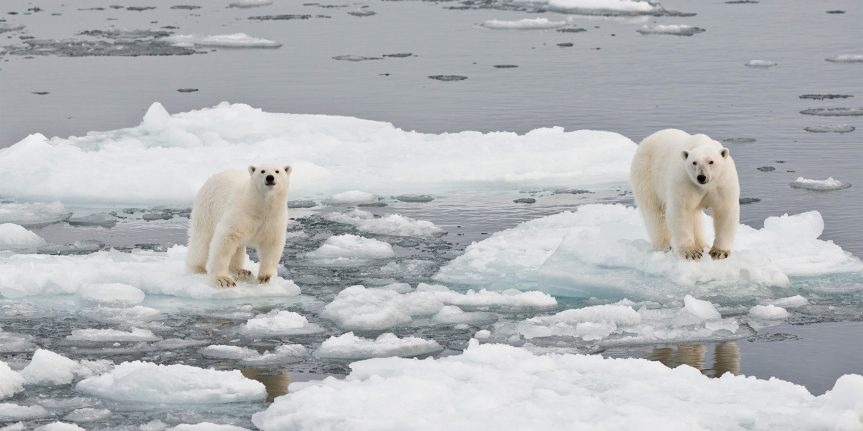
The loss sea ice habitat from climate change is the biggest threat to the survival pf polar bears. Other reasons include human-polar bear conflict, toxic pollution, oil spills and potential hunting of some subpopulations.
Polar Bear-Human Conflicts
As the sea ice of the Arctic thins and disperses, increasing number of polar bears spend longer periods in along the Arctic coastlines. Here their powerful sense of smell attracts them to human communities. Scent leading to garbage, stored food, dog teams, and animal carcasses bring them into greater conflict with people residing in the Arctic.
As apex predators, polar bears pose a significant threat to human life and property. In recent years the attacks on humans, who come within the polar bear’s range, continue to rise.
Effects of Climate Change
Due to climate change the Arctic is heating up twice as fast as anywhere in the world, melting the sea ice cover by 14% per decade. Comparing the data recorded between 1981-2010, we have lost about 770,000 square miles.
Polar bears rely on sea ice as their hunting ground and to rest, breed, and store energy for the summer and sutumn, when food can be scarce. The bears health decline as they go longer periods without food. Bears that come ashore, after the ice breaks up, are roughly 22 pounds lighter and in poorer condition. They also must travel long distances to stay with the rapidly receding ice.
Polar bears suffering from malnutrition can face extreme starvation -especially females with cubs. Scientists have found the main cause of death for cubs to be either lack of food or lack of fat on nursing mothers.
Industrial Impacts
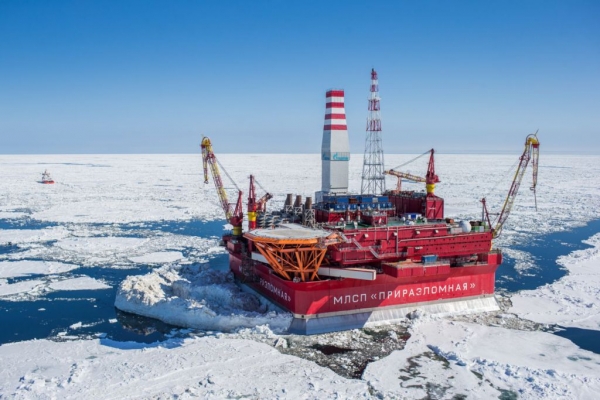
As summer ice retreats, a new ocean is emerging, which allows more opportunities for industrial development at sea, and on large parcels of land. Offshore petroleum installations and operations in the Arctic are expected to increase in number. This results in destruction of habitat, poisoning of the bears when they ingest oil and contaminated prey which causes disturbance in the food web. As traffic by oil tankers and cargo ships in Arctic waters increases, so do the oil spills and human disturbance to their habitat.
Before India’s freedom ladies in our Nation need to deal with numerous issues like absence of legitimate training, early marriages, not given equivalent rights as men and so forth.
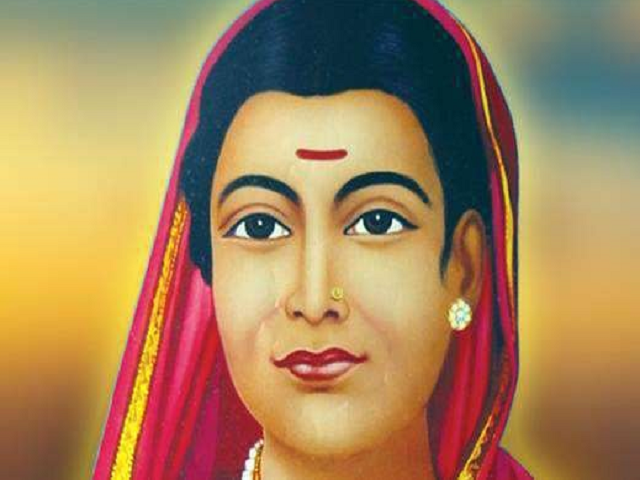
There were numerous social reformers who worked in improvement of our general public. One of them was Savitribai Phule. Alongside being a social reformer, she was likewise a poet, educationist and philanthropist.
She was the initial one to open a young ladies school in Pune. She additionally attempted to cancel segregation and out of line treatment of individual on based on rank and sexual Orientation.
EARLY LIFE AND EDUCATION
Savitribai Phule was born on 3January 1831 in the village of Naigaon in Satara District. She was oldest little girl of her folks. She got hitched to JyotiraoPhule who himself was a social dissident. At the hour of her marriage, she was only 9 years of age furthermore uneducated as around then, there were no ladies rights to contemplate.
After marriage, with her better half’s support, she figured out how to peruse and compose and the two of them in the long run proceeded to track down India’s first school for young ladies called Bhidewade in Pune in 1848.
OTHER WORKS
Her books of sonnet’’Kavya Phule’’ and ‘’Bavan Kashi Subodh Ratanakar’’ were distributed in 1934and 1982.
She unequivocally accepted that training was one of the focal boards through which ladies and the discouraged classes could get enabled and desire to remain on an equivalent balance with rest of the general public. She is a motivation to every one of the ladies, without her work it would have been hard for ladies to battle for their privileges around then.
Leadership is the ability to motivate a group to focus on a particular goal to achieve it. In an organisation, managers have a right to do managerial task and not all managers have ability to lead effectively. Leader is an important person he can manage tasks as well as influence or motivate other members to achieve the goal.
Importance of Leadership
Commencement of work: Leader initiates or starts the work by explaining plans and regulations to subordinates who all are working together in a team.
Counselling: It is the duty of leader not to only supervise his subordinates but also counsel and guide them about their work, so that they can perform their work effectively and efficiently.
Motivation: Leader also plays a role of motivator. He motivates his subordinates by giving then opportunities and rewards based on their performance.
Developing confidence: It is important for every employee to be confident about their work, and leader is the person who can boost their confidence by encouraging them.
Coordination: For achieving any organisational goal, coordination is very important amongst employees and leader can maintain synchronisation through effective coordination.
Establish work environment: In every organisation it is important to maintain effective work environment. Employees are human resource for any organisation, it is necessary that leader should have personal contact with every subordinate and listen their concerns.
Qualities of leaders
A leader has special or unique trait which distinguish them from others. There are various qualities in a leader which enhances his work ability and which effectively motivates other to work hard.
Neutral: Leader should be neutral towards every individual. He should not be bias on any basis towards his subordinates, rather be logical and make fair decision.
Physical Characteristics: Physical appearance is important for every leader. Physique and health are necessary for leader so that subordinates can focus on what he wants to convey.
Communication ability: Good leader must have this quality because communication is the way to explain what he wants from his subordinates. With good communication skills leader can explain the policies and procedure to subordinates easily.
Responsible: Leader must be responsible towards his authority then only he can maximize his skills and capabilities in performing his role. Before motivating others he should himself feel motivated and give his best in performing each task.
Intelligence: Leader must be intelligent along with responsible then only he can find out solution for every problem faced by a team and he can analyze the advantages and disadvantages of a situation arise in an organization.
Leadership Styles
Leadership style is a way or attribute in which leader works in a group with other group member or perform in a team. There are various leadership styles which prevail in an organization:
Authoritarian Leadership
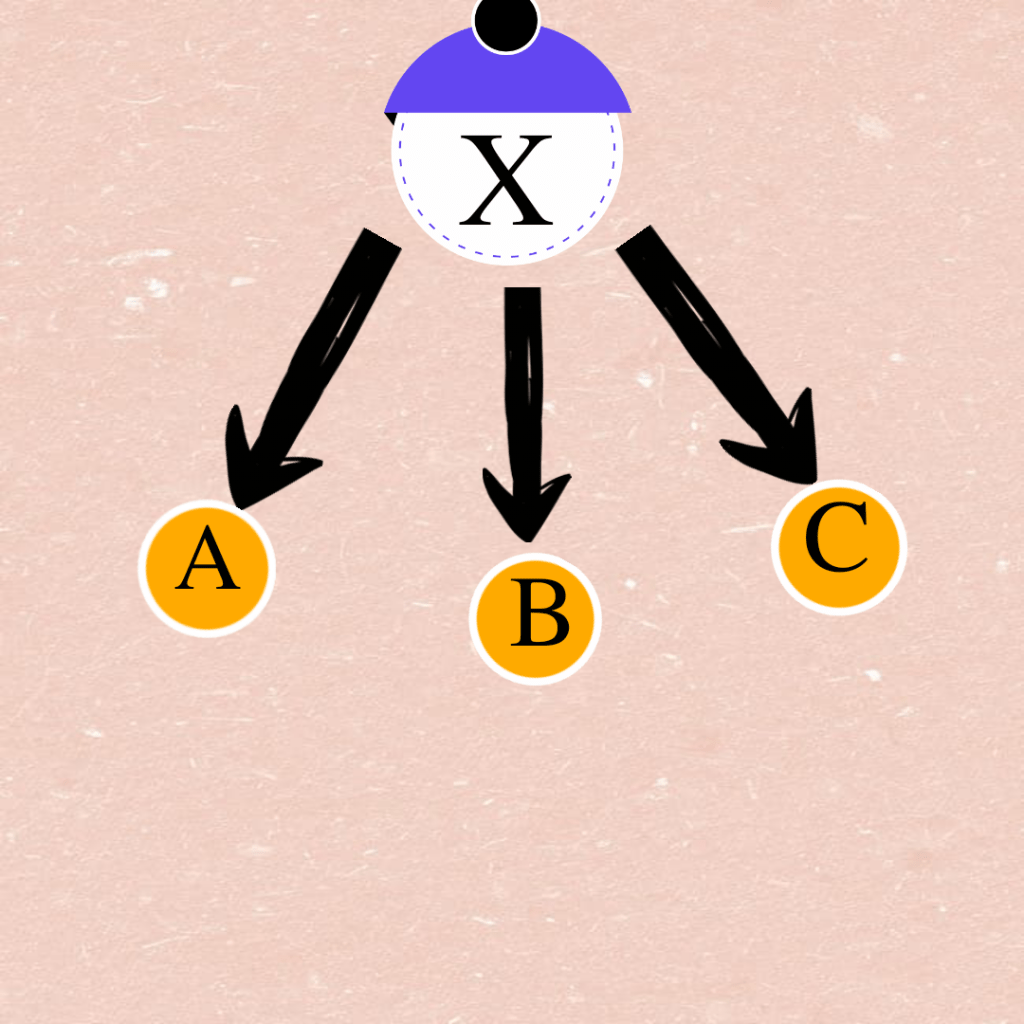
In this type of leadership, autocratic leader have full authority and responsibility of the work. He gives instructions and explains duties to his subordinates without consulting with them. He holds the power and has authority of decision making. This style of leadership has negative effect as leader himself takes all decisions, and doesn’t concern for his subordinates opinion. In autocratic leadership, less time is consumed in taking action because here leader is the one person who decides, give orders and employees do work accordingly. But somewhere, it have a negative impact on employees because may be they feel that their opinions and suggestions are of no use. Basically, in this type of leadership there is no delegation of authority by leader.
Autocratic Leadership
2. Democratic Leadership
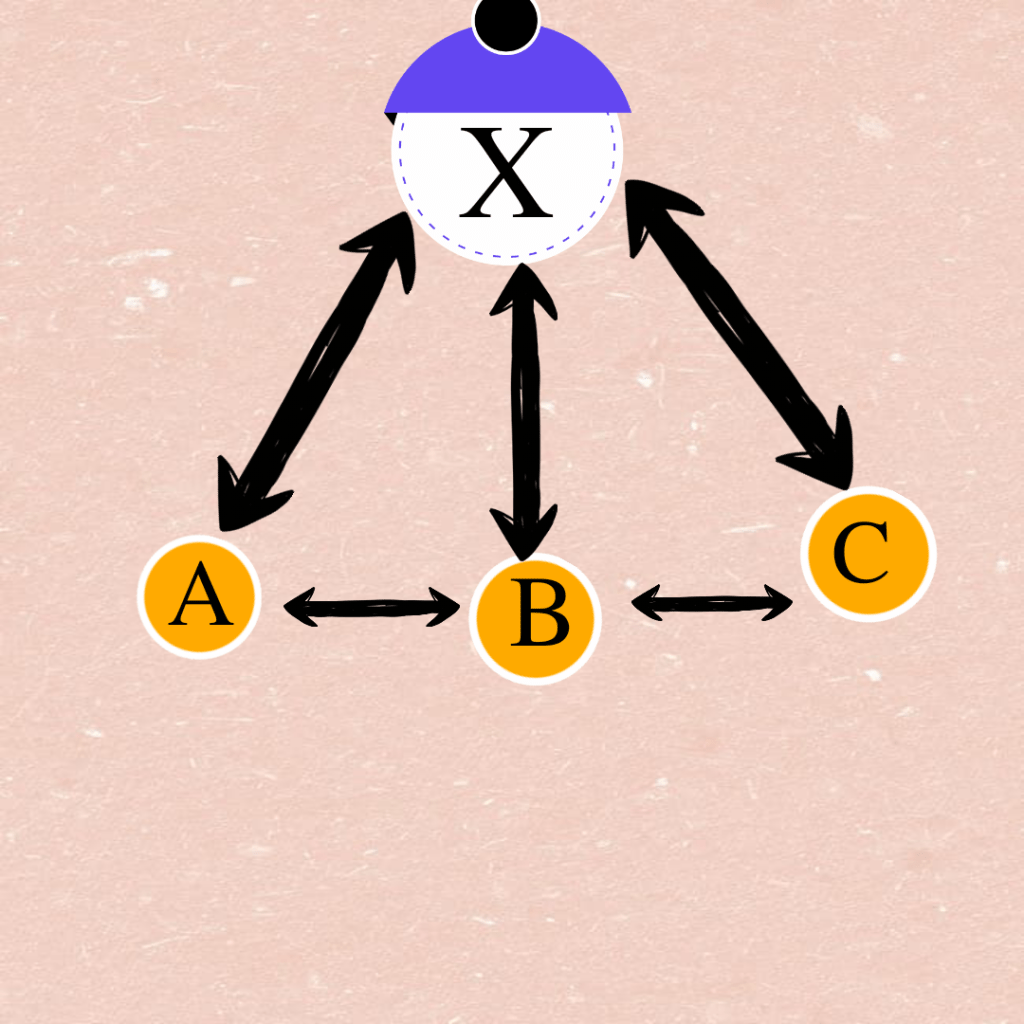
In this type of leadership, leader includes every individual in decision making process or any policy formulation. He consults with his subordinate before taking any decision and let them influence his decision sometimes as per the requirements of management. He decentralise his authority by doing so. Leader himself forces his subordinates to give their input or ideas which will be beneficial for the management. It also helps in boosting morale or motivating employees, they feel that their participation is also important in decision-making process.
Democratic Leadership
3. Free-rein Leadership
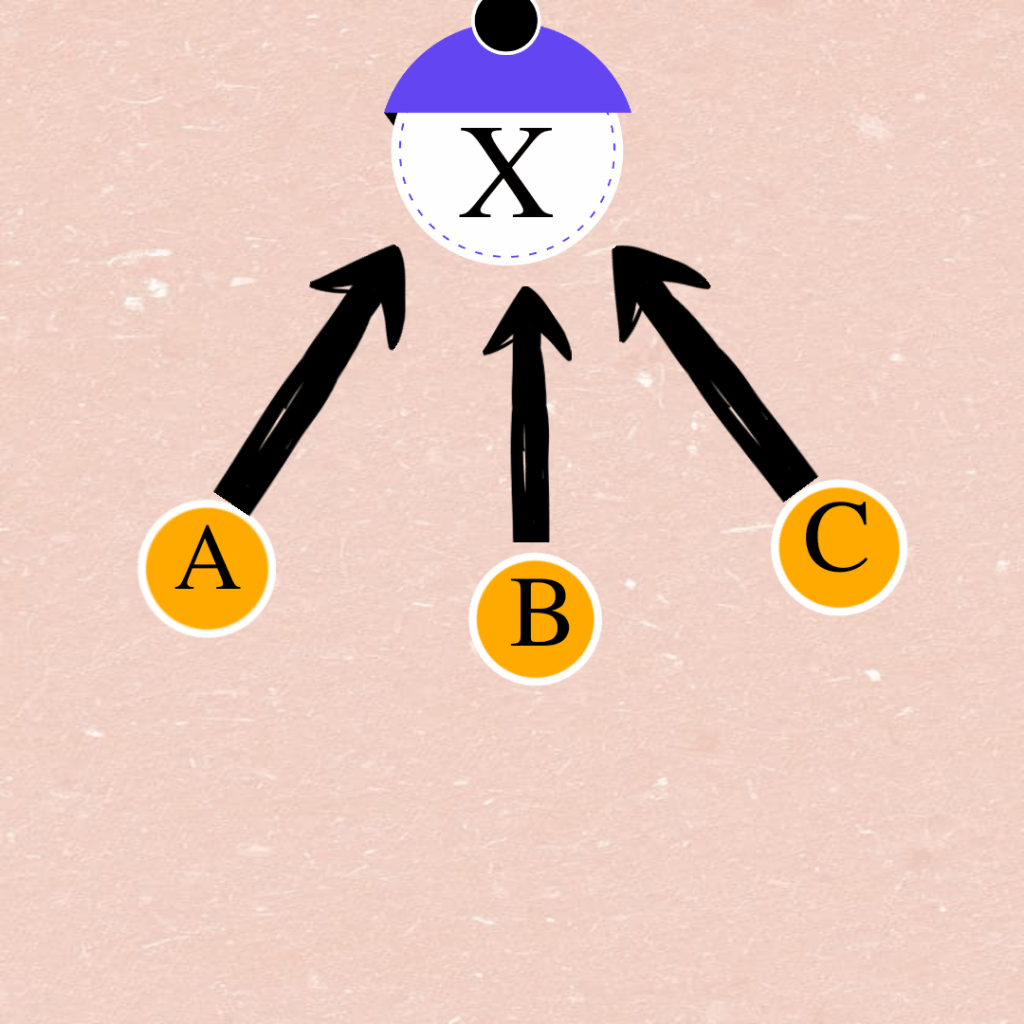
This style of leadership is different from above two style of leadership in many ways. Here, leader delegate his responsibility to subordinates for decision making and he himself doesn’t intervene. He gives no order or direction to his subordinates and permits the group to work as per their opinion or ideas. He wants that each individual gives his best and take all efforts to achieve the set goals.
Pens don’t win battles, and swords don’t Write Poetry.
Mighty is the Hand that knows when to pick the pen and
When to pick the sword!”
Thousands of stories, incidents, events are flourished beautifully with some splashes of ink. Indeed, a pen holds up a power which humans will never have. Everyone wants to be powerful in some way or the other. It can be physically, financially, politically, etc but we all need powerbecause we are convicted to the clichéd topic of “When a man is in power, he is the strongest of all”. It’s our fault that we have created a world where a lion is considered to be the king of the jungle. We have made the world believe that power plays a major role. But have we ever thought that power can lie in the hands of humans?
Power is in our hands!
The strongest are those vintage philosophers and poets, who have a pen with them. Yes, a pen is all we need to be powerful. But how can a tiny pen be so powerful in this whole universe? Ever pondered about those passionate writers of the 18th century, of Victorian-era who still captivate us by telling the class condition and women suppression in that time.
Ever thought about how those writers like Sadat Hasan Manto, Khushwant shah, Ismat Chugtai taught us the value of freedom and sufferings. What made Shakespeare mend to write about the most legend love story of Romeo and Juliet, when he knew it was a time of class distinction. All these eminent writings, poetry which we read now is the power of a pen which amazed the readers of all time.
Pen is a medium
Ink has always been the best media to convey the real scenario of society. The writers have effortlessly portrayed to us how a pen is always mightier than a sword. A pen will always show us the mirage of the real society, where we live. We as a reader forecast many experiences when we read the truth. The authority is with all of us but only some chose a way to remove the disputes and that is through writing. A spot of ink has the power to removes the gap of social norms and customs from our society.
It unites!
Wars, disputes, riots always bridge a gap among humans, but a pen always unites people and their thoughts and believes. Society is filled with humans who are more affected by the glimpse of writing. As people believe in the power of words. Those who know to play with words always win. We have created a society where we have made certain beliefs’ which are not accepted by all and we have been following an age-old system where power is everything. So, it’s time to break those barriers of conventions and realize the reality of words.
Pen and readers are bonded of each other!
The powerof the pen is so powerful that it can convey to the audience easily. The pen and the readers are 2 parts of a coin. The audience gets related because of the commendable expression which makes a reader and a pen get bound to each other. Immensely a pen and a reader are bounded emotional with those flickering words which string to their minds.





















 Eduindex
You must be logged in to post a comment.