

India is a country, where women make up half the population. more than 60 percent of population India lives in rural areas. women lack access to sanitary napkins and menstrual cycle becomes a burden and bane for them. women are god’ s precious creation. For us, the privileged, periods are normal, something which occurs every month. we might have to deal with pain and discomfort But for those who live in rural areas this prevents them to do their daily activities. Myths and taboos which are embedded with periods, makes lives of these women even worse. According to a report only around 35 percent of women in India use sanitary napkins. The cost of sanitary napkins are expensive for the people of rural areas, who hardly get to earn money to have some food. Some follow hand to mouth process. Sanitary napkins are not a luxury, they are a necessity and every women deserves to have access to them. A lot of women in rural areas use cloth during their periods, this can cause infection and fungal diseases. Due to Menstruation, a lot of young adults in villages are forced leave the schools. Free sanitary napkins and some encouragement might help the child to not to discontinue their studies and their daily activities. Menstruation is a topic, people resist talking about, they feel its shameful. It is disheartening to see people thinking of it to be dirty. The Government of India, is indeed, working towards the progress of our country but some steps like these would definitely work towards achieving the India, we all wish for.
The Secret by Rhonda Byrne

The Secret by Rhonda Byrne, genre-spirituality, was published in 2006. ‘The Secret’ was first released as a film. The Secret is inspired by Wallace Wattles book, The Science of Getting Rich(1910), which the author received from her daughter when she was going through personal trauma. Also, the book has a reference from the life of various personalities like Bob Proctor(author), Charles Haanel(A successful American businessman), Wallace Wattles, etc.
‘The Secret’ the title itself is so eye-catchy that I also bought this book to know what is the secret. But the day I started reading the book I got to know what the secret is, and how to achieve it. And believe me one should read ‘The Secret’ once in a lifetime. It completely changed my idea for life.
The book has 10 chapters. In the first three chapters, you’ll be introduced to the universal law of attraction and how to use it to make life worth living. And rest of the 7 chapters signify the secret in various aspects of life like the secret to you, the secret to money, the secret to relationship, etc.
Between all the chapters you’ll find various stories of individuals who have used the secret and have got the outcome.
All the readers get to know about how like thoughts attract each other and how gratitude and mediation help us to achieve our goals and manifest whatever we need. It also tells the readers about how the greatest minds have used the ‘secret’ and were able to achieve their objectives.
“The power of thoughts” is the key highlight in all the chapters.
This book can take you out of any crisis by introducing you to the secret and can also change your point of view towards life.
“Think truly, and thy thoughts shall be world’s famine feed.” – Horatio Bonar (1808-1889).
LEAST KNOWN SOCIAL REFORMERS OF INDIA: PART-2

PANDITA RAMABAI SARASVATI
Remembering the times when girls were just meant to be at home, cook and take care of the rest of family and were taught to speak less, not go outside often, wear saree as soon as they reach the age of 8 and were denied education, there was this girl Pandita RamaBai born to a liberal Brahmin Pandit, Anant Shastri Dongre in 1858. Born in a liberal family meant that she was already saved from the twin curse other girls faced i.e the lack of education and child marriage. Her father, Anant Shastri Dongre, was a Sanskrit Scholar and used to teach his wife Sanskrit which was very unlikely in those times. However, due to some adverse material conditions of the family Pandita RamaBai lost her parents and her sister. She was orphaned at the young age of 16. Eventually, she had to move to Calcutta along with her brother in the year 1878. There she met many other Scholars with whom she shared her knowledge in Scripture and Sanskrit she had inherited from her father and it was quite impressive for the Scholars. This was the turning point of her life after all what she had gone through. She was conferred with the titles of “PANDITA” and “SARASVATI”.
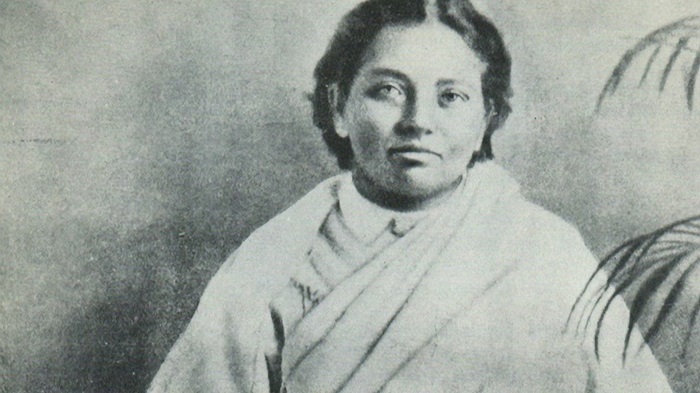
In Calcutta she met Keshab Chandra Sen, who was the supporter of Brahmo Samaj (societal component of Brahmoism- reformist movement of the Hindu religion). He suggested RamaBai to read the Vedas and Upanishads more carefully, going deeper through the contents. Slowly, she started to gain a little confidence she had lost long ago due to bad incidents that happened to her. RamaBai gained exposure to public speaking by participating in the family’s public recitation of Puranas at pilgrimage sites across India, which is how they earned a meager living. Somehow they had started to lead a normal life by now when a sudden demise of her brother in 1880 completely shock her.
She was all alone now. To overcome the emptiness in her life she decided to marry Bipin Behari Medhvi, who was a Bengali lawyer. The groom was a Bengali Kayastha, and so the marriage was inter-caste and inter-regional and therefore considered inappropriate for that time. They were married in a civil ceremony on November 13,1880. The couple had a daughter, after a year of their marriage, whom they named Manorama. But her happiness of a complete family was very short-lived. She lost her husband in the year 1882, just after 2 years of their marriage. She was completely broken but had to hold upon her as she now had a daughter to raise and there were many more revolutions left to be brought by her. RamaBai moved to Pune where she found ARYA MAHILA SAMAJ(ARYA WOMEN’S SOCIETY), influenced by the ideas of Brahmo Samaj and Hindu reformers, the purpose of the society was to promote the cause of women’s education and deliverance from the oppression of child marriage.
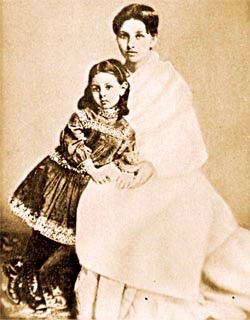
When in 1882 the Hunter Commission was appointed by the Government of India to look into the education system, RamaBai gave evidence before it. In an address before the Hunter Commission, she declared, “In 99 cases out of a 100 the educated men of this country are opposed to female education and the proper position of women”. She also wrote her first Marathi book, Stri Dharma-Niti (Morals for Women) which was published in 1882. With no support coming towards a widows’ institution, RamaBai decided to go to England to seek British support for her Widows’ home- Sharda Sadan in Pune. During the time she travelled from Britain to United States to attend the graduation of her relative and the first female Indian doctor AnandiBai Joshi, she published one of her most important books- The High-Caste Hindu Woman. This was her first book written in English. When she returned back to India she founded the Widows’ shelter, promoted women education and their well-being and later got herself converted to Christianity and changed her name to Marry Rama.
Child Labour- Destruction of Children’s Life
Overview
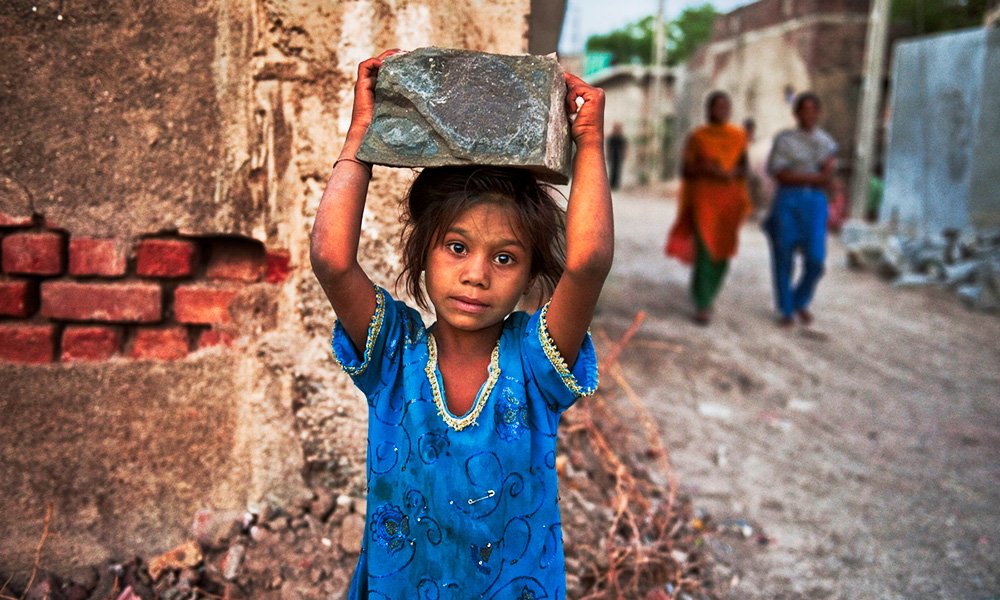
Child Labour is basically exploitation or destruction of children through any form of work that deprives children of their childhood, and are tend to work for someone even if they do not wish to. It interferes with their ability to attend regular school, and is mentally, physically, socially and morally harmful. Such exploitation is prohibited by legislation worldwide,[4][5] although these laws do not consider all work by children as child labour; exceptions include work by child artists, family duties, supervised training, etc.,. Child labour is not a recent problem, it has been from the past era. Child labour forms an intrinsic part of pre-industrial economies. In pre-industrial societies, there is rarely a concept of childhood in the modern sense. Children often begin to actively participate in activities such as child rearing, hunting and farming as soon as they are competent. In many societies, children as young as 13 are seen as adults and engage in the same activities as adults. In the previous centuries, children were tend to a little bit of Industry work, and for them there was no childhood term.
Situations in different centuries-
Early 20th century
In the early 20th century, thousands of boys were employed in glass making industries. Glass making was a dangerous and tough job especially without the current technologies. The process of making glass includes intense heat to melt glass (3133 °F). When the boys are at work, they are exposed to this heat. This could cause eye trouble, lung ailments, heat exhaustion, cuts, and burns. Since workers were paid by the piece, they had to work productively for hours without a break. An estimated 1.7 million children under the age of fifteen were employed in American industry by 1900.
21st century
Child labour is still common in many parts of the world. Estimates for child labour vary. It ranges between 250 and 304 million, if children aged 5–17 involved in any economic activity are counted. If light occasional work is excluded, ILO estimates there were 153 million child labourers aged 5–14 worldwide in 2008. This is about 20 million less than ILO estimate for child labourers in 2004. Some 60 percent of the child labour was involved in agricultural activities such as farming, dairy, fisheries and forestry. Another 25% of child labourers were in service activities such as retail, hawking goods, restaurants, load and transfer of goods, storage, picking and recycling trash, polishing shoes, domestic help, and other services. The remaining 15% laboured in assembly and manufacturing in informal economy, home-based enterprises, factories, mines, packaging salt, operating machinery, and such operations. Two out of three child workers work alongside their parents, in unpaid family work situations. Some children work as guides for tourists, sometimes combined with bringing in business for shops and restaurants. Child labour predominantly occurs in the rural areas (70%) and informal urban sector (26%).
Causes of Child labour
The major causes are stated below-
- Poverty
‘Poverty is certainly the greatest single force driving children into the workplace.’ When families cannot afford to meet their basic needs like food, water, education or health care, they have no choice but to send their children to work to supplement the household income. Poverty is considered as one of the most important causes of child labour as it is linked to other driving factors including: low literacy and numeracy rates, lack of decent work opportunities, natural disasters and climate change, conflicts and mass displacement. Poverty and child labour form a vicious cycle, without tackling one, we cannot eradicate the other.
- Lack of access to quality education
‘The availability and quality of schooling is among the most important factors.’ School needs to be a welcoming environment, with appropriate class sizes, a curriculum designed for the local context, and affordable for rural communities. Getting children into school and out of harmful work is one thing but keeping them there a means creating quality education accessible for all.
- Poor access to decent work
‘Children who were involved in child labour often lack the basic educational grounding which would enable them to acquire skills and to improve their prospects for a decent adult working life.’ If young people cannot access work which is safe, with social protection, fair pay, equality for men and women and which provides a space for workers to express their opinions, they often have no choice but to do work which is hazardous. When children above the minimum working age are doing hazardous work, this is also considered child labour.
- Limited understanding of child labour
‘The view that work is good for the character-building and skill development of children.’ When families do not understand the dangers of child labour, and how these impact on the health, safety, well-being and future of their child, they are more likely to send their children to work. Some cultural beliefs and social norms can also be drivers of child labour.
- Natural disasters & climate change
‘In rural areas, farmers who see their crops destroyed on account of climate changes have no other choice but to send their children out to work.’ The effects of natural disasters and climate change is one which is becoming of increasing concern. Rural families who depend on reliable seasons for farming are particularly vulnerable to altered patterns of rainfall, soil erosion, or extreme weather. When crops are destroyed or farming land is ruined, families struggle to make a living and are more likely to send their children to work in neighbouring farms.
- Conflicts & mass migration
‘There is a strong correlation between child labour and situations of conflict and disaster’ According to the ILO children make up more than half of the total number of people displaced by war. These children are particularly vulnerable to forms of exploitation, including child labour, due to an increase in economic shocks, a breakdown of social support, education and basic services, and disruption of child protection services. The incidence of child labour in countries affected by conflict is almost twice as high as the global average. Children are also vulnerable to becoming involved in armed conflict, this is considered one of the Worst Forms of Child Labour.
- Fighting child labour
SDG Goal 8.7 calls for the elimination of all forms of child labour by 2025. With 152 million children involved in child labour worldwide, we still have a long way to go. Programmes and policies which take into account the voices of the communities where child labour occurs, and the root causes, can advance real and sustainable progress in the fight against child labour.
What needs to be done to stop child labour in India?
Much more has to be done in the political landscape to stop exploitative child labour in India: the laws against child labour must be further tightened and more strictly enforced. In addition, it is important to combat extreme poverty, a root cause of child labour. Addressing poverty and inequality is crucial to end child labour in India.
Access to education is also vital to break the vicious cycle of poverty and child labour. As children complete higher levels of education, they are more likely to find decent work in adulthood and can use their income to care for themselves and their families without relying on child labour. Although education is compulsory and free in India for children up to the age of 14, widespread poverty forces families to prioritize putting food on the table over sending their children to school. As a result, many children attend school irregularly or not at all because they have to work instead.
Different names of karnan in Mahabharat
✨VASUSENA

Vasusena is the original name of karna. It is named by Adhiratha and his wife Radha.
✨ RADHEYA

Karna is called as Radheya, As he is the adopted son ofRadha who nurtured him as her son.
✨ ADHIRATHI

Adhirathi is the foster father of Karna. That’s why he called as Adhirathi. Son of Adhirathi.
✨ KARNA

Karna means peeler ofhis skin/ natural armor. Indra gave him the tittle of karna.
✨ SURYAPUTRA

Karna is the son of sun deity Surya. He is known as Suryaputra.Theson of surya.
✨ VAIKARTANA


Karna cutting off his (natural) armor and his brilliant earrings, and gave him them to Indra, it is for that he came to be called “Vaikartana”.
✨ ANGARAJA

Karna is also named as Angaraja or Angaraj. Because he is the king of Angadesam. It is also a famous name of karna.
✨ DAANVEER / DAANSHOOR

Daan means charity; Veer means Hero. Karna goes out of the way to help them without thinking about his loss. Therefore he is known as Daanveer.
✨ VRISHA

Vrisha means truthful in speech, engaged in penances, kept his vocos, kind to enemies. Then vrisha means bull. That’s why Karna is addressed as vrisha in mahabharat – the warrior like a bull.
✨ VIJAYADHARI


Vijaya bow is a weapon. It is gifted to karna by his guru parashurama. Then, Karna is known as Vijayadhari.
✨ Suta/ Sutaputra

Karna is the son of charioteer ( Adhirathi) who is of suta or souta caste.
In Reality,. He is not a Sutaputra. He is a suryaputra…
Udemy
Udemy is an American Massive Open Online Courses Provider.It has millions of students,lakhs of courses and thousands of teachers.It have over 480 million c0urse enrollments over 180 countries.Students take courses largely as a means of improving job-related skills.Some courses generate credit toward technical certification. Udemy has made a special effort to attract corporate trainers seeking to create coursework for employees of their company.By 2021, there are more than 155,000 courses on the website.
It mainly focus on bridging the gap between job seeker and industry with the skills they provide. It is one of the best online platform to learn new things from home.The company was launched by Eren Bali, Oktay Caglar and Gagan Biyani in 2010. It is headquartered in San Francisco, with offices in Denver, Brazil, India, Ireland and Turkey.
Indy for Independent Workers
Even before the COVID-19 pandemic swelled, the ranks of work-from-home employees, freelancing was on the rise as workers across a range of fields sought more flexibility and control over their work lives, enabled by the latest advances in technology. In 2020, there were 59 million people doing freelance work in the United States. This is an increase from 2014, when there were about 53 million people freelancing according to Statista, a leading provider of market and consumer data.
The demonstrated success of working remotely means that independent workers will be key to the future of work, even as many people return to in-person office settings.
To thrive both professionally and personally, independent workers need support and tools to promote their skills and manage their business.
An online platform known as Indy provides these features and more. Indy offers a complete productivity suite that helps independent workers take the management of their businesses to the next level, with tools and guidance for creating contracts, generating invoices, and everything in between. Additionally, their blog, The Independent Worker, is focused on addressing topics of interest to freelancers, ranging from business development to managing burnout.
“We proudly empower today’s ‘Indies’ – including solopreneurs, freelancers, consultants, contractors, microbusinesses and side hustlers – to streamline the most time-consuming parts of operating their businesses. We help them work smarter, get paid faster, and thrive,” says Sebastian Gyr, CEO and co-founder of Indy.
The Indy app offers freelancers a suite of tools designed to help them own three key aspects of their business: :
– Marketing. Indy provides templates for proposals, project briefs, and profiles to help you organize your pitches, and showcase your unique skills.
– Organization. Time tracker and task management tools help you keep everything organized, and Indy also offers a chat feature that freelancers can use for quick communication with clients.
– Business management. Templates for legally-binding contracts and non-disclosure agreements take a lot of the effort and stress out of contract creation, so you can get right to work and invoicing tools will let you quickly and easily send highly professional invoices to the client directly to be paid either electronically or the old-fashioned way – via a check in the mail.
Indy takes pride in empowering an inclusive and diverse community of freelancers, including the LGBTQ community, Black Americans, BIPOC, and workers with disabilities, who are often underserved in the workplace despite the recent rise in equity initiatives. Leaning into these tenets, Indy recently launched a new, digital series called ‘Miss Independent’ featuring a Black drag queen who offers short videos commenting on freelancing and the freelancing life.
“We’re spotlighting what’s currently missing for today’s virtual workforce and are boldly embracing the opportunity to drive conversations and narratives around equitable pay, diversity, and inclusion, by enabling the success of all workers, especially those from underserved communities,” according to the company.
“We celebrate the uniqueness of those human beings that we serve by providing the products, services, space, and the megaphone for them to be their authentic selves, shine, and thrive.”
Visit weareindy.com for more information and to create an account for free.
Life Of Mercury

Close your eyes and envision yourself standing on the stage and singing in front of a countless crowd while they cheer for you. Indeed, you are a rockstar!
The first Indian Rockstar to experience this was Freddie Mercury, original name Farrokh Bulsara. It is said that he was given this name by his teachers and classmates. He was born to Parsi parents and spent the majority of his adolescence in India. He later moved with his family to England, where his music career began. He formed a band with Brian May and Rodger Taylor and named it Queen. Bassist John Deacon joined the following year. Initially, the band failed to draw much notice however, the album Sheer Heart Attack( 1974) and A Night At The Opera (1975) made them internationally famous. ‘Bohemian Rhapsody’ is considered Queen’s most mysterious and beloved song.
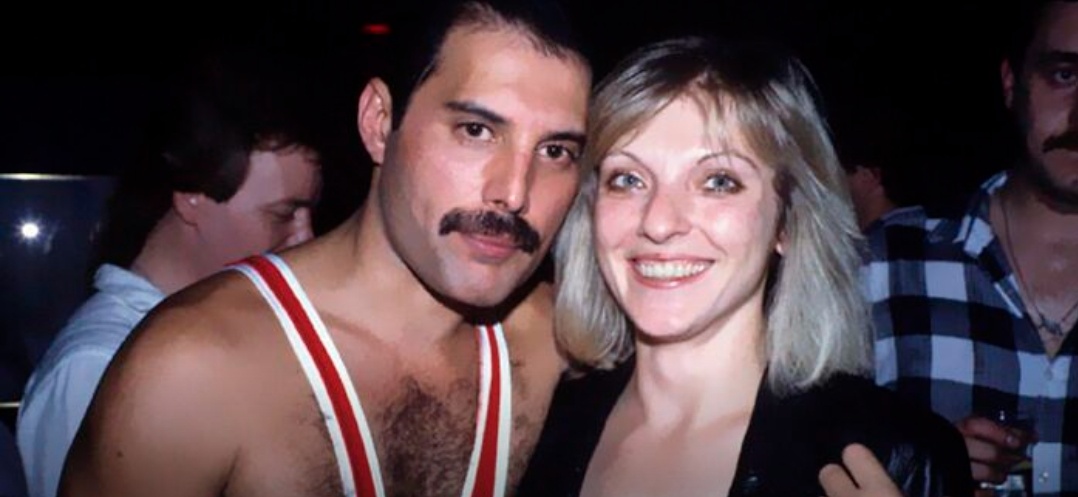
When it comes to his personal life Mary Austin stole Mercury’s heart in 1969 and they became inseparable after that. He always mentioned Mary Austin whenever he talked about the only love of his life.
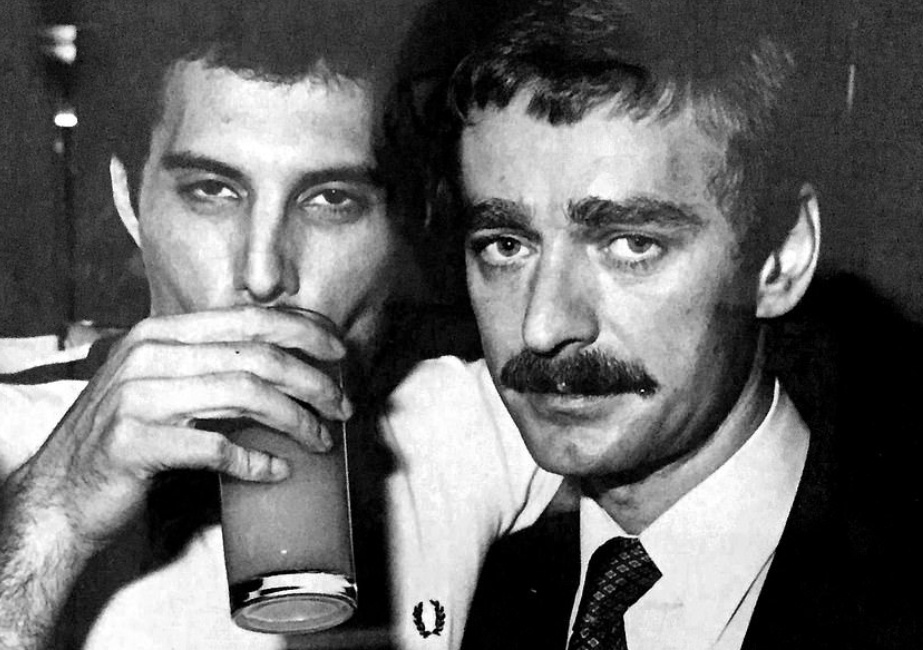
Paul Prenter played a significant role in his life too. He was his former manager and he double-crossed him by selling a story to a national newspaper about his personal life. He ruined his life by claiming that Freddie slept with hundreds of men and furthermore gave profound insights regarding his personal life which forced him to fire Paul. His last day on earth was 24th November 1991, he passed away due to bronchial pneumonia due to AIDS-related complications.
Without a doubt, he was a courageous, gallant, and defiant Rockstar in the history of music.
Tableau-Data visualisation tool
Tableau is fastest growing data visualisation tool.It can help anyone see and understand their data.It is mainly used in business intelligence industry. It helps in simplifying raw data in a very easily understandable format. Tableau helps create the data that can be understood by professionals at any level in an organization. It also allows non-technical users to create customized dashboards.It doesn’t need any programming skills to operate.
Data analysis is very fast with Tableau tool and the visualizations created are in the form of dashboards and worksheets. Data visualisation is important because human beings understand things that are visually well descriptive and interesting. So, working with data visualization tools like Tableau will help anyone understand data better, as it gives one access to the amount of data in easily digestible visuals. Also, well-designed graphics are usually the simplest and the most powerful way to present any data.
Plant based proteins
During times of change, many of us find comfort in simple pleasures. Like a great burger.
Yet, some of those simple pleasures have been compromised by the dramatic changes caused by COVID-19, including the disruption of the animal meat industry. Meat plants are closing, causing meat to be harder to find and its prices to rise. Some grocers are limiting the amount of meat shoppers can buy to curb pantry loading.
I know these issues will be resolved as the pandemic subsides. The animal meat industry will recover, and supply chains will be restored. But right now, you may be asking: What do I do without meat?
Now is the time to try plant-based protein. Made from simple ingredients you know, Lightlife
plant-based meat is as nutritious as it is delicious. And you can find the products in your grocer’s meat case.
To be clear, I’m not against the animal meat industry. I believe we’re all trying to solve the same complex challenge: how to feed everyone during this pandemic. But I do believe no diet should be entirely dependent on animal meat. That’s why Lightlife is committed to delivering plant-based protein throughout the country to ensure as many people as possible have access to the food they need.
At Lightlife, they are not asking you to give up animal meat. If you want to eat meat, eat meat. But they believe you should also eat plants: whole plants and plant-based protein. That’s why they strive to bring more high-protein options to your table. Fortunately, the trend toward eating more plant-based protein began well before COVID-19, driven by a desire for more balance and variety in our diets, as evidenced by the fact that 44 percent?of Americans now describe themselves as flexitarian.
In fact, Lightlife sales were up significantly in the first quarter of 2020. And longer term, the plant-based meat category is expected to grow exponentially, with the Good Food Institute predicting a threefold increase in the number of American households regularly purchasing plant-based protein1.
The reality is it takes a little more work these days to make a good burger, even the ones we make with simple ingredients. I want you to know that we’re committed to your dinner table. And your lunch table. And if you want a burger for breakfast, your breakfast table, too.
I am so happy for their production teams working around the clock to ensure our products are available at your local grocer. To ensure their health and safety, we have taken additional steps including social distancing wherever possible, daily temperature checks and health screenings, face coverings, increased sanitation efforts, and staggered breaks and start times to reduce the potential for congestion. This is in addition to the sanitation procedures our team is already accustomed to, and the variety of Personal Protective Equipment (PPE) we routinely wear.
This is all part of our dedication to getting high-quality, plant-based protein to your tables. Because whether your burger is made from ground beef or plant-based ingredients, a good burger is something we can all agree on. And I believe that together, we will celebrate that simple pleasure once again.
INTEREST RATES issues
• News:

Quarterly reset of interest rates on small savings schemes is due on June 30.
Small savings schemes
• A set of saving instruments launched by the Government of India.
• Examples: Public Provident Fund (PPF), National Savings Certificates (NSCs), the Senior Citizens Savings Scheme (SCSS), and the Sukanya Samriddhi Scheme etc.
• Popular with fixed income investors- offer much higher
interest rates than bank fixed deposits.
Lowering of interest rates .
• Will help the government reduce costs- will hurt senior
citizens and the middle-class. • Common people already suffer from inflation.
• Retail inflation was 6.2% through 2020- 21.
Inflation is expected to stay around 5.5%-6% through 2021-22.
• Rising inflation, declining savings rates and loss of income- disastrous.
• Fall in small savings rate- discourage small investors.
Small savings- a key source of financing the government deficit.
In 2021-22, borrowings through small savings- pegged at Rs 3.91 lakh crore.
Public Provident Fund (PPF).
• Introduced in 1968- to mobilize small saving in the form of investment, coupled with a return on it
• Interest earned on the
Public Provident Fund
is tax-free.
• Tenure: for 15 years and can be extended for 5 years.
• Subscriber can make one withdrawal during a FY after five years excluding the year of account opening.
• Amount of withdrawal- up to 50% of balance at the credit at the end of 4th preceding year/at the end of preceding year, whichever
is lower.
IoT-Internet of Things
Internet of Things(IoT),as the name suggests,it refers to millions on physical devices which are connected to internet.It is a system of interrelated computing devices, mechanical and digital machines, objects, animals or people that are provided with unique identifiers and the ability to transfer data over a network without requiring human-to-human or human-to-computer interaction.
An IoT ecosystem consists of web-enabled smart devices that use embedded systems, such as processors, sensors and communication hardware, to collect, send and act on data they acquire from their environment.Broadband Internet is become more widely available, the cost of connecting is decreasing, more devices are being created with Wi-Fi capabilities and sensors built into them, technology costs are going down, and smartphone penetration is sky-rocketing. These devices are playing a major role in development of IoT.
Edx-Massive Open Online Course Paltform
Edx is a Massive Open Online Course(MOOC) platform.It’s orogin is America.It hosts online university-level courses in a wide range of disciplines to a worldwide student body, including some courses at no charge. It also conducts research into learning based on how people use its platform.More than 150 schools, nonprofit organizations, and corporations offer or plan to offer courses on the edX website.As of 20 July 2020, edx has around 33 million students taking more than 3,000 courses online. edX also has over 6,000 instructors on the platform with a presence of 196 countries represented world wide.It contains video lectures of Harvard University and lot more world’s best universities.
Personality Development
Personality development refers to developing our personalityPersonality refers to attitude,behaviour and our overall thought process regarding an aspect.Personality is what makes a person a unique person, and it is recognizable soon after birth. A child’s personality has several components: temperament, environment, and character. Temperament is the set of genetically determined traits that determine the child’s approach to the world and how the child learns about the world. There are no genes that specify personality traits, but some genes do control the development of the nervous system, which in turn controls behavior.
Personality is considered very in everywhere we move such as our office ,house ,travelling e.t.c.It defines us.So it is very important to have a great personality. The main aspects of personality includes being light in mind and heart, staying enthusiastic, better communicator, giving space to imperfection ,be positive e.t.c.
Delhi’s Paranthe Wali Gali
Half the fun of eating at Old Delhi’s Paranthe Wali Gali, is getting there.
The other half, is of course, the food.
Slotted in the ancient narrow alleys of Delhi, India is the legendary series of restaurants serving North Indian parathas; The lane is famously known as Paranthe Wali Gali.
There are quite a few different restaurants to choose from, all claiming to be the best and the original, and all equally busy with customers (I assume they are all actually quite similar, but if you know otherwise please let me know!).
I chose Babu Ram Paranthe Wale.
Though it appeared to be packed with customers waiting in line outside, somehow they managed to cram us in at a corner table without having to wait more than a few minutes.
THE PARATHA KITCHEN
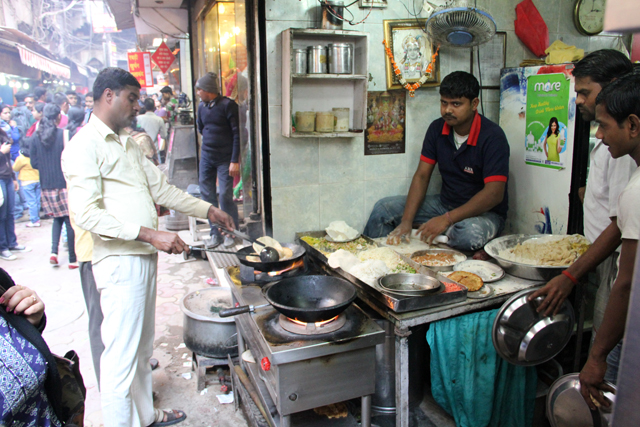
Outside, where armies of people pass by, is the kitchen, where all the action and food preparation takes place.
One man rolls out dough and fills them with topping at a mind blowing speed, while another guy fries the parathas in oil that’s so hot it looks like lava. Within just a few moments the raw dough is transformed into a crispy golden flatbread.
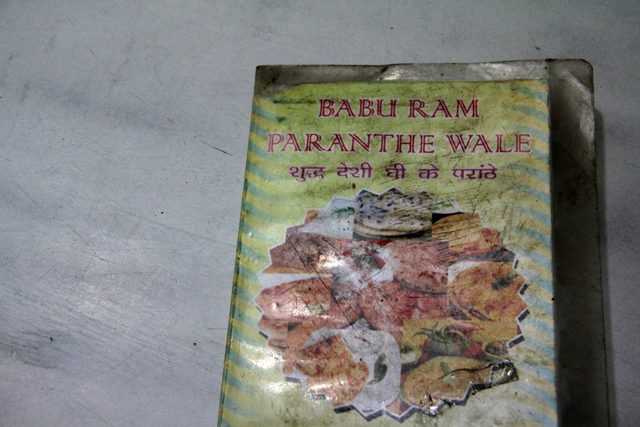
Now that, my friends, is a menu!
I’m guessing decades of greasy hands have touched that artifact, and I’m sure that if a scientist got his hands on that, he could probably find some pretty interesting things.
In my opinion, that’s always a sign of a not so healthy, yet a quality eatery!
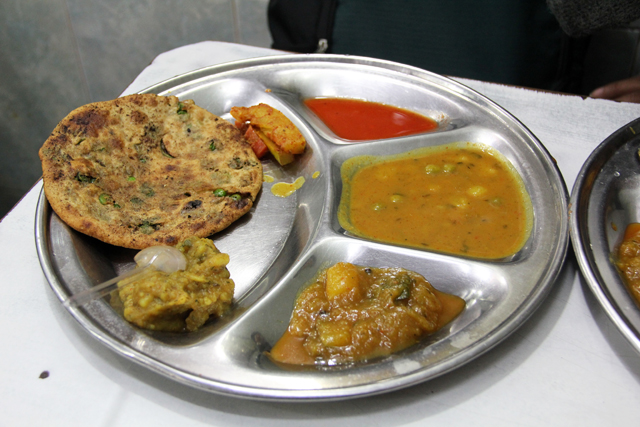
At Babu Ram Paranthe Wale there are probably about 30 different kinds to order, They came on a metal saucer with pumpkin curry, a peas curry, and a red sauce that tasted just about like the American version of Chinese sweet and sour sauce (sour tomato sauce)
While I did think the parathas were tasty and delicious, they were a little too greasy for me. I definitely couldn’t eat my fill of parathas, I’d just be too greased out. 2-3 were perfect.
Paranthe Wali Gali is the type of place people are willing to wait to eat, a food locals consider special and maybe comforting.
Sitting at the table next to us (which was actually only inches away from us) was a group of ladies who were originally from Delhi, but had been living in the United States for over 10 years – they too came to get a taste of that all familiar paratha and to savor the tasty pieces of fried dough they had remembered.
And like I mentioned at the beginning of this article, the parathas are good, but in this case the atmosphere of the chaotic maze of Chandi Chowk is part of the fun!
references-https://www.herzindagi.com/hindi/reviews/delhi-chandni-chowk-gali-paranthe-wali-food-article-7880
 Eduindex
You must be logged in to post a comment.