Scientists of JNCASR of DST develop a new low cost method of upscaling most conductive material‘graphene’ while preserving its single layered properties

Graphene, the one-atom-thick sheet of carbon atoms, which is a boon for energy storage, coatings, sensors as well as superconductivity, is difficult to produce while retaining its single layered properties.

A new low-cost method of upscaling production of graphene while preserving its single layered properties, developed by Indian scientists, may reduce the cost of producing this thinnest, strongest and most conductive material in the world.

Researchers from Jawaharlal Nehru Centre for Advanced Scientific Research (JNCASR) an autonomous institute under the Department of Science & Technology, Government of India through their recent research work have upscaled graphene production while retaining its thin layered properties. This was made possible by a simple, affordable method wherein naphthalene coated nickel foil was heated for a few minutes in an ordinary vacuum by joule heating and was cooled to get twisted layers of graphene. Careful study using electronic diffraction and Raman scattering showed that the 2D single-crystal nature of the atomic lattice of the graphene is retained even in the multilayer stack. The twisted multilayer graphene that results is also highly conducting.

In the research by Nikita Gupta (Ph.D. student, JNCASR) and Prof. G.U. Kulkarni (corresponding author ) published in the ‘Journal of Physical Chemistry Letters’, the scientists have also defined a formula to quantify how much single layer like behaviour exists in such a system. The twisted system has multiple layers, each behaving like a single layer, allows variation in the experimental data within one sample, thus making quantification possible to achieve. The derived formula provides an insight into any twisted hexagonal multilayer system and may be used to tune superconductivity.

The researchers used a combination of two techniques to understand and quantify how much single layer like behaviour exists in the graphene system. Raman spectroscopy—a technique to understand whether a graphene species has single layer like behaviour arising because of no interlayer interaction and electron diffraction–a technique to study the morphology of the given twisted system.

Observing fascinating properties of twisted multilayer graphene such as visible absorption band, efficient corrosion resistance, temperature-dependent transport, influencing the crystalline orientation of source material, helped the JNCASR team to understand the landscape of the given twisted multilayer graphene system. 

Recent publication in the journal ‘Nature’ by James M. Tour, an eminent peer on this research discovery (https://doi.org/10.1038/s41586-020-1938-0), confirms the upper limit of relative Raman intensity predicted by this work, experimentally. The present understanding of twisted multilayer graphene will help in understanding any twisted hexagonal system. It gives an upper limit of relative Raman intensity which can exist in a particular multilayer graphene system.

Scientists from JNCASR of DSTstabilize gold in non-cubic lattice, unfurling efficient catalytic properties of the metal

Gold has been a fascinating metal for use in jewelry and well as industrial applications because of its high resistance against conventional oxidizing environments. The unique property of Au is mainly dictated by its atomic arrangement in the crystal structure, technically called face-centered cubic (fcc) lattice.

Scientists have introduced new catalytic properties in gold by altering the most stable fcc lattice, converting it into a new avatar that can trigger gold-based catalysis for industry.

Tuning of crystal structures and shapes of micro-sized noble metals or micro-crystallites have revealed fascinating catalytic, optical, electrical, and magnetic properties that enable developments of environmentally friendly and durable nano-technological applications.

Scientists from Jawaharlal Nehru Centre for Advanced Scientific Research (JNCASR), an autonomous institute of the Department of Science & Technology (DST), Government of India, have stabilized gold in non-cubic lattice, unfurling efficient catalytic properties of the metal.

The team guided by Prof. G.U Kulkarni from JNCASR has stabilized Au in mixed lattices consisting of lower symmetry lattices in the form of micro-crystallites, induced by geometrical constraints. In contrast to conventional bulk fcc gold, these micro-crystallites are more efficient in their catalytic activity. Besides, the crystallites behave nobler than the conventional fcc Au in mercury and aqua regia. Thus, these Au crystallites behave quite differently from our day to day used ones, and the credit goes to the underlying unconventional lattices.

This research published in the journal ACS Nano’wassupported by the Department of Science & Technology, Government of India (DST) provided within the framework of the India@Desy collaboration and Nano Mission and the technical support from the EU-Horizon2020 research and innovation program of Nanoscience Foundries and Fine Analysis (NFFA).

In this work, JNCASR team joined by Prof. M.K Sanyal from SINP, Kolkata used scanning X-ray diffraction microscopy (SXDM) technique with nano-beam at DeutschesElektronen-Synchrotron(DESY), PETRA III, Germany, which revealed location of the spatial distribution of the different lattices in the crystallite volume without using any slicing techniques.

The study disclosed many surprises. The central part of the crystallite is rich in lower symmetry lattices while being capped by the fcc rich tips, which explains their unique behavior in aqua regia. Besides, co-presence of compression and expansion to the extent of approximately 5% (compared with conventional fcc Au) in the micrometer-sized crystallite helps the crystallites remain ambient stable for years. Such study of the spatial distribution of the different phases can allow exploration of new properties in a much better way.

Union Home Minister Shri Amit Shah paid floral tributes to Pandit Deen Dayal Upadhyaya on his birth anniversary

Union Home Minister Shri Amit Shah paid floral tributes to Pandit Deen Dayal Upadhyaya on his birth anniversary today. Shri Amit Shah said, “My humble tributes to the heroic son of Mother India, an epitome of simplicity and the pioneer of progressive politics in the country, Pandit Deendayal Upadhyaya ji, on his birth anniversary.”

“For the last 6 years, Prime Minister Shri Narendra Modi has been carrying forward the poor welfare policy of ‘Antyodaya’ based on Pandit Deen Dayal Upadhyaya’s vision. Under this policy, Modi Government is providing cooking gas, electricity, toilets, houses and health facilities to 60 crore poor households.”

Shri Amit Shah said, “Pt. Deen Dayal Upadhyaya ji gave birth to a new ideology soon after Independence, at a time when policies were being framed and the nation had begun its journey.  Instead of blindly emulating the West, his thought was deeply rooted in Indian ethos.”

Foundation Day of Deen Dayal Upadhyaya Grameen Kaushalya Yojana (DDU-GKY) celebrated as “Kaushal Se Kal Badlenge”

Ministry of Rural Development, Government of India, celebrated Foundation Day of Deen Dayal Upadhyaya Grameen Kaushalya Yojana (DDU-GKY) on the occasion of Antyodaya Diwas today. Shri Narendra Singh Tomar, Union Minister of Rural Development, Agriculture & Farmers Welfare, Panchayati Raj and Food Processing Industries graced the occasion along with Sadhvi Niranjan Jyoti, Union Minister of State for Rural Development.

Shri Narendra Singh Tomar congratulated all the stakeholders of DDU- GKY on the occasion of Antyodaya Diwas for setting a benchmark in implementation of the program. He exhorted rural youth for getting skilled as no degrees can fetch a job if youth is not skilled and that only skill can lead to a better future. He also emphasized on importance of self-employment and designing one’s own future. The Minister expressed his happiness over the fact that under DDU-GKY, 10.51 lakh rural youth have been trained and 6.65 lakh successfully placed so far. He highlighted the importance of skilling in making India a prosperous country.

On this occasion, Shri Tomar inaugurated Agripreneurship Program and released the following during this program:

  1. Guidelines regarding Captive Employment under DDU- GKY
  2. Guidelines for Promotion of Integrated Farming Cluster (IFC)
  3. Compendium of success stories of DDU- GKY placed candidates

An MoU was also signed between MoRD, ICAR (KVK) & RCRC (NGOs Coalition) for capacity building of Farmer Producer Organisations (FPOs)/StartUps and providing incubation support in rural areas.

Sadhvi Niranjan Jyoti, Union Minister of State for Rural Development congratulated all the stakeholders for organizing this program, ” Kaushal Se Kal Badlenge”. She mentioned that sharing of the story of successful candidates shall be motivational for other rural youths to join this program. She impressed upon the importance of rural development in the context of ‘Aatmanirbhar Bharat through skilling’. She stressed to all stakeholders regarding the need to bring other interested rural youths under DDU-GKY to become independent and a change agent in the society.

The Union Ministers interacted with some placed candidates and employers from 4 different locations, Coimbatore, Bengaluru, Gurugram &Hyderabad. The candidates who got skilled and are now successfully placed today with different employers, shared their unique life experiences.

Secretary (Rural Development) Shri Nagendra Nath Sinha highlighted the achievements of DDU-GKY during the last 6 years of implementation. He also talked about importance of DDU-GKY and integrated farming initiative for rural development across the country. He sincerely hoped that DDU-GKY would achieve greater success in skilling and placing the rural youth in times to come. 

This program was virtually attended by State Skill Missions, State Rural Livelihoods missions, Rural Development Department of States/UTs, Project Implementing Agencies, Employers and rural youths from all over the country.

‘SHALL I COMPARE THEE TO A SUMMER’S DAY’

“Sonnet 18” or “Shall I compare thee to a summer’s day” is one of the most acclaimed of all 154 sonnets written is written by English poet and playwright William Shakespeare. The poem was likely written in the 1590s, though it was not published until 1609. Like many of Shakespeare’s sonnets, the poem grapples with the nature of beauty and with the capability of verse to express that beauty. Praising his friend (considered to be a young man), the poem essays several clichéd metaphors and similes. The young man’s beauty can be best expressed by comparing him to the poem itself.

Shakespeare’s Sonnets are usually spectacular, sometimes unsettling, and sometimes ambiguous in their meanings. As sonnets, their central theme is ‘love’, but they also exhibit upon change, time, passion, loss, betrayal, and the unsettled gap in fantasy and fact when it comes to the person you admire. These are verses composed to remember the poet’s friend for eternity. In the memorable lines of Sonnet 18 Shakespeare implies that his poem bestows immortality: “So long as men can breathe or eyes can see, / So long lives this, and this gives life to thee.” The writer commences the appreciation of his dear friend without pretence, then he gradually creates the image of his friend into that of an ideal being. His friend is first compared to summer in the octave, but, in the line “But thy eternal summer shall not fade”, he is summer, and thus, he has transformed into the pattern by which real beauty can be judged.

The poet’s response to such great happiness and beauty is to assure that his companion is eternally in human recollection, kept from the emptiness that follows death. He comprehends that the individual human body cannot survive the passage of time and that it will ultimately wither away. As an outcome of the manner of aging, this body will die, for humankind is transient. It is said that to be born is to die. Thus, nobody can avoid death. But, the death of a person does not imply the end of the human race. Man, as a species will live on. Moreover, because of that, their creation will likewise endure. The poet understands that there is just one way to become eternal, and that is through the creation of timeless artwork. He is certain that his verse will be known and possessed in high appreciation for several generations. That is why the people of whom he expresses in his poetry will also prevail. In this way, upcoming readers of his verse will get to know that there was once a wonderful person who was the poet’s muse and inspiration. He achieves this through his verse, believing that, as history writes itself, his friend will become one with time. When the poet and his companion are no more, their fair image will be kept alive through the power of verse. Therefore, the beauty may not sustain, but the appreciation of that beauty in the poet’s expressions will live on.

Indian Warning – If Chinese soldiers come to our post, they will not hesitate to shoot

Priya Yadav,

After the Galvan incident, China has deployed its troops in large numbers at India’s petrol point, so India has given a strong message to the dragon that if it happens again, be ready to bear the consequences. After the stalemate in Galvan, it became clear that words like peace appealed by China cannot be trusted. China is repeatedly provoking the Indian soldiers with its antics and now that is why India has clearly stated to the PLA that we will not be afraid of its gibberish.

India gave this proposal
Significantly, in the midst of the ongoing tension over the actual control (LSP) in Ladakh, India has made a practical offer to China to reduce China’s tension. Sources in the government said that during the talks between the two sides in Maldo in the last days, India said that the Chinese sides should retreat from all places (Disengagement). According to India, China should retreat at all places from the plain of Depsang to the southern part of Pangong. This process should not be selective. But China is not ready to accept the proposal that the Chinese army retreat to the first LAC. He says that the Indian Army should first retreat from the southern Paigong Tso area.

It is necessary to ensure ground stability
Two days after military talks with China to resolve the border-related deadlock in eastern Ladakh, India said on Thursday that the way forward would be to avoid any unilateral effort to change the status quo. And both sides continue the negotiations to repel troops from all areas of conflict.
Foreign Ministry spokesman Anurag Shrivastava said that the withdrawal of troops is a complex process and it would require mutually agreed ‘mutual steps’. The way forward will be to avoid any unilateral attempt to change the status quo. Srivastava also said that the next meeting is likely to be held soon under the framework of the Negotiating and Coordination Mechanism (WMCC) on Indo-China border matters.

It is believed that this dialogue will take place before the next round of Corps Commander level talks. Srivastava said that both sides are working towards a complete withdrawal from all areas of the conflict. Simultaneously, it is also important to ensure stability at the ground level. He also said that the meeting of senior commander level should be seen in its entire perspective.

India and China going through an ‘unprecedented’ situation
Foreign Minister S Jaishankar said on Thursday that in reference to the ongoing border dispute between India and China in East Ladakh, the two countries are going through an ‘unprecedented’ situation. Addressing the World Economic Forum’s online conference, Jaishankar said that how India and China keep pace with their growth is a big issue, a part of which is a border dispute.
This is Jaishankar’s first comment on the border dispute that has been going on for four and a half months, after talks with Chinese Foreign Minister Wang Yi on 10 September, on the sidelines of the Shanghai Cooperation Organization meeting in Russia’s capital Moscow. On how the relationship between the two big countries of Asia will proceed, Jaishankar said that it is important for India and China to understand the need to adjust each other’s development.

5 Technologies Shaping the Future of Cyber Security

The more we depend up on the new innovation to work, the more basic questions of cyber security comes. During this time of work from home, many organizations are depending for the progress on gadgets.

But these gadgets sometimes serve as the passageway for cyber- crime and cyber criminals.

Here are five advancing technologies that are moulding the future of cyber security. Let us unfold them by scrolling it down.

  1. Security Orchestration Automation and Response (SOAR): It is the commonly utilized in blend with SIEM frameworks, SOAR plays the role of shutting the gap between occurrence differentiating proof and reaction. SIEM frameworks are incredible at mentioning to the organization and the use of it. To know how SOAR framework performs, let us separate the short form:

Security orchestration

Security means to work with each other and create a new innovation. Organization is the step towards hanging them together so that we can move quickly from a solitary dashboard.

Mechanization

Mechanization means the step or procedure of security. You cannot dispose them. SOAR reduces the reaction time and danger of human error.

Reaction

SOAR can really be helpful at stopping certain cyber dangers. Since penetration cause a reputational harm to famous brands, forestalling them is vital.

  • Cloud Access Security Broker (CASB): Now-a-days, it is very easy to get applications to be gotten to from any place and on different gadgets. Simple action can cause troubles. Information can be caught easily. Ensuring your gadgets during move is the CASB has become the most important factor. CASBs sit between a cloud application and the cloud clients, minutely observing the movement. Once you install CASB, you can likewise be the cloud based project itself. CASBs has few use cases. A part of it is used to look after the entrance security and others work to foretell malware.
  • Client and Entity Behaviour Analytics: This utilizes the mixture of AI and human dynamic. Client and Entity Behaviour Analytics (UEBA)frameworks are needed to recognise the inside dangers or troubles caused by checking clients and substances, which incorporate things like switches. It also tests clients personal conduct standards and search for peculiarities that shows action. A UEBA would signal the things that you download everyday- either make a move or will tell a director. It is most helpful in cyber security.
  • Information Loss Prevention (DLP): There are many cybercriminals who sell your delicate and private information and post it on the web. It can become your worst nightmare by seeing those posts on the web. So to reduce this kinds of cyber- crimes, organizations frequently sends messages to clients and reset passwords for many important and great records. DLP frameworks do a great deal in protecting these secrets and helps in building a company’s own system. Its best works includes, differentiating which information is private and delicate. Scrambling information on the way.
  • Equipment Authentication: It is very well known to most of us that login qualification can be spilt by devoted programmers. Equipment validation requires a username and password. There are many different ways for this validation.

USB security keys

These are little gadgets that are plugged into a USB port to verify the client. It utilises the symbols which includes a layer of insurance.

Optical acknowledgement

It is a modern of acknowledging. It matches your retina with the data to assure that it is you. Then it gets approves by the system. It is very similar to fingerprints matching.

Finger swipes

It utilizes your fingerprints to confirm that it you who is logging into the system. Finger swipes works in the same way as optical acknowledgement.

Cyber security advances are not at all cool, but are very complex things. It just protects your business or your secret information from being getting extortion, cyber-crime, malware, hacking and many more.

These are some of the advance devices that can shape the future of cyber security. Hope you enjoyed reading this article. Stay connected with us for more interesting information. Till then goodbye. Stay healthy and have a nice day.

Rounded Approach for Communication In A Relationship

In a relationship, couples show their various ways to express their emotions in different ways like- arguments, communication gap, misunderstanding and even a long period of silence.

Actually these are negative aspects of communication. It creates a negative impact. Therefore it results in ‘poor communication.’

Fortunately, a little does indeed go a long way if we fine-tune those communication skills and learn how to build and have healthy conversations with our better half or our partners.

Scroll down to read and learn how to build well-rounded and effective approach in communication skills in your relationship.

  1. Healthy connection is must between partners: For any relationship to work and survive, a strong bond and emotional support is very much necessary. If you feel that your partner or better half is not attracted towards you, this might create a misunderstanding between both of you. Healthy connection not only means that to convey your feelings but also sharing your likes and dislikes, your willingness. By doing this your relationship moves ahead and becomes strong.
  2. Healthy debates and arguments: Relationship is always a two-way conversation and sometimes arguments can happen and either of you may turn aggressive. It leads to unhealthy relationship. Be calm and cool in these situations and first know what is subject matter on which your partner is talking about. Discuss the subject matter together, come to a solution together. Show a different side of yours to your partner and maintain a healthy relationship.
  3. End your long term differences:  If you and your partner have a fight, big or small, end it before you go to sleep. Otherwise it creates a bad 
  4. impact on your relationship. If you festering negativity within you and going to sleep, the next morning when you get up, it will disturb you a lot. Peace and harmony will disturbed. So it is better to end the fight before you go to sleep.
  5. Quick-fix solutions are needed: Every relationship has their own way to deal with solutions. If you are in the middle of the argument, try to stay calm , simply focus and close your eyes for at least 10 second. Your peace of mind will return and you actually can your arguments turning into the most hated and ugly one. Take a deep breath and just stop.  A simple pause in your argument can change the course of things and your relationship. Conversation means both speaking and listening. So listen what your partner wants to speak and then act accordingly. It can save your relationship.

As couples have the power to steer their relationship in the right direction by solving the issues and problems and taking the charge of effective communication. It helps a lot.

Learn from your mistakes and make sure that you do not repeat them in your relationship. The importance of effective communication in your relationship can hold you strong and together through thick and thin.

Hope you liked this article. Stay connected with us for more updates. Till then goodbye. Have a nice day.

How can we improve online education?


Due to the ongoing pandemic, our laptops have become our teachers. The already backward education system took a serious hit when offline schooling had to suddenly shift to online education. The lack of infrastructure and preparedness for this sudden shift has severely affected the quality of education in today’s world. The reach of the education sector has decreased largely amid the global outbreak of the novel Coronavirus. Private schools have managed to stay afloat with the new developments in this sector, however, public schools have become the Titanic in this situation. With half of the students out of their schools and having minimum access to education, how to improve online education is a topic of utmost importance. To widen the reach of education, we need to make changes simultaneously in multiple directions. 

•Mode of Communication 

Some modifications in our mode of communication can help reach more students. Instead of using video calling apps such as Zoom, Google Meet, Microsoft Team, et cetera which require fast internet network and attendance in real-time, switching to WhatsApp audio notes and sharing worksheets as well as pdfs which require fewer megabytes. This will help them to go over the class multiple times in case they don’t understand a particular topic and will not require them to attend a class at a particular time. 

•Interactive education

After each lesson, an interactive worksheet, homework or test should be administered. When teaching a primary class, interaction works the best. Using pictures, descriptive texts, direct questions and answers, interactive graphics, et cetera would certainly engage students more into their studies. Making teachers available on call for a specific period of time to solve their queries will also encourage them to study and not give up once they fail to understand something. 

•Mental Health

From old to young, all minds have been negatively impacted by the disruption of their routines, lack of human interaction leading to feelings of loneliness, uncertainty in life, fear of a newly introduced deadly virus and much more. The school going students, who are in their formative years, can develop stress and anxiety. Recent news has also brought into light suicide incidents among students because they did not have access to education and felt that their life had come to a halt, along with many other issues. In these days, mental health awareness holds more importance than any other subject. Teaching students about how to improve their mental health, how to seek help, how to identify problematic thought patterns, and other things they ought to know should be made a priority in their syllabus. 

Following a more inclusive approach, to accommodate the underprivileged section of the society is a must in these days. The government should appropriate more funds to the educational sector as they are much needed to build a proper infrastructure for online education. It is the youth that is our future and it is them we should consider our greatest assets. Holistic education would lead to a better society and help in bringing about the changes that are much needed in the world. 

Educate. Empower. 

Good Samaritan Law : 4 years and still unknown to citizens

It is still very scary to watch an accident and worst is someone getting directly or indirectly affected and devastated by the Road accidents. This may be thing that no one welcomes but still we usually become the part of such accidents unknowingly. Not in criminal manner but as a audience, sometimes feeling sad for accident and sometimes fighting with our daily yet big problems. We try to help in some way we can still down the memory we all feel that stay away from these police cases. We might hear such words from anyone as its very disgraceful yet so common that we never even give this a shot in such perspectives. There are some brief statistics given below of accidents in India and everything related to that stats.

In 2012, SaveLIFE Foundation had filed a Public Interest Litigation (PIL) in the Supreme Court of India, requesting the Hon’ble court to safeguard Good Samaritans who come forward to help the injured.

On March 30, 2016, the Supreme Court of India gave “force of law” to the guidelines for the protection of Good Samaritans issued by the Ministry of Road Transport and Highways. The purpose of a Good Samaritan law is to provide legal protection to bystanders who come to the aid and rescue of victims of road crashes.

The current annual death toll on Indian roads is over 1,50,000

Over 80,000 lives can be potentially saved if bystanders come forward to help.

According to the World Health Organisation (WHO), in the absence of established emergency medical services, bystanders can play a game changing role in saving lives. They can call for help, provide first-aid to the injured and even rush them to the nearest hospital, if an ambulance does not arrive in time.

Following is the government issued and verified definition and illustration of Good Samaritans Law. All the content and definitions below are purely correct and given by Ministry of Road Transport and Highways under jointly with Indian Govt.

Who is Good Samaritan?

A Good Samaritan is a person who, in good faith, without expectation of payment or reward and without any duty of care or special relationship, voluntarily comes forward to administer immediate assistance or emergency care to a person injured in an accident, or crash, or emergency medical condition, or emergency situation.

What is Good Samaritan Law?

The Good Samaritan Law allows a person, without expectation of payment or reward and without any duty of care or special relationship, voluntarily come forward to administer immediate assistance or emergency care to a person injured in an accident, or crash, or emergency medical condition. Good Samaritan Law protects Good Samaritans from harassment on the actions being taken by them to save the life of the road accident victims.

Why the need for Good Samaritan law?

India is an unfortunate victim of a large number of road crash fatalities. Three out of four people in the country are hesitant to help injured accident victims on roads due to fear of police harassment, detention at hospitals, and prolonged legal formalities. Even if someone wants to help, these factors stop them from doing so.

How did India get a Good Samaritan Law?

In the last ten years, road crashes have killed over 13 lakh people in India. According to the Law Commission of India, 50% of these victims died of preventable injuries and could have been saved if they had received care on time. The role of the bystander is critical in providing emergency care to the victim. Yet, in India, bystanders have been hesitant to help the injured for fear of legal repercussions and procedural hassles. In 2012, a Public Interest Litigation (PIL) was filed in the Supreme Court of India, requesting the Hon’ble court to safeguard Good Samaritans who come forward to help the injured

Be a Good Samaritan

Road crashes claimed more than 200,000 lives in India alone and contributed to the economic loss of approximately 3% GDP. 17 people die every hour on Indian roads and around 4.07 LAC.

As per the reports, nearly 50 per cent of road fatalities would not have happened had medical attention been given within the first hour. Become a GOOD SAMARITAN and help us reduce this number.

 We take this pledge to save someone’s life and take it upon as our moral duty being a good citizen.

Charity: When It Changes From Help to Haplessness

Covid and lockdown are two major hits that the country has taken in the last half a year. And needless to say, it left the country wobbly on its knees. Everyone was affected, some more than others. Somewhere affected because of their financial status, some because of their ethnicity, some because of their profession, and some… because of their luck. Now you might ask me, why would I say so? But I have my reasons. 

I’m not someone who is on many social media platforms. Just enough to be in touch with the important people in my life. But one doesn’t have to be on all across the social web to have come across at least one picture of charity or donation. Now, many people might have this question, what’s the problem with that? Someone is doing good, so they share with the people. Cool, fair enough. But the point is not about the ones on the giving end. It’s about those  on the receiving one.

When the lockdown first started, the lives inside many houses went into mayhem. With almost no hand in cash, many people were at a loss what to do. With a lion’s share of population depending on the conventional bank and physical withdrawal system, they were stuck at a bad place when it came to financial matters. So for many people, taking the help they were extended was the only viable option. And so they did. But we as a society have a lot many flaws. One of them is looking down at those who we believe are below us. And knowing someone taking external help is a sure indicator. I remember watching a video where a middle aged man was bemoaning how just taking some ration in a donation camp, due to lack of sufficient funds at hand, left him and his family as the laughing and gossip talk of the neighbourhood. His children were asked if the man they saw on Facebook was their father. It was a very distraught experience for everyone.

No one has any rights to comment against anyone posting pictures on social media about anything they did. But people must understand, when they help someone and then post pictures with the other person, that other person gets involved, even if he/she doesn’t like to. And we don’t know what they have to face once they go back to their lives. No one should have to choose between hunger and self respect. Because nobody chooses to be in that position in the first place. Help and charity is an act for self, self satisfaction and self happiness. Not a response to prove oneself to the world. 

Problems should be known, talked about and shared. But for the sake of problems. Not for the sake of self. Not when the problem has been taken care of. If so, we need to move to the next one. We need to remember that our primary instincts have always been to help. And in the times of crisis, we need to follow that.

SPORTS IN INDIA- Development, Issues & Reform measures

Sports are one of the foremost admired activities in India. Almost nearly everyone makes themselves indulge in some sort of sports starting from hockey, cricket, football, badminton, court game to golf, swimming and athletics. The India of these days plays with a competitive frame of mind. The society has been modified with time and opportunities out there. Today, parents encourage their children to indulge themselves in various sports or games and earn name and fame for themselves. With the growing demand for all the sports, the requirement to possess an athletic body has additionally gained great importance.”

“To take Indian Sports to new heights, the task of governing and promoting them in India have fallen on a variety of Indian sports associations. Sports organisations just like the Indian Olympic Association and Sports Authority of India are approaching with numerous other ways towards raising the quality of Indian sports through numerous talent promotion programmes and many others. A number of sports academies and institutes are actively concerned in the grooming of Indian sportsmen. Moreover, there are numerous corporate houses standing to the rescue of sponsors-starved games. India has started an annual award for corporations that promote sports within the nation of over a billion.

National Sports Talent Contest, the Special area Games, etc. are some of the schemes and programmes thus developed by the Sports Authority Of  India solely for the promotion as well as the betterment of sports in the country. Through the National Sports Talent Contest, SAI tries to extract the talent in youngsters of the Asian country, aged between eight and fourteen years. While choosing a college for these youngsters, SAI rigorously analyses the sports facilities and residential infrastructure on the market within the schools. The army Boys Sports Company (ABSC), in association with the Indian Army authorities, is maintained by SAI, whereby boys aged between eight and fourteen years are chosen and trained. The chosen candidates are supplied with correct facilities and infrastructure to hone their skills in their adopted disciplines. SAI provides sports equipment for the trainees, kit, stipend as well as coaches. SAI has conjointly established SAI coaching Centres (STC) to catch them young and train them to become athletes.

‘GoSports’ is a venture that originated in 2006. It consists of the folks from various backgrounds WHO have moved forward to supply the proper ingredients to develop the sports business. It works as a Sport Management Consultancy to assist excellent sportsmen to get what they’re capable of. They’re making themselves readily available to aid the gifted players in their career management such that they will think about their game and leave the remaining to others. Go Sports conjointly lend a hand in formulating policies to push sports in schools and government bodies.

After being scoffed at for years, Indian sports persons have gotten due recognition within the world arena. Recent achievements of Indian players in numerous games and tournaments have earned them the respect they are to be provided with and also the media coverage which will facilitate them propagate their individual games. Abhinav Bindra awarded with gold in Olympics to Vijender Kumar and Sushil Kumar’s prize at beijing is worth mentioning. the arrogance of the Indian boxers has never been thus convincing. Saina Nehwal has earned been ranked as second position within the court game world that most of the people believe isn’t a surprise taking Saina’s labor into consideration. Somdev and Yuki Bhamri are ready to boost Indian lawn tennis to a different level. Squash too is obtaining its due within the country. Sunil Chettri’s stint with Kansas city could be a positive indicator of accelerating recognition of soccer in India.

The Union Sports Minister Rajyavardhan Singh Rathore recently mooted his point of view in a series of tweets seeking to remove the word ‘Authority’ from the Sports Authority of India (SAI) as the phrase lost meaning in the current sporting situation. In addition, the minister expressed concern about the desperate condition of sporting icons struggling to meet fundamental needs. The Minister’s statement on the current sports situation has contributed to a discussion on how to develop the country’s sports environment. Against this context, it is important to understand the factors that adversely affect sports in India and the government’s steps to correct the situation.

In September 2017, for the period of 2017-18 to 2019-20, the Union cabinet approved the revised Khelo India programme at a price of Rs.1,756 crore. The programme ‘s main goal is to incorporate sport as an instrument for individual growth, community development , economic development and national development. The updated Khelo India programme will have an effect on the entire sports system as well as on infrastructure, community sports, talent recognition, competition structure and the sports economy.

In March 2017, 12 globally recognised Indian players were nominated by the government in which, for the very first time, as National Observers, solely for the purpose of the positive growth of assorted sports within the region. They analyse the prevailing sports infrastructure / equipment, scientific support and standard of medical facilities at the venues of the national coaching camps, among various responsibilities, and report the critical gaps. • Monetary assistance to promote the visibility, exercise and participation of girls / women at national / international level has been given to the recognised National Sports Federations (NSFs) under the “Assistance to National Sports Federations” project.

Despite the aforementioned measures taken by the govt., the sports ecosystem is of poor quality within the country. For a nation of over 1.25 billion, the prevailing sports infrastructure isn’t satisfactory. The shortage of best infrastructure and therefore the inadequate support of the govt. are sort of well displayed in poor performance of Indian athletes in major international events just like the Olympics. Small countries like Cuba, European nation and Lithuania performed well in the 2016 athletics compared to India. It’s time, the public and private sector are required to join together to elevate the Indian sports sector from the current deplorable scenario. Extension of Justice Lodha Committee recommendations on BCCI to all or any alternative sports bodies is a right step in this direction. However, this cannot simply be the end and therefore the work needs to be carried off to push sports in each and every field of discipline. They have to push sports, not only as a decent career but also as a decent business proposition too. We’d like the media to clear its stand to the fore-front and facilitate re-vitalise the sports that have gone down the recognition charts. The channels got to show live coverage of assorted games and not simply cricket.

The Most Venomous Animal is…….a Jellyfish?

Nature never fails to surprise us with its mesmerizing beauty. But the sad part is,we barely even know any of it. Nature can give us extreme bliss with its delicious and luscious fruits,at the same time many plants which we think are pretty may turn out to be horrendous. But the fact that it manages to fascinate us everytime is a wonder.For instance, did you know that snakes had infra-red vision,through which they are able to find their prey?

Photo by Pia

Before getting to know this jellyfish which is said to be the most venomous animal ever known,let’s get to know the characteristics and features of a jellyfish.

  • Jellyfish

What comes to your mind when you think of this animal? Well,a jelly. Partially, that’s exactly what it is. Jellyfishes are invertebrates, actually the term jellyfish is often used to describe any animal which is a made of ‘gelatinious’ material. They are mainly made up of water and protein. These organisms literally exist more than 200 types of these jellyfish,and more of them are yet to be explored.The counting,as to know what exactly is the population of the jellyfish is still unknown,because the larvae of jellyfish are usually found in deep sea-beds. Jellyfish are classified into two types:

  1. Medusae (these are the jellyfish which stings you if you go too close to them. Some of them are also venomous)
  2. Ctenophores( also known as comb jellies,these types of jellies do not sting you, fortunately)

Photo by Buğra Doğan 

Jellyfish use their sting,either if you go too close to them or it the jellyfish is really hungry and is hunting for its prey.

Jellyfish existed even before the Jurassic period. That is,they existed even before the first dinosaur came into being. What are their body parts,you may ask. Well,they don’t specifically have any brains(no offence) but they do have a specific structure which enables them to see. Very much like eyes. If we look in the language of English,a group of jellies are actually named as ‘smack’. When jellyfish go around in a large group,maybe with their friends, scientists give it a new name,probably to make our lives harder, as ‘bloom’.And trust me,by large I mean millions and millions of jellies,swimming together. Jellies are usually found in oceans,although,the possibility of them surviving in fresh water is not particularly known. Jellyfish are deep sea creatures,or that’s what known to us. Opaque would not be a word you would describe them with. Transparent? Nah,translucent would be more correct in their case,I guess. The blooms make it very difficult for fishermen and tourists. But I would not blame them,really. 

  • Lifespan

Jellyfishes don’t live really long. Some survive about less than a ear,whereas some species only for a few days. It totally depends on their species, really. The type of species,their habitat,the food they eat,and their ability to survive play a major role on their lifespan. Jellies have a particular stageat each point of their life. The most known stage is medusa, also known as the adult stage,where all the jellyfish does is swim around and also develops it’s tentacles. The larvae of the jellyfish is called a planulae,which grows by breeding on phytoplanktons(microbe which can photosynthesise),small 

fishes etc. 

Photo by Valdemaras D.

What do they sting? These animals actually have stinging cells inside their body which are called nematocysts. What these tentacles do is that they can actually enter literally inside our skin,maybe through our pores.

  • Are they any good?

Hey! Don’t make them the bad Gillian here! They are some delicacies in some countries,these jellies also provide sort of a living habitat to young and  small fishes in places where there is not much space to hide from predators. They use their tentacles to protect small fishes from their nasty predators. Also,some young crabs,which still can’t swim,prefer a good ride on the jellies’s back rather than all that painful work!

  • The Box Jellyfish

Phew! Now that you know what are jellyfish (I really hope so!)let’s get to know the animal which is probably the most venomous in the world.

From the name,you might’ve guessed that these jellyfish have a box like structure. It is actually !ore of a box -like -bell, I would say. From these bells,in the corners hang four hang four long and hollow tentacles.The body structure of this animal is pretty interesting,all around. We will not go into a lot of details,solely because at some point of time, you might sort of get…….bored? 

Anyways,these jellyfish have a better,and we’ll developed nervous system than the other animals,and they are also the jellies which have true eyes,i.e with retinas,lenses etc.The eyes are located in the outer surfaces of their bell and they are ridiculously fast in swimming.

These species are declared to be called the most venomous but according to a research,only some species actually kill you. These type of Jellyfish have around about 20 species with the exploration of mor species still going on.

The venom in them,if in contact with our skin make our cells so porous( holes in our cell membrane) which makes it easier for potassium to leak. Now, potassium is an element which is needed by our body but in huge doses can also stop your heart. Potassium ,at inappropriate doses can result to be very harmful for humans. And don’t think that you would have time to call someone to your help. Nope. This process literally takes just about 2 to 5 minutes and slowly,may lead to death. And I am not kidding here. In children,this process could be even faster,as their body is smaller. The deaths seem to be more common in the parts of Australia.Most Jellyfish venom make your body almost turn into liquid. Spooky? Oh,you’ve got a long way to cross,buddy..!

All in all,unless you don’t disturb them,they don’t disturb younas well! Initially,we start the write,then…..why do we think they are the one who are ruthless…??

Manasarovar Lake: The Mythological Mystica

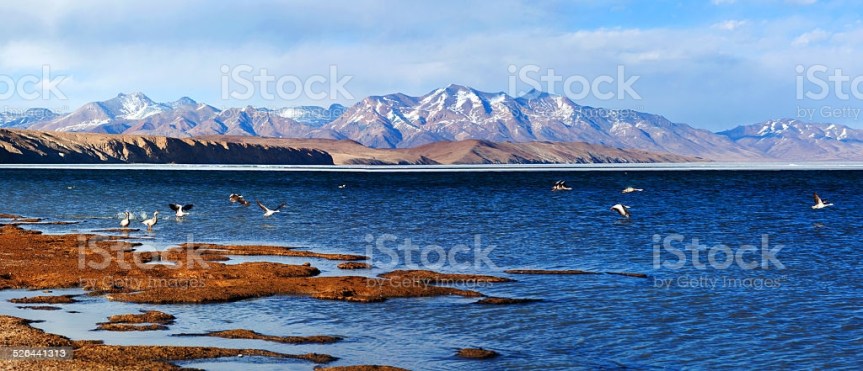
Some places have special values. Sometimes personal, and at other times, cultural and/or traditional. India, being the epicentre of Hinduism since times memorial, has a lot of such places, spread across the country and neighbourhood. One such place is Lake Manasarovar or Manas Sarovar, a freshwater lake, situated near Mount Kailash. A scene of serenity, this lake is a treat to watch in the nights, when the cosmos seemingly descends to the watery depths of the pristine blue loch

Facts and Figures

Regarded as the holiest lake in Tibet, Manasarovar is situated in the Ngari Prefecture, which lies to the far western side of Tibet. Also known as the Swan rimbonche and Mapham Yum Tso (English: Invincible Turquoise Lake), this spot is located at an elevation of 4590m (15060 ft) from the sea level, and holds the record of being the highest freshwater lake in the world. 

With a depth of 90m (300ft), this almost circular lake is situated at a distance of almost 32 kilometres from the illustrious Mt. Kailash, the waters of Manasarovar finds its sourcing and sustenance from the Kailash glacier. Situated in the vicinity of origin sources of some important rivers of the Indian subcontinent, like Sutlej, Brahmaputra, Ganga and Indus River, Manasarovar overflows into the nearby Lake Rakshastal via the Ganga Chhu channel (approx 10 km. long). 

Cultural Clout

Lake Manasarovar and Mount Kailash both hold an important place in various religions, like Hinduism, Buddhism, Jainism and Bon (indigeous religion of Tibet). According to the Hindu beliefs, Manasarovar was first created in the mind of Brahma, one of the trinity of Hinduism, and later, manifested on the face of earth. Hence the name Manasarovar, which can be broken down into Manas, meaning ming and Sarovaram, meaning lake. Such was the beauty of this lake, that Lord Shiva, another deity of the Trinity, made his abode, Mt. Kailash beside this lake. Manasarovar finds mention in the Srimad Bhagavata Purana. It is said that one who takes a dip and consumes the holy water of this lake, is freed from all his/her sins and will go to Mt. Kailash, abode of Lord Shiva after the completion of their human life. 

In Buddhism, Manasarovar is equated with the legendary lake Anavatapta, where Gautam Budhdha is said to have been conceived. It also appears at several other instances in the Budhdhism scriptures, and Lord Budhdha is said to have stayed, meditated and teached near this lake. At present, several monasteries can be seen dotting the circumference of Lake Manasarovar. Its importance in Jainism is due to the connection with the first Tirthankara, Rishabha, who is said to have achieved Nirvana in the Ashtapad Mountain (equated with Mt. Kailash). Similarly, in the Bon religion, this lake is associated with the sacred deity, Zhang Zhung Meri.

Being a part of that many religions, Manasarovar and Mt. Kailash has acquired the reputation of being a holy pilgrimage site. Hence, pilgrimage tours are organized from quite a few parts of the Indian subcontinent. In India, the most famous tour is the annual ‘Kailash Manasarovar Yatra’. The starting of the trek point is Darchen (in Tibet), a short road trip leads to the shores of Manasarovar. From there starts the actual trek or Yatra, which includes the circumambulation of Mt. Kailash. 

With all its grandeur, Manasarovar was, is and will always be an evergreen sight to visit!

Website Reference

https://en.wikipedia.org/wiki/Lake_Manasarovar

https://www.tibettravel.org/kailash-tour/kailash-mansarovar-yatra.html

https://zeenews.india.com/spirituality/kailash-mansarovar-3-mysterious-miracles_1863270.html#:~:text=People%20who%20halt%20a%20night,are%20also%20always%20in%20movement.

Image Credit: Getty Images/iStockphoto

TO A SKYLARK

“To a Skylark” by Percy Bysshe Shelley is an ode to the “blithe” nature of a singing skylark and how human beings are unable to ever attain that same bliss. In the poem, Shelley addresses a skylark that flies up at a magnificent height and sings so melodiously that the world is entranced and charmed by its sweetness .The skylark is Shelley’s most exceptional natural metaphor for true poetic emotion, the “harmonious madness” of classic influence. It signifies high poetic imagination, virtue, and messenger of peace and progress. The skylark’s song concerns a position of purified existence; its song is driven by the pleasure of that uncomplicated simplicity of life, and is unmixed with any sign of despair or of the bittersweet, as human happiness very usually is.

The skylark’s unrestrained melody pours down upon the world, transcending every other grace making the speaker assume that the bird is not mortal at all, but a “Spirit.” It stands for idealism free from crime, exploitation, and slavery. In the poem, it’s rarely noticed but its deep mellow song helps to evoke the people of the mystical visions of Nature. The bird signifies the sheer, unrestrained happiness that Shelley is frantically seeking. This desperation comes through in the next stanzas. He sees the bird as a “high-born maiden” that serenades her lover below her and spring, or “vernal showers” that rain on the flowers below. The skylark is like “rainbow clouds” and the type of all “Joyous” things. 

Structurally and linguistically, this poem is almost unique among Shelley’s works; its strange form of a stanza, with four compact lines and one very long line, and its lilting, songlike diction (“profuse strains of unpremeditated art”) work to create the effect of spontaneous poetic expression flowing musically and naturally from the poet’s mind. The skylark is happy because it apprehends what makes it happy. It has a chosen advantage over human beings, who know
both what gives them happiness and what causes them unhappiness. They worry about the end because they are unaware of things that lie beyond mortality, among other reasons. The skylark knows what lies beyond death, and feels no concern about it. It is no so shocking that it is exceptionally happy the line “We” pine for things that we do not have, and even our “sweetest songs” are full of the “saddest thought[s].” clearly states it.

The poem ends with the writer soliciting with the bird to “Teach [him] half the gladness / That thy brain must know.” Even that little amount of happiness would give Shelley the capability to produce “harmonious madness” that would force the world to listen to him must as raptly as he is listening to the skylark now. Some critics say that P.B Shelley was not a practical man. He was far away from realism. So his Skylark continuously soared higher and did not come to the earth, like the Skylark of Wordsworth. On the whole, this poem is Shelley’s one of the most excellent works.