Are Gandhian principles relevant today?

Gandhiji was a national leader of India who forced the Britishers to leave India without resorting to violence. He is regarded both as a transformational leader and a leader of the masses. Every year on 2nd October, we celebrate Mahatma Gandhi’s birth anniversary and recall his principles and philosophies. It is a fact that Gandhiji adhered to his principles of non violence, truth and satyagraha with utmost sincerity to achieve his goals. Many people argue that all his principles hold good in today’s world. We all have moved years ahead with lots of changes in lives, innovations in science and technology, vivid variety of lifestyles. Here the point is if the principles and ideologies of Gandhi are still relevant or practical in modern world or not.

YES

•Gandhiji’s principle are valid and everlasting His principles are based on truth and non-violence are the base of civilized human society. He practically proved to the whole world that a war can be fought without indulging in violence. In modern world violence is increasing rapidly. Nuclear weapons and terrorism are becoming common these days. More and more People are resorting to violence and divided into religious and ethnic compartments. We need guidance and the direction to save the world from this desperate situation.

• Gandhiji is an inspiration to international leaders also.

Gandhian principles are followed not only by national leaders but also by some eminent foreign leaders like Dalai Lama, Barack Obama, Martin Luther King Jr, Nelson Mandela etc.

• Gandhi’s principles of economic independence valid even today

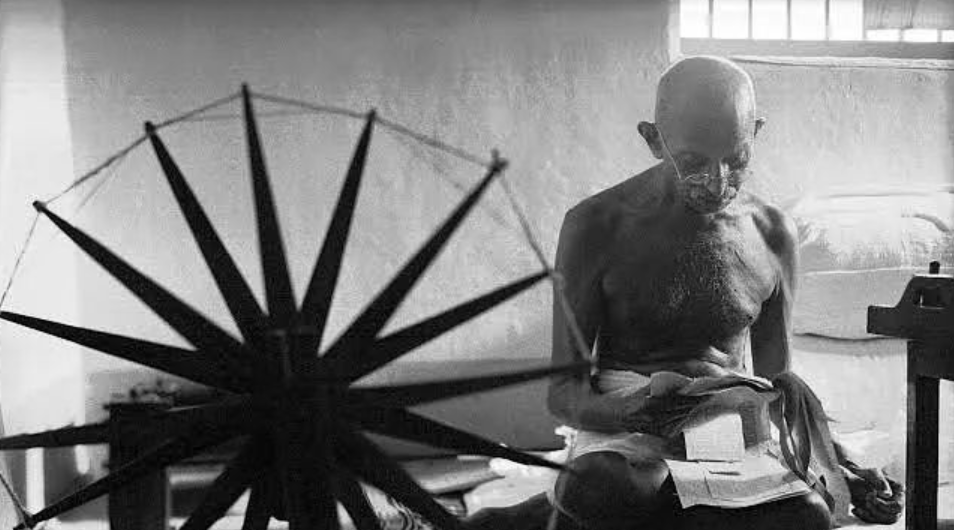
Even today, our Prime minister has launched a programme ‘Make in India’ which very much reflects Gandhiji’s principles of spinning Khadi and giving employment to thousands of poor people.

NO

• Violence multiplies on being non-violent

In today’s era, violence can best be answered by violence. Those who remain silent when treated with violence suffer even worse if they do not fire back in the same way.

• Modern culture outplays Gandhian swawlambi philosophy

In today’s modern world, trends and fashion have taken a new shape and so people wear trendy outfits and by no means they are restricted to use self made khadi clothes as part of ‘Swawlambi’ philosophy of Gandhiji.

• Principle of truth not valid today

In a world where money is the most important part of life, big business houses and capitalists thrive on lies to make huge profits. Advertising agencies most of the time try to cheat people by projecting false claims. Today values and meaning of the success are far more different from the values of Gandhiji.

To conclude we can say that some of Gandhian principles are relevant even today, though some of them have become outdated and irrelevant. The principle of non violence cannot be ignored. Gandhiji’s vision cannot be ignored as they form the very base on which a new generation of decision makers must adapt in order to compete on the global level. If the energy of the youth can receive honest and selfless motivation and direction from the experienced then India can surely progress. Gandhi’s vision should not be lost in religious, political and emotional fervours. It must be reorganized and reconstructed for a brighter and logical future.

Thank you for reading. Have a nice day! 🌼

Virtual Assistants have also started understanding Hindi

Virtual Interaction means Artificial Intelligence is gradually strengthening its place in our lives, whether you realize it or not. It is not only affecting our working practices but also changing them- whether we work in Hindi or English. A great example of this is the change in the way computers, mobiles and other digital devices interact. Traditionally, we used to rely on a keyboard, mouse and monitor or screen to make input and to know output in these devices. This method of communication and conversation has changed with the advent of Artificial Intelligence. An interesting change has come in our interaction with virtual assistants, for whom Hindi is no longer unknown at all. Today, the world of computers and mobiles is dominated by four virtual assistants. These are Amazon’s  Alexa, Google’s Google Assistant, Microsoft’s Cortana and Apple’s Siri. The first three of these virtual assistants have been introduced to Hindi in some way, while Hindi has been used with Apple’s Siri and it is expected that this relationship will soon be seen as a reality beyond experiments.

Google Assistant: Google Assistant is now able to execute dozens of instructions in Hindi and can go much further than searching the Internet or answering questions. For example, it also has the ability to access many other Google applications. You can do it with text as well as for instructions through sound. If you have converted it into a smart home using the Internet of Things in your home, then it can control many things in the house. If Google Assistant is not present in your smartphone, then download it from Play Store. After installing you have to make two settings. First, activate voice input in Hindi on your Android phone and second, go to Settings and add Hindi in search language as well. Google Assistant is not only available in Android smartphones, but it works in many devices controlled by Android.

Cortana:  Microsoft’s Cortana also helps you as an application. It is available in Windows 10. It is also able to access your computer like other virtual assistants. Able to open applications, software etc. within it. It can also do typing for you and do an internet search and all kinds of calculations. Although Hindi support in Cortona is limited, it does have the ability to translate, write, and speak Hindi.

Amazon’s Alexa: Alexa is a hardware tool capable of communicating in Hindi that comes in two forms. The first smart speaker is the Amazon Echo and the second is the combined Echo Show with a display screen. The way the user communicates with both is the same. You give him some spoken instructions and Alexa follows up what you said. It can fetch you anything from the Internet, you can listen to the news and music on your request. For video calling also you can use its display version.

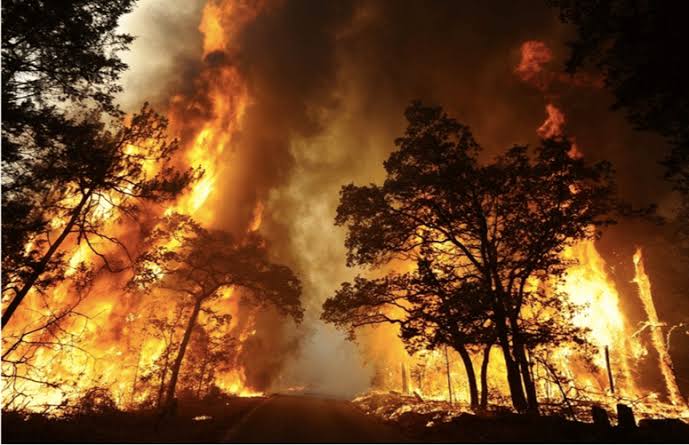
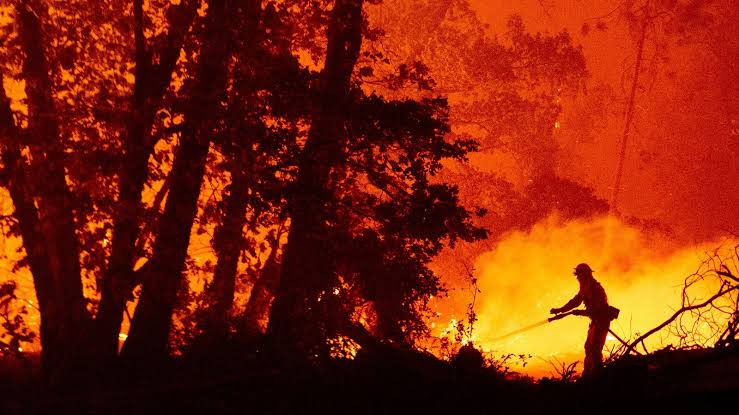
WILDFIRES : The “Burning” issue

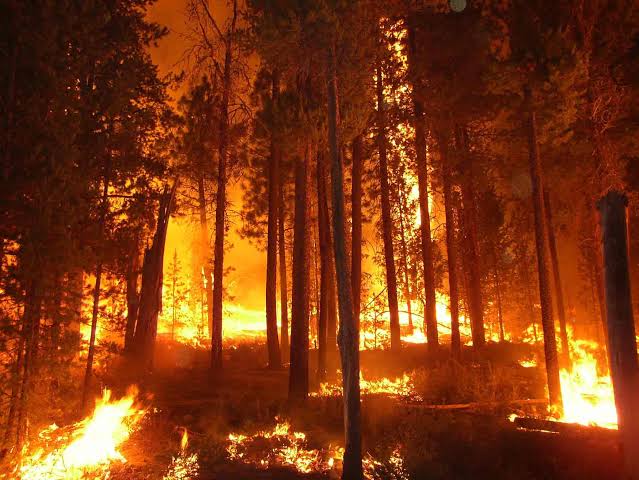
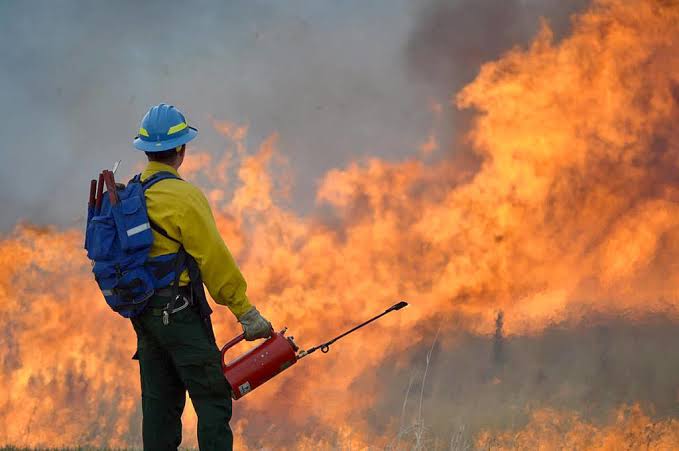
A wildfire is an unplanned fire that burns in a natural area such as a forest, grassland or a prairie. Fossil Charcoal indicates that wildfires began soon after the appearance of terrestrial plants about 420 million years ago. Earth is an intrinsically flammable planet owing to its cover of carbon-rich vegetation, seasonally dry climates, atmospheric oxygen, and widespread lightning and volcanic ignitions.

Depending on the type of plants present, a wildfire can also be classified more specifically as a forest fire, bush fire, desert fire, grass fire, hill fire, prairie fire, vegetation fire or a veld fire. Wildfires can be characterized in terms of the cause of ignition,their physical properties, the combustible material present and the effect of weather on the fire.

The causes of these wildfires may be natural or due to the involvement of human activity. The natural factors include dry climate, lightning, volcanic eruption. The most common direct human causes of wildfire ignition includes fire bombing, discarded cigarettes and sparks from equipment. They can also be started in communities experiencing shifting cultivation, where land is cleared quickly and farmed until the soil loses its fertility, and slash and burn clearing. However, the most common cause of wildfires varies throughout the world.

The spread of wildfires varies based on the flammable material present, its vertical arrangement and moisture content, and weather conditions. Fuel arrangement and density is governed in part by topography, as land shape determines factors such as available sunlight and water for plant growth.

Plants in wildfire-prone ecosystems often survive through adaptations to their local fire regime. Such adaptations include physical protection against heat, increased growth after a fire event, and flammable materials that encourage fire and may eliminate competition. Dense bark, shedding lower branches and high water content in external structures may also protect trees from rising temperatures. Fire-resistant seeds and reserve shoots that sprout after a fire encourage species preservation, as embodied by pioneer species.

Some animals do die in the flames of wildfires, mostly the elderly and very young animals who can’t escape. However, the majority of the wildfire mortalities came after the fire is out, due to the loss of important habitat and food sources burned in the fire. The burns create a new type of habitat, usually open areas where dense forests used to be that are quickly colonized by grasses and shrubs. This creates an opportunity for invasive species to move in before native species get the chance, which can have harmful impacts on the landscape.

Chinchaga Fire – 1950

The Chinchaga fire, also known as the Wisp fire, Chinchaga River fire and Fire 19, was a forest fire that burned in northern British Columbia and Alberta in the summer and early fall of 1950. With a final size of between 35,00,000 acres and 42,00,000 acres, it is the single largest recorded fire in North American history. The fire was allowed to burn freely, a result of local forest management policy and the lack of settlements in the region. The Chinchaga fire produced large amounts of smoke, creating the “1950 Great Smoke Pall”, observed across eastern North America and Europe. As the existence of the massive fire was not well-publicized, and the smoke was mostly in the upper atmosphere and could not be smelled, there was much speculation about the atmospheric haze and its provenance. The Chinchaga firestorm’s “historic smoke pall” caused”observations of blue suns and moons in the United States and Europe”. It was the biggest firestorm documented in North America created the world’s largest smoke layer in the atmosphere.

Black Saturday Bushfires – 2009

The Black Saturday bushfires were a series of bushfires that either ignited or were already burning that either ignited or were already burning across the Australian state of Victoria on and around Saturday, 7 February 2009, and were among Australia’s all-time worst bushfire disasters. The fires occurred during extreme bushfire weather conditions and resulted in Australia’s highest ever loss of human life from a bushfire, with 173 fatalities. Many people were left homeless as a result. As many as 400 individuals fires were recorded on Saturday 7 February ; the day has become widely referred to in Australia as Black Saturday.

California Wildfires – 2020

The 2020 California Wildfire season is a series of ongoing wildfires that are burning across the state of California. As of September 11, 2020, a total of 7,718 fires have burned 33,54,234 acres, more than 3 percent of the state’s roughly 100 million acres of land, making 2020 the largest wildfire season recorded in California history, according to the California Department of Forestry and Fire Protection.

The latest fire that has occurred in California is named as the ‘Willow Fire’. It started on 9th September, 2020 at 6:04am. The location of this wildfire is Neptune Lane and Willow Glen Road, North of Smartville. It burned 1,311 acres leaving 41 structures destroyed and 10 structures damaged.

Why are Hornets dangerous?

Not many of us know  much about insects. All we know is mostly about bees. More specifically, honey bees. But did you know that there exist some insects, more vastly different and dreadful insects in nature? Let’s get to know them!

  • Hornets classification

First, let’s understand the classification of this organism in the biotic world. Naturally,the species belong to the kingdom Animalia ( animals) out of the five kingdom classification. They belong to the Phylum Arthropoda . The Class is Insects .There Family is  vespidae  and the Gene is  Vespa.

• What Are Hornets?

Hornets are basically classified as insects. How are honey bees different from hornets? If you notice, honey bees have a kind of fuzzy fur like structure. Whereas hornets are hairless. But then….how are Hornets different from wasps? Actually,hornets are one of the wasps but with a special condition. Meaning, all hornets come under the domain of wasps,but hornets have a special feature but not all wasps are hornets. (Confusing much? Oh I know!).  The special feature a hornet has is,they are much larger. Some even go somewhere around 5 cm!( maybe small for you but big enough  for them).Some of the features are similar, for example: They live in nests in a colony, they have a queen who can produce about 1000 eggs, they even have female worker hornets but she sadly cannot lay eggs because she is infertile. A larva of a hornet comes out of the eggs and slowly develops and evolves.

Hornets were actually, accidentally introduced in the 19th century.

  • Then…they are not dangerous…..right?

Hornets have killer stingers which they use to defend their nests from predators. Now these stingers are even more harmful to humans. Why? Because, these are not bees,who die after stinging their predator. Why do bees die after pricking you is because the stinger separates from their body, making them die. Unlike them, hornets can sting continuously because their stingers are very fine and do not get separated after stinging, making them prick you multiple times and trust me, that would not be a good experience. But…Why is the venom of a hornet harmful? Well,a single sting of a hornet is similar to any other wasp sting but,hornets usually, do not sting only once. Seriously,their main target is to just sting you to death. Which is why they continue to sting you even after you’ve died ,till they think that you’re no longer a threat to  their nests . The toxicity varies from different species of hornet, but as  they are going to sting you repeatedly, it’s equally fatal.They practically inject the venom into your body. Most commonly,hornet venom consists of about 5 percent acetylcholine. Acetylcholine is a drug which targets your brain, skeletal muscles etc. Not only these, but it is estimated that the murder hornets( Giant Asian hornets) which are the biggest hornets in the world.They contain a neurotoxin called Mandara toxin which, if comes in contact with your bloodstream, initially destroys your RBCs. Though, if a single hornet stings you, you might necessarily not die but can get some minor or major allergic reactions.Doctors usually use epinephrine/adrenaline(http://eduindexnews.com/2020/09/12/what-exactly-is-adrenaline/)  for the treatment of these stings. The average death rate in Japan is about 30 to 50. 

Source:  Pinterest

  • But why do they sting

Now, you can’t completely blame them for thinking you as an intruder because they can’t help it. When you pass their nests, pheromones (hormones or hornets,you could say) are released inside the body of the hornets, which triggers the hornet to not let the intrude near the nest. Hornets prefer nests in burrows or somewhere near land. We all know sound transmits faster in solids. This makes pheromones trigger before you are inside the radius of their nest. They are extremely possessive about their nests and larvae and they get mobilized at once and then, they start to chase after the intruder. Even if a single hornet comes to chase you and let’s say, you even manage to swat it, probably with a stick, the insect will release pheromones which will attract the hornets towards you and they will not be in a good mood. No matter if it’s honeybees, or even their own Vespa species. They have active chemical inside them which increases their aggression. Hornets are not usually truculent at all. Infact they are naturally shy , peaceful creatures and avoid interaction.

They just can’t help but be protective about their nests when it comes to their nests. 

•What do they feed on?

Hornets basically love three things to eat. Firstly,anything which is sugary. Anything that contains any kind of sugars will attract hornets and eat them. They, sometimes even subside into an overripe fruit, when accidentally picked up by someone can again lead to hornet attacking. Secondly, they love saps of trees. They often make holes in the trees and sometimes, actually live in it. Usually they nibble on oak trees and some wild trees as well. Thirdly, they love protein. Proteins are said to be the building blocks for they help in building muscles. So even hornets love proteinecious foods. The includes everything that has proteins. Everything.

Photo by Petr Ganaj

  • Why are they harmful to honey bees?

As said before, hornets love sugary things,sap of the trees and protein sources. Honeybees have two of the sources which hornets love. One, the honey bees contain a a sugar called fructose. In fact, fructose is the most sweet sugar.  And two, they have a lot of proteins in their flesh. So ultimately, hornets invade the bee colonies quite often to satisfy their hunger. But bees are smart alright. There survival instinct is to vibrate in group. Now you might think that ‘Wait,they are going to be killed and the only thing that they can think of is vibrating!!!!??? The thing is, when these bees vibrate, it causes ‘quivering of their fiber muscles which is converted into heat energy. Now, you might be wondering, ‘Wait, what exactly is their intensions? Do the bees want to give the hornets an experience of sauna??!!!’  No. They actually use this as their survival tactic, because, hornets cannot survive.   And bees use this to kill them. Bees literally roast the hornets by vibrating in groups.

Hey!Anyone would be protective about their nests. Don’t blame them. They can’t even help it!

Fact:  Murder hornets(Giant Asian hornets can fly with a speed of 40 km/hr !!!!!

Better Sleep

Sleep is a vital, often neglected, component of every person’s overall health and well-being. Sleep is important because it enables the body to repair and be fit and ready for another day.There were several studies that scientists did in the early 2000s that looked at the effects of sleep deprivation.
Getting adequate rest may also help prevent excess weight gain, heart disease, and increased illness duration.A lack of sleep may affect a person’s desire or ability to maintain a healthful lifestyle, but it may or may not be a direct contributor to weight gain.

Man is the only mammal that willingly delays sleep.In general, exercising regularly makes it easier to fall asleep and contributes to sounder sleep. However, exercising sporadically or right before going to bed will make falling asleep more difficult.There are individual differences in the need to nap. Some adults and children need to nap. However, the majority of teenagers probably nap in the afternoon because they are not sleeping enough at night.Studies have found a relationship between the quantity and quality of one’s sleep and many health problems.Rates of insomnia increase as a function of age, but most often the sleep disturbance is attributable to some other medical condition.The body rests during sleep, however, the brain remains active, gets “recharged,” and still controls many body functions including breathing


According to research-
12% of people dream entirely in black and white
Before colour television was introduced, only 15% of people dreamt in colour. Older people dream in black and white more often than younger people.
Snoring is a common problem, especially among men, but it isn’t harmful.
Although snoring may be harmless for most people, it can be a symptom of a life threatening sleep disorder called sleep apnea, especially if it is accompanied by severe daytime sleepiness. Sleep apnea is characterized by pauses in breathing that prevent air from flowing into or out of a sleeping person’s airways. 
A giraffe only needs 1.9 hours of sleep a day, whereas a brown bat needs 19.9 hours a day.

Within 5 minutes of waking up, 50% of your dream is forgotten
After an additional 5 minutes, 90% of recollection is gone. Sigmund Freud believed this was because dreams represent our repressed thoughts and so our brain wants to get rid of them quickly. However, it’s much more likely due to our brains simply being used much more as soon as we’re awake and so we forget much of what we’ve dreamed about.
Fear is said not to be the main emotion in nightmares
Instead, researchers have found that it’s most often feelings of sadness, guilt and confusion.

Ram Mohan Roy and Swami Vivekananda

Raja Ram Mohan Roy and Swami Vivekananda are two of the most important thinkers of the Indian political thought. Their works have, for centuries, provided a foundation that helps to study the Indian society from two different perspectives. While Ram Mohan Roy was more of a modern thinker who believed that social reform is possible only by following the west, Swami Vivekananda on the other hand was a conservative who believed change must not be inflicted by others but rather should come from within.

Roy, who is often called ‘father of modern India’ and the inaugurator of enlightenment and liberal reforms, was critically against the ideal Hindu worship, evident in his major work ‘Tuhfat-ul Muwahhiddin’. He believed the traditional practices like purity and impurity, hardships, auspiciousness and in-auspiciousness, and beliefs to be corrupt and irrational as they deprived the people of comforts and lead them to self-destruction.

According to Roy, an ideal society would be the one where there is emancipation of people and this could be possible on when the monopoly of the orthodox Brahmins over the sacred texts were undermined. In other words, religious reformation was a pre-requisite for an ideal society as religious reforms also meant social reformation and political modernisation.

In terms of economic and political thought, Ram Mohan Roy’s attitude portrays ambivalence between liberal capitalists and feudal aristocratic values and also between colonial and post-colonial societies. Roy advocated for the liberating and growth promoting forces on the basis of which he supported the British rule in India. His economic ideas were mainly shaped due to measures like the permanent settlement of 1793 and the agency houses of private British trade with India. According to him the settlement was advantageous to the British rulers and the Indian landlords. Though he was also aware of the injustice the system bought to the ryots and peasants who were exploited by these zamindars, for whom he pleaded the British government to follow the standards of justice, he was nevertheless criticised for not giving due importance to these exploited classes.

In contrast Vivekananda valued the power and effectiveness of organization but was wary of its tyrannical rule. Moreover, he wanted change to come from below that is from the people themselves and not inflicted by enthusiasts who had little understandings of the problem concerned. He believed social reform could be extremely sensitive in nature and thus required careful handling. In terms of political thought, he believed social reforms would leave lasting effects only when founded on popular will and not when it was affected through state legislation. Therefore, he was also against the tyrannical rule of the British. Although he is believed to have supported injustices against women, he also provided progressive solutions for their upliftment. For this upliftment, he considered education to be an important tool which would ultimately create great personalities among women just as it had in the case of men.

The two thinkers have quite differing views. While one favored British rule and believed social reform will come about only with the help of modern education, the other opposed such a rule and believed it to be ineffective.

NEET Exam: Today

Priya Yadav,

The National Eligibility cum Entrance Test (NEET) will be conducted across the country on 13 September i.e. today for admission to medical courses. States have also relaxed transport with corona virus restrictions in the wake of NEET exams. The conduct of the NEET exam in the midst of the Corona epidemic was challenged by some students and opposition-ruled states. He had said that the life of students would be put in danger by conducting these exams at this time. A petition to defer the NEET and JEE examination was filed in the Supreme Court last month. However, the court said that the examination can be conducted strictly following the rules of social distancing.

This time around 16 lakh students have registered for NEET exam. The NTA has changed the examination centers of some candidates due to the corona virus epidemic. Candidates whose examination centers have been changed keeping in mind the safety and convenience have been informed through message, email or phone. NEET exam will be held from 2 pm to 5 pm.
Security arrangements have been completed by the NTA to ensure the NEET exam 2020 in the midst of the Covid-19 epidemic. In view of social distancing, the number of examination centers has been increased from 2,846 to 3,843 by NTA.
Candidates for NEET examination have started arriving at the examination centers. According to news agency ANI, ‘Neet is just a test. There is nothing to fear. If Neet is not successful in the exam this time, he will give the exam again next year.

9.25 AM- Special train for NEET candidates today

For the convenience of the candidates who take part in the Medical Entrance Examination (NEET), Railway Examination will run a special train. Tickets for the journey in special trains will meet the machine installed on the platform.
The candidates have to show the admit card before taking the ticket. Family will also be allowed to travel with the examinee. Train number 04304 will leave Bareilly at 04:15 am on Sunday and reach Lucknow at 8:45 am. In return, train number 04303 will leave Lucknow at 19:30 pm and reach Bareilly at 00.25 pm via Sandila, Balamau, Hardoi, Shahabad, Shahjahanpur, Tilhar, Pitambarpur.


8.50 AM-NEET 2020: Ministry gave these guidelines

The Ministry of Health and Family Welfare has made the rule of social distancing of masks and six feet mandatory for NEET examination. The university and exam conducting bodies are required to give masks and sanitizers to students and staff at exam centers.

8.30 AM- NEET 2020: Maharashtra government allows students to travel by local train.

The Maharashtra government has allowed all students to travel in local trains. Students going to take the exam will have to show their ID and admit card to travel on special trains.

8.05 AM-NEET 2020: Self Declaration Certificate

There will be “isolation rooms” for candidates whose body temperature exceeds the prescribed limit. The NTA has also asked the candidates being part of NEET exam to show self declaration certificate in the exam center. In which it is said that the candidate does not have Covid-19 symptoms and he has not come in contact with any infected person.

New information on atmospheric turbulence parameters of Himalaya region can help weather prediction

Weather predictions becoming more certainand help in preventing air traffic disasters may now be easier and, especially in the Himalaya region. Thanks to certain atmospheric turbulence parameters specific to the Himalaya region that scientists have calculated.

Scientists at the Aryabhatta Research Institute of Observational Sciences (ARIES), an autonomous institute under the Department of Science & Technology (DST), Govt. of India, have estimated turbulence parameters in the lower troposphere over the central Himalayan region for the first time.

The researchers have calculated the magnitude of refractive index structure (Cn2), a constant that represents the strength of the atmospheric turbulence using observation from their Stratosphere Troposphere Radar (S T Radar). In the study published in Radio Science journal led by Aditya Jaiswal, a Ph.D. student at ARIES Nainital and ARIES faculties D.V. Phani Kumar, S. Bhattacharjee, and Manish Naja have found that the refractive index structure constant (Cn2) is as large as 10-14 m-2/3. Such large values at the lower altitudes are due to the mountain wave activities and presence of low-level clouds.

Proper and timely information of the higher values of the atmospheric turbulence parameters and understanding of time and space distribution of turbulence structure in the troposphere could help improve performance of numerical weather prediction and climate models.

While the turbulence parameters for southern India were known earlier, the same were not known over the Himalayan region. Thus some approximate values were used by modelers for calculation. They have now been found to be much higher over the Himalayan region. Now modelers will be able to update these values in their existing models. This will help in improving weather predictions. Also, precise knowledge on turbulence over this region will help in safe air traffic movements.

It is also important to model clear-air turbulence as that would aid in limiting the air traffic disasters, particularly over the complex mountainous regions. Low levels of cloud are generated in a mountainous region with complex topography. Because of this, stable air in this region is set into oscillations known as mountain waves and lee waves. Characterization of turbulence in the mountainous region is vital to understand the dynamics of mountain induced wave disturbances and other related phenomena, which has crucial role in modulating the general circulation wind patterns.

Talking about the SERB, DST funded indigenously developed ST Radar used in the study, DST Secretary Professor Ashutosh Sharma said, “Development of such radar at 206.5 MHz, within the country, will further strengthen our efforts to better understand the regional changes in weather and climate, particularly in the Himalayan region, which is having complex topography.”

Krishna-Godavari (KG) basin, an excellent source of fuel methane

As the world runs out of fossil fuels and looks out for alternate sources of clean energy, there is good news from the Krishna-Godavari (KG) basin. The methane hydrate deposit in this basin is a rich source that will ensure adequate supplies of methane, a natural gas.

Methane is a clean and economical fuel. It is estimated that one cubic meter of methane hydrate contains 160-180 cubic meters of methane. Even the lowest estimate of methane present in the methane hydrates in KG Basin is twice that of all fossil fuel reserves available worldwide.

In a recent study conducted by researchers at the Agharkar Research Institute (ARI), an autonomous institute of the Department of Science and Technology, Govt. of India have found that the methane hydrate deposits are located in the Krishna-Godavari (KG) basin are of biogenic origin. The study was conducted as a part of the DST-SERB young scientist project titled ‘Elucidating the community structure of methanogenic archaea in methane hydrate’. Methane hydrate is formed when hydrogen-bonded water and methane gas come into contact at high pressures and low temperatures in oceans.

According to the present study accepted for publishing in the journal Marine genomics’theARI team has further identified the methanogens that produced the biogenic methane trapped as methane hydrate, which can be a significant source of energy.

“The massive methane hydrate deposits of biogenic origin in the Krishna-Godavari (KG) basin and near the coast of Andaman and Mahanadi make it necessary to study the associated methanogenic community,” said Dr. Vikram B Lanjekar, the Principal Investigator of the study.

According to the ARI team, until recently, there have been only a few investigations of the methanogenic communities associated with methane hydrate-bearing sediments. This study has shown that methanogens under these elevated pressure and temperature conditions are well adapted to these conditions and are different in methane-producing activities. Understanding of these methane-producing methanogenic communities under such an extreme and pristine environment was very important. This study using molecular and culturing techniques revealed maximum methanogenic diversity in the KG basin, which is one of the prominent reasons to confirm it to be the extreme source of biogenic methane in comparison to the Andaman and Mahanadi basins.

The kinetics study based on their model also predicted the rate of biogenic methane generation in KG Basin hydrates to be 0.031 millimoles methane/gTOC/Day, resulting in total deposits of methane around 0.56 to 7.68trillion cubic feet (TCF). The sediment samples associated with methane hydrate deposits from Krishna Godawari, Andaman, and Mahanadi basin were provided by National Gas Hydrate Core Repository, GHRTC, ONGC, Panvel, Maharashtra for this study.

The ARI team has documented a predominance of genus Methanosarcina in KG basin, followed by a few other genera Methanoculleus,Methanobacterium. Genus Methanosarcina was found to be more diverse among the obtained genera with four different species M. siciliaeM. barkeri, M. flavescens, and M. mazeias per their findings.

Cultivation, isolation, and characterization of putative novel Methanoculleus sp. nov. and Methanosarcinaspnov. from methane hydrate sediments of Krishna Godavari basin, India are reported for first time,” said Dr. Vikram B Lanjekar, Principle Investigator of the study.

IPFT develops new “Disinfectant Sprays” to prevent microbial infections and to decontaminate vegetables and fruits

At a time when COVID pandemic has created havoc globally, Institute of Pesticide Formulation Technology- IPFT an autonomous Institution under the Department of Chemicals & Petrochemicals, Ministry of Chemicals & Fertilizers has successfully developed two new technologies namely “Disinfectant spray for surface application” and “Disinfectant spray for Vegetables & fruits.”

According to a statement provided by IPFT   the variety of surfaces like door handles, chair armrest, computer keyboard & mouse taps etc. may transmit microbes to the individuals through direct or indirect contact. Keeping this in view IPFT has developed; alcohol based “Disinfectant Spray” for the surface applications containing botanical anti-microbial which may be effective in prevention from various diseases caused by microbes, bacteria and virus. The formulation is volatile and evaporates quickly after disinfecting the surface and does not leave any stains, odor and residue etc. 

IPFT has also developed Disinfectant Spray to remove pesticide residues left over on the surface of fruits and vegetables.  Fruits & vegetables are basic food commodities and necessary component of daily nutrition. Sometime non judicious uses of pesticide contaminate raw vegetables and fruits as pesticide residues  persist on their surface and can causes health risk upon consumption. 

To make fruits and vegetables 100 percent safe for human consumption  IPFT has developed a water-based formulation .The decontamination procedure using the formulation is simple; vegetables or fruits are soaked in the diluted solution of this formulation for15-20 minutes thereafter rinsed with fresh water.  This simple procedure makes fruits and vegetables totally pesticide free.

Gurugram, Haryana, based IPFT was Established in May 1991 under the Department of Chemicals & Petrochemicals, Ministry of Chemicals & Fertilizers as an Autonomous Institution. Intitute has been working towards the development of safer, efficient and environment friendly pesticide formulations. IPFT has four administrative divisions namely, Formulation Technology Division, Bioscience Division, Analytical Science Division and a Process Development Division.

Text of Prime Minister’s address at ‘Grih Pravesham’ and inauguration of 1.75 lakh houses built under Pradhan Mantri Awaas Yojana – Gramin in Madhya Pradesh

अभी मुझे कुछ लाभार्थियों से मेरी चर्चा हुई, जिनको आज अपना पक्का घर मिला है, अपने सपनों का घर मिला है, अपने बच्चों के भविष्य का विश्वास मिला है। अब मध्य प्रदेश के पौने 2 लाख ऐसे परिवार, जो आज अपने घर में प्रवेश कर रहे हैं, जिनका गृह-प्रवेश हो रहा है, उनको भी मैं बहुत-बहुत बधाई देता हूं, शुभकामनाएं देता हूं। ये सभी साथी टेक्नॉलॉजी के किसी ना किसी माध्यम से, पूरे मध्य प्रदेश में इस कार्यक्रम से जुड़े हैं। आज आप देश के उन सवा दो करोड़ परिवारों में शामिल हो गए हैं, जिन्हें बीते 6 वर्षों में अपना घर मिला है, जो अब किराए के नहीं, झुग्गियों में नहीं, कच्चे मकान में नहीं, अपने घर में रह रहे हैं, पक्के घर में रह रहे हैं।

साथियों, इस बार आप सभी की दीवाली, आप सभी के त्योहारों की खुशियां कुछ और ही होंगी। कोरोना काल नहीं होता तो आज आपके जीवन की इतनी बड़ी खुशी में शामिल होने के लिए, आपके घर का ये सदस्य, आपका प्रधानसेवक, पक्का आपके बीच होता। और आपके इस आनन्‍द उत्‍सव में भागीदार होता लेकिन कोरोना की जो स्थिति है, उसके कारण मुझे दूर से ही आज आप सबका दर्शन का अवसर मिल रहा है। लेकिन अभी के लिए ऐसा ही सही !!!

आज के इस समारोह में मध्य प्रदेश की गवर्नर श्रीमती आनंदी बेन पटेल जी, राज्य के लोकप्रिय मुख्यमंत्री शिवराज सिंह चौहान जी, केंद्रीय मंत्रिमंडल के मेरे सहयोगी नरेंद्र सिंह तोमर जी, मेरे साथी ज्‍योतिरादित्‍य जी, मध्य प्रदेश के मंत्रिगण, सदस्‍य, सांसद और विधायगकगण, ग्रामपंचायतों के प्रतिनिधिगण और मध्य प्रदेश के गांव-गांव से जुड़े सभी मेरे प्यारे भाइयों और बहनों!

आज मध्य प्रदेश में सामूहिक गृहप्रवेश का ये समारोह पौने 2 लाख गरीब परिवारों के लिए तो अपने जीवन का यादगार पल है ही, देश के हर बेघर को अपना पक्का घर देने के लिए भी एक बड़ा कदम है। आज का ये कार्यक्रम मध्यप्रदेश सहित देश के सभी बेघर साथियों को एक विश्वास देने वाला भी पल है। जिनका अब तक घर नहीं, एक दिन उनका भी घर बनेगा, उनका भी सपना पूरा होगा।

साथियों, आज का ये दिन करोडों देशवासियों के उस विश्वास को भी मज़बूत करता है कि सही नीयत से बनाई गई सरकारी योजनाएं साकार भी होती हैं और उनके लाभार्थियों तक पहुंचती भी हैं। जिन साथियों को आज अपना घर मिला है, जिनसे मेरी बातचीत हुई है और जिनको मैं स्क्रीन पर देख पा रहा हूं, उनके भीतर के संतोष, उनके आत्मविश्वास को मैं अनुभव कर सकता हूं। मैं आप सभी साथियों से यही कहूंगा कि ये घर आपके और बेहतर भविष्य का नया आधार हैं। यहां से आप अपने नए जीवन की नई शुरुआत कीजिए। अपने बच्चों को, अपने परिवार को, अब आप नई ऊंचाइयों पर लेकर जाइए। आप आगे बढ़ेंगे तो देश भी आगे बढ़ेगा।

साथियों, कोरोना काल में तमाम रुकावटों के बीच भी देशभर में प्रधानमंत्री आवास योजना के तहत 18 लाख घरों का काम पूरा किया गया है। उसमें 1 लाख 75 हजार घर अकेले मध्य प्रदेश में ही पूरे किए गए हैं। इस दौरान जिस गति से काम हुआ है, वो भी अपने आप में एक रिकॉर्ड है। सामान्य तौर पर प्रधानमंत्री आवास योजना के तहत एक घर बनाने में औसतन सवा सौ दिन का समय लगता है। लेकिन अब जो मैं बताने जा रहा हूं, वो देश के लिए, हमारे मीडिया के साथियों के लिए भी ये बहुत सकारात्मक खबर है। कोरोना के इस काल में पीएम आवास योजना के तहत घरों को बनाने में 125 दिन नहीं सिर्फ सिर्फ 45 से 60 दिन में ही बनाकर तैयार कर दिया गया है। आपदा को अवसर में बदलने का ये बहुत ही उत्तम उदाहरण है। आप सोचेंगे कि ये कैसे संभव हुआ? पहले 125 दिन अब 40 से 60 दिन के बीच में कैसे हुआ?

साथियों, इस तेज़ी में बहुत बड़ा योगदान रहा शहरों से लौटे हमारे श्रमिक साथियों का। उनके पास हुनर भी था, इच्‍छाशक्ति भी थी और वो इसमें जुड़ गए और उसके कारण ये परिणाम मिला है। हमारे इन साथियों ने प्रधानमंत्री गरीब कल्याण रोज़गार अभियान का पूरा लाभ उठाते हुए अपने परिवार को संभाला और साथ-साथ अपने गरीब भाई-बहनों के लिए घर भी तैयार करके दे दिया। मुझे संतोष है कि पीएम गरीब कल्याण अभियान से मध्य प्रदेश सहित देश के अनेक राज्यों में करीब-करीब 23 हज़ार करोड़ रुपए  के काम पूरे किए जा चुके हैं। इस अभियान के तहत गांव-गांव में गरीबों के लिए घर तो बन ही रहे हैं, हर घर जल पहुंचाने का काम हो, आंगनबाड़ी और पंचायत के भवनों का निर्माण हो, पशुओं के लिए शेड बनाना हो, तालाब और कुएं बनाना हो, ग्रामीण सड़कों का काम हो, गांव के विकास से जुड़े ऐसे अनेक काम तेज़ी से किए गए हैं। इससे दो फायदे हुए हैं। एक तो शहरों से गांव लौटे लाखों श्रमिक साथियों को रोज़गार उपलब्ध हुआ है। और दूसरा- ईंट, सीमेंट, रेत और निर्माण से जुड़े दूसरे सामान का व्यापार-कारोबार करते हैं, उनकी भी बिक्री हुई है। एक प्रकार से प्रधानमंत्री गरीब कल्याण रोज़गार अभियान इस मुश्किल समय में गांव की अर्थव्यवस्था का भी बहुत बड़ा सहारा बनकर उभरा। इसे बहुत बड़ी ताकत प्रधानमंत्री आवास योजना के तहत हो रहे कार्यों से मिल रही है।

साथियों, मुझसे कई बार लोग पूछते हैं कि आखिर घर तो देश में पहले भी बनते थे, सरकार की योजनाओं के तहत बनते थे, फिर आप ने बदलाव क्या किया? ये सही है कि गरीबों के लिए घर बनाने के लिए देश में दशकों पहले से योजनाएं चली आ रही हैं। बल्कि आज़ादी के बाद के पहले दशक में ही सामुदायिक विकास कार्यक्रम के तहत ये काम शुरु हो गया था। फिर हर 10-15 साल में इस प्रकार की योजनाओं में कुछ जुड़ता गया, नाम बदलते गए। लेकिन करोड़ों गरीबों को जो घर देने का लक्ष्य था, जो एक गरिमापूर्ण जीवन देने का लक्ष्य था, वो कभी पूरा ही नहीं हो पाया। कारण ये था कि पहले जो योजनाएं बनी थीं, उनमें सरकार हावी थी, सरकार का दखल बहुत ज्यादा था। उन योजनाओं में मकान से जुड़ी हर चीज का फैसला सरकार, वो भी दिल्‍ली से होता था, करती थी। जिसको उस घर में रहना था, उसकी पूछ ही नहीं थी। अब जैसे शहरों की ही तर्ज पर आदिवासी क्षेत्रों में ही कॉलोनी सिस्टम थोपने की कोशिश होती थी, शहरों जैसे मकान बनाने की ही कोशिश होती थी। जबकि हमारे आदिवासी भाई-बहनों का रहन-सहन शहर के रहन-सहन से बिल्कुल अलग होता है। उनकी जरूरतें अलग होती हैं। इसलिए सरकार के बनाए घरों में उनको वो अपना-पन आता ही नहीं था। इतना ही नहीं, पहले की योजनाओं में पारदर्शिता की भारी कमी थी, कई तरह की गड़बड़ियां भी होती थीं। मैं उनके विस्तार में नहीं जाना चाहता। इसलिए उन घरों की क्वालिटी भी बहुत खराब होती थी। ऊपर से बिजली, पानी जैसी मूल ज़रूरतों के लिए लाभार्थी को सरकारी दफ्तरों के चक्कर अलग से काटने पड़ते थे। इन सबका नतीजा ये होता था कि उन योजनाओं के तहत जो घर बनते भी थे, उनमें जल्दी लोग शिफ्ट ही नहीं होते थे, उनमें गृह प्रवेश ही नहीं हो पाता था।

साथियों, 2014 में हमने जबसे कार्य संभाला इन पुराने अनुभवों का अध्ययन करके, पहले पुरानी योजना में सुधार किया गया और फिर प्रधानमंत्री आवास योजना के रूप में बिल्कुल नई सोच के साथ योजना लागू की गई। इसमें लाभार्थी के चयन से लेकर गृह प्रवेश तक पारदर्शिता को प्राथमिकता दी गई। पहले गरीब सरकार के पीछे दौड़ता था, सिफारिश के लिए ढूंढ़ता था लोगों को, आज हमारी योजना ऐसी है कि अब सरकार लोगों के पास जा रही है। खोजना होता है और सुविधा देना होता है। अब किसी की इच्छा के अनुसार लिस्ट में नाम जोड़ा या घटाया नहीं जा सकता। चयन से लेकर निर्माण तक वैज्ञानिक और पारदर्शी तरीका अपनाया जा रहा है। इतना ही नहीं, मटीरियल से लेकर निर्माण तक, स्थानीय स्तर पर उपलब्ध और उपयोग होने वाले सामानों को भी प्राथमिकता दी जा रही है। घर के डिजायन भी स्थानीय ज़रूरतों और निर्माण शैली के मुताबिक ही तैयार और स्वीकार किए जा रहे हैं। अब पूरी पारदर्शिता के साथ, घर बनाने के हर चरण की पूरी मॉनीटरिंग के साथ लाभार्थी खुद अपना घर बनाता है। जैसे-जैसे घर बनता जाता है, वैसे-वैसे घर की किश्त भी उसके खाते में जमा होती जाती है। अब अगर कोई बेईमानी करने की कोशिश भी करता है तो इसमें पकड़े जाने के लिए अनेक रास्ते भी बनाए गए हैं।

साथियों, प्रधानमंत्री आवास योजना की एक बहुत बड़ी विशेषता है, उसका इंद्रधनुषी स्वरूप। जैसे इंद्रधनुष में अलग-अलग रंग होते हैं वैसे ही प्रधानमंत्री आवास योजना के तहत बनने वाले घरों के भी अपने ही रंग हैं। अब गरीब को सिर्फ घर ही नहीं मिल रहा है, बल्कि घर के साथ-साथ शौचालय भी मिल रहा है, उज्जवला का गैस कनेक्शन भी मिल रहा है, सौभाग्य योजना का बिजली कनेक्शन, उजाला का LED बल्ब, पानी का कनेक्शन, सब कुछ घर के साथ ही मिल रहा है। यानि पीएम आवास योजना के आधार पर ही अनेक योजनाओं का लाभ लाभार्थी को सीधे मिल पा रहा है। मैं शिवराज जी की सरकार को फिर बधाई दूंगा कि उन्होंने इसको विस्तार देते हुए पीएम आवास योजना के साथ 27 योजनाओं को जोड़ा है।

साथियों, प्रधानमंत्री आवास योजना हो या स्वच्छ भारत अभियान के तहत बनने वाले शौचालय हों, इनसे गरीब को सुविधा तो मिल ही रही है, बल्कि ये रोज़गार और सशक्तिकरण का भी ये बड़ा माध्यम हैं। विशेषतौर पर हमारी ग्रामीण बहनों के जीवन को बदलने में भी ये योजनाएं अहम भूमिका निभा रही हैं। पीएम आवास योजना के तहत बन रहे घर की रजिस्ट्री ज्यादातर या तो सिर्फ महिला के नाम पर हो रही है या फिर साझी हो रही है। वहीं आज गांवों में बड़ी मात्रा में रानीमिस्त्री या महिला राजमिस्त्री के लिए काम के नए अवसर बन रहे हैं। अकेले मध्य प्रदेश में ही, 50 हज़ार से ज्यादा राजमिस्त्रियों को प्रशिक्षित किया गया है और इसमें से 9 हज़ार रानीमिस्त्री हैं। इससे हमारी बहनों की आय और आत्मविश्वास, दोनों में बढ़ोतरी हो रही है।

साथियों, जब गरीब की, गांव की आय और आत्मविश्वास बढ़ता है तो आत्मनिर्भर भारत बनाने का हमारा संकल्प भी मज़बूत होता है। इस आत्मविश्वास को मज़बूत करने के लिए गांव में हर प्रकार का आधुनिक इंफ्रास्ट्रक्चर विकसित किया जा रहा है। 2019 के पहले 5 वर्ष शौचालय, गैस, बिजली, सड़क जैसी बेसिक सुविधाओं को गांव तक पहुंचाने का काम किया गया, अब इन मूल सुविधाओं के साथ-साथ आधुनिक सुविधाओं से भी गांवों को मजबूत किया जा रहा है। इसी 15 अगस्त को लाल किले से मैंने कहा था कि आने वाले 1 हज़ार दिनों में देश के करीब 6 लाख गांवों में ऑप्टिकल फाइबर बिछाने का काम पूरा किया जाएगा। पहले देश की ढाई लाख पंचायतों तक फाइबर पहुंचाने का लक्ष्य रखा गया था, अब इसको पंचायत से आगे बढ़ाकर गांव-गांव तक पहुंचाने का संकल्प लिया गया है।

इस कोरोना काल में भी प्रधानमंत्री गरीब कल्याण रोज़गार अभियान के तहत ये काम तेज़ी से चला है। सिर्फ कुछ हफ्तों में ही देश के 116 जिलों में 5 हजार किलोमीटर से ज्यादा का Optical Fibre बिछाया जा चुका है। जिससे साढ़े 12 सौ से ज्यादा ग्राम पंचायतों में करीब 15 हजार Wi-Fi Hot Spot और लगभग 19 हजार ऑप्टिकल फाइबर कनेक्शन दिए गए हैं। यहां मध्य प्रदेश के भी चुने हुए जिलों में 13 सौ किलोमीटर से ज्यादा Optical Fibre बिछाया गया है। और मैं फिर याद दिलाउंगा, ये सारा काम कोरोना काल में ही हुआ है, इस संकट के बीच हुआ है। इतने बड़े संकट के बीच हुआ है। जैसे ही गांव-गांव में ऑप्टिकल फाइबर पहुंचेगा तो इससे नेटवर्क की समस्या भी कम हो जाएगी। जब गांव में भी जगह-जगह बेहतर और तेज़ इंटरनेट आएगा, जगह-जगह वाई-फाई  Hotspot बनेंगे, तो गांव के बच्चों को पढ़ाई और युवाओं को कमाई के बेहतर अवसर मिलेंगे। यानि गांव अब वाई-फाई के ही Hotspot से नहीं जुड़ेंगे, बल्कि आधुनिक गतिविधियों के, व्यापार-कारोबार के भी Hotspot बनेंगे।

साथियों, आज सरकार की हर सेवा, हर सुविधा ऑनलाइन की गई है ताकि लाभ भी तेज़ी से मिले, करप्शन भी ना हो और गांव के लोगों को छोटे-छोटे काम के लिए भी शहर की तरफ ना भागना पड़े। मुझे विश्वास है कि गांव-गांव ऑप्टिकल फाइबर पहुंचने से इन सेवाओं और सुविधाओं में भी और तेज़ी आएगी। अब जब आप अपने नए घरों में रहेंगे तो डिजिटल भारत अभियान, आपका जीवन और आसान बनाएगा। गांव और गरीब को सशक्त करने का ये अभियान अब और तेज़ होगा, इसी विश्वास के साथ आप सभी साथियों को अपने खुद के पक्‍के घर के लिए फिर से अऩंत शुभकामनाएं। लेकिन याद रखिए, और ये बात मैं बार-बार कहता हूं, जरूर याद रखिए, मुझे विश्‍वास है आप याद रखेंगे। इतना ही नहीं मेरी बात मानेंगे भी, देखिए जब तक दवाई नहीं, तब तक ढिलाई नहींयाद रहेगा। दो गज़ की दूरी, मास्क है ज़रूरी, इस मंत्र को भूलना नहीं है। आपका स्वास्थ्य उत्तम रहे!

इसी कामना के साथ आपका बहुत-बहुत धन्यवाद! और सबको बहुत-बहुत शुभकामनाएं!

PM addresses the ‘Grih Pravesham’ event

Prime Minister Shri Narendra Modi addressed the ‘Grih Pravesham’ event in Madhya Pradesh through video conferencing, where 1.75 Lakh Families were delivered pucca houses under the Pradhan Mantri Awas Yojana- Grameen (PMAY-G)

Shri Narendra Modi also interacted with the beneficiaries under PMAY-G in Madhya Pradesh.

The Prime Minister said that the 1.75 Lakh beneficiary families who are moving into their new houses today have got their dream home and also a confidence about the future of their children. He said that the beneficiaries who got homes today have joined the ranks of the 2.25 crore families who have got their own house in the last 6 years and will now be living in their own house rather than living in a rented house or a slum or a kutcha house. He wished the beneficiaries Diwali and said that he would have been amongst them personally to share their joy if not for the Corona.

The Prime Minister said that today is not only a memorable moment in the lives of 1.75 lakh poor families, but it is also a major step to give pucca house to every homeless person in the country. He said while this strengthens the hope of the homeless in the country this also proves how Government scheme launched with right strategy and intention reach the targeted beneficiaries.

The Prime Minister said that notwithstanding the challenges during the Corona period, work of 18 lakh houses has been completed throughout the country under the Prime Minister Awas Yojana-Gramin and among that 1.75 lakh houses completed in Madhya Pradesh itself. He said that on an average, building a house under PMAY-G takes about 125 days but during this period of Corona, it was completed in just about 45 to 60 days which is a record in itself. He said this was made possible owing to the migrants returning from cities to their villages. The Prime Minister said this is a great example of turning a challenge into an opportunity.  He said that these migrant labour took care of their families by taking full advantage of the Prime Minister Garib Kalyan Rozgar Abhiyan and at the same time worked to build homes for their poor brethren.

The Prime Minister expressed satisfaction that in many states of the country including Madhya Pradesh projects worth about Rs 23 thousand crores have been completed under PM Garib Kalyan Abhiyan. He said under this scheme, homes are being built for the poor in every village, works are being undertaken to provide water supply to every house, buildings are built for anganwadis and panchayats, along with cow sheds, ponds, wells etc.

He said that this has led to two benefits. One is millions of migrant labourers who returned back to their villages from the cities have got meaningful employment. And second – goods related to construction like Brick, Cement, Sand, etc. have been sold. He said that in a way Pradhan Mantri Garib Kalyan Rojgar Abhiyan emerged as a big support for the village economy in this difficult time.

The Prime Minister said that various schemes were launched in the country for decades to build homes for the poor. But the goal of giving a dignified life, giving home to the crores of poor, could never be achieved. This is because there was too much interference of the government, lack of transparency and no consultation whatsoever with the actual beneficiary. He added that lack of transparency in earlier plans led to the poor quality of those houses.

Shri Narendra Modi said that in 2014, the scheme was modified after analysing tthe past experiences and it was launched as Prime Minister Awas Yojana with a new strategy. The entire procedure, right from selection of beneficiary till handing over the houses, was made transparent. He said earlier the poor had to run after the government, now the government is reaching the people. He said that scientific and transparent methods are being adopted from selection to manufacture. Not only this, priority is also given to locally available and used goods, from materials to construction. He said the designs of the house are also being prepared according to the local needs and style.

The Prime Minister said there is complete monitoring of each phase of the house construction. Various installments of money are released after completion of each stage.  

He added that the poor are not only getting a house, they are also  getting toilets, Ujjwala Gas connection, Sowbaghya Yojana, Power connection, LED bulb and Water connection also along with it. He said that schemes like PM Awas Yojana, Swachh Bharat Abhiyan are playing an important role in changing the lives of rural sisters. Prime Minister said about 27 welfare schemes of the Central Government are linked to the PM Awas Yojana.

The Prime Minister said that the houses built under the PM Awas Yojana are mostly registered in the name of the woman or registered jointly alongwith the woman of the household. New work opportunities are being created for and at the same time, a large number of lady masons are used for the construction. He said that in Madhya Pradesh alone more than 50 thousand masons have been trained out of there are 9,000 lady masons. When the income of the poor increases, their confidence grows. So the resolve to build a self-reliant India is also strengthened. To strengthen this confidence, the Prime Minister said that modern infrastructure is being developed in every village since 2014.

The Prime Minister recalled his promise made on the 15th August 2020, from the Ramparts of the Red Fort, on laying optical fiber cable in around 6 thousand villages in the next  1000 days. He said that even in this corona period, under the Pradhan Mantri Garib Kalyan Rojgar Abhiyan, this work has progressed rapidly. He said that in just a few weeks more than 5000 kilometers of optical fiber has been laid in 116 districts. He said more than 1250 Gram panchayats are connected with about 19 thousand Optical fiber connections and about 15 thousand Wi-Fi HotSpot are provided. He said that when better and faster internet comes to villages, the children of the village will get better opportunities for education and the youth will get better business opportunities. He said that today every service of the government has been made online so that the benefits are also fast, there is no corruption and the villagers do not have to rush to the city for even small work. He said that to empower the village and the poor this campaign will be faster now, with the same confidence.

Several new International standards of emission and safety measures in transport vehicles to be implement soon

The Government has embarked upon a transformational programme of implementing international standards of emission and safety measures in the transport vehicles. As such government is moving on the path of a long-term regulatory road map for the automobile industry to grow and increase its contribution to GDP.  There are plans to bring Indian automotive industry at par with developed nations in such regulations.

The Indian automotive industry has kept pace with these changes and in recent years has undergone a number of changes in the domain of passenger safety, emission control and connected technology. One such highlight is leapfrogging from BS-IV to BS-VI emission norms and hence achieving parity with Euro emission norms. These changes have also brought this industry at par with Europe, Japan and the US. Further, the much-needed amendments to the Motor Vehicle Act (MVA) have been well received as a positive step by the government.

The Ministry of Road Transport and Highways has already notified a number of regulations for upgrading emission and safety features in Indian automobiles. These include the draft notifications for anti-lock braking systems, airbags, speed alert systems, reverse parking assist, crash standards, etc.

The Ministry is in the process of finalization of implementation of standards for electronic stability control systems (ESC) and brake assist systems for relevant categories by next two years. The notification of ESC for buses has been issued last year. Draft notification has also been issued for electronic stability control systems for buses, which is likely to be brought into force by April 2023.We are contemplating higher level of safety for all categories of vehicles.

The Ministry has identified certain priority areas for international standardisation in this field. These include the tyre pressure monitoring system, if fitted for certain categories of vehicles, which is likely to come into force by October this year. The standards for vehicle dimensions and safety of construction equipment vehicles have been notified. Similarly, notifications have already been issued for side stands, foot rests and external projections of 2-wheelers. These will come into force soon.

Should writers and artists have an unrestricted right to expression?

Freedom of expression means the right to express one’s own conviction and opinions freely by word of mouth, by writing, through painting or any other mode. In modern times it is widely accepted that the right to freedom of expression is necessary in a democratic society and this right must be safeguarded at all times. Liberty to express opinions and ideas without hindrance and especially without fear of punishment plays a significant role in the development of society. It is one of the most important fundamental liberties guaranteed against state suppression or regulation. However, this freedom needs to be tempered so that it does not hurt the sentiments of others.

• ‘Freedom of expression’ originally guaranteed by the Indian constitution Prior to 1972, Article 19 (1) of the Indian constitution guaranteed this freedom of expression. However, after 1972, Indian politicians felt this should be restricted as they feared that they will be ridiculed or otherwise harmed politically if it remained unrestricted. So, they enacted laws to limit the freedom of expression on various grounds under the garb of law and order, national security and other noble objectives.

• Restriction to freedom of speech causes suffering Many writers, speakers, cartoonists etc. belonging to different castes, creeds and social positions have suffered and are suffering due to the restrictions imposed by law. On most occasions they have been charged and arrested, causing them mental anguish and physical/financial suffering.

• Freedom of expression should be protected Important justifications for freedom of expression and speech are that they assist in the discovery of truth, help an individual to attain self fulfilment etc. ultimately results in the welfare of society and state and strengthen the capacity of an individual in participating in decision making in a democracy.

However, no freedom is absolute and unrestricted. It is necessary to exercise freedoms in order to have a democratic society, but their limitations are also needed for the maintenance of the democratic society. So, the freedom has to have suitable restrictions.

Thank you for reading. Have a nice day!

Bookings for daily flights from Darbhanga to start by month end: Hardeep S Puri

The bookings for daily flights will start by end of September from Darbhanga to Delhi, Mumbai and Bengaluru, said Shri Hardeep Singh Puri, MoS, I/C, Civil Aviation. After reviewing the groundwork of Darbhanga airport in Bihar, he informed that the flight operations will begin in the first week of November, before the auspicious festival of Chhath Puja. He further said that this a boon for 22 districts of North Bihar.

                  Civil Aviation Minister reviewed the progress and construction status of the Darbanga airport along with Shri Gopal Jee Thakur, MP, Darbhanga, Shri Ashok Yadav, MP, Madhubani, Shri Pradeep Singh Kharola, Secretary, MoCA Shri Arvind Singh, Chairman AAI and other officials.

               Expressing satisfaction over the progress of work of Darbhanga airport, Shri Puri said that most of the work at the airport is almost complete. He added that arrival and departure halls, check-in facility, conveyor belt etc have already been installed and remaining work will be completed before end October. Spicejet has already been awarded this route under RCS-UDAN.