India’s maintains its high Recovery Rate: total Recoveries cross 27 lakh

With more patients recovering and being discharged from hospitals and home isolation (in case of mild and moderate cases), India’s COVID-19 total recoveries have crossed 27 lakh today. Recovery of 27,13,933 patients has been made possible because of effective implementation of the Centre conceived and led policy of TESTING aggressively, TRACKING comprehensively  through timely surveillance of close contacts,& TREATING effectively through a widening medical care infrastructure across the country.

With the recovery of 64,935 cases in the last 24 hours, India’s Recovery Rate amongst the COVID-19 patients has improved to 76.61% and is demonstrating a continuous progress. The number of patients recovering is on a steady rise over the past several months.

The number of recoveries in India today exceeds the active cases by 3.55 times.

India has posted nearly 19.5 lakh (19,48,631) recoveries more than the active cases (765302, which are under active medical care). The record high recoveries have ensured that the actual caseload of the country viz. the active cases, continues to decline and currently comprises only 21.60% of the total positive cases. This has aided the fast widening gap between the number of patients recovered and the active cases.

Timely and effective clinical management of the patients in critical care through a slew of holistic measures has been instrumental in keeping the Case Fatality Rate low and on a steady downward trajectory. It has further dipped to 1.79% today.

For all authentic & updated information on COVID-19 related technical issues, guidelines & advisories please regularly visit: https://www.mohfw.gov.in/ and @MoHFW_INDIA.

Technical queries related to COVID-19 may be sent to technicalquery.covid19@gov.in and other queries on ncov2019@gov.in and @CovidIndiaSeva .

In case of any queries on COVID-19, please call at the Ministry of Health & Family Welfare helpline no.: +91-11-23978046 or 1075 (Toll-free). List of helpline numbers of States/UTs on COVID-19 is also available at https://www.mohfw.gov.in/pdf/coronvavirushelplinenumber.pdf

Entire face of Gadchiroli will be transformed in around two years, due to road network connectivity projects: Union Minister Nitin Gadkari

Union Minister for Road Transport & Highways Shri Nitin Gadkari today inaugurated through video link, three important bridges and two road improvement projects in the Gadchiroli district of Maharashtra.  The Minister also laid foundation stones for four other major bridge projects across the rivers Wainganga, Bandiya, Perikota and Perimili.  These projects are considered crucial for improving mobility for socio-economic development of the Gadchiroli district. 

The projects inaugurated today were:

  • 855 metre major bridge across Pranahita river on Nizamabad – Jagdalpur Road (NH 63) at a cost of Rs 168 crores,  
  • 630 metre high level bridge across the Indravati River near Patagudam on Nizamabad – Jagdalpur Road (NH 63) at a cost of Rs 248 crores. 
  • 30 metre high level bridge near Lankachen on Bejurpalli – Aheri Road,
  • Improvement of Bejurpalli-Aheri Road (SH 275) between Watra and Moyabinpeta
  • Improvement of Garanji – Pustola Road 

Speaking on the occasion, Shri Nitin Gadkari said with the construction of these key bridges, the National Highway connectivity in Maharashtra-Chhattisgarh –Telangana is complete now. “This is a dream which has come true after nearly 25 years, when it was conceived when I was a Minister in Maharashtra”. 

It is the time to get vocal for local toys, says PM in Mann ki Baat

In the latest address of Mann ki Baat, Prime Minister Shri Narendra Modi talked about his deliberations with the Children University of Gandhinagar, Ministry of Women and Child Development, Ministry of Education and Ministry of Micro-Small and Medium Enterprises on how to make new toys available to the children and how India could become a big hub of toy production. He noted that toys not only augment activity, they also give flight to our aspirations. Toys, not only entertain, they also build the mind and foster an intent too, he said.

Prime Minister recalled an anecdote about toys shared by Gurudev Rabindranath Tagore. He emphasized what Gurudev had said about toys – that the best toy is that which is incomplete, a toy that children together complete  while playing. Gurudev used to say that toys should be such that they bring out the childhood of a child and also his or her creativity, he said.

Prime Minister noted that in the National Education Policy, a lot of attention has been given on the impact of toys on different aspects of children’s lives. He said there are several skilled artisans who possess expertise in making good toys and some parts of the country like Channapatna in Ramnagaram in Karnataka, Kondaplli in Krishna in Andhra Pradesh, Thanjavur in Tami Nadu, Dhubari in Assam, Varanasi in Uttar Pradesh are also developing as Toy clusters. He added that while Global Toy Industry is worth more than 7 lakh crore rupees, India currently has a very little share in it.

Prime Minister praised the work done by Shri C V Raju of Vishakhapatnam, who, by making excellent quality eti-koppakaa toys, has brought back the lost glory of these local toys. He exhorted the entrepreneurs to team up for toys, saying it is the time to get vocal for local toys.

Talking about the trend of computer games, Prime Minister suggested making games based on the ideas and concepts of our history.

In Mann ki Baat, PM praises Apps developed under AatmaNirbhar Bharat App Innovation Challenge

In the latest address of Mann ki Baat, Prime Minister Shri Narendra Modi said that the youth participated enthusiastically in the AatmaNirbhar Bharat App Innovation Challenge. He noted that nearly two thirds of the entries were made by the youth of tier two and tier three cities. Awards have been given to around two dozen Apps in different categories, he said, asking listeners to familiarise themselves with these Apps and to connect with them.

Prime Minister discussed about several of these apps, including Kutuki Kids Learning app, an interactive app for children; an app for micro blogging platform called  ku KOO ku; Chingari App which is getting popular among the youth; Ask Sarkar app to get right information about any government scheme; Step Set Go, a fitness app etc.

Prime Minister said that today’s small start-ups will transform into big companies tomorrow and become the mark of India in the world, adding that one should not forget that the big companies which exist in the world today, were also, once, start-ups.

Measurement and monitoring of water supply to be done under Jal Jeevan Mission

India is one of the most vibrant IoT eco-systems in the world, with various supporting enablers making it conducive for companies looking to serve global demand beyond national boundaries. Government of India has introduced different policies and initiativesto leverage the benefits of these disruptive IoTtechnologies in multiple sectors. To harness the initiatives like Atmanirbhar Bharat, Digital India and Make in India, the Jal Jeevan Mission will be creating a smart rural water supply eco-system to measure and monitor the service delivery of the water suplly in rural areas.

Union Government’s flagship programme, Jal Jeevan Mission (JJM) being implmeneted in partnership with States aims at providing Functional Household Tap Connection (FHTC) to every rural household of the country by 2024. The programme focuses on service delivery at the household level, i.e.  supply of 55 lpcd of water of prescribed quality on a regular and long-term basis. The mission focuses on ‘service delivery’, rather only on infrastructure creation.

In accordance to 73rd Amendment to the Constitution, Gram Panchayats at village level are to manage drinking water supply. Thus, Gram Panchayat or its sub-committee, i.e. Village Water & Sanitation Committee/ PaaniSamiti are required to function as a ‘local public utility’ for drining water management, water service delivery, greywater treatment& reuse, and take care of operation and maintenance of in-village water supply infrastructure for assured drinking water supply on regular basis, collect user charges for delivery of water supply services. To facilitate States and Gram Panchayats or its sub-committee, i.e. PaaniSamiti, an automated system for measurement and monitoring of water service delivery is necessary. This necessitates the use of modern technology formeasurement and monitoring of the water service delivery and to capture and transmit service delivery data automatically for ensuring the quality of service.

It’s the endeavour of the Union Government to expand optic fibre network uptoall villages. Accordingly, Hon’ble Prime Minister announced that in next 1,000 days, all villages will be connected by fibre optic network. In almost whole country, telecom connectivity has reached. IoT strategies are increasingly used to monitor the water quantity and quality.Recent technological advancements (such as IoT, Big Data Analytics, AI/ML, Cloud) and declining costs of mobile data, hardware (sensors), and software provide an opportunity to digitise water supply infrastructure in rural India. Digitally enabled water supply infrastructure will help in near real-time monitoring and evidence-based policymaking. Digitisation of water supply infrastructure has the potential to help the Gram Panchayats as ‘local public utility’. More importantly, it will help anticipate and address future challenges.

National Jal Jeevan Mission has constituted aTechnical Expert Committee to prepare a road map for measurement and monitoring of water service delivery system in rural areas.The committee has eminent members from academia, administration, technology and specialistsfrom water supply sector.

National Jal Jeevan Mission andMinistry of Electronics &Information Technology planning to conduct an ICT Grand Challenge. The purpose of the ICT grand challenge is to bring an innovative, modular, and cost-effective solution to develop a ‘Smart Water Supply Measurement and Monitoring System’ to be deployed at the village level. The ICT grand challenge will be inviting proposal from Indian Tech start-ups, MSMEs, Indian Companies, Indian LLPs.

The mission in partnership with State Governments and sector partners has started facilitating sensor-based water supply system on pilot basis in various villages. Gujarat has begun navigating the sensor-based rural water supply systems in 1,000 villages spread across five districts. Other States have also started pilot projects. The data collected fromthe field locations will be transmitted to the State and Central server and can be used to monitor the functionality ( quantity, quality and regularity of water supply) at theState and Central level. This will ensure to minimise service delivery outage and water loss and monitor the quantity and quality on a long-term basis. The additional advantage of this data would be to analyse the demand pattern of the user groups over time and use this information for demand management at the aggregate level, minimise non-revenue water, ensure proper management and effective operation and maintenance of water supply systems in the villages.


The next time you think of raising a pet dog, consider bringing home an Indian breed, says PM in Mann ki Baat

In the latest address of Mann ki Baat, Prime Minister Shri Narendra Modi talked about Sophie and Vida, the dogs of the Indian Army who have been awarded the Chief of Army Staff ‘Commendation Cards’. He said that armed forces and security forces have many such brave dogs who have played a very important role in thwarting numerous bomb blasts and terrorist conspiracies. He gave several other examples helping sniff out ammunition and IED, and also mentioned the Beed Police who recently gave their canine colleague Rocky, who had helped the police in solving over 300 cases, a final farewell with all due respect.

Discussing the Indian breed of dogs, Prime Minister said they cost less to raise and are better adapted to the Indian environment and surroundings and said that our security agencies are also inducting these Indian breed dogs as part of their security squad. Research on the Indian breed dogs is also being done by the Indian Council of Agriculture Research with the aim to make them better and more beneficial, he noted. He exhorted the listeners, who are planning to raise a pet dog, to adopt one of Indian breed.

PM highlights importance of Poshan Maah in converting nutrition awareness into a mass movement

In the latest address of Mann ki Baat, the Prime Minister noted that the month of September will be observed as Poshan Maah – Nutrition month. He said that nation and nutrition are very closely interrelated. He recalled the maxim – “Yatha Annam Tatha Mannam,” which means that mental and intellectual development is directly related to the quality of our food intake. He said that nutrition and proper nourishment play a big role in helping children and students to attain their optimum potential and to show their mettle.He stressed that for children to be well nourished, the mother needs to receive proper nourishment. He added that nutrition merely does not only imply eating but getting essential nutrients like salts, vitamins etc.

Prime Minister noted the efforts made in the country during the past few years especially in villages where public participation in nutrition week and nutrition month is converting nutrition awareness into a mass movement. He added that schools have been integrated into this mass movement with efforts being made to ensure competitions for children to increase nutrition awareness.

Prime Minister said that in a class, just like there is a Class Monitor, there should be a Nutrition Monitor. Similarly, just like a Report card, a Nutrition Card should also be introduced. He informed that during the course of the Nutrition Month, a food and nutrition quiz as well as meme competition will be organized on the My Gov portal. He asked the listeners to participate in it.

Prime Minister informed that at the Statue of Unity, a unique kind of nutrition park has also been created where one can witness nutrition related education along with fun and frolic.

Emphasising that India is endowed with a lot of diversity in food and drink, Prime Minister said it is very important that according to the season of a particular region, a well-balanced & nutrient rich, diet plan should be drafted to include  local food grains, fruits and the vegetables cultivated there. He informed that an ‘Agricultural Fund of India’ is being created that will have complete information about the crops that are grown in each district and their related nutritional value. Prime Minister asked the listeners to eat nutritious food and stay healthy during the nutrition month.

President of India’s Greetings on the eve of Onam

The President of India, Shri Ram Nath Kovind in his message on the eve of Onam has said :-

“On the auspicious occasion of Onam, I extend my heartiest congratulations to all my fellow citizens especially to brothers and sisters of Kerala.

The festival of Onam is a symbol of our rich cultural heritage. It is also an expression of our gratitude to Mother Nature at the arrival of new crop.

In the times of Covid-19 pandemic, while celebrating festivals, we must take care of people from the weaker sections of the society and take adequate measures to protect and safeguard our families and society at large.

May this festival strengthen the sense of cooperation and brotherhood in our country and pave the way for prosperity while living in harmony with Mother Nature”.

Benefits of drinking tea

Tea is the most well liked beverage in all over the world,in India tea is an emotion everybody loves it the first thing people want after waking up from bed is tea.Its has less caffeine than coffee There are different types of teas and each one has its own benefits for our body.

1 Green tea – green tea is popular for boosting metabolism, weight loss.It is rich in antioxidants which helps in controlling cholesterol levels,and lowering blood pressure. Intaking green tea in morning do not have any ill effects it usually benefits the body.

2 Black tea – Both black and green tea are the rich source of antioxidants and these antioxidants helps body to reduce the risk of forming damage cells such as cancer, and other heart related disease.It protect from diabetes and other other diseases such as Parkinson disease.Avoid drinking it empty stomach as it can cause acidity.

3 Tea with milk -This type is the most popular one across India and other parts of the world, well there are no proven examples of having benefits of mixing the tea with milk although there are also no ill effects of it.

The bottom line is that drinking green and black tea usually have more benefits on our body,Antioxidants presents in tea helps in every way weather its for skin or other parts of body, the ill effects of tea could be acidity if taking it empty stomach or insomnia rather than there are not any harmful effects of tea. So drink tea knowing its benefits.Happy drinking.

Music and it’s Psychological Effects

According to Oxford dictionary, music means the instrumental or vocal sounds or both combined in such a way to produce beauty of form, harmony, and expression.

Music is an art, entertainment, pleasure, meditation and a medicine for the soul and the body. All the cultures and the people have universal responses to it.

Human psychology is the study of the human personality and the way that we derive our motivations and our reactions and our daily state of emotions.

Several studies have indicated that different types of music can enhance concentration power, cognition, moods, reduction of stress and anxiety, healing from a traumatic incidence etc. However, all of these depends on the type of music.

There are different types of music like jazz, rock, pop, classical and many more. All of these impacts differently on human mind. For instance, classical music has been found to enhance concentration and problem solving skills which are helpful in studies. Happy music is helps to get good mood. While in contrast, sad music is found to make gloomy. However, the effect depends on duration of exposure to music. The reason behind is listening to music releases several chemicals in brain and make it think & work accordingly.

Not only humans, even plants also responds to music. But the mechanism is not the same here as in the case of humans. Actually, music is made from a combination of different sounds. Sound is made up of vibration which propagates in a medium in the form of a wave. Plants respond to these vibrations which act as a mechanical stimulus and causes various physiological changes.

Believe it or not, numerous studies have indicated that playing soft music for plants really does promote faster and healthier growth.

Benefits of walking

Walking is the most beneficial activity or exercise to start with if you want to get a fit and healthy body, without much efforts. The only thing you need is a sturdy pair of shoes to start your day.
Some of the benefits of walking are as follows-
1) Assists in losing weight- If you are overweight and want to lose weight fast and effectively then you must start your day by going out for a walk. Starting with brisk walking is the best way to eliminate excess fats from your all over your body over a period of time.
2) Reduces heart disease- Walking at least 30 minutes a day, five days a week can reduce your risk for coronary heart diseases. Walking is a must for every individual to keep your heart healthy.
3) Can help lower your blood sugar- walking is very beneficial for those suffering from diabetes. It helps to lower down your blood sugar level. Walking also keeps you safe from getting type 2 diabetes. Walking after meals proves beneficial for many. So, if going out for a walk in the morning gets difficult then you should at least walk for 15mins every day after taking your meal.
4) Boosts immunity- walking boosts your immunity. Studies have found that walking helps to keep cold and flu at bay. Apart from it, a regular walking habit protects people from many other diseases and make one’s immune system stronger than before.
5) Refreshes mind- strolling in the morning is quite refreshing. It helps you set a happy mood for the entire day. You will be filled with positive energy, and thus would be able to work better and efficiently the entire day.
  Walking, therefore, offers numerous benefits which we might not even be aware of at times so all we need to do is just reap the benefits by taking the first step towards a healthy life today!

Are Online Classes Being Able To Replace Traditional Classrooms?

With the rise of the pandemic and the extended lockdown, educational institutions have been prompted to shift towards online teaching. While initially digital classrooms seem to be a great alternative, whether it can successfully replace traditional classroom teaching is a question yet to be answered. Online teaching has also posed a threat to students belonging to the economically backward sections of the society. In a country like India, a great percentage of students do not have the access to such means or find it difficult to avail those options.

Photo by Startup Stock Photos on Pexels.com

According to survey findings there is a noticeable change in behavior and habits following the forced lockdown among the school goers. The sleep cycle and sleeping pattern of nearly 50 per cent children have been disturbed. It also indicates that 13 per cent of children have no regular pattern of sleeping. As a result, 67 per cent of parents think that their child’s screen time has gone up by at least 50 per cent during the lockdown. Increased screen time is known to severely affect concentration levels and leading to insomnia and other sleep disorders. The fear of pandemic has affected children in the worst way, nearly 40 per cent of the children who were surveyed, have been known to have mental health and unaddressed anxiety issues.

Schools and Colleges have set timetable in such a way so that there are breaks in between classes but because of network connectivity issues, students have started logging in earlier, which have lessened the break times. A teacher said in an interview, “In the first month, things were fine but with time students are losing interest and a kind of boredom is setting in even for the bright kids. For students in senior classes or those who will appear for board exams there is pressure from teachers and parents which is taxing.” After attending classes online, many students are also sitting for online tuition or extracurricular activity classes.

Teachers of many schools have reported that students have become “more subdued” in class and their energy levels have decreased than before. According to psychiatrists and teachers, months of being inside and attending classes from within the screen has made students “fatigued” and “demotivated.” Even students who are academically strong have not been responding in class like before, teachers said. They have observed that the “naughty and mischievous” ones who would always be up to some mischief in classrooms have become “quiet and subdued” during online classes.

Photo by Yan on Pexels.com

Psychiatrist Jai Ranjan Ram said to a newspaper, “Teachers are trying but online classes are not the same as what school was for children. No wonder they are feeling demotivated and fatigued. They have to attend continuous classes on the screen, at times not on laptops but on phones. All this while there is monotony of the same environment. It’s difficult to maintain a sense of well-being. In an online class the nuances of non-verbal communication are completely lost.”

Sneha Priya S, Co-Founder & CEO of SP Robotic Works, has said, “Covid has proven to be the turnstile for education in India. The current situation has unearthed the immense potential of platforms with experiential and interactive learning which engage children in practical tasks and logical reasoning.”

In a physical classroom, students and teachers would even discuss things not related to academics and eagerly share their experiences. While there are downsides, there are also some positive aspects to it. Educational institutions have been closed for months at a stretch. With online classes there is the possibility to catch up with studies. Many students feel that at least in an online mode there is some form of interaction which helps them in these trying times. Online classes have made possible for students and teachers to get back to their routines within safe conditions. They also provide students with something to look forward to everyday. But amidst the current social conditions, students long to go back to their campuses. As we adjust to the ‘new normal’ many young people who are at the beginning of their career are also uncertain of what challenges they might face in the future.

Sale of Flowers Dip due to COVID-19 in Kerala

Waiting…

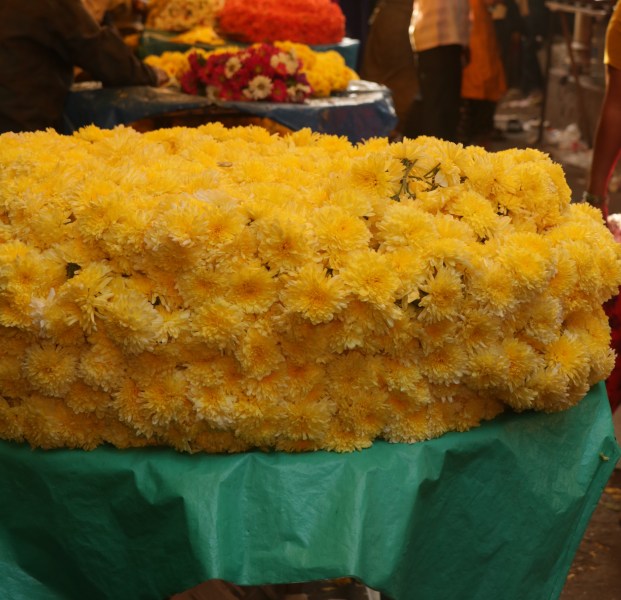
During Onam times flowers sell like hot cakes every year. But this year the market is seeing cold winds due to COVID-19. The flowers sellers said that COVID has dampened their most profitable season’s sale.

Flowers are used in decorations, making floral carpets and other purposes during Onam and every flower seller usually bags around Rs. 12000-15000 daily. But this year has turned into an adverse one as they are able to make sales of Rs 300 a day only which is a drastic effect of pandemic on these sellers.

Reminiscing last year, a flower vendor said that every year they were not able to manage the customers because of high rush but this year there are vacant roads and markets. Everyone is scared to come out of their homes in the wake of a virus.

Recently Kerala Chief Minister Pinarayi Vijayan announced barring all the flowers not being allowed to cross border which has also affected flower market as earlier vendors used to buy flowers from Coimbatore as there, they would get it in feasible price but this year the price for buying flowers for the vendors is also high.

The festival started on August 22 and will carry on till September 2 and is celebrated in the month of Chingam which is believed to be the first month according to the Malayalam calendar. The celebration is carried on for 10 days to start off the new year with a ceremonious feel and tenth day is the conclusion day which is named as Thiruvonam.

Bengaluru, The next Delhi!?

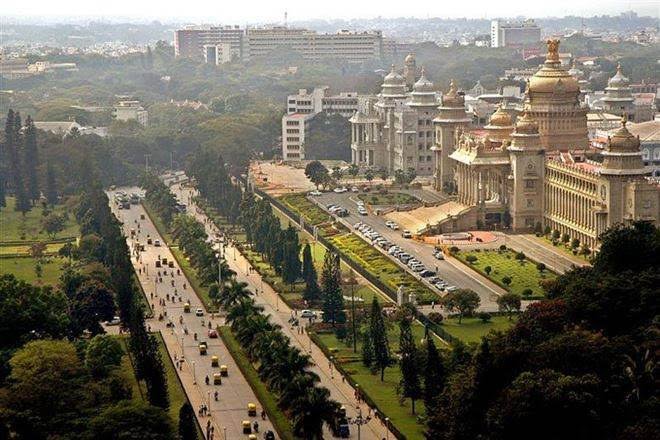
How toxic is Bengaluru air? It was ranked 63rd among 168 cities for PM 2.5 levels, titled “Airpocalypse”- on air quality. Tumukuru was ranked 67th. Bengaluru is in the grip of rising air pollution. Official ambient air quality monitoring has already shown 57% increae in particulate matter. With growing vehicle numbers and resultant congestion and dieselization, air pollution is a growing concern in the city. The city is losing its inherent advantage of dominant commuting practices – use of bus and walking at the cost of clean air and public health.

Bangalore needs stringent measures including leaffrogging emissions standards to Euro VI, curbing dieselization, scaling up of integrated public transport, car restraints and walking for clean air.

Centre for science and environment (CSE) released to results from its recent analysis of the official ambient air quality monitoring in Bengaluru as well as its own exposure very high level of pollution within the breathing zone of people. This indicates serious public health risk. Elder people and children below 10 years of age whose lung system are weak are succumbing to allergies or bronchitis due to air pollution. Fine dust that settles on the windows and tables at home is contributing to the increase in lung-related diseases. Particles less than 10 micrometer in diameter (PM 10) pose a health hazard because they can be inhaled and accumulate in the respiratory system.

According to the statistic obtained from the Karnataka State Pollution control Board (KSPCB), PM10 and PM 2.5 have exceeded national standards in almost all locations where ambient air quality stations are located. The KSPCB is monitoring ambient air quality in Bengaluru city at 16 locations as per the guidelines if Central Pollution Control Board covering industrial, residential, rural and other areas under National Ambient Air Quality Programme.

As per the data obtained for the year 2016-2017, out of 16 locations, 15 locations have exceeded the national limits of PM10, PM10 content in the city is 98.9 ug/m as against the national standard of 60 ug/m. Central Silk Board of Hours Road and Whitefield industrial area have the highest PM content with almost double the limit. Particulate matter invades human lungs at night and early in the morning. As a result, people with asthma and bronchits get affected during these times.

Apart from the pollution caused by the industries, the rising levels of vehicular pollution I’d also a cause of concern in Bengalore. Currently, 26 lakh vehicles ply on the narrow roads of Bangalore. 21 lakh are two and three wheelers.

There is no denying the fact that Bangalore had made its mark in the world map, thanks to the software boom, however this had come at a high price.

Respite for people of Delhi and Noida

There is good news for the people living around Delhi’s Kondli and its neighbouring places. They will now get respite from the the foul smell that comes from the Sewage Treatment Plant. For this the Delhi Jal Board in a report submitted to National green tribunal has stated that it has has decided to set up a Stink Control Unit. This unit will bring respite from the foul smell to the people residing in the areas of New Ashok Nagar, Vasundhara, Dallupura, Chilla Gaon, Mayur Vihar phase 3, Noida Sectors 2, 8 and 10, among other places. The Delhi Jal Board has stated in front of a bench led by NGT chief Justice A. K. Goyal that the work will be completed within 5 months after the tender is given for the unit. It also stated that two tiered biological odour control will be added to the current STP plant which will have online surveillance. NGT has asked the Delhi Jal Board to start work on it as soon as it can.