Indian History

India is always known to be a land of believes and miracles, its culture and heritage is one of the most renowned which furnish it a very valuable position amidst all other countries in the world.The Ministry of Culture has a crucial role to play in the preservation and propagation of art and culture. The goal is to establish ways and means by which basic cultural and esthetic values and expectations remain active and diverse among people. It also undertakes projects to encourage diverse forms of modern art. The Department is a nodal body for the commemoration of global events and the celebration of the centenary of great artists. Prahlad Singh Patel is the new Minister for Education. The Government has recently founded the National Library Project of India under this Ministry.

The history and culture of India is diverse, going back to the dawn of human society. It starts with a strange community along the Indus River and in agricultural societies in the southern region of India. India ‘s history is characterized by the relentless convergence of migrants with the different communities that surround India. Accessible data indicates that the use of iron, copper and other metals was common in the Indian sub-continent at a relatively early point, which is representative of the development that this region of the world has made. By the end of the fourth millennium BC, India had arisen as a area with highly evolved culture.

According to a consensus in modern biology, anatomically modern humans first arrived from Africa in the Indian subcontinent between 73,000 and 55,000 years ago. However, the oldest recorded human remains in South Asia date back to 30,000 years ago. Settled life, which includes the transition from foraging to farming and pastoralism, started around 7,000 BCE in South Asia. The presence of wheat and barley domestication can be recorded at the site of Mehrgarh, Balochistan, Pakistan, accompanied immediately by the presence of goats, sheep and cattle.

By 4500 A.D., urban culture had spread more widely, and eventually started to develop into the Indus Valley Civilization, the early civilization of the Old World, which was contemporaneous with Ancient Egypt and Mesopotamia. This civilisation existed between 2500 B.C. and 1900 B.C. in what is now Pakistan and Northwest India, and was known for its town planning, baked brick buildings, extensive irrigation and water supply.

The actual history of India begins with the founding of the Indus Valley Civilization, known more specifically as the Harappan Civilization. It flourished about 2,500 BC, in the western part of South Asia, what is now Pakistan and Western India. The Indus Valley was home to the oldest of the four ancient metropolitan civilizations in Egypt , Mesopotamia, India and China. Nothing was known about this civilization until the 1920s, when the Indian Archeological Department carried out excavations in the Indus Valley, in the remains of the two ancient cities, viz. Mohenjodaro and Harappa were revealed.

The Indus Valley Civilization was largely an agricultural civilization, and people lived in well-planned and well-built settlements, which were also centres of commerce. The ruins of Mohenjodaro and Harappa indicate that these were splendid trading cities — well built, scientifically organized, and well looked after. They had large roads and well-developed irrigation networks. The buildings were built of bricks and had two or three storeys.

A lot of monarchs invaded India afterwards, a lot of civilizations came into existence. Some important time periods in Indian History are The vedic civilization, the Buddhist era, Gupta Dynasty, Alexander’s Invasion, Gupta Dynasty, and Harshavardhana. All these rulers contributed in the enhancement of the history and culture in their own ways tho they had also got a lot from the country also.

Black Panther actor Chadwick Boseman is no more

Chadwick Boseman, who played the iconic role of Black Panther in Marvel Cinematic Universe, died on Friday because of cancer. He was diagnosed with colon cancer four years ago, his family stated. He was just 43 when he left the world.

Chadwick was born in South Carolina, United States and was graduated from Howard University in year 2000. Boseman got his first television role in 2003, in an episode of Third Watch. That same year, he portrayed Reggie Montgomery in the daytime soap opera All My Children, but stated that he was fired after voicing concerns to producers about racist stereotypes in the script.

In year 2008, he moved to Los Angeles to pursue acting as a career. In the same year, he played recurring role in the television series Lincoln Heights. He had his first starring role in 2013 film 42. After that, he did many films and played many different characters in them. But the fame he got the most was because of the character of Black Panther/T’Challa, which was first seen in 2016 movie Captain America: Civil War. He headlined Black Panther in 2018 which was focused on his character and his home country Wakanda. He was then visible in the movies Avengers: Infinity War and Avengers: Endgame portraying the same character, which were released in 2018 and 2019 respectively. Both films were the highest grossing of the year they were released, with Endgame going on to become the highest-grossing film of all time. The sequel of the film Black Panther was also announced to be released next year.

Because of his epic role in these movies, Boseman has a huge fan following from all over the world. Many of his fans are from India who are feeling sorrow for the dismissal of one of their favourite characters and are giving condolences to his family and friends for the same.

ECI bids farewell to Sh Ashok Lavasa

Election Commission of India today bade a warm farewell to outgoing Election Commissioner Sh Ashok Lavasa who is moving on to take up the prestigious assignment as Vice-President, Asian Development Bank at Manila, Philippines. Sh Ashok Lavasa had joined ECI as Election Commissioner on the 23rd of January 2018 and would hold the office of the Election Commission till 31st August 2020.

Bidding him farewell, CEC Sh Sunil Arora wished Sh Ashok Lavasa the very best ahead for meeting bigger challenges and achieving more milestones. He mentioned that ECI’s loss is ADB’s gain where Sh. Lavasa’s competence would now be available at the wider multilateral platform for the daunting task of restructuring economies in post-Covid scenario.

            On the occasion, Election Commissioner Sh. Sushil Chandra in his speech appreciated the  working of Sh. Ashok Lavasa in Ministry of Finance earlier. He specially applauded Sh Lavasa for his guidance in framing of broad guidelines for elections to be held in Covid times.

            Sh. Ashok Lavasa said he would remember his two and a half year stint at the Commission as a memorable experience. He acknowledged that it was a difficult choice for him whether to continue in ECI or move on to the global canvas of ADB.

            The Commission also bid farewell to outgoing Director Sh Vikram Batra, Director Election Expenditure as he returns to his cadre after completing his term at Election Commission of India.

            Volume VI of Landmark Judgments, a compendium of judgments delivered by Hon’ble Supreme Court and various High Courts from January 2017 to May 2019, that is, till the conclusion of Lok Sabha General Election 2019, was also released today. Commission released its e-version also https://eci.gov.in/ebooks/landmark-judgment/index.html for wider reach. It consists of 29 significant judgments covering various aspects of electoral process like nomination, affidavit, EVM VVPAT, Model Code of Conduct, corrupt practices and other related matters. This volume also lists the judgments already published by ECI in previous five volumes of Landmark Judgments. Additionally, the volume also lists 632 cases filed in the Hon’ble Supreme Court and Hon’ble High Courts during the period leading to General Election, 2019.

            Chief Election Commissioner Shri Sunil Arora in his message said “I harbour the sanguine hope that this publication would further illuminate us about the domain of election law and embolden the officials concerned to execute the gigantic exercise by taking solace in the fact that their actions have consistently earned the approbation of judiciary.”

            Sh. Ashok Lavasa, Election Commissioner, in his message said “This volume will broaden understanding of the laws governing the vast electoral exercise of our country.”

            Sh. Sushil Chandra, Election Commissioner, in his remarks hoped that thisvolume will benefit all citizens of the country in understanding the election process.

Dr. Harsh Vardhan digitally inaugurates Super Speciality Block of MGM Medical College, Indore

Dr. Harsh Vardhan, Union Minister of Health and Family Welfare along with Sh. Shivraj Singh Chouhan, Chief Minister of Madhya Pradesh digitally inaugurated the Super Speciality Block (SSB) in Mahatma Gandhi Memorial College, Indore in the presence of Sh. Ashwini Kumar Choubey, Minister of State, Health and Family Welfare. The Medical College was also the nodal agency for a NCDC sero-survey. The report was released today.

The SSB is built with an investment of Rs 237 crores under the Pradhan Mantri Swasthya Suraksha Yojana (PMSSY). It has departments of Neurology, Neurosurgery, Cardiology, Cardiothoracic surgery, Nephrology, Urology, Medical Gastroenterology, Surgical Gastroenterology, Plastic & Reconstructive surgery and an Organ Transplant unit. The new Block has 10 Operation Theaters, 327 Super Specialty Beds, 92 ICU Beds and has a training capacity of 30 DM/MCh and 28 PG students.

The Union Health Minister expressed deep gratitude for then Prime Minister Sh. Atal Bihari Vajpayee’s vision of a healthy nation. Reminding the audience of Sh. Vajpayee’s announcement in his Independence Day speech on 15th August 2003 to correct the imbalances in the availability of affordable healthcare facilities in different parts of the country and augmenting facilities for quality medical education in the existing ones, Dr. Harsh Vardhan elaborated on vision of Shri Vajpayee of “setting up of six AIIMS Institutions and up-gradation of existing Government Medical Colleges and Institutions. Since 2014, this scheme was pursued with renewed vigour and saw the setting up of 22 new AIIMS and projects for up-gradation of 75 Government Medical Colleges.” Eight Medical Colleges are set up in Madhya Pradesh while the government is committed to building another six in the aspirational districts of Rajgarh, Mandla, Mandsaur, Neemuch, Sheopur and Singrauli, he added. He also expressed confidence that the NCDC regional centre being built in Bhopal will be completed by the end of the year.

The Union Health Minister stated that the Centre has provided 13.99 lakh N95 masks, 7.97 lakh PPEs, 54 lakh HCQ and 679 ventilators to Madhya Pradesh to strengthen it efforts to fight COVID-19. This is supplemented by 2,32,620 RNA extraction kits,  5,87,140 RT-PCR kits, and 2,55,850 VTM kits provided by the Central Government.

Informing everyone of the massive development work undertaken in the health sector by Prime Minister Sh. Narendra Modi, Dr. Harsh Vardhan said, “We are poised and determined to eliminate TB by 2025, five years before the entire global deadline. Also, the innovative Mission Indradhanush aims to immunize every child against 12 diseases and replicate the success of Polio eradication campaign. The government hopes to push maternal mortality, infant mortality and under-five mortality to near zero.”

Elaborating on the Ayushman Bharat Yojana -HWC and the recently launched National Digital Health Mission, he said, “National Digital Health Mission has already been launched in 6 Union territories and will be rolled out in other states in the coming three to six months. This combined with telemedicine facilities available in the HWCs will be very helpful for big states like Madhya Pradesh to achieve the stated goal.” He impressed upon the State leadership present to personally supervise these schemes for their effective implementation.


Remembering the contribution of Ex-Speaker of Lok Sabha Smt. Sumitra Mahajan and former Health and Family Welfare Minister Sh. Jagat Prakash Nadda in this project, Sh. Ashwini Kumar Choubey expressed his happiness that “the hospital was completed one year before its schedule.”

Sh. Shivraj Singh Chouhan thanked the Union Government for its proactive role in strengthening the health infrastructure in Madhya Pradesh. He mentioned that the Central Health Ministry oversaw the installation of COVID testing facilities in 76 government labs after the State was forced to airlift swab-samples to other cities during the onset of the COVID Pandemic.

Ms. Usha Thakur, Cabinet Minister for Tourism, Culture, Adhyatm, Madhya Pradesh, Sh. Tulsiram Silawat, Cabinet Minister for Water Resources, Fisheries Welfare and Fisheries Development, Madhya Pradesh, Sh.Vishvash Sarang, Cabinet Minister for Medical Education, Bhopal Gas Tragedy Relief and Rehabilitation, Madhya Pradesh, Sh. Kailash Vijayvargiya, Ex-Cabinet Minister, Madhya Pradesh, Sh. Shankar Lalwani, Member of Lok Sabha from Indore and Sh. Akash Vijayvargiya, MLA, Indore were present at the event.

Indian Railways takes series of Initiatives in Tariff and Non-Tariff field to boost Freight OperationsSeries of Discounts offered

On mission mode, Indian Railways has taken a number of initiatives to boost  Freight Operations inspite of COVID 19 related challenges. Because of these initiatives, the freight loading in the month of August 2020(till 27th August 2020) is 4.3% higher, compare to last year for the same month. In the month of August 2020 (till 27th August 2020) the total freight loading was 81.33 million tonnes which is higher than last year for the same month (77.97 million tonnes).

Indian Railways has taken a series of  initiatives  in Tariff and  Non-Tariff  field.

Utilizing Covid period as an opportunity Indian Railways substantially increase the speed of Freight Trains. 72 % increase in average speed of Freight Trains in the year 2020-21 as compared to last year.  94 % increase took place in speed of Freight Trains in August 2020 compared to August 2019.  

Following are the latest Tariff Rationalisation  initiatives (measures) taken by Indian Railways to boost  Freight Operations:

1. 5% discount on loaded containers ( addition to 25% on empty ) for Containers from 03.08.2020.

2. Discount for Pond ash/ Moisturised ash – Open wagon – 40% for  Power plants, Cement from 03.08.2020.

3. Revision in classification of Industrial salt from 120 to 100A for Chemical Industry from 03.08.2020.

4. Stabling charges for private Container and Automobile trains waived off till 31st October 2020 for Containers and Automobile from 03.08.2020.

Following are some other Tariff Rationalisation initiatives (measures) taken by Indian Railways to boost  Freight Operations:

1. Withdrawal of Busy Season charge  – 15% for All sectors Except Coal, Iron ore and containers from 1.10.2019.

2. Withdrawal of 5 % surcharge of two point/mini rakes  for Cement, Iron and steel, Food grains, Fertilizers, Bulk BOG from 1.10.2019.

3. Discount for Fly ash – Bagged in open wagon – 40% for Power  plants, Cement  from 10.05.2020.

4. Alternate terminal scheme – Rs 56,000 to Rs 80,000 per rake for All sector from 27.06.2020.

5. Round trip Traffic (RTT) policy – charging of lower class for All sectors from 01.07.2020.

6. Long lead concession – 15 to 20% for Coal, Iron ore and Iron and steel from 01.07.2020.

7. Short lead concession – 10 to 50 %  for All sector (except coal and iron ore ) from 01.07.2020.

Following are latest Non-Tariff initiatives (measures) taken by Indian Railways to boost  Freight Operations:

1. Two point unloading permitted for Automobile traffic for Automobiles sector from 05.08.2020.

2. Limit on number of Co-users in Private siding removed for All sectors from 18.08.2020.

3. All private sidings / Good sheds / Private freight terminals opened up for Parcel traffic for Parcels from 18.08.2020.

4. Reduced composition for Indented parcels extended till 31.03.202 for Parcels from 18.08.2020.

5. Extension of time tabled parcel express till 31.12.2020 for Parcels from 19.06.2020.

6. Application fee for Greenfield PFT reduced from Rs 10 Lakh to Rs 20,000 and completely waived off for conversion of siding to Brownfield PFT for All Sectors from 24.08.2020.

7. 23 more two point combinations opened for steel traffic  for Steel sector from 25.08.2020.

8. Freight and parcel helpline through 13 for All sectors from 26.08.2020.

9. Distance restriction on Mini rakes of 1500 km removed with a small surcharge for Cement, Iron and steel , Food grains , Fertilizers, Bulk BOG from 27.08.2020.

Other Measures taken by Indian Railways to boost  Freight Operations are as follows:

1. Business Development Units (BDUs) set up  – Divisions, Zones and Board level.

2. Restrictions on co-use of private sidings removed – 1,079 private sidings allowed to become private freight terminals effectively.

3. 405 Major Good sheds being improved – Concrete surface, bright LED lighting, better roads & labour facilities – To enable 3 shift operations.

4. Time tabled parcel trains.

5. Opening up of export traffic to Bangladesh for Parcels, Containers & Automobile.  

6. Kisan rail introduced from Devlali (Nashik) to Danapur (Patna) on 07.08.2020– Multiple stoppages, Multiple commodities, Multiple parties – Now extended to Muzaffarpur. Link train from Kolhapur to Manmad also added. Now Bi-weekly from 24.08.2020. Total 04 trips have been completed till Now.

Utilizing Covid period as an opportunity Indian Railways substantially increase the speed of Freight Trains. 72 % increase in average speed of Freight Trains in the year 2020-21 as compared to last year.  94 % increase took place in speed of Freight Trains in August 2020 compared to August 2019.  

Nominations for Padma Awards-2021 open till 15th September, 2020

Online nominations/recommendations for the Padma Awards to be announced on the occasion of Republic Day, 2021 have started from 1st May, 2020. The last date for nominations for Padma Awards is 15th September, 2020. The nominations/recommendations for Padma Awards will be received online only on the Padma Awards portal https://padmaawards.gov.in . Already 8035 registrations have been made on the portal against which 6361 nominations/recommendations have been completed.

The Padma Awards, namely, Padma Vibhushan, Padma Bhushan and Padma Shri, are amongst the highest civilian awards of the country. Instituted in 1954, these Awards are announced on the occasion of the Republic Day every year. The award seeks to recognize ‘work of distinction’ and is given for distinguished and exceptional achievements/service in all fields/disciplines, such as, Art, Literature and Education, Sports, Medicine, Social Work, Science and Engineering, Public Affairs, Civil Service, Trade and Industry etc. All persons without distinction of race, occupation, position or sex are eligible for these Awards. Government servants including those working with PSUs, except Doctors and Scientists, are not eligible for Padma Awards.

The Government is committed to transform Padma Awards into “People’s Padma”. All citizens are therefore requested to make nominations/recommendations including self-nomination.

The nominations/recommendations should contain all relevant details specified in the format available on the above said Padma Portal, including a citation in narrative form (maximum 800 words), clearly bringing out the distinguished and exceptional achievements/service of the person recommended in her/his respective field/discipline.

The Ministry of Home Affairs has requested all Central Ministries/Departments, States/UT Governments, Bharat Ratna and Padma Vibhushan awardees, Institutes of Excellence that concerted efforts may be made to identify talented persons whose excellence and achievements really deserve to be recognized from amongst women, weaker sections of the society, SCs & STs, divyang persons and persons who are doing selfless service to the society.

Further details in this regard are available under the heading ‘Awards and Medals’ on the website of Ministry of Home Affairs (www.mha.gov.in ). The statutes and rules relating to these awards are available on the website with the link https://padmaawards.gov.in/AboutAwards.aspx . 

https://eduindexnews.com/2020/08/29/department-of-food-public-distribution-to-organise-activities-to-celebrate-poshan-maah/

Union Minister for Science &Technology, Earth Sciences, Health& Family Welfare Dr.Harsh Vardhan today invited stakeholders and the public at large in the country and abroad to participate in formulating an evidence-driven, inclusive Science Technology and Innovation Policy (STIP 2020) for the country. He said that it would bring about technology indigenization to become self-reliant, mainstream traditional knowledge systems with conventional R&D, strengthen industry-academia, government interconnectedness and promote equity.

 Dr. Harsh Vardhan was speaking at the inauguration of ‘In Conversation With’ – a series of exclusive interactions with thought leaders from across the country and Indian Diaspora on STIP 2020, which is being formulated. He also launched the ‘STIP 2020 Page on MyGov Portal’ along with ‘popularization Quiz for school children’ on 28th August 2020 in a virtual event here.

In his address, Dr. Harsh Vardhan said that the entire STI ecosystem has undergone rapid transformation in terms of relevance, scope, and scale in the recent years. These must be captured into a policy to develop a long development trajectory and vision for the country. Moreover, COVID-19 has introduced some new learning and added dimensions to the STI system, he added. 

 Stating that “Achieving an ‘Atmanirbhar Bharat’ would need greater focus on the development of indigenous technologies and encouragement to grass root level innovation”, the Minister emphasized that “There is an emergence of disruptive and impactful technologies and the country must take advantage of this”.

 Dr. Harsh Vardhan outlined, “The proposed STI policy is expected to leverage the astounding progress that the STI system has witnessed in recent years and build a long term pathway which must be able to fulfill the dreams and aspirations of millions of young Indian scientists and students”. “This can be done only when we make policy formulation totally inclusive and participatory”, he stressed.

 Elucidating the policy formulation process, the Minister pointed out that “The STIP-2020 process has been divided into 4 interlinked tracks of actions. Track-I involves extended public and expert consultation with 6 activities which aim to reach out to India’s every citizen living in any part of the country to get their ideas, suggestions, or comments for the policy. Track-II action relates to expert consultation, Track-III is for consultation with Ministries and States/UTs, and Track-IV comprises of apex level consultation and advice.”

 DST Secretary Professor Ashutosh Sharma highlighted, “As India and the world reorient in the present context of the COVID-19 crisis, a landmark policy initiative STIP 2020 has been initiated at this crucial juncture”. “The formulation process, by design, is envisioned as an inclusive and participative model with interconnectedness among different tracks of activities”, he added.

 Later, in a discussion moderated by DST Secretary Professor Ashutosh Sharma, Dr. Harsh Vardhan took up a host of questions on STI ecosystem and STI Policy related issues. The participants too asked questions through live webex platform. He took innovative suggestions from them. Suggestions emerging from these discussions will serve as inputs to the STIP2020 policy process.

Dr. Akhilesh Gupta, Head – Policy Planning;  Mr. Abhishek Singh, CEO, MyGov; Mr. Aditya Kaushik, Co-Founder, Science Policy Forum; Dr. Rabindra Panigrahy, DST Scientist; Dr. Nimita Pandey, DST – STI Policy Fellow; Dr. ChagunBasha, Senior Technical Specialist, Office of the Principal Scientific Advisor to Govt of India; were among various dignitaries who joined the function virtually.

Department of Food & Public Distribution to organise activities to celebrate Poshan Maah

To commemorate the ‘Poshan Maah’ organised by Ministry of Women and Child Development, a meeting was taken today by Secretary, Department of Food & Public Distribution with CMD, Food Corporation of India, MD, CWC and senior officers of the department.

The Poshan Maah is observed every year in the month of September.  As part of this, the DoFPD through its organisations have decided to organise activities as suggested by M/o Women and Child Development, in various parts of the country to sensitize the target groups on the merits of nutritional security.

Secretary, Food & Public Distribution chairs meeting of Empowered Committee on schemes for PDS Reforms

Secretary, Food & Public Distribution today chaired the meeting of  Empowered Committee of the Department on schemes for PDS Reforms with CEO (UIDAI), DG (NIC), Food Secretaries of 4 States as members and representatives of MeitY and FCI,  to review and approve extension of Integrated Management of Public Distribution Scheme (IM-PDS) under which  the ‘One Nation One Ration Card’ (ONORC) plan is being implemented all over India. With a view to ensuring that work done under the IMPDS is continued and further strengthened, it is being considered for extension beyond March 2021.

The Empowered Committee also reviewed the progress of FPS Automation, ONORC plan, Aadhaar generation/seeding and development of mobile application aimed to help migrant NFSA beneficiaries to register themselves and take the full benefit of ONORC.  The Department is also planning to implement national help line number in various States/UT to help the migrant NFSA beneficiaries availing portability under ONORC.

During the proposed extended period of IMPDS, funding requirements of States/UTs would also be met.

President of India Shri Ram Nath Kovind to virtually confer the National Sports and Adventure Awards 2020 on National Sports Day tomorrow

The President of India Shri Ram Nath Kovind will virtually confer the National Sports and Adventure Awards 2020 on the occasion of National Sports Day tomorrow. Union Minister of Youth Affairs and Sports Shri. Kiren Rijiju, President of the Indian Olympic Association Shri Narendra Dhruv Batra and several other dignitaries will attend the ceremony from Vigyan Bhavan, New Delhi. 65 awardees are expected to attend the ceremony. The awardees will attend the ceremony from various places across the country – Bengaluru, Pune, Sonepat, Chandigarh, Kolkata, Lucknow, Delhi, Mumbai, Bhopal, Hyderabad and Itanagar. The Ceremony will be launched at 11 AM on 29 August 2020. The event will be telecast live on Doordarshan and streamed live on https://webcast.gov.in/myas/sportsawards/.

Sports Awards are given every year to recognize and reward excellence in sports. Rajiv Gandhi Khel Ratna Award is given for the spectacular and outstanding performance in the field of sports by a sportsperson over a period of four years preceding the award ; Arjuna Award is given for consistent outstanding performance for four years; Dronacharya Award goes to the coaches for producing medal winners at prestigious international sports events; Dhyan Chand Award is for life time contribution to sports development and Rashtriya Khel Protsahan Puraskar is given to the corporate entities (both in private and public sector) and individuals who have played a visible role in the area of sports promotion and development. Overall top performing university in inter-university tournaments is given Maulana Abul Kalam Azad (MAKA) Trophy. In addition to these Sports Awards, the spirit of adventure among the people of the country is recognized by bestowing the Tenzing Norgay National Adventure Award. In a first-ever endeavour, the first National Sports and Adventure Award 2020 is being conducted virtually on 29 August 2020.

The sports personalities are pleased that the awards ceremony is taking place amid the pandemic, in this virtual way.

“I am very happy that the awards ceremony is taking place during the National Sports Day in spite of the Covid situation. The Sports Authority of India has taken a very positive decision to host the ceremony virtually despite all odds,” mentioned para-athlete Sandeep Chaudhary, one of the Arjuna Award recipients.

Table Tennis player Manika Batra will receive the prestigious Khel Ratna Award, two years after receiving the Arjuna from the President. “We have to accept the fact that the pandemic has brought life to a standstill but I am no less excited about this ceremony,” said the star paddler.

Kuldeep Handoo, National Wushu team coach and a recipient of the Dronacharya award praised the organizers for conducting the ceremony with finesse. “I salute Kiren Rijiju sir that even during such a time, a well-arranged function is being conducted. When I was in the dress rehearsal, it seemed very simple but it definitely is not easy to organize with such technical accuracy. Connecting all the awards winners online from various States of the country with the President is definitely a tedious work. Hats off to the team working behind it!” the J&K based coach stated.

Assam pugilist and upcoming superstar of Indian boxing, Lovlina Borgohain, meanwhile is looking forward to getting a photo clicked with the President of India after the situation becomes normal. “I’m looking forward to winning a medal at the Olympics and this will definitely fulfill my aim of getting a photo clicked with the President of India!” Lovlina mentioned.

Every year on August 29, India celebrates its National sports day. The day is celebrated to honour the legendary hockey player Major Dhyan Chand.The YAS Minister Shri Kiren Rijiju will offer tributes to Major Dhyan Chand at Dhyan Chand Stadium in New Delhi tomorrow in the morning before the awards function.

Prime Minister to inaugurate the College and Administration Buildings of Rani Lakshmi Bai Central Agricultural University tomorrow

Prime Minister Shri Narendra Modi shall inaugurate the College and Administration Buildings of Rani Lakshmi Bai Central Agricultural University  through remote video conference at 1230 tomorrow.

The RLB Central Agriculture University is located in Jhansi and is a prominent institute of the Bundelkhand region. 

The University has started its first academic session in 2014-15 and is offering Under Graduate and Post Graduate courses in Agriculture, Horticulture and Forestry. 

It is currently operating from the Indian Grassland and Fodder Research Institute, Jhansi as the main buildings were getting ready.

Prime Minister Shri Narendra Modi shall also interact with various students of the university during the event.

Cultural Heritage Sites in India

India is a country which has a host of spectacular sites, ranging from glorious historical monuments to diverse natural heritage sites. UNESCO World Heritage Convention has recognised many sites across the world for their cultural heritage. India has the 6th largest number of world heritage sites with 38 such sites. Here are some sites among those, which one shouldn’t miss while exploring the country.

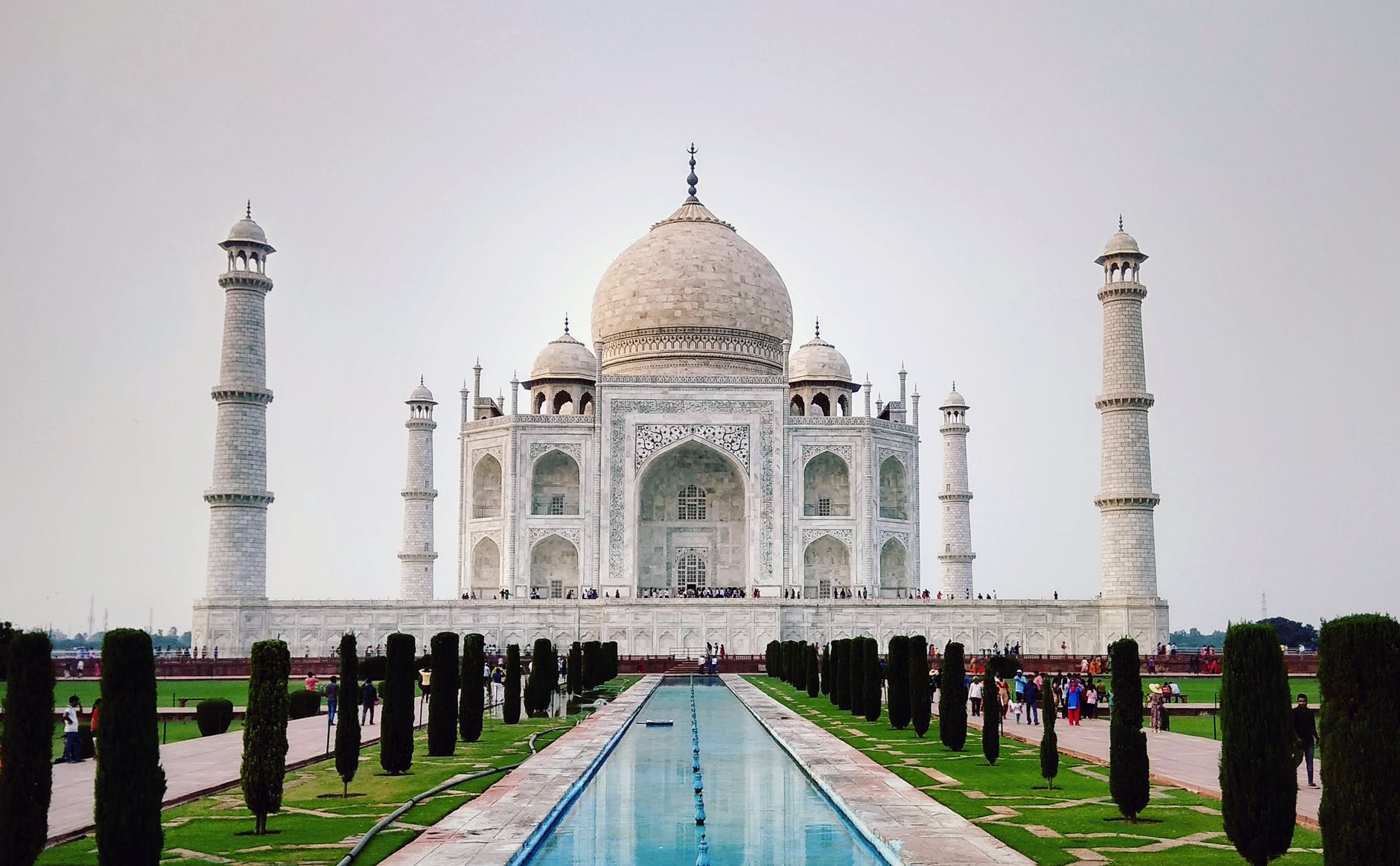
Taj Mahal, Agra

The Taj Mahal is a funerary mosque, built by Emperor Shah Jahan in memory of his third wife Begum Mumtaz Mahal. Set against the Mughal Gardens, it is a pristine architectural monument made of white marble. It was built in 16 years by thousands of artisans under the Chief Architect Ustad Ahmad Lahauri and is considered as a masterpiece.

Photo by Roney John on Pexels.com

Khajurao, Madhya Pradesh

The Khajurao is a group of monuments located in Madhya Pradesh and is attributed to the Chandela dynasty. It is known for its unique artistic architecture which has survived since the 10th century. Out of the 85 temples built originally, only 22 temples are there at present.

The PInk City, Jaipur

Jaipur is a fort city in Rajasthan, built according to grid plans of Vedic architecture. The urban planning of the city shows influence of ancient Hindu, modern Mughal and western cultures. Originally built as a commercial capital, the city is an intersection of commercial, artisanal and traditional center.

Elephanta Caves, Maharashtra

The Elephanta Caves is a group of sculpted caves on Elephanta island, located in Mumbai harbour. It is dated to 5th century and it consists of 5 Hindu caves and 2 Buddhist caves. The architecture is characterized by rock cut stone sculptures.

Sundarbans, West Bengal

The Sundarbans are the largest mangrove forests in the world and is both a national park and a tiger reserve. It is situated in the Sundarbans Ganges river delta and is formed by the deposition of sediments from 3 rivers – the Ganges, Brahmaputra and Meghna. It consists of dense mangrove forests which is the home to the Bengal tiger, the salt water crocodile and various birds.

Fatehpur Sikri

Also known as the City of Victory, the Fatehpur Sikri was built by the Emperor Akbar. It includes a set of mosques, monuments and temples built in Mughal architectural style. It was built as a city which had several monuments, buildings, palaces, public spaces and courts. The site has monuments like – the Jama Masjid, the Buland Darwaza, the Panch Mahal, and the Tomb of Salim Chishti which are popular tourist attractions.

Monuments at Hampi, Karnataka

These are a group of monuments in the Hampi town in Karnataka. Located on the banks of the river Tungabhadra, it consists of Dravidian temples and palaces. It has been admired by travelers of the 14th and 16th century and is still a very important cultural and religious center for Hindus and Jains.

Sun Temple, Konark, Odisha

The Konark Sun temple is a renowned temple, located on the coast of the Bay of Bengal and built in the form of the chariot of Surya, the sun god. It is constructed with sandstone and decorated with beautiful stone carvings. It was constructed under the rule of King Narasimhadeva I of the Eastern Ganga Dynasty.

Ways to Deal with Hunger During Weight Loss Journey

Image Retrieved from healthline.com

During our weight loss journey, when we workout, we tend to feel hunger pangs and how we deal with those will decide how well our journey will be and how we will be able to continue our work-outs. There are many people who are in the category of feeling unabated hunger right after workout and many studies prove that it happens because of improper diet schedule and lack of nutrition in our diet. Not drinking enough fluids also leads to dehydration which depletes our glycogen stores.

We should not ignore our hunger pangs and need to substitute our regular food habits with healthier food habits. As unmindful and unhealthy snacking or food habits will destroy all the hard work we have done earlier. The food we eat after exercise or hard work should contain proteins, complex carbs and healthy fats which can be incorporated in our diet by including, fresh fruits, seeds, nuts and fat-free milk.

Some other food options we can include in our diet are: Multigrain toast, scrambled egg and toast, mashed sweet potato and sprouts bowl, yogurt and peanut butter. We should pre-prepare our meal which we want to munch on after work out as pre-preparation can save us from overeating due to hunger and manages our mindful eating as well.

The publication of 5G conspiracy guide in USA

The limited roll-out of the service began in selected cities in 2018, and 5 G began to appear in cities around the U.S. in 2019, with much more comprehensive launches expected throughout 2020. Mobile 5G service from Verizon began in early April 2019 and is currently available in limited areas, with more expected throughout 2020. Parts of these cities are where you can get Verizon’s mobile 5G service right now: Chicago IL, Minneapolis MN, Denver CO, Providence RI, St.

But in last few months people got mislead by a lot of news in US which the government has to pull out from the public’s mind and after proping and doing efforts they have took an action. Considerable study has been carried out on the health effects of electromagnetic signals, and the bandwidth utilized by 5 G networks deemed to be beyond acceptable limits for people. However, over the past few months, 5 G conspiratories have gained momentum on social networking sites, including rumors that the coronavirus outbreak might somehow be connected to modern networks. Misinformation circulated rapidly and contributed to several reports of citizens vandalizing 5 G masts about their grievances. Youtube was also pressured to take steps by cracking down on the production making unsubstantiated statements.

The information booklet, ‘5G Mobile Technology: A Guide,’ describes how 5G operates and notes that watchdog Ofcom finds that wave emission readings taken from masts are “a small fraction” of the level approved by the International Commission for Non-Ionizing Radiation Safety (ICNIRP).

The guide, published on Thursday and available online, says: “FiveG companies have been operating in the UK since 2019. However, some people have raised concerns that the introduction of 5 G could affect human health and even link it to the coronavirus pandemic.

Philip Marnick, Director of the Offcom Spectrum Group, said: “The UK has a fantastic chance to be a global leader in 5 G, make the best of the opportunities that this new technology provides to individuals and companies.

“It is crucial that public bodies work together to resolve some of the 5 G misconceptions and confusion and ensure decisions are made on sound proof.”

Labor shadow technology minister Chi Onwurah said the laws needed to be updated to better defend against 5 G misinformation: “We applaud the Government’s attempts to counter the harmful disinformation around 5 G and coronavirus the puts lives at risk.”Unfortunately, this recommendation will not fix the issue until the government does what it wants to do on the cyber risks bill to counter social media disinformation.”

Final Year Exams Mandatory for Promotion of Students: Supreme Court

The verdict which every final year student was waiting for since days came out today. The bench of judges- Justice Ashok Bhushan, R Subhash Reddy, M R Shah gave the ruling. The Supreme Court had announced that final year students could not be promoted without exams but the State/Union Territory Government could demand for extension of the deadline from UGC (University Grants Commission) for the commencement of examinations.

This came into view when many students and organizations went against UGC’s regulation of July 6 in the wake of the prevalent pandemic. One of the petitioners was a COVID-19 patient himself. Along with then Shiv Sena’s youth wing Yuva Sena also joined the hands against the UGC guidelines. They have been demanding full scrapping of final year exams online or offline, both and also the declaration of results based on previous academic performances or internal assessment. 

On April 29, UGC had published regulations for universities and colleges to follow to hold exams by July, 2020. It was regulated by an expert committee headed by Chairperson of Central University of Haryana, R C Kuhad. According to the guideline’s universities had the authorization of administering exams either in online or offline mode by following social-distancing measures.

As COVID-19 was not abating, UGC issued a new guideline in June, reassessing it by holding an expert’s meeting again and in the fresh guideline issued on July 6, it was mentioned that examinations should be commenced by the end of September. States where the COVID situation was worse, their universities took a step of not conducting examinations, which were – Delhi, Maharashtra, Odisha, Punjab, Haryana and Madhya Pradesh. The Disaster Management Act of 2005 was invoked by Delhi and Maharashtra governments to cancel the exams as they didn’t see it fit for students to undertake examinations. This law renders central and state governments to act and take stronger actions to attenuate disaster situations.