

Railways will generate eight lakh man days of employment opportunity for migrants and others in infrastructure projects worth 1800 crore rupees in the next 125 days. Ministry of Railways has reviewed the progress of Garib Kalyan Rojgar Abhiyaan with Zonal Railways and Railway PSUs through video conference meeting.
The Garib Kalyan Rojgar Abhiyaan is in operation in 116 identified districts of Uttar Pradesh, Bihar, Rajasthan, Madhya Pradesh, Orissa and Jharkhand. Chairman Railway Board, Vinod Kumar Yadav took a video conference meeting with General Managers, Divisional Railway Mangers and Managing Directors of PSUs regarding the progress of Garib Kalyan Rojgar Abhiyaan.
The Garib Kalyan Rojgar Abhiyaan of 125 days will involve focused implementation of 25 categories of works and activities in 116 districts. Each of these districts has a large concentration of returnee migrant workers. Public works to be undertaken during this campaign will have a resource envelope of 50 thousand crore rupees. The Abhiyaan will be a convergent effort between 12 different Ministries and Departments, including Rural Development, Panchayati Raj, Road Transport and Highways, Telecom and Agriculture.
It will expedite implementation of 25 public infrastructure works and works relating to augmentation of livelihood opportunities. Prime Minister Narendra Modi had launched the Abhiyan on 20th June to empower and provide livelihood opportunities in areas witnessing large number of returnee migrant workers affected by the COVID pandemic.
PM Modi says Animal Husbandry Infrastructure Development Fund will boost farmers income, give fillip to sectoral infrastructure
Prime Minister Narendra Modi has said that Cabinet has taken landmark decisions to accelerate economic growth, our strides in space as well as assisting the farmers, villages and small businesses. In a series of tweets, Mr Modi said, crores of Indians will gain from these decisions. He said, the reform trajectory continues and the Union Cabinet’s approval to reforms in the space sector is yet another step towards making the nation self-reliant and technologically advanced. He said, the reforms will boost private sector participation as well.
The Prime Minister said, setting up of the Animal Husbandry Infrastructure Development Fund augurs well for the sector. He said, it will boost the income of the hardworking farmers and investment and sectorial infrastructure, especially in dairies will get an impetus. Mr. Modi said, the Government is committed to a vibrant MSME Sector. He said, the Cabinet approved an interest subvention scheme for Shishu loan accounts under Pradhan Mantri Mudra Yojana and the scheme would provide valuable support and stability to small businesses.
On the decision of granting international status to Kushinagar Airport, the Prime Minister said, it is a great news for Uttar Pradesh, tourism and those inspired by the noble thoughts of Lord Buddha. He said, connectivity will improve significantly. Mr Modi said, more tourists and pilgrims will also mean better opportunities for local population.
If You Commit to Nothing, You’ll Be Distracted By Everything
In the northeastern hills outside Kyoto, Japan there is a mountain known as Mount Hiei. That mountain is littered with unmarked graves.
Those graves mark the final resting place of the Tendai Buddhist monks who have failed to complete a quest known as the Kaihogyo.
What is this quest that kills so many of the monks? And what can you and I learn from it?
Keep reading and I’ll tell you.
The Marathon Monks
The Tendai monks believe that enlightenment can be achieved during your current life, but only through extreme self–denial.
For the Tendai, the ultimate act of self–denial — and the route to enlightenment — is a physical challenge known as the Kaihogyo. Because of this challenge, the Tendai are often called the “Marathon Monks.”
But the Kaihogyo is much more than a marathon.
The Kaihogyo
The Kaihogyo is a 1,000 day challenge that takes place over seven years.
If a monk chooses to undertake this challenge, this is what awaits him…
During Year 1, the monk must run 30 km per day (about 18 miles) for 100 straight days.
During Year 2, the monk must again run 30 km per day for 100 straight days.
During Year 3, the monk must once more run 30 km per day for 100 straight days.
During Year 4, the monk must run 30 km per day. This time for 200 straight days.
During Year 5, the monk must again run 30 km per day for 200 straight days. After completing the fifth year of running, the monk must go consecutive days without food, water, or rest. Two monks stand beside him at all times to ensure that he does not fall asleep.
During Year 6, the monk must run 60 km (about 37 miles) per day for 100 straight days.
During the monk must run 84 km (about 52 miles) per day for 100 straight days. (52 miles per day!) And then, he must run 30 km per day for the final 100 days.
The sheer volume of running is incredible, of course, but there is one final challenge that makes The Kaihogyo unlike any other feat…
Day 101
During the first 100 days of running, the monk is allowed to withdraw from the Kaihogyo.
However, from Day 101 onwards, there is no withdrawal. The monk must either complete the Kaihogyo … or take his own life.
Because of this, the monks carry a length of rope and a short sword at all times on their journey.
In the last 400+ years, only 46 men have completed the challenge. Many others can be found by their unmarked graves on the hills of Mount Hiei.
3 Lessons on Mental Toughness and Commitment
The mental toughness of the Marathon Monks is incredible and their feats are unlike most challenges that you and I will face. But, there are still many lessons we can learn from them.
1. “Complete or Kill.”
The Marathon Monks are an extreme version of the “complete or kill” mentality. But you can take the same approach to your goals, projects, and work.
If something is important to you, complete it. If not, kill it.
If you’re anything like me, then you probably have a bunch of half–finished, half–completed projects and ideas. You don’t need all of those loose ends.
Either something is important enough to you to complete, or it’s time to kill it. Fill your life with goals that are worth finishing and eliminate the rest.
2. If you commit to nothing, you’re distracted by everything.
Most of us never face a challenge with the true possibility of death, but we can learn a lot from the monk’s sense of commitment and conviction. They have clarified exactly what they are working toward and for seven years they organize their life around the goal of completing the Kaihogyo. Every possible distraction is rendered unimportant.
Do you think the monks get distracted by TV, movies, the internet, celebrity gossip, or any of the other things that we so often waste time on? Of course not.
If you choose, you can make a similar decision in your life. Sure, your daily goals may not carry the same sense of urgency as the Kaihogyo, but that doesn’t mean you can’t approach them with the same sense of conviction.
We all have things that we say are important to us. You might say that you want to lose weight or be a better parent or create work that matters or build a successful business or write a book — but do you make time for these goals above all else? Do your organize your day around accomplishing them?
If you commit to nothing, then you’ll find that it’s easy to be distracted by everything.
3. It doesn’t matter how long your goal will take, just get started.
On Day 101, the Tendai monks are thousands of miles and 900 days from their goal. They are setting out on a journey that is so long and so arduous that it’s almost impossible for you and I to imagine. And yet, they still accept the full challenge. Day after day, year after year, they work.
And seven years later, they finish.
Don’t let the length of your goals prevent you from starting on them.
Never give up on a dream just because of the length of time it will take to accomplish it. The time will pass anyway.
—H. Jackson Brown
What Makes You Different From the Marathon Monks
There is one very fortunate difference between you and the Tendai monks. You won’t die if you don’t reach your goal!
In the words of Seth Godin, you literally have the “privilege of being wrong.” You won’t die if you fail, you’ll only learn.
Furthermore, you can always change your mind. If you commit to a goal, work on it for a year, and decide that this isn’t actually what you wanted … guess what? You’re free to choose something else.
This should take a burden off of your shoulders! You don’t have to worry about committing to the right thing. If you’re debating between choices, just choose one. You can always adjust later on.
You have the opportunity to choose a goal that is important to you and the privilege of failing with very little consequence. Don’t waste that privilege.
Where to Go From Here
The biggest lesson that the Tendai monks offer for everyday people like you and me is the lesson of commitment and conviction.
Imagine the sense of commitment that the monk feels on Day 101. Imagine what it feels like to embrace the final 900 days of that challenge. Imagine what it feels like to accept a goal that is so important to you that you tell yourself, “I’m going to finish this or I will die trying.”
If you have something that is important to you, then eliminate the unrelated and unimportant tasks, get started no matter how big the challenge, and commit to your goal.
Every big challenge has a turning point. Today could be your Day 101. Today could be your Day of Commitment.
The Citrus Family
Lemon and Lime
 Many of us don’t know the difference between Lime and Lemon and are often confused if a lemon is also called lime or vice versa.
They both are citrus fruits and do have a lot in common but also differ in some properties.
Here are some points that makes lime and lemon different from each other.
Lemon

- The scientific name of Lemon is Citrus limon.
- The colour of a lemon is pure yellow.
- Lemons are oval in shape
- Lemons have a thick skin.
- They are less sour as compared to lime.
- Lemon is less acidic than lime due to slightly higher pH value.
- The pH range of lemon lies between 2.00 and 2.60, respectively.
- Lemons can be stored in the refrigerator or without the refrigerator at room temperature for about two months.
- Lemon is healthier due to presence of more vitamin C.
Lime

- The scientific name of lime is Citrus aurantifolia.
- Lime is green in colour.
- Lime is round in shape.
- They have a thin skin.
- They are more sour as compared to lemon.
- Lime is more acidic than lemon due to slightly lower pH value.
- The pH range of lime lies between 2.00 and 2.35 respectively.
- Lime must be stored in the refrigerator at constant temperature of +4 degrees for not more than two weeks.
- Lime is not as healthy as lemon due to less vitamin C.
Does this question “is lemon a fruit or a vegetable?“ ever cross your mind?
The answer to this question is that, lemon is a fruit.
Lemon has seeds inside it and as any edible item has seeds inside or outside it, it falls under the category of fruits.
Anything that doesn’t have a seed and forms the other parts of a plant like leaves, stem, roots are called as vegetables. The characteristics of lemon do not support the terminology of being amongst the vegetable group.
Oranges
 Orange has various types
The scientific name of the fruit orange is Citrus sinensis, which is also called as sweet orange.
The bitter orange in known as Citrus aurantium.
The other varieties are
Navel oranges

Navel oranges are the most common variety of oranges.
There name is due to the second fruit that it protrudes at the apex which resembles the human navel.
They have a thick skin and are easy to consume. They are less juicy and more bitter than the other varieties of oranges to consume.
Blood red orange

These oranges have a tart yet sweet flavour. They are most aromatic among all the other varieties of oranges.
Their name is due to their appearance which is rich and ruby, almost blood red coloured. They have thick flesh when peeled. They are very juicy and prove to be good for garnishing dur to their appearance.
Madarin Orange

Mandarin oranges are smaller than the normal oranges and have similar taste. They have loose skin, sweet taste and less acidity.
Tangerine
 Tangerines are smaller in size. They have a sweeter taste as compared to typical oranges. Their skin is soft and thin hence, they are easier to peel.
Clementine

Clementines are small in size and also seedless. They are branded as ‘Cuties’ in U.S. Their skin is thin and glossy. Their apex is flat due to which they have an oval shape, unlike blood red and naval oranges.
Grapefruit

The scientific name of grapefruit is Citrus paradisi.
The taste of the fruit ranges from sour to semi-sweet and a little bitter.
The interior flesh of the fruit varies in colors like white, yellow, red and pink.
It was once named as ‘ forbidden fruit ‘.
Citron
 The scientific name of Citron is Citrus medica. It is one the citrus fruits from which many hybrids developed.
It is ovate and oblong in shape and is narrow towards styler end.
The shape of the fruit is variable as it contains large quantity of albedo which depends on the position of the fruit on the twig.
The inner portion is quite thick, wide and hard while the outer portion is thin and fragrant.
The color varies from green when unripe, yellow when ripe and yellow – orange when over ripe.
The fruits of the citrus family have many benefits and are used for various purposes.
Nepotism in Bollywood.

Nepotism in bollywood has reached another level of toxicity. Ever since the demise of the bollywood star sushant singh rajput there is anger among the fans and audience as to why did sushant singh rajput kill himself and the fingers have been ultimately raised towards the industry on why on the first place was the star in depression which was the major cause of his death. It was reported that sushant singh rajput was not invited to any of the big parties and was ultimately ignored by the bollywood industry. One of sushant singh rajput’s friend wrote on instagram describing the star saying that he hated fake friends,phone calls and small talk. He didnt need a campus, he had his own kingdom. She also added that his friend was a fighter and made his own place in the industry. He was an outsider and never cared about being an insider as he had life beyond films. She was left in sorrow as she added that her friend was a fighter. Sushant singh rajput told that he used to be back ground dancer and it shows how much the person had struggled.
The focus has shifted to the topic that how talented actors are made to struggle in the industry where as the starkids are being launched just because of nepotism. The fingers are mainly being raised on the director karan johar who was called as the flag bearer of nepotism by kangana ranaut on his own show of coffee with karan. Karan has launched some of the star kids like alia bhatt and varun dhawan. Lets see what some of the star kids think of nepotism.
1- Alia bhatt

As some of the star kids admit there’s nepotism, some deny it. Alia Bhatt, daughter of famous film director Mahesh Bhatt, once said she feels like punching people who talk about nepotism. Having made her debut with Karan Johar’s Student of The Year in 2012, Alia has established herself as an accomplished actress.
“I want to punch all those people who say that star kids have it easy because it makes no sense. The way the world is today, either you have it or you don’t.”
2- Tiger shroff

Tiger Shroff, son of popular actor Jackie Shroff and known for his dance moves and action stunts, told GQ Magazine revealed he would have never made it to acting, if he had to go through an audition. Sajid Nadiadwala happened to ‘find’ him.
“Had there been one, I wouldn’t have got it anyway.”
3- Sara Ali khan

Sara Ali Khan, daughter of Amrita Singh and Saif Ali Khan, has acknowledged that nepotism exists in Bollywood. However, she believes that one can stay in the business only if they work hard. This is what she had to say on nepotism to India Today.
“I definitely believe that knowing people in the industry does help. That’s not a fact that I can run away from. I’ve often admitted to the fact that the biggest advantage of nepotism is the fact that we have easy access to people. I can call up Karan Johar without doing any film. I can go to Rohit Shetty’s office. So these are privileges I’m well aware of.”
4 – Ananya pandey

Ananya Pandey, daughter of actor Chunky Pandey, debuted with Karan Johar’s Student of The Year 2 and has defended nepotism on several occasions. She was badly trolled as well.
When people hate on me for nepotism, I’m not going to shy away that I’m Chunky Pandey’s daughter. My Dad has worked really hard and he’s still working. My Dad never did a Dharma film, my Dad never went on Koffee with Karan. It isn’t as easy people say it is. Everyone has their own journey.”
The movie Om shanti Om which starred the famous Bollywood King khan Sharukh khan had unknowingly shown the product of nepotism as when Shahrukh khan had tried to act with the same set of skills when he was born in a poor family he failed. But with the same set of skills when the star was reborn as a star kid he was launched easily.
Xiaomi’s Laptop Launch in India
Xiaomi is a very young tech company in the mobile business compared to most other players of the industry. Mobile phones themselves are not very old technology. Commercial Mobile telephony started in mid-90s. So, it was only natural that the first companies came from other background. The first companies like Nokia, Motorola, Sony, Panasonic and even the Samsung, Apple were already a tech company. Mobile telephony was not their first business. So, when Xiaomi jumped straight into mobile phone manufacturing in 2010 it was one of the first companies to do so.
Launched in 2010 in Beijing, China; Xiaomi made roads to India after just 4 years. In 2014, Xiaomi launched in India and its India journey that we are going to focus today. Xiaomi launched in India on 100% online platform. Armed with cheap Chinese manufacturing and policies, the phones appealed the consumers instantly. So much that the websites crashed on the first day itself. They made it to number one selling smartphone brand in 2017, within just 3-years. They were one of the factors pushing 4G penetration in India. The Ecosystem on the consumer side was a big factor which delayed launch of 4G services in India for many years despite licenses being sold. Xiaomi was a leader in supplying cheap 4G phones. Which lead to faster 4G penetration in India. Xiaomi has built offline sales capacity as well since then. Even today more than half of Xiaomi’s sale comes from online platform.
Xiaomi has not been beyond controversy. In 2014, they faced temporary ban by High Court of Delhi due to a complaint filed by Ericsson. Xiaomi has also faced concerns regarding privacy and data thefts. Based out of China, the lack of transparency brings such concerns naturally. But cheap products with reasonable quality has been warding off the privacy and security concerns of price conscious Indian customers.
Since 2014, Xiaomi has launched several mobile phones. Slowly they have ventured into other home appliances also. They are selling Air Purifiers, Water Filters, Smart Televisions, Fitness bands to count a few. They have been expanding their categories continuously. So, it was only a matter of time before Xiaomi started selling laptops.
Xiaomi is set to launch their first laptops next week in India. Powered by Intel i5 and i7, they are priced between 40,000 and 55,000. They come with Solid State Drives, Great graphics cards and fast charging. The sale will start on online platforms- Amazon and Mi website. With the current ongoing lockdown and the Corona pandemic, the Work-From-Home culture is on the rise. And WFH requires personal laptops so the demand of the laptops is going to rise. So, a quality laptop reasonably priced should sale like hot cakes.
However, there has been an increase in tension at India China border. China is being the aggressive oppressive bully. They have destroyed Tiber, they are destroying Hongkong and not to say anything about the human rights issues within their country, and now they want to grab Indian territories. And all this is happening when the world is facing a life-threatening pandemic which incidentally has been gifted by China. Naturally, Indian consumers want to boycott Chinese products. But unfortunately, Indian consumers do not have much money and/or options to be choosy. We will have to see how much Indian consumers are able to resist something they know they want to avoid.
Wise Device: Cellphone
Earlier people had to wait to send and receive a message where was a chance of losing the cognitive and emotional connect, which has now reduced to zero with the invention of mobile phone. Apart from enhancing social connection, mobile phones are widely used in industry work that saves time and money as well. But today, Men have come a long way in technological advancement with time that has affected our life and has changed it in many ways. World has become a global village where many things seems to be just a click away. Life has become more convenient and easy with it and undoubtedly one of the major being invention of mobile phone. Anytime-any place, is what defines a cell phone as it is one of the portable and fast medium of communication. Or in other words it can be said as, one of the major invention that has become the lifeline of the masses. It has brought communication revolution around the world and changed the way people connect to each other. Previously it was just a device used to receive and send a message but with the evolution of internet it has become a multitasking device used for various purposes making it more impactful in both good and bad sense. Earlier people had to wait to send and receive a message where was a chance of losing the cognitive and emotional connect, which has now reduced to zero with the invention of mobile phone. Apart from enhancing social connection, mobile phones are widely used in industry work that saves time and money as well.
Previously it was just a device used to receive and send a message but with the evolution of internet it has become a multitasking device used for various purposes making it more impactful in both good and bad sense.
Be it information, entertainment, education, mobile phones have now become a portable computer that can perform many task in one go. It is best device to boost up knowledge on any particular topic be it a subject-related or any issues and happening around the world. Nothing can be a better choice for social gathering than mobile phone these days as its makes people more approachable amid friends and relatives. It’s a best device to socialize anytime soon. Life seems little less complex with the invention of mobile phone.
But as the coins have the other side- mobile phone too has its demerits. Easy access on internet has also made it a device for isolation. Teenagers and adults can be witnessed frequently messaging, gaming, posting updates, clicking pictures or else watching videos and listening music. According to a survey on the most popular smart phone activities in India 2017 almost 50 percent of the respondent accessed social media via mobile. India recorded the world’s highest number of selfie death, accounting more than any other countries in the world.
High use of mobile phone is leading to health issues as well. People who tend to use mobile phone on bed seem to have interrupted health and sleep disorders. Children are becoming more dependent on search engines rather than being creative. It is affecting their creative skill making them dependent on internet. Frequent use of mobile phone is killing absorption as frequent notification, messaging is emerging as a disturbing agent and is killing concentration of the people. Mobile has its impact of people life style and living habit as people have become more fake and cunning. Like any other technology, mobile phones too can be a choice to lead a good life but as said excess of everything is bad.
TALENT vs ROOTS
Over the past few months a lot has been said about Bollywood and, sadly, none of it has been positive. The film industry has been labelled corrupt, misogynistic, incestuous, corrosive and operating like the mafia.
Some may argue that trashing Bollywood is not new and has been going on since the first movies hit the screens, but the recent controversy is a low point for all of us and completely unwarranted.
Bollywood no doubt in the last few years has taken itself to a totally different level. The craze for a Bollywood movie all across the globe is insane and as Indians we are really proud. The status bollywood industry has today is unparalleled, but there is a downside to it, something which has crippled it and grown its roots in the last 20 years and has been a hot topic of debate. This is the topic of nepotism.
It is indeed the bitter truth of Bollywood that the seeds of nepotism have now really grown into big trees.
The very famous movie Om Shanti om starring Shah Rukh Khan stated that the fact outsider Om Prakash was a struggling actor and had to die and take birth in the family of superstar to make it big says a lot about nepotism in bollywood.We cant deny the fact that there’s nepotism and favoritism existing in Bollywood.
Nepotism or not, star kids have always been a part of Bollywood. Some of those who made an entry riding on family names made a quick exit, while others like Alia, Ranbir Kapoor, Kareena Kapoor, Kajol, Hritik Roshan, have carved a niche for themselves without depending on their star parents.
The question is, should those using their lineage for a foothold in the industry stop pursuing acting as a career? Or should the ‘outsiders’ give up so easily, despite having oodles of talent?
It would be wrong to say and put all actors in the same plate and target them with bullets of nepotism and say that they don’t deserve their status as an actor. There are certain actors despite coming from privileged families of Bollywood who have proved themselves worthy with their acting skills.
But yes they definitely had an upper hand over the people not coming from so called star families and they already got a kick start due to their connections.
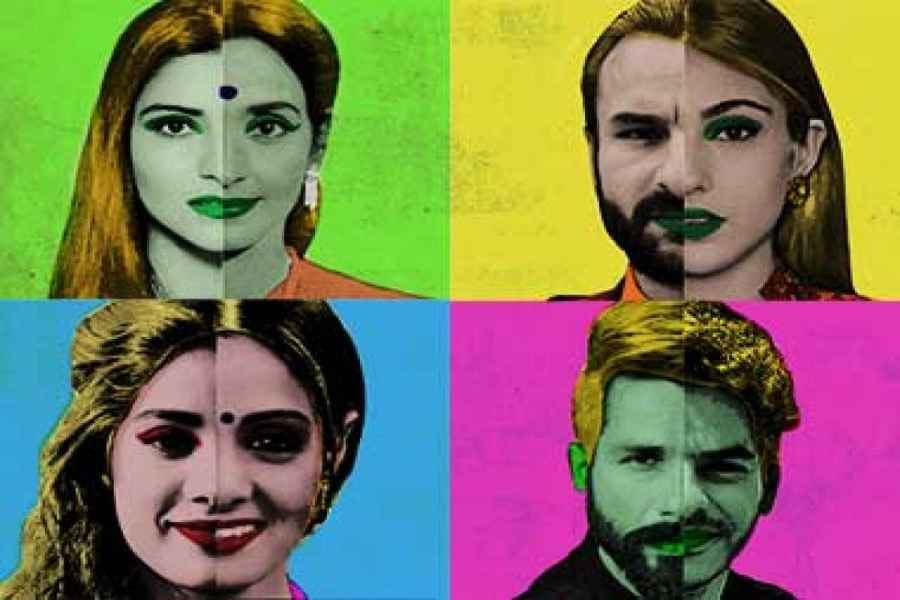
The debate of talent Vs privilege has been a contentious one
If countless outsiders spend years slogging it out in small films, is it fair that star kids in their early twenties get to start their careers with lead roles in plum projects irrespective of their skills?The difference between star kids getting a movie as compared to an outsider is that they have to constantly struggle to prove themselves again and again to survive in this industry and these people literally have to thrive hard to be casted by good directors.
We cannot deny the fact that there are a lot of leading actor and actresses who doesn’t really have a Bollywood background but have still managed to make their way and have foot hold in this industry.
But the thing which has outraged a lot of people right now is why has privilege surpassed talent these days in b-town? Why actors who are really deserving doesn’t get those bright chances and on the contrary there is an entire PR machinery planning and executing tricks and crores are been spent on an average star kid’s launch. Post launch, if the kid fails, there are the options of relaunch and re-relaunch. There are industry kids who are yet to score a single major hit even after over half a decade, but they still bag projects thanks to familial contacts, one such example is Arjun Kapoor. They always have something on their plate only because they belong to a privileged btown families.
The late Sridevi’s daughter Janhvi Kapoor and Shahid Kapoor’s half-brother Ishan Khatter in Dhadak, and Salman Khan’s brother-in-law Ayush Sharma in LoveYatri, were other blue-blood launches last year besides Sara. Although these films were forgettable, each debutant saw ample publicity boost.
last year Karan Johar, big daddy of B-Town nepotism, geared to introduce Chunky Pandey’s daughter Ananya in Student Of The Year 2 and is all set Sanjay Kapoor’s daughter Shanaya in an untitled project. Sunny Deol directs son Karan’s debut flick Pal Pal Dil Ke Paas. Sajid Nadiadwala shoulders responsibility of launching Suniel Shetty’s son Ahaan.
Be it when actor Kangana Ranaut called director-producer Karan Johar the ‘flag bearer of nepotism’ on his own show Koffee With Karan or the time when young Ananya Pandey ‘complained’ about it and debutant Siddhant Chaturvedi ‘silenced’ her, nepotism has and will always be one of the burning topics in the Hindi film industry.
Being an outsider we really don’t know the reality going inside this industry but for sure this industry does have a dark side that directly or indirectly affects a lot of people who are struggling to be a part of this concept of pure art form and not a money making business scheme.
An interesting case of forgery

Art heists, we see them countless times in movies as well as read about them in newspapers. They can be daring swiping of art works or plain robbing them outright. One such type of thieving is forgery. Forgery is a white-collar crime that generally refers to the false making or material alteration of a legal instrument with the specific intent to defraud anyone. Forgery in itself requires a lot of skill and mental acumen to pull-off. And as all crimes go once caught, one must prove their innocence in court to live freely. However, one case in Holland which included forgery was a little different, here the accuse pleaded guilty and tried to convince the court of his guilt. This was the case of Han Van Meegeren in 1947.
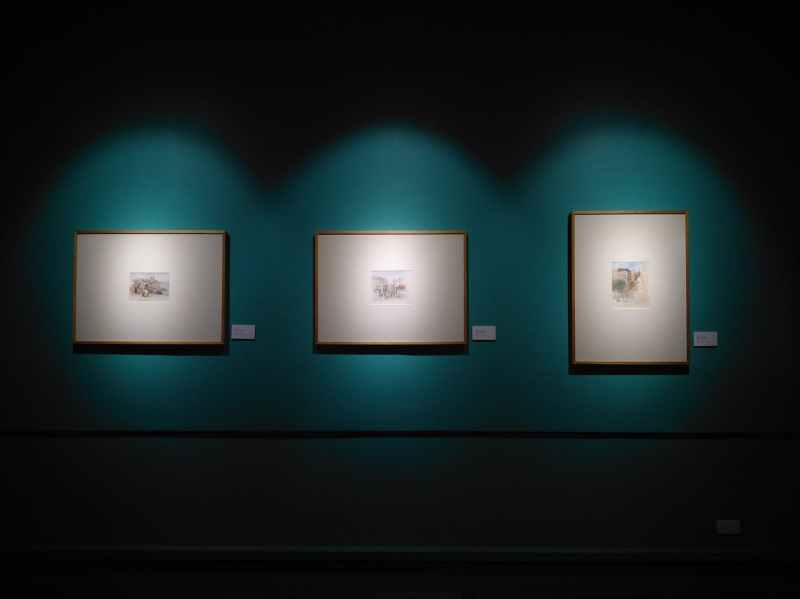
Like the cliché which goes with art forgers, Meegeren was an artist whose original works failed to bring him renown so he set put to make fools of those who shut the door to the art world on him. Like it was stated this kind of thievery requires a lot of skill and practice. Meegeren worked for nearly 6 years, studying all about the old masters, their styles, their biographies, their techniques and their materials. He chose a baroque painter from the 17th century by the name of Johannes Vermeer, a rather difficult choice given that Vermeer is celebrated throughout the art world for his technical brilliance in portraying domestic scenes. He carefully made meticulous practice pieces, going as far as to making his own brushes, and paint from his knowledge of Vermeer’s time. He was partly successful in his forgeries due to the fact that the sophisticated means of testing that are available now weren’t as advanced or widespread then. The other factor was his planning, the originality of the art work being tested depends on the art specialist reviewing them, and their popularity which is subjective. From his research he knew that the leading expert on Vermeer believed that he had an early fixation on religious painting and as there was no proof of this theory, Vermeer decided to provide one. Even thought it had some inconsistencies, as it was considered an early piece, it got the stamp of approval and he sold his fake for an equivalent of $4 million dollars. The success prompted him to make and sell more forgeries. However, his triumph was to be short lived, soon Nazi Germany occupied holland, and Hitler’s top general Herman Goring wanted a Vermeer painting for his collection. And Van Meegeren was more than happy to sell his fake. However, when the allies won the world war, Meegeren was tried for his “treasonous” act and was to be sentenced to the electric chair for selling a Dutch “masterpiece”. Thus, began Meegeren’s trial and his fight to prove that it wasn’t an original. To prove this, he explained step by step how he had forged it. However, he faced an ironical obstacle, the very man he had used to dupe the world, now came forward to take him down. The very expert who had enabled him to do the scam, now fought to protect his own reputation. Thus, to prove his innocence Meegeren made another fake and submitted to the court and was thus acquitted for collaborating with the Nazis, but sentenced to one-year imprisonment for fraud. Thus, he went from the scum who collaborated with Nazis to the folk hero who managed to swindle them. Due to his notoriety his works became valuable is his own right. Later down the line even his son forged his father’s paintings to gain money.
Thus, his “lack of talent” in his peer’s eyes was actually the fuel that unlocked his real talent in his eye for detail and dealing the art.
Dealing with Social Anxiety
Social anxiety is one of the most common anxiety disorders. It is a chronic mental condition where people have intense fear of social interactions, making it hard to go out, make friends, or interact with others. People with social anxiety tend to fear and avoid social situations. They are very concerned that they will do something embarrassing, or that others will judge them. It is normal to feel anxious in social situations from time to time. For example, most people feel anxious when they have to speak in front of a large group. Social anxiety becomes a problem when it becomes quite distressing and starts getting in the way of your ability to function and enjoy life. Trivial tasks such as filling in a form with people around and eating in public places or with friends may become highly stressful for somebody with social anxiety.
Social anxiety can affect daily tasks, including school life, work, and other activities. Behavioral and emotional signs and symptoms include : fear of situations in which you may be judged, worrying about embarrassing or humiliating yourself, intense fear of interacting or talking with strangers, fear that others will notice that you look anxious, fear of physical symptoms that may cause you embarrassment, such as blushing, sweating, trembling or having a shaky voice, avoiding doing things or speaking to people out of fear of embarrassment, avoiding situations where you might be the center of attention, having anxiety in anticipation of a feared activity or event, enduring a social situation with intense fear or anxiety, spending time after a social situation analyzing your performance and identifying flaws in your interactions, expecting the worst possible consequences from a negative experience during a social situation etc. The physical symptoms include: trembling, sweating , feeling nauseous , trouble catching your breath, avoiding eye contact, feeling dizzy , weeping, tantrums, clinging to parents, or isolation in children
In order to deal with social anxiety, we need to change the way we think, and change what we do. Methods to overcome social anxiety include:
- Social anxiety becomes a medical condition when everyday social interactions cause excessive fear, self-consciousness, and embarrassment. Anxiety can be harder to treat if you wait. Hence its important to get help. Medications and psychotherapy can help us gain confidence and improve our ability to interact with others.
- An important first step in learning to manage social anxiety involves better understanding your social anxiety. Take a couple of weeks to notice which situations cause you anxiety and what you experience physically when you are in those situations. Keep a journal or a list to keep track. It is a lot easier to manage your anxiety when you have a better understanding .
- When we’re in a social situation with a group of people, our focus of attention becomes totally caught up in our own thoughts and feeling. Hence, it is important to learn how to change our focus of attention and take more control over how we react to thoughts . We can learn to just notice the thoughts, acknowledge them, then let them pass and turn your focus of attention to something else.
Music As An Art Form
We all need entertainment. Entertainment is a crucial part of our lives. It is an absolute need for today’s world as we all are busy within our lives. Kids are busy with school and homework, adults are busy with work and other life stresses, so all of us need some entertainment from time to time. This entertainment we all need comes in various forms, while some might enjoy movies, some enjoy sports and many more. But sometimes we can not afford to take a break long enough to watch a movie or talk to someone or play a sport. One of the entertainment sources which fit that very important gap of being portable, easily accessible as well as quick is music. Music can be listened to on the go. Whether you are in a train or a bus, if you are working and need a short break, or you need some entertainment to push you through a task like working out of data entering, music is perfect for it. Some good music of your liking can fill up the mood bar and get you back on full throttle. And not just for entertainment, music is an allrounder, it is used all over the world as a healing method, music therapy is used to cure various mental illnesses and even helps easing physical pain. Apart from a medical standpoint, music can also be a great source of motivation and upliftment.
Music has also given a lot of people an open environment and space to freely express themselves and spread a message. Music is not just a source of entertainment, it is an artform which is capable of many deeds.
One of the best attributes of music is that it is for everybody. There exists a type of music for everyone to listen to.there are many many genres of music form. While some or more expressive and informative some have a very electronic upbeat vibe to them.
Music is also a great hobby because of its wide range. You can adopt music as a hobby in various forms. You can choose to be a singer or a songwriter or an instrument player or even a mixer. There are also a wide range of musical instruments to choose from like guitar, piano, flute , violin etc. the same with singing and writing, it may be jazz, rap, upbeat, slow etc. studies show that people who have adopted music as a hobby in their lives tend to be happier as it is also a stress reliever.
Music is also one of the oldest art forms as well. From the ancient times humans used to play music via drums and dance to celebrate. It has evolved and evolved to an extent where today every person in the world listens to some sort of music. It has also given various artists a creative career in life. Music industry today is worth billions and is growing by the minute.
Music is one of the best arm forms to exist and everyone should incorporate in their lives.
YOGURT- a fermented milk product
Yogurt is a basic fermented milk product that usually contains the basic bacterial starter cultures of Lactobacillus bulgaricus and Streptococcus thermophillus.
Although the composition of different types of yogurts changes but there is some fixed composition of fats present in them. It is important to note that all yogurts must contain at least 8.25% of solid which is not fat. The fat composition changes with the type of yogurt like full fat yogurt must contain not less than 3.25% of milk fat whereas low fat yogurt must not contain more than 2% milk fat. Also there is a category of non fat yogurt where the fat composition is even less than 0.5%.
The yogurt is basically a mixture of milk and cream which is then fermented by using a culture of Lactic acid producing bacteria. The types of milk which can be used are whole, reduced-fat, low-fat or non-fat depending on which the type of yogurt is decided. The lactic acid produced by the starter culture bacteria is basically responsible for lowering the pH of the yogurt making it acidic and tart. This finally causes the milk protein to thicken. These bacteria ferment the milk which results in the production of yogurt leads to partial digestion of the milk making it more easily digestible. In addition, these bacteria also act as a beneficial microorganisms for the human body as they act as oral-antibiotic therapy and helps in eliminating the pathogenic-bacteria from the gut and replenishing the non-pathogenic bacteria.
Ingredients of yogurt –
Milk
Cream
Sweeteners (e.g. sugar, honey, aspartame, etc)
Flavorings (e.g. vanilla, coffee, etc)
Other ingredients (e.g. fruits, preserves, stabilizers such as gelatin)
Types of yogurt –
- Set yogurt – This type of yogurt has a jelly-like structure and texture and is incubated and cooled in a final package.
- Stirred yogurt – This type is less firm than set yogurt. It is incubated in a tank and final coagulum is broken by stirring before cooling.
- Drinking yogurt – It also has coagulum broken before cooling though very little reformation of coagulum will occur.
- Frozen yogurt – This type of yogurt is incubated in the same way the stirred yogurt is incubated. It has an ice-cream like texture.
- Flavored yogurt – In this type of yogurt, flavors are added just before yogurt is poured into pots and the sugar content present in this type of yogurt is about 50%.
General processing of yogurt –
- Adjusting milk composition and blending all the ingredients
- Pasteurization of milk (at 85 degrees celcius for 85 minutes)
- Homogenization of milk (2000-2500psi)
- Cooling of milk to 42 degree celcius
- Inoculation with bacterial starter cultures into the cooled milk
- pH reduction by waiting for sometime
- Again cooling to 7 degree celcius
- Addition of fruits and flavors
- Packaging of prepared yogurt.
Health benefits of yogurt:
• Yogurt is comparably easier to digest than milk.
• It is rich in variety of vitamins.
• It is a rich source of protein.
• As it is source of protein, it may help in losing weight and gain muscles.
• It acts as a booster for immune system
• It is also important and useful for digestive system. It destroys the pathogenic microorganisms from the gut.
• It is good for bones especially for kids and elderly
• It may also be useful in lowering the blood pressure.
URBAN LIFE PERILS

Whenever we think about life in a metro or living in an urban area, we realise that we have everything. All that comfort, luxuries that contribute to a healthful lifestyle; opportunities, infrastructure, restaurants, big hotels, malls, hospitals and life represents progress. However, every coin has two sides, the opposite side of the concrete jungle is less than desirable. We have advanced cars but a lot of traffic and pollution; huge buildings but less open space, money and facilities but never satisfying desires, education and opportunities and more stress and depression in life. We have our McDonalds and Pizza Hut with them we have obesity, diabetes, cholesterol issues too. People work over 10 hours a day and have no time for themselves or their family. These problems are a result of an occupational hazard in cities as people are stuck in a never-ending rat-race.
In the advanced setup of an urban area, life is being run by technology, and we are all slaves to it. Our WhatsApp, Facebook, Skype has consumed most of our time and thoughts, and while we are virtually closer, we are physically farther than ever before. People are victims of impatience and lack of tolerance, and so confront emotional issues. A proper healthy diet and lack of exercise are standard characteristics of urban lifestyle. Life in a metro offers economic efficiency and a better lifestyle, but what is wealth without health?
The glamour, neon-lit nights, glitz of urban life appeals to us no doubt, but if we want the pleasure, we must take it with the pain. Everyone from a school going child to a worker to businessman is under performance pressure. We have created it for others and ourselves too. Our desires are bringing heftier bills, costs and expenses that sometimes leave us with stress. These stresses lead to diseases, and we look for gym, spas, health courses, yoga classes, and we burn more cash for the illnesses that we created for ourselves. There is less green cover in urban life and how much time do we spend with the left nature, the one we have? We have also developed a culture of isolation. We spend much time on television and on laptops. We keep ourselves distant from people around us because we love spending time with these electronics than we do with people. We isolate ourselves.
Every afternoon, evening and night, we take a fresh breeze of pollution because there is not much fresh air left. What do come comes in the morning and our late-night work, associations and morning affairs do not give us time to enjoy that either. There was a time in the 1990s and early 2000 when kids could move about one ground in an urban city and play cricket, badminton, or anything and now we don’t have space, and when they play this in colony parks, the older people send them away. There was a time when a Rs 2 Kismi bar appeared to be a delight and now the time has changed, areas are more urbanised than ever, and a bar of Cadbury Dairy Milk does not satisfy an appetite. Even in an urban setting, there was a time when few had TV and people used to collect at this person’s place. Now since everyone has everything, nobody needs humans anymore.
Life in an urban city is materially incomparable; it is just great. We are part of a privileged generation which gets to live in this setting. However, we must learn the values of humans, our environment, and we must make the other side of this coin better because we are responsible for giving a beautiful urban life for generations to come.
Kerala health Minister honoured to speak at UN regarding COVID19 control
Kerala health minister played a vital role in reducing the number of COVID cases in Kerala. She responded very quickly and became very attentive. She predicted the arrival of the disease prior to the warning from WHO. She said that she processed 3 plans and executed in advance. The plan A includes the establishment of 15 COVID19 awareness centers. Plan B is of arranging 10000 beds and sending victims to quarantine. Plan C is about increasing the beds to 25000 and implementing lockdown. Kerala must have been included in one of the highest COVID case State. But due to her advanced actions Kerala became the fastest recovered state and UN recognised the efforts of health minister and her plans. They invited her to speak about her plan of action. She is the only person who is honoured to get invitation from India.
The selection of K K Sailaja in UN program is to present the Kerala model that she had adopted in the fight against COVID19. She had gained immense popularity across the international media. The UN honoured all the people who had involved in this fight against COVID19. International media had appreciated the Kerala model of COVID is more effective than other models.
The minister said that state had opened special control rooms and took precautionary measures before the actual entry of COVID to India. As soon as the state recognised 3 cases it implemented plan B. During the plan A the minister also confirmed that the they were keeping a note and observing people who came from other states and countries. Those who have symptoms have been sent to quarantine. Home quarantine had been implemented to the people who came from other states. One of the foreigners praised to the treatment and methodology used by the government was too good. The hospitality and the treatment they have is extremely warm. The foreigner was so impressed by the action of government.
The people have actively involved in health care and social welfare including the distribution of masks and sanitizers. “Whether working in healthcare or delivering essential services in the areas of sanitization, social welfare, education, postal , delivery, law enforcement and public servants globally who continued to work in the community as people shelter at home, risking their life to ensure ours can continue” WHO said in a statement.
The Kerala health minister is proud of the country. She recognised the threat in advance and took necessary precautions and honoured to speak in prestigious stage. The only Indian to be honoured with such a thing. Hope she continues this perspective in future and still be the reason for our country to feel proud of her.
Here we, Indians salute you for making our country proud.
5 Tips to Help Students Prepare for Their Careers
Set yourself up for post-graduation success pre-graduation. Your “real world” self will thank you.
Students, you’ve seen it more than once. Fellow classmates complete their degrees and then spend their first week of freedom from the library painting the town red and celebrating. Those same classmates pound the pavement the following week with their resumes, new tie, starched slacks and polished shoes – only to find rejection at every turn.
It’s sad really – four to eight years working towards their degrees, just to end up managing the night shift at McDonald’s. Don’t’ let this happen to you. Start working towards your entry-level career early in the game. Try these five proactive tips to prepare for your career and prevent an educational disaster.
1. Don’t procrastinate
One common misconception is that your professional experience starts after college. This incorrect student career advice can and will cost future opportunities. Start looking for opportunities before you graduate. Don’t automatically default to those stereotypical “college student” or minimum wage jobs. Look for work related to your major. For example, journalism students could benefit from working in a print production plant. This provides an inside look at how the business functions. Accounting students may want to work as a receptionist at the local tax office. Art history majors could volunteer or do an internship at a local gallery.
Another option is the universal, federally-supported and funded work study program. All federally accredited colleges and universities offer the work study program. This program matches students with semi-guaranteed jobs. Most of the job opportunities are located on-campus, and counselors try to pick positions closest to your field of study. Jobs offered on and off-campus typically are minimum wage or a little higher. Just be prepared for the hours, Federal law prohibits colleges from assigning more than 30-hours per week. You may need to take a supplemental job to make up the loss.
2. Expand your knowledge
Students learn multiple skills in college. Some are related to your career; others may seem less useful. Open your mind to those so-called “useless” skills. They may come in handy one day. But don’t stop there. The key is expansion. Expand your skills and knowledge. Companies look for team members with the ability to work in diverse settings. Look for courses that compliment your major. Anthropology majors can take a few business courses to increase their marketability. Photography students may want to take a few graphic design or art classes to help improve creativity and their “eye” for art. Speak with your academic advisor for help selecting elective courses that compliment your major.
One great skill, and lost art form, is typing. Sadly, most college curriculums don’t require, or even offer, basic typing classes. Employers want team members who meet deadlines with little to no errors. If your college doesn’t offer typing classes, invest in a good typing software.
3. Stay up-to-date
While some entry-level careers are more competitive than others, all jobs require work and preparation. Staying current on technology and industry trends gives you an advantage over other applicants. Most students are more up-to-date with technology than seasoned professionals, giving them the upper hand. Those same students however, show a lack of knowledge of industry trends. Visit your college library and read professional journals each month. These provide an in-depth look at the changing landscape inside your career and will help better prepare you for what’s to come. Google offers a news subscription, customizable to any search word or phrase. Set up an automated search and receive up-to-date news alerts in your inbox each month.
Consider this piece of student career advice: learning new technology or updating your software version knowledge is just as important as industry trends. Most universities and colleges provide, and even require, students to take introductory computer classes. These classes cover basic file creation and editing, operating system quirks, word processing and basic maintenance. Take advantage of the introductory and intermediate classes. But don’t forget older software. Some companies haven’t upgraded. Read up on the last two versions of Microsoft Office, Windows OS and the standard software used in your industry. Most libraries carry technology books dating back several years. If your school or local library doesn’t have these books, Half Price Books, Barnes and Noble, Amazon.com and other retailers may have older books at discount prices.
4. Pay attention in science and math class
STEM (science, technology, engineering and math) careers represent one of the fastest growing industries. Technology is booming, making it an oil field of wealth. While you don’t have to major in math or science to benefit from STEM revenue, learning the basics will help you understand this growing field and impress employers with your analytical side. Visit the science and math Dean’s office, and speak with a counselor. Explain to them you aren’t majoring in STEM but want to learn more about the field and gain analytical skills. They know the best classes to help you learn.
On the other hand, don’t pass up opportunities to learn the arts, including visual and performing arts. Performing arts teaches communication skills. Every professional benefits from communication, especially public speaking. These classes help build self-esteem, teach you how to overcome the fear of speaking and hopefully prepare you for various, spur of the moment scenarios. Taking arts classes (i.e. painting, ceramics, etc.) helps build creativity, teaches structure and discipline, cultivates patience and encourages students to think outside the box.
5. Don’t forget about those internships
Internships are the lifeblood of college experience. And rightly so. Nothing beats a hands-on education. Just be careful to select the right internship to help work towards your entry-level career. Academic advisors recommend forgoing those large, competitive internships during your first two years in college. Instead, put more energy into local, small business internships. These businesses need the help and often offer more real-world education than those coffee-fetching, large company versions. Google a few local medium to small-sized companies in your field. Call their human resources department and inquire whether they accept interns and what are the qualifications. Don’t forget, your professors are your greatest allies. They probably know a few good companies who will give you a shot.
It’s never too late to start
Most of this student career advice requires a few years of planning to become effective. Don’t worry though, there is still time for students getting ready to walk the stage. The first step is optimizing your resume. While it is best to plan for your future and have the ammunition ready for your resume, most skills and experience are easily rewritten. Look for transferrable skills (i.e. leadership, communication, team building, etc.) Highlight those attributes and similar accomplishments. Use strong action verbs, and draw attention to what you can achieve for the company. Treat your abilities as merchandise for sale. Make the employer want you.
 Eduindex
You must be logged in to post a comment.