
Aarogya Setu is now open source

On 2nd April 2020, India launched Aarogya Setu mobile App for helping augment the efforts of limiting the spread of COVID19, with an objective of enabling Bluetooth based contact tracing, mapping of likely hotspots and dissemination of relevant information about COVID19. The App has over 114 million users as on 26th May, which is more than any other Contact Tracing App in the world. The App is available in 12 languages and on Android, iOS and KaiOS platforms. Citizens across the country are using Aarogya Setu to protect themselves, their loved ones and the nation. Many youngsters also call Setu as their Bodyguard. The key pillars of Aarogya

Setu have been transparency, privacy and security and in line with India’s policy on Open Source Software, the source code of Aarogya Setu has now been made open source. The source code for the Android version of the application is available for review and collaboration at https://github.com/nic-delhi/AarogyaSetu_Android.git.The iOS version of the application will be released as open source within the next two weeks and the server code will be released subsequently. Almost 98% of Aarogya Setu Users are on Android platform.

Opening the source code to the developer community signifies our continuing commitment to the principles of transparency and collaboration. Aarogya Setu’s development has been a remarkable example of collaboration between Government, Industry and Academia and citizens. It is also a product of the hard work of the talented young technological experts of our country who have worked day in and out to make this world class product. With the release of the source code in the public domain, we are looking to expanding collaboration and to leverage the expertise of top technical brains amongst the talented youth and citizens of our nation and to collectively build a robust and secure technology solution to help support the work of frontline health workers in fighting this pandemic together.
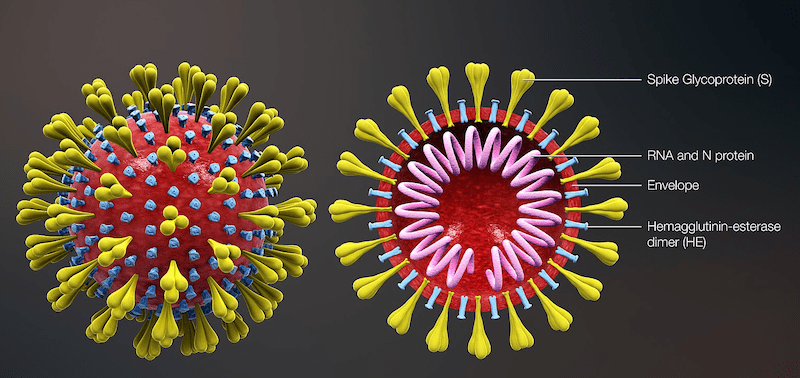
Coronavirus-structure explained

The App offers a comprehensive suite of interventions against COVID-19 and has registered several firsts in the eight weeks since its launch. The App possibly has the most reach and impact when compared to all other COVID-19 contact tracing and self-assessment tools combined globally, while pioneering new data driven epidemiological flattening of the curve through syndromic mapping. Of the more than 114 million registered users, two-thirds have taken the self-assessment test to evaluate their risk of exposure to COVID-19. The App has helped identify about 500,000 Bluetooth contacts. Those who are identified as Bluetooth contacts of COVID19 positive cases or are classified as needing assistance based on their self-assessment, are contacted by National Health Authority. So far, the platform has reached out to more than 900,000 users and helped advise them for Quarantine, caution or testing. Amongst those who were recommended for testing for COVID19, it has been found that almost 24% of them have been found COVID19 positive. Compare this to the overall COVID19 positive rate of around 4.65% – 145380 COVID19 positive from a total of 3126119 tests done as on 26th May 2020. This clearly illustrates that Contact tracing is helping focus efforts on those who need testing and this will greatly augment the efforts of the Government in containing the pandemic. Analytics of Bluetooth contacts and location data has also helped identify potential hotspots with higher probability of COVID cases allowing State Governments and District Administration and Health authorities to take necessary steps for containment of the pandemic, early, which is critical for controlling the spread of the pandemic. This approach of syndromic mapping, a novel approach of combining principles of path tracing and movement patterns of COVID-19 positive people, population level epidemiology modelling and the prevalence of COVID-19 in different regions of the country, the Aarogya Setu team has identified more than 3,500 hotspots across the country at sub-post office level. The Aarogya Setu data fused with historic data has shown enormous potential in predicting emerging hotspots at sub post office level and today around 1264 emerging hotspots have been identified across India that might otherwise have been missed. Several of these predicted hotspots have been subsequently verified as actual hotspots in the next 17 to 25 days. As an example, a district with 3 cases on a particular date when Aarogya Setu engine predicted it as a hotspot registered 82 cases in the next 15 days. The precision achieved by this unique combination of Bluetooth-based contact tracing and identification of hotspots may hold the key to effectively breaking the chain of infection, flattening the curve and saving lives.

Releasing the source code of a rapidly evolving product that is being regularly used by more than 114 million users, is challenging. Developing and maintaining the source code is a huge responsibility, both for Team Aarogya Setu and the developer community. The repository now being shared is the actual production environment. All subsequent product updates will also be made available through this repository.

The process of supporting the open source development will be managed by National Informatics Centre (NIC). All code suggestions will be processed through pull request reviews. Aarogya Setu’s source code has been licensed under Apache License

Version 2.0, and is available on “As-Is” basis. Any reuse of the source code with changes to the code requires the developer to carry a notice of change. More details can be found in the Frequently Asked Questions document available at https://www.mygov.in/aarogya-setu-app/


While making the code Open Source, Government of India also seeks the developer community to help identify any vulnerabilities or code improvement in order to make Aarogya Setu more robust and secure. Towards this objective, Government has also launched a Bug Bounty Programme with a goal to partner with security researchers and Indian developer community to test the security effectiveness of Aarogya Setu and also to improve or enhance its security and build user’s trust. Details of the Bug Bounty Programme along with the rewards therein are being shared separately. Details of the Bug Bounty Program is available on the innovate portal of MyGov at https://innovate.mygov.in/

The Government of India, by opening the product design and code, has also demonstrated its strong commitment to contributing to the global good. India is keen to share learnings from our approach to technology to fight COVID-19 and make the benefits of the solution available to the rest of the world and any government can use it for fighting the pandemic. Together we can, and we continue supporting the doctors and frontline health work in helping fight this pandemic.

मैं सरक्षितु हम सरक्षितु भारत सरक्षितु

INST scientists find route to fabricate precisely controlled nanostructures

Researchers at Institute of Nano Science and Technology (INST) Mohali, an autonomous institute under the Department of Science & Technology (DST) have found a straightforward and unique route to fabricate precisely controlled nanostructures of desired geometry and location on 2D materials, through a rapid one-step low power laser writing process.

Approaches used so far to achieve the controllability over hotspots distribution, which involves the synthesis of complex morphologies, limits their potential to be used for large area substrates. 

In order to overcome this, the INST group developed a hybrid Surface-enhanced Raman spectroscopy(SERS) platform of Molybdenum disulfide (MoS2) nanostructure decorated with gold nanoparticles, where direct laser writing is used to engineer the artificial edges on the surface of MoS2. This created localized hotspots with remarkable precision and control. Surface-enhanced Raman spectroscopy (SERS) is a technique for molecular detection and characterization that relies on the enhanced Raman scattering of molecules that are adsorbed on SERS-active surfaces, such as nanostructured gold or silver.

In the research by Dr. Kiran Shankar Hazraand his group which has been accepted for publication in the journal ACS Nano,a focused laser beam of meager power of a conventional Raman spectrometer was used to do nanostructuring on 2D flakes of desired feature size and geometry just by playing with the laser power and exposure time. Using this technique, they achieved the minimum feature size of   ̴300nm, which is close to the diffraction limit of the laser used (i.e., 532nm laser line). 

In SERS sensing, producing SERS substrate of controllable hotspots distribution with desired geometry and location is the main challenging task. Several efforts have been made by researchers to attain the controllability over hotspots distribution via employing various synthesis procedures, hotspots engineering, defect engineering, and so on. However, the random distribution of hotspots and precision over geometrical nanostructure has limited the progress in the field of SERS sensing. 

The hybrid SERS platform developed by the INST group offers controlled formation of localized hotspots for ultrasensitive and reproducible detection of analytes. Low power-focused laser irradiation technique was employed to create artificial edges on atomically thin 2D MoS2 sheet, which enables the superior deposition of AuNPs along the artificial edges, and enhances the local electromagnetic field leading to formation of hotspots. 

The innovative route to attain the accuracy and control over localized hotspots formation at desired position and geometry, which is advantageous over randomly distributed hotspots in conventional SERS substrates. The team is now exploring various applications of 2D material nanostructures in the field of catalysis, sensing, and optoelectronics devices. 

This research in SERS sensing will open a new avenue for the development of commercialized SERS substrate with a localized detection capability of analytes. The AuNPs decorated, and laser-etched 2Dsheets based SERS hybrid platform will also shed new light in the SERS sensing of biological and chemical molecules. The artificial edges of the 2D layers can be functionalized with an antibody with adequate coating and linkers for the SERS detection of various biomarkers. 

Figure 1: Enhancement of Raman signal of RhB along the artificial edges of MoS2

Figure 2: Raman mapping of the localized hotspots created along the artificially sculptured edges

[Publication link :doi.org/10.1021/acsnano.0c02418 

For more details contact Dr. Kiran Shankar Hazra(kiranshankar.hazra@gmail.com

CSIR-IIIM & Reliance Industries Limited (RIL) to develop RT-LAMP based test for Coronavirus

As part of COVID-19 mitigation mission of Country, CSIR has strategized its R&D to develop, integrate, scale-up, and deploy necessary technological interventions for combating Coronavirus pandemic in the country. Considering the multifarious problems created by coronavirus, which require interventions, the CSIR under the guidance of its Director General, Dr. Shekhar Mande has formed five verticals to coordinate various research activities into Digital and Molecular Surveillance, Drugs & Vaccines, Rapid and Economical Diagnostics, Hospital Assistive Devices & PPEs, and Supply Chain and Logistics.

Since testing is vital component in COIVD-19 mitigation, CSIR-IIIM, Jammu a constituent laboratory of CSIR has partnered with Reliance Industries Limited (RIL) to develop and scale-up a new Reverse Transcriptase-Loop Mediated Isothermal Amplification (RT-LAMP) based COVID-19 diagnostic kit for which a formal MOU has also been signed between CSIR-IIIM, Jammu and RIL.

COVID-19 RT-LAMP test is a nucleic acid based test carried out from nasal/throat swab sample from patients. The test recipe has been developed and successfully demonstrated using synthetic templates. It is rapid (45-60 min), cost effective and accurate test.  It has been tested with a small number of patients samples and validating the kit on more number of patient samples is planned and will be done together with RIL.

The advantage of this test is that the RT-LAMP based COVID-19 kit components are easily available and these can be completely manufactured in India.  While the, the current COVID-19 testing is done by real-time PCR their components are mostly imported. Further these tests are expensive; require highly trained manpower, costly instruments and a relatively high-end lab and cannot be deployed at remote locations in quarantine centers, airports and railway stations, etc.

On the other hand, the RT-LAMP test can be done in a single tube with minimal expertise in a very basic lab setup like mobile units / kiosks for testing at Airports, Railway Stations, Bus Stands and other public places. The end detection of the test is a simple colored reaction, which is easily visible in UV light, and now is being modified such that it can be detected in regular light.

After testing the accuracy of the kit, on a much larger number of patients, CSIR-IIIM and RIL will jointly approach ICMR for approval. RIL plans to rapidly scale up the tests for the larger population and use it for easy, rapid and widespread diagnosis for COVID-19 detection for the larger interest of society.

With the formal launch of the RT-LAMP based diagnostic test, the COVID-19 testing will not only be more rapid, cheap, easy and accessible but also would go a long way quickly isolating the infected individuals and mitigating the spread of virus.

Dr. Ram Vishwakarma, Director and Dr. Sumit Gandhi, Principal Scientist from CSIR-IIIM and Dr. Santanu Dasgupta, Senior Vice President, R&D and Dr. Manish Shukla, General Manager R&D from RIL side are monitoring this project.


Quality Education and Educational infrastructure for students of the North –Eastern States

Union HRD Minister Shri Ramesh Pokhriyal ‘Nishank’ said that Government is committed to provide quality education and infrastructure improvement in educational institutions all over India and especiallyto the students of the North –Eastern States of the country. He informed that in this regard, the government has taken some major decisions this year. The government has granted permission for the establishment of permanent campus of Sikkim University (a Central University) at Yangyang at a cost of Rs. 986.47 crore. The government of Sikkim has allotted 300 acres of land at cost of Rs. 15 crore, out of which 265.94 acres of land has already been handed over to the University. The handing over of remaining land is under process.

The Minister also informed that Government has already sanctioned revised cost estimates of 6 NITs at Arunachal Pradesh, Mizoram, Meghalaya, Nagaland, Delhi and Puducherry at Rs. 4371.90 crore. With the approved Revised Cost Estimates, these NITs will be fully functional from their respective permanent campuses by 31st March, 2022. The overall student capacity in these campuses will be 6320.

thoughts

bahtings
In the JISC Innovating e-learning online conference Stephen Heppell had a Powerpoint with a list of creative assessments i.e. equivalent to a 1500 word essay – things like creating a video clip, moderating an online discussion etc. I believe this sort of assessment would shake the foundations of our educators. We are about to launch a new course in planning and designing for eLearning and intend to model options like this to our staff.
The other issue is not just about getting students to work creatively, but how to get staff to collaborate using tools such as blogs and wikis.

The arrival of Leigh Blackall, a very innovative programme developer is very timely for our institution. he is an advocate of open source solutions, and open networked learning. I am learning so much from him by just being open to a new way of doing things. He is also taking this approach with other staff, some embrace it and others back off.

Some are fearful of information being put \”out there\” even i have have to admit to this. Leigh has been here only a few weeks and already has staff podcasting, blogging and using wikis. with this confidence we can now take this to our students….sometimes we just need a push and a shove..oh and i really like his idea of learner-generated content and I\’m going to try it out in the flexible design course.

For me it is a breath of fresh air and really enjoyable having someone on the same wavelength. I just hope as an institution we can keep him. I wouldn\’t like to see the shine lost from a gem like him.

3 Things I Wish I Knew Before Enrolling in an FNP Program

When I decided to go back to school for my FNP, I did a great amount of research on my options.

When I decided to go back to school for my MSN FNP and become a nurse practitioner, I did a great amount of research on my options. I looked into the length of different programs and weighed the benefits of going to school full-time versus part-time. I also considered the cost of continuing my education and compared the pros and cons of getting a nurse practitioner degree online instead of being on campus.
After lots of research and meeting with many other nurse practitioner students, I chose Herzing University as the school where I would advance my education and my nursing career.
Starting the MSN FNP program has been challenging, but ultimately very rewarding. Here are three things I’ve learned so far that can help you choose the FNP program that’s right for you:

1. It’s possible

Working and earning your MSN FNP is possible. After completing my first semester working full-time and taking a full-time course load, the realization set in: I can do this. Time was one of the biggest hurdles that contributed to my procrastination in continuing my education. Now, my graduation day is just a few months away. Five years ago, I could not have imagined myself in this scenario – not even in my dreams.

2. The work is very rewarding

My favorite part about the program is working with nurse practitioners during clinical rotations and experiencing first-hand the rewards this profession brings to the community. “Why did I wait so long before furthering my career?” I often wonder. I’ve read about nurse practitioners and have been treated by them, but never saw the entire picture until I started working alongside them.

3. Finding a preceptor is important

Locating a preceptor is one of the biggest challenges FNP students face, but it is crucial to completing the program successfully. At Herzing, each student in the FNP program is assigned a clinical coordinator, who helps students locate clinical sites and preceptors that have worked with Herzing students in the past. This is a tremendous help for students who do not know where to start their search or have exhausted all their options.
If you\’d like more detail on the process, read Herzing\’s guide on how to find an NP preceptor for your clinicals, which includes information on who you can choose, where you can look, and how they help you secure your clinical.

Become a versatile, highly qualified nurse practitioner

The skills of a nurse practitioner cover a wide variety of essential qualities, both in personality and practice.A big advantage of becoming a nurse practitioner is your versatility to administer care to a wide variety of patients. The biggest difference between NPs and family nurse practitioners is FNPs are qualified to practice all types of family care, while NPs with a specialty in pediatrics or geriatrics will be restricted to those fields.
Nursing allows you to be part of a great profession and also opens up the door to a variety of different areas of expertise to explore. Given the choice to start over again, the online FNP program at Herzing University would still be my No. 1 choice.

What are the qualities of a good educational technology trainer?

Whilst in the process of designing a unit of online learning I started thinking about the qualities and skills that a good educational technology trainer should have. After thinking of a few myself I decided to draw on the wisdom of my PLN and crowd-source a few more ideas.

Please feel free to add your ideas and to copy any of the ones you find here. I\’d also like you to selectively vote for the ones you think are most important. You can also add some pros and cons to say why. You can add your ideas and comments without registering.


powered by tricider
Thank you for your help and participation. I hope you find this list useful.

Related links

Best

Economic Revolution through Blue Revolution

The Pradhan Mantri Matsya Sampada Yojana (PMMSY) aims to enhance fish production to 220 lakh metric tons by 2024-25 from 137.58 lakh metric tons in 2018-19 at an average annual growth rate of about 9%. The Union Minister for Fisheries, Animal Husbandry and Dairying, Shri Giriraj Singh, today said the ambitious scheme will result in doubling export earnings to Rs.1,00,000 crore and generate about 55 lakhs direct and indirect employment opportunities in fisheries sector over a period of next five years. Dedicating the PMMSY to fishers, fish farmers, fish workers, fish vendors and other stakeholders associated with the fisheries sector, Shri Giriraj Singh said that insurance coverage for fishing vessels is being introduced for the first time. 

Addressing a press conference on the “PMMSY – A scheme to bring about Blue Revolution through sustainable and responsible development of fisheries sector in India”, approved by the Union Cabinet chaired by the Prime Minister Shri Narendra Modi on 20th May, 2020, Shri Giriraj Singh said that the scheme envisages an estimated investment of Rs. 20,050 crores comprising Central share of Rs. 9,407 crore, State share of Rs 4,880 crore and Beneficiaries contribution of Rs. 5,763 crore. He added that the PMMSY will be implemented over a period of 5 years from FY 2020-21 to FY 2024-25 in all States/Union Territories. 

Shri Giriraj Singh said that under the PMMSY thrust will be given towards enhancement of fish production and productivity, quality, sustainability, technology infusion, post-harvest infrastructure, modernisation and strengthening of value chain, standards and traceability in fisheries sector from ‘catch to consumer’, establishing a robust fisheries management framework, fishers’ welfare, enhancement of fisheries export competitiveness.  He further mentioned that PMMSY will create a conducive environment for private sector participation, development of entrepreneurship, business models, promotion of ease of doing business, innovations and innovative project activities including start-ups, incubators etc. in fisheries sector.  The Minister further mentioned that PMMSY being a fisher centric umbrella scheme, fishers, fish farmers, fish workers and fish vendors are the key stakeholders in the developmental activities envisaged and enhancement of their socio-economic status is one the core objectives of this scheme. 

The Fisheries Minister said that about 42% of the total estimated investment of the PMMSY is earmarked for creation and upgradation of fisheries infrastructure facilities. Focus areas include Fishing Harbours and Landing Centers, Post-harvest and Cold Chain Infrastructure, Fish Markets and Marketing Infrastructure, Integrated Modern Coastal Fishing Villages and Development of Deep-sea Fishing. Besides creating critical fisheries infrastructure by attracting private investments in fisheries sector, the scheme plans to reduce post-harvest losses from the present high of 25% to about 10% by modernizing and strengthening value chain. Under the Swath Sagar plan, activities envisaged with a view to modernize the fisheries sector include promotion of Bio-toilets, Insurance coverage for fishing vessels, Fisheries Management Plans, E-Trading/Marketing, Fishers and resources survey and creation of National IT-based databases. 

Underlining the need to enhance domestic fish consumption with corresponding health benefits, the Minister said that the Government will register “Sagar Mitra” and encourage formation of Fish Farmers Producer Organizations (FFPOs) to help achieve the PMMSY goals. Youth will be engaged in fisheries extension by creation of 3477Sagar Mitras in coastal fisher villages. Large number of Fisheries Extension Services Centers will be set up in private space to create job opportunities to young professionals. 

The scheme will also focus on several new activities and areas such as Traceability, Certification and Accreditation, Aquaculture in saline/alkaline areas, Genetic improvement programmes and Nucleus Breeding Centres, Fisheries and Aquaculture start-ups, promotional activities for fish consumption, branding, GI in fish, Integrated Aqua parks, Integrated coastal fishing villages development, State-of-art wholesale fish markets, Aquatic Referral Laboratories, Aquaculture Extension Services, Biofloc, support for new/upgradation of fishing boats, disease diagnostic and quality testing labs, Organic Aquaculture Promotion and Certification and Potential Fishing Zone (PFZ) devices. 

            Shri Giriraj Singh said that the PMMSY provides thrust for infusing new and emerging technologies like Re-circulatory Aquaculture Systems, Biofloc, Aquaponics, Cage Cultivation etc. to enhance production and productivity, productive utilization of wastelands and water for Aquaculture. He added that some activities like Mariculture, Seaweed cultivation and Ornamental Fisheries having potential to generate huge employment especially for rural women will be promoted.

Stressing on attaining self-sufficiency in availability of quality seed at affordable price, Shri Giriraj Singh said that the scheme will result in increasing aquaculture average productivity to 5 tons per hectare from the current national average of 3 tons per hectare. This will be achieved through promotion of high value species, establishing a national network of Brood Banks for all commercially important species, Genetic improvement and establishing Nucleus Breeding Centers for self-reliance in Shrimp Brood stock, accreditation of Brood banks, Hatcheries, Farms and also addressing diseases, antibiotics and residues issues, aquatic health management. These steps are likely to ensure quality, higher productivity, improve export competitiveness and fetch higher prices to fishers and farmers. 

            Constituting about 7.73% of the global fish production and export earnings of Rs.46,589 Crores (2018-19), India today has attained the status of the second largest aquaculture and 4th largest fish exporting nation in the world. Shri Giriraj Singh that the country has high potentiality to attain the 1st highest fishing producing and exporting nation in the world in the coming years, and his Ministry is committed to take the fisheries sector to newer heights. The Minister said that the Fisheries sector has shown an impressive growth in terms of fish production and export earnings during the past five years. The sector recorded an Average Annual Growth Rate of 10.88% during 2014-15 to 2018-19, 7.53% average annual growth in fish production and 9.71% average annual growth in export earnings, with 18% share in agricultural exports. He further added that the Gross Value Added (GVA) of Fisheries sector in the national economy during 2018-19 stood at Rs 2,12,915 crores which constituted 1.24% of the total National GVA and 7.28% share of Agricultural GVA. 

            Foreseeing the huge scope for development of fisheries, the Prime Minister Shri Narendra Modi, in December, 2014, had called for “a revolution” in the Fisheries sector and named it as “Blue Revolution”. The Union Government has taken several initiatives to harness the potential of the Fisheries sector in a sustainable and responsible manner towards ushering the Blue Revolution in Fisheries as envisioned by the Prime Minister. Some of the major reforms and steps taken by the Union Government include (i) Creation of a separate Ministry of Fisheries, Animal Husbandry and Dairying in the Union Government, (ii) Setting up a new and dedicated Department of Fisheries with independent administrative structure, (iii) Implementation of the Centrally Sponsored Scheme on Blue Revolution: Integrated Development and Management of Fisheries during the period 2015-16 to 2019-20 with a central outlay of Rs. 3,000 crore, (iv) Creation of Fisheries and Aquaculture Infrastructure Development Fund (FIDF) during 2018-19 with a fund size of Rs. 7,522.48 crore, and (v) Launching of PMMSY with an investment of Rs. 20,050 crore, the scheme with highest ever investment for fisheries sector. 

            The Ministers of State for Fisheries, Animal Husbandry and Dairying, Shri Sanjiv Kumar Baliyan and Shri Pratap Chandra Sarangi, and Secretary, Department of Fisheries, Dr. Rajeev Ranjan, were present during the press conference. On the occasion, the dignitaries released a booklet on the PMMSY.

Click here to view booklet on PMMSY

How to Set Goals and Stick to Them in the New Year

The start of a new year or a new semester can often restore your sense of motivation, and many people take advantage of that time to set goals.

The start of a new year or a new semester can often restore your sense of motivation, and many people take advantage of that time to set goals for the year ahead. There is an art to effective goal-setting, however. While there’s no harm in challenging yourself, you’re more likely to stick to your goals when you know you can be successful.

Here are five tips for setting and sticking to your goals:

1. Be SMART

The key to sticking with your goals is to make them challenging, but achievable. The SMART goal framework helps you establish goals that are specific, measurable, attainable, relevant and time-bound. Each of these criteria helps you think through your goals so that it’s easier for you to be successful.

For example, “getting good grades” is too vague to be a SMART goal because you don’t have a specific outcome to work toward, or a time frame in which you must achieve it. A better goal would be: “I want to get As in all of my courses this semester.” This goal is specific, measurable, attainable, relevant and time-bound.

2. Make a game plan

Once you’ve decided on your goals, create a game plan for how you intend to achieve them. For example, if you want to get all As next semester, you will need to make sure you’re on top of all your assignments and prepared for each exam. That might involve setting aside time to study each day, planning out all of your due dates ahead of time, or setting a standing appointment with a tutor for extra help.

“When you set a goal, you need to hold yourself accountable and commit to specific actions in order to get what you want,” says Tina Shanahan, an assistant professor of English at Herzing University. “Start out with a straightforward objective and then break it down into smaller steps.”

3. Set short-term benchmarks

It’s not always easy to stay motivated, especially when accomplishing your goals seems to be a long way off. If you’re working toward a long-term goal, like getting a promotion or graduating college, you might find it helpful to create short-term goals along the way. These goals can be a part of your larger game plan and they should also follow the SMART goal format.

For example, if your main goal is to graduate and get a job in two years, a short-term goal could be securing a relevant internship in your last semester, or meeting with a career coach to practice certain interview skills. These steps move you toward your ultimate goal and give you something to focus on in the moment.

4. Track your progress

Another great way to stay motivated is to keep track of your progress and celebrate your successes along the way. Keep a journal of the steps you’re taking to move closer to your goal and what worked or didn’t work along the way.

Let’s say you do well on an exam in one of your more difficult courses. Take a moment to reflect on the steps you took that helped you be successful. If you didn’t do so well, use that time to reflect on what you can do differently next time.

5. Adjust your goals as needed

Don’t get discouraged if you find it difficult to get the results you want. Life happens and sometimes you have to modify your goals along the way. Herzing University student Shenese Stewart learned that it’s OK to follow a different path than your peers and classmates.

“In order to be successful, you have to make realistic adjustments for your life,” she says. “Don’t compare yourself to what other people are doing. Everyone’s situation is different. Keep your eye on the prize.”

Relaxation to Tour Operators, Travel Agents and Tourist Transport Operators

The Ministry of Tourism classifies hotels under the star rating system to conform to the expected standards for different classes of tourists. Under this system, hotels are given a rating, from One Star to Three Star, Four and Five Star with or without alcohol, Five Star Deluxe, Heritage (Basic), Heritage (Classic), Heritage (Grand), Legacy Vintage (Basic), Legacy Vintage (Classic), Legacy Vintage (Grand) and Apartment Hotels, Home stays, Guest house etc. The classification/ certification is valid for period of five years.

Considering the current situation when the hospitality industry is going through a very difficult time in the wake of Covid 19 Pandemic and lockdown that has severely impacted the accommodation sector, it has been decided that validity of approval or certifications of hotels and other accommodation units whose project approvals/reapprovals and classification/reclassification have expired/are likely to expire during the period (24.03.2020 to 29.6.2020) are deemed to be extended till 30.06.2020.

Similarly, the Ministry has a scheme of approving Travel Agents, Tour Operators, Adventure Tour Operators, Domestic Tour Operators and Tourist Transport Operators etc. the idea being to encourage quality, standard and service in these categories so as to promote Tourism in India.

Due to postponement of inspection work and application scrutiny during the lockdown period from March 2020 onward in the wake of COVID-19 pandemic, the Ministry of Tourism has decided to allow six months’ relaxation or extension to all categories of Tour Operators (Inbound, Domestic, Adventure) Travel Agents and Tourist Transport Operators for their approval with the Ministry of Tourism subject to the following conditions: –

(i) The previous approval expired or the current approval expires during the period of 20th March, 2020 (i.e. the date of issuance of order by the Ministry for discontinuation of inspection work by India Tourism offices) till continuation of lockdown, and

(ii) They applied for renewal before expiry of their current/previous approval.

COVID-19 led to develop innovative tractor-mounted sanitization sprayer

For months, Rajendra Jadhav had been following the news of how Corona Virus was creating upheavals by devastating the health infrastructure and paralysing normal life. The sexagenarian villager from Satana in Nashik district had the vision to realise that this virus has the potential to create havoc if it happens to enter his village.

The information about how COVID-19 infection spreads and continuous awareness messages about the need for sanitization that were pouring in from radio, TV and WhatsApp messages. It made him realize the need for a mass sanitization drive in his village and tehsil.

The self-taught engineer who has been putting his technical knowledge to use in making agricultural tools and machineries to suit the needs of the local farming community, decided to develop a mass sanitizing machine. Accordingly, Jadhav started his research in his village workshop to develop a machine that can be used for mass cleaning of roads and public spaces. 

Within 25 days, he came up with an innovative sprayer mounted on a tractor which is capable of sanitizing or washing large areas like roads, societies, doors, compounds, walls, etc.

The sprayer consists of two radial fans of aluminium, moving opposite to each other. In terms of mechanism, each fan sucks air from two opposite directions, which is released through nozzles at high pressure with minute droplets sizes. As the panel rotates 180 degrees, it can cover from the ground up to 15 feet tall walls. Any 15 HP tractor can be used to operate this sprayer. 

Jadhav’s machine has a capacity to store 600 litres of disinfectant mixed water in the tanker. As a result, compounds, doors can easily be sanitized with this sprayer. 

An added advantage of using this sprayer for disinfecting works is that it hardly requires any human intervention and thus prevents human contact.  A single person can drive the tractor and operate the sprayer.

‘Yashwant’ santization sprayer has been identified as a potential S&T based innovative solution in Challenge COVID-19 Competition (C3) organised by the National Innovation Foundation 

The cost incurred for developing this machine is around 1.75 lakh rupees, stated Jadhav. This sprayer is being used by Satana Nagar Nigam to cleanse and disinfect about 30 sq. km area in Satana. 

Upon seeing the utility of this tractor mounted sprayer machine, a friend from Dhule district requested Jadhav to make one for sanitizing his village.  The second machine manufactured by Jadhav has been deployed for sanitization in Dhule district.

‘Yashwant’ Sanitization sprayer has been deputed to disinfect areas under Satana Municipality  

Rajendra Jadhav has named his innovative sprayer ‘Yashwant’. This is the brand name he uses for all the agricultural tools he makes.                             
While Rajendra Jadhav has applied for a patent for his unique sprayer, he has also sent across his innovative design to National Innovation Foundation (NIF). The Yashwant sprayer has been identified as a potential S&T based innovative solution in India’s fight against COVID-19.

Rajendra Jadhav with the tractor mounted sanitization sprayer he has developed to disinfect large areas in the wake of COVID-19. The sexagenarian is engaged in further improving the sprayer machine.

About National Innovation Foundation

NIF is India’s national initiative to strengthen the grassroots technological innovations and outstanding traditional knowledge. It was set up in the year 2000 in Ahmedabad to provide institutional support for scouting, sustaining and scaling up the grassroots innovations across the country.

Breakthrough event of Chamba Tunnel under Chardham Pariyojana

Union Minister for Road Transport & Highways and MSMEs Shri Nitin Gadkari today inaugurated the breakthrough event of Chamba Tunnel under Chardham Pariyojana through video conference mode. Border Roads Organisation (BRO) achieved this major milestone by digging up a 440 m long Tunnel below the busy Chamba town on Rishikesh-Dharasu road Highway (NH 94). The breakthrough was completed amidst threat of COVID-19 and nationwide lockdown. The construction of tunnel was a challenging task in terms of weak soil strata, continuous water seepage, heavy built up area on top thereby chances of sinking of houses, land acquisition issues, restrictions during COVID lockdown etc.

Union Minister for Road Transport & Highways and MSMEs Shri Nitin Gadkari today inaugurated the breakthrough event of Chamba Tunnel under Chardham Pariyojana through video conference mode.

Speaking on the occasion, the Minister said, this Rishikesh-Dharasu-Gangotri road in Uttarakhand has a very significant role from socio economic and religious point of view. He said, opening of this tunnel will ease out congestion though the Chamba town and reduce the distance by one kilometer and journey through the town will take only ten minutes as compared to thirty minutes earlier. Shri Gadkari lauded BRO for working in some of the very difficult terrain and ensuring implementation of critical projects. He said that he has been informed about completion of the project by October 2020, ie, three months ahead of the schedule.

Director General of Border Roads Organisation, Lt Gen Harpal Singh said, BRO started the work on North Portal of this tunnel in Jan 2019 but work on South Portal could be started only after Oct 2019 due to stiff resistance from locals on account of safety concerns and compensation issues. To compensate for the loss in time, day and night working shifts along with use of modern technology facilitated the breakthrough. BRO is a key stake holder in prestigious Chardham project and breakthrough of this tunnel has been achieved by Team Shivalik. Latest Austrian technology has been used in its construction. The tunnel will be through for traffic by October this year, almost three months before its scheduled date of completion.

Director General, Border Roads Organisation, Lt Gen Harpal Singh, PVSM, AVSM, VSM flagging off the first lot of vehicles through the tunnel. Shri Gadkari is seen in the inset.

Under prestigious Chardham Project costing around Rs 12,000 Crore with approximate length of 889 Km, BRO is constructing 250 Km of National Highways leading to holy shrine Gangotri and Badrinath. Majority of the works are progressing ahead of schedule and BRO is slated to complete four projects by October this year.

BRO has been entrusted 251 Km of stretches  costing Rs 3000 Cr approx consisting of 17 Projects on road Rishikesh – Dharasu (NH-94) from Km 28 onwards of 99 Km length, Dharasu- Gangotri Highway (NH-108) of 110 Km length and Joshimath to Mana ( NH-58) of 42 Km length. Out of these, 10 Projects consisting of 151 Km road length have been sanctioned which are worth Rs 1702 Cr and works are under progress as under:-

(i)       Rishikesh – Dharasu( NH-94) , 99 Km length (Five  projects).

(ii)     Dharasu- Gangotri Highway (NH-108), 22 Km length (Two  projects). Five projects of BESZ are yet to be sanctioned.

(iii)   Joshimath to Mana (NH-58) 32 Km (Three Projects). Two projects are yet to be sanctioned

BRO is slated to complete four Projects aggregating a length of 53 Km out of 10 ongoing projects ahead of their scheduled, date of completion as under:- 

  1. Dharasu- Gangotri Highway (NH-108) KM 110-123 by June 2020.
  2. Rishikesh- DharasuHighway (NH-94) Km28-59 by July 2020.
  3. Rishikesh- Dharasu Highway (NH-94) Km 59-65 including Chamba Tunnel by October 2020.
  4. Chinialisaur bye pass on Rishikesh- Dharasu Highway (NH-94) by October 2020.

A Tunnel of 440 mtr length to decongest busy Chamba town is being constructed out of these 10 projects. This is a Horse shoe type tunnel with 10 mtr carriage way width and 5.5 mtr vertical clearance. The sanctioned cost of this tunnel is 107.07 Crore. The awarded cost is Rs 86 Crore, including 43 Crore for Tunnel and 43 Crore for 4.2 Km approach roads to tunnel.

information literacy modules

bahtings
I would like to point people to an eLearning Collaborative Development funded (ECDF) project where we are developing reusable Information literacy modules – a New Zealand Ministry of Education funded project. The University of Otago is leading the project and the Dunedin College of Education and Otago Polytechnic are also involved in the project – Dunedin, New Zealand.

See http://oil.otago.ac.nz/ and click on the link to essay writing to see the first module which is currently being piloted.

We have set the modules up as authentic tasks and have funding until 2007 to construct 10 modules. The project has been a very interesting collaborative venture and the team is learning a lot from the experience.
We are conducting usability testing on the raw prototypes and conducting a research evaluation project with piloted modules. All the completed modules will be made freely available across the tertiary sector in New Zealand.

Some of the issues which are arising include aspects such as SCORM compliance and packaging and reusability. All modules will be transferable between different LMS and will also be able to be viewed using a scorm player. We have successfully managed to upload the module in to Moodle. However I was unable to upload it into Blackboard.

We are hoping lots of people will visit the site, and give us feedback on the module.

7 Important Teamwork Skills You Need in School and Your Career

Teamwork is one of the most sought-after skills in the workplace. Here are seven teamwork skills that are essential for your academic and professional success

Teamwork is one of the most sought-after skills in the workplace, according to a survey by the National Association of Colleges and Employers. Advancements in technology have allowed companies to be more connected and collaborative than ever before, with a diverse workforce dispersed around the world.

As a result, it’s even more important for employees to demonstrate strong teamwork skills, in both face-to-face and virtual team interactions.

College is the perfect time to start practicing your teamwork skills. Group work is an integral part of your academic coursework, and your internship, externship and clinical experiences are also a great opportunity to develop your relationship building, project management and leadership abilities.

Here are seven teamwork skills that are essential for your academic and professional success:

1. Communication

Communication is the foundation of effective teamwork. Whether you’re working on a presentation with your classmates or spearheading a new project at work, it’s important to talk openly and honestly with your group members about expectations, deadlines, and responsibilities. Establishing open lines of communication promotes trust and makes for a positive team environment. While disagreements might occur, being upfront and respectful in your communication with other team members will help you resolve issues quickly.

2. Time management

Time management, accountability and responsibility are all equally important for your career as they are in your academic life. Project managers, for example, must have strong organizational skills in order to set manageable goals for their team and keep others on track to meet their deadlines. Nurses must also demonstrate strong time management skills, prioritizing and delegating tasks so that they can spend more time on the patients who need extra care.

Learning how to balance multiple deadlines and assignments while you are in school will make it easier for you to adjust to a fast-paced and collaborative work environment in the future.

3. Problem-solving

Effective problem solvers are able to think outside the box when challenges or issues arise. Rather than focusing on negative outcomes, they stay calm and help their team work towards a solution. This approach helps uncover roadblocks or inefficiencies that are inhibiting the team’s success, so you can work to improve those processes in the future.

4. Listening

When working in a group, it’s important to keep an open mind. Recognize that your team members may see things from another perspective, and hear them out. Listening to other points of view can help you see multiple sides of an issue, including ones that you have never considered before. This allows you to be a better colleague and leader, to anticipate needs and challenges before they arise and to respond effectively when they do.

5. Critical thinking

Critical thinking allows you to make better, more informed decisions. It can be tempting to follow along with whatever the group decides, or what one team member believes is the best course of action, but sometimes a different approach or a new idea can help achieve better results. By thinking critically about the situation – examining all sides of an issue, reflecting on past experiences, and listening to what other group members have to say – you could arrive at a breakthrough that moves your team forward in new and exciting ways.

6. Collaboration

Working in a team can be challenging at times, but more often it is a great opportunity to uncover creative ideas, share different perspectives and experiences, as well as enhance your own skills. If you treat each group project as a learning experience, you can help foster a more productive team environment. Your desire to learn and your willingness to explore new approaches will make you a better contributor, manager, or leader.

7. Leadership

A leader who works well with others – both within his or her own department and across departments – can help spread knowledge and resources, develop new leaders and contribute to an organization’s success. Leaders can demonstrate strong teamwork skills by promoting collaboration, acting as a mentor or coach for their employees and by empowering others to learn, grow and advance.

At Herzing, we help you sharpen or develop the skills you need for career advancement through group work, hands-on learning experiences, presentations and capstone projects. Additionally, our P.R.I.C.E. of Success philosophy is focused on the core values of professionalism, respect, integrity, caring and engagement, which are the foundation for a successful, meaningful career.

Learn more about our degree programs and start your path to career advancement today!

8 Skills Dental Assistants Need to Master

Dental assistants work closely with dental hygienists and dentists to treat patients. They take X-rays, perform office management tasks and educate patients.

Dental assistants work closely with dental hygienists and dentists to treat patients. In addition to helping dentists during examinations and procedures, dental assistants also take X-rays, perform office management tasks and educate patients on proper oral care and hygiene.

The role of a dental assistant might sound similar to that of dental hygienist, but there are important differences. Dental assistants help prepare patients for exams, while hygienists are primarily responsible for cleaning patients’ teeth and evaluating their oral health.

There are plenty of advantages to becoming a dental assistant, including flexible schedules, variety in your day-to-day routine and strong employment prospects. The Bureau of Labor Statistics projects 11% employment growth for dental assistants through 2028, which equates to more than 38,000 new jobs.

Here are some of the skills you need to be successful as a dental assistant:

1.) Administrative skills

Dental assistants spend part of their time completing office tasks, such as answering phones, scheduling appointments and maintaining patient records. Strong time management skills and attention to detail are necessary, as is a basic understanding of medical records systems and technology.

2.) Communication skills

Dental assistants are often one of the first people to interact with patients during an appointment. They might be in charge of asking about a patient’s medical history, explaining a procedure and teaching patients about proper oral care. Having good communication skills can help dental assistants build a rapport with their patients, gauge patients’ pain levels, and learn important information about their medical history that might affect the procedure or treatment plan. Communication and teamwork are also necessary for working alongside dentists, dental hygienists and other members of the dental team.

3.) Critical thinking

Being able to think critically is an important skill as a dental assistant. As a helping hand to dentists, you need to be able to anticipate their needs and have all the necessary tools and instruments ready to go at a moment’s notice. Don’t be afraid to be proactive if you know there is something else you can do that will help the dentist during a procedure. Being flexible and adaptable are important skills to develop.

4.) Ability to follow instructions

Dental assistants need to be attentive and quickly follow through on instructions. It can be easy to get distracted when there are multiple things that need your attention, but making sure you stay focused and alert when the dentist needs you is crucial.

5.) Good judgment

Dental assistants also need to have strong decision-making skills. While you don’t have complete control over the direction of a procedure, your input is still valid and if you feel something needs to change for the benefit of a patient, be sure to speak up! Having basic knowledge of dental medicine will allow you to make more informed decisions and react quickly and appropriately in any given situation.

6.) Strong customer service skills

Interacting with patients is a huge part of a dental assistant’s primary responsibilities. Greeting patients with a smile and providing assistance wherever needed makes a great impression and keeps them coming back to your office. Being friendly and welcoming can also provide comfort to patients who are first-timers or nervous about being at the dentist.

7.) Strong organizational skills

Keeping track of patient appointments and patient information takes a great deal of organization. This information is confidential, so dental assistants must take great care to keep an organized workspace and ensure all patient records are filed appropriately.

8.) Basic knowledge of dental medicine

Some states require dental assistants to graduate from a dental assisting program. Typically, an associate degree in dental assisting can be completed in one year. Herzing University offers both a diploma and associate degree in dental assisting at its Minneapolis campus. In addition to becoming qualified for entry-level dental assisting roles, graduates of the associate degree program are prepared for bachelor’s-level programs in healthcare management or dental hygiene.

Additionally, through Herzing’s unique dental pathway, students have the option to earn their dental assisting qualification in as little as 24 months, and then continue earning a Bachelor of Science in Dental Hygiene while they gain work experience.

If you’re interested in helping others and promoting oral health, a career as a dental assistant could be the right path for you. Learn more about Herzing’s dental degree programs and find out how you can get started.