Create online learning with 123ContactForm

123ContactForm may not sound like the kind of tool that would be of interest to educators, but as I discovered when they asked me to review their online form creation tool, they offer quite a range of features that can solve many of the problems we have as 21st century teachers.


We can use it to:

  • Create surveys to do research and action research
  • We can create interactive materials based around multimedia objects
  • We can eve use it to sell our materials or services online and take payments


The tool itself is browser based and so doesn’t require any downloading or installation and that in itself can save a lot of hassle if you work in an institution that has very restrictive practices regarding the installation of software.

To get started you just need to go to the site and register at: http://www.123contactform.com/education-forms.htm

Once you have registered you get access to the dashboard and this is where you can start creating your forms. You just need to click on ‘Create New Form’.


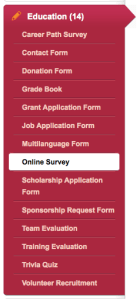
You will then get a choice of different types of form to create. It’s a good idea to click on ‘Other Forms’ this takes you to the online educator forms.   If you have a look at some of the templates and educator forms that have already been created it will give you some idea of what the platform can do. There is an Education section with some ready made templates in.

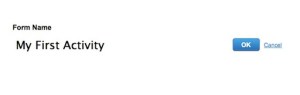
When you are ready to create your own educator forms, you could start by clicking on ‘Blank Form’. Call your form ‘My first activity’ and then save it and look at the different types of interactions you can create.
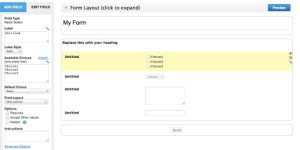
You will see the basic interactions you can add to the page. Clicking on them will add the interaction type to the page.


Then when you click on the interaction type you can edit its features.

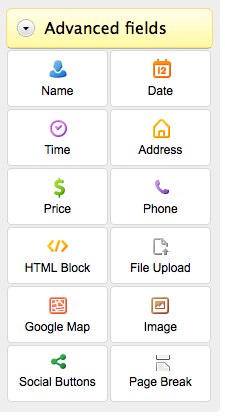
Some of the advanced interaction types are particularly interesting, especially the html feature which enables you to embed interactive media objects such as videos or digital books into your forms and then build interactive activities around them.
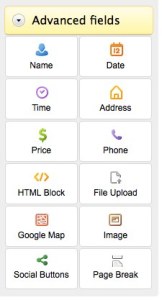

You can also add social buttons to enable users to share your activities through social media channels. 123ContactForm does also have a Facebook app so once your activities are complete you can post them directly into Facebook pages or groups for users to do from there.

This video shows you how to use all the main features of the forms.


Once you have created your activities they are saved in the ‘My Forms’ section of the site and you can go there to edit them. Here you can get the code to publish your educator forms into your bog website or CMS, or get a link to email out to students.

You can also check to see who has submitted answers to the questions and see the record of what answers have been given in the ‘Reports’ section. This is one of the best features of the site as it turns it into a form of LMS (learning management system) where you can collect and analyse students responses and generate graphs of the results.

The site also allow users to add and customise the theme of the forms, so if you want them to blend into your site or blog, then customising the look and feel of the forms is quite easy and you can even add your own logo.

This video shows you how to customise your form.


So how can we use this with EFL / ESL students?

  • We can create action research forms and get detailed and anonymous feedback on our teaching
  • We can create multimedia materials for learning or assessment and track our students responses. This is particularly useful if we a creating homework assignments and we need to assess these and know that our students have done them.
  • We can create learning objects to embed into online courses that track and assess students’ performance.
  • We can make fun engaging quizzes based around images.

As ELT professionals

  • We can use the forms to create surveys for research.
  • We can start selling materials, self published books, or private online classes and collect payment in a safe and secure way.

What I like about 123ContactForm

  • It’s a very versatile platform and really does enable a lot more than the name suggests. In fact it’s a pretty sound way to create online learning materials with a built in LMS.
  • It’s a great tool for freelancers who want to start making money online by selling their own products and services in a user friendly way.
  • It runs in the browser and is pretty simple to use.
  • It’s easy to produce something that looks very professional.
  • I’ve said it already, but the tracking capabilities are great.
  • The company runs on a freemium model, so although it is a free service, there is also a business model there to support the site so it’s less likely to suddenly disappear or fold.

What I’m not so sure about

  • As I said the company runs on a freemium model, so many of the best features are the ones they charge for.
  • On the free subscription you can create 5 forms and collect up to 100 students’ responses each month which is probably enough for the individual teacher to use it with a class, but it would be nice to have a few more of the premium features available to the Free subscriber, such as the html embed to enable the use of video and multimedia in the activities.
  • You have to be on the Platinum account to be able to enable payments and that costs $29.95 per month, which for a company or school is not much, but for a teacher / freelancer who wants to test the waters with selling their own products or services, it might seem like quite a big risk when they are just getting started, but you can cancel your subscription if things don’t go well and 123ContactForm does offer a 30day money back guarantee. It’s also worth mentioning that if you are a teacher or teacher trainer and you get in contact with the company, they are offering a 35% educational discount, so that can help to reduce the risk and the cost.


On the whole I think this is a really good product, particularly for a small school that wants to venture into online teaching or blended learning, then a platinum account at $29.95 per month is quite a small risk. For a teacher thinking of going freelance it might be a good option if you are confident that you can make enough through online sales to justify the monthly outlay. As a teacher working in class, then it’s a nice way to get started with creating some online learning with a degree of interactivity, but it would be much more attractive if the html embed functionality came as part of the free subscription.

123ContactForm has plenty of potential for the online educator or anyone wanting to create blended learning, so it’s well worth checking out, and when I get my book finished I may well be using it myself. I hope you find it useful too.

Related links:

Financial lending Institutions to support Small-scale units

Union Minister for MSME and Road Transport and Highways, Shri Nitin Gadkari today said that the government is exploring new financial lending institutions to support small-scale units in terms of financial support.  Shri Gadkari said that government is working towards strengthening the NBFCs which will help small businesses to avail easy credit in the coming time.

He was speaking at a meeting via video conferencing with the Members of Calcutta Chamber of Commerce on impact of COVID-19 on MSMEs and the measures taken to address the challenges at hand.

Addressing the members, Shri Gadkari re-iterated that these are trying times as we are waging a war against COVID-19 pandemic as well as the economic instability caused by it. He requested all the stakeholders to work in tandem and urged the industry to maintain a positive attitude during this time to tide over this crisis.

The Minister also stressed  on usage of PPE (masks, sanitizer etc.) and advised to maintain social distancing norms in personal life and at work places.

Apprising the representatives of recent announcement on Special Economic Package: Aatmanirbhar Bharat Abhiyan, he explained various support measures which has been announced for MSMEs such as collateral free automatic loan, distress fund etc. He said that all these measures will provide the required support to MSMEs to face the current economic challenges.

The Minister also informed them  that there has been restructuring of 6 lakh MSMEs till March 2020 and the Ministry is aiming to cover additional 25 lakh until December 2020. He added that the current contribution of MSMEs in export is 48%, which may be increased to 60%. He further shared that currently 11 crore jobs have been created through MSMEs and this to be increased to 5 crores.

The Union Minister mentioned that special focus towards export enhancement is the need of the hour. He further added that there is need to reduce our cost on production, logistics etc. to become economically viable. The Minister shared that the Ministry of MSME is working on two booklets to cover details about last three year’s export and import.

Some of the questions asked and the suggestions given included: issue of delayed payment needs additional thrust to ensure timely payment to MSMEs, interest subvention of 4% should be looked at to provide support to MSMEs and safeguard them from becoming an NPA, how banks can be incentivized for proper implementation of proposed measure etc.

Shri Gadkari responded to the questions from representatives and assured all possible help from the government.

National Gallery of Modern Art commemorates 115th Birth Anniversary of Ramkinkar Baij

Ministry of Culture’s National Gallery of Modern Art will organise virtual tour titled “Ramkinkar Baij | Journey through silent transformation and expressions” to commemorate the 115th Birth Anniversary of Ramkinkar Baij on 26th May 2020. The NGMA takes pride in 639 works of art created by the iconic artist. This virtual tour presents the works of art from the prominent artworks of Ramkinkar Baij from reserve collection of NGMA, grouped in a series of five different themes of (i) Portrait, (ii) Life Study, (iii) Abstract & Structural Composition, (iv) Nature Study & Landscape and (v) Sculptures.


Director General of NGMA Shri Adwaita Charan Gadanayak said that this virtual tour is being launched to pay tribute to the one of the greatest sculptor, painter – an iconic artist of modern India, especially for the young artists to know the kind of restless experiment that the artist had one with forms – figurative and abstractive both.


Shri Gadanayak added that I take pride of the tireless effort of our entire IT Cell to conceive and conceptualize the idea of launching this Virtual Tour and design and develop the same amidst lock down period to facilitate our esteemed visitors with such prestigious collection of NGMA.


This virtual tour also includes ‘Jeevansmriti’ to through light into the memory lane in addition to showcasing 520 works of art by the iconic artist in five distinct categories and three sketch books. At the end of the tour visitors can ‘Join the Conversation’ on the first cultural media platform under the banner of NGMA at https://so-ham.in/ramkinkar-baij-journey-through-silent-transformation-and-expressions/ and also attempt a quiz based on the content of the virtual tour.


Ramkinkar Baij, one of the most seminal artists of modern India, was an iconic sculptor, painter and graphic artist. Ramkinkar Baij (1906-1980) was born in Bankura, West Bengal, into a family of little economic and social standing and grew by his sheer determination into one of the most distinguished early modernists of Indian art. In 1925, he made his way to Kala Bhavana, the art school at Santiniketan and was under the guidance of Nandalal Bose. Encouraged by the liberating, intellectual environment of Santiniketan, his artistic skills and intellectual horizons blossomed, thus acquiring greater depth and complexity. Soon after completing his studies at Kala Bhavana he became a faculty member, and along with Nandalal Bose and Benodebehari Mukherjee played a pivotal role in making Santiniketan one of the most important centres for modern art in pre-Independent India. Ramkinkar’smonumental sculptures are established landmarks in public art. One of the earliest modernists in Indian art, he assimilated the idioms of the European modern visual language and yet was rooted in his own Indian ethos. He experimented restlessly with forms, moving freely from figurative to abstract and back to figurative, his themes were steeped in a deep sense of humanism and an instinctive understanding of the symbiotic relationship between man and nature. Both in his paintings and sculptures, he pushed the limits of experimentation and ventured into the use of new materials. For instance, his use of unconventional material, for the time, such as cement concrete for his monumental public sculptures set a new precedent for art practices. The use of cement, laterite and mortar to model the figures, and the use of a personal style in which modern western and Indian pre-classical sculptural values were brought together was equally radical.

Although, his work was passed over for quite a while, gradually it began to get both national and international attention. He was invited to participate in the Salon des Réalités Nouvelles in 1950 and in the Salon de Mai in 1951. In the national honours began to come his way one after the other. In 1970, the Government of India honoured him with the Padma Bhushan for his irrefutable contribution to Indian art. In 1976 he was made a Fellow of the Lalit Kala Akademi. In 1976, he was conferred the honorary Doctoral Degree of ‘Desikottama’ by Visva Bharati, and in 1979 an honorary D.Litt by Rabindra Bharati University.

Ramkinkar made his last journey, after a period of illness, in Kolkata on the 2nd August, 1980.

information literacy modules

bahtings
I would like to point people to an eLearning Collaborative Development funded (ECDF) project where we are developing reusable Information literacy modules – a New Zealand Ministry of Education funded project. The University of Otago is leading the project and the Dunedin College of Education and Otago Polytechnic are also involved in the project – Dunedin, New Zealand.

See http://oil.otago.ac.nz/ and click on the link to essay writing to see the first module which is currently being piloted.

We have set the modules up as authentic tasks and have funding until 2007 to construct 10 modules. The project has been a very interesting collaborative venture and the team is learning a lot from the experience.
We are conducting usability testing on the raw prototypes and conducting a research evaluation project with piloted modules. All the completed modules will be made freely available across the tertiary sector in New Zealand.

Some of the issues which are arising include aspects such as SCORM compliance and packaging and reusability. All modules will be transferable between different LMS and will also be able to be viewed using a scorm player. We have successfully managed to upload the module in to Moodle. However I was unable to upload it into Blackboard.

We are hoping lots of people will visit the site, and give us feedback on the module.

How to Give a Presentation like a Pro

Developing strong presentation skills early will benefit you considerably when you’re asked to give a presentation later in your career.

No matter what career path you’re pursuing, having strong communication skills is a must – and that includes being able to give a solid presentation. Developing strong presentation skills early will benefit you considerably when you’re asked to give a presentation later in your career, whether it’s at a sales meeting, a conference or to internal team members.
The classroom is a great place to learn and apply different speaking techniques. Even skilled public speakers have opportunities to improve because giving a strong presentation is about more than just confidence.
Here’s how you can knock it out of the park next time you’re asked to give a presentation:

Know your audience

A lot of the work that goes into a successful presentation happens before you even get up in front of the room. It’s important to first understand who your audience is and what your primary goals are for the presentation. Is it to inform your audience? Inspire? Create action?
If you’re speaking to a classroom of your peers, for example, your primary goal is likely to educate. If that’s the case, you might want to include some activities or opportunities for interaction so that people have a chance to engage with and reflect on the material you’re presenting.

Focus on key messages

Next, determine what you want your audience to take away from your presentation. If they only remember one thing you said, what would you want that to be? Then, focus on weaving those key messages throughout your presentation and driving them home at the end of your talk.

Show – don’t tell

While statistics and data points can be helpful for supporting your main ideas, they’re not as engaging for your audience. Bring your presentation to life by including different types of multimedia, or breaking up large chunks of information with anecdotes or interactive sessions.
Keep in mind that your presentation doesn’t necessarily have to be a PowerPoint. While slideshows can be a great way to display key information, many people end up putting too much information on their slides – and that makes for a boring presentation.
Consider other ways to incorporate visuals, such as by showing a video at the beginning, or using handouts as a reference sheet for key points. Prezi is another tool that can help you create a more innovative and engaging slideshow experience.

Tell a story

Good speakers know how to elicit an emotional buy-in from their listeners. There are many ways to do this, but the most effective way is to tell a story.
All stories have a beginning, a middle and an end. For example, when Steve Jobs introduced the iPhone to an audience of investors and international media, he didn’t just jump into talking about the new product. Jobs painted a picture for his audience by retelling the history of communication technology, leading all the way up his revolutionary new product – the iPhone.
The iPhone was the new frontier, the key to making our lives faster and easier. It wasn’t just something we all would want – it was something we all would need. The presentation is still recognized as one of his best. If you haven’t seen it, check it out here.

Practice

Of course, practice makes perfect. Running through your presentation a few times will help you feel more comfortable on the big day. Think about memorizing your key points so that you don’t have to rely on notes during your presentation and practice moving around the space so that you can engage different parts of the audience. Check out this blog post for more tips on being a confident public speaker.

Create online learning with 123ContactForm

123ContactForm may not sound like the kind of tool that would be of interest to educators, but as I discovered when they asked me to review their online form creation tool, they offer quite a range of features that can solve many of the problems we have as 21st century teachers.


We can use it to:

  • Create surveys to do research and action research
  • We can create interactive materials based around multimedia objects
  • We can eve use it to sell our materials or services online and take payments


The tool itself is browser based and so doesn\’t require any downloading or installation and that in itself can save a lot of hassle if you work in an institution that has very restrictive practices regarding the installation of software.

To get started you just need to go to the site and register at: http://www.123contactform.com/education-forms.htm

Once you have registered you get access to the dashboard and this is where you can start creating your forms. You just need to click on \’Create New Form\’.


You will then get a choice of different types of form to create. It\’s a good idea to click on \’Other Forms\’ this takes you to the online educator forms.   If you have a look at some of the templates and educator forms that have already been created it will give you some idea of what the platform can do. There is an Education section with some ready made templates in.


When you are ready to create your own educator forms, you could start by clicking on \’Blank Form\’. Call your form \’My first activity\’ and then save it and look at the different types of interactions you can create.

You will see the basic interactions you can add to the page. Clicking on them will add the interaction type to the page.


Then when you click on the interaction type you can edit its features.


Some of the advanced interaction types are particularly interesting, especially the html feature which enables you to embed interactive media objects such as videos or digital books into your forms and then build interactive activities around them.


You can also add social buttons to enable users to share your activities through social media channels. 123ContactForm does also have a Facebook app so once your activities are complete you can post them directly into Facebook pages or groups for users to do from there.

This video shows you how to use all the main features of the forms.


Once you have created your activities they are saved in the \’My Forms\’ section of the site and you can go there to edit them. Here you can get the code to publish your educator forms into your bog website or CMS, or get a link to email out to students.

You can also check to see who has submitted answers to the questions and see the record of what answers have been given in the \’Reports\’ section. This is one of the best features of the site as it turns it into a form of LMS (learning management system) where you can collect and analyse students responses and generate graphs of the results.

The site also allow users to add and customise the theme of the forms, so if you want them to blend into your site or blog, then customising the look and feel of the forms is quite easy and you can even add your own logo.

This video shows you how to customise your form.


So how can we use this with EFL / ESL students?

  • We can create action research forms and get detailed and anonymous feedback on our teaching
  • We can create multimedia materials for learning or assessment and track our students responses. This is particularly useful if we a creating homework assignments and we need to assess these and know that our students have done them.
  • We can create learning objects to embed into online courses that track and assess students\’ performance.
  • We can make fun engaging quizzes based around images.

As ELT professionals

  • We can use the forms to create surveys for research.
  • We can start selling materials, self published books, or private online classes and collect payment in a safe and secure way.

What I like about 123ContactForm

  • It\’s a very versatile platform and really does enable a lot more than the name suggests. In fact it\’s a pretty sound way to create online learning materials with a built in LMS.
  • It\’s a great tool for freelancers who want to start making money online by selling their own products and services in a user friendly way.
  • It runs in the browser and is pretty simple to use.
  • It\’s easy to produce something that looks very professional.
  • I\’ve said it already, but the tracking capabilities are great.
  • The company runs on a freemium model, so although it is a free service, there is also a business model there to support the site so it\’s less likely to suddenly disappear or fold.

What I\’m not so sure about

  • As I said the company runs on a freemium model, so many of the best features are the ones they charge for.
  • On the free subscription you can create 5 forms and collect up to 100 students\’ responses each month which is probably enough for the individual teacher to use it with a class, but it would be nice to have a few more of the premium features available to the Free subscriber, such as the html embed to enable the use of video and multimedia in the activities.
  • You have to be on the Platinum account to be able to enable payments and that costs $29.95 per month, which for a company or school is not much, but for a teacher / freelancer who wants to test the waters with selling their own products or services, it might seem like quite a big risk when they are just getting started, but you can cancel your subscription if things don\’t go well and 123ContactForm does offer a 30day money back guarantee. It\’s also worth mentioning that if you are a teacher or teacher trainer and you get in contact with the company, they are offering a 35% educational discount, so that can help to reduce the risk and the cost.


On the whole I think this is a really good product, particularly for a small school that wants to venture into online teaching or blended learning, then a platinum account at $29.95 per month is quite a small risk. For a teacher thinking of going freelance it might be a good option if you are confident that you can make enough through online sales to justify the monthly outlay. As a teacher working in class, then it\’s a nice way to get started with creating some online learning with a degree of interactivity, but it would be much more attractive if the html embed functionality came as part of the free subscription.

123ContactForm has plenty of potential for the online educator or anyone wanting to create blended learning, so it\’s well worth checking out, and when I get my book finished I may well be using it myself. I hope you find it useful too.

Related links:

Pipeline Projects under various stages of Implementation by oil & gas companies

Minister of Petroleum and Natural Gas Minister Dharmendra Pradhan on Thursday reviewed pipeline projects worth about eight thousand crore rupees under various stages of implementation by oil and gas companies. Pitching for Aatmanirbhar Bharat, Mr Pradhan called for complete indigenisation in these projects.

brown and white factory building during night time
Photo by Loïc Manegarium on Pexels.com

The Ministry in a statement said that project work along the Pradhan Mantri Urja Ganga, JHBDPL pipeline, has resumed in full swing post lockdown. It is gearing up to connect Eastern India with the West to Central natural gas pipeline corridor for boosting gas-based economy in the country.

The statement said, Indian Oil is implementing 1,450-kilometre long natural gas pipeline project in southern India, with a project cost of over six thousand crore rupees. It has an approximate 1.65 Lakh Metric Tonnes steel pipes manufacturing potential in India at a cost of over two thousand crore rupees in line with the Atmanirbhar Bharat Abhiyan.

The Indradhanush Gas Grid Limited., natural gas pipeline grid being developed in the north-east, will ensure uninterrupted supply of natural gas to all the eight north-eastern states.

FM Nirmala Sitharaman stresses the need to make country self reliant

Finance Minister Nirmala Sitharaman has stressed the need to make the country self-reliant. In an exclusive interview to Doordarshan News, Ms Sitharaman said, the country still has to import goods which help produce both for the country itself and also for exports.

The FInance MInister said, the way the govenrment has designed the package, it would give immediate help to all those who need additional capital in order to kick-start the economy. She said, it will benefit both demand and the supply side.

On the call of restarting the economy during the epidemic, Ms Sitharaman said that she has kept open all options with reassurance that government is ready to help. Finance Minister reiterated that economic package announced by govt will enhance the ease of doing business.

Talking about RBI’s recent decisions, Ms Sitharaman said, they have been very timely and made a lot of difference to the sentiments which prevails and also immediately make available affordable liquidity. Ms Sitharaman also thanked Prime Minister Narendra Modi  for taking bold decisions to free farmers off historical shackles. She said, farmers can now choose to whom they want to sell their produce.

Opposition is raising bogey of J&K “demography”

Lashing out at the opposition political parties, Union Minister Dr Jitendra Singh said here today that the opposition is raising the bogey of Jammu & Kashmir “demography” for vote bank because it is apprehensive that the new Domicile Rules Notification will not enable it to continue thriving on limited pockets of vote bank by exclusion, as they had been doing in the past. 

In an interview to a private news channel on the new Domicile Law for Jammu & Kashmir, Dr Jitendra Singh said, few families had succeeded in maintaining their hegemony in Jammu & Kashmir, generation after generation, by including in the voter list only those whose vote bank they were capable of manipulating, and excluded those who they thought would not be vulnerable to their tactics, and could vote with free will. He said, this conspiracy went on to the extent that they not only deprived anybody from outside from obtaining citizenship or voter rights but also did not allow voting rights to large section of people which had settled in Jammu & Kashmir since 1947, and put up a self-righteous argument that these people were not entitled for citizenship or voting rights because they were refugees from the then West Pakistan. 

In a hard-hitting rejoinder to the votaries of so-called “Demography”, Dr Jitendra Singh asked what moral authority they had to talk of demography when they had themselves committed the greatest assault on demography by remaining silent witness to the mass exodus of the entire Kashmiri Pandit community from Kashmir Valley. Ironically, he said, those who swear by composite culture of Kashmir are themselves guilty of having committed the murder of the composite culture, which was sustained only by the presence of Kashmiri Pandit community in the valley. 

Dr Jitendra Singh predicted that the opposition leaders may be opposed to the new Domicile law, but their children in heart of hearts support this change and would feel blessed in the long run. History will vindicate us, he said. Referring to the various merits of the decision taken in the Union Cabinet meeting, Dr Jitendra Singh said, it was not only inhuman but also against the constitutional propriety and principle of equality that the All India Service officials who put in the prime of 30 to 35 years of their life serving the people of Jammu & Kashmir were, after superannuation, ruthlessly asked to pack up and, go and find a place to live anywhere in the country but not in Jammu & Kashmir.

            Ironically, this was happening at a time when some of the States in India not only facilitated residential settlement of these officials but also provided them plots of land at discounted rates, he added. Even worse was the plight of the children who were born, brought up and did schooling in Jammu & Kashmir but were later not eligible to apply for higher education institutions, which left them nowhere to go. Describing the Union Cabinet decision and the Demographic Notification historic, Dr Jitendra Singh said, this was a miscarriage and anomaly which waited for 70 years to be corrected. May be it was God’s will that only Narendra Modi as Prime Minister should perform this act of redemption.

Despite fortnight delay due to COVID, procurement touches 341.56 LMT

Procurement of wheat by the government agencies surpassed last year’s figures of 341.31Lakh Metric Tonnes (LMT) to touch 341.56LMT on 24.05.2020, surmounting all impediments created due to the spread of COVID-19 virus and the country wide lockdown.  Wheat harvesting generally starts towards end of March and procurement commences in the first week of April every year. However, with the imposition of national lockdown with effect from midnight of   24&25.03.2020, all operations came to a standstill. The crop had ripened by then and was ready for harvesting. Considering this, Government of India gave relaxation to start agricultural and related activities during the lockdown period,and the procurement could start from 15.04.2020 in most of the procuring states. Haryana started little late on 20.04.2020. 

The biggest challenge was to ensure that procurement is done in a safe manner during the pandemic. This was achieved through a multi-pronged strategy of awareness creation, social distancing and deployment of technology. The number of purchase centers was increased substantially reducing the farmer footfalls in individual purchase centers. New centers were set up using every facility available at gram panchayat level and the numbers were increased sharply in the major procuring states like Punjab where it went up from 1836 to 3681, 599 to 1800 in Haryana and from 3545 to 4494 in Madhya Pradesh. Using technology, farmers were provided specific dates and slots to bring their produce which helped in avoiding overcrowding. Strict social distancing norms were followed and sanitization activities were undertaken regularly. In Punjab, every farmer was allotted specific spaces earmarked for dumping of stocks and no one else was allowed to enter those areas. Only people who were directly associated were allowed to be present during daily auctions. 

In addition to the threat of spread of virus, there were 3 major challenges faced by the procuring agencies in wheat procurement. As all the Jute mills were closed, production of Jute bags used for filling of procured wheat stopped, creating a major crisis. This was tackled by using more plastic bags, supplemented by used bags with very strict quality conditions. Through continuous monitoring and timely actions, it could be ensured that the procurement was not stopped due to lack of packaging materials anywhere in the country. 

There were unseasonal rains in all the major producing states leading to wheat getting exposed to water. This posed a major threat to the farmers as such stocks could not be procured under normal specifications. Government of India and Food Corporation of India (FCI) intervened immediately and after conducting detailed scientific analysis, specifications were re-fixed to ensure that no farmer is put to distress while making sure that the produce so procured meets the minimum quality requirements of the consumers. 

Third challenge was the tight labour supply position as well as the general fear created among the masses about the virus. This was addressed by taking a series of confidencebuilding measures at the local level by the state administration. Labourwasprovided with adequate protection safety gears like masks, sanitizers etc. and other precautionary measures were also taken to ensure their safety. 

With the concerted and well-coordinated efforts by Government of India, FCI, State Governments and their agencies, procurement of wheat could be undertaken very smoothly in all surplus states, helping farmers and replenishing stocks in the central pool. The state wise procurement data forwheat procuring states is as below:

Sl. NoName of the stateWheat procuredup to 24.05.2020(in Lakh Metric Tonnes)
1Punjab125.84
2Madhya Pradesh113.38
3Haryana 70.65
4Uttar Pradesh20.39
5Rajasthan 10.63
6Uttarakhand0.31
7Gujarat0.21
8Chandigarh0.12
9Himachal Pradesh0.03
-TOTAL341.56

***** 

NITI Aayog to study the feasibility of drinking water project

The Vice President of India, Shri M Venkaiah Naidu today held a meeting with Shri Amitabh Kant, CEO, NITI Aayog, Shri Parameswaran Iyer, Secretary, Drinking Water & Sanitation, and Shri U.P. Singh, Secretary, Water Resources, River Development & Ganga Rejuvenation and discussed various possible ways in which drinking water and irrigation needs of the drought-prone Udayagiri area, Nellore district, Andhra Pradesh can be met. The Vice President shared with them the concerns of the people of this area.

In the recent past, the Vice President has been talking to people of Udayagiri constituency, from where Shri Venkaiah Naidu, now The Vice President of India was elected as MLA in 1978 for the first time. While enquiring about the general well-being, they informed the Vice President that ground water levels in the area have depleted considerably, most of the tanks/borewells have dried up and various water supply schemes are not serving the water needs to the fullest. They also informed the Vice President that this is the 7th consecutive year where there are no adequate rains. Most of them requested Shri Naidu to find out ways of getting water from Krishna basin or Somasila project.

In today’s discussion with the Vice President, officials suggested that they would explore various options in consultation with the Government of Andhra Pradesh and see what might be the most feasible option.

The Vice President advised Secretary, Water Resources to discuss with Central Water Commission and find out about the technical feasibility. He also suggested that the Detailed Project Report (DPR) and the various ongoing efforts of the State Government to mitigate the water crisis including through the Water Grid project could be studied. 

After a preliminary assessment is made, the Vice President advised that a delegation of senior officials from the Ministry of Jal Shakti as well as from NITI Aayog and Central Water Commission could visit the area and interact with the concerned stakeholders to understand the ground reality and suggest a way forward.

Kazi Nazrul Islam: A Secular Poet Born in India died in Bangladesh

In the month of May 25 in 1899 a great patriot as well as a poet was born in Burdwan District of undivided Bengal which presently comes under West Bengal. He was none other than Kazi Nazrul Islam. Due to his powerful writing mainly through his poems reflecting Hindu-Muslim unity and patriot feeling British was always scared of him as sequel imprisonment him several occasions. Nazrul’s father Kazi Faqeer Ahmed was an Imam and caretaker of a local mosque and mausoleum and his mother Zahida Khatun, was a house maker. Kazi Nazrul Islam studied up to Class X and then joined in army in 1917 at the age of 18 years but left the army in 1920 and settled in Calcutta (present Kolkata), and involved in journalism. . He assailed the British Raj in India and preached revolution through his poems “Bidrohi” (“The Rebel”) and “Bhangar Gaan” (“The Song of Destruction”), as well as his through his publications in “Dhumketu” (“The Comet”). His continuous support in Indian freedom movement antagonized the British and often led to his imprisonment by the British authorities. On April 14, 1923 he was shifted from Alipore jail to Hooghly jail in Kolkata and he began a 40-day fast to protest against ill-treatment by the British jailer. Nazrul broke his fast more than a month later and was released from prison in December 1923. He composed a large number of poems and songs during this period of imprisonment and many his works were banned in the 1920s by the British authorities.  

      He never tolerated any fundamental activities. In his ‘Kandari Husiar” poem he specifically wrote, “Hindu or Muslim should not be an issue. We should fight to save our motherland”. He was a secular and broad-mined person and married to Pramila Devi, (belonged to Brahmo Samaj), on April 25, 1924. Nazrul wrote an editorial in Joog Bani in 1920 about religious pluralism, “Come brother Hindu! Come Musalman! Come Buddhist! Come Christian! Let us transcend all barriers, let us forsake forever all smallness, all lies, all selfishness and let us call brothers as brothers. We shall quarrel no more”. In another article entitled Hindu Mussalman, published in Ganabani on 2 September 1922, he wrote the religious quarrels were between priests and Imams and not between individual Muslims and Hindus.

     He was also feeling for the women and poor echelons of the society which is reflected in his poem ‘Daridro'(Poverty). Few lines may be quoted here (keeping in view of the meaning are translated in English).

“O my child, my darling one
I could not give even a drop of milk
No right have I to rejoice.
Poverty weeps within my doors forever,
as my spouse and my child.
Who will play the flute?”

      In those days in Bengal dowry, exploitation of women etc., were also major issues and keeping in mind of these issues he wrote the poem Nari (Woman), where he has mentioned, “I don’t see any difference between a man and woman. Whatever great or benevolent achievements that have taken place in the world half of that was by woman and the other half by man.”

         His secular feeling is reflected in many of his songs and poems where he explained lucidly about the power Hindu God and Goddess. His poem ‘Indrapatan’ is a marvellous one. In addition, he wrote and composed many devotional songs like Shama Sangeet (about Goddess Kali Mata), Bhajans and Kirtans and while listen these songs by any Hindu person, the person will be astonished whether these are written by a Muslim or a Hindu poet. He equally gave importance to Islamic songs where he explained importance of Islamic practices like Namaz (prayer), Roza (fasting), Hajj (pilgrimage) and Zakat (charity). His poem ‘Eid Mubarak” is awesome creation.  Nazrul’s secularism is reflected in his personal life when he kept his sons name keeping in mind both Hindu and Muslim background-  Krishna Mohammad, Arindam Khaled(bulbul), Kazi Sabyasachi and Kazi Aniruddha.

    Rabindranath Tagore and Kazi Narul Islam had special likings to each other. Tagore called Nazul, “the mutinous child of the Goddess of the Universe”. Nazrul had also special respect for Rabindranath Tagore and was shaken by the death of Rabindranath in August 1941. He composed two poems in Tagore’s memory, one of which, “Rabihara” (loss of Rabi) was broadcast in All India Radio during that time. After creation of Bangladesh, then Government invited him with his family members where Nazrul and his family moved in 1972, and he died on 29 August 1976. He is officially recognized as the National poet of Bangladesh and his song “Chal, Chal, Chal” (move, move, and move) is the national song of Bangladesh. As a mark of respect for his death, Bangladesh observed two days national mourning, and the parliament of India observed a minute of silence.

Dr. Shankar Chatterjee

Former Professor& Head (CPME)

NIRD &PR (Govt. of India),

Hyderabad-500 030

Telangana, India

Email <shankarjagu@gmail.com>

How to Become a Nurse Anesthetist

Becoming a Certified Registered Nurse Anesthetist (CRNA) requires deep specialized expertise in nursing and anesthesiology. Here’s how you can get there.

A nurse anesthetist represents one of the most advanced and qualified specialties in nursing. This special type of advanced practice registered nurse (APRN) is certified and trained in administering anesthesia to patients.

They play a critical role in a variety of healthcare settings, command high salaries and continue to be in demand across the United States. For these reasons and many more, now’s an excellent time to map out your future in nursing—and an extremely rewarding career as a nurse anesthetist. Here’s how to get started.

  1. Understand the responsibilities of a CRNA
  2. Become a registered nurse with a bachelor’s degree
  3. Earn your master’s degree in nursing
  4. Pass the National Certification Exam
  5. Start your career as a nurse anesthetist

How long it takes to become a CRNA depends on where you are in your nursing career. It could take several years of education and working experience to reach such a professional height.

Note: Herzing University does not offer a master’s level CRNA program. However, if you are 1) not yet a nurse or 2) a registered nurse with an associate’s degree, we offer BSN programs to help you take a big step to becoming a nurse anesthetist. See step 2 for details.

1. What is a nurse anesthetist?

A nurse anesthetist is an advanced practice registered nurse (APRN) certified and trained to administer anesthesia for surgery, labor and delivery, emergency care or pain management. It surprises many people to learn that anesthesia services are provided the same way by nurses and physicians (anesthesiologists); they provide the same service for the same procedures in the same types of facilities. The anesthesiologists provide a collaborative oversight of the CRNA’s to ensure best practice for patients.

In fact, according to the American Association of Nurse Anesthetists (AANA), most of the hands-on anesthesia patient care in the United States is delivered by nurse anesthetists.

Commonly called CRNAs (Certified Registered Nurse Anesthetists), the profession got its start during the Civil War when nurses were on the front lines administering chloroform to wounded soldiers. Today, they are the anesthesia providers in nearly all rural hospitals and the main providers of anesthesia to the men and women serving in the U.S. Armed Forces.

Become a CRNA and you’ll discover a vibrant, in-demand career, but you need to have specialized training and an excellent education to pave the way for a future at the top of the nursing profession.

Life as a nurse anesthetist: Career profile

U.S. News and World Report ranked nurse anesthetist #5 on its 2018 list of the 100 best jobs in America and #3 on its list of Best Healthcare Jobs. There are a lot of reasons this career path is attracting the attention of high school and college students as well as RNs ready to advance their practice. For starters, it’s extremely fulfilling to know you’re playing a vital role in patient care. It’s also a job that offers a high salary and a manageable work-life balance.

Where can you work?

With fewer than 50,000 licensed practitioners working today, demand for nurse anesthetists continues to grow across the United States, according to the Bureau of Labor Statistics. Once you become a licensed CRNA, you’ll be needed in many different healthcare environments:

  • Medical and surgical hospitals
  • Outpatient care enters
  • Offices of dentists, plastic surgeons, pain management specialists, and other medical professionals
  • U.S. military facilities

What will your workdays be like?

Whether you end up working in an intensive care unit (ICU) of a busy urban hospital or a walk-in clinic in small town America, your day as a nurse anesthetist will be varied and interesting. Typically, you’ll work in collaboration with anesthesiologists, anesthesiologist assistants, physicians, nurses and other healthcare professionals.

There are numerous tasks you’ll be responsible for, including caring for patients under anesthesia, intubating patients who may require it, monitoring their vital signs, administering medications, managing ventilators or simply talking with them and calming their nerves. As a nurse anesthetist you will:

  • Provide patient care before, during and after surgery.
  • Tend to expectant mothers before, during and after labor and delivery.
  • Participate in diagnostic and therapeutic procedures.
  • Provide trauma stabilization and critical care interventions.
  • Diagnose and deliver acute and chronic pain management.

When you’re not actually tending to your patients, you’ll spend time reviewing their histories, setting up the room where procedures are conducted and organizing the meds that will be required. At the end of the day, you’ll go home knowing you played a vital role in the advocacy and care of the patients for whom you were responsible.

How much can you make as a nurse anesthetist?

Loving what you do for a living is important. Being acknowledged and paid well for your specialized knowledge and training is an added bonus.

According to the Bureau of Labor Statistics, the average annual salary for nurse anesthetists in 2018 was $174,790 per year. Of course, your pay will depend on what state you work in and the type of facility where you are employed, but no matter where you live, becoming a CRNA can be a very lucrative career choice. Learn everything you need to know about how much a nurse anesthetist makes.

There are many different kinds of nurses and anesthesiology represents one of the higher paying specialties in the nursing profession. The cost of a graduate-level education can be a deterrent for some students, but in the case of CRNAs the return on your investment can be substantial.

What is the current job market for nurse anesthetists?

To help meet the growing and consistent need for safe and effective anesthesia care, the American Association of Nurse Anesthetists (AANA) strongly encourages high school and college students to consider this highly rewarding career path. Advanced practice RNs like nurse anesthetists are being increasingly counted on to provide care to patients in a broad range of settings and environments, particularly in medically underserved areas such as inner cities and rural areas.

Here’s how great the need has become for these master’s-educated nursing professionals: The U.S. Bureau of Labor Statistics projects overall employment for nurse anesthetists to grow 16% from 2016­­-2026, faster than the national average for all other occupations.

If you’re looking for a nursing career that comes with a high level of autonomy, professional respect, increasing opportunity and an excellent average salary, you’ll want to consider becoming a CRNA.

2. Become a registered nurse with a Bachelor of Science in Nursing (BSN)

To become a nurse anesthetist, you must have a registered nurse (RN) license and a master’s degree from an accredited MSN program with a CRNA program. While it’s true that you can become an RN after earning your associate degree in nursing, a key requirement for earning your master’s degree and becoming a CRNA is getting your BSN.

Certain BSN programs are specifically set up for future-focused students who’ve set their sights on advanced practice, specialized careers. For example, Herzing University offers a frequently updated BSN curriculum based upon the needs and demands of today’s job market.

At Herzing, there are several different entry points to the BSN program, depending on where you are in your current career and the amount of transferrable credits you already have from prior learning and work experiences.

  • If you are new to nursing, you can pursue a bachelor’s degree program designed to help you become an RN and equip you for a graduate nursing program.
  • If you are already an RN, you can choose an RN to BSN online program that can be completed in 12 months or less.
  • If you already have a bachelor’s degree in a different field, you can choose an accelerated BSN program designed to prepare you for professional nursing practice in just 16 months.

Once you complete your BSN, pass the NCLEX exam and become licensed in your state, you’ll be eligible to practice as a registered nurse. From there, it’s just a matter of gaining enough experience in an acute care setting before you can apply to a nurse anesthesia program and earn your master’s degree.

One significant advantage of choosing Herzing is that the school’s BSN program has six start dates throughout the year, ensuring you can start soon, but allowing enough time to make any necessary adjustments to your personal and work schedules to accommodate your studies.

To make sure you’re on the right track towards a career as a nurse anesthetist, it’ll help if your bachelor’s degree also prepares you for continuing your education. Herzing’s BSN curriculum emphasizes a professional ethic that includes lifelong learning and continuous professional development in an ever-evolving healthcare environment.

3. Gain experience and pursue your master’s degree

After working in an ICU or the emergency room of a hospital or an ambulatory center (usually for 2+ years), you must earn a master’s degree from an accredited nurse anesthesia program, which typically takes between 24 and 36 months to complete (with a BSN as a prerequisite for enrollment). Many MSN programs will allow you to complete a certain amount of coursework online.

Your chosen program will typically include clinical practice near you where you’ll become familiar with a number of procedures requiring anesthesia.

The most prominent accreditation board is the Council on Accreditation of Nurse Anesthesia Educational Programs (COA). The organization grants public recognition to nurse anesthesia programs and institutions that award post master’s certificates, master’s, and doctoral degrees that meet nationally established standards of academic quality.

Admission to accredited programs can be very competitive, so start doing your homework and researching programs as early as you can.

Herzing University does not currently offer a nurse anesthetist program. You can find an accredited CRNA program in your area by searching this list.

4. Get certified as a nurse anesthetist

The last hurdle to qualifying for a nurse anesthetist position will be to pass your National Certification Examination (NCE), offered by the National Board of Certification and Recertification for Nurse Anesthetists (NBCRNA).

The NBCRNA reports about 84% of students pass the exam on their first try, and you’ll need recertify via the Continued Professional Certification (CPC) Program every 4 years. The NBRCNA website offers exam tutorials and practice exams to help you prepare.

5. Start a rewarding career as a nurse anesthetist

Regardless of where you are in your academic and professional life, there’s a clear path to follow that can lead to a satisfying career as a nurse anesthetist. It starts with earning a CCNE-accredited bachelor’s degree from a highly respected school of nursing if you haven’t already done so.

If you’re inspired to learn more, we’re here to make sure your next step will be a sound investment in your future in nursing.

innovation JISC online conference

Innovating eLearning 2006 JISC online conference
A couple of entries really caught my eye and very much match with some of the isssues our institution is currently facing. Peter Miller – University of Liverpool
pointed us to the idea of Shared Learning Contexts (SLCs) which are described in Scott Wilson’s blog at http://www.cetis.ac.uk/members/scott/blogview?entry=20050210014657 The diagram of the SLC illustrates a learner-centred model using open source technologies.

Geoff Stead’s statement summed it up really – “VLE fervor has put shackles on a lot of creativity from people like ourselves who earn a living using technology to service learning. Five years ago we were creating learning tools that assisted low-literacy learners to find their voice and publish themselves online. We created project-based environments to share problems and strategies for dealing with low maths skills. But these things are impossible within SCORM (the standard VLE materials need to comply with) Almost 100% of the demand we get for resources to support learning need to fit into the lowest common denominator of VLEs … namely: a single thread of learning objects, each one insular, curriculum mapped, with no connection to the learning process, no inbuilt dialog / saving / thought origination for the student. So yes, they have provided an excuse for less adventurous staff to hide behind. But they have also imposed a set of standards on all purchasing that have ended out stamping out a lot of creativity that was previously embedded in the resources as well. And all with the best intent! “

Some of the replies to this statement, referred to the usefulness of VLEs for staff new to eLearning. My thought on this is that we have basically trained people up to expect the VLE or Learning Management System approach whereas if the use of a variety of tools could have been “sold” to staff early on – through really good resourcing and support – we wouldn’t all be caught up in using the corporate, expensive, proprietary tools. Tools which suit the company not the teachers and learners.

There was a very good article on one of the discussions – an evaluation of the use of blogging in a course related to technology.

Reflecting on professional practice by Annette Odell, University of East London. “Applications of Learning Technologies” is an accredited professional development course. Assessment is by means of a portfolio of work built up during the course and a key component within this is a reflective log, kept online using a blog.

This presentation describes the use of blogs on this context; briefly discusses different uses of blogs; reflects on personal experience with using blogs for different purposes and why the ‘reflective blog’ appears to be a consistently successful use; discusses factors that promote success and problems to be oversome; and summarises the participants’ perspective on the value of keeping a reflective blog within this course and as part of their professional development record.