This aligns with what is known as web 2.0 where learners search for and use Internet technologies and pick and mix so they set up their own networked system e.g. My spaces, Google, Flickr, ourmedia, MSN etc. depending on their needs. See the diagram of the future online learning environment on Derek Wenmouth’s blog Blackboard and other Learning Management Systems belong in web 1.0 systems where software is provided for the learner and learning is very controlled rather than learner-centred. There are some projects underway (ELGG and JISC) to create PLE systems – a contradiction in terms really – see below.
5 Things to Do During Syllabus Week
Syllabus Week refers to the first week of classes in a semester. For the most part, your first week will serve as an introduction to all of your courses.
The beginning of a new semester can be both exciting and stressful, and you might be anxious about starting your new classes. Luckily, there are a few things you can do right away to make the rest of the semester easier.
One of those is to take full advantage of Syllabus Week, which is the ideal time to prepare for the semester and get organized.
What is Syllabus Week?
Syllabus Week refers to the first week of classes in a semester. For the most part, your first week will serve as an introduction to all of your courses. Professors will use this time to give an overview of the class and review all of the details you need to know ahead of time. They’ll hand out a syllabus, which is a document that summarizes all of this information, likely including exam dates, assignment deadlines, learning goals, materials needed, and the professors’ contact information.
Here are five ways to take advantage of Syllabus Week:
1. Read the syllabus
Reviewing the syllabus is the best thing you can do to prepare for the semester. Some students find the syllabus overwhelming, but you need to know what will be expected of you in the coming weeks. The professor might not go through all of the items in detail during class time, which is why it’s important for you to take the time to review the syllabus carefully on your own.
2. Go to all your classes and pay attention
Don’t skip class during the important first week. Your instructors might share information with the class that isn’t listed on the syllabus. It’s also a good opportunity to adjust to your new routine and schedule, as well as make a good first impression on your professors.
3. Get to know your instructors and classmates
Professors are trying to get to know all of their new students during the first few classes, so they’ll appreciate efforts you make to introduce yourself personally. If you cannot find time to talk to them in person, you can always send an email and ask any questions you have after reading the syllabus.
This first introduction is important because the semester can get busy and you are most likely going to need to reach out for help at some point. If you introduce yourself during Syllabus Week, you’ll probably feel comfortable going to the professor for help during the rest of the semester. Professors can also be helpful for references and networking down the road, so it’s good if you can start building a relationship with them early on.
Try and talk to at least one or two classmates as well. Creating connections with classmates can come in handy when you are working on assignments or studying for an exam. If you reach out during the first week, you can start to form study groups right away instead of waiting until the first exam draws closer. If you’re an online student, consider creating a Facebook group or following Herzing’s Facebook page to get to know your classmates or introducing yourself on the class discussion board.
4. Get all the materials for your classes
Come to your first class with at least a notebook and a pencil so that you can take notes. After class, look at the syllabus to see if you need to get other materials, such as books, binders, folders, or anything else the class requires. Try to get these materials as soon as possible so that you don’t fall behind in the next few weeks of class. Also, make sure to keep your syllabus with the rest of your class materials, so it’s easier for you to find it and refer back to it later on.
5. Plan ahead
Syllabus week is a great time to get organized, which will make the rest of the semester much easier. Make sure you have a planner so you can write down important dates for the semester. Once you have all of these dates laid out, you can start to plan ahead for major assignments. For example, if you have a research paper due at the end of the term, you might want to complete your first draft a few weeks ahead of time so that you can visit the Writing Center and review it with a tutor. Set your own intermediate deadlines and record these in your planner to ensure that you don’t procrastinate on significant projects.
It’s never too early to start getting organized for the new semester. By making the most of Syllabus Week, you can prepare yourself for the future, make a good first impression, and prioritize your time so that you can be successful. Good luck!
5 Jobs You Can Land with a Healthcare Management Degree
Most healthcare managers work for hospitals or other healthcare organizations where they plan, direct and coordinate medical and health services.
The field of healthcare management offers both a competitive salary and strong job growth, making it an attractive career choice for those interested in both healthcare and business. According to the Bureau of Labor Statistics, employment in healthcare management is projected to grow 18% from 2018 to 2028, as healthcare organizations strive to adapt to a changing healthcare landscape and keep up with the growing demand for medical services.
A degree in healthcare management can help interested students begin or advance their healthcare careers. Most healthcare managers work for hospitals or other healthcare organizations where they plan, direct and coordinate medical and health services. They might also spearhead new initiatives to improve patient care or create operational efficiencies within the organization. Other responsibilities include supervising staff members, managing finances, preparing and monitoring budgets and keeping and/or organizing medical records.
Whether you are a healthcare professional looking to take the next step, or you are just beginning your healthcare career, a degree in healthcare management can help you unlock the door to many exciting career opportunities.
Here are some of the jobs you can land with a healthcare management degree.
1) Healthcare Department Manager
Healthcare department managers oversee a specific department or team within an organization. They may be in charge of nursing, surgery, or physical therapy departments, for example, and will have different responsibilities based on their specialty. If you already have work experience as a nurse or medical assistant, for example, pursuing a role as a department manager is one way you can advance your healthcare career.
2) Healthcare Finance Manager
Healthcare finance managers are responsible for the day-to-day financial management of a healthcare organization or practice. Specific responsibilities include managing cash flow, designing budgets, tracking and reporting on the financial health of the organization or department, and evaluating compensation. If you are interested in the business of healthcare and enjoy working with numbers, this could be a good fit for you.
3) Quality and Improvement Manager
As a Quality and Improvement Manager, you would be responsible for ensuring that your organization complies with current care standards. You might also be in charge of evaluating current processes and determining areas for improvement. Some quality and improvement managers also lead workshops and training seminars to help other members of the healthcare team stay up to speed with best practices. In addition to earning your bachelor’s degree in healthcare management, you will need several years of experience and additional certification to become a quality and improvement manager.
4) Healthcare Administrator
Healthcare administrators might manage one hospital or oversee an entire healthcare system. They are in charge of ensuring smooth operations and can also play a role in long-term planning for the organization. Healthcare administrators must have at least a bachelor’s degree, but a master’s degree in healthcare management is often required for continued career advancement.
5) Physician Practice Manager
Physician practice managers lead a healthcare organization’s business strategy. Specific responsibilities include managing budgets, developing new strategies to grow the business, and overseeing day-to-day operations. Many employers prefer candidates to have a master’s degree in healthcare or business management for these roles.
But don’t forget about these skills..
Being successful in the field of healthcare management requires strong leadership qualities and management skills. As with any leadership position, excellent oral, written and interpersonal communication skills are also necessary. If you are interested in learning more about the business side of healthcare and enjoy thinking strategically and making important decisions, healthcare management could be the right career path for you.
Herzing offers several degree programs to help you begin or advance your career in healthcare management, including associate, bachelor and master degree options. Students enrolled in the bachelor’s degree program can pursue concentrations in leadership or managed care, allowing them to customize their healthcare management degree to their career goals and acquire specialized knowledge.
If you are currently a healthcare professional looking to make the jump from clinical practice to management, an MBA in Healthcare Management is the best track for you. Through an MBA program, you will gain the specialized knowledge and expertise in modern healthcare issues, trends and tools that you need to succeed in upper-management roles.
Students enrolled in the bachelor’s degree program can also earn dual credit toward their MBA as they complete their undergraduate degree.
Learn more about Herzing’s healthcare management programs and find out how you can start building your healthcare career today.
bahtings
This aligns with what is known as web 2.0 where learners search for and use Internet technologies and pick and mix so they set up their own networked system e.g. My spaces, Google, Flickr, ourmedia, MSN etc. depending on their needs. See the diagram of the future online learning environment on Derek Wenmouth\’s blog Blackboard and other Learning Management Systems belong in web 1.0 systems where software is provided for the learner and learning is very controlled rather than learner-centred. There are some projects underway (ELGG and JISC) to create PLE systems – a contradiction in terms really – see below.
3 Ways to Step Up Your Study Routine
Find a time that works for you
Get comfortable
Find ways to make studying fun or enjoyable
Evaluating authentic mobile apps for learning
Back in April 2013 I delivered a workshop at the IATEFL 2013 conference in Liverpool. The topic of the workshop was \’Criteria for Evaluating Web Tools and Apps\’ and in the workshop I encouraged participants to share and explore their subconscious criteria for deciding which apps and web based tools they used with their students.
I particularly encouraged them to think about \’authentic\’ apps rather than those made for learning. This is because in many ways I feel that most made for learning apps have made very little pedagogical progress beyond their roots in CALL from the last century.
I also believe that encouraging students to get \’hands on\’ with authentic apps has a much more important role in helping them to develop digital literacies which they can use outside of the classroom.
As a result of that workshop and the research that developed from it I\’ve now developed this list of criteria for evaluating mobile apps for educational purposes.
Here I\’ve divided the criteria into 4 categories and given some explanation of each. I welcome your comments and feedback as this is still very much a work in progress.
Technical
- Unless teachers are working in a teaching environment where a uniform set of physical devices are provided for students, such as a complete set of iPads or Android tablets, then they need to check carefully that all the variety of devices that their students possess are all supported. The safest way to ensure this is to check to see if the app also has a browser based version, so that students without up-to-date mobile devices will still be able to participate.
- Apps that are complex and take a long time to master may not be worth the commitment. Teachers need to ensure that they plan how to teach the students how to use the apps in a reasonable amount of time or have a strategy for gradually uncovering more features of an app as they develop more activities with it.
- Getting students and teachers to register and remember passwords can be laborious and time consuming, so apps that don’t require registration and particularly those which run in the browser on mobile or desktop can be very convenient to use. Registration does however offer students more protection and makes any potential misuse or mischief trackable back to its source.
- Although it can be difficult and time consuming to check, teachers need to determine that the app is secure and the creators will treat their students data and personal information responsibly and confidentially. If there is any form of social interaction enabled through the app teachers need to check if there is any mechanism or process for blocking and reporting abuse.
Financial
- One of the great advantages of apps is that many are free, freemium (have both a free and a commercial version) or are quite low cost. Having said that, even if low cost apps are being used it needs to be decided who will pay for them, especially if each student in the class needs one.
- Every app producer needs to make money somehow, so it is important to identify the business model supporting the development of an app. Although teachers and students are keen to use free apps, apps that have no visible business model may be generating money through advertising or by trading data. An app that has no visible means of financial support, may have a very short life span, rapidly become unreliable, and fail to develop and evolve due to lack of funds.
Motivational
- Just using an app in itself doesn’t necessarily constitute developing a digital literacy. The use of the app must in some way develop a digital skill that can be transferred outside of the learning context and used in some authentic way either in the workplace or as part of the students’ lifestyle.
- Apps that are motivating for native speakers to use for a genuine purpose should also be motivating for language learners for that same purpose, so authentic apps that involve some sort of linguistic input or output are ideally suited to language teaching purposes.
- It’s important that language learners have the opportunity to use language creatively to express something of their own personality or identity. Apps which support this kind of creativity can be potentially very useful.
Pedagogical
- Using an app is not in and of itself a learning outcome. Use of the app needs to lead towards some form of learning goal. In some cases it can be easy to see what learning goals can be achieved through using the app, at other times teachers may need to think carefully what learning outcomes can be achieved through building activities which include the use of an app.
- Apps which are developed around social interaction and communication are much more likely to be able to find a useful place in the language classroom and should be easier to base tasks around as communication naturally fits with the aims of language acquisition.
- Many apps are designed around short daily tasks build up over a period of time to achieve an outcome. If teachers choose to use these kinds of apps they need to factor this long term approach into their timetabling.
- Students need to know that teachers are evaluating, assessing and responding to their work, so apps which can support this kind of teacher intervention can be potentially very useful.
- The ability to collaborate on projects or producing some form of tangible outcome is viewed as being a potentially significant digital literacy so apps which foster these kinds of collaborative interactions in a meaningful ways have great potential.
- There are a number of different contexts in which apps can be used. Some may be more appropriate for use at home by the student, or in the class by students, whereas others could be more appropriately used by teachers for their own development or the development of content for students.
- Many apps have great novelty value which can be motivating for students, but novelty can soon wear off, so it is wise to weigh the amount of benefit students gain from novelty apps against their potential for extended use and the amount of time it takes to download install and register them.
- Apps that can be used by students working independently may well help to foster a degree of learner autonomy if there is some in built learning outcome.
- Digital Video – A Manual for Language Teachers
- Making lectures and lessons more interactive with mQlicker
- Creating interactive video on the iPad
- Tools for learners
- Video communication apps and mobile learning
- Mix Images and Animation on Your Mobile
- Peer editing in digital and mobile environments
- Taking notes from the web on the iPad
How to Find a Career You Are Passionate About
Whether you’re looking for your first job or you’re contemplating switching careers, it’s important to take the time to discover your passion.
It can be difficult to find a job you are passionate about. Some people find their niche at an early age, but for most of us, it takes more time. For example, a few years ago I went back to school to pursue a career in healthcare. I wanted a job that was going to be a good fit for me and my family, and I’m confident I made the right choice.
Whether you’re looking for your first job or you’re contemplating switching careers, it’s important to take the time to discover your passion and explore careers that align with those interests.
Here are three tips for finding a career that’s right for you:
1. Reflect on your dreams and goals
Take the time to reflect on what you want from your life and what you have enjoyed doing in the past. This period of self-reflection can help you determine what you need to do to make your dreams a reality.
My children have always been one of my greatest passions in life. I became a mom at a young age and for many years my life was devoted to caring for my family. Once my children were older and more independent, however, I had more time to reflect on what I wanted from a career. I realized that being a mother had been my identity for so long that I needed to rediscover myself. I needed to become Natasha and not just a mother or a wife.
After some self-reflection, I felt that a career in healthcare would be a good fit for me because I have always had a passion for helping others and I enjoyed my previous experience working as a home and health aid. I recently graduated from Herzing University’s medical billing and coding program and I am excited to get started working in the field.
2. Explore your hobbies and interests
Think about the things you truly love to do — you might be able to fulfill those interests in your future career. College is an ideal place to begin this exploration because you have the opportunity to take a variety of classes, join student organizations and meet new people.
While attending Herzing University, I rediscovered another long-lost passion of mine: writing. I had always considered writing to be one of my hobbies, so I volunteered to write for the Herzing blog. I really enjoyed it and I am now exploring freelance writing opportunities while I work on furthering my healthcare career.
3. Determine what you want from your career
Once you have identified your career interests, determine what your ideal work scenario would be. Do you want to work from home? Do you want a flexible schedule or a fixed schedule? Which careers offer the best fit for your personal goals and lifestyle?
For example, I knew that I wanted a job that was Monday through Friday, and I wanted the opportunity to work from home so I could still be there for my family. I began researching office positions in the healthcare field and came across billing and coding, which seemed like the perfect fit for my criteria.
I encourage everyone to take the time to find a career that fulfills you and makes you happy. If you follow your passion, you can never go wrong. Put your efforts and time into something that matters to you!
Quality education and learning
More stuff about quality
This picture shows the damage done to the road when the Water of the Leith got out of control in the May 2006 floods. I took this on a sunday walk with the dogs. This illustrates for me that “Quality is about preventing damage in education,not about fencing it off afterwards.”
This week and last we had two visiting speakers which focussed me in on quality again. John Milne from Massey university ran a workshop on eLearning Guidelines (an eLearning Collaborative development funded project). All NZ tertiary educators are invited to contribute to the guidelines and develop their own for practical use in their institutions through a wiki accessible from the eLearn website.
In response to a scenario we developed with a student who joined the workshop, we developed a couple of new and very important guidelines, and found several existing ones which were relevant.
The scenario was:
An off-campus multimedia student is using blended methods (mainly eLearning)in a course. The student has a dial-up connection at home and has difficulty getting on-campus access to the computers and software. Not all computers have the necessary tools/software. The student also doesn’t have them at home and no access from home. The students are given training in using some software in the first week, then no further training and little support from the lecturer. There is no after hours support.
Some people in the workshop found the session a bit wishy washy, but it was a collaborative and consultative exercise which doesn’t suit everyone. Some people just want to be told. Guidelines are guidelines not standards and as such need ongoing discussion be dynamic and continually evolving.
The other speaker was Professor Fred Lockwood, a very experienced academic in the field of open and distacne learning. I went to hear his talk at the university about quality and distance education. I recorded part of the talk and had his permission to use it, though he did seem bemused that anyone would want to listen to it.
In his talk he made several interesting points in the way of questions about what we do in distance/flexible learning. Reading between the lines and through his humour it was clear to me that he thought the university was deficient in many areas – he had just conducted a review of their distance programmes and was helping them with a distance learning strategy.
The points which I identified with were:
1. Learner needs and how important it was to pay attention to them.
2. The need to conduct developmental testing with realstudents and reward them with free fees for such courses, with new flexibly offered courses. Even something as a textbook recommended by a lecturer can be unsuitable in the opinion of the students. This is rarely done at OP.
3. Too much information was a common problem so that students who were expecting to study for 5 hrs a week ended up getting increasingly more stuff to read and hand in until they could end up studying well over the 5 hrs per week. In Fred’s words, “good value for money getting 35 hrs a week of study…”
I brought Fred back to OP to speak with a small group (in the Council room with tea) including some managers and people from EDC and other parts of OP which was good. We had an informal discussion and some good points came out e.g. open courseware. Looking out for the learners – part-time, lifelong learners etc. It was a useful session but I wish I’d asked him to chat about developmental testing so the managers could have got the message.
Fred has also asked me to contact him about putting together a book proposal for something from NZ and across countries too for the Open and Flexible Learning series. Not sure whn I’ll have time to do anything, but it would be good to coordinate something and collaborate to write a chapter.
Quality is very important in not only attracting students but also in helping with retention. Quality starts before students enrol (18% lost before they “register”) and should continue all the way through with the resources offered, access, teacher support/facilitation and should meet learners’ needs.
Unfortunately in the model we appear to be adopting, online and product is being pushed which is shoving us along the inflexible rather than the flexible path. If we were truly to meet learner needs, we would adopt a truly flexible model where learners negotiate their content and their assessments and the way they learn. We are trying this to some extent with the Design course.
How Nursing Students Can Find the Perfect Scholarship
Check out this list of resources to help make it easy to find the right scholarship for your nursing education.
There’s never been a better time to begin or advance your nursing career, but financial pressures might make you hesitant to take the next step. Fortunately, there are a variety of nursing-related scholarships that can help you reach your career goals without added financial strain.
To help, we’ve put together a list of resources that make it easy to find the right scholarship for your nursing education.
How do scholarships really work?
Before you begin your scholarship search, it’s important to understand the different types of scholarships available and the benefits to each. The most common type of scholarship is one that is applied through the college or university you plan to attend. The organization awarding the scholarship works directly with your school to apply the scholarship funds toward your tuition and other expenses, making the process simpler and easier for you.
Some scholarship funds are awarded to the recipient directly. This could be in the form of a direct deposit into a personal banking account, or a check given to you from the awarding organization. Typically, the recipient will then need to sign off on what the money will be used for. The advantage is that you have more freedom to decide how you want to use your funds. For example, you could put money towards other educational expenses besides tuition, such as housing, fees and textbooks.
The terms of each scholarship are different, which is why it is critical to find the scholarship that is right for you.
Here are our tips for finding the perfect nursing scholarship:
1. Search online
There are many nursing-related websites that can be helpful for your scholarship search, including nurse.org, nursejournal.org, and allnursingschools.com. These sites allow you to sort through scholarships based on your education level, experience and the scholarship amount.
2. Work with your university
You can also apply for scholarships through your college or university. Herzing offers various scholarships for students, including several that are specific to nursing. For example, the Nurses Circle of Achievement scholarship is offered to students who are in the Bachelor of Science in Nursing program at various Herzing campuses. Additionally, the Nursing Pathway to Success scholarship is available for graduate students enrolled in an online Master of Science in Nursing program.
Herzing also offers a variety of other general scholarships and grants. Once you have found a scholarship that you want to apply to, Herzing’s financial aid advisors can also help you through the application process, including finding references, updating your resume and reviewing your written statements.
3. Research nursing associations
Many nursing and healthcare associations offer scholarships for those who are looking to begin or advance their healthcare careers. If you are new to the nursing field, you might be eligible for scholarships through the Health Occupations Students Association (HOSA). The American Nurses Association (ANA) also offers a variety of different scholarships for current and aspiring nurses. If you are a member of a minority or underrepresented group, the National Coalition of Ethnic Minority Nurse Associations (NCEMNA) group can help you identify scholarships offered by other minority nursing organizations across the country.
4. Look into local scholarships
Local nonprofits, businesses, churches and clubs are great places to look for scholarship opportunities. Be sure to tap your network of family, friends and colleagues for help. They might have ties to local organizations you’re not involved with, and they can help you find out about scholarship opportunities you might not have discovered otherwise. The library is another great resource, as it typically keeps a list of local scholarships that are available to community members.
5. Check with your employer
If you are currently employed, you could reach out to the human resources department at your company and ask if they offer any scholarships or tuition assistance for employees. Many hospitals aspiring to Magnet Status work with educational institutions to meet the rising demand for nurses with BSN degrees, and provide financial incentives for current nurses to advance their education. Talk with your manager or an HR representative to find out if your employer will cover or subsidize the tuition for your nursing degree.
6. Consider the Nurse Corps program
Nurse Corps is a federal scholarship program for nurses, nursing students and nursing faculty. Recipients are awarded funding for tuition, fees and other educational costs in exchange for their commitment to work at a Critical Shortage Facility (CSF) for a minimum of two years after graduation.
Many Americans in underserved areas go without preventive care and vaccines because there are not enough health care professionals to provide treatment in their communities. The Nurse Corps Scholarship program is designed to improve access to healthcare services in these areas, while empowering aspiring nurses to fulfill their passion for caring for others.
To be eligible for the Nurse Corps scholarship, you must be enrolled in a professional nursing degree program at an accredited nursing school. You can be enrolled in a diploma, associate, baccalaureate, or graduate nursing program.
Additionally, if you are already a licensed registered nurse, advanced practice registered nurse or a nurse faculty member with qualifying nursing debt, you may be eligible for the Nurse Corps loan repayment program. You also must work in a critical shortage facility or an eligible school of nursing in order to apply for the loan repayment program.
Need help getting started?
It’s always a good idea to get to know the financial aid staff at the college you plan to attend. At Herzing University, our financial aid advisors can help you find the scholarships that best fit your needs. Schedule an appointment with our Financial Aid Department to talk through your financial assistance options, and take the next step to invest in your future!

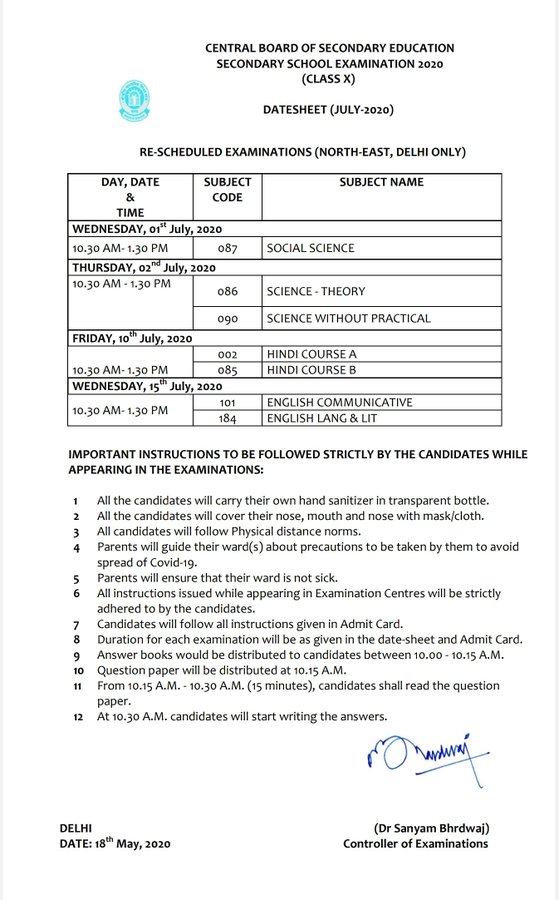
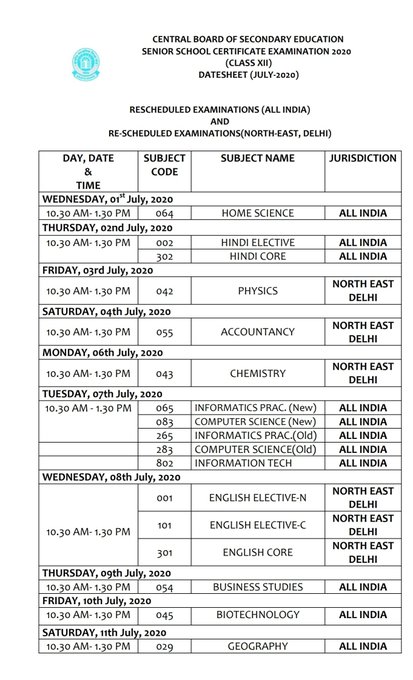
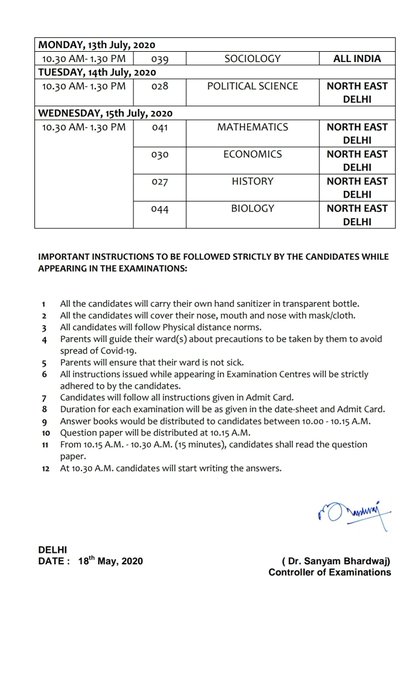
Dates of remaining examinations for class X and XII in 2020
Union Human Resource Development Minister Shri Ramesh Pokhriyal ‘Nishank’ announced the dates of remaining examinations of CBSE Class X and XII in New Delhi today. The Minister said that the examinations of Class X will be conducted for the students of North East Delhi only, while the exams of class XII will be held for students across the country including North-east Delhi. All examinations will be between 10:30 am to 1:30 pm.

Earlier during a webinar interaction with the students on May 5, Shri Pokhriyal had said that the remaining exams of CBSE X and XII will be conducted between July 1-15.
On this occasion Shri Pokhriyal said that the ministry of HRD was fully committed to the fact that while announcing the exam dates, special care will be taken that the students get plenty of time for exam preparation and now students will be able to concentrate on their preparations. The Minister added that apart from this we have also instructed CBSE to take care of social distancing while conducting examinations so that the health of students and teachers can be ensured. The Minister also extended his best wishes to the students for the examination.
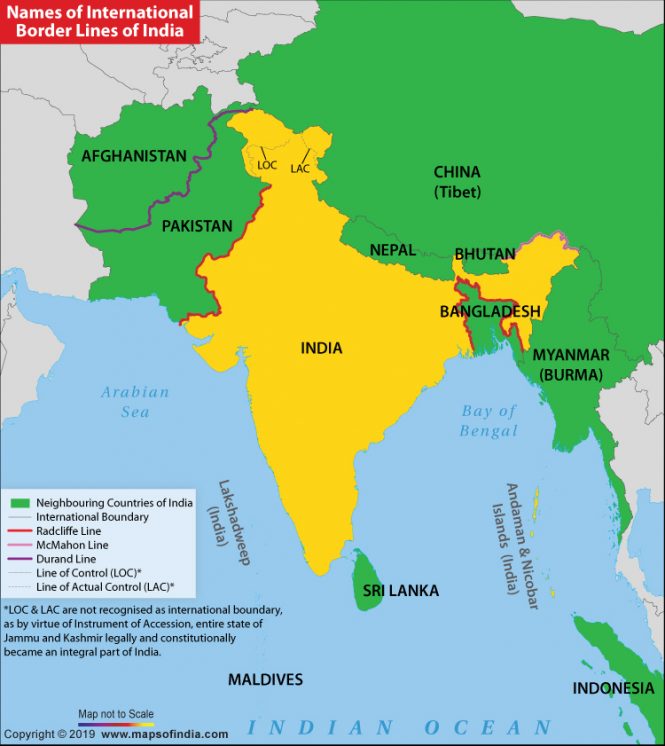
Shekatkar Committee recommendations related to creating border infrastructure
Government has accepted and implemented three important recommendations of Committee of Experts (CoE) under the Chairmanship of Lt General D B Shekatkar (Retd) relating to border Infrastructure. These were related to speeding up road construction, leading to socio economic development in the border areas.

On the matter related to creating border infrastructure, the Government has implemented recommendation of CoE to outsource road construction work beyond optimal capacity of Border Roads Organisation (BRO). It has been made mandatory to adopt Engineering Procurement Contract (EPC) mode for execution of all works costing more than Rs 100 crore.
The other recommendation relating to introduction of modern construction plants, equipment and machinery has been implemented by delegating enhanced procurement powers from Rs 7.5 crore to Rs 100 crore to BRO, for domestic and foreign procurements. Border Roads has recently inducted Hot-Mix Plant 20/30 TPH for speedier laying of roads, remote operated hydraulic Rock Drills DC-400 R for hard rock cutting, a range of F-90 series of self-propelled snow-cutters/blowers for speedier snow clearance.
New Technology like blasting technology for precision blasting, use of Geo-Textiles for soil stabilisation, cementitious base for pavements, plastic coated aggregates for surfacing, is also being used to enhance the pace of construction. With the empowerment of field officers through enhanced delegation of financial and administrative powers, there has been significant improvement in faster financial closure of works.
The land acquisition and all statutory clearances like forest and environmental clearance are also made part of approval of Detailed Project Report (DPR). Further, with the adoption of EPC mode of execution, it is mandatory to award work only when 90 per cent of the statutory clearances have been obtained, implementing the recommendation of CoE regarding obtaining prior clearances before the commencement of the project.
25 NDRF teams deployed on ground to manage the situation
Prime Minister Shri Narendra Modi chaired a high-level meeting today to review the response measures against cyclone ‘Amphan’ developing in the Bay of Bengal.
Prime Minister took full stock of the situation and reviewed the response preparedness as well as the evacuation plan presented by the National Disaster Response Force (NDRF). During the presentation of the response plan, DG NDRF informed that 25 NDRF teams have been deployed on the ground while 12 others are ready in reserve. 24 other NDRF teams are also on standby in different parts of the country.
The meeting was also attended by Shri Amit Shah, Union Home Minister; Shri PK Sinha Principal Advisor to the Prime Minister; Shri Rajiv Gauba, Cabinet Secretary, besides other senior officers of Government of India.
*****
Army medical COVID related assistance for Northeast and Jammu & Kashmir
Union Minister of State (Independent Charge) Development of North Eastern Region (DoNER), MoS PMO, Personnel, Public Grievances, Pensions, Atomic Energy and Space, Dr Jitendra Singh has lauded the Army medical COVID related assistance for Northeast and Jammu & Kashmir, and appreciated the Armed Forces Medical Services (AFMS) for responding to step in at the early stage of pandemic, in order to supplement the diagnostic and treatment facilities in the initial phase of preparedness.

In the context of Northeast, General Banerji briefed Dr Jitendra Singh about the latest developments and current status. He disclosed that while in Arunachal Pradesh, Military Hospital Tenga had 80 designated beds for COVID and 2 ICU beds, Military Hospital at Likabali has 82 designated beds for COVID and 2 ICU beds. Similarly, at Jorhat in Assam and Shillong in Meghalaya, Armed forces Medical Services had made available 110 and 247 designated COVID beds respectively, in addition to 10 and 4 ICU beds respectively.
While receiving an update from the Director General, Armed Forces Medical Services (DG AFMS), Lt Gen Anup Banerji, Dr Jitendra Singh had a special word of praise for the Army Command Hospital in Udhampur which had earmarked 200 designated beds for COVID cases and 6 beds in ICU for critical cases including civilian patients, in the beginning itself. Similarly, he noted that the Army Hospital in Srinagar had also designated 124 beds and Army Hospital in Rajouri had designated 82 beds for COVID cases in order to supplement the facilities set up by Health authorities of the Union Territory government. In addition, the Command Hospital Udhampur was also providing diagnostic facilities right from the beginning, he added.
Dr Jitendra Singh appreciated the proactive support in the initial stages of COVID pandemic which had also contributed in reducing the disease burden. He also mentioned the quarantine camps and isolation facilities set up by the Armed Forces Medical Sercvices.
Director General AFMS informed the Minister that the number of such hospitals is being enhanced depending upon the situation and availability of equipment from suppliers. He assured the Minister that in future also, the number of beds will be increased depending upon the situation.
QUIZ: Test Your Pharmacology Knowledge
Nurses: Put your pharmacology knowledge to the test! How well do you know these antibiotics and their uses?

You must be logged in to post a comment.