India Smart Cities Awards Contest (ISAC) 2022- Winners Announced

 Smart Cities Mission launched on 25 June 2015, is aimed at providing core infrastructure, clean and sustainable environment and a decent quality of life to their citizens through the application of ‘smart solutions’.It is a transformational mission aimed to bring about a paradigm shift in the practice of urban development in the country. Of the total proposed projects under SCM, 6,041(76%) projects worth ₹1,10,635 crore have been completed and the remaining 1,894 projects worth ₹60,095 crore will be completed by 30 June 2024.

Most notable milestone achieved in the Mission has been, the Integrated Command and Control Centers (ICCC) which is operational in all 100 Smart Cities. These ICCCs work as the brain and nervous system for city operations, using technology for urban management. The urban services have significantly improved in diverse fields like crime tracking, safety & security of citizens, transport management, solid waste management, water supply, disaster management etc.

100 Smart Cities have taken up projects across diverse sectors related to mobility, energy, water, sanitation, solid waste management, vibrant public spaces, social infrastructure, smart governance, etc. For instance, in smart mobility, 1,174 projects have been completed worth ₹ 24,047 crore and another 434projects are ongoing worth ₹ 15,940 crore. In smart energy, 573 projects have been completed and 94 are ongoing. In Water Supply, Sanitation and Hygiene (WASH), more than 1,162 projects have been completed worth ₹ 34,751 crore and another 333projects worth ₹ 18,716 crore are ongoing. 100 Smart cities have already developed more than 1,063 public spaces worth ₹ 6,403 crore and another 260 projects worth ₹ 5,470 crore are ongoing. Further, 180 Public Private Partnership (PPP) projects worth ₹ 8,228 crore have been completed and another 27 are ongoing. 652 projects have been completed related to economic infrastructure such as market redevelopment and start-up incubation centers and another 267 projects are ongoing. In social infrastructuresector (health, education, housing etc.), 679 projects have been completed and 153 are ongoing.

The India Smart Cities Award Contest (ISAC) is organized under the Smart Cities Mission, Ministry of Housing and Urban Affairs, Government of India. This is one of the important activities initiated under the Mission, where pioneering city strategies, projects and ideas are recognized to award the exemplary performance, enable peer-peer learning and disseminate best practices. The ISAC recognizes and reward the cities, projects and innovative ideas that are promoting sustainable development across the 100 smart cities, as well as stimulating inclusive, equitable, safe, healthy and collaborative cities, thus enhancing quality of life for all.

In the past, the ISAC has witnessed three editions in 2018, 2019 and 2020. The fourth edition of the ISAC was launched in April 2022 during the ‘Smart Cities-Smart Urbanization’ event in Surat. The ISAC 2022 award had a two-stage submission process consisting of ‘Qualifying Stage’, which involved overall assessment of the city’s performance, and the ‘Proposal Stage’ which required the smart cities to submit their nominations for six award categories as follows:

  • Project Awards: 10 different themes,
  • Innovation Awards: 2 different themes,
  • National/Zonal City Awards,
  • State Awards,
  • UT Award, and
  • Partners Awards, 3 different themes

A total of 845 nominations were received for ISAC 2022 from 80 qualifying smart cities. These entries were evaluated in 5 stages. In the first stage, a pre-screening of the 845 proposals was carried out. 50% (423 proposals) moved to the next stage. In the second stage, for each award category top 12 proposals were identified by a jury of the National Institute of Urban Affairs (NIUA). In the third stage, each proposal proponent made a presentation to a panel of subject experts, leading to selection of Top 6 proposals. Finally, in the fourth stage, top 6 proposals made an elaborate presentation to a jury headed by MoHUA directors and comprising subject matter experts.Post this fourth stage, top 3 proposals have been identified for each award category by the Apex Committee of Smart Cities Mission. Of the total 845 applications received under the five awards categories, 66 final winners have been identified – 35 in Project Award, 6 in Innovation Award, 13 in National/Zonal City Award, 5 in State/UT Award and 7 in Partner Award categories. The final list of 66winners is available in the Annexure 1.

The Hon’ble President of India will felicitate the winners of ISAC 2022 awards on 27th September 2023 at Indore, Madhya Pradesh.


*******

RJ


Annexure – I: List of winning Smart Cities under ISAC 2022

Sl. No.

Award Name

Award Winner

Video Link

  1.  

Built Environment

  1. Coimbatore: Model Roads, Restoration and Rejuvenation of Lakes

Video Linkhttps://youtu.be/rQDcnrJNlXo

  1.  

Built Environment

  1. Indore: Riverfront Development (Stretch 1 from Rambagh bridge to KrishnapuraChhatri)

Video Linkhttps://youtu.be/9XDEjpv7LOI

  1.  

Built Environment

  1. New Town Kolkata: Landscape Redevelopment of NeemBanani Park and other Green Open Spaces

Video Linkhttps://youtu.be/iNCBAeNvgXc

  1.  

Built Environment

  1. Kanpur: Modernisation and Development of Palika Sports Stadium

Video Linkhttps://www.youtube.com/watch?v=6893E5Cunm8&feature=youtu.be&ab_channel=KanpurSmartCityLimited

  1.  

Culture

  1. Ahmedabad: Revamping and up keep of heritage structure and development of the heritage tourism using technology

Video Linkhttps://youtu.be/x5TIVnolnUc

  1.  

Culture

  1. Bhopal: Restoration of heritage buildings near SadarManzil precinct under Heritage Walk Project

Video Linkhttps://www.youtube.com/watch?v=wqhf4DOG43w

  1.  

Culture

  1. Thanjavur: Conservation of Ponds – Ayyankulam

Video Linkhttps://youtu.be/_DuRGIb-S-U

  1.  

Economy

  1. Jabalpur: Incubation Centre

Video Linkhttps://youtu.be/It4owfXrX3I

  1.  

Economy

  1. Indore: Value Capture Financing (VCF)

Video Linkhttps://youtu.be/pj_NmADthkY

  1.  

Economy

  1. Lucknow: Rojgar Training Centre

Video Linkhttps://youtu.be/lMKsDT_fLE8

  1.  

Governance

  1. Chandigarh: E Governance Services for Chandigarh Smart City

Video Linkhttps://youtu.be/6TybzAFg640

  1.  

Governance

  1. PimpriChinchwad: Smart Sarathi app

Video Linkhttps://youtu.be/aJU0hUONI3c

  1.  

Governance

  1. Jabalpur: Implementation of 311 App

Video Linkhttps://youtu.be/suT_8tBPiNo

  1.  

Governance

  1. Udaipur: Smart City Application

Video Linkhttps://youtu.be/60_vAyi_Vc0

  1.  

ICCC Business Model

  1. Ahmedabad: Traffic Management through ICCC

Video Linkhttps://www.youtube.com/watch?v=1R5VrhronA8

  1.  

ICCC Business Model

  1. Surat: Revenue Generation from different sources through ICCC

Video Linkhttps://www.youtube.com/watch?v=-B3H80Cn7s0&t=57s

  1.  

ICCC Business Model

  1. Agra: Revenue generation through ICCC and Carbon emission reduction

Video Linkhttps://youtu.be/bJTdTg_5Kok

  1.  

ICCC Business Model

  1. Gwalior: Intelligent traffic management system

Video Linkhttps://www.youtube.com/watch?v=Ee1IaD_VvPc

  1.  

Mobility

  1. Chandigarh: Public Bike Sharing (PPP) along with cycle tracks

Video Linkhttps://youtu.be/heKMVPxhZGQ

  1.  

Mobility

  1. New Town Kolkata: Promoting Non- Motorized Transport

Video Linkhttps://youtu.be/y893R3cyHFg

  1.  

Mobility

  1. Sagar: Intelligent Traffic Management System improving road safety

Video Linkhttps://youtu.be/VUrVQibliaE

  1.  

Sanitation

  1. Indore: Gobardhan Bio-CNG Plant

Video Linkhttps://youtu.be/kV-x51MlPSo

  1.  

Sanitation

  1. Kakinada: Solid Waste Management System

Video Link:https://youtu.be/wBrRx64H9aU

  1.  

Sanitation

  1. Ahmedabad: Door-to-door waste collection monitoring 

Video Linkhttps://www.youtube.com/watch?v=PhLAmQOf5Pc

  1.  

Sanitation

  1. Chandigarh: Provision of SCADA for Solid Waste Management

Video Linkhttps://youtu.be/44k5CvyDsK8

  1.  

Social Aspects

  1. Vadodara: Implementation of Hospital Management Information System (HMIS)

HMIS project video:https://www.youtube.com/watch?v=itD_cGKoXn4

HMIS citizen Feedback video: https://youtu.be/xyVMX_yPvbc

  1.  

Social Aspects

  1. Agra: Smart Health Centers (PPP) and Upgradation of municipal schools

Video Linkhttps://youtu.be/PysQRJfcjH0

https://youtu.be/N7wJSNt1yuY

  1.  

Social Aspects

  1. Raipur: B.P Pujari School – Upgradation of Hindi Medium Schools to School of Excellence in English Medium

Video Linkhttps://youtu.be/pGZVMu9-xYE

  1.  

Social Aspects

  1. Thoothukudi: Smart Classroom and E-Monitoring

Video Linkhttps://www.youtube.com/watch?v=DArIBNU04gQ

  1.  

Urban Environment

  1. Indore: Air quality improvement and Ahilya Van along with Vertical Garden

Video Linkhttps://youtu.be/6nKNvYYKMzk

https://youtu.be/-PCiarXwwqI

  1.  

Urban Environment

  1. Shivamogga: Development of Conservancies in Package-2

Video Linkhttps://youtu.be/0pqHC5BivBM

  1.  

Urban Environment

  1. Jammu: E-auto for old city

Video Linkhttps://www.youtube.com/watch?v=gK1M1BVmp_c&t=9s

  1.  

Water

  1. Indore: Saraswati and Kahn Lifeline Project (SANKALP), Rainwater Harvesting – “WATER PLUS TO WATER SURPLUS” and Rejuvenation of Lakes, Wells and Stepwells

Video Linkhttps://youtu.be/QhFSlSuHCRQ

https://youtu.be/GMJOkjKSqx0

https://youtu.be/4BXDACk9DAA

  1.  

Water

  1. Agra: Proving 24/7 water supply to ABD area along with smart water meters and SCADA systems

Video Linkhttps://youtu.be/PXUSOBdG1oA

  1.  

Water

  1. Rajkot: Rejuvenation of Atal Sarovar

Video Linkhttps://youtu.be/ObRF5J4ZzEw

  1.  

Innovative Idea Award

  1. Hubbali Dharwad: Open Space Upgradation 2 – Nalla Renovation and Green Corridor

Video Linkhttps://youtu.be/KZP4Mjbah_s

  1.  

Innovative Idea Award

  1. Surat: Self Sustaining of Public gardening Canal Pathway (Corridor)

Video Linkhttps://youtu.be/AgxJYKJnvW4

  1.  

Innovative Idea Award

  1. Raipur: NalandaParisar (Oxy Reading Zone Library)

Video Linkhttps://youtu.be/TK-bDKEmzBw

  1.  

Covid Innovation Award

  1. Surat: Covid 19 Response Category – Multiple Initiatives

Video Linkhttps://www.youtube.com/watch?v=uklX21I2Rh0

  1.  

Covid Innovation Award

  1. Indore: Covid 19 Response Category – Multiple Initiatives

Video Linkhttps://youtu.be/IZWLf_qOUDM

  1.  

Covid Innovation Award

  1. Agra: Covid 19 Response Category – Multiple Initiatives

Video Linkhttps://youtu.be/TnG2oohCQW0

  1.  

Partner Award: Industry (Infrastructure)

  1. L&T

Video Link:https://youtu.be/ue6mFL-kPSY


  1.  

Partner Award: Industry (Infrastructure)

  1. Enviro Control Private

Video Link:https://youtu.be/RGWNKISqn84

  1.  

Partner Award: Industry (Infrastructure)

  1. LC Infra Projects Pvt. Ltd.

Video Link:https://www.youtube.com/watch?v=0KyQjao5Kn8&t=6s

  1.  

Partner Award: Industry (MSI)

  1. L&T Construction- Smart World Division

Video Link: https://www.youtube.com/watch?v=INhFwjZ1aM4

  1.  

Partner Award: Industry (MSI)

  1. NEC

Video Link:https://www.youtube.com/watch?v=x8d_0yMD1-0

  1.  

Partner Award: Industry (MSI)

  1. Honeywell Automation India Limited

Video Link:https://youtu.be/xsxLAIZ7WYc

  1.  

Partner Recognition: PMC

PwC India

 
  1.  

Zonal Smart City Award (Eastern Zone)

Ranchi

 
  1.  

Zonal Smart City Award (Eastern Zone)

Bhubaneswar

 
  1.  

Zonal Smart City Award (Northeast Zone)

Kohima

 
  1.  

Zonal Smart City Award (Northeast Zone)

Namchi

 
  1.  

Zonal Smart City Award (Northern Zone)

Varanasi

 
  1.  

Zonal Smart City Award (Northern Zone)

Udaipur

 
  1.  

Zonal Smart City Award (Southern Zone)

Coimbatore

 
  1.  

Zonal Smart City Award (Southern Zone)

Belagavi

 
  1.  

Zonal Smart City Award (Western Zone)

Ahmedabad

 
  1.  

Zonal Smart City Award (Western Zone)

Solapur

 
  1.  

National Smart City Award

  1. Indore
 
  1.  

National Smart City Award

  1. Surat
 
  1.  

National Smart City Award

  1. Agra
 
  1.  

UT Award

  1. Chandigarh
 
  1.  

State Award

  1. Madhya Pradesh
 
  1.  

State Award

  1. Tamil Nadu
 
  1.  

State Award

  1. Rajasthan
 
  1.  

State Award

  1. Uttar Pradesh


Sustainability and climate resilience must be embedded across the lifecycle of built environment.

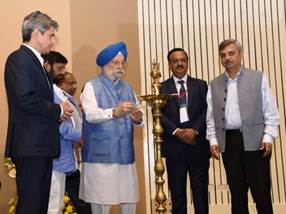
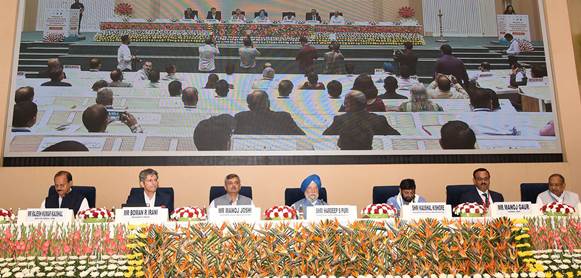
 Shri Hardeep S. Puri, Minister for Housing and Urban Affairs and Petroleum and Natural Gas stressed the need to view urban planning from the perspective of embedding sustainability and climate resilience across the lifecycle of built environment. Inaugurating the Conference on Adoption of New and Emerging Building Materials and Technologies in Construction Industry, the Minister said that the Modi government has viewed urbanisation as an opportunity for multifaceted growth and therefore India boasts one of the most comprehensive programmes for planned urbanisation. It is against this backdrop, that the Pradhan Mantri Awas Yojana-Urban (PMAY-U), the flagship housing scheme of the Ministry, gains particular significance as it has addressed the issue of affordable housing for India’s urban poor while creating sustainable and green infrastructure. Highlighting the use of green construction technologies in PMAY-U, Shri Puri informed the gathering that about 43.3 lakh houses are being constructed under the mission using sustainable building materials such as flyash bricks/blocks and AAC blocks. These houses will contribute to a reduction of 9 million tonnes of CO2 emissions by the end of December 2024.

To bring a paradigm shift in the housing construction sector, the Ministry of Housing and Urban Affairs (MoHUA) shortlisted 54 innovative construction technologies from all over the world, under the Global Housing Technology Challenge (GHTC). Further, 6,368 houses are being built under six light house projects currently being implemented in Chennai, Rajkot, Indore, Lucknow, Ranchi and Agartala. The Minister shared the multiple benefits of using these innovative construction technologies, including reduction in construction cost, time, cement used and waste generated apart from the enhanced thermal comfort and low lifecycle costs.

Shri Kaushal Kishore MoS, MoHUA, reiterated the need to provide quality housing to all strata of society, using latest and innovative technologies, as this would contribute to a better quality of life in the new and self reliant India.  Shri Manoj Joshi, Secretary MohUA, also underscored the importance of promoting and mainstreaming the modern and green construction technologies which will help the country to address the rising housing demand. These building materials facilitate faster and better quality housing construction to suit different geo-climatic and hazard conditions of the country. The conference organised by CREDAI, in collaboration with CPWD and NBCC, brought together some of the brightest minds in the construction and real estate industries.

***

‘Aatmanirbharta’ in defence

 Ministry of Defence, on August 25, 2023, signed a contract with Hindustan Shipyard Limited (HSL), Visakhapatnam for acquisition of five Fleet Support Ships (FSS) for the Indian Navy at an overall cost of approx. Rs 19,000 crore. It would be a major boost towards achieving the goal of self-reliance in defence manufacturing as these ships will be indigenously designed and constructed by HSL, Visakhapatnam. The Cabinet Committee on Security had approved the acquisition of these ships during its meeting on August 16, 2023.

The FSS will be employed for replenishing ships at sea with fuel, water, ammunition and stores, enabling the Indian Naval Fleet to operate for prolonged periods without returning to harbour. These ships would enhance the strategic reach and mobility of the Fleet. The induction of these ships will significantly enhance the blue water capability of the Indian Navy. The ships can also be deployed for evacuation of people and human assistance and disaster relief (HADR) operations.

The Fleet Support Ships of 44,000 Tons will be the first-of-its kind to be built in India by an Indian Shipyard. This project will generate employment of nearly 168.8 lakh mandays over a period of eight years. The construction of these ships will provide a new dimension to the Indian shipbuilding Industry and encourage active participation of associated industries, including MSMEs. With majority of the equipment and systems being sourced from indigenous manufacturers, these vessels will be a proud flag bearer of ‘Aatmanirbhar Bharat’ in consonance with the ‘Make in India’ initiatives of the Government.

*****

India is hosting the G20 Group

  “India has arrived,” said Union Minister Dr Jitendra Singh today, adding, “This is one of the most auspicious times happening in India.”

“India is hosting the G20 Group this year, we will be hosting the G20 summit in New Delhi’s Bharat Mandapam after few days; International Year of Millets is also being observed this year, this is the second occasion such an event is being held at the behest of India and Prime Minister Shri Narendra Modi after the International Day of Yoga, and after 75 years (of India’s Independence) on the 15th August, we have entered the Amrit Kaal, and this week, just two days ago, Chandrayaan happened,” he said.

Dr Jitendra Singh said that now the time has come when India not only stands even with other countries, but has proven that it can lead the world.

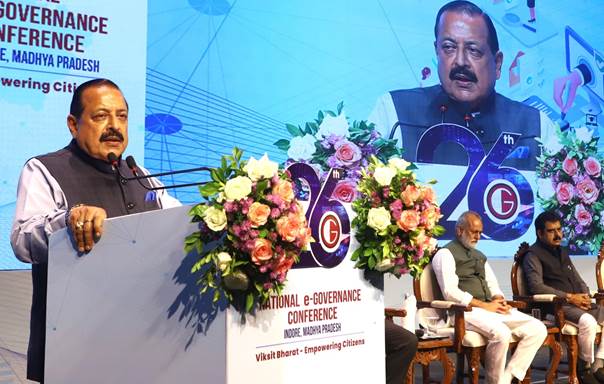
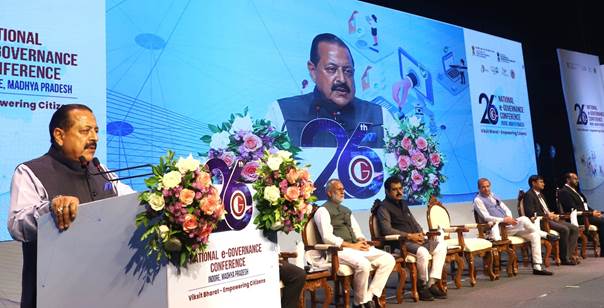
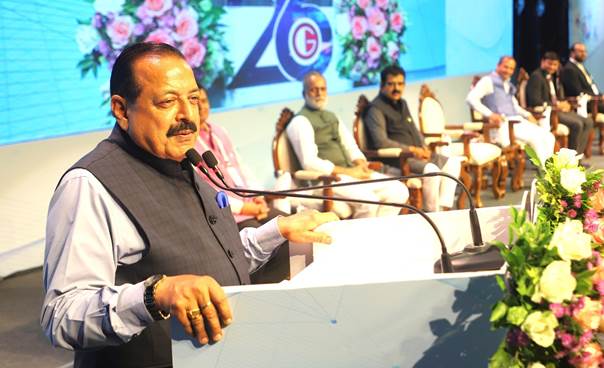
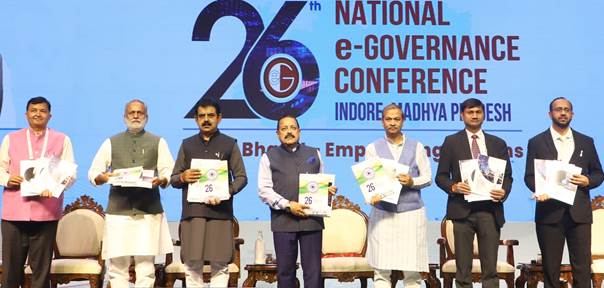
The Union Minister of State (Independent Charge) Science & Technology; MoS PMO, Personnel, Public Grievances, Pensions, Atomic Energy and Space, was addressing the Valedictory Session of the two-day 26th National Conference on e- Governance in Indore.


Dr Jitendra Singh said PM Modi has broken shackles of the past and set India free on the path to development.

“PM Modi opened the Space sector, and today there are more than 150 private Startups,” he said.

Dwelling on Administrative Reforms, Dr. Jitendra Singh said many reforms have been initiated by PM Modi in the last nine years.

“During the Covid period, life came to a standstill, but there was no delay in the Government of India’s administrative machinery, because we had already gone digital while others were just preparing for it,” he said, referring to transfer of benefits to the common man through DBT.


Dr Jitendra Singh said the Prime Minister gave us the mantra of ‘Minimum Government – Maximum Governance’. The DARPG took initiatives such as the practice of Attestation by Gazetted officers was done away with, Interviews were scrapped abolishing malpractices. Most of the functioning was converted online and in order to bring in transparency, accountability and citizen participation, the human interface was reduced to the bare minimum.

The Minister said, DoPPW introduced Digital Life Certificate (DLC) and later the Aadhar based scheme for online submission of DLC. Initially submission of DLCs was through biometric devices and now the Face-Authentication Technology-based system based on UIDAI Aadhaar software has been introduced.


Speaking about the transparency and accountability in the governance, the Minister said that the benchmark for clean and effective government is the robust grievance redressal mechanism. The CPGRAMS receives about 20 lakh grievances every year in comparison to just 2 lakhs annually earlier because this government followed a policy of time bound redressal and gained the confidence of the people.

Dr Jitendra Singh listed DigiLocker and SVAMITVA scheme bringing transparency in land registry, among technology driven reforms towards Ease of Living.

“Our goal is to gear up and work towards making India a developed nation by 2047, and we will accomplish this with speed and scale, leveraging the potential of digital transformations in e-governance,” he said.


***

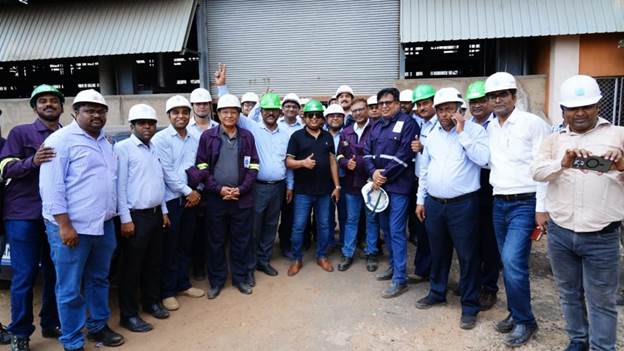
Nagarnar Steel Plant scripts history as it rolls out the first Hot Rolled coil

 In what is being described in steel circles as unprecedented, the Nagarnar Steel Plant yesterday, achieved the feat of producing its final product of HR (Hot Rolled) Coil, 9 days after the production of Hot Metal. This feat by NMDC is nothing less than astounding, considering that the mining major doesn’t have prior experience of steel making.

“NMDC joins the coveted league of Indian steel makers. This is the fulfillment of a dream that the local community of Bastar had long looked forward to.”, Sh. Amitava Mukherjee, Chairman-Cum-Managing Director of NMDC, mentioned. Industry veterans remarked that it is a rare feat to commission three critical units in the hot zone – Blast Furnace, Steel Melting Shop and the Mills (Thin Slab Caster – Hot Strip Mill) in such a short period of time. 


Nagarnar Steel Plant 

The 3 million tonne per annum capacity steel plant has been built at a cost of approximately ₹24,000 crores. The Plant is set to establish its mark in the Hot Rolled market with its repertoire of high grade Hot Rolled (HR) steel that is slated to meet the requirements of several key consuming sectors on the strength of its technology that includes its most modern Mill. Nagarnar Steel Plant’s competitive advantage also stems from its iron ore supply linkage with Bailadila mines, barely 100 kms. from Nagarnar.  

The product mix of Nagarnar Steel Plant consists of low carbon steel, HSLA & Dual Phase Steel and API quality steel that can be rolled into a thickness range from 1mm to 16mm. With its capability to roll 1650 mm wide HR, the Thin Slab caster at Nagarnar Steel Plant is the widest Mill in the public sector. HR Coils, Sheets and Plates coming off from India’s latest and most modern mill are expected to meet the growing demand for quality HR required in the manufacturing of LPG cylinders, bridges, steel structures, ships, large diameter pipes, storage tanks, boilers, railway wagons and pressure vessels and in construction of tanks, railway cars, bicycle frames, engineering and military equipment, automobile & truck wheels, frames and body parts. The plant will also be producing a special type of steel to be used in manufacture of generators, motors, transformers and automobiles at a later stage.  

Domestic Steel Industry calls it an unprecedented achievement 

Nagarnar Steel Plant has the unique distinction of internationally being the only steel plant to be set up by a mining company. With the roll out of the first Hot Rolled coil yesterday, 9 days after hot metal production began on 15th August, Nagarnar steel plant has managed to set another precedent, feel industry veterans.  

It may be recalled that Nagarnar Steel Plant had conducted cold trials of its Steel Melting Shop, months before initiating the commissioning of blast furnace. Though there have been instances of faster steel making, Nagarnar Steel Plant’s production of HR Coil within nine days of hot metal production is unusual. This was made possible by testing the capability of the Mills by rolling slabs and producing HR Coil even as preparations were underway for commissioning of the blast furnace.

Generally it takes a couple of weeks for the functioning of the blast furnace itself to stabilize which is followed by the synchronization of blast furnace production with the working of the Steel Melting Shop. This being a very dangerous zone, it is approached with extra caution after which the production process at the Mills is stabilized. That this was successfully accomplished in such a short duration attests to the latest equipment and technology used, as also the expertise of involved  professionals.  

With the production of HR Coil initiated yesterday, the Plant is engaged in stabilization of the production process to ensure that its produce is commercialized at the earliest. It is felt that the rapid commercialization of the Plants’ produce is expected to greatly minimize, or even offset the losses that a green-field steel plant generally suffers in the first year of its commissioning.  


******

National Action for Mechanised Sanitation Ecosystem (NAMASTE)

 Although, with the efforts under Self Employment Scheme for Rehabilitation of Manual Scavengers (SRMS) and other efforts of the Government, the menace of manual scavenging has been almost eliminated, a number of sewer/septic tank related deaths due to hazardous cleaning of sewers and septic tanks, are reported in the press from time to time. Such cases are taken up with the concerned State Government for payment of compensation of Rs.10 lakh as per Supreme Court orders. Thus, the main problem these days is hazardous cleaning of Sewer and Septic tanks and non observance of safety precautions due to which precious human life is lost. To eliminate hazardous cleaning, stop deaths of sewer and septic tank workers and ensure their safety and dignity, Ministry of Social Justice and Empowerment (MoSJE) and Ministry of Housing and Urban Affairs (MoHUA) have jointly formulated a Scheme namely National Action for Mechanised Sanitation Ecosystem (NAMASTE). The existing components of SRMS have been kept as components of NAMASTE Scheme. The scheme is to be implemented in all 4800+ Urban Local Bodies (ULBs) of the country, during the three years upto 2025-26 with an outlay of Rs. 349.70 crore.

Interventions of NAMASTE Component:

  1. Profiling of SSWs: NAMASTE envisages profiling of the Sewer/Septic Tank Workers (SSWs). List of SSWs would be obtained from the concerned ULBs and thereafter detailed profiling of the SSWs would be undertaken through profiling camps.
  2. Occupational Safety Training and distribution of Personal Protective Equipment (PPE) Kits to SSWs
  3. Assistance for Safety Devices to Sanitation Response Units (SRUs) for hazardous cleaning operations.
  4. Extending Health Insurance Scheme Benefits: For providing a safety net to identified SSWs and their families, they will be covered under the Ayushman Bharat- Pradhan Mantri Jan Arogya Yojana (AB-PMJAY). The premium for AB-PMJAY for those identified Manual scavengers and SSWs families who are not covered earlier shall be borne under NAMASTE.
  5. Livelihood Assistance: The Action Plan will promote mechanization and enterprise development. National Safai Karamcharis Finance & Development Corporation (NSKFDC) will provide funding support and capital subsidy to the Manual Scavengers, sanitation workers and their dependents to procure sanitation related equipment and vehicles under Swachhata Udyami Yojana (SUY) to make them “Saniprenure”. In addition to this, providing capital subsidy to identified manual scavengers and their dependents for self employment project will be continued.
  6. Identified manual scavengers and their dependents will be provided skill development training for a period upto two years with monthly stipend of Rs.3000/-.
  7. Convergence of Programmes of MoSJE & MoHUA: The safety of SSWs is a joint responsibility of MoSJE and MoHUA. Hence, the intent of NAMASTE is to strengthen convergence amongst both Ministries for governance and implementation of the NAMASTE components. The Action Plan leverages the available financial allocations of existing SRMS, Swachh Bharat Mission (SBM), Deendayal Antyodaya Yojana-National Urban Livelihoods Mission (DAY-NULM) and NSKFDC and brings in a focused approach to provide occupational, social and financial safety nets to the SSWs.
  8. IEC Campaign: Massive campaigns would be undertaken jointly by the ULBs & NSKFDC to spread awareness about the interventions of NAMASTE. Electronic and print media and hoardings at prominent locations shall be used for the campaign in local language and English/Hindi. Maximum use of social media during the publicity would be ensured.
  9. MIS and Website: There will be strong MIS implementation and monitoring with the help of dedicated website for NAMASTE.

Link for the following achievements have been made under erstwhile Self Employment Scheme for Rehabilitation of Manual Scavengers (SRMS) during the last 9 years under :

Link for the Silent feature, In order to implement NAMASTE Scheme, following action needs to be taken by States/UTs and ULBs: 


*****

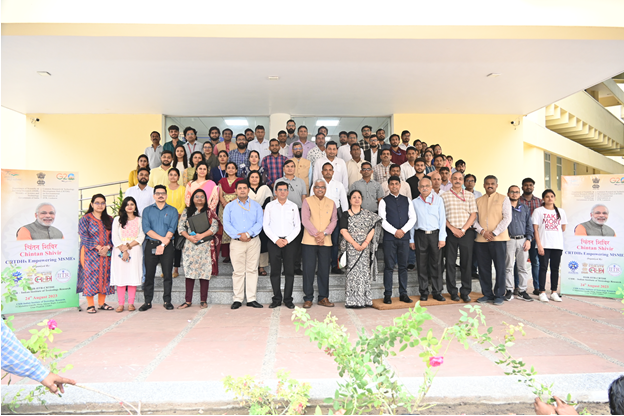
One day Chintan Shivir on “CRTDH Empowering MSMEs

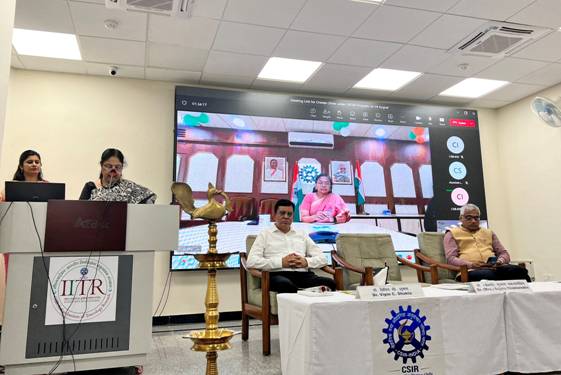
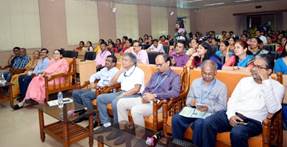
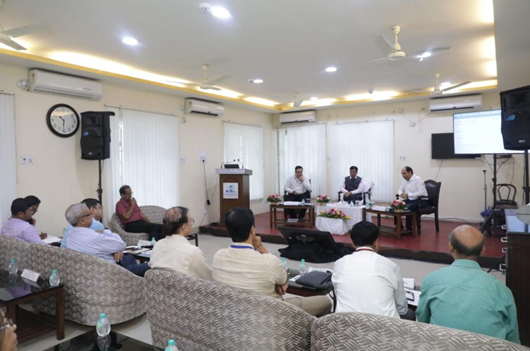
 On August 24, 2023, DSIR-CRTDH-IITR, Lucknow organised a day long second “Chintan Shivir on CRTDHs Empowering MSMEs” under Common Research and Technology Development Hub (CRTDH) programme of the Department of Scientific and Industrial Research (DSIR), Ministry of Science and Technology. The goal of this Chintan Shivir was to fortify relationships between academics and industry by stressing that this cooperation plays an important in promoting industrial R&D and fostering a culture that strengthens information sharing, collaborative research, and technical innovation. The CRTDH promotes R&D operations in the nation and offers extensive support and guidance and hence plays a crucial role in bolstering the MSME sector, encouraging a growth-friendly climate, and advancing technological breakthroughs to achieve long cherished goal of ‘Atmanirbhar Bharat’.

Dr. N. Kalaiselvi, Secretary, DSIR and Director General, Council of Scientific & Industrial Research (CSIR), Dr. Bhaskar Narayan, Director, Indian Institute of Toxicology Research (IITR), Lucknow and Dr. Sujata Chaklanobis, Head-CRTDH, DSIR spoke during the Chintan Shivir’s inaugural session. Dr. N. Kalaiselvi stressed the importance of DSIR and CRTDHs in enabling MSMEs, startups, and innovators to carry out the Prime Minister Shri Narendra Modi’s vision of creating “Atmanirbhar Bharat” in her remarks at the opening ceremony. Dr. Bhaskar Narayan praised DSIR-CRTDH-IITR, Lucknow’s efforts to assist diverse stakeholders in completing their R&D projects. Dr. Sujata Chaklanobis gave an overview of Chintan Shivir, she emphasized the need for innovation and asserted that MSMEs, as a key component of the innovation ecosystem, can significantly contribute in building India as a hub for R&D and manufacturing on a global scale. On this occasion, Dr. Sujata Chaklanobis and Dr. Bhaskar Narayan inaugurated the DSIR-CRTDH-IITR facility at the Technology Development and Innovation Centre and launched the updated version of the DSIR-IITR-CRTDH website. Two MoUs with DSIR-CRTDH-IITR and MSMEs were signed. 

The Director of the CSIR-IITR, Lucknow provided an overview of futuristic technology interventions at DSIR-CRTDH-IITR and highlighted importance of synergy between academia and MSMEs during the thematic sessions. Dr. Parthasarathi and Dr. B Sreekanth provided a briefing on the activities carried out under DSIR-IITR-CRTDH and its efforts to explore opportunities for MSMEs. Participants from the MSMEs/Start-ups/innovators were divided into five groups to brainstorm on challenges faced by them in perusing their R&D goals followed by a brief presentation on it. Thematic session was continued to “Samvad” which was coordinated by Dr. Vipin C. Shukla, Scientist-F, DSIR. During ‘Samvad’, major difficulties faced by MSMEs, startups, and innovators were discussed and potential solutions were addressed by the PI, DSIR-CRTDH-IITR, Lucknow.

The event was attended by senior officers Dr Ranjeet Bairwa and Dr Kailash Petkar from DSIR along entire team of DSIR-CRTDH-IITR. Large number of representatives from Micro, Small and Medium Enterprises (MSMEs), start-ups, UP state district resource persons, individual innovators, and delegates from the Chambers of Commerce, industry associations, Assocham also participated in this important event to get the benefits of CRTDH in their R&D endeavors.

Finally, Dr. Kailash C. Petkar, Scientist, DSIR presented a vote of gratitude to dignitaries, organizers, all stakeholders, press and media personnel to conclude the event.

Image

Open Day and Skill Development Event

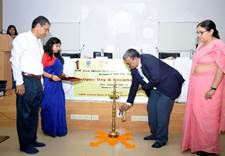
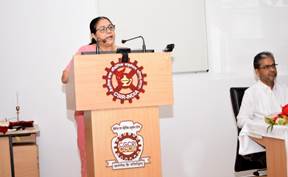
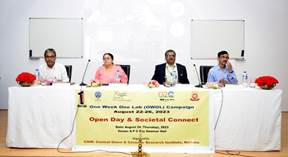
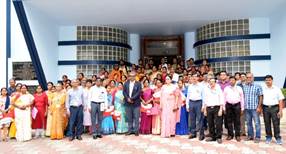
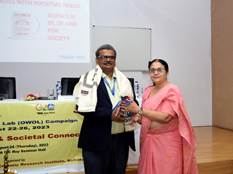
 As a part of “One Week One Lab (OWOL)” programme, CSIR-Central Glass and Ceramic Research Institute (CGCRI), Kolkata organized an Open Day and Skill Development event on 24.08.2023, with an aim of creating awareness in S&T among common people and artisans. Dr Suman Kumari Mishra, Director, CSIR-CGCRI welcomed the participants. Dr. Ramanuj Naryan, Director, CSIR- Institute of Minerals and Materials Technology graced the occasion as Chief Guest, delivering a lecture highlighting the connection between science and society. Around 100 participants from rural and urban areas participated in the programme and underwent skill development/demonstration on making terracotta potteries. CSIR-CGCRI products and technologies were also showcased during the event.            


*****

SNC/PK

(Release ID: 1952014) Visitor Counter : 149 

Ayushman Bharat Health and Wellness Centres

  “We are committed to providing quality healthcare services to all citizens of West Bengal. Government of India under the leadership of Prime Minister Shri Narendra Modi is committed to providing quality healthcare services to all citizens of the state. The State Government should implement Ayushman Bharat at the ground level for benefit to the people of West Bengal. We are taking all necessary steps to ensure that the health services in the state are of the highest quality.” This was stated by the Union Minister of Health & Family Welfare Dr. Mansukh Mandaviya, during his visit to West Bengal. The Union Health Minister reviewed various programmes delivering health services in the state today. 

During his visit, he reviewed the Ayushman Bharat Health & Wellness Centres, National TB Elimination Program, status of funds released under National Health Mission (NHM), Pradhan Mantri Ayushman Bharat Health Infrastructure Mission (PM-ABHIM), Telemedicine services, Medical Education, and Sickle Cell Anemia Elimination Program.

Speaking on the occasion, Dr. Mandaviya referred to the Ayushman Bharat Health & Wellness Centre and stated “The Ayushman Bharat Health & Wellness Centre is a great initiative to provide comprehensive primary healthcare services to people near their homes.” 

Dr. Mandaviya further added that the following resources have been provided to West Bengal under National Health Mission:

  1. 800 Sub-Centres have been approved at the cost of Rs. 288.72 crores.
  2. 2 Urban Community Health Centres approved at the cost of Rs. 10 crores and 37 new urban PHCs at the cost of Rs. 27.75 crores. 
  3. 404 Ayushman Bharat Urban Health and Wellness Centers have been approved


The Union Health Minister also reviewed the National Tuberculosis Elimination Program and the status of funds released under the National Health Mission. He further added, “Government of India is committed to eliminating Tuberculosis by 2025 and emphasized that we are taking all necessary steps to ensure that the funds released under the National Health Mission are utilized effectively.” 

Dr Mandaviya further added that under the 15th Finance Commission, 223 Block Public Health Units have been approved at the cost of Rs. 180.12 crores and 719 sub-centres have been approved at the cost of Rs. 290 crores in the state. He added that West Bengal has witnessed 10,358 Ayushman Bharat Health and Wellness Centres being operationalized with a footfall of 16,82,87,430 and 2,08,42,397 teleconsultations have been carried out.

With reference to the Pradhan Mantri Ayushman Bharat Health Infrastructure Mission (PM-ABHIM) and the Telemedicine services, Dr. Mandaviya stated “The PM-ABHIM is a great initiative to provide quality healthcare services to the people of West Bengal. We are also working to ensure that the Telemedicine services are available to all citizens of the state.” Highlighting the growth and development in this sphere in the state, Dr. Mandaviya mentioned that 

  1. 22 Critical Care Blocks have been sanctioned for a cost of Rs. 727 crores. 
  2. 23 Integrated Public Health Labs that have been sanctioned for a cost of Rs. 47.38 crores.
  3. 510 Urban Health and Wellness Centres have been approved at a cost of Rs. 535.50 crores

In his review of the Medical Education and the Sickle Cell Anemia Elimination Program, he stated, “We are committed to providing quality medical education to the people of West Bengal. We are also taking all necessary steps to ensure that the Sickle Cell Anemia Elimination Program is successful.”

                                                                       ****

The Impact of Accounts Receivables Management on Financial Performance of Quoted Oil and Gas Firms in Nigeria


Yakubu AbubakarMonday Emmanuel, Dangana Umaru


Abubakar Yak & Co Chartered Accountants

Department of Accounting, ABU Zaria

College of Education, Gidan Waya


Abstract

This study examines the impact of Accounts Receivable Management on financial performance of quoted Oil and gas firms in Nigeria. The study has been conducted in different parts of the globe and in Nigeria with different findings which are mixed and inconclusive. The population of the study consists of ten (10) firms quoted on the Nigerian stock exchange as at 31st December 2021 out of which ten (10) firms were selected as samples for a period of Ten (10) years from 2012 to 2021 based on purposeful sampling technique. The study uses Correlation matrix and OLS regression as tools for analysis and adopted the correlational research design. The study shows that Account receivables Management have a positive significant impact on financial performance of quoted oil and gas firms in Nigeria. Debt has a positive significant impact on financial performance of quoted oil and gas firms in Nigeria


Keywords: Accounts receivable, Debt ratio and Total revenue.


Introduction

Accounts Receivable is debts from the sales of Goods and services of a firm which is expected to be collected in the future. Owuro, Agusioma & Fredrick (2021) defined Accounts receivable as payments expected by an organization in the foreseeable future. Accounts receivable management plays an integral part in the financial performance of oil and gas firms in Nigeria. Accounts receivable management can be seen as the process of ensuring that customers pay their dues on time. It helps the businesses to prevent themselves from running out of working capital at any point of time. It builds the businesses financial and liquidity position thereby leading to high financial performance. A good account receivable management contributes to the profitability by reducing the risk of any bad debts. Management of accounts receivables is not only about reminding the customers and collecting the money on time. It also involves identifying the reasons for such delays and finding a solution to those issues. There are 5 (five) steps in management of accounts receivables which are; determine to whom to extend credit, establish a payment period, monitor collections, evaluate the liquidity of receivables and accelerate cash receipts from receivables when necessary. Empirical studies conducted on the Accounts receivable Management and financial performance which include studies of Owuro, Agusioma & Wafula (2021), Kipkemoi (2019), Ikechukwu & Nwakaego (2015), Munene (2018), Sah (2022) are mostly from Kenya, Ghana and Nigeria. Most of studies conducted in Nigeria to the best of our knowledge concentrated on Small and Medium Scale enterprises, Public Training Institutions and Manufacturing firms which could not provide adequate evidence on the impact of Accounts receivables management on financial performance as far as selected firms in the Oil and gas sectors are concerned. Those studies have provided mixed and inconclusive findings due to the data collected, methodology used and the industry used and to the best of our knowledge, among studies conducted in Nigeria, we have not seen a study that took into consideration the quoted firms from Oil and gas sectors. To this end, this study attempts to fill the gap by examining the impact of Accounts receivable management on financial performance of the quoted firms in the Oil and gas sectors in Nigeria. The main objective of the study is to examine the impact of Accounts Receivables management on financial performance of quoted oil and gas firms in Nigeria. The Specific objective of the study are to determine the extent to which Accounts Receivables impact on financial performance of quoted oil and gas firms in Nigeria, to determine the extent to which Debt ratio impact on financial performance of quoted oil and gas firms in Nigeria . In line with the specific objective, Two (2) hypotheses are formulated which are: HO1 Account receivable has no significant impact on financial performance of quoted oil and gas firms in Nigeria. HO2 Debt ratio has no significant impact on financial performance of quoted oil and gas firms in Nigeria.

Literature Review

Authors have reviewed the impact of Accounts receivables management on financial performance. Anorue & Ugwoke (2022) studied the management of account receivable and payable for improved financial performance of small enterprises in Imo state.  Survey research design was employed with 1390 participants, including 70 Accounting lecturers, 1,300 small scale enterprises operators and 20 professional accountants. A multistage sampling procedure was employed to draw a sample size of 396 participants. Collected data were analyzed using mean and standard deviation while the ANOVA statistic was used to test the two null hypotheses at the 0.05 level of significance. The results of the findings was proposed, among other things, that a retraining initiative for the owners or potential owners of small scale enterprises in the state be established to educate them on the effective ways to manage accounts payable and receivable for efficient financial performance and business success. Owuro, Agusioma & Wafula (2021) examined the Effect of Accounts Receivable Management on Financial Performance of Chartered Public Universities in Kenya. They employed the Cash Conversion Cycle (CCC) theory. Descriptive and inferential research designs were applied to analyze data. Target population was all the 31 chartered public universities in Kenya, and as such, the census survey method was adopted to collect data. Secondary panel data was extracted from the respective institutions’ audited annual reports for 2017, 2018, and 2019. The SPSS Version 25 was applied to analyze descriptive and inferential statistics. The result of the study found that accounts receivable management had an indirect and significant effect on the financial performance of chartered public universities in Kenya. Tarurhor & Owolabi (2022) examined whether account receivable and inventory conversion management (ICM) serve as a determinant of corporate financial performance. Ex-post facto design was used and sample of seventy-six (76) firms across various non-financial firm’s sectors were employed. Panel data were obtained from 2011-2019. Data obtained were analyzed via descriptive (mean, median, standard deviation, minimum and maximum values, kurtosis, skewness and correlation matrix), diagnostic statistics (variance inflation factor, and unit root) and inferential (fixed and random effects model and Hausman specification) statistical tool. The Findings of fixed and random effect panel regression revealed that account receivable management (ARM) significantly affects return on asset while relationship between inventory conversion management (ICM) significantly affects return on asset. Kipkemoi (2019) examined the Effect of Accounts Receivables Management practices on Liquidity of Public Technical Training Institutions in Rift Valley Region, Kenya. The Study was guided by operating cycle theory which is aligned to objective of the study. They adopted censusSurvey since the numbers of respondents was very few. Population was 38 respondents comprising of 19 principals and 19 accountants. Questionnaires were self-administered. They administered five questionnaires to public technical training institutions in Nyanza region. Cronbach’s alpha coefficient above or equal to 0.70 was considered sufficient for reliability test. Data collected was analyzed using both descriptive and inferential statistics. Descriptive statistics include Frequencies, percentages, mean standard deviation and variance. Inferential statistics included Product moment correlation analysis and multiple regressions. The findings of the study showed that accounts receivable management practice was significant to liquidity of public Technical Training Institutions in Rift Valley Region. Ikechukwu & Nwakaego (2015) examined the effect of the management of accounts receivable on the profitability of building materials/chemical and paint companies in Nigeria. Data were collected from the Annual Reports of the companies under study. The hypotheses were tested using multiple regression technique. The findings of the study showed that accounts receivable had positive and significant effects with the profitability ratio at 1% levels of significance. Both Debt ratio and sales growth rate had negative and non-significant effect on these companies. Munene (2018) examined the effects of accounts receivable management on financial performance of Embu Water and Sanitation Company limited, Embu County, Kenya. They examine the effects of inventory turnover period, average payment period, cash conversion period and average collection period on financial performance of Embu Water and Sanitation Company limited, Embu County, Kenya. Theories guiding the study were operational motives theory, transactions cost theory and cash conversion cycle theory.  They adopted descriptive research to test the relationship between variables of the study. They used secondary data which was obtained from the accounts and finance departments. Descriptive statistics and inferential statistical techniques were used to analyze the data and presented in tables. The results of the study revealed that inventory turnover in days has negative relationship with Return on Equity which means that companies financial performance can be increased by reducing inventory in days. Average collection period and current ratio had a positive significant association with Return on Equities indicating that if time period of debtor’s payment is increased then overall financial performance of Embu Water and Sanitation Company Limited in Embu County, Kenya also improves. Sah (2022) Influence of Account Receivable Management Practices on the Performance of Small and Medium Scale Enterprises in Kumasi Metropolis in Ghana. Descriptive design with cross sectional survey was adopted. They collected data from the SMEs at one point in time and determine the impact of management accounting practices on financial performance of SMEs in in the Kumasi Metropolis in Ghana. The study established Receivable management practices were effectively followed by the selected SMEs, and there was a statistical significant effect of receivable management practices on firm performance. Gamlath (2021) investigated the Impact of Accounts Receivable Management on Profitability of listed food beverage and tobacco Companies in Colombo Stock Exchange in Sri Lanka. They used secondary sources of data and adopted a sample of 20 food beverage and tobacco companies using panel data analysis from 2015-2019. The dependent variable Return on asset and Return on equity were used as a measure of profitability. The key independent variables used for the analysis were the Inventory turnover ratio, Average collection period, Account receivable turnover ratio, Cash conversion cycle and firm size was the control variable. Descriptive and multiple regressions were used for analysis. The results of the findings showed a significant impact of accounts receivable management on profitability, a significant positive impact of inventory turnover ratio on return on assets of food beverage and tobacco companies. It means that as inventory turnover ratio increases it will leads to increase profitability of the firms. In addition the results showed that there is a significant negative impact of cash conversion cycle on return on equity. Dirie & Ayuma (2018) examined the effect of accounts receivable management on the financial performance of Small and Medium firms Enterprises in Mogadishu city in Somalia. They employed Survey research design. They used quantitative data. Target population of 102 SMEs from three sectors. They applied both probability and non-probability sampling procedures obtained from a sample of 81 SMEs required for the study based on Slovene formula. They used questionnaires. Inferential statistics such as Pearson correlation coefficient and coefficient correlation were used to analyze quantitative data and descriptive statistics are employed for variables of the study. The results of the study showed that cash flow management, other independent variables (debt management, credit policy management and inventory management) were found to have positive significant correlations on financial performance at 5% level of significance. Duru & Ubesie (2016) examined the effect of the management of accounts receivable ratio on the profitability of industrial/Domestic products manufacturing firms in Nigeria. They used accounts receivable ratio, debt ratio and sales growth rate as variables of the study. Secondary sources of data were used from 2000-2011. Multiple regression technique was adopted. The results of the findings showed that accounts receivable ratio, debt ratio and sales growth rate had positive and significant relationship with the profitability of the firms. Lyani, Namusonge & Sakwa (2016) examined the impact of Accounts receivable risk management on growth of SMEs in Kakamega County, Kenya. Causal research design was applied to show the influence of credit risk assessment practice on growth. They used the purposive stratified random sampling technique. Sample size of 359 out of 5401 SMEs was used from Kakamega Central Sub-County that had been in operation between 2013 and 2015. Secondary data was acquired from the Kakamega County Revenue Department for the period under study. Regression model using analysis techniques like homoscedasticity and autocorrelation was employed. Ordinary Least Square method was utilized to establish the relationship of cause-effect between variables while hypothesis was tested at 5% significance level. The overall model was discovered to be significant considering the F=14.918 and p-value (0.00 < 0.05). The findings of the study showed that good credit risk assessment practices when adopted by SMEs lead to growth. Mbula, Memba & Njeru (2016) opined the effect of accounts receivable management on financial performance of firms funded by Government venture capital in Kenya. The population of the study comprised all firms (24) funded by government venture capital in Kenya. They adopted a census approach because of the small number of firms. Based on the conceptual framework, a questionnaire was formulated and used to collect primary data for the independent variables while a record survey sheet was used to collect secondary data for the dependent variable. Out of 72 respondents, 51 responded, being 71%. Both descriptive and inferential analyses were done. Statistical package for social sciences (SPSS) version 20.0 was used as the statistical tool for analysis of the study. Analysis for variant (ANOVA) and regression analysis was used to test the hypothesis. The results of the study revealed a positive relationship between accounts receivables and financial performance of firms funded by government venture capital in Kenya. Patrick (2020) investigated the effect of Receivable Management and Corporate Performances: empirical evidence from quoted manufacturing companies in Nigeria. The population of the study was listed manufacturing firms in Nigeria for the period of 2010 to 2019. In order to obtain a homogenous sample for the study we further screen the population from possible sample bias. The sample of the study was nineteen (19) consumer goods companies. The study employed secondary data extracted from published financial reports of the sampled companies and ordinary least square (OLS) regression technique was used as econometric tool employed in testing the hypotheses. Return on Asset was used as the proxy for corporate performance while the explanatory variable is account receivable period. Furthermore, the study was controlled by firm size and leverage. The Findings of the study showed a positive effect between account receivable period and return on asset of listed manufacturing firms in Nigeria. Gitahi, Naibei & Livingstone (2020), opined the Effect of Management Of Accounts Receivable on Financial Performance Of Manufacturing Firms Listed In Nairobi Stock Exchange, Kenya. They used descriptive research design. The population of the study comprised of 147 finance and accounts staff of all the manufacturing firms listed in NSE for period of Six (6) months from April to October 2016. Data was collected by use of self-administered questionnaires and analyzed using both descriptive and inferential data analysis. The result of study revealed a significant relationship between Credit extension policies, that financing receivables has significant effect on the financial performance and receivable collection period has significant effect on the financial performance of the firm. 

Jiahui (2020) examined the relationship between Accounts receivable management and Corporations financial performance. 23570 observations are selected which include 922 listed companies in China from five industries. The data covers a period of seven years from 2010 to 2016. The result of the study showed a significant relationship between accounts collection period, which is a proxy of accounts receivable and corporations’ financial performance, which was measured by gross operating income. Four control variables cash conversion cycle, current ratio, fixed financial ratio and corporation size were considered for the study.


Methodology


This research adopted correlation research design and was considered adequate and appropriate for this study because it describes the statistical relationship between the independent variable of the study (Accounts receivables) and the dependent variable (Return on Equity). The population consists of all quoted Oil and Gas firms namely Conoil Plc, Forte Oil Plc, MRS oil Nigeria Plc, Oando Plc, Total Nigeria Plc, Capital oil Plc, Eterna Plc, Japaul Oil & Martime Services Plc, Rak Unity Petroleum Plc, Seplat Petroleum Development Company Plc quoted on the Nigerian Stock Exchange as at 31st December 2021 and covered a period of Ten (10) years (2012-2021). Purposeful sampling technique was employed to select the sample. The sample selected was in line with this, the sample size is all the ten (10) selected quoted firms on the Nigerian stock exchange namely Conoil Plc, Forte Oil Plc, MRS oil Nigeria Plc,  Oando Plc, Total Nigeria Plc, Capital oil Plc, Eterna Plc, Japaul Oil & Martime Services Plc and Rak Unity Petroleum Plc, Seplat Petroleum Development Company Plc. The study employed panel data using statistical package for social sciences (SPSS 25) and Ordinary Least Square (OLS) method adopted in this study is a parametric statistical test that is based on a number of assumptions, the violation of which could affect the reliability of the results. The Pearson correlation and t-test statistics were used for inferential analysis. Two of the most commonly encountered problems addressed in this study relate to normal distribution of the variables and descriptive statistics was used to test for normality of data.


Model Specification

The model that was used to test the hypothesis formulated for this study is presented below. The null Hypothesis is tested considering the results for the P-values at 1%, 5% and 10% level of significance.

ROE = f (ACCTREC1+ DEBTβ2 + TREVβ3)

ROE = α + β1ACCTREC + β2DEBT + β3TREV ϵi

Where

α= the intercept

ROE = Profit after Tax divided by Total Equity.

ACCT REC = the Natural Log of the Closing Balance of Trade and Other Receivables for the year.

DEBT = the total liabilities divided by total assets.

TREV = the Natural Log of the Total revenue for the year.

ϵi= error term

Total Revenue is a controls variable.


Data Presentation

This part presents the results of the descriptive statistics and regression results on the impact of Account receivables on financial performance of quoted Oil and gas firms in Nigeria. Two explanatory variables and One (1) control variable are employed for the purpose of explaining and predicting the impact of Account Receivables Management on financial performance of quoted oil and gas firms in Nigeria.


Test of Normality


The normality tests are supplementary to the graphical assessment of normality. For this study, Z skewness and Z Kurtosis are used to test for normality of the Two (2) independent variables; namely Accounts receivables and Debt ratio. The Z skewness was computed as skewness divided by standard error of skewness and the Z kurtosis was computed as kurtosis divided by standard error of kurtosis.

Table 4.2.1 shows the skewness, kurtosis and Z skewness and Z kurtosis.


Table 1 Descriptive Statistics Table for the Variables

Variables

Skewness

Standard Error

Z Skewness

Kurtosis

Standard Error

Z Kurtosis

ACCTREC

0.697

0.241

2.892

0.736

0.478

1.539

DEBT

0.992

0.241

4.116

3.910

0.478

8.179

This table shows the normality test for Accounts Receivables and Debt ratio

 In Small samples like that of this study which the number of observations is 100, values of Z skewness and Z kurtosis greater or lesser than 1.96 are sufficient to establish normality of the data. The result of Skewness for Accounts receivables is 0.697. The Z skewness of Accounts receivable is 2.892 which is more than 1.96 shows that the data is normal which indicates that the data for Accounts receivable relates linearly to the dependent variable (Return on Equity).The results of the Kurtosis for Accounts receivable is 0.736 and the Z kurtosis of Accounts receivable is 1.539 which is less than 1.96 and therefore, is normal which indicates that the data for Accounts receivable relates linearly to the dependent variable (Return on Equity). The result of Skewness for Debt ratio is 0.992. The Z skewness of Accounts receivable is 4.116 which is more than 1.96 shows that the data is normal which indicates that the data for Debt ratio relates linearly to the dependent variable (Return on Equity). The results of the Kurtosis for Debt ratio is 3.910 and the Z kurtosis of Debt ratio is 8.179 which is more than 1.96 and therefore, is normal which indicates that the data for Debt ratio relates linearly to the dependent variable (Return on Equity). Ghasemi and Zahediasl (2012).


Table 2.  Correlational Matrix of Independent and Dependent Variables


ACCT REC

DEBT

TREV

ROE

ACCT REC

0.184

0.066 *

0.763

0.000 ***

0.332

0.001 ***

DEBT

0.184

0.066*


0.033

0.741

0.469

0.000 ***

TREV

0.763

0 .000 ***

0.033

0.741


0.207

0.039 **

ROE

0.332

0.001 ***

0.469

0.000 ***

0.207

0.039 **


Source: Author’s computation using SPSS 25

The symbol * represents significant at 10%

The symbol ** represents significant at 5%


The symbol ***represents significant at 1%

The results from the table above shows that Accounts receivables correlate positively with the dependent variable (Return on Equity) at 1% level of significant. Accounts receivables correlates positively with Debt ratio at 10% level of significant. Accounts receivables correlates positively with the control variable (Total Revenue) at 1% level of significant. The implication of the result is that the higher Accounts receivables, the higher the financial performance of quoted oil and gas firms in Nigeria. The results from the table above shows that Debt ratio correlates positively with the dependent variable (Return on Equity). The implication of the result is that a higher the Debt ratio, the higher the financial performance of quoted oil and gas firms in Nigeria. Total revenue which is the control variable correlate positively with the dependent variable (Return on Equity) at 5% level of significant.


Table 3. OLS Regression Results Directors Remuneration impact on Financial performance

Variable 

Coefficient

T – value

P – value

Constant

0.532

3.506

0.001

ACCTREC

0.255

1.851

0.067

DEBT

0.422

4.731

0.000

TREV

0.002

0.012

0.991

R


0.531


R2

0.282


Adj R2

0.260


F stat

12.598


F-Sig

0.000


DW

1.770


Source: Author’s computation using SPSS 25


            The estimated equation of the study is presented as follows:

            ROE = 0.531 + 0.255(ACCTREC) + 0.422 (DEBT) + 0.002 (TREV)

Financial performance would be equal to 0.531 when all other variables are held to zero. One-unit change of Account receivables all other variables remain constant, would increase Account receivables by 0.531. The regression result of the study shows that the beta coefficient in respect of Account receivables is (0.255) and the t-value is (1.851) and it is significant at 10%. This means that, as far as selected firms of oil and gas sectors are concerned, Account receivables has positive significant impact on financial performance of quoted oil and gas firms in Nigeria. The implication of this is that, higher Account receivables will result in better financial performance. This provides an evidence of rejecting the hypothesis stating that Account receivables has no significant impact on financial performance of quoted oil and gas firms in Nigeria. 

The regression result of the study shows that the beta coefficient in respect of debt is (0.422) and the t-value is (4.731) and it is significant at 1%. This means that, as far as selected firms of oil and gas sectors are concerned, Debt has positive significant impact on financial performance of quoted oil and gas firms in Nigeria. The implication of this is that, higher debt will result in better financial performance. This provides an evidence of rejecting the hypothesis stating that debt has no significant impact on financial performance of quoted oil and gas firms in Nigeria.

The overall impact of Account receivables management is able to explain the dependent variable up to (53%). This shows a positive relationship as indicated by the R value and the remaining (47%) are controlled by other factors. Similarly, the result of the F- statistic shows the overall fitness of the model. The F- statistic has a value of (12.598) and is significant at 1% which implies that the model is fit because it is significant at all levels of significant. Durbin Watson of (1.770) shows that there is no problem of autocorrelation in the data set (Gujarati, 2004).


 Findings of the Study

 Account receivables Management have a positive significant impact on financial performance of quoted oil and gas firms in Nigeria.

Debt has a positive significant impact on financial performance of quoted oil and gas firms in Nigeria


Conclusions

This study has contributed to findings on Accounting Research in Nigeria. It investigated whether Account receivables Management impacted on financial performance of quoted oil and gas firms in Nigeria. The study concludes that Account receivable Management has a positive significant impact on financial performance of quoted Oil and gas firms in Nigeria. 


References


Anorue, H.C. & Ugwoke, E.O. (2022), Management of Account Receivable and Payable for Improved Financial Performance of Small Scale Industries in Imo State, Nigeria, International Journal of Research and Innovation in Social Science, Volume VI, Issue IV, ISSN 2454-6186.


Dirie, A.O & Ayuma, C.A (2018), Effect of Accounts Receivables Management on Financial performance in Small and Medium Firms in Mogadishu – Somalia, International Journal of Management and Commerce Innovations, ISSN 2348-7585, Volume No. 6, Issue 1, PP 378-383.

Duru, A. & Ubesie, M.C. (2016), the effect of the management of accounts receivable ratio on the profitability of industrial/Domestic products manufacturing firms in Nigeria, European Journal of Accounting, Auditing and Finance Research,  Vol.4, No.9, pp.84-97.

Gujarati (2004), Basic Econometrics, Fourth edition.


Ghasemi and Zahediasl (2012), Normality Test For Statistical Analysis: A Guide for Non- Statisticians, International Journal of Endocrinology and Metabolism.


Gamlath, G.R.M. (2021), the Impact of Accounts Receivable Management on Profitability of listed food beverage and tobacco Companies in Colombo Stock Exchange in Sri Lanka, SJCC Management Research Review, ISSN-2249-4359, Vol. 11, Page N. 1-64.


Gitahi, J.B., Naibei, & Livingstone (2020), Management Of Accounts Receivable And Financial Performance Of Manufacturing Firms Listed In Nairobi Stock Exchange, Kenya, International Journal of Scientific and Research Publications, Volume 10, Issue 12, ISSN 2250-3153.

Ikechukwu, O.I. & Nwakaego, D.R. (2015), The Effect of Receivable Management on the Profitability of Building Materials/Chemical and Paint Manufacturing Firms In Nigeria, Quest Journals Journal of Research in Humanities and Social Science Volume 3 ~ Issue 10, Pp: 01-06 ISSN 2321-9467.

Jiahui, L. (2020), The Relationship Between Accounts Receivable Management and Corporations’ Financial Performance, Wenzhou – Kean University.

Kipkemoi, A.M. (2019), Effect of Accounts Receivables Management practices on Liquidity of Public Technical Training Institutions in Rift Valley Region, Kenya, International Journal of Economics, Commerce and Management, United Kingdom, Vol. VII, Issue 8, Page 573.


Lyani, M.N., Namusonge, G.S & Sakwa, M. (2016), Accounts Receivable Risk Management Practices and Growth of SMEs in Kakamega County, Kenya, Expert Journal of Finance, Volume 4, pp.31-43.


Munene, F. (2018), The effects of accounts receivable management on financial performance of Embu Water and Sanitation Company limited, Embu County, Kenya, Department of Business Administration, Kenyatta University, Kenya.


Mbula, K. J. Memba, S.F. & Njeru, A. (2016), Effect of Accounts Receivable on Financial Performance of Firms Funded By Government Venture Capital in Kenya, Journal of Economics and Finance, e-ISSN: 2321-5933, Volume 7, Issue 1, PP 62-69


Owuro, O.G., Agusioma, N & Wafula, F. (2021), The Effect of Accounts Receivable Management on Financial Performance of Chartered Public Universities in Kenya, International Journal of Current Aspects in Finance, Banking and Accounting, Volume 3, Issue 1, PP 73-83, ISSN 2707-8035. 


Patrick, D. (2020), Receivable Management and Corporate Performances: empirical evidence from quoted manufacturing companies in Nigeria, INOSR Arts and Management Volume 6(1): Page. 116-129.


Tarurhor & Owolabi (2022), Account Receivable and inventory conversion management as Determinants of Corporate Financial performance: Evidence from Publicly quoted Nigerian firms, Finance & Accounting Research Journal, Volume 4, Issue 5, Page No. 271-280.


Sah, G.G. (2022), Influence of Account Receivable Management Practices on the Performance of Small and Medium Scale Enterprises, A new decade for social changes, http://www.techniumscience.com, Vol. 32.


Self-Identity and Destiny Treasures Hunting by Senior High Schools Students towards Self Actualization and Personal Satisfaction in Life

 *1Isaac Odoi Danquah, 2Theresa Wiredu-Darkwa

1Water Resources Engineer, Goldrain Mountain Company Limited, Koforidua, Eastern Region – Ghana. 2Senior Educationist, Ghana Education Service, Nsutam, Eastern Region – Ghana.

ABSTRACT

Man’s quest for riches, self-accomplishment and self-actualization depends on consistent effort towards attainment. To obtain a fulfilling life on the planet earth boils down to once own effort and ability. No one can accomplish your aims and objectives for you but you only. Its therefore of utmost importance for senior high schools students to identify who they are and define the road map towards self-actualization and personal satisfaction in life. In this regard, one ought to choose a defined career, go through training, learning, hustles, hardship, struggles and be refined like pure gold. It is at this point that we get refined gold in terms of doctors, engineers, lawyers, professors, presidents, teachers, nurses, security professionals and so on to serve mankind and impact generations. It therefore deems fit to identify oneself, have defined goals and hunts for one’s destiny towards accomplishment and self – actualization. This is the reason for this research work in New Nsutam Senior High School. This research work deduced that one needs to identify who he/she is and work consistently on a chosen career and path in order to achieve goals and aspirations in life. Research findings established that self-actualization depends on personal discipline and personal choices in life. 13 students stated satisfactory thinking in a way, self-discipline and personal choices in life contributes to self-actualization. Very good and excellent was 40 and 41 representing 40% and 41% respectively. This tells one that students willing to reach great heights must be discipline personally and make right choices as they climb the academic ladder. Research again proved that senior high schools plays a role in terms of destiny determination and treasures hunting in life. 87 correspondents representing 87% said yes it does play a role and the reason for being in school to learn and learn hard. Research findings indicated that parents will continue to ask their children to continue educating themselves in senior high schools. But it’s the sole responsibility of these students to have well defined goals, objectives, and careers and fight the storms of life in actualizing their dreams and aspirations. It can be seen that training a child from infancy through the education system in Ghana and worldwide is also a gold mining business. Here, the child goes through all the education system (Kindergarten to Doctorate level) while being exposed to troubles and its associated hustles and problems in life. They finally becomes well refined gold (engineer, doctor, lawyer, professor, banker, judge etc) with expertise and well trained experience in their field or various field to serve nations and impact generations. 

Keywords: self-identity, treasures, actualization, senior high school (SHS), dreams, students, life, discipline.


1          INTRODUCTION

Life on this planet earth is so interesting and full of opportunities requiring man’s seriousness and hard work towards accomplishing individual’s aims, aspirations and objectives. The choice for certain course of direction by man depends on personal vision and what to be achieved after ones journey on the earth. Some people are very lazy hence waiting for opportunities to be made available by others before choosing a sense of direction towards self-accomplishment. Not knowing its each individuals responsibility to carry his or her own cross. Others are go getters where they take drastic decisions in making opportunities available in order to accomplish aspirations. Life is full of questions requiring everyone to write his or her own individual life story and journey of life examinations. This implies that everyone and his or her own solution manual. What is applicable and workable for Mr A will not be applicable for Mr. B hence each one and his/her manual. To live a fulfilling life on this planet earth requires individual identity determination where one identifies who he/she is and the purpose and reason for existence. This is the most difficult task in each individual’s life as no one knows where he/she is coming from. All most of us know is I come from this town, city or nation because that is where he/she is borne. But in reality, you are from somewhere with an entry into the world (that town and city) through that man and woman. Some give birth to children whose motives, characteristics, behaviour and physical appearance are far away from the parents. Does this ring a bell? It becomes the responsibility of the parents to mould and shape the child behaviour and attitude in the direction they want if not, the child goes off board when it comes to attitude, behaviour and responsibility modification. Treasure hunting is adventurous full of activities that may result in joy or sadness and even death at the end of the day. Miners and treasure hunters enter into deep forest and access dangerous mountains and rocks in order to obtain gold, silver, bauxite, manganese and other precious minerals. In all these circumstances, there is an associated danger but they do not look at the negative part but only the minerals to be obtained at the end of the day. So is destiny treasure hunting where one is only interested in the end product. Only what one becomes or get at the end of the journey. May be, becoming a president, doctor, lawyer, engineer, scientist, artist, professor, lecturer, teacher, trader and so on. In that regard, personal identification defines that, the person identifies who he or she is, what he or she wants to become, choose the dream and live it throughout once life on earth. One needs to go through the toils and hardships in order to see the realization of the dream. The end product which is the professionalism aspect of the career becomes the dream chosen by the individual and needs to live to see its materialization. The end product is embodied with torcher, hardship, hunger, thirst, difficulties, failures and success stories along the way before the final product. The final product is seen as refined gold which has gone through hot fire and processing and full of beauty for manifestation and impact unto humanity. In all these, one should be willing to endure and not break like an elastic material when gone beyond the elastic limit. One should be able to withstand deformation as pressures from people and nature which wouldn’t want to see the success story written in once life coming from all directions. Everybody wants to be great or be seen as a beautiful refined gold showcasing intelligence and impacting lives on future generation hence the battle for that opportunity, greatness, good or position. Therefore be willing to fight the system and pressure in order to win your case against life and destiny hunters. 

Treasure hunting is full of mysteries and secrets as it’s both spiritual and physical. The physical aspect is looking for the mineral physically hence searching and the spiritual aspect is the spirituality behind the treasure. One needs to overcome both forces before getting access to the precious mineral. So is career and destiny hunting in life hence the need to prepare both spiritually and physically as you journey through the dream to ensure its materialization. Secondary school children education can be seen in this direction as they enter secondary schools from Junior High schools trying to see to the realization of dreams they have picked from infancy or along the way. The have chosen to become lawyers, doctors, engineers, business men or women, artist etc. and need to learn, fight, write exams and pass it and move up the academic calendar to see to its realization. You will see secondary school children carrying the trunks, bags and belongings at the beginning and end of semesters going and coming in all directions, all in the name of destiny hunting. Or trying to make meanings out of their lives in the future through education. It is treasure hunting but in an unknown manner because those who do serious searching through serious learning, mining and hard work end up passing  their exams, entering universities, passing and getting undergraduate certificates to start a working career in life or entering the next stage in life. Further hardwork and performance yields masters degrees and doctorates in engineering, law, business, art, science, social sciences and so on. Where they are seen as refined gold shining and impacting lives in their various fields. This research work therefore sorts to investigate the self-individual search and treasure hunting that is going on among second cycle institution students in Ghana. It will sort to find out whether they are aware, what they intend achieving and how they want to achieve it through their three years programs in senior high school.

2          REVIEW OF RELATED WORKS

2.1       The self of man

Self in common discourse, the term self often refers to a warm sense or a warm feeling that something is “about me” or “about us.” Reflecting on oneself is both a common activity and a mental feat. It requires that there is an “I” that can consider an object that is “me.” The term self includes both the actor who thinks (“I am thinking”) and the object of thinking (“about me”). Moreover, the actor both is able to think and is aware of doing so. As the philosopher John Locke famously asserted, “I think, therefore I am.” Awareness of having thoughts matters (Leary et. al., 2012). Another way to denote these three aspects (thinking, being aware of thinking, and taking the self as an object for thinking) is to use the term reflexive capacity (Kihlstrom, Beer, & Klein, 2003; Lewis, 1990). Rather than an attempt to distinguish between the mental content (me) and the aspects of the mental capacity of thinking (I), modern use of the term self includes all these elements (Baumeister, 1998; Callero, 2003; Kihlstrom et al., 2003; Markus & Wurf, 1987; Owens et al., 2010). While theories converge on the notion that reflexive capacity is critical to having a self, theories diverge in how memory is considered in service of sustaining the self. On the one hand, the self can be considered primarily a memory structure such that the me aspect of self has existence outside of particular contexts and social structures. In contrast, the self can be considered primarily a cognitive capacity such that what constitutes the me – aspect of self is created inside of and embedded within moment-to moment situations (Leary et. al., 2012). From the latter perspective, what is stable is not recalled content but rather the motivation to use the self to make meaning; memory is used but the me-self is not stable. While in some ways helpful, the shorthand me can inadvertently limit focus of attention to one way of conceiving the self-what cultural and clinical psychologists might call an immersed individualistic sense of self (Leary et. al., 2012). While less studied, people can think of themselves in different ways. An individualistic perspective focuses on how one is separate and different from others, but people can also consider how they are similar and connected via relationships (sometimes called a collectivistic perspective) (Leary et. al., 2012). An immersed perspective focuses on the self – up close and from inside the mind’s eye, but people can also consider themselves in other ways. They can consider how they might look from a distance, how they might look from the outside, in the eyes of others. Each perspective highlights and draws attention to some aspects of “me” and makes other aspects less likely to come to mind (Leary et. al., 2012).

2.2       Identity 

Erikson (1951, 1968) developed a widely used model of identity development that focused on development of identity via exploration and commitment (Leary et. al., 2012). Erikson used the term identity in ways synonymous with what others have termed self-concept. However, the term identity can also be conceptualized as a way of making sense of some aspect or part of self-concept (Abrams, 1994; 1999; Hogg, 2003; Serpe, 1987; Stryker & Burke, 2000; Tajfel & Turner, 2004). For example, one can have a religious identity that contains relevant content and goals, such as what to do, what to value, and how to behave (Leary et. al., 2012).

The social psychological and sociological identity literatures contrast personal and social identities, also termed collective identities (Brewer & Roccas, 2001; Hogg, 2003). Social identities, as defined by Tajfel (1981), involve the knowledge that one is a member of a group, one’s feelings about group membership, and knowledge of the group’s rank or status compared to other groups. Though this definition does not focus much on content of in group membership beyond knowledge, regard, and rank, other definitions have highlighted that social identities include content (Oyserman et. al., 2007; Oyserman, Kemmelmeier, Fryberg, Brosh, & Hart-Johnson, 2003). Just as there may be many self-concepts, identity theorists differ in how to conceptualize how many identities a person is likely to have. Much as James (1890/1927) described multiple selves, predicting that people have as many selves as they have interaction partners, identity and social identity theorists discuss multiple identities based in multiple situations. Identity theorists (Stryker, 1980; Stryker & Burke, 2000) focus on how cross-situational stability of identity content emerges. From this perspective, identities are distinct parts of the self-concept, the internalized meanings and expectations associated with the positions one holds in social networks and the roles one plays. In contrast, social identity theorists (Abrams, 1999; Onorato & Turner, 2002; Tajfel, 1981; Tajfel & Turner, 2004) focus on cross-situational malleability. In its strongest formulation, social identity theories predict that in each interaction, people take on a different identity (see Owens et al., 2010, for a review from a sociological perspective). In thinking about identity content and identity function, social identity researchers sometimes focus on connection to and similarities with others in group members (Brewer, 2001; Oyserman et al., 2003). Other times they focus on the distinction between the ingroup and outgroup (Brewer, 2001; Spears, Gordijn, Dijksterhuis, & Stapel, 2004; Stapel & Koomen, 2001). The groups (gender, nationality, race/ethnicity, religious heritage groups, or first-year psychology majors) on which identities are based are likely to differ in their longevity and how psychologically meaningful they feel across time and situations (Brewer, 1991; Oyserman, 2007, 2009a; Sedikides & Brewer, 2001). Social identity and identity theorists also study two other kinds of identities, role identities and personal identities. Role identities reflect membership in particular roles (e.g., student, parent, professional} that require another person to play a complementary role (Leary et. al., 2012). One cannot be a parent without children, a student without teachers, or a professional without clients or peers who recognize one’s role. Personal identities reflect traits or characteristics that may feel separate from one’s social and role identities or linked to some or all of these identities (Owens et al., 2010). Thus, personal identities refer to content quite isomorphic with what is typically referred to as self-concept in the psychological literature. An advantage in using the term identity rather than self-concept in this regard is that it reserves the term self-concept for broader perspectives, as we discussed previously-after all, being a shy person is likely to mean something different when considered as part of what makes one separate and different from others (individualistic self-concept} or as part of what makes one related and similar to others (collectivistic self-concept} (Leary et. al., 2012).

2.3       Mental concepts of self and identity

Self and identity theories converge in asserting that self and identity are mental constructs, that is, something represented in memory. This capacity develops early. When shown their faces in a mirror, many children age 18 months and nearly all children age 24 months touch their foreheads to remove a smudge unobtrusively produced by smearing some paint on their foreheads (Lewis & Brooks-Gunn, 1979). This response is interpreted to mean that children know what they look like and know a smudge should not be on their foreheads. This image-based self-recognition is not limited to the face; at this age toddlers also notice a sticker secretly placed on their legs (Nielsen, Suddendorf, & Slaughter, 2006). Thus, children seem to have stored a visual image of who they are in memory. This image is likely to be quite fine-grained. For example, people prefer the visual image of themselves they are used to seeing (mirror image) to a non mirror image (Mita et al., 1977). Other senses are also involved in mental representations of self in memory. Consider that infants begin to experience the self as physically distinct from context and as motorically acting in space (Bronson, 2000). This visceral sense of the self as a physical object having body parts and controlling action is not unique to early development (Botvinik et al., 1998; Lenggenhager et al., 2007). Traces of the self are believed to exist in one’s handwriting, signature, bodily posture, and physical stance (Leary et al., 2012). Thus, as early argued by James (1890/1927), at its core, the self is physical and material. The emerging field of social neuroscience has attempted to pinpoint where in the brain the self-resides, demonstrating different locations for self-relevant processing that is associative versus conscious and reflective (Lieberman, 2007). While specificity of activity in particular neural regions is not a necessary feature of the self, the prefrontal cortex has been associated with conscious processes, and the medial wall is hypothesized to support processes related to introspection-aspects of what the self is assumed to be and do. Thus, current research programs point to frontal lobe activity as involved in cognitive processes related to the self. Activation in the anterior cingulate cortex is associated with reflecting on whether a trait is self-relevant or not (Macrae et al., 2004) and with reflecting on one’s own performance (Bengtsson, Dolan, & Passingham, 2011). Medial prefrontal activity connected to self-representation tasks may be visual modality-specific, at least for sighted individuals (Leary et al., 2012).That is, among sighted individuals, medial prefrontal activation and enhanced functional connectivity between the medial prefrontal and visual cortices occurs during self-judgments (compared to other judgments) when trait words are shown rather than heard (Ma & Han, 2011). However, self-concept research typically focuses on semantic memory rather than localization in the brain. Children rapidly develop both language and cognitive capacities, and with these capacities come language-based autobiographical memories (Fivush & Hammond, 1990). Organizing their memories with social norms of what matters and how to make sense, children can begin to create a semantic rather than visceral sense of self-what one does, what one is supposed to do (Fivush & Hammond, 1990). Self-concept research has typically focused on children’s capacity to describe and rate themselves across multiple dimensions. For example, by second grade children can report on multiple dimensions of their self-concept (Marsh et. al., 1984). Teens are able to articulate that they act and feel differently about themselves in different roles and contexts (Harter et al., 1997; McConnell, 2011). The method used, rating scales, implies that the mental concept being studied is a set of ratings. Indeed, much self-concept research assumes that explicit self-report of the self as an attitude object is useful, implying that self-concept is stable, chronically accessible in memory, and accessed in the same way across situations. However, as discussed in the third section (Thinking is for Doing), each of these assumptions is open to question (Schwarz, 2007; Strack et. al., 2004). 

2.4       Resultant forces resulting in self and identity

A common theme among self and identity theorists is that the self-matters for behavior. Yet demonstrating that how one thinks about oneself produces action rather than simply being associated with it has proven difficult. A clear way to demonstrate that the self does influence behavior is to manipulate whether and how people think about themselves, and to show that this influences their subsequent behavior. To make the self-salient, participants are asked to sit in front of a mirror (Carver & Scheier, 1978) or to do something else to bring the self to mind, such as signing their name (Leary et al., 2012) describing what makes them similar or different from others (Markel, 2009; Trafimow et al., 1991), or circling first-person singular pronouns (Gardner et. al., 1999; Sui & Han, 2007). Each of these paradigms shifts responses, but the specific nature of the consequences of making the self-salient for action depends on the interplay between which aspects of the self are brought to mind in the context and the task at hand (Oyserman, 2007). To examine these processes more closely, researchers often manipulate the salience of a particular aspect of the self. For example, in one study, participants were provided with rigged feedback to induce them to believe that they were generally competent or incompetent. This influenced their self-esteem, and their self-esteem influenced their subsequent prejudicial responses to others (Harmon-Jones et al., 1997). In another study, researchers reminded participants of their identity as psychology students, then, using an elaborate cover story, led them to believe that psychology students are neater (or less neat) than a comparison group (economics students). Students acted in ways that fit how their psychology student identity had been presented to them, coloring more neatly after reading stories about neatness ostensibly written by psychology students and more messily if these stories were attributed to economics students (Spears et al., 2004).

2.5       Stability of Self

Separate from people’s perceptions, it seems reasonable to ask whether the self is a stable mental construct. Most comprehensive social science theories of the self-articulate both stability and fluidity as aspects of the self. Thus, identity and social identity theories describe the self as including both a stable set of evaluative standards and a fluid, ever-changing description in the moment (Turner, 1956). In some formulations, both stability and changeability have been viewed as part of maintaining a stable and positive sense of self-esteem (Tesser, 1988; Tesser & Campbell, 1983) or a stable sense of self more generally (Swann, 1983; Leary et. al., 2012). Since maintaining a self-image requires doing “face work” to convince others of one’s self-presentation (Goffman, 1959), proponents of some sociological perspectives have argued for stability of the self over time as a result of stability of social interactions (Serpe, 1987; Stryker, 1980). There is some support for this interpretation. For example, Serpe (1987) found that college students did not vary in how they rated six college role identities (e.g., coursework, dating) over three data points in their first semester of college, presumably because the context (college) remained the same. One way to ask this question is whether a healthy or effective self is essentially stable and invariant across time and situations. Some psychologists have argued that this is the case, noting that the self protects itself from change (Greenwald, 1980; Markus & Kunda, 1986), changing only when the conditions of life require it (Gecas, 1982; Kihlstrom & Cantor, 1984; Rosenberg, 1979; Swann 1983, 1985). If this is the case, then there should be individual differences in self-stability, and these differences should be consequential. Indeed, Kernis and colleagues (Kernis, Cornell, Sun, Berry, & Harlow, 1993; Kernis, Paradise, Whitaker, Wheatman, & Goldman, 2000) present evidence that people differ in how stable their self-esteem is and that stability is associated with well-being. Feeling that the self is not stable is in fact one of the diagnostic criteria for borderline personality disorder (Lieb et. al., 2004). To examine resistance to change, researchers can manipulate feedback experimentally or follow people over time or compare responses of people across age groups to make inferences about time. Experimental methods typically involve two steps. Researchers first obtain self-ratings, then provide unexpected feedback. The goal is to see whether people refuse to accept feedback that does not fit their self-image. Non experimental methods also involve more than one step. Either the researcher tracks the same participants over time or samples participants at different ages or points in their life course to make inferences about stability (Leary et al., 2012).


3          STUDY AREA AND METHOD

3.1       Study area

This research work is embarked in Nsutam community in the Eastern Region of Ghana which has a population of about 7000 (2021 population census). The Nsutam community has a lot of primary, Junior High Schools and one Secondary School within the community. The focus of this research work is within the secondary school in the community. Depicted in Fig. 1 is the map of the study area. There is no tertiary institution within the community so that students can further their education after completing senior high school. About 98% of children are involved in education ranging from primary to senior high school. Only a few who do not pass their basic education do not continue to senior high but resort to other ventures such as learning a trade, farming or doing business. Nsutam used to be a farming community together with petty trading but upon the discovery of gold in the community, it is now a gold mining community with several mining companies. Indigenous within the community are also involved in activities such as coconut business, farming and other businesses which is making the community lively and enriching the lives of indigenous and migrants. Some of the inhabitants who are unable to make it to senior high schools finds themselves in the illegal gold mining business within the community to enrich themselves.   

Fig 1: Map of the Fanteakwa South depicting the study area

3.2       Methodology

The research methodology involved questionnaire sampling and answering to sort for respondent’s views and opinions. It also involves critical observations of student’s behavior and attitudes towards personal self-identification, destiny treasure hunting or searching for the self and the self-actualization level student’s wants to attain at the end of their chosen career path. Results obtained from questionnaire answering, field and student observations is incorporated into Excel, CorelDraw and SPSS for analysis. Below is a diagram portraying the method adopted for this research work at Nsutam SHS in Ghana. 

Fig 2: Schematic diagram of methodology adopted.

4 RESULTS AND DISCUSSIONS

4.1       Self-Actualization dependent Factor

The story line for success and failure is very beautiful and so laborious to the extent that it’s never exhausted. Everybody wants to be successful in life and this does not come very easily. One has to fight, toil and break bounds in other to see success in life. There is therefore a cost factor associated with success which every individual has to pay before experiencing greatness or success. There is short cut to success which others are exploring and using but when the fundamentals and foundations are very weak, you will be exposed when asked to defend the success. Self – actualization is the process of becoming everything you are capable of becoming. It is also the realization or fulfillment of one’s talents and potentials, especially considered as a drive or need present in everyone. There is a dependent factor upon which self – actualization depends on in order to materialize. The factors are self-identity, desire and drive. For one to realize his or her dreams, reach the full potential, there is the need to identify the self in you. You need to know who you are and why your existences on planet earth. Doing this gives one a reason to live for on the earth. Identifying oneself gives you a reason to live and a willingness to die for something you deeply desire to get. Desire therefore comes in as the second dependent factor. The desire becomes a burning sensation within you to the extent that, something to be achieved in 40 years, you want to get it in one year. The desire becomes so tense that one want to break all bounds or barriers to hit that target. Desire can be disastrous if not managed and well controlled. Everything deals with time and so is that potential you want to reach. It might take several years to reach that target of becoming a doctor, business man, pilot or engineer hence the need to control the desire in order to reach that height successfully and amicably. There is therefore the need for a channel or flight to take you to that point and that is drive. Drive puts you under pressure and a hunt by the dream to go steadily until you reach that height. Drive keeps you motivated, always learning and preparing, nurturing of the talent, focused, anticipating for the success story in order to have a constant acceleration throughout the journey to reach the potential. These three dependent factors needs to work together in order to see self-actualization in one’s life.


Table 1 :Self_Actualization_Dependent_Factor  

N

Valid

96

Missing

4

Mean

3.25

Median

3.00

Mode

4

Std. Deviation

.768

Skewness

-.748

Std. Error of Skewness

.246

Kurtosis

.005

Std. Error of Kurtosis

.488

Range

3

Maximum

4

Percentiles

25

3.00

50

3.00

75

4.00


From Table 1, it can be clearly seen that after sampling 96 correspondents, the mean, median and mode are 3.25, 3.00 and 4.  The standard deviation and Skewness are 0.768 and -0.748. The range is 3 and the Kurtosis is 0.05. 

Depicted in Table 2 is the self-actualization dependent factor determination from 96 correspondence from the study area. 96 students in senior high school two and three was sampled to find out their views and opinions as to whether self-actualization depends on self-discipline and personal choices in life. 2 correspondents stated poor as it does not depends on self-discipline and personal choices in life. 13 students stated satisfactory thinking in a way, self-discipline and personal choices in life contributes to self-actualization. Very good and excellent was 40 and 41 representing 40% and 41% respectively as depicted in Fig. 3. They believe to make it in life and reach the highest points and destination highly depends on once self-discipline and personal choices in life. One needs to make a decision and take up his or her own cross in life and fight destiny destroyers in other to reach his/her destination.

Every individual or being is trying hard to find who he/she is in life. For instance, visit the New Nsutam Senior high school on a Saturday and observe what students are doing. You will observe that each student is involved in one activity or the other. Some will be washing their things, some at the dining hall having a meal, some on the school compound working, some on the football field playing football, some at the volley ball court, some in the classroom studying. Why for all these various activities. It’s simply because everyone is trying to make his or her dream a reality. As they do this, they are channeling the strengths and ability into the dream they believe in it’s towards realization.


Table 2: Self_Actualization_Dependent_Factor


Frequency

Percent

Valid Percent

Cumulative Percent

Valid

Poor

2

2.0

2.1

2.1

Satisfactory

13

13.0

13.5

15.6

Very Good

40

40.0

41.7

57.3

Excellent

41

41.0

42.7

100.0

Total

96

96.0

100.0


Missing

System

4

4.0


Total

100

100.0


Fig. 3: Self-Actualization dependent factor in life


4.2       The need for a career path

Every career needs a path and that path lead to the end of the career. One can attest to the fact that people move from work to work, institution to institution, department to department all in the name of career. Career is just like education from one level to another level in order to attain a certificate at the end of the education period. The end product of career path is self – actualization and realization of dreams. In order to reach one’s full potential and achieve great dreams, there is a path to be taken. And this path is a career path. Schools in Ghana celebrate career day where children are given opportunity to dress and act like the men and women in their dream jobs and careers and realizing their full potentials. During such occasions, children dress like doctors, nurses, lawyers, teachers, engineers, farmers, lecturers, businessmen and women etc. They are given roles and platforms to exhibit what their role models within their career paths are doing. This gives them an idea of what they can become in the future. All they need is following the path of their chosen careers to reach that career destination. If that career is education bound, all they need to do is do all the hard core learning and attain all the certificates and end within the career. The end is always beautiful and joyous but comes at a cost as there is financial forces (burden) and forces of nature against great dreams one needs to fight and overcome. The career becomes established when the soul has been able to break all barriers and overcome all forces associated with that career path. 

Showing in Table 3 and Fig. 4 is the choice of program and career path table and chart. Students were asked whether their choice of program is in the direction of the chosen career path in life? 92 students representing 92% stated yes which gave a clear indication that such students knows what they want in life. And that, they are following their dreams in life. All they need is nurturing and tendering by teachers to help them build and develop their mind set to grow in that direction. Such students’ needs to be taken through the course structure and program to build the basis of learning and obtain a strong foundation to build on when they reach tertiary institutions. 4 respondents representing 4% stated no which means these students don’t know why they are in that class. Some parents force their children to offer some programs which they don’t want and it’s likely they fall in such category. Such kids needs education on the program, its advantages and importance and the need to offer the program. There is a counselling unit in the schools which does some of these things in the school but needs vigorous work as some students are very stubborn and don’t heed to advice.  The free senior high school program is not given students much opportunity to change programs and courses as it used to be. So, some students are placed into programs based on grades obtained in Junior High School and not on ability and choices in life. Such a thing needs to be looked at seriously at the senior high school level. 


Table 3: Choice_of_Program_And_Career_Path


Frequency

Percent

Valid Percent

Cumulative Percent

Valid

Yes

92

92.0

95.8

95.8

No

4

4.0

4.2

100.0

Total

96

96.0

100.0


Missing

System

4

4.0


Total

100

100.0


Fig. 4: Choice of program and career path


4.3       Roles of Senior High Schools in destiny determination

Schooling has shaped human lives into great destinies who are leading and molding the world for now and future generations. Great leaders of the world are people who believed and saw the essence of education in shaping the dreams of individuals and countries. Ghana as a country is no exception and has the education system comprising of primary, junior high schools, secondary schools and tertiary institutions to educate its citizens for the development of the country and beyond. There is therefore a three year secondary school education for every citizens or child who enters after completing Junior High School. The secondary school system in Ghana has several programs into which students are admitted to persue each year. The programs includes science, business, general arts, visual arts, home economics, technical etc. Students are admitted into these programs based on one’s Junior High School results, interests and ability to persue the program. These is where shaping of students and individuals into career paths begins. Students are given the opportunity to choose a course which will channel them into the career they have chosen or the dream they wants to achieve in life. Success for the continuation of the career path chosen depends on results and certificates obtained after the end of the three year program. Research findings and investigations have proven that, some discontinue the career path after release of results and choses new career path. Others who are able to do well in the final exams continue the career path by entering the universities and other tertiary institutions. Findings shows that results from Secondary School education in Ghana is a determining factor in the lives and careers of most teenagers in Ghana. 

Table 4: Role_of_School_in_Destiny_Determination


Frequency

Percent

Valid Percent

Cumulative Percent

Valid

Yes

87

87.0

90.6

90.6

No

9

9.0

9.4

100.0

Total

96

96.0

100.0


Missing

System

4

4.0


Total

100

100.0


The questionnaire sampled views and opinions on whether school plays a role in terms of destiny determination and treasures in life hunting. 87 respondents representing 87% said yes it does play a role and the reason for being in school. They are in school to seek for book knowledge to shape and mould their life in the direction of academicians and technocrats. To build on the basis obtained from Junior High school to make it to the tertiary and major in a field for a brighter future. 9 respondents stated no, in that school does not play a role in determining once destiny in life. Such students believe in learning a trade or doing business in life and making it to the top in life. Such students don’t take learning serious in school and most at times forms part of the bad nuts in senior high schools in life.  

Fig. 5: Role of School in destiny determination

4.4       Self-examination and assessment 

Treasure hunting and wealth creation is the ultimate target of every individual. Everyone wants to be rich but depends on one’s readiness and preparedness to achieve success. Everybody and the way he/she perceive success and greatness in life. Therefore each person and how near or far one can see and reach. In order to achieve success and greatness in life, one needs to examine self carefully and deeply. One need to know who he/she is, want he wants to achieve in life and how to reach that target. I may be knowledgeable and intelligent but no drive to get me to the target. Self-examination therefore becomes very important in order to know weaknesses and strengths in one’s life. Each person and the way he/she perceive things hence different views and opinions of people about you. You and you only know yourself more than anyone else. It is very important to examine yourself and accept the outcome of who you are and your abilities. Know that even though the sky is the limit, there is an elastic limit beyond which you will break down. Good examination of oneself lets you know what you can do and what you can’t. This establishes areas you need to focus and sharpen in order to reach targets and goals. Never accept the limit people justifies to be reachable by you. Although you have limit, you are limitless as you can go beyond the elastic limit but just be careful it does not results in distortion or breaks down. If you accept people’s examination or perception about you, it is impossible not to go far in life. Accept good perception from people and work on bad comments in order to achieve goals and reach targets. In examining oneself, never look at only the good sides. Weigh both the positives and negatives sides of self in one life and write them down logically. If possible you can give it to someone to look and comment as to whether the views and opinions can be seen in your life. Take the positives and improve on them while working on the negative sides of self in order to get a better self of you. Self-assessment and examination should not be overlooked on but worked on as it’s the only way to work on shortfalls and improve on positive sides of the self. Never be too harsh on yourself when there are negative sides as man is not hundred percent in attitude and actions. There is always a shortfall somewhere which require work and improvement to achieve better results. Some live life like a stone falling from a height under gravity. No analysis, no cross examination or assessment to see whether there is improvement or failings. People’s attitudes, actions and motives changes when there is assessment and corrections. This is required of each self and individual for success stories in the future. Never live on planet earth to regret but to tell a success story to now and future generations hence the need for behavioral assessment and corrections to reach targets and goals. Students in second cycle institutions needs to assess their attitudes, behaviour and actions towards their education in order to improve the positive self and work on the negative self. In secondary schools, some students tune their actions and behaviors to the frequency of others hence behaving like others when their lives are there to be lived by themselves. Research findings from the study area indicated that current education system in the second cycle institutions in Ghana have lost its value as students don’t even see the essence of learning during examinations period. This is a clear indication of unidentified self as students have not made time to know who they are, what they want in life and the essence of education hence the need to learn. There is the need for work to be done both in Ghana and in other countries who wants advancement and technological growth in education to help students identify the self, pick a dream, nature it and fight all forces against dreams towards fulfillment. In life, some are inclined in intelligence while others are not hence leaders and followers. Such leaders with defined dreams and career paths needs to carry others along and nurture them in the directions they want to go. But such leaders needs to be careful too as they tutor and nurture others along because some of these followers are dream stealers and destroyers.

4.5       Educational system comparable to gold mines

A gold mine is a rich, plentiful source of wealth or some other desirable thing. The gold mining operation stage represents the productive life of a gold mine during which ore is extracted and processed into gold. Processing gold involves transformation of rock and ore into a metallic alloy of substantial purity – known as dore which typically contains between 60 % – 90% purity in gold. Gold is mined by four different methods; placer mining, hard rock mining, byproduct mining and by processing gold ore. Each of these categories has its own unique methods of extracting the gold from the surrounding materials. In some methods, after the initial gold mining stage, the ore is sent to the refinery. It goes through various stages to turn if from a dore bar into gold bars. It’s then sold to different industries once it reaches the highest level of purity (24-carat). This is the highest carat level for gold meaning it is 100% pure gold. The education system in every country is the same and in a way just like a gold mine as discussed above. It is a mine full of wealth and potentials embedded in books and learning waiting for exploration, discovery, mining, processing and refinement into gold products. This is where an individual is trained from kindergarten (childhood) to a higher education level such as first degree, second degree or third degree level and even higher (adulthood). The final gold products are seen as well-established professionals and individuals who have been through torture, agony, hardwork, pains, troubles, anguish, suffering and torment both physically and spiritually during the training throughout the education system. This is just like gold processing passing through fire to generate the final gold product. The final gold product in terms of the refined product is seen as established professionals like good lawyers, teachers, engineers, doctors, presidents, bankers, artists, footballers, agriculturists, business men and women, software engineers and so on. Such people creates works, generate products, become world leaders, become wealthy men and generates wealth that is used to build country, nation and the world. They become movers and shakers of the world when it comes to world controllers, impacts generations and leave trademarks as history makers in life. They become foundation starters and builders for future generations to build on. This is what real gold bars also does where it is mined, refined and sold for billions of pounds sterling’s to generate wealth, build countries and make the world a better place for now and future generations. In both gold mining process, one expert the real gold process or human gold generation and production process to go through fire for refinement and purity attainment. The fire passing process in the case of human gold production is where there is torture, agony, hardwork, pains, troubles, anguish, suffering, poverty, lack of money to boost the objective and torment both physically and spiritually. One therefore ought to fight these as issues in life both physically and spiritually with hardwork and learning through the education system. And upon the attainment of certain level in the education ladder, is seen as a refined professional just like real gold to serve mankind, impact the world and make it better for now and future generations. It is hence justifiable to say that real gold production with high percentage purity is both in terms of real gold production and human gold production. This well-defined obtained gold serve the world, impact generations and finally create a future upon which generations can build upon. 

5 Conclusion

The gift of life or a child to parents is a gift from the creator which requires care, protection and guidance in order for that child to reach his/her full potential in life. The child requires education from primary, through junior high, senior high and tertiary to specialize in a field and practice it as a professional career. This solely depends on good life choice, self-assessment and career path on the part of the child and little guidance and support both physically and spiritually to realize that dreams. This has been the trend in the Ghana education system and similar in other countries education system. Students therefore find themselves in Senior High schools doing all kinds of programs after chosen careers paths. Students therefore choses programs such as Science, Arts, Technical, Business and Home Economics and goes through a three your program to obtain certificates. It then boils down to students to be self-discipline, be motivated and encouraged to learn hard in order to pass and advance to the next level on the academic ladder. Research findings established that self-actualization depends on personal discipline and personal choices in life. 13 students stated satisfactory thinking in a way, self-discipline and personal choices in life contributes to self-actualization. Very good and excellent was 40 and 41 representing 40% and 41% respectively. This tells one that students willing to reach great heights must be discipline personally and make right choices as they climb the academic ladder. Research again establishes that senior high schools plays a role in terms of destiny determination and treasures hunting in life. 87 correspondents representing 87% said yes it does play a role and the reason for being in school to learn and learn hard. It is established that parents will continue to ask their children to continue educating themselves in senior high schools but it’s the sole responsibility of these students to have well defined goals and objectives and fight the storms of life in actualizing their dreams and aspirations. Research findings indicates that any student can have a dream in life but requires serious work in accomplishing that dream. The storms of life will fight that dream and it’s the sole responsibility of the student or each individual to fight and defend that chosen dream. Students therefore need to be serious and discipline and know that it’s not only end of semester or terms exams that they will be writing. They will write destiny fighters examinations and its required of them to pass such examinations also to advance. Any precious life like an egg needs great care, protection and nurturing to take it’s to its final destination. Once it accidentally falls, that ends everything or that life. It can be concluded that, destiny treasure hunting by senior high school student can be likened to searching for gold. By the time a refined pure gold is obtained, serious work including hardwork, troubles, pains, agony, sweat and lost of money has been involved to obtain the treasure. So is destiny hunting and search for one’s identity and well-being towards self – actualization and professional attainment in life. This can only be achieved through education system just as can be seen in senior high schools in Ghana.  It is therefore imperative to say that educating oneself from kindergartene to higher education level is just like gold mining where refined gold professionals like lawyers, judges, bankers, engineers, teachers, footballers etc are obtained to serve country, mankind and generations.

Acknowledgement

We are very grateful to the almighty God for the wisdom and guidance towards this research work. Thanks to the students of New Nsutam Senior High Technical School for playing their part in getting this research work done in their school. Thanks to anyone who made this research work a success. God bless you all.

REFERENCES

Abrams, D. (1994). Social self-regulation [Special issue: The self and the collective Personality and Social Psychology Bulletin, 20, 473-483.

Abrams, D. (1999). Social identity and social cognition. In D. Abrams & M.A. Hogg (Eds.), Social identity and social cognition (pp. 197229). Malden, MA: Blackwell.

Baumeister, R. F. (1998). The self. In D. T. Gilbert, S. T. Fiske, & G. Lindzey (Eds.), Handbook of social psychology (4th ed., pp. 680740). New York: McGraw-Hill.

Brewer, M. B. (2001). In group identification and intergroup conflict: When does ingroup love become outgroup hate? Rutgers Series on Sell and Social Identity, 3, 17-41.

Berngtsson, S. L., Dolan, R.]., & Passingham, R. E. (2011). Priming for self-esteem influences the monitoring of one’s own performance. Social Cognitive and Affective Neuroscience, 6, 417-425.

Botvinik, M., & Cohen, J. (1998). Rubber hands “feel” touch that eyes see. Nature, 391,756.

Callero, P. (2003). The sociology of the self. Annual Review of Sociology, 29, 115-133.

Caner, C., & Scheier, M. (1978). Self-focusing effects of dispositional self-consciousness, mirror presence, and audience presence. Journal of Personality and Social Psychology, 36, 324-332.

Erikson, E. H. (1951). Childhood and society. New York: Norton.

Erikson, E. H. (1968). Identity: Youth and crisis. New York: Norton.

Fivush, R., & Hammond, N. (1990). Autobiographical memory across the preschool years: Toward reconceptualizing childhood amnesia. In R. Fivush &. Hudson (Eds.), Knowing and remembering in young children: Emory Symposia in Cognition (Vol. 3, pp. 223-248). New York: Cambridge University Press.

Gardner, W. L., Gabriel, S., & Lee, A. Y. (1999). “I” value freedom, but “we” value relationships: Self-construal priming mirrors cultural differences in judgment. Psychological Science, 10, 321-326.

Greenwald, A. G. (1980). The totalitarian ego: Fabrication and revision of personal history. American Psychologist, 35, 603-618.

Goffman, E. (1959). The presentation of self in everyday life. Garden City, NJ: Doubleday.

Harter, S., Bresnick, S., Bouchey, H., & Whitesell, N. R. (1997). The development of multiple role-related selves in adolescence. Development and Psychopathology, 9, 835-854

Harmon-Jones, E., Simon, L., Greenberg., Pyszczynski, T., Solomon, S., & McGregor, H. (1997). Terror management theory and self-esteem: Evidence that increased self-esteem reduced mortality salience effects. Journal of Personality and Social Psychology, 72, 2436.

Hogg, M. A. (2003). Social identity. In M. R. Leary & . P. Tangney (Eds.), Handbook of self and identity (pp. 462-479). New York: Guilford Press.

Kernis, M. H., Cornell, D. P., Sun, C. R., Berry, A. J., & Harlow, T. (1993). There’s more to self-esteem than whether it is high or low: The importance of stability of self-esteem. Journal of Personality and Social Psychology, 65, 1190-1204.

 Kernis, M. H., Paradise, A. W., Whitaker, D., Wheatman, S. R., & Goldman, B. N. (2000). Master of one’s psychological domain: Not likely if one’s self-esteem is unstable. Personality and Social Psychology Bulletin, 26, 1267-1305.

Kihlstrom, J. F., Beer, J. S., & Klein, S. B. (2003). Self and identity as memory. In M. R. Leary & J. P. Tangney (Eds.), Handbook of self and identity (pp. 68-90). New York: Guilford Press.

Lewis, M. (1990). Self-knowledge and social development in early life. In L. A. Pervin (Ed.), Handbook of personality (pp. 277-300). New York: Guilford Press.

Lewis, M., & Brooks-Gunn, J. (1979). Social cognition and the acquisition of self-New York: Plenum Press.

Lieb, K., Zanarini, M., Schmahl, C., Linehan, M., & Bohus, M. (2004). Borderline personality disorder. Lancet, 364, 453-461.

Lenggenhager, B., Tadi, T., Metzinger, T., & Blanke, 0. (2007). Video ergo sum: Manipulating bodily self-consciousness. Science, 317, 1096-1099.

Leary M. R., Tangney J. P., 2012,   Handbook of Self and Identity, Printed in the United States of America, Pg. 71.

Ma, Y., & Han, S. (2011). Neural representation of self-concept in sighted and congenitally blind adults. Brain: A journal of Neu1·ology, 134, 235-246.

Macrae, C. N., Moran,]. M., Heatherton, T. F., Banfield,]. F., & Kelley, W. M. (2004). Medial prefrontal activity predicts memory for self. Cerebral Cortex, 14, 647-654.

Markel, P. (2009). If it’s to be, it starts with me!: The bidirectio11al relation between goals and the self. Doctoral dissertation, University of Wurzburg, Germany. Retrieved July 7, 2011.

Markus, H., & Wurf, E. (1987). The dynamic self-concept: A social psychological perspective. Annual Review of Psychology, 38, 299337.

Marsh, H., Barnes, J. Cairns, L., & Tidman, M. (1984). Self-Description Questionnaire: Age and sex effects in the structure and level of self-concept for preadolescent children. Journal of Educational Psychology, 76, 940-956.

Markus, H., & Kunda, Z. (1986). Stability and malleability of the self-concept. Journal of Personality and Social Psychology, 51, 858-866.

McConnell, A. R. (2011). The multiple self-aspects framework: Self-concept representation and its implications. Personality and Social Psychology Review, 15, 3-27.

Mita, T. H., Dermer, M., & Knight, J. (1977). Reversed facial images and the mere-exposure hypothesis. Journal of Personality and Social Psychology, 35, 597-601.

Nielsen, M., Suddendorf, T., & Slaughter, V. (2006). Mirror self-recognition beyond the face. Child Development, 77, 176-185.

Owens, T., Robinson, D. T., & Smith-Lovin, L. (2010). Three faces of identity. Annual Review of Sociology, 36, 477-499.

Oyserman, D., Fryberg, S., & Yoder, N. (2007). Identity-based motivation and health. Journal of Personality and Social Psychology, 93, 1011-1027.

Oyserman, D., Kemmelmeier, M., Fryberg, S., Brosh, H., & Hart-Johnson, T. (2003). Racialethnic self-schemas. Social Psychology Quarterly, 66, 333-347.

Onorato, R., & Turner, J. (2002). Challenging the primacy of the personal self: The case for depersonalized self-conception. In Y. Kashima, M. Foddy, & M. Platow (Eds.), Self and identity: Personal, social, and symbolic (pp. 145-178). Mahwah, NJ: Erlbaum

Stapel, D. A., & Koomen, W. (2001). I, we, and the effects of others on me: How self-construal level moderates social comparison effects. Journal of Personality and Social Psychology, 80, 766-781.

Spears, R., Gordijn, E., Dijksterhuis; A., & Stapel, D. (2004). Reaction in action: Intergroup contrast in automatic behavior. Personality and Social Psychology Bulletin, 30, 605-616.

Serpe, R. (1987). Stability and change in self: A structural symbolic interactionist explanation. Social Psychology Quarterly, 50, 44-55.

Stryker, S. (1980). Symbolic interactionism: A social structural version. Menlo Park, CA: Benjamin Cummings.

Stryker, S., & Burke, P. (2000). The past, present, and future of identity theory. Social Psychology Quarterly, 63, 284-297.

Sedikides, C., & Brewer, M. B. (2001). Individual self, relational self, collective self. Philadelphia: Psychology Press.

Strack, F., & Deutsch, R. (2004). Reflective and impulsive determinants of social behavior. Personality and Social Psychology Review, 8, 220-247.

Schwarz, N. (2007). Attitude construction: Evaluation in context. Social Cognition, 25, 638-656.

Sui J., & Han, S. (2007). Self-construal priming modulates neural substrates of self-awareness. Psychological Science, 18, 861-866.

Tajfel, H. (1981). Human groups and social identity. Cambridge, UK: Cambridge University Press.

Tajfel, H., & Turner, J. (2004). The social identity theory of intergroup behavior. In. J. Jost & J. Sidanius (Eds.), Political psychology: Key readings (pp. 276-293). New York: Psychology Press.

Trafimow, D., Triandis, H., & Goto, S. (1991). Some tests of the distinction between the private self and the collective self. Journal of Personality and Social Psychology, 60, 649-655.

Turner, R. H. (1956). Role-taking, role standpoint, and reference group behavior. American Journal of Sociology, 61, 316-328.

Tesser, A., & Collins, J. F. (1988). Emotion in social reflection and comparison situations: Intuitive, systematic, and exploratory approaches. Journal of Personality and Social Psychology, 55, 695-709

Tesser, A., & Campbell, J. (1983). Self-definition and self-evaluation maintenance. Suls & A. Greenwald (Eds.), Social psychological perspectives on the self (Vol. 2, pp. 1-31). Hillsdale, NJ: Erlbaum.

Gecas, V. (1982). The self-concept. Annual Review of Sociology, 8, 1-33.

Performance of Sangguniang Kabataan Officials in Barangay Adlay as Mandated by Republic Act No. 10742


Mack Ronald M. Erlina1, Analyn S. Boncalo2, Audi Kondessa N. Gortifacion3, Alvin J. Sumampong4

Hazel B. Montalba5Nescile Jake  B. Ganto6, Liza L. Chua7


1,2Student, AB-Political Science, Saint Paul University Suriga

3,4,5,6 Faculty, College of Education, Culture and the Arts, Saint Paul University Surigao

Dean, College of Education, Culture & Arts, Saint Paul University Surigao, Surigao City, Philippines


Abstract

The Sangguniang Kabataan (SK) is the youth council in the Philippines that serves as a platform for young individuals to participate in local governance and advocate for the needs and interests of the youth in their communities. The study aimed to assess the perception of the performance of the Sangguniang Kabataan Officials in Brgy. Adlay as mandated by Republic Act No. 10742. The study anchored the essential instrument to Rule 2, Section 8 of the Rules and Regulations Implementing Republic Act No. 10742, otherwise known as the Sangguniang Kabataan Reform Act of 2015. The study was conducted in Barangay Adlay, Carrascal, Surigao Del Sur, during the second semester of the academic year 2021-2022. The study administered three groups of participants: Elected Barangay Officials (10), Sangguniang Kabataan Officials (5), and  Katipunan ng Kabataan (102). Frequency Count and Percentage Distribution, Mean and Standard Deviation, and Analysis of Variance (ANOVA) were used to treat the data.  The majority were male; aged between 25-30 years old and College Level. Based on the study’s findings, the overall performance of the Sangguniang Kabataan (SK) in Barangay Adlay received a positive rating, with Barangay Officials perceiving it most favorably, while the Katipunan ng Kabataan had a lower perception rating. However, there was a significant variance in perception among the participant groups, indicating a need for improved community engagement and communication. The study recommends continued training and support for SK officials, guidance from Barangay Officials, regular consultations, transparency in transactions, and active participation from the Katipunan ng Kabataan to enhance the SK’s performance and engagement in local governance.


Keywords: Sangguniang kabataan,katipunan ng kabataan,barangay officials,republic act of 2015,performance, Philippines


1. INTRODUCTION


1.1 Background

The word “Youth” became word-of-mouth in every aspect ever since Gat. Jose P. Rizal pinpointed that the “Youth is the hope of the nation.” From then, complex schemes were initiated by different institutions to advocate for youth empowerment. Given that fact, governments started to include youth to be an advocates in politics. 

In the Philippines, the youth has been pigeonholed to a role in nation-building. Likewise, in the Philippines, the country has an exemplary reform structure in allowing the youth to participate, influence, and lead the public. In connection, the nation’s inclusion of youth in governance is shown through the creation and operation of “Sangguniang Kabataan,” which is formerly known as “Kabataang Barangay” (Village Youth) by Presidential Decree 648 under Marcos’s regimen. It has undergone a reform called Republic Act no. 10742, otherwise known as the “Sangguniang Kabataan Reform Act of 2016 due to major incompetencies in the performance of Sangguniang Kabataan officials.” In this reform act, the duties and responsibilities of the elected Sangguniang Kabataan Officials are well-stipulated as to the discharge and exercise of these roles in the community and for the benefit of the Katipunan ng Kabataan. The duties and responsibilities of the Sangguniang Kabataan in the reform act are under Chapter 2, Section 8 of the mentioned reform act. This is to ensure that the powers and functions of the Sangguniang Kabataan are vividly comprehensive and systematic. 

Incorporating the divided judgment viewed by the Katipunan ng Kabataan in Barangay Adlay. The performance of the Sangguniang Kabataan was perceived with both positive and negative implications and criticisms. On that account, this year, the Sangguniang Kabataan of Adlay received backlash from the Katipunan ng Kabataan via social media. In support of this, on November 13, 2021, a post went viral on Facebook authored by Bravura of Isabella which was originally posted on April 20, 2018. The post contained the expected performances and skills of the aspiring Sangguniang Kabataan Officials. The post reached some of the Katipunan ng Kabataan of Brgy. Adlay which were Facebook users. The issue snowballed when Molinar shared the post with a negative caption about the current Sangguniang Kabataan Officials. The caption of Molinar raged at the chairperson of the Sangguniang Kabataan. The argument they started attracted some of the Katipunan ng Kabataan of Brgy. Adlay to speak up. This led to the question of the capabilities and performances of the current Sangguniang Kabataan Officials in Brgy. Adlay.

With this considerable problem, the researchers were prompted to assess the perceived performance of the Sangguniang Kabataan Officials of Brgy. Adlay subsuming the powers and functions of a Sangguniang Kabataan official as mandated and stipulated under Republic Act No. 10742, “SANGGUNIANG KABATAAN REFORM ACT OF 2016.” Likewise, it aimed to propose recommendations that would enhance the leadership performance of the Sangguniang Kabataan Officials.


1.2 Objectives


The study aimed to assess the performance of Sanguniang Kabataan Officials of Brgy. Adlay. Specifically, the study sought to answer the following questions:

1.     What is the profile of the participants in terms of:

1.1   Age; 

1.2   Educational Attainment; and,

1.3   Sex?

2.     What is the assessment on the indicators of Sangguniang Kabataan as assessed by: 

2.1. Barangay Officials;

2.2. Sangguniang Kabataan Officials; and, 

2.3. Katipunan ng Kabataan (Youth)?

3.     Is there any significant variance in the results of the perception of the performances of Sangguniang Kabataan Officials?

4.     Is there any significant variance in the results of the perception of the performance of Sangguniang Kabataan Officials when grouped according to their profile?

5.     Based on the results of the study, what recommendation may be proposed?


1.3 Literature Review


The participation of the youth in nation-building is vital as the state recognizes the potential of the young minds in shaping good governance. [1] acknowledged the role of the youth by asserting that the participation of youth refers to a process whereby the youth can engage and influence. It may also refer to an outcome where the young people had a chance to contribute to a process. It is also supported by Maguire (2007), who coined that the youth are tomorrow’s leaders, parents, professionals, and workers and today’s assets. Properly supported and given the right opportunities, girls and boys, young women and young men can play a significant part in lifting themselves, their families, and communities out of poverty. On the contrary, according to Youth Political Participation or YPP (2017), it negates that young people are often excluded or overlooked as political leaders. Politics is typically regarded as a space for politically experienced men, and while women are often disadvantaged in accumulating experience to run for office, young people are systematically marginalized because of their young ages, limited opportunities, and projected lack of experience. The claim was later supported by Maranon II (2018), asserting that researchers are proposing that the eligibility must exclude the ages 15-17 years old. Accordingly, highlighted in his report, “Legislators reasoned that those 15 years of age but under 18 are still minors under the law, and thus ineligible to enter into contracts. This is due to the youth’s political immaturity, which was also supported by other studies.

            On the other hand, in an observation initiated by Balane (2015), he pinpointed that everywhere in the country, young people are making the world a better place, making their voices heard for gender equality, poor urban development, sustainable environment, and other relevant issues. He also added that the youth are getting more creative in pushing for important reforms in the government by doing art protests. Incorporating the judgment of Commonwealth (2015) highlighted the fact that young people are empowered when they have or can create choices in life, are aware of the implications of those choices, make an informed decision freely, take action based on that decision and accept responsibility for the consequences of those actions. 

            Finally, under the UNRC (2011), it encompasses a message that Youths have the right to express their views and to give their opinions. It is undeniably true that the youth have a vital role in nation-building and establishing a future that is progressive and neutral. 


Sangguniang Kabataan (SK)

            The performance of a Sangguniang Kabataan is perceived to have an important role in nation-building. This is an engagement overruled by the State to provide the youth inclusivity in good governance. Before the history of the devolution of power, during the presidency of late President Ferdinand E. Marcos, the Kabataang Barangay (KB) was created. The aim of the creation and operation of the organization is to encourage youths in rural areas to participate in real governance. In an article written by Buenaventura, he added that the KB was formed to counter the growing influence of the Kabataang Makabayan, a left-leaning youth movement that fought the government during Marcos’ presidency as well as the growing number of young activists who went underground. On the other hand, it was abolished years after the late President Corazon C. Aquino became the president of the Philippines. In place of the Kabataang Barangay, it was created and re-established through the Local Government Code of 1991 paired with a new change which is the Sangguniang Kabataan concept. More so, Sangguniang Kabataan councils are elected by the members of the Katipunan ng Kabataan in elections conducted by the Commission on Elections (COMELEC). Republic Act No. 10742 makes the effectivity on promotion of Youth Participation possible and effective. This validates the idea of 

            In the testimony of Gorospe (2018) in his article entitled, “Moral Challenges of SK election,” he pinpointed that if the requirements for aspiring youth politicians would be measured by their skills in leadership and management, their constituencies would, at the very least, have lesser headaches in choosing the best among the worst. Likewise, he added that for so many years, it had been made evident that government officials lack intelligence, or if not, principles. Up to now, there have been no initiatives to reevaluate our legal criteria for public servants. 

            According to Vivas (2015) that there was a general observation that the Sangguniang Kabataan, under its current structure, had lost its effectiveness in advancing the democratic ideals in service-oriented youth leadership. The community had already observed that the young leaders duly elected are being inefficient in their own respective offices. On the other hand, the ineffectiveness of the performance of the Sangguniang Kabataan may be just a lack of engagement that was due to a lack of trust between youth and adult community members, in the government (Winkler n.d.). Nevertheless, Arnold (2008), pinpointed those evaluations of existing programs and showed that the most successful ones began with youth that was outstanding and motivated to be active, who were then trained and given access to existing research and best practices, and culminated with Youth- Adult integration. The claim of Arnold was supported by Zeldin (2012) by exemplifying that intergenerational partnership is often key in enabling youth to be successful because youth often lack all the requisite skills and know-how to carry out activities and programs. Moreover, the National Youth Commission or NYC (2015) predetermined that the Sangguniang Kabataan has an inherently limited role as “the sole policy-making coordinating body of all youth-related institution, programs, projects and activities of the government.”  

Despite the controversies that questioned the performance of Sangguniang Kabataan, the CDO Youth Development Council (2014) supported the fact that the Sangguniang Kabataan played a huge impact on young people in making local governments effective, and it is felt across the nation and spreading to more cities, shattering away old political chains like elitism, patronage, and cynicism. As a result, there is an increased likelihood of obtaining proper skills, personality, and character which are crucial variables for fostering good leadership. One important quality of the youth, when they select their leaders, is that they look for competency, goal setting, a generation of new ideas, and examines the relationship between age and personality traits (Edwards, 1994; Kress, 2006). Likewise, the Sangguniang Kabataan ultimately leads the youth to a democratic, effective, self-reliant, progressive, and most of all god abiding and morally upright sector in Philippine society (Katipunan ng Mga Kabataan & Sangguniang Kabataan Federation, 2001).


Powers and Functions of Sangguniang Kabataan

             After being dormant for roughly five years, the Sangguniang Kabataan (SK), or youth council has not only returned but also been reformed through Republic Act Number 10742.  It is clear under Rule 2, Section 3, of the Republic Act No. 10742 the powers and functions of Sangguniang Kabataan. In relation, these powers and functions are promulgate resolutions necessary to carry out the objectives of the youth in the barangay, in accordance with applicable provisions of the Code; Initiate programs designed to enhance the social, political, economic, cultural, and intellectual, moral, spiritual and physical development of the mem bets; Hold fundraising activities, the proceeds of which shall be tax-exempt and shall accrue to the Sangguniang Kabataan general fund; Create such bodies or committees necessary to effectively carry out its programs and activities; Submit annual end-of-term reports to the Sangguniang Barangay on their projects and activities; Consult and coordinate with all youth organizations in the barangay for policy formulation and program implementation; Coordinate with the Presidential Council fur Youths (PCYA) and other National Government Agencies (NGA) concerned fur the implementation of youth development projects and programs at the national level; and Exercise such other powers and perform such other duties and functions as the Sangguniang Barangay may determine or delegate or as may be prescribed by law or ordinance. 

            In the study by Peregrino (2014) entitled “Sangguniang Kabataan: Showground for Youth Participation in the Case of Malabon City,” the findings and results of SK Leaders’ performance in the conduct of their powers and functions were given a grade of 3.50, which toils between neutral judgments to being effective. In the same study, ratings of the Projects conducted by the SK in the selected Barangays, the respondents gave an average grade of 2.9411, which corresponds to a neutral verdict. Likewise, according to Cuenco and Aranas (2016), the inhabitants of Anahawan, Southern Leyte, were quite satisfied with the SK’s legislative performance (3.62 rating on a scale of 1 to 4).  One notable study was pioneered by Caldo (2015) who dared to link good governance to the competency, of the Barangay officials and the Sangguniang Barangay to which the Sangguniang Kabataan belongs. He assessed the competency measures of the said officials and the findings revealed that the Punong Barangay and Sangguniang barangay members have strong confidence that they are competent in performing their duties and functions; but this goes in contradiction to the response of the selected participants who are residents in the locality, who said that they are uncertain to the performance of their barangay officials and Sangguniang Barangay wherein Sangguniang Kabataan is included. Moreover, a study was conducted and initiated by the United Nations Children Economic Fund – Manila and the Department of Interior and Local Government to study the status, impacts, and accomplishments of the SK.  The study reveals that though the SK has both positive and negative images on its official, its function was not practiced to its fullest.  SK is weak, particularly in legislation, reports, and consultation with its constituents (UNICEF, 2007; DILG, 2007). Accordingly, in the study conducted by Concepcion, Tancinco (2016) entitled “The Youth Leaders and Their Contributions to The Selected Barangays in The Municipality of Naval, Biliran, Philippines,” the results of the performance of Sangguniang Kabataan in connection to their mandated Powers and functions, they concluded that there were more projects of youth leaders (SK Officials) were implemented than the programs and related youth activities. Dumbrique (2014) also discovered that Vigan City’s SK received a high rating in terms of duty completion by their citizens and barangay Chairman in local governance and community development, and their responsibilities and impact. 

            On the other hand, the Youth Attributes, Participation, and Service Providers (YAPS) study NYC conducted in 2004 asserts that the youth believe that the SK should create role models for them and organize sports and youth activities. With it, the 2001 Katipunan ng Kabataan and Sangguniang Kabataan Constitutions and By-Laws state that they will assume a role in national development and governance and as an active supporter and participating partner of the government in formulating programs. 


Katipunan ng Kabataan (Youth)

            According to Article II, Section 13 of the 1987 Constitution, “The State recognizes the vital role of the youth in nation-building and shall promote and protect their physical, moral, spiritual, intellectual and social well-being. It shall inculcate in the youth patriotism nationalism, and encourage their involvement in public and civic affairs.” In pursuit of the constitution, Katipunan ng Kabataan (KK) was created through the Local Government Code of 1991 (Republic Act 7160) which provides an opportunity for young people to directly participate in local governance. In the Katipunan ng Kabataan, active participation is a question for the local authorities. 

In accordance to Labajo, Dublin, and Soriano (2020) in their qualitative analysis entitled, “A Qualitative Synthesis of Children’s Narratives from Consultations on Civic Participation and Governance,” exemplify that during the pandemic crisis, children can access information about COVID-19 and, albeit a lesser extent, public announcements provided by their barangays and LGUs. In addition, Lagbas (2015), highlighted that the strategic plan for economic development must be deliberated and participated creatively by the leadership of the youth. As supported by UNRC (2011), it revealed that the youth have the right to express their views and give their opinions. In the Philippine setting, to make the role of the youth more centralized and focused, the word “youth” was exemplified as those persons whose ages range from fifteen (15) to thirty (30) years old as defined and stipulated in the Republic Act No. 8044 and also highlighted on Section 3 of the Rules and Regulations Implementing Republic Act No. 10742. The programmed age disaggregation of the youth is accordingly subdivided into three parts: 15-17 (child youth), 18-24 (core youth), and 25-30 (adult youth).


Synthesis of the Review. The statements and relevant ideas gathered from the readings were related to the study. The review of related literature gave the researchers important and relevant information and ideas that provided beneficial insights and implications on the Perceptions of the Performance of Sangguniang Kabataan as mandated by a ruling law. As shown in the readings above, the comparison and contrast of ideas were systematically emphasized in line with the course on which the study was focused. The information that the researchers explored in their research was the Perception of the Performance of Sangguniang Kabataan as mandated by the Powers and Functions under Republic Act 10742. The main objective of the study was to assess the perception of the performance of the Sangguniang Kabataan of Adlay. Secondarily, this study targeted to determine the significant difference in the results of the assessed perceptions of the performance of Sangguniang Kabataan Official, and the significant difference in the assessment of the perception of the performance of Sangguniang Kabataan when grouped according to participants’ profiles: age, sex, and highest educational attainment.


2. METHODS

This study made use of a descriptive-evaluative research design utilizing a survey assessment tool. The descriptive design would describe the evaluation of the Katipunan ng Kabataan in line with the Sangguniang Kabataaan’s powers and functions. According to Ary, “Descriptive research studies are designed to obtain the nature of the situation as it exists at the time of the study. Thus, descriptive research aimed to describe what exists. Likewise, according to Villanueva (2013) that descriptive-evaluative research design seeks to carefully appraise the worthiness of a current study. The research design was the most applicable design to anchor for this study because a descriptive method will observe, describe, and document aspects of a situation as it naturally occurs. Likewise, this study only needs to evaluate and collect information without the need to manipulate variables like age, sex, and highest educational attainment from the respondents.

The participants for the study were the Katipunan ng Kabataan (Youth), Sangguniang Kabataan Officials (SK), and the Barangay Officials of the respective Local Government of Adlay. Accordingly, the selection of the Katipunan ng Kabataan and Sangguniang Kabataan Officials was based on the legible qualifications anchored on Republic Act No. 10742. The researchers anchored the questionnaire to Section 8, Chapter 2 of Republic Act No. 10742. In this section, the Powers and Functions of the Sangguniang Kabataan were highlighted and adopted from Republic Act No. 10742. These paragraphs were used as indicators for the rating-questionnaire style. The researchers formulated a two-part questionnaire. Part 1 contains the profile of the participants; Part 2 of the questionnaire contains all about the assessment of the performance of Sangguniang Kabataan. The assessment was analyzed and interpreted utilizing statistical tools such as Frequency Count and Percentage Distribution, Mean and Standard Deviation, and Analysis of Variance (ANOVA). 


3. RESULTS AND DISCUSSION


Table 1. 

Profile of the Participants

Profile Variables


Barangay Officials

f (n=10)

%

Sex


Male

8

80.00

Female

2

20.00

Highest Educational Attainment


High School Graduate

1

10.00

College Level 

6

60.00

College Graduate                         

3

30.00


SK Officials

f (n=5)

%

Age


18-24 years old

5

100.00

Sex


Male

3

60.00

Female

2

40.00

Highest Educational Attainment


College Level 

4

80.00

College Graduate                         

1

20.00


Katipunan ng Kabataan 

f (n=102)

%

Age


15-17 years old

22

21.57

18-24 years old

28

27.45

25-30 years old

52

50.98

Sex


Male

62

60.78

Female

40

39.22

Highest Educational Attainment


High School Level 

11

10.78

High School Graduate

4

3.92

College Level 

70

68.63

College Graduate                         

17

16.67


Table 1 presents the profile of participants of the Barangay Officials, Sangguniang Kabataan Officials, and Katipunan ng Kabataan in Barangay Adlay. It was calculated and determined by their age, sex, and highest educational attainment. 

The table provided information in terms of sex. The results showed that out of ten (10) Barangay Officials, eight (8) or 80% are male participants, and two (2) or 20% are female participants. While, out of five (5) Sangguniang Kabataan Officials, three (3), or 60% are male participants, and two (2), or 40% are female participants. Moreover, out of one hundred two (102) Katipunan ng Kabataan, sixty-two (62) or 60.78% are male participants, and forty (40), or 39.22% are female participants. This means to say that in all three groups of participants, the majority of them are male. As to age, all five (5) or 100% of the Sangguniang Kabataan Officials are 18-24 years of age. While, out of one hundred two (102) Katipunan ng Kabataan, fifty-two (52) or 50.98% are 25-30 years old, twenty-eight (28), or 27.45% are 18-24 years old, and twenty-two (22) or 21.57% are 15-17 years old. It shows that most of the Katipunan ng Kabataan participants were between 25-30 years old. According to UNESCO, the definition of “youth” as used by a particular Member State, is based on the definition also given in the African Charter where “youth” means “every person between the ages of 15 and 35 years.” On the other hand, the word “youth” was categorized as those persons whose ages range from fifteen (15) to thirty (30) years old as defined and stipulated in Republic Act No. 8044 and also highlighted in Section 3 of the Rules and Regulations Implementing Republic Act No. 10742. The programmed age disaggregation of the youth is accordingly subdivided into three parts: 15-17 (child youth), 18-24 (core youth), and 25-30 (adult youth).

As to the highest educational attainment, it can be noticed from the table that out of ten (10) Barangay Officials, six (6) or 60% are at the College Level, three (3) or 30% are College Graduates, and one (1) or 10% is a High School Graduate. Meaning, that most of them are at the college level. Meanwhile, out of five (5) Sangguniang Kabataan, four (4), or 80% are at College Level and one (1) or 20% is a College Graduate. Meaning, that only one among the participants was able to graduate college.  While out of one hundred two (120) Katipunan ng Kabataan, seventy (70) or 68.63% are at College Level, seventeen (17) or 16.67% are College Graduates, eleven (11) or 10.78% are in Highschool Level, four (4) or 3.92% are High School Graduates. Meaning, that most of them were at the College Level. However, among the three groups of participants in terms of Highest Educational Attainment, none was in Elementary Level and Elementary Graduate. According to the International Standard Classification of Education (ISCED) 2011, as published by the United Nations Educational, Scientific and Cultural Organization (UNESCO) Institute for Statistics (2012, p. 20, paragraph 81) that “The educational attainment of an individual is defined as the highest ISCED level completed by the individual. For operational purposes, educational attainment is usually measured concerning the highest education program completed, which is typically certified by a recognized qualification.”


Table 2. The Assessment of the Performance of Sangguniang Kabataan as Perceived by the Barangay Officials


Indicators

M

SD

VI

QD

Powers and Functions of Sangguniang Kabataan (as assessed by the Brgy. Officials)


1.      The Sangguniang Kabataan Council of Brgy. Adlay, within three months after winning the position, consults the youth to formulate a three-year plan or project.

(Ang Sangguniang Kabataan Council ng Brgy. Adlay, sa loob ng tatlong buwan matapos manalo sa posisyon, ay kumunsulta sa kabataan upang bumuo ng isang tatlong taong plano o proyekto.)

2.90

0.88

A

VS

2.      The Sangguniang Kabataan Council of Brgy. Adlay promulgates Resolutions necessary to carry out the objectives of the youth in the barangay. (Ang Sangguniang Kabataan Council ng Brgy. Adlay  ay nagsusulong ng mga Resolusyon na kinakailangan upang maisakatuparan ang mga layunin ng kabataan sa barangay).

3.30

0.48

SA

O

3.      The Sangguniang Kabataan Council of Brgy. Adlay initiates and implements, in coordination with any institution or organization in conducting programs, and projects aimed to promote the general welfare, development and empowerment of youth. (Ang Sangguniang Kabataan Council ng Brgy. Adlay ay nagsisimula at nagpapatupad, sa koordinasyon sa anumang institusyon o samahan sa pagsasagawa ng mga programa, at mga proyekto na naglalayong itaguyod ang pangkalahatang kapakanan, kaunlaran at pagpapalakas ng kabataan).

3.30

0.48

SA

O

4.      The Sangguniang Kabataan Council of Brgy. Adlay holds fund-raising activities. (Ang sangguniang kabataan council ng brgy. Adlay ay nagsasagawa ng mga aktibidad sa pangangalap ng pondo).

3.60

0.52

SA

O

5.      The Sangguniang Kabataan Council of Brgy. Adlay creates committees necessary to effectively carry out its programs and activities. (Ang Sangguniang Kabataan Council ng Brgy. Adlay ay lumilikha ng mga komite na kinakailangan upang mabisang maisagawa ang mga programa at aktibidad nito).

3.40

0.52

SA

O

6.      The Sangguniang Kabataan Council of Brgy. Adlay submits the annual and end-of-term program accomplishments and financial reports to the Sangguniang Barangay (Ang Sangguniang Kabataan Council ng Brgy. Adlay ay isinasumite ang taunang at pagtatapos ng mga tagumpay sa programa at mga ulat sa pananalapi sa Sangguniang Barangay).

2.90

0.88

A

VS

7.      The Sangguniang Kabataan Council of Brgy. Adlay partners with the Local Youth Development Council (LYDC) in planning projects and programs of specific advocacies like good governance, climate change adaptation, disaster risk reduction and resiliency, youth employment and livelihood, health and anti-drug abuse, gender sensitivity, and sports development. (Ang Sangguniang Kabataan Council ng Brgy. Adlay ay kasosyo ang Local Youth Development Council (LYDC) sa pagpaplano ng mga proyekto at programa ng mga tiyak na adbokasiya tulad ng mabuting pamamahala, pagbagay sa pagbabago ng klima, pagbawas sa peligro ng kalamidad at katatagan, pagtatrabaho at kabuhayan ng kabataan, pang-aabuso sa kalusugan at laban sa droga, pagkasensitibo ng kasarian, at palakasan kaunlaran).

3.50

0.53

SA

O

8.      The Sangguniang Kabataan Council of Brgy. Adlay conducts youth profiling, establish, maintain and update a database of youth in the barangay. (Ang Sangguniang Kabataan Council ng Brgy. Adlay ay nagsasagawa ng profiling ng kabataan, nagtatatag, nagpapanatili at nag-a-update ng isang database ng kabataan sa barangay).

2.70

0.95

A

VS

9.      The Sangguniang Kabataan Council of Brgy. Adlay assists in the establishment and registration of youth organizations and youth serving organizations in the barangay. (Ang Sangguniang Kabataan Council ng Brgy. Adlay ay tumutulong sa pagtatatag at pagpaparehistro ng mga samahan ng kabataan at mga organisasyong nagsisilbi ng kabataan sa barangay).

3.00

0.47

A

VS

10.    The Sangguniang Kabataan Council of Brgy. Adlay adopts and implements a policy on full public disclosure of all its transactions and documents involving public interest. (Ang Sangguniang Kabataan Council ng Brgy. Adlay ay pinagtibay at ipinatutupad ang isang patakaran sa buong pagsisiwalat sa publiko ng lahat ng mga transaksyon at dokumento na kinasasangkutan ng interes ng publiko).

2.70

0.82

A

VS

Average:

3.13

0.65

A

VS

Legend: M– Mean, SD– Standard Deviation, VI– Verbal Interpretation, QD– Qualitative Description


Table 2 presents the assessment of the performance of the Sangguniang Kabataan as perceived by the Barangay Officials. On Indicator 4, “The Sangguniang Kabataan Council of Brgy. Adlay holds fund-raising activities” obtained the highest mean (M= 3.60) and the standard deviation of (SD=0.54) with the verbal interpretation of Strongly Agree with a qualitative description of Outstanding. This only shows that the Barangay Officials, as superior officials of the Sangguniang Kabataan, were aware of and commended the activities like fun-raisings administered by the Sangguniang Kabataan Officials. The result goes contradictory to the interpretation of Conception, Tancinco (2016),concluded in their study that there were more projects administered by the Sangguniang Kabataan of Naval, Biliran than compared implementing programs and youth activities.

On the other hand, as shown from the table that both Indicators 8 and 10, “The Sangguniang Kabataan Council of Brgy. Adlay conducts youth profiling, establish, maintain and update a database of youth in the barangay,” and, “The Sangguniang Kabataan Council of Brgy. Adlay adopts and implements a policy on full public disclosure of all its transactions and documents involving public interest,” both scored the lowest mean (M=2.70) with verbal interpretation as Agree and qualitative description of Very Satisfactory. This reveals that though the Sangguniang Kabataan Officials obtained a Very Satisfactory in both indicators, still, the Brgy. Officials perceived that these indicators need more improvement as to youth profiling, establishing and maintaining the youth database, as well as the implementation of public disclosure of all transactions. In the study conducted by the United Nations Children Economic Fund- Manila and the DILG, they revealed that the Sangguniang Kabataan Officials were perceived in both positive and negative images wherein its function was not practiced to the fullest. Thus, the Sangguniang Kabataan was seen as weak in reports, legislation, and consultation.


Table 3. The Assessment of the Performance of Sangguniang Kabataan as Perceived by the Sangguniang Kabataan Officials

Indicators

M

SD

VI


QD


Powers and Functions of Sangguniang Kabataan (as assessed by the SK Officials)


1.The Sangguniang Kabataan Council of Brgy. Adlay, within three months after winning the position, consults the youth to formulate a three-year plan or project. (Ang Sangguniang Kabataan Council ng Brgy. Adlay, sa loob ng tatlong buwan matapos manalo sa posisyon, ay kumunsulta sa kabataan upang bumuo ng isang tatlong taong plano o proyekto.)

3.60

0.55

SA

O

2. The Sangguniang Kabataan Council of Brgy. Adlay promulgates Resolutions necessary to carry out the objectives of the youth in the barangay. (Ang Sangguniang Kabataan Council ng Brgy. Adlay ay nagsusulong ng mga Resolusyon na kinakailangan upang maisakatuparan ang mga layunin ng kabataan sa barangay).

3.40

0.55

SA

O

3.The Sangguniang Kabataan Council of Brgy. Adlay initiates and implements, in coordination with any institution or organization in conducting programs, and projects aimed to promote the general welfare, development and empowerment of youth. (Ang Sangguniang Kabataan Council ng Brgy. Adlay ay nagsisimula at nagpapatupad, sa koordinasyon sa anumang institusyon o samahan sa pagsasagawa ng mga programa, at mga proyekto na naglalayong itaguyod ang pangkalahatang kapakanan, kaunlaran at pagpapalakas ng kabataan)

3.40

0.55

SA

O

4. The Sangguniang Kabataan Council of Brgy. Adlay holds fund-raising activities. (Ang sangguniang kabataan council ng brgy. nagsasagawa ng mga aktibidad sa pangangalap ng pondo si adlay).

2.40

0.55

D

S

5. The Sangguniang Kabataan Council of Brgy. Adlay creates committees necessary to effectively carry out its programs and activities. (Ang Sangguniang Kabataan Council ng Brgy. Adlay  ay lumilikha ng mga komite na kinakailangan upang mabisang maisagawa ang mga programa at aktibidad nito).

2.20

0.84

D

S

6. The Sangguniang Kabataan Council of Brgy. Adlay submits the annual and end-of-term program accomplishments and financial reports to the Sangguniang Barangay and present the same during the KK assembly (Ang Sangguniang Kabataan Council ng Brgy. Adlay ay isinasumite ang taunang at pagtatapos ng mga tagumpay sa programa at mga ulat sa pananalapi sa Sangguniang Barangay at nagpapakita ng pareho sa pagpupulong ng KK).

3.00

0.00

A

VS

 7. The Sangguniang Kabataan Council of Brgy. Adlay partners with the Local Youth Development Council (LYDC) in planning projects and programs of specific advocacies like good governance, climate change adaptation, disaster risk reduction and resiliency, youth employment and livelihood, health and anti-drug abuse, gender sensitivity, and sports development. (Ang Sangguniang Kabataan Council ng Brgy. Adlay ay kasosyo ang Local Youth Development Council (LYDC) sa pagpaplano ng mga proyekto at programa ng mga tiyak na adbokasiya tulad ng mabuting pamamahala, pagbagay sa pagbabago ng klima, pagbawas sa peligro ng kalamidad at katatagan, pagtatrabaho at kabuhayan ng kabataan, pang-aabuso sa kalusugan at laban sa droga, pagkasensitibo ng kasarian, at palakasan kaunlaran).

3.00

0.00

A

VS

 8.  The Sangguniang Kabataan Council of Brgy. Adlay conducts youth profiling, establish, maintain and update a database of youth in the barangay. (Ang Sangguniang Kabataan Council ng Brgy. Adlay ay nagsasagawa ng profiling ng kabataan, nagtatatag, nagpapanatili at nag-a-update ng isang database ng kabataan sa barangay).

3.40

0.55

SA

O

 9. The Sangguniang Kabataan Council of Brgy. Adlay assists in the establishment and registration of youth organizations and youth serving organizations in the barangay. (Ang Sangguniang Kabataan Council ng Brgy. Adlay ay tumutulong sa pagtatatag at pagpaparehistro ng mga samahan ng kabataan at mga organisasyong nagsisilbi ng kabataan sa barangay).

3.20

0.45

A

VS

10. The Sangguniang Kabataan Council of Brgy. Adlay adopts and implements a policy on full public disclosure of all its transactions and documents involving public interest. (Ang Sangguniang Kabataan Council ng Brgy. Adlay ay pinagtibay at ipinatutupad ang isang patakaran sa buong pagsisiwalat sa publiko ng lahat ng mga transaksyon at dokumento na kinasasangkutan ng interes ng publiko).

3.00

1.00

A

VS

Average:

3.06

0.52

A

VS

Legend: M– Mean, SD– Standard Deviation, VI– Verbal Interpretation, QD– Qualitative Description


Table 3 presents the assessment of the performance of the Sangguniang Kabataan as perceived by the Sangguniang Kabataan themselves. Accordingly, it can be observed that Indicator 1, “The Sangguniang Kabataan Council of Brgy. Adlay, within three months after winning the position, consults the youth to formulate a three-year plan or project,” and got the highest mean (M=3.60) with the verbal interpretation of Strongly Agree and qualitative description of Outstanding. The results revealed that the Sangguniang Kabataan themselves prioritized the consultation with the Katipunan ng Kabataan in formulating a three-year plan or project. Concerning it, the Katipunan ng Kabataan and Sangguniang Kabataan Constitutions and By-Laws (2001) stated that the Sangguniang Kabataan should participate in and formulate programs and projects. In addition, in the study of Conception, Tancinco (2016), concluded that there were more projects formulated by youth leaders of the Municipality of Naval, Biliran.

On the contrary, as indicated in Table 3, Indicator 5, “The Sangguniang Kabataan Council of Brgy. Adlay creates committees necessary to effectively carry out its programs and activities” got the lowest mean (M=2.20) with a verbal interpretation of Disagree and qualitative description of Satisfactory. This only means that the Sangguniang Kabataan Officials were creating committees to effectively execute programs and activities. Yet, they are aware that it is not very satisfactory. Following the claims of Zeldin (2012), he asserted that youth often lack all the requisite skills and how to carry out activities and programs.


Table 4. The Assessment of the Performance of Sangguniang Kabataan as Perceived by the Katipunan ng Kabataan

Indicators


M

SD

VI

QD

Powers and Functions of Sangguniang Kabataan (as perceived by the Katipunan ng Kabataan)


1.       The Sangguniang Kabataan Council of Brgy. Adlay, within three months after winning the position, consults the youth to formulate a three-year plan or project. (Ang Sangguniang Kabataan Council ng Brgy. Adlay, sa loob ng tatlong buwan matapos manalo sa posisyon, ay kumunsulta sa kabataan upang bumuo ng isang tatlong taong plano o proyekto).

2.83

0.63

A

VS

2.       The Sangguniang Kabataan Council of Brgy. Adlay promulgates Resolutions necessary to carry out the objectives of the youth in the barangay. (Ang Sangguniang Kabataan Council ng Brgy. Adlay ay nagsusulong ng mga Resolusyon na kinakailangan upang maisakatuparan ang mga layunin ng kabataan sa barangay).

2.80

0.51

A

VS

3.       The Sangguniang Kabataan Council of Brgy. Adlay initiates and implements, in coordination with any institution or organization in conducting programs, and projects aimed to promote the general welfare, development and empowerment of youth. (Ang Sangguniang Kabataan Council ng Brgy. Adlay ay nagsisimula at nagpapatupad, sa koordinasyon sa anumang institusyon o samahan sa pagsasagawa ng mga programa, at mga proyekto na naglalayong itaguyod ang pangkalahatang kapakanan, kaunlaran at pagpapalakas ng kabataan).

2.71

0.64

A

VS

4.       The Sangguniang Kabataan Council of Brgy. Adlay holds fund-raising activities. (Ang sangguniang kabataan council ng brgy. Adlay ay nagsasagawa ng mga aktibidad sa pangangalap ng pondo).

2.54

0.64

A

VS

5.       The Sangguniang Kabataan Council of Brgy. Adlay creates committees necessary to effectively carry out its programs and activities. (Ang Sangguniang Kabataan Council ng Brgy. Adlay  ay lumilikha ng mga komite na kinakailangan upang mabisang maisagawa ang mga programa at aktibidad nito).

2.63

0.67

A

VS

6.       The Sangguniang Kabataan Council of Brgy. Adlay submits the annual and end-of-term program accomplishments and financial reports to the Sangguniang Barangay and present the same during the KK assembly (Ang Sangguniang Kabataan Council ng Brgy. Adlay  ay isinasumite ang taunang at pagtatapos ng mga tagumpay sa programa at mga ulat sa pananalapi sa Sangguniang Barangay at nagpapakita ng pareho sa pagpupulong ng KK).

2.54

0.64

A

VS

7.       The Sangguniang Kabataan Council of Brgy. Adlay partners with the Local Youth Development Council (LYDC) in planning projects and programs of specific advocacies like good governance, climate change adaptation, disaster risk reduction and resiliency, youth employment and livelihood, health and anti-drug abuse, gender sensitivity, and sports development. (Ang Sangguniang Kabataan Council ng Brgy. Adlay ay kasosyo ang Local Youth Development Council (LYDC) sa pagpaplano ng mga proyekto at programa ng mga tiyak na adbokasiya tulad ng mabuting pamamahala, pagbagay sa pagbabago ng klima, pagbawas sa peligro ng kalamidad at katatagan, pagtatrabaho at kabuhayan ng kabataan, pang-aabuso sa kalusugan at laban sa droga, pagkasensitibo ng kasarian, at palakasan kaunlaran).

2.61

0.62

A

VS

8.       The Sangguniang Kabataan Council of Brgy. Adlay conducts youth profiling, establish, maintain and update a database of youth in the barangay. (Ang Sangguniang Kabataan Council ng Brgy. Adlay ay nagsasagawa ng profiling ng kabataan, nagtatatag, nagpapanatili at nag-a-update ng isang database ng kabataan sa barangay).

2.54

0.64

A

VS

9.       The Sangguniang Kabataan Council of Brgy. Adlay assists in the establishment and registration of youth organizations and youth serving organizations in the barangay. (Ang Sangguniang Kabataan Council ng Brgy. Adlay ay tumutulong sa pagtatatag at pagpaparehistro ng mga samahan ng kabataan at mga organisasyong nagsisilbi ng kabataan sa barangay).

2.56

0.59

A

VS

10.   The Sangguniang Kabataan Council of Brgy. Adlay adopts and implements a policy on full public disclosure of all its transactions and documents involving public interest. (Ang Sangguniang Kabataan Council ng Brgy. Adlay ay pinagtibay at ipinatutupad ang isang patakaran sa buong pagsisiwalat sa publiko ng lahat ng mga transaksyon at dokumento na kinasasangkutan ng interes ng publiko)

2.51

0.63

A

VS

Average:

2.60

0.62

A

VS

Legend: M– Mean, SD– Standard Deviation, VI– Verbal Interpretation, QD– Qualitative Description


Table 4 presents the assessment of the performance of Sangguniang Kabataan as perceived by the Katipunan ng Kabataan. As shown from Table Statement 1, “The Sangguniang Kabataan Council of Brgy. Adlay, within three months after winning the position, consults the youth to formulate a three-year plan or project” obtained the highest mean (M=2.83) and standard deviation (SD=0.63), with a verbal interpretation of Agree and qualitative description of Often. This goes to say that the Sangguniang Kabataan’s consultation and formulation of a three-year plan, within three months after winning the position for the benefit of the whole Katipunan ng Kabataan was organized well and often.

According to the study conducted by Malaluan, Baja, Carandang, Vergara, and Tamayo entitled, “Performance of Sangguniang Kabataan Officials as Mandated by the Local Government Code of 1991 that even though all were positively assessed, the powers and functions of the Sangguniang Kabataan Officials such as consultation and coordination with all youth organizations in the barangay for policy formulation and program implementation weighted a mean of 2. 98 with a verbal interpretation of Good.

However, as shown in Table 4, particularly Statement 10, “The Sangguniang Kabataan Council of Brgy. Adlay adopts and implements a policy on full public disclosure of all its transactions and documents involving public interest,” it got the lowest mean (M=2.51) and standard deviation (SD=0.63) with the verbal interpretation of Agree and qualitative description of Often. Meaning, that the Sangguniang Kabataan, despite garnering the lowest point in assessment as to the implementation of the policy that holds public disclosure of all transactions and documents, still, was able to manage the implementation as part of their duties being public servants. 

 In addition, as cited from the study conducted and initiated by the United Nations Children Economic Fund – Manila and the Department of Interior and Local Government on the study concerning the status, impacts, and accomplishments of the SK, it revealed that though the SK has both positive and negative images on its officials, its function was not being practiced to its fullest.  SK is weak, particularly in legislation, reports, consultation with its constituents, and public disclosure of transactions (UNICEF, 2007; DILG, 2007). According to Concepcion & Tancinco (2016) in the study entitled, “The Youth Leaders and Their Contributions to the Selected Barangays in the Municipality of Naval, Biliran, Philippines,” the results of the performance of Sangguniang Kabataan in connection to their mandated Powers and functions concluded that there were more projects of youth leaders (SK Officials) which were implemented than the programs and related youth activities.


Table 5. Significant Variance on the Results of the Assessment in the Performance of Sanguniang Kabataan as Perceived by the Three Groups of Participants

Indicators

Responses of the Barangay Officials

Responses of the Sangguniang Kabataan

Responses of the Katipunan ng Kabataan

M

SD

VI

QD

M

SD

VI

QD

M

SD

VI

QD

1. The Sangguniang Kabataan Council of Brgy. Adlay, within three months after winning the position, consults the youth to formulate a three-year plan or project. 

2.90

0.88

A

VS

3.60

0.55

SA

O

2.83

0.63

A

VS

2. The Sangguniang Kabataan Council of Brgy. Adlay promulgates Resolutions necessary to carry out the objectives of the youth in the barangay. 

3.30

0.48

SA

O

3.40

0.55

SA

O

2.80

0.51

A

VS

3. The Sangguniang Kabataan Council of Brgy. Adlay initiates and implements, in coordination with any institution or organization in conducting programs, and projects aimed to promote the general welfare, development, and empowerment of youth. 

3.30

0.48

SA

O

3.40

0.55

SA

O

2.71

0.64

A

VS

4. The Sangguniang Kabataan Council of Brgy. Adlay holds fund-raising activities. 

3.60

0.52

SA

O

2.40

0.55

D

S

2.54

0.64

A

VS

5. The Sangguniang Kabataan Council of Brgy. Adlay creates committees necessary to effectively carry out its programs and activities. 

3.40

0.52

SA

O

2.20

0.84

D

S

2.63

0.67

A

VS

6. The Sangguniang Kabataan Council of Brgy. Adlay submits the annual and end-of-term program accomplishments and financial reports to the Sangguniang Barangay and presents the same during the KK assembly.

2.90

0.88

A

VS

3.00

0.00

A

VS

2.54

0.62

A

VS

7. The Sangguniang Kabataan Council of Brgy. Adlay partners with the Local Youth Development Council (LYDC) in planning projects and programs of specific advocacies like good governance, climate change adaptation, disaster risk reduction and resiliency, youth employment and livelihood, health and anti-drug abuse, gender sensitivity, and sports development. 

3.50

0.53

SA

O

3.00

0.00

A

VS

2.61

0.62

A

VS

8. The Sangguniang Kabataan Council of Brgy. Adlay conducts youth profiling, and establishes, maintains, and updates a database of youth in the barangay. 

2.70

0.95

A

VS

3.40

0.55

SA

O

2.54

0.64

A

VS

9. The Sangguniang Kabataan Council of Brgy. Adlay assists in the establishment and registration of youth organizations and youth-serving organizations in the barangay. 

3.00

0.47

A

VS

3.20

0.45

A

VS

2.56

0.59

A

VS

10. The Sangguniang Kabataan Council of Brgy. Adlay adopts and implements a policy on full public disclosure of all its transactions and documents involving public interest. 

2.70

0.82

A

VS

3.00

1.00

A

VS

2.51

0.63

A

VS

Average:

3.13

0.65

A

VS

3.06

0.52

A

VS

2.60

0.62

A

VS

Overall Average:

M= 2.93

SD= 0.59

VI=A

QD=VS


Legend: M– Mean, SD– Standard Deviation, VI– Verbal Interpretation, QD– Qualitative Description


Table 5 presents the significant variance in the results of the assessment of the performance of Sangguniang Kabataan as perceived by the three-group of participants. It can be observed that the responses of the Barangay Officials got the average mean (3.13) with the verbal interpretation of Agree and qualitative description of Very Satisfactory. While the responses of the Sangguniang Kabataan Officials obtained an average mean (3.06) with the verbal interpretation of Agree and qualitatively description of Very Satisfactory. Moreover, the responses of the Katipunan ng Kabataa got the average mean (2.60) with the verbal interpretation of Agree and qualitative description of Very Satisfactory.

            Furthermore, the overall mean as assessed by the three-grouped of participants gained an average mean (2.93) with the verbal interpretation of Agree and qualitative description of Very Satisfactory. The overall average mean (3.13) of Brgy. Officials with the verbal interpretation Agree and qualitative description Very Satisfactory obtained the highest mean among the three. In contrast, the overall average mean (2.60) of the Katipunan ng Kabataan with a verbal interpretation Agree and qualitatively description Very Satisfactory gained the lowest mean among the three. This implies that Brgy. Officials were more likely updated and therefore very satisfied with the performance of the Sangguniang Kabataan Officials as compared to the Katipunan ng Kabataan. For the reason that the Brgy. Officials and Sangguniang Kabataan Officials are together in one location and establishment. Moreover, the results in the assessment of the performance of Sangguniang Kabataan as perceived by the three-group of participants got the same very satisfactory rating in all the ten indicators presented. 

According to a study by Cuenco and Aranas (2016), the results revealed that the community of Anawan, Southern Leyte, they were quite satisfied with the Sangguniang Kabataan’s legislative performance.  Moreover, in the study of Peregrino (2014), the findings and results of Sangguniang Kabataan Leader’s performance in the conduct of their powers and functions were given a grade of 3.50 which falls into neutral judgments of being effective.


Table 6. 


Significant Variance on the Assessment of the Performance of Sangguniang Kabataan as Perceived by the Three-group of Participants.

Source of Variation

SS

df

MS

F

P-value

Decision

Powers and Functions (three groups)

3.26

2

1.63

11.55

2.72E-05

Reject Ho


Table 6 presents the significant difference in the assessments of the performance of the Sangguniang Kabataan as perceived by the three-group of participants. The table above shows that there is a significant difference in the assessments of the performance of the Sangguniang Kabataan as perceived by the three-group of participants.  It can be observed that there is no sufficient basis to accept the null hypothesis. It implies that the decision on the null hypothesis should be rejected because it obtained lower than 0.05. This explains that the significant variance in the assessment was the cause of a lack of engagement and proper communication between the participants in the community.

Accordingly, the lack of engagement was due to a lack of trust between youth and adult community members, in the government (Winkler n.d.). Ineffective communication has been cited as the greatest barrier to effective youth-adult relationships in community engagement (Handy, Rodgers, and Schwieterman 2011). Nevertheless, according to Arnold (2008), those evaluations of existing programs showed that the most successful ones began with youth that was outstanding and motivated to be active, who were then trained and given access to existing research and best practices and culminated with Youth- Adult integration. The claim of Arnold was supported by Zeldin (2012) as he exemplified that intergenerational partnership is often key in enabling youth to be successful because youth often lack all the requisite skills and know-how to carry out activities and programs


Table 7.  Significant Variance on the Assessment of the Performance of Sangguaniang Kabataan when grouped according to their Profile Variables as perceived by the Barangay Officials


Profile

Dependent

SS

df

MS

F

p-value

Decision

Sex

Power and Functions

0.03

1

0.03

0.08

0.7791

Accept


Highest Educational Attainment

0.40

2

0.20

0.70

0.5283

Accept


Table 7 presents the significant variance in the assessment of the performance of the Sangguniang Kabataan when grouped according to their profile variables as perceived by the Barangay Officials. The table above shows that there is no significant difference in the assessment of the performance of the Sangguniang Kabataan when grouped according to their sex and highest educational attainment as perceived by Barangay Officials. There was a sufficient basis to accept the null hypothesis as the p-values obtained were higher than 0.05.  Thus, age and the highest educational attainment were not factors in their perceptions concerning the performance of the Sangguniang Kabataan as perceived by the Barangay Officials in Barangay Adlay. 

In line with this, in the study pioneered by Butch, Mahinay (2013) entitled “Multi-Sector Perceptions on Good Governance and Performance of Sangguniang Kabataan (SK) in Brgy. Tablon, Cagayan de Oro City” where there are 8 Barangay Officials included as participants in the study, they generally concluded that there was no significant difference on the subscales and profile as to the assessment on the Sangguniang Kabataan in Brgy. Tablon regarding good governance and performance. The exclusion of this context in the study made the profile variables of Barangay Officials nonsignificant in these types of studies.


Table 8.

Significant Variance on the Assessment of the Perceptions on the Performance of the Sangguaniang Kabataan as Perceived by the Sangguniang Kabataan Officials when grouped according to their Profile Variables

Profile

Dependent

SS

Df

MS

F

p-value


Decision

Sex

Power and Functions

.005

1

.005

.191

.691

Accept


Highest Educational Attainment

.065

1

.065

12.741

.038

Reject Ho


Table 8 presents the significant variance in the assessment of the performance of the Sangguniang Kabataan as perceived by themselves when grouped according to their profile variables. The table above shows that there is no significant difference in the sex of the participants. There is no sufficient basis to accept the null hypothesis. Thus, sex was not a factor in their perceptions concerning their performance as the Sangguniang Kabataan. However, the result shows that there was a significant variance in the assessment of the Sangguniang Kabataan when grouped according to their highest educational attainment. With the p-value: of .038, it can be gleaned from the data that there is no sufficient basis to accept the null hypothesis. Thus, the highest educational attainment could be a factor in their perceptions concerning their performance as Sangguniang Kabataan in Brgy. Adlay.

 In a relevant study by Tupas (2010) entitled “Level of Knowledge on the provisions of RA 7160 Sec. 431 and Level of Performance of SK Chairpersons in the Fifth Congressional District of Iloilo”, he proved that there was no significant difference in the level of knowledge and performance of the SK Chairpersons in the provisions when grouped according to profile. In a project-based study pioneered by Lobato, Andreu, Cerillo, Garcia, Maldonaldo, Gatell, Jauset, Gallardo, and Asenjo (2010), they concluded that sex has no significant difference in the leadership performance of 4th-year students of PMP. Likewise, in the study conducted by Sacro, and Ariate (2020) entitled “The Leadership Styles of Sangguniang Kabataan (SK) Chairmen in Surigao City”, they concluded that there was no significant difference in the determination of the three leadership styles when grouped according to profile.

In contrast, according to the article by Marx (2007) entitled “Effects of Gender, Education, and Age upon Leaders’ Use of Influence Tactics and Full Range Leadership Behaviors,” significant differences were found among educational level groups for individualized consideration; those leaders who had earned an advanced degree exhibited the highest rating level in their performance.  In addition, there were fewer than two groups (Age) for the dependent variable which resulted in no computed statistics.


Table 9.

Significant Variance on the Assessment of the Performance of the Sangguaniang Kabataan when grouped according to their Profile Variables as perceived by the Katipunan ng Kabataan


Profile

Dependent

SS

df

MS

F

p-value

Decision


Age

Power and Functions


1.28


2


0.64


2.12


0.1249


Accept

Sex

0.44

1

0.44

1.44

0.2324

Accept

Highest Educational Attainment

0.17

3

0.06

0.18

0.9101

Accept


Table 9 presents the significant variance in the assessment of the performance of the Sangguniang Kabataan when grouped according to their profile variables as perceived by the Katipunan ng Kabataan. The results revealed that there is no significant variance in the perceptions of the performance of the Sangguniang Kabataan when grouped according to their age, sex, and highest educational attainment. With the p-value results: 0. 1249, 0.2324, and 0.9101, the null hypothesis is not rejected. This means to say that the profile variables on age, sex, and highest educational attainment did not have effects on the perception concerning the performance of the Sangguniang Kabataan as perceived by the Katipunan ng Kabataan in Barangay Adlay. In the study conducted by Malaluan, Baja, Carandang, and Vergara entitled “Performance of Sangguniang Kabataan Officials as Mandated by the Local Government Code of 1991” where there are 200 participants mostly composed of students or youth, they found out that there was no significant difference on the perception regarding the abolition of SK and its performance when grouped according to profile variables.


4. CONCLUSION AND RECOMMENDATION


The study’s findings led to the following conclusions: The perceived overall performance of the Sangguniang Kabataan, as assessed by the three participant groups, received an average mean rating of 2.93, indicating agreement and qualitative assessment as “Very Satisfactory.” Among the participants, Barangay Officials obtained the highest average mean of 3.13, also rated as agreement and qualitatively described as “Very Satisfactory.” Conversely, the Katipunan ng Kabataan had the lowest average mean of 2.60, still rated as agreement and qualitatively described as “Very Satisfactory.” Additionally, a significant variance was observed in the perception of the Sangguniang Kabataan’s performance among the three participant groups, which could be attributed to a lack of community engagement and effective communication. Notably, factors such as age, sex, and highest educational attainment were found to not influence the perception of the Sangguniang Kabataan’s performance. Consequently, the assessment of the Sangguniang Kabataan’s performance varied when participants were grouped based on their highest educational attainment.

Based on the study’s conclusion, several recommendations were proposed. Firstly, the Department of Interior and Local Government (DILG) should continue to host leadership activities, training, seminars, and information drives for Sangguniang Kabataan Officials to enhance their understanding and application of the mandated powers and functions outlined in the Sangguniang Kabataan Reform Act of 2015. Secondly, the Barangay Officials of Barangay Adlay should continue to provide guidance and supervision to the Sangguniang Kabataan Officials, acting as their superiors, to ensure the proper execution of their duties and encourage their active involvement in local affairs. Additionally, the Local Government Unit (LGU) should continue to organize meetings for consultations, problem-solving, and updates specifically addressing the concerns of the Sangguniang Kabataan Officials. Furthermore, the Sangguniang Kabataan Officials of Barangay Adlay should prioritize the implementation of the powers and functions outlined in the Sangguniang Kabataan Reform Act of 2015, with a focus on promoting transparency, public disclosure of transactions, and effective dissemination of information to constituents. It is recommended that the Sangguniang Kabataan maintain an updated youth database and profiles, while also establishing committees to efficiently develop and implement programs. Lastly, the Katipunan ng Kabataan of Barangay Adlay should actively participate in activities initiated and organized by the Sangguniang Kabataan officials, particularly those related to public disclosure of transactions and documents relevant to the public interest. This participation aims to enhance awareness and foster increased engagement among the Katipunan ng Kabataan.


ACKNOWLEDGMENT


The researchers would like to express their heartfelt gratitude and sincere appreciation to the individuals and institutions who have contributed to and supported this study. First and foremost, they thank God for His continuous guidance and blessings throughout the research process. The researchers would like to express their heartfelt gratitude to their parents, adviser, College of Education, Culture and the Arts teachers, respondentsand Community Relations Office Staff of CTP-CMC for their unwavering support, guidance, expertise, financial assistance, provision of necessary equipment, and all those who played a significant role in providing help and support throughout the study.


REFERENCES


AIYD and InterAction (2013). Adult Partnerships in Decision Making Disseminating and Implementing an Innovative Idea into Established Organizations and Communities. Guiding Principles for International Youth Development. http://www. interaction.org /sites/default/  files/Guiding% 20Principles%20for%20International%0Youth%20Development_FINAL_2013_0.pdf

Amadis (2015). A Qualitative Synthesis of Childrens Narratives from Consultations on Civic Participation and Governance 2015-2020https://resourcecentre.savethechildren.net/document/qualitative-synthesis-childrens-narratives-consultations-civic-participation-and-governance/

Antonio  (2021) Youth Governance In North Caloocan: An Assessment To The Implementation Of Sk Reform Lawhttps://www.scribd.com/document/508736359/Term-Paper-regarding-SK

Armada, M. (2020) Factors affecting the performance of Sangguniang Kabataan based on RA 10742 in the Municipality of Janiuay, Iloilo Retrieved from https:// repository. cpu.edu.ph/ handle/ 20.500. 12852/1364 

Ariate, R. Sacro, J. (2020). The Leadership Styles of Sangguniang Kabataan (SK) Chairmen in Surigao City. Saint Paul University Surigao. 

Caldo, R. (2015). Assessment of Competency Measures of Barangay Council in San Jose, Sto.Tomas, Batangas. https://www.dlsu.edu.ph/wpcontent/uploads/pdf/conferences/research-congressproceedings/2015/LCCS/011LCS_Caldo_RB.pdf

Clement, R. (2014). Approach to Youth Development. http://youthtoday.org/wp-content/ uploads/ sites/13 /2017 /11 /Youth-CEL_FINAL.pdf 

Commonwealth Students Association Steering Committee (2013), The Commonwealth Students Association Encouraging Students to Form a Collective Voice, in Commonwealth Education Partnerships 2013/14, Nexus Strategic Partnerships, Cambridge, 124127.

Concepcion, G. M., Tancinco, N. P. (2016). “The Youth Leaders and Their Contributions to The Selected Barangays in The Municipality of Naval, Biliran, Philippines. IOSR Journal of Humanities and Social Science (IOSR-JHSS). www.iosrjournals.org

Cuenco, M.J, Aranas, A.G.L. (2016). Decentralization Of Governance: A Synthesis Of Empirical Evidence. Theoretical & Applied Science 35 (03): 16. https://doi.org/10.15863/TAS.2016.03.35.1.

De Jesus, F. (2022). Implementation Of Powers And Functions Of Sangguniang Kabataan Amidst The Covid-19 Pandemic: Basis For Development Of Action Plan. The Law Brigade (Publishing) Group 156 JOURNAL OF LEGAL STUDIES AND RESEARCH Volume 8 Issue 1 ISSN 2455 2437. www.thelawbrigade.com

Dumbrique, J. S. (2014). “Age as Determinant of Performance in Local Governance and Community Development of the Sangguniang Kabataan (Youth Organization).” IAMURE International Journal of Social Sciences 9 http://www.undp.org/content/undp/en/home/librarypage/democraticgovernance/elector al_systemsandprocesses/enhancing-youth-political-participation throughout-the-electoral 

Floranza, J. (2021) Barangay Governance in Northeast of Catanduanes, Philippines: Basis for Catanduanes State University Panganiban Campus Extension Program https://www.ojs.unito.it/index.php/ejsice/article/view/5058 

Flores, Leon (2021) Advancing Youth Governance in the Philippines: A Narrative of the Sangguniang Kabataan and its Road to Reformhttps://papers.ssrn.com/sol3/papers.cfm?abstract_id=3779023

Gorospe (2018). “Moral Challenges of SK election. https://opinion.inquirer.net/113014/moral-challenge-sk-elections 

International Standard Classification of Education ISCED 2011. UNESCO Institute for Statistics P.O. Box 6128, Succursale Centre-Ville Montreal, Quebec H3C 3J7 Canada. 2012. http://uis.unesco.org/sites/default/files/documents/international-standard-classification-of-education-isced-2011-en.pdf

Kess, C. (2006) Youth leadership and youth development: Connections and questions. https://www.researchgate.net/publication/230264574_Youth_leadership_and_youth_development_Connections_and_questions

Laude, C. (2016) The Youth Leaders and Their Contributions to The Selected Barangays In The Municipality of Naval, Biliran, Philippineshttps://www.iosrjournals.org/iosr-jhss/papers/Vol.%2021%20Issue7/Version-8/N210708103111.pdf


Lobato, L.A, Andreu, S. G., Cerillo, E. M., Garcia, A. G., Maldonado, F. M., Gatell D. O., Jauset, N. S., Gallardo, J. A. M., Asenjo, N. R. (2010). “Gender Differences on Leadership Performance”. International Journal of Arts and Sciences. 3(7): 189 – 198

Local Budget Memorandum No. 82 (2021). Retrieved from: https://www.dbm.gov.ph/wp-content/uploads/Issuances/2021/Local-Budget-Memorandum/LOCAL-BUDGET-MEMORANDUM-NO-82.pd                      

Maguire, S. (2007) Youth Mapping Study  DFIDs Approach to Young People. UNDPs Publication on Enhancing Youth Political Participation

Mahinay, R. B.N (2013). Multi-Sector Perceptions on Good Governance and Performance of Sangguniang Kabataan (SK) in Brgy. Tablon, Cagayan de Oro City. https://www.researchgate.net/publication/236622276_Multi-Sector_Perceptions_on_Good_Governance_and_Performance_of_Sangguniang_Kabataan_SK_in_Brgy_Tablon_Cagayan_de_Oro_City

Malaluan, A. C. E, Baja, J. C. Carandang, G. G, Vergara, J.T, Tamayo, M. R. “Performance of Sangguniang Kabataan Officials as Mandated by the Local Government Code of 1991”. College of Education, Arts, and Sciences, Lyceum of the Philippines University, Batangas 4200

Marx, D. B. (2007).  Effects of Gender, Education, and Age upon Leaders’ Use of Influence Tactics and Full Range Leadership BehaviorsUniversity of Nebraska Lincoln. January 13, 2007 http://digitalcommons.unl.edu/cgi/viewcontent.cgi?article=1039&context=aglecfacpub

Sangguniang Kabataan (2013). http://everything.explained.at/Sangguniang_Kabataan/. 


Thomas N. (2007), Towards a theory of childrens participation, International Journal of Childrens Rights 15(3), 199-218https://www.wvi.org/sites/default/files/Defining%20Child%20Participation.pdf


Tupas, M. (2010). Level of Knowledge on the Provisions of RA 7160 Sec. 431 and Level of Performance of SK Chairpersons in the Fifth Congressional District of Iloilo. Central Philippine University. https://repository.cpu.edu.ph/handle/20.500.12852/387

United Nations (1989), Convention on the Rights of the Child, http://www.ohchr.org/en/professionalinterest/pages/crc.aspx, 14.2.2020 

Vivas, A. F. (2015). Study on the Abolition of Sangguniang Kabataan Towards an Empowered Youth Representation. Bulacan State University. file:///C: /Users/ ADMIN/ Downloads/ Study_on_the_Abolition_of_Sangguniang_Ka.pdf

Winkler, S. Civic Engagement of Nairobi Slum Youth Preliminary Findings.”The Supply. n.d. http://static.squarespace.com/static/52c756e1e4b02ee17f5e9e67/t/5343f970e4b0907609b2a216/1396963696552/Findings%20(1).pdf

Zeldin, S, Brian D., Jane L.(2012). The Psychology and Practice of Youth-Adult Partnership: Bridging Generations for Youth Development and Community Change. American Journal of Community Psychology (Society for Community Research and Action 2012), October 2012.  Page 385-397

 Zeldin, S. (2008) Youth-Adult Partnerships in Decision Making: Disseminating and Implementing an Innovative Idea into Established Organizations and Communities https://www.researchgate.net/publication/5555601_Youth-   


A Role of Socio-cultural Issues in Indian Fiction with Special Reference to Sudha Murthy’s Fiction


Dr. Rajesh Dattatray Zankar

Assistant Professor

Department of English

MVP’s Arts, Commerce & Science College,

Tryambakeshwar


Abstract:

Socio-cultural issues hold a significant place in Indian fiction as they provide a lens to understand the diverse social and cultural dynamics within the country. This abstract explores the socio-cultural issues depicted in the works of renowned Indian author Sudha Murthy, with a special reference to her fiction, specifically “Dollar Bahu” and “Wise and Otherwise.” Sudha Murthy’s writing reflects her keen observation and portrayal of the complexities of Indian society, addressing various themes such as caste-based discrimination, gender inequality, communal harmony, social disparities, and women’s empowerment. Sudha Murthy’s works also advocate for women’s empowerment, addressing gender inequality and women’s agency in Indian society. By examining these socio-cultural issues in Sudha Murthy’s fiction, this abstract underscores the author’s role in illuminating and fostering dialogue around the multifaceted aspects of Indian culture, identity, and social dynamics.


Keywords: Relativism, inequality, globalization, cast discrimination


Introduction:

Socio-cultural issues refer to concerns, challenges, or conflicts that arise from the intersection of social and cultural factors within a society. These issues arise from the ways in which individuals and communities interact, relate, and are influenced by the broader social and cultural context in which they exist. 

They encompass a wide range of topics, including but not limited to:


Diversity and inclusion: Socio-cultural issues encompass matters related to race, ethnicity, gender, sexual orientation, religion, and other dimensions of diversity. These issues involve addressing discrimination, promoting equal rights, and ensuring that all individuals have access to opportunities regardless of their backgrounds.


Cultural relativism: Socio-cultural issues arise when different cultural values, beliefs, and practices clash or come into conflict. Balancing cultural relativism (the idea that different cultures have their own internal logic and should be understood within their own context) with universal human rights can be a complex challenge.


Intercultural communication: Cultural differences can lead to misunderstandings, stereotypes, and communication barriers between individuals from different cultural backgrounds. These issues involve fostering effective communication, promoting cultural sensitivity, and encouraging intercultural dialogue.


Globalization and cultural identity: As the world becomes more interconnected, sociocultural issues emerge around the preservation of cultural traditions and identities in the face of globalization. These issues involve navigating the tension between cultural homogenization and the desire to maintain diverse cultural heritages.


Social inequality: Socio-cultural issues encompass issues of social justice, economic disparities, and access to resources and opportunities. They involve addressing poverty, education gaps, healthcare disparities, and other systemic factors that contribute to social inequality.


Social norms and values: Socio-cultural issues involve questioning and challenging existing social norms, values, and practices. These issues may pertain to changing attitudes toward gender roles, family structures, marriage, and other societal expectations.


The role of socio-cultural issues in Indian fiction

Socio-cultural issues play a significant role in Indian fiction as they provide a framework for exploring and reflecting upon the diverse social, cultural, and historical contexts of the country. Indian fiction often delves into various socio-cultural themes, shedding light on the complexities, challenges, and nuances of Indian society. Here are some ways in which socio-cultural issues contribute to Indian fiction:

  1. Representation and Identity: Indian fiction addresses issues of representation and identity, capturing the experiences of different social groups within the Indian context. It explores the struggles, aspirations, and perspectives of marginalized communities, women, religious minorities, and other underrepresented groups. This representation helps in understanding the social dynamics and cultural nuances prevalent in India.
  2. Social Hierarchies and Caste System: The Indian caste system is a longstanding socio-cultural structure that continues to influence society. Indian fiction often explores caste-based discrimination, social hierarchies, and the impact of caste on individuals’ lives. By portraying characters from various caste backgrounds and examining their experiences, Indian authors shed light on the complexities and challenges associated with the caste system.
  3. Gender and Patriarchy: Gender dynamics and patriarchy are recurring themes in Indian fiction. Authors often explore issues related to gender inequality, women’s empowerment, traditional gender roles, and the impact of patriarchy on women’s lives. Such narratives contribute to discussions on feminism, women’s rights, and societal expectations placed upon women.
  4. Religion and Communalism: India is a diverse country with a rich tapestry of religions and faiths. Indian fiction often delves into the complexities of religious diversity, interfaith relationships, communal tensions, and the consequences of religious extremism. These narratives provide insights into the social and cultural fabric of the country, exploring the interplay between religion, identity, and communal harmony.
  5. Cultural Traditions and Modernity: Indian fiction frequently juxtaposes traditional cultural values and practices with the forces of modernity and globalization. It explores the tension between preserving cultural heritage and embracing societal changes. This examination helps in understanding the evolving nature of Indian society and the challenges faced in navigating tradition and modernity.
  6. Socioeconomic Disparities: Indian fiction often reflects the vast socioeconomic disparities prevalent in the country. It highlights issues such as poverty, rural-urban divide, class struggles, and access to education and opportunities. By depicting characters from different socioeconomic backgrounds, Indian authors shed light on the impact of such disparities on individuals’ lives and the need for social and economic reforms.


Sudha Murthy, an acclaimed Indian author and philanthropist, often incorporates socio-cultural issues in her fiction to shed light on various aspects of Indian society. Here are a few examples of how socio-cultural issues are reflected in Sudha Murthy’s fiction:

  1. Caste-based Discrimination: In her book Dollar Bahu, Sudha Murthy addresses the issue of caste-based discrimination within families. The story revolves around a traditional family where the daughter-in-law, who belongs to a lower caste, faces mistreatment and discrimination from her in-laws. The novel explores the complexities of caste dynamics and the challenges faced by individuals caught in caste-based prejudices.
  2. Gender Inequality and Women’s Empowerment: Sudha Murthy often highlights the struggles faced by women in Indian society and their quest for empowerment. In her collection of short stories titled “How I Taught My Grandmother to Read and Other Stories,” she portrays female protagonists who challenge societal norms, fight for their rights, and strive for independence. These stories touch upon issues such as dowry, female education, gender stereotypes, and women’s agency.
  3. Social Disparities and Philanthropy: Sudha Murthy’s works often emphasize the importance of philanthropy and addressing social inequalities. In her book “Wise and Otherwise,” she shares real-life experiences of encounters with people from different socio-economic backgrounds. Through these stories, she highlights the disparities in society and encourages readers to contribute to positive change by helping those in need.
  4. Communal Harmony and Religious Tolerance: Sudha Murthy’s writings often promote communal harmony and religious tolerance. In her novel House of Cards, she tells the story of a Hindu-Muslim couple and their struggles to overcome religious biases and societal prejudices. The book addresses the importance of acceptance, understanding, and mutual respect among individuals from different religious backgrounds.
  5. Education and Rural Development: Sudha Murthy’s works frequently touch upon the significance of education and rural development in transforming lives. In her book “Three Thousand Stitches: Ordinary People, Extraordinary Lives,” she narrates inspiring stories of individuals who have used education as a means to overcome social and economic barriers. These stories highlight the transformative power of education and the need for accessible educational opportunities, especially in rural areas.

Through her storytelling, Sudha Murthy portrays the realities of Indian society, challenges societal norms, and advocates for social change. Her works resonate with readers by addressing socio-cultural issues with empathy, compassion, and a desire to create a more inclusive and equitable society.


In Sudha Murthy’s fiction, specifically in Dollar Bahu and Wise and Otherwise, socio-cultural issues are depicted to provide insights into various aspects of Indian society. Here are examples of how these issues are reflected in the mentioned books:

  1. “Dollar Bahu”:
    • Caste-based Discrimination: Dollar Bahu explores the issue of caste-based discrimination within families. The story revolves around the daughter-in-law, Vinuta, who belongs to a lower caste and faces mistreatment from her in-laws. Sudha Murthy portrays the complexities of caste dynamics and the challenges faced by individuals caught in caste-based prejudices.
    • Traditional Gender Roles: The book delves into the traditional gender roles and expectations imposed on women in Indian families. Vinuta, the protagonist, struggles to balance her responsibilities as a daughter-in-law, wife, and mother, while also aspiring for personal and professional growth. The narrative sheds light on the limitations imposed on women and the desire for self-fulfillment.
  2. “Wise and Otherwise”:
    • Social Disparities: Wise and Otherwise is a collection of real-life experiences that Sudha Murthy encountered while engaging with people from diverse socio-economic backgrounds. The stories reflect social disparities and the struggles faced by individuals living in poverty, highlighting the need for empathy, compassion, and social change.
    • Communal Harmony and Religious Tolerance: The book promotes communal harmony and religious tolerance through various stories. Sudha Murthy shares instances where individuals, irrespective of their religious backgrounds, display kindness, understanding, and respect for one another. These stories emphasize the importance of acceptance and unity in a diverse society.
    • Women’s Empowerment: Sudha Murthy’s stories in Wise and Otherwise often feature strong female characters who challenge societal norms and fight for their rights. These narratives explore issues such as gender inequality, dowry, and women’s agency. The stories serve as an inspiration for women’s empowerment and advocate for equal opportunities and respect.

Both Dollar Bahu and Wise and Otherwise showcase Sudha Murthy’s keen observations of socio-cultural issues in Indian society. Through her storytelling, she raises awareness about these issues and encourages readers to reflect on and address them. Her narratives promote empathy, inclusivity, and positive social change.


Addressing socio-cultural issues requires open dialogue, empathy, understanding, and willingness to challenge and change existing social structures and norms. It involves promoting inclusivity, equality, and respect for diverse perspectives and cultures.


Overall, socio-cultural issues in Indian fiction provide a platform for authors to critically engage with the complexities of Indian society, challenge existing norms, and create narratives that promote dialogue, understanding, and social change. They help readers gain insights into the diverse aspects of Indian culture, identity, and social dynamics.


Bibliography 

  1. Gupta, Aparajita. “A Study of the Socio-Cultural Issues in Indian Fiction: With Special Reference to Sudha Murthy’s Novels.” Deep University Journal, Vol. 3, no. 2, 2018, pp. 57-70.
  2. Rai, Rekha. “Exploring Socio-Cultural Issues in Sudha Murthy’s ‘Dollar Bahu’.” Indian Journal of English Studies, Vol. 7, no. 1, 2019, pp. 123-134.
  3. Sathish, R., and S. S. Savitha. “Socio-Cultural Concerns in Sudha Murthy’s Fiction: A Study with Special Reference to ‘Dollar Bahu’.” IJSRM Humanities and Social Science Review, vol. 2, no. 3, 2016, pp. 145-152.
  4. Shaik, Yasmin Begum. “Exploration of Socio-Cultural Issues in Sudha Murthy’s ‘Wise and Otherwise’.” Contemporary Research in India, vol. 4, no. 1, 2020, pp. 38-46.
  5. Sharma, Sunita. “Socio-Cultural Concerns in Indian Fiction: A Study of Sudha Murthy’s ‘Dollar Bahu’ and ‘Wise and Otherwise’.” Research Journal of English Language and Literature, vol. 4, no. 3, 2016, pp. 195-202.

6.     Murthy, Sudha. Dollar Bahu. Penguin Books, 2007.

7.     —. Wise and OtherwiseA Salute to Life. Penguin Books, 2002.


Role of Job Portals and Social Media Sites in the Recruitment Process


*Ahjaz Ahmed,  ** Prof M. A. Azeem


Ph.D. Research Scholar, Dept. of Management and Commerce, Maulana Azad National Urdu University, Hyderabad. 


Professor, Dept of Management and Commerce, Maulana Azad National Urdu University, Hyderabad, 


Abstract:

Introduction: social media and job portals are key players in the recruitment process in today’s job market. Both organizations and job seekers might benefit more from these tools. The primary goal of the current study is to determine how recruiters use social media and job portals to find suitable candidates. Job Portals and Social media sites growing globally which influence communication and socializing, draw attention to how they impact the hiring process for applicants and staff retention in businesses. Effective recruitment is one of the most critical demands of businesses, and social media platforms which include Facebook, Twitter, LinkedIn, etc, is a growing communication channel worldwide. 

Methodology: This study is descriptive in nature and based on primary data. A structured questionnaire has been used to collect data from HR recruiters who recruit candidates through job portals and social media. The sample size of 100 respondents is selected using a Random sampling technique. The data were analysed using the statistical software IBM SPSS 20, excel, and MS word. Statistical technique regression methods were used for testing the hypothesis and to understand the impact of job portal and social media sites in recruitment process. 

Outcomes: The result of the study shows that the job portal is an impactful tool which can be used in recruitment process to make the process more impactful, effective, accurate and sophisticated. Social media platforms also play a vital role in recruitment process to reach maximum number of suitable candidates. These tools are powerful in terms of their reach and scope which makes the recruitment process more cost effective and less time consuming. The recruitment process has always been a challenging task for any recruiter but in 21st century the digital transformation has made the recruitment easy and sophisticated which help an organization to attract skilled and experienced candidates.


Key Words: – social media, Job Portals, Recruitment process, HR Recruiters.      

Introduction:

The hiring process is the first step in giving businesses a competitive edge and a strategic advantage, and recruiting and selection are the main responsibilities of the human resources department. Finding and obtaining suitable candidates for unfilled positions in sufficient numbers and at the appropriate price to allow the company to select the best candidates is another duty. In order to evaluate and choose who should be hired in accordance with the law and in the short- and long-term interests of the candidate and the organization, selection is the process of gathering information. The process of attracting, vetting, and choosing qualified candidates for a position at a company or organisation is referred to as recruitment. Companies are currently searching for novel strategies to boost their competitiveness. New products, new images& new marketing ideas are some of the ways. The hiring process used to find new employees inspires and motivates them to apply for employment with a company. The fact that it encourages people to apply for jobs and raises the hiring ratio, or the number of applicants for a job, is typically seen as favourable. On the other hand, selection is often counterproductive because it eliminates a sizable portion of applicants, leaving only the best to be hired. The process of attracting, vetting, and choosing the ideal candidate for a position at the ideal time is referred to as recruitment. Every recruiter vacates traditional recruitment and begins working on electronic recruitment because it takes less time than traditional tactics like newspapers, radio, and employer referrals.

Review of Literature:  

Karácsony, P. Izsák, T& Vasa, L. (2020). Studied that younger generation is using social media more and more, making it a relatively new player in the online work market. The purpose of this study was to evaluate young people’s job-search behaviours and attitudes, especially those of university students. In March 2020, the survey was sent to students in Austria and Hungary by email and social media. In reviewing the findings, we examine what the younger generation is looking for in a career today and how businesses are adjusting to the new environment created by the extensive use of social media.

Ellison et al., (2007). Studied that Millions of people can connect, exchange, and meet through social media, the most well-known social media websites include Twitter, Facebook, Myspace, Orkut, Instagram, and Bebo. College students, youths, and young, active individuals predominate in this social media engagement. According to earlier studies, this social media network allows user groups to communicate with a friend. Many job seekers search job through this platform, that’s why the role of social media is increase in era of technology.   

Lee et al., (2017).  Studied that however, the use of social media in recruitment also has its limitations and found that social media can be a double-edged sword, with the potential to attract both highly skilled candidates and those who are not a good fit for the organization. Additionally, social media can be time-consuming for recruiters, as they must sift through a large number of profiles to identify potential candidates.

Prabjot Kaur (2015). Stated the challenges with e-recruitment. According to the author, e-recruitment can get over the limitations of conventional ways to make it simple to access applicants. She shares information about the benefits and drawbacks of e-recruitment. To reduce the expense of using traditional methods, she concentrated on web-based recruitment. She divides online hiring into three groups, including job boards, employer websites, and professional websites. In the end, she concluded that e-recruitment should only support traditional approaches rather than replace them.

Lakshmi S.L (2013). The research intends to investigate the benefits and drawbacks of e-recruitment for the organization. The firm can reach a large workforce and quickly discover skilled workers with the use of e-recruitment. Employers are now enlisted with the aid of private or public organizations, which can help companies save time and money. She noted that the group has two different ways of recruitment. Traditional approaches rely entirely on paperwork to screen candidates while using resources that are not technically supported. In modern methods, everything is connected to internet at the same time. She concludes that the use of the internet has made the world “smaller” and made everything easier for better application.

Bhupendra Singh et.al (2015), focused in their article on the use of social recruitment sites by recruiters to locate potential candidates and their understanding of the sites’ value. The study’s main goal was to find out why certain social media sites are popular with businesses and job seekers. They list a few social media platforms for hiring, including Facebook, Google, LinkedIn, YouTube, and Twitter. They get to the conclusion in their study that social media sites are particularly beneficial for e-recruitment.

Sneha Singh (2017), said that more than 97% of job seekers do online job searches. A recruiter can post opportunities online through job sites or own career websites, which are just two of the many ways that the Internet makes it easy for them to identify possible candidates. The recruiters since 2017 are extremely connected nevertheless, job board is not the only place you can find talent. Recruiters are socially active and connected through all channels: 24/7.

Dr.M.R. Vasudevan & M. Deepthi (2017), said that practically everyone now has access to the Internet because of technological advancements. Internet accessibility enables the desired advancement in technologically related areas. Social media and job portals play an important part in employment by providing service to both recruiters and job seekers. In this review, it was found that social media and job portals play a vital role in job offers and successful job searches for both job seekers and employers.

A. Catherine Diana et al. (2011), social media in recruitment: in this study, the researcher looked into how recruiters use social media (to what extent, how many, how regularly, etc.) to reach out to potential candidates and hire staff members for their company. The study’s focus is on a sample of individuals concerning these problems. According to her study, social networking sites can cover a big candidate pool with a variety of skills more effectively and efficiently.

Job Portals: 

A job portal is a place where recruiters and job seekers may connect to discuss their needs. Employers aim to fill job openings with the best applicant by examining qualifications, experiences, and other factors, while job seekers search for opportunities by using their knowledge, abilities, and other factors. A job portal is an online tool that connects recruiters and job searchers. Users can register by setting up accounts, submitting resumes, looking for appropriate positions, and more. There are three different users of the application, Candidates for jobs, recruiters, and administrators People began using the internet more frequently as time went on because there were more possibilities there than on other platforms. Many people began looking for work, but they were unable to find any on one platform. Even employers were looking for talented applicants in one location. The gradual introduction of employment portals is the result of this. 

Social media is mostly utilized for marketing, recruitment, job events, video chats, messaging, and communications, among other things. Social recruiting refers to selecting potential employees from social media sites like Facebook, Twitter, and LinkedIn based on their profiles, blogs, and other online presence. Users establish profiles here to target employers and be chosen. Social media recruitment has been developed and is currently used for various concerns and fears, technological advancement undoubtedly reshaped the recruitment process with the dark side of manipulation by this tool, Rahman, M. et al. (2022). Many businesses are experiencing low economic growth at the moment, therefore corporations planned to spend as little money as possible on the hiring process. The businesses believe that hiring through social media will be productive and economical. As previously stated, job boards and employment provide little success in a competitive market. Due to the laborious procedure of gathering candidate information, some businesses and corporations hire people who are only minimally competent. This encourages businesses to conduct their hiring through social media.

E-Recruitment:

The practice of selecting candidates for open positions utilizing electronic resources, notably the internet, is known as e-recruitment, also known as online recruiting. Businesses now use the internet to communicate with a large number of job searchers and find the finest people for the organization quickly, cheaply, and efficiently. E-recruitment aims to improve and streamline the hiring procedure. Moreover, it is less expensive and cost-effective. Online hiring can reach a wide pool of candidates and streamline the selection process (Chandrasekar, K., 2022). This improves the effectiveness and efficiency of the hiring process. Low internet speed in India is a problem for e-recruitment but despite the slow speed, many people preferred to look for a way to locate work via web portals.

Need for E-Recruitment.

Recruiters are increasingly searching and selecting candidates online and through networks, especially for positions that are in great demand. Regarding all the businesses that had utilized e-recruitment, the main driving forces behind their decision were, to enhance brand image, promote the company’s reputation, reduce the cost of job interviews, and staffing to make the job simpler. 

Benefits of E-Recruitment:

  • Benefiting both the employer and the job seeker, organizations may locate potential candidates through their CVs attached to the World Wide Web, and vice versa, job seekers can look for employers through their job vacancy advertisements posted online.
  • Low cost per candidate compared to traditional hiring methods.
  • Less time is needed to hire a potential employee for the company.
  • Wide geographic coverage allows for hiring applicants from anywhere in the world. 
  • E-Recruitment makes it simple to find the best candidates for open positions by matching their resumes to job descriptions.
  • Filtering criteria that make it easier for them to locate possible candidates.
  • Through E-Recruitment, the right candidates for the right jobs can be quickly identified by comparing their CVs to the job profile.

Aim and Objective

The aim and objective of the study are to understand the role of job portals and social media in the recruitment process, how these tools are used to attract a large pool of candidates, improve recruitment efficiency, reduce recruitment costs, improve candidate targeting, enhance employer branding, and improve candidate engagement.

Research Methodology

Data has been collected from both primary and secondary sources. Primary data is collected with the help of a questionnaire from HR recruiters. Secondary data is gathered from published and unpublished records, websites, journals, magazines, etc. based on the review of various studies. The questionnaire has been designed and distributed among HR managers by adding relevant questions.

This is a descriptive type study in which the HR recruiters were targeted to respond to the questionnaire using a simple random sampling method. More than 100 HRs responded to the questionnaire but after cleaning and analyzing the data, only 100 respondents were found to be suitable. This study is based on the responses of HR recruiters and to know the role of job portals and social media in the recruitment process, multiple regression was used to test the hypothesis.

Table 1.1

Demographic Profile

S. No.

Demographic Question

Frequencies

1.

Gender of the respondent

Male

52 (52%)

Female

48 (48%)

2.

Mode of recruitment

Online

27 (27%)

Offline

11 (11%)

Both modes

62 (62%)

3.

Location of the respondent

Hyderabad

82 (82%)

Other City

18 (18%)

Demographic profile of the respondents is analysed to understand the different aspects of the respondents which is based on the gender of the respondents which includes both male and female and the participation of male 52 (52%) is more than female 48 (48%). Recruitment process is taken place using different modes i.e., online, offline and hybrid modes while from the respondents, most of the recruiters use hybrid modes i.e., both online and offline modes in which only online mode is used by 27 (27%) participants, offline 11 (11%) and both modes 62 (62%). Most of the respondents are from Hyderabad city 82 (82%) and from the other city only 18 (18%) participants participated in the survey.

Table 1.2

              Model Summary

Model

R

R Square

Adjusted R Square

Std. Error of the Estimate

1

.688a

.473

.463

.43243

a. Predictors: (Constant), social media, Job Portal

From the above model summary, it is found that the relationship between dependent and independent variables are good which means the R value is 0.688 i.e., 68.8%, the value describes that Job Portal and social media have good relationship with recruitment process. Adjusted R square shows the corrected goodness of fit of the model. The model shows that the job portal and social media platforms are used in the recruitment process and these tools are fit for the process.

Table 1.3

ANOVAa

Model

Sum of Squares

df

Mean Square

F

Sig.

1

Regression

16.308

2

8.154

43.605

.000b

Residual

18.138

97

.187


Total

34.446

99


a. Dependent Variable: Recruitment Process

b. Predictors: (Constant), social media, Job Portal


From the above table of ANOVA, the p value is 0.000 which means the result is significant and the null hypothesis is rejected. F ratio also shows the model is good. The independent variables i.e., Job portal and social media have a great role in the recruitment process which impact the entire process of recruitment.

Table 1.4

Coefficientsa

Model

Unstandardized Coefficients

Standardized Coefficients

t

Sig.

B

Std. Error

Beta

1

(Constant)

.649

.358


1.812

.073

Job Portal

.495

.078

.531

6.315

.000

Social Media

.299

.100

.251

2.990

.004

a. Dependent Variable: Recruitment Process


From the coefficient table, the result shows that the job portal and social media (independent variables) have significant impact on recruitment process because the p value of both independent variables is below 0.05. From the table, the value of Beta coefficients show that job portal (0.531) has more impact on recruitment process compare to social media (.251). 


Findings 

From the demographic profile of the respondents, it is found that the participation of male 52 (52%) is more than female 48 (48%). Recruitment process takes place using different modes i.e., online, offline and hybrid modes while from the respondents, most of the recruiters use hybrid modes i.e., both online and offline modes in which only online mode is used by 27 (27%) participants, offline 11 (11%) and both modes 62 (62%). Most of the respondents are from Hyderabad city 82 (82%) and only 18 (18%) participants participated from other cities in the survey.

The analysis shows that the relationship between dependent and independent variables are good which means the R value is 0.688 i.e., 68.8%, the value describes that Job Portal and social media have good relationship with recruitment process. Adjusted R square shows the corrected goodness of fit of the model. The model shows that the job portal and social media platforms are used in the recruitment process and these tools are fit for the process. The p value is 0.000 which means the result is significant and the null hypothesis is rejected. F ratio also shows the model is good. The independent variables i.e., Job portal and social media have a great role in the recruitment process which impact the entire process of recruitment. From the coefficient table, the result shows that the job portal and social media (independent variables) have significant impact on recruitment process because the p value of both independent variables is below 0.05. From the table, the value of Beta coefficients show that job portal (0.531) has more impact on recruitment process compare to social media (.251). 

Conclusion

Job portals and social media have significantly impacted the recruitment process in recent years due to their effectiveness and accuracy in recruiting the talents. Job portals and social media have made it easier for companies to reach a larger audience. They can now post job vacancies online, and these postings can be seen by potential candidates across the world. This has helped companies to widen their talent pool and hire people from different parts of the world. With job portals and social media, the recruitment process has become faster. Companies can now receive applications and resumes instantly, shortlist candidates and conduct interviews online. This has eliminated the need for physical interviews, which can be time-consuming and expensive. Social media has enabled companies to showcase their brand and culture to a wider audience. Companies can now share their vision, mission, and culture with potential candidates. This has helped companies to build a strong employer brand and attract top talent. Job portals and social media have reduced the cost of recruitment. Companies no longer need to spend a lot of money on advertising in newspapers, magazines or job fairs. They can now post vacancies online for free or at a lower cost. Social media has made it easier for companies to engage with candidates. Companies can now respond to candidates’ questions and concerns on social media. This has helped to build a relationship with candidates and keep them engaged throughout the recruitment process. The job portal is more impactful tool for recruitment process which can be better used than other tools. From the study, it proved that the impact of job portals and social media in recruitment process is positive and it can be used in recruitment process to make the recruitment process more impactful, effective, accurate and sophisticated.

References:


1.              Bhupendra Sigh et.al (2015). Importance of social networking sites in e-recruitment. International Journal of Electronic and Electrical Engineering.

2.              Chandrasekar, K., Sethupathy, K., Karthick, R., Karthick, R., Poovizhi, S., & Sathiyendran, N. (2022) Efficiency and Effectiveness of e-Recruitment in the Current Scenario.

3.              Deepthi, M., & Vasudevan, M. R. (2017). Role of Job Portal and social media in students’ life to achieve Quality of Life (QOL)-A review. International Journal in Management & Social Science5(8), 49-63. 

4.              Dileep K M and Ramesh M (2009), “E-Recruitment: Leveraging Technology towards Business Excellence”, Business Review, Vol. 4(1 & 2).

5.              Dowling, P.J. & Welch, D.E. (2004). International Human Resource Management. Thomson, Australia. 

6.              Ellison, N. B., Steinfield, C., & Lampe, C. (2007). The benefits of Facebook “friends:” Social capital and college students’ use of online social network sites. Journal of computer‐mediated communication12(4), 1143-1168.

7.              Karácsony, P., Izsák, T., & Vasa, L. (2020). ATTITUDES OF Z GENERATION TO JOB SEARCHING THROUGH SOCIAL MEDIA. Economics & Sociology, 13(4), 227-240. doi: https://doi.org/10.14254/2071-789X.2020/13-4/14

8.              Lakshmi S.L (2013) E-Recruitment: A Boom to The Organizations in The Competitive World. IOSR Journal of Business and Management (IOSR-JBM)

9.              Lee, at al. (2017). The role of social media in the job search process. Journal of Employment Counseling, 54(4), 152-162.

10.           Prabjot Kaur (2015) E-recruitment: A conceptual study. International Journal of Applied Research.

11.           Rahman, M., Aydin, E., Haffar, M., & Nwagbara, U. (2022). The role of social media in e-recruitment process: Empirical evidence from developing countries in social network theory. Journal of Enterprise Information Management35(6), 1697-1718.

12.           Ramaabaanu, R., & Saranya, M. (2014). Importance and problems of e-recruitment. International Journal of Research (IJR)1(9), 445-450.

13.           Sharma, N. (2014). Recruitment strategies: a power of e-recruiting and social media. International Journal of Core Engineering and Management (IJCEM)1(5), 15-35. 

14.           Sneha Singh (2017) E-Recruitment: A New Dimension of Human Resource Management in India. International Journal of Advance Research in Computer Science Nd Management Studies.

Innovative Work Behaviour, Leadership, and Performance of Public Tertiary Institutions: A Proposed Framework

 Michael Olalekan Adeoti & Yabagi, Bala Ahmed

Department of Business Administration, Federal Polytechnic, Bida, Nigeria.

Abstract

The aim of this study is to propose a framework and state propositions to be tested empirically in future studies. The researcher reviewed scholarly articles on the variables with the aim of stating propositions that are in agreement with theoretical perspectives and extant literature. Drawing from social exchange theory, this study proposed that there would be a positive relationship between innovative work behaviour and performance of public tertiary institutions. Further, a positive relationship between leadership styles (transformational and ethical) and performance of public tertiary institutions is predicted. This study recommends that management of public tertiary institutions and policy makers need to pay adequate attention to enhance productivity via encouragement of positive work attitudes and display of transformational abilities by the management of public tertiary institutions. In conclusion, this paper extends research on organizational performance by proposing a model that has the tendency to create a positive improvement in public sector educational institutions. However, there is a need for empirical studies to test the proposed relationships.            

Keywords: Innovative work behaviour, transformational leadership, ethical leadership, and organizational performance.


Introduction    

Innovative work behavior has a significant impact on company performance, indicating that the intentional application of new ideas within a company can greatly benefit its success. Innovation plays a crucial role in attracting customers, enabling a company to adapt, thrive, and remain competitive amidst various business challenges. According to Iqbal, Abid, Contreras, Hassan, and Zafar (2020), innovative work behaviour refers to the creation, introduction, and deliberate implementation of new ideas within a work role, group, or organization, with the aim of enhancing overall performance. The importance of fostering innovative work behavior can be supported by three key principles. First, employees often identify problems and propose creative solutions. Second, individuals who thrive in their work are more energized, increasing their propensity to engage in innovative behaviors. Third, creative individuals generate solutions that can be applied to similar situations, leading to improved performance. 

This theory is supported by research conducted by Bos-Nehles and Veenendaal (2019) which highlighted the significant impact of innovative work behaviour on company performance. Further, encouraging employees to engage in innovative work behavior can have a positive and profound effect on a company’s overall success.

Research has demonstrated that changes in the workplace can foster innovative work behavior. Innovation involves the introduction of new ideas, practices, procedures, and techniques to individuals, groups, and organizations (Amirudin & Nugroho, 2022). This highlights the importance of leaders as role models in establishing an ethical work environment and cultivating a strong organizational reputation. However, without the presence of innovative behaviour, there can be a negative impact on employee performance. Even innovative companies can fail to reap the benefits of their innovative practices if they are not effectively implemented. A research conducted by Iqbal et al. (2020) have found that ethical leadership does not influence company performance with innovative work behaviour serving as the mediating variable.

Similarly, leadership determines the success and failure of any organization. The world is shifting towards an economy where the essential resource of an organization is its knowledge (Popli & Rizvi, 2016). Leadership style is the manner in which people are directed and motivated by a leader to achieve organizational goals. Leadership style in an organization is one of the key factors that play significant role in enhancing or retarding the interest and commitment of the individuals in the organization (Obiwuru, Okwu, & Nwankere, 2021). The leadership style adopted by organization enhances the achievement of corporate goals. 

Empirically, Ojokuku, Odetayo and Sajuyigbe (2012) observed that leadership style is one of the determinants of the success and failure of any proactive organization. Also, Lawal, Kio, and Adebayo (2000) agreed that good leadership is a condition for effective accomplishment of organizational goals and objectives. Effective leadership style of management is a pre-requisite to organizational accomplishment (Uchenwamgbe, 2013). All over the world, organizations attribute their successes to leadership efficiency, that is, the leadership style of the supervisors has a considerable effect on organizational performance (Sun, 2019). 

In a study conducted by McGrath and MacMillan (2000), it was reported that there is a significant relationship between leadership styles and organizational performance. Relationship between leadership style and organizational performance has been discussed often. Most research showed that leadership style has a significant effect on organizational performance, and different leadership styles may have a positive correlation or negative correlation with the organizational performance, depending on the variables used by the researchers (Ojokuku, Odetayo, & Sajuyigbe, 2012). The focus of the present study is on transformational and ethical leadership styles. It is imperative to choose these two styles because of the probability that the duo may influence organizational performance positively.

Ethical leadership has a significant impact on company performance due to its role as a coordinator, motivator, and catalyst that drives a company towards success. Ethical leadership is crucial and necessary for supporting a company’s achievement. Ethical leaders exhibit moral behaviour based on a set of values that guide their actions and behaviours, particularly when they hold positions of authority.

Many researchers have worked on leadership styles to estimate their effect on organizational performance (Ogbeide, Groves, & Cho, 2008). For instance, when the leaders give autonomy to the employees, they would be more loyal and motivated to perform efficiently which would enhance organizational productivity with better outcomes (Kim & Beehr, 2018). 

Previous studies have focused on the relationship between leadership styles and employees’ productivity in private sectors (Arnett, Sandvik, & Sandvik, 2018; Roundy, Harrison, Khavul, PérezNordtvedt, & McGee, 2018). The researcher is of the view that there is no one best leadership style, the circumstance surrounding the leaders would dictate the right leadership style to adopt, whether transformational or ethical. Hence, the need to focus on how leadership styles affect organizational performance in the public sector in Nigeria.

Also, extant literature focused on negative behaviours such as employees’ deviant behaviour, counterproductive behaviour and intentions to quit among faculty members (Adeoti, Shamsudin & Wan, 2017; Geidam, Njoku, & Bako, 2010; Kura, Shamsudin, & Chauhan, 2015; Kura, Shamsudin, & Chauhan, 2016), but the present study focused on employees’ innovative work behaviour among faculty members and how such behaviours can enhance the performance of public tertiary institutions. Hence, the present study focused on positive work behaviour among faculty members instead of negative behaviours studied by previous researchers. 

Conceptual Framework

Organizational Performance    

Corporate performance and organizational efficacy are sometimes used interchangeably. Organizational effectiveness assesses how successfully a social system with constrained means and resources, like an organization, accomplishes its objectives without placing an undue burden on its members. When assessing performance, factors including productivity, flexibility, and inter-organizational conflicts are taken into account (Alshebami, 2021). An organization’s performance can be used to measure its level of production and efficacy. Leaders can determine whether these achievements have been realized or not by comprehending the overall performance of the company. Knowing the state of the business will make it simpler for you to create policies. Thus, company proprietors can manage and organize the business better. Business owners can promptly make decisions to enhance organizational functions if there are deficiencies.   

Innovative Work Behaviour

Innovation is a complex process with many hazards, positive leadership behavior is considered a key factor in encouraging employee innovation (Hidayati et al., 2019). In this situation, employing innovative work behavior is seen as having benefits for the organization. It is also considered that companies cannot rely solely on the culture that has existed for a long time, but must construct a culture while maintaining the core values of the company. Then, as a driver of innovation within the company, employees are also expected to demonstrate innovative work behavior that can help the company accomplish its objectives and survive in the corporate world. Employees do this to maintain their positions in the company (Kuswati et al., 2021).     

Change is an unavoidable thing in human lives. Innovation brings about undesired outcomes (Khan et al., 2022). Khan et al. (2022) propose that adopting an adhocratic culture can foster both innovation and performance, which are crucial for sustainable organizational success in today’s competitive markets.

Leadership

Leaders play a crucial role in ensuring stability, efficiency, and guiding organizations towards their goals. However, the traditional approach to leadership alone may no longer be sufficient in today’s society, as it can lead to ethical issues and social problems. In response, ethical leadership has emerged as a new requirement for leaders in modern organizations (Rosida & Wajdi, 2023). Ethical leadership encompasses both personal and interpersonal aspects, encompassing behaviors, decision-making processes, and relationships that adhere to ethical norms and values (Waskito et al., 2019). 

Ethical leadership plays a significant role in providing purpose and motivation to followers within an organization, fostering their adaptability to change and enhancing the quality of work. It encompasses qualities, actions, and behaviors exhibited by leaders that have positive impacts on others. Key characteristics of ethical leaders include honesty, reliability, compassion, and fairness (Ahmad et al., 2022). In today’s dynamic work environment, where high performance is expected from employees, leaders must be responsive to the demands of change, including cultivating an organizational culture that embraces a distinct creative orientation.

Molnár et al. (2021) suggest that ethical leadership plays a role in motivating employees to channel their efforts and abilities towards their work and foster innovation. Ethical leaders emphasize factors that inspire employees to be creative and innovative in order to achieve collective objectives for the betterment of the team and the organization. Leaders are expected to meet the demands of change, which include fostering creativity and innovation. Previous research conducted by Iqbal et al. (2020) supports the notion that ethical leadership has an impact on promoting innovative work behavior.

Theoretical Framework

Social exchange theory

Exchange theorists suggest that human interactions are characterized by social economics, where people are concerned about the inputs they invest in relationships and the outcomes they receive from these relationships (Blau, 1964; Homans, 1961).

Blau’ s perspective is more economic. He argued that social interaction depends much on the anticipated reward. In other words, the next move one makes in enhancing (or degrading) the social relationship depends on what reward is likely to be received. In this manner, Blau argued that people learn to view and value the social relationships more and decide whether the social interaction should be maintained or otherwise. 

In the official settings, the rewards could take the forms of supportive leadership, ftraining and development, compensation packages, career advancement, job security, accelerated promotion and more. It is the value of the rewards that determine people’s behaviour and responses toward the social relationship, which means that social relationships are governed by the norms of reciprocity (Gouldner, 1960). That is, people should return benefits given to them in a relationship.

In the present study, the researcher is of the view that the leadership styles exhibited by the management of public tertiary institutions (either transformational or ethical) may determine whether employees will contribute meaningfully or less to the organizational productivity. For instance, norm of reciprocity explains that if employees perceive that the leaders are supportive and ethical towards the employees; all things being equal, such employees may contribute positively to the enhancement of organizational performance.  

Trait Theory

Trait theory of leadership is one of the earliest theories of leadership. It focused on the personal attributes of leaders, which comprise physical and personality characteristics, competencies and values. It views leadership mainly from the perspective of the individual leader. Basis of this approach is the assumption that traits produce patterns of behaviour that are coherent amidst the situations. Therefore, leadership traits are considered to be embedded characteristics that people are born with and that remain relatively stable over time. (Mumford, Zaccaro, Harding, Fleishman, & Reiter-Palmon, 2015).

Prior trait scholars studied the personality attributes that they believed were related to leadership effectiveness; an interest on researching exceptional historical figures. According to Fleenor (2021), early researchers viewed leadership as a uni-dimensional personality trait that could be reliably measured and was distributed normally throughout the population; that is an individual difference variable. Many of the early studies on the trait approach focused on the systematic investigation of the significant differences between leaders and followers. It assumes that individuals in higher-level positions possess more leadership traits than those in lower-level positions. To further buttress the fact, a large number of studies were conducted in an attempt to develop reliable and valid measures of leadership traits.

In the present study, transformational ability of a leader is a rare trait in most leaders but if public institutions must reclaim their lost glories, the leaders must be transformational. Also, the level of moral decadence in public tertiary institutions call for concerns. The researcher is of the opinion that ethical leadership is highly essential for improved productivity. Surprisingly, ethical traits are missing in most heads of public institutions in Nigeria as most Vice-Chancellors, Rectors, and College Provosts see their positions as means of financial enrichment for themselves, their family members and close allies.

Relationship between innovative work behaviour and organizational performance

According to Iqbal et al. (2020), Innovative Work Behavior (IWB) can be described as the purposeful generation, introduction, and application of fresh ideas within a work role, group, or organization, with the intention of enhancing the performance of that specific role, group, or organization. Individuals who perceive themselves as thriving in their work tend to exhibit greater levels of IWB compared to those who do not thrive. The presence of innovative work behavior has been shown in previous studies, including research by Iqbal et al. (2020), to have an impact on company performance.

Proposition 1: There is no relationship between innovative work behaviour and organizational performance

Relationship between leadership and organizational performance

According to Ukaidi (2016), leadership style and systemic behavior shifted away from the characteristics of the leader to the style the leader adopted. According to Rowe (2019), records from the style approach recommend that leaders who are devoted to democratic or participatory leadership style seem more successful, compared to managers that adopt autocratic or laissez faire leadership style of management. Complementing Rowe (2019), Yukl (2012) opined that participatory leadership is the best style of leadership in managing an organizational system of any type, and maintained that people react favorably to it in organizations by increased productivity, lower unit cost, good morale and improved labor management relation. However, Yukl (2012) hinted that the worst style of leadership is autocratic or authoritative leadership style which gives rise to high labor management conflicts.

There are different reasons why there should be relationship between leadership style and organizational performance. Today’s intensive and dynamic markets characterize innovation-based competition, price-performance rivalry, decreasing returns and the creative destruction of existing competencies (Venkata-raman 2018). Several studies have suggested that effective leadership behaviors can facilitate the improvement of performance when organizations face these new challenges (McGrath & MacMillan 2000; Teece, Pisano & Shuen 2018). Reviewing the effects of leadership on performance is paramount because leadership is viewed by some scholars as one of the key driving forces for improving a firm’s performance and productivity. According to (Avolio 1999 and Rowe 2019), effective leadership is seen as a major source of management development and sustained competitive advantage for organizational performance improvement (Obiwuru et al. 2021).

Zhu, Chew and Spangler (2005) opined that transactional leadership assists firms to actualize their objectives more efficiently by relating job performance to valued rewards and by guaranteeing that em-ployees have the resources needed to get the job done. McShane & Von-Glinow [2019] stressed that visionary leaders create a strategic insight of some future states, communicate that vision through fram-ing and use of metaphor, model the vision by acting consistently, and build commitment towards the vision (Obiwuru et al. 2021). Zhu et al. (2005) recommended that visionary leadership will result in high levels of cohesion, commitment, trust, motivation, and hence performance in the new organizational environments.

Prior studies have explored the impact of leadership and adhocracy culture in different contexts. Sanchez-Famoso et al. (2023) conducted research in small and medium-sized family companies, examining the integration of ethical leadership, internal social capital, and company performance. Gao, Zhao, and Qu (2020) investigated the effect of person-organization (PO) adhocracy value congruence on employee creativity using fit theory. Alheet et al. (2021) examined the influence of leadership style on innovative work.

According to Sarwar et al. (2020), an ethical leader is an individual who demonstrates moral behaviour both personally and within the corporate setting. Moral behavior is guided by a set of values that influence the actions and conduct of those in positions of authority. When leaders are perceived as trustworthy, considerate, and selfless, employees are more likely to connect with them, engage in positive interactions, and align their interests with the organization’s goals. Previous research by Kim and Thapa (2018) supports this theory, indicating that ethical leadership has a beneficial impact on firm performance.

According to a study by Sarwar et al. (2020), ethical leadership refers to individuals who demonstrate moral behavior both personally and within the organization. This theory is supported by research conducted by Kim and Thapa (2018), which found a positive impact of ethical leadership on firm performance.

Extant literature agreed that ethical leadership has significant impact on innovative work and organizational performance. Ethical leadership sets the tone for a culture that encourages and supports innovation among employees (Molnár et al., 2021; Jia et al., 2022).

Proposition 2: There is no relationship between transformational leadership style and organizational performance

Proposition 3: There is no relationship between ethical leadership style and organizational performance


Method

This research follows a quantitative approach to examine the relationship between innovative work behaviour, leadership style and organizational performance. Quantitative research is a research method rooted in positivism, which involves studying specific population or samples and gathering data via questionnaires (Bougie & Sekaran, 2017). However, the present study aims to make propositions because it is a conceptual paper in nature. Hence, the researcher explored electronic databases such as Google scholar, EBSCOhost, Emerald management plus and other related databases for scholarly articles on the variables with the aim of raising propositions in line with theoretical perspectives. 

Research framework

Social exchange theory and past empirical studies agreed with the proposed conceptual framework. Specifically, social exchange theory (Blau, 1964) explains the positive relationship between leadership activities and organizational performance. Further, it is the value of leadership and people’s innovative behaviour and responses that determine the outputs of corporate entities. In other words, social relations are governed by the norms of reciprocity (Gouldner, 1960), which simply states that people would return benefits given to them or values they receive in a relationship. Figure 1.1 presents the conceptual framework.

Organizational performance

Innovative work behaviour


Leadership:

-Transformational

-Ethical leadership


Figure 1.

Conceptual framework


Conclusion

The implications of this research are significant for entities seeking to understand the effects of innovative work behaviour and both transformational and ethical leadership on organizational performance. The findings will provide valuable information for decision-making processes aimed at enhancing corporate performance and organizational success. For future research, it is recommended that future studies should focus on variables such as economic pressure and employees’ commitment, which were not examined in this study.

This study has proposed a framework guided by social exchange theory (Blau, 1964) with the aim of encouraging innovative work behaviour among faculty members in Nigerian public tertiary institutions. More so, management of public tertiary institutions are encouraged to adopt both transformational and ethical leadership approaches to instill innovative work behaviour that may enhance productivity among staff members. Lastly, the researcher is optimistic that future researchers will test the proposed model empirically.


References              

Abasilim, U. D. (2014). Transformational leadership style and its relationship with organizational performance in Nigerian work context: A review. IOSR Journal of Business and Management, 16(9), 1-5.

Abasilim, U., Gberevbie, D., & Osibanjo, A. (2018b). Does leadership styles relate with personnel commitment in private organizations in Nigeria? Paper presented at the 14th European Conference on Management, Leadership and Governance at HU University of Applied Sciences, Utrecht, The Netherlands.

Adeoti, M. O., Shamsudin, F.M., & Wan, C.Y.  (2017a). Effects of occupational stress and workplace spirituality on workplace deviance in academia: A conceptual paper. Asian Journal of Multidisciplinary Studies5(9), 100-106.   

Adeoti, M. O., Shamsudin, F. M., & Wan, C. Y. (2017b). Workload, work pressure and interpersonal deviance in academia: The mediating role of neutralization. International Journal of Human Resource Studies7(4), 1-22.

Alheet, A. F., Adwan, A. Al, Areiqat, A. Y., Zamil, Ahmad. M. A., & Saleh, M. A. (2021). The effect of leadership styles on employees’ innovative work behavior. Management Science Letters, 239–246. 

Amirudin, R. U., & Nugroho, S. P. (2022). Effect of Ethical Leadership on Employee Performance and Innovation with Internal Motivation as Intervening Variable (Empirical Study of Small and Medium Industries (IKM) in Klaten Regency)

Adeyemi, O., & Bolarinwa R. (2013). Principals’ leadership styles and student academic performance in secondary schools in Ekiti State, Nigeria. International Journal of Academic Research in Progressive Education and Development, 2 (1), 1-14. 

Behery, M. (2008). Leadership behaviors that really count in an organization’s performance in the Middle-East: The case of Dubai. Journal of Leadership Studies, 2, 6-21.

Belonio, J. (2012). Effect of leadership style on employee satisfaction and performance of Bank Employees in Bangkok. AU-GSB E-Journal, 5 (2), 111- 116

Binfor, F., Boateng, S., Osei, A., Swanzy, K., & Garbrah, T. (2013). Effect of leadership styles and motivation on employee performance in public institution: evidence from Ghana. International Journal of Current Research, 5(9), 2667-2670.

Bos-Nehles, A. C., & Veenendaal, A. A. R. (2019). Perceptions of HR practices and innovative work behavior: the moderating effect of an innovative climate. International Journal of Human Resource Management30(18), 2661–2683. 

Geidam, A. D., Njoku, A. E., & Bako, B. (2011). Prevalence and nature of sexual assault among female students in a tertiary institution in Maiduguri, Nigeria: A cross sectional study. International Journal of Health Research, 3(4), 199-203.

Iqbal, Z. A., Abid, G., Contreras, F., Hassan, Q., & Zafar, R. (2020). Ethical leadership and innovative work behavior: The mediating role of individual attributes. Journal of Open Innovation: Technology, Market, and Complexity6(3), 18-41

Jia, K., Zhu, T., Zhang, W., Rasool, S. F., Asghar, A., & Chin, T. (2022). The Linkage between Ethical Leadership, Well-Being, Work Engagement, and Innovative Work Behavior: The Empirical Evidence from the Higher Education Sector of China. International Journal of Environmental Research and Public Health19(9), 15-34.

Kim, M. S., & Thapa, B. (2018). Relationship of ethical leadership, corporate social responsibility and organizational performance. Sustainability (Switzerland)10(2). 

Koech, P., & Namusonge, G. (2012). The effect of leadership styles on organizational performance of state corporations in Kenya. International Journal of Business and Commerce, 2(1), 1-12.

Kura, K. M., Shamsudin, F. M., & Chauhan, A. (2016). Organisational trust as a mediator between perceived organisational support and constructive deviance. International Journal of Business and Society17(1), 1-16.

Kura, K. M., Shamsudin, F. M., & Chauhan, A. (2015). Does self-regulatory efficacy matter? Effects of punishment certainty and punishment severity on organizational deviance. Sage Open. 1-14. 

Obiwuru .T, Okwu. A, Akpa. V., & Nwankere I. (2021). Effects of leadership style on organizational performance: A survey of selected small scale enterprises in Ikosi –Ketu Council development area of Lagos State, Nigeria. Australian Journal of Business and Management Research, 1(7), 74-87.

Sarwar, H., Ishaq, M. I., Amin, A., & Ahmed, R. (2020a). Ethical leadership, work engagement, employees’ well-being, and performance: a cross-cultural comparison. Journal of Sustainable Tourism28(12), 2008–2026. 

Rad, A., & Yarmohammadian, M. (2017). A study of relationship between managers’ leadership style and employees job satisfaction. Leadership in Health Service. 19(2).11-28.

Rejas, L., Ponce, E., Almonte, M., & Ponce, J. (2016). Transformational and transactional leadership: A study of their influence in small companies. Ingeniare-Revista Chilena De Ingeria, 14(2), 156-166.

<

p class=”MsoNormal” style=”font-family: Calibri, sans-serif;font-size: 11pt;line-height: 16.866667px;margin: 0cm 0cm 8pt”>