How Chainlink is Solving the Oracle Problem in Cryptocurrency Markets

 Cryptocurrency markets have been expanding at a tremendous rate in recent years, with the total market capitalization of cryptocurrencies reaching over $2 trillion in April 2021. However, one of the most significant challenges that these markets face is the lack of a reliable source of external data. This is where Chainlink, a decentralized oracle network, comes into play. In this article, we will explore how Chainlink is solving the oracle problem in cryptocurrency markets.

To understand the significance of Chainlink in the cryptocurrency market, it is essential to first understand what oracles are. Oracles are a third-party service that provides external data to smart contracts on blockchain networks. In simpler terms, they act as bridges between blockchain networks and the outside world. If you’re searching for something recognizable to trade, the www.btceer.de platform operates similarly to other cryptocurrency exchange platforms available on the market.

The Oracle Problem in Cryptocurrency Markets

The oracle problem refers to the issue of reliability and security of external data sources used by smart contracts. In the context of cryptocurrency markets, this problem arises when smart contracts rely on unreliable or manipulated external data sources, leading to inaccurate execution of contracts and potential financial losses for investors.

Photo by RODNAE Productions on Pexels.com

Chainlink’s Solution to the Oracle Problem

Chainlink is a decentralized oracle network that aims to solve the oracle problem in cryptocurrency markets by providing a secure and reliable source of external data. The network consists of independent nodes that retrieve external data from multiple sources, aggregate it, and deliver it to smart contracts.

How Chainlink Works

Chainlink uses a combination of cryptography, blockchain technology, and smart contracts to ensure the security and reliability of the external data it provides to smart contracts.

Node Operators

Chainlink relies on independent node operators to retrieve external data and deliver it to smart contracts. These nodes are incentivized to provide accurate and reliable data through a system of staking and reputation.

Data Aggregation

Chainlink aggregates data from multiple sources to ensure accuracy and reliability. This is done through a process called aggregation, which involves combining data from different sources to create a single, more reliable data point.

Smart Contract Integration

Chainlink can be integrated with any smart contract-enabled blockchain network, allowing smart contracts to securely and accurately retrieve external data.

Benefits of Chainlink in Cryptocurrency Markets

Chainlink provides several benefits in cryptocurrency markets, including:

Reliability and Security

Chainlink’s decentralized oracle network provides a secure and reliable source of external data, reducing the risk of financial losses due to inaccurate execution of smart contracts.

Flexibility

Chainlink can be integrated with any smart contract-enabled blockchain network, making it a versatile solution for a wide range of applications.

Scalability

Chainlink’s decentralized network of nodes can handle large amounts of data and requests, making it a scalable solution for cryptocurrency markets.

Chainlink’s Future in Cryptocurrency Markets

Chainlink’s innovative solution to the oracle problem has gained significant attention in the cryptocurrency community, with several blockchain networks already integrating Chainlink into their smart contracts. The demand for reliable and secure external data sources in cryptocurrency markets is only expected to grow, and Chainlink is well-positioned to become a leading solution in this space.

Conclusion

The lack of a reliable source of external data has been a significant challenge for cryptocurrency markets, leading to potential financial losses for investors. Chainlink’s decentralized oracle network provides a secure and reliable solution to this problem, making it a valuable addition to the cryptocurrency ecosystem.

FAQs

What is Chainlink?

Chainlink is a decentralized oracle network that provides external data to smart contracts on blockchain networks.

What is the oracle problem?

The oracle problem refers to the issue of reliability and security of external data sources used by smart contracts.

How does Chainlink solve the oracle problem?

Chainlink solves the oracle problem by using a decentralized network of independent nodes to retrieve external data from multiple sources and deliver it to smart contracts securely and reliably.

What are the benefits of using Chainlink in cryptocurrency markets?

The benefits of using Chainlink in cryptocurrency markets include reliability and security, flexibility, and scalability.

What is the future of Chainlink in cryptocurrency markets?

Chainlink is well-positioned to become a leading solution in the cryptocurrency ecosystem, as the demand for reliable and secure external data sources is expected to grow.

What is Chainlink and How Does it Work? A Comprehensive Guide

 In the world of blockchain, smart contracts are becoming increasingly popular. These self-executing contracts allow for trustless transactions to take place without the need for intermediaries. However, one of the main challenges with smart contracts is accessing real-world data. That’s where Chainlink comes in. You can go for crypto trading and investment by Register Today and logging into Bitcoin smarter.

Chainlink is a decentralized oracle network that connects smart contracts to real-world data and events. In this comprehensive guide, we’ll explore what Chainlink is, how it works, and its many use cases.

What is Chainlink?

Chainlink is a decentralized oracle network that provides smart contracts with secure access to off-chain data. In simpler terms, it’s a bridge between blockchain and the real world.

Chainlink was founded in 2017 by Sergey Nazarov and Steve Ellis. Its native cryptocurrency, LINK, is used to incentivize the network’s nodes to provide accurate and reliable data.

Photo by Karolina Grabowska on Pexels.com

How Does Chainlink Work?

Chainlink works by using a decentralized network of nodes to retrieve data from various sources, such as APIs, websites, and other blockchains. These nodes are called oracles, and they are responsible for retrieving and validating the data before sending it back to the smart contract.

Here’s a step-by-step breakdown of how Chainlink works:

  • A smart contract requests data from Chainlink by creating a job.
  • The job is then assigned to one or more oracles.
  • The oracles retrieve the data from various sources.
  • The oracles validate the data to ensure its accuracy and reliability.
  • The oracles then send the data back to the smart contract.
  • The smart contract can then execute based on the received data.

Chainlink’s decentralized network ensures that the data provided to smart contracts is secure, reliable, and tamper-proof. It also allows for customization, as smart contract creators can choose which nodes to use and which data sources to access.

Why is Chainlink Important?

Chainlink is important because it solves a critical problem in the world of smart contracts. Smart contracts are only as good as the data they rely on, and Chainlink provides a reliable and secure way to access real-world data.

Without Chainlink, smart contracts would be limited to on-chain data only, which severely limits their potential use cases. With Chainlink, smart contracts can access data from virtually any source, opening up a world of possibilities.

Use Cases for Chainlink

Chainlink has many potential use cases across various industries. Here are just a few examples:

Finance

Chainlink can be used to provide secure and reliable price feeds for financial applications, such as decentralized exchanges and derivatives platforms. It can also be used to access credit scores and other financial data for lending platforms.

Gaming

Chainlink can be used to provide verifiable randomness for gaming applications, such as lotteries and online casinos. It can also be used to provide real-world data for sports betting platforms.

Supply Chain Management

Chainlink can be used to provide real-time tracking of goods and materials throughout the supply chain. This can help prevent fraud and ensure that products are authentic and ethically sourced.

Insurance

Chainlink can be used to provide real-world data for insurance applications, such as weather data for crop insurance and flight data for travel insurance.

Conclusion

Chainlink is a critical component of the blockchain ecosystem, providing reliable and secure access to real-world data for smart contracts. Its decentralized network and customizable options make it a powerful solution with many potential use cases.

Whether you’re a developer looking to integrate Chainlink into your application or a user curious about its potential, understanding what Chainlink is and how it works is essential. With this comprehensive guide, you’re now equipped with the knowledge to explore the world of Chainlink and its many possibilities.

FAQs about Chainlink

What is the difference between Chainlink and other oracle solutions?

Chainlink differs from other oracle solutions in several ways. First, it’s decentralized, which means that there’s no single point of failure. This makes it more secure and reliable than centralized solutions.

Second, Chainlink provides a wide range of customization options. Smart contract creators can choose which data sources to access and which nodes to use. This allows for greater flexibility and can result in more accurate and relevant data.

What is the LINK token used for?

The LINK token is used to incentivize nodes to provide accurate and reliable data. Nodes are paid in LINK tokens for their services, and smart contract creators must pay in LINK tokens to use the Chainlink network.

How does Chainlink ensure the security of its network?

Chainlink uses a combination of cryptographic protocols, secure hardware, and tamper-resistant software to ensure the security of its network. Nodes are required to stake LINK tokens as collateral, which incentivizes them to behave honestly.

Is Chainlink easy to use?

Chainlink can be complex for non-technical users, but there are tools and resources available to make it easier. The Chainlink documentation provides detailed instructions on how to use the network, and there are third-party tools available to simplify the process.

Why Chainlink is Critical for the Future of Smart Contracts

 As the blockchain industry continues to grow, smart contracts have emerged as one of its most promising applications. These self-executing contracts allow for secure and automated transactions between parties, without the need for intermediaries. However, for smart contracts to reach their full potential, they must be able to connect to real-world data sources and external systems. This is where Chainlink comes in. If you are interested in bitcoin trading, then you can start your trading journey by (Official App)

Chainlink is a decentralized oracle network that provides reliable, tamper-proof inputs and outputs for smart contracts. In other words, it acts as a bridge between smart contracts and the outside world, enabling them to access real-world data and execute accordingly. In this article, we will explore why Chainlink is critical for the future of smart contracts, how it works, and what benefits it offers.

Photo by RODNAE Productions on Pexels.com

What is Chainlink?

Chainlink is a decentralized oracle network that provides secure and reliable inputs and outputs for smart contracts. Oracles are essential for smart contracts because they enable them to access data outside of the blockchain, such as stock prices, weather reports, and sports scores. Without oracles, smart contracts would be limited to executing only within the blockchain, which would significantly reduce their usefulness.

Chainlink is unique in that it is a decentralized oracle network, meaning that it is not controlled by a single entity or authority. Instead, it uses a network of nodes to provide inputs and outputs for smart contracts. These nodes are run by independent operators, who are incentivized to provide accurate data by receiving payment in LINK, Chainlink’s native cryptocurrency.

How Does Chainlink Work?

Chainlink works by connecting smart contracts to real-world data sources and external systems. It does this by using a three-step process:

  • Aggregation: Chainlink aggregates data from multiple sources to ensure accuracy and reliability. This helps to mitigate the risk of a single point of failure or a single source of data being compromised.
  • Validation: Chainlink validates the data using multiple nodes to ensure that it is accurate and tamper-proof. If a node provides inaccurate data or fails to respond, it is penalized by losing LINK.
  • Delivery: Chainlink delivers the data to the smart contract in a format that it can understand and execute accordingly. This enables the smart contract to execute autonomously and securely, without the need for intermediaries.

Why is Chainlink Critical for the Future of Smart Contracts?

Chainlink is critical for the future of smart contracts because it enables them to access real-world data and external systems. Without Chainlink, smart contracts would be limited to executing only within the blockchain, which would significantly reduce their usefulness.

Chainlink also offers several other benefits for smart contracts, including:

  • Security: Chainlink’s decentralized oracle network provides a high level of security for smart contracts. By using multiple nodes to validate data, Chainlink helps to mitigate the risk of a single point of failure or a single source of data being compromised.
  • Reliability: Chainlink’s aggregation process ensures that data is accurate and reliable. This helps to ensure that smart contracts execute correctly and as intended.
  • Flexibility: Chainlink can connect smart contracts to a wide range of data sources and external systems, making them more versatile and adaptable to real-world use cases.
  • Cost-effectiveness: Chainlink’s decentralized oracle network reduces the cost of accessing real-world data for smart contracts. This is because it eliminates the need for intermediaries and reduces the risk of data tampering.

Use Cases for Chainlink

Chainlink has a wide range of use cases in various industries. Some of the most promising use cases include:

Finance

Chainlink can be used in the finance industry to connect smart contracts to financial data sources, such as stock prices and interest rates. This can enable the creation of decentralized financial products, such as prediction markets, insurance products, and decentralized exchanges.

Supply Chain

Chainlink can be used in the supply chain industry to provide real-time data on shipments, inventory levels, and other key metrics. This can enable more efficient and transparent supply chain management, as well as reduce the risk of fraud and counterfeiting.

Gaming

Chainlink can be used in the gaming industry to provide real-time data on in-game events, such as scores, achievements, and rewards. This can enable the creation of more immersive and interactive games, as well as provide players with more control over their in-game assets.

Insurance

Chainlink can be used in the insurance industry to provide real-time data on weather events, traffic patterns, and other key metrics. This can enable more accurate and automated insurance products, such as parametric insurance and microinsurance.

Conclusion

Chainlink is critical for the future of smart contracts because it enables them to access real-world data and external systems. It offers several benefits, including security, reliability, flexibility, and cost-effectiveness. With its decentralized oracle network and wide range of use cases, Chainlink has the potential to revolutionize various industries, from finance to gaming to insurance. As blockchain technology continues to evolve, Chainlink will undoubtedly play a vital role in its development and adoption.

FAQs

What is the LINK token?

The LINK token is Chainlink’s native cryptocurrency. It is used to incentivize node operators to provide accurate data and penalize them for providing inaccurate data. It can also be used to pay for data feeds and other services on the Chainlink network.

How is Chainlink different from other oracles?

Chainlink is unique in that it is a decentralized oracle network, meaning that it is not controlled by a single entity or authority. This helps to ensure that the data provided to smart contracts is accurate and tamper-proof.

What are some examples of companies using Chainlink?

Several companies are currently using Chainlink, including SWIFT, Google, Oracle, and Web3 Foundation.

How can businesses integrate Chainlink into their operations?

Businesses can integrate Chainlink into their operations by using the Chainlink API or partnering with a Chainlink node operator. They can also develop their own Chainlink nodes if they have the necessary technical expertise.

Chainlink Integrations: The Growing Ecosystem of Partnerships and Use Cases

 Chainlink is a decentralized oracle network that connects smart contracts to real-world data and events. Oracles act as bridges between the blockchain and off-chain data sources, allowing smart contracts to execute based on real-world information. Chainlink uses a network of nodes to aggregate and validate data from various sources, providing secure and reliable data feeds for smart contracts. If you are interested in bitcoin trading, then you can start your Bit Traderjourney and open an account here.

The Role of Oracles in Smart Contracts

Smart contracts are self-executing contracts that automatically execute when certain conditions are met. They are typically used to automate transactions and enforce the terms of an agreement without the need for intermediaries. However, smart contracts are limited by the information they can access on the blockchain. They cannot access data from external sources, such as real-world events or market prices. This is where oracles come in.

Oracles provide smart contracts with access to external data, allowing them to execute based on real-world information. They act as trusted intermediaries between the blockchain and off-chain data sources, ensuring that the data is accurate and reliable.

The Growing Ecosystem of Chainlink Integrations

Chainlink has been rapidly expanding its ecosystem of partnerships and use cases, spanning across blockchain platforms, DeFi applications, traditional enterprises, and the gaming industry.

Blockchain Platforms

Chainlink has partnered with several blockchain platforms, including Ethereum, Polkadot, and Binance Smart Chain. These partnerships have enabled developers to integrate Chainlink oracles into their decentralized applications (dApps), providing secure and reliable data feeds.

DeFi Applications

Decentralized finance (DeFi) has been one of the most popular use cases for Chainlink. Chainlink oracles provide real-time price feeds for DeFi protocols, enabling developers to create more sophisticated financial products. Chainlink has partnered with several DeFi platforms, including Aave, Synthetix, and Compound.

Traditional Enterprises

Chainlink has also been making inroads into traditional enterprises, such as banks and insurance companies. Chainlink oracles provide secure and reliable data feeds for these companies, enabling them to automate their processes and reduce costs. Chainlink has partnered with several traditional enterprises, including SWIFT, Google Cloud, and Hedera Hashgraph.

Gaming Industry

The gaming industry has also been a growing area of focus for Chainlink. Chainlink oracles provide real-time data feeds for gaming applications, enabling developers to create more immersive and engaging experiences. Chainlink has partnered with several gaming companies, including Ubisoft and Nifty Gateway.

Chainlink Partnerships

Chainlink has formed partnerships with a wide range of companies and organizations, ranging from blockchain startups to traditional enterprises.

Use Cases of Chainlink Integrations

Chainlink has been integrated into various use cases, such as:

Decentralized Finance

Chainlink has been instrumental in the growth of DeFi by providing reliable and secure data feeds for price oracles, enabling developers to create new financial products. Some of the notable DeFi protocols that have integrated Chainlink include Aave, Synthetix, and Compound.

Insurance

Chainlink oracles have also been used in the insurance industry to provide real-time data for underwriting, policy management, and claims processing. This has enabled insurers to automate processes, reduce costs, and offer more personalized insurance products. Some of the companies that have integrated Chainlink for insurance include Etherisc and Arbol.

Supply Chain Management

Chainlink has been used in supply chain management to provide transparency and traceability of goods and services, as well as real-time tracking of shipments and deliveries. This has enabled companies to reduce costs, improve efficiency, and increase customer satisfaction. Some of the companies that have integrated Chainlink for supply chain management include IBM and Intel.

Gaming

Chainlink has been used in gaming to provide real-time data feeds for in-game items, such as collectibles, weapons, and skins, as well as to verify the outcome of games and events. This has enabled developers to create more immersive and engaging gaming experiences. Some of the gaming companies that have integrated Chainlink include Ubisoft and Nifty Gateway.

Real Estate

Chainlink has been used in the real estate industry to provide real-time data feeds for property valuations, rental prices, and market trends. This has enabled companies to make more informed decisions about buying, selling, and renting properties. Some of the companies that have integrated Chainlink for real estate include Propy and Realio.

Future of Chainlink Integrations

Chainlink is poised for further growth as more companies and organizations seek to integrate its oracle network into their blockchain applications. As blockchain technology becomes more mainstream, the demand for reliable and secure data feeds will continue to increase, and Chainlink is well-positioned to meet that demand.

Challenges and Limitations

While Chainlink has been successful in expanding its ecosystem of partnerships and use cases, there are still challenges and limitations that need to be addressed. One of the biggest challenges is the complexity of integrating Chainlink into existing systems, which can be time-consuming and costly. Additionally, there is the risk of oracle attacks, where malicious actors try to manipulate the data that is being fed into smart contracts.

Conclusion

Chainlink has been at the forefront of the blockchain revolution, providing reliable and secure data feeds for smart contracts. Its growing ecosystem of partnerships and use cases is a testament to its success in bridging the gap between the blockchain and the real world. As more companies and organizations seek to integrate Chainlink into their applications, we can expect to see even more innovative use cases in the future.

FAQs

What is Chainlink?

Chainlink is a decentralized oracle network that connects smart contracts to real-world data and events.

What are oracles in blockchain?

Oracles are trusted intermediaries that provide smart contracts with access to external data, enabling them to execute based on real-world information.

What are some use cases of Chainlink?

Chainlink has been integrated into various use cases, including decentralized finance, insurance, supply chain management, gaming, and real estate.

What are some challenges of integrating Chainlink?

The complexity of integration and the risk of oracle attacks are some of the challenges of integrating Chainlink.

What is the future of Chainlink?

As blockchain technology becomes more mainstream, the demand for reliable and secure data feeds will continue to increase, and Chainlink is well-positioned to meet that demand. We can expect to see even more innovative use cases and partnerships in the future.

How does Chainlink ensure the security of its oracle network?

Chainlink uses a decentralized network of nodes to aggregate and validate data from various sources, ensuring that the data is accurate and reliable. It also has a robust security framework in place to prevent oracle attacks.

What are some of the benefits of using Chainlink?

Using Chainlink provides developers with access to real-world data and events, enabling them to create more sophisticated and innovative blockchain applications. It also ensures the accuracy and reliability of the data being fed into smart contracts.

Can Chainlink be used outside of blockchain?

Yes, Chainlink can be used in any context where real-world data needs to be integrated into a digital system.

How can I get started with using Chainlink?

Developers can get started with using Chainlink by visiting the Chainlink website and exploring its documentation and tutorials. They can also join the Chainlink community to connect with other developers and stay up-to-date on the latest developments.

Mizoram – The happiest state of India

Mizoram, located in the northeast region of India, is often called the “land of the hill people.” This beautiful state is home to many indigenous communities and boasts a rich cultural heritage. In recent years, Mizoram has gained a reputation as one of the happiest states in India. Here are some reasons why Mizoram is considered the happiest state in India.


1. Strong Community Bond

One of the main reasons why Mizoram is considered the happiest state in India is because of its strong community bond. People in Mizoram have a deep sense of community and belongingness. They share a common culture, language, and tradition, and they support each other in times of need. The people of Mizoram are known for their hospitality and kindness, which helps to create a positive and happy atmosphere in the state.

2. Low Crime Rate

Mizoram is one of the safest states in India, with a very low crime rate. This is due to the strong community bond and the fact that people in Mizoram take their social responsibilities seriously. They have a strong sense of right and wrong and are committed to maintaining peace and harmony in their communities. This sense of security and safety helps to contribute to the overall happiness of the people in Mizoram.

3. Natural Beauty

Mizoram is blessed with natural beauty in the form of lush forests, hills, and valleys. The state is home to many waterfalls, caves, and lakes, which attract tourists from all over the world. The scenic beauty of Mizoram is truly breathtaking, and it helps to create a sense of peace and contentment among its inhabitants.

4. Education

Mizoram is one of the most literate states in India, with a literacy rate of over 91%. The state government has invested heavily in education, and this has helped to create a highly educated population. Education is seen as a way to improve one’s life and the lives of others, which contributes to a sense of purpose and fulfillment among the people of Mizoram.

5. Strong Economy

Mizoram’s economy has grown steadily in recent years, thanks to the state government’s efforts to promote economic development. The state has a strong agriculture sector, and it is also rich in natural resources like bamboo and timber. The government has also encouraged the development of industries like textiles and handloom, which has created jobs and helped to improve the standard of living of the people in Mizoram.

The people of Mizoram are happy, content, and proud of their state, and they work hard to maintain its unique culture and traditions. If you are looking for a place to visit in India that will make you happy and fulfilled, Mizoram should be at the top of your list.

Erin Brockovich – A legal Clerk & Activist

Erin Brockovich is an American legal clerk and environmental activist who gained fame for her role in the 1996 Hinkley groundwater contamination case. She was born on June 22, 1960, in Lawrence, Kansas, and grew up in a troubled home. She attended Kansas State University but dropped out to work as a management trainee for Kmart.

In 1981, Brockovich moved to California and worked for several years as a clerk in a law firm. In 1991, she was hired as a legal clerk at the law firm Masry & Vititoe, which was representing plaintiffs in a case against Pacific Gas and Electric Company (PG&E). Brockovich was tasked with organizing the documents and evidence for the case, and while doing so, she discovered that PG&E had been contaminating the groundwater in Hinkley, California, with the toxic chemical hexavalent chromium. She convinced her boss, attorney Ed Masry, to investigate the matter further and he eventually filed a lawsuit against PG&E on behalf of the residents of Hinkley.

Brockovich played a pivotal role in the case, gathering evidence, conducting interviews, and connecting with the affected residents. Her efforts helped to secure a $333 million settlement for the plaintiffs, which was the largest settlement ever paid in a direct-action lawsuit in US history. Her story gained national attention and was the subject of the 2000 biographical film “Erin Brockovich,” in which she was portrayed by Julia Roberts. The film was a critical and commercial success and won several awards, including the Academy Award for Best Actress for Roberts.

Following the success of the Hinkley case, Brockovich continued to work as an environmental activist, advocating for the rights of communities affected by toxic pollution. She founded the Brockovich Research and Consulting firm, which provides consulting services for environmental, legal, and consumer issues.

Brockovich has also been involved in several high-profile environmental cases, including the 2010 BP oil spill in the Gulf of Mexico and the 2014 chemical spill in West Virginia. She has written two books, “Take It From Me: Life’s A Struggle But You Can Win” and “Superman’s Not Coming: Our National Water Crisis And What We The People Can Do About It.”

Her work has been recognized with numerous awards and honors, including the Consumer Advocate of the Year award from the Consumer Attorneys of California and the Environmentalist of the Year award from Earth Day Network. She is widely regarded as a champion of environmental justice and a symbol of empowerment for those fighting against corporate negligence and environmental injustice.

9 Indian royal families, their heads and what they’re doing in 2023

Monarchy may have been abolished from the country in 1971. Even after nearly five decades, a few Indian royal families continue to live a life of legacy and luxury. Unfortunately, most of us are either keeping up with Prince Harry and his bride Meghan Markle or binge-watching dramas focused on Queen Elizabeth II of England. However, few of us are as familiar with Indian monarchy. But don’t worry, we’re here to assist. Here’s a rundown of various royal families. Each has one person who is reportedly the “king” at the helm. However, because they no longer have kingdoms to manage, this is all they’re doing now. 

1. The Mewar Dynasty

The Mewar Dynasty, probably India’s most prolific royal family, has produced renowned monarchs such as Maharana Pratap. His descendants now reside in Udaipur. His Royal Highness Arvind Singh Mewar is the head of this dynasty. He is the House of Mewar’s 76th custodian. Arvind Singh is a tremendously wealthy businessman in addition to being a titular king. He is the CEO of the HRH Group of properties, which operates over ten properties. 

He and his wife, Maharani Vijayaraj, live in the Udaipur city palace, a section of which is available to the public for viewing and exploration. Along with that, he has leased several properties that still belong to the royal family, such the Lake Palace and the Fateh Prakash Palace, to the Taj Group of Hotels. He is regarded as one of the wealthiest brains in the tourism and travel sector. He also runs the city’s vintage automobile museum and looks after his father’s crystal collection.

2. The Wadiyar Dynasty

The Kingdom of Mysore was controlled by the Wadiyar Dynasty in the past. They may trace their ancestors back to Lord Krishna’s Yaduvanshi clan. Queen Alamelamma of Vijaynagar cursed the Wadiyar family for taking the crown in 1612. She claimed right before she leaped to her death that Mysore rulers would never have children. This curse appears to have remained in effect for the last 400 years, despite the fact that later members of the dynasty created a statue of the Queen and worshipped it on a regular basis. 

Yaduveer Krishnadutta Chamaraj Wadiyar, 27, is the current leader of the family. He was not, however, the immediate successor. Srikantadatta Wadiyar, his uncle, died childless in 2013 and left no heir. And hence, his wife, the Rajmata adopted Yaduveer as their son and turned him into king. With Mysore as the top silk producer in the company, the family’s brand, Royal Silk of Mysore started by Srikantadatta has remained a major success. The new king, however, holds a degree in English Literature and economics. He tied the knot to the Princess of Dungarpur, Trishika Kumari Singh, in 2016. 

3. The Royal Family of Jaipur

Members of the royal family of Jaipur have slowly but surely now attained celebrity status. His Highness Bhawani Singh was the last titular head of Jaipur. However, due to not having any sons, in his old age, Bhawani Singh adopted his daughter, Diya Kumari’s son, Padmanabh Singh. In 2011, Padmanabh became the Maharaja of Jaipur. He is a national-level polo player and is working to bring more awareness to the sport today.

Not only has the royal family given out the Rambagh Palace to Taj Hotels to run, the young king himself partnered with AirBnB recently. Under this new company, he has set up a suite at the Jaipur City Palace on the travel website where travellers may come, stay, and experience the royal lifestyle.  All the proceeds from this would go to the Princess Diya Kumari foundation. Moreover, the young King is an avid traveller and has appeared on magazine covers, across the world.

4. The Royal Family of Alsisar

Another royal dynasty from Rajasthan is the Alsisar family, who once ruled over the kingdom of Khetri. The family now possesses opulent havelis in both Jaipur and Ranthambore. HH Abhimanyu Singh is the present ruler. Abhimanyu Singh is recognised for co-sponsoring the yearly EDM event, Magnetic Fields, in addition to maintaining various hotels on their grounds. As a result, Singh has earned the title “Party Prince of India” in popular culture.

5. The Royal Family of Jodhpur

Jodhpur was once governed by the Rathore dynasty. It is home to the Mehrangarh Fort and the Umaid Bhawan Palace, which are both among the world’s largest forts and private houses. Maharaja Gaj Singh now resides at the Umaid Bhawan Palace with his wife, two children, and their spouses.

A portion of the Palace is available to tourists, while the remainder is administered by the Taj Group of Hotels, which works in collaboration with the family. Maharaja Gaj Singh not only served in the Rajya Sabha, but he was also the Indian High Commissioner to Trinidad and Tobago a few years ago.

6. The Gaekwads of Baroda

Since the early 18th century, the Gaekwads, who originated in Pune, have maintained control in Baroda (now Vadodara). Samarjitsinh Gaekwad, 52, is the current leader of the royal family of Baroda. He inherited property worth over Rs 20,000 crores when he got to the throne. The 2,000 acres of premium real estate, 600 acres of land, and the 187-room Laxmi Vilas Palace are all included. As if that wasn’t enough, Samarjitsinh also received many paintings by Raja Ravi Varma, as well as numerous valuables like as gold, silver, and royal jewels. He also oversees 17 temple trusts in Gujarat and Banaras. In addition, he built an own 10-hole golf course in the palace. 

Samarjitsinh is a top-tier cricketer who has represented his state in the Ranji Trophy. He dabbled in politics but has been inactive since 2017. One little-known detail about the Gaekwads of Baroda is that they are the maiden family of Jaipur’s famous Maharani Gayatri Devi.

7. Bourbons of India

Did you know that an Indian royal dynasty claims to be the heirs to the now-defunct monarchy of the Kingdom of France? Meet the Indian Bourbons, who live in Bhopal. Balthazar Napoleon IV de Bourbon, a lawyer with three children, is at the helm. This family claims to be a true descendant of the House of Bourbon, descending from Jean Philippe de Bourbon, an exiled French aristocrat who served in the court of Mughal Emperor Akbar. In his book, Prince Michael of Greece and Denmark claims that Jean de Bourbon was a nephew of Henry IV, the first Bourbon French monarch. 

8. The House of Bhonsales

If you reside in Maharashtra, you are well aware with Shivaji Maharaj and the Chhatrapatis. However, few people are aware that the great Swarajya King’s descendants have now been dispersed among many districts in the state, including Kolhapur, Satara, Nagpur, Mudhol, Savantwadi, and Tanjore. Several significant family heads are dispersed across these areas. Satara’s Udayanraje is claimed to be the 13th Chhatrapati title bearer. He is a well-known politician and a member of the Bhartiya Janata Party (BJP). He recently reported assets totaling Rs 170 crore, which included five automobiles and numerous pieces of jewellery. 

9. Nawab of Pataudi

A list of royals would be incomplete without include Bollywood’s very own Pataudi clan. Back in the day, the Nawabs governed the kingdom of Pataudi, with Mansoor Ali Khan Pataudi serving as the final titular ruler. His Royal Highness, in addition to being a Nawab, was a former captain of the Indian Cricket Team. He married actress Sharmila Tagore and had three children with her. Saif Ali Khan, a Bollywood actor, is now the Nawab of Pataudi. Saif Ali Khan also owns the Pataudi Palace, which is valued at Rs 800 crore. In addition, according to Forbes, Saif earned Rs 66 crore in the previous year. 

AIM, NITI Aayog, and UNCDF Team Up to Make India a Global Agri-tech Leader

 Atal Innovation Mission (AIM), NITI Aayog, and the United Nations Capital Development Fund (UNCDF) today jointly launched a whitepaper aimed at making India a global leader in Agri-Tech innovation and expanding these innovations to the least developed countries in Asia and Africa.

The whitepaper, meticulously prepared by experts from AIM, NITI Aayog, and UNCDF, offers actionable steps to overcome challenges faced by Agri-Tech start-ups and facilitate their growth at national and international levels.

The whitepaper outlines the significant observations and recommendations required to tackle challenges in the agriculture sector and promote sustainable practices that support smallholder farmers across developing economies. Agri-Tech innovations will help address food security, supply chain inefficiencies, and climate change concerns.

Addressing the audience, Mr. Samuel Praveen Kumar, Joint Secretary, Ministry of Agriculture and Farmers Welfare stated, “Agri-tech startups in India have emerged as a game-changer in the agriculture sector, offering innovative solutions to the emerging challenges in Agriculture like Climate change, Improving Productivity etc. The AIM-UNCDF Agri-tech challenge has uncovered the immense promise and potential of this market, and we are excited to see what the future holds.”

Speaking during the launch, Mission Director Atal Innovation Mission Dr. Chintan Vaishnav said “the agriculture sector is critical to food security, supply chain efficiency, and climate change mitigation, and the Agri-Tech start-ups in India have provided significant solutions to these challenges. Through this partnership with UNCDF, we aim to facilitate cross-border engagement, knowledge exchange, and investments to support high-impact Agri-Tech innovations and make agriculture practices efficient, resilient, and sustainable for smallholder farmers across developing economies. We look forward to working with our partners to realize this vision.”

At the launch, Jaspreet Singh, Global lead, Financial health and Innovation, UNCDF, said, “The learnings from the Agri-tech challenge have been immense and revealed that the market is enormous and has immense potential for global south-south collaboration. Moving forward, we are working towards creating a community platform for smallholder farmers which can be helpful for Agri and Agri-tech startups to exchange ideas, explore collaboration, and share knowledge”

With over 70% of the agricultural workforce in India comprising smallholder farmers, Agri-tech start-ups have emerged as the solution to the challenges faced by farmers. AIM, in partnership with UNCDF, aims to create a south-south collaboration environment where start-ups from Asia and Africa can exchange ideas and generate opportunities in their respective countries.

AIM, an anchor partner of the south-south collaboration initiatives, collaborates with partner countries such as Indonesia, Malaysia, Kenya, Uganda, Malawi, and Zambia. The collaboration focuses on addressing three key challenges in the agriculture sector, namely low productivity, poor risk resilience, and inefficient supply chain management. Out of 25 potential Agri-Tech start-ups that aim to solve critical challenges around production, supply chain, risk, and climate change, the partners have shown interest in and are at various stages of cross-border engagement.

The Agri-Tech start-ups in emerging economies have successfully provided digital solutions to several agricultural challenges that the sector has faced in the past. AIM, in partnership with UNCDF, is committed to supporting high-impact Agri-Tech innovations, creating an enabling environment that facilitates start-up growth and sharing of knowledge across borders. The Indian start-up sector has the potential to play the role of a knowledge hub and support market development in less-developed start-up economies across the globe.

The launch of the whitepaper marks a significant milestone in the journey towards making India a global leader in Agri-Tech innovation and expanding these innovations to the least developed countries in Asia and Africa. AIM, NITI Aayog, and UNCDF are committed to working together towards this goal and achieving sustainable and inclusive growth in the agriculture sector.


First Global Buddhist Summit hosted by Ministry of Culture in collaboration with International Buddhist Confederation

 The Prime Minister, Shri Narendra Modi addressed the inaugural session of the Global Buddhist Summit at Hotel Ashok in New Delhi today. The Prime Minister walked through the photo exhibition and offered flowers to the Buddha statue. He also offered monk robes (Chivar Dana) to nineteen eminent monks. Union Minister for Culture, Shri G Kishan Reddy, Union Minister for Law and Justice, Shri Kiren Rijiju, Union Ministers of State for Culture, Shri Arjun Ram Meghwal and Smt Meenakshi Lekhi, and Secretary General of International Buddhist Confederation, Dr Dhammapiya were present on occasion.

The two-day Summit is being hosted by the Ministry of Culture in collaboration with International Buddhist Confederation on 20-21 April. The theme of the Global Buddhist Summit is “Responses to Contemporary Challenges: Philosophy to Praxis”. It is an effort towards engaging the global Buddhist Dhamma leadership and scholars on matters of Buddhist and universal concerns, and to come up with policy inputs to address them collectively. The discussion at the Summit explored how the Buddha Dhamma’s fundamental values can provide inspiration and guidance in contemporary settings.

Addressing the gathering, the Prime Minister welcomed everyone from different corners of the world to the inaugural session of the Global Buddhist Summit. “Buddha is beyond the individual, it is a perception”, and Buddha is a sensation that transcends the individual, he is a thought that transcends form and Buddha is a consciousness beyond manifestation. “This Buddha consciousness is eternal”, the Prime Minister said. Noting the occasion, he expressed confidence that the inaugural Global Buddhist Summit will create an effective platform for the efforts of all nations and thanked the Ministry of Culture and International Buddhist Confederation for this momentous event.

The Prime Minister credited the teachings of Lord Buddha for an inherent empathy in India for the issues of humanity. He mentioned peace missions and India’s whole-hearted efforts in rescue work for disasters like the earthquake in Turkiye. “This emotion of 140 crore Indians is being seen, understood and accepted by the world”, he said. Platforms like IBC, he continued, are giving the opportunity to like-minded and like-hearted countries to spread Buddha Dhamma and peace.

Click here for full text of PM speech

On the occasion , Minister of Culture, Tourism and Development of North-Eastern Region Shri G Kishan Reddy said that it is a matter of pride for all of us that the Global Buddhist Summit is being inaugurated by the Prime Minister of India, Shri Narendra Modi. He informed that the theme of this two-day Global Buddhist Summit is ‘Responses to Contemporary Challenges- Philosophy to Praxis’. About 170 International Delegates from more than 30 different countries of the world are participating in this Global Buddhist Summit. The two day Global Buddhist Summit will discuss topics like Peace, Environment, Morality, Health, sustainable development and Buddhist Confederation. The Global Buddhist Summit is an initiative of the Modi government and it will help in strengthening our cultural and diplomatic relations with the world, the Minister added. He said  that Prime Minister has said that major challenges of the world can be solved by Buddhist philosophy of life and I think the Global Buddhist Summit will be a successful effort in that direction.

On the occasion, Union Minister of Law and Justice Shri Kiren Rijiju said that the support from the Mahā Sangha, world over and the Supreme Patriarchs, Sangha Nayakas, Meditation Masters, various Buddhist Associations, Monastic body, learned Buddhist Scholars have brought us to this historic Day when we are all witnessing this auspicious Day happening. I am glad to know the theme of this Global Buddhist Summit is – ‘Responses to Contemporary Challenges – Philosophy to Praxis’ and that the Summit is divided into two separate parallel sessions – a Sangha Session and an Academic Session with several diverse sub-themes, such as, Buddha Dhamma and Peace, Environmental Crisis, Health and Sustainability, Preservation of Nalanda Buddhist Tradition, Buddha Dhamma Pilgrimage, Living heritage and Buddha Relics etc”.  He also congratulated all the members of the International Buddhist Confederation to make it Successful.

He also said ” Buddha Dhamma is not just a religion; it is a way of life that emphasizes compassion towards all beings. The teachings of impermanence and interdependence remind us that everything in the world is changing and are interconnected, and we must learn to live in a way that is sustainable and respectful of the earth and its resources. “

On the occasion, an exhibition, the Panch Pradarshan, the celebration of Five Exhibitions was organised as part of the two-day Global Buddhist Summit on the theme, “Responses to Contemporary Challenges: Philosophy to Praxis”

These depict the 10-years of IBC’s journey, the rich cultural legacy of Buddha manifesting in the heritage of Vadnagar city, Gujarat, travel accounts of Buddhist pilgrim Xuanzang, work of Buddhist religious leader and master Atisa Dipankara Srijana, and Digital Restoration of Ajanta Paintings showcases the process involved that goes into the digital restoration of cultural artifacts through the example of the digital restoration of the cave painting of Padmapani (Ajanta Ellora).

The programme started with the offering of flowers to the Buddha statue by the Prime minister while the Mangalacharan was being recited.Dr Subhadra Desai gave a classical rendering of the Ratana Sutta.

The Summit witnessed the participation of eminent scholars, Sangha leaders and Dharma practitioners from all over the world, who will discuss pressing global issues and look for answers in the Buddha Dhamma based on universal values. The discussions were held under four themes: Buddha Dhamma and Peace; Buddha Dhamma: Environmental Crisis, Health and Sustainability; Preservation of Nalanda Buddhist Tradition; Buddha Dhamma Pilgrimage, Living Heritage and Buddha Relics: a resilient foundation to India’s centuries-old cultural links to countries in South, South-East and East Asia.

******

Handloom Sarees of India

Handloom sarees are an integral part of India’s rich cultural heritage. These sarees are woven by hand using traditional techniques, making them unique and distinctive. They are available in a wide range of materials, designs, colors, and textures. Handloom sarees are also considered to be eco-friendly and sustainable as they do not require the use of electricity or heavy machinery for their production.

Handloom sarees are woven using a variety of techniques such as Jamdani, Banarasi, Patola, Kanjivaram, Chanderi, and many more. Each technique has its own unique style and texture, making handloom sarees a popular choice among women across India.

Jamdani sarees –

Jamdani sarees are woven using the traditional Jamdani technique, which involves weaving fine muslin cloth with intricate floral and geometric patterns. These sarees are lightweight and comfortable to wear, making them perfect for summer.


Banarasi sarees –

Banarasi sarees are woven in Varanasi, a city in Uttar Pradesh. These sarees are made from silk and have intricate designs woven with gold and silver threads. Banarasi sarees are considered to be one of the most expensive and luxurious sarees in India.

Patola sarees –

Patola sarees are woven in Patan, a city in Gujarat. These sarees are made from silk and have vibrant colors and geometric patterns. Patola sarees are considered to be a symbol of wealth and status in Gujarat.

Kanjivaram sarees –

Kanjivaram sarees are woven in Kanchipuram, a city in Tamil Nadu. These sarees are made from silk and have bold colors and intricate designs. Kanjivaram sarees are known for their durability and are considered to be a prized possession for every South Indian bride.


Chanderi sarees –

Chanderi sarees are woven in Chanderi, a town in Madhya Pradesh. These sarees are made from cotton and silk and have delicate designs woven with zari threads. Chanderi sarees are known for their lightweight and comfortable feel, making them a popular choice among women across India.


Handloom sarees are not just a piece of clothing but a piece of art that represents India’s rich cultural heritage. They are a symbol of tradition, elegance, and sophistication. With their unique designs and exquisite craftsmanship, handloom sarees are here to stay and continue to be an important part of India’s fashion industry.

Global Thematic Webinar on ‘Promotion of Cultural and Creative Industries and Creative Economy’

 As a part of the series of Global Thematic Webinars being organised by the Culture Working Group (CWG) under India’s G20 Presidency, the third webinar on “Promotion of Cultural and Creative Industries and Creative Economy” is scheduled on 19 April 2023, from 12.30 pm to 8.30 pm (IST).

The webinar will reflect on the current trends, challenges, and opportunities of the cultural and creative industries, bringing together experts from G20 members and guest nations, as well as relevant international organisations. Organised by the Ministry of Culture, Government of India, the webinar is being hosted and facilitated by UNESCO (Paris), knowledge partner of CWG.

The cultural and creative industries and creative economy, play a significant role in shaping our global landscape, contributing 3.1% to the worldwide Gross Domestic Product. This substantial economic impact contributes to the enrichment of our social and cultural fabric. Notably, the cultural and creative sector employs more people in the age group of 15-29, compared to any other and therefore demonstrates a strong potential for fostering youth employment.

Although the cultural sector makes a substantial contribution to the global economy, its long-term growth is hindered by the absence of a standard definition of the creative economy and insufficient collection of cultural data contributing to its informal nature. Today, 60% of the global creative economy is informal. These challenges not only affect the status of cultural practitioners but also have greater impacts on the larger economy.

The objective of this webinar is to foster an inclusive dialogue and facilitate an in-depth discussion from an expert driven perspective on promoting cultural and creative industries and creative economy. It seeks to encourage knowledge sharing; capitalise on the best practices and experiences; identify gaps, needs, and opportunities for increasing the creative economy’s share in the global GDP and improving cultural data collection for the creation of satellite accounts for the sector, a key step towards its formalisation. Being a subset of the national accounts, these will help better understand the economic impact of the sector and provide policy-makers with comprehensive data for developing policies and strategies that promote the growth and development of the sector. The webinar will also inform the reflection of the G20 membership in formulating tangible outcomes.

It will have three speaking segments and experts will be distributed across these segments based on their respective time zones. The webinar will be moderated successively by representatives of ILO, UNCTAD and WIPO with expertise on the topic. It will be live streamed on the YouTube channel of UNESCO (Paris). The final global thematic webinar is scheduled on 20 April 2023 and will discuss “Leveraging Digital Technologies for the Protection and Promotion of Culture”.

*****

Round Table Conference on ‘How to Effectively Redress the Grievances pertaining to Real Estate Sector’

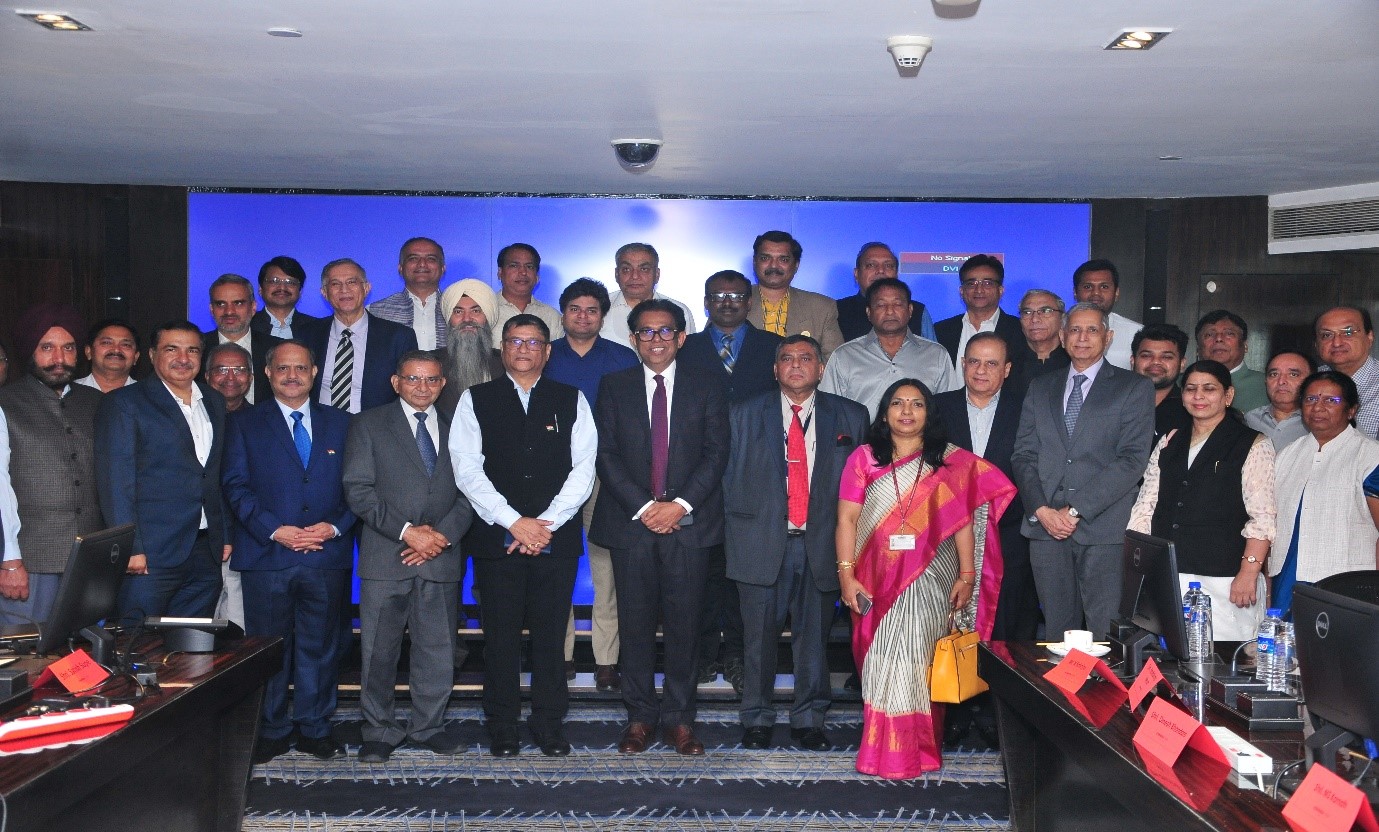
 Department of Consumer Affairs, in association with the Government of Maharashtra, organized a Round Table Conference on “How to Effectively Redress the Grievances Pertaining to Real Estate Sector” in Mumbai today (April 18, 2023). The conference had participation of a diverse group of stakeholders, including government officials,  Chairman of RERA, Delhi, Chairman MahaRERA, Officials  from MOHUA, IBBI, legal experts, industry leaders, and consumer rights activists, to identify actionable solutions to the pressing issues faced by homebuyers and builders in the real estate sector. Several topics related to real estate were covered during the conference, such as systemic policy interventions to reduce litigation in the housing sector, the reasons for the high number of cases filed before Consumer Commissions despite the existence of separate authorities like RERA specifically for housing sector cases, and ensuring effective and timely resolution of housing sector cases.

The Secretary of the Department of Consumer Affairs for the Government of India, Rohit Kumar Singh, in his address, highlighted the staggering number of pending cases in the housing sector at different consumer Commissions. Out of over 5.5 lakh cases currently awaiting resolution, over 54,000 cases  related to housing sector. This backlog of cases highlights the importance of providing speedy justice and streamlining the process for homebuyers.

To address these challenges, the Secretary suggested implementing a simple, model buyer agreement that could help to streamline the homebuying process and protect consumers from potential abuses. This agreement could help to reduce disputes between homebuyers and builders and ensure that consumers have access to effective, speedy, hassle-free, and inexpensive grievance redressal mechanisms.

The Secretary, Department of Consumer Affairs, also highlighted the significance of the Consumer Protection Act 2019, which recognizes housing construction as a service and categorizes developers as product sellers. This recognition helps to ensure that homebuyers have access to the same consumer protections that they would receive when purchasing any other type of product or service. It was also highlighted the need for continued focus on the housing sector in India, particularly when it comes to protecting consumers and streamlining the homebuying process. By implementing measures like model buyer agreements and effective grievance redressal mechanisms, the backlog of cases can be redressed and ensure that homebuyers are treated fairly and protected from potential abuses, he stated.

Additional Secretary, Department of Consumer Affairs, Govt of India, Nidhi Khare, in a detailed presentation outlined a comprehensive overview of the legal provisions under various statutes designed to protect the interests of homebuyers. She delved into the roles and responsibilities of homebuyers under the Real Estate (Regulation and Development) Act, 2016 (RERA), Consumer Protection Act, 2019, and the Insolvency and Bankruptcy Code, 2016. The presentation also addressed the increasing number of cases filed by homebuyers and the impact of these disputes on both homebuyers and builders, leading to distrust within the sector.

During the conference, Member NCDRC, Binoy Kumar, underscored the importance of the builder-buyer agreement as the fundamental document governing transactions in the real estate sector. He suggested that the buyer agreement should be made more efficient and in line with Supreme Court orders, which would subsequently reduce the number of cases filed by homebuyers.

During the conference, several key takeaways emerged as crucial points of discussion. The prevalence of real estate cases in consumer commissions led to suggestions for utilizing similar judgments to expedite the legal process and encouraging parties to engage in discussions to resolve disputes amicably. The success of conciliation in resolving disputes was emphasized, urging for better cooperation between consumer courts and RERA to prioritize conciliation over litigation. The importance of completing and distributing incomplete projects, rather than opting for insolvency under IBC, was stressed, along with a call for transparency among all stakeholders.

Insights were also provided on misleading advertisements in the real estate sector, emphasizing the need for enhanced transparency between buyers and developers to avoid future legal disputes. Lastly, recommendations were made to improve the Builder Buyer Agreement, including disclosing additional charges, outlining issue redressal processes, ensuring legal compliance by developers to keep consumers informed about project progress, and implementing initiatives to resolve minor issues through phone calls. These takeaways aim to enhance transparency and consumer protection in the real estate sector.

During the conference, key problems identified for the homebuyers are as follows:

  • Delay in delivery of possession of property to homebuyers.
  • No compensation for delay in possession to homebuyers.
  • Biased, one-sided, and unfair builder-buyer agreements.
  • Amenities not provided to homebuyers as per the agreement.
  • Misleading advertisements by developers and influencers for luring homebuyers.
  • Non-adherence to the model builder-buyer agreement proposed by RERA.

Key suggestions made during the deliberations included:

  • Sending the draft agreement to buyers before execution.
  • Clearly mentioning permissions and sanctions obtained from competent authorities on the first page of the agreement.
  • Prohibiting builders from launching projects before obtaining all necessary permissions and sanctions.
  • Including an exit clause for homebuyers in all agreements, valid until the Occupancy Certificate (OC) or Completion Certificate (CC) is obtained and possession is offered by the builder.
  • Including a schedule of additional charges beyond the cost of the unit/apartment in all agreements.
  • Requiring all agreements to contain mandatory declarations regarding no dues from any authority/banks and all necessary legal sanctions and approvals from competent authorities.
  • Taking strong action against unfair and misleading advertisements by developers and endorsers.
  • Forming a committee comprising members of the National Commission, various State Consumer Commissions, RERA, Department of Consumer Affairs, and IBBI to effectively deal with the issue.

The Department will also collaborate with other relevant authorities and organizations to ensure the effective implementation of the proposed measures, monitor their impact on the real estate sector, and make necessary adjustments as needed.

Furthermore, the Department of Consumer Affairs will maintain an open dialogue with stakeholders and the public, keeping them informed about progress in addressing real estate issues in consumer commissions and seeking their feedback for continuous improvement.

The Round Table Conference concluded with a commitment from all stakeholders to work collaboratively to establish a more effective and efficient framework for addressing disputes and grievances. This will ultimately lead to a more transparent and consumer-friendly real estate market.

In conclusion, the Round Table Conference on Consumer and the Real Estate Sector marks a significant step forward in tackling the pressing issue of pendency of real estate cases in consumer commissions. By bringing together key stakeholders to discuss and identify actionable solutions, the Department of Consumer Affairs demonstrated its commitment to protect consumer interests and ensuring a fair, transparent, and efficient housing market for all homebuyers.

*****

Department of Pharmaceuticals in partnership with Indian National Science Academy organizes a S20 Webinar on “An Integrated Approach to Combat Neo-Infections: A Way Forward, through Vaccines, Diagnostics and Therapeutics”

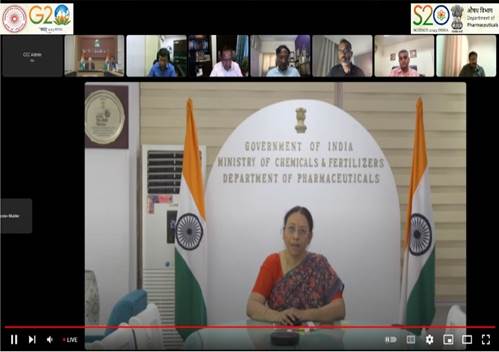
 Department of Pharmaceuticals (DoP), Ministry of Chemicals and Fertilizers, Govt. of India in partnership with the Indian National Science Academy (INSA), organized a S20 Webinar on “An Integrated Approach to Combat Neo-Infections: A Way Forward, through Vaccines, Diagnostics and Therapeutics” today with deliberation from eminent speakers across the G-20 counties like Australia, US, UK, Canada, South Africa, European Union, Brazil and Indonesia. This S20 webinar focused on discussing a need for collaborative models that would help to strengthen and support research and development (R&D) in Vaccines, Therapeutics, and Diagnostics (VTDs).

During the G20 Presidency of India, the Science 20 or the S20 engagement group has planned a number of webinars and workshops on topics of current interest. The Indian National Science Academy (INSA) is coordinating the S20 activities under the overarching theme, “Disruptive Science for Sustainable Development” with three subthemes focussing on “Clean Energy for Greener Future”, “Universal Holistic Health”, and “Science for Society & Culture”. The emphasis is on the disruptive innovation aspect of science that identifies with the nature and essence of the overarching theme.


An important objective of the sustainable development is to increase the healthy life expectancy of all humans, while promoting well-being across the whole life course. Indeed, creating better global health would not only mean creating better medical infrastructure or ease of access in medical care, it would also require sustainable practices which would help enhance cumulative global health standards. The idea is to create awareness among various stakeholders about disease agonistic platforms for new drug development and develop cost-effective therapeutics for priority pathogens. This could be done through a network of R&D institutions across G20 countries which would function in tandem in sustainable manner and contribute to collective preparedness for thwarting future pandemics.

Sh. Rajneesh Tingal, Joint Secretary, Department of Pharmaceuticals, in his opening remarks highlighted various initiatives taken by DoP to foster innovation in India and the need of strengthening research collaboration in vaccines, therapeutics & diagnostics. This was followed by welcome address by Ms. S. Aparna, Secretary, DoP & Prof. Ashutosh Sharma, President INSA & S20 Chair. During her welcome address, Ms. S. Aparna, highlighted the need of creation of Global R&D Network which will help to fight future pandemics. She also emphasized in designing a roadmap by identifying and setting up priority areas for collaboration, strengthening cooperation and partnership among G-20 countries in the arena of Early stage research on vaccines therapeutics and diagnostics for coordinated approaches in fighting emerging disease threats and capacity building in medical countermeasures with the vision of strengthening the global health architecture “One Earth, One Health, One Future”. Prof. Ashutosh Sharma depicted the role of S20 in furthering the agenda of G20 where science will have to play a key role to achieve the economic growth to pull millions of people out of poverty while ensuring that development is inclusive and sustainable.

S20 Webinar featured notable eminent speakers across the G-20 counties. The therapeutics session was moderated by Dr. Girish Sahni, Ex-Director General, Council of Scientific & Industrial Research (CSIR), Govt. of India, involving speakers like Prof. Nicola Mulder, University of Cape Town, South Africa, Dr. Vishal Singh, Penn State University, Pennsylvania, United States, and Dr. Ahmed Aman, Leslie Dan Faculty of Pharmacy, University of Toronto, Canada.

The vaccines session was moderated by Dr. Pramod Kumar Garg, Executive Director, THSTI, Faridabad, India involving Mr. Sourabh Sobti, Coalition for Epidemic Preparedness Innovation, United Kingdom, Prof. Nikolai Petrovsky, Vaxine Pty Ltd., Flinders Medical Centre, Australia, and Dr. Marco Aurélio Krieger, FIOCRUZ University, Brazil as eminent speakers.

Finally, the diagnostics session was moderated by Dr. Anup Anvikar, Director, National Institute of Biologicals (NIB), Noida, India with the engagement of Dr. Nivedita Gupta, Scientist F, ICMR, New Delhi, India, Dr. Vinay K. Nandicoori, Director, CSIR-CCMB, Hyderabad, India, and Dr. Sara Frojdo, Senior Technology Officer, Business Intelligence, FIND, Diagnostics, Geneva, European Union.

Following this, a panel discussion for fireside chat was held, which was moderated by Prof. Narinder K. Mehra, Vice President (Int. Affairs), INSA, New Delhi, India with the engagement of peer-panelist across G20 countries representation from Prof. Nicola Mulder, University of Cape Town, South Africa, Prof. Satryo S. Brodjonegoro, Chairman, Indonesian Academy of Science, Indonesia, Prof. Anil Gulati, Chairman and CEO, Pharmazz Inc., United States.

Some of the key points deliberated by the esteemed speakers included:

  1. Creating a collaborative ecosystem for turning discovery into beneficial therapeutics.
  2. Collaborative efforts to generate important insights while keeping collaborators engaged and committed to their partnerships.
  3. Creating a self-sustaining network of industry-academia and cross-functional industrial collaborations.
  4. Workforce development as a key component of a robust discipline of innovative therapeutic development.
  5. Collaborative environment for innovation & learning to transform processes, technologies, and policy elements of innovation.

Various specific suggestions for building a collaborative ecosystem of the panel members to translate discoveries into effective therapeutics along with suggestions of the participants received during the feedback session were noted and the same would be utilized for developing a robust networked research ecosystem.

The webinar has got good response with more than 1500 registrations across the G-20 countries. This S20 webinar witnessed more than 500 viewers across the virtual platforms. Webinar concluded with a note of appreciation by Prof. USN Murty, Director, NIPER-Guwahati, India to all the S20 speakers, panellists, moderators, and wide participants for their valuable contributions & active participation.

*****

G20 Meeting of Agricultural Chief Scientists (MACS)

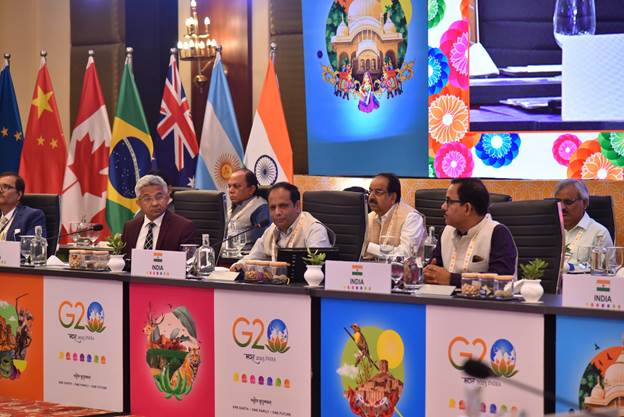
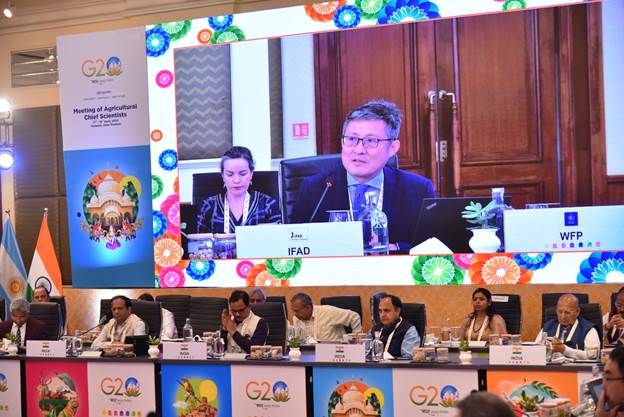
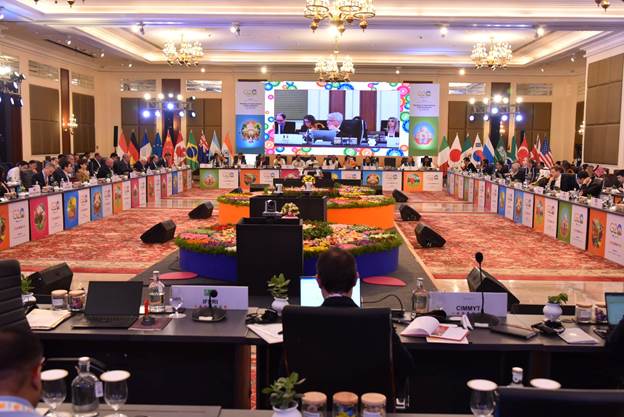
 On the second day of the G20 Meeting of Agricultural Chief Scientists (MACS) in Varanasi today, deliberations were held on Digital Agriculture and Sustainable Agri Value Chain & Public-Private Partnership in Agricultural R&D. MACS Communique was also discussed. Secretary (DARE) & Director General (ICAR), Dr. Himanshu Pathak, who is also the MACS Chair, led the discussions.

Morning session deliberations focused on Digital Agriculture and Traceability; Digital Technological Solutions for Reducing Food Loss and Waste; Agri-tech Startup Ecosystem; Pluralistic Agricultural Extension and Advisory Services (EAS): partnerships for improving lab to land and outreach, Smallholder and Family Farming: G20- Global South Cooperation for Agri-R&D, Public-private Agri-R&D for Public Goods: Experience in Generating and Accelerating Innovations.


Earlier today, a bilateral meeting was conducted with FAO. Dr. Pathak emphasized that the extension service through KVK to farmers would be a very important area of cooperation. FAO representatives also expressed keen interest in extending cooperation in extension service. Dr. Ishmahane Elouafi, Chief Scientist, FAO, and Dr. Selvaraju Ramasamy, Senior Agriculture Officer, FAO participated in the meeting.  They recognized India’s strength in the seed sector, which will be very useful to other countries.

Later in the evening the delegates visited the archaeological site and ASI Museum at Sarnath and witnessed the light and sound show.

The three-day G20 Meeting of Agricultural Chief Scientists (MACS) with the theme, “Sustainable Agriculture and Food System for Healthy People and Planet” is underway at Varanasi. The Meeting was inaugurated by the Union Minister of State for Civil Aviation, and Road Transport and Highways, General (Dr.) V K Singh (Retd) yesterday.

A session was conducted to discuss India’s initiative on Millets and Other Ancient Grains International Research Initiative (MAHARISHI). The representatives of G20 Nations, invited countries and International Organisations supported the MAHARISHI Initiative and expressed that millets being climate a smart crop and super health food, the International Research cooperation is pivotal for its promotion and adoption.

Dr. Himanshu Pathak and Mr. Philippe Mauguin, Chair & CEO, INRAE – National Research Institute for Agriculture, Food and the Environment (France) led their respective delegation in the bilateral meeting between India and France.

Both countries expressed keen interest in cooperation in the areas of climate change, crop diversification, soil & water conservation, natural farming and biofortified crops.

Last evening the delegates experienced Ganga Arati on a river cruise through the Ganges followed by an exhilarating cultural programme.

About 80 foreign delegates from the G20 Member States, Invited Guest Countries, International Organizations and Special Invitees by India are participating in the three day meeting.

On the concluding day on 19th April 2023 discussion on MACS Communique will continue.