World Liver Day, 19 April 2023: A Few Facts

 We all know at the international level or at the national level many events are celebrated by earmarking one day in a year to create awareness or as a celebration or for other reasons. Every year April 19, is organized as an event for World Liver Day so that everyone can be careful about the liver. A few lines about World Liver Day are presented here for the benefit of readers. The liver is the second largest and an important organ in the body. Lifestyle, food habits, etc., may damage a person’s liver over the years silently until it is 90 percent damaged.

According to Dr. Amit Miglani, Director and Head of the Department of Gastroenterology, at Asian Hospital Faridabad, “One of the most common liver diseases is fatty liver disease, which affects millions of people around the world. Fatty liver disease occurs when there is an accumulation of fat in the liver, which can cause inflammation and damage to the liver tissue in advanced stages. While the fatty liver disease is often asymptomatic, some signs can indicate the presence of the disease”.  Recent studies have revealed in India 75 percent of non-alcoholic fatty liver disease (NAFLD; a liver disease caused in patients who drink little or no alcohol) is observed in patients with low body mass index (<25 kg/m2), (pacehospital.com/world-liver-day). This happens due to excessive fat deposits in the liver. The common perception is that alcohol consumption puts one at risk for the condition. However, non-alcoholic fatty liver disease (NAFLD) is becoming increasingly prevalent. The risk factors include obesity, diabetes, and certain genetic diseases. It is pertinent to mention that NAFLD is a silent disease that progresses over years and could lead to liver damage, with symptoms occurring only at an advanced stage. In this context, Dr. Akash Shukla, Director, and Consultant, Department of Hepatology, Sir HN Reliance Foundation Hospital, Mumbai may be quoted “Very often you won't get any features of fatty liver on your face, eyes or skin. But we can get certain hints in some of the people. If somebody has darkening of the skin on the neck, which is typically what is called a nape of the neck, that indicates insulin resistance, and that would almost always be associated with fatty liver. Similarly, if there's a darkening of the skin, in your armpits, or in the groins, those are also indications that the person may have a fatty liver". He, however, cautions that the absence of any of these does not mean the absence of fatty liver disease. And therefore, anybody who has any risk factor for fatty liver like high cholesterol, high sugar, sedentary lifestyle, obesity, or a family history of fatty liver disease or consuming significant alcohol then they should consult doctors. 

This year, 2023, the World Liver Day theme is “Be Vigilant, Do Regular Liver Check-Up, Fatty Liver Can Affect Anyone.” The theme focuses to emphasise the practice of regular liver check-ups, as a fatty liver can affect anyone. 

Prof Shankar Chatterjee, Hyderabad 

Sub-Regional Conference on World Heritage “The Next 50: Ways Forward for South Asia World Heritage”

The Next 50: Ways Forward for South Asia

November 2022 marked the 50th anniversary of the UNESCO World Heritage Convention. Over the past 50 years, the notion of culture, in particular of cultural heritage, has shifted from monument-centered towards people-centered and holistic approach. The understanding of cultural heritage has expanded to encompass a wider spectrum, including cultural landscape, historic towns, industrial heritage as well as heritage routes. The Global Strategy, adopted by the World Heritage Committee in 1994, was established to make the World Heritage List more representative, credible and balanced and remains one of the most important strategies for World Heritage till date.

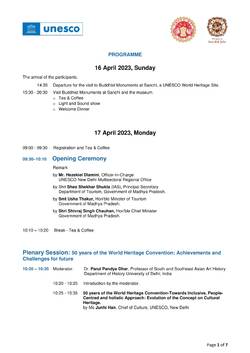
To mark this meaningful 50th anniversary of the World Heritage Convention, UNESCO New Delhi Multisectoral Regional Office is organizing, jointly with the State Government of Madhya Pradesh of India, a Sub-Regional Conference on World Heritage “The Next 50: Ways Forward for South Asia World Heritage” on 17-18 April in Bhopal, Madya Pradesh, India.

The Conference will look at the achievements over the past 50 years at a national, regional and international levels and brainstorm about ways forward for World Heritage in the next 50 years to come, focusing, in particular, on themes such as World Heritage and Sustainable Development for Local Community, World Heritage and Sustainable Tourism, Historic Urban Landscape, and World Heritage and Climate Change.

Approximately one hundred government officials, members of the civil society, universities and academics, as well as individual experts from Bangladesh, Bhutan, India, Nepal, the Maldives and Sri Lanka will take part in the Conference.                                                                        

Documents
<a class="d-block text-break" data-html="true" data-original-title="
Title: Programme

Author: preeti dhoundiyal ” data-toggle=”tooltip” href=”https://whc.unesco.org/document/199544&#8243; style=”background-color: transparent; box-sizing: border-box; color: #0077d4; display: block !important; overflow-wrap: break-word !important; text-decoration-line: none; word-break: break-word !important;” target=”_blank” title=””><a class="text-break" data-html="true" data-original-title="
Title: Programme

Author: preeti dhoundiyal ” data-toggle=”tooltip” href=”https://whc.unesco.org/document/199544&#8243; style=”background-color: transparent; box-sizing: border-box; color: #0077d4; overflow-wrap: break-word !important; text-decoration-line: none; word-break: break-word !important;” target=”_blank” title=””>Programme .pdf

History of Paris

Paris, the capital of France, is a city with a long and rich history dating back over 2,000 years. The city was originally founded by a Celtic people called the Parisii in the 3rd century BC and was known as Lutetia. It became a major city during the Roman Empire when it was known as Lutetia Parisiorum.

During the Middle Ages, Paris became the center of the French monarchy and the Catholic Church. The city grew in size and power, with the construction of famous landmarks such as Notre-Dame Cathedral and the Louvre Palace. In 987 AD, Hugh Capet was crowned King of France in the Notre-Dame Cathedral, which became a symbol of French royalty and power.


Source – Wikipedia

In the 14th century, the Hundred Years’ War between France and England began, and Paris was occupied by the English for several decades. However, it remained an important cultural and intellectual center, with the establishment of the Sorbonne University in 1257.

The Renaissance saw Paris become an important center of art and culture, attracting artists and writers from all over Europe. The reign of Louis XIV, known as the Sun King, saw the development of many grand buildings and the establishment of the French Academy of Sciences. The Palace of Versailles, located just outside Paris, became the center of royal power and extravagance.

During the 18th century, Paris became a center of Enlightenment thought and revolutionary ideas. The French Revolution of 1789 began in Paris, with the storming of the Bastille prison. The Revolution saw the overthrow of the monarchy and the establishment of the First French Republic. Many famous figures of the Revolution, such as Maximilien Robespierre and Georges Danton, were from Paris.

In the 19th century, Paris underwent major changes with the construction of wide boulevards, public parks, and the Eiffel Tower, which was built for the 1889 World’s Fair. The city became a center of the arts, with artists such as Claude Monet and Edgar Degas living and working in the city.

During World War I, Paris was heavily damaged by German artillery, but the city was quickly rebuilt after the war. In 1940, Paris was occupied by Nazi Germany, and many of the city’s landmarks and cultural treasures were threatened with destruction. However, the city was liberated by Allied forces in August 1944, and the Resistance played a key role in the city’s liberation.

Today, Paris is a major global city and a center of art, culture, and fashion. It is known for its iconic landmarks, such as the Eiffel Tower and the Arc de Triomphe, as well as its museums, such as the Louvre and the Musée d’Orsay. It is also a center of international diplomacy and home to many international organizations, including the United Nations Educational, Scientific and Cultural Organization (UNESCO).

Paris has a long and fascinating history, with each era leaving its mark on the city’s architecture, art, and culture. From its origins as a Celtic settlement to its role as a center of the Enlightenment and the French Revolution, Paris has been at the forefront of European history for centuries. Today, it remains a vibrant and dynamic city, beloved by visitors from around the world.

Book review of The Hobbit

The Hobbit, written by J.R.R. Tolkien, is a classic novel that has captivated readers of all ages for decades. The book tells the tale of a hobbit named Bilbo Baggins, who embarks on an adventure with a group of dwarves to reclaim their treasure from a dragon named Smaug. The story is set in a fantasy world called Middle Earth, which is inhabited by a host of fascinating creatures, including elves, wizards, and trolls.
One of the most remarkable aspects of The Hobbit is Tolkien’s masterful use of language. His descriptions of Middle Earth are so vivid that readers can almost feel themselves transported to this magical world. The characters are also well-developed and memorable, with Bilbo being the star of the show. He is initially hesitant to leave the comfort of his home and embark on an adventure, but as the story progresses, he grows in courage and resourcefulness.
The plot of The Hobbit is exciting and engaging, with plenty of twists and turns to keep readers hooked. From the moment Bilbo sets out on his adventure, the story takes on a fast-paced and thrilling tone, filled with danger and excitement. Tolkien’s use of humor also adds a lightness to the story, making it enjoyable for readers of all ages.
Overall, The Hobbit is a timeless classic that is sure to delight readers of all ages. With its engaging plot, vivid descriptions, and well-developed characters, it is no wonder that it has remained popular for so many years. Anyone who loves fantasy and adventure should definitely add this book to their reading list.

Online registrations for Yuva Sangam (Phase II) commences for participation of 1000 youth from 23 States and UTs


1st round of Yuva Sangam concludes with an overwhelming participation of 1200 youngsters visiting 22 States of India through 29 tours

The Registrations for Yuva Sangam (Phase II) started today through an online portal. It envisages participation of 1000 youngsters from 23 States and UTs of India. Under this initiative,  the exposure tours will be conducted in the months of April and May 2023. They will travel in a group of 45 to 50 to the paired State. It will provide an immersive, multidimensional experience of various facets under five broad areas of Paryatan (Tourism), Parampara (Traditions), Pragati (Development), Prodyogik (Technology)and Paraspar Sampark (People-to-people connect).Through the course of the program, students will interact with each other in the areas of language, literature, cuisine, festivals, cultural events and tourism. In short, they will get a first- hand experience of living in a completely different geographical and cultural scenario.

Interested youth in the age group of 18-30 years may register on the portal exclusively developed for the purpose at https://ebsb.aicte-india.org/

The first round of Yuva Sangam was recently concluded with an overwhelming participation of approximately 1200 youngsters visiting 22 States of India through 29 tours with main focus on North Eastern Region during February-March 2023.The participants have had an enriching experience which brought out the spirit of EK BHARAT SHRESHTHA BHARAT in its true sense.

An initiative of ‘Yuva Sangam’ under Ek Bharat Shreshtha Bharat has been conceptualized as a collaborative effort of various ministries with an aim to strengthen people to people connect and build empathy among youth across the nation. The initiative is inculcating common spirit of understanding among thousands of youth participating in the program, which shall resonate throughout the country and contribute immensely towards building a truly Shreshtha Bharat.

Young Authors’ Conference on&quot; Civilizational Dialogue Among SCO Member States”

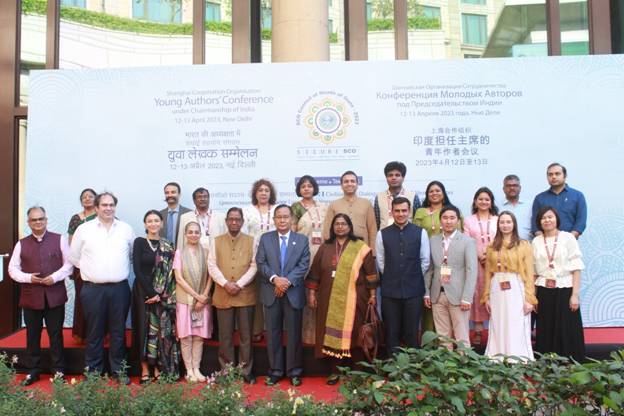
 The two-day Shanghai Corporation Organization (SCO) Young Authors’ Conference on” Civilizational Dialogue Among SCO Member States” with delegates from SCO Member Nations concluded on 13 April 2023.

Minister of State for External Affairs & Education, Shri Rajkumar Ranjan Singh presided as the Chief Guest at the Valedictory Ceremony of the SCO Young Authors’ Conference today. The Conference was organised by the Ministry of Education on 12-13 April 2023 at the Leela Palace, New Delhi with National Book Trust, India as the Implementing Agency.

Shri Rajkumar Ranjan Singh said that India has been actively taking part in all the cooperation activities of the organisation and is a highly valued member of the organisation. The focus on shared civilizational linkages at the SCO Young Authors’ Conference is the true reflection of the people of the region and the conference was a testimony of our commitment to contribute to the success of the organisation.   
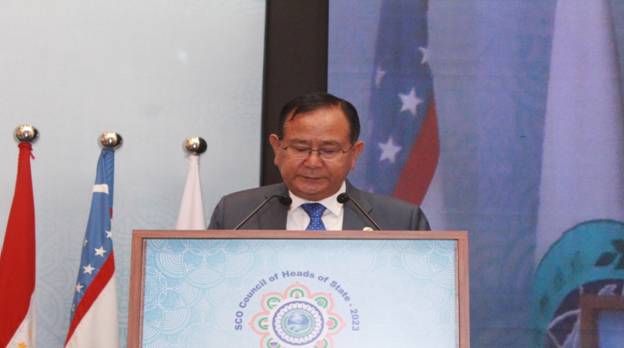
Prof. Govind Prasad Sharma, Chaiman, NBT in his address said that Dialogue is the basic medium to keep any human society and civilization alive. The conference brought forth the connection youth have not only with their own society but also with neighboring countries, as well as the vision that they have to further deepen inter-cultural cooperation.

Shri Yuvraj Malik, Director, NBT while delivering the vote of thanks said that conference was an enriching experience witnessing the exchange of perspective and ideas. The dialogue shed light on the interdependence between human beings and society and explored language as a social tool that facilitates interaction between various communities promoting the advancement of knowledge.

The SCO Youth Conference was centered on the theme “Civilizational Dialogue Among SCO Member States” with six sessions focussing on History & Philosophy, Economy, Religion, Culture, Literature and Science & Medicine, respectively. The first session on History and Philosophy focussing on ‘Shared Civilizational Links and its impact on Modern Ethical Behaviour’ was chaired by Dr. Yuthika Mishra with Ms. Ekatherina S. Manoylo from the Russian Federation and Dr. Ayesha Gautam from India as the panelists. The session was moderated by Prof. Ajoy Karnati. The speakers delved into the commonalities that exist between the SCO nations, the need for dialogue and cooperation by looking back at historical exchanges that facilitate understanding, the relation between morality and traditions and the conditions that gave rise to thought systems which travelled between the countries. The discussants, Dr. Aarshi Dua, Dr. Ruchi Verma and Mr. Fahad Nahvi enriched the session with their detailed comments and questions.

The second session was on the sub-theme Economy, focusing on ‘Trade and Commerce Linkages’. Dr. Sunil Ashra was the Chair for the session with Ms. Anastacia V. Volodina from the Russian Federation and Dr. Pravesh Kumar Gupta from India as the speakers. The session was moderated by Mr. Kumar Vikram. The speakers delved into the connection between the film and the book industry in a fresh take on the different sides of the economy, the history of trade between India and Central Asian countries and how trade routes evolved over the ages. The discussants, Dr. Ritika Joshi and Dr. Tasha Agarwal contributed to the discussion with their insightful observations.
The third session dealt with the topic of Religion with emphasis on ‘Movement of Religious Ideas and Thoughts in the SCO Regions’. The session was chaired by Mr. Chamu Krishna Shastri and moderated by Ms. Deepa Singh. The panelists for the session were Ms. Nurlan Kyzy Begaiym from the Kyrgyz Republic, Dr. Pranshu Samdarshi from India and Ms. Ainur Akhmetova from Kazakhstan. The panelists spoke about the existence of multi-religious, syncretic societies in their countries, the centrality of spirituality, the ancient inter linkages between the SCO countries and the need to use this cooperative spirit to expand the concept of dialogue. The discussants, Dr. Aarshi Dua and Dr. Ritika Joshi continued the discussion with their perspectives on the role of storytelling and social media in the propagation of religious ideas.

Session four revolved around Culture, with an emphasis on ‘Civilizational Roots of Contemporary Cultures’. Dr. J.K. Bajaj was the Chairperson for the session and Ms. Neera Jain was the Moderator. Dr. Rashmini Koparkar from India, Mr. Erkanat Khuatbekuly from Kazakhstan and Ms. Anastacia V. Volodina were the speakers. The panel spoke about how in this era of rapid development, culture helps us preserve our identity and heritage. India and the Central Asian countries have been witness to exchange of ideas, commerce and language since time immemorial which has enabled the emergence of a shared cultural heritage. The discussants, Ms. Ivy Handique and Mr. Mayank Singh Singh took forward the dialogue with their comprehensive commentary.

The fifth session of the Conference took place on the sub-theme of Literature with focus on ‘Translation and Interpretation of Literary Texts’. The session was chaired by Prof. Badri Narayan and was moderated by Mr. Kumar Vikram. The panelists for the session were Ms. Ekatherina S. Manoylo from the Russian Federation, Ms. Tanvi Negi from India, Ms. Ainur Akhmetova from Kazakhstan and Dr. Sonu Saini from India. The speakers delved into the rich corpus of literature that exist in all SCO nations, translation as a mediation between cultures and languages and the complexities behind it. The discussants for the session, Ms. Anagha Gopal and Mr. Sumant Salunke facilitated the discussion with comments and insightful questions.

The last session of the two-day SCO Young Authors’ Conference was on the theme Science & Medicine, with special focus on ‘Perspectives on Science and Medicinal Knowledge Systems of SCO Member States’. The esteemed panellist of the session included Dr Aditya Kolachana from India and Ms Nurlan Kyzy Begaiym from Kazakhstan. Mr Maxim A. Zamshev from the Russian Federation was the Chairperson and Ms Neerja Anand was the moderator of the same. The panel highlighted the role of medicine in the 21st century and the need to strike a balance between traditional and modern medicinal practices. India has been successful in making traditional practices of medicine like Ayurveda, licensed practice of science. It was also highlighted that these traditional medicinal knowledge systems are evidenced in both Kyrgyz and India’s epics. The session was taken forward by discussant, Ms Damini Roy, who initiated a question and answer round with her perceptive points.

The Conference provided fresh perspectives from the participating delegates, scholars and speakers exploring the mutual and distinct characteristics in our cultures and heritage at the same time acknowledging the role of literature in aiding the connection between cultures.

*****

2-Day SCO Young Authors’ Conference Concludes Successfully

 The two-day Shanghai Corporation Organization (SCO) Young Authors’ Conference on” Civilizational Dialogue Among SCO Member States” with delegates from SCO Member Nations concluded on 13 April 2023.

Minister of State for External Affairs & Education, Shri Rajkumar Ranjan Singh presided as the Chief Guest at the Valedictory Ceremony of the SCO Young Authors’ Conference today. The Conference was organised by the Ministry of Education on 12-13 April 2023 at the Leela Palace, New Delhi with National Book Trust, India as the Implementing Agency.

Shri Rajkumar Ranjan Singh said that India has been actively taking part in all the cooperation activities of the organisation and is a highly valued member of the organisation. The focus on shared civilizational linkages at the SCO Young Authors’ Conference is the true reflection of the people of the region and the conference was a testimony of our commitment to contribute to the success of the organisation.   

Prof. Govind Prasad Sharma, Chaiman, NBT in his address said that Dialogue is the basic medium to keep any human society and civilization alive. The conference brought forth the connection youth have not only with their own society but also with neighboring countries, as well as the vision that they have to further deepen inter-cultural cooperation.

Shri Yuvraj Malik, Director, NBT while delivering the vote of thanks said that conference was an enriching experience witnessing the exchange of perspective and ideas. The dialogue shed light on the interdependence between human beings and society and explored language as a social tool that facilitates interaction between various communities promoting the advancement of knowledge.

The SCO Youth Conference was centered on the theme “Civilizational Dialogue Among SCO Member States” with six sessions focussing on History & Philosophy, Economy, Religion, Culture, Literature and Science & Medicine, respectively. The first session on History and Philosophy focussing on ‘Shared Civilizational Links and its impact on Modern Ethical Behaviour’ was chaired by Dr. Yuthika Mishra with Ms. Ekatherina S. Manoylo from the Russian Federation and Dr. Ayesha Gautam from India as the panelists. The session was moderated by Prof. Ajoy Karnati. The speakers delved into the commonalities that exist between the SCO nations, the need for dialogue and cooperation by looking back at historical exchanges that facilitate understanding, the relation between morality and traditions and the conditions that gave rise to thought systems which travelled between the countries. The discussants, Dr. Aarshi Dua, Dr. Ruchi Verma and Mr. Fahad Nahvi enriched the session with their detailed comments and questions.

The second session was on the sub-theme Economy, focusing on ‘Trade and Commerce Linkages’. Dr. Sunil Ashra was the Chair for the session with Ms. Anastacia V. Volodina from the Russian Federation and Dr. Pravesh Kumar Gupta from India as the speakers. The session was moderated by Mr. Kumar Vikram. The speakers delved into the connection between the film and the book industry in a fresh take on the different sides of the economy, the history of trade between India and Central Asian countries and how trade routes evolved over the ages. The discussants, Dr. Ritika Joshi and Dr. Tasha Agarwal contributed to the discussion with their insightful observations.

The third session dealt with the topic of Religion with emphasis on ‘Movement of Religious Ideas and Thoughts in the SCO Regions’. The session was chaired by Mr. Chamu Krishna Shastri and moderated by Ms. Deepa Singh. The panelists for the session were Ms. Nurlan Kyzy Begaiym from the Kyrgyz Republic, Dr. Pranshu Samdarshi from India and Ms. Ainur Akhmetova from Kazakhstan. The panelists spoke about the existence of multi-religious, syncretic societies in their countries, the centrality of spirituality, the ancient inter linkages between the SCO countries and the need to use this cooperative spirit to expand the concept of dialogue. The discussants, Dr. Aarshi Dua and Dr. Ritika Joshi continued the discussion with their perspectives on the role of storytelling and social media in the propagation of religious ideas.

Session four revolved around Culture, with an emphasis on ‘Civilizational Roots of Contemporary Cultures’. Dr. J.K. Bajaj was the Chairperson for the session and Ms. Neera Jain was the Moderator. Dr. Rashmini Koparkar from India, Mr. Erkanat Khuatbekuly from Kazakhstan and Ms. Anastacia V. Volodina were the speakers. The panel spoke about how in this era of rapid development, culture helps us preserve our identity and heritage. India and the Central Asian countries have been witness to exchange of ideas, commerce and language since time immemorial which has enabled the emergence of a shared cultural heritage. The discussants, Ms. Ivy Handique and Mr. Mayank Singh Singh took forward the dialogue with their comprehensive commentary.

The fifth session of the Conference took place on the sub-theme of Literature with focus on ‘Translation and Interpretation of Literary Texts’. The session was chaired by Prof. Badri Narayan and was moderated by Mr. Kumar Vikram. The panelists for the session were Ms. Ekatherina S. Manoylo from the Russian Federation, Ms. Tanvi Negi from India, Ms. Ainur Akhmetova from Kazakhstan and Dr. Sonu Saini from India. The speakers delved into the rich corpus of literature that exist in all SCO nations, translation as a mediation between cultures and languages and the complexities behind it. The discussants for the session, Ms. Anagha Gopal and Mr. Sumant Salunke facilitated the discussion with comments and insightful questions.

The last session of the two-day SCO Young Authors’ Conference was on the theme Science & Medicine, with special focus on ‘Perspectives on Science and Medicinal Knowledge Systems of SCO Member States’. The esteemed panellist of the session included Dr Aditya Kolachana from India and Ms Nurlan Kyzy Begaiym from Kazakhstan. Mr Maxim A. Zamshev from the Russian Federation was the Chairperson and Ms Neerja Anand was the moderator of the same. The panel highlighted the role of medicine in the 21st century and the need to strike a balance between traditional and modern medicinal practices. India has been successful in making traditional practices of medicine like Ayurveda, licensed practice of science. It was also highlighted that these traditional medicinal knowledge systems are evidenced in both Kyrgyz and India’s epics. The session was taken forward by discussant, Ms Damini Roy, who initiated a question and answer round with her perceptive points.

The Conference provided fresh perspectives from the participating delegates, scholars and speakers exploring the mutual and distinct characteristics in our cultures and heritage at the same time acknowledging the role of literature in aiding the connection between cultures.

*****

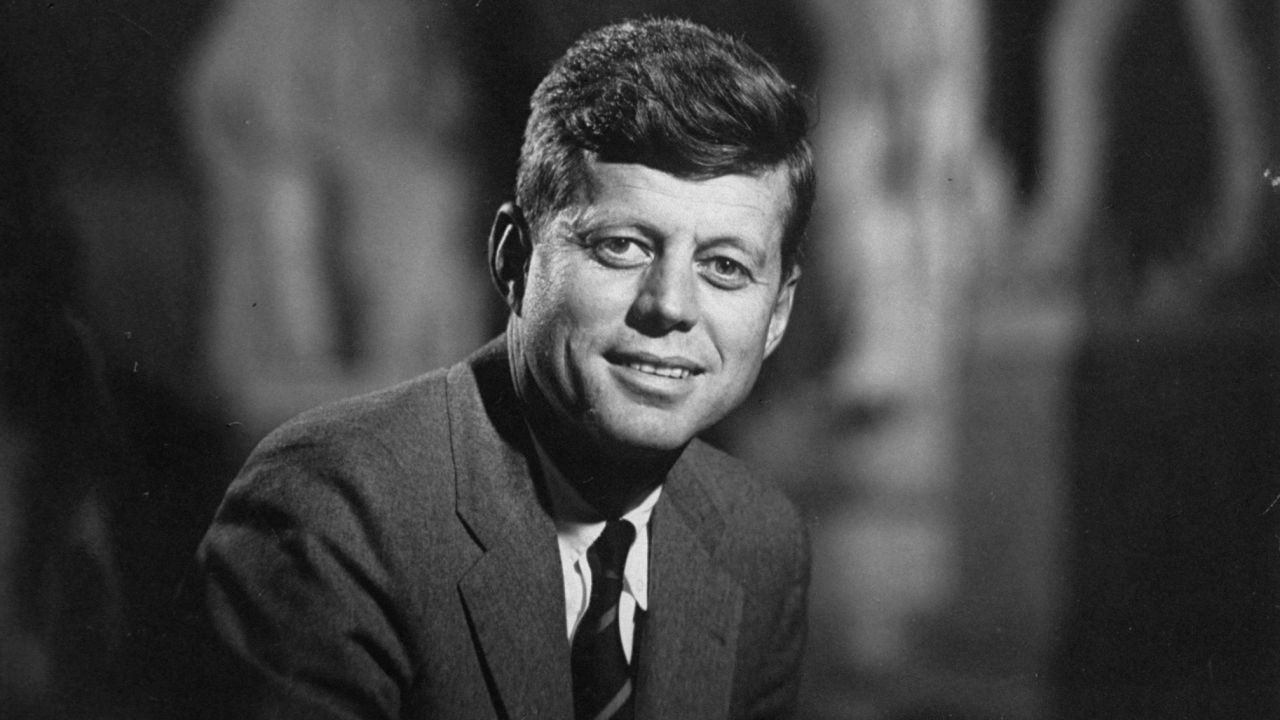
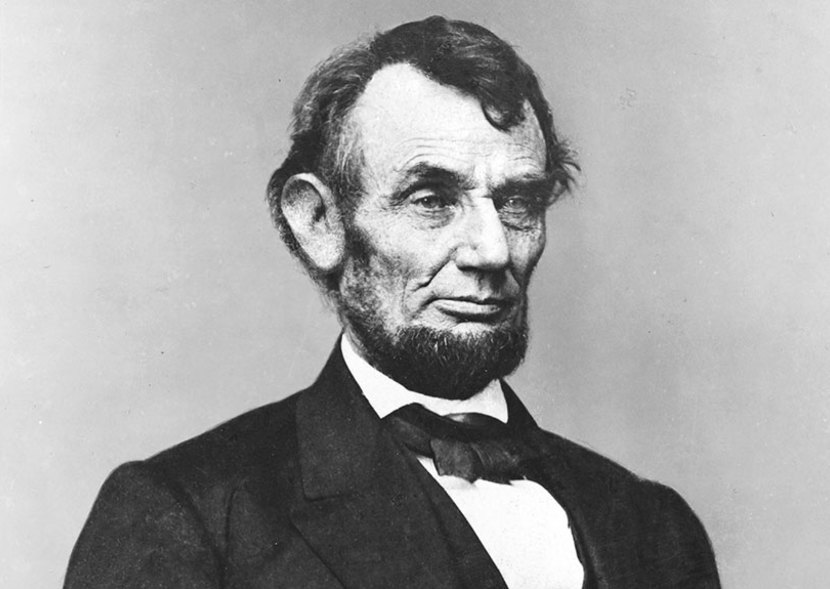
Uncanny coincidences between John F. Kennedy and Abraham Lincoln

Have you ever heard of the strange coincidences that occurred between Abraham Lincoln and John F. Kennedy, both presidents of the United States?

Despite having lived more than a century apart, former presidents of the United States John F. Kennedy and Abraham Lincoln have some truly bizarre coincidences in common.

In addition to having the same well-known job title and experiencing terrible and untimely deaths while in office, Lincoln and Kennedy also have some odd similarities.

Although it isn’t all that unexpected considering their final function as President, both Lincoln and Kennedy served in Congress prior to becoming the Presidency. The two did experience significant Civil Rights issues while serving as president.

Lincoln was elected to Congress in 1846, and Kennedy was elected in 1946. And in the years 1860 and 1960, the two men were each elected to the White House.

Both Presidents Kennedy and Lincoln lost a child while in office. In 1862, Willie Lincoln, age 11, died of typhoid disease, and in 1963, Patrick, the premature son of John F. Kennedy and Jackie, died at the age of two.

Assassinations Similarities

Even while the two horrific occurrences share the tragedy of being assassinated in public, there are some odd underlying similarities between them.

Both men were shot in the head: Kennedy from a distance while traveling in an open-air Dallas motorcade, and Lincoln at close range while watching a performance of “Our American Cousin”.

Kennedy was traveling in the seventh vehicle in his motorcade, while Lincoln was sitting in box number seven of Ford’s Theatre.

A guy with three names—Lee Harvey Oswald, John Wilkes Booth—killed both men on a Friday.

The aftermath

Both the assassins of Lincoln and Kennedy were assassinated before they could be brought to justice, despite the fact that they originally managed to flee the murder sites following the killings.
The two assassins, like Lincoln and Kennedy, had concurrent career trajectories since they were born 100 years apart, in 1839 and 1939, respectively.
Lincoln and Kennedy both had their vice presidents replace them, as is custom. However, Lyndon B. Johnson and Andrew Johnson had the same last name. The two successors were born in 1808 and 1908, respectively, one century apart from one another.
None of these coincidences stand out on their own as particularly compelling but taken as a whole, they create an odd web of similarities between the two presidents, who lived a century apart.

Disapperance of A Cessna 182 over Australia's Bass Strait

Frederick Valentich, 20, vanished on October 21, 1978, when he flew across the Bass Strait from Melbourne to King Island. He was flying a Cessna 182 that had been hired and had the registration. VH-DSJ.

One of three islands comprising the New Year Group in the Bass Strait, King Island is 125 miles from the Australian state of Victoria. Valentich, a RAAF Training Corps member and aviation enthusiast, had twice attempted to enroll in the Australian Air Force but had been turned down due to his lack of academic credentials.

Photo –  Robert Frola via wikimedia Commons

Additionally, according to his father, he was a UFO enthusiast who collected newspaper clippings and watched movies about extraterrestrials. He had accumulated 150 flight hours at the time of his disappearance and was certified to fly at night under ideal meteorological circumstances.
He initially said that he was going to King Island to pick up some pals before telling others that he was going to pick up crayfish. Later, investigators ruled out both justifications. Additionally, he did not follow protocol by notifying King Island Airport (TAS) of his plan to arrive there. This gave detectives reason to suspect that he could have orchestrated the entire incident. What specifically was Valentich doing then? Had he gone in quest of UFOs or was he trying to accrue additional flight time?
At 19:06, Valentich radioed Melbourne Flight Service to report that an unidentified aircraft was following him at 4,500 feet after taking off from Melbourne Moorabbin Airport (MBW) and crossing the ocean. He claimed to have seen four dazzling lights that resembled landing lights. He was unable to identify the plane’s brand; all he could say was that it was traveling at a breakneck pace and seemed to be playing a joke on him. A little while afterward, all radio communication was lost.
He reported seeing what seemed to be four landing lights above him in the bright night sky. Venus was the brightest planet at the time of the occurrence, making a diamond-shaped formation with Mars, Mercury, and the brilliant star Antares. These four white spots might have been misinterpreted for aircraft or UFO lights by Valentich.
Another private aircraft pilot overflying the Bas Strait a month, after Valentich vanished, reported seeing what he believed to be the form of a submerged plane. He flew over it again but could not be sure that it was an airplane in the water. A Cessna 182’s engine cowling washed found on Flinders Island five years after Valentich vanished.
Investigators came to the conclusion that Valentich being disoriented was the most likely cause of his disappearance. Valentich, being a novice pilot, could have been fooled by the appearance of a tilted horizon. Some of the horizons are still light as the sun sets, but the rest progressively grows darker. As a result of the illumination imbalance, the horizon may appear to be slanted, forcing the pilot to adjust the plane’s course. When the plane’s nose is pointed downward, its speed rises and it enters what is known as a “graveyard spiral.”

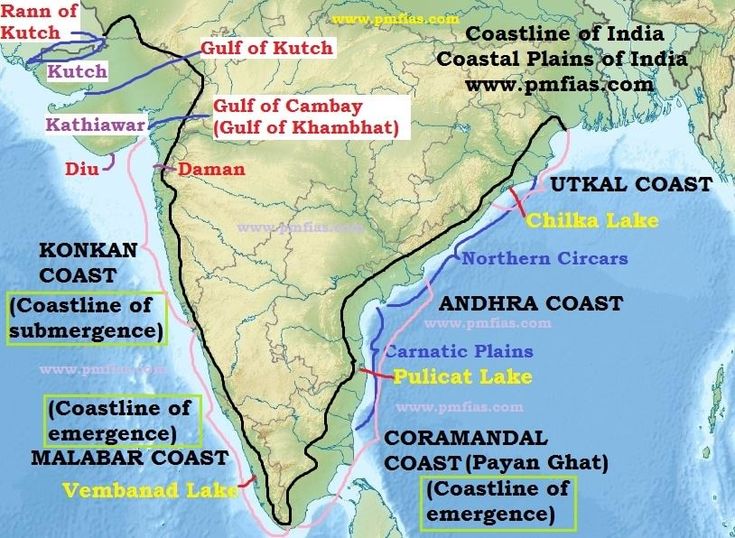
Define coastal zone and its characteristics. Also make a map highlighting the coastal lines of India.

Coastal zone is the area where land meets the sea, it’s a dynamic and constantly changing environment. It typically includes a range of habitats, such as beaches, dunes, cliffs, estuaries, and wetlands. The characteristics of coastal zones vary depending on the specific location, but some common features include:High biological productivity due to the mixing of nutrient-rich water from the ocean and freshwater from rivers.
High levels of biodiversity, with many unique species adapted to the coastal environment.
High levels of human activity, including residential and commercial development, fishing, and tourism.
Vulnerability to natural disasters, such as hurricanes, storm surges, and tsunamis.
India has a long coastline of approximately 7,517 km, which runs along the Bay of Bengal in the east, the Arabian Sea in the west, and the Indian Ocean in the south. The coastal zone of India is a unique and diverse environment that supports a variety of ecosystems and habitats, including beaches, mangrove forests, coral reefs, estuaries, and wetlands. The following are some of the characteristics of the coastal zone in India:

High biodiversity: The coastal zone of India is home to a wide variety of plant and animal species, many of which are endemic to the region. The mangrove forests of the Sundarbans, for example, are home to the Royal Bengal Tiger, while the coral reefs of the Andaman and Nicobar Islands support a diverse array of marine life.
High levels of human activity: The coastal zone of India is densely populated and supports a variety of economic activities, including fishing, aquaculture, tourism, and port development. This has led to significant environmental degradation, including pollution, habitat loss, and overexploitation of natural resources.
Vulnerability to natural disasters: The coastal zone of India is highly vulnerable to natural disasters, including cyclones, storm surges, and sea-level rise. In recent years, severe weather events such as the 2004 Indian Ocean tsunami, the 2017 Cyclone Ockhi, and the 2019 Cyclone Fani have caused significant damage and loss of life along the Indian coast.
Coastal erosion: The coastal zone of India is experiencing significant coastal erosion, particularly in areas of high wave energy and human activity. This is leading to the loss of beaches, dunes, and other important habitats, and is exacerbating the impacts of climate change on the region.
In conclusion, the coastal zone of India is a unique and diverse environment that supports a wide variety of ecosystems and habitats, but is also facing significant environmental challenges. It is important to implement sustainable coastal management practices that balance economic development with environmental conservation and protection of vulnerable coastal communities.

Pana Sankranti – Beginning of Odia New Year

Pana Sankranti, also known as Maha Vishuba Sankranti, is a festival celebrated in the Indian state of Odisha to mark the beginning of the Odia New Year. The festival falls on the first day of the Hindu month of Baisakh (usually around April 14th). The festival is celebrated with great enthusiasm and zeal across the state. The main highlight of the festival is the preparation and consumption of a traditional drink called ‘Pana’. Pana is made from ingredients like water, milk, curd, sugar, and crushed fruits. It is believed to have cooling properties and is offered to Lord Jagannath in the Jagannath temple in Puri.

On the day of Pana Sankranti, people wake up early in the morning and take a bath before heading to the temple to offer prayers to Lord Jagannath. They then return home and prepare the Pana drink. The drink is then distributed to family members, friends, and neighbors as a sign of goodwill and brotherhood. Another important aspect of the festival is the decoration of houses and streets with colorful Rangolis and Alpanas. Women dress up in traditional sarees and adorn themselves with jewelry. They also participate in community activities like singing and dancing.

In rural areas, the festival is celebrated with the worship of the village deity. The village headman, known as the Sarpanch, leads the villagers in offering prayers to the deity. This is followed by community feasting and cultural programs.

In some parts of Odisha, a unique tradition called ‘Chariot pulling’ is observed on Pana Sankranti. A small wooden chariot is constructed and decorated with flowers and leaves. The chariot is then pulled through the streets by the villagers. It is believed that pulling the chariot brings good luck and prosperity.

The festival of Pana Sankranti is also a time for introspection and reflection. People take stock of their past year and make resolutions for the new year. It is a time to forgive and forget past grievances and start afresh. Pana Sankranti is an important festival for the people of Odisha. It is a time to celebrate the new year, offers prayers to the deities, and come together as a community. The festival is characterized by the consumption of the Pana drink, the decoration of houses and streets, community feasting, and cultural programs. It is a time to renew bonds and start anew.

Char Dham Yatra

Char Dham Yatra is a pilgrimage tour to four holy shrines of Hinduism, located in the Himalayan region of Uttarakhand, India. These shrines are Yamunotri, Gangotri, Kedarnath, and Badrinath, and the Yatra is considered one of the most important pilgrimages in Hinduism. It is believed to be a means of achieving salvation or Moksha, and devotees undertake this journey to seek the blessings of the Gods and to attain spiritual enlightenment. The Yatra usually starts in the month of May and continues until November, as the harsh winter conditions in the region make it impossible to travel during the rest of the year.

The Yatra begins with a visit to Yamunotri, which is the source of the Yamuna River and is dedicated to the goddess Yamuna. The temple here is located at an altitude of 3,293 meters and is accessible only by trekking or on a horseback ride. The trek to Yamunotri takes you through scenic Himalayan routes, passing by waterfalls, glaciers, and stunning landscapes.

The second destination on the Yatra is Gangotri, which is the source of the Ganges River and is dedicated to the goddess Ganga. The temple here is located at an altitude of 3,048 meters, and it is believed that taking a dip in the holy waters of the Ganges at Gangotri can wash away all sins and grant Moksha.

The third destination on the Yatra is Kedarnath, which is located at an altitude of 3,583 meters and is dedicated to Lord Shiva. The temple here is one of the 12 Jyotirlingas in India and is considered one of the most important pilgrimage sites for Shiva devotees. The trek to Kedarnath is considered the toughest of the Char Dham Yatra, as it involves a steep climb of around 16 km from Gaurikund.

The fourth and final destination of the Char Dham Yatra is Badrinath, which is located at an altitude of 3,133 meters and is dedicated to Lord Vishnu. The temple here is considered one of the 108 Divya Desams or the holiest of holy shrines of Lord Vishnu. Badrinath is also the only shrine among the four that is accessible by road.

Apart from these four shrines, there are also several other holy places and temples that one can visit during the Char Dham Yatra, including Hemkund Sahib, which is a Sikh shrine, and Valley of Flowers, which is a UNESCO World Heritage Site and is known for its rare flora and fauna.

In conclusion, the Char Dham Yatra is a spiritually enriching journey that takes devotees on a pilgrimage to four holy shrines in the Himalayan region of India. The Yatra is considered one of the most important pilgrimages in Hinduism, and it offers a unique opportunity to experience the beauty and divinity of the Himalayas while seeking the blessings of the Gods.

Ashadi Ekadashi; Its Significance & Celebrations

Ashadi Ekadashi is a significant Hindu festival celebrated every year on the eleventh day of the waxing phase (Shukla Paksha) of the Hindu month of Ashadha. It usually falls in the month of July or August in the Gregorian calendar. This festival is celebrated with great enthusiasm and devotion in Maharashtra, Karnataka, and some parts of Gujarat.

The word ‘Ekadashi’ is derived from the Sanskrit language, which means ‘eleven’. It is believed that Lord Vishnu goes into a deep slumber or ‘Yoga Nidra’ on this day, and wakes up after four months on the day of Prabodhini Ekadashi, which falls in the month of Kartik. Hence, Ashadi Ekadashi is also known as ‘Devashayani Ekadashi’ or ‘Hari Shayani Ekadashi’, which means the day on which Lord Vishnu goes to sleep.


Significance of Ashadi Ekadashi:

Ashadi Ekadashi holds great significance in Hindu mythology. It is believed that by observing a fast and performing puja on this day, one can seek the blessings of Lord Vishnu and be free from all sins and negative energy. It is also believed that by observing this fast, one can attain Moksha or liberation from the cycle of birth and death.

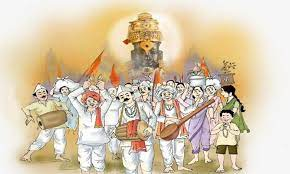
In Maharashtra, Ashadi Ekadashi marks the beginning of the ‘Wari Yatra’, a pilgrimage to the holy town of Pandharpur. The Wari Yatra is a tradition that has been followed for over 700 years, and thousands of devotees undertake this journey every year to seek the blessings of Lord Vithoba, a form of Lord Vishnu. The journey on foot starts from various towns and villages, and the devotees walk for several days to reach Pandharpur, where they offer prayers and seek blessings.

Celebrations:

On the day of Ashadi Ekadashi, devotees wake up early in the morning and take a bath before performing puja to Lord Vishnu. They observe a fast, abstain from food and water, and spend the day in prayer and meditation. The fast is broken the next day after performing puja in the morning. Devotees also visit temples dedicated to Lord Vishnu and offer prayers.

In Maharashtra, the day is celebrated with great fervor and devotion. Processions are taken out with devotees carrying the ‘Palkhis’ (palanquins) of Lord Vithoba and his consort Rukmini. The streets are filled with the sounds of bhajans and kirtans, and devotees offer food and water to the pilgrims on their way to Pandharpur. The Warkaris (devotees of Lord Vithoba) wear traditional attire and carry a flag with the image of Lord Vithoba.

Death of Devi Sati – Tragic tale of love & devotion

Devi Sati was the daughter of Daksha, one of the Prajapatis, and the son of Lord Brahma. She was born with divine qualities and was considered to be an incarnation of the goddess Shakti. Sati was a devoted wife to Lord Shiva, the Hindu god of destruction, and they lived together in Mount Kailash.

One day, Daksha organized a grand Yagna (sacrificial fire ceremony) and invited all the gods, goddesses, and sages except Lord Shiva. Sati, who was not aware of this, decided to attend the ceremony. When she arrived, she was treated with disrespect and insults by Daksha, who disapproved of her marriage to Lord Shiva. Sati tried to reason with her father, but he refused to listen to her and continued to insult her husband. Unable to bear the humiliation, Sati invoked her yogic powers and immolated herself in the fire of the Yagna. Her sacrifice was a shock to the gods and goddesses who were present at the ceremony, and it was considered to be an act of immense courage and devotion.

Credits – Gururaj Bhandari

Lord Shiva, who was unaware of what had happened, sensed the distress of his wife and rushed to the Yagna site. He was horrified to see the charred remains of Sati and was filled with rage and grief. In his anger, he created the ferocious Veerabhadra, who attacked Daksha and his followers and destroyed the Yagna. The news of Sati’s death spread quickly, and Lord Brahma and other gods and goddesses came to offer their condolences. Lord Shiva, who was inconsolable, carried the body of Sati and roamed around the universe in a fit of rage. He was unable to let go of his beloved wife and refused to perform his duties as the god of destruction.

To put an end to Lord Shiva’s agony, Lord Vishnu decided to intervene. He used his Sudarshan Chakra (discus) to cut Sati’s body into fifty-one pieces, which fell to earth in different places. These places are now considered to be Shakti Peethas (sacred shrines dedicated to the goddess Shakti) and are revered by devotees of the goddess.

What is a DOI?

 A DOI is a unique identifier that provides a permanent link to any research you add to your profile – making it easily findable and citable.

DOIs help you:

  • Make your research citable. DOIs provide information on where your work can be found online. They are guaranteed to never change, making them a great way to provide a reliable link to any of your research.
  • Put a date on your discovery. DOIs include the publishing date of your research, to make sure you get the credit you deserve. 

The search bar at the top of every ResearchGate page supports DOIs, allowing you to quickly find and identify a publication when you have its DOI.  

What type of research can I generate a DOI for? 

DOIs can be generated for most of your unpublished work. As publications classified as article, book, chapter, patent, cover page, poster, and conference paper are considered to have been published elsewhere, DOIs cannot be generated for these types of research. You can, however, add an existing DOI issued by your publisher to any of your research. You should not generate a new DOI for a research item that already has one, as this will potentially lead to confusion.

How do I generate a DOI for my research?  

Provided the type of research you have added supports adding a DOI, you can generate one by following these steps:

  1. Go to your Research tab
  2. Select the research item you would like to generate a DOI for by clicking on its title
  3. On the right-hand side, click on the More button and select Generate a DOI (if this is not visible, then generating a DOI for this type of research item is not possible)
  4. Review the details of your research item to ensure they are correct
  5. Click Generate a DOI.

Note: Once a ResearchGate DOI has been generated for a research item, you’re no longer able to edit that research item. Instead, you should remove the research completely, re-upload it with the edits and generate a new DOI.

What if my research already has a DOI from another source?  

You should not generate a new DOI for a work that already has one, as this will potentially lead to confusion. To add a publisher-issued DOI to your research item, follow these steps:

  1. Go to your Research tab
  2. Scroll down to the research item you would like to add the DOI to
  3. Click the More button below the research item’s title and select Edit
  4. Enter the DOI number in the DOI field
  5. Click Save to confirm your changes.

Researchers will now be able to cite your work using its DOI.