India is known for its rich tradition of performing arts that reflect the country’s diverse cultural heritage. Here are the top ten performing arts in India:
Classical Dance – India has several classical dance forms, including Bharatanatyam, Kathak, Kuchipudi, Manipuri, Mohiniyattam, Odissi, and Kathakali, each with its unique style and technique.
Folk Dance – India has a rich tradition of folk dances, with each region having its unique styles and techniques, including Bhangra, Garba, Dandiya, Lavani, and Chhau.
Bollywood Dance – Bollywood dance is a fusion of traditional Indian dance forms with modern Western styles, characterized by its energetic movements and colorful costumes.
Theatre – India has a rich tradition of theatre, with ancient Sanskrit plays, street theatre, and modern theatre productions.
Music – India has a rich tradition of classical and folk music, with each region having its unique styles and instruments, including sitar, tabla, veena, and sarod.
Ghazal – Ghazal is a form of Urdu poetry set to music, characterized by its emotional depth and lyrical beauty.
Qawwali – Qawwali is a form of devotional music performed by Sufi musicians, characterized by its powerful vocals and rhythmic beats.
Puppetry – India has a rich tradition of puppetry, with different regions having their unique styles and techniques, including Kathputli, Bommalattam, and Togalu Gombeyaata.
Martial Arts – India has several traditional martial arts forms, including Kalaripayattu, Gatka, and Thang-Ta.
Street Performances – India’s streets are often filled with performers showcasing their talents, including acrobats, fire-eaters, magicians, and musicians.
These top ten performing arts of India showcase the country’s rich cultural heritage and are a testament to the creativity and skill of its people. They are a must-see for anyone interested in the performing arts and are a source of inspiration for performers and artists around the world.
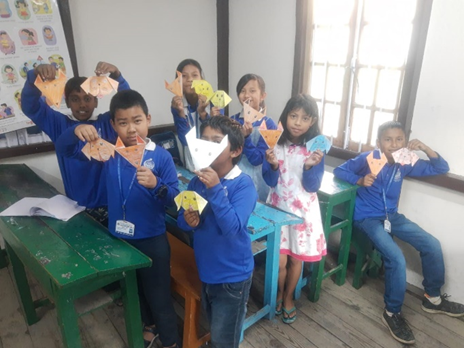
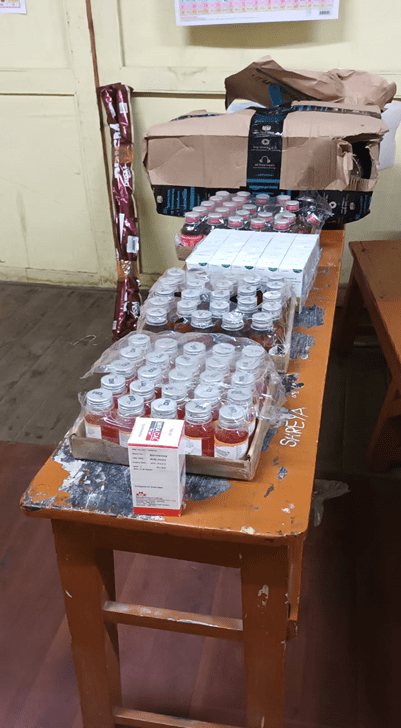
According to UNICEF, in India “High levels of malnutrition (38.4 percent children are stunted), poor learning outcomes (only 42.5 percent of children in grade three can read a grade one text), vaccine-preventable diseases and child labour persist”. Lack of nutritious food, medical care, good education, basic facilities, etc., are commonly observed among the children living in slums, footpaths, and many rural areas. Keeping these conditions in mind, the Gadadhar Abhyudaya Prakalpa (GAP) was launched in October 2010, as a part of the 4-year long 150th Birth Anniversary Celebration of Swami Vivekananda, for the 3-fold development of the needy and backward children — physical, mental and intellectual, and since then it has been running up till now in different parts of our country. The project ‘Gadadhar Abhyudaya Prakalpa’ (GAP), named after the childhood name of Sri Ramakrishna, i.e., ‘Gadadhar’, is being implemented for the betterment of the neglected slum and rural children who are often brought from the roadside huts and highly unhygienic garbage-dumping areas (belurmath.org/gadadhar-abhyudaya-prakalpa). The objectives of GAP are: • To instill moral and cultural values in the aforesaid targeted children • To educate them with special coaching on their school subjects • To inculcate a sense of cleanliness and hygiene in them • To nourish them for their physical development • To prepare them to be good citizens of India For the benefit of readers, a case of GAP from Shillong Ramakrishna Mission is presented here. Ramakrishna Mission Shillong was established in 1937. It has three centers. One is a dispensary; the second is Vivekananda Cultural Centre and the other one is Ashram. In the dispensary, all sorts of tests are carried out by the medical team and doctors, in addition to giving medicines to the patients. In the Vivekananda Cultural Centre computer training is imparted to the children. Also, a spoken English language class is held. Here one library with a reading room (13,459 books and 38 newspapers and periodicals), an auditorium, and a meditation hall exist. Also, drawing and painting classes and training programs in Indian culture are held. In the Ashram, every Sunday discourses are held where Secretary Maharaj takes classes. Further in the Shillong Ashram under the guidance of Belur Math, the project GAP in three places is continuing. One is in the Ashram itself, the second one is in RR Colony and another one is at Waken Village. In each center 50 children who are from poor echelons of society attend. They come after the completion of school. And they are taught different types of crafts for skill development, yoga, prayer songs, patriotic songs, etc. Every month each child is given hair oil, toothbrush, toothpaste, soap, etc. free of cost. As food, they are provided with Horlicks, egg, loaf, pounded rice, vegetables curry, etc. from Monday to Saturday. Of course, only on Saturday rice is given along with curry and egg. From nursery to class VI, children are included under the GAP project but all belong to economically backward. In each center, there are four staff – one for cooking and the others are teachers. All are provided with the minimum honorarium as they serve here selflessly. Wishing GAP great success and I offer my heartfelt regards to the Maharajas of Belur Math for conceiving such a project in the name of a great soul ‘Gadadhar’.
According to UNICEF, in India “High levels of malnutrition (38.4 percent children are stunted), poor learning outcomes (only 42.5 percent of children in grade three can read a grade one text), vaccine-preventable diseases and child labour persist”. Lack of nutritious food, medical care, good education, basic facilities, etc., are commonly observed among the children living in slums, footpaths, and many rural areas. Keeping these conditions in mind, the Gadadhar Abhyudaya Prakalpa (GAP) was launched in October 2010, as a part of the 4-year long 150th Birth Anniversary Celebration of Swami Vivekananda, for the 3-fold development of the needy and backward children — physical, mental and intellectual, and since then it has been running up till now in different parts of our country. The project ‘Gadadhar Abhyudaya Prakalpa’ (GAP), named after the childhood name of Sri Ramakrishna, i.e., ‘Gadadhar’, is being implemented for the betterment of the neglected slum and rural children who are often brought from the roadside huts and highly unhygienic garbage-dumping areas (belurmath.org/gadadhar-abhyudaya-prakalpa). The objectives of GAP are: • To instill moral and cultural values in the aforesaid targeted children • To educate them with special coaching on their school subjects • To inculcate a sense of cleanliness and hygiene in them • To nourish them for their physical development • To prepare them to be good citizens of India For the benefit of readers, a case of GAP from Shillong Ramakrishna Mission is presented here. Ramakrishna Mission Shillong was established in 1937. It has three centers. One is a dispensary; the second is Vivekananda Cultural Centre and the other one is Ashram. In the dispensary, all sorts of tests are carried out by the medical team and doctors, in addition to giving medicines to the patients. In the Vivekananda Cultural Centre computer training is imparted to the children. Also, a spoken English language class is held. Here one library with a reading room (13,459 books and 38 newspapers and periodicals), an auditorium, and a meditation hall exist. Also, drawing and painting classes and training programs in Indian culture are held. In the Ashram, every Sunday discourses are held where Secretary Maharaj takes classes. Further in the Shillong Ashram under the guidance of Belur Math, the project GAP in three places is continuing. One is in the Ashram itself, the second one is in RR Colony and another one is at Waken Village. In each center 50 children who are from poor echelons of society attend. They come after the completion of school. And they are taught different types of crafts for skill development, yoga, prayer songs, patriotic songs, etc. Every month each child is given hair oil, toothbrush, toothpaste, soap, etc. free of cost. As food, they are provided with Horlicks, egg, loaf, pounded rice, vegetables curry, etc. from Monday to Saturday. Of course, only on Saturday rice is given along with curry and egg. From nursery to class VI, children are included under the GAP project but all belong to economically backward. In each center, there are four staff – one for cooking and the others are teachers. All are provided with the minimum honorarium as they serve here selflessly. Wishing GAP great success and I offer my heartfelt regards to the Maharajas of Belur Math for conceiving such a project in the name of a great soul ‘Gadadhar’.
India has a rich tradition of visual arts that spans centuries and reflects the country’s diverse cultural heritage. Here are the top ten visual arts of India:
Miniature Painting – A style of painting that originated in the Mughal courts, characterized by intricate details and delicate brushwork.
Madhubani Painting – A folk art form from Bihar, characterized by bright colors and bold geometric patterns.
Warli Painting – A tribal art form from Maharashtra, characterized by simple, rustic scenes painted in white on a red or brown background.
Tanjore Painting – A traditional art form from Tamil Nadu, characterized by its use of gold foil and semi-precious stones to create intricate, three-dimensional designs.
Pattachitra Painting – A traditional art form from Odisha, characterized by its use of natural colors and intricate details depicting mythological stories.
Rangoli – A traditional art form from North India, characterized by the use of colorful powders to create intricate designs on the floor or ground.
Sculpture – India has a rich tradition of sculpture, with ancient examples found in temples and archaeological sites across the country.
Embroidery – India is known for its intricate embroidery work, with different regions having their own unique styles and techniques.
Textile Design – India is renowned for its rich and vibrant textiles, with different regions having their own unique styles and patterns.
Architecture – India has a rich architectural heritage, with ancient temples, forts, palaces, and monuments reflecting the country’s diverse cultural and historical influences.
These top ten visual arts of India showcase the country’s rich artistic heritage and are a testament to the creativity and skill of its people. They are a must-see for anyone interested in art and design and are a source of inspiration for artists and designers around the world.
Have you ever heard of the term hardware wallets? If yes, you wish to know about it in depth. So this article says all about hardware wallets. In other words, hardware wallets are known as cold storage devices. It is a wallet to save private keys through the use of hardware devices that can be accessed by anyone at any time. These wallets allow us to store cryptocurrency assets in private keys via offline mode. In case you wish to get cash anytime simply unlock the hardware wallet and collect it. You can Go URL for crypto trading and investment by logging into BitIQ.
It is one of the best wallets in terms of privacy. Read this blog till the last part to know about it in brief.
What it is? It is a simple wallet that provides more security for crypto and another valuable asset. If you are looking for a trusted source offline, hardware wallets are the best. You can save private keys, passwords, pins, and many more in this wallet. It also secures currencies from thefts which is occurring commonly these days.
To date, there are no wallets found to provide such excellent security as these hardware wallets. It allows you to access your token supply through which you can receive and share payment anyway and anytime you wish to from any location. All you need is a stable internet connection to use it at any place.
Overview of private keys
First of all private key is a number. This is used to send and receive payment digitally. In this transmission, you won’t need any other person to transfer payments.
Today the entire blockchain technology is relying on this wallet. The main aim of private keys is to protect personal currencies from several attacks and malicious activities. This allows you to access your wallet yourself. As a result, all your financial affairs are under your hand. No one may it be a person or any organization no one can access to control your system without your permission.
There is one more key that is public key but that is quite different from public ones. If you lose your private key you cannot access your wallet anymore but that’s not the case with public keys. It is advised everyone not show their private keys online and it is only because of security concerns.
Benefits of hardware wallets
These are some of the benefits you get if you are using a hardware wallet.
Authority
You have complete authority over the private keys you created. No one else is authorized to use or access it under any condition. You won’t need to insert the key on any hardware devices. Moreover, your keys are not stored anywhere in the system. Hence, it is much more secure.
Backup
Suppose you lost your wallet but you do have a seed phrase then what to do? You can simply again create the keys and access money from your wallets.
Safety
Safety is the major point for which people look over to use hardware wallets. Fraudulent transactions are quite hard via hardware wallets. Still, if you lose, there is a high chance that you will get it back soon.
Noncustodial
Extra security is provided to customers by keeping keys in hardware devices. Also, this prevents people from showing it online. As we all know private keys are offline so it provides better security being offline.
How can one set up their hardware wallets?
It is not that difficult to set up the hardware wallets. All you need to do is follow the easy step and you can achieve it. Read the below-listed steps to know how to create it.
1. Firstly you will need to purchase the device which can be purchased from any manufacturer or retail outlets.
2. After which you get the device you need to set up a pin.
3. Then you need to download the appropriate software to transfer money.
4. You will get a seed phrase digit which you will have to save.
5. Then connect it with any device to transfer tokens.
6. Now you are ready to transfer any currency in hardware wallets.
Conclusion
Now secure your currency with hardware wallets. Get help from bitcoin smart for any cryptocurrency. Anyone can trade cryptocurrencies on Bitcoin smart.
Cryptos are becoming a favorable investment option among many investors. These assets are an easy option for seamless transfers to any part of the world. And as there are no strict regulations on this market yet, the users find it easier to use it for transactions. Check out the Official Website profit system Immediate Profit for those who are new to cryptocurrency trading and investing.
As per some recent reports, many Russian users are sending USDT to the UK. They are doing this with the help of several Cryptocurrency exchanges. Russians are using these exchanges as a medium to send people to the UK to send USDT. But what’s the reason behind such increased cases? Learn about this aspect through this blog!
An investigation was carried out on all the exchanges which revealed this news. This investigation was done on all the exchanges present in the capital city of Russia. It reveals that every user of these exchanges who are buying Cryptos is ready to deliver currencies to London.
But, the investigation is unable to bring out the true identity of those users. This was stated in the investigation report by Transparency International Russia (TIR). As per this organization and The Bell, another media platform states that many exchanges are offering some unique services at present.
The services of these exchanges let Russians withdraw digital assets in the form of cash in London. The investigating organization states that, due to these services, transferring funds out of the nation has become quite easy now! And this feature is possible because of all the exchanges present in Moscow.
Are There Zero Restrictions?
You may now wonder if there are almost no restrictions on such easy movement of funds. But, there are strict controls and regulations for the movement of any funds moving out of Russia. Counter-sanctions and sanctions place these limitations on the fund movement out of the nation.
Despite these restrictions, almost eight Crypto exchanges in Russia are ready for this move. They will let their users transfer USDT out of Russia. The exchanges also mention that they will help in converting the assets into cash to deliver in London.
How Are These Exchanges Making The Conversion Possible?
When the TIR carried out the investigation and recruited some undercover agents, some interesting facts were found. The agents revealed that they were not required to provide any kind of documents and passports for transferring the funds! This is quite a shocking part and reveals interesting facts about the exchanges.
Rather, the exchanges ask for some particular details. These questions may include details about the collector of the funds, like what they will wear or the serial number of banknotes!
The investigation also reveals that all such UK-based couriers were prominent and of Russian origin. And they carried out the discussion about handover and other details on Telegram alone!
A Glimpse Of Some Exchanges
The best example of such a Russian-based exchange is that of the Suex. In 2021, this exchange had to face US sanctions. This is because Washington assumes that this exchange has links with money laundering actions and helps its users do the same.
The organization also adds a note here about Suex. It states that as the platform fails to provide any customer details, they are violating the anti-money laundering rules of Britain.
Investigation Finds Trace Of Such Activities
The researchers of the organization are capable of tracing some of the wallets associated with these exchanges. After this, they are also able to trace the history of such digital wallets.
After having a view of the history of such wallets, the researchers found that many wallets even transferred USDT worth 470,000 USD! Besides that, the investigation highlights that these exchanges have aided in transferring small amounts of less popular Cryptos.
Conclusion
Amidst such activities, the Russian government AML agency states that it is monitoring around 25,000 suspected users. All these users are under suspicion of carrying out AML activities.
These facts highlight that Russians are more actively transferring their funds outside the nation. Also, these exchanges are facilitating these activities without asking for any KYC or other details of the users while transferring the same. And this calls for strict scrutiny in the nation.
To learn more about Cryptos and this industry, you need to join Bitcoin Smart.
A single process can consist of thousands of companies and touch people around the globe. Payment transactions, credit card fees, etc., occur at different times and with different currencies. Ethereum is a blockchain-based distributed computing platform that fuels intelligent contract functionality. If you want entirely automated trading services, you can visit websites like https://ethereumcode.app; here, you will get all the advanced bitcoin trading features.
It allows for more flexible and transparent payments cheaper than today’s alternatives for everyone involved in the transaction—no matter where they are located or what currency they use. In finance, this will eliminate high fees for cross-border payments and limited payment options.
Cross-border payments are a critical part of the global value chain industry. There is no better time than now to test and explore this technology — with cryptocurrencies being available to all, the opportunity to integrate blockchain into modern finance is a gift that keeps on giving. Ethereum’s potential as a payment solution in supply chain relationships and worldwide reach is unparalleled.
Implementation of blockchain in cross-border payments:
Implementing blockchain technology in these areas has endless possibilities, but it will take time. Because of this, many businesses are not taking advantage of this opportunity because they need to see it as likely for their specific industry. The finance sector is still littered with legacy systems that need to meet the needs of today’s companies. Financing, credit, and securities are all complicated processes that require complex forms and long waiting times.
At the same time, compliance has become paramount in financial institutions worldwide. Blockchain technology can take those concerns off the table and simplify these processes for everyone involved. By using smart contracts to automate payments, projects can move forward more efficiently and quickly. In addition, innovative contract technology will eliminate a lot of unnecessary friction from working in this industry — which is desperately needed as banks evolve their services to accommodate new customers.
Peer-to-peer lending powered by Ethereum:
In finance, we typically see projects which rely on a centralized system or rely on an intermediary to facilitate the transaction. These technologies need to be updated and quickly replaced by newer ones. Cryptocurrencies provide a better way to make payments and lend money — primarily through peer-to-peer loans. Blockchain provides the necessary infrastructure for these platforms to flourish in this industry.
Blockchain can simplify loan agreements by automating processing through smart contracts. At these startups, borrowers provide good credit history and income verification, automatically verified by an automated system using blockchain smart contracts.
Ethereum can eliminate the option of remittance fees:
Remittance fees are a massive issue for global businesses. Sending money to other countries can be expensive and time-consuming, but it’s also this industry’s highest cost. These fees take a significant toll on business operations, and they need to be better suited to the digital age.
In supply chain relationships, remittances have become an essential part of the process. However, today’s methods are much more expensive and time-consuming than sending money through blockchain technology. Cross-border transactions made possible by smart contracts will eliminate all fees for international transactions — bringing about transfer savings of up to 80%.
Ethereum is one of the most scalable blockchains:
Blockchain has long been praised for its ability to handle high volumes of transactions. However, the block size limits the data people on a blockchain can record. Ethereum can easily handle these volumes through sharding — a method that partitions data between validators. This method will increase the transaction speed, and the cost will decrease even further.
Ethereum enables more flexible and transparent payments:
The finance and tech industry has become very complicated in recent years — with so many contracts and transactions, it’s important to give businesses as much freedom as possible to adapt to their specific needs. Blockchain allows us to do this using smart contracts, which people can customize to include relevant data or regulations.
In finance, we have limited options when it comes to cross-border payments. There are only so many services that offer transparency and flexibility while also being able to handle all the varying regulations in different countries. Ethereum’s global reach and decentralized nature is set up very well for this problem.
It is only the beginning of what’s possible with blockchain technology. While there are still many hurdles to clear before these technologies are widely adopted, Ethereum is well positioned at the forefront of these changes — creating a more efficient way for businesses and people to transact financially.
Ethereum can make finance completely decentralized:
The blockchain “revolution” has just begun, and some of the most exciting and innovative projects are still in the works. Still, Ethereum is already showing tremendous potential for the finance industry.
Ethereum enables transactions without an intermediary:
The financial world has been plagued by intermediaries who take advantage of inefficiencies and make things more complicated than they need to be. The outdated systems we’re currently using don’t make sense for today’s world — with so many online businesses, it’s inefficient to have all these different third parties involved in every transaction.
Artificial Intelligence (AI) tools are the hottest trend among enthusiastic investors. The market trends are highly volatile and AI-hosted cryptos experience similarities. The cryptos connected to AI technology are outbursting experiencing substantial gains over time. Looking for a safe cryptocurrency trading platform to invest in Bitcoin? Then learn more at this link
Ever since its launch, the newbie technology is soaring highly with increasing popularity among people. Investors seem curious about the working of this new technology and its feature outlook. It has paved the way for several doors for individuals to access and boom into the real world.
In the modern world, AI will gain exponential power as it is the future of evolution. Human beings and the fast-paced world will switch to a wider advanced medium making use of the new technology. AI will be the boon spreading across the length and breadth of the real world.
The fusion of cryptos with AI technology will unfurl a new remark on the crypto industry with bubbling returns. There is numerous crypto that has popped up in recent times with a fusion of AI technology. These indeed are believed to give realistic handsome gains to its investors. The following are listings of some of the most remarkable AI cryptocurrencies :
Graph Token (GRT)
The GRT token is currently trading at a value of $0.149. The token has an inclining rate of 4.95% in the previous 24 hours. Investors can buy the GRT coins on decentralized exchange platforms like Binance, Bybit, OKX, and CoinW.
The Graph portal has a wide ecosystem base powering several apps including DeFi and web3 networks. It further empowers networks like Ethereum and IPFS by querying the data. Any media can create, design, and innovate APIs which are subgraphs.
The portal makes it efficient for indexing data from POA, IPFSs, and Ethereum. More networks will plug in soon with the portal. Analytics and data reveal that over 3,000 subgraphs are deployed on the GRT portal. These were for dApp platforms like Argon, AAVE, Synthetic, Uniswap, DAOstack, Livepeer, and Decentraland.
7billion queries have already been raised on the emulsifying network and 50% MoM. It has a huge network of public infrastructure bringing reliable solutions to the table front
SingularityNET
SingularityNET is a globally accessible space featuring creatable, shareable, and monetizable AI portals worldwide. Users and app developers can evaluate, browse and buy a varied number of AI tools and services on the portal. Transactions can be made using its native cryptocurrency AGIX,
The market of this portal consists of AI developers using AI tools and services willing to track their performance. One of the greatest discoveries of the pioneering team is the Sophia robot. SingularityNET seeks to entitle Sophia as a robot understanding human language. They’re continuously working on developing “OpenCog” which is a framework of advanced general intelligence.
Currently, the AGX coin is trading at a value of $0.41.
Render Token (RNDR) Oasis network ROSE Fetch.ai FET
Render token is a pure design for enabling GPC network faces across the market. It is compatible with connecting studios and artists requiring GPU systems. The power can be computed with mining partners who are eager to rent their GPU devices through the work required.
RNDR is based on the Ethereum network which is used by the artists to verify the art before releasing payment. The RNDR nodes utilize manual and proof-of-work operating schemes. All the assets on the network of RNDR use a watermarking protocol to present malpractices.
4. Oasis network (ROSE)
ROSE is a key scaling solution running over a layer 1 blockchain base. The walls of its architecture provide security and stability across the network. The features do not have an end here, it further minimizes its gas fees. Thus, attracting investors with low investment is a ROSE front door.
The protocol is a powering network to DeFi, GameFi, Metaaverse, NFTs, and Data DAOs. It is backed by wide investor protocols having an Ecosystem Fund of $235 million.
5. Fetch.ai (FET)
Fetch.ai is an AI-based permissionless infrastructure host in a crypto ecosystem. It is a decentralized learning machine enabling users to connect access and secure datasets.
This is an autonomous AI tool to run a certain set of tasks on its network.
It facilitates optimizing DeFi services, ease of transportation (parking, micro-mobility), smart energy grids, etc. For crypto trading and investment log onto Bitcoin smart
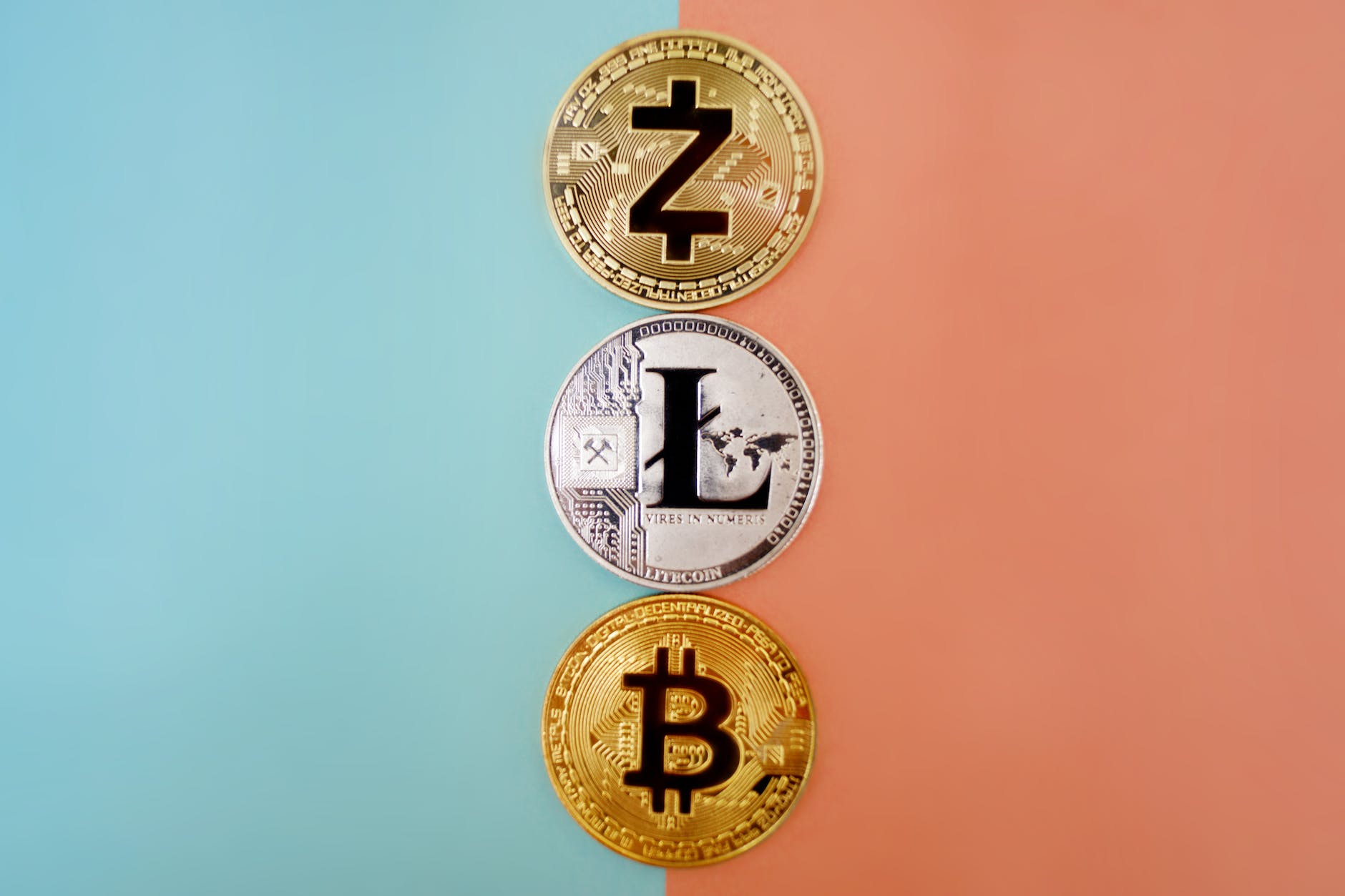
As we all know, bitcoin is one of the most popular cryptocurrencies today in the market. No matter whether you like it or not, it has become the first crypto in the world. It is one of the nearing things to decentralized assets.
The thing which one should note is that it has some pressure points. For pressure points, we do not mean failure. It refers to the investors who have invested hugely in bitcoins. It is to be determined whether such currencies will take off the market any day. If you want to invest in bitcoins then you can visit online trading platforms like Limmercoin
Santoshi Nakamoto is one of the founders who has the largest number of bitcoin today. We exactly don’t know if he came to the top list individually or in a group. But he holds around 1 million bitcoins today. This million in total means 5.2% of the total supply of BTC. And this becomes a huge amount.
Still, no one is aware of Santoshi Nakamoto. However, it is a great risk for a person to such any currency in such a large number.
According to Coinbase, it is a big risk for his businesses. This news was viral among the public in the year 2021. Also, it has been said that an anonymous person Santoshi Nakamoto holds the largest number of bitcoin, which is a huge risk.
It is a fool’s game to speculate on Santoshi Nakamoto’s identity. Even Bitcoins he is holding can be lost forever. There is no difficulty in observing the coinbase listing it as a risk on its filling. All we can say is a person has around 5.2 percent of BTC. But no one can even determine who can have it.
Bitcoin whales
After knowing about Nakamoto, it was found that there are some wallets where there are bitcoins available. National Bureau of economic research said that the top 10000 Bitcoin investors on the list have around one-third of the total supply.
It is not an appropriate value but is an approximation. Hence, it is likely, not possible to control such a huge number by a single person. As discussed above, Nakamoto is the one to hold 5.2 percent of BTC. But no one has any idea whether he is owned as an individual or not.
Bitcoin returned almost 230 percent of bitcoin in the years 2011 and 2021. It is doing so to outperform the financial asset of the world. It is a piece of shocking news that an individual is holding such a large amount of BTC.
If you would have invested something 2000 dollars in the year 2010, you will get around 10000 bitcoins. That number of BTC costs 26 dollars in today’s time. As a result, the person who involved themselves in it too early has a lot of supply today and has earned huge from it.
Also, it has been researched that only 114 addresses throughout the world contain 10000 bitcoins and more. so, these 114 addresses have almost 15.5 percent of the total supply of bitcoins.
Some entities that have the largest number of bitcoins today
Not only individuals but there are some entities too who hold the largest number of BTC in the world. Among which the first is Michael Saylor and MicroStrategy who has 130000 bitcoins today. This number in approximation refers to 0.68 percent of the total supply. And hence it is a huge amount for any big company. But they have a fear that if in case the price of BTC decreases then what shall happen?
Not only MicroStrategy but there is one more Chinese company holding a large number of BTC. That private company is Block.one which has currently 140000 bitcoins. This company has the highest number of bitcoin by a single entity.
Conclusion
So there isn’t any doubt that the fundamentals of BTC make it a decentralized asset. The no downward of this currency made it a decentralized asset in the real world. Many entities and persons are holding Bitcoin today in huge numbers. For the early investors it is just marvelous as they can earn huge from it now. So, still, if you like to invest in any such currencies, bitcoin smart seems the best choice for you.
Multiplying your dollar into a hundred dollars is everything that we need as investors. We turn saving into investments to generate a heavy flow of income. Acquiring profits by investing in cryptos is an easy way of intelligent earning. We long to invest more of our savings into places that potentially generate income In addition, you may improve your trading skills by using a reputable trading platform like www.immediateconnect-se.com
Yet, most of the middlemen infuse her wealth for unproductive purposes rather than inducing for their well-being. A general spread of awareness has to be attained to avoid this behavior. Enouage to save and invest in the best legitimate sources of earning should be an investor’s target.
Cakes with a sweet frosting require more effort and time. Similarly, more returns might often take longer time but the wait is worthwhile. So, grab your cake in advance and enjoy your frosting when the trends shoot your way high.
Let’s seize the golden chance to turn your dollar into thirty dollars by investing in the best-rated cryptos. There is no better opportunity to do so and build up your portfolio. Here are the 3 most incredible cryptos paving a new way of meaning opportunity:
RenQ Finance (RENQ)
RENQ is a bridge to isolated blockchains on a decentralized Finance DeFi platform. Its mission is to resolve the ever-raging problem of liquidity. Innovation is the key intention of the platform and has placed it on its platter very precisely.
Apart from the liquidity concept, it further emphasizes several other features. One of which is the scalability concept. The scalability is refurbished to promote a swift mode of transactions in a short time. Furthermore, its low transaction fees make RENQ the best choice for traders and investors.
The wallet system is purely centralized with decentralized security set up to maintain transparency and uniformity. It further slaves the complexity issues that traders come across while dealing with DeFi exchanges. If you’re a trader of a basic level and have the least experience in managing DeFi networks then this is a perfect pick.
It is a user-friendly platform that builds investors’ trust by resolving their issues. Traditional platforms have infused the scalability and liquidity concept but had a backlog in balancing the two.
Shiba Inu (SHIB)
Shiba Inu token is an inspiration from a dog breed that has a whole community-driven ecosystem. The meme crypto started its journey in the year 2020 in August. SHIB has a decentralized blockchain base that has come under the limelight recently.
According to the resorts of the portal, the SHIB token is flaring remarkably. The initial price of one SHIB token in 2020 was $0.00000001 which has touched beyond the sky to $0.00001088. The reason behind this is the innovation and technology the model inhabits.
The growth trajectory to Shiba Inu is bound to shoot up with no stop signs visibility. The meme coin is also framed as the “Dogecoin KIller” as it has been replacing it and setting its significant position. The SHIB token predictions reveal it will touch $30 by 2023 from a dollar investment to thirty.
Cardano (ADA)
The Cardano portal addresses interoperability on its front base. Additionally, it also aids the scalability issues by accessing faster transactions than Bitcoin and Ethereum. The blockchain platform aims at sustainability and an energy-efficient structure in its framework. To bring this into its model it runs on proof-of-stake consensus.
On the other hand, well-known cryptos like BTC and ETH have a proof-of-work consensus. By market cap, Cardano ADA has touched the seventh-largest position in the galaxy of cryptos. Cardanoo has taken a steady climb from $0.18 in March 2020 to $3.10 in September 2021.
The current price of Cardano is running at $0.414. Positive trends are favoring the Cardano portal which has highly friendly indications for its length as well as short-term investors. If ADA sets to rise at the same velocity then it is certainly bound to achieve $30.
Let us switch in to buy these cryptos and strengthen your portfolio and enhance your presence in the crypto industry. For crypto trading and investment log onto Bitcoin smart
Non-fungible tokens (NFTs) are still in high demand in the area. They are employed by projects in several ways, despite the United Arab Emirates (UAE) continuing to offer a friendly legal environment for blockchain-based technology. To read more about Encryption and Decryption in cryptocurrency visit the page.
NFTs make it easier for doctors to get data about gamers
Researchers of Bitcoin smart may now utilize NFTs to obtain funds and data thanks to a project still in progress at Dubai’s Jumeirah Village Circle. Dmitry Mikhailov, an artificial intelligence expert from Farkana Laboratories, spoke with Cointelegraph about his organization’s use of NFTs in research during the recent AIBC Dubai symposium in Festival City.
NFT tickets from BnB Chain infiltrate a party concert in Abu Dhabi Ultra Abu Dhabi, an underground electronic dance music (EDM) extravaganza including appearances by well-known DJs like Calvin Harris and Skrillex, Fellaz, and Taste of Web3. The race was staged on Yas Island, home to several attractions, including Ferrari World and the Yas Marina Circuit, where the Formula One Abu Dhabi Grand Prix has been held annually since 2009.
NFT incentives are important for the charity.
The UAE has a strong tradition of civic engagement and philanthropic giving. The nation’s leaders lead several programs, and the government oversees social, philanthropic, and humanitarian activities inside and beyond the UAE.
What are NFTs?
If you have been keeping up with recent technological advances, you have likely heard about NFTs or non-fungible currencies. Still, it might be difficult to grasp for someone with little or no technical experience. Here are my few bits on NFTs. This digital asset denotes ownership of an original piece of writing or material.
Consider it the digital equivalent of a collectible object like a rare baseball card or one-of-a-kind artwork.
The value of an NFt stems from its rarity and uniqueness, much like with these real works of art.
How are NFTs being adopted all over the world?
The United States, China, South Korea, and Japan are some of the nations that use NFTs in a significant way. Artists, singers, and even sports are utilizing NFTs in these nations to monetize their work and interact with their audience.
For its acceptance, the USA has seen a considerable increase in launching numerous NFT marketplaces & platforms. These nations are all leading the NFT revolution and advancing its growth and development.
NFTs adoption in Dubai, Abu Dhabi, or UAE at large:
As every nation has joined the NFT bandwagon or is about to, a significant global economic hub like the UAE, whose core economy is dependent on oil, doesn’t want to fall behind in the NFT adoption race. In the UAE, especially in Dubai & Abu Dhabi, there is a surge in the usage of NFTs. Individuals, companies, and governmental organizations are adopting this cutting-edge technology at an increasing rate.
Role of government & Industries in promoting the Usage of NFTs in UAE
Through several initiatives, including “The Dubai Future Foundation,” which is leading the Global Cryptocurrency Challenge and inviting start-ups and innovators to come up with solutions using blockchain and NFTs to address general challenges, the government of Dubai is actively encouraging the adoption of NFTs and blockchain technology.
Some sectors in the UAE are already investigating the use of NFTs. For instance, the Dubai-based art marketplace Artify allows artists to sell their non-traditional works on its website, giving them a new method to reach a worldwide audience and profit from their works. Seeing the potential of NFTs, the UAE’s sports sector has introduced NFT collections for football clubs & leagues, giving fans a new opportunity to interact with their personal favorites & players.
The Abu Dhabi government is investigating the use of NFTs in the real estate industry with intentions to digitize land registration and issue NFTs as ownership verification. Such actions by the UAE government would undoubtedly increase its ability to compete in the global economy.
Conclusion:
In conclusion, the UAE’s ambitious goal and intention to become a major center for NFTs adoption through distributed ledger technology & innovation has fueled the acceptance of NFTs in the country, notably in Dubai & Abu Dhabi.
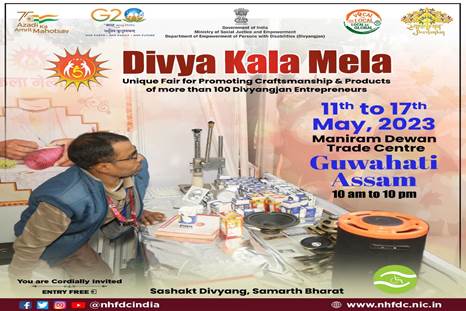
Department of Empowerment of Persons with Disabilities (Divyangjan) is organizing a unique event showcasing the products and craftsmanship of Divyang entrepreneurs/artisans from across the country, ‘Divya Kala Mela’ from 11 Th to 17 Th May, 2023 at Maniram Dewan Trade centre, Guwahati, Assam. The event would present an enthralling experience to the visitors as vibrant products from various parts of the country including Jammu and Kashmir, North Eastern states, handicrafts, handlooms, embroidery works and packaged food etc. will be seen together.
This is a unique initiative of DEPwD towards the economic empowerment of PwD/Divyangjan. The Divya Kala Mela presents a bigger platform for marketing and showcasing the products and skills of Divyang (PwD). The Divya Kala Mela, Guwahati is the fourth one in a series starting from December 2022 [(i) Delhi, December 2022, (ii) Mumbai, February 2023, (iii) Bhopal, March 2023].
Around 100 Divyang artisans/artists and entrepreneurs from about 22 states/UTs will be showcasing their products and skills. There would be Products in the following broad category: Home Décor & Lifestyle, Clothing, Stationery and eco-friendly products, packaged food and organic products, Toys & Gifts, Personal Accessories – Jewellery, and Clutch Bags. It will be an opportunity for all to go ‘vocal for local’ and products made by Divyang craftsmen with their extra determination can be seen/purchased.
The 7 Days ‘Divya Kala Mela’, Guwahati will be open from 10.00 A.M. to 10.00 P.M. and witness a series of cultural activities, including performances by Divyang artists and well-known professionals. Visitors can also enjoy their favourite foods from various regions of the country at the event.
The event is scheduled to be inaugurated on 11Th May at 5.00 P.M. by Dr. Virendra Kumar, Union Minister for Social Justice & Empowerment, GOI. The occasion will be graced by Minister of State for Social Justice and Empowerment, GoI, Smt. Pratima Bhaumik.
The department has grandiose plans to promote the concept, as part of which ‘Divya Kala Mela’ would be organized across the country. During 2023-2024 the event shall be organized in 12 cities beginning in Guwahati.
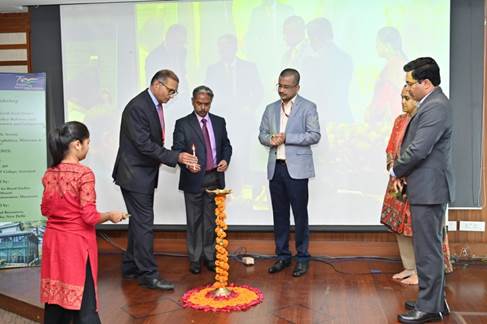
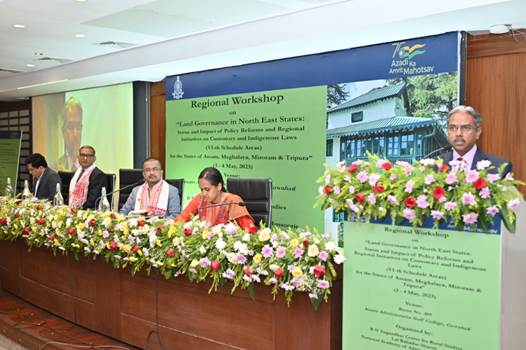
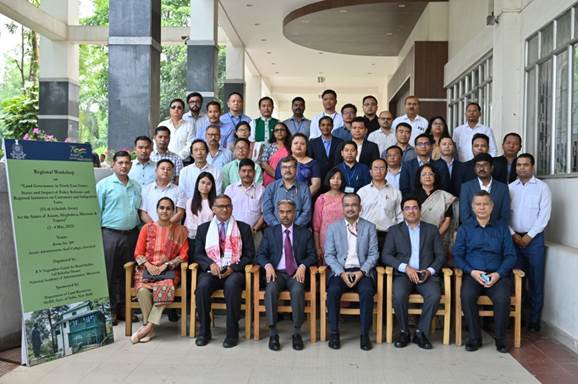
In the recently concluded National Conference on “Land Governance in North Eastern States” held on 3rd– 4th May 2023 in Guwahati, the Territorial and Autonomous District Councils in the States of Assam, Tripura, Mizoram and Meghalaya held that digitization and modernization of land records is essential for development. The National Conference was organized by Lal Bahadur Shastri National Academy of Administration, Mussoorie and Department of Land Resources with the support of Revenue Department, Government of Assam. Shri Ajay Tirkey, Secretary, Department of Land Resources presided over the National Conference. Shri Sonmoni Borah, Joint Secretary, Department of Land Resources; Shri Gyanendra Dev Tripathi, Principal Secretary, Revenue, Government of Assam; Ms. Anandhi, Deputy Director, Lal Bahadur Shastri National Academy of Administration, Mussoorie; Shri P.V. Rajasekhar, Additional Surveyor General, Survey of India; Ms. Mridula Singh, Sr. Social Development Specialist, World Bank, and other senior officers were present. Representatives of Bodoland Territorial Council, Karbi Anglong Autonomous District Council, Dima Hasao Autonomous District Council (all in Assam); Tripura Tribal Areas Autonomous Council, Tripura; Lai Autonomous District Council, Mizoram; Khasi Hills Autonomous District Council, Garo Hills Autonomous District Council, Jaintia Hills Autonomous District Council (all in Meghalaya) participated in the National Conference.
The deliberations in the first ever such National Conference included sessions on Current State Practices & Modernization of land Records, Land Governance Assessment Framework and a session on Customary and Indigenous Laws, Current Practices and New Initiatives and Role of Survey of India in Land Records Modernization. While the initiatives of computerization and digitization of land records and maps have shown good progress in the rest part of Assam, it was seen that there are serious gaps in the areas under Bodoland Territorial Council, Karbi Anglong Autonomous District Council and Dima Hasao Autonomous District Council. The Bodoland Land Policy is being framed and is expected to be finalized shortly. Survey and Settlement in the Karbi Anglong areas has not been done. While the Dima Hasao Autonomous District Council has adopted the Assam Land Regulation Act, large tracts of land have non-cadastral area and a need was felt that these areas be surveyed. The Tripura Tribal Areas Autonomous Council has eight Districts and approx. 10,000 sq.km. under Sixth Schedule and 10 customary laws. In the Lai Autonomous District Council areas of Sixth Schedule, a need was felt for survey/resurvey of the areas. In the Khasi Hills Autonomous District Council areas of Meghalaya, land is largely owned by the community. The Garo Hills Autonomous District Council have a system of issuance of Annual Pattas by District Council. While the Jaintia Hills Autonomous District Council, Meghalaya follow the Maghalaya Land Survey and Records Preparation Act 1980.
Shri Ajay Tirkey, Secretary, Department of Land Resources complimented the efforts of Ms. Anandhi, Deputy Director, LBSNAA in organizing the Conference and clarified at the outset that while the felt need of the various Autonomous District Councils in the North-Eastern States to digitize and modernize their land records was a way forward, all efforts would be undertaken to support the Councils within the Constitutional framework and established laws. As a step forward in this direction, the Bodoland Territorial Council had raised a proposal for digitization and modernization of land records and the Department of Land Resources had duly approved the same. Secretary, Department of land Resources further looking into the magnitude of work required across the North-Eastern States, informed that a Task Force for Land Governance in North-Eastern States will be constituted after a due process with the approval of Competent Authority after consultation with the various Autonomous District Councils. Shri Sonmoni Borah, Joint Secretary requested the various Autonomous District Councils to send their proposals for digitization and modernization of land records under Digital India Land Records Modernization Programme(DILRMP) and thanked Ms. Anandhi, Deputy Director, LBSNAA and Principal Secretary, Revenue, Government of Assam for organizing the National Conference.
The Prime Minister, Shri Narendra Modi visited the Shantivan complex of Brahma Kumaris in Abu Road, Rajasthan today. He laid the foundation stone for a Super Speciality Charitable Global Hospital, the second phase of Shivmani Old Age Home and the extension of the Nursing College. The Prime Minister also witnessed a cultural performance on the occasion.
Addressing the gathering, the Prime Minister recalled getting the opportunity to visit the Shantivan complex of Brahma Kumaris on numerous occasions and said a spiritual feeling emerges from within whenever he visits the place. He informed that it is the second time in the last few months that he got the opportunity to take part in programs related to Brahma Kumaris. Recalling the opportunity to inaugurate the Jal Jan Abhiyan in February this year, the Prime Minister emphasized his continuous affinity with the Brahma Kumaris organization and credited the blessing of Param Pita and the affection of Rajya Yogini Dadiji. The Prime Minister informed that the foundation stone of Super Speciality Charitable Global Hospital has been laid down while the expansion work of Shivmani Old Age Home and Nursing College is also being carried out, and congratulated the Brahma Kumaris organization for this.
The Prime Minister said that in this epoch of Amrit Kaal, all the social and religious institutions have a big role to play. “This Amrit Kaal is Kartavya Kaal for every citizen of the country. This means that we should fulfill our responsibility completely”, the Prime Minister emphasized. This, he continued, should be accompanied by the expansion of our thinking and responsibilities in the interest of the society and country. He said Brahma Kumaris as an institution, work for strengthening moral values in the society. He also noted their contribution towards the promotion of science, education and social awareness. He also praised their intervention in the field of health and wellness.
“The nation is undergoing the transformation of health facilities”, said the Prime Minister elaborating on the role of Ayushman Bharat in spreading the feeling of access to medical treatment among the poor sections. It has opened the doors of not only the government but also the private hospitals for the poor citizens, he said. He informed that more than 4 crore poor patients have already availed of the benefits under the scheme helping them save 80 thousand crore rupees. Similarly, Jan Aushadhi Scheme saved about 20 thousand crore rupees of poor and middle-class patients. He requested units of Brahma Kumaris to spread awareness about the government schemes.
Underlining the unprecedented developments in the country to address the lack of doctors, nurses and medical staff in the country, the Prime Minister informed that one medical college has been inaugurated every month on average in the last 9 years. He pointed out that less than 150 medical colleges had been inaugurated in the decade before 2014 whereas, in the last 9 years, the government has inaugurated more than 350 medical colleges. Drawing comparisons before and after 2014, the Prime Minister noted that the country had roughly 50 thousand seats for MBBS every year whereas that number has gone up to more than 1 lakh today, while the number of Post Graduate seats has gone up to more than 65 thousand from roughly 30 thousand. “When intentions are clear and there is a sense of social service, then such resolutions are taken and also accomplished”, he added.
“The number of doctors produced in India in the next decade will be the same as the number of doctors produced in the last 7 decades after independence”, the Prime Minister remarked as he highlighted the opportunities arising in the field of nursing. He informed that acceptance to more than 150 nursing colleges has been given in the country and more than 20 nursing colleges will come in Rajasthan itself which will also benefit the upcoming Super Speciality Charitable Global Hospital
Touching upon the social, and educational role played by the religious and spiritual bodies in Indian society, the Prime Minister recalled the contribution of Brahma Kumaris in cases of natural calamities and his personal experience of witnessing the dedication of the institution for the service of humanity. He praised Brahma Kumaris for making issues like Jal Jeevan Mission and the deaddiction people’s movement.
The Prime Minister highlighted that the Brahma Kumari organization has always exceeded the expectations laid down by him and gave the example of the programs organized during the Azadi Ka Amrit Mahotsav, Yog Shivir being organized all over the world, Didi Janki becoming the ambassador of Swacch Bharat. He said that such actions by the Brahma Kumaris have multiplied his faith in the organization and thereby set a new bar of higher expectations.
The Prime Minister also touched upon Shree Anna and India’s push given to millets on the global scale. He emphasized that the nation is taking forward campaigns like natural farming, cleaning our rivers and conserving groundwater and said that these subjects are linked to the thousand years old cultures and traditions of the land. Concluding the address, the Prime Minister urged the Brahma Kumaris to take forward new topics related to nation-building in an innovative way. “The more cooperation you get in these efforts, the more the country will be served. By building a developed India, we will live up to the mantra of ‘Sarve Bhavantu Sukhinah’ for the world”, the Prime Minister concluded.
Background
The Prime Minister’s special focus has been giving impetus to spiritual rejuvenation across the country. Continuing with the endeavor, the Prime Minister will visit the Shantivan complex of Brahma Kumaris. He will lay the foundation stone of a Super Speciality Charitable Global Hospital, the second phase of Shivmani Old Age Home and the extension of the Nursing College. The Super Speciality Charitable Global Hospital will be set up in Abu Road, spread across 50 acres. It will offer world-class medical facilities and will prove especially beneficial for the poor and the tribal people in the region.
On the fifth day of Mass awareness campaign several activities were organised to increase understanding towards the need of living sustainably.World Environment Day (June 5) is an occasion which brings together millions of people across the country for awareness and action for the environment. Mass mobilisation across the country on LiFE are being organized in the run-up to the celebrations.
National Museum of Natural History (NMNH)
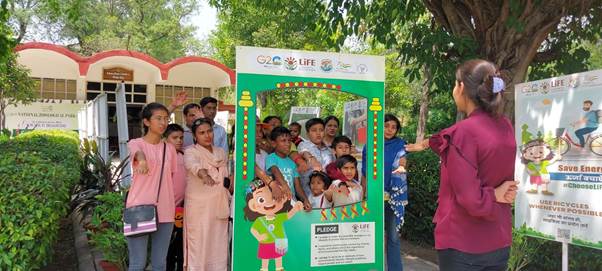
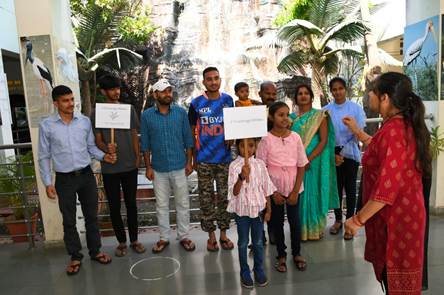
As part of mass mobilization of Mission LiFE NMNH in collaboration with NZP organized on the spot painting competition on good practice to mitigate Climate change and administered LiFE pledge for 241 participants.
RMNH, Mysore conducted interactive talk on LiFE STYLE FOR ENVIRONMENT as part of Mass mobilization of MISSION LiFE for 119 students and General public and encouraged to adopt Eco friendly lifestyle.
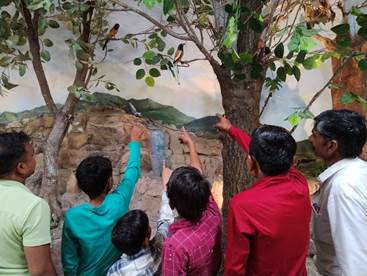
RGRMNH, Sawai Madhopur organized Bird Identification Programme as part of Mass mobilization of Mission LiFe in which 287 Children and Visitors actively participated and learned to identify various Local & Migratory Birds through Gallery Visit.
RMNH, Bhopal organised Awareness Programme on Encouraging Millets to change the lifestyle by adopting LiFE actions under Meri LiFE: Lifestyle For Environment in which158 students and general public actively participated.
Zoological Survey of India
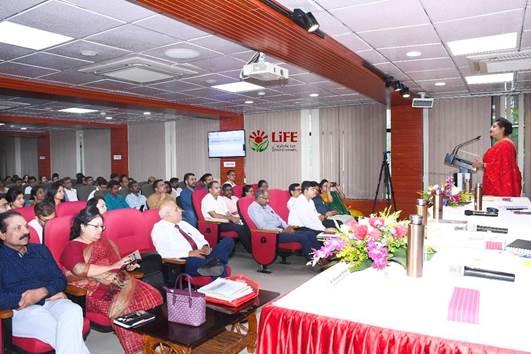
To promote objectives under Mission LiFE and for mass mobilisation, Dr. Dhriti Banerjee, Director, Zoological Survey of India released 4 volumes of Newsletter (EIACP) with scientific papers on various topics like Green farming practices of Vermicompost, Aquaculture and Ornamental fishes in tune with Mission Life objectives. Dr. K. Venkataraman, Former Director of ZSI and Prof Urmi Chatterjee of University of Calcutta were also present on the occasion. While presenting the Annual Progress Report of ZSI for 2022-23 at Headquarters,ZSI, Kolkata Dr Dhriti Banerjee, Director, ZSI highlighted the objectives of LiFE and said that adopting practices of farming like Vermicompost could bring about a positive change in the environment.The program was attended by almost 120 scientists and researchers.
National Centre for Sustainable Coastal Management (NCSCM)
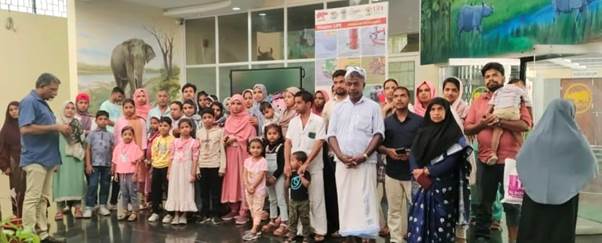
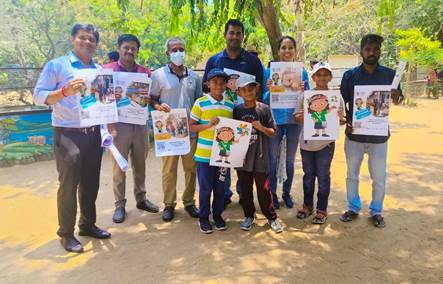
As part of the mass mobilisation of the Lifestyle for the Environment (LiFE) movement, NCSCM organised an awareness programme on the ban of single-use plastics, the use of ecoalternatives, responsible tourism, and coastal and marine conservation at the Madras Crocodile Bank Trust and Centre for Herpetology, located 40 km south of the city of Chennai. It is the largest breeding centre for crocodiles in the country. It has successfully bred 5000 crocodiles and alligators, including the three endangered Indian crocodile species (the mugger crocodile, saltwater crocodile, and gharial), along with several threatened species of turtles. The mission of the park is to promote the conservation of reptiles and amphibians and their habitats through education, scientific research, and captive breeding. As a part of this event, park visitors took part in a green pledge and signature campaign against littering and the need to live in harmony with nature. Placards, pamphlets, and LiFE mascots were displayed in the park as part of this event. NCSCM scientists explained the importance of Mission Life to over 150 visitors. In this campaign, the focus is on educating the public on responsible tourism, wildlife conservation, and the need for an eco-friendly lifestyle to live in harmony with nature.
National Institute of Himalayan Environment
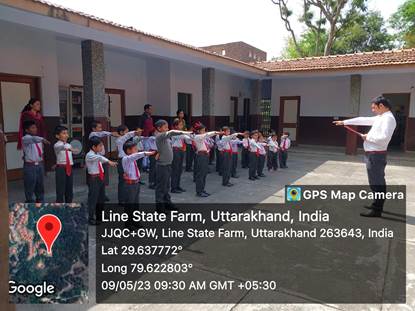
National Institute of Himalayan Environment (NIHE) conducted an awareness program under mission LiFE covering three themes viz. Save energy, Save water and Adopt a healthy lifestyle. In the program, nearly 40 children, students, teachers and researchers participated in the program. All the participants took the LiFE pledge for adopting environmentally friendly habits. Children were mainly made aware through demonstrations to save water and energy in their homes. The school teachers were sensitized on adopting good practices for a healthy lifestyle.








You must be logged in to post a comment.