Health minister holds a meeting today on covid rising concern.

Union Health Minister Mansukh Mandaviya today reviewed the COVID-19 situation in the country in view of a sudden spurt in cases in some parts of the world, and directed officials to be alert and strengthen surveillance. “Use a mask if you are in a crowded space, indoors or outdoors. This is all the more important for people with comorbidities or are of higher age,” he said. “Only 27-28% of people have taken precaution dose. We appeal to others, especially senior citizens, to take precaution dose. Precaution dose is mandated and guided to everyone.”

In view of the rise in cases in Japan, the United States of America, Republic of Korea, Brazil and China the Union Health Ministry, urged all states and Union territories to ramp up the whole genome sequencing of positive samples of Covid to keep track of emerging variants.

In India, more than 220 crore vaccination doses have been administered, including booster shots. Many got reinfected or have already been exposed to omicron, its sub-variants, and sub-lineages. As a result, many Indians have developed ‘hybrid immunity’ or ‘super immunity’, due to a combination of extensive vaccination and natural infection. Nevertheless, in view of the sudden spurt of cases abroad, the government is reviewing the situation and has directed all relevant agencies to be alert.

Health minister holds a meeting today on covid rising concern.

Union Health Minister Mansukh Mandaviya today reviewed the COVID-19 situation in the country in view of a sudden spurt in cases in some parts of the world, and directed officials to be alert and strengthen surveillance. “Use a mask if you are in a crowded space, indoors or outdoors. This is all the more important for people with comorbidities or are of higher age,” he said. “Only 27-28% of people have taken precaution dose. We appeal to others, especially senior citizens, to take precaution dose. Precaution dose is mandated and guided to everyone.”

In view of the rise in cases in Japan, the United States of America, Republic of Korea, Brazil and China the Union Health Ministry, urged all states and Union territories to ramp up the whole genome sequencing of positive samples of Covid to keep track of emerging variants.

In India, more than 220 crore vaccination doses have been administered, including booster shots. Many got reinfected or have already been exposed to omicron, its sub-variants, and sub-lineages. As a result, many Indians have developed ‘hybrid immunity’ or ‘super immunity’, due to a combination of extensive vaccination and natural infection. Nevertheless, in view of the sudden spurt of cases abroad, the government is reviewing the situation and has directed all relevant agencies to be alert.

Central Government raised more than 4 lakh crore trough disinvestment since 2014.

The government raised over Rs4.04 lakh crore through disinvestment and strategic sale of public-sector enterprises (PSEs) since the Modi government came into power in 2014, the Finance Ministry said on 20 decm.

Of this, the largest amount totalling over Rs1.07 lakh crore through offer for sale in 59 cases. This was followed by a stake sale through Exchange-Traded Fund (ETF) in 10 tranches, aggregating to Rs98,949 crore. Strategic sales in 10 companies, including Air India, yielded Rs69,412 crore to the exchequer in the last 8 years. Share buyback in 45 cases fetched Rs45,104 crore.

17 CPSEs were listed since 2014-15, which yielded Rs50,386 crore. Of this, the initial public offering (IPO) of LIC alone fetched the government Rs20,516 crore. The additional market capitalisation of Rs7.31 lakh crore was achieved through new listings, the ministry said. Besides, the government has sold its residual stake in Paradeep Phosphate Ltd, IPCL, and Tata Communication for Rs472 crore, Rs219 crore and Rs8,847 crore, respectively. 

Central Government raised more than 4 lakh crore trough disinvestment since 2014.

The government raised over Rs4.04 lakh crore through disinvestment and strategic sale of public-sector enterprises (PSEs) since the Modi government came into power in 2014, the Finance Ministry said on 20 decm.

Of this, the largest amount totalling over Rs1.07 lakh crore through offer for sale in 59 cases. This was followed by a stake sale through Exchange-Traded Fund (ETF) in 10 tranches, aggregating to Rs98,949 crore. Strategic sales in 10 companies, including Air India, yielded Rs69,412 crore to the exchequer in the last 8 years. Share buyback in 45 cases fetched Rs45,104 crore.

17 CPSEs were listed since 2014-15, which yielded Rs50,386 crore. Of this, the initial public offering (IPO) of LIC alone fetched the government Rs20,516 crore. The additional market capitalisation of Rs7.31 lakh crore was achieved through new listings, the ministry said. Besides, the government has sold its residual stake in Paradeep Phosphate Ltd, IPCL, and Tata Communication for Rs472 crore, Rs219 crore and Rs8,847 crore, respectively. 

“60% of China may get infected by Covid-19 in the next 90 days”, says experts.

Epidemiologists estimate that over the next few days more than 60 per cent of China’s population and 10 per cent of Earth’s population would likely to get infected by Covid-19 and this would be just the ‘start’. 

Skyrocketing infections, inundated hospitals, overflowing morgues — elation from the lifting of zero Covid curbs proved tragically short-lived as China reels under a Covid explosion.

Amid this grim state of affairs, a top infectious disease expert has projected that more than 60 per cent of China’s population is likely to be infected by the coronavirus in the next three months and witness millions of Covid-related deaths.

Chinese authorities have failed to bolster the elderly vaccination rate, upping surge and intensive care capacity in hospitals, and stockpiling antiviral medications, which could spell disaster for the country’s 1.4 billion citizens, warned experts.

"60% of China may get infected by Covid-19 in the next 90 days", says experts.

Epidemiologists estimate that over the next few days more than 60 per cent of China’s population and 10 per cent of Earth’s population would likely to get infected by Covid-19 and this would be just the ‘start’. 

Skyrocketing infections, inundated hospitals, overflowing morgues — elation from the lifting of zero Covid curbs proved tragically short-lived as China reels under a Covid explosion.

Amid this grim state of affairs, a top infectious disease expert has projected that more than 60 per cent of China’s population is likely to be infected by the coronavirus in the next three months and witness millions of Covid-related deaths.

Chinese authorities have failed to bolster the elderly vaccination rate, upping surge and intensive care capacity in hospitals, and stockpiling antiviral medications, which could spell disaster for the country’s 1.4 billion citizens, warned experts.

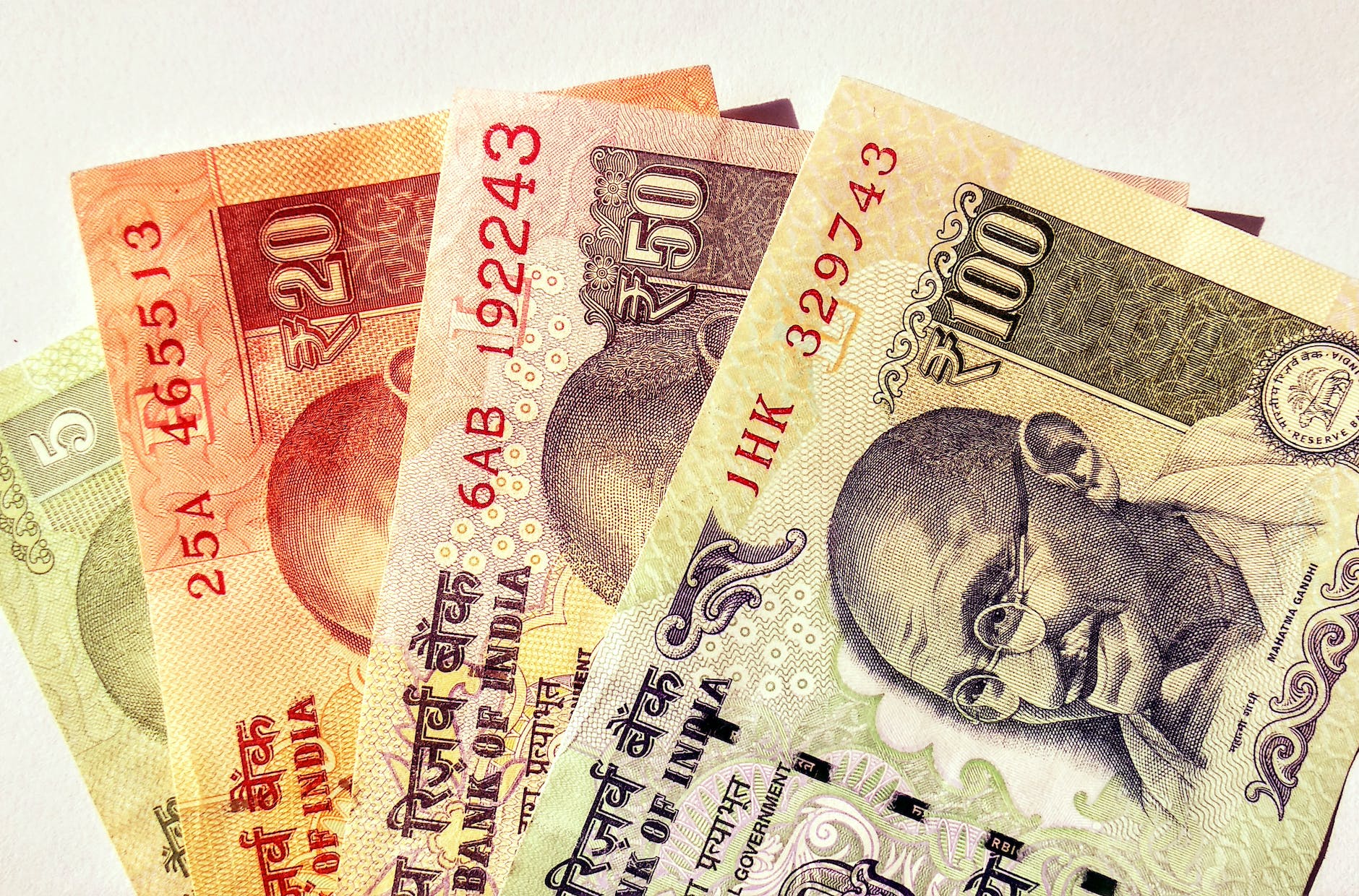
After Russia, Sri Lanka to use Indian rupee(INR) for internation trade.

India’s rupee trade settlement mechanism, which was set up by the Reserve Bank of India in July 2022, is attracting interest from more countries apart from Russia.

The mechanism is a means of using rupees instead of dollars and other big currencies for international transactions in order to promote growth of global trade with emphasis on exports from India and to support the increasing interest of global trading community in the rupee.

Dollar-strapped Sri Lanka and sanctions-hit Russia will be the first countries to use the Indian rupee trade settlement mechanism.

Sri Lanka has agreed to use Indian rupee (INR) for international trade. It comes days after the Government of India said it is looking at ways to bring countries that are particularly short of dollars into the ambit of Indian rupee trade settlement mechanism. Central Bank of Sri Lanka (CBSL) said it is waiting for RBI’s (Reserve Bank of India) approval to designate Indian rupee as foreign currency of Sri Lanka.

Tajikistan, Cuba, Luxembourg and Sudan have begun talking to India about using the mechanism, reported Reuters, quoting two sources and an official document. It has already been used by Russia following the imposition of sanctions on Moscow over the Ukraine war.

After Russia, Sri Lanka to use Indian rupee(INR) for internation trade.

India’s rupee trade settlement mechanism, which was set up by the Reserve Bank of India in July 2022, is attracting interest from more countries apart from Russia.

The mechanism is a means of using rupees instead of dollars and other big currencies for international transactions in order to promote growth of global trade with emphasis on exports from India and to support the increasing interest of global trading community in the rupee.

Dollar-strapped Sri Lanka and sanctions-hit Russia will be the first countries to use the Indian rupee trade settlement mechanism.

Sri Lanka has agreed to use Indian rupee (INR) for international trade. It comes days after the Government of India said it is looking at ways to bring countries that are particularly short of dollars into the ambit of Indian rupee trade settlement mechanism. Central Bank of Sri Lanka (CBSL) said it is waiting for RBI’s (Reserve Bank of India) approval to designate Indian rupee as foreign currency of Sri Lanka.

Tajikistan, Cuba, Luxembourg and Sudan have begun talking to India about using the mechanism, reported Reuters, quoting two sources and an official document. It has already been used by Russia following the imposition of sanctions on Moscow over the Ukraine war.

Key points of UN COP15 summit held at Canada.

After four years of fractious talks, nearly 200 countries, including India, approved a historic Paris-style deal on Monday to protect and reverse dangerous loss to global biodiversity following an intense final session of negotiations at the UN COP15 summit here in Canada.

The UN Development Programme said the “historic agreement” meant people around the world could hope for real progress to halt biodiversity loss.

The main points include:

  • Maintaining, enhancing and restoring ecosystems, including halting species extinction and maintaining genetic diversity
  • “Sustainable use” of biodiversity – essentially ensuring that species and habitats can provide the services they provide for humanity, such as food and clean water
  • Ensuring that the benefits of resources from nature, like medicines that come from plants, are shared fairly and equally and that indigenous peoples’ rights are protected
  • Paying for and putting resources into biodiversity: Ensuring that money and conservation efforts get to where they are needed.

Furthermore, the framework also calls for increasing the amount of money sent to poor countries to at least $20 billion every year by 2025 which could be increased by $10 billion each year by the end of the decade. However, the document only calls for identifying subsidies by 2025 which can be reformed or phased out and work on reducing them by 2030. 

The draft comprised four broad goals and 22 targets addressing the protection of nature and sharing its benefits which included, the management of wildlife, working on the restoration of habitats and using less plastic. 

Key points of UN COP15 summit held at Canada.

After four years of fractious talks, nearly 200 countries, including India, approved a historic Paris-style deal on Monday to protect and reverse dangerous loss to global biodiversity following an intense final session of negotiations at the UN COP15 summit here in Canada.

The UN Development Programme said the “historic agreement” meant people around the world could hope for real progress to halt biodiversity loss.

The main points include:

  • Maintaining, enhancing and restoring ecosystems, including halting species extinction and maintaining genetic diversity
  • “Sustainable use” of biodiversity – essentially ensuring that species and habitats can provide the services they provide for humanity, such as food and clean water
  • Ensuring that the benefits of resources from nature, like medicines that come from plants, are shared fairly and equally and that indigenous peoples’ rights are protected
  • Paying for and putting resources into biodiversity: Ensuring that money and conservation efforts get to where they are needed.

Furthermore, the framework also calls for increasing the amount of money sent to poor countries to at least $20 billion every year by 2025 which could be increased by $10 billion each year by the end of the decade. However, the document only calls for identifying subsidies by 2025 which can be reformed or phased out and work on reducing them by 2030. 

The draft comprised four broad goals and 22 targets addressing the protection of nature and sharing its benefits which included, the management of wildlife, working on the restoration of habitats and using less plastic. 

Outstanding Achievement for NIT Calicut in NBA Accreditation

 Five Major B.Tech Programmes of NITC receives NBA Accreditation for 6 Years Five major B.Tech programmes offered by National Institute of Technology Calicut namely B.Tech in Civil Engineering, Mechanical Engineering, Electrical & Electronics Engineering., Electronics & Communication Engineering., and Computer Science & Engineering have been accorded with the highest accreditation status of 6 years (2022-2028) by the National Board of Accreditation (NBA), New Delhi. 6 years is the maximum possible duration of accreditation where “Not Accredited” or “Accredited for 3 years” being the other two possible status. 

The present result of NIT Calicut is based on the inspection visit of an expert committee composed of 11 senior professors from top Institutions in the country during 11-13 November 2022. The committee evaluated all aspects of these 5 programmes with a special emphasis on the data during the period 2019-22 during which all academic institutions in the country experienced several challenges due to Covid pandemic. While the programmes offered by colleges affiliated to other universities in the country come under Tier-II accreditation process, all NITs and other Deemed Universities come under the TierI scheme, which is known to be much more stringent in terms of most of the quality assessment parameters. Moreover, the current evaluation was done based on the new format introduced by the NBA in the year 2021 which is tough to achieve as compared to previous formats in practice. NIT Calicut is one of the very few institutions in the country to achieve this feat. 

On this occasion, Director Prof.Prasad Krishna told, “This reiterates the outstanding quality that NIT Calicut ensures for the teaching and research. Over the last few years, we have conducted a few faculty recruitments which also have helped us to achieve this laurel. I congratulate all my faculty members, students, alumni and employers for their consistent efforts and exemplary contributions. As India is a full signatory in washington accord now, this achievement will help our students to secure admissions in top universities of the world for higher studies as well as employment all over the world- particularly in US, Europe and Middle-East” Prof. P. S. Sathidevi, Deputy Director and Chairperson, Centre for Quality Assurance & Enhancement said “The Centre for Quality Assurance and Enhancement at NITC and Office of Dean (Academic) are taking concerted efforts to ensure the academic quality of the programmes offered in the Institute. Regular Academic Audit is conducted to ensure that the highest levels of academic and research quality are maintained in the Institute. 

The remarkable achievement of six year accreditation for the five UG programmes by the NBA is indeed a pointer to the quality conscious academic environment in the Institute”. “In Tier-I format, NBA considers the performance of the programmes on multiple aspects such as Course Outcomes and Program Outcomes, Program Curriculum and Teaching-Learning Processes, Students’ Performance, Faculty Contributions, Institute Resources, Governance and Continuous Improvement. Outstanding achievement in almost all these criteria is required in order to get 6 years accreditation. This shows the non-compromising attitude of students and faculty members in the teaching-learning process even during the challenging time of Covid and ensures the global competencies of our graduates”, Prof. Sameer S. M., Dean (Academic) said. 

NBA came into existence as an independent autonomous body with effect from January 2010 with the objectives of assurance of quality and relevance to technical education, especially of the programs in professional and technical disciplines, i.e., Engineering and Technology, Management, Architecture, Pharmacy and Hotel Management and Catering Technology, through the mechanism of accreditation of programs offered by technical institutions. The NBA conducts evaluation of programs of technical institutes on the basis of laid down norms as prescribed by the Washington accord, a global consortium of accreditation bodies of 22 countries including USA, UK, Canada, Australia and India. 

Argentina wins FIFA world cup.

The Lusail Stadium hosted what will go down as one of the greatest, if not the greatest, World Cup finals of all time. Argentina were cruising for much of the match, until Kylian Mbappe converted a penalty and scored a sensational equaliser to force the game into extra-time. That led to more insane football as chances flew around at both ends. Messi scored late in the second-half of extra time to seemingly win it for Argentina, only for them to concede a penalty mere seconds later. The flawless Mbappe converted that as well, thus becoming the first player since 1966 to score a hat-trick in the final of a World Cup. And yet, he ended up on the losing side, with Argentina winning the penalty shootout. Messi finally got his hands on the covetted World Cup trophy in what he said will be his last match in this tournament. 

Mbappe wins the Golden Boot, but Messi bagged the World Cup. It was the battle of the Number 10s, as two titans of the game stepped up and gave it their all. But it was the veteran that stood tall in the end. Nobody expected Argentina to dominate the way they did for the first eighty minutes of the match. Nobody expected them to lose their lead twice in the match. And certainly nobody expected Mbappe to score a hat-trick and still find himself on the losing side. But for all the criticism that Argentina had received over the years for crumbling under pressure, this World Cup has shown that there is none better than them when it comes to penalties, where nerves mattered the most.

Argentina wins FIFA world cup.

The Lusail Stadium hosted what will go down as one of the greatest, if not the greatest, World Cup finals of all time. Argentina were cruising for much of the match, until Kylian Mbappe converted a penalty and scored a sensational equaliser to force the game into extra-time. That led to more insane football as chances flew around at both ends. Messi scored late in the second-half of extra time to seemingly win it for Argentina, only for them to concede a penalty mere seconds later. The flawless Mbappe converted that as well, thus becoming the first player since 1966 to score a hat-trick in the final of a World Cup. And yet, he ended up on the losing side, with Argentina winning the penalty shootout. Messi finally got his hands on the covetted World Cup trophy in what he said will be his last match in this tournament. 

Mbappe wins the Golden Boot, but Messi bagged the World Cup. It was the battle of the Number 10s, as two titans of the game stepped up and gave it their all. But it was the veteran that stood tall in the end. Nobody expected Argentina to dominate the way they did for the first eighty minutes of the match. Nobody expected them to lose their lead twice in the match. And certainly nobody expected Mbappe to score a hat-trick and still find himself on the losing side. But for all the criticism that Argentina had received over the years for crumbling under pressure, this World Cup has shown that there is none better than them when it comes to penalties, where nerves mattered the most.

North East as the new engines of growth

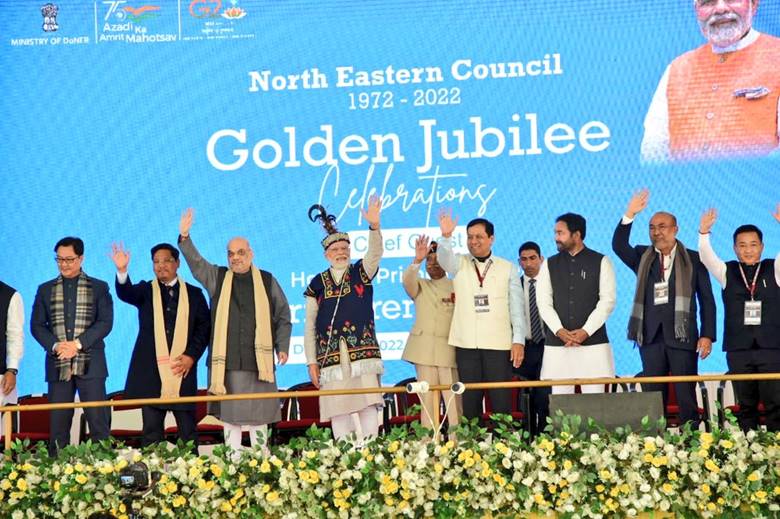
 Union Minister of Ports, Shipping & Waterways and Ayush, Shri  Sarbananda Sonowal has said the North Eastern Council (NEC) has been the catalyst of growth in the North East. He said under the visionary leadership of the Prime Minister North East as the new engines of growth, is poised to drive the forward journey of new India.

Sharing his views after attending the Golden Jubilee Celebration of NEC in Shillong, Shri Sonowal said, “Today, the Honourable Prime Minister of India, Shri Narendra Modi ji laid the foundation stones and dedicated projects worth ₹2450 crore on the Eve of Golden Jubilee celebration of Northeast Council (NEC) in Shillong.  With these launches, it is a true reflection of the Modi ji’s vision of ‘Sabka Saath, Sabka Vikas, Sabka Vishwas, Sabka Prayas’ for the holistic development of the country. Under the dynamic leadership of Prime Minister Modi ji, the road to growth & development of Northeast Region has been laid out with permanent peace & respect to the communities to become partners in this wonderful journey of the region. These projects, inaugurated by the PM Modi today, will accelerate development of not just Meghalaya but of the entire Northeast. I convey my sincere gratitude to Honourable Prime Minister Shri Narendra Modi ji for recognising the Northeast as the Astalakshmi and heralding a new age of development in the region.”

************

India has jumped from 7th to 3rd global ranking in scientific publications

 India has jumped from 7th to 3rd global ranking in scientific publications. This was disclosed here today by Union Minister for Science & Technology, Dr Jitendra Singh after a review with Union Secretary Department of Science & Technology (DST) Dr S. Chandrasekhar.

Lauding the consistent efforts of India’s scientific fraternity, Dr Jitendra Singh gave all credit to an enabling milieu and freedom of working provided by Prime Minister Narendra Modi. He said, the very fact that such quantum leaps in our scientific pursuits are happening only in the last few years is a testimony to the push given by PM Modi both in terms of the ease of policy as well as his personal indulgence and prioritisation.

Dr Jitendra Singh informed that as per the National Science Foundation (NSF)’s Science & Engineering Indicators 2022 report of the United States, India’s position globally in scientific publications, has improved from 7th position in 2010 to 3rd position in 2020. He also added that India’s scholarly output increased from 60,555 papers in 2010 to 1,49,213 papers in 2020.

Dr Jitendra Singh said, this became possible only because of Prime Minister Narendra Modi, who not only has a natural predilection for science but is also forthcoming in supporting and promoting science and technology based initiatives and projects in the last 8 years. He said, India’s scientific prowess is going to have a major role in the making of “AtmaNirbhar Bharat ”.

Dr Jitendra Singh said, India’s research performance in science and technology has improved significantly over the past few years which is visible through large amount of scientific knowledge in terms of research publications, development of technologies and innovations contributing to overall development.

Dr Jitendra Singh also took pride that India now ranks 3rd in terms of number of PhDs in science and engineering. He was also apprised of the fact that the number of patents granted to Indian scientists at India Patent Office (IPO) during the last three years has also increased from 2511 in 2018-19 to 4003 in 2019-20 and 5629 in 2020-21.

The National Science Foundation is an independent agency of the United States government that supports fundamental research and education in all the non-medical fields of science and engineering.

It may be recalled that as per the Global Innovation Index (GII) 2022 brought out by World Intellectual Property Organization (WIPO), India’s GII ranking has also improved significantly from 81st in 2014 to 40th position in 2022.

Dr Jitendra Singh said, the government has taken several steps to boost the science and technology sector which includes successive increase in allocations for Scientific Departments, incentivizing investment by private sector to increase their share in GERD, improving the ease of doing business in the Science, Technology and Innovation (STI) activities; introducing flexible tools for public procurement; creating avenues for collaborative STI funding through portfolio-based funding mechanisms such as Public-Private-Partnerships and other innovative hybrid funding mechanisms.

A senior official informed that the Department of Science and Technology is likely to get 20 percent more money in the upcoming Union Budget 2023-24 in comparison to last year.

In the last budget, DST received Rs 6,002 Crore, which was 42 percent of the total fund of Rs 14,217 Crore allocated to the Ministry of Science and Technology. DSIR received Rs 5,636 Crore (40%), while DBT got Rs 2,581 Crore (18%).

The Government has allowed corporate sector to make R&D investments under the provision of Corporate Social Responsibility (CSR). Corporates can invest in technology business incubators or contribute in research efforts carried out by institutions and national research laboratories as a part of their CSR. There are specific investment incentives offered such as Location-based tax incentives that enables 100% deductions of profits generated from establishing and doing business in northeastern states of India.

*******