National Milk Day

The day commemorates Dr. Verghese Kurien’s 100th birthday and is referred to be the “Father of the White Revolution.”

On November 26, National Milk Day is marked to raise awareness of the value and advantages of milk.

India is the largest milk producer. Animals eat milk, so it is a food consumed by both humans and animals. World Milk Day, established by the Food and Agriculture Organization of the United Nations, is also celebrated on June 1st each year.


National Milk Day: History

The National Dairy Development Board (NDDB), the Indian Dairy Association (IDA), and 22 State Dairy Associations have jointly decided to commemorate Dr. Celebrating his Verghese Curiae on November 26, 2014. Dr. Curia is considered the father of India’s White Revolution. As a result, on November 26, 2014, the first National Milk Day was celebrated.

Do you know about the White Revolution and Operation Flood?

India’s National Dairy Development Board (NDDB) initiated a rural development program, Operation Flood, in 1970. It is one of the largest programs aimed at building a nationwide milk network. As a result, milk traders and merchant fraud has decreased and India is now one of the largest producers of milk and dairy products. Hence the White Revolution is another name.

Dr. Verghese Kurien, then Chairman of the NDDB, provided the management know-how and necessary impetus for the cooperative sector. He is credited with being the driving force behind Operation Flood, also known as White Revolution in India.

Operation Flood was implemented in three phases.

Phase I (1970-1980): It was paid for by the European Union’s World Food Program donations of skimmed milk powder and butter oil. Connected with consumers in Mumbai, Kolkata, and Chennai.

Phase II (1981-1985): Between 18 and 136 dairy stalls were added during this time. A total of 290 urban markets also increased milk distribution. And he said that by the end of 1985, 4.25 million milk producers were part of a self-sustaining network of 43,000 village cooperatives. By 1989, 22,000 tons of domestic milk powder had been produced for his 140,000 tons.

Phase III (1985-1996): Dairy cooperatives expanded and strengthened their infrastructure during this time to increase the supply of milk to the market. This phase strengthened the Indian dairy cooperative movement by adding 30,000 new dairy cooperatives to the 42,000 dairy cooperatives already established in Phase II. Women’s participation in the milk shed increased from 1988 to 173 in 1989, and women’s milk cooperatives also increased dramatically.

research and developments in animal nutrition and animal health were also highlighted during this period. Innovations such as vaccination against atherosclerosis, avoidance of protein diets, and urea molasses mineral blocks have helped dairy cows produce more milk.

About Dr. Verghese Kurien

1. He resigned from his position with the government and coerced Tribhuvandas Patel and the farmers to launch the Kaira District Cooperative Milk Producers Union Ltd (KDCMPUL), subsequently known as “Amul,” as the region’s first milk cooperative movement.

2. He carried out the “Operation Flood” scheme and attempted to bring the White Revolution to India. He was responsible for planning India’s White Revolution.

3. He contributed to India being the world’s top producer of milk.

4. He contributed to setting the groundwork for democratic initiatives at the local level.

5. He founded several organizations, including the National Dairy Development Board (NDDB) and the Gujarat Cooperative Milk Marketing Federation Ltd (GCMMF), and he had a considerable impact on the development of the dairy cooperative movement in the nation.

6. He also oversaw the replication of the cooperative dairy Anand model, which is used throughout India. He received 15 honorary degrees over his nearly fifty years of service from various international universities because he insisted that learning should never end.

7. He will always be known for changing the definition of milk to make it a potent tool for economic growth.


Coal Ministry to conduct Investor Conclave in Mumbai

 After the successful auction of 64 coal mines in the first five tranches, Ministry of Coal had launched the process for auction of 133 coal mines under 6th round of commercial auctions of which 71 coal mines are new coal mines and 62 coal mines are rolling over from earlier tranches of commercial auctions held in November 2022. Additionally, eight  coal mines under 2nd attempt of 5th round of commercial auctions were also launched where single bids were received in the first attempt.

Under commercial auctions, there is no technical or financial eligibility criteria and hence, several bidders who were not into coal mining earlier, became successful bidders and were awarded the coal mines. To boost bidder participation in the commercial auction of coal mines, Ministry of Coal is organising an investor conclave on December 01, 2022 in Mumbai. Union Minister of Coal, Mines and Parliamentary Affairs, Shri Pralhad Joshi will Chair and  Chief Minister of Maharashtra, Shri Eknath Shinde will be the Chief Guest.  Deputy Chief Minister Shri Devendra Fadnavis will be the Special Guest and Minister of State for Coal, Mines and Railways, Shri Raosaheb Patil Danve and Minister of Mining for Maharashtra, Shri Dadaji Bhuse will be the Guest of Honour of the function.  Shri Amrit Lal Meena, Secretary, Ministry of Coal and Shri Vivek Bhardwaj, Secretary, Ministry of Mines will  also participate in the Conclave.

The list of mines has been finalized post detailed deliberations. Mines falling under protected areas, wildlife sanctuaries, critical habitats, having forest cover greater than 40%, heavily built-up area etc. have been excluded. The block boundaries of some of the coal mines where there was presence of dense habitation, high green cover or critical infrastructure etc. have been modified basis comments received during stakeholder consultations to enhance bidders’ interest and participation in these coal blocks.

Key features of the auction process include reduction in upfront amount and bid security amount, permission to relinquish part of the coal mine in case of partially explored coal mines, introduction of National Coal Index and National Lignite Index, ease of participation with no entry barriers, full flexibility in coal utilisation, optimized payment structures, efficiency promotion through incentives for early production and use of clean coal technology. 

The sale of tender document commenced on November 03, 2022. Details of the mines, auction terms, timelines etc. can be accessed on MSTC auction platform. The auction shall be held online through a transparent 2 stage process, on the basis of Percentage Revenue Share.

SBI Capital Markets Limited, the sole Transaction Advisor to Ministry of Coal for the commercial coal mine auctions, is assisting the Ministry of Coal in conduct of the auction.

*****

18th Convocation of National Institute of Technology, Kurukshetra

 The President of India, Smt Droupadi Murmu graced the 18th convocation of National Institute of Technology (NIT) Kurukshetra today (November 29, 2022). 

The President said that today the whole world is going through a phase of rapid change. Due to the technological revolution, the nature of jobs as well as the basic needs of the people is changing. These changes are also challenging the existing methods of engineering. In view of changes taking place due to the technological shift, it becomes very important that our technical institutions including NIT Kurukshetra become ‘future-ready’. She was happy to note that NIT Kurukshetra is moving towards introducing futuristic-courses like artificial intelligence and data science, robotics and automation and industrial internet of things. She was also happy to note that NIT Kurukshetra has established a state-of-the-art ‘Siemens Centre of Excellence’ in which special emphasis is being laid on smart manufacturing and automation designs and e-mobility. She said that it is a matter of pride that NIT Kurukshetra is the first NIT in North India and second in the country to establish such a centre. She noted that the establishment of this centre has led to increase collaboration with industry, academia and Research and Development organizations such as DRDO and BHEL.

The President said that the region of Haryana and Punjab has made a very important contribution in the development of Indian agriculture. The progressive farmers of this region have made the green revolution possible by using modern technology and provided food security to the country. But today, increasing air and land pollution and depleting ground water level in the region have emerged as a major problem. She said that it is the responsibility of NIT Kurukshetra to find technical solutions to these problems. During the pandemic, it became clear that the common citizen of India is technology friendly. If technology is for the betterment of the society, then it gets full cooperation from the public. The success of digital payment is an example of this.

The President said that technology is not only a by-product of science and engineering, but it also has a social and political context. We all have to move forward with the thought of ‘Technology for Social Justice’. We should make efforts so that the deprived class is not left behind in this. Technology should be used for building an egalitarian society. 

Pointing to the trend of making salary packages as the criteria for success in education, the President said that getting more salary packages is a good thing, but it does not mean that the student who does not get a good salary package is less qualified. She advised students to never judge their success on the basis of the package. She said that they have not to be limited by traditional notions of success and societal pressures. They have to decide what they want to do in their life. She urged them to choose a career that gives them satisfaction and a sense of meaning in life. She also urged parents to motivate their children for excellence. She said that in striving for excellence, achievements will automatically come their way.

The President said that NIT Kurukshetra which was established in 1963 is one of the first NITs in India. It has played a very significant role in spreading the scientific temper in the region. Over the past six decades, it has carved a niche for itself among technical institutions of higher-learning in the country and abroad. She said that more than 40,000 alumni of this institute have contributed in nation-building and have also played an important role in enhancing the reputation of India all over the world. She noted that students of NIT Kurukshetra have made their place in all fields from Singapore to Silicon Valley, from civil society to civil services.

Please click here to see the President’s speech – 

 ***

Sensex index may hit 80,000 at the end of next years.

Equity Research major Morgan Stanley (MS) on Monday said the Sensex could hit 80,000 by the end of 2023. This comes even as the Sensex closed at a record high of 62,504 after gaining 0.34 per cent, or 211 points. The Nifty rose 0.27 per cent, or 50 points, to close at 18,562. Nifty is just 53 points away from making a new lifetime high.

The bull-run in Indian equity markets is intact, said analysts at Morgan Stanley in a recent note, and expect the S&P BSE Sensex to hit 80,000 levels by December 2023 in their bull-case scenario, to which they have assigned a 30 per cent probability. From the current levels, this translates into an upside of nearly 29 per cent.

For this, while the corporate earnings are projected to compound 25 per cent annually over FY22-25, Morgan Stanley expects India to be included in the global bond indices, which could result in nearly $20 billion of inflows over the subsequent 12 months. That apart, commodity prices including oil and fertiliser are expected to correct sharply.

As their base-case, however, Morgan Stanley sees the S&P BSE Sensex to scale up to 68,500 levels – up 10 per cent from the current levels.

Sensex index may hit 80,000 at the end of next years.

Equity Research major Morgan Stanley (MS) on Monday said the Sensex could hit 80,000 by the end of 2023. This comes even as the Sensex closed at a record high of 62,504 after gaining 0.34 per cent, or 211 points. The Nifty rose 0.27 per cent, or 50 points, to close at 18,562. Nifty is just 53 points away from making a new lifetime high.

The bull-run in Indian equity markets is intact, said analysts at Morgan Stanley in a recent note, and expect the S&P BSE Sensex to hit 80,000 levels by December 2023 in their bull-case scenario, to which they have assigned a 30 per cent probability. From the current levels, this translates into an upside of nearly 29 per cent.

For this, while the corporate earnings are projected to compound 25 per cent annually over FY22-25, Morgan Stanley expects India to be included in the global bond indices, which could result in nearly $20 billion of inflows over the subsequent 12 months. That apart, commodity prices including oil and fertiliser are expected to correct sharply.

As their base-case, however, Morgan Stanley sees the S&P BSE Sensex to scale up to 68,500 levels – up 10 per cent from the current levels.

Report for most inclusive nation for religious minorities, India tops the list.

The Centre for Policy Analysis (CPA), in its first global minority report, has listed India at the top of the list of countries for its treatment of religious minorities. India has topped the list on counts of inclusiveness towards religious minorities.

Released by former Vice President of India Venkaiah Naidu, the report is based on conceptual issues relating to human rights, minorities, concept of religious freedom and culture dilemma of religious minorities, cause of religious differences and more.

While India has been ranked one in the global minority report, the United State of America (USA) bagged fourth spot. Nepal is ranked at 39, whereas Russia is ranked 52. China and Bangladesh were ranked at 90 and 99, respectively. Pakistan is ranked at 104 in the report, whereas Taliban-led Afghanistan secured 109th position.

This is for the first time that an Indian body has rated other nations on the basis of their treatment of religious minorities.

Report for most inclusive nation for religious minorities, India tops the list.

The Centre for Policy Analysis (CPA), in its first global minority report, has listed India at the top of the list of countries for its treatment of religious minorities. India has topped the list on counts of inclusiveness towards religious minorities.

Released by former Vice President of India Venkaiah Naidu, the report is based on conceptual issues relating to human rights, minorities, concept of religious freedom and culture dilemma of religious minorities, cause of religious differences and more.

While India has been ranked one in the global minority report, the United State of America (USA) bagged fourth spot. Nepal is ranked at 39, whereas Russia is ranked 52. China and Bangladesh were ranked at 90 and 99, respectively. Pakistan is ranked at 104 in the report, whereas Taliban-led Afghanistan secured 109th position.

This is for the first time that an Indian body has rated other nations on the basis of their treatment of religious minorities.

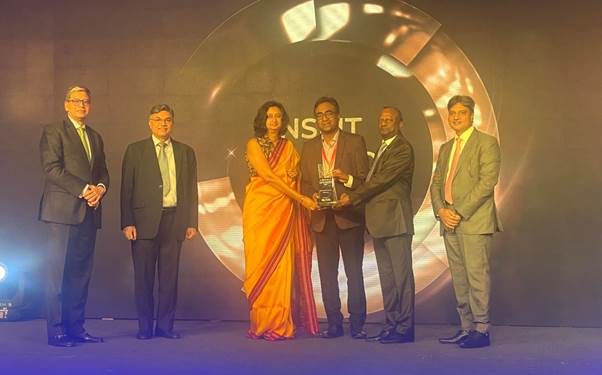
Manthan Platform Wins the Best Tech Initiative Award

 The Manthan platform won NSEIT the Best Tech Initiative of the Year at the Dun & Bradstreet Business Excellence Awards 2022 on 29th November 2022 during an event in Mumbai. The award was presented for building the technology infrastructure to support Manthan, a platform that promotes collaboration at scale between industry and the scientific research and development ecosystem. The development of the platform was conceptualized and implemented by the Office of the Principal Scientific Adviser (PSA) to the Government of India. The award was received by Dr. Sapna Poti, Director of Strategic Alliances Division, Office of Principal Scientific Adviser (PSA) to the Government of India and Shri. Anantharaman Sreenivasan, MD & CEO, NSEIT.

Manthan is aimed at promoting collaboration between industry and the scientific research and development ecosystem. Launched on India’s 76th Independence Day, Manthan empowers multiple stakeholders to collaborate for co-creating solutions aligned with the United Nations’ Sustainable Development Goals (SDGs) and our national scientific missions.

The Principal Scientific Adviser to the Government of India, Prof. Ajay K. Sood launched the platform and noted that the creation of Manthan will be crucial for “building, nurturing, and celebrating the outcome of partnerships between various stakeholders of science, technology, and innovation ecosystem in India.” Emphasising the mandate of Manthan, he added, “This will give an impetus to the government’s efforts to improve participation of industry in terms of GDP. In the last few years, the partnerships between academia and industry have been encouraging and it has worked well when two sides have come together to solve the problems or the challenges faced.

Congratulating the teams behind Manthan, Dr. Parvinder Maini, Scientific Secretary, Office of PSA, said, “Manthan is a unique platform enabling public-private-academia collaboration to achieve sustainability goals, and the goal is to play a transformative role in doing that. It is giving a thrust for innovative ideas and inventive minds to seamlessly collaborate and work towards making India a global innovation hub. This recognition commemorates the larger vision of Digital India and highlights the contributions of the teams behind Manthan’s success.

Dr. Sapna Poti, Director of the Strategic Alliances Division, Office of PSA, said, “As the nation takes rapid strides towards becoming a global innovation hub, a platform to cater to the science, technology, and innovation ecosystem specifically is essential. Manthan – India’s Platform for Research and Innovation will allow industries to source their project and innovation partners for both CSR and Industry R&D, facilitating the exchange of ideas, enhancement of communities’ support, and co-development of solutions that will fuel scientific research and development in the country. Congratulations to the entire NSEIT team who designed and implemented Manthan.

The Manthan platform is visionary and is a true enabler for the Government of India’s Digital India vision. I congratulate the teams from the Office of the PSA and NSEIT for their meticulous contributions toward making this ingenious and innovative platform a reality. This award is an outcome of teamwork and rigorous pursuit of excellence”, said Shri. Ashishkumar Chauhan, MD & CEO of National Stock Exchange of India Limited.

On receiving the award, Shri. Anantharaman Sreenivasan, MD & CEO of NSEIT, said, “This award is a validation of NSEIT’s commitment to delivering high-impact and complex projects for customers. I thank the jury members and the organizing team at Dun & Bradstreet for recognizing NSEIT’s efforts in providing innovation excellence and driving robust business outcomes. I also express gratitude to the Office of PSA to the Government of India for entrusting us with the honor of being a strategic technology partner. The teams behind the successful launch of Manthan deserve all the credit for fructifying this global innovation platform.”


Dun & Bradstreet Business Excellence Awards 2022:

Dun & Bradstreet is a global provider of B2B data, insights, and AI-driven platforms for organizations around the world. Since 1841, companies of every size have relied on Dun & Bradstreet to help them manage risk and reveal opportunity. The Dun & Bradstreet SME and Mid-Corporate ‘Business Excellence Awards 2022’ is an endeavor to acknowledge and recognize the achievements and performance of SMEs and Mid-Corporates. The award covers 23 categories largely based on business performance parameters. The award nominations were reviewed by a distinguished jury panel featuring experts from the banking and energy development sectors.

About NSEIT:

NSEIT Limited is a global technology enterprise focused on delivering excellence in a complex digital environment, primarily in the banking, insurance, and capital market ecosystem, and a 100% subsidiary of the National Stock Exchange of India. Their key service pillars are Application Modernization, Business Transformation, Data Analytics, Infrastructure & Cloud Services, Cybersecurity, EdTech, and online examinations solutions.

For more information, visit www.nseit.com.

*****

Workshop on Development of Sustainable and Responsible Tourist Destinations


  • The workshop witnessed wide participation of senior Government officials and Tourism industry stakeholders of States/ Union Territories of Central and Western region viz. Madhya Pradesh, Chattisgarh, Maharashtra, Gujarat, Daman & Diu and Goa
  • Ministry of Tourism’s Travel for LiFE campaign was also introduced in the workshop

In order to develop sustainable and responsible tourist destinations and promote sustainable tourism in the Country, Ministry of Tourism in association with IITTM, UNEP and RTSOI organised a first regional workshop on Development of Sustainable and Responsible Tourist Destinations at Khajuraho on 29th November, 2022. The workshop witnessed wide participation of senior Government officials and Tourism industry stakeholders of States/ Union Territories of Central and Western region viz. Madhya Pradesh, Chattisgarh, Maharashtra, Gujarat, Daman & Diu and Goa.

Keynote address at the workshop was delivered by Shri Prashant Ranjan, Director, Ministry of Tourism. He highlighted the need of sustainability in tourism and significance of Centre, State and Industry collaboration in achieving the objective. He also spoke about the Prime Minister’s vision for environmental sustainability. He underscored how tourism can be aligned with LiFE Mission. He introduced the Travel for LiFE campaign launched by Ministry of Tourism.

Shri Uttank Joshi, Assistant Director General, Ministry of Tourism shared success stories of Swadesh Darshan 1.0, a flagship centrally sponsored scheme of Ministry of Tourism for creating tourism infrastructure in the country. He also gave an overview of Swadesh Darshan 2.0 and how it integrates sustainability in destination development.

Shri Anirudh Chaoji an eminent eco-tourism practitioner and representative of RTSOI deliberated with the participants on sensitising the tourist and creating a demand for responsible travel.

Ms. Manisha Chaudhary shared some landmark efforts like the Global Tourism Plastics initiative and the Glasgow Declaration on Climate Action in Tourism launched in November 2021 in climate change CoP 26.  She encouraged stakeholders to join such initiatives and set targets to  address triple planetary crisis of climate change, pollution and biodiversity loss in alignment with national and global commitments for sustainable development.

Presentations were also made by representatives of State Tourism Departments Central and Western region, calling attention to their best practices in sustainable tourism.

Central Nodal Agency for Sustainable Tourism, Indian Institute of Tourism and Travel Management briefed the participants about the salient features of Sustainable Tourism Criteria for India (STCI). The participants also took the Travel for LiFE pledge to commit themselves towards travelling responsibly. 

Grassroot industry stakeholders also presented their innovative ways of implementing sustainable tourism in different regions of central and western regions to create tangible positive impact.

The workshop strengthened the engagement among the Ministry of Tourism, State Governments/ UT Administrations and Industry stakeholders towards achieving Sustainability Goals.


*******

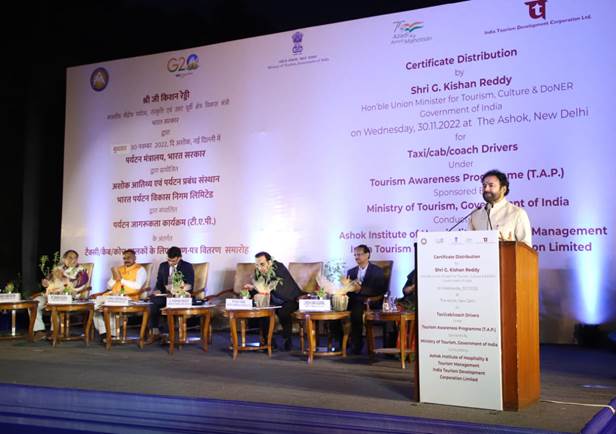
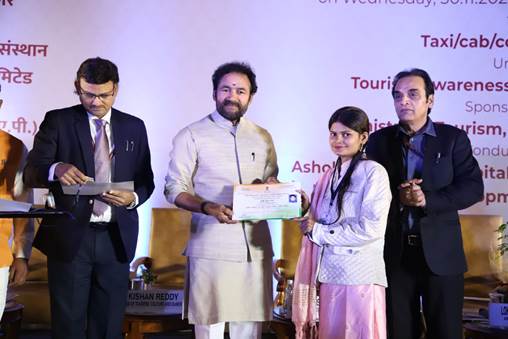
skill training certificates to Taxi/ Cab/Coach drivers under Tourism Awareness Programme


  • 299 candidates attended the training, out of them 165 are male as compared to 134 female beneficiaries
  • Candidates have been given inputs on soft skills, behavioural skills, personal and workplace hygiene, places of tourist importance in Delhi, First Aid, COVID Protocol, Foreign language, etc. via theoretical as well as practical means during the training

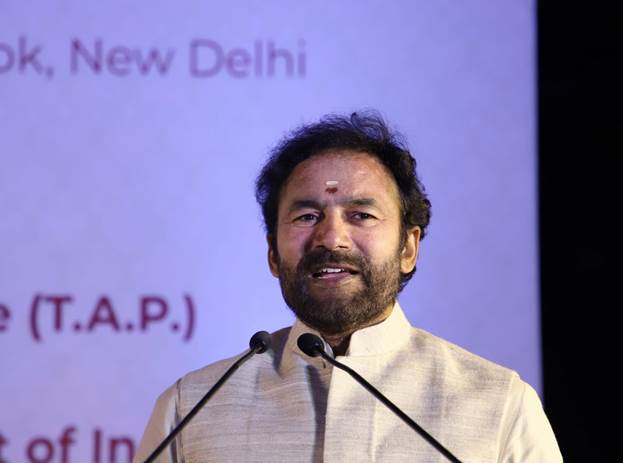
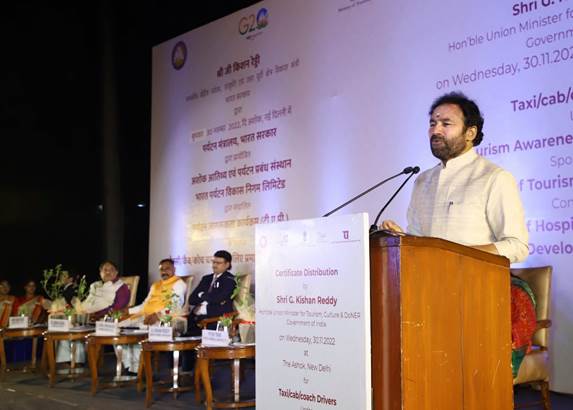
“India is presiding over the G-20 summit for the next one year from 1st December 2022. Emerging economies of the world are participating in this summit. More than 200 meetings will be held in more than 55 different places during this summit. People of the world are eager to see India, they are not just tourists for us, but also influencers of India. I think this training programme before the G-20 summit will act as a milestone in the development of Indian tourism.” Union Tourism Minister Shri G. Kishan Reddy said this during the skill training certificate distribution programme for Taxi/ Cab/ Coach drivers under Tourism Awareness Programme today in New Delhi.

Under the Capacity Building for Service Provider programme of Ministry of Tourism, Government of India, Ashok Institute of Hospitality & Tourism Management-AIH&TM, HRD division of ITDC conducted the training of Taxi/Cab/Coach drivers under Tourism Awareness Program (fully sponsored by MoT) on Behavioural & soft skills with one basic foreign language viz. French and German and Arabic.  Managing Director of  ITDC Shri G. Kamala Vardhana Rao  and other officials  of  ITDC were also present on this occasion.

During his address Shri G. Kishan Reddy congratulated Ashoka Institute of Hospitality & Tourism Management, HRD Division of ITDC for conducting this training programme. Shri Reddy said that the aim of Prime Minister Shri Narendra Modi is to take tourism  to New heights  in India. For this, the Modi government has implemented many types of training programmes and schemes. The objective of this training is to honecthe Personal & Professional Skills of Taxi/Cab Drivers, so that they can interact and communicate effectively with Domestic and International Tourists. Our Taxi/Cab Drivers are Brand Ambassadors in the promotion of tourist places of India. “I have been informed that candidates have been given inputs on soft skills, behavioural skills, personal and workplace hygiene, places of tourist importance in Delhi, First Aid, COVID Protocol, Foreign language, etc. via theoretical as well as practical means during the course. Trade Experts from the industry conducted their classes and literature in the form of booklet was also distributed”, he added.

Shri Reddy informed that 299 candidates attended the training. Out of the total candidates, 165 are male beneficiaries as compared to 134 female beneficiaries. Candidates who successfully completed the course are provided with a stipend of Rs. 300/- per day as per the scheme.

This training programme was inaugurated by Chairman of ITDC Dr. Sambit Patra on 18.06.2022 at the Ashok Hotel. Various industry experts along with leading Taxi associations and approx. 300 no. drivers were also present during the inaugural function. The programme was conducted in various batches by AIH&TM, HRD division of ITDC at its campus located at Samrat Hotel in association with Rajdhani Taxi association and others who supported in mobilizing the drivers, wherein AIHTM has trained 299 candidates under the scheme.

*******

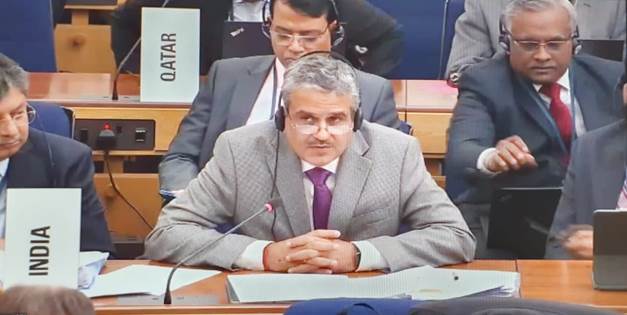
India supports UAE’s proposal to include digitization in IMO Strategic Plan

 During the ongoing 128th Session of the Council of International Maritime Organisation (IMO) being held at London Dr. Sanjeev Ranjan, Secretary Ministry of Ports, Shipping and Waterways (MoPSW) said, ‘India supports UAE’s proposal to include the element of digitization in the next Strategic Plan as well as the adoption of a maritime single window system as a part of the digitization initiative, since it will help in resolving the regulatory bottlenecks faced in the maritime industry. Time bound action plans for digitization should be part of the IMO strategic directions’.

Dr. Sanjeev Ranjan, further emphasized on India’s statement at COP 27 that the journey towards a planet safe for humanity is a collective journey to be undertaken with equity with climate justice as our guiding principles. He also put across India’s stand that decarbonization and funding for the same may be included as a separate strategic direction with the principle of common but differentiated responsibilities and respective capabilities (CBDR-RC) as its cornerstone for the way forward.

India appreciates the proposal of UAE on ‘Capacity-Building Decade 2021-2030’ strategy including the concept of ‘no one should be left behind’. India has noted that this element does not appear to be comprehensively absorbed within the ambition of the 8 strategic directions under the existing Strategic Plan. India, therefore, considers this aspect as crucial for the effective usage of financial and technical resources available with IMO through Technical Cooperation Committee’s work to assist developing states. 

IMO is working to ensure shipping can embrace the digital revolution – while ensuring safety, boosting environmental protection and managing cyber security risks. Cooperation between all relevant stakeholders, from shipping, ports and logistics, will be vital to drive the digitalization of shipping, enhance its efficiency and sustainability, and therefore facilitating trade and fostering economic prosperity.


Ministry of Information and Broadcasting Issues Guidelines for Platform Services offered by Multi-System Operators

 1.         The Cable Television Networks Rules, 1994, permit Multi-System Operators (MSOs) to transmit their own programming service, either directly to their own subscribers or through one or more Local Cable Operators. These own programming services referred to as ‘Platform Services (PS)’, which also include most ‘local-channels’, are exclusive programming services being generated at local level offered by MSOs. 

2.         In accordance to the Rule 6(6) of the Cable Television Networks Rules, 1994; this Ministry on 30.11.2022 has issued the guidelines in respect of ‘Platform Services’ provided by MSOs in India. These Guidelines provide the definition for the ‘platform services’ and lay down the norms for the MSOs in running the platform services which inter-alia include:

  • Simple online registration process for PS channels by MSOs at nominal fees of Rs 1,000 per PS channel. The online registration portal for this purpose is under preparation and shall be notified shortly. 
  • Only entities registered as Companies are allowed to provide local news and current affairs. MSOs not registered as “company” and desirous of providing local news and current affairs are mandatorily required to apply within 3 months with Ministry of Corporate Affairs for conversion into “company”. 
  • Total number of permitted PS channels per operator is to be capped at 5% of the total channel carriage capacity. 
  • To cater to the need of the local language and culture of the subscribers, this cap on PS channels shall be computed at the level of State/Union Territory. Also, additionally, 2 PS channels shall be permitted at the level of each District to cater to the need of local content at the District level. 
  • All PS channels to carry a caption as ‘Platform Services’ to distinguish them from the registered TV channels.
  • The Content of the PS to be exclusive to the platform and is not to be shared directly or indirectly with any other Distribution Platform Operator. However, sharing of live feeds from the religious places like Temples, Gurudwaras etc. shall be permitted.  
  • All PS channels to be placed together under genre ‘Platform Services’ in the Electronic Programme Guide (EPG) along with their Maximum Retail Price and option for activation / de-activation of PS as per the applicable orders / directions / regulation(s) of TRAI.
  • MSOs offering PS, to retain, recording of all PS channel programs for a period of 90 days. 
  • Any content related complaint shall be examined by the Authorised Officer prescribed under the CTN Act, 1995, and the State/ District Monitoring Committee.
  • MSOs have been granted a period of 12 months to comply with the guidelines issued on 30th November, 2022.

3.         Cable Operators are granted registration for the distribution of Registered TV Channels. The above guidelines have been issued to ensure that network capacity of Cable Operators is utilised primarily for the same. Also, sufficient provisions have been made in the guidelines for MSOs to cater to the demand of local contents by their subscribers. Further, these guidelines mandate the adherence to Programme Code and Advertisement Code in respect to content on PS channels, keeping of recording for 90 days etc. and shall help in combating the menace of Piracy. 

*****

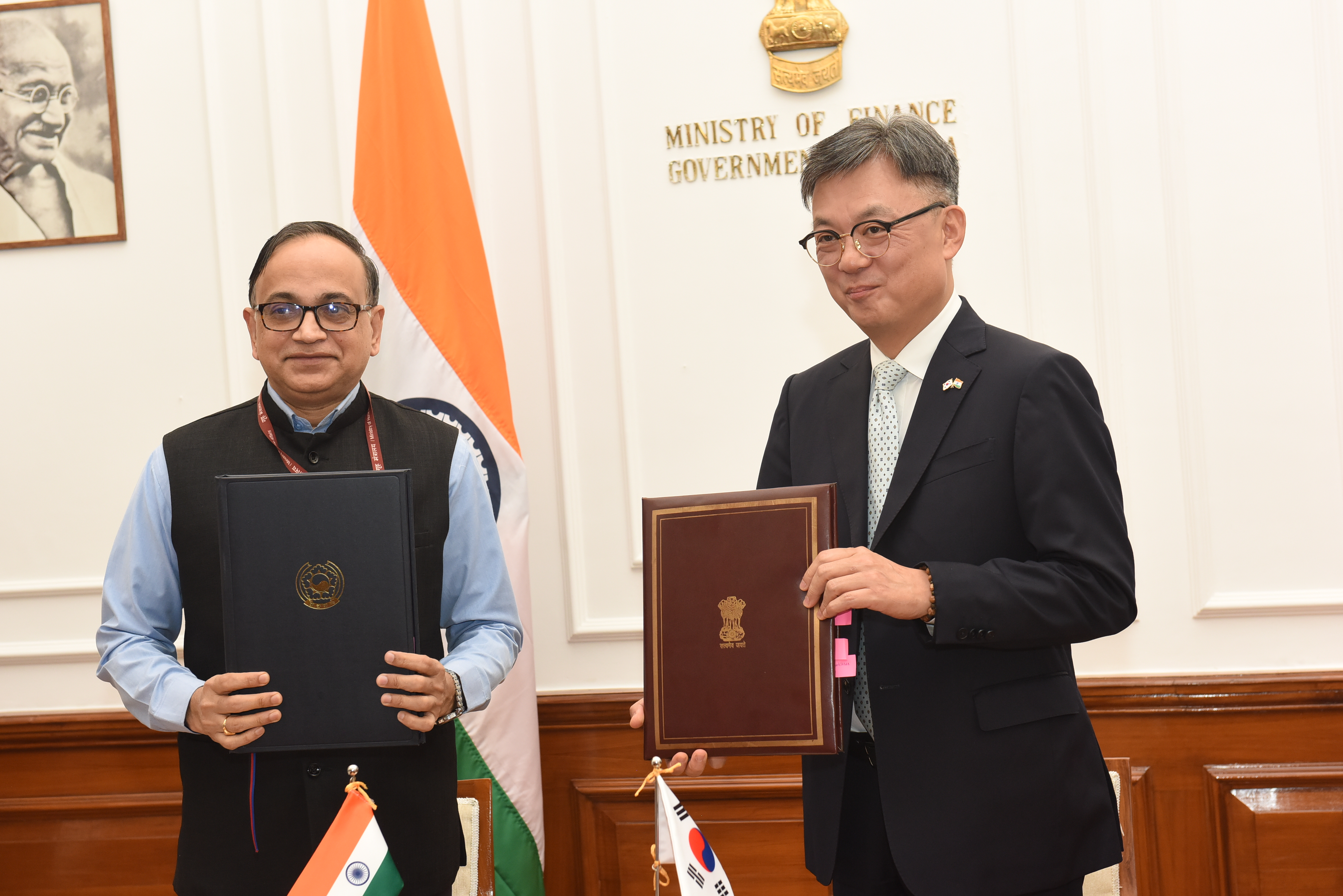
Republic of Korea’s Economic Development Cooperation Fund (EDCF) loan to India

 The arrangement between Government of India and Government of Republic of Korea regarding the Economic Development Cooperation Fund (EDCF) loan of Korean Won 245.081 billion (approx. Rs. 1,495.68 crorefor Establishment of Intelligent Transport System on Nagpur-Mumbai Super Communication Expressway Project was signed here today.

The objectives of the project are to enhance the efficiency in traffic management through establishment of the Intelligent Traffic Management System (ITMS) and traffic centre, to improve the efficiency in toll management through the establishment of the Toll Collection System (TCS) and to establish a sustainable model of ITS and its O&M through transfer of technology from the Republic of Korea.

Republic of Korea was designated as India’s Official Development Assistance (ODA) partner for development cooperation in October, 2016. This is the first project funded by EDCF loan by the Government of Republic of Korea.

The bilateral relationship between the two countries was upgraded to ‘Special Strategic Partnership’ in the year 2015. This further consolidates and strengthens the Special Strategic Partnership between India and Republic of Korea.

[Exchange Rate : 100 Won = Rupees 6.12]

****

Mumbai’s Dharavi redevelopment project.

SVR Srinivas, Chief Executive Office of Dharavi Redevelopment Project said, “We got three bids of which we opened two financial bids of Adani and DLF as Naman Group did not qualify in the technical bidding. The bid by Adani Group was for Rs 5,069 crore and DLF was Rs 2,025 crore. We will now further go with the approval from the state government and also form a special purpose vehicle (SPV) for the redevelopment of Dharavi.”

Three companies namely Adani Realty, DLF and Naman Group had submitted bids for the redevelopment of Dharavi and rehabilitation of slum dwellers. With the selection of the successful bidder, the redevelopment of Dharavi will finally take off now, after multiple failed attempts in the last 15 years.

The winner of the Rs 20,000-crore project is decided on the basis of the highest initial investment pledge. The Maharashtra government aims to finish the project in the next 17 years and complete rehabilitation in the next seven years. Overall, more than 10 million sq ft is expected to come up as part of the Dharavi redevelopment project.

Mumbai's Dharavi redevelopment project.

SVR Srinivas, Chief Executive Office of Dharavi Redevelopment Project said, “We got three bids of which we opened two financial bids of Adani and DLF as Naman Group did not qualify in the technical bidding. The bid by Adani Group was for Rs 5,069 crore and DLF was Rs 2,025 crore. We will now further go with the approval from the state government and also form a special purpose vehicle (SPV) for the redevelopment of Dharavi.”

Three companies namely Adani Realty, DLF and Naman Group had submitted bids for the redevelopment of Dharavi and rehabilitation of slum dwellers. With the selection of the successful bidder, the redevelopment of Dharavi will finally take off now, after multiple failed attempts in the last 15 years.

The winner of the Rs 20,000-crore project is decided on the basis of the highest initial investment pledge. The Maharashtra government aims to finish the project in the next 17 years and complete rehabilitation in the next seven years. Overall, more than 10 million sq ft is expected to come up as part of the Dharavi redevelopment project.