Examination toppers participate in 8th episode of Pariksha Pe Charcha 2025

Daily writing prompt
Are you superstitious?

The insightful discussions initiated by Prime Minister Shri Narendra Modi in the inaugural episode of the 8th edition of Pariksha Pe Charcha culminated with the eighth and final episode, where eight young achievers engaged with students. They were Radhika Singhal (CBSE topper 2022-23); Shuchismita Adhikari (ISC Exam topper 2024); Brahmacharimayum Nistha (PPC anchor & MBBS student, Manipur University); Ashish Kumar Verma (PPC anchor & IIT Delhi student); Vavilala Chidvilas Reddy (IIT JEE Advanced AIR – 1, 2023); Jai Kumar Bohara (CLAT AIR – 1, 2024); Armanpreet Singh (NDA AIR – 1, 2024); and Ishita Kishore (UPSC-CSE AIR – 1 2022).

While interacting with the students, Nistha suggested revising previous years’ questions and learning to prioritize, as advised by Prime Minister Shri Narendra Modi in his book, emphasizing the importance of “becoming wise with revise.” Shuchismita encouraged focusing on preparation and advised writing down answers to help articulate learned concepts.

Jai Kumar highlighted the need for personalized preparation strategies and recommended experimenting with different methods to find the best. He suggested studying for 25 minutes, taking a 5-minute break, and maintaining discipline in this routine. His key advice for students was to be ready to make sacrifices to achieve their goals.

Armanpreet emphasized focusing on strengths, while Ishita stressed the importance of honesty and not being overpowered by fear. She also highlighted the significance of maintaining a balanced schedule—studying for 7-8 hours, pursuing hobbies for 1-2 hours, and ensuring adequate sleep.

Radhika underscored the value of extracurricular activities in building confidence. Chidvilas shared tips for managing exam-related stress, suggesting activities such as indoor and outdoor games, reading, or listening to music between study sessions. He also encouraged students to remain happy but never complacent.

Nistha reminisced about her experience anchoring Pariksha Pe Charcha, highlighting how it enhanced her communication and preparation skills, benefiting her exam readiness. Ashish shared his mantra of the “three wins”—spiritual, mental, and physical.

Additionally, Ishita and Jai guided students through an interview masterclass, while Ashish conducted a session on question paper strategies, helping students prepare for life through structured time management.
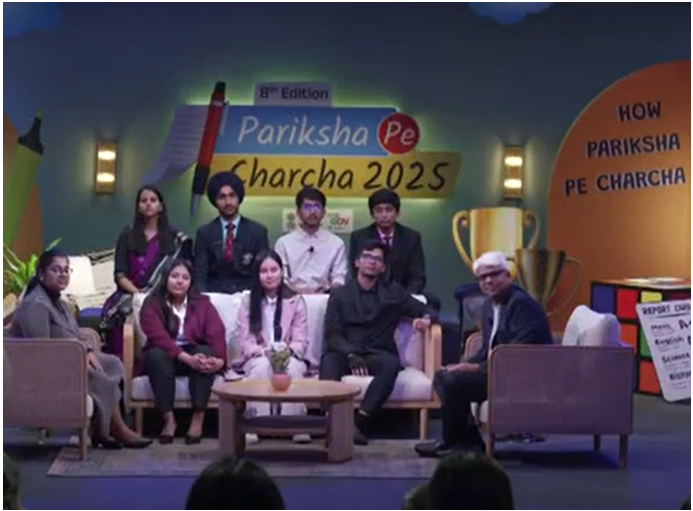
Students asked questions about board exam preparation, societal support, and mastering life skills. Participants from Japan and Dubai also asked questions to the guests. After the session, students reflected on their learning from the interaction with the panellists.

To ensure comprehensive development, distinguished personalities from various fields—including sports icons, technical experts, toppers of competitive exams, entertainment industry professionals, and spiritual leaders—are enriching students with insights beyond textbooks. Each session provided students with essential tools and strategies to excel academically and personally.

The eighth edition of Pariksha Pe Charcha (PPC) 2025, in its revamped and interactive format, has been receiving widespread appreciation from students, teachers, and parents across the nation. Breaking away from the traditional Town Hall format, this year’s edition commenced with an engaging session featuring Prime Minister Shri Narendra Modi at the scenic Sunder Nursery, New Delhi, on 10th February 2025.

In the inaugural episode, the Prime Minister interacted with 36 students from across the country, discussing insightful topics such as Nutrition and Wellness, Mastering Pressure, Challenging Oneself, The Art of Leadership, Beyond Books – 360º Growth, Finding Positives, and more. His valuable guidance offered students practical strategies to tackle academic challenges with confidence while fostering a growth mindset and holistic learning.

Pariksha Pe Charcha has been a beacon of inspiration for students, empowering them with confidence and resilience to tackle academic and life challenges with a positive mindset.

Link to watch the 1st episode: https://www.youtube.com/watch?v=G5UhdwmEEls

Link to watch the 2nd episode: https://www.youtube.com/watch?v=DrW4c_ttmew

Link to watch the 3rd episode: https://www.youtube.com/watch?v=wgMzmDYShXw

Link to watch the 4th episode: https://www.youtube.com/watch?v=3CfR4-5v5mk

Link to watch the 5th episode: https://www.youtube.com/watch?v=3GD_SrxsAx8

Link to watch the 6th episode: https://www.youtube.com/watch?v=uhI6UbZJgEQ

Link to watch the 7th episode: https://www.youtube.com/watch?v=y9Zg7B_o8So

Link to watch the 8th episode: https://www.youtube.com/watch?v=hR9BazO6Vfo

*****

Embracing Life with Positivity and Determination

written by Priya acharya

Life is a journey filled with ups and downs, successes and failures, joys and challenges. It is not always easy, but it is always worth living with passion and purpose.

1. Challenges Make You Stronger

Difficult times are not meant to break you; they are meant to build you. Every struggle teaches a lesson and makes you stronger. Instead of fearing obstacles, embrace them as opportunities for growth.

2. Keep Moving Forward

No matter how slow your progress is, keep going. Small steps taken consistently lead to big results. The key is to never give up, even when things seem tough.

3. Believe in Yourself

Confidence and self-belief are the foundations of success. If you believe you can achieve something, you are already halfway there. Trust your abilities and keep working hard.

4. Stay Positive and Grateful

Life becomes beautiful when you focus on the good. Be grateful for what you have, and more blessings will come your way. A positive mindset can turn challenges into opportunities.

5. Keep Learning and Growing

Never stop learning. Knowledge and experience help you evolve into a better version of yourself. Keep exploring, reading, and improving every day.

Final Thoughts

Life is a precious gift, and how you live it depends on your attitude. Stay strong, keep pushing forward, and never lose hope. Success and happiness will follow when you approach life with determination and positivity.

written by Priya acharya

2 PhD Candidates for the project “Climate Citizenship

Daily writing prompt
What experiences in life helped you grow the most?

Vacancy

2 PhD Candidates for the project “Climate Citizenship

Vacancy number15477Job typePhD positionsHours (in fte)1,0External/ internalExternalLocationLeidenPlaced on18 February 2025Closing date31 March 2025 38 more days to apply

Apply now

Leiden University’s Institute of Cultural Anthropology and Development Sociology (CADS) is looking for

2 PhD Candidates for the project “Climate Citizenship (4 years, full time)

We welcome applications for two PHD candidates for the research project “Climate Citizenship: Infrastructures, Environments, and Democracy in the Era of Climate Change,” funded by a European Research Council Starting Grant (ERC-StG).

Climate Citizenship explores how adapting environments to climate change through new forms of nature-based infrastructure reshapes people’s relationships with each other and the state. Examples range from green roofs and vertical gardens to urban parks, flood plains and more ambitious efforts to transform landscapes. The project treats these infrastructures as social and political as well as environmental experiments. It asks: when and how do they stimulate behavioural change, create new alliances between stakeholders, or transform the division of rights and responsibilities within a society?

As a PhD candidate, you will conduct ethnographic research on these questions in either the Louisiana Delta (the United States) or the Tokyo Bay area (Japan). You will employ an “ecographic” research design, combining ethnographic methods with those from the ecological sciences in order to track how new forms of climate adaptation alter both environment and society. Your primary supervisor will be the project’s Principal Investigator, Dr. Andrew Littlejohn. The project is hosted by Leiden University’s Institute of Cultural Anthropology & Development Sociology.

What you will do
You will conduct independent ethnographic research in either the Louisiana Delta (the United States) or Tokyo Bay area (Japan) within the frame of this project:

  • You will conduct ethnographic research, entailing at least 10 months of fieldwork in one of the two research sites, using an “ecographic” protocol developed together with the Postdoc;
  • Submit a PhD thesis, publish at least one peer-reviewed journal article, and produce one work of audio-visual media;
  • Co-produce a podcast series designed for a public audience on the results of the project;
  • Participate in the meetings and proceedings of the project (e.g. reading groups, seminars, workshops) and wider activities of the Institute of Cultural Anthropology & Development Sociology, including training requirements of the institute and faculty;
  • Co-organise and participate in academic and public events, such as an international conference organized by the project.


You will be part of a team comprising two PhD candidates, a postdoctoral researcher, and the PI. The entire team is expected to reside in the Netherlands and work from Leiden for the duration of the project, except during fieldwork.

Where you will work
The Faculty of Social and Behavioural Sciences consists of five institutes: Centre for Science and Technology Studies, Cultural Anthropology and Development Sociology, Education and Child Studies, Political Science, and Psychology. The faculty has approximately 7000 students and 1000 staff members. Within the institutes, not only education is provided but also groundbreaking research is conducted that pushes the boundaries of our understanding of human behaviour and societal structures. What makes our faculty unique is the diversity of research topics, the various styles of teaching, and the way professional support is organized; this provides you with the opportunity to explore and develop your interests and expertise. Visit our website for an impression: Welcome to the Leiden Faculty of Social and Behavioural Sciences – Leiden University.

Leiden University’s Institute of Cultural Anthropology and Development Sociology (CADS)
Leiden University’s Institute of Cultural Anthropology and Development Sociology concentrates on ‘global vulnerability and social resilience’. The institute has three main themes: diversity, sustainability, and digitalisation. CADS is dedicated to making a real-world impact, not just studying change, but also working with communities to promote positive change through education and research. We use a unique approach that blends qualitative, quantitative, audiovisual, and digital methods based on ethnographic fieldwork.

With our unique blend of interdisciplinary interests, comparative regional studies, and social science research methods, we emphasize our role in the extensive collaborative network within Leiden University. In both our research and education, we engage in extensive interdisciplinary and international networks.

What you bring

  • (Research) Master’s degree in Cultural Anthropology or another relevant social science;
  • Excellent research skills as demonstrated by an outstanding master’s thesis or research papers;
  • Enthusiasm, passion, and commitment for long-term fieldwork in the United States or Japan;
  • Speaking, reading, and writing skills in Japanese in the case of research in Japan, for example as demonstrated by the Japanese-Language Proficiency Test;
  • Excellent command of English (speaking and writing);
  • Independent work attitude and demonstrable ability to work in a team.

Some interest and/or experience in ecological and acoustic research methods and outputs is an advantage but not a requirement.

What we offer
Our goal is to work together to create a transparent and inclusive work environment in which everyone feels welcome and appreciated. Our organisation is always evolving, and we need your ideas for improvement and innovation to take us further. We want to devote attention to your personal development.

You can expect an enjoyable job within the socially relevant world of education and research. The University’s challenging and international work environment is located just steps away from Leiden’s lively city centre or the bustling city centre of The Hague. We also want to work with you to devote attention to your health and vitality, for example with the fun activities we organise through Healthy University.

We also offer:

  • A temporary employment contract for (38 hours per week) as a PhD candidate, initially for a period of 1 year, with the possibility of extension for 3 years after a positive evaluation. This contract falls under the Collective Labour Agreements (CLA) of Dutch Universities;
  • A salary of a minimum of € 2,901 and a maximum of € 3,707 gross per month, based on a full-time appointment (38 hours) (scale P); with increments based on the CLA.
  • A holiday allowance (8%), an end-of-year bonus (8,3%), and an attractive pension scheme at ABP;
  • Flexible working hours: as a standard, you are entitled to a minimum of 29 leave days on the basis of a full-time working week of 38 hours;
  • If your work allows it, hybrid working is possible within the Netherlands;
  • A home-working allowance (day and internet allowance) and attention for good workplaces. The University will also provide you with a laptop and a mobile telephone (if applicable for the position).


For more information about employment conditions, see:
https://www.universiteitleiden.nl/werken-bij/sollicitatieprocedure-en-arbeidsvoorwaarden

What we find important
Promoting an inclusive community is central to Leiden University’s values and vision. Leiden University aims to be an inclusive community in which all students and staff members feel valued and respected and are able to develop to their full potential. Diversity in experiences and perspectives enriches our teaching and strengthens our research. High-quality education and research mean inclusive education and research.

Want to apply or find out more?
If you want to apply straight away, click the application button.
If you would like more information about what the job entails, please contact: Dr. Andrew Littlejohn, Assistant Professor at a.l.littlejohn@fsw.leidenuniv.nl

You can apply until March 31, 2025; applications will be processed immediately.
Online interviews will be held with shortlisted candidates in April 2025. The intended starting date is August 2025.

To apply, please submit:

  • A motivation letter (maximum 2 pages), explaining your motivation for pursuing a PhD and for working in the climate citizenship project, indicating where you would like to do research (U.S. or Japan) and how your experience and skills make you suitable;
  • A curriculum vitae (CV) (maximum 2 pages);
  • Copies of academic transcripts from prior study at Bachelor’s and Master’s levels;
  • A short research statement, explaining how you imagine addressing the subproject’s questions (maximum 500 words);
  • Names and contact details of two referees.


To help us get to know each other better, we follow a number of steps in the application procedure. For more information, see:
https://www.universiteitleiden.nl/werken-bij/sollicitatieprocedure-en-arbeidsvoorwaarden

  • A pre-employment screening (references, diplomas, certificate of good conduct (VOG) may be part of the selection procedure.
  • Acquisition in response to this vacancy is not appreciated. If you nevertheless choose to send us CVs, no rights can be derived from this. #LI-Hybrid

Postdoc Candidate Required for the project “Climate Citizenship”

Daily writing prompt
Do you believe in fate/destiny?

Vacancy

Postdoc Candidate for the project “Climate Citizenship”

Vacancy number15478Job typeAcademic staffHours (in fte)0,8External/ internalExternalLocationLeidenPlaced on18 February 2025Closing date31 March 2025 38 more days to apply

Apply now

Leiden University’s Institute of Cultural Anthropology and Development Sociology (CADS) is looking for

Postdoc Candidate for the project “Climate Citizenship” (2 years, 0.8 fte)

We welcome applications for a Postdoc position in the project “Climate Citizenship: Infrastructures, Environments, and Democracy in the Era of Climate Change,” funded by a European Research Council Starting Grant (ERC-StG). The project is led by Principal Investigator Dr. Andrew Littlejohn and hosted by Leiden University’s Institute of Cultural Anthropology and Development Sociology.

Climate Citizenship explores how adapting environments to climate change through new forms of nature-based infrastructure reshapes people’s relationships with each other and the state. Examples range from green roofs and vertical gardens to urban parks, flood plains and more ambitious efforts to transform landscapes. The project treats these infrastructures as social and political as well as environmental experiments. It asks: when and how do they stimulate behavioural change, create new alliances between stakeholders, or transform the division of rights and responsibilities within a society?

The case studies will employ an “ecographic” approach combining quantitative data from the ecological and material sciences with qualitative data gathered through ethnographic methods such as participant observation. As a Postdoc, you will help to develop this approach. You will visit scientists researching and/or working on green infrastructure projects in Japan, the Netherlands, and the United States and interview them on their methods. You will then analyse what kinds of data and techniques the PhD researchers will need familiarity with, and where in the process of gathering ecological data ethnographic methods and insights can be interpolated.

What you will do

  • Conduct interviews and observations with scientists in the Tokyo Bay area (Japan), the Rhine-Meuse-Scheldt Delta (the Netherlands), and Louisiana Delta (the United States);
  • Assist the PI in developing an “ecographic” approach and an ecographic protocol for the PhD candidates;
  • Write a peer-reviewed journal article with the PI on ecographic methods and their potential;
  • Contribute to fine-tuning the research agendas of the PhD candidates through evaluating their proposals and participating in regular team meetings (online where necessary).


You will be part of a team also comprising two PhD candidates and the PI. The entire team is expected to reside in the Netherlands and work from Leiden for the duration of the project, except during fieldwork.

What you bring

  • PhD in Science and Technology Studies, Cultural Anthropology, or another relevant social science (if your PhD is not in Science and Technology Studies, you must have demonstrated expertise in the social study of science or interdisciplinary research methods);
  • Demonstrated passion for developing interdisciplinary and transdisciplinary research projects and approaches;
  • Experience with independently coordinating and conducting ethnographic research, and ideally, some experience with quantitative and/or ecological research methods;
  • Excellent research and writing skills as demonstrated by a track record of scholarly publications commensurate with your career stage;
  • Excellent command of English (speaking and writing);
  • Independent work attitude and demonstrable ability to work in a team.


Where you will work
The Faculty of Social and Behavioural Sciences consists of five institutes: Centre for Science and Technology Studies, Cultural Anthropology and Development Sociology, Education and Child Studies, Political Science, and Psychology. The faculty has approximately 7000 students and 1000 staff members. Within the institutes, not only education is provided but also groundbreaking research is conducted that pushes the boundaries of our understanding of human behaviour and societal structures. What makes our faculty unique is the diversity of research topics, the various styles of teaching, and the way professional support is organized; this provides you with the opportunity to explore and develop your interests and expertise. Visit our website for an impression: Welcome to the Leiden Faculty of Social and Behavioural Sciences – Leiden University.

Leiden University’s Institute of Cultural Anthropology and Development Sociology (CADS)
Leiden University’s Institute of Cultural Anthropology and Development Sociology concentrates on ‘global vulnerability and social resilience’. The institute has three main themes: diversity, sustainability, and digitalisation. CADS is dedicated to making a real-world impact, not just studying change, but also working with communities to promote positive change through education and research. We use a unique approach that blends qualitative, quantitative, audiovisual, and digital methods based on ethnographic fieldwork.

With our unique blend of interdisciplinary interests, comparative regional studies, and social science research methods, we emphasize our role in the extensive collaborative network within Leiden University. In both our research and education, we engage in extensive interdisciplinary and international networks.

What we offer
Our goal is to work together to create a transparent and inclusive work environment in which everyone feels welcome and appreciated. Our organisation is always evolving, and we need your ideas for improvement and innovation to take us further. We want to devote attention to your personal development.

You can expect an enjoyable job within the socially relevant world of education and research. The University’s challenging and international work environment is located just steps away from Leiden’s lively city centre or the bustling city centre of The Hague. We also want to work with you to devote attention to your health and vitality, for example with the fun activities we organise through Healthy University.

We also offer:

  • A 0,8 fte employment contract, initially for a period of 1 year, with the possibility of extension for a second year after a positive evaluation. This contract falls under the Collective Labour Agreements (CLA) of Dutch Universities;
  • A salary of a minimum of € 4,060 and a maximum of € 5,331 gross per month, based on a full-time appointment (38 hours) (scale 10.4-10.12); with increments based on the CLA.
  • A holiday allowance (8%), an end-of-year bonus (8,3%), and an attractive pension scheme at ABP;
  • Our individual choices model gives you some freedom to assemble your own set of terms and conditions.
  • Candidates from outside the Netherlands may be eligible for a substantial tax break.

More here: https://www.universiteitleiden.nl/en/working-at/job-application-procedure-and-employment-conditions

What we find important
Promoting an inclusive community is central to Leiden University’s values and vision. Leiden University aims to be an inclusive community in which all students and staff members feel valued and respected and are able to develop to their full potential. Diversity in experiences and perspectives enriches our teaching and strengthens our research. High-quality education and research mean inclusive education and research.

Want to apply or find out more?
If you want to apply straight away, click the application button.
If you would like more information about what the job entails, please contact: Dr. Andrew Littlejohn, Assistant Professor at a.l.littlejohn@fsw.leidenuniv.nl

You can apply until March 31, 2025; applications will be processed immediately.
Online interviews will be held with shortlisted candidates in April-May 2025. The intended starting date is August 2025.

To apply, please submit:

  • A cover letter explaining your motivation for working in the climate citizenship project (maximum 2 pages);
  • Curriculum vitae (CV), including publications (maximum 2 pages);
  • A short research proposal (maximum 500 words) in which you outline your approach to the role described above;
  • A copy of either a representative publication or your PhD thesis;
  • Names and contact details of two referees.

To help us get to know each other better, we follow a number of steps in the application procedure. For more information, see:
https://www.universiteitleiden.nl/werken-bij/sollicitatieprocedure-en-arbeidsvoorwaarden

  • A pre-employment screening (references, diplomas, certificate of good conduct (VOG) may be part of the selection procedure.
  • Acquisition in response to this vacancy is not appreciated. If you nevertheless choose to send us CVs, no rights can be derived from this. #LI-Hybrid

NATIONAL RESEARCH CENTRE FOR MAKHANA

The National Research Centre for Makhana (NRCM), Darbhanga, is a well-equipped facility dedicated to Makhana research and innovation, supported by a skilled team of scientists. Its key achievements include developing high-yield makhana and thornless water chestnut varieties, introducing water-efficient and integrated farming systems, and launching Makhana-cum-fish farming. The cultivation practices of Indian Lotus, medicinal plants like Acorus calamus (Sweet flag) and Alocasia montana have also been established. Several equipment/machines for Makhana popping and value-added products have been developed and licensed to manufacturers for commercialization namely Makhana seed washer, Makhana seed grader, Makhana seed primary roasting machine, Makhana seed popping machine, Popped Makhana grader and various type of value-added products.  The NRCM has trained thousands of farmers and entrepreneurs, driving regional industries and livelihoods. Makhana cultivation has expanded from approximately 13,000 to 35,000 hectares across multiple states.

Since May 2023, the NRCM, Darbhanga, has incurred expenditures of ₹2.65 crore in 2023-24 and ₹1.27 crore in 2024-25 (as of January 2025). The amount of funds spent during last five years:

Financial YearExpenditure (In Lakhs)
2023-24265.00
2022-2315.95
2021-2217.87
2020-2123.50
2019-2018.00
Total340.32

Over the years, 15,824.1 kg of high-yielding Makhana seeds have been distributed to farmers, KVKs, and organizations across various states. Significant beneficiaries include institutions like NABARD, fisheries departments, Bihar Horticulture Development Society and farmers from regions such as Bihar, Uttar Pradesh and Chhattisgarh.

Between 2012 and 2023, NRCM trained over 3,000 farmers in advanced Makhana cultivation, processing, and marketing techniques, focusing on water-efficient practices, cropping systems, and nutrient management. Additionally, NRCM has assisted 24 enterprises, including Mithila Naturals, Maa Vaishnavi Makhana, and Swastik Food Group, by providing technical inputs and fostering Makhana-based industries, further boosting the agricultural economy.

ESTABLISHMENT OF CENTRAL RICE RESEARCH INSTITUTE

The ICAR-Central Rice Research Institute (CRRI) with its’ three sub-stations at Hazaribag (Jharkhand), Gerua (Assam), and Naira (Andhra Pradesh) develops and disseminates eco-friendly technologies to enhance productivity, profitability and sustainability of rice cultivation in different ecologies of various states in the country including Bargarh, Odisha. Besides, the ICAR-Indian Institute of Rice Research (IIRR), Hyderabad, Telangana also looks after rice research in the country.

In addition to above, Odisha University of Agriculture & Technology (OUAT), located at Bhubaneswar, conducts research and extension activities on rice for Odisha. Therefore, at present, there is no proposal to set up a Central Rice Research Institute in Bargarh, Odisha. 

Several climate-smart technologies/products are developed, tested and evaluated by the above two National institutes for the rice crop. The farmers of Bargarh are getting the benefits of such varieties/technologies.

The ICAR through its above two research institutes holds a national mandate to develop technologies aimed at enhancing rice productivity across the country through robust and effective research strategies. Research works have been done on enhancing yield through adoption of improved varieties and technologies and reducing input costs both at Odisha and also across different states of India.\

UPGRADATION OF AGRICULTURAL TECHNOLOGY

The Government has launched several key schemes to upgrade agricultural technology to improve productivity, sustainability, and farmers’ income. The Digital Agriculture Mission, is a major initiative that leverages technologies like Artificial Intelligence (AI), Big Data, and geospatial data for better crop monitoring, soil management, and weather forecasting. Indian Council of Agricultural Research (ICAR), during the last ten years has developed 2900 varieties out of which, 2661 varieties are tolerant to one or more biotic and/or abiotic stresses. About156 technologies/machines/process protocols were developed for production and post-harvest production of agriculture. Technologies related to animal, Fisheries sector were also developed for enhancing productivity of animal, fisheries, aquaculture, diagnostics & vaccines for animal and fish health management, processing and value addition. For increasing awareness and promotion of newly developed technologies, Krishi Vigyan Kendras (KVKs) and State Agricultural Universities (SAUs) conduct trainings, field level demonstration, farmers’ interface meetings, skill development programs among the small and marginal farmers and other stakeholders and making agriculture more efficient and profitable.

The Government has introduced many initiatives to enhance agricultural marketing such as e-NAM, Kisan Rail and Kisan Udan for improved logistics. The promotion of Farmer Producer Organizations (FPOs) aims to reduce intermediaries and strengthen market access for farmers. Additionally, agri-tech startups and online platforms like AGRI-Bazaar help farmers to connect directly with buyers, ensuring better pricing and increased income.

ICAR recommends soil test based balanced and integrated nutrient management through conjunctive use of both inorganic and organic sources (manure, biofertilizers etc.) of plant nutrients for judicious use of chemical fertilizers and to improve soil health.   All these measures reduce chemical fertilizer use in the country.  Also, ICAR suggests judicious use of water through efficient irrigation techniques including micro-irrigation for various crops to save irrigation water substantially.

The Soil Health Card Scheme also promotes the use of soil-appropriate fertilizers to reduce wastage and improve productivity. Further, the Government supports State Governments through scheme the Per Drop More Crop (PDMC) to improve water use efficiency, reduce costs, and enhance farm income. While the Government has promoted the Pradhan Mantri Kisan Sampada Yojana, which focuses on enhancing value-added processing, improving the shelf-life of farm products, and linking farmers with agro-industries.

INITIATIVES TO PROMOTE SUSTAINABLE FARMING PRACTICES AND RESILIENCE AGAINST CLIMATE CHANGE

The Government through ICAR flagship network project ‘National Innovations in Climate Resilient Agriculture’ (NICRA) develop and promotes climate resilient agricultural technologies in 151 climatically vulnerable districts spread across the country, which are prone to extreme weather conditions like droughts, floods, frost, heatwaves, etc in light of the challenges posed by climate change. Climate resilient technologies viz., climate resilient varieties, intercropping systems, conservation agriculture, crop diversification, agroforestry systems, zero-till sowing, green manuring, integrated farming systems, integrated nutrient and pest management, organic farming, site specific nutrient management, in-situ moisture conservation, protective irrigation, micro irrigation methods etc. have been developed and demonstrated to large number of farmers through farmers’ participatory approach. Further, these technologies have been documented for 23 States and 3 Union Territories and shared with the State departments for further upscaling and convergence with on-going schemes in the States.

To promote Precision Agriculture, ICAR has a Network Program on Precision Agriculture (ICAR-NePPA) working at 16 locations to develop ICT based technologies for accelerated profitable and sustainable system through precise use of inputs. Some of the outcomes of the project related to adopting to climate change/ weather aberrations are as, sensor-based soil and crop health monitoring and precision management of inputs (water and fertilizer) using robotics, IoTs and Data analytics; developed technologies for pest and disease monitoring particularly for rice and cotton crops for value added advisories for real time management.

ICAR operates All India Coordinated Research Programme on Integrated Farming Systems (AICRP-IFS) in 25 States/UTs and All India Network Programme on Organic Farming (AINP-OF) in 16 States to develop sustainable farming practices such as alternate efficient cropping systems, integrated farming systems, organic farming and natural farming to address the challenges posed by climate change. A total of 76 models of integrated farming system (IFS) including 8 integrated organic farming system models for 26 States/UTs and organic farming packages for 80 cropping systems suitable to 16 States have been developed so far.          

(c):    To help farmers in building resilience against extreme weather events and ensure long-term agricultural sustainability in the country, the Government of India implements National Mission for Sustainable Agriculture (NMSA), which is one of the Missions within the National Action Plan on Climate Change (NAPCC). NMSA has three major components i.e. Rainfed Area Development (RAD); On Farm Water Management (OFWM); and Soil Health Management (SHM). The Government of India provides financial assistance to the states through the NMSA to cope with the adverse impacts of climate change.

Further, Government has introduced flagship yield based Pradhan Mantri Fasal Bima Yojana (PMFBY) along with Restructured Weather Based Crop Insurance Scheme (RWBCIS) from Kharif 2016 to help farmers build resilience against extreme weather events.

Through Technology Demonstration component of NICRA, 6,93,629 farmers were benefitted through technology demonstrations and 6,47,735 farmers were benefitted through 23,613 capacity building programs on climate resilient agriculture.

Use of AI in agriculture

The Government has employed Artificial Intelligence (AI) methods to address various challenges in the agricultural sector to aid farmers. Some of the initiatives are given below:

  1. ‘Kisan e-Mitra’, an AI-powered chatbot, has been developed to assist farmers with responses to the queries about the PM Kisan Samman Nidhi scheme. This solution supports multiple languages and is evolving to assist with other government programs.
  2. National Pest Surveillance System, for tackling the loss of produce due to climate change, utilizes AI and Machine Learning to detect pest infestation in crop issues, enabling timely intervention for healthier crops.
  3. AI based analytics using field photographs for crop health assessment and crop health monitoring using Satellite, weather & soil moisture datasets for rice and wheat crop.

PROMOTION OF ORGANIC FARMING

Government is promoting organic farming through the schemes of Paramparagat Krishi Vikas Yojana (PKVY) in all the States/UTs (except North Eastern States). For North Eastern States, the Government is implementing Mission Organic Value Chain Development for North Eastern Region (MOVCDNER) scheme. Both the schemes stress on end-to-end support to farmers engaged in organic farming i.e. from production to processing, certification & marketing and post-harvest management training and capacity building. Under PKVY, assistance of Rs. 31,500 per ha for a period of 3 years is provided for promotion of organic farming. Out of this, assistance of Rs. 15,000 per ha for a period of 3 years is provided to farmers adopting organic farming through Direct Benefit Transfer for on- farm /off –farm organic inputs. Under MOVCDNER, assistance of Rs. 46,500/ha for 3 years is provided for creation of Farmers Producer Organization, support to farmers for organic inputs etc. Out of this, assistance @ Rs. 32500/ ha for 3 years is provided to farmers for off -farm /on –farm organic inputs under the scheme including Rs. 15,000 as Direct Benefit Transfer to the farmers.

Two types of organic certifications systems have been developed to ensure quality control of organic produce as given below:

  • Third Party Certification by Accredited Certification Agency under National Programme for Organic Production (NPOP) scheme under Ministry of Commerce and Industry for development of export market. Under NPOP certification scheme the production and handling of activities at all stages such as production, processing, trading and export requirements for organic products is covered.
  • Participatory Guarantee System (PGS-India) under Ministry of Agriculture and farmers Welfare in which stakeholders (including farmers/ producers) are involved in decision making about the operation of the PGS-India certification itself by assessing, inspecting and verifying the production practices of each other and collectively declaring produce as organic. PGS- India certification is to meet the demand of domestic market.

The total cumulative state wise organic area covered under NPOP certification & PGS-India certification under PKVY is 59.74 lakh ha is given at Annexure-I.

Under PKVY assistance @ Rs 4,500/ha is provided for 3 years to facilitate value addition, marketing and publicity. Assistance is provided for certification & training and handholding & capacity building @ Rs 3.000/-ha for 3 years and Rs 7,500/- ha respectively for 3 years under PKVY for farmers. Whereas under MOVCDNER scheme assistance is provided @ Rs10,000/ -ha for 3 years for training, capacity building & certification.

To ensure market availability States organize seminars, conferences, workshops, buyer-seller meetings, exhibitions, trade fairs, and organic festivals either within their own region or in key markets of other states. Government has developed web portal- www.Jaivikkheti.in/ as an online marketing platform for direct sale of organic produce by farmers to the consumers to help them for better price realization. A total of 6.22 lakh farmers have been registered under Jaivik kheti portal.

Annexure-I

State wise details of total cumulative area covered under organic farming NPOP (including MOVCDNER) + PGS under PKVY till 2023-2024

Area in ha

S. NO.State NameNPOPPGS under PKVY
1Andhra Pradesh63,678.693,60,805
2Bihar29,062.1331,561
3Chhattisgarh15,144.131,01,279
4Goa12,287.4015334
5Gujarat6,80,819.9910000
6Haryana2,925.33
7Himachal Pradesh9,334.2818748
8Jharkhand54,408.2025300
9Kerala44,263.9194480
10Karnataka71,085.9920900
11Madhya Pradesh11,48,236.0774960
12Maharashtra10,01,080.3266756
13Odisha1,81,022.2845800
14Punjab11,089.416981
15Tamil Nadu42,758.2732940
16Telangana84,865.168100
17Rajasthan5,80,092.22148500
18Uttar Pradesh66,391.34171185
19Uttarakhand1,01,820.39140740
20West Bengal8,117.8021400
21Assam27,079.404400
22Arunachal Pradesh16,537.53380
23Meghalaya29,703.30900
24Manipur32,584.50600
25Mizoram14,238.30780
26Nagaland16,221.56480
27Sikkim75,729.7863000
28Tripura20,481.361000
29Jammu & Kashmir34,746.755160
30Pondicherry21.51
31Delhi9.60
32Ladakh10480
33Daman & Diew642
34Dadar & Nagar500
Total44,75,836.901498583
Grand Total (NPOP + PGS)5974419.90

Source: APEDA + PGS

Farmers’ Welfare Measures

Agriculture is a State subject and Government of India supports the efforts of States through appropriate policy measures, budgetary allocation and various schemes/ programmes. The various schemes/ programmes of the Government of India are meant for the welfare of farmers by increasing production, remunerative returns and income support to farmers. The Government has substantially enhanced the budget allocation of Department of Agriculture & Farmers’ Welfare (DA&FW) from Rs. 21933.50 crore BE during 2013-14 to Rs. 1,22,528.77 crore BE during 2024-25. Schemes/programmes initiated by DA&FW are conceptualised and implemented taken in consideration of improving the economic condition of farmers owning small handholdings, access to credit and to enhance overall income of farmers and remunerative returns in the agriculture sector.

PM KISAN Samman Nidhi Scheme has been launched in 2019 with the sole objective to enhance the income of farmers owning small landholdings. This scheme provides Rs. 6000 per year in 3 equal instalments. So far, more than Rs.3.46 lakh Cr. has been disbursed to eligible farmers through 18 instalments.

The other major schemes run by Department of Agriculture & Farmers Welfare for enhance of overall income of farmers are as under:

  1. Pradhan Mantri Kisan Maan Dhan Yojana (PM-KMY)
  2. Pradhan Mantri Fasal Bima Yojana (PMFBY)/ Restructured Weather Based Crop Insurance Scheme (RWBCIS)
  3. Modified Interest Subvention Scheme (MISS)
  4. Agriculture Infrastructure Fund (AIF)
  5. Formation and Promotion of 10,000 new Farmer Producers Organizations (FPOs)
  6. National Bee Keeping and Honey Mission (NBHM)
  7. Namo Drone Didi
  8. National Mission on Natural Farming (NMNF)
  9. Pradhan Mantri Annadata Aay SanraksHan Abhiyan (PM-AASHA)
  10. Agri Fund for Start-Ups & Rural Enterprises’ (AgriSURE)
  11. Per Drop More Crop (PDMC)
  12. Sub-Mission on Agriculture Mechanization (SMAM)
  13. Paramparagat Krishi Vikas Yojana (PKVY)
  14. Soil Health & Fertility (SH&F)
  15. Rainfed Area Development (RAD)
  16. Agroforestry
  17. Crop Diversification Programme (CDP)
  18. Sub-Mission on Agriculture Extension (SMAE)
  19. Sub-Mission on Seed and Planting Material (SMSP)
  20. National Food Security and Nutrition Mission (NFSNM)
  21. Integrated Scheme for Agriculture Marketing (ISAM)
  22. Mission for Integrated Development of Horticulture (MIDH)
  23. National Mission on Edible Oils (NMEO)-Oil Palm
  24. National Mission on Edible Oils (NMEO)-Oilseeds
  25. Mission Organic Value Chain Development for North Eastern Region
  26. Digital Agriculture Mission
  27. National Bamboo Mission

PM-AASHA (Pradhan Mantri Annadata Aay SanraksHan Abhiyan) scheme ensures remunerative prices for farmers’ produce and prevent distress sales. It aims to strengthen the Minimum Support Price (MSP) mechanism and provide better price support for farmers.

“Formation & Promotion of new 10,000 FPOs with budget outlay of Rs 6,865 Crore. Farmers Producer Organization (FPOs) are being set up to give farmers collective bargaining power in markets as well as enabling small farmers to pool resources, access technology, and get better prices for their crops.

Agriculture Infrastructure Fund (AIF) with financial provision of one Lakh Crore scheme has been launched with an objective to mobilize a medium – long term debt financing facility for investment in viable projects for post-harvest management Infrastructure and community farming assets through incentives and financial support in order to improve agriculture infrastructure in the country. Following supports are being provided under Agri Infra Fund. 

Interest SubventionAll loans under this financing facility have interest subvention of 3% per annum up to a limit of ₹ 2 crore. This subvention is available for a maximum period of 7 years. In case of loans beyond ₹ 2 crore, interest subvention is limited up to ₹ 2 crore.

Credit Guarantee: Credit guarantee coverage is available for eligible borrowers from this financing facility under Credit Guarantee Fund Trust for Micro and Small Enterprises (CGTMSE) scheme for a loan up to ₹ 2 crore. The fee for this coverage will be paid by the Government. In case of FPOs the credit guarantee may be availed from the facility created under FPO promotion scheme of DA&FW.

Modified Interest Subvention Scheme (MISS) provides Interest Subvention (IS) of 1.5% to various Financial Institutions (Banks, RRBs, PACS, etc.) for delivering Short-Term Agriculture Operation (STAO) loans at a fixed rate of 7% to farmers through KCC. If the farmer repays the loan within time, he gets a Prompt Repayment Incentive (PRI) of 3%, bringing his loan liability to 4% overall (7% minus 3%). It is exclusively operated through Kisan Credit Card (KCC).

National Mission on Edible Oils – Oilseeds (NMEO-Oilseeds) has been launched on 3rd Oct, 2024 for enhancing the production of key primary oilseed crops such as Rapeseed-Mustard, Groundnut, Soybean, Sunflower, and Sesamum, as well as increasing collection and extraction efficiency from secondary sources like Cottonseed, Rice Bran, and Tree Borne Oils. The mission aims to increase primary oilseed production from 39 million tonnes (2022-23) to 69.7 million tonnes by 2030-31. Together with NMEO-OP (Oil Palm), the Mission targets to increase domestic edible oil production to 25.45 million tonnes by 2030-31 meeting around 72% of our projected domestic requirement. To ensure the timely availability of quality seeds, the Mission will introduce an online 5-year rolling seed plan through the ‘Seed Authentication, Traceability & Holistic Inventory (SATHI)’ Portal, enabling states to establish advance tie-ups with seed-producing agencies, including cooperatives, Farmer Producer Organizations (FPOs), and government or private seed corporations. 65 new seed hubs and 50 seed storage units will be set up in public sector to improve the seed production infrastructure.

The following have been proposed in the upcoming budget for income support, improve access to credit and overall growth of agriculture sector:

Enhanced Credit through KCC: – Loan increased from 3 lakh to ₹5 lakh to facilitate short term loans for 7.7 crore farmers, fishermen, and dairy farmers.

Aatmanirbharta in Pulses: – To launch a 6-year Mission with special focus on Tur, Urad and Masoor, emphasizing development and commercial availability of climate resilient seeds, enhancing protein content, increasing productivity and improving post-harvest storage and management, assuring remunerative prices to the farmers.

National Mission on High Yielding Seeds: – Targeted development and propagation of seeds with high yield, pest resistance and climate resilience.

Prime Minister Dhan-Dhaanya Krishi Yojana – It has been proposed Agri Districts Programme to cover 100 districts which is likely to help 1.7 crore farmers.

Mission for Cotton Productivity: – To be launched a 5-year mission to facilitate improvements in productivity and sustainability of cotton farming.

Makhana Board in Bihar: – It is proposed to set up Makhana Board to Improve production, processing, value addition, and marketing and organisation of FPOs.

Structural Challenges in Indian Agriculture

Government of India is implementing various measures to improve the Indian Agriculture which encompasses multitude of developmental programmes, schemes, reforms and policies aimed at enhancing agricultural productivity, raising resource use efficiency, promoting sustainable agriculture and strengthening infrastructure, ensuring remunerative price to farmers, etc. These include:

      1. National Food Security and Nutrition Mission (NFSNM)
      2. National Mission on Edible Oils (NMEO)-Oil Palm
      3. National Mission on Edible Oils (NMEO)-Oilseeds
      4. National Mission for Sustainable Agriculture (NMSA)
      5. National Mission on Natural Faming (NMNF)
      6. Paramparagat Krishi Vikas Yojana (PKVY)
      7. Soil Health & Fertility (SH&F)
      8. Rainfed Area Development (RAD)
      9. Agroforestry
      10. Crop Diversification Programme (CDP)
      11. Sub-Mission on Agriculture Extension (SMAE)
      12. Sub-Mission on Seed and Planting Material (SMSP)
      13. Mission for Integrated Development of Horticulture (MIDH)
      14. National Bamboo Mission
      15. National Bee Keeping and Honey Mission (NBHM)
      16. Mission Organic Value Chain Development for North Eastern Region
      17. Per Drop More crop (PDMC)
      18. Integrated Scheme for Agriculture Marketing (ISAM)
      19. Pradhan Mantri Kisan Samman Nidhi (PM-KISAN)
      20. Pradhan Mantri Kisan Maan Dhan Yojana (PM-KMY)
      21. Pradhan Mantri Fasal Bima Yojana (PMFBY)/ Restructured Weather Based Crop Insurance Scheme (RWBCIS)
      22. Pradhan Mantri Annadata Aay SanraksHan Abhiyan (PM-AASHA)
      23. Modified Interest Subvention Scheme (MISS)
      24. Agriculture Infrastructure Fund (AIF)
      25. Formation and Promotion of 10,000 new Farmer Producers Organizations (FPOs)
      26. Namo Drone Didi
      27. Agri Fund for Start-Ups & Rural Enterprises (AgriSURE)
      28. Sub-Mission on Agriculture Mechanization (SMAM)
      29. Digital Agriculture Mission

Agricultural Infrastructure Fund

In order to enhance the income of farmers, it is not only essential to enhance production and productivity of farm produce but also minimize the post-harvest losses and ensure better realization of prices for farmers through creation of modern post-harvest management infrastructure. With an objective to address the existing gaps in post-harvest management infrastructure in the country, the flagship scheme of Agriculture Infrastructure Fund (AIF) was launched in 2020-21 to strengthen the infrastructure in the country through creation of farm gate storage and logistics infrastructure to enable farmers to store and preserve their farm produce properly and sell them in the market at better price with reduced post-harvest losses and lesser number of intermediaries. Improved post-harvest management infrastructure like warehouses, Cold stores, sorting and grading units, ripening chambers etc will allow farmers to sell directly to a larger base of consumers and hence, increase value realization for the farmers. This will improve the overall income of farmers. Further, AIF scheme aims to benefit all stakeholders in the agricultural ecosystem by contributing in the holistic development of the agriculture sector. Under AIF, provision for Rs. 1 Lakh crore loan has been made through lending institutions with a interest rate cap of 9% on loans. The scheme is operational from 2020-21 to 2032-33.

All loans under this financing facility have interest subvention of 3% per annum up to a loan limit of ₹2 crores. This interest subvention is available for a maximum period of 7 years. In case of loans beyond ₹2 crores, interest subvention is limited up to ₹2 crores. Credit guarantee coverage is also available for eligible borrowers from this financing facility under Credit Guarantee Fund Trust for Micro and Small Enterprises (CGTMSE) scheme for a loan up to ₹2 crores. The fee for this coverage is borne by the Government.

Budgetary support is being provided for interest subvention and credit guarantee fee as also administrative cost of PMU. This will be amount to Rs. 10,636 crores over a period of 10 years. The detailed break up is as below.

SL NO.Name of ComponentAllotted Fund Amount
1Interest Subvention CostRs. 7907Cr
2Credit Guarantee CostRs. 2629 Cr
3Administration Cost of PMURs. 100 Cr
TotalRs. 10636 Cr

 State/UT wise details of Projects approved under AIF scheme during the last three years is as below: –

  (Amount in Rs Crore)

Sl.State / UTSanctioned NoSanctioned Amount
1Madhya Pradesh7,7015,853
2Maharashtra6,8604,151
3Rajasthan1,8022,310
4Gujarat2,0722,215
5Uttar Pradesh3,8543,636
6Haryana2,7042,108
7Punjab12,0033,116
8Telangana1,6622,178
9Karnataka2,2082,148
10Andhra Pradesh6801,116
11West Bengal2,5371,441
12Tamil Nadu5,8891,189
13Chhattisgarh8141,008
14Odisha1,098810
15Assam409726
16Bihar848680
17Kerala1,600604
18Uttarakhand236315
19Jharkhand225255
20Himachal Pradesh347137
21Jammu And Kashmir88198
22Delhi710
23Goa1910
24Meghalaya28
25Chandigarh28
 26Arunachal Pradesh56
27Tripura510
28Nagaland00
29The Dadra And Nagar Haveli And Daman And Diu11
30Puducherry22
31Manipur31
32Mizoram00
33Sikkim00
34Ladakh00
35Lakshadweep00
36Andaman and Nicobar Islands00
 Total         55,683               36,250

An impact assessment study of AIF was conducted by Agro Economic Research Centre, Gokhale Institute of Politics and Economics, Pune in December 2023 to evaluate overall performance of the scheme, primarily based on feedback from beneficiaries as well as farmers in selected states.  The main findings of the study are as below. 

1.       Based on this study, till 26th January 2025, investment in the agri sector under AIF has generated more than 9 lakh employment opportunities. Out of the sanctioned projects, nearly 97% of the projects created are in rural areas promoting investment and employment opportunities in rural areas. 

2.       The average number of persons employed per unit in the peak season was found to be 11. The average was highest i.e. 27 in Rajasthan and lowest i.e. 5 in the state of Maharashtra.

3.       Further, the storage infrastructure created under AIF has added nearly 550 LMT of storage capacity which includes approx. 510.6 LMT of dry storage and nearly 39.4 LMT of Cold storage capacities (as on 26.01.2025). This additional storage capacity can save up to 20.4 LMT of food grains and 3.9 LMT of horticulture produce annually. 

4.       The Agro processing centres created under the scheme is promoting timely value-addition of farmer’s produce resulting in increase in farmer’s income up to 20% and reduction of post-harvest losses. Custom hiring centres set up under the scheme is boosting farm mechanization and adoption of better crop residue management practices.

5.       31 percent of the AIF units have availed of government subsidies also. Thus, they have been benefitted due to Convergence under AIF. 

6.       For around 85 percent of the total units, availability of AIF loan was the main reason for starting the unit.

Benefits of Organic Farming

It is agreed to the view that biological substitutes for chemical fertilizers and pesticides can improve health of soil, human and planet, besides benefiting farmers.

In order to promote use of bio-fertilizers, the Indian Council of Agriculture Research (ICAR) has developed improved and efficient strains of bio-fertilizers specific to different crops and soil types under the Network project on ‘Soil Biodiversity-Bio-fertilizers’. Under this project ICAR has developed improved and efficient strains of bio-fertilizer specific to different crops and soil types, Liquid Bio-fertilizer technology with higher shelf life, bio-fertilizer consortia formulation with two or more bio-fertilizer strains, microbial enriched bio-compost and Zinc & Potassium Solubilizing Bio-fertilizers. The ICAR also imparts training to educate farmers on use of bio-fertilizers.

To promote use of organic fertilizers in the country, Government is promoting organic farming through the schemes of Paramparagat Krishi Vikas Yojana (PKVY) in all the States/UTs (except North Eastern States). For North Eastern States, Mission Organic Value Chain Development for North Eastern Region (MOVCDNER) scheme is being implemented. Both the schemes stress on end-to-end support to farmers engaged in organic farming i.e. from production to processing, certification & marketing and post-harvest management training and capacity building. Under PKVY, assistance of Rs. 31,500 per ha for a period of three years is provided for promotion of organic farming. Out of this, assistance of Rs. 15,000 per ha for a period of three years is provided to farmers through Direct Benefit Transfer for on- farm /off –farm organic inputs. Under MOVCDNER, assistance of Rs. 46,500/ha for 3 years is provided for creation of Farmers Producer Organization, support to farmers for organic inputs etc. Out of this, assistance @ Rs. 32500/ ha for 3 years is provided to farmers for off -farm /on –farm organic inputs under the scheme including Rs. 15,000 as Direct Benefit Transfer to the farmers. The year-wise fund released including assistance for procurement of off-farm and on-farm organic inputs during the period of last three years is as under:

Rs. in Crore.

YearPKVYMOVCDNER
2021-2288.58133.29
2022-23188.78144.42
2023-24206.39230.67

In order to ensure the avaibility of good quality of bio-fertilizers, organic fertilizers and Bio- stimulants, the Government of India regulates its quality under the Fertilizer Control Order (1985).

Government is implementing Market Development Assistance (MDA) @ Rs. 1500/Metric Tonne to promote organic fertilizers, viz., Fermented Organic Manure/ Liquid Fermented Organic Manure/Phosphate Rich Organic Manure produced at plants under Galvanizing Organic Bio Agro Resources Dhan (GOBARdhan) scheme of Ministry of Jal Shakti, Department of Drinking Water and Sanitation.

To incentivize the farmers to reduce the overall consumption of fertilizers for improving soil health and fertility and sustainable productivity, “PM Programme for Restoration, Awareness, Nourishment and Amelioration of Mother Earth (PM-PRANAM)” incentivizes States and Union Territories to promote alternative fertilizers and balanced use of chemical fertilizers. Under this programme, 50% of subsidy savings will be passed on as a grant to the state that reduces chemical fertilizers.

National Center of Organic and Natural Farming (NCONF) and its Regional Center of Organic and Natural Farming (RCONF) located at Ghaziabad, Nagpur, Bangalore, Imphal and Bhubaneswar organise various trainings and online awareness campaign on organic and natural farming. ICAR also imparts trainings, front-line demonstrations, awareness programs etc. to educate farmers on organic farming, through network of Krishi Vigyan Kendras.

This information was given by the Minister of State for Agriculture & Farmers’ Welfare Shri Ramnath Thakur in a written reply in Lok Sabha today.

*****

14th Asian Fisheries and Aquaculture Forum (14AFAF)

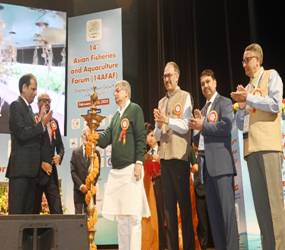
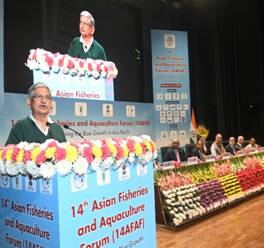
Union Minister of Fisheries, Animal Husbandry & Dairying and Panchayati Raj Shri Rajiv Ranjan Singh alias Lalan Singh inaugurated 14th Asian Fisheries and Aquaculture Forum (14AFAF) at Pusa Campus in New Delhi today, marking a significant milestone in global fisheries and aquaculture. Speaking on the occasion, Shri Rajiv Ranjan Singh highlighted the Government of India’s commitment to sustainable fisheries.  He accentuated that India has risen as the world’s second-largest fish producer under the Prime Minister’s visionary leadership and Pradhan Mantri Matsya Sampada Yojana (PMMSY). The Minister also emphasized that India is implementing cutting-edge digital solutions such as National Digital Fisheries Platform and vessel monitoring, transponders, and emergency alerts to ensure the safety of fishermen at sea. He also informed that the Kisan Credit Card scheme has been extended to the fishers and fish farmers and various insurance schemes to the fisheries’ sector were also introduced. He further applauded the ICAR for its technological offerings, recognizing its contributions in the fisheries development in the country. Further he stressed that the research institutes should undertake capacity building initiative involving KVKs to improve the adoption of scientific practices by fishers and farmers. He also inaugurated the 14AFAF expo, a major highlight, bringing together the stakeholders from state fisheries departments, academia, research institutions and the industry to showcase technological advancements.

Dr. Himanshu Pathak, Secretary, DARE, and DG, ICAR highlighted that 75 new fisheries technologies and improved fish varieties developed by ICAR, emphasizing ICAR’s commitment to sustainable, carbon-neutral fisheries and aquaculture for long-term industry resilience.

Dr. Abhilaksh Likhi, Secretary, Department of Fisheries, Ministry of Fisheries Animal Husbandry and Dairying, Government of India, highlighted the Government’s transformative initiatives, substantial investments, and the vital role of startups in driving innovation for India’s blue economy.

‘Padma Shri’ Dr. S. Ayyappan, former Secretary, DARE, and DG, ICAR, highlighted India’s leadership in fisheries research and described 14AFAF as the Mahakumbh of fisheries researchers from Asia.

Dr. Essam Yassin Mohammed, Director General, WorldFish, Malaysia, spoke on global innovations in fisheries and applauded India for its transformation initiatives in sustainable aquaculture.

Prof. Neil Loneragan, President, Asian Fisheries Society, Kuala Lumpur, emphasized the significance of international collaboration in advancing the fisheries sector globally.

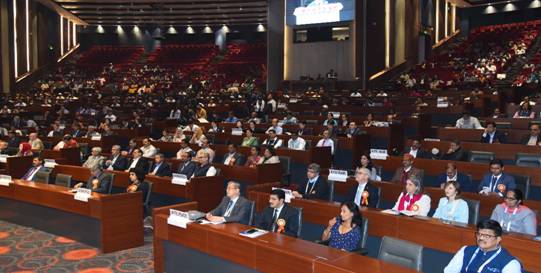
Dr. J.K. Jena, Deputy Director General (Fisheries Science), ICAR, and Convener of 14AFAF, in his welcome address, stated that the forum will play a crucial role in shaping the future of fisheries and aquaculture. He highlighted that the event features over 20 lead presentations by renowned experts from India and abroad, with 1,000 participants from 24 countries.

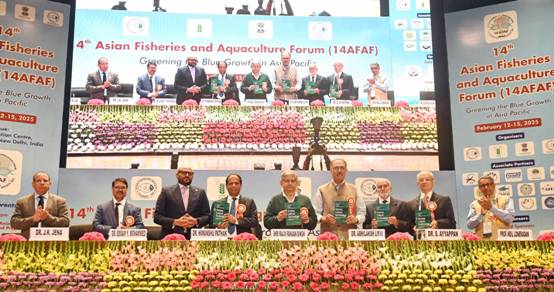
The session also saw the release of different publications & technologies by the dignitaries. The event was organized by the Asian Fisheries Society (AFS), Kuala Lumpur, in collaboration with the Indian Council of Agricultural Research (ICAR), the Department of Fisheries (DoF), Government of India, and the Asian Fisheries Society Indian Branch (AFSIB), Mangalore.

Hosting the 14th AFAF in India after 15 years highlights the country’s growing prominence in global fisheries and aquaculture. With a rapidly expanding blue economy, progressive policies, and scientific advancements, India is emerging as a key player in sustainable fisheries. This forum serves as an opportunity to showcase India’s contributions, strengthen global partnerships and drive sustainable aquaculture initiatives for the future.

*****