Rishi Sunak – Prime Minister of United Kingdom

Prime Minister, First Lord of the Treasury, Minister for the Union, and Minister for the Civil Service

The Rt Hon Rishi Sunak MP

Biography

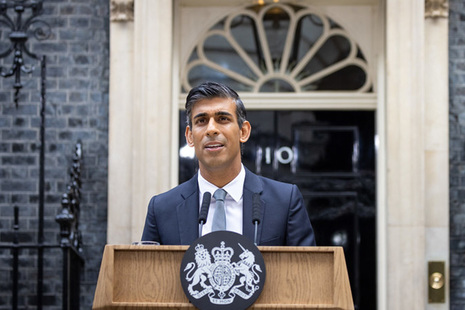
Rishi Sunak became Prime Minister on 25 October 2022.

He was previously appointed Chancellor of the Exchequer from 13 February 2020 to 5 July 2022.

He was Chief Secretary to the Treasury from 24 July 2019 to 13 February 2020, and Parliamentary Under Secretary of State at the Ministry of Housing, Communities and Local Government from 9 January 2018 to 24 July 2019.

Education

Rishi went to Winchester College and studied Politics, Philosophy and Economics at Oxford University. He was also a Fulbright Scholar at Stanford University (USA) where he studied for his MBA.

Political career

Rishi was elected Conservative MP for Richmond (Yorks) in May 2015 and served as a Parliamentary Private Secretary at the Department for Business, Energy and Industrial Strategy from June 2017 until his ministerial appointment.

Career before politics

Rishi spent his professional career before politics in business and finance, working internationally. He co-founded an investment firm working with companies in multiple geographies. He then used that experience to help small and entrepreneurial British companies grow.

Personal life

Rishi is married with two young daughters.

Prime Minister

The Prime Minister is the leader of His Majesty’s Government and is ultimately responsible for the policy and decisions of the government.

As leader of the UK government the Prime Minister also:

  • oversees the operation of the Civil Service and government agencies
  • chooses members of the government
  • is the principal government figure in the House of Commons

As Minister for the Union, the Prime Minister works to ensure that all of government is acting on behalf of the entire United Kingdom: England, Northern Ireland, Scotland, and Wales.

First Lord of the Treasury

The First Lord of the Treasury is one of the Lords Commissioners of the Treasury. This role is usually held by the Prime Minister.

Since the 17th century, the Lords Commissioners of the Treasury have collectively carried out duties that were previously held by the Lord High Treasurer (head of His Majesty’s Treasury).

The Lords Commissioners of the Treasury also include:

  • the Second Lord of the Treasury – the Chancellor of the Exchequer, who has most of the functional financial responsibilities
  • Junior Lords Commissioners of the Treasury – other members of the government, usually government whips in the House of Commons

10 Downing Street is the official residence of the First Lord of the Treasury, and not of the Prime Minister.

Minister for the Union

As Minister for the Union, the Prime Minister works to ensure that all of government is acting on behalf of the entire United Kingdom: England, Northern Ireland, Scotland, and Wales.

Minister for the Civil Service

The Minister for the Civil Service is responsible for regulating the Civil Service.

The Civil Service (Management Functions) Act of 1992, allows the Minister for the Civil Service to delegate power to other ministers and devolved administrations.

This role was created in 1968 and is always held by the Prime Minister.

Rishi Sunak – British Prime Minister

Rishi Sunak born 12 May 1980) is a British politician who has served as Prime Minister-designate of the United Kingdom and Leader of the Conservative Party since 24 October 2022. He previously served as Chancellor of the Exchequer from 2020 to 2022 and Chief Secretary to the Treasury from 2019 to 2020. He has been the Member of Parliament (MP) for Richmond (Yorks) since 2015.
Sunak was born in Southampton to parents of Punjabi Indian descent who migrated to Britain from East Africa in the 1960s. He was educated at Winchester College, read philosophy, politics and economics (PPE) at Lincoln College, Oxford, and gained an MBA from Stanford University in California as a Fulbright Scholar. While studying at Stanford, he met his future wife Akshata Murty, the daughter of N. R. Narayana Murthy, the Indian billionaire businessman who founded Infosys. Sunak and Murty are the 222nd richest people in Britain, with a combined fortune of £730m as of 2022. After graduating, Sunak worked for Goldman Sachs and later as a partner at the hedge fund firms the Children’s Investment Fund Management and Theleme Partners.
Sunak was elected to the House of Commons for Richmond in North Yorkshire at the 2015 general election, succeeding William Hague. Sunak supported Brexit in the 2016 referendum on EU membership. He was appointed to Theresa May’s second government as Parliamentary Under-Secretary of State for Local Government in the 2018 reshuffle. He voted three times in favour of May’s Brexit withdrawal agreement. After May resigned, Sunak supported Boris Johnson’s campaign to become Conservative leader. After Johnson was elected and appointed Prime Minister, he appointed Sunak as Chief Secretary to the Treasury. Sunak replaced Sajid Javid as Chancellor of the Exchequer after his resignation in the February 2020 cabinet reshuffle.
As Chancellor, Sunak was prominent in the government’s financial response to the COVID-19 pandemic and its economic impact, including the Coronavirus Job Retention and Eat Out to Help Out schemes. He resigned as chancellor on 5 July 2022, followed by Johnson’s resignation amid a government crisis. Sunak stood in the Conservative party leadership election to replace Johnson, and lost the members’ vote to Liz Truss. Following Truss’s resignation amid another government crisis, Sunak was elected unopposed as Leader of the Conservative Party and is set to become the next British prime minister.
Early life and education
Sunak was born on 12 May 1980 in Southamptonto African-born Hindu parents of Punjabi Indian descent, Yashvir and Usha Sunak. He is the eldest of three siblings. His father was born and raised in the Colony and Protectorate of Kenya (present-day Kenya), while his mother was born in Tanganyika (which later became part of Tanzania). His grandfathers were born in Punjab province, British India, and migrated from East Africa with their families to the UK in the 1960s. His paternal grandfather, Ramdas Sunak, was from Gujranwala (in present-day Pakistan) and moved to Nairobi in 1935 to work as a clerk, where he was joined by his wife Suhag Rani Sunak from Delhi in 193. His maternal grandfather, Raghubir Sain Berry MBE, worked in Tanganyika as a tax official, and had an arranged marriage with 16-year-old Tanganyika-born Sraksha, with whom he had three children, and the family moved to UK in 1966, funded by Sraksha selling her wedding jewellery. 
Sunak attended Stroud School, a preparatory school in Romsey, Hampshire, and Winchester College, a boys’ independent boarding school, where he was head boy. He was a waiter at a curry house in Southampton during his summer holidays. He read Philosophy, Politics and Economics (PPE) at Lincoln College, Oxford, graduating with a first in 2001. During his time at university, he undertook an internship at Conservative Campaign Headquarters. In 2006, he gained an MBA from Stanford University, where he was a Fulbright scholar.
Business career
Sunak worked as an analyst for the investment bank Goldman Sachs between 2001 and 2004. He then worked for hedge fund management firm the Children’s Investment Fund Management, becoming a partner in September 2006. He left in November 2009 to join former colleagues in California at a new hedge fund firm, Theleme Partners, which launched in October 2010 with $700 million under management. At both hedge funds, his boss was Patrick Degorce, He was also a director of the investment firm Catamaran Ventures, owned by his father-in-law, the Indian businessman N. R. Narayana Murthy between 2013 and 2015.
Early political career
Member of Parliament
Sunak was selected as the Conservative candidate for Richmond (Yorks) in October 2014, defeating Wendy Morton. The seat was previously held by William Hague, a former leader of the party, Foreign Secretary and First Secretary of State. The seat is one of the safest Conservative seats in the United Kingdom and has been held by the party for over 100 years.  In the same year Sunak was head of the Black and Minority Ethnic (BME) Research Unit of centre-right think tank Policy Exchange, for which he co-wrote a report on BME communities in the UK. He was elected as MP for the constituency at the 2015 general election with a majority of 19,550 (36.2%).  During the 2015–2017 parliament he was a member of the Environment, Food and Rural Affairs Select Committee.
Appointment
In the weeks before Sunak’s appointment as chancellor of the Exchequer, press briefings suggested that a new economic ministry led by Sunak might be established to reduce the power and influence of Chancellor Javid at the Treasury. Sunak was considered a Johnson loyalist, favoured by Johnson’s chief adviser Dominic Cummings, and was seen as the “rising star” that had ably represented Johnson during the 2019 election debates. In February 2020, The Guardian reported that Javid would remain in his role as Chancellor and that Sunak would remain chief secretary to the Treasury, so that Cummings could “keep an eye” on Javid.
On 13 February, Sunak was promoted to chancellor as part of a cabinet reshuffle. Javid had resigned that day following a meeting with Johnson. During the meeting, Johnson had offered to keep his position on the condition that he dismiss all of his advisers at the Treasury, to be replaced with individuals selected by Cummings. Javid told the Press Association that “no self-respecting minister would accept those terms”. Some political commentators saw Sunak’s appointment as signalling the end of the Treasury’s independence from Downing Street, with Robert Shrimsley, chief political commentator of the Financial Times, arguing that “good government often depends on senior ministers – and the Chancellor in particular – being able to fight bad ideas”.
Sunak at a press conference on 20 March 2020 with Prime Minister Boris Johnson and Deputy Chief Medical Officer Jenny Harries
Sunak as Chancellor in April 2020, in a video concerning government support for businesses amidst COVID-19
On 17 March 2020, Sunak introduced a programme providing £330 billion in emergency support for businesses, as well as a furlough scheme for employees. This was the first time a British government had created such an employee retention scheme. The scheme was introduced on 20 March 2020 as providing grants to employers to pay 80% of a staff wage and employment costs each month, up to a total of £2,500 per person per month. The cost has been estimated at £14 billion a month to run.
Following changes to the scheme at the end of May, the director of the Northern Ireland Retail Consortium said that being asked to pay wages when businesses had not been trading was an added pressure, while the Federation of Small Businesses was surprised that the Chancellor was tapering the scheme when ending it. Northern Ireland’s economy minister Diane Dodds said that changes to the scheme could be very difficult for some sectors uncertain about when they can reopen, particularly in the hospitality and retail sector, whilst finance minister Conor Murphy said that it was too early in the economic recovery. By 15 August 80,433 firms had returned £215,756,121 that had been claimed under the scheme. Other companies had claimed smaller amounts of grant cash on the next instalment to compensate for any overpayment. HM Revenue and Customs officials believed that £3.5 billion may have been paid out in error or to fraudsters.
Fraud against the schemes
In June 2020, David Clarke, chair of the Fraud Advisory Panel charity and a group of top white-collar crime experts wrote a letter to Sunak, the National Audit Office, and others, to alert them the risk of fraud against the government tax-payer backed stimulus schemes. They called for publication of the names of companies receiving Bounce Back Loans to enable data matching to prevent, deter and detect fraud. In September 2020, it emerged that Government Ministers were warned about the risk of fraud against the financial support schemes by Keith Morgan, CEO of the state-owned British Business Bank who had concerns about the Bounce Back Loan Scheme and Future Fund. In December 2020, it was reported that banks and the National Crime Agency also had concerns about fraudulent abuse of the Bounce Back Loan Scheme. In January 2021, the NCA reported that three city workers who worked for the same London financial institution had been arrested as part of an investigation into fraudulent Bounce Back Loans totalling £6 million. The NCA said the men were suspected of using their “specialist knowledge” to carry out the fraud. This form of insider fraud was a risk highlighted in the letter sent to Sunak in June 2020.  A 2022 Freedom of Information request to the British Business Bank, the state-run body administering the bounce back loan scheme, found that almost one fifth, or 193,000 businesses had failed to meet their repayment terms as at 27 June 2022. The UK government estimated that £4.9 billion of bounce back loans may have been lost to fraud.
Future Fund
In July, he unveiled a plan for a further £30 billion of spending which included a stamp duty holiday, a cut to value-added tax (VAT) for the hospitality sector, a job retention bonus for employers and the Eat Out to Help Out scheme, aimed at supporting and creating jobs in the hospitality industry. The government subsidised food and soft drinks at participating cafes, pubs and restaurants at 50%, up to £10 per person. The offer was available from 3 to 31 August on Monday to Wednesday each week. In total, the scheme subsidised £849 million in meals. Some consider the scheme to be a success in boosting the hospitality industry, however others disagree. In terms of the COVID-19 pandemic, a study at the University of Warwick concluded that the scheme contributed to a rise in COVID-19 infections of between 8% and 17%.
Boris Johnson and Sunak at the former’s birthday celebration on 19 June 2020; both men later received fixed penalty notices for attending the gathering
In November 2020, Sunak was reported by The Guardian to have not declared a significant amount of his wife and family’s financial interests on the register of ministers’ interests, including a combined £1.7 billion shareholding in the Indian company Infosys. Sunak is required under the ministerial code to declare interests that are “relevant” to his responsibilities and “which might be thought to give rise to a conflict” with his public duties. The independent adviser on ministers’ interests investigated and concluded that Sunak had not broken any rules.
G7 tax reform
Sunak and US Secretary of the Treasury Janet Yellen at the 2021 G7 finance ministers’ meeting
Proposed green levy
As Chancellor, Sunak privately lobbied to impose a green levy, which would have led to higher petrol and diesel prices, to help pay for the plan to reduce greenhouse gas emissions to net zero by 2050. The proposed Fossil Fuels Emissions Trading Scheme, drawn up by the Treasury, sought to levy pollution from road transportation, as well as shipping, building heating and diesel trains, which together make up more than 40% of UK carbon emissions. The proposal was ultimately rejected by Boris Johnson, who instructed officials that he did not want to increase costs for consumers.
Sunak introducing the 2021 autumn budget
In October 2021, Sunak made his third budget statement. It included substantial spending promises to a large extent related to science and education.
Sunak made his spring statement on 23 March 2022. He said that the recovery from the COVID-19 pandemic had been disrupted by the Russian invasion of Ukraine. He cut fuel duty, removed VAT on energy saving equipment (such as solar panels and insulation) and reduced national insurance payments for small businesses and, while continuing with a planned national insurance rise in April, he promised to align the primary threshold with the basic personal income allowance as of July. He also promised a reduction in income tax in 2024. The Office for Budget Responsibility said that the tax burden would reach its highest level since the 1940s. Sunak also provided some funding to help vulnerable people cope with the rising cost of living.
On 8 July 2022, Sunak stood in the Conservative party leadership election to replace Johnson. Sunak launched his campaign in a video posted to social media, writing that he would “restore trust, rebuild the economy and reunite the country”. He said his values were “patriotism, fairness, hard work”. Sunak pledged to “crack down on gender neutral language”.The domain readyforrishi.com was first registered with GoDaddy on 23 December 2021, while ready4rishi.com was registered on 6 July 2022, two days after Sunak resigned as chancellor. The former domain acts as a redirect to the latter. Conservative politicians who had supported Johnson criticised Sunak as “leading the charge in bringing down the prime minister” with key Johnson ally Jacob Rees-Mogg calling him a “high tax chancellor”.
During the campaign, a clip from the 2001 BBC documentary Middle Classes: Their Rise and Sprawl, emerged in July 2022 in which he remarked, “I have friends who are aristocrats, I have friends who are upper class, I have friends who are, you know, working class but… well not working class”. Sunak commented on the clip that “We all say silly things when we are younger”. A video of Sunak speaking to an audience in Tunbridge Wells, Kent, emerged in August 2022 in which he said he changed funding formulas which “shoved” money into “deprived urban areas”, “to make sure that areas like this are getting the funding they deserve.” Sunak responded that he wanted to “level up everywhere” and not just help “very large urban cities”. Following Liz Truss’s victory in the 2022 Conservative Party leadership election, Sunak returned to the backbenches.
October 2022
At the start of 2020, following his appointment as Chancellor of the Exchequer, Sunak arrived in public discourse from relative obscurity. In the early stages of the COVID-19 pandemic, he was popular by the standards of British politics, described by one analyst as having “better ratings than any politician since the heydays of Tony Blair”. Various polls showed Sunak remained overwhelmingly popular among Conservative supporters and many other Britons throughout 2020.
In an Ipsos MORI poll in September 2020, Sunak had the highest satisfaction score of any British Chancellor since Labour’s Denis Healey in April 1978. He was widely seen as the favourite to become the next Prime Minister and leader of the Conservative Party. Sunak developed a cult media following, with jokes and gossip about his attractiveness widespread on social media and in magazines.
Public attitudes towards Sunak remained broadly positive in 2021, though his popularity declined steadily over time. By early 2022, with the cost of living becoming a growing focus of public concern, Sunak’s response, as the Chancellor of the Exchequer, was perceived as inadequate and he received some of his lowest approval ratings. This fall continued as the Sunak family’s financial affairs came under scrutiny.
Personal life

MULTICULTURALISM IN AUSTRALIA

 Australia is a melting pot of cultures, ethnicities, and faiths. People from a wide range of cultural, ethnic, linguistic, and religious backgrounds helped to build this country. Since 1945, the lives of Australians have altered dramatically as a result of the aggressive immigration strategy (Brett 2003). Today, many diverse cultures have come together to call Australia home, and the majority of those cultures have accepted the Australian way of life. This essay will first provide a brief overview of Australian immigration history, including previous policies and the period of multiculturalism that dominated for several decades, before moving on to examine government practices and changes in immigration policies before, during, and after the Howard administration. 

Multiculturalism refers to the integration of many cultures so that they can coexist happily and equitably as one. The history of human settlement in Australia began with the arrival of the first families of the existing aboriginal Australians. It is thought that Australia’s first indigenous tribes migrated from an unknown location in Asia about 50,000 years ago (Brett 2003). In 1606 a Spanish explorer sailed into the Torres Strait, which divides Australia from Papua New Guinea, to begin European discovery of Australia. Soon after, Dutch, French, and English explorers arrived and began mapping the continent. Australia was widely portrayed as a faraway and unappealing country for European settlement, yet it has deliberate and socioeconomic worth in the United Kingdom. The British control of the continent provided a solution for the relocation of criminals in its overcrowded jails, as well as a base for British naval operations. As a result, the British colonization of Australia started in 1788, and the colony quickly grew as free immigrants arrived from Britain and Ireland and fresh areas were freed up for cultivation.

However, the character of Australian migration altered dramatically with the discovery of gold in 1851. This gold rush era resulted in an early migration boom and the beginning of international migrations, with people arriving in significantly bigger numbers and from far more diverse origins than ever before. Over 600,000 individuals immigrated to Australia between 1851 and 1861.

Control of immigration altered when the colonies united in 1901. The immigration limitation act, popularly known as the “White Australian Policy,” was the first piece of legislation approved by the new parliament. Despite the comparatively significant number of Chinese citizens in Australia, this legislation insured that people who were not of European origin were not allowed to dwell there and also prohibited Asian migration for the next fifty years. With the onset of the First World War in 1914, migration nearly ended. Furthermore, formerly acceptable migrants from Germany, Hungary, Bulgaria, and Turkey were classed as ‘enemy aliens,’ and citizens from these nations were barred from entering the country for five years (Hodge 2006, p. 91). Churches and community groups such as the YMCA and the Salvation Army sponsored migrants, as they did after the conclusion of World War I. Small numbers also arrived on their own. As the United States attempted to curtail Southern European migration, an increasing number of young men from Greece and Italy financed their way to Australia. By the 1930s, a higher number of Jewish settlers began to arrive, many of them refugees from Hitler’s Europe.

Before World War II, Australia had a homogeneous European population and remained so for some time. During WWII, however, Australia became a haven for many non-European refugees, particularly from Asian nations. Malaysians, Filipinos, and Indonesians have established themselves in the nation. Australia aggressively sought these immigrants, and because of a rising economy and big infrastructure projects like the Snowy Mountain Programme, many of them found work. There were labourers from over thirty different countries who were not all of European ancestries. Seventy per cent of the workers in the project were foreigners who saw opportunities in coming to Australia.

The ambition of former Australian Prime Minister John Curtis of preserving Australia in the hands of its white European forebears did not last. Australia began to modify its White Australia policy in the 1950s. Non-European inhabitants were granted the right to petition for citizenship in 1956. Two years later, as a further measure of exclusion, the transcribing Test was eliminated. By the 1960s, mixed-race migration was becoming more common, and Australia signed its first migration pact with a non-European country in 1966. This was a significant step forward for Australia since it was the first time that both the political government and the Australian people decided to allow diverse cultures to coexist. Although diversity was recognized by the government and welcomed by the majority of Australians, there were significant problems during that period. Political concord on diversity was destroyed when opposition leader John Howard took a different stance on multiculturalism. Howard was a firm supporter of traditional Australian values. In 1988, Howard advocated for a variety of policy reforms, including a shift in the mix of migrants and a ‘One-Australia’ post-arrival policy. He stated that the rate of Asian immigration into Australia should be reduced for the sake of societal cohesiveness.

Multiculturalism is increasingly being embraced by national and state governments as a vocabulary of communal relations aimed at social cohesion. In July 2000, the Council for Multicultural Australia was founded and entrusted with executing A New Agenda for Multicultural Australia. Its mission is to promote the benefits of diversity in business and to supervise the application of a public service charter in a culturally varied society. The Howard administration issued its multicultural policy statement, Multicultural Australia: United in Diversity, in May 2003. It revised the 1999 New Agenda, established strategic orientations for 2003-06, and committed to establishing a Council for Multicultural Australia.

Australia received 123,000 new settlers in 2004-05, a 40% increase over the previous ten years. Sydney attracted the greatest number of immigrants (40,000 in 2004/05). The bulk of immigrants came from Asia, with China and India leading the way. There was also a large increase in Asian student numbers, as well as a continuous high number of Asian visitors. In 2005/06, the planned immigration influx more than quadrupled compared to 1996. As of 2007, immigration accounted for slightly more than half of Australia’s population increase. Immigration accounts for almost three-quarters of population growth in New South Wales and South Australia. The anticipated intake for 2007/08 was about 153,000, including 13,000 under the humanitarian programme and 24,000 New Zealanders under a unique trans-Tasman arrangement. During the Howard administration, the quota for skilled migrants increased dramatically in comparison to the quota for family reunions 

Australia’s last multicultural policy, Multicultural Australia United in Diversity (2003-2006), was terminated in 2006. In late 2008, the Rudd Government launched a new multicultural advisory board.

Australia is not only far richer in experiences, but also has much stronger economic and social ties with other countries as a result of its broad multinational population. Multiculturalism has had an impact on Australian fashion, gastronomy, and culture since it defines what it means to be an Australian. Australia is proud of its multicultural society and values the range of cultures that continued global migration brings. Cultural variety affects and enriches all Australians; its success was accomplished by all Australians and should be treasured and embraced by all Australians. 

Kishtwar has emerged as North India’s power hub

 Kishtwar in Jammu and Kashmir has emerged as North India’s power hub under the Modi government with a series of active power projects, in total expected to generate more than 6000 Mega Watt of electricity. The latest addition would be an exclusive 1 Mega Watt Solar Power Plant for the holy spot of Machail which would be a great boon for the pilgrims in the Machail yatra.

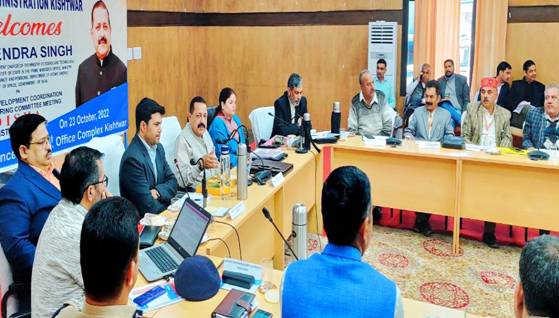
This was stated here today in the DISHA meeting of district Kishtwar convened by Union Minister of State (Independent Charge) Science & Technology; Minister of State (Independent Charge) Earth Sciences; MoS PMO, Personnel, Public Grievances, Pensions, Atomic Energy and Space, Dr Jitendra Singh to review progress on various Centrally Sponsored Schemes (CSS) being implemented in Kishtwar district.

The meeting was attended by DDC Chairperson, Ms Pooja Thakur, President Municipal Council Kishtwar Sajjad Ahmed Najjar, Deputy Commissioner, Kishtwar Dr Devansh Yadav, BDC Chairpersons, DDC members and nominated members of DISHA committee besides District and Sectoral officers of different departments.

District Development Commissioner gave a Power Point presentation on the achievements and progress recorded under different Centrally Sponsored Schemes besides status of various iconic/development projects being executed by different departments and agencies in the district.

Deputy Commissioner apprised the chair that large number of works taken under different CSS have been completed and the rest are at different stages of execution in the district.

Besides, DC Kishtwar gave a detailed insight about the action taken report of various issues highlighted in the previous DISHA meeting.

On enquiring about the status of Air strip taken up under Civil Aviation Ministry GOI, DC Kishtwar apprised that the various codal formalities of the project has been completed and on visit of the technical team,the project will be finalised.

The chair asked for collaboration with the concerned to conduct the visit of technical team so that work on the said project of national importance gets started soon.

While reviewing the sector wise progress of the district kishtwar, Dr Jatindra singh stressed the administration to give a major flip to the tourism sector in the District.He stressed to lay focus on the potential areas of tourism like the religious tourism,trekking and mountaineering, adventure tourism and upgradation of camping sites in the district to attract the larger tourist footfall in District.

He stressed for bringing the areas of Machail, Sarthal under the tourism circuit on priority basis and linking the tourism sector with the Mission Youth schemes for the larger benefit of youths.

While speaking in the meeting,Union minister also reiterated that Kishtwar district is a hub of 5 major upcoming Hydroelectric Power Projects with huge power generation capacity which can be of great potential to meet out the needs in power sector in the UT and Country in the coming time.He further added that tapping of solar energy will further augment the power needs in far flung areas of district.

DC Kishtwar apprised him that in this regard, there is a proposal of installation of 1 MVA Solar plant at Machail area of Paddar.

Dr Singh directed to expedite the process of identification of the 40 Kanals of land for said project in collaboration with JAKEDA.

Meanwhile DC, apprised the Union minister about the status of Jal Jeevan Mission, informed that the works on all 128 schemes out of 129 works have been tendered.

While taking note of slow pace of JJM works, Dr Jitendra Singh enjoined upon the concerned executing agencies to speed up the works and put in concerted efforts so as to realise the objective of ‘Har Ghar Nal Se Jal’ by providing Functional Household Tap Water connections covering all beneficiaries.

While taking scheme wise review of the projects undertaken by different departments, Dr Singh stressed for timely completion of projects of people’s importance within stipulated time frame. He emphasised on elected PRI’s to work in tandem with administration to achieve desired development results.

Meanwhile, Union MoS took a comprehensive review of physical and financial achievements of centrally sponsored schemes including PMGSY, MGNREGA, PMAY-G, PMAY-G( AWAAS PLUS), Amrit sarovar, SBM(G), besides scheme under Health, Agriculture,School and Employment etc.

While discussing major road works under execution, Dr Jitendra Singh reviewed the latest status of projects including Macadamization on Sarthal Road and widening and upgradation of Kishtwar-Palmar-DangDangduran Road.

Dr Singh was also apprised about the issues of critical areas likewise Re-construction of Kundail Bridge at Paddar, seperate power grid for Marwah Division,financial encumbrance of Ayush Hospital Kishtwar,paucity of staff in various departments particularly in Health, grievances of Hounzar Cloudburst affected families, telecommunications in Marwah and Warwan, resettlement of under constructed TRC -Sarkoot link Road.

Dr Singh passed necessary directions to the concerned authorities for immediate resolution of these issues.

Dr Singh also called upon the concerned officers to ensure 100% coverage of beneficiaries under IAY and Ayushman-Sehat, further asked PRI’s to ensure all deserving people shall entail the benefit of these schemes.

MOS also stressed for exploring the possibilities for the tapping the potential of the Lavender cultivation under Aroma Mission in the district in Collaboration with the IIIM jammu and also lay focus on development of Saffron Park in district which can be instrumental in doubling the farmer’s income.

DDC Chairperson along with other PRIs also highlighted the issues of compensation for land under PMGSY road,opening of new and completion of sanctioned Kendriya Vidyalayas in Palmar and Paddar, besides other matters. MOS assured them that these issues will be resolve on priority basis in time bound manner.

Earlier Union Minister handed over the Keys of Commercial vehicles to beneficiaries under “Mumkin” Scheme of Mission Youth here at DC Office complex Kishtwar.

Besides, distributed Motorised tricycles to Specially abled persons sponsored by District Social Welfare Department and handed over the sanction letters to beneficiaries under different govt sponsored schemes.

Sanction letters under “Nikshay Poshan Yojana” for identified TB patients were also handed over to beneficiaries on the occasion.


Eklavya Model Residential Schools

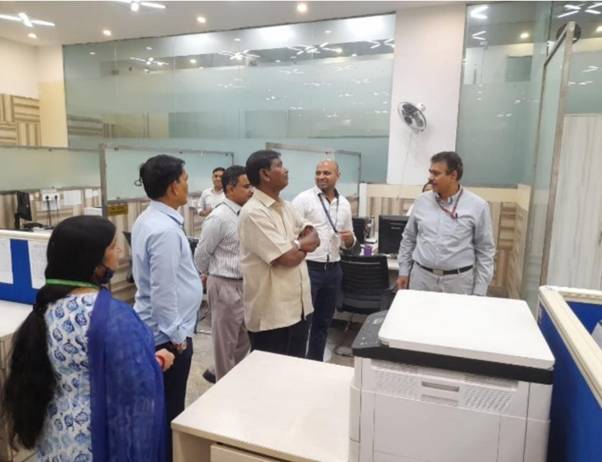
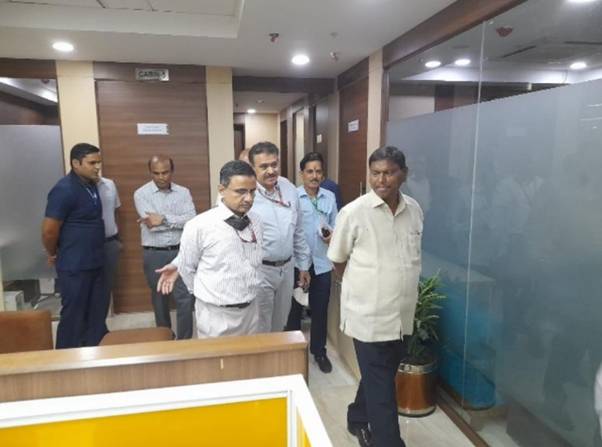
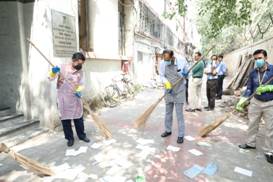
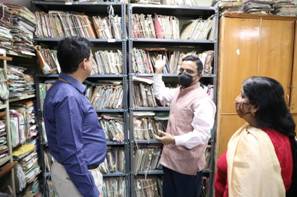
 The  Union Minister of Tribal Affairs, Shri Arjun Munda, inspected several of the Ministry of Tribal Affairs’ offices and divisions in the Jeewan Tara Building on Parliament Street in New Delhi and in National Tribal Research Institute as part of the special campaign 2.0 launched by Government of India from 2nd October to 31st October, 2022 in outstation offices, attached/subordinate offices.

Union  Minister of Tribal Affairs ShriArjun Munda  also reviewed the various activities taken up under the campaign during his visit to various offices of the Ministry. 


The Secretary Ministry of Tribal Affairs, Shri Anil Kumar Jha and the officers and staff of Ministry of Tribal Affairs also actively participated in the campaign.

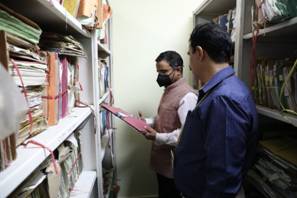
The Secretary, Ministry of Tribal Affairs, visited the subordinate divisional offices of the Ministry at the Jeewan Tara Building and National Tribal Research Institute. 

The  Secretary  reviewed the process of weeding  out old of old records and digitisation exercise being done by the Ministry.   He inspected record room and examined files and records being weeded out  as per the official procedures.

The campaign aims  at cleanliness in the offices and reducing pendency of grievances, VIP reference and parliamentary issues. 


The campaign  was  taken up in more than 300 premises which included the attached offices, Eklavya Model Residential Schools spread across country.  

Tribal students from  Eklavya Model Residential Schools actively participated in the  cleaning initiatives.


The Ministry of Tribal Affairs has always emphasised on providing clean and hygenic working environment for the officials and staff. The awareness drive aimed at cleanliness in government departments and sensitising government officials about cleanliness.

******

WOMEN EMPOWERMENT

 The term “Women Empowerment” indicates that women are not powerful enough and must be empowered. This terrible reality has existed for a very long time. In recent years, visible work has begun to raise women out of the abyss of insignificance and helplessness. Women’s freedom was restricted all throughout the world by patriarchal societies. Women were not allowed to vote or express their opinions. Women were kept in their houses. They realized as time passed that their lives mattered far more than merely assisting in the home. The globe began to see a rising in women as more and more women began to breach man-made barriers. Women, unlike males, never strive to silence their opposing gender’s voice. They grasp the hands of all the oppressed people – men and women alike – and pull them out of misery as they strive to better their lives.

HISTORY 

The history of Women empowerment does not begin on a certain day; rather, it is a cumulative process. However, there have been rallies, demonstrations, and revolutions that have accelerated the cause of women’s emancipation. Women were denied the right to vote in hundreds of countries throughout history, including the United States. As time went on, more and more women banded together and raised their voices. Gaining voting rights dramatically improved women’s social standing. Many suffrage movements worked for women’s voting rights daily. Individuals such as Elizabeth Stanton and organizations such as the National American Woman Suffrage Association and the National Woman’s Party were instrumental in winning women’s voting rights in the United States. The Women’s Social and Political Union in the United Kingdom vigorously pushed for women’s suffrage. It is a pity for society as a whole, given that many countries just recently allowed women the right to vote. After the second half of the twentieth century, Kuwait, Qatar, Zaire, Bahrain, Andorra, the Central African Republic, and other countries allowed women the right to vote. No woman can be empowered until she is financially self-sufficient. Women no longer have to rely on their dads or spouses to obtain what they desire. Women have increased possibilities to enter the labour field beginning in the twentieth century. 

At the same time, many women in England were obliged to labour both at work and at home to support their families. After WWII, women made the decision to enter the labour force on their own. Today, more and more employees are becoming available for women. Women are proven to be deserving of the titles bestowed upon them. Women have also gained major decision-making authority in the home. Both men and women today decide whether or not to have a child. The adoption of contraceptive tablets gave women even more control. Women can now work and study without restriction. Women empowerment cannot be achieved unless women at the bottom of society are empowered. Since the turn of the century, women at the grassroots level have found various vocational jobs, even those previously designated for men. Today, there are many female masons, bus drivers, gas station employees, farmers, and so on. And all of these women are doing an excellent job. 

WOMEN EMPOWERMENT IN INDIA

Women empowerment in India is incomparable to that in other countries. Women were held in great regard throughout the Vedic period. The emphasis on women’s education was never lost. The term ‘sahadharmini’ dates back to Vedic times. Sahadharmini translates as “equal companion.” Women in ancient India were treated with respect, education, and devotion. The strict Middle Eastern and British traditions infiltrated Indian culture throughout time. As a result, women’s authority and esteem were diminished.

Women gradually regained their lost influence following independence. Women are omnipresent nowadays. The country has its first female Prime Minister and President, and it has several notable female athletes such as Saina Nehwal and P.T Usha, as well as outstanding women scientists such as A. Chatterjee and B Vijayalakshmi. In India, women are entering the armed forces without reluctance. However, many women in India are still struggling to break free from patriarchy, particularly in rural areas. The empowered women must encourage these women to speak up, protest, and seek assistance from the authorities.

ISRO’s new achievement : launches 36 satellite for UK based OneWeb.

The Indian Space Research Organisation (ISRO) has successfully deployed the latest batch of 36 satellites for satellite operator OneWeb, aboard its heavyweight configuration Geosynchronous Satellite Launch Vehicle (GSLV)-Mk.III rocket. The launch marked the first commercial mission that used ISRO’s GSLV, also known as the Launch Vehicle Mark III (LVM3).

The collaboration is a result of ISRO’s commercial arm NewSpace India Limited’s two service contracts, signed with One Web for launching low Earth orbit (LEO) broadband communication satellites. ISRO said that as part of the contract, 36 satellites will be placed into orbit by one LVM3, from Satish Dhawan Space Centre in Sriharikota in Andhra Pradesh.

The mission marked the second launch of the year for OneWeb, backed by Bharti Enterprises, after the conflict in Ukraine disrupted the UK operator’s plan for completing its satellite launches this year. Prior to the Ukraine-Russia war, OneWeb was using Russia’s central space agency Roscosmos’ commercial launch services through its Soyuz rockets.

However, amid geopolitical sanctions imposed on Russia by nations including the UK, erstwhile Roscosmos head Dmitry Rogozin said that the OneWeb satellites would not be released back to the company — unless the UK government ceded to the nation’s demand of removing the sanctions.

ISRO's new achievement : launches 36 satellite for UK based OneWeb.

The Indian Space Research Organisation (ISRO) has successfully deployed the latest batch of 36 satellites for satellite operator OneWeb, aboard its heavyweight configuration Geosynchronous Satellite Launch Vehicle (GSLV)-Mk.III rocket. The launch marked the first commercial mission that used ISRO’s GSLV, also known as the Launch Vehicle Mark III (LVM3).

The collaboration is a result of ISRO’s commercial arm NewSpace India Limited’s two service contracts, signed with One Web for launching low Earth orbit (LEO) broadband communication satellites. ISRO said that as part of the contract, 36 satellites will be placed into orbit by one LVM3, from Satish Dhawan Space Centre in Sriharikota in Andhra Pradesh.

The mission marked the second launch of the year for OneWeb, backed by Bharti Enterprises, after the conflict in Ukraine disrupted the UK operator’s plan for completing its satellite launches this year. Prior to the Ukraine-Russia war, OneWeb was using Russia’s central space agency Roscosmos’ commercial launch services through its Soyuz rockets.

However, amid geopolitical sanctions imposed on Russia by nations including the UK, erstwhile Roscosmos head Dmitry Rogozin said that the OneWeb satellites would not be released back to the company — unless the UK government ceded to the nation’s demand of removing the sanctions.

HAMARI PEHCHAN NGO

Hamari Pehchan NGO is a non-governmental organisation with the main motive of improving and changing the lives of people and leading them towards a better and happier life. It provides a platform for different people across the country as well as the society to show their skillsets and develop a unqiue niche for themselves. Through this NGO, many underprevlideged have been able to improve their livelihood and have also been able to overcome the fear of living their lives in jeopardy.

The NGO continuously thrives in changing the lives of people who are deprived of the basic essentials and are unable enjoy their company. Hamari Pehchan is not just limited to a specific gender, age group or a particular methodology for conditioning the advancement of the society. Whether it is about women, children, older people, it tries to reach out to everybody and every section of society. The main motto as earlier stated is always to help all the underprevildged ones and provide them an essential platform to showcase their skills and expertise.

Mission-

Seeking a world of hope, tolerance and social justice where poverty has been eradicated and all people live with dignity and security.

Vision-

 To help everyone in creating their own ‘Pahchan’ and live a life with dignity.

Values driven-

Believing in urgent action, innovation and the necessity of transformation—within the world and our own organization.

The NGO has created almost 390+ campaigns throughout the country to spread awareness regarding the donation programs and making lives of the underprivledged much better. And not just this, it has also helped almost 10,000+ people across the country in create their own niche and live their lives with dignity. The organization has been up and running for the past 5 years. With collaboration and support of the Delhi police, School Teachers, Advocates, experienced Doctors and especially the school and college youth, the organization has come a long way with now over 5000 active members working relentlessly to support various causes.

Help is the most expensive gift, so be Rich by heart- Tarun Mathur

Need to transform agriculture to advanced farming and maintain continuity

Transforming agriculture into advanced farming practices while ensuring continuity involves adopting innovative techniques, technologies, and sustainable approaches to increase productivity, preserve natural resources, and secure food production for the future. Here are steps to achieve this:

  1. Adopting Precision Agriculture: Utilize technology such as sensors, drones, and GPS-guided machinery to monitor and manage crops more efficiently. This allows for precise application of resources like water, fertilizers, and pesticides, reducing waste and environmental impact.

  2. Implementing Agroecology: Embrace farming practices that mimic natural ecosystems, emphasizing biodiversity, soil health, and ecological balance. This includes crop rotation, agroforestry, and integrating livestock to improve soil fertility and reduce reliance on chemicals.

  3. Investing in Sustainable Irrigation: Employ water-efficient irrigation methods like drip irrigation, sprinkler systems, and smart water management techniques to conserve water resources and prevent wastage.

  4. Utilizing Biotechnology and GMOs: Responsible use of biotechnology, including genetically modified organisms (GMOs), can enhance crop resilience, increase yields, and address challenges like pests, diseases, and climate change impacts.

  5. Promoting Vertical Farming and Controlled Environment Agriculture: Embrace vertical farming techniques and controlled environment agriculture (CEA) such as hydroponics, aquaponics, and indoor farming to optimize space, reduce water usage, and produce crops year-round in urban settings.

  6. Encouraging Sustainable Livestock Practices: Implementing methods that reduce the environmental impact of livestock farming, such as rotational grazing, feed efficiency improvements, and methane reduction strategies.

  7. Fostering Digital Agriculture and Data Analytics: Utilize big data, AI, and predictive analytics to optimize farming practices, predict crop yields, monitor soil health, and make informed decisions for better resource management.

  8. Supporting Farmer Education and Training: Provide access to education, training, and resources for farmers to adopt and adapt to new technologies and sustainable practices.

  9. Policy Support and Investment: Governments and stakeholders should offer incentives, subsidies, and policies that encourage the adoption of sustainable farming practices, research into innovative technologies, and infrastructure development.

  10. Resilience and Adaptation to Climate Change: Develop strategies and practices that build resilience in agriculture against climate change effects, including drought-resistant crops, flood management, and soil conservation.

Continuity in advancing agriculture requires a holistic approach that combines technological innovation, sustainable practices, supportive policies, education, and investment. Collaboration among farmers, researchers, policymakers, and the private sector is essential to successfully transform agriculture while ensuring food security and environmental sustainability.

Startup India Seed Fund Scheme

The Startup India Seed Fund Scheme is an initiative by the Government of India to provide financial support to startups in their early stages of development. Launched as part of the Startup India initiative, this scheme aims to foster innovation, encourage entrepreneurship, and facilitate the growth of startups across various sectors.

Key features of the Startup India Seed Fund Scheme include:

  1. Financial Support: The scheme provides financial assistance to eligible startups to help them validate their business ideas, conduct proof of concept, develop prototypes, and prepare for market entry.

  2. Seed Funding: Startups can receive seed funding of up to INR 20 lakhs (~$27,000 USD) as a grant to support their initial stages of business development.

  3. Application Process: Eligible startups can apply for the seed fund through designated incubators and accelerators recognized by the Department for Promotion of Industry and Internal Trade (DPIIT) or through a selection committee.

  4. Eligibility Criteria: Startups looking to avail of this scheme need to meet certain criteria related to their incorporation, age of the company, innovation quotient, and validation of their business idea.

  5. Focus on Innovation: The scheme focuses on startups with innovative ideas, technological solutions, or unique business models that have the potential for high growth and scalability.

  6. Support through Incubators: Incubators play a crucial role in the implementation of this scheme by selecting eligible startups, providing them with mentorship, guidance, and connecting them to funding opportunities.

  7. Equity-Free Grants: The funding provided under this scheme is in the form of an equity-free grant, allowing startups to retain ownership and control over their ventures.

The Startup India Seed Fund Scheme aims to bridge the initial funding gap that many startups face in their early stages and enable them to move closer to commercialization. By providing financial support and fostering an ecosystem that nurtures innovation, the scheme seeks to empower startups and contribute to India’s entrepreneurial landscape.