

Stories Book Publication Free
Read interesting stories. Write 100 stories on this portal to get your stories book published free from Edupedia Publications Pvt Ltd. Send mail to editor@edupub.org
under-utilization of CRMs and application of bio-decomposer in Punjab
An Inter-Ministerial meeting under the co-chairmanship of Minister of Agriculture and Farmers Welfare, Union Minister of Environment, Forest and Climate Change and the Minister of Fisheries, Animal Husbandry & Dairying on the issue of Parali Management of crop residue burning in Delhi NCR, was held today.
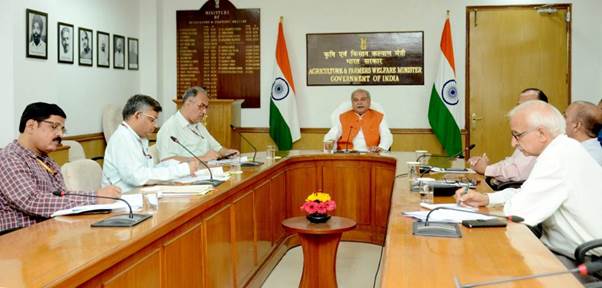
Discussions were held regarding status of implementation of the respective action plans of the NCR States and NCTD, utilization of machinery for in-situ and ex-situ management, extensive use of bio-decomposers for in-situ management of paddy straw, arrangement for supply of paddy straw to various industrial, commercial, bio-energy and other applications, facilitation of farmers, aggregators, manufacturers, entrepreneurs for setting up of paddy straw baling / raking operations, storage, pelletizing and transport infrastructures, co-firing in Thermal Power Plants (TPPs), using non-basmati Parali as Fodder in Fodder deficient areas in Gujarat and Rajasthan among others. Monitoring and control action taken by States on the reported fire incidences etc. were also discussed.
MoA&FW made a brief presentation on the actions taken by DoAH&D for Management of Crop Residue Burning. He highlighted that the status of Parali management in Haryana is significantly better than that in Punjab. 9 out of 22 districts in Punjab and 4 out of 22 district in Haryana are major contributors of stubble burning in these states. So, these 13 districts need to be focused upon more. Sangrur, Moga, Tarn Taran and Fatehabad are among them. Till 15th October, the trend for fire events was less as compared to last year but now it has started growing rapidly, especially in Punjab. Early harvesting is the reason for high fire counts in Amritsar and Tarn Taran. It was also apprised that the coverage of land for the application of Pusa decomposer is less in Punjab which needs to be promoted and enhanced.
Representative of Ministry of Power informed that it has mandated 5% blending of biomass pellets with the coal for co-firing in Thermal Power Plants (TPPs). The co-firing also helps to prevent CO2 emissions. Till now, 0.1 million MT CO2 emissions have been prevented.
Chairman, CAQM informed that they have prepared a detailed framework for in-situ and ex-situ management of parali and the States have been advised to implement the same to contain stubble burning. It was mentioned in the meeting that in spite of several meetings and efforts by CAQM, the steps taken by Punjab are inadequate.
It was mentioned in the meeting that one of the main concerns is the delayed delivery of CRM Machines in Punjab and Haryana. The NCT of Delhi and NCR States are expected to utilize the funds effectively and for the maintenance of the provided CRM machines. Pusa decomposer application needs to be promoted. A proper supply chain management also needs to be developed by the States for utilization of pellets in TPPs.
For reducing the paddy straw generation, promotion of basmati variety and crop diversification are effective ways to reduce the menace. The State’s Comprehensive Action Plans to curb air pollution need to be strictly implemented. There must be a coordinated ecosystem for collection, aggregation, storage and transportation of the paddy straw for effective ex-situ management of parali, as discussed in the meeting.
It was informed that efforts of ISRO and MoA&FW have helped to get the accurate data on co-firing by TPPs.
Chief Secretary, Govt. of Punjab was asked to enhance the application of Pusa decomposer and control the increasing rate of Active Fire Events in Amritsar and to ensure 50% reduction in cases of Active Fire Events in the State in comparison to last year.
Chief Secretary, Govt. of Haryana reported a 55% reduction in Active Fire Events in the state in comparison to last year. With the help of Remote sensing monitoring and experts from Haryana Agriculture University (HAU), the farmers are being trained about the desired farm practices and prevention of stubble burning.
Chief Secretary, Govt. of UP was advised to carry on with their positive efforts and ensure maintenance of progress achieved so far in the field of parali management.
Chief Secretary, NCT of Delhi informed about the increase in the coverage of land area under Pusa application coverage.
Minister of Fisheries and Animal Husbandry & Dairying mentioned that there is a shortage of fodder in various part of the country and suggested that an efficient system is essential to be developed for transportation of the stubble available in NCR region to the fodder deficient regions.
Minister of Agriculture and Farmers Welfare further informed that an event on Pusa decomposer application is being organized on 4th November 2022 for educating the famers about the details. The event is likely to include an open discussion with the scientist of ICAR.
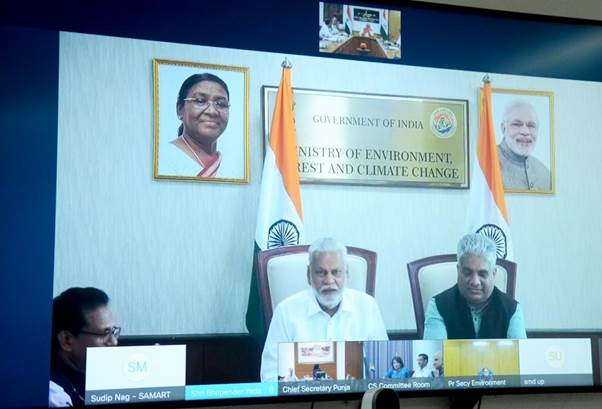
Speaking during the meeting Shri Bhupender Yadav, Minister of Environment, Forest and Climate Change said that it is heartening to note that Government of Haryana and Uttar Pradesh have done remarkable work towards control of stubble burning. They have implemented the framework in the States which includes in-situ management, ex-situ management, effective monitoring and enforcement and IEC activities which have resulted in less events of stubble burning.
Shri Yadav expressed concern that Government of Punjab had not been able to take coordinated actions to contain stubble burning in the state. He reiterated that the State had been provided sufficient number of equipment and farm machineries under CRM scheme of MoA&FW and also adequate funds have been provided yet there has not been sufficient progress in implementation of the action plan.
HMEF&CC stated that sufficient number of machineries have been distributed for parali management. He further directed Government of Haryana to ensure 24 hour supply of electricity in Sonipat, Panipat, Faridabad and Gurugram.
HMEF&CC hoped that coordinated actions will lead to significant improvement of air quality in the region.
The Senior officers of Ministry of Agriculture and Farmers Welfare, Ministry of Environment Forest and Climate Change, CAQM and Chief Secretaries and officers from Haryana, Delhi, Rajasthan, Punjab and Uttar Pradesh, NTPC etc. attended the meeting.
*****
Crop Residue Management
The Union Inter-Ministerial Meeting with the States on the issues of Crop Residue Management was chaired by the Union Minister for Agriculture and Farmers Welfare, Shri Narendra Singh Tomar with the Union Minister for Environment, Forest and Climate Change, Shri Bhupendra Yadav and the Union Minister for Fisheries, Animal Husbandry and Dairying, Shri Parshottam Rupala in co-chair. The three ministers held intense discussions with the states to check the burning of stubble. Shri Tomar said that there is a need to fix the accountability of the collectors in the affected districts by the respective State Governments, while Shri Yadav said that the states should implement effective measures immediately. Shri Rupala stressed on proactive steps, especially for the problem of stubble burning in Punjab.
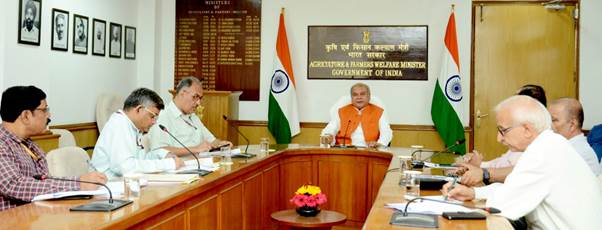
In the high-level review meeting, senior officials of Punjab, Haryana, Uttar Pradesh and Delhi state government and top officials of all the three central ministries as well as the Indian Council of Agricultural Research, Central Pollution Control Board, Commission for Air Quality Management in National Capital Region and Adjoining Areas, Ministry of Power and senior officials of other central ministries and departments participated. It was informed in the meeting that the states need to ensure effective utilization of 2.07 lakh machines already supplied by the Center during the last 4 years and 47,000 machines being provided during the current year. Under the Central Scheme on Crop Residue Management, the Government is already providing financial assistance to Punjab, Haryana, U.P. and NCT Delhi to combat air pollution in Delhi NCR due to stubble burning. Rs. 601.53 crore has already been released by the Center during the current year so far. Also, out of the amount given in the last four years, about Rs 900 crore is available with the states. The need for effective utilization of funds provided by the Government of India to the states for stubble management was emphasized in the meeting.
Shri Tomar said that the states should promote widespread use of bio-decomposer developed by the Pusa Institute for effective in-situ decomposition of stubble. He said that the Central Government has tried its best to fulfil the expectations of states. If the state governments also work diligently in the same way, it will bring good results. Especially, if effective checking is done on stubble burning in Amritsar and Tarn Taran districts of Punjab, then half the job will be done, because these two districts are facing the maximum problem. Effective control in these four states will also help contain the problem from spreading to other states. If we work with holistic efforts in a planned manner, the availability of fodder for cattle will also be easy. Shri Tomar said that a workshop is being organized in Pusa, Delhi on 4th November, in which farmers from Punjab and adjoining areas have been called for this purpose, senior officers of Punjab should also participate in this workshop so that their doubts regarding the Pusa decomposer are cleared. Shri Tomar said that Pusa decomposer is the cheapest and most effective solution for Crop Residue Management, which needs to be promoted.
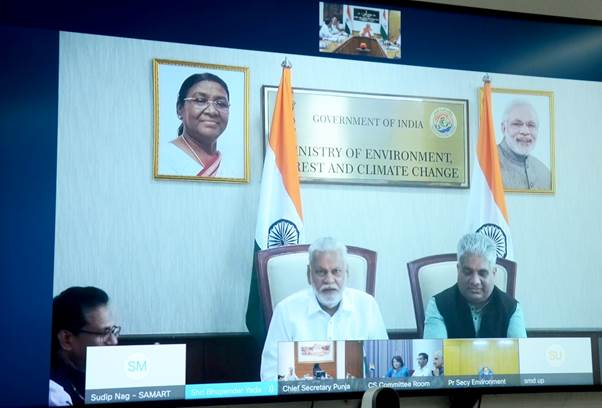
Environment Minister Shri Yadav said that more than two lakh machines given by the Center are sufficient, it is necessary that they should be fully utilized for addressing the problem. Other contributing factors of pollution have also been considered by the Center. Emphasizing on effective control to prevent stubble burning, especially in Punjab, Shri Yadav called upon the state’s Chief Secretary to take immediate and appropriate action as well as to promote the use of Pusa decomposer.
During the meeting, explaining the need to implement appropriate IEC activities for the targeted farmers, the states have been advised to make a strategic plan by deploying all the necessary resources and deal with the situation. Considering the benefits of bio decomposer, states have been advised to demonstrate this technology in farmers’ fields on a large scale. During the current year, a target has been set to bring more than 8.15 lakh hectares of land in the states under the ambit of this technology. To promote and disseminate the ex-situ use of stubble by mapping the demand of stubble from biomass-based power plants, bioethanol plants and nearby industries as well as to reach out to all the stakeholders through Kisan Melas, publications, seminars, consultations, it has been urged to undertake IEC activities for awareness among farmers through intensive campaigns with their participation. This will effectively control stubble burning.
*****
Garment sector export
The garment sector export is a significant contributor to the global economy, encompassing the export of clothing, textiles, and related products manufactured by the garment industry. Here are key points about garment sector exports:
-
Major Exporters: Countries like China, Bangladesh, Vietnam, India, and others are prominent players in the global garment sector, exporting large volumes of clothing and textiles to various markets worldwide.
-
Supply Chains: The garment industry operates on complex global supply chains, involving raw material sourcing, manufacturing, and distribution across multiple countries. These supply chains often involve outsourcing of labor-intensive processes to countries with lower production costs.
-
Export Markets: Garment exports are shipped to diverse international markets, including the United States, European Union countries, Japan, and other regions, catering to different consumer preferences and demands.
-
Product Range: Garment sector exports encompass a wide range of products, including ready-made clothing, knitwear, woven garments, sportswear, fashion apparel, and accessories.
-
Competitive Advantages: Various factors contribute to the competitiveness of garment sector exports, such as cost-effective labor, skilled workforce, production efficiency, trade agreements, quality standards, and innovation in design and manufacturing.
-
Challenges: The industry faces challenges such as compliance with labor standards, fluctuating raw material prices, sustainability concerns, market demands for faster turnarounds, and competition from emerging manufacturing hubs.
-
Impact on Economies: Garment sector exports significantly contribute to the GDP of exporting countries, generate employment, and play a crucial role in poverty alleviation and economic development, especially in developing nations.
-
Technology and Innovation: The industry continually adopts new technologies, automation, and digitalization to enhance efficiency, reduce production costs, and meet evolving consumer demands for sustainable and high-quality products.
-
Sustainability: There’s a growing emphasis on sustainable practices within the garment sector, including eco-friendly materials, ethical manufacturing processes, reducing waste, and improving working conditions.
-
Market Trends: Garment sector exports are influenced by market trends, fashion cycles, consumer behavior, and geopolitical factors, requiring adaptability and responsiveness from manufacturers and exporters.
The garment sector’s export plays a vital role in the global economy, impacting trade, employment, and consumer markets worldwide. It’s a dynamic industry that constantly evolves to meet changing consumer preferences, technological advancements, and sustainability goals.
Bangladesh and India Relations
Bangladesh and India share a historically significant and multifaceted relationship, characterized by cultural, economic, geographical, and political ties. Here are key aspects of their relations:
-
Historical Ties: The two countries share a complex history, including the struggle for independence from British rule. India played a crucial role in supporting Bangladesh’s independence movement, leading to Bangladesh’s liberation in 1971.
-
Geopolitical Relations: India was the first country to recognize Bangladesh’s independence. Since then, the nations have maintained close diplomatic relations, marked by mutual respect and cooperation on various regional and international issues.
-
Trade and Economic Collaboration: Economic cooperation between Bangladesh and India has grown significantly. Both countries engage in trade partnerships, with India being one of Bangladesh’s major trading partners. Efforts to enhance trade relations have led to agreements aimed at boosting economic ties and reducing trade barriers.
-
Connectivity and Infrastructure: Efforts are underway to improve connectivity between the two countries through various initiatives, including road, rail, and waterway projects. Projects like the Agartala-Akhaura rail link and inland waterways aim to facilitate easier movement of goods and people.
-
People-to-People Contacts: Cultural exchanges, educational collaborations, and tourism contribute to fostering people-to-people contacts and strengthening cultural ties between Bangladesh and India.
-
Security and Defense: Both nations collaborate on security issues, including counter-terrorism efforts, intelligence sharing, and joint military exercises, aiming to ensure regional stability and security.
-
Water Sharing: The issue of water sharing, particularly concerning rivers like the Ganges and Teesta, has been a point of contention at times, but efforts are ongoing to find mutually acceptable solutions.
-
Regional Cooperation: Both countries are active members of regional groupings like SAARC (South Asian Association for Regional Cooperation) and BIMSTEC (Bay of Bengal Initiative for Multi-Sectoral Technical and Economic Cooperation), working together on regional development and cooperation.
-
Challenges: Despite the strong relations, occasional disagreements on issues like border disputes, water sharing, and trade barriers have surfaced, requiring diplomatic efforts to address.
Overall, the relationship between Bangladesh and India is marked by shared cultural heritage, economic collaboration, and mutual cooperation on various fronts. Both nations continue to work towards strengthening their ties, resolving differences through dialogue, and fostering regional stability and development.
Television Watching

Television-watching
is a wonderful source of delight. The youngsters and the aged alike find
recreation at their own homes. When a man is tired of daily work, he retires to
a room and starts listening to the television music, watching dances and adds
to his knowledge by listening to the news and other commentaries. Thus, television
watching gives both instruction and joy.
Television-programmes
were introduced in India more than a decade ago. Therefore, the expansion of
television net-work in India is yet to take place. Efforts are being
ceaselessly made and much success has been achieved. The people watch this
programme in the tele-clubs, which have become very popular these days. The
children watch their lessons on their school television-sets and they
understand these lessons very nicely.
Television-programmes
have become very popular in schools. The best instructors may speak to
thousands of students and thus teach the lesson in an interesting manner. The
laboratory experiments are performed and the science students also usually
benefit form such programmes. There are certain lessons. Sometimes, very
uncommon things are shown to the students on the T.V which are not possible in
the classrooms and they are managed on the T.T. and the students understand
their lesson very easily. The television lessons give both instruction and
enjoyment to the students. The students sometimes watch certain films based on
educational themes very clearly on the television screen. Such films give
instruction and entertainment both, at a stretch.
In
India we find a large number of tele-clubs in big cities, where children and
elders throng to watch the films.
QUEEN ELIZABETH II DEATH: THE END OF A LEGENDRY MONARCH
We all are shocked by the death of Queen Elizabeth II (Elizabeth Alexandra Mary) who reigned over the United Kingdom and Commonwealth nations from 6 February 1952 until she died in 2022. During her lifetime, she reigned over 32 sovereign nations, with 15 remaining at the time of her death. Her reign was the longest of any British queen and the longest documented reign of any female monarch in history, lasting 70 years and 214 days.
Her legacy started when her father died in February 1952, at the age of 25 years. She became queen of seven separate Commonwealth countries: the United Kingdom, Canada, Australia, New Zealand, South Africa, Pakistan, and Ceylon (now known as Sri Lanka), as well as the Commonwealth’s Head of State. Elizabeth’s coronation in 1953, as well as her Silver, Golden, Diamond, and Platinum jubilees in 1977, 2002, 2012, and 2022, are significant events of her life. Although she faced criticism along with her family on certain occasions, especially after the breakdown of her children’s marriages, her annus horribilis in 1992, and the death in 1997 of her former daughter-in-law Diana, Princess of Wales, support for the monarchy in the United Kingdom remained consistently high throughout her lifetime, as did her personal popularity. The queen died peacefully in 2022 at the age of 96 at Balmoral Castle in Aberdeenshire and was succeeded by her eldest child, Charles III. Hers was the first state funeral held in the United Kingdom since Winston Churchill’s in 1965.
SILVER JUBILEE
Elizabeth celebrated the Silver Jubilee of her accession in 1977. Parties and events were held around the Commonwealth, with many of them coinciding with her connected national and Commonwealth visits. Despite nearly coincidental bad news coverage of Princess Margaret’s split from her husband, Lord Snowdon, the celebrations reaffirmed Elizabeth’s popularity. In 1978, Romania’s communist leader, Nicolae Ceaușescu, and his wife, Elena, paid an official visit to the United Kingdom, despite Elizabeth personally believing they had “blood on their hands.” The next year saw the unmasking of Anthony Blunt, former Surveyor of the Queen’s Pictures, as a communist spy, and the killing of her relative and in-law, Lord Mountbatten, by the Provisional Irish Republican Army.
GOLDEN JUBILEE
The queen celebrated her Golden Jubilee, the 50th anniversary of her ascension, in 2002. Her sister and mother died in February and March, respectively, and the media debated whether or not the Jubilee would be a success. She embarked on another extended tour to her kingdoms, beginning in Jamaica in February, where she dubbed the departure supper “memorable” when a power outage dropped the King’s House, the governor-formal general’s house, into darkness. There were street dances and memorial festivities, as there had been in 1977, and monuments were named in honour of the occasion. One million people attended each of the three days of the major Jubilee celebration in London, and the public’s passion for Elizabeth was stronger than many journalists had imagined.
DIAMOND JUBILEE
Elizabeth’s Diamond Jubilee in 2012 commemorated her 60th year on the throne, and festivities were staged across her countries, the Commonwealth, and beyond. Her husband and she went on a lengthy tour of the United Kingdom, while her children and grandchildren went on royal visits to other Commonwealth countries on her behalf. Jubilee beacons were lighted across the world on June 4th. Elizabeth and her husband celebrated their blue sapphire wedding anniversary in November (65th). On December 18, she became the first British royal since George III in 1781 to attend a peacetime Cabinet meeting.
PLATINUM JUBILEE
Elizabeth’s Platinum Jubilee began on February 6, 2022, celebrating 70 years after her father’s death, when she ascended to the throne. On the eve of the wedding, she hosted a reception at Sandringham House for retirees, members of the local Women’s Institute, and charitable volunteers. Elizabeth repeated her promise to a lifetime of public service, which she made in 1947, in her accession day statement. Later that month, Elizabeth, along with several employees and family members, developed “moderate cold-like symptoms” and tested positive for COVID-19. She cancelled two virtual audiences on February 22, but spoke with British Prime Minister Boris Johnson the next day about the crisis on the Russian-Ukrainian border, after which she made a gift to the Disasters Emergency Committee (DEC) Ukraine Humanitarian Appeal. On 28 February, she was reported to have recovered and spent time with her family at Frogmore. On 7 March, Elizabeth met Canadian prime minister Justin Trudeau at Windsor Castle, in her first in-person engagement since her COVID diagnosis. She later remarked that COVID infection “leave[s] one very tired and exhausted … It’s not a nice result”.
Elizabeth was deeply religious and civic-minded, and she took her Coronation Oath seriously. In addition to her formal religious function as Supreme Governor of the established Church of England, she attended both that church and the national Church of Scotland. She advocated for interfaith dialogue and visited with leaders from different churches and religions, including five popes: Pius XII, John XXIII, John Paul II, Benedict XVI, and Francis. Her annual Christmas Message to the Commonwealth frequently included a personal comment about her beliefs. Elizabeth supported around 600 organisations and charities. According to the Charities Aid Foundation, Elizabeth helped raise almost £1.4 billion for her patronages during her reign. Her major hobbies were equestrianism and pets, particularly her Pembroke Welsh Corgis. Her lifelong passion for corgis began in 1933 with Dookie, her family’s first corgi Scenes of carefree, casual home life were occasionally observed; she and her family made dinner together and cleaned the dishes together occasionally.
TITLES
- 21 April 1926 – 11 December 1936: Her Royal Highness Princess Elizabeth of York
- 11 December 1936 – 20 November 1947: Her Royal Highness The Princess Elizabeth
- 20 November 1947 – 6 February 1952: Her Royal Highness Princess Elizabeth, Duchess of Edinburgh
- 6 February 1952 – 8 September 2022: Her Majesty The Queen

Educational Service Provider
What is ‘ONDC’ initiative by GoI.

To reduce the dominance of e-commerce giants like Flipkart and Amazon, the government rolled out its big initiative — Open Network for Digital Commerce (ONDC) — for public in Bengaluru. With the help of ONDC, government plans to help small retailers and create an alternative to dominant global giants like Amazon and Walmart, who controls over half of India’s fast-growing e-commerce market.
The platform aims to create new opportunities, curb digital monopolies and by supporting micro, small and medium enterprises and small traders and help them get on online platforms. It is an initiative of the Department for Promotion of Industry and Internal Trade (DPIIT) under the Ministry of Commerce and Industry.
The government says existing platforms work in silos and are tightly controlled, keeping out many small players. It expects ONDC to increase competition and foster innovation by start-ups.
It also hopes to bring in logistics firms and others who can collaborate with sellers to deliver products to customers.
The focus would be on small merchants and rural consumers, with apps in Indian languages.
ONDC officials liken the network to a mall with 1,000 gates instead of just two, thereby limiting opportunities for selected sellers to receive preferential treatment – a common accusation against major e-commerce companies. Users will be able to rate service providers on ONDC, which will be applicable and visible across the network. The government says ONDC will help to end “predatory pricing, especially in high-margin, high-value products”. Amazon and Flipkart deny that they have engaged in predatory pricing.
How does ONDC work?
The ONDC platform lies in the middle of the interfaces hosting the buyers and the sellers. So far, the buyer side interface is being hosted by Paytm, whereas the seller side interface is being hosted by other players like GoFrugal, etc.
When a buyer searches for an item on the Paytm app, from where ONDC has gone live, the app will connect to the ONDC platform, which will connect it to seller side interfaces that will list all the companies from where you can buy the particular item.
On ONDC, there will be several other backend partners such as logistics service providers, enterprise resource planners, e-commerce store hosting service providers, etc.
What is 'ONDC' initiative by GoI.
To reduce the dominance of e-commerce giants like Flipkart and Amazon, the government rolled out its big initiative — Open Network for Digital Commerce (ONDC) — for public in Bengaluru. With the help of ONDC, government plans to help small retailers and create an alternative to dominant global giants like Amazon and Walmart, who controls over half of India’s fast-growing e-commerce market.
The platform aims to create new opportunities, curb digital monopolies and by supporting micro, small and medium enterprises and small traders and help them get on online platforms. It is an initiative of the Department for Promotion of Industry and Internal Trade (DPIIT) under the Ministry of Commerce and Industry.
The government says existing platforms work in silos and are tightly controlled, keeping out many small players. It expects ONDC to increase competition and foster innovation by start-ups.
It also hopes to bring in logistics firms and others who can collaborate with sellers to deliver products to customers.
The focus would be on small merchants and rural consumers, with apps in Indian languages.
ONDC officials liken the network to a mall with 1,000 gates instead of just two, thereby limiting opportunities for selected sellers to receive preferential treatment – a common accusation against major e-commerce companies. Users will be able to rate service providers on ONDC, which will be applicable and visible across the network. The government says ONDC will help to end “predatory pricing, especially in high-margin, high-value products”. Amazon and Flipkart deny that they have engaged in predatory pricing.
How does ONDC work?
The ONDC platform lies in the middle of the interfaces hosting the buyers and the sellers. So far, the buyer side interface is being hosted by Paytm, whereas the seller side interface is being hosted by other players like GoFrugal, etc.
When a buyer searches for an item on the Paytm app, from where ONDC has gone live, the app will connect to the ONDC platform, which will connect it to seller side interfaces that will list all the companies from where you can buy the particular item.
On ONDC, there will be several other backend partners such as logistics service providers, enterprise resource planners, e-commerce store hosting service providers, etc.
nuclear power reactors at Jaitapur site in Ratnagiri district of Maharashtra
France Minister, Ms. Chrysoula Zacharopoulou, currently on India visit, called on Union Minister of State (Independent Charge) Ministry of Science & Technology, Minister of State (Independent Charge) Ministry of Earth Sciences, MoS PMO, DoPT, Administrative Reforms, Public Grievances, Pensions, Space and Atomic Energy, Dr Jitendra Singh at North Block, New Delhi to discuss Indo-French collaboration in Nuclear Energy. She was accompanied by a high-level French delegation.
The two sides discussed ways to speed up the setting up of the nuclear power reactors at Jaitapur site in Ratnagiri district of Maharashtra by joint collaboration. Emmanuel Lenain, Ambassador of France to India and other French officials including Thomas Mieusset, Nuclear Counsellor joined the deliberations.
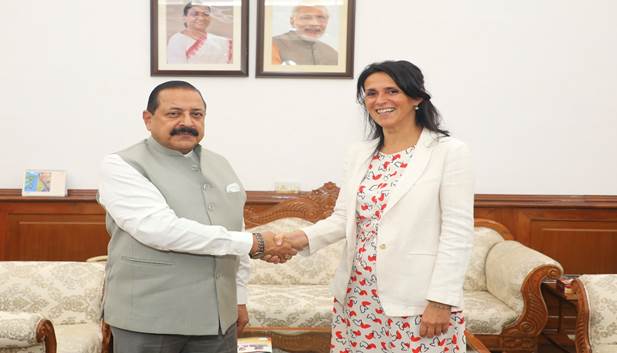
Indian Government has already accorded ‘In-Principle’ approval for setting up six nuclear power reactors of 1650 MW each in technical cooperation with France which would make it the largest nuclear power generating site with a total capacity of 9900 MW as part of an umbrella nuclear deal signed with France in September 2008
The French company EDF last year submitted to Nuclear Power Corporation of India Ltd (NPCIL) its binding techno-commercial offer to build six European Pressurised Reactors (EPRs) at Jaitapur. In May, this year, a high-level team from EDF visited India and held detailed talks with NPCIL officials.
Dr Jitendra Singh assured the France Minister that the technical, financial and civil nuclear liability issues will be resolved at the earliest by both the sides and well before the scheduled visit of the French president Mr Emmanuel Macron in early 2023 as announced by Ms Chrysoula Zacharopoulou. The France Finance Minister Bruno Le Maire is also scheduled to visit India by the middle of December.
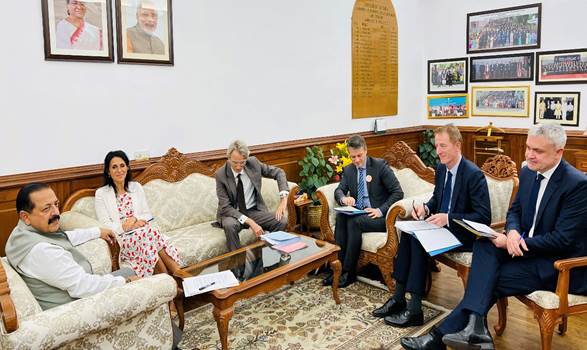
Referring to warm and all-encompassing bilateral ties between the countries, Dr Jitendra Singh underlined that Indian Prime Minister Narendra Modi, who was on a 3-day Europe visit, met President of France, Emmanuel Macron in Paris during the final leg of his tour in May this year. Both the leaders spoke on various subjects, including bilateral and global issue, and Mr Modi remarked that “India and France are proud developmental partners and this partnership is being spread across different sectors”.
In today’s meeting, both the sides reaffirmed the commitment to the success of the strategic Jaitapur EPR project for access to reliable, affordable and low-carbon energy and agreed to sort out the pending issues at the earliest.
NPCIL will be responsible for the construction and commissioning of the units, as well as obtaining all necessary permits and consents in India as the owner and future operator of the plant. This includes certification of the EPR technology by the Indian regulator.
Dr Jitendra Singh recalled that nuclear power is clean and environment friendly, apart from having a huge potential to ensure the country’s long term energy security on a sustainable basis. The nuclear power plants have so far generated about 755 billion Units of electricity saving about 650 million Tons of CO2 emission.
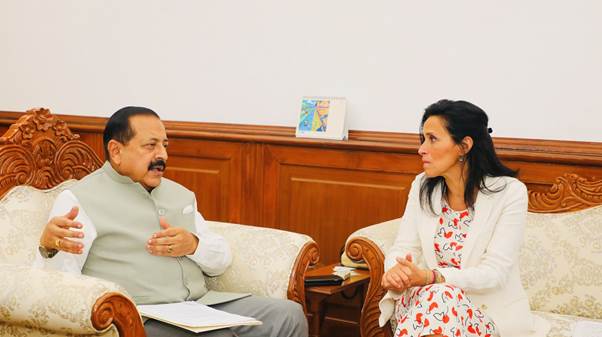
Dr Jitendra Singh said that the net zero targets are expected to be met through a combination of various clean energy sources including nuclear power. In this context, the present nuclear power capacity of 6780 MW is planned to be increased to 22480 MW by 2031 on progressive completion of projects under construction and accorded sanction.
Digi Locker Partner Organizations to provide Subscriber Centric online Services
Central Record Keeping Agencies (CRAs) of Pension Fund Regulatory and Development Authority (PFRDA) have become Digi Locker Partner Organizations to provide Subscriber Centric online Services .
As a tribute to 75 Years of India’s Independence Day Celebration and to commemorate Azadi Ka Amrit Mahotsav, PFRDA is providing following additional features through Digi Locker:
- Account opening using Driving License (DL) through Digi Locker
- Updation of existing address using DL through Digi Locker


The facility can be availed by prospective subscribers opening their accounts with Protean CRA and existing subscribers of Protean CRA for updating their address.
Digi Locker is a key initiative under Digital India, the Government of India flagship program with a vision to transform India into a digitally empowered society and a pensioned Society. Digi Locker embraces Digital India’s vision areas of providing the Citizens a shareable private digital space with a consent framework and making all documents/certificates digitally available and accessible at ease. The number of Registered Users of Digi Locker are nearly 13 cr and 5.60 billion issued documents under various Categories viz Central/ State Governments, Banking & Insurance, Education, Health etc.
Steps for opening the NPS account using Driving License issued in DigiLocker
- Open the NPS registration page on Protean CRA website. (https://enps.nsdl.com)
- Select the option of New Registration with Documents with DigiLocker and select Driving License (DL).
- Applicant will be redirected to DigiLocker Website, where he can login with login credentials and provide consent for sharing of documents/information with CRA.
- Allow NPS to access DigiLocker and issued documents.
- The demographic Information and the photo as per Driving License will be auto populated in the account opening Page.
- Provide PAN, personal details, Information related to Bank Account, Scheme & Nomination and other details to complete the application.
- Payment can be made towards NPS Contribution.
- NPS Account generated successfully.
Steps for updating the address in NPS account using Driving License issued in DigiLocker
- Login to NPS account using credentials on Protean CRA website
- Select the option Update Personal Details under the tab Demographic Changes
- Select Update Address Details and further select through DigiLocker and select Driving License under documents.
- Applicant will be redirected to DigiLocker Website, where he can login with login credentials and provide consent for sharing of documents/information with CRA.
- Allow NPS to access DigiLocker and issued documents and submit.
- Address as per Driving License will be updated in NPS account.
PM Kisan Samman Sammelan 2022
‘Samajik Adhikarita Shivir’ for Divyangjan
A ‘Samajik Adhikarita Shivir’ for distribution of aids and assistive devices to ‘Divyangjan’ under the ADIP Scheme of the Ministry of Social Justice and Empowerment, Government of India was organized by the Department of Empowerment of Persons with Disabilities (DEPwD) in association with ALIMCO, Social Justice and Empowerment Department and District Administration Alwar today at Pratap Auditorium in Alwar City, Rajasthan.
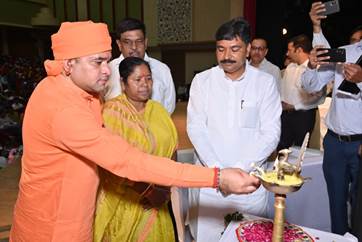
Ku. Pratima Bhoumik, Union Minister of State for Social Justice and Empowerment the Chief Guest of the function inaugurated the distribution camp. Shri Tikaram Jully, Minister of Social Justice and Empowerment, Government of Rajasthan presided over the function alongside Member of Parliament of Alwar Shri Balak Nath , local public representatives and dignitaries.
Addressing the gathering Ku. Pratima Bhoumik, Union MoS said that central government is committed towards the empowerment of Divyangjan and is working on the vision of Prime Minister by serving the last man in line and to empower them to bring them in the main stream of society. Speaking over the achievement and work done by her ministry Union Minister of State informed that central government implemented Right to persons with Disability Act 2016 which now provided the provision to increase the category of Disabilities from 7 to 21. Reservation of persons with disability in education institutes increased from 3 to 5 percent and reservation in government jobs has been increased from 3 percent to 4 percent. Scheme of Universal ID cards for Divyanjan will ease the difficulty faced by Persons with Disabilities as it is accepted pan India basis.
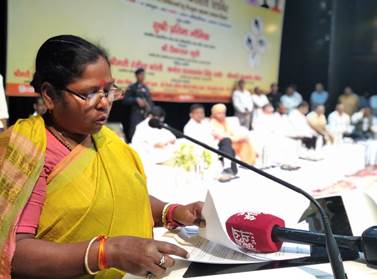
Speaking on the occasion Shri Tikaram Jully, Minister of Social Justice and Empowerment, Government of Rajasthan informed about the work done by state their government for empowering Divyangjan highlighting the work done towards digitization and online facilities which are made available by government.
Member of Parliament of Alwar Shri Balak Nath, thanks the central government and the union minister for implementing such welfare scheme to provide benefit to the needy in his constituency.
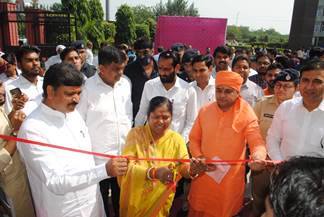
A total of 2933 Aids and Assistive devices of different categories with value of worth Rs. 2 Crore 01 Lakh will be distributed Block wise manner free of cost among 1564 pre identified Divyangjan who were assessed during assessment camps organized by ALIMCO in the various location of Alwar.
Different type of assistive devices which will be distributed among identified Divyangjan beneficiaries in a phase manner who were registered during assessment camps at Block Level which includes 231 Motorized Tricycle, 528 Tricycle, 285 Wheelchairs, 834 Crutches, 340 Walking Sticks, 16 Rollators, 09 Smart Phone, 37 Smart Cane, 05 Braille Kit, 04 C. P Chair, 170 MSIED Kit, 01 ADL Kit (for leprosy) with Cell phone, 212 Hearing Aid machines and 261 Artificial Limbs and calipers.
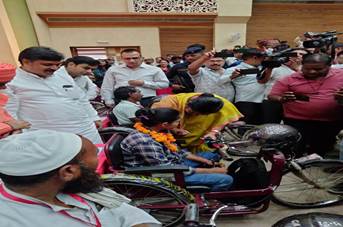
Dr Jitendra Kumar Soni, District Collector, SP, Alwar district, senior official from Social Welfare Department, Alwar and ALIMCO were also present during the function.
*****
 Eduindex
You must be logged in to post a comment.