Air Force Day.

The Indian Air Force (IAF) is the fourth largest air force in the world after the US, China, and Russia. Indian Air Force Day is observed on October 8 and this year marks its 90th anniversary of this day. IAF will hold a parade at the Hindon airbase in Ghaziabad where it showcases its air power. 

The Indian Air Force was officially established on 8 October 1932. Its first ac flight came into being on 01 April 1933. Therefore, the celebration of this day was officially started on 8th October in the year 1932 in order to increase the awareness of the Indian air force in any organization of national security both officially and publicly.

Also known as ‘Bharatiya Vayu Sena’, the IAF was officially established on October 8, 1932, by the British Empire. The President of India holds the rank of Supreme Commander of the air force. The Chief of Air Staff, an air chief marshal is responsible for the operational command of the air force.

The Indian Air Force not only safeguards Indian territory and national interests from all threats, but also provides support during natural calamities. The IAF provides air support to the Indian Army on the battlefield as well as strategic and tactical airlift capabilities.

The Indian Air Force comprises highly-trained crews and pilots and has access to modern military resources which provide India with the capacity to carry out rapid response evacuation, search-and-rescue (SAR) operations, and delivery of relief supplies to affected areas through cargo aircraft.

 The day is celebrated in air force bases all across the nation with air shows and parades conducted by air force cadets, as the Indian Air Force (IAF) has its prime responsibility of securing the Indian airspace as well as carrying out aerial warfare during any clash.

First seminar of Agni Tattva campaign under LiFE mission held in Leh

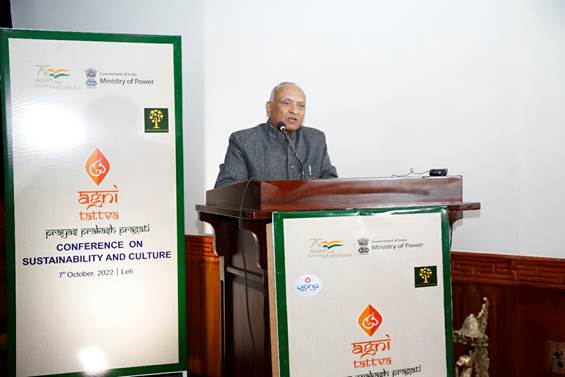
 Power Foundation of India in association with Vijnana Bharati (VIBHA) is currently running a campaign to create awareness on Agni Tattva under LiFE – Lifestyle for environment. This campaign includes conferences, seminars, events, and exhibitions across the country involving educational institutions, communities, and relevant organisations to create awareness of the core concept of Agni Tattva, an element that is synonymous with energy and is amongst the five elements of Panchmahabhoot.


The first conference of the Agni campaign was organised in Leh yesterday, on the theme of ‘Sustainability and Culture’. It witnessed participation from key stakeholders working in the areas of energy, culture, and sustainability, from diverse fields such as administration, policymakers, academics, and start-ups.

The conference was inaugurated by Shri R K Mathur, Lieutenant Governor of Ladakh. Speaking on the occasion, he said that Ladakh always had a sustainable lifestyle, however, increased modernisation is leading to an imbalance in the ecosystem of the region, and this not only adversely impacts the region but could also alter the monsoon cycle of the entire country since it is inter-linked with the Himalayan ecosystem. He further added that the UT administration of Ladakh has laid out a clear roadmap to reverse this imbalance and move toward sustainable development. He emphasised several key areas.

Ladakh has immense solar energy potential, which should be harnessed. Ladakh should work towards generating systems to provide power to remote areas. The focus is to provide decentralized renewable solar power across Ladakh thereby reducing grid dependency. This is in line with the Prime Minister’s vision of a Carbon Neutral Ladakh.

Geothermal energy is another focus area that holds immense potential in the Ladakh region. Unlike other renewable energy sources, which are intermittent in nature, it is available throughout the day and the year and should be suitably harnessed.

Green Hydrogen is another option in Ladakh, as the region has plenty of solar energy. It also has water. The Hydrogen harnessed from this could be used to substitute petrol and diesel and the oxygen could be used in hospitals and by tourists.

Shri Jamyang Tsering Namgyal, MP of Ladakh emphasized on an interdependent world. He said that Indian philosophy views the world as one and everything in it as one, but in the development model so far, the oneness has been lost. Shri Namgyal underlined that the model being formulated by Hon’ble PM is based on Oneness, such as One Sun, One World, One Grid, and the efforts are on to promote and propagate a lifestyle that is conscious of the environment, based on this Indian philosophy of oneness. He said that Ladakh has always been in harmony with nature and has thrived on interdependency and coexistence. This is something that the rest of the country and the world can learn from, he added.

The other eminent speakers at the Conference highlighted sustainable construction practices, energy access for mountain areas, social behaviour, and its impact on electricity demand.

The Agni Tattva campaign – Energy for LiFE, an initiative under the umbrella campaign of Sumangalam, was launched by Shri R K Singh, Union Minister of Power and New & Renewable Energy, in New Delhi on 21st September 2022. A series of seminars spanning the length and breadth of the country have been planned as a part of the campaign.

Power Foundation of India is a Society formed under the aegis of the Ministry of Power, Government of India, and supported by leading CPSEs. The Foundation is involved in areas of advocacy and research, positively impacting the evolving energy landscape.

***

National Urban Transport Policy

There is an urgent need to conserve energy and land, control pollution and ‘greenhouse gas emissions’, and to alleviate poverty. Urban transport (UT) is a significant cause and also a solution to these issues. Hence planning and management of UT services and infrastructure require immediate attention. The growth story of India shall be written on the canvass of planned urban development and scripted with the instrument of planned urban mobility solutions.

All categories of road users are facing problems in commuting. The pedestrians do not get a safe, conflict-free and obstruction free path to walk. The cyclists have to fight for the right of way with fast moving motorized modes of transport, many a times risking their lives. The users of Public Transport (PT) face long waiting periods, uncertainty in travel time and difficult conditions of travel. The movement of personal motorized modes of transport is slowed down by the slow moving passenger and goods traffic and face significant delays at traffic signals and road junctions. Road users get restless leading to road rage, rash driving and accidents.

The ongoing urbanization will make the situation worse in the ‘business as usual’ scenario. The Energy and Resources Institute (TERI), a Delhi-based non-governmental organization (NGO), has forecast that India’s commercial energy demand and emissions will increase by about six to seven times by 2031-32 under ‘business as usual scenario’1 (if nothing is done to curb the emissions) from the levels in 2011. A committee setup by Ministry of Road Transport and Highways on road safety and traffic management (February, 2007) has estimated about 50% increase in road accidents over a 10 year period (2005-15).

Transport sector is the second largest consumer of energy in India. The growth of transport not only increases pressure on the limited non-renewable energy resources and increase in foreign exchange outgo but also considerably increases environmental pollution. Increasing car dependence in India especially in the urban areas is most visible at the local level – vehicular emissions causing air pollution, noise pollution, and corresponding health effects. Increasing energy consumption, operational pollution, land intrusion and congestion are some of the areas of concern. Therefore the policy aims at increasing the use of green energy sources, energy efficiency and environmental protection.

VISION 

 To recognize that people occupy center-stage in our cities and all plans would be for their common benefit and well-being. 

 To make our cities the most livable in the world and enable them to become the “engines of economic growth” that power India’s development in the 21st century. 

 To allow our cities to evolve into an urban form that is best suited for the unique geography of their locations and is best placed to support the main social and economic activities that take place in the city. 

 To encourage growth of urban transport along low carbon path.

OBJECTIVES 

The objective of this policy is to plan for the people rather than vehicles by providing sustainable mobility and accessibility to all citizens to jobs, education, social services and recreation at affordable cost and within reasonable time. This will involve: 

 Incorporating urban transportation as an important parameter at the urban planning stage rather than being a consequential requirement. 

 Bringing about a more equitable allocation of road space with people, rather than vehicles, as its main focus 

 PT should be citywide, safe, seamless, user friendly, reliable and should provide good ambience with well-behaved drivers and conductors.  Walk and cycle should become safe modes of UT. 

 Introducing Intelligent Transport Systems for traffic management

 Addressing concerns of road safety and trauma response 

 Raising finances, through innovative mechanisms 

 Establishing institutional mechanisms for enhanced coordination in the planning and management of transport systems. 

 Building capacity (institutional and manpower) to plan for sustainable urban transport and establishing knowledge management system that would service the needs of all urban transport professionals, such as planners, researchers, teachers, students, etc.

Thus, a paradigm shift is needed in approach to UT with three key strategies, namely, ‘Avoid, Shift and Improve’ in transport planning as advocated by the Asian Development Bank in its draft ‘Action Plan to Make Transport in Developing Countries more ClimateFriendly’ and reiterated by the Bellagio Declaration 8 in May 2009. This means ‘avoid’ increase in demand for travel both by reducing the number and length of trips. Promote a shift from personal vehicles to other MRT and non-motorized transport (NMT) modes to reduce energy demand and hence pollution in cities. Improve strategy includes use of clean fuels and clean vehicle technology

Cities in India vary considerably in terms of their population, area, urban form, topography, economic activities, income levels, growth constraints, etc. Accordingly, UT planning will have to depend on these city specific features. Further, transport planning is intrinsically linked to land use planning and both need to be developed together in a manner that serves the entire population and yet minimizes travel needs. In short, an integrated master plan needs to internalize the features of sustainable UT. In developing such plans, attention should be paid to channel the future growth of a city around a pre- planned UT network rather than develop UT after uncontrolled sprawl has taken place. Planning should, therefore, enable a city to take an urban form that best suits the geographical constraints of its location and also one that best supports the key social and economic activities of its

residents. 7.1.2. The Government of India would, therefore, promote the development of such integrated land use and transport plans for all cities. To enable this, all urban development and planning bodies in the States would be required to have in house transport planners as well as representation from transport authorities in their management. In order to create models for possible learning and replication, the Government of India would fully support pilot studies in a few sample cities of different characteristics and in different regions of the country. As part of this exercise, each city would also be encouraged to identify potential corridors for future development and then establish UT that would encourage growth around itself. For example, radial corridors emerging from the city and extending up to 20-30 km could be reserved for future development. Such corridors would have to be protected from encroachment by putting up physical barriers and physically constructing roads on short stretches even before settlements come up. This would imply that stretches of the corridor would come up first in order to guide the location of the settlements and not allow undue sprawl to take place. 

Planning should include both the city and the peri-urban areas and the regions around the city, which for legal purpose should be notified as local planning or metropolitan area. Compact cities, redevelopment of inner city areas, mixed land use pattern, etc. are some of the urban growth policies that will restrict transport demand. 

Conventional planning approach aims at flow of motor vehicle traffic. The most comprehensive definition of UT planning is ‘Accessibility’, the ability to reach desired goods, services and activities. It recognizes the value of more accessible land use patterns and mobility substitutes such as tele-commuting and delivery services as ways to improve UT while reducing total physical travel. 

Further, construction, use, operation and maintenance of UT infrastructure can have significant implications on natural environment, its habitants, and the functioning of hydrological systems. Therefore, environmental3 and social impact assessment4 of a UT project should be carried out while planning to ensure that no harm will come to the environment and the habitat on a short or long-term basis.


U.S.-India Strategic Clean Energy Partnership Ministerial Joint Statement

 Today, during a Ministerial meeting of the U.S.-India Strategic Clean Energy Partnership (SCEP), U.S. Energy Secretary Jennifer Granholm and Indian Minister of Petroleum and Natural Gas Hardeep S. Puri underscored the critical importance of bilateral clean energy engagement to strengthen energy security and to accelerate clean, secure, and just energy transition.

U.S.-India Strategic Clean Energy Partnership Ministerial Joint Statement:

Amidst volatility in global energy markets, continuing recovery from the COVID-19 pandemic, and increasingly frequent climate-related challenges, the United States and India reiterated their commitment to accelerating a just and sustainable energy transition. As climate and clean energy leaders, the United States and India share a common vision to deploy clean energy at scale during this critical decade to reduce emissions and achieve climate change mitigation goals, taking into account different national circumstances. Through regular consultations on global energy markets, efforts to strengthen collective energy security, and deepening technical engagement to support economy-wide decarbonization, the two countries are proactively addressing the multiple crises that the world faces through the U.S.-India Strategic Clean Energy Partnership.

During the engagements, the two Ministers reviewed progress across the entire spectrum of the energy sector partnership. They noted with appreciation the tremendous increase in bilateral energy trade achieved over the last few years. They also welcomed the increased clean energy collaboration between stakeholders of both countries which is facilitating expanded clean energy investment, including in emerging technologies.  

The Ministers also underscored the importance of ensuring reliable energy supplies to ensure balanced energy markets, including India’s support for the U.S. initiative to release crude oil from the strategic petroleum reserves, and the importance of diversifying to clean energy sources.   

The Ministers stressed that climate and clean energy collaboration should promote energy access, affordability, energy justice, while supporting sustainable economic growth and just energy transitions. The Ministers also recognized that ambitious national climate and clean energy goals require concerted action and implementation at all levels of government to ensure their viability and sustainability. Capacity building and exchanging best practices including with all stakeholders were also highlighted as critical components to achieving the countries’ climate and clean energy ambitions. 

India and the United States discussed progress on continued efforts to advance emerging fuels and technologies and electrification and decarbonization of end use sectors. The discussions covered hard-to-abate sectors, and the Ministers were informed about various initiatives, including joint research and development on smart grids and energy storage and new collaboration on carbon capture, utilization and storage (CCUS) technologies, and the potential to explore collaboration on other novel technologies under the U.S.-India Partnership to Advance Clean Energy-Research (PACE-R). 

The Ministers noted the Importance of facilitating increased energy investments to ensure sustainable, affordable, reliable, resilient and cleaner energy systems.

Enhanced bilateral efforts include: 

  • Strengthening the power grid to ensure reliable, affordable, and resilient clean energy supply including through smart grids and energy storage;
  • Assessing grid-integrated buildings, electric vehicles, and other distributed energy resources to support load management;
  • Advancing renewable energy development and deployment, including to support India’s goal of achieving approximately 50 percent cumulative electric power installed capacity from non-fossil fuel-based energy resources by 2030;
  • Advancing energy efficiency and conservation in appliances, buildings and the industrial sector;
  • Electrifying and decarbonizing the transportation sector including creating an enabling ecosystem through setting up an Electric Vehicle (EV) financing services facility in India;
  • Reducing emissions across the oil and gas value chain including efforts at deploying methane detection and abatement technologies;
  • Decarbonizing the industrial sector through efforts at electrification, carbon capture and storage, and deployment of other clean emerging energy technologies;
  • Deepening cooperation between Indian and U.S. Department of Energy labs and agencies, like the EIA, and on energy data management, modeling, low carbon technologies.

The Ministers also reiterated the importance of private sector engagement to facilitate investment, inform policy, and accelerate technology deployment. To that end, the United States and India continue to convene public-private tasks forces on hydrogen and biofuels, and announced the launch of a new Energy Storage Task Force to support large-scale integration of renewable energy needed to support the clean energy transition. The Ministers welcomed collaboration between Indian and U.S. companies through a Memorandum of Understanding to deploy methane abatement technologies in India’s city gas distribution sector under the Low Emissions Gas Task Force to help reduce emissions in the oil and gas sector.

Agencies from across the U.S. and Indian governments demonstrated a number of accomplishments across the five technical pillars of cooperation on: 1) Power & Energy Efficiency, 2) Renewable Energy, 3) Responsible Oil & Gas, 4) Sustainable Growth, and 5) Emerging Fuels and Technologies.

The Ministers welcomed expanded efforts under the U.S.-India Strategic Clean Energy Partnership to support a just energy transition to meet today’s unprecedented energy security and climate and energy challenges.

Web Series

Web series

Introduction

The rise of Web series,episodic video entertainment produced for the internet and mobile devices and look into the motivations of their creators which first emerged in the late 1990s and became more prominent in the early 2000s.

Definition:Web SeriesAlso called Web Shows,A series of scripted or non scripted online videos that are available in the form of episodes and seasons uploaded on Websites.Web Shows,A series of scripted or non scripted online videos that are available in the form of episodes and seasons uploaded on Websites.

  In early days Individuals had to watch their favourite shows on Television with time barriers and even with a trauma of missing shows because there were no any features that can recap or replay the missed episodes.But Nowadays it’s became easy to resume or play any show anywhere that are broadcasting on websites.An individual can access for their entertainment ,interest and for their spending time.Individuals make up over 70% of the population of India,and the majority of them use the Internet.The new generation’s tendency is now using the internet.Due to the tendency of young people to become addicted to social Media,web series are easily produced and are becoming more and more popular in India.

Types of Web Series 

It is based on genre are given below:

  • Action/Thriller/crime 
  • Fantasy/Romantic
  • Comedy/Drama
  • Documentary
  • Anime
  • Horror
  • Sci-fi
  • For Children
  • Anthology
  • Sports
  • Award-Winning
  • Bollywood/Hollywood
  • Hindi/English/Bengali/ Malayalam/Telugu/Tamil/Marathi 
  • Stand-up Comedy 

 Providers of Web Series

      Websites called Providers on which all series are available to watch anytime anywhere.Out of them, there are many series available free to watch but for more to watch one have to subscribe or can say have to take subscription (Amount are different for different websites).

Here are those website:

  • Netflix 
  • Amazon Prime Video 
  • Hotstar
  • Jio Cinema 
  • MX Player 
  • Voot
  • Zee5 and more.

   On these platforms individuals can watch their favourite and interest based series, movies and episodes that inspires one whether they want to watch episode to episode or binge-watching.

Binge-watch– The practice of watching content like streaming services for a long time span, usually a single series or show.

In India it’s going fastest in this field of watching Web Series/Shows. In this context Hum log, India’s first series, debuted in 1984-1985 and ran for 154 episodes,making it the longest series in India history at the time of its finale. A 60 million strong audience watched it. The last episode lasted approximately for 55 minutes,while each episode lasted around 25 minutes.

And now web series have become more popular as it provides all types of entertainment and the majority of the series at the end leave some moral for the viewers. It has the chance to “go viral” by being viewed online and by people all over the world. It also has the potential to be “picked up,” or given a distribution deal, by well-known TV and film studios. There have been numerous web series awarded their own television shows.

Web Series

Web series

Introduction

The rise of Web series,episodic video entertainment produced for the internet and mobile devices and look into the motivations of their creators which first emerged in the late 1990s and became more prominent in the early 2000s.

Definition:Web SeriesAlso called Web Shows,A series of scripted or non scripted online videos that are available in the form of episodes and seasons uploaded on Websites.Web Shows,A series of scripted or non scripted online videos that are available in the form of episodes and seasons uploaded on Websites.

  In early days Individuals had to watch their favourite shows on Television with time barriers and even with a trauma of missing shows because there were no any features that can recap or replay the missed episodes.But Nowadays it’s became easy to resume or play any show anywhere that are broadcasting on websites.An individual can access for their entertainment ,interest and for their spending time.Individuals make up over 70% of the population of India,and the majority of them use the Internet.The new generation’s tendency is now using the internet.Due to the tendency of young people to become addicted to social Media,web series are easily produced and are becoming more and more popular in India.

Types of Web Series 

It is based on genre are given below:

  • Action/Thriller/crime 
  • Fantasy/Romantic
  • Comedy/Drama
  • Documentary
  • Anime
  • Horror
  • Sci-fi
  • For Children
  • Anthology
  • Sports
  • Award-Winning
  • Bollywood/Hollywood
  • Hindi/English/Bengali/ Malayalam/Telugu/Tamil/Marathi 
  • Stand-up Comedy 

 Providers of Web Series

      Websites called Providers on which all series are available to watch anytime anywhere.Out of them, there are many series available free to watch but for more to watch one have to subscribe or can say have to take subscription (Amount are different for different websites).

Here are those website:

  • Netflix 
  • Amazon Prime Video 
  • Hotstar
  • Jio Cinema 
  • MX Player 
  • Voot
  • Zee5 and more.

   On these platforms individuals can watch their favourite and interest based series, movies and episodes that inspires one whether they want to watch episode to episode or binge-watching.

Binge-watch– The practice of watching content like streaming services for a long time span, usually a single series or show.

In India it’s going fastest in this field of watching Web Series/Shows. In this context Hum log, India’s first series, debuted in 1984-1985 and ran for 154 episodes,making it the longest series in India history at the time of its finale. A 60 million strong audience watched it. The last episode lasted approximately for 55 minutes,while each episode lasted around 25 minutes.

And now web series have become more popular as it provides all types of entertainment and the majority of the series at the end leave some moral for the viewers. It has the chance to “go viral” by being viewed online and by people all over the world. It also has the potential to be “picked up,” or given a distribution deal, by well-known TV and film studios. There have been numerous web series awarded their own television shows.

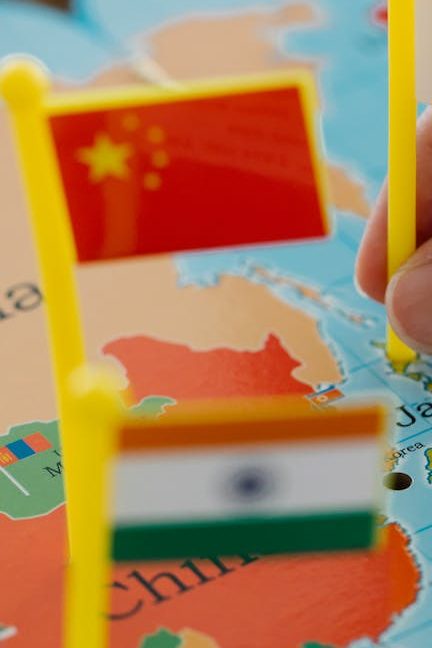
India abstained to vote against China at UNHRC.

During this week UN Human Rights Council was holding a debate on the human rights situation in China’s restive Xinjiang region. Human rights groups have been sounding the alarm over what is happening in the resource-rich north-western Chinese province for years, alleging that more than one million Uyghurs had been detained against their will in a large network of what Beijing calls “re-education camps”.

The efforts of the US and Western countries to bring a resolution against China on the situation of Uighur Muslims in the United Nations Human Rights Council (UNHRC) suffered a setback when 11 countries, including India and Ukraine, indirectly helped China by abstaining to vote at the time of voting.

This is only the second time in the UNHRC’s 16-year history that a US resolution has been rejected. It also explains the changing global equations. Most of the discussion after the UNHRC vote is about India’s stand. Given the current state of relations with China, the US expected support from India. However, India said that it has stuck to its policy of not voting against any country in institutions like the UNHRC.

However, it is believed that India has taken this step due to the apprehension of a UN vote on Jammu and Kashmir in future.

India abstained to vote against China at UNHRC.

During this week UN Human Rights Council was holding a debate on the human rights situation in China’s restive Xinjiang region. Human rights groups have been sounding the alarm over what is happening in the resource-rich north-western Chinese province for years, alleging that more than one million Uyghurs had been detained against their will in a large network of what Beijing calls “re-education camps”.

The efforts of the US and Western countries to bring a resolution against China on the situation of Uighur Muslims in the United Nations Human Rights Council (UNHRC) suffered a setback when 11 countries, including India and Ukraine, indirectly helped China by abstaining to vote at the time of voting.

This is only the second time in the UNHRC’s 16-year history that a US resolution has been rejected. It also explains the changing global equations. Most of the discussion after the UNHRC vote is about India’s stand. Given the current state of relations with China, the US expected support from India. However, India said that it has stuck to its policy of not voting against any country in institutions like the UNHRC.

However, it is believed that India has taken this step due to the apprehension of a UN vote on Jammu and Kashmir in future.

Durga Puja & Ravan Dahan

Durga puja & Ravan Dahan

Durga puja is the largest festival for Bengalis as It originated in Kolkata many years ago.

Durga puja, Durgotsava, Vijaydashmi, or Sharodotsava is a yearly Hindu festival that is celebrated in the Indian subcontinent that honors and reveres the Hindu Goddess Durga and celebrates Goddess Durga’s victory over Mahishasura.

While, Ravan Dahan _ On the same day, somewhere in a different era, Ravana was killed by Lord Rama. In today’s India, Ramlila is organized for the last 9 nights and Ravana Dahan marks the day where good triumphs over evil.

In the significance of Durga Puja,
According to Hindu mythology, Lord Brahma granted the demon Mahishasura the boon of invincibility, which meant that no man or god could kill him. After receiving the blessing, Mahishasura attacked the gods and chased them out of heaven. To defeat the demon king, all the gods gathered to worship Adi Shakti. Maa Durga was created by the divine light that emanated from all the gods during the puja.


The first day of Durga Puja marks the arrival of the goddess and is called Mahalaya.

On the sixth day, Sasthi celebrations and worship begin. The goddess is worshipped in her various forms as Durga, Lakshmi, and Saraswati over the next three days. Maa Durga’s battle with Mahishasura lasted ten days. On the tenth day, Goddess Durga slew the demon king, and thus the day is celebrated as Vijaya Dashami, symbolizing the triumph of good over evil.

While, From the 1st to the 9th day, Ram-Leela events happen all over the country to celebrate the festival.

On the last day, devotees immerse Goddess Durga’s idol in the holy Ganges water. It is referred to as Durga Visarjan. Worshippers march in procession before the immersion, accompanied by drumming, singing, and dancing.

While on the same last day, people do Ravan Dahan as Lord Ram killed Ravan.

# Both the events Durga Puja and Ravan Dahan take place on the day of Vijayadashami. The myth and motive behind these two events is the end of Evil by God.
#Victory of God upon Evil.

Know all about ‘Prachand’, India’s own homemade attack helicopter.

Indigenously-built light combat helicopter (LCH) ‘Prachand’ was inducted into the Indian Air Force at Jodhpur airbase. The Light Combat Helicopter (LCH), developed by state-run aerospace major Hindustan Aeronautics Ltd (HAL), has been primarily designed for deployment in high-altitude regions. It was inducted into the IAF at a ceremony in Jodhpur in the presence of Defence Minister Rajnath Singh and Chief of Air Staff Air Chief Marshal VR Chaudhari.

The LCH is a multi-role combat helicopter designed and manufactured by HAL, which is made in HAL’s helicopter division in Bengaluru. The helicopter can carry rockets, air-to-air and anti-tank missiles, and bombs.

The helicopter has the necessary agility, manoeuvrability, range extension, high elevation efficiency, and 24/7/365 all-weather fighting potential to carry out tasks like combat search and rescue (CSAR), destruction of enemy air defence (DEAD), counter-insurgency (CI), functions against slow-moving aircraft and remotely piloted aircraft (RPAs), high altitude bunker busting, counter-insurgency operations in the jungle and urban environments, and support to ground forces.

The production of LCH by HAL will give the Atmanirbhar Bharat initiative more momentum and encourage the indigenization of defence production and the nation’s defence industry as part of the ongoing effort to achieve self-reliance in the defence manufacturing sector and reduce imports.

Know all about 'Prachand', India's own homemade attack helicopter.

Indigenously-built light combat helicopter (LCH) ‘Prachand’ was inducted into the Indian Air Force at Jodhpur airbase. The Light Combat Helicopter (LCH), developed by state-run aerospace major Hindustan Aeronautics Ltd (HAL), has been primarily designed for deployment in high-altitude regions. It was inducted into the IAF at a ceremony in Jodhpur in the presence of Defence Minister Rajnath Singh and Chief of Air Staff Air Chief Marshal VR Chaudhari.

The LCH is a multi-role combat helicopter designed and manufactured by HAL, which is made in HAL’s helicopter division in Bengaluru. The helicopter can carry rockets, air-to-air and anti-tank missiles, and bombs.

The helicopter has the necessary agility, manoeuvrability, range extension, high elevation efficiency, and 24/7/365 all-weather fighting potential to carry out tasks like combat search and rescue (CSAR), destruction of enemy air defence (DEAD), counter-insurgency (CI), functions against slow-moving aircraft and remotely piloted aircraft (RPAs), high altitude bunker busting, counter-insurgency operations in the jungle and urban environments, and support to ground forces.

The production of LCH by HAL will give the Atmanirbhar Bharat initiative more momentum and encourage the indigenization of defence production and the nation’s defence industry as part of the ongoing effort to achieve self-reliance in the defence manufacturing sector and reduce imports.

How to get motivated?

 How to get motivated?

 What is motivation? motivation is a driving force that forces us to do hard work for achieving something in life as we all have ups and downs in our life where we refuse to do anything as we start feeling it is not my cup of tea or not my area of work/interest but here the person who will not stop and keep continuing his or her work that person can achieve something .
why do we need motivation?

  • it is necessary at every stage of life whether it is from external or internal people as we make us inspired ourselves for becoming something but to achieve the same is quite challenging.
  • we used to hear a lot of opinions and comments so we get demotivated but at that moment if we don’t listen and keep continue the hard work then we can achieve something.
  • in our life, there is a different phases personal or professional way where we used to get bored at times for living the same kind of life but when something motivates you like your family members or your financial problem then you will always be motivated.
sources of motivation 
it could be external or internal as some people get inspiration from unknown people or sometimes from intenally.