What is 12th Schedule of Indian Constitution?

 12th Schedule of the Indian Constitution deals with the provisions that specify the powers, authority and responsibilities of Municipalities. This schedule was added by the 74th Amendment Act of 1992. It has 18 matters.

  1. Urban planning including town planning.
  2. Regulation of land-use and construction of buildings.
  3. Planning for economic and social development.
  4. Roads and bridges.
  5. Water supply for domestic, industrial and commercial purposes.
  6. Public health, sanitation conservancy and solid waste management.
  7. Fire services.
  8. Urban forestry, protection of the environment and promotion of ecological aspects.
  9. Safeguarding the interests of weaker sections of society, including the handicapped and mentally retarded.
  10. Slum improvement and upgradation.
  11. Urban poverty alleviation.
  12. Provision of urban amenities and facilities such as parks, gardens, playgrounds.
  13. Promotion of cultural, educational and aesthetic aspects.
  14. Burials and burial grounds; cremations, cremation grounds; and electric crematoriums.
  15. Cattle pounds; prevention of cruelty to animals.
  16. Vital statistics include registration of births and deaths.
  17. Public amenities including street lighting, parking lots, bus stops and public conveniences.
  18. Regulation of slaughter houses and tanneries.

Top 7 Benefits of Health Insurance Plan

 The outbreak of COVID-19 indeed has forced financial as well as medical security to the minds of individuals in an unprecedented way. In these times of uncertainty and with the skyrocketing cost of the health care sector, having a health insurance policy has become a necessity more than a choice. The health insurance policy not only takes care of the medical needs of the individual in case of any eventuality but also provides many different benefits. Read further to know the benefit of a health insurance plan.

Benefits of Health Insurance Policy

The following are some of the benefits of the health insurance plan:

Coverage against medical expenses

In case of any medical emergency, the last thing that a person would want to worry about is the cost of medical treatment. One of the major perks of having a medical insurance policy is that it offers coverage against any type of medical expenses that may/may not arise during an emergency.

Thus, a comprehensive health insurance policy covers all the medical costs like pre and post-hospitalization costs, ambulance charges, doctor’s fees, etc. are all covered. Many insurance companies offer rider options along with the base plan to enhance the coverage of the policy.

These riders offer the benefits that are not covered in the base policy like personal accident insurance, critical illness cover, maternity benefits, etc. With all these costs covered by a medical insurance policy, one does not need to worry about financial loss in case of any medical emergency.

Cashless Mediclaim Facility

In case of any medical emergency, if the insured undergoes any treatment in a hospital, then it might get difficult for the family members to immediately pay the hospital bills. To avoid such a situation, many insurers offer the facility of cashless mediclaim at network hospitals.

The cashless mediclaim facility ensures that the policyholder gets the best treatment without worrying about the finances. One just needs to fill the mediclaim form offered by the insurance company to avail of the benefit of cashless mediclaim at network hospitals.

Tax benefits

Another benefit of a health insurance policy is that it offers an opportunity to save on taxes. An individual can claim up to a maximum of Rs. 25,000 of tax exemption on the premium paid towards the policy under Section 80D of the Income Tax Act. 1961. Moreover, one can also claim an additional tax exemption of Rs. 25,000 for the premium paid for parents.

Financial protection against critical Illness

Most health insurers provide coverage against critical illnesses such as cancer, stroke, heart attack, kidney failure, etc. The critical illness cover either comes inbuilt in a plan or is offered as an add-on cover to the health insurance policy. In case the insured person is diagnosed with any critical illness as stated in the policy documents, a lump-sum amount is paid by the insurer so that the insured can fulfill their financial obligations.

Buying a comprehensive medical insurance policy helps an individual to be prepared for the worst. Moreover, buying the best health insurance plan at a young age not only provides the advantage of lower premiums along with comprehensive coverage but also helps to contribute towards savings in the long term.

No claim bonus

A No-Claim Bonus is a special incentive given by the health insurance company for every claim-free year. If the policyholder completes a year without making any claim for medical expenses then the insurance company offers a no-claim bonus to the policyholder in the form of premium discounts.

If a person does not file a claim for a consecutive tenure of the policy then he/she can enjoy up to a 50% discount on the premium amount. Moreover, some of the insurers also offer an increase in the base amount of the policy for every claim-free year. This not only benefits the insurance holder but also adds to their savings.

Protects the long-term savings

A health insurance plan acts as a safety net and protects the individual and his family against any type of financial crisis due to any medical eventualities. In case, a policyholder requires any medical treatment or a lifesaving surgery then he/she does not need to compromise on their children’s education fund or retirement savings. With a quality, health insurance policy one can ensure the right financial protection to themselves and their family without burning a hole in the pocket.

Free health checkup

After every 4-5 claim-free years, the facility of free health checkups is offered by the insurance companies to their policyholders. The insured can avail of the facility of free health checkups at any of the network hospitals.

The Bottom Point!

So, these are some of the benefits of health insurance plans. To choose the best health insurance policy for your family and yourself, make sure you compare the plans available and make an informed choice.

Top 5 Tips to Choose Best Family Health Insurance Plans in India

 Everyone wants to have a health insurance plan that offers maximum coverage to them and their family. With an extensive range of health insurance policies available in the market, choosing the right policy can be a herculean task. As a result of this, many times people end up buying the wrong health insurance plans with inadequate coverage. Further in this article, we have discussed some simple tips to choose the best family health insurance plan elaborately.

Tips to Choose Best Family Health Insurance Plan

Here we have listed 5 simple tips to choose the best family health insurance plan in India:

Look for the right policy coverage

Choose a health insurance policy that provides coverage for pre and post-hospitalization, critical illness cover, ambulance charges, cashless treatment, maternity benefits, in-patient hospitalization, daily hospital cash benefit and covers an extensive range of medical problems. While purchasing a health plan for the family, an individual should make sure that the plan caters to the needs of each insured member.

Compare various plans, check for the limitations and features of policy and then choose the plan as per your requirement. Most of the time, the policy buyers tend to miss some features like the waiting period, sub-limits, etc. Thus, it is imperative to go through the policy brochure thoroughly to ensure that at the time of claim, the family does not have to face any trouble.

Check the waiting period clause

Usually, most of the health insurance policies cover maternity expenses, pre-existing diseases and specific treatments like varicose veins, hernia, etc. after a waiting period of 2-4 years. The waiting period of a plan varies from insurer to insurer. For example, maternity expenses are normally covered after a waiting period of 2-4 years from the date of policy initiation.

Many insurance companies also offer a lower waiting period. Thus, make sure to check the tenure after which the pre-existing illness will be covered in the family health insurance plan and choose the plan which comes with the minimum waiting period.

Check for flexibility to add new family members

While buying a family health insurance plan, the policy buyer should check for options to add new family members in a simple and hassle-free way. In case any senior member of the family is not eligible anymore for coverage or passes away, then other members of the family can continue with the same plan without compromising on the benefits of the plan.

Choose a lifetime renewability plan

This is one of the most important aspects to consider while purchasing the best family health insurance plan. It is important to check the tenure of the policy; whether the plan offers lifetime renewability or limited renewability.

This is because a health insurance policy is required most during the later stage of life. So, it is always advised to choose a health insurance policy that comes with the option of lifetime renewability. This will ensure that the family has the same coverage in the years to come even after crossing the age limit. Moreover, it also saves one from the hassle of buying a new policy. For instance, if one buys a health insurance plan which offers renewability till 45 years, then after the completion of 45 years, the policyholder will need to buy a new plan with a much higher premium rate. On the other hand, if one buys a lifetime renewability plan, then he/she can continue with the same plan without getting into the hassle of policy renewal.

Check the co-payment clause

Co-payment is a health insurance policy that refers to the percentage of the amount that the policyholder agrees to pay from his/her pocket. The remaining hospitalization expenses are taken care of by the insurance company. For example, if a policyholder has a health plan with a 10% co-payment clause, then while filing a claim of Rs. 1 lakh, the policyholder will need to pay Rs.10,000 from his/her pocket and the insurance company will pay the rest Rs. 90,000 as a part of the claim. One can choose the purchase policy without a co-payment clause.

Room rent limit

In case of any medical emergency, the insured will get a shared room, semi-private room, or private room based on the type of plan chosen by the policyholder. It is always advised to choose the policy that provides a higher room rent limit so that one does not need to pay extra from his pocket.

Wrapping it Up!

In this day and age, having a health insurance plan is a necessity more than a choice. To choose the best family health insurance plan, make sure you consider the above-mentioned points and make an informed decision.

How to Pick the Best Health Insurance Plan for Parents?

 Purchasing adequate health insurance plans for parents is important to ensure that they have the best medical treatment without financial burden. Currently, the insurance market of India is flooded with health insurance plans for Insurance seekers who want to buy plans for parents. Moreover, many of these plans are specifically designed for elderly parents and senior citizens above the age of 60 years.

However, with an extensive range of plans available in the market, choosing the most appropriate plan can be a bit confusing. Thus, to help our readers know how to choose the best health insurance plan for parents, here we have discussed in detail the certain parameters to consider.

Factors to Consider While Purchasing Health Insurance for Parents

The following are the factors that one can consider while purchasing health insurance for parents:

Adequate Sum Insured Amount

Since parents are more vulnerable to health-related problems considering their age factor, an individual must choose a higher sum assured. Having adequate coverage will ensure that they get the best treatment in case of any medical emergency without getting worried about finances.

Health Insurance Coverage

Before zeroing in on a plan, it is very crucial to go through the benefits and coverage offered by the policy. Look for some important features like critical illness cover, pre and post-hospitalization cost, policy tenure, in-patient hospitalization, daycare procedure, domiciliary hospitalization, Ayush treatment, etc.

Co-Payment Clause

A co-payment clause in a health insurance policy means the percentage (%) of the amount that the insured will pay on his own. The remaining expenses of the medical treatment are paid by the health insurance company. Suppose, if a policy has a co-payment clause of 20%, then for a claim of Rs.20 lakh the policyholder will need to pay Rs.2 lakh on his own and the rest Rs.8 lakhs will be paid by the insurer. So, while purchasing the policy, make sure to check the co-payment clause. You can also choose for no co-pay clause.

Pre-existing Diseases Cover

In case the policyholder’s parent suffers from any pre-existing illness, then it is only covered after the completion of the waiting period of 2-4 years. However, the policy’s waiting period may vary from insurer to insurer as per the plan opted. Thus, make sure to check the time period after which the pre-existing diseases will be covered in the health insurance plan for parents.

Tax Benefit

The premium paid towards the health insurance policy is applicable for tax deduction under Section 80D of the Income Tax Act. If an individual is paying a premium for himself and his parents, then the maximum limit on health insurance premium is Rs. 50,000. If the parents are above the age of 60 years then the maximum limit on the premium that can be claimed for tax exemption is Rs. 75,000.

Compare Different Health Insurance Plans

To choose the best health insurance plan for parents make sure to compare the quotes of various plans online and choose the one that offers maximum coverage at a lower premium rate.

Network Hospitals

An individual must go through the list of network hospitals that are in collaboration with the insurance company they are picking. Make sure that the reputed hospitals in your surrounding are mentioned in the plan so that in case of emergency it is convenient to take them to the hospital.

What is Covered in a Health Insurance Policy for Parents?

Let’s take a look at what is covered under the health insurance plan for parents-

  • Hospitalization Expenses- Any eventuality or illness can lead to excessive hospitalization costs. With a comprehensive health insurance plan, the financial burden of hospitalization expenses is taken care of by the insurer up to the coverage limit
  • Daycare Procedure- Daycare treatments like a cataract operation and varicose veins surgery that does not need hospitalization for 24 hours are also covered by the insurer. The number of daycare procedures depends on the plan opted by an individual
  • Pre and Post Hospitalization Cost- The health insurance policy provides coverage for the expenses that occurred pre and post-hospitalization. Generally, it is 60 days and 30 days however, it may vary from insurer to insurer
  • Pre-existing Illnesses- The health insurance company covers the pre-existing illness after completion of the waiting period. However, one can choose a plan that comes with a lower waiting period and provides maximum coverage for critical illnesses like diabetes, heart ailment, etc.
  • Major Surgeries- Most medical insurance policies offer coverage for major surgeries, which involves high medical expenses like open-heart surgery, bariatric surgery, etc. In case of any such medical emergency, the policyholder can get their parents admitted to some of the best hospitals in India and get the operation done by renowned surgeons
  • Ayush Benefits- Nowadays, Ayush treatments are covered by almost all health insurance companies, which include Ayurveda, Homeopathy, Unani, Siddha, etc.
  • Renewability- Health insurance plan for parents generally comes with a lifetime renewal option.

Wrapping it Up!

You can consider the above-mentioned points while purchasing a health insurance plan for parents. However, make sure that you compare the benefits and features of various plans and choose the best plan as per your requirement and suitability.

What are Insurance Premiums and How do They Work?

 An insurance premium is an amount that the insurance policyholders have to pay to get the benefits of their insurance policy. Insurance premiums work as income for the insurance companies that they get from the policyholders, in return for which, they become liable to provide coverage for the claims made against the policy.

These premiums are paid for healthcare, auto, life insurance, home and a lot more. If an individual or the organisation fail to pay the insurance, they may risk the cancellation of their policy. The amount of the premium depends on many factors, which will be different in different cases. Let’s understand the factors that affect the premiums’ amount.

Factors affecting the Insurance Premium Amount

The insurance premium depends on various factors and the insurance companies use these factors to decide your insurance premium amount. Here are those factors:

  • The type of coverage or insurance policy
  • Your age
  • Previous claims
  • The area/region in which you live

The premium amount for different types of insurance policies will be different. It will also be different for different coverage amounts, i.e., in general, the higher the coverage amount, the higher will be the premium. The premium amount also depends on the policyholders’ age, the amount will be lower for the younger people than the elder ones.

Also, if you have claimed coverage against any of your insurance policies before, it can increase the premium amount for the current period. Also, the area/region in which a policyholder lives can also affect the premium amount. Generally, the insurance companies estimate the risk and increase the premium amount if the risk is higher. For example, in the case of vehicle insurance, the premiums may be higher in urban areas than the rural/suburban ones.

Types of Insurance Policies in India

As we have discussed what an insurance premium is and the factors that affect the premium amount, let’s look at different types of insurance policies in India. Mainly there are 8 different types of insurance policies in India, where some are more common than others.

  • Life Insurance- Life insurance provides coverage to the nominee/family members after the death of the policyholder
  • Health Insurance-
  • Motor Insurance- Motor insurance, on the other hand, provides coverage against the damage/theft of the vehicles. Property insurance provides coverage against the damage of houses, buildings, etc.
  • Property Insurance-
  • Travel Insurance- Travel insurance is a short-term coverage plan and offers claims against the losses/accidents that occur during a trip
  • Mobile Insurance- Mobile insurance provides coverage against damage/theft of the mobile phone
  • Cycle Insurance- Cycle insurance, on the other hand, provides the same for your bicycle and may also provide accidental death coverage to the family members of the policyholders
  • Bit-Size Insurance- Bit-size insurance minimises the financial liabilities of the policyholders for a very limited period

There can be other types of insurance policies, which would be different from the ones mentioned above, depending upon the insurance companies. Life insurance, Health insurance, Motor insurance and property insurance are preferred by most of the policyholders.

Finding the Best Insurance Policy

If you are looking to buy an insurance policy for yourself or any family member, and you want to find the policy that suits you the best, then you can do it easily online. There are many platforms like Paytm Insurance that allow you to check and compare the premium amounts against the coverage sum of different insurance companies.

All you have to do is enter details like your age or the age of the person you want to buy an insurance policy for, your relationship with them, type of insurance policy, area, etc. Compare different platforms by entering these details to check the premium amount and the coverage of different insurers and then choose the one that suits your needs the best.

Benefits of Having an Insurance Policy

Life is full of uncertainties and we do not know when we find ourselves in an unpredictable and disastrous situation. Having an insurance policy is the best way to manage the financial losses in such situations; however, there are a few more benefits of having an insurance policy. It helps the cash flow management in an uncertain event but it can also provide you with investment opportunities such as unit-linked investment plans. Plus, you can also get tax benefits with your insurance policy.

Conclusion

An insurance premium is an amount that every insurance policyholder has to pay; in return for which, the insurers provide coverage against the losses as per the policy. When an insurance policyholder stops paying his/her insurance premium, he/she indirectly risk the cancellation of the policy.

Check Insurance Premium Amount Online Instantly

 There used to be a time when people thought insurance was a luxury. However, with the times and people’s lifestyles changing, insurance is not a luxury anymore. Insurance policies help us in dealing with unforeseen circumstances and help us cover expenses in such cases. This is the reason that many of us already have one or another insurance policy.

Now, everyone who buys an insurance policy needs to pay their insurance premium online. If you are looking for a way to pay your insurance premiums or want to check the premium amount, you can do that easily online.

But how?

Let’s check the steps.

How to Check Insurance Premium Amount Online?

The process to check the insurance premium online is very simple, and you can do it by following a few simple steps. Visit Paytm, and follow these steps to check your insurance premiums online:

On Paytm Mobile Application:

  • Open Paytm application on your mobile phone
  • Click on ‘Recharge & Pay Bills’
  • Scroll down to the ‘Featured Services’ section and click on ‘LIC / Insurance’
  • Select your Insurer and enter the required details such as Policy Number, Date of Birth etc.
  • Click on ‘Get Premium’ to check your premium amount online

On Paytm’s Official Website

  • Go to the ‘Insurance Premium Payment’ page on Paytm
  • Select your Insurer
  • Enter the required details such as Policy Number, Date of Birth etc.
  • Click on ‘Get Premium’ to check your premium amount online

It is that simple to check your insurance premiums online on Paytm. You can also pay your insurance premium on Paytm after you have checked your insurance premium amount. 

Why should you have an Insurance Policy?

Insurance policies benefit us in many ways along with the coverage that they provide in the hour of uncertainty. Here are some of the most important perks for having an insurance policy:

  • Insurance Coverage: This is the primary benefit and reason for getting an insurance policy. If the uncertainty falls under the domain of the policy, then you can get coverage for the same as per the policy.
  • Cash Flow Management: This is rather an advantage that isn’t talked about a lot. In an hour of uncertainty, the burden of paying for the losses can put a lot of pressure on the individuals and the family. So, when the sum is being covered by the insurance policy then it takes the burden off their shoulders.
  • Tax Benefits: Apart from the coverage, having insurance policies tax benefits as well. You can get tax exemptions under sections 80C, 80D, and 10D.
Conclusion

Having an insurance policy is a must as it helps us in the hour of uncertainty as they provide coverage for such unforeseen situations. You can check your insurance premium amount online before you make payment on platforms like Paytm by following a few simple steps.

Make Your Insurance Premium Payment Online

 There are many risks and uncertainties involved in our day-to-day lives and having insurance provides a support system in unforeseen circumstances. Whether it be life insurance, health insurance, vehicle insurance or any other, paying your premiums on time is a must for the insurance buyers. To keep your insurance policy in force, you need to pay your insurance premiums before the grace period.

There were days when paying your insurance premium was a hectic task, but that is not the case anymore, as now, you can pay your premiums online instantly. Many payment platforms enable you to make these payments online. This guide will help with the complete procedure as well as the benefits of making insurance premium payments online.

How to Pay Insurance Premiums Online?

Among many reasons as to why you would like to pay your insurance premiums online is because it is very easy to do so. Plus, it comes with many additional benefits such as cashback and a lot more. To pay your insurance premium online, follow these steps:

On Paytm mobile application

  • Open the Paytm mobile application on your phone
  • Click on ‘Recharge & Pay Bills’
  • Then click on ‘LIC / Insurance’
  • Select your Insurer
  • Enter your details such as Policy Number, Date of Birth, Mobile Number etc.
  • Click on ‘Get Premium’ to check your premium amount
  • Select your preferred mode of payment and complete the payment

On Paytm’s official website

  • Go to the ‘Insurance Premium Payment’ page on Paytm
  • Select your Insurer
  • Enter your details such as Policy Number, Date of Birth, Mobile Number etc.
  • Click on ‘Get Premium’ to check your premium amount
  • Select your preferred mode of payment and complete the payment

As soon as you complete your insurance payment on Paytm, you will be notified about the same on your registered mobile number and email address.

Benefits of Paying Insurance Premium on Paytm

Whether you need your premiums for life insurance, car insurance, health insurance or any other, you get a fast online payment service on Paytm. On top of that, there are many benefits explained as follows:

  • Your payments are safe and secure with Paytm
  • You can save money on your insurance premium with the help of cashbacks and vouchers
  • Paytm also sends you reminders for your insurance payment every month so that you don’t forget to pay them on time
  • Paytm saves your details such as policy number, etc.

Conclusion

Paying your insurance premiums on time ensures that your insurance policy remains in force and that you get the maximum benefit when there is a need for it. You can pay your insurance premiums instantly on the payment portals like Paytm and can also get additional benefits such as cashback.

FAQs of Insurance

 FAQs

What are the tax benefits of insurance coverage plans?
The tax benefits of insurance coverage plans depend on the type of insurance as well as the policy. However, mostly the life insurance policies offer exemption from tax under Section 80C of the Income Tax Act up to Rs. 1.5 lakh. In certain cases, the health insurance policy for self and parents is also tax exempted under Section 80C.
Which type of insurance coverage is most important?
All types of insurance coverages are important but it depends on the individuals and their circumstances as to what shall be their priority. Having health insurance is important and getting insured for all your motor vehicles.
What is the difference between General Insurance and Life Insurance?
General insurance is usually short-term that can be renewed after a year or more. Life insurance plans are a long time for which you pay the premium almost all your life. Life insurance claims are settled after maturity or death of the insured, whereas general insurance coverage claims are settled when a particular event occurs like an accident for vehicle insurance, property damage for home insurance.

What is Insurance: Definition, Benefits, and Types

 Insurance is a legal agreement between two parties – the insurer and the insured, also known as insurance coverage or insurance policy. The insurer provides financial coverage for the losses of the insured that s/he may bear under certain circumstances. Let’s discuss in detail what is insurance and how it works, the insurance benefits, and types.

Insurance – Definition and Meaning

Insurance coverage can be defined as a contract in the form of a financial protection policy. This policy covers the monetary risks of an individual due to unpredictable contingencies. The insured is the policyholder whereas the insurer is the insurance-providing company/the insurance carrier/the underwriter. The insurers provide financial coverage or reimbursement in many cases to the policyholder.

The policyholder pays a certain amount called ‘premium’ to the insurance company against which the latter provides insurance cover. The insurer assures that it shall cover the policyholder’s losses subject to certain terms and conditions. Premium payment decides the assured sum for insurance coverage or ‘policy limit’.

What is Deductible? Why Pay Deductible if Premium is Paid?

Sometimes when you make an insurance claim, the premium amount is less than what it should be. So, in that case, you first have to pay the remaining amount and then claim the insurance money. The extra amount to be paid under such circumstances is called ‘deductible’. You can pay lesser premiums and higher deductibles in an agreement with the insurer.

Features of Insurance Coverage

Insurance coverage has the below mentioned salient features:

  • It is a kind of risk management plan to use an insurance policy as a hedge against an uncertain loss
  • Insurance coverage does not mitigate the magnitude of loss one may face. It only assures that the loss is shared and distributed among multiple people
  • Various clients of an insurance company pool in their risks. Hence, they pay the premiums together. So when one or a few incur a financial loss, the claimed money is given out of this accumulated fund. This makes each client bear a nominal fee
  • Insurance coverage can be provided for medical expenses, vehicle damage, property loss/damage, etc. depending on the type of insurance
  • Premium, policy limit, and deductible are the main components of an insurance coverage policy. The policy buyer should check them thoroughly while buying an insurance policy

Benefits of Insurance Coverage

An insurance policy performs various functions and comes with multiple benefits. Below are some of its most fundamental advantages, along with some of the secondary and the rest are additional ones. The basic functions of insurance coverage are:

1. Provides Protection

Insurance coverage does reduce the impact of loss that one bears in perilous situations. It provides monetary reimbursement during financial crises. It not only protects the insured from financial woes but also helps in checking mental stress arising out of it.

2. Provides Certainty

Insurance coverage provides a feeling of assurance to the policyholders. The insured pays a small portion of the income for this certainty that will help in the future. So, there is a certainty of handsome financial aid against the premium. It will protect the policy buyer when met with accidents, hazards, or any vulnerabilities.

3. Risk Sharing

The very manner in which insurance policy functions makes it a cooperative scheme. An insurer would be unable to pay from one’s capital. An insurance company pools in collective risks and premiums because it covers a large number of risk-exposed people. The payout to the one who claims insurance coverage is out of this fund. Thereby, all policyholders share the risk of the one who actually suffered the loss.

4. Value of Risk

Insurance policy assesses the volume of risk and also anticipates the various causes of it. It evaluates the amount for insurance coverage and the premium payment amounts on a risk value basis. It safeguards against unforeseen events and consequential loss.

Above were the primary benefits of an insurance coverage policy. Apart from the above, it also has some additional benefits and secondary functions that it performs such as the ones mentioned below:

1. Capital Generation

The fund generated from the various premiums acts as a pooled investment for the insurance company. The insurers invest this lump sum into money market instruments. For instance, in stocks, mutual funds, and other productive channels. This helps in generating income and profit for the business. It guards against the loss of capital for the company.

2. Economic Growth

Insurance policies mobilize domestic savings into providing financial stability. It also directs towards loss mitigation due to damage or destruction for the insured community. It not only equivalently spreads the risks but also promotes trade and commerce by utilizing the fund.

3. Saving Habits

Insurance policies help inculcate saving habits among individuals. They keep a portion of income to pay premiums that will act as a guard for unknown future predicaments. Many insurance plans come as insurance-cum-savings or insurance-cum-investment schemes. This further encourages people to save and invest.

Types of Insurance Coverage

Insurance policies can cover up medical expenses, vehicle damage, loss in business or accidents while traveling, etc. Life Insurance and General Insurance are the two major types of insurance coverage. General Insurance can further be classified into sub-categories that clubs in various types of policies. These are:

1. Life Insurance

One can avail the life insurance in order to protect the family due to premature death or death during the tenure of the policy. It provides the family with a lump sum when the insured person meets with an untimely death. This helps the grieving family to battle with financial struggles that may occur in absence of a breadwinner.

Is Term Insurance the same as Life Insurance?

Term Insurance is the most common form of life insurance where you pay the premium for the pre-decided term. If you pass away within the term period, the money you are insured of is given to the family. But it remains with the insurance company if you survive through the term policy’s tenure. Unlike term plans, whole life insurance or endowment plans pay upon maturity as well if you outlive the term. Some Pension Plans, or post-retirement plans also carry insurance coverage. One is to pay the premium up to a certain time. You receive the promised amount upon maturity. The family gets the money upon the untimely death of the insured.

Hence, Term Insurance is one among many types of Life Insurance plans.

What is Unit Linked Insurance Plan?

Unit Linked Insurance Plan is an investment-cum-insurance plan. The premiums provide coverage as well as they are for the purchase of units of market-linked equity, debt, and other instruments. This has the potential to provide an opportunity for wealth creation apart from the life cover provision.

Life Insurance Coverage Plans also come with tax benefits under Section 80C.

2. General Insurance

Non-life insurance policies count as general insurance policies that include insurance coverages for home, auto, education, etc. as mentioned below:

1. Health Insurance

You can buy health insurance for yourself or for your family that may include your spouse, parents, siblings, and children. Some insurance companies have tie-ups with hospitals. So here you can use your policy number to avail of cashless services in-network hospitals. In other cases, you can claim reimbursement for hospitalization and treatments. Do check the coverage of the type of disease/illness/health issue. Also, verify what type of costs are covered.

2. Education Insurance

Education insurance can also serve as an investment scheme. You pay premiums by the time your child is 18 years of age or attains a certain age as decided by the insurance policy. You can have a lump sum with imposed regulations that you can use for a child’s educational purposes and not any other. Use an education calculator to estimate the amount you may need when the child grows up. Such calculators are often provided by insurance companies or insurance offering sites. The parent/ foster parent/legal guardian is the owner of the policy.

3. Home/Property Insurance

If man-made or natural calamities damage your valuable property then this policy can cover the financial loss and provide monetary aid. Losses due to theft, floods, or any other mishaps can be alleviated.

4. Motor/Auto/Vehicle Insurance

This is one of the mandatory policies in current times. First of all, it protects your valuable asset against road accidents or any other damage and covers the losses. Secondly, the traffic rules suggest you carry insurance papers while driving.

5. Travel Insurance

You may have seen that you get an option to buy insurance for minimal costs when booking a rail or air ticket. Alternatively, you can buy travel insurance if you are a frequent flyer and especially if you travel internationally. You can claim for baggage loss, trip cancellation, or delay in flight.

Apart from the types of insurances discussed above, there are miscellaneous insurance coverage policies for furniture, goods, machines, etc. There are other types of insurance such as Fire Insurance (damage due to fire), Marine Insurance (for cargo ships), Tenant Insurance, Landlord’s Insurance, and so on. Group Medical Insurance Policies often cover the employees of an organization if the latter has any.

Wrapping it up:

The benefit of having insurance is that it prevents burning a hole into your pocket in unprecedented times. It gives you financial assistance for your losses and damage. The basic function of all types of insurance coverages is to provide damage control to the insured by bringing in a lot of people who pay to cover their risks. The fund is further used for capital formation through investment in the markets. This helps the insurance companies to keep running and settle/adjust the claims of the insured people. It also boosts the economy.


What Is Insurance?

 Most people have some kind of insurance: for their car, their house, or even their life. Yet most of us don’t stop to think too much about what insurance is or how it works.

Put simply, insurance is a contract, represented by a policy, in which a policyholder receives financial protection or reimbursement against losses from an insurance company. The company pools clients’ risks to make payments more affordable for the insured.

Insurance policies are used to hedge against the risk of financial losses, both big and small, that may result from damage to the insured or their property, or from liability for damage or injury caused to a third party.


KEY TAKEAWAYS

  • Insurance is a contract (policy) in which an insurer indemnifies another against losses from specific contingencies or perils.


  • There are many types of insurance policies. Life, health, homeowners, and auto are the most common forms of insurance.


  • The core components that make up most insurance policies are the deductible, policy limit, and premium.

How Insurance Works

A multitude of different types of insurance policies is available, and virtually any individual or business can find an insurance company willing to insure them—for a price. The most common types of personal insurance policies are auto, health, homeowners, and life. Most individuals in the United States have at least one of these types of insurance, and car insurance is required by law.

Businesses require special types of insurance policies that insure against specific types of risks faced by a particular business. For example, a fast-food restaurant needs a policy that covers damage or injury that occurs as a result of cooking with a deep fryer. An auto dealer is not subject to this type of risk but does require coverage for damage or injury that could occur during test drives.


To select the best policy for you or your family, it is important to pay attention to the three critical components of most insurance policies: deductible, premium, and policy limit.

There are also insurance policies available for very specific needs, such as kidnap and ransom (K&R), medical malpractice, and professional liability insurance, also known as errors and omissions insurance.

Insurance Policy Components

When choosing a policy, it is important to understand how insurance works.

A firm understanding of these concepts goes a long way in helping you choose the policy that best suits your needs. For instance, whole life insurance may or may not be the right type of life insurance for you. Three components of any type of insurance are crucial: premium, policy limit, and deductible.

Premium

A policy’s premium is its price, typically expressed as a monthly cost. The premium is determined by the insurer based on your or your business’s risk profile, which may include creditworthiness.

For example, if you own several expensive automobiles and have a history of reckless driving, you will likely pay more for an auto policy than someone with a single midrange sedan and a perfect driving record. However, different insurers may charge different premiums for similar policies. So finding the price that is right for you requires some legwork.


Policy Limit

The policy limit is the maximum amount that an insurer will pay under a policy for a covered loss. Maximums may be set per period (e.g., annual or policy term), per loss or injury, or over the life of the policy, also known as the lifetime maximum.

Typically, higher limits carry higher premiums. For a general life insurance policy, the maximum amount that the insurer will pay is referred to as the face value, which is the amount paid to a beneficiary upon the death of the insured.

Deductible

The deductible is a specific amount that the policyholder must pay out of pocket before the insurer pays a claim. Deductibles serve as deterrents to large volumes of small and insignificant claims.

Deductibles can apply per policy or per claim, depending on the insurer and the type of policy. Policies with very high deductibles are typically less expensive because the high out-of-pocket expense generally results in fewer small claims.

Types of Insurance

There are many different types of insurance. Let’s look at the most important.

Health Insurance

With regard to health insurance, people who have chronic health issues or need regular medical attention should look for policies with lower deductibles. Though the annual premium is higher than a comparable policy with a higher deductible, less expensive access to medical care throughout the year may be worth the tradeoff.

Home Insurance

Homeowners insurance (also known as home insurance) protects your home and possessions against damage or theft. Virtually all mortgage companies require borrowers to have insurance coverage for the full or fair value of a property (usually the purchase price) and won’t make a loan or finance a residential real estate transaction without proof of it.

Auto Insurance

When you buy or lease a car, it’s important to protect that investment. Getting auto insurance can offer reassurance in case you’re involved in an accident or the vehicle is stolen, vandalized, or damaged by a natural disaster. Instead of paying out of pocket for auto accidents, people pay annual premiums to an auto insurance company; the company then pays all or most of the costs associated with an auto accident or other vehicle damage.


Life Insurance

Life insurance is a contract between an insurer and a policy owner. A life insurance policy guarantees that the insurer pays a sum of money to named beneficiaries when the insured dies in exchange for the premiums paid by the policyholder during their lifetime.

Travel Insurance

Travel insurance is a type of insurance that covers the costs and losses associated with traveling. It is useful protection for those traveling domestically or abroad. According to a 2021 survey by insurance company Battleface, almost half of Americans have faced fees or had to absorb the cost of losses when traveling without travel insurance.


What is insurance?

Insurance is a way to manage your risk. When you buy insurance, you purchase protection against unexpected financial losses. The insurance company pays you or someone you choose if something bad happens to you. If you have no insurance and an accident happens, you may be responsible for all related costs.


What are the four major types of insurance?

There are four types of insurance that most financial experts recommend everybody have: life, health, auto, and long-term disability.

Is insurance an asset?

Depending on the type of life insurance policy and how it is used, permanent life insurance can be considered a financial asset because of its ability to build cash value or be converted into cash. Simply put, most permanent life insurance policies have the ability to build cash value over time.

The Bottom Line

Insurance is a contract in which an insurer indemnifies another against losses from specific contingencies or perils. It helps to protect the insured person or their family against financial loss. There are many types of insurance policies. Life, health, homeowners, and auto are the most common forms of insurance.

HISTORY OF ZEUS

Zeus was the king of the Greek gods who lived on Mount Olympus.

Zeus is the child of Cronus and Rhea, the youngest of his siblings to be born. He is married to Hera, by whom he is usually said to have fathered Ares, Eileithyia, Hebe, and Hephaestus.

He was respected as an all father who was chief of the gods.

Brothers and Sisters:

Zeus had several brothers and sisters who were also powerful gods and goddesses. He was the youngest, but the most powerful of three brothers. His oldest brother was Hades who ruled the Underworld. His other brother was Poseidon, god of the sea. He had three sisters including Hestia, Demeter, and Hera (who he married).

Zeus had a number of children. Some of his children were Olympic gods such as Ares, Apollo, Artemis, Athena, Aphrodite, Hermes and Dionysus. He also had some children who were half human and were heroes such as Hercules and Perseus. Other famous children include the Muses, the Graces, and Helen of Troy.

STORY OF KING OF GODS:

Zeus was the sixth child of the Titan gods Cronus and Rhea.

Zeus’ father Cronus was worried that his children would become too powerful, so he ate his first five children. They didn’t die, but they couldn’t get out of his stomach either.

When Rhea had Zeus, she hid him from Cronus and Zeus was raised in the forest by Nymphs. When Zeus grew older he wanted to rescue his brothers and sisters. He got a special potion and disguised himself so that Cronus would not recognize him. When Cronus drank the potion, he coughed up his five children. They were Hades, Poseidon, Demeter, Hera, and Hestia.

Cronus and the Titans were angry. They battled Zeus and his brothers and sisters for years. Zeus set the giants and Cyclopes of Earth free to help him fight.

They gave the Olympians weapons to fight the Titans. Zeus got thunder and lightning, Poseidon got a powerful trident, and Hades a helm that made him invisible.

The Titans surrendered and Zeus had them locked deep underground. Mother Earth then became angry with Zeus for locking the Titans underground.

She sent the world’s most fearsome monster called the Typhon to fight the Olympians.

The other Olympians ran and hid, but not Zeus. Zeus fought the Typhon and trapped him under Mount Etna.

This is the legend of how Mount Etna became a volcano. Now Zeus was the most powerful of all the gods.

He and his fellow gods went to live on Mount Olympus. There Zeus married Hera and ruled over the gods and humans.

Zeus is king in heaven is a saying common to all men”. Zeus’ symbols are the thunderbolt, eagle, bull, and oak.

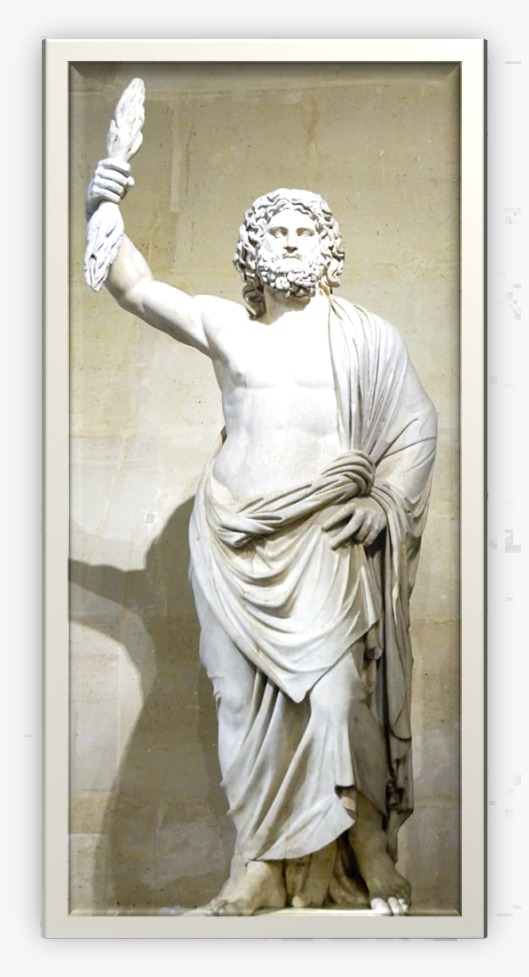
Zeus is frequently depicted by Greek artists in one of three poses: standing, striding forward with a thunderbolt leveled in his raised right hand, or seated in majesty.

THUNDERBOLTS:

The God of Thunder, had the power to wield thunderbolts.

He did this by concentrating vast amounts of energy in his hands, then aiming and hurling thunderbolts at his targets.

His bolts could shear mountains, vaporize islands, incinerate entire cities and even boil the seas.

His bolt were also capable of destroying the bodies of mortals, and even gods.

CONTROL OVER THE ELEMENTS:

Since Zeus was the God of the sky, he had absolute control over elements such as winds, thunderstorms, rain, moisture, clouds, lightning and weather.

He also had the ability to control the movement of stars, govern the functioning of day and night, controlling the effects of time and decide the lifespan of mortals.

ABILITY TO GRANT POWERS:

It is believed that Zeus controlled the abilities of all his children and sisters, and could take their powers and grant them new ones at will.

Apart from this, he was also extremely strong physically, enough to lift mountains.

His strength exceeded that of every Olympian, except that of Hercules, who was his son.

SHAPE-SHIFT:

Another great ability of Zeus was that he was able to shape-shift or transform himself into other forms at will.

Accounts of this ability are mainly witnessed in the tales of his sexual escapades.

His disguises included that of an eagle, a satyr, a flame of fire, a phoenix, a shower of gold, a bull, an ant, an eagle, a shower, a lapwing, a swan, a star, a bear, a shepherd, a goose, a serpent and a vulture.

Leda and the Swan-Zeus took the form of a swan to have intercourse with Leda.

Health Insurance

Usually, the first thought that comes to mind when entering a hospital is how much lighter your wallet will be when you leave. In a high-tech world, medicine is at the forefront, and technology comes with a cost. It’s not uncommon for routine check-up bills to run into the thousands of dollars. A lengthy hospital stay will inevitably set you back hundreds of thousands of dollars. Having reliable comprehensive health insurance can save you a day and your wallet, at least if you’re in the hospital for treatment.

What is health insurance?

If you choose health insurance, your medical expenses will be covered by your insurance company and you will instead have to pay an annual membership fee called a “premium”. This can also be paid in monthly installments. Depending on which policy you choose and who provides it, health insurance protects your wallet by covering medical bills, hospital bills, ambulance bills, test bills, and other related costs. Some policies also cover lost earnings compensation.

Why should you have health insurance?

A WHO report outlines the need for expanded health insurance coverage in India, which is staggering as 68% of India’s healthcare costs are out-of-pocket (OOP). Also, only 18% of urban and 14% of rural India have health insurance. Getting health insurance at a young age is a wise decision as premiums are much lower. Please note that many policies do not cover pre-existing illnesses or illnesses that occur within 30 days of obtaining the policy, except for accidents.

If you do not yet have health insurance or are considering it, here is a list of reasons why you should recognize the importance of health insurance.

• Cashless treatment: All major health insurance companies have many popular hospitals in their networks, so-called network hospitals. When you get treatment at one of these hospitals, all you have to do is present your health insurance card (or just your insurance number), fill out a few forms if necessary, and then you’re all set. However, if you decide to go to an out-of-network hospital, you will have to pay for treatment and later apply for a refund. Cashless treatment is therefore one of the biggest benefits of health insurance. Because few people can arrange a large amount of money in a short period of time for medical purposes.

• Rising health care costs and illnesses: According to cancer statistics in India, there were 11,57,294 registered cancer patients in 2019. In the last 26 years, cancer incidence has almost doubled in India. Other life-threatening diseases such as tuberculosis and diabetes are also on the rise. With medical and treatment costs continuing to rise, look no further than why health insurance is a must.

• Free Health Checks and Additional Benefits: Many insurers offer their customers free health checks every year (but only if you haven’t filed a claim in the last few years). Some companies do). You are also eligible to receive a No Claim Bonus (NCB). H. If you do not have insurance other than outpatient insurance during the insurance period, the insurance amount will increase by a certain amount. In addition, ambulance costs, pre-hospital and post-hospital costs are some of the other benefits offered by insurance companies.

• Tax Incentives: Section 80D of the Income Tax Act provides tax incentives for health insurance premiums. Under the age of 60, INR 50,000 for parents under the age of 60 (INR 25,000 for self-employed persons, spouses and dependent children and INR 25,000 for parents), for parents over the age of 60 can claim a deduction of Rs 75,000. (Self-employed person, spouse and dependent children Rs 25,000 for her and Rs 50,000 for parents). In total he can claim a deduction of Rs 1,00,000 if both the individual and the parents are above her 60 years of age.

• Peace of Mind: Well-planned back insurance can be a great peace of mind, especially when life-threatening diseases have increased at an alarming rate in recent decades. It can save you and your family during a medical emergency, and most importantly, one less thing to worry about in your busy daily schedule.

Now that you understand the importance of health insurance, let’s take a look at what to consider when choosing health insurance.

Points to note when looking for health insurance 

• As mentioned above, it is better to get health insurance when you are young. Insurance premiums tend to increase with age, as does the risk of health problems.

• Look for insurance that covers terminal illness. These are the things that weigh most on our finances, so it makes no sense not to include them in the covered list.

• Do not choose insurance with expensive copay clauses. Your copay is the part of your bill that you have to pay out of your own pocket in the event of a claim. The insurance company will pay the rest according to the terms of the policy.

• You may select passenger/additional features related to health insurance to contribute to the overall insurance coverage network.

Types of Health Insurance

Compensation Plan: In this case, the patient pays a fixed amount for hospital expenses and the insurance company pays the rest of the bill. You can choose the doctor you want to see, and your insurance company doesn’t have to decide which hospital or whether you need to see a doctor. But this autonomy is only up to a point. In an emergency, emergency room admission still requires insurance clearance unless you are incapacitated. If you choose a coverage plan, first pay the full amount out of your own pocket and then request a refund. is needed.

Exclusive Provider Organization (EPO): Members of the EPO plan must use a defined network of physicians and primary care physicians (PCPs) who issue referrals to the network’s specialists for treatment. However, this condition does not apply in emergency situations. You will also be required to make a small donation yourself.

Point of Service (POS): Similar to EPO Pan, POS also offers PCP with a choice of network providers. In such cases, higher compensation is available. However, if you choose to go to an out-of-network hospital, you may be subject to a deductible (out-of-pocket) and have less insurance coverage. You may also need to prepay and then request a refund.

In summary, the importance of health insurance cannot be overestimated. Get health insurance for yourself, your spouse, your children, and your parents early.

Key skills for professionals

 Key skills for professional

Main skills are very important for everyone because if you go out for a job, interview or any presentation you will need the key skills. Key skills are also called soft skills. Key skills are very essential for your growth in a career.

Below there are some key skills which will make your career grow –

1. Communication skills

Communication is the main in all. For any purpose, you should communicate with each other. If you have good communication skills you will perform always better in front of your seniors or your boss. It gives you a lot of confidence if you have a good command of your language.

2. Time management

As we all know there is a very famous quote .

Time is money and it doesn’t wait for anyone. If you have a meeting or presentation or anything else you should go before your time. If you maintain your time it shows how punctual you are. You should have the ability to manage things on time.

3. Leadership 

This is another skill which is important in your career. You should have the quality of leadership. It shows how you manage all the things, and how you can teach your juniors or colleagues. It shows you are responsible which is very good for your profession.

4. Personality development

For going to an interview or a job you should have the personality. Personality gives you bold courage that reflects when people see you. If someone doesn’t have the personality then you should research before going for an interview or job.

5. Self-confidence

You need self-confidence to do any work without having self – confidence you will get  demotivated by yourself. If you have self-confidence, you can achieve everything.

6. Positive attitude

A positive attitude is a very crucial role in key skills. Doing any work or activity everyone needs a positive attitude to impress other people. Positivity leads to achieving everything

This is all the key skills which you need for your career growth.

Health insurance

 Health Insurance 

Usually, the first thought that comes to mind when entering a hospital is how much lighter your wallet will be when you leave. In a high-tech world, medicine is at the forefront, and technology comes with a cost. It’s not uncommon for routine check-up bills to run into the thousands of dollars. A lengthy hospital stay will inevitably set you back hundreds of thousands of dollars. Having reliable comprehensive health insurance can save you a day and your wallet, at least if you’re in the hospital for treatment.

 What is health insurance?

 If you choose health insurance, your medical expenses will be covered by your insurance company and you will instead have to pay an annual membership fee called a “premium”. This can also be paid in monthly installments. Depending on which policy you choose and who provides it, health insurance protects your wallet by covering medical bills, hospital bills, ambulance bills, test bills, and other related costs. Some policies also cover lost earnings compensation.

Why should you have health insurance?

 A WHO report outlines the need for expanded health insurance coverage in India, which is staggering as 68% of India’s healthcare costs are out-of-pocket (OOP). Also, only 18% of urban and 14% of rural India have health insurance. Getting health insurance at a young age is a wise decision as premiums are much lower. Please note that many policies do not cover pre-existing illnesses or illnesses that occur within 30 days of obtaining the policy, except for accidents.

If you do not yet have health insurance or are considering it, here is a list of reasons why you should recognize the importance of health insurance.

• Cashless treatment: All major health insurance companies have many popular hospitals in their networks, so-called network hospitals. When you get treatment at one of these hospitals, all you have to do is present your health insurance card (or just your insurance number), fill out a few forms if necessary, and then you’re all set. However, if you decide to go to an out-of-network hospital, you will have to pay for treatment and later apply for a refund. Cashless treatment is therefore one of the biggest benefits of health insurance. Because few people can arrange a large amount of money in a short period of time for medical purposes.

 • Rising health care costs and illnesses: According to cancer statistics in India, there were 11,57,294 registered cancer patients in 2019. In the last 26 years, cancer incidence has almost doubled in India. Other life-threatening diseases such as tuberculosis and diabetes are also on the rise. With medical and treatment costs continuing to rise, look no further than why health insurance is a must.

 • Free Health Checks and Additional Benefits: Many insurers offer their customers free health checks every year (but only if you haven’t filed a claim in the last few years). Some companies do). You are also eligible to receive a No Claim Bonus (NCB). H. If you do not have insurance other than outpatient insurance during the insurance period, the insurance amount will increase by a certain amount. In addition, ambulance costs, pre-hospital and post-hospital costs are some of the other benefits offered by insurance companies.

 • Tax Incentives: Section 80D of the Income Tax Act provides tax incentives for health insurance premiums. Under the age of 60, INR 50,000 for parents under the age of 60 (INR 25,000 for self-employed persons, spouses and dependent children and INR 25,000 for parents), for parents over the age of 60 can claim a deduction of Rs 75,000. (Self-employed person, spouse and dependent children Rs 25,000 for her and Rs 50,000 for parents). In total he can claim a deduction of Rs 1,00,000 if both the individual and the parents are above her 60 years of age.

 • Peace of Mind: Well-planned back insurance can be a great peace of mind, especially when life-threatening diseases have increased at an alarming rate in recent decades. It can save you and your family during a medical emergency, and most importantly, one less thing to worry about in your busy daily schedule.

 Now that you understand the importance of health insurance, let’s take a look at what to consider when choosing health insurance.

 Points to note when looking for health insurance 

 • As mentioned above, it is better to get health insurance when you are young. Insurance premiums tend to increase with age, as does the risk of health problems.

 • Look for insurance that covers terminal illness. These are the things that weigh most on our finances, so it makes no sense not to include them in the covered list.

 • Do not choose insurance with expensive copay clauses. Your copay is the part of your bill that you have to pay out of your own pocket in the event of a claim. The insurance company will pay the rest according to the terms of the policy.

 • You may select passenger/additional features related to health insurance to contribute to the overall insurance coverage network.

Types of Health Insurance

Compensation Plan: In this case, the patient pays a fixed amount for hospital expenses and the insurance company pays the rest of the bill. You can choose the doctor you want to see, and your insurance company doesn’t have to decide which hospital or whether you need to see a doctor. But this autonomy is only up to a point. In an emergency, emergency room admission still requires insurance clearance unless you are incapacitated. If you choose a coverage plan, first pay the full amount out of your own pocket and then request a refund. is needed.

 Exclusive Provider Organization (EPO): Members of the EPO plan must use a defined network of physicians and primary care physicians (PCPs) who issue referrals to the network’s specialists for treatment. However, this condition does not apply in emergency situations. You will also be required to make a small donation yourself.

 Point of Service (POS): Similar to EPO Pan, POS also offers PCP with a choice of network providers. In such cases, higher compensation is available. However, if you choose to go to an out-of-network hospital, you may be subject to a deductible (out-of-pocket) and have less insurance coverage. You may also need to prepay and then request a refund.

In summary, the importance of health insurance cannot be overestimated. Get health insurance for yourself, your spouse, your children, and your parents early.

Career Guidance For Students


Why students need career guidance?

Today, there are more than 250 profession alternatives, and we need career assistance to determine which one is ideal for us. Here are some reasons why it’s crucial for pupils.

A counselling service called career guidance was created to assist students in selecting the best career path based on their academic and professional preferences. It is a qualitative and quantitative evaluation of the potential job alternatives based on the knowledge, skills, information, and experience.

There is a lack of awareness and knowledge about the many profession opportunities available to children in India once they graduate from high school. The practise of consulting a career advisor is seldom ever practised.

A recent poll found that 93 percent of pupils were only aware of ten or fewer professional alternatives, such as engineering, medical, law, finance, and information technology. In contrast, there are currently over 250 different professional paths available. In other words, the majority of students have very little knowledge of a wide range of professional alternatives.

Get help from a career counsellor

A career advisor or counsellor is skilled at analysing students’ skill sets and areas of interest and making thoughtful recommendations that take the best of both worlds into account.

In order to determine the elements impacting a person’s professional interests, abilities, and values, the career adviser uses career interest or aptitude tests as part of the discovery process. In essence, a career advisor helps each student develop attainable professional goals.

Finding resources and sources of career information, tips for writing resumes, methods for preparing for interviews, and the fundamentals of networking are all advantages for students who seek out professional assistance from a career counsellor.

India needs more than a million counsellors.

The ratio of counsellors to students, which is generally thought to be 1:250, is 1:3,000 in India, which represents a significant gap.

However, it also creates a significant potential for career counsellors, especially given that 93 percent of Indian schools lack a specialised professional counsellor.

The 350 million students in India require at least 1.4 million career counsellors to match the ratio of students to counsellors that is considered to be appropriate around the world, according to the Annual International Career and College Counseling Conference, which was held in 2018.

In order to address the gap left by counsellors, we must immediately develop policy, systemic, and infrastructure alignment. This is crucial to help students choose the correct careers, resulting in a productive, diverse, and distributed workforce that supports the development of the country.

Here, innovations and technical advancements will be crucial.

Counsellor education and licencing

To develop more than a million counsellors in India, training and certification of counsellors is another essential component.

This will solve the acute deficit as well as quality and uniformity. If school administrators, principals, and instructors are included as part of the training strategy’s surrounding ecology, it may be more successful.

What’s way ahead?

One of the most important adjustments that can be made to our educational system is to include career counsellors who are knowledgeable in guiding candidates towards their ideal profession in all career guidance programmes.

The mainstreaming of counselling should emphasise a 360-degree, “future-ready” approach outfitted with cutting-edge tools and technologies to include all stakeholders in the counselling process, including teachers, students, and parents.

By giving young people the opportunity to contact with industry specialists who can serve as the greatest “practical” career advisers, the industry may also play a significant role in assisting young people with their career aspirations.

As an illustration, a doctor may meet the students at the school and discuss the advantages and disadvantages of being a doctor with them. Experts from other industries, such as engineering, retail, or even the military forces, can also visit schools to inform children about the advantages and difficulties of their respective fields.

As an alternative, student visits to businesses can be quite helpful in giving them a perspective on various industries. Additionally, it makes it possible for educational institutions to easily engage with business.

In India, the moment is right to spread the word about career counselling and coaching. Every school and institution should have qualified career counsellors on staff who can plan company visits and hold frequent sessions with students about various career options.

The future success and happiness of kids, families, schools, and the community depend on career guidance and counselling in this area!