PageRank Checker – Check Your Google Page Rank

PageRank is an algorithm used by Google Search to rank websites in their search engine results. Page Rank was named after Larry Page, one of the founders of Google as a way of measuring the importance of website pages.

What is Google PageRank and Why Is It Important

According to Google:

“PageRank works by counting the number and quality of links to a page to determine a rough estimate of how important the website is. The underlying assumption is that more important websites are likely to receive more links from other websites.”

Briefly, the Page Rank is an assessment of the importance of a web page. This relevance is calculated and published on a scale from 0 to 10. Google basically takes into account the number of backlinks that each page receives, however, the number doesn’t matter that much if we don’t build high quality backlinks from sites which are related to our links, preferably internal links.

A greater importance has the quantity of internal links linked by other websites, which happens when you create a post and someone publishes the link that redirects to this post that you created. So, the more backlinks your blog or site has, the higher is the chance of having a good PageRank.

Now that we have a basic understanding of what Page Rank is, how about checking yours?

Check Google Page Rank using the PageRank Checker

You can easily calculate your page rank and check the importance of your page. Just enter the address of your website / blog below and check it out:

Check Page Rank of your Web site pages instantly:


This page rank checking tool is powered by Page Rank Checker service

Do you want to share your page rank with your visitors? You can add a button to your blog by visiting the PageRank Buttons page.

What is an Insurance Policy?

 A contract between a person (Policyholder) and an insurance business is known as an insurance policy or plan (Provider). According to the terms of the contract, you pay the insurer regular sums of money (referred to as premiums), and they pay you if the sum assured is realised in the case of an unpleasant occurrence, such as the early death of the life insured, an accident, or damage to a home. Let’s learn more about what insurance is and the different features, advantages, and forms of insurance that are offered in India.

If an event occurs, the insurer pays a lump sum settlement to the policyholder/nominee in accordance with the insurance terms.

Depending on a person’s needs and life goals, they will decide which kind of insurance coverage to purchase.

An insurance policy has a number of different parts, each of which should be well understood before selecting the one that best suits your needs.

Insurance-Related Items

Listed below are some of these elements to assist you comprehend “what is insurance” and how it operates:

Policy for Insurance Premiums

The amount you must pay to purchase a certain quantity of insurance coverage is known as the premium of an insurance policy. It is often described as a consistent expense that you have during the period of premium payments, whether it is monthly, quarterly, half-yearly, or annually.

The premium for an insurance policy is determined by a number of variables by an insurance provider. The purpose is to determine if an insured person is qualified to purchase the particular sort of insurance policy that he or she desires.

For instance, if you are in good health and have never received treatment for serious physical ailments, you will probably pay less for health insurance or a life insurance policy than someone who is unwell.

Additionally, you should be aware that different insurance providers may charge various costs for comparable types of plans. So it does take some work to choose the appropriate one at a price you can afford.

Policy Limit

It is described as the highest sum that an insurance provider is accountable for covering for damages covered by the insurance policy. Based on the timeframe (the policy term), the loss or injury, and comparable other considerations, it is decided. 

Generally speaking, the higher the coverage limit, the more expensive the premium will be. The highest sum that an insurer will pay to the nominee under a life insurance policy is referred to as the sum assured.

Deductible

The amount or percentage that the policyholder agrees to pay out of pocket prior to the insurer beginning to settle a claim is the deductible associated with an insurance policy. It also serves as a deterrent to the numerous petty, unimportant claims that people make under their insurance coverage.

According to the conditions of a certain type of policy, deductibles are applied per policy or per claim. High deductible insurance policies are typically less expensive because fewer claims are filed due to the greater out-of-pocket costs.

How Do Insurance Policies Work?

According to the definition given above, an insurance policy is a binding legal agreement between the policyholder and the insurance provider. It contains all the information on the terms or situations under which the insured person or the policy nominee will receive insurance benefits from the insurer.

You can protect yourself and your loved ones from a financial crisis by purchasing insurance. You purchase an insurance policy for the same, and the insurance provider assumes the associated risk and provides insurance coverage for a set fee.

The insured or nominee may submit a claim to the insurer in the event of any occurrence. The insurer examines the claim application and resolves the claim based on the criteria for claim evaluation.

India’s Insurance Options

The four forms of insurance that people most frequently purchase are:

Health Insurance

Medical Insurance

Vehicle Insurance

Property Insurance

Gains from Insurance :

Insurance plans have numerous advantages for both individuals and society as a whole. Other advantages of insurance, besides the obvious ones, are less well known or spoken of.

1. Protect against ambiguity

It is among the most notable and significant advantages of insurance. According to the insurance plans, the insured person or organisations are protected against losses. The correct kind of insurance coverage might help you protect yourself from losses brought on by various life’s uncertainties.

2. Managing Cash Flow

The management of cash flow is greatly impacted by the uncertainty of covering the losses out of pocket. However, you can deal with this uncertainty with ease if you have an insurance coverage on your side. The selected insurance company

3. Possibilities for Investment

A portion of the premium for the unit-linked insurance plan is invested in various market-linked funds. They make it possible for you to consistently invest money in order to benefit from market-linked returns and achieve your life goals.

Benefits of Insurance for Taxes

You can receive income tax benefits in addition to protection benefits from insurance plans.

Article 80C

According to Section 80C of the Income Tax Act, the premiums for life insurance policies may be deducted from taxable income. The maximum deduction allowed is Rs. 1.5 lakh.

Article 80D

According to Section 80D of the Income Tax Act of 1961, health insurance premiums paid to purchase policies for you and your parents are also tax deductible.

Chapter 10 (10D)

This clause exempts from taxation any life insurance benefits that you or the insurance policy nominee receive from the insurer.

Purchase insurance to be safeguarded.

In today’s world, having insurance to stay protected is essential. Even while many people invest in various insurances, not everyone is aware of all the benefits they can provide. Insurance, such as life insurance, safely and affordably guarantees the financial security of your family as well as your own. Additionally, buying life insurance promotes the development of a consistent saving routine. It so gives you the ability to create a significant corpus.

You may protect your financial situation and that of your family with the aid of insurance plans from one of the available Life Insurance policy, such as term plans and health insurance plans, and you can also benefit from a number of other advantages. Now that you understand what insurance is and how it functions, you should think about getting the kind that’s right for you and stay safe!


DISASTER AND DISASTER MANAGEMENT

DISASTER:
A disaster is a serious disruption occurring over a short or long period of time that causes widespread human, material, economic or environmental loss which exceeds the ability of the affected community or society to cope using its own resource. It is a natural or man-made hazard resulting in an event of substantial extent causing significant physical damage or destruction, loss of life, or drastic change to the environment.

Disaster are classified into natural disaster and man-made disaster. In modern times, the divide between natural, man-made and man-accelerated disasters is quite difficult to draw.
Complex disasters, where there is no single root cause, are more common in developing countries. A specific disaster may spawn a secondary disaster that increases the impact. A classic example is an earthquake that causes a tsunami, resulting in coastal flooding, resulting in damage to a nuclear power plant. Some manufactured disasters have been wrongly ascribed to nature such as smog and acid rain. Some researchers also differentiate between recurring events such as seasonal flooding, and those considered unpredictable.

NATURAL DISASTERS AND MAN-MADE DISASTERS:
The natural disaster is caused by natural hazard whereas the man made disasters are caused by anthropogenic hazards.
A natural disaster can cause loss of life or damage of property.It brings economic damage after its wake. The severity of the damage depends on the affected population’s resilience and on the infrastructure available.Examples of natural hazards include: avalanche, coastal flooding, cold wave, drought, earthquake, hail, heat wave, hurricane, ice storm, landslide, lightning, riverine flooding, strong wind, tornado, tsunami, volcanic activity, wildfire, winter weather. Anthropogenic hazards can be grouped into societal hazards, civil disorder, terrorism, war, industrial hazards, engineering hazards, power outage, fire, hazards caused by transportation and environmental hazards.
In modern times, its is difficult to differentiate between man-made and man-made accelerated disaster. A man-made hazard impact a vulnerable community. It is the combination of the hazard along with exposure of a vulnerable society that results in a disaster. The rapid growth of the world’s population and its increased concentration often in hazardous environments has escalated both the frequency and severity of disasters. With the tropical climate and unstable landforms, coupled with deforestation, unplanned growth proliferation, non-engineered constructions make the disaster-prone areas more vulnerable. Developing countries suffer more or less chronically from natural disasters due to ineffective communication combined with insufficient budgetary allocation for disaster prevention and management.

DISASTER MANAGEMENT:
he International Federation of Red Cross & Red Crescent Societies defines disaster management as the organisation and management of resources and responsibilities for dealing with all the humanitarian aspects of emergencies, in particular preparedness, response and recovery in order to lessen the impact of disasters.
DISASTER PREVENTION:
UNISDR views Disaster Prevention as the concept of engaging in activities which intend to prevent or avoid potential adverse impacts through action taken in advance, activities designed to provide protection from the occurrence of disasters. WCPT similarly highlight that while not all disasters can be prevented, good risk management, evacuation plans, environmental planning and design standards can reduce risk of loss of life and injury mitigation. The HYOGO Framework was one such Global Plan for natural Disaster Risk Reduction, which was adopted in 2005 as a 10 year Global Plan, signed by agreement with 168 Governments which offered guiding principles, priorities for action and practical means for achieving disaster resilience for vulnerable communities.
Disaster Preparedness
Disaster Preparedness refers to measures taken to prepare for and reduce the effects of disasters, be they natural or man-made. This is achieved through research and planning in order to try to predict areas or regions that may be at risk of disaster and where possible prevent these from occurring and/or reduce the impact those disasters on the vulnerable populations that may be affected so they can effectively cope. Disaster preparedness activities embedded with risk reduction measures can prevent disaster situations and also result in saving maximum lives and livelihoods during any disaster situation, enabling the affected population to get back to normalcy within a short time period. Minimisation of loss of life and damage to property through facilitation of effective disaster response and rehabilitation services when required. Preparedness is the main way of reducing the impact of disasters. Community-based preparedness and management should be a high priority in physical therapy practice management.
In order to reduce the impact during disaster activities like Rescue, Relocation, Provision food and water, Prevention of disease and disability, Repairing Vital services, Provision temporary shelter.

DISASTER MANAGEMENT:
When disasters strike, there is always a huge amount of goodwill from rehabilitation professionals around the world who wish to use their skills to support those affected. This brief guidance informs those who are considering responding internationally to a disaster either as individuals or as part of a team. It highlights key questions to consider before departing, whilst working in the disaster area and on returning home. Responses to these questions considered are presented as “Do’s and Dont’s” which are exemplified by recommended practices and those to avoid in the real case studies below. The guidance note is not intended to be a step-by-step or technical guide, nor is it exhaustive, and does not supersede any specific guidance provided by your own global professional body.

Agencies involved in Disaster Management
• National Disaster Management Authority (NDMA):- The National Disaster Management Authority, or the NDMA, is an apex body for disaster management, headed by the Prime Minister of India. It is responsible for the supervision, direction, and control of the National Disaster Response Force (NDRF).
• National Executive Committee (NEC):- The NEC is composed of high profile ministerial members from the government of India that include the Union Home Secretary as Chairperson, and the Secretaries to the Government of India (GoI)like Ministries/Departments of Agriculture, Atomic Energy, Defence, Drinking Water Supply, Environment and Forests, etc. The NEC prepares the National Plan for Disaster Management as per the National Policy on Disaster Management.
• State Disaster Management Authority (SDMA):- The Chief Minister of the respective state is the head of the SDMA.The State Government has a State Executive Committee (SEC) which assists the State Disaster Management Authority (SDMA) on Disaster Management.
• District Disaster Management Authority (DDMA):- The DDMA is headed by the District Collector, Deputy Commissioner or District Magistrate depending on the situation, with the elected representatives of the local authority as the Co-Chairperson. The DDMA ensures that the guidelines framed by the NDMA and the SDMA are followed by all the departments of the State Government at the District level and the local authorities in the District.
• Local Authorities:- Local authorities would include Panchayati Raj Institutions (PRI), Municipalities, District and Cantonment 11 Institutional and Legal Arrangements Boards, and Town Planning Authorities which control and manage civic services.

Menstruation & It’s Taboos

N kavya

The menstrual cycle is a part of your reproductive system. Menstruation is the monthly shedding of the lining of your uterus. The menstrual blood which is partly blood and partly tissue from the inside of your uterus flows from your uterus through your cervix and out of your body through your vagina.

It has been said that during those days the tradition started for a good reason as women go through heavy cramps, PMS (premenstrual syndrome), headaches, stomach aches, mood swings, etc. Women were being isolated from their family and given complete rest in a separate room, as time passed the traditions became aggressive and gave more stress associated with myths, or misconceptions and taboos to women than being supportive to them during their menstrual cycle. Women are not allowed to enter the temples, in many households’ girls are subjected to many superstitious practices such as; prohibition from entering the kitchen and prayer room, being made to stay in a separate room, being forced to eat in separate utensils, and in some houses, the girl is provided the left-over food. Not being allowed to touch certain kinds of food because they could get spoilt, and tagging the girl as impure and unclean. The stigma associated with a woman bleeding every month leads to poor hygiene among a large section of rural women who use wood husk, leaves, paper, and other such materials instead of sanitary napkins when on their periods. The temple in Assam ‘Maa Kamkhaya’ where the main deity is the uterus of a woman signifies the importance of reproduction and the menstrual cycle is completely natural. In India, some school girls were allegedly forced to remove their underwear to prove they were not menstruating. The girls also reported that they were barred from touching other students during their menstrual cycle.

These social stigmas isolate the girls from family and friends which increases their stress levels and impacts their mental health. As per the survey in India, only 48% of adolescent girls are aware of what menstruation is before getting their first period, which is unhygienic for their health due to a lack of proper sanitation facilities. Young people do not have access to reliable and correct information about their reproductive health and rights. The lack of acceptance and the taboo associated with it leads the girls to stay at home due to anxiety and embarrassment… An overall lack of scientific knowledge about menstruation also gives way to myths and misconceptions. During previous centuries, there were many rules followed due to some circumstances but following those rules in this period seems unreasonable.

Girls must be given proper menstruation knowledge before they get their first period because many girls do not have the knowledge about how their body works and provide free napkins to the government schools. The main development goals must include an equal opportunity for education for girls and boys and access to proper sanitation. The media creating public awareness regarding these issues would break the taboo prevailing in society. The movie ‘Pad Man’ starring Akshay Kumar and Radhika Apte which speaks about the importance of women’s menstrual health is notable. To cross these barriers government, NGOs, corporate companies, and media and entertainment industries must collaborate and take advantage of each other’s capability and influence to achieve this vision.

Image credits- Google

why Vocational Studies is the right choice for present generation

What Is Vocational Education? 


Theoretical knowledge is not everything in today’s world,
rather skills are becoming more valuable. This term skill is what is talked
about these days, but how to acquire them?  

While traditional colleges/universities provide students
with theoretical knowledge which can be applied to certain fields, vocational
education provides the students with hands-on training. Vocational education is
a great opportunity for students who are looking to acquire specific skills to
get a job that better aligns with their career goals and dreams, as they learn
the fundamentals of a specific occupation under the supervision of an
experienced professional.


Skills offered by vocational training courses


Vocational training focuses on developing technical
skills which make you instantly job-ready for example electrician, artisan,
emergency medical technician, plumber, woodworking and carpentry, automobile
technician, welding training, etc.

Differences between vocational education and university
education


The differences between traditional education and
vocational education are:-


Program
focus


Programs offering vocational education focus on teaching
the students specific skills which can directly be applied to a specific job.
These programs offer technical skills for a job like plumbers, electricians,
etc. on the other hand university education programs are focused on providing
theoretical knowledge to the students and focus less on applicable skills.
These students gain more academic knowledge compared to a vocational education
program.


Time to complete


As vocational courses focus less on theoretical-based
learning, the students gain the desired amount of qualifications in a much
shorter period. On the other hand, traditional university students usually need
to spend around two to four years completing their education before they are
qualified enough to apply for a job 


Costs

Because vocational courses can be completed in a much
shorter duration they are more cost-effective when compared to traditional
education programs. These courses are the perfect opportunity for people with a
limited budget. Universities on the other hand can be a lot more expensive as
they have a longer duration and the universities with better education and
access to competent job opportunities usually charge more.

Types of job opportunities

Vocational education programs prepare their students for
blue-collar and physical labor jobs. Gaining expertise in the respective field
will enable you to move up to a better role like a supervisor or a manager.
Contemporary university programs prepare their students for white-collar and
desk jobs, which do not require physical labor rather, they involve more mental
work and internet-based technologies.

Different types of vocational education

There are a lot of different sources which provide
vocational training programmes, some of these are-

High school CTE programs

The CTE program is for high school students who want to
gain work experience in different professions and go on to college. This type
of vocational training is usually part of the high school curriculum, but
students can also attend separate vocational centers. These career training
programs allow students to explore different career options and prepare them
for industry or graduate school-specific work. In most vocational training
programs at this level, students continue their intermediate education while
completing their training. 

Tech Prep education

Tech Prep programs serve as a bridge between general and
post-secondary vocational training to prepare students to pursue careers in the
high-tech sector. Thanks to a partnership between the two institutions, Tech
Prep programs combine at least two years of high school and two years of
post-secondary. The program usually culminates in a certificate or associate’s
degree in a particular field of study.


Apprenticeship
programs

Apprenticeship programs are specific to the trade and can
last up to four or five years. In these types of programs, apprentices or
students work under the supervision of an expert in their trade and get paid
for their work. This type of vocational training is most common in highly
skilled and practical occupations. Apprenticeships often combine on-the-job
training with classroom instruction. Since some apprenticeships include
classroom courses, they can lead to a certificate or diploma. A major advantage
of this type of training is that it is an educational program in which the
student also receives remuneration for his or her work.


Distance
learning programs

Another great option to learn or develop a skill set is
to enroll in a distance learning program. Many distance learning courses allow
students to work on materials and lesson plans at their own pace, making it
perfect for working professionals. However, some programs may require students
to log in at specific times or according to the class schedule. Before
enrolling in a distance learning program, be sure to thoroughly research the
training institution, making sure it is legitimate and accredited.


jobs you can get with a vocational education


Here are four examples of jobs you can pursue with this
type of education:


1. Auto mechanic: 

Automotive Mechanic service and repair vehicles with
minor problems or complex mechanical problems. They help customers determine
the cause of a problem, such as a leaking gas tank or a blown headlight. In
addition to performing repairs, they may also recommend additional repairs to
the customer to improve vehicle performance. 

2. Electrician Primary:

 Electricians use specialized equipment to repair
and maintain electrical equipment in many buildings, such as corporate offices
and homes. They also work on power lines and other electrical systems to ensure
they function as expected. Electricians must follow strict safety procedures to
avoid injury to themselves, colleagues, or civilians. 

3. First aid instructor:

 First Aid Instructor educates teenagers and adults
on how to give someone emergency first aid in a critical situation. Students
can also learn how to respond appropriately to emergencies and heal superficial
injuries. 

4. Web Designer: 

Web designers use their creativity and software expertise
to design and create websites that meet the needs of their clients. They
develop the overall look and feel of the website and how it works. A good
website should be easy for customers to navigate.


Achievements of India in the field of Science and Technology

Today India’s achievements are numerous and include a strong Democracy, higher Education, Nuclear power, stunning economic growth and revival of numerous aspects of traditional Wisdom. Owing to the talent and will of the countrymen, we can see that India has reached among the top countries of the world especially in science and technology and various other fields. India has the 44th rank in technology level among the world. Also, India is considered one of the top five countries in space exploration. India has become an important source of creative and fundamental scientific development and in all the perspectives around the world. All great scientific discoveries and technical achievements have improved the Indian economic situation in our country and have created many new approaches for the new generation to develop a technologically advanced environment.
Much new scientific research and development is possible in the field of mathematics, architecture, chemistry, astronomy, medicine, metallurgy, natural philosophy, physics, agriculture, health care, pharmaceuticals, astrophysics, atomic energy, space technology, application, defence etc.
The introduction of scientific research, ideas and techniques in the field of education has brought a huge change in the new generation at large and has given a variety of new and innovative opportunities to work in their own interests. Modern science in India has made people aware of their constant and hard efforts by scientists. India’s scientist is great, who has made scientific progress of the highest international calibre.
Technical development in any area enhances the economy of any country. In order to improve the power of science and technology in India, the Government of India established the Council of Scientific and Industrial Research in 1942 and the Board of Scientific and Industrial Research in 1940. India has achieved so many achievements in the field of science and technology that every Indian is proud of his country. Let’s know all your achievements in detail.

Atomic clock by ISRO:
The atomic clock is an amazing technology developed by ISRO and it is used to measure precise location data in navigation satellites. Proudly, ISRO is one of the Few Space organisations in the world, those who have developed this amazing technology.

Mars Orbiter Mission :
Mars orbiter mission is a great success achieved by India in the field of science and technology. India is the only nation in the world to reach Mars in the first attempt. Indian space research organisation (ISRO) launched Mangalyaan on 5 November 2013 and it was placed into mars orbit on 24 September 2014. The cost of the project was 74 million US dollars which are cheaper than anything that others can achieve.

Chandaryaan 2 Mission
The moon landing of Chandrayaan 2’s Vikram lander is also a very special Indian technological achievement for India. Chandrayaan 2 mission marks India’s first lunar exploration mission and ISRO put lots of effort into making this mission a success. With this mission, India has emerged as the fourth country in the world to have hoisted its flag on the lunar surface. This achievement is a matter of great Honour for the nation.

PARAM – India first Super Computer
India’s first-ever super Computer named ‘Param’ is also a great achievement for India in science and technology. Param is designed and assembled by the Centre for the development of advanced computing in Pune. Today there are 11 supercomputers in India and they are used in the development of nuclear weapons and space programmes.

Even though India has only 140 researchers per 10 lakh population this has never been a shortcoming in the development of Science and Technology. We Indians must feel proud of our technological advancements and try to utilise them in the best manner possible.


Achievements of India in the field of Science and Technology 

-Dr APJ Abdul Kalam.

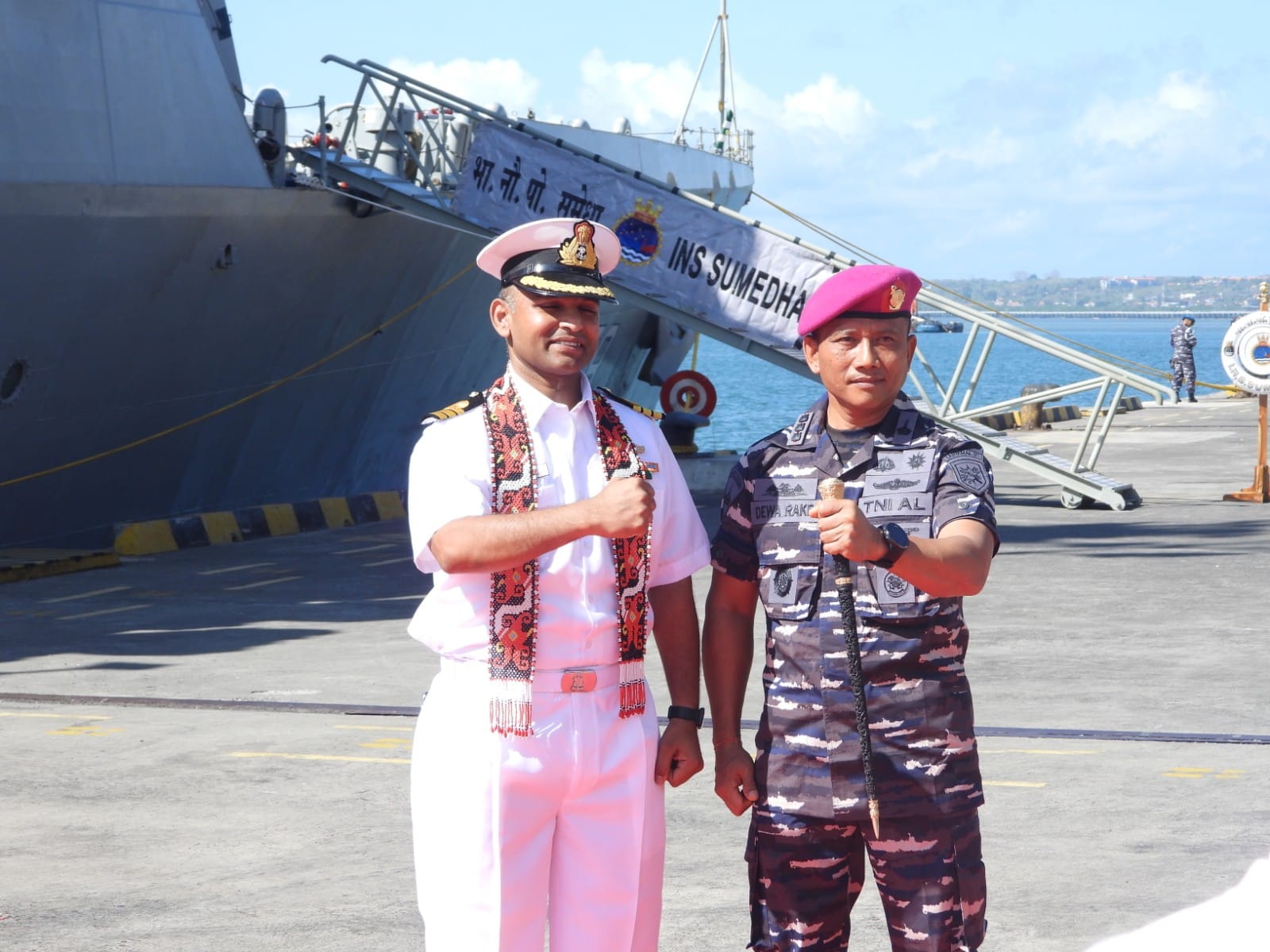
INS Sumedha visits Bali, Indonesia

  As part of the Indian Navy’s Long Range Deployment in the South Eastern Indian Ocean, INS Sumedha, is on a visit to Port Tanjung Benoa, Bali, from 04 Aug to 06 Aug 2022. The ship is en route to Perth, Australia, to coincide with India’s Independence Day and celebrations of Azadi Ka Amrit Mahotsav. The visit to Bali is aimed at strengthening bilateral ties, enhancing military cooperation and improving interoperability with the Indonesian Navy. During her stay at Bali, the ship’s crew will engage in professional interactions, cross-deck visits and sports fixtures with their Indonesian Navy counterparts.

https://static.pib.gov.in/WriteReadData/userfiles/image/INS_Sumedha_at_Bali__IndonesiaLOEU.jpg

Prior to entering Bali, the ship undertook a Maritime Partnership Exercise with KRI Sultan Hasanuddin, a Sigma class corvette of the Indonesian Navy on 02 August 2022. The exercise which included seamanship evolutions, tactical manoeuvres and communication procedures provided an opportunity for sharing professional experiences and strengthening maritime cooperation between the two navies.

INS Sumedha is an indigenously built Naval Offshore Patrol Vessel and is deployed for multiple roles independently and in support of fleet operations. She is part of the Indian Navy’s Eastern Fleet based at Visakhapatnam and functions under the operational command of the Flag Officer Commanding-in-Chief, Eastern Naval Command.

***********

Tejas Fighter Aircraft

  Hindustan Aeronautics Limited (HAL), a Defence PSU under the Ministry of Defence responded to a Request for Information (RFI) received from Royal Malaysian Air Force (RMAF), Malaysia in February, 2019 for LCA class aircraft. Subsequently, Hindustan Aeronautics Limited responded in October, 2021 to Request for Proposal (RFP) issued against tender released by Royal Malaysian Air Force, Malaysia for 18 nos of Fighter Lead In Trainer – Light Combat Aircraft (FLIT – LCA) and HAL offered LCA Tejas twin seater variant. Other countries which have evinced interest in LCA aircraft are: Argentina, Australia, Egypt, USA, Indonesia, and Philippines.

The Government has taken several policy initiatives in the past few years and brought in reforms to encourage indigenous design, development and manufacture of defence equipment in the country, thereby expanding their production. These initiatives, inter-alia, include:

  • According priority to procurement of capital items from domestic sources under Defence Acquisition Procedure (DAP)-2020.
  • The announcement of 18 major defence platforms for industry led design & development in March, 2022.
  • Notification of three ‘Positive Indigenisation Lists’ of total 310 items of Services and two ‘Positive Indigenisation Lists’ of total 2958 items of the Defence Public Sector Undertakings (DPSUs), for which there would be an embargo on the import beyond the timelines indicated against them.
  • Simplification of Industrial licensing process with longer validity period.
  • Liberalisation of Foreign Direct Investment (FDI) policy allowing 74% FDI under automatic route.
  • Simplification of Make Procedure.
  • Launch of Innovations for Defence Excellence (iDEX) scheme involving start-ups & Micro, Small and Medium Enterprises (MSMEs).
  • Implementation of Public Procurement (Preference to Make in India) Order 2017.
  • Launch of an indigenisation portal namely SRIJAN to facilitate indigenisation by Indian Industry including MSMEs.
  • Reforms in Offset policy with thrust on attracting investment and Transfer of Technology for Defence manufacturing by assigning higher multipliers.
  • Establishment of two Defence Industrial Corridors, one each in Uttar Pradesh and Tamil Nadu.
  • Opening up of Defence Research & Development (R&D) for industry, start-ups and academia with 25 percent of defence R&D budget earmarked to promote development of defence technology in the country; and
  • Progressive increase in allocation of Defence Budget of military modernisation for procurement from domestic sources, etc.

National Leprosy Eradication Programme (NLEP)

  The Government is implementing the National Leprosy Eradication Programme (NLEP) with the goal of making India leprosy free. NLEP is a Centrally Sponsored Scheme under the umbrella of National Health Mission (NHM). This programme is implemented in all the States/UTs.

The major focus of the Programme is to detect the cases of leprosy at an early stage and to provide complete treatment, free of cost, in order to prevent the occurrence of disability.

Major initiatives under NLEP are as follows:

  1. Leprosy Case Detections Campaign (LCDC) in high endemic districts.
  2. Focused Leprosy Campaign (FLC) in low endemic districts for case detection.
  3. Special plans for Hard-to-Reach areas for early case detection and treatment.
  4. ASHA Based Surveillance for Leprosy Suspects (ABSULS).
  5. Sparsh Leprosy Awareness Campaign on 30th January every year.
  6. Active Case Detection and Surveillance both in rural and urban areas.
  7. Convergence of leprosy screening under Rashtriya Bal Swasthya Karyakram (RBSK) for screening of children (0-18 years) and under Ayushman Bharat for screening of people above 30 years of age.
  8. Monitoring of the programme by Joint Monitoring Investigation and Advisory Group (JMIAG).
  9. Certificate, award and performance linked financial incentive are given to the districts for achieving leprosy elimination.
  10. Contact tracing is done and Post Exposure Prophylaxis (PEP) with Single dose of Rifampicin (SDR) given to the eligible contacts of index case in order to interrupt the chain of transmission.

Further, 12 packs of MDT (Multi Drug Therapy) blister packs are given to Multi Bacillary Leprosy cases as per the Standard Treatment Protocol.

India has achieved the elimination of leprosy as a public health problem as per WHO criteria of less than 1 case per 10,000 population at the National level in 2005. However, there are few districts within States where leprosy is still endemic.

As per Monthly Progress Report of Central Leprosy Division, Directorate General of Health Services (as on 31st May 2022), 72,914 leprosy patients, as informed by the States/UTs, are under treatment in the country.

IMPLEMENTATION OF PMFME

  Ministry of Food Processing Industries (MoFPI) is implementing a centrally sponsored “PM Formalisation of Micro food processing Enterprises (PMFME) Scheme” for providing financial, technical and business support for setting up / upgradation of micro food processing enterprises in the country. The scheme is operational for a period of five years from 2020-21 to 2024-25 with an outlay of Rs. 10,000 Crore. The details of assistance available under the scheme is placed at Annexure.

MoFPI does not set up Food Processing Industries on its own. However, it assists entrepreneurs in establishing such Industries across the country including Tamil Nadu through its Central Sector Umbrella Scheme Pradhan MantriKisan SAMPADA Yojana (PMKSY), Production Linked Incentive Scheme for Food Processing Industry (PLISFPI) and Centrally sponsored PMFME Scheme.

ANNEXURE

The details of assistance available under PMFME Scheme


(i). Support to Individual / Group Category Micro Enterprises: Credit-linked capital subsidy @35% of the eligible project cost, maximum ceiling Rs.10 lakh per unit;

(ii). Support to SHGs for seed capital: Seed capital @ Rs. 40,000/- per member of SHG engaged in food processing for working capital and purchase of small tools subject to maximum of Rs. 4 lakh per SHG Federation.

(iii). Support for Common Infrastructure: Credit linked capital subsidy @35% subject to maximum of Rs. 3 crore to support FPOs, SHGs, Cooperatives and any Government agency for setting up of common infrastructure. The common infrastructure will also be available for other units and public to utilize on hiring basis for substantial part of the capacity.

(iv). Branding and Marketing Support: Grant upto 50% for Branding and Marketing to groups of FPOs/ SHGs/ Cooperatives or an SPV of micro food processing enterprises.

(v). Capacity Building: The scheme envisages training for Entrepreneurship Development Skilling (EDP+): program modified to meet the requirement of food processing industry and product specific skilling.

Steps to strengthen the Healthcare System in India

  The healthcare system of the country involves a three-tier system with Sub Health Centre (Urban and Rural), Primary Health Centre (Urban and Rural) and Community Health Centre (Urban and Rural) as the three pillars of Primary Health Care System in India. Rural Health Statistics (RHS) is an annual publication, based on Health care administrative data reported by States/UTs.

Similarly, District Hospital (DH), Sub-District Hospital (SDH) and First Referral Unit – Community Health Centres provide secondary care services whereas Medical Colleges and State-level Institutions provide tertiary care services.

Ministry of Health and Family Welfare, Government of India provides technical and financial support to the States/UTs to strengthen the public healthcare facilities. To address the healthcare challenges, particularly in rural areas, the National Rural Health Mission (NRHM) was launched in 2005 to supplement the efforts of the State/UT governments to provide accessible, affordable and quality healthcare to all those who access public health facilities. Currently, NRHM is a sub-mission of National Health Mission (NHM).

Support is provided to states/UTs under the National Health Mission (NHM) for strengthening of health care facilities as per norms based on the requirements posed by them in their Programme Implementation Plans (PIPs) and within their overall resource envelope. Under NHM, States are supported for several interventions towards strengthening the primary healthcare services in the country.

XV-Finance Commission Health Grants through Local Government announced as part of Union Budget 2021-22, for strengthening the healthcare system at primary healthcare level, has recommended grants aggregating to Rs. 70,051 Crores over the period of five years (2021-2026) through local government to strengthen the healthcare system in states.

Pradhan Mantri Ayushman Bharat Health Infrastructure Mission (PM-ABHIM) with an outlay of Rs. 64,180 Crores aims to fill critical gaps in public health infrastructure especially in critical care facilities and primary care in both urban and rural areas. It is a Centrally Sponsored Scheme with some Central Sector components. The Centrally Sponsored Scheme (CSS) Components includes support for infrastructure development for Sub-Health Centres, Urban Health and Wellness Centres, Support for Block Public Health Units, Integrated District Public Health Laboratories and Critical Care Hospital Blocks.


Preparedness and response activities against biological emergencies

  Ministry of Health and Family Welfare provides requisite guidance and logistic support to the States/UTs. The Integrated Disease Surveillance Programme through its State and District units conducts disease surveillance in the country through a decentralized State based surveillance system for epidemic prone diseases to detect the early warning signals, so that effective public health actions can be initiated in response to health challenges in the country.

For preparedness and response against health emergencies, the National Disaster Management Authority in 2008 has issued detailed guidance on management of biological disasters (available at https://ndma.gov.in/sites/default/files/PDF/Guidelines/biological_disasters.pdf). 

Further, National Disaster Management Authority has also issued and widely circulated National Disaster Management Plan 2019 which provides an all-hazard plan with clarification on roles and responsibilities for preparedness and response activities against biological emergencies.

As per the information received from the Department of Biotechnology (DBT), the DBT has notified a “List of Infective Microorganisms corresponding to different Risk Groups, 2021” which provides the list of Infective Microorganisms corresponding to different Risk Groups, which determine the operational practice and minimum physical containment requirements and accordingly, allows selection of appropriate biosafety level facilities. The list can be accessed from https://dbtindia.gov.in/sites/default/files/Updated%20Risk%20Group13122021.pdf .

Furthermore, 138 bio-safety laboratories have been set up across the country under the Department of Health Research (DHR)’s Scheme- Setting up of Nation-wide network of Laboratories for managing Epidemics and Natural Calamities (VRDL). Indian Council of Medical Research (ICMR) has a well-established laboratory infrastructure, to combat biosafety and biosecurity threats to the country, including apex lab at National Institute of Virology (NIV), Pune

DBT has notified the “Guidelines for the Establishment of containment facilities: BioSafety Level 2 (BSL-2) & 3 (BSL-3) and Certification of BSL-3 facility” and Regulations & Guidelines for Recombinant DNA Research and Biocontainment, 2017. The guidelines encompass biosafety standards laid by various international agencies. All the biosafety laboratories specifically BSL-4 and BSL-3 established at ICMR and its network laboratories are trained in Biosafety laboratory operationalization. The key scientific staff of ICMR-NIV, Pune has also been trained at Center for Disease Control and Prevention (CDC), USA in biosafety practices.

Free Diagnostics Service Initiative’ (FDSI)

  The Ministry of Health and Family Welfare, Government of India supports ‘Free Diagnostics Service Initiative’ (FDSI) programme under National Health Mission. The programme was launched in July 2015 with the aim to provide accessible and affordable pathological and radiological diagnostics services closer to the community which in turn reduces the Out-of-Pocket Expenditure (OOPE). A minimum set of essential diagnostic tests has been recommended as per the Essential Diagnostic List at each level of public health facility.


A guidance document for implementing laboratory services has been shared with all states and UTs. The guidelines also recommend expanded range of diagnostics at all levels of public health facilities (14 tests at Sub Centres (SCs), 63 tests at Primary Health Centres (PHCs), 97 tests at Community Health Centres (CHCs), 111 tests at Sub-District Hospitals (SDHs) and 134 tests at District Hospitals (DHs).

Under NHM, ‘Free Diagnostic Service initiative’ is delivered through in-house, Public Private Partnership (PPP) and Hybrid mode by the States/UTs in the country. Free Laboratory service is operational in 33 States, out of which 11 States/UTs (Arunachal Pradesh, Assam, Delhi, Himachal Pradesh, Jharkhand, Maharashtra, Manipur, Meghalaya, Odisha, Tripura, and Uttarakhand) are providing the services through PPP/hybrid mode and 22 States/UTs (Andhra Pradesh, A&N Island, Bihar, Chandigarh, Chhattisgarh, D&N Haveli-Daman & Diu, Goa, Gujarat, Haryana, Jammu & Kashmir, Karnataka, Kerala, Lakshadweep, Madhya Pradesh, Nagaland, Puducherry, Punjab, Sikkim, Tamil Nadu, Telangana, Uttar Pradesh, West Bengal) provide the services through In-house mode.

Further, free Tele-Radiology (Tele-reporting of X-rays) service is operational in 13 states/UTs (Andhra Pradesh, Assam, Bihar, Himachal Pradesh, Jammu & Kashmir, Maharashtra, Meghalaya, Odisha, Rajasthan, Uttarakhand, Uttar Pradesh, and West Bengal, Tripura). Free CT Scan service is operational in 27 States/UTs out of which 17 States (Andhra Pradesh, Assam, Chandigarh, Chhattisgarh, Delhi, Haryana, Himachal Pradesh, Jharkhand, Karnataka, Madhya Pradesh, Meghalaya, Maharashtra, Odisha, Rajasthan, Tripura, Uttar Pradesh, West Bengal) are providing it in PPP mode and 10 states (A&N island, Bihar, D&N Haveli-Daman & Diu, Goa, Jammu & Kashmir, Lakshadweep, Kerala, Puducherry, Tamil Nadu, Telangana) provide through In-house mode.

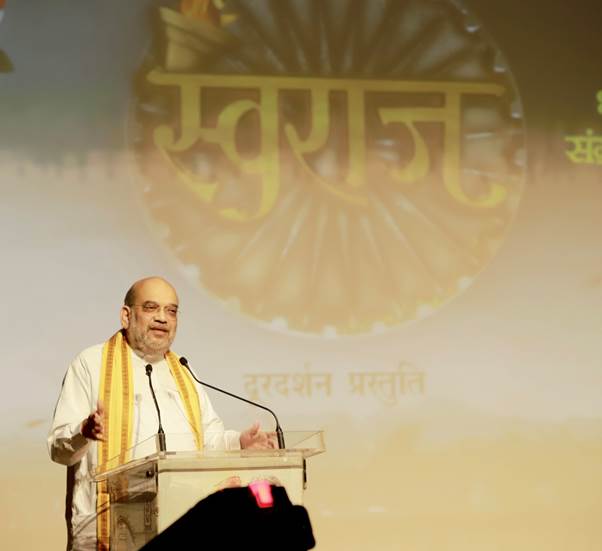
Doordarshan's Serial “Swaraj: Bharat ke Swatantrata Sangram ki Samagra Gatha”

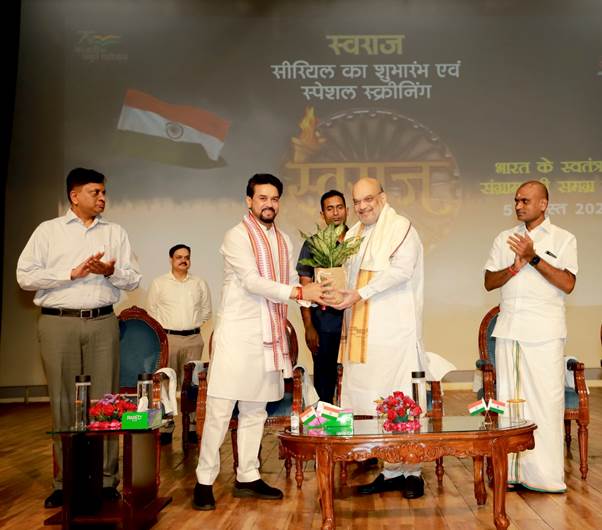
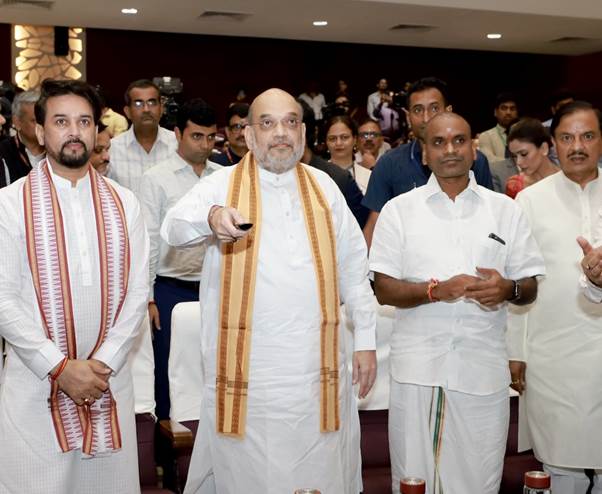
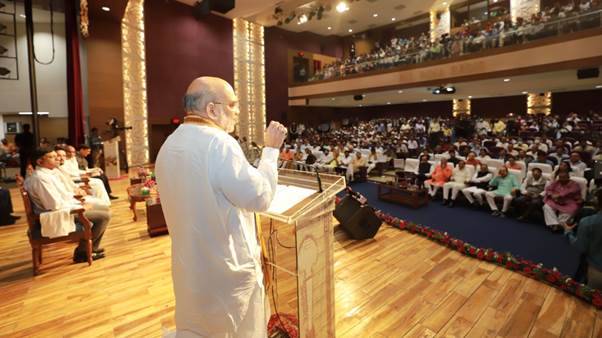
  Union Home and Cooperation Minister Shri Amit Shah attended the launch and special screening program of Doordarshan’s“Swaraj: “Bharat ke Swatantrata Sangram ki Samagra Gatha” serial as the Chief Guest in New Delhi today. Union Information and Broadcasting Minister Shri Anurag Singh Thakur, Minister of State for Information and Broadcasting Dr. L. Murugan, Secretary, Ministry of Information and Broadcasting, ShriApoorva Chandra, Chief Executive Officer of PrasarBharati, Shri Mayank Kumar Agrawal and many other dignitaries were also present.

https://static.pib.gov.in/WriteReadData/userfiles/image/image001PGAT.jpg 

Speaking on the occasion, Shri Amit Shah said Doordarshan and All India Radio have stirred up the country from time to time through various programmes by cultivating and channelizing emotions and finally bringing together creative power. Shri Shah said only All India Radio and Doordarshan can express the feeling of India.

https://static.pib.gov.in/WriteReadData/userfiles/image/image002DJIT.jpg

The Union Home Minister said today’s programme has a special significance in itself because under the leadership of Prime Minister Narendra Modi, we are celebrating Azadi Ka Amrit Mahotsav which is very important for the Nation. We are glorifying our Independence in the country and abroad and our national achievements over the last 75 years. Millions of people, knowingly or unknowingly, sacrificed their lives so that we got ourFreedom, and we are also rememberingthem. At the same time, we are resolving to make a great India during the period from the AmritMahotsav to the Centenary of our Independence, and we are also expressing our strong willingness to put in the ideal efforts to fulfill these resolutions. Shri Amit Shah said that after the leap that the country is about to take,no one can stop India from becoming great. Doordarshan has undertaken production of75 episodes of the “Swaraj” serial under the leadership of Union Information and Broadcasting Minister Shri Anurag Singh Thakur.

https://static.pib.gov.in/WriteReadData/userfiles/image/image003DMBM.jpg 


Shri Amit Shah said that the meaning of the word Swaraj in India is not limited to self-government. The word Swaraj in itself means to make the whole of India Independent and to run our affairs in our own way. The word Swaraj means swa-bhasha, swa-dharm and swa-sanskriti and our own arts. Unless we understand the spirit of Swaraj literally, India cannot achieve Swaraj in the true sense. He said that over the past 75 years, everyone has made efforts to take the nation forward. But if we are not able to save our languages when the Centenary of Independence is celebrated, if we cannot pass on our history to the next generation and if we cannot save our culture which has been continuous for thousands of years, then can we achieve Swaraj? He said those who ruled us had destroyed our excellently developed systems. They could rule over us only if they created an inferiority complex in us, because we were ahead of them in every field. We were far ahead of them in humanitarian and governance values. The India which has given the Gita, the Vedas, the numeral zero and astronomy to the world. Those who ruled over us also tried to create myths about the knowledge we possessed, they created an inferiority complex about our languages, our culture, and our ability to govern.

https://static.pib.gov.in/WriteReadData/userfiles/image/image004CJT0.jpg


The Union Home Minister said the 75-week long “Swaraj” serial will be translated and shown in all Indian languages. The purpose of the serial should be to uproot every inferiority complex and bring a sense of pride in our people, it is only then that will we be able to fulfill the objectives of Swaraj and this will be the biggest achievement of Azadi Ka Amrit Mahotsav. Shri Shah told the youth gathered at the function, that those who do not glorify the positive aspects of their history, can never create a great future for themselves. If the country has to have a great future, then our great history has to create pride in the youth. The Home Minister said he has complete faith that this serial will move our youth and create pride amongst them about our history and we will move forward with greater speed towards the creation of a great Indiaunder the leadership of Prime Minister Narendra Modi.

********