What is Visual Design

Visual design is a creative concept that aims to communicate to the visitor what is needed for the business. At its core, it’s an environment that focuses attention on. Visual design with the help of results and applications used performs the function of informing. The task of a visual designer is to show the organization of the process and lead the client to purchase a specific product or service. Visual designers focus on the look and feel of the product and brand, showing their best sides.

Web studio Laroche www.laroche.co reports that design is a complex art that can motivate the client to action. A competent designer not only uses theoretical knowledge, tries to introduce new “chips” and apply special techniques. With the help of a combination, you can really create an extraordinary, memorable site.

Basic principles of visual design

Visual design concepts will help to implement the set goals and lead the site visitor to the final result. To accomplish this task, you should be guided by certain principles of site design.

  • Lines. The simplest connection of two points, which is used to create a form and its derived components. All lines have length, width and directions. They create a motion effect. Emphasize the right data.
  • Blocks. Certain areas that carry functionality and perform the assigned task. To outline the areas, lines are used, different colors are used. The blocks have a task – to hold the visitor’s gaze.
  • Color. Selected for specific tasks. The purpose of the chosen color is to divide objects, focus attention, organize the presentation of information. Shades and halftones are used in order to psychologically affect visitors. The game of shades can both distract and retain the visitor.
  • Texture. An element that visually shows how the surface is represented. It creates and forms models. They are used to attract or distract attention, lead the visitor to the ultimate goal. Textured visualization will be able to create the effect of realism.
  • Printing house. You should know that the use of fonts is important. Something needs to be highlighted, something is lowered down, into the “footer” of the site. Depending on which font was chosen, the functional value of the information is determined. The correct font decorates the site, contributes to the visual representation of the site.
  • Form. This includes three-dimensional objects that are depicted in a realistic style. A form is created by combining multiple objects. It can be expanded or differentiated using tones, textures, or colors. With the help of the form, it is possible to “play” with the attention of visitors.
  • Space. With the help of an area that focuses attention or looks away, you can visually convey information. Space is used to convey the necessary to the client or distract him. Performs an important role in the design of the site and the demonstration of objects for site guests.
  • Visual concept. In fact, this is the most important thing in design. The main thing for a designer is to keep in mind the goal for which the site is made. A strong concept will necessarily fulfill the task and help to convey information to the consumer. Competently thought-out design will fulfill all the tasks and lead to their implementation. All actions should lead to a positive result.

These are the basic principles of visual design. In addition to the main ones, there are several others. This includes scale, dominance and similarities. Applying the basic formulas, it will be easy for the designer to perform the task, to convey the necessary information to the visitor.
What is Visual Design

Visual design is a creative concept that aims to communicate to the visitor what is needed for the business. At its core, it’s an environment that focuses attention on. Visual design with the help of results and applications used performs the function of informing. The task of a visual designer is to show the organization of the process and lead the client to purchase a specific product or service. Visual designers focus on the look and feel of the product and brand, showing their best sides.

Web studio Laroche www.laroche.co reports that design is a complex art that can motivate the client to action. A competent designer not only uses theoretical knowledge, tries to introduce new “chips” and apply special techniques. With the help of a combination, you can really create an extraordinary, memorable site.

Basic principles of visual design

Visual design concepts will help to implement the set goals and lead the site visitor to the final result. To accomplish this task, you should be guided by certain principles of site design.

  • Lines. The simplest connection of two points, which is used to create a form and its derived components. All lines have length, width and directions. They create a motion effect. Emphasize the right data.
  • Blocks. Certain areas that carry functionality and perform the assigned task. To outline the areas, lines are used, different colors are used. The blocks have a task – to hold the visitor’s gaze.
  • Color. Selected for specific tasks. The purpose of the chosen color is to divide objects, focus attention, organize the presentation of information. Shades and halftones are used in order to psychologically affect visitors. The game of shades can both distract and retain the visitor.
  • Texture. An element that visually shows how the surface is represented. It creates and forms models. They are used to attract or distract attention, lead the visitor to the ultimate goal. Textured visualization will be able to create the effect of realism.
  • Printing house. You should know that the use of fonts is important. Something needs to be highlighted, something is lowered down, into the “footer” of the site. Depending on which font was chosen, the functional value of the information is determined. The correct font decorates the site, contributes to the visual representation of the site.
  • Form. This includes three-dimensional objects that are depicted in a realistic style. A form is created by combining multiple objects. It can be expanded or differentiated using tones, textures, or colors. With the help of the form, it is possible to “play” with the attention of visitors.
  • Space. With the help of an area that focuses attention or looks away, you can visually convey information. Space is used to convey the necessary to the client or distract him. Performs an important role in the design of the site and the demonstration of objects for site guests.
  • Visual concept. In fact, this is the most important thing in design. The main thing for a designer is to keep in mind the goal for which the site is made. A strong concept will necessarily fulfill the task and help to convey information to the consumer. Competently thought-out design will fulfill all the tasks and lead to their implementation. All actions should lead to a positive result.

These are the basic principles of visual design. In addition to the main ones, there are several others. This includes scale, dominance and similarities. Applying the basic formulas, it will be easy for the designer to perform the task, to convey the necessary information to the visitor.

Upcoming Car In August 2022: Which 5 luxurious cars

After a few months, the festive season is about to come, in view of which the vehicle manufacturing companies are making various strategies. Many vehicles have been launched in July this month, while 5 cars are going to be launched in August 2022 as well. Let’s know the list of upcoming cars

  1. New Hyundai Tucson – Launch on August 4
    The price of Hyundai Tusson is going to be revealed on August 4. The Hyundai Tucson has been kept longer and wider and the wheelbase has been increased by 3.4 inches. Apart from this, the Hyundai logo and four-spoke steering wheel will be seen on the rear windshield. In terms of lighting, the Tucson will get a large front grille with integrated LED DRLs. The SUV will be equipped with LED lighting at the front and rear.
  2. Toyota Hyryder – Launch on August 16
    Toyota Highrider will be launched in the Indian market on 16th August. The highlight of the Hyryder is its mild-hybrid petrol engine, a first of its kind in its segment. It is also the first model in the segment to get all-wheel-drive in the mild-hybrid variant. The High Rider is powered by a 1.5-litre engine. This engine gives an output of 68 kW and is capable of generating 122Nm of pickup torque.
  3. Five Mahindra Electric SUVs – Unveil on August 15
    Mahindra is building the Bourne Electric Platform, which aims to make Mahindra’s electric cars. The company is set to introduce its 5 new electric cars on August 15.
  4. New Maruti Alto – Launch on August 18
    This third generation Alto will be the first fully redesigned model in itself. Based on the spy images found earlier, the upcoming Alto can share the styling from the new Celerio that was launched last year. This could include bigger sweptback headlamps, reprofiled front and rear bumpers, new fog lamp housings and updated taillights. The new Alto can be launched on August 18.
  5. Mercedes AMG EQS 53 4Matic+ – Launch on August 24
    Luxury vehicle maker Mercedes is all set to launch the Mercedes AMG EQS 53 4Matic+ on 24th August next month.

Upcoming Car In August 2022: Which 5 luxurious cars

After a few months, the festive season is about to come, in view of which the vehicle manufacturing companies are making various strategies. Many vehicles have been launched in July this month, while 5 cars are going to be launched in August 2022 as well. Let’s know the list of upcoming cars

  1. New Hyundai Tucson – Launch on August 4
    The price of Hyundai Tusson is going to be revealed on August 4. The Hyundai Tucson has been kept longer and wider and the wheelbase has been increased by 3.4 inches. Apart from this, the Hyundai logo and four-spoke steering wheel will be seen on the rear windshield. In terms of lighting, the Tucson will get a large front grille with integrated LED DRLs. The SUV will be equipped with LED lighting at the front and rear.
  2. Toyota Hyryder – Launch on August 16
    Toyota Highrider will be launched in the Indian market on 16th August. The highlight of the Hyryder is its mild-hybrid petrol engine, a first of its kind in its segment. It is also the first model in the segment to get all-wheel-drive in the mild-hybrid variant. The High Rider is powered by a 1.5-litre engine. This engine gives an output of 68 kW and is capable of generating 122Nm of pickup torque.
  3. Five Mahindra Electric SUVs – Unveil on August 15
    Mahindra is building the Bourne Electric Platform, which aims to make Mahindra’s electric cars. The company is set to introduce its 5 new electric cars on August 15.
  4. New Maruti Alto – Launch on August 18
    This third generation Alto will be the first fully redesigned model in itself. Based on the spy images found earlier, the upcoming Alto can share the styling from the new Celerio that was launched last year. This could include bigger sweptback headlamps, reprofiled front and rear bumpers, new fog lamp housings and updated taillights. The new Alto can be launched on August 18.
  5. Mercedes AMG EQS 53 4Matic+ – Launch on August 24
    Luxury vehicle maker Mercedes is all set to launch the Mercedes AMG EQS 53 4Matic+ on 24th August next month.

Poverty in India


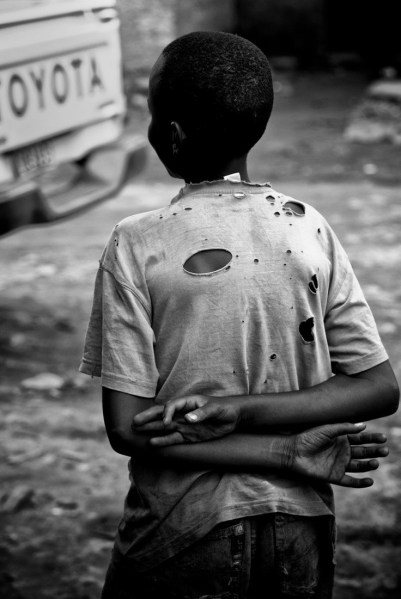
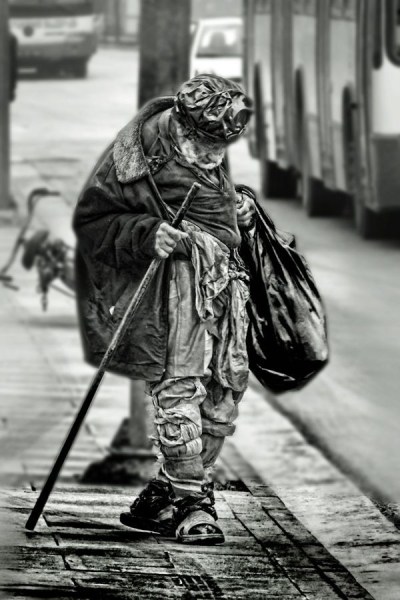
Poverty is defined as the lack of sufficient money to meet basic needs such as food and shelter. Poverty is a situation in which a person is homeless and has very little money. Due to the growing population in urban areas, India’s poverty rate is rising. The most important fact is that huge numbers of people live in poverty, with the majority living on the edge of it. Poverty in India is mostly observed in rural regions due to a large number of uneducated and unemployed people within the growing population.Many people cannot afford proper food for their daily lives, and because they do not have their own homes, they sleep on streets or footpaths. As a result, more people require more food, money, and shelter, but poverty grows rapidly due to a lack of these resources. This is why the rich become richer and the poor become poorer, making it difficult to bridge the gap. Poverty has several consequences, including poor housing, illiteracy, increased child labor and unemployment, and poor hygiene. As a result, these poor individuals cannot afford a balanced diet, decent clothes, or a good education for the simple reason that they do not have enough money.

Poverty may be reduced by providing sufficient education and facilities to farmers, allowing them to become more profitable and not feel the need to migrate to cities in search of work. Also, uneducated individuals should receive a good education to improve their lives, and family planning is also necessary for getting out of poverty. Poverty in our country dates back to ancient times, when the poor were not given the same privileges as the wealthy, and they were even denied access to religious places. Unemployment, a lack of education, poor resource utilization, corruption, and poor government policy are all major causes of poverty.In India, poverty is high when compared to other nations due to the poor growth rate of per capita income per person. Due to a lack of career prospects, many individuals work as rickshaw pullers, construction laborers, domestic servants, and other low-wage jobs, which leads them to live in slum areas.In addition, lack of land resources has been one of the key reasons for poverty in India; even small farmers in our nation are poor since they cultivate but do not receive fair pay in terms of profit, resulting in poverty.

India’s population has been rapidly increasing. In 1991, India’s population was around 84.3 crores, with a high rate of poverty; now, our country’s population is around 130 crores, with the population nearly doubling in the last three decades, but not enough has been done to control poverty in our country. As the population grows, so does unemployment, and poverty is just a reflection of unemployment. More capital is necessary for developing industry, providing adequate transportation, and other projects, as a result of which the country’s deficiency is underdeveloped and more people live in poverty. Lack of skilled labor also contributes to poverty since less-skilled workers lack industrial training and education and miss out on opportunities that more skilled workers can avail. Lack of infrastructure means that transportation and communication have not been properly developed, resulting in farmers receiving fertilisers for cultivation late and industries receiving power and raw materials not on time and thus, end products not being properly marketed and reaching customers on time. Hence, to escape poverty, our government must be more serious, and citizens must share equal responsibility.Remarkably, as a result of rural-to-urban migration, the incidence of rural poverty has fallen steadily. First and foremost, population growth should be strictly controlled to tackle the serious problem of poverty. Other approaches to fight this problem include expanding work possibilities, educating people, eliminating black money, decentralized planning, and assisting women and youth in becoming


“Poverty is not created by poor people”

Poverty in India


Poverty is defined as the lack of sufficient money to meet basic needs such as food and shelter. Poverty is a situation in which a person is homeless and has very little money. Due to the growing population in urban areas, India’s poverty rate is rising. The most important fact is that huge numbers of people live in poverty, with the majority living on the edge of it. Poverty in India is mostly observed in rural regions due to a large number of uneducated and unemployed people within the growing population.Many people cannot afford proper food for their daily lives, and because they do not have their own homes, they sleep on streets or footpaths. As a result, more people require more food, money, and shelter, but poverty grows rapidly due to a lack of these resources. This is why the rich become richer and the poor become poorer, making it difficult to bridge the gap. Poverty has several consequences, including poor housing, illiteracy, increased child labor and unemployment, and poor hygiene. As a result, these poor individuals cannot afford a balanced diet, decent clothes, or a good education for the simple reason that they do not have enough money.

Poverty may be reduced by providing sufficient education and facilities to farmers, allowing them to become more profitable and not feel the need to migrate to cities in search of work. Also, uneducated individuals should receive a good education to improve their lives, and family planning is also necessary for getting out of poverty. Poverty in our country dates back to ancient times, when the poor were not given the same privileges as the wealthy, and they were even denied access to religious places. Unemployment, a lack of education, poor resource utilization, corruption, and poor government policy are all major causes of poverty.In India, poverty is high when compared to other nations due to the poor growth rate of per capita income per person. Due to a lack of career prospects, many individuals work as rickshaw pullers, construction laborers, domestic servants, and other low-wage jobs, which leads them to live in slum areas.In addition, lack of land resources has been one of the key reasons for poverty in India; even small farmers in our nation are poor since they cultivate but do not receive fair pay in terms of profit, resulting in poverty.

India’s population has been rapidly increasing. In 1991, India’s population was around 84.3 crores, with a high rate of poverty; now, our country’s population is around 130 crores, with the population nearly doubling in the last three decades, but not enough has been done to control poverty in our country. As the population grows, so does unemployment, and poverty is just a reflection of unemployment. More capital is necessary for developing industry, providing adequate transportation, and other projects, as a result of which the country’s deficiency is underdeveloped and more people live in poverty. Lack of skilled labor also contributes to poverty since less-skilled workers lack industrial training and education and miss out on opportunities that more skilled workers can avail. Lack of infrastructure means that transportation and communication have not been properly developed, resulting in farmers receiving fertilisers for cultivation late and industries receiving power and raw materials not on time and thus, end products not being properly marketed and reaching customers on time. Hence, to escape poverty, our government must be more serious, and citizens must share equal responsibility.Remarkably, as a result of rural-to-urban migration, the incidence of rural poverty has fallen steadily. First and foremost, population growth should be strictly controlled to tackle the serious problem of poverty. Other approaches to fight this problem include expanding work possibilities, educating people, eliminating black money, decentralized planning, and assisting women and youth in becoming self-sufficient.


“Paverty” is not created by “poor people”

linkages between development and spread of extremism

In Indian scenario, extremism activities are increasing rapidly. The scale of the extremists operations is massive and consequently these activities have perilous impact on nation’s social, economic and political development.Many scholars explained the notion of extremism as any ideology considered to be far outside the normal attitudes of society or to interrupt common moral standards. It is usually constructed with moderation or extremists with moderates. Various political writers signified that extremism also has numerous strands starting from just holding to one’s ideas and values on one end of the continuum and use of violent means for nuisance on the other end. Thus, extremism is considered as a complex phenomenon.

Natural Calamities: During the last decade of the 19th century, affliction of people was filled to the brim. Famine, plague, earthquake, war and repressions were let loose in the country. From 1896 to 1900 prolonged and catastrophic famines occurred throughout the length and breadth of the land in a bewildering succession. In 1896 bubonic plague broke out in Bombay and took a toll of millions of lives. These natural calamities were accompanied by the intensified exploitation and suppression by the Government. Such devastating conditions led to development of extremist.

Labour, Unemployment and wages:
Another intense issue that spreads extremism is joblessness which creates insecurity of living. People may develop dissatisfaction and anger both in urban and rural areas. In allocation of government jobs, there has been shown some favouritism and this activity leads to dissatisfaction among youth as they are being ignored.

Policing:Improper policies and their ineffective implementation may result in extremist activities among weaker sections of society. It is very necessary that government must consider poor people when devising policies for economic growth of country. These policies must be well-organized and unprejudiced which reveal good administration .Weaker section of people does not have much confidence in police. People have no faith that justice will be done to them against the powerful person in the society. Such impression about government officials develops extremist thoughts among poorer section of society.

Process of getting Justice:When lower section of society is struggling with various issues related to survival or employment and their conflicts and disputes are not settled in time, frustration among people in society develops. Presently, judicial system of India is very time consuming and disputes are not settled in short time. The parties to the dispute lose control over even the terms and details of the dispute once it goes to the court. These factors create extremist feelings among sufferers.


Extremism in the defense of liberty is no vice. And moderation in the pursuit of justice is no virtue.

-Barry Goldwater

Linkages between development and spread of extremism

In Indian scenario, extremism activities are increasing rapidly. The scale of the extremists operations is massive and consequently these activities have perilous impact on nation’s social, economic and political development.Many scholars explained the notion of extremism as any ideology considered to be far outside the normal attitudes of society or to interrupt common moral standards. It is usually constructed with moderation or extremists with moderates. Various political writers signified that extremism also has numerous strands starting from just holding to one’s ideas and values on one end of the continuum and use of violent means for nuisance on the other end. Thus, extremism is considered as a complex phenomenon.

Natural Calamities: During the last decade of the 19th century, affliction of people was filled to the brim. Famine, plague, earthquake, war and repressions were let loose in the country. From 1896 to 1900 prolonged and catastrophic famines occurred throughout the length and breadth of the land in a bewildering succession. In 1896 bubonic plague broke out in Bombay and took a toll of millions of lives. These natural calamities were accompanied by the intensified exploitation and suppression by the Government. Such devastating conditions led to development of extremist.

Labour, Unemployment and wages:
Another intense issue that spreads extremism is joblessness which creates insecurity of living. People may develop dissatisfaction and anger both in urban and rural areas. In allocation of government jobs, there has been shown some favouritism and this activity leads to dissatisfaction among youth as they are being ignored.

Policing:Improper policies and their ineffective implementation may result in extremist activities among weaker sections of society. It is very necessary that government must consider poor people when devising policies for economic growth of country. These policies must be well-organized and unprejudiced which reveal good administration .Weaker section of people does not have much confidence in police. People have no faith that justice will be done to them against the powerful person in the society. Such impression about government officials develops extremist thoughts among poorer section of society.

Process of getting Justice:
When lower section of society is struggling with various issues related to survival or employment and their conflicts and disputes are not settled in time, frustration among people in society develops. Presently, judicial system of India is very time consuming and disputes are not settled in short time. The parties to the dispute lose control over even the terms and details of the dispute once it goes to the court. These factors create extremist feelings among sufferers.


Extremism in the defense of liberty is no vice. And moderation in the pursuit of justice is no virtue.

-Barry Goldwater

Anthropology

Anthropology is the systematic study of humanity, with the goal of understanding our evolutionary origins, our distinctiveness as a species, and the great diversity in our forms of social existence across the world and through time. The focus of Anthropology is on understanding both our shared humanity and diversity, and engaging with diverse ways of being in the world.

Throughout its existence as an academic discipline, anthropology has been located at the intersection of natural science and humanities. The biological evolution of Homo sapiens and the evolution of the capacity for culture that distinguishes humans from all other species are indistinguishable from one another. While the evolution of the human species is a biological development like the processes that gave rise to the other species, the historical appearance of the capacity for culture initiates a qualitative departure from other forms of adaptation, based on an extraordinarily variable creativity not directly linked to survival and ecological adaptation. The historical patterns and processes associated with culture as a medium for growth and change, and the diversification and convergence of cultures through history, are thus major foci of anthropological research

In the middle of the 20th century, the distinct fields of research that separated anthropologists into specialties were physical anthropology, emphasizing the biological process and endowment that distinguishes Homo sapiens from other species, archaeology, based on the physical remnants of past cultures and former conditions of contemporary cultures, usually found buried in the earth, linguistic anthropology, emphasizing the unique human capacity to communicate through articulate speech and the diverse languages of humankind, and social and/or cultural anthropology, emphasizing the cultural systems that distinguish human societies from one another and the patterns of social organization associated with these systems.


If there were a science of human beings it would be anthropology that aims at understanding the totality of experience through structural context

-William Dilthey

Pharmacology

Pharmacology is the science that deals with drugs.Pharmacology consists of detailed study of drugs, particularly drugs action on living animals, tissues or organs. The action of drugs may be beneficial or harmful.Pharmacology is the science in which we study the response of living animals to chemicals drug Pharmacology is defined as the study of the effects of drugs on the structures and metabolism of natural tissues.Pharmacology can be defined as the study of the manner in which the functions of living system is affected or influenced by chemicals.This subject deals with the properties and effects of drugs and in broad sense, it can be defined as the study of interactions between chemical substances and biological systems.While defining in broad sense, it includes the knowledge of the history, source, physical and chemical properties, compounding, bio-chemical and physiological effects, mechanism of action, absorption, distribution, metabolism, excretion and therapeutic and other effects of drugs.

Diseases are as old as man. Fighting disease with drugs is an endless task that originated from existence of mankind. Drugs have its origin with illness and the later has been associated with evolution. Just imagine about the nomads, the primitive man, who was wanderer, a food gatherer and shelter seeking. There was no concept of family.There were no clothes, men and women were wandering naked. Gradually the notion of family started and he lived together with so called his family members. If any of them died the pain of death he might have felt. He must have thought about death. Why some person dies? And then fear of death might have occurred to him. He must have started thinking about death.Homosapiens being the intelligent most among the species evolved, based on the principles of “necessity” and “trial” could observe effectiveness of many plants in relief for his pains and sufferings. The primitive (early) history of the causative agents of diseases included wrong Gods, spirits witches and other evil influences.
The form of therapy was incantation, prayer and ceremony designed to appease the evil agents of the diseases. They were using sacrifice of animals, individuals and prayers.The tribal leaders were known as medicine men or the expert or witch doctors (Ojha), were very powerful men and leader in such all ceremonies. In addition, they had knowledge about certain plants and animal products to be used in the treatment of certain diseases. The first treatise on medicine was undoubtedly the Ayurveda in India and that is at least 500 years ahead of the Greek Medicine.The medical literature was related to metaphysics, hypnotism etc. and belief in supernatural agencies as the cause and cure of diseases. Thus, in India, this was originally a part of the fourth Veda called the Atharva Veda. The real father of Indian Medicine was Atrya with his distinguished disciples-Agnivesha, Bhala, Jatukarana, parasara, Harita and Ksharapani.

Started with Oswald Schmiedeberg (1838-1921). He was excellent teacher of Pharmacology and attracted many persons to study this subject. Like other experimental sciences, Pharmacology, too, is highly dependent upon development in other branches of science.Spectacular developments in physiology, biochemistry, organic chemistry and molecular biology have greatly contributed in advancement of pharmacology. Conversion of the old pharmacology into modern pharmacology is fairly recent and probably started taking shape following introduction of experimental procedures in animals by Francois Megendie (1783-1855) and Claude Bernard (1813-1978).Oswald Schmiedeberg (1838-1921) introduced the technique of per-fusing isolated organs and study the effects of drugs on them. Abel, Cushny, Gottlieb and a galaxy of his other students popularized the expertise in their respective, countries. Thus Oswald become popular as ‘Father of modern Pharmacology’.


Pharmacology is benefited by the prepared mind. You need to know what you are looking for.

Pharmacology

Pharmacology is the science that deals with drugs. Pharmacology consists of detailed study of drugs, particularly drugs action on living animals, tissues or organs. The action of drugs may be beneficial or harmful. Pharmacology is the science in which we study the response of living animals to chemicals or drugs. Pharmacology is defined as the study of the effects of drugs on the structures and metabolism of naturaltissue.Pharmacology can be defined as the study of the manner in which the functions of living system is affected or influenced by chemicals.This subject deals with the properties and effects of drugs and in broad sense, it can be defined as the study of interactions between chemical substances and biological systems. While defining in broad sense, it includes the knowledge of the history, source, physical and chemical properties, compounding, bio-chemical and physiological effects, mechanism of action, absorption, distribution, metabolism, excretion and therapeutic and other effects of drugs.

Homosapiens being the intelligent most among the species evolved, based on the principles of “necessity” and “trial” could observe effectiveness of many plants in relief for his pains and sufferings. The primitive (early) history of the causative agents of diseases included wrong Gods, spirits witches and other evil influences.
The form of therapy was incantation, prayer and ceremony designed to appease the evil agents of the diseases. They were using sacrifice of animals, individuals and prayers.The tribal leaders were known as medicine men or the expert or witch doctors (Ojha), were very powerful men and leader in such all ceremonies. In addition, they had knowledge about certain plants and animal products to be used in the treatment of certain diseases. The first treatise on medicine was undoubtedly the Ayurveda in India and that is at least 500 years ahead of the Greek Medicine.The medical literature was related to metaphysics, hypnotism etc. and belief in supernatural agencies as the cause and cure of diseases. Thus, in India, this was originally a part of the fourth Veda called the Atharva Veda. The real father of Indian Medicine was Atrya with his distinguished disciples-Agnivesha, Bhala, Jatukarana, parasara, Harita and Ksharapani.Works of Bhala and Harita are still available in fragments and those of Agnivesha were edited by Charaka which stand unsurpassed as a standard and authoritative book on Ayurveda even to day, other works are yet untraced. The next outstanding personality in Indian medicine was Susrutha whose works stand second to Charaka (a surgeon). He mentioned many instruments and techniques.

Started with Oswald Schmiedeberg (1838-1921). He was excellent teacher of Pharmacology and attracted many persons to study this subject. Like other experimental sciences, Pharmacology, too, is highly dependent upon development in other branches of science.Spectacular developments in physiology, biochemistry, organic chemistry and molecular biology have greatly contributed in advancement of pharmacology. Conversion of the old pharmacology into modern pharmacology is fairly recent and probably started taking shape following introduction of experimental procedures in animals by Francois Megendie (1783-1855) and Claude Bernard (1813-1978).Oswald Schmiedeberg (1838-1921) introduced the technique of per-fusing isolated organs and study the effects of drugs on them. Abel, Cushny, Gottlieb and a galaxy of his other students popularized the expertise in their respective, countries. Thus Oswald become popular as ‘Father of modern Pharmacology’.


Pharmacology is benefited by the prepared mind. You need to know what you are looking for.

Criminal Justice System in India

The aim of the Criminal Justice System is to punish the guilty and protect the innocent. Although the broad contours of the Criminal justice system are seldom codified, these can be inferred from different statutes, including the Constitution and judicial pronouncements. In a democratic civilized society, the Criminal Justice System is expected to provide the maximum sense of security to the people at large by dealing with crimes and criminals effectively, quickly and legally. More specifically, the aim is to reduce the level of criminality in society by ensuring maximum detection of reported crimes, conviction of the accused persons without delay, awarding appropriate punishments to the convicted to meet the ends of justice and to prevent recidivism.In this article, we shall be discussing the history and evolution of the system, the institutions, along with various perspectives of the constitutional aspect of rights of citizens, efforts for reforms, and delivery of justice.

Criminal law, including all matters included in the Indian Penal Code, Criminal procedure, including all matters included in the Code of Criminal Procedure feature under the concurrent list of the 7th Schedule as entries-1, and 2 respectively.Certain exceptions are also provided under these two provisions(Entry-1, and 2) of the 7th Schedule. For example, offences against laws with respect to the matters specified in List-I or List-II of the 7th Schedule of the constitution, excluding the use of naval, military or air forces or any other armed forces come under this category.

•The Criminal Justice System in India follows the legal procedures established by the British during the pre-independence era.
•An Indian Penal Code (IPC) defining crime and prescribing appropriate punishments was adopted in 1860, prepared by the first Law Commission of India.
•It was developed in line with the English criminal law.
•Code of Criminal Procedure was enacted in 1861 and established the rules to be followed in all stages. This was amended in 1973.
•The NN Vohra Committee, set up in 1993, observed increasing criminalization of politics, talked of the unholy nexus.
•It was an effort to push the reforms in the criminal justice system.
•In 2000, the Government of India formed a panel headed by the former Chief Justice of Kerala and Karnataka, Justice V.S. •Malimath, to suggest an overhaul of the century-old criminal justice system.
•In 2003, the Justice Malimath Committee submitted a report with 158 recommendations.
•The Committee opined that the existing system “weighed in favour of the accused and did not adequately focus on justice to the victims of crime.”

The entire existence of an orderly society depends upon the sound and efficient functioning of the Criminal Justice System. The law of the land has to be in tune with the demands of the changing times and nature of complexities in offences. There should be a broader dialogue among all the stakeholders for effective provisions so that the interest of justice is served and served right, where no innocent suffers prejudice, exclusion leading to miscarriage of justice.

Similarly, the rules and procedures established by law need to reach the common man, and the role of civil society in this endeavour is paramount. Further, there is a need to streamline the police reforms, beef up the forensic evidence-based investigation, and prioritize advanced scientific analysis which must be strengthened and upgraded, catering to the demands of the present times. The infrastructural challenges confronting the judiciary must be addressed to facilitate the process of ensuring justice.


The criminal justice system, like any
system designed by human beings,
clearly has its flaws.

Criminal Justice System in India

The aim of the Criminal Justice System is to punish the guilty and protect the innocent. Although the broad contours of the Criminal justice system are seldom codified, these can be inferred from different statutes, including the Constitution and judicial pronouncements. In a democratic civilized society, the Criminal Justice System is expected to provide the maximum sense of security to the people at large by dealing with crimes and criminals effectively, quickly and legally. More specifically, the aim is to reduce the level of criminality in society by ensuring maximum detection of reported crimes, conviction of the accused persons without delay, awarding appropriate punishments to the convicted to meet the ends of justice and to prevent recidivism.In this article, we shall be discussing the history and evolution of the system, the institutions, along with various perspectives of the constitutional aspect of rights of citizens, efforts for reforms, and delivery of justice.

Criminal law, including all matters included in the Indian Penal Code, Criminal procedure, including all matters included in the Code of Criminal Procedure feature under the concurrent list of the 7th Schedule as entries-1, and 2 respectively.Certain exceptions are also provided under two provisions(Entry-1, and 2) of the 7th Schedule. For example, offences against laws with respect to the matters specified in List-I or List-II of the 7th Schedule of the constitution, excluding the use of naval, military or air forces or any other armed forces come under this category.

•The Criminal Justice System in India follows the legal procedures established by the British during the pre-independence era.
•An Indian Penal Code (IPC) defining crime and prescribing appropriate punishments was adopted in 1860, prepared by the first Law Commission of India.
•It was developed in line with the English criminal law.
•Code of Criminal Procedure was enacted in 1861 and established the rules to be followed in all stages. This was amended in 1973.
•The NN Vohra Committee, set up in 1993, observed increasing criminalization of politics, talked of the unholy nexus.
•It was an effort to push the reforms in the criminal justice system.
•In 2000, the Government of India formed a panel headed by the former Chief Justice of Kerala and Karnataka, Justice V.S. Malimath, to suggest an overhaul of the century-old criminal justice system.
•In 2003, the Justice Malimath Committee submitted a report with 158 recommendations.
•The Committee opined that the existing system “weighed in favour of the accused and did not adequately focus on justice to the victims of crime.”

The entire existence of an orderly society depends upon the sound and efficient functioning of the Criminal Justice System. The law of the land has to be in tune with the demands of the changing times and nature of complexities in offences. There should be a broader dialogue among all the stakeholders for effective provisions so that the interest of justice is served and served right, where no innocent suffers prejudice, exclusion leading to miscarriage of justice. Similarly, the rules and procedures established by law need to reach the common man, and the role of civil society in this endeavour is paramount. Further, there is a need to streamline the police reforms, beef up the forensic evidence-based investigation, and prioritize advanced scientific analysis which must be strengthened and upgraded, catering to the demands of the present times. The infrastructural challenges confronting the judiciary must be addressed to facilitate the process of ensuring justice.


The criminal justice system, like any
system designed by human beings,
clearly has its flaws.

Psychology

Psychology has become a very important and popular subject today. It deals with many problems of everyday life. Psychology helps us to understand the behaviour of people around us, to find out why they behave differently and what forces are responsible to make them so different from others.It tries to explain wide array of factors involved in what we human beings do. The principles explained by psychology give us a rational basis of understanding of what we and others do. Psychology has been defined in many ways. In ancient days people were analysing the behavioural aspects on the basis of philosophy. They believed that there is a soul in every individual and this is responsible for all our activities.
This view led to the opinion that the subject matter of psychology must be the study of soul. But this definition could not answer the questions regarding the existence of soul and its accessibility for study. This condition led to a new definition by Greek philosophers who defined psychology as a ‘science of mind’. But this definition was also rejected on the same grounds as soul was rejected.

Gradually, as a result of the development of scientific outlook people started thinking on scientific basis and began to define psychology as a science of behaviour. Finally, it is JB Watson (1913) defined psychology as a science of behaviour of human as well as animal beings.Today this is the most accepted definition. In this definition the term behaviour includes the cognitive activities like thinking, reasoning, intelligence, imagining, memory, etc., co-native activities like walking, dancing, fighting, attacking and other action tendencies and also the affective activities like feeling, joy, happiness, sympathy, anger, jealousy, etc. in a person. This definition also includes the behaviour not only of human beings and animals, but also all living organisms and their mental processes.

Psychologists do experiments and make observations which others can repeat; they obtain data often in the form of quantitative measurements which others can verify. Like any other positive science psychology is also systematic in its approach. Measurement in psychology is often more difficult of course, than it is in other sciences.However, psychologists have devised many ingenious tests to assign numbers to data. Psychology is following all the principles of science like principles of behaviour,objective experimentation, analysis of data and behaviour, formulation of hypothesis, verification and generalization, etc.As a result of such a scientific approach many theories have been developed to explain the behaviour. Psychology believes in cause and effect relationship in behaviour. It is considered as a behavioural science as it deals with behaviour of the organism.

However, because of its objectivity in analysis of behaviour through experiments, it may be considered as a developing positive science of behaviour.


Psychology has a long past, but only a short history

Functions of National Disaster Management Authority NDMA

Evolution of NDMA

Emergence of an organization is always through an evolutionary process. NDMA has also gone through the same stages. The Government of India (GOI), in recognition of the importance of Disaster Management as a national priority, set up a High-Powered Committee (HPC) in August 1999 and a National Committee after the Gujarat earthquake, for making recommendations on the preparation of Disaster Management plans and suggesting effective mitigation mechanisms. The Tenth Five-Year Plan document also had, for the first time, a detailed chapter on Disaster Management. The Twelfth Finance Commission was also mandated to review the financial arrangements for Disaster Management.

On 23 December 2005, the Government of India enacted the Disaster Management Act, which envisaged the creation of National Disaster Management Authority (NDMA), headed by the Prime Minister, and State Disaster Management Authorities (SDMAs) headed by respective Chief Ministers, to spearhead and implement a holistic and integrated approach to Disaster Management in India.

The National Disaster Management Authority (NDMA), headed by the Prime Minister of India, is the apex body for Disaster Management in India. Setting up of NDMA and the creation of an enabling environment for institutional mechanisms at the State and District levels is mandated by the Disaster Management Act, 2005.

India envisions the development of an ethos of Prevention, Mitigation and Preparedness. The Indian government strives to promote a national resolve to mitigate the damage and destruction caused by natural and man-made disasters, through sustained and collective efforts of all Government agencies, Non-Governmental Organizations and People’s participation. This is planned to be accomplished by adopting a Technology-Driven, Pro-Active, Multi-Hazard and Multi-Sectoral strategy for building a Safer, Disaster Resilient and Dynamic India.

NDMA Vision

“To build a safer and disaster resilient India by a holistic, pro-active, technology driven and sustainable development strategy that involves all stakeholders and fosters a culture of prevention, preparedness and mitigation.”

Functions and Responsibilities

NDMA, as the apex body, is mandated to lay down the policies, plans and guidelines for Disaster Management to ensure timely and effective response to disasters. Towards this, it has the following responsibilities:-

  • Lay down policies on disaster management.
  • Approve the National Plan.
  • Approve plans prepared by the Ministries or Departments of the Government of India in accordance with the National Plan.
  • Lay down guidelines to be followed by the State Authorities in drawing up the State Plan.
  • Lay down guidelines to be followed by the different Ministries or Departments of the Government of India for the Purpose of integrating the measures for prevention of disaster or the mitigation of its effects in their development plans and projects.
  • Coordinate the enforcement and implementation of the policy and plans for disaster management.
  • Recommend provision of funds for the purpose of mitigation.
  • Provide such support to other countries affected by major disasters as may be determined by the Central Government.
  • Take such other measures for the prevention of disaster, or the mitigation, or preparedness and capacity building for dealing with threatening disaster situations or disasters as it may consider necessary.
  • Lay down broad policies and guidelines for the functioning of the National Institute of Disaster Management.

Policy

The National Policy framework has been prepared after due deliberation and keeping in view the National Vision to build a safe and disaster-resilient India by developing a holistic, proactive, multi-disaster and technology-driven strategy for DM. This will be achieved through a culture of prevention, mitigation and preparedness to generate a prompt and efficient response during disasters. The entire process will centre-stage the community and will be provided momentum and sustenance through the collective efforts of all government agencies and Non-Governmental Organizations.

In order to translate this vision into policy and plans, the NDMA has adopted a mission-mode approach involving a number of initiatives with the help of various institutions operating at the national, state and local levels. Central ministries, States and other stakeholders have been involved in the participatory and consultative process of evolving policies and guidelines.

This Policy framework is also in conformity with the International Strategy for Disaster Reduction, the Rio Declaration, the Millennium Development Goals and the Hyogo Framework 2005-2015. The themes that underpin this policy are:-

  • Community-based disaster management, including last mile integration of the policy, plans and execution.
  • Capacity development in all related areas.
  • Consolidation of past initiatives and best practices.
  • Cooperation with agencies at the national, regional and international levels.
  • Compliance and coordination to generate a multi-sectoral synergy.

NDMA Logo

NDMA logoThe NDMA Logo reflects the aspirations of this National Vision, of empowering all stakeholders to improve the effectiveness of Disaster Management in India. The Map of India, embossed in gold, in the middle of the logo, circumscribed by the National Tricolor of Saffron, White and Green represents the aspiration to contain the potential threat of natural and man-made disasters through Capacity Development of all stakeholders. The outer circle is a Golden Ring of Partnership of all Stakeholders, whose hand holding is an expression of their solidarity to supplement the efforts of the Government. NDMA in the inner circle in tranquil Blue integrates the entire process by empowering all stakeholders at the local, district, state and national levels. NDMA will catalyze this Community Empowerment through institutional capacity development, strengthened public awareness and community resilience by mainstreaming disaster management in India.