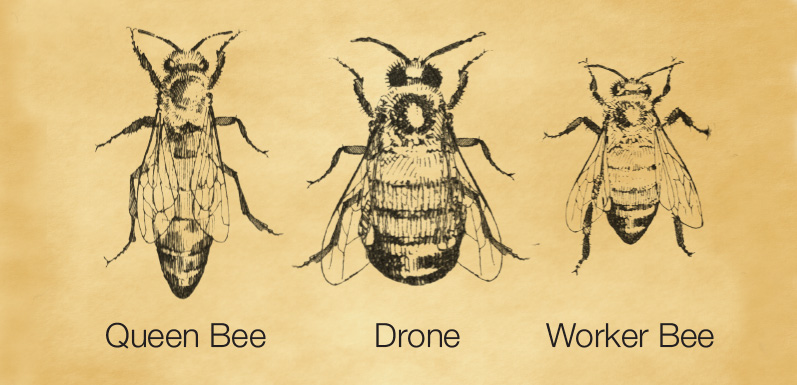
There are almost 20,000 different species of bees in the world. Bees live in colonies and in each colony, there are three types of bees, the queen bee, the worker bee, and the drone. The worker and the queen bee both are females, but only the queen bee can reproduce. All drones are male.
Types of Bees
World Bee Day is celebrated annually on 20th of May. The day marks the birth anniversary of Anton Jansa, a pioneer of modern apiculture. Anton Jansa hailed from a family of beekeepers in Slovenia, where beekeeping is an important agricultural activity with a long-standing tradition. His book ‘Discussion on Bee-keeping’ was also published in German.
Theme for 2022:Bee Engaged: Celebrating the diversity of bees and beekeeping systems.
World bee day – 20 May
Significance of Beekeeping?
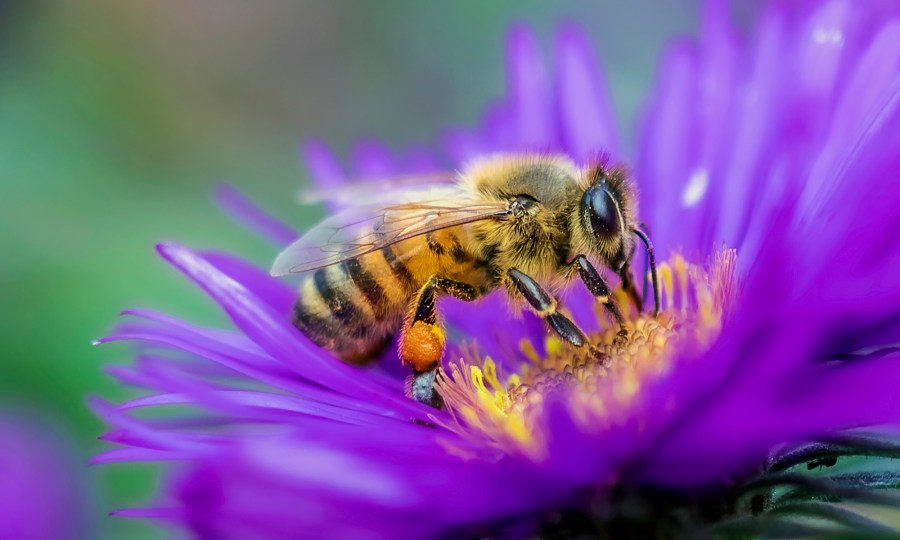
Pollinators: Bees are some of the most important pollinators, ensuring food security, sustainable agriculture, and biodiversity.
Contribute to the Mitigation of Climate Change: the protection of bees and the beekeeping sector can help reduce poverty and hunger and preserve a healthy environment and biodiversity.
Sustainable Agriculture and Creating Rural Jobs: By pollinating, they increase agricultural production, thus maintaining diversity and variety in the fields and provide millions of people with jobs.
Status of the Apiculture in India
India is the sixth major natural honey exporting country.
The major export destinations are the USA, Saudi Arab, Canada, and Qatar.
The Indian apiculture market size is expected to reach a value of Rs 33,128 million by 2024, expanding at a CAGR of nearly 12% by 2024.
Psychology has become one of the most popular and important subjects nowadays. It is the study of the mind and behavior, according to the American Psychological Association. The discipline of psychology is broadly divisible into two parts: a large profession of practitioners and a smaller but growing science of mind, brain, and social behavior. The […]
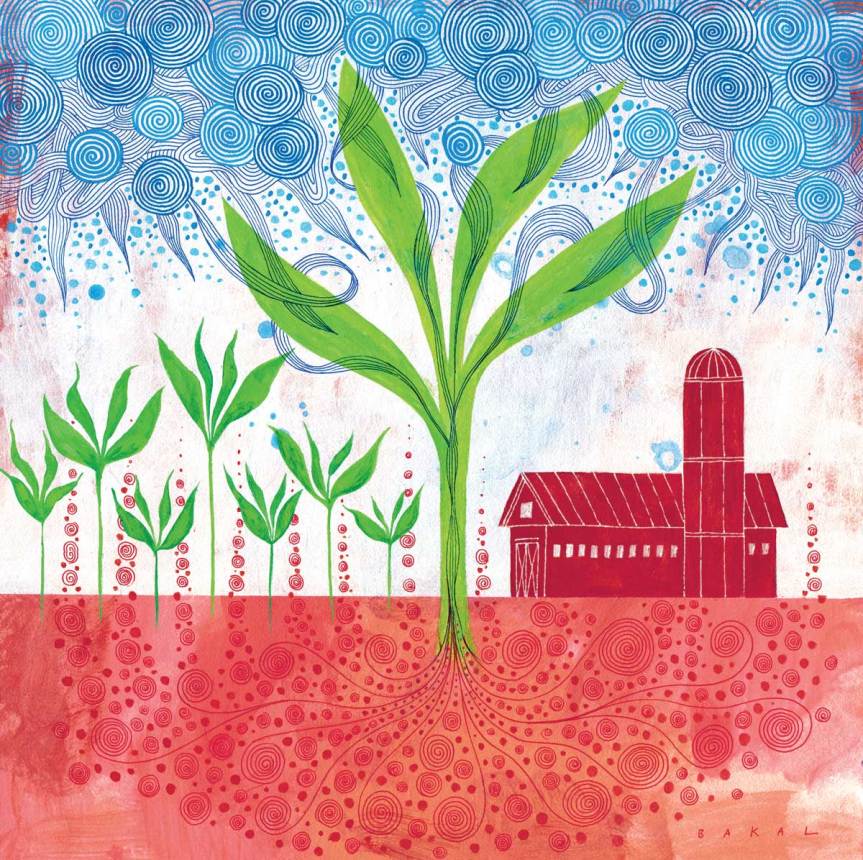
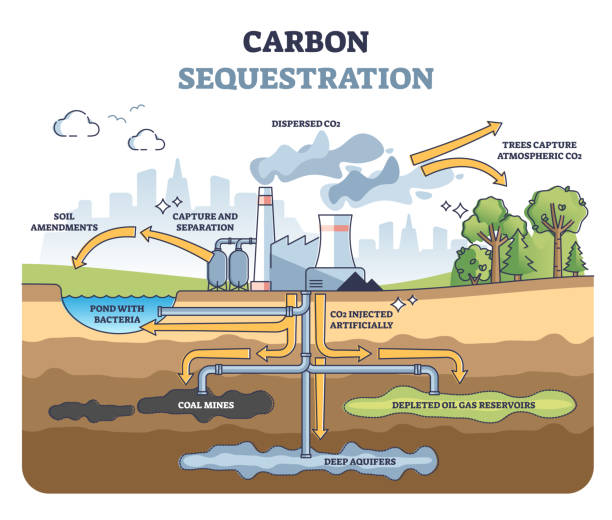
Carbon farming (also known as carbon sequestration) is a system of agricultural management that helps the land store more carbon and reduce the amount of Greenhouse Gases (GHGs) that it releases into the atmosphere. Carbon farming explicitly recognises that it is solar energy that drives farm ecosystem dynamics and that carbon is the carrier of that energy within the farm system.
Agriculture covers more than half of Earth’s terrestrial surface and contributes roughly one-third of global GHG emissions.
According to the Third Biennial Update Report submitted by the Government of India in early 2021 to the UNFCCC, the agriculture sector contributes 14% of the total GHG emissions.
Carbon Farming: a Viable Option
Climate Friendly: Carbon farming promises a bold new agricultural business model – one that fights climate change, creates jobs, and saves farms that might otherwise be unprofitable.
Optimising Carbon Capture: It is a whole farm approach to optimising carbon capture on working landscapes by implementing practices known to improve the rate at which CO2 is removed from the atmosphere and stored in plant material and/or soil organic matter.
Carbon farming can incentivise our farmers to introduce regenerative practices in their agricultural processes helping them shift their focus from improving yields to functioning ecosystems and sequestering carbon that can be sold or traded in carbon markets.
Farmer Friendly: It not only improves the health of soil but can also result in improved quality, organic and chemical-free food along with boosted/secondary income from carbon credits for the marginalised farmers.
Growth in Carbon Market: The total value of the global carbon markets grew by 20% in 2020 — the fourth consecutive year of record growth — and is well on its way in raising a critical mass of investors.
Carbon thus can effectively prove to be the ‘cash crop’ of the future for farmers
In India, Meghalaya is currently working on a blueprint of a ‘carbon farming’ Act to create a prototype of sustainable agriculture model for the entire North-East region. Sikkim became the first State in the world to become fully organic in 2016.
Steps can be Taken to Encourage Carbon Farming?
Soil is one of the most untapped and underutilised defences against climate change and acts as an efficient carbon sink.
Legal Backing for Carbon Farming: An extensive and pioneering carbon farming Act with a robust transition plan can effectively demonstrate the idea of creating a carbon sink on working land.
Carbon Credits and Carbon Banks: The farmers can be rewarded through globally tradable carbon credits. Carbon banks can also be created that would buy and sell carbon credits from farmers. Paying farmers to restore carbon-depleted soils offers a great opportunity for a natural climate solution and to stabilise global warming below 2°C.
Gaming is not seen just as a hobby or a timepass but can be considered as a great career option and is becoming a part of skill development, social interactions via joining specific gaming communities etc.
India has witnessed a strong growth in the gaming sector in the past few years. Even before the lockdown time of 2019, several gamers from India have come up and have been recognized even worldwide. Also, the pandemic gave people a boost as many people started playing during the pandemic just for timepass and streaming on online streaming platforms like YouTube , Twitch etc.
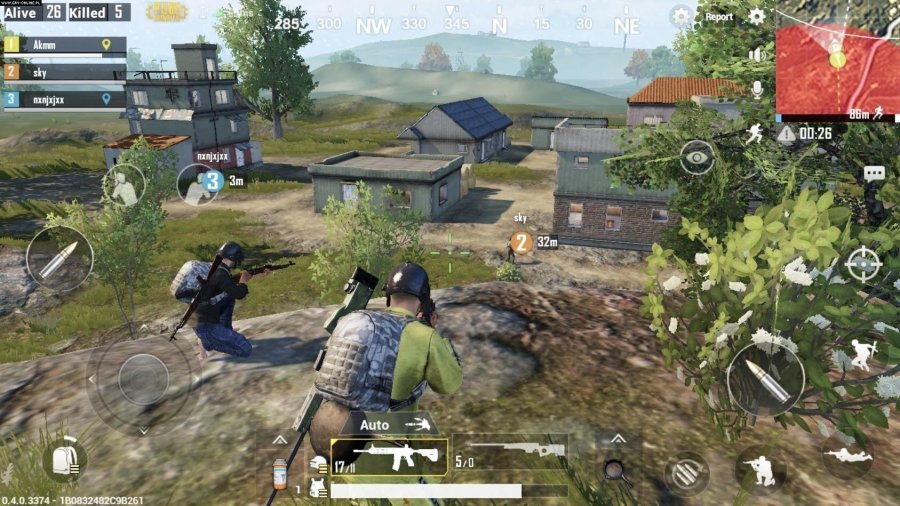
The gaming fanbase in India got a boost after the launch of most popular mobile game PUBG(PlayerUnknown’s Battlegrounds) which is a mobile version of the paid game available on Steam(a platform to buy, play, create and discuss about PC Games). The game being released in 2017, had received a huge amount of fanbase and there were millions of players playing the game even in the initial stages of the game launch.
PUBG Mobile Gameplay (Source- Google Images)
During the pandemic time, several gamers started streaming the game on YouTube and got popular while grinding the game and showcasing their skills. This was seen as a sudden evolution of the mobile gaming industry in India. With internet and mobile devices being easily accessible, several people started playing the game. All these mobile and PC gaming come under the category of “E-Sports”. Several Internationally recognized E-Sports companies analyzed the potential of the Indian players and started investing upon them, making their teams and even spending lakhs and crores upon them by providing them the best things such as their own offices, high end devices and accessories for better competitive gaming.
Today, we have several Indian players who’re participating into multiple E-sports events and representing our country while doing so. Online PC multiplayer games like Valorant, Counter Strike, Fortnite, PUBG, Apex Legends etc. are the most popular competitive games around the web.
Valorant
Also, colleges and schools also conduct these events in their fest where students from different colleges(or schools) come to participate and the winner receives a good amount of cash prize.
The entire scenario regarding Gaming has been changed over the past few years. Parents are also supportive as they themselves are seeing the rapid growth of the gaming industry and are realizing that it can be considered as a great career option. Also, International tournaments offer great prizes including cash, Goodies, accessories etc. With the rise in technology, several upgrades are being made in the devices used for gaming(Laptops, PC’s, Mobiles). Companies manufacturing these devices are adding major upgrades each year for the user to perform smooth gaming. Also, if you go online or to the offline market for buying a device dedicated especially for gaming, there are a variety of options to explore. Tech giants like HP, Dell, Asus, Acer etc. are developing gaming laptops day by day and one can even get a good gaming beast at a reasonable price.
Furthermore, gaming has risen to become one of the most lucrative industries in the world, not only generating a great billion dollar revenue but also giving career and job opportunities to people all around the world. If we dive deep into the gaming field, then there is a vast variety of options to explore in this field as a career. Some of them are:
Player
Game Designer
Game Developer
Sound Designer and Audio Engineer
Commentor and Anchor
Therefore, the final conclusion is if you’re someone who is passionate about gaming and if you are considering it as a career option then you can absolutely go with it. There are certain gaming communities all over the world on Discord App( An app that has certain communities, covering all the domains). Beginners can use it to connect with other gamers and build a gaming squad for playing. Also, one can apply for different E-sports club and with suitable research, they can get a great funding from investors. All you need to start with is a gaming device and a good internet connection for stable FPS(Frames Per Second) and ping rendering for seamless gaming experience.
Recently, when we look back and check once, we can see many countries delegates like Prime Minister, President, one or the other is visiting India. Boris Johnson, Prime Minister of United Kingdom also planned to visit, but due to pandemic the plan was cancelled. The point here is them not visiting us. The point is why they are visiting us? And why such Global powers are showing Interest on us.
Also, recently India and Us held a 2+2 Ministerial Dialogue, which shows the importance of India for US.
Every country, it maybe USA, Japan, Russia, France, Asia-European Union are trying to be or maintain relationship with India. It can be friendship or enmity, showing interest have any reason behind.
when we look back, India’s prestige is increasing world wide, It’s not that it is popular in ancient times, the growth and popularity of India started long back from Indus Valley Civilization itself. The IVC people used to have trade relationship with Mesopotamia and Egypt.
Its like the International relation that India have with other countries started long back but increased during the 16th century when European countries started to reach India.
In post Independent India, the then Prime Minister Jawaharlal Nehru linked Indian foreign policy with principles of Panchsheel and Non-alignment.
In late 1940’s India supported Indonesian colonial war to end the Dutch rule. This is why India manages to make a different place on world stage.
one of the major positive that’s attracting the other countries is
India’s demographic advantage
India’s strategic location
Economic factor
close cultural and religious ties.
Indian Philosophies
India’s demographic advantage. we have higher number of youth population. Around 62.5%of Indian population belong to the working age group of 15- 59years.
India’s strategic location. As India is covered with water on 3 sides. one side is Pacific ocean, Bay of Bengal, Indian Ocean- can have a route from Mediterranean sea. there is a logic behind this. More than 80% of total maritime oil trade takes place through the 3 narrow passages located in Indian Ocean.
As it’s role as a peace provider. India’s increased defense capabilities helped India in launching the SAGAR i.e., Security and Growth For All.
Economic factor. In an estimate by world economic league, India with 6.8trillion USD will become the 3rd largest economy by 2031.
Also, India is providing development assistance to countries like Nepal, Bhutan, SriLanka, Latin America and Africa. apart from this, India was there when the countries need a help during the time of pandemic, natural disasters etc.
This is the reason why every country is having that respect towards India, as its maintaining friendly cordial relationships with the fellow countries.
Word ‘comprehension’ means the ability to understand what you listen to or what you read. The most essential requirement for understanding the passage is to know the meaning of the words used in it.
Types of comprehensive passage
Factual passage: A factual passage contains 300 to 350 words. It is a detailed description in which some information is added along with a detailed description of physical attributes. A good factual passage describes the reader to compare or contrast the relevant information regarding facts, data, etc.
Discursive passage: A discursive passage contains a text which is either argumentative or interpretative or persuasive in nature. They may also include opinions or feedback.
Requisite skills of Comprehensive passage
To develop a better level of comprehension one requires certain skills:
Logical ability
The ability to infer
Analytical ability
Reasoning ability
Ability to understand the main motive or the idea of the author.
Reading speed
Vocabulary power
Remembering some important information from the paragraph otherwise, we need to refer the paragraph again and again which will consume more time.
PRECISE WRITING
Precis Writing is a summary. It is an exercise of compression. A precis writing is a gist of any passage in as few words as possible.
Guidelines for precise writing
Closely read the passage, and identify the central idea of the passage. It is vital to identify the general idea of the passage and incorporate it in one’s précis.
Look-out for the total number of words. If the number is not provided, quickly calculate the number using approximations.
In order to understand the passage clearly, make sure that you read the passage closely, and give it a couple of reads before you start writing the précis.
Highlight the most important points in the passage, and make notes. Leave out all non-essential information from the précis.
Provide an apt heading to your précis.
Note making is an essential task for writing précis. You should try to arrange the points in most logical order, and ensure the order of thought is the same as the original.
The three grammatical rules you need to follow while writing a précis are: write it in third person, indirect form and appropriate past tense.
It is advisable to provide designations of officials rather than names and titles. In case the official designation is not provided, you can use the personal name. Kindly be consistent with the pattern you adopt.
Make sure you review your rough draft, remove the chinks and ensure that you have made no language related errors.
Before writing your précis, make sure you have a glance over the original to make sure you have not missed anything.
Finally, a wise policy would be to count the words of your precis and put them down in a bracket at the end.
QUALITIES OF GOOD PRECIS
Objectivity: Objectivity means how you are presenting your facts and views without it being biasing your feelings or personal opinions. In stricter terms, precis writing should be a summary of the passage or text given to you. It should not include your personal idea or opinions.
Clarity: A precis is the crisp formation of the passage and it should be as crisp and clear as possible. Clarity is essentially getting your ideas loud and clear without writing it in depth. It should convey what the writer is trying to say.
Coherence: It clearly means that ideas and views that you have presented should be logical and the interconnection of the ideas should be proper.
Correctness: There are many mistakes that you should avoid while writing a precis. Many such mistakes include mistakes in figures and dates, the spelling of words, punctuation mistakes, structure and grammar mistakes, and many more.
Conciseness: Conciseness means that the precis should contain all the information required while not mentioning it in depth. It should not be too long either too short and both of these should not have any impact while writing a precis.
Completeness: It should include as many things as possible and more importantly the facts. In fact, a good one should be able to produce all the facts while being short. A short precis does not mean avoiding important facts. Also, the important thing that you should remember is it should be a summary and not a short description of the passage.
Points to Avoid for Precis Writing
Do not elaborate a lot on a single point.
Do not use your own interpretation, criticism, or assumption about the text.
Do not copy sentences from the original text or use abbreviations.
Do not break the flow of events and keep the text well connected.
USAGE AND VOCABULARY
Usage is the act of using something. Vocabulary is all about words — the words in a language or a special set of words you are trying to learn.
SHORT ESSAYS
An essay is typically a short, non-fiction piece of writing.
Guidelines for short essays
Each short essay should be a short essay of approximately 500 words, about 2 typewritten double-spaced pages in length.
You must write in full sentences and use proper grammar, punctuation, and spelling.
Your essay should answer the assigned question, drawing on the relevant reading assignment.
It is very important to deal with what the author says about the question, not simply with what you think. (However, you may contrast your own opinion with the author’s, offer a critique of her argument, etc. But this requires that you start by setting out the author’s position.)
Even though you are dealing with the author’s view about the question, you need to express it in your own words.
Extended quotations of the text are inappropriate in an assignment of this length, and even short quotations require your analysis (e.g., you will need to explain what the sentence you have quoted means, how it bears on the question, etc.).
Misrepresenting the words or ideas of others as your own is plagiarism.
You will not receive credit for any essays that contain plagiarism,.
Moreover, it is course policy that plagiarism will result in a failing grade for the course and the possibility of further administrative sanctions.
If you are completely unsure of what the author is claiming or how it bears on the question you have been asked to answer, you should write a brief essay on what the author seems to be claiming, why it does not make sense to you, and what two questions you might ask the author to help you understand his view.
Short essays are due at the beginning of lecture.
No late reading responses will be accepted. Of the 4 reading responses assigned, your lowest grade will be dropped from the average.
The term anime is a Japanese colloquialism used as an abbreviation for the term “animation.” Generally in Japan, the word anime (written アニメ) is synonymous with animation of any kind from anywhere. Internationally, however, anime is typically referred to as animation that is produced from Japan. The distinction between anime and cartoons is more cultural than it is technical.
Anime itself dates back over a hundred years. The first confirmed example was produced in 1917 titled Namakura Gatana with a run time of only four minutes.
Here is a list of 10 animes you will enjoy watching
The story follows Light Yagami, a high school student who stumbles across a mysterious otherworldly notebook: the “Death Note”, which belonged to the Shinigami Ryuk, and grants its user the power to kill anyone whose name and face he knows. The series centers around Light’s subsequent attempts to use the Death Note to change the world into a utopian society without crime and the subsequent efforts of L, a reclusive international criminal profiler, to apprehend him and end his reign of terror.
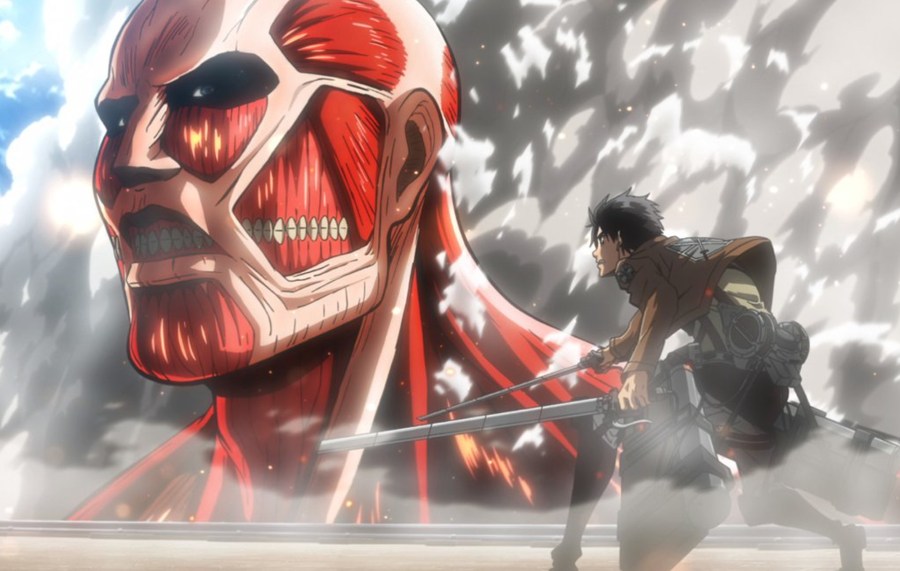
2. Attack on Titan : Shingeki no Kyojin
Genres: 👊 Action, 🎭 Drama, 🧞 Fantasy, 🕵️ Mystery
Attack on Titan is set in a world where humanity lives inside cities surrounded by enormous Walls that protect them from Titans, gigantic humanoid creatures who devour humans seemingly without reason. The story centres around Eren Jaeger and his childhood friends Mikasa Ackermann and Armin Arlelt whose lives are changed forever after the appearance of a Colossal Titan, which brings about the destruction of their home town. Vowing revenge and to reclaim the world from the Titans, Eren, Mikasa, and Armin join the Scout Regiment, an elite group of soldiers who fight Titans outside the Walls.
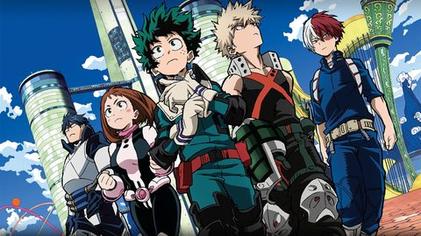
The story follows Izuku Midoriya, a boy born without superpowers in a world where they are the norm, but who still dreams of becoming a superhero himself. He is scouted by the world’s greatest hero, who shares his powers with Izuku after recognizing his value and later enrolls him in a high school for heroes in training.
4. Bleach
Genres: 👊 Action 👒 Adventure 🔮 Supernatural
High school student Kurosaki Ichigo is unlike any ordinary kid. Why? Because he can see ghosts. Ever since a young age, he’s been able to see spirits from the afterlife. Ichigo’s life completely changes one day when he and his two sisters are attacked by an evil, hungry and tormented spirit known as a Hollow.
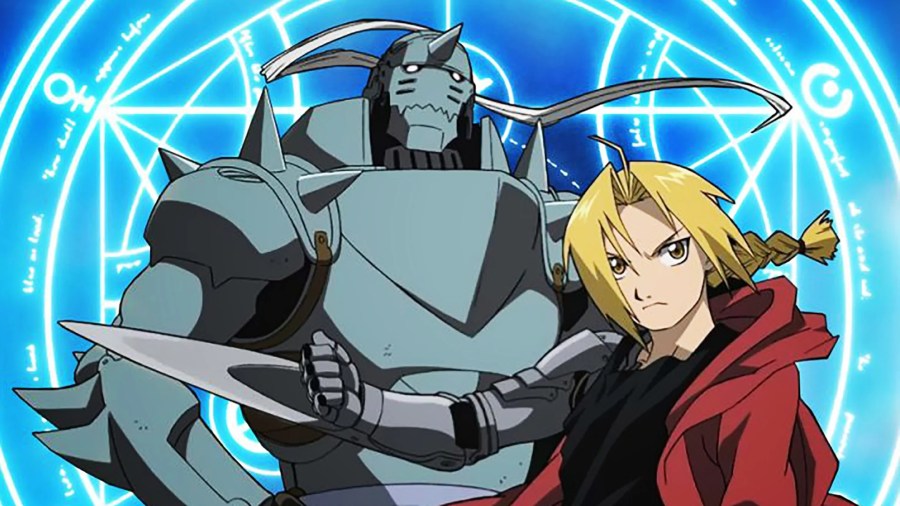
Abandoned by their father as kids, two young brothers, Edward and Alphonse Elric lived with their mother in a small town called Resembool. After losing their mother to a terminal illness, they try to resurrect her using alchemy – a science which allows you to transform physical matter from one form to another.
6. Demon Slayer
Genres: 👊 Action 👒 Adventure 🎭 Drama 🧞 Fantasy 🔮 Supernatural
Demon Slayer’s plot follows the epic saga of Tanjirou Kamado, a kind-hearted teen who, upon returning home one day, finds his entire family slaughtered by invading demons. Worst of all, he finds that his sister, Nezuko, has been turned into a bloodthirsty demon herself.
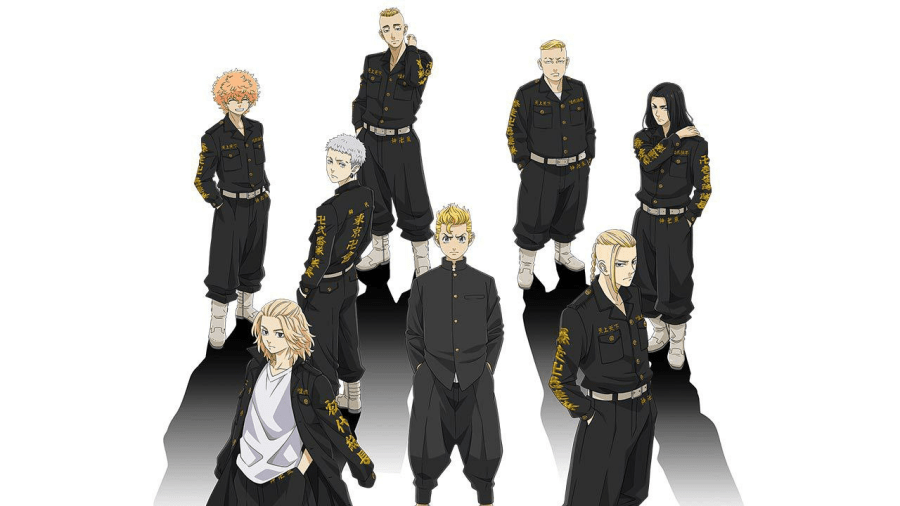
Hanagaki Takemichi lives an unsatisfying life right up until his death. Waking up 12 years in the past, he reckons with the eventual fate of his friends and tries to prevent an unfortunate future.
8. Odd Taxi
Genres: 🎭 Drama 🕵️ Mystery ♟️ Psychological
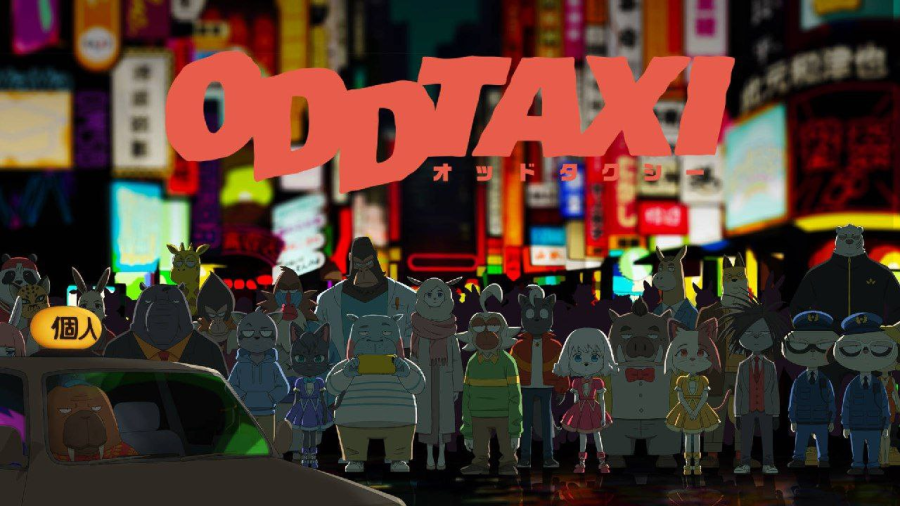
In a city which should be familiar, there is the feeling of something a little different. Kotokawa is a taxi driver who lives an ordinary life, taxing some quirky customers around. A slightly eccentric stranger who has no relatives nor any relations with other people, Kotokawa’s hobby is to listen to Rakugo on the radio before going to bed. For the time being, the only people he can consider as friends are his family doctor Gouriki, and his high school classmate Kakihana. Kabasawa, a college student who wants a buzz, Shirakawa, a nurse who’s hiding something, comedian group Homo Sapiens, who isn’t selling well, the city hoodlum Dobu, and the rookie idol group Mystery Kiss—the conversations with these people, which should not have meant much, lead to a girl who disappeared.
9. Haikyuu
Genres: 🤣 Comedy, 🎭 Drama, 🏀 Sport
Hinata Shouyou, a short middle school student, gained a sudden love of volleyball after watching a national championship match on TV. Determined to become like the championship’s star player, a short boy nicknamed “the small giant”, Shouyou joined his school’s volleyball club.
10. Jujutsu Kaisen
Genres: 👊 Action 🤣 Comedy 🎭 Drama 🔮 Supernatural
The story follows high school student Yuji Itadori as he joins a secret organization of Jujutsu Sorcerers in order to kill a powerful Curse named Ryomen Sukuna, of whom Yuji becomes the host.
Ok……. let’s talk about climate change. What it is? how it is happening? Is it because of humans? Does with have anything to do in this????. let’s know………
First of all…what is climate change???
Climate change is nothing but the change in climate. Ummmm…….sounds a bit odd and confusing but let’s see. “The change in climate means whatever we are seeing daily or sensing or experiencing is changing gradually”.
There maybe many reasons for this change in climatic conditions.
We started breaking CO2 records in 1950, and we haven’t stopped since. So, what maybe the reason????????
green house effect
Well Scientists say there is a 95% chance that human activity is the cause. We have been burning more and more fossil fuels like oil and coal which release CO2, to power our homes, factories, airplanes and cars. Not only this, there is a lot more of us i.e., the global population has tripled in the past 70years and we are consuming more products from animals that release another pollutant called Methane.
All these gases are released into the air, and when sunlight get’s into the Earth’s atmosphere, some of the heat gets trapped and the planet gets warmer. This is called as “Greenhouse Effect“.
The concern is not about the Earth getting warmer. It’s actually the warmest temperature on Earth since the last ice age, since 10,000years ago.
The UN says that right now our World is about 1 degree hotter than the Pre-Industrial times i.e., around 1800’s. It’s ok if the heat increases by 1.5 to 2 within a century or so. But, the problem is the “SPEED”. The change is heat is happening so fast that the temperature is increasing rapidly within 10-15 years which is not ok. And if we don’t slow down the heat/warming-this would mean CATASTROPHE within our life time and we are already experiencing it.
Some of the effects we can see because of global warming are
Global rise in temperature
Ocean warming
Melting of Glaciers and ice sheets.
Decrease on snow cover
Sea level rise.
So, to overcome or reduce all this, back in 2016, world leaders signed “PARIS AGREEMENT”. The big pledge they took is to cap temperatures rising by 1.5 degrees or maximum 2, before the year 2100.So, countries set their own targets on how much CO2 they should emit. But the problem is, even after the agreement, the level of CO2 is increasing rapidly.
But, one thing to be proud of is some countries like, India, Morocco, Gambia have massive renewable energy projects.
The advice is….. It’s our turn to change all the things that’s happening because of us, to change our ways and shake things up…..or else, climate change is going to do it for us
Vikram Batra belongs to a Hindu
family in Palampur, Himachal Pradesh. He was a son of a government school
principal. He joined the Air Wing of the National Cadet Corps in his college.
From his college life, he was interested in serving the nation. He cleared the
exam of NCC, get the C certificate. After participating in the Republic day
parade, he shared his thought with their parents that he wants to join the
Indian Army.
1n 1995, he pursuing MA at
Punjab University and start the preparation for Combined Defense Service Exam.
In 1996, he joined Indian Military Academy(IMA). In 1997, after concluding
training in IMA, he was commissioned as a lieutenant into the 13 JAK RIF.
In 1998, after undergoing many
training and postings, he finally posted to Sopore, Baramulla District, J&K
.He had many encounters with militants over there. In one operation, Batra was
leading the platoon and had killed all the militants before the morning. In
1999, Batra completed his commando course at Belgaum, Karnataka.
In 1999, it was Holi time.
Vikram Batra enjoying his vacation with his fiancée Dimple Cheema. In a
conversation, Dimple said to Vikram Batra that he has to be careful about war.
Then Batra smiled and replied-“I’ll either come back after raising the
Indian flag in victory or return wrapped in it. But I’ll come back for
sure.”
He returned to his troop from
his hometown. After few days,13 JAK RIF reached Dras on 6 June 1999. The 18 Grenadiers failed to
capture the peak of Tololing. But 2 RAJ RIF
captured the peak on June 13, 1999. After the success of that mission, Vikaram
Batra and his platoon were ordered to march from Dras to Tooling. Another
mission was planned to capture point 5140, which was assigned to the 13 JAK
RIF. Under the command of Lt. Col. Yogesh Kumar Joshi,13 JAK RIF found that the
enemy covered some major areas from top to bottom of point 5140. Joshi decided
to attack from the east and south sides by two teams, lead by Lt. Sanjeev Singh
Jamwal, and Lt. Vikram Batra. Both choose their winning signal, Jamwal chooses
“Oh! Yeah, yeah, yeah!” and Batra chooses “Ye Dil Mange
More!”.
Artillery fire was used for
covering support of these two assault companies while climbing point 5140. Both
the companies reached their destination on 20 June. Jamwals company had first
captured their objective. It was difficult for Batra to covered the enemy from
the rear side of the hill, but Batra did that impossible task with his 5 team
members and killed 3 enemies single-handedly in close combat. He was injured
but never stopped there, rather lead his troops and captured their objective by
sharing his slogan”Ye Dil Mange More!”.
He was promoted as Captain
after capturing point 5140. After the great success of 13 JAK RIF, the troop
moved to Mushkoh Valley under the command of 79 Mountain Bridge. The next task
was to captured point 4875 in the Mushkoh Valley. It was the dangerous mission
ever for 13 JAK RIF till now. They had to protect around 30-40km of the
National Highway from Dras to Malayan. The Pakistani soldiers easily observed
the moment and position of our soldiers, saw the gun positions, army camps from
that peak.
On 4 July, the war began. The A
and C Coys started their operation of capturing point 4875. But in the
meanwhile, Batra was suffered from fatigue and fever. Although its day time, these two troops were
consolidated their hold on point 4875 after heavy bombarding and machine-gun
attacks, and artillery fire. On 5 July, Pakistani enemies attacked with heavy
fire and accuracy from their position in north point 4875. Area Flat was
captured by 13 JAK RIF on 5 July, that was the key objective of that mission,
without that point Indian Army never succeed in their mission. Unfortunately
within a few hours Pakistani enemies counter-attacked our soldiers and climbed
faster to capture the peak. Captain N.A.Nagappa was lead a troop to fight
against those enemies to acquire the peak. But suddenly he was badly injured.
Pakistani soldiers were climbing faster as Nagappa was injured.
Batra observing all those
things lying on the bed went to Mr.Joshi and insisted to let him go. As the
team of Nagappa needed reinforcement, Vikram Batra and his team were ready to
capture the peak 4875 and determined for this in any situation and
circumstances. All the members of 13 JAK RIF wanted to join Batra for the honor
of their battalion despite the orders of their seniors.
Batra began to climb with 25
members of D Coy at night. When the troop neared the top, they had to climb
vertically, where the visibility was almost zero due to heavy fog. Batra found
a machine gun of Pakistani soldiers and destroyed it with a grenade. Batra
finally located the machine gun post of enemies, but unfortunately, no option
was left without a direct frontal assault in daylight. Under heavy fire from
enemies’ machine guns and grenade launchers, Batra killed 5 Pakistani soldiers
with his AK-47. Batra saw one of his men was shot in this process. With heavy
firing, Batra said his teammate Sub. Raghunath Singh evacuates that injured
soldier. He also said to Singh, “You have a family and children to go back
to, I am not even married”.Batra had continuously given his maximum effort
to drag the soldier to a safe place, suddenly a bullet hit his chest from a
very close distance, and after few seconds another on his head from an RPG.
Batra lies down on that battleground.
He was aware of the great
danger of his mission, but instead of all those things, he was never afraid of
death. Vikram Batra was awarded Indian’s highest military honor, the Param Vir
Chakra. His supreme sacrifices for his country will always be memorable.
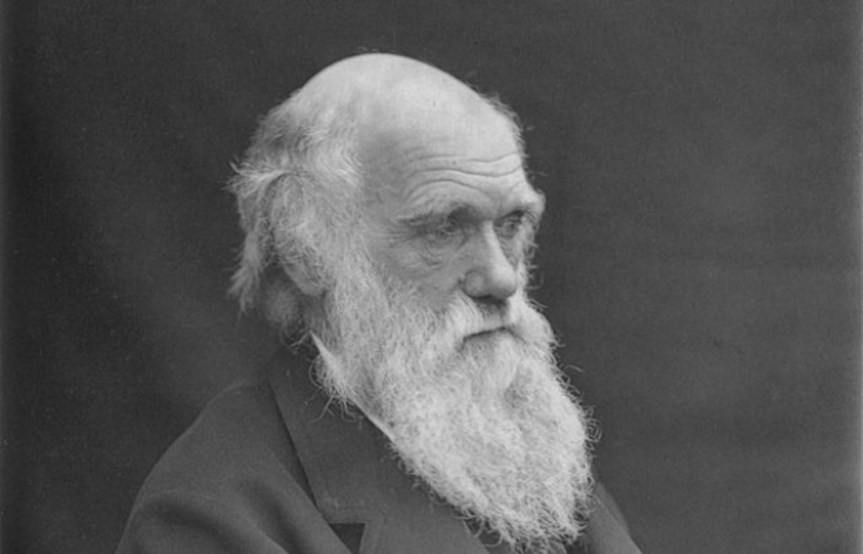
Charles Robert Darwin (1809-1882) was a British biologist, born on 12th February 1809 in Shrewberg, England.
He presented his theory of evolution in the book On the Origin of Species by means of natural selection in 1859. Darwin argued that new species had evolved from older species, and he described the mechanism behind the transformation process. Darwin’s theory of evolution is based on the following five principles:
Organisms produce more offspring than can possibly survive.
Organisms face a constant struggle to survive.
Organisms within a species vary.
Organisms best suited to their environment survive.
Those organisms which survive will reproduce and pass on their genes to the next generation.
Over-production: All species have a tendency to produce more and more offspring in order to increase the population. For example, a salmon produces 28,000,000 eggs in a single season; a single spawning of an Oyster may yield as many as 114,000,000 eggs; a common roundworm lays about 70,000,000 eggs in a day. This huge production is to ensure the survival of the species. Even though species are produced in larger numbers, the population of a particular organism remains more or less constant.
Struggle for Existence: Darwin claimed that there was a continual ‘struggle for existence in nature, in which only the fittest would survive. As a result of overproduction, there is a struggle for existence among organisms. Since the number of is persons is large, there is competition for food, shelter, mates etc.
struggle for existence may be of different types as follows:
a. Intra-specific (Intra-species) struggle: The members of the same species struggle among themselves for food, shelter and mates.
b. Inter-specific (Inter-species) struggle: The members of different species may go on fighting for survival. A member from one species may hunt other members of other species for food.
c. Environmental struggle: Organisms of different species struggle against the environmental hazards like earthquake, flood, drought etc. Only those species with better adjustment with the environment will survive.
Variations: Variation is the tendency of an organism to deviate from the parental generation. These variations play a very important role for adaptations in the environment. Some variations are considered as favourable and others are unfavourable. Organisms with unfavourable variations easily get defeated in the struggle for survival. Variations that are useful to adapt to the pressures of the environment survive long. The new trait of advantageous characteristics is passed on to the future generations.
Survival of the Fittest: The struggle for existence leads to the survival of the fittest. When there are too many of an organism in an area, they compete for resources such as food and perhaps shelter, for example trees and caves.The surviving species will reproduce more offspring than those who are less adaptive.
Natural Selection: The surviving individuals will give rise to the next generation. The successful variations are transmitted to the succeeding generations. The accumulation of advantageous traits in future generations gradually brings changes in species. Successive generations in this way tend to become better adapted to their environment. Eventually, a new species may evolve.
Furthermore, certain members of a population with one group of variations may become adapted to the environment in one way, while others, with a different set of variations, become adapted in a different way or become adapted to different environments. In this way, two or more species may arise from a single ancestral stock.
Examples of Natural Selection
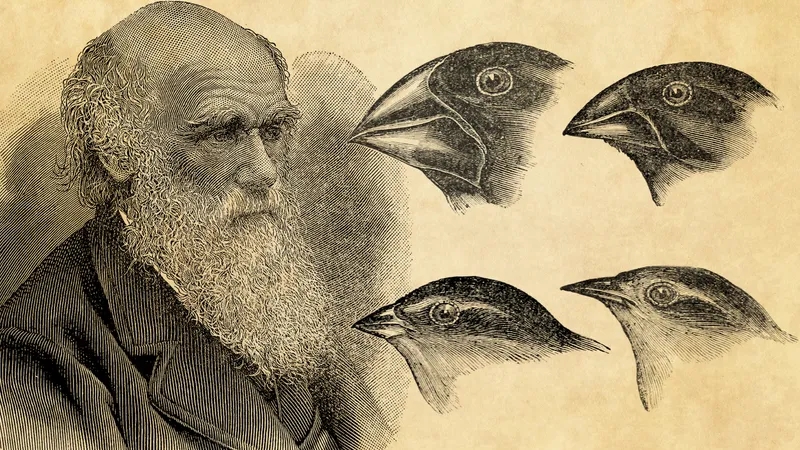
1. The finches of Galapagos : Some species of finches have short thick beaks. They are used to eating seeds, fruits and buds. Some others have long straight beaks. They subsist primarily on nectar from flowers. If environmental condition suddenly changes some characteristics may be more favoured than others.
2. Industrial melanism in moth : Before Industrialisation, the tree trunks were lighter and light coloured moths were predominant. Dark coloured moths were also present but they were limited in number. As a result of industrialisation, the pollution resulted in the darkening of tree trunks. So the light coloured moths become more visible to birds and were therefore eaten by their predators. As a result of this at the end of 19th century the common light coloured moths were almost completely replaced by the black variety.
The theory of origin of species by natural selection is regarded as a major advancement in evolutionary thought. Darwin contributed to the modern understanding of biological evolution by documenting the variation of living forms and identifying the key process of natural selection.
Like most 19th century scientists, however, he did not understand heredity or how specific traits are passed from one generation to the next. His theory lacked the knowledge of modern genetics. However, mutation theory explained the causes of variations among organisms.
India is a land of rich heritage, culture, history, and geography. Indian culture is a heritage of social norms, ethical values, traditional customs and belief systems, artifacts, political systems, and technologies that originated in the Indian subcontinent. India is a part of Asia and forms a peninsula which means it is surrounded by 3 water bodies that are ‘The Arabian Sea’, ‘ bay of Bengal’, and ‘Indian Ocean ’. Over the years, numerous styles of art, architecture, painting, music, dance, festivals and customs have developed in India and this wide variety has made the Indian culture unparalleled to which the entire world still looks up to. The cultural heritage of India still flourishes maintaining its original features together along with changes ,a key indicator of its strength.
Salient Aspects of Indian art forms, literature, and architecture from ancient to modern times
There are 3 types of Indian Arts. ‘Performing Arts’ include different types of classical dances that are ‘kathak’, ‘Bharatnatyam’, ‘Manipuri’, etc., music, theatre, and puppets. ‘Visual arts’ include ‘historical architecture’, ‘sculpture’, and ‘paintings’. Literary Arts have a mission to engage readers, support writers, and inspire the next generation with great literature.
In ancient times, art was produced to promote religious activity. From the 2nd century BC, the Ajanta caves in the Aurangabad district of Maharashtra are the ancient and magnificent caves where we can find the arts of Buddha and other gods and goddesses. Mughal paintings and Rajputana paintings and arts from the 14-16th century are the most beautiful works done by Indian artists.
Literature engages people with writings in different languages of India like Tamil, Sanskrit, Hindi, etc., expressing shared tradition, cultural experiences, and Indian heritage.
Indian architecture is the greatest artistic glory. Indus valley civilization is the oldest Indian architectural civilization.
AJANTA CAVESINDUS VALLEY CIVILIZATIONMUGHALRAJPUTANA
Modern Indian history from about the middle of the eighteenth century until the present
After the death of the most popular Mughal Emperor Aurangzeb in 1707, the Mughal authority weakened. They were unable to rule India as other emperors ruled. The last emperor of the Mughal Empire, Bahadur Shah Zafar (Emperor from 1837-57) was known to be the weakest. He was the son of Akbar shah II.
The history of modern India begins in the middle of the eighteenth century with the beginning of the freedom struggle, which finally concluded in the form of an independent India.
BAHADUR SHAH ZAFAR [1837-1847]
REVOLT OF 1857
The revolt of 1857 was the conscious beginning of the Independence struggle against the colonial tyranny of the British. There are various names for the revolt of 1857 – India’s First War of Independence, Sepoy Mutiny, etc. The revolt began on May 10, 1857, at Meerut as a sepoy mutiny. It was initiated by sepoys in the Bengal Presidency against the British officers. This war of Independence marked the end of rule by the British East India company. Post this, India was directly ruled by the British government through representatives known as Governor-General. Rani Lakshmi Bai of Jhansi, Sepoy Mangal Pandey and many other fighters fought for the India’s first freedom movement.
Formation of Indian National Congress ‘Indian National Congress’, byname ‘Congress Party‘, broadly based political party of India. Formed in 1885, the Indian National Congress dominated the Indian movement for independence from Great Britain.
Formation of Indian National Army ‘Indian National Army’ was formed by Netaji Subhash Bose in 1942.
INA TRIALSINC
The Freedom Struggle — its various stages and important contributors/contributions from different parts of the country.
PARTITION OF BENGAL [1905]
Indian nationalism was gaining in strength and Bengal was the nerve centre of Indian nationalism in the early 1900s. Lord Curzon, the Viceroy (1899-1905), attempted to ‘dethrone Calcutta’ from its position as the centre from which the Congress Party manipulated throughout Bengal, and indeed, the whole of India. The decision to partition Bengal into two was in the air from December 1903.
Congress party – from 1903 to mid-1905 – tried moderate techniques of petitions, memoranda, speeches, public meetings and press campaigns. The objective was to turn to public opinion in India and England against the partition.
However, Viceroy Curzon 1905 formally announced the British Government’s decision for the partition of Bengal on 19 July 1905. The partition took effect on 16 October 1905.
THE SWADESHI MOVEMENT [1905-1908]
The movement popularised the use and consumption of indigenous products. Indians started ditching British goods for Indian products.
Women, students, and a large section of the urban and rural population of Bengal and other parts of India became actively involved in politics for the first time with Swadeshi Movement.
The message of Swadeshi and the boycott of foreign goods soon spread to the rest of the country.
The militant nationalists led by Bal Gangadhar Tilak, Bipin Chandra Pal, Lajpat Rai and Aurobindo Ghosh were in favour of extending the movement to the rest of India and carrying it beyond the programme of just Swadeshi and boycott to a full-fledged political mass struggle. For them, the aim was Swaraj.
In 1906, the Indian National Congress at its Calcutta Session presided over by Dadabhai Naoroji, declared that the goal of the Indian National Congress was ‘self-government or Swaraj like that of the United Kingdom or the Colonies.
There were differences in the ideologies with the congressmen who were popularly known by the names Moderates and the Extremists. They had differences of opinion regarding the pace of the movement and the techniques of struggle to be adopted. This came to a head in the 1907 Surat session of the Congress where the party split (the two factions re-joined later).
This period also saw a breakthrough in Indian art, literature, music, science and industry.
It was, perhaps, in the cultural sphere that the impact of the Swadeshi Movement was most marked. The songs composed at that time by Rabindranath Tagore, Rajani Kanta Sen etc became the moving spirit for nationalists of all hues.
In art, this was the period when Abanindranath Tagore broke the domination of Victorian naturalism over Indian art and sought inspiration from the rich indigenous traditions of Mughal, Rajput and Ajanta paintings.
In science, Jagdish Chandra Bose, Prafulla Chandra Ray, and others pioneered original research that was praised the world over.
The Swadeshi period also saw the creative use of traditional popular festivals and melas as a means of reaching out to the masses. The Ganapati and Shivaji festivals, popularized by Tilak, became a medium for Swadeshi propaganda not only in Western India but also in Bengal.
Another important aspect of the Swadeshi Movement was the great emphasis given to self-reliance or ‘Atmasakti’in various fields meant the re-asserting of national dignity, honour and confidence.
Self-reliance also meant an effort to set up Swadeshi or indigenous enterprises. The period saw a mushrooming of Swadeshi textile mills, soap and match factories etc.
One of the major features of the programme of self-reliance was Swadeshi or National Education. In 1906, the National Council of Education was established. The vernacular medium was given stress from primary to university level.
Corps of volunteers (or samitis as they were called) were another major form of mass mobilization widely used by the Swadeshi Movement. The Swadesh Bandhab Samiti set up by Ashwini Kumar Dutt was the most well-known volunteer organization of them all.
SPLIT IN CONGRESS [1907]
The main public leaders of the two wings, Tilak (of the Extremists) and Gokhale (of the Moderates) were aware of the dangers of disunity in the nationalist ranks.
A split was avoided in 1906 by choosing Dadabhai Naoroji as presidentship of INC in the Calcutta session. Also, four compromise resolutions on the Swadeshi, Boycott, National Education, and Self-Government demands were passed. However, the hope of a united Congress was short-lived.
The Extremists wanted to extend the Swadeshi and the Boycott Movement from Bengal to the rest of the country but Moderators opposed.
The Extremists were fumed by the rumours that the Moderates wanted to scuttle the four Calcutta resolutions. This created friction among them which led to the split at the Congress session was held on 26 December 1907 at Surat, on the banks of the river Tapti. The Indian National Congress split in December 1907. By 1907, the Moderate nationalists had exhausted their historical role. They failed to meet the demands of the new stage of the national movement, even failed to attract the younger generation.
Post-independence consolidation and reorganization within the country.
When the British decided to quit India, the Indian National Congress (INC) and the Muslim League did not come to any conclusion and was unable to make a united front for independence.
For creating a consensus, Britain sent the Cabinet Mission to India. Muslim League did not agree on the proposals of Cabinet Mission, and Jinnah proclaimed “Direct Action Day” on 16th August 1946.
Violence erupted on both sides of the borders. To stop the violence and to avoid a civil war situation, Congress accepted the partition plan. On 14th August 1947, India got divided into the dominions of India and Pakistan. Later, the Islamic Republic of Pakistan was further divided, and a new dominion of the People’s Republic of Bangladesh was created in 1975.
The Indian Independence Act 1947 made the necessary provision for the independence of India and Pakistan. India chose to become a secular country, whereas Pakistan decided to become an Islamic County. The actual geographic demarcation of the areas between India and Pakistan was entrusted upon by Sir Cyril Radcliffe.
POST-PARTITION OF INDIA AFTER 1947
After independence, the world saw one of the most abrupt and haphazard transfers of people in human history. There were brutal killings, rapes, atrocities in the name of religion on both sides of the border.
In an estimate, about 80 lakh people were forced to migrate across the border to a new place. Also, around 10 lakh people were killed during Partition in religious violence.
India created a department of rehabilitation for the resettlement of refugee in various refugee camps.
PRINCELY STATES ISSUE
The Sardar Patel assumed additional charge of the newly created states department in Jun 1947 with V.P. Menon as its Secretary.
In its first step, Patel appealed to the princes whose territories fell inside India to join the Indian Union in at least three subjects which can affect the common interests of the country, namely, defence, foreign affairs and communications.
There were 565 princely states at that time. Integration of the princely states of Hyderabad, Junagadh, Jammu & Kashmir and Manipur proved more difficult than the rest.
History of the world
INDUSTRIAL REVOLUTION
The Industrial Revolution was a period of major industrialization and innovation during the late 1700s and early 1800s. The Industrial Revolution began in Great Britain and quickly spread throughout the world.
The era saw new changes in chemical manufacturing, iron production, textile production, as well as across many other industries. The rapid development of steam power and water power were two of the core driving factors of the industrial revolution. It was a turning point in human history, changing how products were produced and the overall standard of living for a vast majority of the population.
WORLD WAR I AND II
World war I started in 1914 and ended in 1919. World war II started in 1939 and ended in 1945. Both wars became the major attack for humanity.
The world war II was the most deadliest war of all time. In 1945, US dropped Atom bombs on the two trading centers i.e. Hiroshima and Nagasaki of Japan. This led to the loss of lakhs of civilians and soldiers.
COLONIZATION AND DECOLONIZATION
Colonialism is a political-economic fact whereby different nations discovered, conquered, settled, and exploited large zones of the world. Decolonization is about “cultural, psychological, and economic freedom” for Indigenous people with the goal of achieving Indigenous sovereignty — the right and ability of Indigenous people to practice self-determination over their land, cultures, and political and economic systems.
Capitalism, Socialism and Communism
‘Capitalism’ is defined as a system of governance where the government has to play various roles including administrative functionalities, and the facilitator of capitalism and the private players own and control the assets for private gain based on the laws of the country. It treats labors as human capital that is free to work for income and may further invest his money to generate more capital.
Effects of capitalism on society: 1. Capitalism ensures economic growth as it empowers both manufacturers and consumers and keeps money in rotation. 2. It ensures the accessibility of goods and services on a competitive price and helps to improve the standard of living in the country. 3. Capitalism paved the wave for LPG reforms in the world and provided opportunities for the labour force to opt for global employment opportunities, which have further shrunk the global boundaries.
‘Socialism’ is a politico-economic ideology which beliefs in the public ownership of means of production and distribution based on a plan formulated by a central authority. Effects of socialism in society 1. Helps in creating a welfare society where all the basic needs of people (food, clothes and shelter) are fulfilled by the State on very affordable prices. 2. Providing employment is the State’s responsibility. Thus, everyone gets a job based on his/her capabilities, education and skills. 3. Establishes the supremacy of the State, thus, making them arbitrary. 4. Lack of check and balance on the bureaucracy leads to increased corruption in society.
‘Communism’ can be defined as the ideology which leads to a classless society based on the equal rights for everyone, irrespective of the class they belong to (the labour or the bourgeoisie), on the means of production. Effects of communism in society 1. The ideology of communism supports a society without rulers, but until it is achieved all the power will lie with the dictator government so formed, which will further lead to their oppression. For example, the Rule of Hitler and the event of the holocaust. 2. In communist nations, the difference between the official claims and societal realities is vast. The dictator government controls the flow of information and every sort of communication channel which cut-offs the society with the outer world.
Salient features of Indian Society, Diversity of India
Indian society is a pluralistic society with a complex social order characterized by a multitude of ethnic, linguistic, religious, and caste divisions. National unity and integrity have been maintained even through sharp economic and social inequalities have obstructed the emergence of egalitarian social relations. It is this synthesis which has made India a unique mosque of cultures. Thus, India present seemingly multicultural situation within in the framework of a single integrated cultural whole.
The following are the features: 1. The multi-ethnic Indian society A society with the co-existence of a wide variety of racial groups is a Multi-ethnic society. India is home to almost multiple racial profiles like Nordic, Dinaric, Proto-Australoid, Mongolian, etc. 2. Multilingualism- salient feature of Indian society India is home to many native languages, and it is also common that people to speak and understand more than one language or dialect, which can entail the use of different scripts as well. India’s 2011 census documents that 121 languages are spoken as mother tongues, which is defined as the first language a person learns and uses. 3. Multi-religious society India is a cradle of world religions whose ancestors have preached and practiced almost all major religions of the world giving rise to worldly beliefs, practices, rites, rituals, ceremonies, and institutions. In India, hindus, muslims, sikhs and christians live. 4. Caste system in Indian society The social division of society in India is peculiar. Unlike many other civilizations in the world where the society was divided into race, ethnicity, or clans, Indian society is broadly divided into a hierarchy of caste.
Salient features of Diversity in India
India as a nation is a classic example of it as despite having multiple geographical, religious, linguistic, cultural, and racial diversities, India has always stood up as an integrated nation.
Role of women and women’s organization, population and associated issues, poverty and developmental issues, urbanization, their problems and their remedies.
Women in India have played a major role in various spheres of life over the past many centuries, but their acceptance in these spheres has been a crucial issue. Thus, the involvement of women in social, political and economic scenarios has brought in a major change in the terms of equality.
Gender Equality: With equal opportunities for all genders, multiple women have been an inspiration for young girls to dream and aspire to become big. Women in political spheres: Several women leaders have actively participated in the Indian freedom struggle, occupied important positions in the Lok Sabha and Rajya Sabha, state legislatures; women also have acquired the position of the Prime Minister and President of the country. Indira Gandhi was the first women prime minister of India. Economic roles: The neglect of women’s economic roles results in the exploitation of women workers, unequal wages, higher employment, etc., though are a cause of concern. Social Issues: A National Commission for women (NCW) has been set up with an intention to establish an equal and just livelihood for women by making legal and constitutional amendments for women in India
Population
The current population of India is 1,342,528,871 (1.34 billion) people and it is the second most populous country in the world, while China is on the top with over 1,415,489,506 (1.41 billion) people. Out of the world’s 7 billion people, India represents almost 17.85% of the world’s population.
Poverty and development issues
Development deals with the alleviation (or the eradication) of poverty. Poverty is inter-related to other problems of underdevelopment. Types of poverty 1. Absolute poverty 2. Relative poverty 3. Situational Poverty 4. Generational poverty 5. Rural Poverty 6. Urban Poverty Remedies of poverty in India 1. Population control 2. Increase in employment 3. Equal distribution of income 4. Regional poverty 5. Problem of distribution 6. Fulfillment of minimum needs of poor 7. Development of Agriculture
Urbanization
The population residing in urban areas in India, according to the 1901 census, was 11.4%, increasing to 28.53% by the 2001 census, and is now currently 34% in 2017 according to The World Bank. According to a survey by UN, in 2030 40.76% of country’s population is expected to reside in urban areas. Remedies of urbanization
Rapid Mass Transport (RMT) for better transportation system.
Reform of the urban water sector.
Efficient use of urban land – Scientific town planning & Sustainable development of urban planning needed.
Long term strategic urban planning with the overall regional planning perspective.
The environmental sustainability of urban development.
Investment in new urban infrastructure assets and maintenance of assets.
Need to strengthen urban governance
To strengthen the ‘soft infrastructure’
Improvements of urban utilities such as water and sewerage NUHM (National Urban Health Mission) for better urban public health.
Need to fulfill the basic needs of the urban poor.
Migration needs to be regulated
Smart city concept if implemented effectively
Provision of Urban Amenities to Rural Areas (PURA)
Population control
Innovation needed to control pollution and waste handling
Rurbanization: Provide like urban facilities in rural areas or make rural areas smart is called rurbanization.
Effects of globalization on Indian society.
Globalization is a process of increasing interdependence, interconnectedness and integration of economies and societies to such an extent that an event in one part of the globe affects people in other parts of the world.
Impact of Globalization on Indian Culture a. Homogenization versus Glocalization of culture b. Revival of culture
Impact of Globalization on Women in India a. Positive impact of Globalization on women b. Negative impact of Globalization on women
Social empowerment, communalism, regionalism & secularism.
Social empowerment is understood as the process of developing a sense of autonomy and self-confidence. It also involves acting individually and collectively to change social relationships and the institutions and discourses that exclude poor people and leads to an increase in poverty.
Communalism is a philosophical notion and causes competition, ferocity, and tension among different communities. It manifests as an expression of the superiority of one’s community combined with intolerance of different communities.
Regionalism is a psychic phenomenon. It is built around an expression of group identity, as well as loyalty to the region. It presupposes the concept of development of one’s region without taking into consideration the interest of other regions. It prohibits people from other regions to be benefitted from a particular region.
Salient features of world’s physical geography.
Geomorphology (the study of the earth’s surface features)
Glaciology (the study of glaciers)
Coastal Geography (the study of the coastal regions)
Climatology (the study of climates and climate change)
Biogeography (the study of the geographic patterns of species distribution)
Distribution of key natural resources across the world; factors responsible for the location of primary, secondary, and tertiary sector industries in various parts of the world (including India).
Natural resources are material and constituent formed within environment or any matter or energy that are resulting from environment, used by living things that humans use for food, fuel, clothing, and shelter.
Factors responsible for the location of primary, secondary, and tertiary sector industries
Raw material: Availability of natural resource that can be used as raw material.
Technology: To turn the resource into an asset with value.
Power: To utilize the technology.
Labour: Human resource in the area who can function as labor to run the processes.
Transport : Road/rail connectivity.
Storage and warehousing.
Marketing feasibility.
Characteristics of land and soil.
Climate.
Precipitation and water resources.
Vulnerability to natural resources.
Important Geophysical phenomena
In our natural environment, various forms of disasters occur in severe intensity. All disasters threaten the humans or societies and had their impact from one decade to another.
Disasters can be categorized as
1.Natural Disasters such as Volcano, Tsunami, Earthquake; landslides 2.Human Made Disasters 3.Human Induced Disaster 4.Natural Disasters
Earthquake Earthquake is a vicious tremor, rolling or hasty shock on surface of earth’s crust, sending out a sequence of shock waves in all directions from its place of source which is known as epicenter.
Tsunami
Tsunami is devastating natural disaster and immensely affects the economic and living conditions of region where it hits.
Volcano
A volcano is type of vent or smokestack which transmits molten rocks called as Magma from depth to earth surface.
Cyclones
A Cyclone is described as geophysical phenomenon on the surface of planet and atmospheric system of low barometric pressure accompanied by strong winds that revolve counter-clockwise in northern hemisphere and clockwise direction in southern hemisphere.
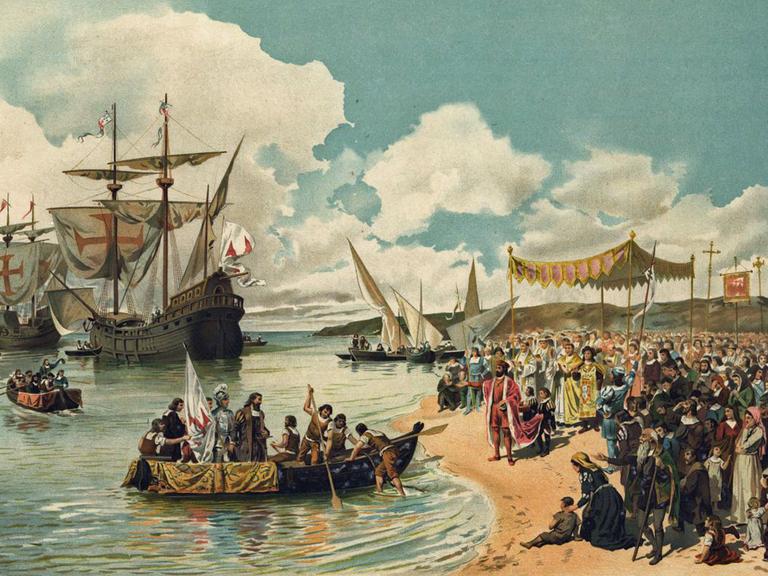
The Portuguese State of India was a Portuguese colonial state on the Indian Subcontinent. Vasco De Gama was the first Portuguese to set foot in India in 1498. However, Portuguese control in India is considered to have lasted from 1505 until 1961. Although Portuguese colonialism outlasted its English counterpart, it had little influence outside of its territories. The Portuguese were the first Europeans to arrive in India and the last to go.
Portugal’s Early Years in India When Vasco da Gama arrived in Calicut on the Malabar Coast on May 20, 1498, Portuguese colonialism began in earnest. He met with the ruler of Calicut, the Zamorin, and received permission to trade in Calicut. But Vasco da Gama was unable to pay the customs duties and the cost of his merchandise. The Zamorin’s officials detained some of Vasco da Gama’s soldiers when the duties were not paid. This enraged him so much that he kidnapped some Indians and fisherman. However, the voyage was a success in the eyes of the Portuguese authorities in Lisbon. A sea path around the Ottoman Empire was discovered, and the expedition made a profit well in excess of its initial cost.
Expansion of Portuguese Colonialism Vasco da Gama established a base of operations on the Malabar coast after further conflict with the Zamorin Kingdom. Francisco de Almeida, the first viceroy, placed his headquarters in what is now Cochin. Alfonso de Albuquerque, the second governer of the Portuguese territories in the East, was appointed in 1509. Off the coast of Calicut, a Portuguese fleet led by Marshal Fernão Coutinho arrives. Their orders were quite clear: destroy the Zamorin. The city was levelled and the palace of the Zamorins was taken, but the local soldiers rallied and attacked the invading Portuguese, forcing them to retreat and wounded Albuquerque. In 1510, Afonso de Albuquerque defeated the Sultanate of Bijapur, establishing Goa as a permanent settlement. It would later become the viceroy’s seat and the headquarters of the Portuguese colonial conquests in India. Modern-day Mumbai was likewise a colonial possession until 1661, when it was handed over to the British. From 1799 until 1813, the British conquered Goa for a brief while, eradicating the final vestiges of the inquisition. The capital was moved to Panjim, which was later renamed Nova Goa, in 1843, when it became the administrative center of Portuguese India. For the next century, Portuguese control would be limited to Goa and the enclaves of Diu and Daman.
Cause of Decline of Portugal in India While the British granted independence to most of India, the Portuguese retained colonial colonies in India. Local anti-Portuguese demonstrations in Goa were violently suppressed. Despite repeated pleas from the Indian government, the Portuguese government, led by dictator António de Oliveira Salaza, refused to hand over its colonial holdings, saying that they were an intrinsic part of Portuguese territory. The invasion of Goa by the Indian troops took place in December 1961. The Portuguese attempted to resist against overwhelming odds, but were quickly crushed by the Indian Army. On December 19, 1961, the Governor of Portuguese India signed the Instrument of Surrender, freeing Goa after 450 years of Portuguese domination in India.
The Portuguese State of India was a Portuguese colonial state on the Indian Subcontinent. Vasco De Gama was the first Portuguese to set foot in India in 1498. However, Portuguese control in India is considered to have lasted from 1505 until 1961. Although Portuguese colonialism outlasted its English counterpart, it had little influence outside of its territories. The Portuguese were the first Europeans to arrive in India and the last to go.
Portugal’s Early Years in India When Vasco da Gama arrived in Calicut on the Malabar Coast on May 20, 1498, Portuguese colonialism began in earnest. He met with the ruler of Calicut, the Zamorin, and received permission to trade in Calicut. But Vasco da Gama was unable to pay the customs duties and the cost of his merchandise. The Zamorin’s officials detained some of Vasco da Gama’s soldiers when the duties were not paid. This enraged him so much that he kidnapped some Indians and fisherman. However, the voyage was a success in the eyes of the Portuguese authorities in Lisbon. A sea path around the Ottoman Empire was discovered, and the expedition made a profit well in excess of its initial cost.
Expansion of Portuguese Colonialism Vasco da Gama established a base of operations on the Malabar coast after further conflict with the Zamorin Kingdom. Francisco de Almeida, the first viceroy, placed his headquarters in what is now Cochin. Alfonso de Albuquerque, the second governer of the Portuguese territories in the East, was appointed in 1509. Off the coast of Calicut, a Portuguese fleet led by Marshal Fernão Coutinho arrives. Their orders were quite clear: destroy the Zamorin. The city was levelled and the palace of the Zamorins was taken, but the local soldiers rallied and attacked the invading Portuguese, forcing them to retreat and wounded Albuquerque. In 1510, Afonso de Albuquerque defeated the Sultanate of Bijapur, establishing Goa as a permanent settlement. It would later become the viceroy’s seat and the headquarters of the Portuguese colonial conquests in India. Modern-day Mumbai was likewise a colonial possession until 1661, when it was handed over to the British. From 1799 until 1813, the British conquered Goa for a brief while, eradicating the final vestiges of the inquisition. The capital was moved to Panjim, which was later renamed Nova Goa, in 1843, when it became the administrative center of Portuguese India. For the next century, Portuguese control would be limited to Goa and the enclaves of Diu and Daman.
Cause of Decline of Portugal in India While the British granted independence to most of India, the Portuguese retained colonial colonies in India. Local anti-Portuguese demonstrations in Goa were violently suppressed. Despite repeated pleas from the Indian government, the Portuguese government, led by dictator António de Oliveira Salaza, refused to hand over its colonial holdings, saying that they were an intrinsic part of Portuguese territory. The invasion of Goa by the Indian troops took place in December 1961. The Portuguese attempted to resist against overwhelming odds, but were quickly crushed by the Indian Army. On December 19, 1961, the Governor of Portuguese India signed the Instrument of Surrender, freeing Goa after 450 years of Portuguese domination in India.
Indian history is filled with incredible stories of thriving civilizations, religions and cultures dating all the way back to paleolithic age, Indian civilization is one of the oldest civilization that we know and it has played a part on the world stage for centuries and even still today while it is impossible to truly capture all of Indian history in a one single go.
Remains of Harappan civilization
Harappan civilization also known as Indus valley civilization.
The evidence of cave paintings and stone tools have revealed that the first sign of human activity in India can be traced back to somewhere between 400,000B.C and 200,000B.C , details concerning the civilizations , inhabiting the region back that long ago do not exist. But we do know that the first sophisticated societies to walk the lands of India was the Harappan civilization, who likely existed throughout the first few thousand year Before Christ(B.C), positioned along the Indus river, the Harrapan people had their own writing system, advanced social and economic systems and impressive urban cities and architecture. Everything was perfect and seem like a modernized India. But the reason why the civilization collapsed was unknown. The civilization was collapsed around 1500BC. But some attribute their demise to the common floods and other natural disasters in the region or may be because of potential invaders from the western and central Asia
The next known civilization that left mark on Indian History is the Vedic Aryans.
These people were initially were migrants who spoke an early form of Sanskrit and were determined to stay true to their own tribal identity. The name they have been given- the Vedic people comes from the 4 sacred texts or Vedas that have presented researches with a glimpse into the lives of civilizations and their beliefs. The Vedas are often considered to be the oldest Hindu scripts and the Vedic civilization is believed to have spread their culture across the large portion of India by roughly 1000Bc, with them the Vedic Aryans brought their philosophical beliefs
These ideas represent a theory that happiness and salvation from a persons morals and ethics and one’s path should be based upon their place in life.
The societal system of Vedic Aryans are originally made up of 3 tiers. They are:
Brahman or priest
Kshatriya or warrior.
Vaishya or commoner
The spread their civilization and accordingly both the culture and trade flourished.
A series of 26 individual states have spanned across northern india. This include
Gandhara, kosala, kuru and Magadha and the latter this flourished under the rule of Chandragupta Maurya during the 4th century BC. This extended and formed the Mauryan empire which is believed to be the first Indian imperial power.
Mauryan empire established its capital in Patali-Putra which in modern day is called as Patna.
The entire empire was led by 3 major emperors. They are Chandragupta Maurya(321-298 BCE); Bindusara(298-272BCE); Ashoka(272-232BCE).
In the 2nd century BC Mauryan empire slowly started to dissolve.
The later came SUNGA DYNASTY, but with a small period it fell down.
The other dynasties aroused during this period like Kushan, Satavahana, Cheras, Cholas, Pandya’s sin the south were some of the major authorities during the time
Then came the Gupta empire which became the face of northern India during the classical age and is describe as golden age as everything was united during that time.
Nikhat Zareen young girl of Telangana (born June 1996) has recently won the gold medal in Istanbul, Turkey where World Boxing Championship (2022) was recently held. It is pertinent to mention that on 19 May 2022, Zareen won the gold medal in the 52 kilograms, Flyweight category at the Women’s World Championship defeating Thailand’s Jitpong Jutamas. Zareen became the fifth Indian women’s boxer to win a gold medal at the World Championships, joining Mary Kom, Laishram Sarita Devi, Jenny R. L., and Lekha K. C. (en.m.wikipedia.org/wiki/Nikhat_Zareen).
She has shown us the path to success by doing hard labour. I had the opportunity to listen to her interview on India Today TV. According to her, some of her relatives were not happy that she should continue boxing because of socio-cultural reasons and complained also. But her footballer father always supported her in boxing by wearing short dresses and also her mother did. Thus, it is evident that when someone is in good work/mission, a few persons whether friends or relatives or ‘so-called well-wishers’ will try to block the person’s carrier. In this context, I wish to mention one line of a poem from a legendary personality Gurudev Rabindranath Tagore. In 1905 Tagore wrote Jôdi Tor Dak Shune Keu Na Ase Tôbe Ekla Chôlo Re (“If no one responds to your call, then go your own way alone”), which is commonly known as Ekla Chôlo Re. Many people including sportspersons said me about this poem. Anyway, Nikhat Zareen has shown the young Indian girls, to continue sports and games without any botheration. She is also good in study (completed her B.A.). Also, I had the opportunity to listen to her English conversation on TV. She with a wonderful accent with awesome communication skills lucidly presented.
Zareen was born on 14 June 1996 to Mohammad Jameel Ahmed (a football player) and Parveen Sultana in Nizamabad city of Telangana. She completed her primary education at the Nirmala Hrudaya Girls High School in Nizamabad. Zareen was introduced to boxing by her father, who trained her. Later on, Nikhat was inducted into the Sports Authority of India in Vishakhapatnam to train under Dronacharya awardee, I.V. Rao in 2009. A year later, she was declared the ‘golden best boxer’ at the Erode Nationals in 2010.
Many great personalities including our Prime Minister congratulated her. According to her, she was excited when her favourite actor Salman Khan of Bollywood congratulated her. She earlier had won many awards inter alia of which are: Women’s Junior and Youth World Boxing Championships (2011), Youth World Boxing Championships (2014), Nations Cup International Boxing Tournament (2014), 16th Senior Woman National Boxing Championship (2016), Thailand Open International Boxing Tournament (2019), Strandja Memorial Boxing Tournament (2019), Strandja Memorial Boxing Tournament (2022). It glaringly reflects that almost every year she had won an award.
Before conclusion, it may be mentioned here that during the interview on India Today TV she expressed that her dream is to excel in Commonwealth Games (2022) and then the Olympics which will be held in 2024.
All Indians feel proud and happy about her outstanding achievement and performance. My personal salute to her in college and university days I was a player and played hockey at the national level and wish her very good luck.






















 Eduindex
You must be logged in to post a comment.