Writing a copy for a company’s website can be quite different from other copies. Not only do you need to communicate your message clearly to the readers, but you also need to do it most quickly and interestingly as possible. Here are some points to keep in mind when writing for the web:
Get the Reader to Stay:
Web visitors are usually looking for some information and decide if your website is useful swiftly. We can say people scan, rather than read web pages. The visitor needs to get the message of the copy at a glance. How do we get our message across so quickly?
Make use of headings that clearly communicate what the whole website and each of its sections are about.
The sub-headlines should summarize the key points
Improve readability using bullet points
Give an informative caption for the images used
If the web visitors scan the web page and find the information they need, they will stay on the website instead of closing it and opening another.
Most Important Information Comes First:
Writing for scanners also means you need to put the most valuable information at the front of the website. Writing an essay or article would require you to include an introduction and a conclusion before and after the main content. But when writing for the web, present the main point first, and then provide additional information. This makes it possible for readers to leave the website at any point while still having an idea about the main point of the page.
Use Familiar Words:
When writing a copy for the web, use familiar words which are easy to understand for readers. Readers are looking for these familiar words, also called “carewords”, and if they do not spot them quickly, they can leave the page. Avoid being too fanciful or scientific with your word choices. Visitors are more likely to look for the word “cheap” than something more complicated like “cost-efficient” when trying to buy a product.
Keep it Short and Simple:
Use short paragraphs and simple sentences in your web copy. Paragraphs should contain a maximum of four sentences and sentences should have twelve words on average. Do not use jargon. Wordy, complicated text can turn off your visitors. Readers simply do not have the time to go through lengthy paragraphs and decipher complex phrases. Avoid the passive tense when writing and address the web visitors directly, use “you” to refer to them.
Maintain Visual Appeal:
When writing for the web, you have to make sure that your copy goes well with the visual design of the page. This means that the copy matches with the theme of the website. Choose the font types and colours carefully. Play around with highlights, italics and bold text. Include lots of photos and videos. Most importantly, maintain spacing and reduce noise. Adding white space improves readability and increases perceived trust.
Expect People to Arrive Anywhere on your Website:
Unlike a book in which people usually start reading from page 1 and then move through the book, visitors can arrive on any of the pages of your website. This means that they should be able to understand where they are, what the site is about and what it does from any web page they open. Each page of the website should be easy to scan and should have a call to action telling people where to go next. Other than the navigation bar, include buttons or links to guide people to the next step or next page.
The Rebellion of 1857 was among some of the major yet unsuccessful uprisings against British Rule that contributed in the course of bringing Independence to India. The rebel was actually against the East India Company that worked on behalf of the British Crown Rule.
Many mistakes the Rebellion of 1857 to be the first rebellion of the country against British Rule. But the truth is that many small regional rebellions had already occurred before the 10th of May of 1857. And all these small uprisings indicated that agitation among Indians had started throughout the country.
Some of the mentionable revolts that occurred before the Rebellion of 1857 are the Sanyasi Revolt, The Jungle Mahal Rebellion (1767), Nayak Rebellion, Chuad Rebellion, Santhal Rebellion, the Second Military Rebellion of Bengal (1795), the Vellore’s Rebellion (1803), the Great Rebellion of 1824, Mahikant Rebellion of Gujarat (1836), and Military uprising of 1855.
But it was the Rebellion of 1857 that recorded the most unified support from the Indian population. It was not one reason that caused such a massive uprising. Rather the people had multiple reasons to revolt against the British Government by then.
Some of the causes of the revolt were the Britishers looting Indians of their rightful properties like land and imposing an excessive amount of taxes on the people. The sense of fear among regional rules heightened with the introduction of the Doctrine of Lapse by Dalhousie.
The orthodox conservative families of India were also threatened when Britishers started banning some of the then social norms. Other than this, the Indians working in the military of the British Government were treated very poorly.
One of the major incidents that enraged the Indian people, including Mangal Pandey and his mates, was that the British made them use cow and pig fat covered bullets. These bullet covers were required to be broken using teeth, and the army did so. The British did this, knowing that it would be going against most people’s religious beliefs in India.
The Britishers imprisoned those who did not use those bullets and also hanged them. Thus such injustice gave rise to rebellions in several parts of India. And the Rebellion of 1857 did start in Meerut when the arrested soldiers broke out of the jail and killed several British officers.
The revolt was led by Dhan Singh Gurjar, who was a Katowal in the British army himself. The revolting soldiers went to Delhi to spread the notion of revolt. And they succeeded in doing so because the revolt started in other parts of India as well.
The Britishers were stunned since they were outnumbered compared to the number of Indian soldiers in the British Army who were all revolting. But the British Government wasn’t letting the satiation get the best of them so easily, so they played dirty politics by using several tactics.
Lord Canning ultimately suppressed the Rebellion of 1857. It was because the tactics of the British Government succeeded in creating a massacre as they lured Sikh and Madrasi soldiers in their favor.
Education is in the concurrent list of the Constitution and majority of the schools are under the domain of respective State and UT Governments. However, in order to ensure that every student of the country gets continued access to education, a multi-pronged approach has been adopted. Regarding school education, to facilitate the online learning by all students a comprehensive initiative called PM eVIDYA has been initiated as part of AtmaNirbhar Bharat Abhiyaan on 17thMay, 2020, which unifies all efforts related to digital/online/on-air education to enable multi-mode access to education. The initiative includes:
DIKSHA the nation’s digital infrastructure for providing quality e-content for school education in states/UTs: and QR coded Energized Textbooks for all grades (one nation, one digital platform)
One earmarked SwayamPrabha TV channel per class from 1 to 12 (one class, one channel)
Extensive use of Radio, Community radio and CBSE Podcast- Shiksha Vani
Special e-content for visually and hearing impaired developed on Digitally Accessible Information System (DAISY) and in sign language on NIOS website/ YouTube
Further, an Alternate Academic Calendar has been prepared for providing learning solutions for grade 1 to 12 and ‘Students’ Learning Enhancement Guidelines’ prepared by NCERT suggest models for the following three types of scenarios to ensure that no child is deprived of reach of education:
a) Learning Enhancement during COVID-19 for students without digital devices;
b) Learning Enhancement during COVID-19 for students with limited accessibility to digital devices &
c) Learning Enhancement during COVID-19 for students with digital devices.
Also, PRAGYATA guidelines issued to States/UTs to facilitate continued education through various modes. The guidelines inter-alia includes situations where internet connectivity is not available or available with very less bandwidth where resources are shared through various platforms like television, radio etc that do not depend on internet.
Where the digital facility (mobile device/ DTH television) is not available, Ministry of Education has taken many initiatives like Community Radio Stations and a podcast called Shiksha Vani of CBSE, Textbooks, worksheet supplied to residence of learners, Handbook on 21st Century Skills and community/mohalla classes are organized. Innovation Funds of the Department are used to set up mobile school, virtual studios, virtual class rooms in schools, Continuous Learning Plan (CLP) for States/UTs has been initiated in all States/UTs, pre-loaded tablets in various states and UTs are effectively used in remote/rural areas where online classes are difficult.
Under the BharatNetprogramme, the CSC e-Governance Services India Ltd (CSC-SPV) of MeitY has been assigned the task of providing Fibre to the Home (FTTH) connectivity to the Government Institutions, including schools.
Due to the COVID pandemic, since schools were closed, all enrolled children are eligible for Food Security Allowance comprising of food grains and cooking cost. Some States/UTs have provided food grains alongwith payment of cooking cost into the beneficiary’s bank accounts/through cash while other States/UTs provided food grains and dry ration like pulses etc equivalent to cooking cost since 2020-21. About 11.80 crore children are benefited under the scheme studying in 11.20 lakh school during this period.
The need for a new education policy was felt in the country for a long time. Three National Education Policies have been introduced in India till now. These three Policies are National Education Policy 1968, National Education Policy1986, and National Education Policy 2020.
The New Education Policy has been brought in keeping with the shortcomings of the previous education policy and the current and future needs, which can lead to large-scale transformative reforms in both the school and higher education sectors.
In June 2017, a committee was formed under the chairmanship of former ISRO chief Dr. K. Kasturi Rangan to formulate a new education policy. The draft of the National Education Policy was presented by this committee in May 2019.
The New National Education Policy 2020 aims at the universalization of education from pre-school to secondary level with a 100% Gross Enrollment Ratio (GER) in schooling by 2030.
The New Education Policy 2020 proposes some changes, including the opening of Indian higher education in foreign universities, the introduction of a four-year multidisciplinary undergraduate program with several exit options. The objective of the New Education Policy 2020 is to make India a global knowledge superpower.
The policy gives an advantage to students of classes 10 and 12 by making the board exams easier. In other words, it plans to test the core competencies instead of mere memorization of facts.
It will allow all the students to take the exam twice. Further, it proposes that an independent authority will be responsible for regulating both public and private schools. Similarly, the policy aims to diminish any severe separation between the educational streams and vocational streams in the schools.
There will also be no rigid division between extra-curriculum. Vocational education will begin at class sixth with an internship. Now, the essay on new education policy 2020 will tell you about the disadvantages of the policy.
Firstly, it can make the education system expensive. Meaning to say, admission to foreign universities will probably result in this. Further, it will create a lack of human resources.
If we look at the present elementary education, we notice that there is a lack of skilled teachers. Thus, keeping this in mind, the National Education Policy 2020 can give rise to practical problems in implementing the system that is for elementary education.
Finally, there is also the drawback of the exodus of teachers. In other words, admission to foreign universities will ultimately result in our skilled teachers migrating to those universities. This policy is an essential initiative to help in the all-around development of our society and country as a whole. However, the implementation of this policy will greatly determine its success. Nonetheless, with a youth-dominant population, India can truly achieve a better state with the proper implementation of this education policy.
Known for its strong gravitational field and captivating mystery, a black hole, also referred as a singularity, remains confusing and indescribable to all of those who attempt to comprehend it; something so fascinating, yet unseen, unrecorded by man, and undetected by technology. Black holes prevail as one of the universe’s greatest phenomenons.
The definition of a black hole is “a region of space [that has] a gravitational field so intense that no matter or radiation can escape” (Smith), which fails to fully describe a black hole. They are not completely understood by humanity, but there are some things that scientists are well aware of, for instance, how they come to be. There are multiple ways to trigger the creation of a black hole, one of them being when a large mass in space accumulates in a very small area. Hawking says “it is like piling more and more books into a library. Eventually, the shelves will give way, and the library will collapse into a black hole” (Hawking). Another way black holes are created is in the collision of two stars within a binary system. After merging, a black hole is born. The third way for a black hole to be created is when a star eventually runs out of fuel, and if the mass of the star is so immense that it can’t be held, then the star will shrink and its matter will be compressed into an “infinitely small, infinitely dense point called a singularity. This is the center of a black hole” (Allen). You may be wondering how it is a black hole dies, given that some of them come from dead stars. In other words, how can something that is already dead… die? This happens because of Hawking radiation. In the event horizon of a black hole, there are matter and antimatter particles merging at all the times and converting into energy. As a consequence, if an antimatter particle falls into the singularity of the black hole then it will merge with a matter particle within the singularity of the black hole, and “antimatter destroys matter” (Brandvold). Therefore, the black hole would shrink but it would be almost insignificant since “The bigger the Black hole, the shorter the lifespan” (Brandvold).
Time and tide wait for none and that is why time management is such an essential skill to possess. It is useful in planning and organizing activities and being productive, both at work and in your personal life. It helps you reach your goals, reduce stress and remain motivated. So, time management is basically about managing yourself efficiently in the time available to you. There are a lot of tips and tricks you can use to improve your time management skills. Here are some of the most popular and effective time management techniques:
Keep a To-do-list:
A to-do list is one of the simplest yet most useful ways to manage your time. Whether you write down in a notebook or make notes in mobile applications, this habit helps you be aware of all the tasks you have to complete. You can plan your tasks daily, weekly, or monthly, and ensure productivity. These tasks may be quick jobs completed in minutes or bigger ones that could take days or weeks. Striking away the tasks you have completed at the end of the day is very satisfying and also gives you an idea of how productive you have been.
Set Goals:
Having set goals in your work and personal life is one of the most important steps to achieve success in life. When you have a goal to reach and stick to it, you automatically get all the motivation you need. Your main goal can be broken down into smaller goals or steps which would eventually lead you to the final aim. Things get done faster and more effectively. For an organization, goals determine its vision, and priorities.
Prioritize your Work:
Prioritizing your tasks and goals makes you a lot more efficient and productive. Keep the most important and valuable work at the top of the list so that they are dealt with first. Prioritizing helps you take care of the tasks that matter the most and not put too much effort into tasks that are not as important. Allocate time for performing these tasks and activities according to their priority.
Take Regular Breaks:
Remember to give yourself regular breaks between your work to make sure you do not feel too tired or unmotivated. Breaks help you refresh and boost your productivity. You can spend your breaks reading, watching films, listening to music, walking, or indulging in any other fun and enjoyable habits. As an employee, you are entitled to regular breaks between your working hours. So, make sure your organization provides it.
Exercise Regularly:
Exercising regularly is a sure way to maintain your health as well as reduce stress. Spending some time in a day jogging, working out or doing yoga helps you clear your mind of distractive thoughts and increase your energy levels. So, make sure to spend some time on exercise.
Maintain a Routine:
Nothing helps you manage your time and stay motivated as maintaining a good routine, particularly in the morning. Try not to open social media first thing in the morning, focusing instead on better practices like exercising, cleaning, meditating and eating a healthy breakfast.
Be aware of when you are the most productive in a day and allocate more work for those hours. If you are a morning person, schedule your work hours in the morning. If you are a night owl, spend time working at night. Manage your work and time according to your preference to be the most productive.
Reward Yourself:
Once you have finished a major task or achieved a goal on your to-do list, do not forget to reward yourself. Reward your hard work and dedication by taking some time for yourself and doing what you like. You can talk with your friends, eat food you like, or read your favourite book!
Education is in the concurrent list of the Constitution and majority of the schools are under the domain of respective State and UT Governments. Schools were closed as a precautionary measure to protect the students from Novel COVID-19 (Corona) virus across the world. This has interrupted the learning of students from pre- school to grade 12. During the pandemic, Ministry of Education has held several consultations with the States and UTs to assess the various aspects of the COVID-19 pandemic. After discussion with the States and UTs, a multi-pronged approach has been adopted to enable multi-mode access to education. Based on the UDISE Plus report 2019-20, 22% schools had access to internet. The Government has taken various steps to provide education amidst COVID-19 pandemic. These include PRAGYATA Guidelines on various modes of digital education including online mode that depends more on availability of internet, partially online mode that utilizes the blended approach of digital technology and other offline activities, partial and offline mode that utilizes television and radio as a major medium of instruction of education. The guidelines can be accessed at:
The State governments have been asked to act based on the situation prevailing at every place to meet the demands of all students for providing them with the digital access required for learning digitally. In order to enable online education benefit to the children of every category and teachers, Learning Enhancement Guidelines have been issued. The guidelines can be accessed at:
With a view of addressing the issues related to gaps and/or loss of learning among students, during and after the lockdown, National Council of Education Research & Training (NCERT) has prepared ‘Alternative Academic Calendar’ which is a Week-wise plan for grades 1 to 12 and has been developed. It consists of interesting activities and challenges related to topics/themes in the syllabus. It maps the topics/themes with the learning outcomes & facilitates teachers/parents to assess the progress in students’ learning in a variety of ways. NCERT has also developed bridge course for children including lots of activities which are helpful for bridging the learning gaps across classes 1-8 and the States/UTs have also been requested to prepare and implement School Readiness Module/Bridge Course in classrooms for initial one or two months for each grade. When school reopens, the grade related syllabus should be undertaken only after the bridge course is completed, so that students can adjust to the changed school environment and do not feel the stress or being left out, especially students who did not have access to alternate means of education. Further, Vidya Pravesh has been launched for class 1st students. This is a play preparation 3 months program which prepare students for school through playschools. This scheme aims at spreading the concept of playschools to the remotest parts of the country. It aims to ensure that no student is deprived of education.
As consumers of various media, have you ever questioned who owns most of the media you come across? With some quick research, you will be able to learn that a lot of the media companies you know belong to the same group of media owners. This phenomenon of media companies falling into the control of fewer individuals and organizations is known as Media Consolidation. We also call it Media Conglomeration or Concentration of Media Ownership. Comcast, The Walt Disney Company, AT&T, and Paramount Pictures are the largest media conglomerates in the world today.
The media industry can be a monopolistic or oligopolistic structure. If it is a monopoly, a single firm dominates a particular industry. Microsoft had an antitrust suit filed against it in 1998, accusing it of monopolistic practices that made it very difficult for users to uninstall Internet Explorer and use any other browser on their computer, monopolizing the personal computer market. Google has also faced lawsuits against its monopoly over all other search engines. Oligopoly, on the other hand, refers to a few firms dominating an industry. When a few firms control the media industry with large-scale companies getting rid of competitors by buying or forcing them out, it is known as media oligopoly. In such an industry structure, a lot of mergers occur. When a media company buys out another company for control of their resources to increase revenue and viewership, it is a media merger.
Many consider the increasing media consolidation to be a threat to media pluralism. As media ownership gets concentrated, it reduces the plurality of political, social and cultural points of view. A lot of these commercially-driven media care more about their advertisers than their viewers. Their focus tends to be on facilitating maximum profits than on public affairs or true journalism. In a lot of cases, powerful corporations have a great influence on mainstream media. In fact, many multinational corporations own media outlets and stations. These media outlets can be greatly affected by various corporate interests. Large media houses also come under attack for their biased political views. Media companies may act biased towards particular political parties and it can affect the content they show the viewers. They may choose to omit or not cover stories and events that can offend their political views, advertisers or owners. This means that there are less diverse voices and opinions available in the media for the general public. The concentration of media ownership thus opposes the opportunity of citizens to make an informed decision and provides fewer opportunities for minorities and others to voice out their opinions.
The well-known American multinational company, Disney or The Walt Disney Company, is one of the largest conglomerates, owning numerous film studios (Walt Disney Pictures and Animation Studios, Pixar, Marvel Studios, Searchlight Pictures, 20th Century Studios), broadcasting networks (ABC Network, Disney Channel, ESPN, National Geographic, FX), streaming services (Disney+, Star+, ESPN+, Hotstar, Hulu), publishing, merchandising, music and theme parks.
In India, Zee Entertainment Enterprises is a large media conglomerate, operating 45 channels worldwide. Its subsidiaries include the film production and distribution studio, Zee Studios, the music label, Zee Music, the news and regional entertainment channel, Zee News, and a Spanish-language Bollywood film channel targeting Latin America, Zee Munda. The company merged with Sony Pictures Network India in September 2021, which itself is a subsidiary of the mass media conglomerate, Sony Pictures Entertainment.
The relative price of a country’s currency, that is its exchange rate, is the protagonist in debates on international spillovers of monetary policy and international trade competitiveness. Yet, the popular discourse on how exchange rate fluctuations impact inflation and trade is often quite simplistic. An exchange rate depreciation is perceived to be inflationary as the price of imported goods rise, and is perceived to improve a country’s trade balance as it becomes more competitive. What appears to be absent is a systematic notion of why inflation in some countries may be more sensitive to exchange rate fluctuations than others.
The International Price System (IPS) has several implications for monetary policy and for the international spillovers of monetary policy. Firstly, it has positive implications for inflation stabilization. The IPS implies that inflation stabilization in response to exchange rate fluctuations (that arise from external shocks) is a smaller concern for the U.S. as compared to countries like Turkey. Using input-output tables to measure the import content of consumer goods expenditure5 I estimate the direct impact of a 10% dollar depreciation to cumulatively raise U.S. CPI inflation overtwoyearsby0.4-0.7percentagepoints.6 Ontheotherhanda10%depreciationoftheTurkish Lira will raise cumulative inflation by 1.65-2.03 percentage points. See how prices of coins like Lebanese lira rate is affected in the international market.
As the U.S. considers raising interest rates one concern often expressed is the consequence of the dollar appreciation on inflation. According to the IPS moderate dollar appreciations are unlikely to generate major disinflationary concerns for the U.S. but important inflationary concerns for a country like Turkey as its currency depreciates relative to the dollar.
On the flip side, dampening (raising) inflation to meet targets via contractionary (expansion- ary) monetary policy receives much less support from the exchange range channel for the U.S. than it does for Turkey.
The nominal exchange rate is the rate at which currency can be exchanged. If the nominal exchange rate between the dollar and the lira is 1600, then one dollar will purchase 1600 lira. Exchange rates are always represented in terms of the amount of foreign currency that can be purchased for one unit of domestic currency. Thus, we determine the nominal exchange rate by identifying the amount of foreign currency that can be purchased for one unit of domestic currency.
The real exchange rate is a bit more complicated than the nominal exchange rate. While the nominal exchange rate tells how much foreign currency can be exchanged for a unit of domestic currency, the real exchange rate tells how much the goods and services in the domestic country can be exchanged for the goods and services in a foreign country. The real exchange rate is represented by the following equation: real exchange rate = (nominal exchange rate X domestic price) / (foreign price).
Let’s say that we want to determine the real exchange rate for wine between the US and Italy. We know that the nominal exchange rate between these countries is 1600 lira per dollar. We also know that the price of wine in Italy is 3000 lira and the price of wine in the US is $6. Remember that we are attempting to compare equivalent types of wine in this example. In this case, we begin with the equation for the real exchange rate of real exchange rate = (nominal exchange rate X domestic price) / (foreign price). Substituting in the numbers from above gives real exchange rate = (1600 X $6) / 3000 lira = 3.2 bottles of Italian wine per bottle of American wine.
By using both the nominal exchange rate and the real exchange rate, we can deduce important information about the relative cost of living in two countries. While a high nominal exchange rate may create the false impression that a unit of domestic currency will be able to purchase many foreign goods, in reality, only a high real exchange rate justifies this assumption.
Net Exports and the Real Exchange Rate
An important relationship exists between net exports and the real exchange rate within a country. When the real exchange rate is high, the relative price of goods at home is higher than the relative price of goods abroad. In this case, import is likely because foreign goods are cheaper, in real terms, than domestic goods. Thus, when the real exchange rate is high, net exports decrease as imports rise. Alternatively, when the real exchange rate is low, net exports increase as exports rise.
The International Fisher Effect (IFE) states that the difference between the nominal interest rates in two countries is directly proportional to the changes in the exchange rate of theircurrencies at any given time. Irving Fisher, a U.S. economist, developed the theory.
The International Fisher Effect is based on current and future nominal interest rates, and it is used to predict spot and future currency movements. The IFE is in contrast to other methods that use pure inflation to try to predict and understand movements in the exchange rate.
How the International Fisher Effect was Conceptualized
The International Fisher Effect theory was recognized on the basis that interest rates are independent of other monetary variables and that they provide a strong indication of how the currency of a specific country is performing. According to Fisher, changes in inflation do not impact real interest rates, since the real interest rate is simply the nominal rate minus inflation.
The theory assumes that a country with lower interest rates will see lower levels of inflation, which will translate to an increase in the real value of the country’s currency in comparison to another country’s currency. When interest rates are high, there will be higher levels of inflation, which will result in the depreciation of the country’s currency.
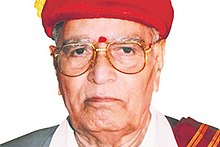
The name of Nana Dharmadhikari is Dr. Narayan Vishnu Dharmadhikari. He born in Raigad in 1 March 1922. Nana is the social reformer. He initiated a free social service of spiritual literature from Revdanda , Raigad district, Maharashtra. He has million followers across the world.
Since childhood he read and studied Shrimat Dasbodh (simply called as Dasbodh). After a several years he started social reform by speech (called Nirupan). He founded an organisation named shree samarth prasadik Aadhyatmik seva samiti. Through this he spent his entire life for spreading the philosophy of Saint Samarth Ramdas. Samarth Ramdas is writers of devotional book Dasbodh, Manache Shlok and Atmaram. Nana gives Nirupan on Dasbodh. He also started this reform for children called Balbhakti Margadarshan. Nana also done lots of social work on cleaning area and tree plantation as well.
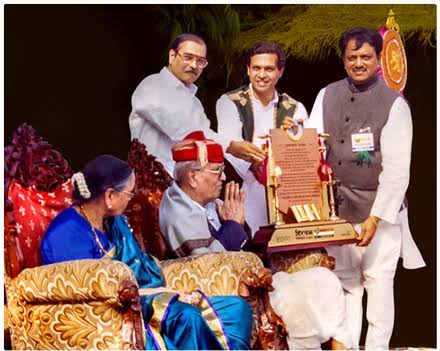
Nana Dharmadhikari got an National Integration Award by seroc India in 1999. The doctor of literature in 2004. And Maharashtra Bhushan Award in 2008. Today such service called parmarth is present in several Nations such as UAE, London, Singapore, Australia, Nigeria, Iran and so on.
Nana receiving award
Nana Dharmadhikari died on 8 July 2008 in Pune, Maharashtra. He spent his all life for social reform by spiritual literature. Nana helps in solving the people issue through correct guidance,he also resolved superstitions in society and literate people through his speech.
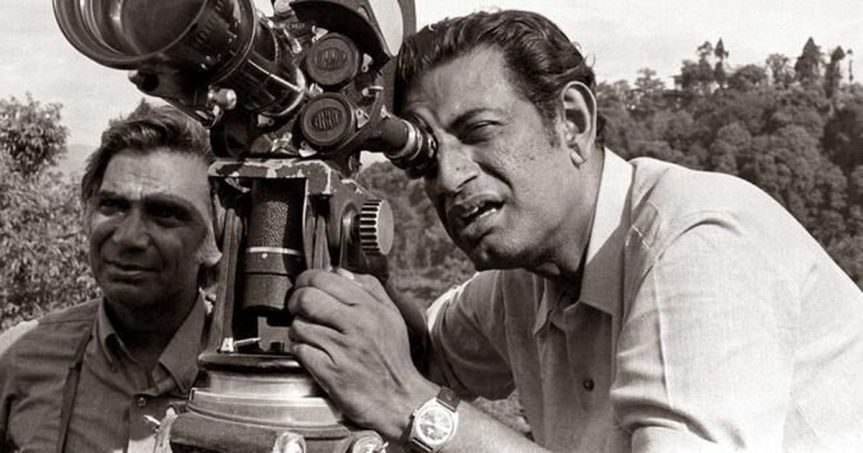
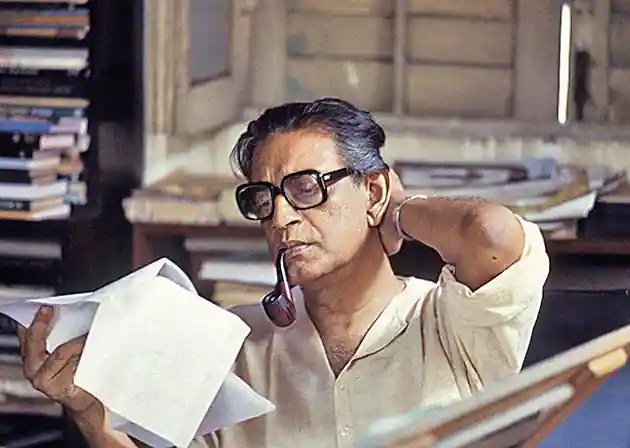
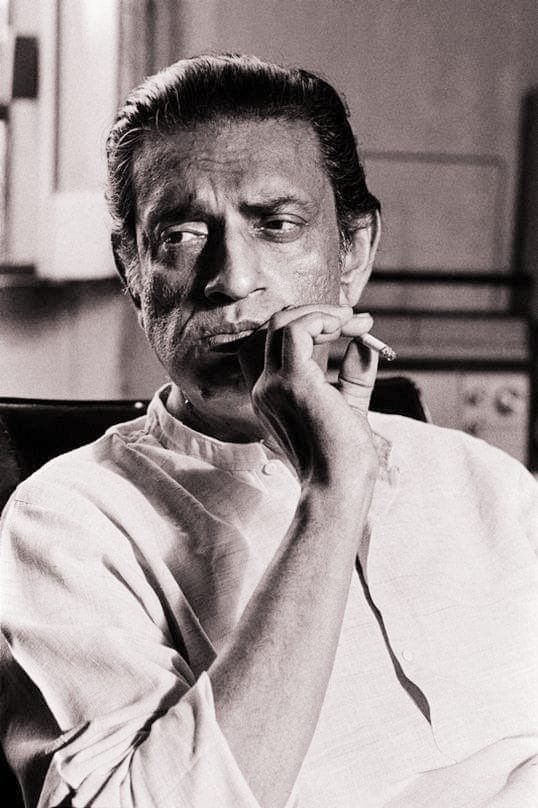
Satyajit Ray was India’s first internationally recognized film-maker and, several years after his death, still remains the most well-known Indian director on the world stage. Ray has written that he became captivated by the cinema as a young college student, and he was self-taught, his film education consisting largely of repeated viewings of film classics by de Sica, Fellini, John Ford, Orson Welles, and other eminent directors.
Satyajit Ray
Early Life and Family Background
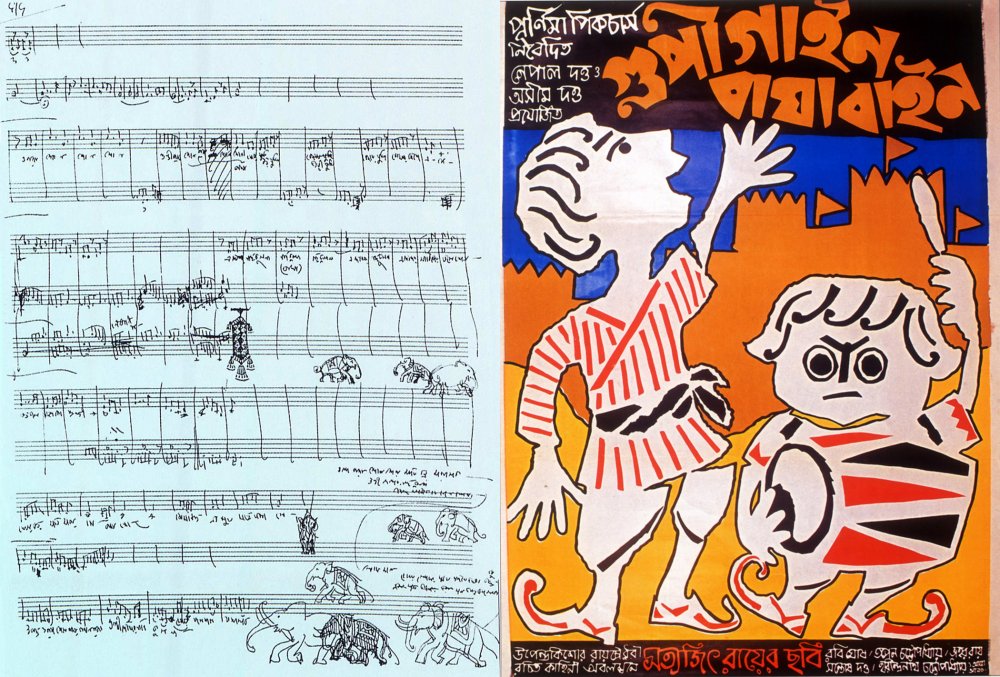
Satyajit Ray was born into an illustrious family in Kolkata (then Calcutta) on 2nd May,1921. His grandfather, Upendra Kishore Ray-Chaudhary, was a publisher, illustrator, musician, the creator of children’s literature in Bengali and a leader of the Brahmo Samaj, a religious and social movement in nineteenth century Bengal. His father, Sukumar Ray, was a noted satirist and India’s first writer of nonsensical rhymes, akin to the nonsense verse of Edward Lear. Having studied at Ballygunge Government High School, Calcutta and completed his BA in economics at Presidency College, Satyajit Ray went on to develop an interest in fine arts. Later in life, Satyajit Ray made a documentary of his father’s life. His film, Goopy Gyne Bagha Byne, was based on a story published by his grandfather in 1914, but even other films, such as Hirok Rajah Deshe, “The Kingdom of Diamonds”, clearly drew upon his interest in children’s poetry and nonsensical rhymes.
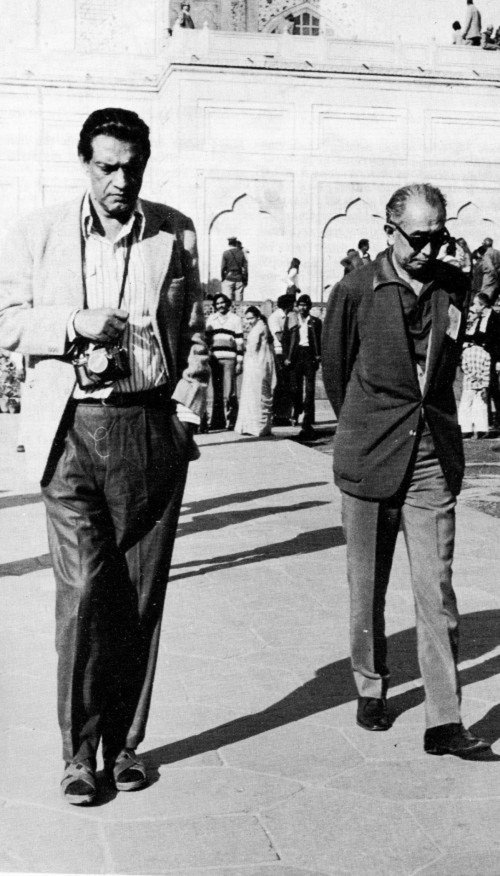
Satyajit Ray with Akira Kurosawa
The Crisis of Indian Cinema Before Ray
From the 1920s to the early 1950s, several directors working within Hollywood—as well as filmmakers in former Soviet Union, France, Italy, Germany, and Japan—considered cinema not as a mere tool of entertainment but as a medium for creative expression. Filmmakers such as Charlie Chaplin, Sergei Eisenstein, Jean Renoir, Roberto Rossellini, Vittorio De Sica, Akira Kurosawa, and others deployed artistically innovative filmic devices to convey profound statements about the complexities of life. Some of the aesthetically satisfying films produced during this period were hailed as cinematic masterpieces. Films in India, however, prioritised cliched elements such as sentimental slush, ersatz emotion, theatricality, romantic tales, spectacle-like songs, and happy endings in these decades. Instead of making serious attempts at formal experimentation, Indian directors continued catering to the lowest common denominator audience.
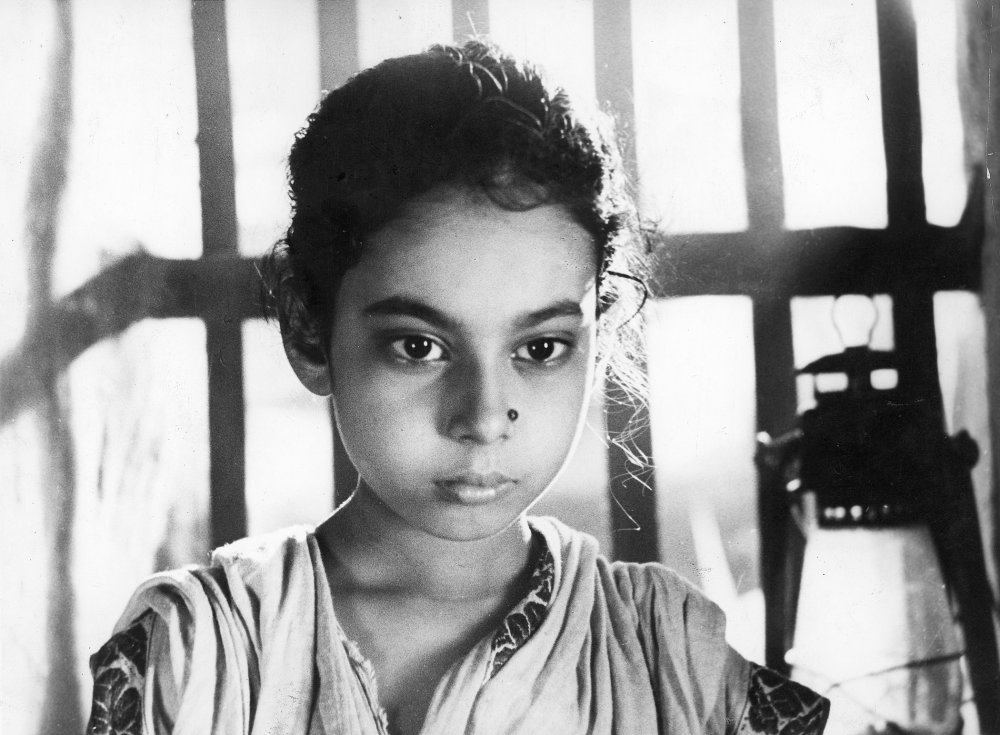
Iconic scene from Pather Panchali (1955)Pather Panchali (1955)
Breakthrough of Satyajit Ray
A young Ray had grown up on Hollywood movies, so when his ad agency sent him to London for higher training, he spent more and more of his time in the company of films and started “losing interest in advertising in the process,” he once said in an interview. During this trip, he saw Vittorio De Sica’s “Ladri di biciclette” (Bicycle Thieves),in 1948, a neo-realist Italian masterpiece of post-War despair and was entranced by its beguiling simplicity and humanism. Back in Calcutta, he heard that Jean Renoir was in town and walked straight into the hotel where the great French filmmaker was staying to confide in his own dreams of making a movie someday. Renoir, who was location-scouting for The River in Calcutta at the time, encouraged the aspirant. And so began the journey of the song of the little road.
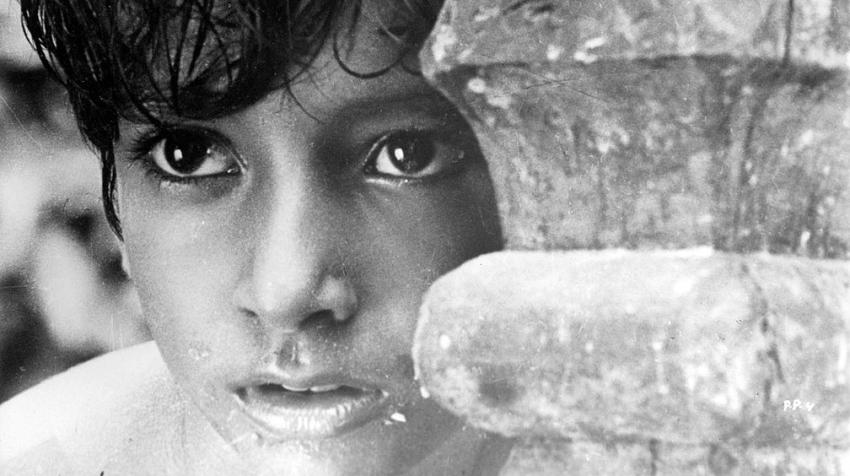
Subir Banerjee as Apu in Pather Panchali (1955)
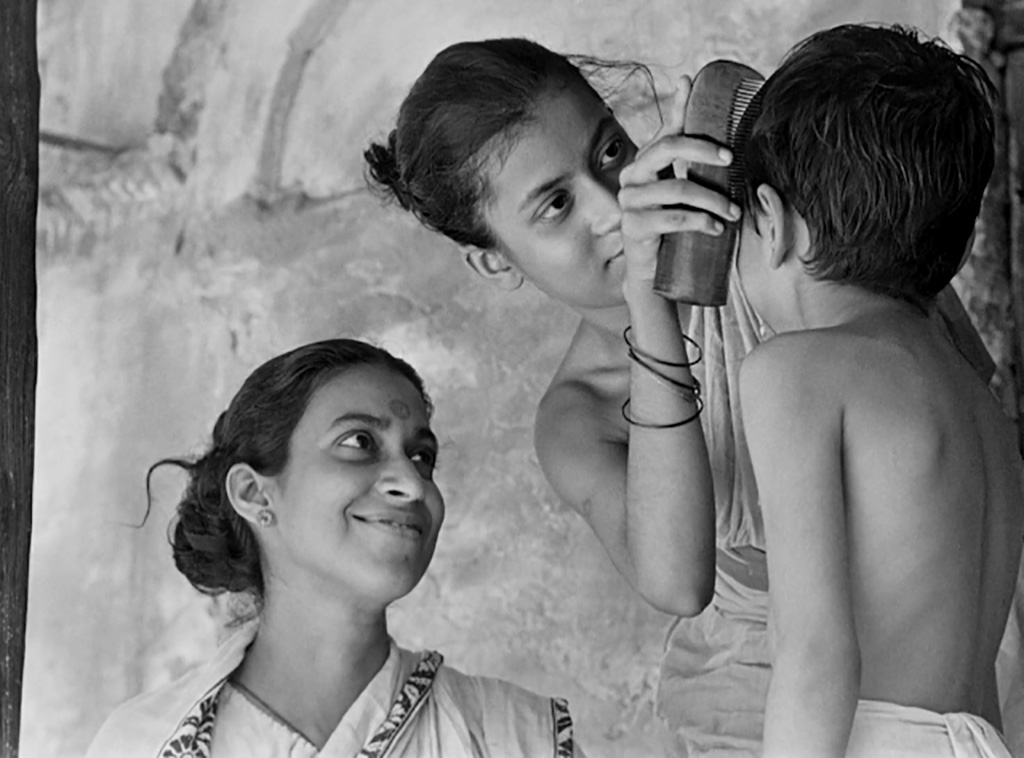
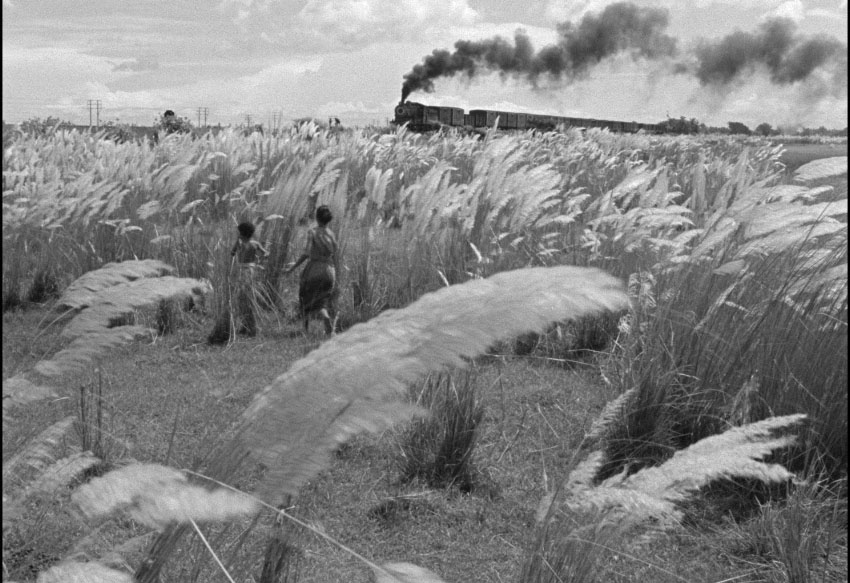
Ray’s landmark debut, Pather Panchali ( which was adapted from eponymous 1928Bengali novel “Pather Panchali” by eminentBengali novelist Bibhutibhusan Bandopadhay) was on a shoe-string budget in 1955 with a mostly non-professional cast. All the while, he clung on to his job for a safety net even as he shot what would become the first of the classic Apu Trilogy on weekends. The film was apparently being made by a group of neophytes, who had to stop filming more than once, owing to the depletion of their shoestring budget.
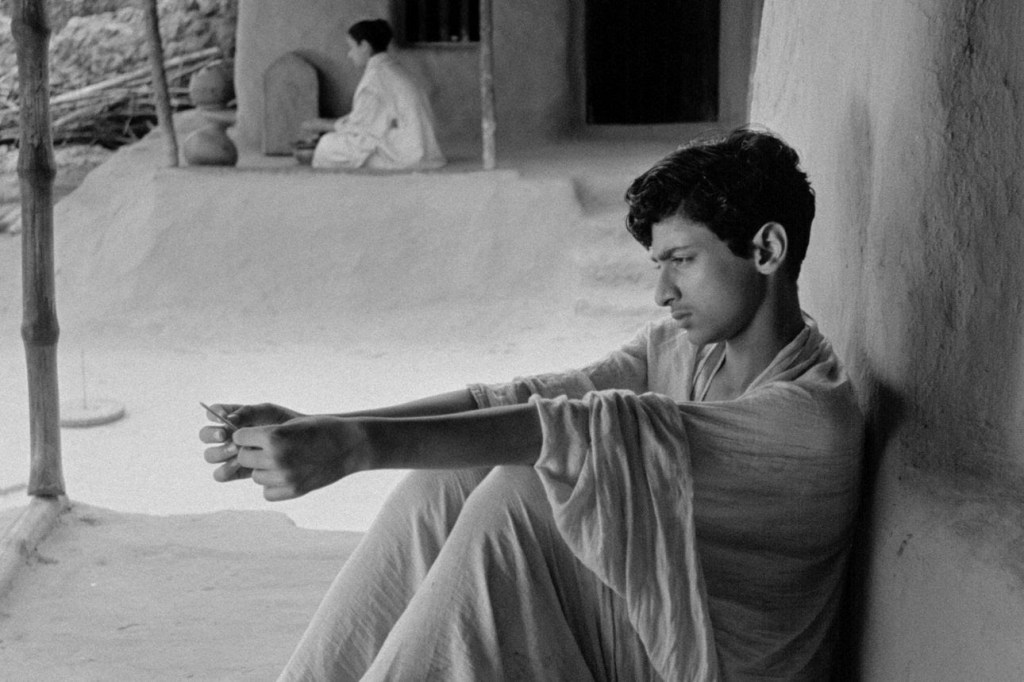
Smaran Ghoshal as Apu in Aporajito (1956)
Notable Films of Satyajit Ray
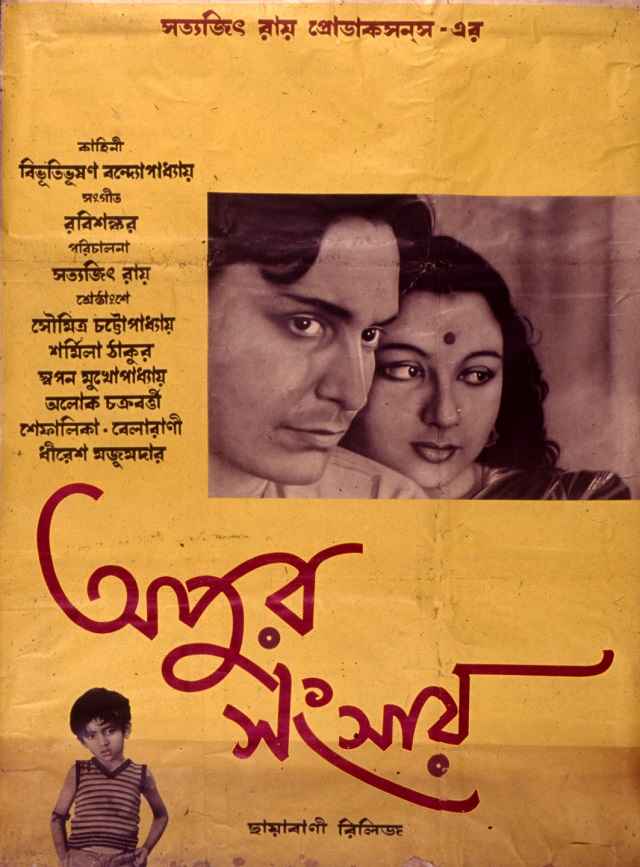
Ray directed 36 films, comprising 29 feature films, five documentaries, and two short films.Pather Panchaliwas completed in 1955 and turned out to be both a commercial and a tremendous critical success, first in Bengal and then in the West following a major award at the 1956 Cannes InternationalFilm Festival. sured Ray the financial backing he needed to make the other two films of the trilogy: Aparajito (1956; The Unvanquished) and Apur Sansar (1959; The World of Apu).Pather Panchaliand its sequels tell the story of Apu, the poor son of a Brahman priest, as he grows from childhood to manhood in a setting that shifts from a small village to the city of Calcutta.
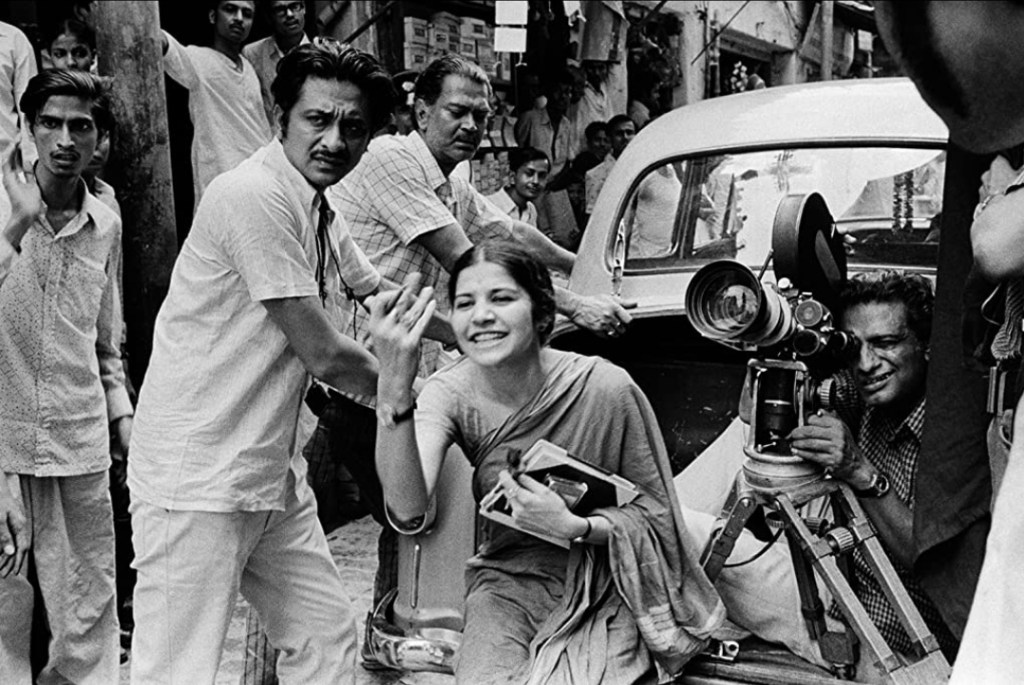
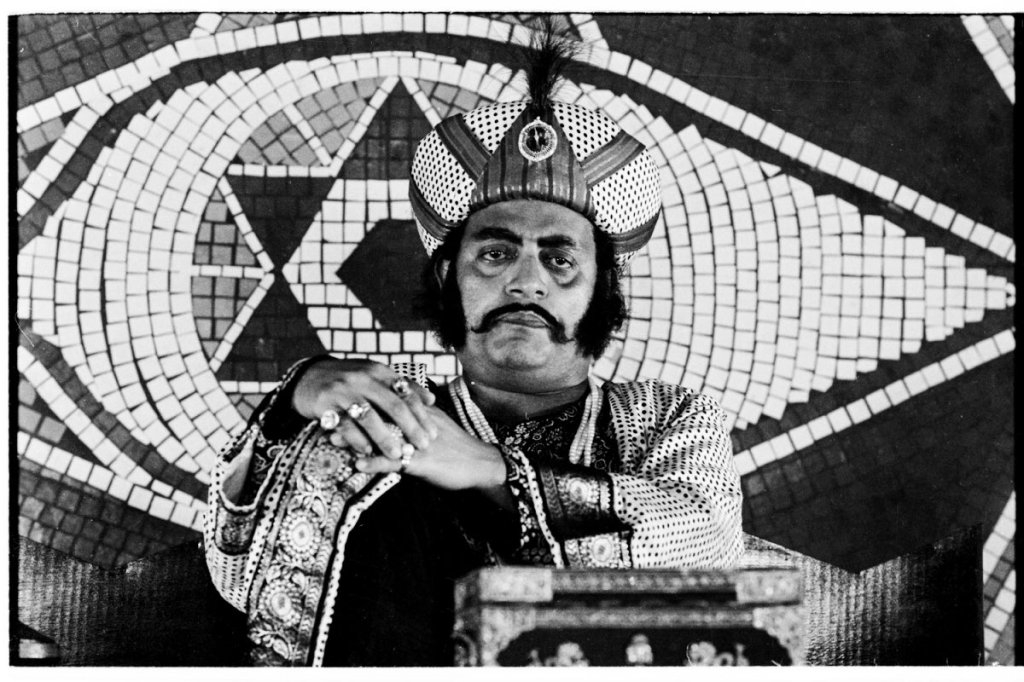
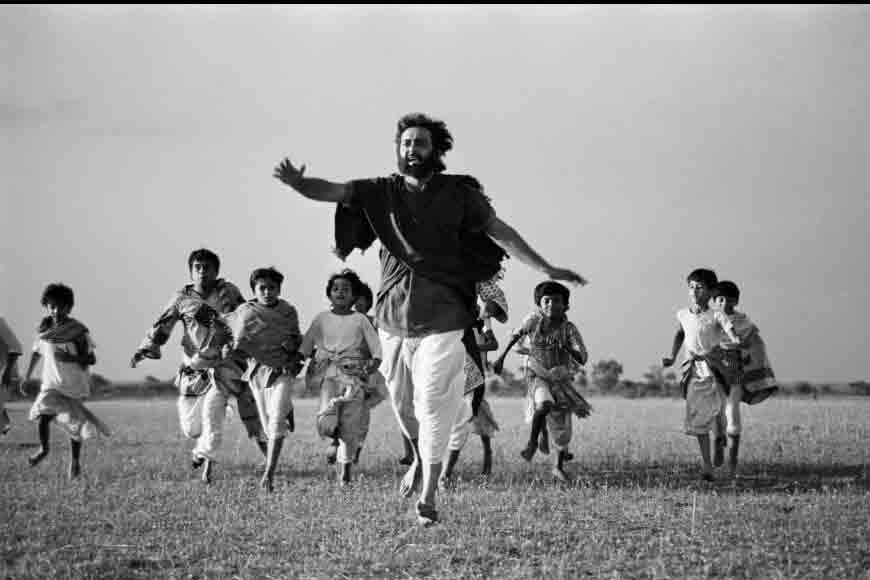
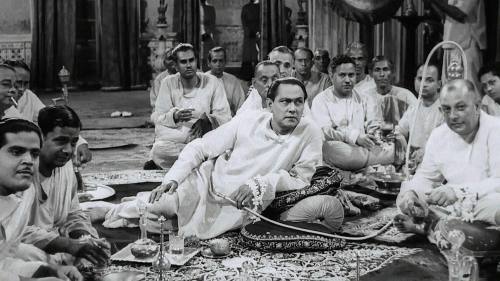
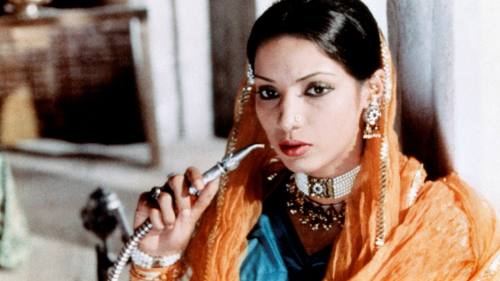
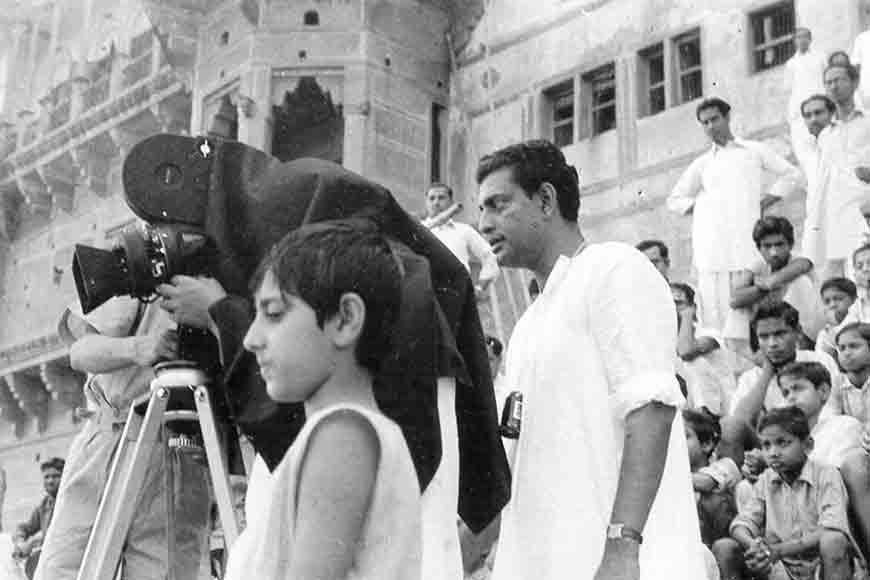
Chandana Banerjee in Teen Kanya (1961)During the Shooting of Jana Aranya (1975)Utpal Dutta in HirokRajar Deshe(1980)Soumitra Chatterjee in Hirok Rajar Deshe (1980)Chhabi Biswas (in middle) in Jalsaghar (1958)Shabana Azmi in Shatranj ke Khilari (1977)Satyajit Ray during the shooting of Sonar Kella(1974)
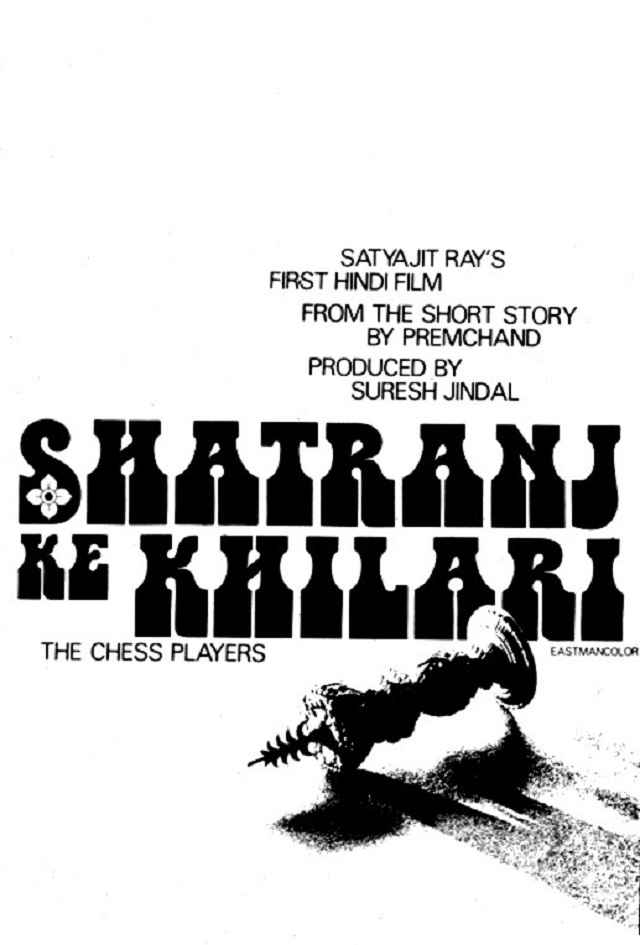
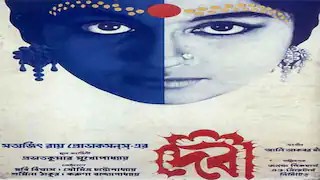
Ray’s major films about Hindu orthodoxy and feudal values (and their potential clash with modern Western-inspired reforms) include Jalsaghar (1958; The Music Room), an impassioned evocation of a man’s obsession with music; Devi (1960; The Goddess), in which the obsession is with a girl’s divine incarnation; Sadgati (1981; Deliverance), a powerful indictment of caste; and Kanchenjungha (1962), Ray’s first original screenplay and first colour film, a subtle exploration of arranged marriage among wealthy, westernized Bengalis.Shatranj ke Khilari (1977; The Chess Players), Ray’s first film made in the Hindi Language , with a comparatively large budget, is an even subtler probing of the impact of the West on India. Although humour is evident in almost all of Ray’s films, it is particularly marked in the comedy Parash Pathar (1957; The Philosopher’s Stone) and in the musical Goopy Gyne Bagha Byne (1969; The Adventures of Goopy and Bagha), based on a story by his grandfather.
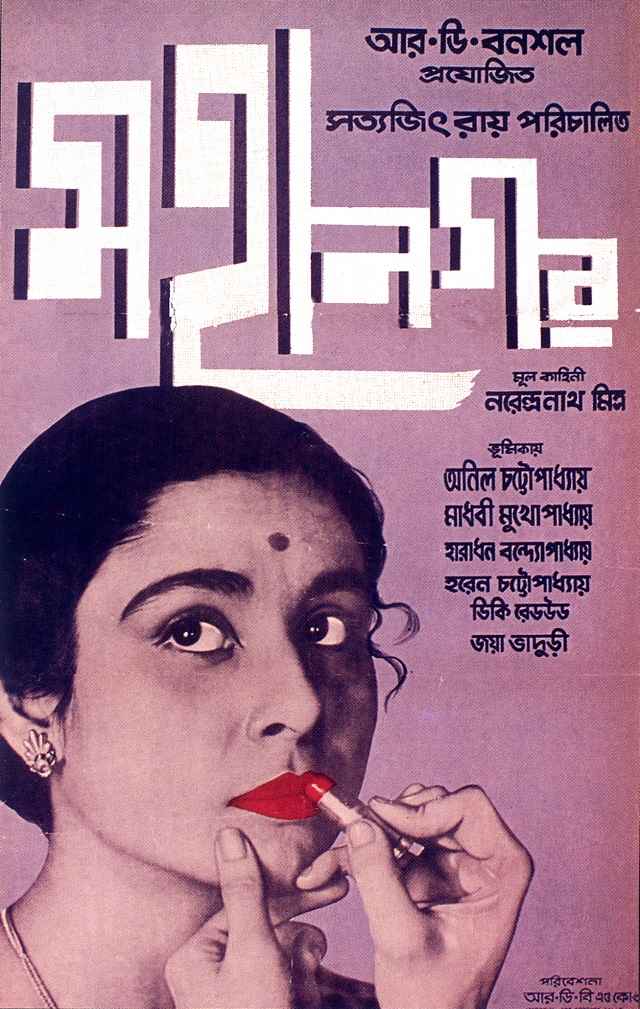
His other notable films were Ahsani Sanket (1973; Distant Thunder), Aranyer Din Ratri (1970; Days and Nights in the Forest) , Mahanagar (1963; The Big City) and a trilogy of films made in the 1970s—Pratidwandi (1970; The Adversary), Seemabaddha (1971; Company Limited), and Jana Aranya (1975; The Middleman), Ganashatru (1989; An Enemy of the People), Shakha Prashakha (1990; Branches of the Tree), and the Agantuk (1991; The Stranger).
Poster of Shatranj ke Khilari (1977)Poster of Devi(1960)Poster of Ghore-BairePoster of Mahanagar(1963)Poster of Apur Sansar (1959)Poster of Nayak Poster of Charulata
Work As A Novelist
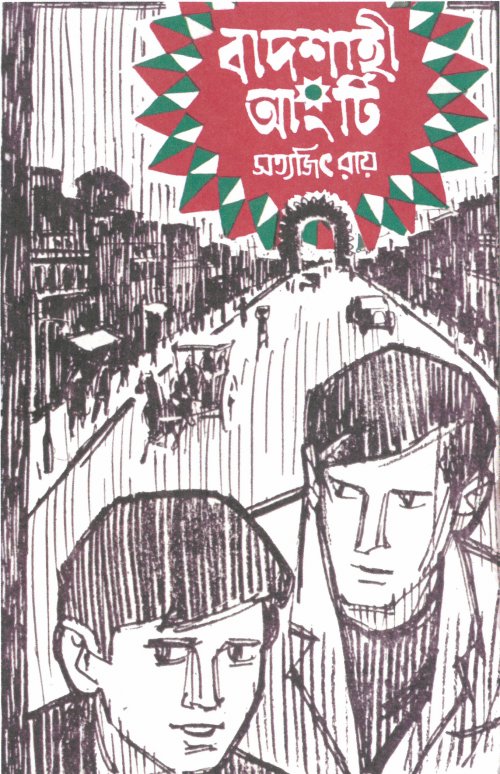
Ray created two popular fictional characters in Bengali children’s literature—Feluda, a sleuth, and Professor Shanku, a scientist. The Feluda stories are narrated by Topesh Ranjan Mitra aka Topse, his teenage cousin, something of a Watson to Feluda’s Holmes. The science fictions of Shonku are presented as a diary discovered after the scientist had mysteriously disappeared. Ray also wrote a collection of nonsensical verses named Today Bandha Ghorar Dim, which includes a translation of Lewis Carroll’s “Jabberwocky”. He wrote a collection of humorous stories of Mulla Nasiruddin in Bengali. Ray wrote an autobiography about his childhood years, Jakhan Chhoto Chhilam (1982), translated to English as Childhood Days: A Memoir by his wife Bijoya Ray. In 1994, Ray published his memoir, My Year’s with Apu, about his experiences of making The Apu Trilogy.
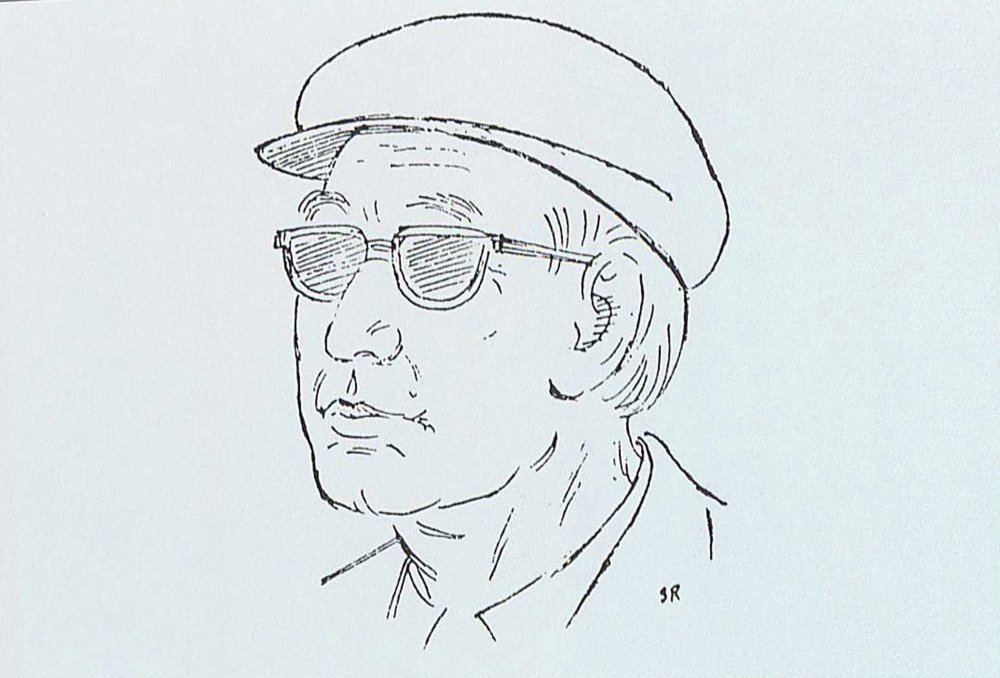
Book Cover illustrated by Satyajit Ray, himself for his first detective novel “Badshahi Angti”.The musical score and Poster for Goopy Gyne Bagha Byne(1969), done by Satyajit Ray, himself Portrait of Akira Kurosawa, illustrated by Satyajit Ray
Critical Analysis of Satyajit Ray
Instead of acting like a propagandist, Ray wanted to make people aware of the persistence of certain social problems. Devi and Ganasatru show people’s blind religious beliefs, Sakha Prasakhadiscloses the involvement of the top officials with bribery and corruption, Shatranj ke Khilari indicates the indolence and lack of political consciousness of the wealthy people, Aranyer Din Ratrireveals the insensitivity and boasting of the urban young men, and Mahapurushmockingly exposes the failure of the urban elite to embrace rational thoughts. Given the necessity of making people conscious of the same problems in present-day society, these films are still relevant today. Ray’s films also made a departure from tradition by frequently including strong women characters. Sarbajaya in Pather Panchali and Aparajito, Manisha in Kanchenjungha, Arati in Mahanagar, Charu in Charulata, Karuna in Kapurush, Aditi in Nayak, Aparna and Jaya in Aranyer Din Ratri, Sudarshana in Seemabadhdha, and Ananga in Asani Sanketappear as bolder, more confident, and more resilient than the male characters. In an interview, Ray states that the inclusion of unwavering women characters reflects his own attitudes towards and personal experience with women.
Awards Received by Satyajit Ray
Ray received many awards, including 36National Film Award by the Government of India, and awards at international film festival. In 11th Moscow InternationalFilm Festival 1979, he was awarded with the Honorable Prize for the contribution to cinema. At the Berlin International Film Festival, he was one of only four filmmakers to win the Silver Bear for Best Director more than once and holds the record for the most Golden Bear nominations, with seven. At the Venice Film Festival, where he had previously won a Golden Lion for Aparajito (1956), he was awarded the Golden Lion Honorary Award in 1982. That same year, he received an honorary “Hommage à Satyajit Ray” award at the 1982 Cannes International Film Festival. Ray is the second film personality after Charlie Chaplin to have been awarded an honorarydoctorate by Oxford University.
He was awarded the Dadasaheb Phalke Award in 1985, and the Legion of Honour by the President of France in 1987. The Government of India awarded him the Padma Bhusan in 1965 and the highest civilian honour, Bharat Ratna, shortly before his death. The Academy of Motion Picture Arts and Sciences awarded Ray an Honorary Award in 1992 for Lifetime Achievement. In 1992, he was posthumously awarded the Akira Kurosawa Award for Lifetime Achievement in Directing at the San Francisco International Film Festival.
Conclusion
Whenever we talk about radical filmmaking in the realm of Bengali cinema, Satyajit Ray’s maiden feature (made in the face of tremendous odds) is mentioned. From Pather Panchali to his last film Agantuk, Ray never compromised on high standards, thereby making a huge impression. Having a greater familiarity with the oeuvre of Ray would enable people to understand the impressive qualities and importance of socially-meaningful cinema. We are surely in need of films that would make us perceive the beauty of a dewdrop on a blade of grass, strengthen our sense of humanism, and raise our social consciousness—hence, the everlasting relevance of the cinema of Satyajit Ray.
India is a rapidly changing country in which inclusive, high-quality education is of utmost importance for its future prosperity. The country is currently in a youth bulge phase. It has the largest youth population in the world—a veritable army of 600 million young people under the age of 25. Fully 28 percent of the population is less than 14 years of age, and with more than 30 babies being born every minute, population growth rates are expected to remain at around 1 percent for years. India is expected to overtake China as the largest country on earth by 2022 and grow to about 1.5 billion people by 2030 (up from 1.34 billion in 2017). The UN projects that Delhi will become the largest city in the world with 37 million people by 2028.
This demographic change could be a powerful engine of economic growth and development: If India manages to modernize and expand its education system, raise educational attainment levels, and provide skills to its youth, it could gain a significant competitive advantage over swiftly aging countries like China.
Some analysts consequently argue that India will eventually economically close in on China, because of India’s greater propensity for entrepreneurial innovation, and its young, technically skilled, rapidly growing English-speaking workforce—which is projected to be in increased global demand as labor costs in China rise faster than in India.
Indeed, India is now the world’s fastest growing major economy, outpacing China’s in terms of growth rates, even though it is still much smaller in overall size. Large parts of Indian society are simultaneously growing richer—the number of Indians in middle-income brackets is expected to increase almost 10-fold within just two decades, from 50 million people in 2010 to 475 million people in 2030. Some analysts now predict that India will become the second-largest economy in the world by 2050.
ndia is a rapidly changing country in which inclusive, high-quality education is of utmost importance for its future prosperity. The country is currently in a youth bulge phase. It has the largest youth population in the world—a veritable army of 600 million young people under the age of 25. Fully 28 percent of the population is less than 14 years of age, and with more than 30 babies being born every minute, population growth rates are expected to remain at around 1 percent for years. India is expected to overtake China as the largest country on earth by 2022 and grow to about 1.5 billion people by 2030 (up from 1.34 billion in 2017). The UN projects that Delhi will become the largest city in the world with 37 million people by 2028.
This demographic change could be a powerful engine of economic growth and development: If India manages to modernize and expand its education system, raise educational attainment levels, and provide skills to its youth, it could gain a significant competitive advantage over swiftly aging countries like China.
Some analysts consequently argue that India will eventually economically close in on China, because of India’s greater propensity for entrepreneurial innovation, and its young, technically skilled, rapidly growing English-speaking workforce—which is projected to be in increased global demand as labor costs in China rise faster than in India.
Indeed, India is now the world’s fastest growing major economy, outpacing China’s in terms of growth rates, even though it is still much smaller in overall size. Large parts of Indian society are simultaneously growing richer—the number of Indians in middle-income brackets is expected to increase almost 10-fold within just two decades, from 50 million people in 2010 to 475 million people in 2030. Some analysts now predict that India will become the second-largest economy in the world by 2050.
This demographic change could be a powerful engine of economic growth and development: If India manages to modernize and expand its education system, raise educational attainment levels, and provide skills to its youth, it could gain a significant competitive advantage over swiftly aging countries like China.
Some analysts consequently argue that India will eventually economically close in on China, because of India’s greater propensity for entrepreneurial innovation, and its young, technically skilled, rapidly growing English-speaking workforce—which is projected to be in increased global demand as labor costs in China rise faster than in India.
Indeed, India is now the world’s fastest growing major economy, outpacing China’s in terms of growth rates, even though it is still much smaller in overall size. Large parts of Indian society are simultaneously growing richer—the number of Indians in middle-income brackets is expected to increase almost 10-fold within just two decades, from 50 million people in 2010 to 475 million people in 2030. Some analysts now predict that India will become the second-largest economy in the world by 2050.
Long gone are the days when companies and PR professionals stuck to making announcements via press releases to be aired on TV channels and printed on newspapers. Social media is a valuable asset for everyone and Public relations professionals have also realized these platforms are useful for managing communication and information between a client or company, and the public. Here are 5 ways social media is utilized by PR professionals these days:
To Spread Information:
As previously mentioned, press releases and other traditional forums are not the only channels for spreading news. PR professionals make use of social media platforms like Twitter and Facebook to make announcements about product launches, brand updates, etc. In this increasingly connected world, with platforms like Twitter where news travels at the speed of light, these announcements reach a much wider audience than with traditional media channels.
Crisis Management:
With social media, PR professionals can effectively understand what the public opinion is regarding their client or company. Since users can engage directly with brands online, professionals can identify and respond to customer conversations and online threats, in an effort to avoid negative reputation for the company. In situations of crisis or when negative claims are made against a company, the PR professionals also make use of social media to swiftly provide an apt response and relevant information to the public. This reaches a much wider audience.
To Connect Online with Journalists and Media:
Interacting with journalists on social media is a sure way of increasing the chances of media coverage for a company. Journalists these days make use of social media platforms to see what the public thinks about current news and trending events. PR professionals try to develop a professional relationship with journalists of relevant media outlets, sharing useful information and extending conversations with them, without being annoying or spamming them with data.
To Collaborate with Influencers:
Influencers are celebrities and personalities who have a large following on social media platforms and possess a great influence over their audience. Many companies now maintain connections with major influencers, global and regional, to promote the company and protect their reputation. A lot of brands invite influencers to their events and programs. Influencers are also invited to red carpet events, interviews and other promotional events of major films by their studios. The sway of these personalities is huge, particularly on Instagram, where influencers are the most active.
Campaign Hashtags:
Brands now use specific hashtags to promote their PR campaigns on social media platforms. These hashtags are a very strategic tool that allows companies to observe the conversations surrounding their campaign online. The campaign and brand content becomes easy to find and the company can effectively engage customers online. These catchy, easily recognizable hashtags also help the brand survey how well the campaign is working among the intended audience.
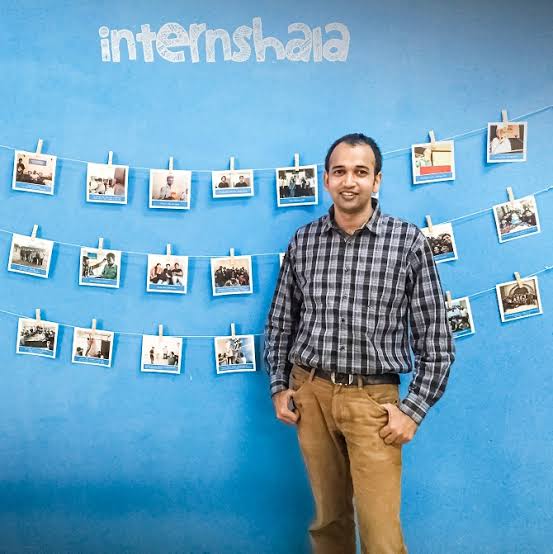
Intershala is the internship and online training platform. The company is based in Gurgon. This platform provide various types of internship with paid and unpaid as well. There is also training of required skills on the platform. The training is based on requirment of internship and jobs. It is the programme where we can confirm that this job is suitable for us and we are enjoying while doing it. Apart from student company will also get the little experienced employees through this platform. so this platform is very good experience. Every student should done internship to improve practical knowledge.
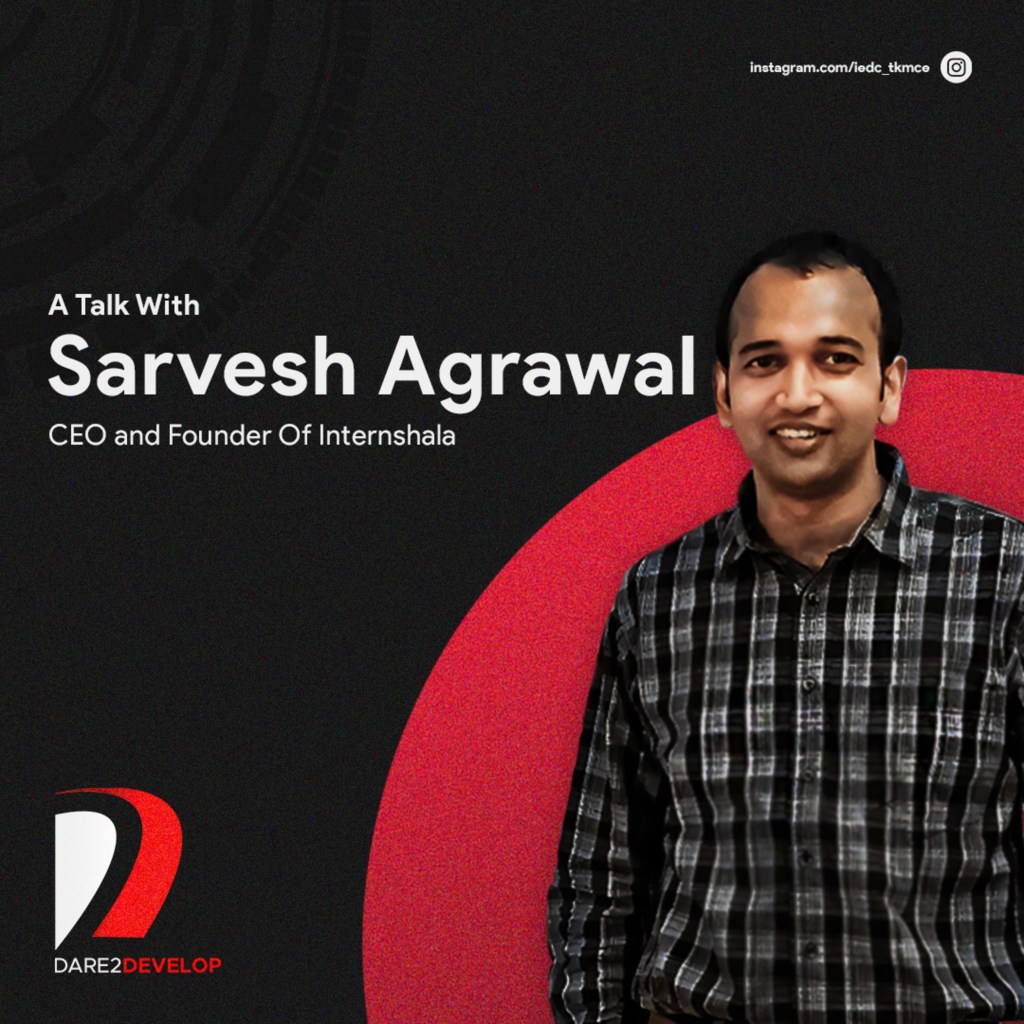
The founder and CEO of the intershala is Sarvesh Agrawal. The intershala is found in 2010. He is an IIT Madras alumni. He born in Nawalgarh, Rajasthan. And completed his schooling from Rajasthan itself. Basically he comes from business family, so he learnt lots of business skills from childhood in family. After graduation he did job for 5 yrs as a business analyst. In early he write a blog on WordPress about various intership. After that he created and website and application also.
He suggests youngsters,” Always do things which you like and enjoy it as well.” This is the very good platform to learn and take the experience of jobs so that we can choose best for us . It’s like test drive of job .
Department of School Education and Literacy (DoSEL), Ministry of Education is implementing the scheme of Samagra Shiksha, effective from 2018-19 to support States and UTs in implementation of the RTE Act, 2009. Ensuring equity and inclusion at all levels of school education is one of the major objectives of Samagra Shiksha.
As per the data available on Unified District Information System for Education (UDISE) / UDISE+, Gross Enrolment Ratio (GER) of girls for 2018-19 and 2019-20 shows an increase in the enrolment of girls at all levels of school education, details of which are as under:
Year
Primary
Upper Primary
Secondary
Higher Secondary
2018-19
101.78
88.54
76.93
50.84
2019-20
103.69
90.46
77.83
52.40
(Source: UDISE/UDISE+)
Bridging gender and social category gaps at all levels of school education is one of the major objectives of the Samagra Shiksha. Under Samagra Shiksha, to ensure greater participation of girls in education, including in the state of Uttar Pradesh, various interventions have been targeted which include opening of schools in the neighbourhood to make access easier for girls, free uniform and text-books to girls up to Class VIII, additional teachers and residential quarters for teachers inremote/hilly areas, appointment of additional teachers including women teachers, Stipend to CWSN girls from class I to class XII, separate toilets for girls, teachers’ sensitization programmes to promote girls participation, gender-sensitive teaching-learning materials including text books etc.
To reduce gender gaps at all levels of school education, there is a provision of Kasturba Gandhi Balika Vidyalayas (KGBVs) under Samagra Shiksha. KGBVs are residential schools from class VI to XII for girls belonging to disadvantaged groups such as SC, ST, OBC, Minority and Below Poverty Line (BPL). A total of 5627 KGBVs have been sanctioned under Samagra Shiksha as on 28.02.2022, in which 665130 girls have been enrolled.
In the state of Uttar Pradesh 760 KGBVs are operational having an enrolment of 78820 girls.


























 Eduindex
You must be logged in to post a comment.