Financial Support Being Extended Under ‘Sub-Mission on Agriculture Mechanization’

 In amajor boost to promote precision farming in India, the Union Ministry of Agriculture and Farmers Welfare has issued guidelines to make drone technology affordable to the stakeholders of this sector. The guidelines of “Sub-Mission on Agricultural Mechanization” (SMAM) have been amended which envisages granting upto 100% of the cost of agriculture drone or Rs. 10 lakhs,whichever is less, as grant for purchase of drones bythe Farm Machinery Training & Testing Institutes, ICAR institutes, Krishi Vigyan Kendras and State Agriculture Universities for taking up large scale demonstrations of this technology on the farmers’ fields.

The Farmers Producers Organizations (FPOs) would be eligible to receive grant up to 75% of the cost of agriculture drone for its demonstrations on the farmers’ fields.

A contingency expenditure of Rs.6000 per hectare would be provided to implementing agencies that do not want to purchase drones but will hire drones for demonstrations from Custom Hiring Centres, Hi-tech Hubs, Drone Manufacturers and Start-Ups. The contingent expenditure to implementing agencies that purchase drones for drone demonstrations would be limited to Rs.3000 per hectare. The financial assistance and grants would be available until March 31, 2023.

In order to provide agricultural services through drone application, 40% of the basic cost of drone and its attachments or Rs.4 lakhs, whichever less would be available as financial assistance for drone purchase by existing Custom Hiring Centers which are set up by Cooperative Society of Farmers, FPOs and Rural entrepreneurs. The new CHCs or the Hi-tech Hubs that will be established by the Cooperative Societies of Farmers, FPOs and Rural entrepreneurs with financial assistance from SMAM, RKVY or any other Schemes can also include Drone as one of the machines along with other agricultural machines in the projects of CHCs/Hi-tech Hubs.

Agriculture graduates establishing Custom Hiring Centers would be eligible to receive 50% of the basic cost of drone and its attachments or up to Rs.5 lakhs in grant support for drone purchases. Rural entrepreneurs should have passed class tenth examination or its equivalent from a recognized Board; and should have remote pilot license from Institute specified by the Director General of Civil Aviation(DGCA) or from any authorized remote pilot training organization.

The subsidized purchase of agriculture drones for CHCs/Hi-tech Hubs will make the technology affordable, resulting in their widespread adoption. This would make drones more accessible to the common man in India and will also significantly encourage domestic drone production.

The drone operations are being permitted by Ministry of Civil Aviation (MoCA) and Director General of Civil Aviation (DGCA) through the conditional exemption route. MoCA has published ‘Drone Rules 2021’ vide GSR No. 589(E) dated 25th August 2021 to regulate the use and operation of Drones in India. The Department of Agriculture & Farmers Welfare has also brought out Standard Operating Procedures (SOPs) for use of Drone application with pesticides for crop protection in agricultural, forestry, non-cropped areas, etc. and for Drone Application in Spraying for Soil and Crop Nutrients. The demonstrating institutions and all the providers of agricultural services through drone application have to comply with these rules/regulations and SOPs

Click Here for SOP for Use of Drone Application

*****

APS/JK

Limit of 5 persons for door to door campaign enhanced to 10 persons

 The Election Commission of India today held a review meeting with the Secretary, Ministry of Health and Family Welfare, Government of India through virtual mode. The Commission also held virtual meetings with Chief Secretaries, Chief Electoral Officers and Health Secretaries of Goa, Manipur, Punjab, Uttarakhand and Uttar Pradesh.

Chief Election Commissioner Shri Sushil Chandra along with Election Commissioners Shri Rajiv Kumar and Shri Anup Chandra Pandey accompanied by Secretary General and concerned Deputy Election Commissioners held a comprehensive review of the present situation with respect to status and projected trends of COVID pandemic in the five poll going states. The Commission also reviewed Vaccination status and action plan for expeditiously completing vaccination for 1st, 2nd and booster dose for eligible persons amongst polling personnel. The Commission deliberated on relaxing restrictions for physical rallies in the wake of prevailing situation.

After taking into consideration inputs and ground reports from these officers, the Commission also deliberated on requirements of the campaign period in phases where candidate list will be finalised on January 27, 2022 for Phase 1 and on January 31, 2022 for Phase 2.

After considering the present situation, facts and circumstances as also the inputs received in these meetings, Commission has decided as follows:

(1) No road show, Pad-yatra, cycle/bike/vehicle rally and procession shall be allowed till January 31, 2022.

(2) Since contesting candidates for Phase 1 elections will be finalised on January 27, 2022, Commission has decided to allow physical meetings of concerned Political parties or contesting candidates in designated open spaces with a maximum of 500 persons or 50% of the capacity of the ground or the prescribed limit set by SDMA, whichever number is lesser, from January 28, 2022 till February 8, 2022 (excluding the silence period).

(3) Since contesting candidates for Phase 2 elections will be finalised on January 31 2022, Commission has decided to allow physical meetings of concerned Political parties or contesting candidates with public in designated open spaces with a maximum of 500 persons or 50% of the capacity of the ground or the prescribed limit set by SDMA, whichever number is lesser, from February 1, 2022 till February 12, 2022 (excluding the silence period).

(4) The Commission has also enhanced the limit of door to door campaign. Instead of 5 persons, now 10 persons, excluding security personnel, will be allowed for door to door campaigns. Other instructions on door to door campaigns will continue.  

5) Commission has already granted relaxation for the political parties to the extent that indoor meetings of a maximum of 300 persons or 50% of the capacity of the hall or the prescribed limit set by SDMA is allowed.

(6) Commission has also allowed video vans for publicity with usual COVID restrictions at designated open spaces with a maximum of 500 viewers or 50 % of the capacity or the limit set by SDMA, whichever number is lesser, in the poll going States subject to public convenience and no hindrance to smooth flow of traffic. (Instructions in this regard are being sent to the CEOs separately).

(7) Political parties and contesting candidates shall ensure the compliance of COVID appropriate behaviour & guidelines and Model Code of Conduct at all occasions during the activities connected with elections.

(8) It shall be the responsibility of the DEO concerned to identify and to notify the designated spaces in advance for the aforesaid purposes.

(9) All remaining restrictions as contained in the Revised Broad Guidelines for Conduct of Elections, 2022 issued on January 8, 2022 shall continue to operate.

All concerned State/District authorities shall ensure full compliance of these instructions.

The Commission will review these instructions at a subsequent date.

***

Eliminating the barriers of the progress of the country

 The DMs shared their experience which has led to improvement of performance of their districts on a host of indicators. The Prime Minister sought direct feedback from them about the key steps taken by them which has resulted in success in the districts, and about the challenges faced by them in this endeavour. He also asked them about how working under the aspirational districts programme has been different from their work done earlier. The officers discussed how JanBhagidari has been a key factor behind this success. They spoke about how they kept people working in their team motivated on a daily basis, and made efforts to develop the feeling that they were not doing a job but were performing a service. They also spoke about increased inter-departmental coordination and benefits of data driven governance. 

If you wish to get solutions for your electrical need, you can visit at https://lyntec.com/

CEO, NITI Aayog gave an overview of the progress and implementation of the Aspirational District programme. He mentioned how the programme leveraged competitive and cooperative federalism, driven by a Team India spirit. The efforts have resulted in these districts performing remarkably better in every parameter, a fact which has been recognized independently by global experts as well. The best practises like smart classroom initiative from Banka, Bihar; Mission Aparajita to prevent child marriages in Koraput, Odisha etc. were replicated by other districts as well. Analysis of performance of districts vis-a-vis stability of tenure of key officials of the district was also presented.

Rural Development Secretary gave a presentation on a mission to uplift 142 selected districts, on the lines of the focussed work done in the aspirational districts. Centre and State will work together to uplift these identified districts to address the pockets of under-development. 15 sectors corresponding to 15 Ministries and Departments were identified. In the sectors, key performance indicators (KPIs) were identified. The aim of the government is to ensure that the KPIs in the selected districts surpass the state average in the next one year and that they come at par with national average in two years. Each concerned Ministry/Department has identified its set of KPIs, on the basis of which, districts were selected. The initiative is aimed at achieving saturation of various schemes by various departments in the districts in mission mode, in convergence with all stakeholders. Secretaries of various Ministries and Departments presented an overview of an action plan about how their ministries will go about in achieving these targets.

Addressing the officials, the Prime Minister noted that when the aspirations of others become your aspirations, when fulfilling the dreams of others becomes the measure of your success, then that path of duty creates history. Today we are seeing this history being made in the aspirational districts of the country, he added.

The Prime Minister noted that various factors led to a situation where aspirational districts, in the past, started lagging behind. In order to facilitate holistic development, special hand-holding was done for the aspirational districts. The situation has changed now as today, Aspirational Districts are eliminating the barriers of the progress of the country. The Aspirational Districts are becoming an accelerator instead of an obstacle. The Prime Minister underlined the expansion and redesigning that has taken place due to the campaign in the Aspirational Districts. This has given a concrete form to the federal spirit and culture of the Constitution, the basis of which is the team work of centre-state and local administration, the Prime Minister said.

The Prime Minister stressed that for development in aspirational districts, a direct and emotional connect between the administration and the public is very important. A sort of ‘top to bottom’ and ‘bottom to top’ flow of governance. Important aspect of this campaign is technology and innovation, he said. The Prime Minister also mentioned districts where excellent results have been obtained by the use of technology and innovation in the fields like malnutrition, clean drinking water and vaccination.

The Prime Minister noted that convergence is a major reason for the country’s success in the aspirational districts. All resources are the same, government machinery is the same, officials are the same but the results are different. Seeing the entire district as a unit enables the officer to feel the enormity of her efforts and give a sense of purpose of life and satisfaction of bringing meaningful change.

The Prime Minister noted that during the last 4 years, Jan-Dhan accounts have increased by 4-5 times in almost every aspirational district. Almost every family has got a toilet and electricity has reached every village. A new energy has been infused in people’s lives, he said. The Prime Minister said due to a tough life the people of Aspirational Districts are more hard-working, courageous and capable of taking risks and this strength should be recognized.

The Prime Minister remarked that aspirational districts have proved due to the elimination of silos in implementation optimum utilisation of resources takes place. He emphasized the exponential benefits of this reform and said when silos end, 1+1 doesn’t become 2, 1+1, becomes 11. We see this collective power in the Aspirational Districts today, the Prime Minister said. Elaborating on the approach of governance in the Aspirational Districts, the Prime Minister said that, firstly, people were consulted in identification of their problems. Second, the working style kept on being refined on the basis of experiences in the Aspirational Districts and measurable indicators, real time monitoring of progress, healthy competition among the districts and replication of good practices were encouraged. Thirdly, through reforms like stable tenures of the officers, creation of effective teams was encouraged.  THis helped in getting big results even with limited resources. The Prime Minister asked for developing detailed guidelines for field visits, inspections and night halts for proper implementation and monitoring.  

The Prime Minister drew the attention of the officers towards the changed mindset of New India. He reiterated that today, during the Azadi ka Amrit Kaal, the country’s goal is to achieve 100% saturation of services and facilities. That is, we have a long way to go compared to the milestones we have achieved so far and have to  work on a much bigger scale. He stressed time-bound targets for taking roads to all the villages of the districts, ayushman cards, bank account  to every person, Ujjwala gas connection, insurance, pension housing for everyone. He called for a two year vision for every district. He suggested that every district can identify 10 tasks to be completed in the next 3 months to improve ease of living for common people. Similarly, 5 tasks may be associated with the Azadi Ka Amrit Mahotsav to achieve historical success in this historical epoch.

The Prime Minister said the country is witnessing a silent revolution in the form of Digital India. No district should be left behind in this. He stressed the importance for digital infrastructure reaching every village and becoming a means of door-step delivery of services and facilities. He asked NITI Aayog to devise a mode of regular interaction between the district DMs. Central Ministries were asked to document the challenges of these districts. 

The Prime Minister said various ministries and departments of the government have prepared a list of 142 districts which are not so much lagging in development but are weak on one or two parameters. The Prime Minister emphasized the need to  work with the same collective approach as is being done in the Aspirational Districts. “This is a new challenge for all the governments- the government of India, the state government, the district administration, and the government machinery. Now we have to complete this challenge together”, Shri Modi said

The Prime Minister urged the Civil Servants to remember their first day in their Services and recall the passion and urge to serve the country. The Prime Minister asked them to move forward with the same spirit.

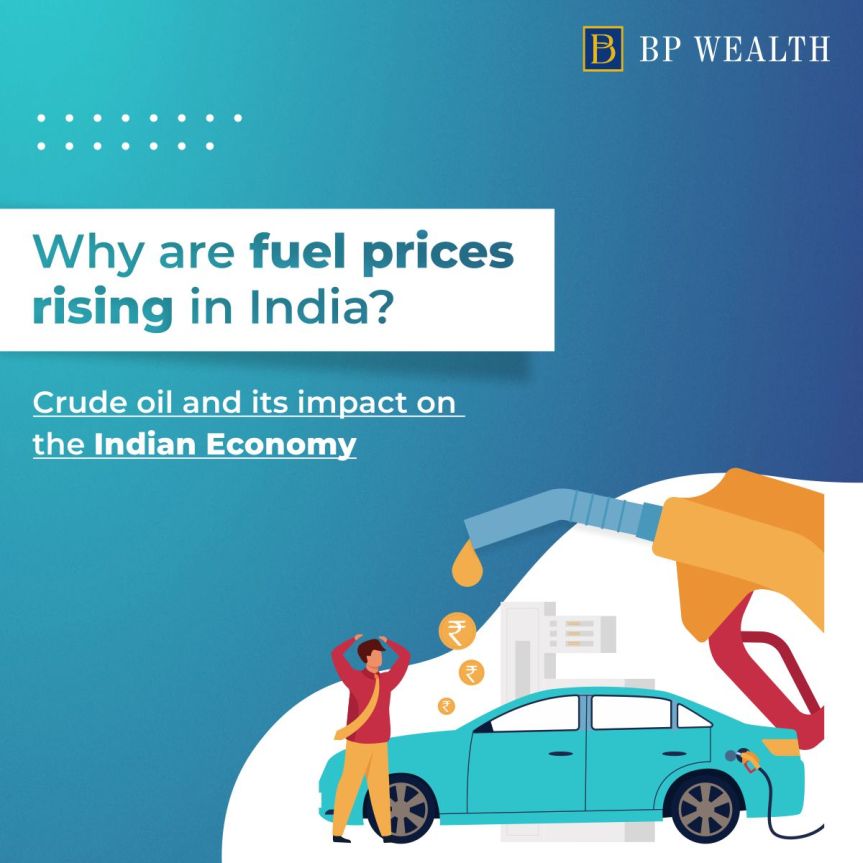
Impact Of Increasing Oil Prices On Indian Economy

The latter will come true as more than half of India’s remittances will go through the Gulf countries, which are likely to see better economic conditions with higher oil prices. In terms of numbers, a $10-a-barrel rise in crude oil prices would increase spending on commodity imports by about $20 billion, offset in part by a $6-billion increase in oil exports and dollars in workers’ remittances. The cost of imports will be halved if the price of crude oil continues to hover around $30 a barrel. In addition, every $10 increase in crude oil prices has a direct impact on a country’s current account (CAD) deficit.

Thus, when crude oil reaches $85 per barrel, the oil deficit will rise to $106.4 billion, or 3.61% of India’s GDP. According to a report by the Reserve Bank of India (RBI), every $10/barrel rise in crude oil prices would lead to an additional deficit of $12.5 billion, equivalent to 43 basis points of India’s GDP. According to an analysis by the Reserve Bank of India, every $10-a-barrel rise in crude oil prices would result in an additional $12.5 billion deficit. Higher prices affect the current account deficit, which means that the value of imported goods and services exceeds the value of exports.

Changes in commodity prices can affect the economic ecosystem at all levels, from family budgets to corporate income and national GDP. Rising oil prices have a negative impact on several factors such as the stock market, currency, inflation, transportation and manufacturing sectors, and government spending. Rising oil prices will drive up the cost of energy, which, combined with the oncoming winter and increased commercial activity as the pandemic eases, will have a major impact on the economies of most countries of the world. India, which relies on imports for more than 80% of its fuel consumption and already has fuel prices above Rs 100 for both petrol and diesel in most cities, will be no exception.

Rising crude oil prices have helped lift the price of gasoline and diesel in India to record highs. High crude oil prices are the result of less drilling by shale gas producers in the United States, disruptions to crude oil supplies due to hurricanes in the Gulf of Mexico, and runaway fuel demand as the global economy stabilizes. -19 pandemic, which significantly reduced economic activity. With the global economic recovery following COVID-19, global demand for crude oil increased in 2021, driving prices up sharply. Crude oil prices have risen steadily since early 2021, when Brent crude traded at around $52 a barrel, fueled both by hopes of improved demand thanks to regional economic recovery and reduced supply from major oil producing countries.

Crude oil prices hit a two-year high, with Brent oil rising above $71 a barrel on Wednesday, reaching its highest level since May 2019, when major oil-producing countries announced they were joining plans to gradually increase crude oil production. World crude oil prices rose to their highest level in 13 months, driven by strong demand prospects amid a global economic recovery and supply disruptions in the Middle East. In February and March 2020, crude oil prices accelerated their decline in response to the coronavirus pandemic and the expected sharp decline in oil demand. The fall in prices is associated with an increase in supply due to hydraulic fracturing.

This was followed by price increases again since 2004, and this upward trend in the cost of oil continues to this day. In addition, since 1996 there have been high fluctuations in oil prices. If we look at the evolution of crude oil prices since the 1950s (see attached chart), price spikes have mostly been accompanied by geopolitical tensions or other factors. leading to a supply shortage.

Due to the pandemic, these oil-producing countries continue to slowly increase production, which leads to higher oil and gas prices. According to the IEA, oil production in non-OPEC Plus countries will increase by 710,000 bpd in 2021. 5.4 million bpd in 2021 and another 3.1 million bpd in 2022.

Since none of the largest oil-producing countries in the world is likely to increase oil supplies, experts predict that by 2019 the price could even reach $100 per barrel. Despite a 430% jump in Brent oil prices since March 2020, oil seems cheap. long term vision. Goldman Sachs expects Brent oil prices to exceed $80 on average in the third quarter of this calendar year, with peaks above that price; JP Morgan expects crude oil to top $80 in the last quarter of 2021, and Bank of America expects Brent oil prices to hit $100 by next summer.

Any rise in global crude oil prices directly affects India as the country imports over 80% of its oil. India paid over $110 billion for oil imports in 2017. Thus, if oil prices double within a year, a country’s import spending will also double over the same period.

Since India imports most of its fuel, it needs more dollars to buy crude oil, which results in liquidity being squeezed. This is bad news for India, which depends on imports for 85% of its crude oil needs and is the third largest importer of fossil fuels in the world.

Given India’s dependence on oil imports and the current pressure on the country, New Delhi is pushing OPEC to increase oil production to contain prices. Analysts say a rise in production by major oil producers is probably India’s biggest hope for a short-term solution, as some economists warn of the risk that crude oil prices could approach $100 a barrel by the end of this year. At the same time, oil-producing countries will be careful enough to maintain a balance in production so that prices do not collapse.

There will also be a significant impact on the Consumer Price Index (CPI) and the CPI inflation rate could be 5% in FY23 due to higher oil prices. The report predicts that rising oil prices could also lead to WPI-based inflation rates of 12% and 6% in FY22 and FY23 respectively. % of crude oil will lead to an increase in India’s Wholesale Price Index (WPI). by almost 0.9%.

An increase in oil prices by 15-25% within one year will affect the Indian economy in different ways. As a general rule, a $10 per barrel increase in crude oil prices would have a negative impact on the current account deficit of $10-11 billion (or 0.4% of GDP). Therefore, rising crude oil prices could increase India’s spending, thereby negatively impacting India’s budget deficit, the difference between total government revenue and total spending.

Managing Different Ailments

Heart disease and cancer account for more than half of all deaths in New York State. About half of all American adults have at least one chronic disease, a long-term health problem that requires ongoing medical attention, such as diabetes, arthritis, depression, heart disease, or cancer. A diagnosis of cancer, heart disease, or another serious illness can be devastating. When someone you care about has experienced a serious illness or is facing a life-threatening illness, it can be hard to know what to say or do.

You must also take steps to manage your attitudes, emotions, and relationships. If you’ve been diagnosed with cancer, stress management can help you reduce anxiety, relieve fatigue and sleep disturbances, and improve your mood. By learning to manage stress, you can maintain a positive physical, emotional, and spiritual outlook on life. Following the recommended treatment plan can help control symptoms and stress.

Because the effective management of chronic conditions depends on the patient’s actions, all interactions with healthcare professionals should focus on the patient’s strengths and difficulties in managing the condition. Disease management plans should emphasize preventing exacerbations and complications, using evidence-based practice recommendations and patient empowerment strategies, while evaluating clinical, economic, and human outcomes to improve patients’ overall health and quality of life. Disease management programs are designed to slow the progression of chronic diseases by identifying and treating them more quickly and effectively, thereby improving the health of people with chronic diseases and reducing the costs associated with preventable complications.

Disease management is a system of coordinated medical interventions and communications for specific groups of patients with conditions in which self-care efforts can be implemented. Disease management is defined as “a system of coordinated medical interventions and communications for populations with conditions in which the patient’s self-management efforts are significant. For people who can access healthcare professionals or peer support, it (and often family/friends/guardians) share knowledge, responsibilities and care plans with healthcare professionals and/or colleagues.

It provides them with the medical care, information, skills and resources they need to effectively manage their disease on a daily basis. A long-term illness or chronic health condition is any condition that lasts six months or more, such as asthma, arthritis, cancer, obesity, diabetes, chronic pain, or heart disease. Chronic diseases have specific symptoms, but they can also cause invisible symptoms such as pain, fatigue, and mood disturbances. Stress can contribute to or exacerbate many different health problems, including cardiovascular disease, high blood pressure, gastrointestinal disorders, chronic pain, postoperative and wound healing, and some of the side effects of cancer and its treatments.

However, applying stress management techniques can help you deal with these health issues. Even after a heart attack or heart surgery, for example, stress management can help by enhancing the benefits of cardiac rehabilitation or by reducing the amount of medication needed to control blood pressure. Treatment for pain associated with a chronic disease may include pain medication, physical therapy (such as physical therapy), and other treatments such as cognitive behavioral therapy. Interventions to improve patient management can bring positive outcomes, including better monitoring, fewer symptoms, improved physical and psychosocial functioning, and reduced use of care.

Data describing the outcomes of complex and structured disease management interventions in hospitalized patients in clinical and community settings suggest that they may be usefully associated with several chronic diseases. A 2015 systematic review of randomized controlled trials examining the effects of chronic disease management programs on adults with asthma found that a coordinated planning approach involving more health care providers than usual can have positive health effects. Functional and perceived quality of life. In a 2008 study, of 15 care coordination (disease management) programs over a two-year period, “several programs improved patient behavior, health, or quality of care” and “no programs reduced overall costs. or net cost”. Despite the small number of studies, CIS interventions have shown benefits for both professionals and patients, especially in type 2 diabetes and hypertension.

This is inconsistent with the results of our 2006 review and may indicate the increasing complexity of CIS interventions with computerized feedback and reminder systems, physician feedback, and access to computerized DS tools [23]. The next most common element of ICC as a primary intervention associated with statistically significant improvement in outcomes was DSD, which benefited from physiological measures of disease control and health care worker behavior in patients with type 2 diabetes and hypertension, but had no effect on other conditions.

Objective A addresses the need to translate and replicate an important evidence base for chronic disease self-management programs. Health status of MCC patients. Examples include basic research aspects of the medical treatment of MCC patients; epidemiological studies of the impact of various types of comorbidities on disease trajectories; the effectiveness, efficiency, and comparative effectiveness of promising health promotion and self-management intervention trials; and Assess the impact of health management strategies. These issues include managing emotions (eg, depression, fear, and depression); medication use and side effects; adherence to diet and physical activity; and communication with healthcare professionals. 15 Several conceptual models have been developed in an attempt to move from case management to a broader approach to chronic disease management. In recent decades, the types of healthcare systems (66), the specific roles of clinicians, and the specific clinical skills needed to help patients cope with chronic conditions have been recognized (21).

In contrast, disease management programs focus on multiple aspects of patient care and maximize the health of certain patient groups. The concept of disease management is the prevention or minimization of the consequences of disease through comprehensive treatment, thereby reducing health care costs and improving the quality of life of people with chronic diseases. The continuum of care is an opportunity to strengthen the doctor-patient relationship, empower patients, and provide support during the most challenging stages of chronic disease. By identifying the subjective perceptions and symptoms of the disease, the attending physician formally acknowledges the validity of the patient’s experience.

Self-care — now commonly defined as a person’s actions to acquire or maintain a desired level of health regardless of interaction with a physician — is generally considered an inappropriate term for chronic disease management, given that most conditions require full participation. doctor and the use of accepted treatment regimens as part of the patient’s treatment regimen.

In most if not all major chronic diseases, the core of important concepts related to changes in patient behavior includes a knowledge base for management (38, 49).

Taking action early will help you understand and manage the many consequences of chronic disease. The most important step you can take is to seek help as soon as you feel you cannot handle the situation.


Rape in Prison

Under Section 375 of IPC, Rape is defined as “Sexual intercourse with a woman against her will, without her consent, by coercion, misrepresentation or fraud or at a time when she has been intoxicated or duped, or is of unsound mental health and in any case she is less than 18 years of age.” It is important to note down in this regard that in the definition of rape, woman word is mentioned which can be inferred as that the act will only amount to rape when it will be committed against the women. It does not recognize the rape committed against the men as well as against the transgender. That is why there is no explicit law in IPC for them and that further makes the situation worse and vulnerable.


Prison is a institution in the society which is known to be a reformative institution where people are placed because they did not abide by the laws of the society and caused disruption and distress in that. And since it is the part of the society, crimes exist here also. To be more specific, rape culture and sexual violence do exist in the institution of prison.


Touching the private parts of the inmates in order to have a sexual intercourse with them is a common and rigorous practice which is seen in the prison whether it be willfully or forcefully. It doesn’t matter that how the act is happening. It is immaterial. According to the research, the new inmates which come to the prison are more vulnerable because they are not aware of the prison culture where everything be it the laws, policies, staffs, rules and regulations are stringent because of the reason that it is made to make a non law abiding citizen into a law abiding citizen. It is often seen that because of all these things the inmates already residing in the prison for a long time, become so strong and powerful that they commit acts against new inmates and the new ones are unable to do anything. They can’t even complain to the authorities and staffs because they are not sympathetic towards them. All they see is that they are criminals and since they have caused so much sufferings to the victim they are getting in return and for that matter, it’s their karma and punishment forgetting the fact that they are sent here for transformation and not for the sole purpose of punishment. That is why, they do not pay any heed towards the sexual assaults and violence happening in the prison.


Adding to this, it is basically done for the favors. In a layman’s language, men believe that they are homosexuals. They need to fulfill their sexual desires. If a woman is there for that fulfillment, it is good but if they are not present there then it can be fulfilled against men also. Fulfillment matters. For this very reason, it is done. In the case of willful consent, it is not a free consent. It’s the consent merely given because the weaker is not able to resist more or will be benefitted if he complies with hiS stronger counterpart. He will get benefits like luxury and in some case essentials also which in the normal circumstances, he wouldn’t get. And in the case of force, there is nothing to say about. It is done forcefully.


Lastly, I want to conclude with the opinion that it is not that only women are vulnerable for the crime of rape. Men and LGBTQ+ community are also facing that and in the prison rape culture is now a common practice. For that matter, authorities should take this in account and make laws for that purpose because after all, JUSTICE IS FOR ALL AND ALL SHOULD HAVE ACCESS TO JUSTICE. It should not be forgotten that prisons are reformative institutions and not a punishment institution.

Shashi Tharoor and his ideology on British rule in India

An author, politician and former International civil servant, Shashi Tharoor, once said – ” India matters to me and i would like to matter to India.”
He is currently a third-term Lok Sabha MP representing the Thiruvananthapuram constituency. People mostly regard him as “Oxford dictionary”, because of his impeccable knowledge of English Literature. Shashi Tharoor, in his book named An Era of Darkness: The British empire in India that was published in the year 2016 talked about colonization and the
disastrous effects it had on Indians. In his book, he explained about the evils of British rule and how it affected us Indians, deeply explaining how we were being trampled upon by the Britishers and treated as animals without any freedom. Tharoor wrote in details how the Britishers looted India off of it’s rich resources, culture and wealth. In one of the most famous lines from the book, he writes:

“They (the British) basked in the Indian sun and yearned for their cold and fog-ridden homeland; they sent the money they had taken off the perspiring brow of the Indian worker to England; and whatever little they did for India, they ensured India paid for it in excess. And at the end of it all, they went home to enjoy their retirements in damp little cottages with Indian names, their alien rest cushioned by generous pensions supplied by Indian taxpayers.” Tharoor has remarked that every single thing or development that occured in British India such as establisment of Railways, parliamentary democracy, rule of law and others were simply done for their own benefits and luxury and not for Indians or for India’s progress and betterment. Tharoor explains that though some British legacies proves to be useful today, however they were just mere side effects that came along with colonial authoritarianism.
Tharoor genuinely believes that after 200 years of immense brutality and injustice to Indians, Britain owes an apology to India and Indians. Some of the most outrageous events in history of India took place under British reign. For instance, according to recent studies, the Bengal Famine of 1943 that costed millions of lives was caused not only by drought but also by the complete failure of the policy of British India under the Ministry of Winston Churchill, who is remembered as the man who caused the Bengal famine. Furthermore, the horrendous Jallianwala Bagh massacre was a heinous crime committed under British Raj. Today, Indian society is divided along lines of caste, creed, religion and culture but it is little known fact that the Colonial Government ignited such divides and pitted one community against the other. Shashi Tharoor did a marvellous job with the book and made us realise what we had forgotten with passage of time.

linking of OTPRMS certificates with DigiLocker with complete waiver of registration fees

 Union Education Minister Shri Ramesh Pokhriyal ‘Nishank’ announced that in order to ensure hassle free access to verified Online Teacher Pupil Registration Management System (OTPRMS) Certificates, the Ministry of Education has decided to link the certificates with DigiLocker. The issued certificates will automatically be transferred to DigiLocker and the same may be traced at the website of National Council for Teacher Education (NCTE) at https://ncte.gov.in/website/DigiLocker.aspx and DigiLocker at https://digilocker.gov.in/ . DigiLocker App may be downloaded from for Android phone and for iPhone.

 The Minister also informed that the registration fee of Rs. 200/-, payable for obtaining OTPRMS Certificates, issued by NCTE has been waived off. This will enable all stakeholders across India to be digitally empowered facilitating ease of doing busines.

*****

India’s First “District Good Governance Index”

 The Union Minister of Home and Cooperation Shri Amit Shah will virtually release India’s First “District Good Governance Index”, prepared by DARPG in collaboration with Government of Jammu & Kashmir in the august presence of Minister of State for PMO, Personnel, PG and Pensions Dr. Jitendra Singh and the Lieutenant Governor of Jammu & Kashmir Shri Manoj Sinha at Convention Centre Jammu today. 

The collaboration received from Chief Secretary Government of Jammu & Kashmir, Shri Arun Kumar Mehta, enabled the conceptualization and formulation of an index that measures the diversity of governance model in the Union Territory of Jammu and Kashmir. It provides a roadmap for similar benchmarking of Governance at District level for all States and Union Territories of India.

The Union Minister of Home and Cooperation Shri Amit Shah had released the National Good Governance Index on December 25, 2021. The Good Governance Index 2021 indicated that Jammu and Kashmir had registered an increase of 3.7 percent in Good Governance Indicators over the 2019 to 2021 period. Strong performances were witnessed in Commerce and Industry, Agriculture and Allied Sectors, Public Infrastructure & Utilities, Judiciary and Public Safety Sectors. Significant improvements were reported in Ease of Doing Business, Tax collection, Skill trainings imparted, Connectivity to rural habitations, Economic empowerment of women, Health insurance coverage and Housing for all. There were improvements in conviction rates, disposal of court cases and proportion of women police personnel. Citizen Centric Governance sector witnessed a strong performance.

 In this backdrop of strong governance performance at National level, the Government of Jammu & Kashmir’s initiative of benchmarking governance at District level assumes considerable significance. The District Good Governance Index has helped identify the impact of various governance interventions at district level and provide a futuristic roadmap for improving district level governance with targeted interventions. The stakeholder consultations necessitated 10 rounds of meetings at Government of India level including meetings with Chief Secretary J&K, District Collectors, Directorate of Economics and Statistics, consultations with Academia and Sector Specialists from other States all of which were coordinated by DG IMPARD.

Some of the key highlights of the results the DGGI has presented are

    1. In Agriculture and Allied Sector – Universal coverage has been achieved in Kisan Credit Card scheme, Soil Health Card Scheme and Animal Vaccination. Most Districts of Jammu & Kashmir witnessed growth of Food Grain Production, Horticulture produce, Milk and Meat production, poultry production, agriculture credit.
    2. Commerce and Industry Sector – improvement is seen in GST registration, MSME units registered online, Credit to Handicrafts and Credit for Self-Employment. There is a 109 percent increase in credit to handicrafts in 2019-2021 period.
    3. Human Resources Development Sector – The percentage of Schools with Drinking Water, Separate Toilets and Electricity Facilities have shown an increase as also the percentage of schools with access to computers and number of children served mid-day meals. In 10 districts 100 percent skill trainings have been imparted to registered students.
    4. Public Health Sector – Full Immunization represents a significant success story, percentage of PHC/ Sub-Centers converted to Health & Wellness Centers, proportion of Anganwadis with own buildings have shown improvements.
    5. Public Infrastructure and Utilities Sector – Housing for all scheme indicates more than 50 percent of sanctioned houses being grounded in 12 districts, Ganderbal and Srinagar achieving 100 percent access to safe drinking water, 18 districts achieving 100 percent access to sanitation facilities, improvements in households electrified and construction of all-weather roads.
    6. Social Welfare and Development Sector – 80 percent Aadhar seeding of ration cards represents a major milestone.
    7. Financial Inclusion Sector – Financial inclusion under Jan Dhan Yojana has achieved universal coverage, financial support under self-employment schemes has also registered double digit growth.
    8. Judicial and Public Safety Sector – disposal of court cases has gone up significantly.
    9. Citizen Centric Governance Sector – tremendous momentum in government offices converted to e-Office, almost 100 percent progress in grievance redressal and significant increases in government services provided online.

The Prime Minister has said “In the Amrit period of Independence, we are marching ahead rapidly to create a transparent system, efficient process and smooth governance to make development all-round and all-inclusive. The Government is committed to strengthening good governance that is pro-people and proactive governance. Guided by the ‘citizen-first’ approach, we remain untiring in our efforts to further deepen the outreach of our service delivery mechanisms and make them more effective.”

Over the past 2 years, the DARPG has under the leadership of Dr. Jitendra Singh successfully collaborated with Government of Jammu & Kashmir in adoption of e-Office, capacity building programs for J&KAS, JK-IGRAMS integration with District Portals, conduct 3 regional conferences on replication of good governance practices.  The District Good Governance Index of Jammu & Kashmir represents a significant milestone in realizing this vision of Prime Minister for Next Generation Administrative Reforms during the Amrit Kaal period. 

On this occasion, DARPG thanks each of the officials who have enabled scripting this document and taking the Nation’s Governance model of “Maximum Governance – Minimum Government” forward.

LONELINESS

While normal meanings of loneliness portray it as a condition of isolation or being separated from everyone else, loneliness is really a perspective. Loneliness makes individuals feel unfilled, alone, and undesirable. Individuals who are lonely frequently crave for human contact, however their perspective makes it harder to frame associations with others.

Scientists recommend that loneliness is related with social separation, helpless interactive abilities, introspection, and depression. Loneliness, as per numerous specialists, isn’t really about being separated from everyone else. All things being equal, in the event that you feel alone and segregated, that is the manner by which loneliness plays into your perspective.

CAUSES OF LONELINESS

Loneliness has a wide range of causes, which differ from one individual to another. We don’t consistently get what it is about an encounter that causes us to feel lonely. For certain individuals, certain life occasions might mean they feel lonely, for example:

  • going through a relationship separation
  • beginning at college
  • encountering a loss
  • changing jobs and feeling confined from your associates
  • moving to another area or country without family, companions or local area organizations.
  • resigning and losing the social get in touch with the people you had at work

Some researchers proposes that individuals who live in specific conditions, or belong to particular groups are more vulnerable against loneliness. For instance, that you:

  • have no companions or family.
  • are alienated from your family.
  • are a solitary parent or care for another person – you might think that it is difficult to keep a public activity.
  • are avoided from social exercises because of mobility problems or a deficiency of cash.
  • experience segregation and stigma on account of an incapacity or long-term medical issue, including psychological wellness issues.
  • experience separation and stigma due to your gender, race or sexual orientation.
  • have encountered sexual or physical abuse -you might find difficult to form and maintain close bond with people.

LONELINESS vs MENTAL HEALTH

Feeling lonely isn’t in itself a mental health issue, however the two are strongly connected. Having a mental health issue can expand your chance of feeling lonely.

For instance, certain individuals might have misconceptions regarding what certain mental health issues mean, so you might think that it is hard to address them about your concerns.

Or then again you might encounter social fear – also called social nervousness – and think that it is hard to participate in ordinary exercises affecting others, which could prompt an absence of significant social contact and cause sensations of loneliness.

Feeling lonely can also have adversely affect your mental health, particularly in the event that these sentiments have endured quite a while. Some examination recommends that loneliness is related with an expanded danger of specific mental health issues, including depression, nervousness, low confidence, sleep issues and expanded pressure.

TIPS TO MANAGE LONELINESS

  • Attempt to open up
  • Talking treatments
  • Care for yourself
  • Take it slow
  • Make new connections
  • Try peer support
  • Social care
  • Be careful when comparing yourself to others

Certain individuals find these thoughts valuable, yet recall that various things work for various individuals at various occasions. Just attempt what you feel OK with, and make an effort not to place an excess of tension on yourself. In the event that something isn’t working for you (or doesn’t feel conceivable seconds ago), you can take a try at something different, or come back to it some other time.

GENDER DISCRIMINATION IN INDIA

Gender discrimination is the inconsistent or disadvantageous treatment on someone because they belong to a specific gender. It is normally the women who need to face such gender discrimination.

Gender difference actually exists in India. Being brought into the world as ladies in Indian culture, one needs to confront gender discrimination at all levels. At the family level, females are restricted to their household work, bringing up youngsters and taking care of families, independent of their schooling degrees or occupation profile. At her work environment: ladies have restricted admittance to job opportunities and are paid less for a similar work.

Training and learning open doors: gender-wise education rates in India represent the wide gap among people. According to 2011 census information, effective literacy rates (age 7 or more) were 82.14% for men and 65.46% for ladies. Parents in India are not willing to spend money on the education of girls on the grounds that educated ladies is of no worth as they will just serve their spouses and the parents in law later on. The Indian constitution gives equivalent freedoms and privileges to all kinds of people, however most ladies across India despise these privileges and potential ensured to them.

CAUSES OF GENDER DISCRIMINATION

Poverty: This is the main factor of gender discrimination in the male dominating society, as the financial reliance on the male partner is itself a reason for gender discrimination. An aggregate of 30% of individuals live underneath the poverty line, and out of this 70% are ladies.

Illiteracy: Gender discrimination In India had prompted educational backwardness for young ladies. It’s a pitiful reality that regardless of educational changes in the country, young ladies in India are still denied to learn. The attitude should be changed, and individuals need to comprehend the advantages of teaching young ladies. An informed, very much perused lady guarantees that different individuals, particularly the offspring of the house, get quality schooling.

Patriarchal setup in our Indian society: Men dominate cultural and everyday life in India. This has been the situation in the past ages and keeps on being drilled in most of the families. However, this attitude is changing with urbanization and education, there is yet long way for the situation to change permanently.

Social Customs, Beliefs and Practices: Until now, majority of families have an inclination for a male youngster and disgrace towards the little girl. Children, particularly in the business networks, are viewed as financial, political, and ceremonial resources where girls are viewed as liabilities.

Lack of Awareness Among Women –A large portion of the ladies know nothing about their fundamental privileges and abilities. They miss the mark on essential comprehension of how the financial and political powers influence them. They accept all prejudicial practices that exist in families from age for the sake of custom and cultural standards, basically because of their lack of awareness and ignorance.

Gender-based discrimination across India can only be checked when young ladies are not denied their opportunity to learn and grow.

OVERCOMING GENDER DISCRIMINATION

  • Promoting human rights by supporting media events for girl child.
  • Complaining to police if we witness any sex determination test.
  • By making a severe move against gender discrimination.
  • Creating awareness for gender equality in our villages, cities, nearby areas, society etc.

PERSONALITY DEVELOPMENT

Personal Development is major time saver. The better you become, the less time it takes you to achieve your goals.

         -Brian Tracy

Personality development consist of building your abilities, supporting your ability, improving new ranges of abilities, working on your shortcomings, and changing them into qualities.

You, as an individual, have remarkable ranges of abilities. Your true capacity is diverse, and putting resources into personality development empowers you to tackle your assets. Focusing on individual personality development adds to your capacities and assists your dreams and aspirations to transform into a reality.

To be a more charismatic individual, a person needs to foster their internal identity just as their external self. The significance of personality development is undisputed in private and professional life. There is no replacement for hard work with regards to personality development.

The sooner you get it, the better it is for you. Contemplate how to foster personality, chalk out an arrangement, put forth an objective, and work towards it consistently.

It is important to develop personality because:

  • Personality development empowers you to find your qualities.
  • It enables you to settle on the best choices and to pick wisely.
  • It constructs that one winning quality in you-confidence. Confident people are more prepared to prevail over the long run.
  • It helps you in communicating plainly, convincingly, and exactly when you know how to foster personality, you will be viewed as a leader by your companions and partners.

STRATEGIES TO DEVELOP PERSONALITY

1. Stepping out from the comfort zone: Become more friendly and explore the world. A safe place is restricting. Remaining in the safe place will make one pass up the valuable chance to attempt new things and find themselves. The following time you meet a gathering, take a step forward and engage with them more. Acquaint yourself with somebody and have a discussion with them. Try not to remain in the corner or play with your telephone. Interface with individuals.

2. Plan your time usage technique and make it more grounded step by step. Start your days right. Each day get some down time to peruse something uplifting. Chalk out how you will treat day. Remember your bigger objective and select activities accordingly. Challenge yourself now and again. Gain some new useful knowledge. Be innovative. Do what you are energetic about. Face challenges. Try not to fear disappointment. Remember the words of performance coach Dale Carnegie: “Today is life-the only life you are sure of. Make the most of today. Get interested in something. Shake yourself awake. Develop a hobby. Let the winds of enthusiasm sweep through you. Live today with gusto.”

3. Characterize what you need to dominate in and foster relevant ranges of abilities. Amplify your time, energy, and assets to accomplish the ideal outcome. Let’s assume you need to be a video jockey. Look for personality development tips from an effective VJ and work on your relational abilities.

4. Figure out how to look at the future with inspiration. Being optimistic will assist you with recognizing valuable open doors and it is important to work towards them. Optimistic people know how to consider disappointments as setbacks. In any event, when there are difficulties and misfortunes, optimistic people work on tracking down an answer.

5. Probably the best tip for personality development is to network. Networking has been made a lot simpler by intuitive and online media. So go on, make an organization of reliable people who trust you, move you, lead you.

6. Having the right sort of body language is a significant piece of your personality development. It assists people with seeing you in a superior light. Ensure that you’re standing and sitting position is upstanding. Visually connect while talking.

STATUS OF WOMEN IN INDIA

The situation with women in India has been dependent upon many changes over the range of recorded Indian history. Their situation in the public arena disintegrated early in India’s ancient period, particularly in the Indo-Aryan talking regions, and their subjection kept on being reified a way into India’s initial current period.

  • EDUCATION

India’s poverty is one of the fundamental explanations behind low education among ladies. Just 13% of farm is claimed by ladies across India, in any case, this figure is exceptionally low with regards to Dalit ladies in India. Around 41% ladies in India make their living by physical work.

Being a non- earning member, it further grows women’s weakness and expands women reliability on their male partners.

India is positioned 105 among 128 nations in its Education for All Development Index. Among SAARC countries, India stands third behind Sri Lanka, and Maldives. India actually has one of the least female education rates in Asia. According to the India’s last enumeration in 2011, the female education remains at 65.46% contrasted with 82.14% of males. Estimates show that for each 100 young ladies in rural India just a single girl arrives at class 12 and practically 40% of young ladies leave school even prior arriving in fifth standard.

LABOUR FORCE

Women’s cooperation in the force is very low, and has been falling in the course of the most recent couple of years. The female to male proportion is just 0.36. This is deteriorated by absence of decisions that ladies need to take part in paid business related to work type and area, patriarchal gender norms, and the excessive burden of neglected consideration work that ladies bear.

GENDER WAGE GAP

The wage gap between Indian male and female is among the most exceedingly awful in the world, a report by international confederation of charitable associations, Oxfam, said. The Monster pay Index (MSI) says, Indian men earn 25% more than women in a similar sort of work done by all kinds of people. The normal orientation gap is 38.2%. Not only that, Accenture research says that the gender gap in India is pretty much as high as 67%. Over 47% of ladies in India are associated with Agriculture related works, but the wage gap is inconceivable, in view of non-uniformity in areas, which is the same for other unorganized sectors in India.

WORK AND LIFE BALANCE

There is as yet the obligation assigned to women of being liable for care in their home and the need to earn money to keep up with their families.

VIOLENCE AGAINST WOMEN

Given to India’s male dominating society, aggressive behavior at home remains as socially acknowledged due to social and strict reasons. In a study with young men and women in India, 57% of young men and 53% young ladies accept beating by spouses is acceptable. In one more ongoing overview between 2015-2016, it uncovered, 80% of working ladies experience abusive behavior at home because of their spouses.

WOMEN IN MEDIA AND SPORTS

Gender discrimination by all accounts assume a significant part with regards to the selection of stories for printing or announcing in Media in India. The Global Media Monitoring Project 2015 has found that just 37% of all accounts, remembering for papers and TV, were accounted by women. This was a similar figure 10 years prior. On the web, nonetheless, ladies’ portrayal was 42%. Inside the Asia-Pacific locale, ladies correspondents contain just 28.6%, as per the International Federation of Journalists.

One of the reasons is that Gender predisposition keeps holding back sports talent in India particularly in bigger stage. Be it any games in India, political help and financial foundation play important part in acquiring a birth in any sport event.  Taking the national awards, less than one in 25 women got Dronacharya awards over the years, while one fourth of Arjuna awards were granted to women.

As Diana David, cricketer quotes: “Men are certainly treated better compared to ladies in cricket. For each Ranji game, we are paid pretty much nothing, maybe 10% of what the men would get. The majority of us keep on playing just for the love of the game.”

Overthinking: Road to Self’s Destruction

If we were to name any one thing or precisely one habit which is present in the major portion of people in our society, it would be the habit of overthinking. It is also called as rumination, which means thinking obsessively about a particular thought or theme that in turn interfere with the other forms of the mental activity. It is a common feature of the “obsessive compulsive disorder” and “generalized anxiety disorder”. It means that when we dwell ourselves repetitively over the same thought and the same situation over and over unless it causes anxiousness.


It is often said that when a person overthinks, he is unable to concentrate on anything be it studies or anything of relevance. His focus is not present there and this is because that thought occupies his mind so strongly that he is unable to think anything else. He is so delved in that situation that even if he tries to come out from that very place, it will worsen the situation.


The official mark of the overthinking is that it is unproductive. It is nowhere useful in building any personality trait or behavior. It just strangles the current personality of the person involving so many disorders. It just disturbs the mental functioning of the person. Thinking over the same decision and situation for hours and hours by ignoring the sleep and missing on the deadline is not something construction to a person’s life. It is not same as the stress and worry because that lasts for a short span of time but overthinking makes a person feel stuck where he is unable to act or take up any action. It is really very unhealthy for an individual.


The root cause for overthinking is that we try everything to be perfect. We want that everything to be in our full control because that is what will make us confident. And for that we analyze everything so deeply that it captures our whole mind. It occupies its place so effectively that there is no place for some other thought. It is also ironic that after overthinking we are unable to take up any action regarding that. Whenever a solution pops up, another worry question comes in the mind and the cycle continues. Later, we end up doing nothing.


All this while overthinking is considered as bad, unhealthy and much more but the question which pops up in everybody’s mind after reading it is, Is it a disorder? The answer is Yes. It is a mental disorder. It is associated with other mental health conditions like:
a) Depression
b) Anxiety Disorders
c) Obsessive Compulsive Disorder
d) Post traumatic Stress Disorder


Lastly, I want to conclude with my opinion that overthinking destroys our mental health. It also disturbs a person emotionally. In a nutshell, it creates a situation of imbalance in the body which can take a good amount to recover. So, to keep away from this kind of disorder, the individual should be always ready to challenge his thoughts. The reaction should be so strong that whenever any thought or situation tries to capture his mind or make him anxious, the person is ready to challenge it.

The Flow Of Words

500+ Writer Pictures | Download Free Images on Unsplash

Today, I am not going to write a quote, nor am I going to speak about issues, problems, and the need for change. This article is going to be something entirely different and the one I hope that connects with all people reading my article out there like it has been doing constantly. My article is going to be about the joy, beauty, and satisfaction of writing an article. As I said, something that is out of the box. This is an experience that everyone needs to have at least once in their lifetime.

 Something that I have learned over the process is that if you are writing an article you do not necessarily have to publish it for the world to read. It can be a very personal thing and that will still be an article. The reason I am calling it an article and not diary writing is because a diary is very you put your feeling, emotions, and happenings of your life into paper. However, article writing is channelizing your thoughts, feelings, and emotions to things happening around you and using words to put out your opinions and perspective into it.

If you think, your article is not going to make a difference you are wrong. Every small thing that we do has an impact not just on ourselves but also on the people living around us. I would want all my readers to remember that if you are writing an article and putting it out in the public, which makes you think that it will not make a difference or an impact then it is high time you think otherwise. When you do the job of writing an article with all your might and hard work then the article will do its job and does not necessarily be out for the public.

Writing an article is not the only thing that one can do. There is so much more than that everyone can explore and bring themselves out with their amazing talent and art. We cannot please everyone on this planet nevertheless what we surely can do is please ourselves with our work and talents. The other thing that I would like to tell my readers is that when we are writing and we write for ourselves rather than thinking about other things, it often brings the best out of us, sometimes beyond our expectation and that is the magic and power of words.

113,425 Creative Writing Illustrations & Clip Art - iStock

Factors that make writing an article a joy

So many factors make writing an article a joy. The factors that I am going to mention are the ones that are always the ones that make me want to keep up with my writing abilities as much as I can.

Learning something new: One of the most important things that keep me going and writing as much as I can is because I always learn something new. Even though I am aware of that topic, there are so many nuances that I learn every time I about topics I am already aware of. Apart from that, new topics give me so much information about things that are happening which makes me more aware and knowledgeable that it brings about a sense of satisfaction about myself.

Makes me more aware of my society, surrounding, environment: I used to think every day about what is my article going to be about today. To find an answer to that I made sure to see things happening around me small or big. Things that are often brushed off. Social media usage helped me read so many things that exist in a society, which was good and bad. Writing an article every day about something relevant to society made me more alert and brought about so many different opinions and perspectives about things for me.

A sense of responsibility: When we know that the things we write and the things we feel play an impact, at least to some extent we become more responsible while writing our articles. This sense of responsibility made me write about topics that cover different issues that exist in society and the urge to be responsible in some way to bring about change that is much required. I believe when people read my article it should create an impact on them. Therefore, I should write with complete responsibility so that a positive impact and effect can be seen in the readers.

A major self-impact: Writing articles also comes from a place of it being able to create a positive impact on me. By writing articles, I feel much more confident, valued, respected, and have a sense of power about myself, which is the most fruitful thing for me. The best part is that it makes me feel good about myself, which matters so much in creating a positive and pleasing environment for me.

 The rush of my thoughts, opinions, and imagination: This happens to me every time I think of a topic and it is the best part of writing an article for me. My thoughts, opinions, perspectives, and imagination all work together simultaneously and brings about an abundant amount of information to my head, and putting all of these down into words is what makes it so special for me. The amount of happiness I get by the flow of my words into the document is what makes my life interesting every day.

I can go on and on about several other factors that play an important role in making the process of writing an article a joy. However, bringing out each factor that brings out the beauty of writing an article for me spoils the essence. It is something I believe that people should experience on their own. Of course, some things might not be factor for me but will surely be a factor for someone else and that is completely okay. What is important is that factors should be important for you and should not be because of any external factor that is playing a role in it.

My article is not going to be very long today. It is not going to tell what one should do or how one should do things. It is because I believe everybody can write and every writing is beautiful as long as the writer loves their work

To conclude, writing an article is a beautiful journey. A journey that does not have good things in it but also bad things in it. These things might sometimes make you feel tired, however, it is only when you learn and overcome these bad things and emerge as a winner that truly makes this journey a beautiful one.

References

  1. Google searches for images