Netaji Subhas Chandra Bose: A Parakram Leader and Great Patriot   

Netaji Subhas Chandra Bose was a great patriot and selfless leader and popularly known as Netaji. His immense contribution to the freedom movement was highlighted in Congress’s marginal way.  This year, it’s Netaji’s 125 birth anniversary, and rightly the Government of India has declared that the Day will be celebrated as the Parakram Diwas. Yes, he was Parakram, extraordinarily brave. It is pertinent to mention that this year the Republic Day celebration has also been set to begin from 23 January instead of 24 January, a great gesture to Netaji. 

    Netaji was born on 23 January 1897 in Cuttack of present Odisha.   He is still respected not only in India but also in Bangladesh and Pakistan. Many Pakistani and Bangladeshi academicians told me and praised him when I was in abroad as a faculty member.

      Netaji Subhas with heart and soul was Indian and never tolerated any foreigner talking against Indians. In this context, an incident may be cited. He thrashed a British Professor E.F. Otten in the Presidency College of Calcutta in 1916 for Prof Otten’s racist remark against Indians and for this Subhas Chandra had to suffer also, however with the intervention of Indian scholars and other stalwarts the matter was resolved.

We all read about the Indian National Army/Azad Hind Fouz’s contribution under the leadership of Netaji Subhas which consisted of all religious groups and castes. Netaji was the key person to form the Rani of Jhansi regiment (women regiment) of the Indian National Army, under the commander Lakshmi Swaminathan. I believe also many have told me India would not have been divided if Azad Hind Fauz came to power. 

The Congress Government after independence always highlighted a few leaders’ contributions towards the freedom movement but not much about Netaji’s contribution. There is a controversy whether a great leader of independent India wrote a letter to Mr. Attlee, describing Subhas Chandra Bose, as a war criminal.

 Anyway the British acknowledged Subhas Bose’s contribution.  Clement Richard Attlee, who was the Prime Minister of the United Kingdom from 1945 to 1951 and the Leader of the Labour Party from 1935 to 1955 agreed Netaji was the toughest challenge the British Empire faced.  In 1956, Clement Attlee came to India and stayed in Calcutta (now Kolkata) as a guest of the Governor, P.B. Chakraborty who was at that time Chief Justice of Calcutta High court and acting Governor of West Bengal. He asked Sir Attlee “… since Gandhi’s Quit India movement had tapered off quite some time ago and in 1947 no such new compelling situation had arisen that would necessitate a hasty British departure, why did they have to leave?” As stated by Chakraborty “Mr. Attlee cited several reasons, the main among them being the erosion of loyalty to the British crown among the Indian Army and Navy personnel as a result of the military activities of Subhas Chandra Bose”. 

Netaji was a good writer also. His book “The Indian Struggle, 1920–1942” is a two-part book that covers the 1920–1942 history of the Indian independence movement to end British imperial rule over India. The book was banned in India by the British government but in 1948 after independence it was published. 

Gandhiji and Netaji’s role in the independence of India was immense but many believe that Gandhiji was later on very much mentally disturbed as his eldest son Harilal was ‘derailed’. It is pertinent to mention that “in June 1935, Mahatma Gandhi wrote a letter to Harilal, accusing him of “alcohol and debauchery”.  Mahatma Gandhi stated that Harilal’s problems were more difficult for him to deal with than the struggle for an independent India” (wikipedia.org/wiki/Harilal_Gandhi).                   

                 On the auspicious occasion of Netaji Subhas Chandra Bose’s birthday, I offer my Pronam to this great soul. 

use artificial intelligence for education transformation

 The National Education Policy (NEP) 2020 has recommended introducing contemporary subjects like Artificial Intelligence in curriculum, at relevant stages. The National Council of Educational Research & Training (NCERT) has initiated the process for preparation of a new National Curriculum Framework for School Education in pursuance of the NEP, 2020 during which the possibility of introducing an introductory course on Artificial Intelligence (AI) at secondary level would also be explored.  Meanwhile, the Central Board of Secondary Education (CBSE) has introduced Artificial Intelligence as a subject in class IX from session 2019-2020 and in Class-XI from session 2020-2021 in their affiliated schools.  

Artificial Intelligence has already been applied to education primarily in some tools that help develop skills and testing systems. Artificial Intelligence can drive efficiency, personalization and streamline administrative tasks to allow teachers the time and freedom to provide understanding and adaptability.  By leveraging the best attributes of machines and teachers, the vision for Artificial Intelligence is one where they work together for the best outcome for students. 

All AICTE approved institutions have been suggested to offer Artificial Intelligence as an elective in B.Tech. courses and also start B.Tech course in Artificial Intelligence and Data Science to augment the human resource in Artificial Intelligence and Data Analytics.  So far as the Indian Institutes of Technology (IITs) are concerned, their Acts and Statutes allow them to have their own curriculum, academic & research collaboration with Institutions and Universities across the world. Most of the IITs offer various Artificial Intelligence related courses such as Deep Learning Foundations & Applications, Foundation of Artificial Intelligence and Machine Learning, Reinforcement Learning, Probabilistic Reasoning in Artificial Intelligence, Predictive & Prescriptive Data Analytics, Deep Learning, System Identification, Cyber Physical Security, Digital Image Processing, etc. Besides, IITs also organize short term programmes,inter-alia, on Artificial Intelligence for the working professional and interested students.

The Easiest Dessert Recipe You Can Follow

Let’s face it, many of you watch a recipe video or a blog post about a certain food you are craving and you want to try making it. As soon as you enter the kitchen and list off the few ingredients you need, your mom hits you with the, “We don’t have any of those, Beta.” Well, I have been a victim of that too, so I curated the easiest technique of making donuts. I can give you 99.9% (not a 100 because even Dettol doesn’t guarantee you that 1%) guarantee that you will have all the ingredients you’ll need in the cabinets and drawers of your kitchen.

Donuts, or doughnuts, is made by frying sweetened dough, topped with toppings of your choice. Noticed I said fried? Yes, you read it right, you don’t need an oven to make these sweet, puffy and warm delicacies.

Moving on, let me show you what you’ll need and how you can make the easiest and the tastiest donuts in the comfort of your home.

Ingredients

  • Refined wheat flour
  • Sugar
  • Yeast
  • Butter
  • Baking powder
  • Refined oil
  • Chocolate (optional)
  • Vanilla extract (optional)

Steps

  1. To activate the yeast, add a teaspoon of sugar in a cup of warm water and stir until dissolved, sprinkle in some yeast and let sit until frothy—for about 8 minutes.
  2. In a clean bowl mix the activated yeast with flour, butter, sugar and half a teaspoon of baking powder. Add vanilla extract if available to enhance the flavour. When the dough is ready, cover it with a clean cloth and let it rise for a few hours.
  3. Once the dough has risen, roll the dough ½” thick and cut out circles in it with the help of a doughnut cutter or 3″ and 1″ biscuit cutters. You can even use a clean container lid and punch holes using a smaller container lid.
  4. Heat the oil for 3 minutes on medium and pop in 2-3 donut rings. Cook on both sides until the colour is slightly deep golden and place them on a baking sheet for 5 minutes.
  5. Coat with powdered sugar or melted chocolate—lo and behold, your homemade donuts are ready to be devoured!

Try out this recipe once, you’ll never regret it! As for store-bought donuts, you can bid them goodbye!

TRICHOPHOBIA: FEAR OF HAIR

Phobias are outrageous fears of specific items or circumstances.

The term trichophobia comes from the Greek words that signify “hair” (trichos) and “fear” (phobia). An individual who has trichophobia has a constant fear of hair, especially seeing or contacting free hairs on the body, clothing, or somewhere else. This fear can prompt various side effects that might disrupt regular daily existence.

SYMPTOMS

The side effects of trichophobia are different for every individual and fluctuate according to the degree of severity. Likewise with different fears, individuals experience both physical and emotional responses because of the cause of their fears.

PHYSICAL SYMPTOMSEMOTIONAL SYMPTOMS
Increased heart rateA need to get away
Rapid breathingA feeling of fear
SweatingFeeling helpless
TremblingExcess tension or panic situation
DizzinessSensations of falsity
Difficulty breathingfeeling you might die

Children frequently experience an alternate arrangement of side effects with fears. They will most likely be unable to communicate their fear as promptly as grown-ups. Therefore, a youngster might cry, have a fit, or stick to their guardian when apprehensive.

CAUSES

Pinpointing the specific reason for trichophobia might be troublesome. The fear might come on unexpectedly or foster bit by bit over the long run. Some researchers think that it might emerge from:

  • stress or nervousness
  • depression or other mental health conditions, like trichotillomania
  • OCD (obsessive compulsive disorder)
  • Other danger elements might make an individual more vulnerable to specific fears. They include:
  • An individual might have an awful involvement in hair, hair styles, or other traumatic circumstance connected with hair, like patterned hair loss.
  • Fears are known to influence youngsters and grown-ups the same. Some might appear as soon as age 10 or have a later beginning.
  • Having a direct relation who likewise manages fears or nervousness may likewise put you at higher danger for creating fears yourself. This can be hereditarily acquired or a learned conduct.
  •  Individuals with more delicate personalities might be at a higher danger of creating fears.
  • Individuals may likewise foster fear by learning about or catching wind of awful circumstances that include the feared object.

DIAGNOSIS

In view of the symptoms depicted above, you might have the option to decide whether you have trichophobia. On the off chance that your symptoms are gentle, you may feel like the condition is sensible. For more serious symptoms that are impeding your capacity to work regularly in your day-to-day existence, it is essential to converse with your doctor. While trichophobia isn’t officially perceived by the DSM-5 as a different condition, your primary care physician might determine you to have a particular fear in view of your symptoms. The indicative rules for specific phobias are:

  • Absurd, unnecessary fear
  • Quick nervousness reaction to the source of the fear (for this situation, hair)
  • A critical effect on an individual’s life and capacity to work
  • Analysis likewise requires the symptoms to have been available for no less than a half year and not be brought about by another condition.

TREATMENT

For trichophobia, you may start by learning and rehearsing various relaxation methodologies like profound breathing and moderate muscle relaxation. Whenever you have taken in these, you may begin simply by envisioning yourself close to free hair while rehearsing those relaxation methodologies.

Then, you may continue on to a photo of free hair before dynamically working up to definitely seeing free hair or really having it on your skin or apparel. After some time, blending the relaxation reaction with the source of your fear can assist you with figuring out how to deal with your tension at whatever point you experience the feared object.

Cognitive-behavioral therapy (CBT) may likewise be useful to address the fundamental considerations, sentiments, and practices that can add to phobic responses.

While prescriptions are not normally demonstrated in the treatment of explicit fears, they may at times be utilized related to conduct medicines to deal with a portion of the indications of uneasiness.

SUICIDE: HOW TO PREVENT?

In most of cases, individuals who are feeling self-destructive are managing conditions that can be reduced if they can get the guidance that they require. Meanwhile, there are lot of things that loved ones can do to assist masses who are discouraged or thinking about self-destruction.

Helping someone involves the ability to look for warning signs of suicide, which consist of:

  • Outrageous emotional episodes
  • Sensations of sadness
  • Offering assets
  • Losing interest in different activities
  • Discussing demise or suicide
  • Bidding farewell to loved ones
  • Saying that they are a burden
  • Pulling out from loved ones

Suicide is a serious issue and any suicide danger or endeavor ought to be approached in a serious way. As indicated by the Centers for Disease Control and Prevention, there were in excess of 47,000 suicides in 2017.Coming up next are some suicide counteraction tips suggested by the non-benefit association Suicide Prevention Resource Center.

TIPS

1.On the off chance that the individual requests that you not tell anybody, know that you might need to break your guarantee to help them. Having your companion or cherished one alive yet angry with you is desirable over keeping a guarantee that prompts them ending their life.

2. It might take some tolerance and determination, however encourage them to make a meeting with a mental health professional. Whenever they have made the arrangement, keep in touch to urge them to finish with arrangements and treatment plans. There are likewise mental health associations you can contact for more data.

3. While you might be reluctant to raise the subject of suicide for fear of giving them thoughts, the truth of the matter is that those thoughts and sentiments are there paying little mind to what you may say. How you are truly treating and bringing the subject up is offering them a chance to communicate with you and this permit you to help them.

4. Assuming they appear to be in imminent danger of harming themselves, don’t let them be. Step forward and remove any means of weapon that they could use to hurt themselves, like weapons or pills.

5. Despite the fact that a few suicides might appear to emerge suddenly but there are chances that the individual had been upset or depressed for quite a while. Attempting to remove the disgrace around discouragement and empowering individuals who are harming to get the assist that they with requiring immediately can go far in saving lives in light of the fact that the issue is managed before it gets really awful.

6. Having the option to converse with a mindful companion and unburden yourself from your difficulties can go far in reducing the tension that can prompt a suicide attempt. Being a decent listener doesn’t need any unique abilities. Be patient and tolerating, however escape from getting into argument or attempting to offer shortsighted arrangements.

7. At a point when an individual commit suicide, this isn’t really a sign that they need to pass on. All things being equal, it’s a pointer that they are in extraordinary emotional pain, yet don’t have the idea how to manage it. Suicide has begun to resemble their main choice to get away from a circumstance that they don’t have the idea how to deal with. If they are alive, in any case, they are looking for an option in contrast to death and attempting suicide might be their approach to connect and say that they need assistance.

8. While you might imagine that their concerns aren’t sufficiently significant enough to warrant suicidal considerations or practices, the main thing is the manner by which they see them to be. In the event that it feels essential to them, then, suicide might appear to be a valid choice.

Above all, never ignore suicidal talk or dangers. Assuming an individual is offering remarks that appear to demonstrate that they are discouraged or considering ending their own life, you ought to consistently treat them in a serious way

MENTAL HEALTH

Mental health is a basic and fundamental part of health. The WHO constitution states: “Health is a state of complete physical, mental and social well-being and not merely the absence of disease or infirmity.” A significant conclusion of this definition is that mental health is something more than shortfall of mental problems or disabilities.

Mental health is a condition of well-being wherein an individual understands their own capacities, can adapt to the ordinary burdens of life, can work gainfully and can make a commitment to their local area.

Mental health is fundamental to our group and individual capacity as people might suspect, act out, communicate with one another, make money and appreciate life. On this premise, the advancement, insurance and rebuilding of mental health can be viewed as a vital concern of individuals, communities and societies throughout the world.

DETERMINANTS

Different social, psychological, and biological factors decide the degree of mental health of an individual at any point of time. For instance, brutality and determined financial tensions are perceived dangers to mental health. The clearest proof is related with sexual violence

Poor mental health is likewise connected with fast social change, distressing work conditions, gender discrimination, social rejection, unhealthy way of life, physical ill- health and common freedoms violation. There are explicit psychological and character factors that make individuals defenseless against mental health issues. Biological dangers incorporate hereditary factors.

PROMOTION AND PROTECTION

Mental health advancement includes activities that further develop psychological well-being. This might include establishing a climate that upholds mental health. A climate that regards and secures essential common, political, financial and social freedoms is fundamental to mental health. Without the security and opportunity given by these privileges, it is hard to keep an undeniable level of mental health.

National mental health arrangements ought to be concerned both with mental issues and, with more extensive issues that advance mental health. Mental health advancement ought to be mainstreamed into governmental and non-governmental approaches and projects. In addition to the health area, it is fundamental to include the schooling, work, equity, transport, climate, lodging, and government assistance areas.

Explicit ways of promoting mental health include:

  • early childhood interventions
  • support to children
  • socio-economic empowerment of women
  • social support for elderly populations
  • programmes targeted at vulnerable people, including minorities, indigenous people, migrants and people affected by conflicts and disasters
  • mental health promotional activities in schools
  • mental health interventions at work
  • violence prevention programmes
  • community development programmes
  • poverty reduction and social protection for the poor;
  • anti-discrimination laws and campaigns;
  • promotion of the rights, opportunities and care of individuals with mental disorders.

CARE AND TREATMENT

With regards to the national efforts to create and carry out mental health strategy, it is fundamental to not just ensure and advance the mental prosperity of its residents, yet in addition, address the necessities of people with characterized mental problems.

Information on how to treat the raising burden of mental problems has worked on considerably throughout the most recent ten years. There is a developing body of proof showing both the viability and cost-adequacy of key mediations for need of mental issues in nations at various degrees of financial turn of events.

  • treatment of depression with psychological treatment and, for moderate to severe cases, antidepressant medicines;
  • treatment of psychosis with antipsychotic medicines and psychosocial support;
  • taxation of alcoholic beverages and restriction of their availability and marketing.

A variety of successful measures additionally exists for the counteraction of self-destruction, avoidance and treatment of mental problems in kids, anticipation and treatment of dementia, and treatment of substance-use issues. The mental health Gap Action Program (mhGAP) has delivered evidence-based guidance for non-experts to empower them, to more readily recognize and deal with the need of mental health conditions.

IMPACT OF MEDIA ON CHILDREN

MEDIA

Media is an extremely famous form of communication. It is the method for spreading, putting away and conveying data to individuals through various sources. The term medium or media refer to the ways or choices through which data is passed. A few well-known types of media are radio, TV, paper or the most recent i.e., Internet.

Kids and media are a developing concern. Indeed, even exceptionally little youngsters in our general public get a major day by day portion of TV, computer games and music verses. While such media can give instruction and entertainment, they can likewise harm youngsters. Research shows that openness to savage media can bring about aggression and violent behaviour in certain kids and young people.

Most children today are connected to gadgets like TVs, game control center, tablets, and cell phones a long time before they can even ride a bicycle. Innovation is essential for life. Also, guardians can make innovation a sound piece of youth by showing smart media use. Pre-schoolers can get help learning the letters in order on TV, grade-schoolers can play instructive applications and games, and adolescents can do explore on the web.

But an excess of screen time can have a negative impact as:

  • Kids who regularly spend over 4 hours out of each day staring at the TV or utilizing media are bound to be overweight.
  • Kids who view brutality onscreen are bound to show forceful conduct, and they expect that the world is terrifying and that something awful will happen to them.
  • Youngsters who play violent computer games and applications are bound to show aggressive behaviour.
  • Characters on TV and in computer games frequently do hazardous practices, like smoking and drinking.

That is the reason guardians really should watch their children’s media use and put down certain boundaries to guarantee they’re not investing an excessive amount of energy before a screen.

The American Academy of Pediatrics (AAP) suggests these rules for screen time:

  • Children and babies as long as year and a half old: No screen time, however video-talking with loved ones is OK.
  • Toddlers’ year and a half to two years: Some screen time with a parent or guardian.
  • Pre-schoolers: No over 1 hour daily of instructive programming, along with a parent or other guardian who can assist them with getting what they’re seeing.
  • Children and youngsters 5 to 18 years: Screen time for TV, web-based media, and computer games needs restricts. Chat with your teenagers, who might struggle with media limits. Media ought not replace getting sufficient rest and being physically active.

WATCHING VIOLENCE

Numerous violent demonstrations are performed by the “heroes,” whom children are educated to respect. Indeed, frequently the legend wins by battling with or killing the “bad person. “This can cause confusion among kids as they attempt to comprehend the contrast between good and bad. Small children are effortlessly scared by savage pictures. Since they don’t get what is genuine, basically letting them know that violence isn’t genuine won’t help. Conduct issues, bad dreams, and inconvenience resting may occur after kids watch brutality on screen.

Youngsters can be frightened by violent pictures as well. Chatting with kids this age will help them, so it’s vital to comfort them and disclose what they see to assist with facilitating fears. However, it’s far and away superior to not allow your children to see shows or mess around that could be terrifying.

WATCHING RISKY BEHAVIOUR

Television and computer games regularly show practices like drinking liquor, taking medications, smoking cigarettes, and having intercourse at a youthful age as cool, fun, and energizing. At a point when these things appear to be acceptable, children and teenagers may be tempted to attempt them. That may prompt substance abuse issues, and studies show that youngsters who watch loads of sexual substance are bound to begin sexual action prior.

Little youngsters don’t comprehend that advertisement are for selling an item, and some of the time they can’t differentiate between their show and the advertisement. Significantly, younger children might also need the reminder about the motivation behind promoting. Computer games are particularly loaded with pop up advertisements with strain to purchase.

WATCHING ADVERTISEMENT

You can switch off the TV or possibly limit children’s watching time, however it’s almost difficult to eliminate all openness to promoting messages.

At a point when your children request the most recent requirements, clarify that advertisements are intended to make individuals need things they likely don’t require.

OBESITY

Health specialists have since quite a while ago connected an excessive amount of screen time to obesity. At a point when they’re gazing at screens, kids are inert and will more often tend to snack. They’re likewise presented with promotions that urge them to eat unfortunate food sources like potato chips and drink void calorie sodas that regularly become most loved snack food source.

Studies show that diminishing how much TV kids watched prompted less weight gain and lower weight record (BMI). Replacing computer game time with open air game time is one more great method for assisting kids with keeping a healthy weight.

Thus, by drawing healthy lines on screen time and knowing what your kid is watching and playing, you can help make the most of your child’s media use.

Global Warming

Global warming refers to the gradual rise in the overall temperature of the atmosphere of the Earth. There are various activities taking place which have been increasing the temperature gradually. Global warming is melting our ice glaciers rapidly. This is extremely harmful to the earth as well as humans. It is quite challenging to control global warming; however, it is not unmanageable. The first step in solving any problem is identifying the cause of the problem. Therefore, we need to first understand the causes of global warming that will help us proceed further in solving it.  

Causes of Global Warming

1. Oil and Gas

Oil and Gas is used all the time in almost every industry. It is mostly used in automobiles, buildings, manufacturing, and the electricity production. When we burn coal, oil and gases it largely adds to the climate problem.  Fossil fuel consumption is also harmful to wildlife and the environment because of its toxicity, which kills plant life and makes areas uninhabitable.

2. Deforestation

Deforestation is the clearing of woodland and forest for the purpose of harvesting wood or making space for farms or ranches. Because trees and forests convert carbon dioxide into oxygen, when they are cut down, the stored carbon is released into the atmosphere. Deforestation can also occur naturally which has a greater effect because of the fumes released from the fire.

3. Waste  

Humans create more waste now than ever before, because of the amount of packaging used and the short life cycle of products. Many products, garbage, and packaging are not recyclable, resulting in their disposal in landfills. When landfill waste decomposes/breaks down, hazardous gases are released into the atmosphere, contributing to global warming.

4. Power Plants 

Power plants work by burning fossil fuels, and as a result, they emit a variety of pollutants. The p ollution they produce  that not only ends up in the atmosphere but also in waterways, contributing significantly to global warming. Coal combustion in power plants is responsible for around 46% of total carbon emissions.

5. Oil Drilling 

Oil drilling is responsible for 30 % of methane emissions and about 8% of carbon dioxide emissions. Oil drilling is a method of extracting petroleum oil hydrocarbons from the ground. As a result of this process, additional gases are released into the atmosphere, contributing to climate change. It is also harmful to wildlife and the environment.

6. Transport and Vehicles 

The large amount of transportation is done through cars, planes, boats and trains, almost all of which rely on fossil fuels to run. Carbon and other pollutants are released into the atmosphere when fossil fuels are burned. As a result, transportation is partly responsible for the greenhouse gas emissions. This effect could be reduced with the introduction of electric vehicles.

7. Consumerism 

Customers may buy any goods at any time because of technological and industrial advancements. This means that we are producing  more and more goods each year, and now we are overproducing them. The majority of the products we buy aren’t very sustainable, hence we’re producing more waste than ever before due to the shorter lifespan of electronics and textiles.

8. Farming

Because farming consumes a lot of green land, local habitats may be devastated to make room for farming. These animals emit a large number of greenhouse gases, such as methane, and they also produce a large amount of trash. Factory farming is responsible for even more climate issues because of the extra pollution it produces and the more animals it can hold.

9. Industrialization 

Industrialization has a number of negative consequences. All of the waste generated by this industry ends up in landfills or in our environment. Chemicals and materials used in industrialization have the potential to damage both the atmosphere and the soil underneath it.

10. Overfishing

Fish is one of humans main sources of protein and a lot of the world now rely on this industry. The amount of people buying and consuming fish has resulted in a decrease in marine life. Overfishing has also resulted in a loss of ocean variety. 

Ways to Prevent Global Warming

There are many changes we can bring about in our life both big and small to prevent global warming and save our planet. Firstly, we must stop deforestation in all forms. Do not cut down more trees as it will only worsen the level of carbon dioxide in the air. Instead, encourage people to plant even more trees to create a fine balance in nature.

Moreover, it reduces the usage of energy everywhere. It does not matter if you are at your home or at your office, the higher the energy used the more the carbon dioxide produced. Thus, do not waste electricity as it requires the burning of fossil fuels. As a result of the burning of fossil fuels, greenhouse gases in the atmosphere increase rapidly and contribute to global warming. Moreover, reduce the carbon footprint and do not travel through planes that often.

Most importantly, replace all your ordinary bulbs with LED lights. It will help in reducing the use of energy by a massive amount. Similarly, do not waste that energy. Instead of becoming more dependent, we need to reduce our dependence on fossil fuels and electricity right away.

MUSIC AND ITS IMPORTANCE

1.MUSIC IS THE KEY TO CREATIVITY:

A Creative mind has the ability to make discoveries and creates innovation.Listening to instrumental music challenges one to listen and tell a story about what one hears.It requires maximum right brain usage.The strength of all the Arts including writing, painting, dance, and theatre have the ability to create a similar effect.

2.MUSIC MAKES EDUCATION ENJOYABLE:

Music teaches us self discipline and time management skills that you cannot get anywhere else. When you study an instrument on a regular basis you work on concrete ideas and take small steps to achieve larger goals. This way of thinking organises the wiring in your brain to start looking at Learning in a new light.Music can be very engaging in the classroom and is a great tool for memorization. I’m sure if more teachers used  song to teach the multiplication tables, kids would retain that information much quicker.In raising children, Music education can be used to keep kids focused and keep them off the streets. Instead of running around and causing mischief, your child may be practicing piano or rehearsing music with friends.

3.MUSIC IS THE LANGUAGE OF THE UNIVERSE:

You’ve heard this time and time again, but what does it mean exactly? Music is universal in that there are no boundaries to understanding music. Even animals like Birds, Dogs, and Whales can understand music to a certain degree.It transcends all boundaries of communication because you can speak and tell stories to someone on the other side of the planet, even though you both don’t speak the same language. But I believe its important for one to have an open mind in order to be in touch with that sense of understanding.

4.MUSIC HAS SPIRITUAL POWERS:

No one really knows where Music came from but there are many theories that suggest music predates the existence of Mankind. One of the most commonly known uses for music was religious and sacred tribal events.Even today, many people claim that music is the key to God and to a holy, more fulfilling life through the Church.

5.MUSIC CAN CREATE A MOOD AND MAKE YOU FEEL EMOTION:

I’m sure you can remember a moment where a song has made you particularly sad or very excited and happy. But how does organized tones create such an effect on our senses? No one really knows why or where it comes from but there are many studies that have been done to show that there is an agreement of which emotions pertain to certain scales, chords, and harmonies.Music can whisk you away on an extended journey. Music can make time feel frozen. Music also has the power to suggest movement. All these things deal with the human senses.

6.MUSIC BRINGS PEOPLE TOGETHER:

MUSIC transcends all boundaries of communication because you can speak and tell stories to someone on the other side of the planet, even though you both don’t speak the same language. But I believe it’s important for one to have an open mind in order to be in touch with that sense of understanding.You’ve heard this time and time again, but what does it mean exactly? Music is universal in that there are no boundaries to understanding music. Even animals like Birds, Dogs, and Whales can understand music to a certain degree.There is a certain type of connection that comes when you make music in a group. The same is true for those who are listening to music in a group and interacting with music through Dance. This type of behaviour is rooted in our history and our discoveries as human beings.

CONCLUSION:

What is amazing about music is that it is imbedded within all of us. Everyone can understand it and feel something if they open themselves up. Playing music with other musicians is an incredible feeling. Some people describe it as rowing down a river together.

Music has a very important role in human life because everyone likes to listen to music. The person who listens to music with pleasure in his life knows the importance of music in the real-life world, if a person is interested in music, then that person is always happy in his life, and remains stress-free in every problem. Listening to music gives peace and joy to the mind, listening to music inspires a person to do something better in life.

Music can transform the emotions and feelings of the people within no time. It can lessen the stress, pain, struggle, distraction and bring positivity and calmness in our daily life. Music holds the power to bring people together in different ways. Music can make us expressive and help us in understanding our feelings and emotions in a better manner.

Should courts declare prostitution legal in India?

In general, the word ‘prostitution’ refers to the situation of women which means in Latin terms ‘expose publicly’. It means for hire, sexual activity by either giving or receiving one’s body. It is common lewdness of women in exchange of some value or gain. It can be considered as a business that exploits an individual’s vulnerability, particularly the women and children and also violates the human rights completely and making them object to transaction of money by use of force and power for the purpose of sex, bondage or labour. In India, prostitution is regarded as one of the oldest profession. In Indian society, prostitution is a problem of serious concern and its solution is seemingly difficult. It is a gender specified phenomenon where mainly the victims are girls and women and the men being the perpetrators. The dispensing chance of prostitution is nil if observed practically, thus it is a still a bitter reality today. The form of existence has altered but the outlook and sight has remain unchanged. One can describe the picture of prostitutes as any sex worker or prostitute found either in remote or public place staring at the public with a smile of welcoming gesture as well as approach.

Globally, consistent stand have been taken criticizing the gross violation of human resources and has encouraged the government to take strict measures against it. It was observed that providing a mandate of legal importance would prompt a safe and better society and environment for women. A platform should be provided to access justice in case of gross violation. The prostitutes or the sex workers should be made aware of their rights, financial aids, interests, health and freedom to deny or choose to take medical check ups on regular basis and other important benefits.

As under the act, prostitution is neither punishable nor illegal. In the context of India, though the Court has marked prostitution to be unethical yet explicitly, it is not illegal. Certain acts such as managing, pimping and owning of bordello, luring or engaging an individual into prostitution, dependence on prostitution as a source of income, trafficking of children and women for the prostitution purpose, etc. are considered illegal under the Immoral Traffic (prevention) Act, 1956 (ITPA). In India, a large number of bordellos are run illegally in some of the major cities like Delhi, Mumbai and Kolkata.

“Every country has made the laws to regulate prostitution so it might remain within its legal limits and without unduly violating upon the institutions of the marriage and family.”

– Law Commission Report of India

The societies in which prostitution is regarded legal have inferred that regulation of the profession is best as it is impossible to be ceased. India should also acquire understanding from such societies and thus take preventive actions. Today, there are millions of prostitutes in India and a quarter of them are believed to be minors, making Child prostitution and increased HIV virus incidences as among the most gruesome issues in India.

Prostitution should be made legal considering the following facts:

  • Medical checkups on regular basis will reduce the spread of STDs- Provision of adequate tools of birth control and conduction of regular medical checkups will result in the reduction of risk of sexual transmitted diseases which would possibly be transmitted from workers to customers and vice-versa. Thus, creating a safe and healthy society.
  • Protection of minors- Today a great number of minors are involved in prostitution. Therefore, by legalizing, the minors can be removed from this profession and their rights can be preserved safely.
  • Removal of middlemen and pimps- The legalization would reduce the criminal conduct and the sex worker’s wages would be increased as there would be no requirement of the middlemen and pimps. this would eventually lead to an upgradation in the industry system.
  • The count of sexual assaults and rapes would be reduced- Considering it as an easy alternative, the people would satisfy their sexual urge by directly resorting to the prostitutes instead of committing any heinous offence.
  • Protection of the rights of sex workers- Any sex worker could file complain and can prevail justice if denied agreed payment or ben a victim to any sexual assault.
  • Right to use body according to free will- Nobody prevails the right to put pressure on any individual to adhere a person’s standard in terms to morality.

Thus, it can be concluded that sex trade is here to stay and it can be ceased by any means, thus by recognizing it as a legitimate form of work would provide guaranteed benefits to the parties involved. The legalization of prostitution would preserve the rights of the sex works along with the job protection and also provide them a chance to live a normal life which they deserve.

If I Ran The World

Now go to Daisy at Home to get the If Kids Ran the World themed menu. We invite you to share your dinner photos with us any time of the month on our Family Dinner Book Club Facebook page. If Kids Ruled the World Leo and Diane Dillon is a story about kids helping make our world a better place. .If it’s so inspiring that kids rule the world, read it aloud and it will impact your student community.

This book is a true celebration of childhood, play and imagination. This is the pinnacle of Dr. Seuss, celebrating the young imagination and creating a fantasy world that will delight and captivate readers of all ages. Description Leo and Diane Dillon, two-time Caldecott Medalists, show children how to create a more generous and peaceful world through play where everyone can share with each other. Two-time Caldecott Medalists Leo and Diane Dillon show how children can use play to create a more generous and peaceful world for all.

Diane Dillon lives in Brooklyn, New York. Leo and Diane Dillon are two of the most famous illustrators of our time. Leo and Diane created award-winning picture books, book covers, magazines and other works of art until Leo’s death in 2012. This is their last collaboration. Their long list of awards includes two Caldecott Medals, a NAACP Image Award, five Coretta Scott King Awards and Honors, four Boston Globe-Horn Book Awards, and induction into the Society of Illustrators Hall of Fame. They also won Coretta Scott King awards in 2003 for Rap a Tap Tap Heres Bojangles – Think of That and in 2005 for Virginia Hamilton’s People Could Fly – Picture Book.

The Dillons’ contributions to art and illustration, and their lifelong dedication to the diversity of children’s books, makes it uncomfortable to criticize If Kids Ruled the World. Criticism is further tempered by the fact that the book was the last edition the couple created together: Leo died before the book was finished.

Particularly helpful is the emphasis on sharing all the good things that come alive in the world the child has created. The story presents idealistic opportunities for global camaraderie and justice for all people – if only children ruled the world. In the colorful tree house, the children’s rainbow identifies the most important needs in our complex world, while the following branches feature boys and girls who happily help others.

If kids rule the world, even adults are better off. I like that the author points out that if children rule the world, then there will be more kindness and harmony. They say that if children rule the world, young people will make sure everyone has enough to eat and everyone can wear whatever they want without being ridiculed.

The book enlightens the reader about what would happen if children were in charge of the world. This book has so little to do with the world in which real children live, and it seems that this is a gesture, not a call to action. Leo Dillon’s latest book with Diane Dillon imagines what the world would be like if kids were in charge.

The Dillons, in their latest collaboration (Leo died in 2012), are turning the creation of this ideal world into a game; no holiness, no sense of tiresome duty. Perhaps Dillon’s intent was to show diversity, but a scene like this suggests that the past is irrelevant to the present.

They do not think about the poor and do not think about the proper development of the nation and the world as a whole, which shows how self-centered and selfish the rulers of the world are. In the current world scenario, every person who wants to be the president or prime minister of a country has only one goal – to rule the country or the world for the sake of money and power. The world cannot depend only on the rich; the poor also play a very important role in the whole environment.

I would just like to be a guiding light for the world and not impose thoughts on people that are not suitable for me as a ruler or even the people of the world as citizens. Seriously, if I really ruled this world, I would make sure that every person is happy in everything they do, and also respect each other or even the life of the other. That when you leave, you will be a better person than when you started.

It makes us doubt everything and in some cases robs us of the will to live. Our idea of ​​what looks good in the context of work no longer matches.

This means that in a world where we work more independently of others, there will be less feedback. Many agencies will move to campus or shared workspaces instead of a store front. Sarah and I take turns showing the children table decoration crafts.

On the 15th of each month, we share the title of the featured book. Satisfy your voracious literary appetite with a lifetime supply of free books in all formats and genres, as well as books, videos, and audiobooks that don’t wait. Pair it with ever-expanding shelf space so you never have room for your collection.

All people, regardless of gender or socioeconomic status, have the opportunity to learn to read and write. At birth, new mothers will be encouraged to attend parenting courses to learn how to care for their baby, including feeding and accompanying the baby through the various stages of his or her young life. If the child is out of wedlock, the mother will receive additional advice on how to cope emotionally and financially if she does not have family support.

Organize a conversation for the company’s senior management (both men and women) so that you can also share it with your boss, team, or HR. Women leaders can create ROI in their organizations, industries and the world right now. And putting the world in the hands of women would be too simplistic.

If you have a solid idea of ​​how to make a difference and are brave enough to lead the way, then I believe the world needs you right now. Because I’m willing to bet that your ideas, talents and drive can make the world a better place, and I love being a woman who supports you.

But I can’t do all this work alone, so I’m going to select a few key senators, representatives, and governors to serve as my advisory committee. But I suspect that after experiencing all the upgrades and upgrades to our core services, I will garner the most votes.

Finally, to say that I would do all this if I had to manage this world is easier than to actually implement them. I also understand that you may be the type of woman who wants to better understand what they’re getting into before jumping into a conversation. do not worry.

Philosophy in different parts of the world

The word philosophy means ‘ love of wisdom ’ in Greek. It is the pursuit of wisdom , truth and knowledge. It is the study of life’s fundamental questions involving truth, morality, ethics, reasons, logic and existence. A human being , at some point in his life , has wondered upon questions such as ‘ why am I here’ , ‘what is truth’, ‘what is reality’ , ‘is there a free will’ , ‘ what is right and wrong’ etc. These questions come in the realm of philosophy. It is closely related to natural sciences.

History of philosophy

Western philosophy

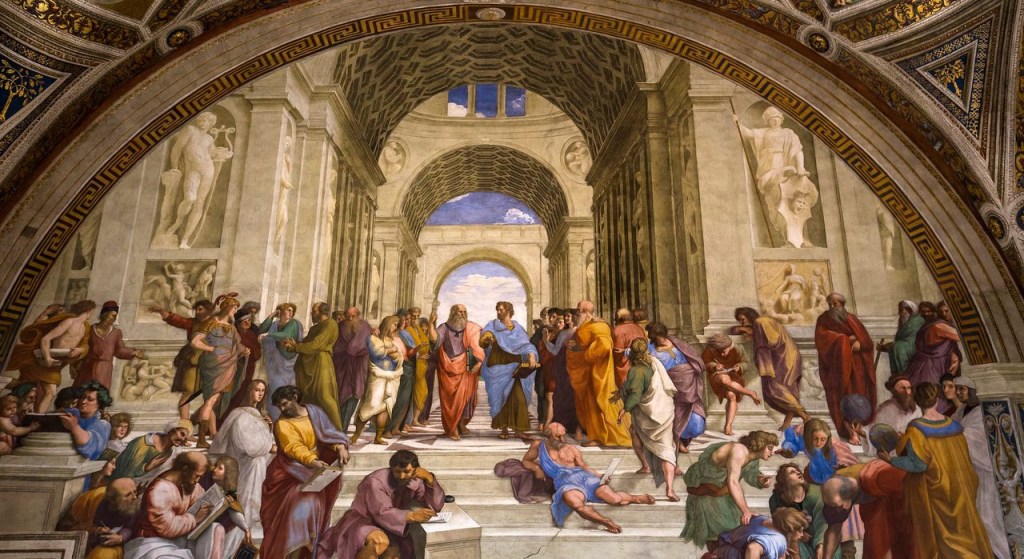
The ancient western era was dominated by Greek philosophical school of thoughts. This era was largely influenced by Socrates and Aristotle. The common topics discussed included metaphysics, cosmology, atomism and monism . In the medieval period , with the rise of the Roman Empire and Christianity , questions such as mature of God , evil & good were pondered upon. Modern philosophy concerned with developing a secular foundation and discarded the authority of religion.

Islamic Philosophy

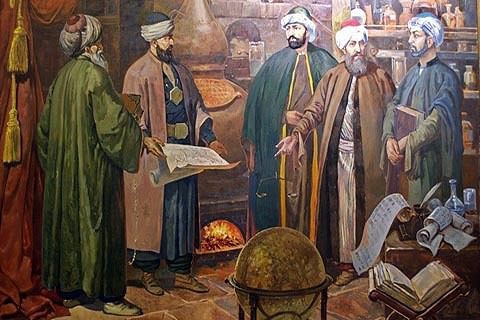
Islamic philosophy is mostly done in Arabic . Two main schools of thought were Kalam ( which focused on Islamic theology) and Falsafa. Philosophers such as Al Kindi , Avicenna and Averroes were greatly influenced by the work of Aristotle whereas Al Ghazali was highly critical of him. The 19th and 20th century Arab world witnessed Nahda movement ( The Awakening or The Arab Renaissance). This shaped the modern Islamic philosophy.

Indian Philosophy

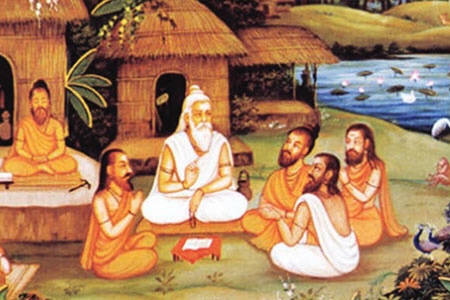
Indian philosophy included concepts like dharma , karma, pramana , dukha-sukha and moksh. It is grouped based on teachings of Vedas and Upanishads . The Himdu philosophers of various orthodox ( astika) schools investigated topics such as metaphysics, ethics , psychology. These schools presented different interpretation within the framework of Vedic knowledge. On the other side , the unorthodox (nastika) traditions rejected the ideas of Atman , Brahman and Ishwara . Jainism accepted atman bit discarded ishwara, vedas and brahman. Buddhism only accepted concept of rebirth and karma.

East Asian Philosophy

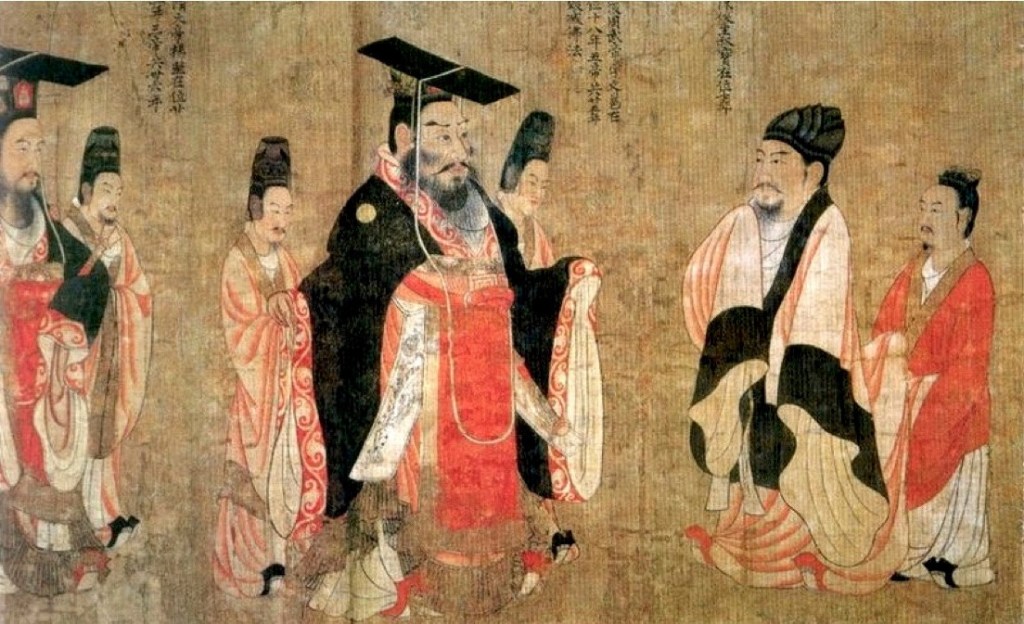
The Chinese philosophy saw the rise of schools such as Confucianism , Legalism and Taoism. These traditions developed metaphysical , political and ethical theories such as Tao, Yin & Yang , Ren & Li. Buddhism arrived in China through Silk route and transformed into Chinese form Zen. Many different philosophies such as that of Korea, Japan and Vietnam were influenced by the Chinese philosophy. In modern era, China and Japan philosophers have incorporated ideas of western philosophy. Kokugaku thinker from Japan returned to pure traditions called Shinto that is untainted by foreign influence.

Indigenous American Philosophy

This consists of variety of beliefs including principle of presence of ‘ The Great Spirit’ and concept of Orenda or spiritual power. The practices to access the transcendental experiences of mind came to known as Shamanism. The Nahua metaphysics proposed the concept of an ultimate universal energy which it says is single, vital , self generating sacred force.

Challenges & opportunities to combat Climate Change through technology-led Carbon Capture

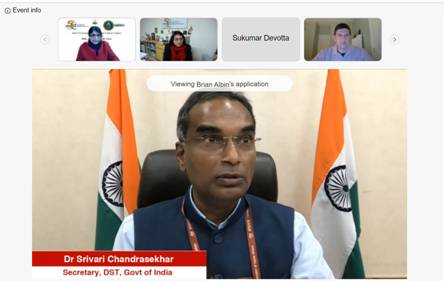
 Experts from India and US discussed the challenges and opportunities to combat climate change through technology-led Carbon Capture and Utilisation solutions at the Indo-US Scoping Workshop on Carbon Capture held on 21st  January 2022, jointly organized by DST India and DoE USA.

Dr. S Chandrasekhar, Secretary, Department of Science & Technology (DST), Govt of India, said that at the recently concluded COP-26 at Glasgow, the Hon’ble Prime Minister Shri Narendra Modi brought forth the country’s remarkable performance as well as ambitions to meet the climate goals despite being one of the fastest growing economy in the world. “The PM has given a mandate for all of us to become a net-zero emissions nation by the year 2070,” Dr. S Chandrasekhar highlighted in his opening remarks.

“Under a strict climatic regime, we can realize the identification and adoption of a right balance of portfolio of emission curtailment technologies. Carbon Capture, Utilization, and Storage (CCUS) is among one such key pathways to reduce emissions while continuing to develop sustainably at an unprecedented pace. CCUS clearly aligns with five of the seventeen Sustainable Development Goals (SDGs), namely, climate action; clean energy; industry, innovation, and infrastructure; responsible consumption and production; and partnerships to achieve the goals,” he said at the first workshop on thematic of Carbon Capture.

Dr. Chandrasekhar briefed about the recent initiatives of the Department of Science and Technology towards technology-led RD&D in the area of CCUS. He informed that DST India became part of the transnational multilateral platforms such as Mission Innovation and Accelerating CCUS Technologies (ACT) along with other member countries, including USA for Collaborative RD&D in the area of CCUS. He further added that the Department of Science & Technology, Govt of India, and Department of Energy, USA are jointly organizing these series of Indo US Scoping Workshops on Carbon Capture, Utilization, and Storage scheduled to be held from 21st  January 2022 to 25th  February 2022 for exploring the complementary strengths and gaps in the area of CCUS between the two countries and evolve collaborative techno- led endeavours for together working towards achieving net Zero Carbon goals.

Dr. Jennifer Wilcox, Acting Assistant Secretary, Office of Fossil Energy and Carbon Management (FECM), U.S. Department of Energy (USDOE), USA, said that India is a valuable partner in developing new technologies to help in combating climate & clean energy goals. This partnership was underscored when last year Prime Minister Shri Narendra Modi launched a new “India-US Climate and Clean Energy Agenda 2030 Partnership,” which envisages bilateral cooperation on strong actions in the current decade to meet the goals. 

Dr. Wilcox gave an overview of the US initiatives regarding clean energy and said it is a global crisis and requires a global response in clean energy technologies and an international partnership to achieve carbon net-zero status. She hoped that this workshop would provide an opportunity to broaden and deeper collaborations & engagements.

The participants comprised of academicians, researchers, experts, industry, and policymakers from domains of Carbon Capture, Utilization, and Storage, Climate Change, and Environmental Engineering,  The Experts from both countries delivered their technical insights and views for broad discussion within the contours of the proposed thematics of Carbon Capture, around complementary strengths and gaps to evolve future collaborative endeavours between India and USA to collectively work towards achieving carbon net Zero status.


*****

Indigenous Sensor, Weapons & EW Suite for LCA Tejas and Air Independent Propulsion for submarines

 Defence Research and Development Organisation (DRDO) will display two tableaux during the forthcoming Republic Day Parade on January 26, 2022. The tableaux are ‘Suite of Indigenously Developed Sensors, Weapons and Electronic Warfare Systems for LCA Tejas’ and ‘Air Independent Propulsion System (AIP)’ developed for the submarines of Indian Navy. 

The first tableau displays an indigenously-developed Advanced Electronically Scanned Array Radar called ‘Uttam’; five different aerial launched weapons and an Electronic Warfare (EW) Jammer to further enhance the capabilities of fourth generation LCA (Light Combat Aircraft) Tejas. The ‘Uttam’ radar is highly compact and modular state-of-the-art sensor to provide situational awareness to the pilot. The radar is developed by Bangalore-based electronics laboratory.

 The five aerial launched weapons include air–to-air missile ‘Astra’ which is an all-weather, active radar homing missile with beyond visual range striking capabilities; ‘Rudram’, a new generation anti-radiation missile with a capability to destroy adversary’s radar and communication systems; ‘Smart Anti Airfield Weapon, meant to destroy the ground targets and airfields; a long range guided glide bomb ‘Gaurav’ and ‘Tactical Advanced Range Augmentation’, an advanced precision strike weapon meant for ground targets. These weapons are developed using complex technologies by Hyderabad-based DRDO laboratories. 

Tejas is fitted with ‘Advanced Self Protection Jammer’ designed to provide protection from acquisition radars, fire control radars, anti-aircraft artillery and airborne multirole radars. Developed by electronic laboratory at Hyderabad, it provides the electronic warfare capability for the LCA. Integration of these weapons, radar and EW systems with LCA is an important step towards increasing the indigenous content of systems and makes the LCA mission ready.

 The second tableau showcases indigenously-developed AIP System for propelling the Indian Naval submarines underwater. The AIP System is powered by indigenously-developed fuel cells with a novel onboard hydrogen generator. It is one of the most advanced AIP Systems in the world where Fuel Cell Technology is used to generate onboard power. The AIP allows a submarine to be submerged for longer periods compared to conventional diesel-electric submarines and makes the sub-surface platform more efficient by making it quieter than even a nuclear submarine. 

At present, the AIP is customised for P-75 class of submarine. Once fitted, it will allow the submarine to stay under water for longer time without the need to surface frequently. This will substantially enhance the underwater endurance of the submarine. This niche technology is available only with very few countries in the world. The DRDO has developed this technology with the collaboration of academia and industry.

Commitment towards women empowerment through its R- Day tableau

 India Post has been serving the nation since the last 167 years, standing unabated in its dedication and undying passion of rendering postal, financial and government services, in the remotest corners of the country. As the nation celebrates Azadi Ka Amrit Mahotsav, commemorating the seventy fifth year of independence, India Post, through the Republic-Day tableaux, has attempted to reaffirm its commitment towards women empowerment both within and through the Post offices.

THE THEME OF INDIA POST R-DAY TABLEAUX IS INDIA POST:75 YEARS@ RESOLVE-WOMEN EMPOWERMENT”


The tableaux shall showcase the following elements:

FRONT PORTION:

India Post stands as a model employer of women and with its mandate for financial inclusion almost 50% account holders of the India Post Payments Bank as well as the Post Office Savings Bank are women.  

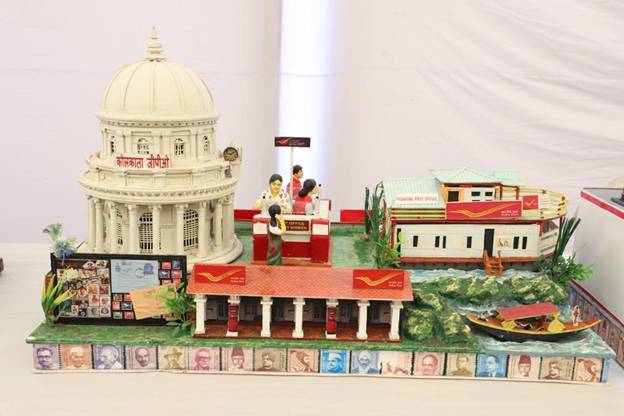
The tableau displays the robust outreach and the modern face of India Post that ties the entire country in one thread and aims to portray its focus on women empowerment through the ‘All Women Post Offices’.  Divyang friendly post offices as portrayed by the ramp reiterate our social commitments. 

Post Woman:The tableau presents the modern face of India Post featuring a young post woman with a digital device in one hand and a postman’s bag in the other, thus conveying the message of blending technology with tradition. Standing tall beside her is the ubiquitous red-letter box that reflects people’s unabated faith in India Post. Also displayed are India Post Services like speed post, e-commerce, ATM Cards etc. which are trusted by millions of customers. The image of the postwoman is juxtaposed with that of the Harkara on high relief projecting the transition of India Post over the decades.  The two images are set in the foreground of the ubiquitous red-letter box.

The recently concluded “75 Lakh Postcards to PM Campaign” is also showcased.


REAR TRAILER:


FLOATING POST OFFICE: The trailer features the Floating Post Office of Srinagar emphasizing the SUKANYA SAMRIDDHI YOJANA, a scheme under Hon’ble PM’s initiative of Beti Bachao Beti Padhao campaign.

All WOMEN POST OFFICE: The All Women Post Office showcases India Post’s resolve and a step towards gender equality.

The 3D images of the post office counters where we see women officials rendering multifarious service to the customers such as Aadhar enrolment as well as Postal ATM Counters, emphasizes India Post’s resolve towards women empowerment. In case of India Post Payments Bank, almost 50% account holders (2.24 Cr.) are women and 98% of such accounts have been opened at doorsteps.

KOLKATA GPOAt the rear is the Kolkata GPO; the oldest GPO, a proud witness to the journey of India Post and one of the iconic heritage buildings of India.

THE LOWER PART OF THE TRAILER: Adorning the tableau, a collage of stamps pertaining to the country’s freedom struggle, digitally printed on khadi and meant to be displayed in different post offices across the country after the Republic Day.

GROUND ELEMENT: However, the uniqueness of the tableaux lies in its foot soldiers who are real-life postmen/post women from different parts of India. They stand symbolic to the transition of India Post from the harkaras to the postmen in bicycles and e-bikes, thus highlighting our journey.