

BYZANTIUM : A SYMBOLIC ANALYSIS
Among the 20th century poets, Yeats is considered as the craftsman in the use of symbols and images. His poems are filled with complex system of symbols. The poem Byzantium is also rich with various symbols and images. The poem consists of five stanzas and each stanza carries a key image and symbols. Through this key image Yeats portrays the theme of the poem. The title of the poem itself do not stand for the real Byzantine Empire. It is the country or Empire of the mind which is a transcendental place out of the constraints of Time and Space. Here the empire stands for Purgation and Paradise. The poem focuses on the eternity of art and is contrasted with the sensual elements of the physical world. Through the use of complex symbols Yeats successfully presented this idea.
The poem begins with the unpurged images of the natural world. The starlit and moonlit dome of the cathedral looks down with disdain on the complexities of man.The dome is the powerful symbol used by the poetic personae. The dome is symbolic of the perfection and eternity which is opposed to the natural world of passion. The dome can also be considered as the symbol for the permanence of art. As Keats used the ‘grecian urn’ as a symbol for the eternity of art, the dome stands for the same and it scorns the complexities of man.
On another level this dome has another symbolic significance. This can also be relate to the creation of poem or art. According to Richard Ellmann Byzantium is a description of th act of making a poem. While analyzing on the basis of this, the poet is the Emperor and Byzantium is the ideal place for the poet, where all the unpurged realities disappear. The church gong is the premonition of death. As the gong sounds the realities disappear and the poet begins writing the poem. And the dome is the tower of the poetfrom where he is looking as a spectator to the world. The conflict between the real and the ideal is powerfully portrayed through the symbol of dome.
The next key symbol of the poem is the superhuman figure. This is the soul of the dead and is unwinding the memories of earthly existence. Actually the dead is the living. After death the soul liberates from the constraints of body and is living forever. So the dead is the actual living and living is really the death. The superhuman figure signifies imagination. As said before the poem can also be analyzed on the basis of creation and process of making a poem. The superhuman figure is the poet’s imagination. This purified soul will teach the poet wisdom and take him to heaven, Byzantium. In the process of creation of the poem poet attains perfect bliss. This imagination gives coherence to things and resolve all differences. What the poet saying is that the artist has to exploit the tension between the physical and spiritual worlds.
Among all the symbols used in the poem, golden bird is the most important one. Like the dome, the golden bird sitting in the golden bough also symbolizes perfection in the creative process. Through this symbol poet celebrates artificiality and changelessness of art. The golden bird is opposed to the living things and it scorns the common birds. So the perfected art looks down the nature which is subjected to time and emotions.
The flames represents spiritual realization. They are purgatorial fire. On the emperor’s pavement, fire fed by no fuel is burning and the souls of the dead purify themselves by dancing. They are ideal flames. Apart from spiritual realization the flames and purgatorial dance als represents the process of making poem. As Richard Ellmann says this poem is about the creation of art and each stanza depicts the image of imagination and art. So here the emperor’s pavement is the poet’s tower and the flames are the imagination of the poet. The blood begotten spirits are the raw material for the poem and dance is the process of creation. The raw materials gets purified and the imagination cannot be disturbed because it is independent. So here also the symbol stands for the creative genius. The golden smithies, dolphins and sea are the symbols presented in the final stanza. Dolphins are the images for resurrection and it guides to enlightenment. The poet describes the shore of ocean of life in the last lines. On the level of creation the dolphin and goldensmithies represents duality and craftsmanship of the poet respectively and it gives order to flesh and passion. Marble of the dancing floor is the imagination of the poet and it breaks the chaos.
Apart from these major symbols, Yeats presents certain images. The moon presented in the beginning stands for cycle of time and different phases in the man’s life. Mire is the cycle of birth and death. The “mummy cloth” which is unwinding clearly signifies what is inside beyond the question of life and death.Yeats used four elements of creation as symbols in the poem. The empire stands for earth, heaven for air, sea for water and flames for fire. Here Yeats attempted to bring together spiritualism, symbolism, aesthetics and mysticism. Thus he powerfully brought the themes of battle between immortality and creation, nature v/s art, human imperfection and perfected form of art and tension between life of senses and soulful life. Through the symbolic analysis of the poem it can be understood that Yeats is a craftsman in the use of symbols and images.
ECOFEMINISM
Ecofeminism or ecological feminism is the most important approach within ecocriticism and ecological activism. The writings of Annette Kolodny gave impetus to what has come to be called ecofeminism. The term ecofeminism was coined by French feminist Francoise d’Eaubonne in 1974. It is a branch of ecocriticism and feminism that examines the connection between women and nature. Eco feminism can be considered as the analysis of the role attribuntasies of the natural environment, by male authors. It also includes the study of specifically feminine conceptions of the environment in the neglected nature writings by female authors. According to Pramod K Nayar, ecofeminism argue that patriarchal society’s values and beliefs have resulted in the oppression of both women and nature. He also says that it ignores
women’s work, knowledge and situatedness. The situatedness of women is her immediate location in nature, where the relationship of woman with environment is far more intimate than that of man’s. In simple terms this philosophy examines the ways both nature and women are treated by patriarchal society. The earlier binaries in Western thought and literature was that of nature versus culture. Further eco feminists interrogate the effect of gender categories. That is the masculine culture as objective, rational, mind and public and feminine as subjective, emotional, body and private. And these binaries are used in order to demonstrate the ways in which man is equated with culture and woman with nature. Images like “mother nature” indicate two things. They are the naturalization of woman and feminization of nature. Thus it illustrates how men dominate nature and women as exploitable objects. The works of Vandana Shiva, Mary Mellor, Ariel Salleh has generated nuanced readings of the relationship between gender and nature.Ecofeminism can be classified into two, radical ecofeminism and cultural ecofeminism. One of the assumptions of radical ecofeminism is that the dominant patriarchal society equates nature and women in order to degrade both. In fact, in it’s emergence, ecofeminism tends to be radical revealing practices of patriarchal domination of both. So radical ecofeminism targets the historical and cultural
backgrounds that equates the feminine and nature with negative and commodifiable attributes, while men have been elevated as capable of establishing order. Such a socio economic structure easily facilitates the exploitation of women and nature, for cheap labour and resources.
Cultural ecofeminism promotes an association between women and the environment by focusing on the more intimate and organic relationship between them. As per the anthropologically assigned gender roles women are nurturers of family. Culture ecofeminism has roots in nature based religions, goddess and nature worship. It is a way of redeeming both the spirituality of nature and women’s instrumental role in that spirituality. The cultural myths and
spirituality of Native America, Australia and African tribal populace underscores this mutual bonding between women and nature. Because they are built on a mother goddess instead of omniscient father God.
Vegetarian ecofeminism, materialist ecofeminism and spiritualist ecofeminism are some of the new branches of ecofeminism. A major theme within ecofeminism is the belief that there is a strong connection between the domination of women and the domination of nature, and that both must be eradicated in order to end oppression. Vegetarian ecofeminism aims to include the domination of not only the environment but also of nonhuman animals to the list. Materialist ecofeminism connects institutions like labour, power and property as the source of domination
over women and nature. This belief stresses that the sphere of production that is men and factory is dependent on the production of reproduction ( women and family). Materialist ecofeminists thus call for quality in labour distribution, the recognition of the contribution of women’s work.And they suggest to expand the very definition of ‘work’ to include women’s work. In spiritualist ecofeminism, a turn to myth and theology is advocated against materialism because of the
importance given to women, nature and all forms of life. They argue that pre-modern culture have always treated nature with respect and give importance to women’s knowledge, female body and female sexuality. Thus this philosophy turned to Native American religions, godess worship in Hinduism and other native cultures. Vandana Shiva, glorifies Vedic period of Indian History, for its emphasis on symbiotic values in her work Staying Alive (1989).
Politics in India
By – Supriya


THANKYOU !
What is Buyer Persona
What is Buyer Persona
How Plants Drink Water
Loose Tongues
An important quote before the start of the article that reads as and l quote “Be sure to taste your own words before you speak them out”. This article speaks about the topic that often is in the limelight but is later forgotten with time.
Today an article of mine aims to bring light on one of the most saddening and disturbing yet many common incidents. We must acknowledge and bring some change even though it angers and disgusts us.
You might all be wondering about what topic I am trying to speak about and bring into the limelight. The topic I am talking about is the comments that politicians, actors, and every other person makes about rape. I am sure every one of you just had a memory flash of at least one such incident.
The purpose of this article is not to pinpoint anyone or name anybody but to question the very idea and purpose of making such comments or statements. It is mind-boggling and shocking to even believe that these people are not aware of the kind of anger, pain, disgust, and even the horror the people of this country experience when these so-called rich, influential, and successful people make such horrible and lewd comments.
Understanding these events:
Let us take the most recent incident that took place in our country where a Congress MLA and an ex-speaker from Karnataka in the Karnataka Assembly made a derogatory statement and quote “There is a saying that when rape is inevitable, lie down and enjoy it. That is exactly the position which you are in,” This statement is not even a month old. It happened on December 16th, 2021. The worst and the shocking part have not even arrived yet. The speaker of the assembly during that time also had a laugh about it and so did other party members in the assembly and continued with the assembly. This assembly was to discuss the farm laws that have no connection regarding rape. The idea, motive, and purpose to make such a comment has to be a negative one.
This is not even the first derogatory comment this year. Imagine if we had to sit and go back just 2-3 years. We would realize making sexist and horrible comments about rape has become very common.
The thing that these politicians, actors, or anybody else who make such comments does not understand is that they have a lot of power and influence over other people around them and society. Therefore, the saying that these people need to remember is not the ones like the MLA say but the ones such as “With great Power comes Great Responsibility ”. There are various other sources that such things are shown and taught to people like movies, shows, etc which are doing the job of passing such messages so the last thing anybody wants is even real people like politicians who have been voted, actors and actresses who are loved to make such comments and spread the wrong message to the society. The pain, anger, and disgust should not just be limited to the people who made such comments but also the people who were okay with it and let it go away. These people also play a very important role in keeping intact such ideas and perspectives about any topic and not just rape.
An apology is not sufficient:
We are all aware of what happens after anyone makes such comments and rightfully so there is an outcry about it. There is an apology made by the person through various networks and media platforms. This apology is taken into consideration and then the matter is let go away. Yes, the people are glad that there is some apology and acceptance for their actions but that is not enough if the same thing keeps happening again and again in some way or the other. An apology is not enough because after accepting your mistake you should also make it a point to responsibly believe in it and make sure to educate and bring about awareness to people around you so that nobody else makes such a mistake. Another thing that needs to be taken into consideration and understood is that once the person has given an apology, the outcry, and the anger should not stop there. According to my thinking, it should continue until there is some change in the societal thought process, and the people who make such comments are responsible for bringing about the change.
Stricter rules, regulations, and laws
The first and the most important thing that needs to be done are to bring about stricter and sterner laws towards the committing of a crime like rape. Second is filing complaints against actors, politicians or anyone else for that matter is not enough. We still live in a country where rich and influential people have control over the process of things that happen through money. Bribery, corruption, and exploitation also play an important role in matters as such and simple complaints will not do the job. There have to be stricter and better rules to deal with and take actions against people who make derogatory and hate-filled comments and statements about rape. The necessity to fasten this process is not just increasing amounts of rape cases but also the amount of such sexist and disgusting statements that are made are increasing in society. It is also important to bring about stricter rules so that people understand that actions of behaving and saying things that are hurtful and questionable are not acceptable in society by the people. The people who make such comments need to be held responsible and made to pay a price that brings about some kind of change in them.
People need to understand that jokes are meant to be harmless and funny. Making jokes about rape is nowhere close to funny. Making jokes, statements need to be thought through, and only then should people speak after considering everything. There is a saying that says that “Think twice before you speak” this needs to be kept in mind of people and should especially be kept in mind by people who hold a lot of power, strength, and influence over people and the society that they are part of directly or indirectly.
To conclude it is time for people to speak up, bring about awareness, and create a change in society by not hiding and speaking about things such as rape so that the taboo, superstitions, negative and bad ideas, perspectives, and thought processes about rape is erased from the society and the world becomes a better place to live for everybody.
References
- Google search for images
Our Neighbours
By – Supriya


THANKYOU !
DEFORESTATION
Deforestation is the process of removal of trees from forest for the human purposes.Deforestation has greatly altered landscapes around the world.Deforestion is one of the major threats to the environment.Deforestation refers to the decrease in forest areas across the world that are lost for other uses such as agricultural croplands, urbanization, or mining activities.Deforestration cause landfall,soil erosion and drought.

The loss of forest is an issue that predominantly affects tropical areas, regions with the highest biodiversity on Earth. In 2018 alone, 30 million acres of tropical rainforest were destroyed, with more than a third of the Earth’s land now being used for agriculture, a process that involves the clearing of woodland to create pasture.Most of this loss has been focussed around the Amazon, a rate of destruction that has only increased in recent years with policy shifts in Brazilian government – 3,769 square miles of Amazonian forest cover was lost between 2018 and 2019.Southeast Asia that has seen the greatest rate of forest loss of anywhere in the world, losing 30% of its forest surface in the last 40 years.
Coupled with huge population growth – with the region’s population forecast to rise by almost 250 million by 2030 – human settlements are increasingly coming into contact with animals that had previously been naturally contained in woodland habitats.The increase of disease linked to deforestation and increased contact between humans and tropical animals speaks to the risks involved when ancient natural ecosystems are disrupted.The loss of trees and other vegetation can cause climate change, desertification, soil erosion, fewer crops, flooding, increased greenhouse gases in the atmosphere, and a host of problems for indigenous people.
C.V.RAMAM
Sir Chandrasekhara Venkata Raman FRS was an Indian physicist known for his work in the field of light scattering. Using a spectrograph that he developed, he and his student K. S. Krishnan discovered that when light traverses a transparent material, the deflected light changes its wavelength and frequency.He was born in 7th November 1888 in Thiruvanaikoil, Tiruchirappalli His parents was R. Chandrasekhar Iyer, Parvathi Ammal.He did his education in st Aloysius Anglo Indian High school, presidency College.
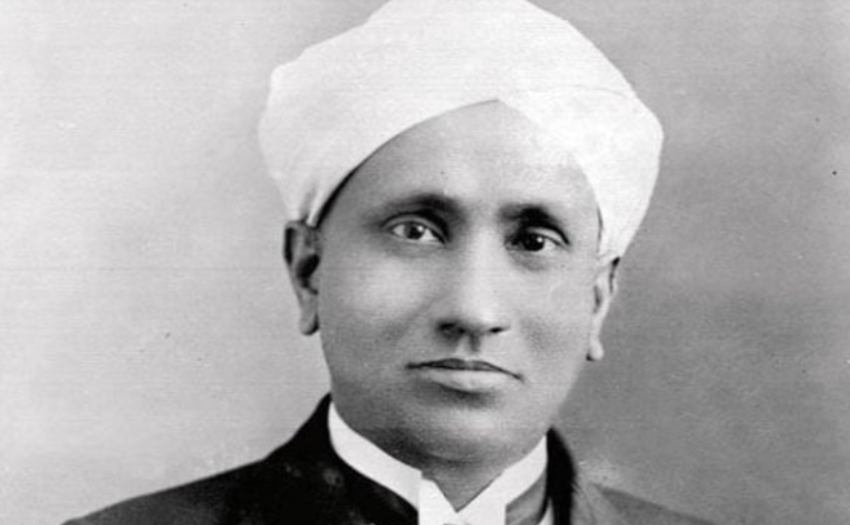
C.V.Raman Theory proposed a theory that when light that shines through a material is scattered and its wavelength changes from that of the original incident light because of its interactions with the molecules in the material.This is also called as Raman effect.C.V. Raman is also known as Chandrashekhara Venkata Raman. He was a man of brilliant mind who has done his matriculation at the age of 11 and 12th class at the age of 13. Let us solve an interesting quiz on Dr. C.V. Raman which throws light on his life and inventions done by him.07-Nov-2019
He received many awards,
* 1928-Matteucci medal.
* 1930-Hughes medal.
* 1930-Nobel prize in physics.
* 1941-Franklin medal.
* 1954-Bhart ratna.
* 1957-Lenin peace prize.
Capital Punishment
By – Supriya


THANKYOU!
Have you read this book?
Something I Never Told YouSomething I Never Told You, published in the year 2019, written by Shravya Bhinder, who is one of the remarkable authors of romance genre of this era. This is a nonfictional event based on the life of two characters named Raunak and Adira. Raunak is an introvert guy who falls in love with Adira at the first sight when she comes to live as a PG at his grandma. But he finds it difficult to confess his feelings to Adira. On the other hand Adira is unaware about this and does not expect anything of this sort.
Raunak tries to gain confidence to speak out his thoughts to Adira, but is very nervous to do so. He keeps wondering about to say or not to say. Later one day it’s Adira’s birthday and he plans to gift her a silver bracelet as a present. Since it was so expensive he borrows money from one of his friends. but because of his nervousness he finds it difficult to face Adira. And since they were not friends so he thinks it would be quite awkward to do so. Hence, he secretly puts the present in her purse. when Adira finds the bracelet in her purse she is very surprised! She is curious who it would be and asks everyone in the party who it was. But will Raunak accept that it was he by expressing his feeling? Or by any chance will Adira come to know it was Raunak? what will happen next? If you have already read this novel, comment your opinion about the story. if want to read the entire story……
How to take notes?
Preparing to take good notes in class
The first step to taking good notes in class is to come to class prepared. Here are some steps you can take to improve your note-taking before class even begins:
- Preview your text or reading assignments before the lecture. Previewing allows you to identify the main ideas and concepts that will most likely be discussed during the lecture.
- Look at your course syllabus so that you know the topic / focus of the class and what’s going to be important to focus on.
- Briefly review notes from previous class sessions to help you situate the new ideas you’ll learn in this class.
- Keep organized to help you find information more easily later. Title your page with the class name and date. Keep separate notebook sections or notebooks for each class and keep all notes for each class together in one space, in chronological order.
Note-taking during class
Now that you are prepared and organized, what can you do to take good notes while listening to a lecture in class? Here are some practical steps you can try to improve your in-class note-taking:
- If you are seeking conceptual information, focus on the main points the professor makes, rather than copying down the entire presentation or every word the professor says. Remember, if you review your notes after class, you can always fill in any gaps or define words or concepts you didn’t catch in class.
- If you are learning factual information, transcribing most of the lecture verbatim can help with recall for short-answer test questions, but only if you study these notes within 24 hours.
- Record questions and thoughts you have or content that is confusing to you that you want to follow up on later or ask your professor about.
- Jot down keywords, dates, names, etc. that you can then go back and define or explain later.
- Take visually clear, concise, organized and structured notes so that they are easy to read and make sense to you later. See different formats of notes below for ideas.
- If you want your notes to be concise and brief, use abbreviations and symbols. Write in bullets and phrases instead of complete sentences. This will help your mind and hand to stay fresh during class and will help you access things easier and quicker after class. It will also help you focus on the main concepts.
- Be consistent with your structure. Pick a format that works for you and stick with it so that your notes are structured the same way each day.
- For online lectures, follow the above steps to help you effectively manage your study time. Once you’ve watched the lecture in its entirety, use the rewind feature to plug in any major gaps in your notes. Take notes of the timestamps of any parts of the lecture you want to revisit later.
Determining what’s important enough to write down
You may be asking yourself how you can identify the main points of a lecture. Here are some tips for recognizing the most important points in a lecture:
- Introductory remarks often include summaries of overviews of main points.
- Listen for signal words / phrases like, “There are four main…” or “To sum up…” or “A major reason why…”
- Repeated words or concepts are often important.
- Non-verbal cues like pointing, gestures, or a vocal emphasis on certain words, etc. can indicate important points.
- Final remarks often provide a summary of the important points of the lecture.
- Consider watching online lectures in real-time. Watching the lecture for the first time without pausing or rewinding can help force you to focus on what’s important enough to write down.
Preference
https://learningcenter.unc.edu/tips-and-tools/effective-note-taking-in-class/
Real Equality

I read a quote somewhere a while back which I would like to put here before I start with my topic. The quote was by Diane Mariechild and it read, “A woman is a full circle. Within her is the power to create, nurture, and transform”. Things are slowly getting for women. While many might disagree about this because there are, still so many atrocities and sufferings women go through to date but the rise of women in various aspects and platforms stands as evidence of the progress and growth of women.
This article is about the most recent incident that occurred in the Lok Sabha. The passing of the historic bill increased the eligibility criteria of marriage for women from 18 to 21. Well according to what I feel is this was a necessary change that needed to be made as we are living in 2021 moving forward to 2022 and having so much progress and development then our thoughts about women getting the same kind of treatment as men cannot be stuck in the old generation. What did surprise me and got me thinking was how a bill, which was meant for the betterment of women, had presented contentment and at the same time managed to bring a sense of resentment in people. Shockingly more women seemed to be questioning the bill than men are. Before we get into this, first let us understand what exactly the bill exactly means.
INTRODUCTION OF THE BILL
A bill seeking to fix 21 years as the legal age for marriage for women came to be introduced by the Union Minister of India Mrs. Smriti Irani. This bill knows as the Prohibition of Child Marriage (Amendment Bill) 2021. The bill aims to show and bring about a sense of equality among men and women by keeping the same age for marriage for both genders. This bill also seeks to amend the other seven laws that are quite personal as well. Those bills are the Indian Christian Marriage Act; the Parsi Marriage and Divorce Act; the Muslim Personal Law (Shariat) Application Act; the Special Marriage Act; the Hindu Marriage Act; and the Foreign Marriage Act. The bill also aims to overpower all present working laws. This also included any kind of customs, usage, or practices that holds the parties responsible. This brought about a lot of backlash from various opposition parties of the country and therefore this bill is present in the standing committee. The union minister also made an important point when she says and I quote “As a democracy, we are 75 years late in providing equal rights to men and women to enter into matrimony”. The union minister also made very important points when she brought out the fact that even in 2021 7% of the girls as young as 15 years are becoming pregnant and nearly 23% of girls have been married away even before the age of 18. This bill not only aims to bring this down but also brings about responsibility in both the parents and brings about an increase in nutrition and care for women. This bill is going to become effective 2 years from the dates it receives Presidential confirmation
Why it is being considered a decisive step?
Women all over the world have been fighting for their rights and equality for almost many decades now. Women have learned to struggle and sacrifice many things for their rights, equality, and importance in society from the very beginning and still have a long way to go. Therefore, when this bill was brought out in the Lok Sabha by a woman minister, I am sure this created a feeling of relief, joy, and happiness in the minds of all women. This also created a sense of hope to keep moving forward and had a huge impact on women and their strength in a positive and supportive manner. The bill not only aims at making the physical life better for women but also the emotional mental part of their lives. Impactful things like this bill is a much necessary change that needs to be brought into society so that women are not expected to do things because they have reached a “certain age” which again is not decided by the women but all the other people that the small girl child is growing up with.
Why is there a sense of resentment?
Two things need to be understood by the readers. The sense of resentment has no connection with the opposition parties or their sentences of backlash. Here one is trying to understand the resentment or questions that lie in the common person’s mind. The second and the most important thing is that there is no resentment or sadness towards the bill or the aim behind the proposal of the bill. The resentment comes from a place of the bill not being enough to bring about change. There is so much more that needs to be done so that this bill has some value and establishment in society. This change and betterment should not just come from the urban sector but also the rural sector.
Child marriage is still predominant and present in societies, especially in small towns and villages. Girls are still considered a curse, a burden that needs to be cleared off before it is too late. Girls are married off even before they turn 18 and expect to look after household activities and chores from a very young age. Yes, things have gotten better at least to a small percentage concerning their education but they still have not been able to complete their education. The idea of being kept at home after they mature and at the same time making sure they leave their home is very perplexing and intriguing.
Both these sides make us question the very idea of equality, which is not just between men and women but also between women themselves. Yes, this bill does bring a sense of equality but true equality can only be achieved when more things are done to make women’s lives better. This change does not necessarily have to be as big as passing the bill; it could be as small bringing about awareness and taking small measures to make sure that every girl or woman whether she belongs to the urban society or the rural society has equal rights and opportunities like anybody else on the planet.
To conclude with a quote by Michelle Obama as she says and I quote “As women, we should stand up for ourselves. We must stand for each other. We must stand up for justice for all.”
References
 Eduindex
You must be logged in to post a comment.