Infection Medicine, CRISPR-Cas9, Regulation in Infection Biology
Emmanuelle Marie Charpentier is a French professor and researcher in microbiology, genetics, and biochemistry. She along with American biochemist Jennifer Doudna won the Nobel Prize in Chemistry for 2020. She was awarded the Nobel prize “for the development of a method for genome editing”.
She was born on 11 December 1968 in Juvisy-Sur-Orge in France. She was brought up in Paris and since her childhood, she has had very diverse interests. She did her undergraduate studies at the Pierre and Marie Curie University (which is currently known as Sorbonne University). There she studied biochemistry, microbiology, and genetics and earned a degree in biochemistry in 1992.
Post-graduation she attended the Institut Pasteur from 1992 to 1995, and there she was awarded a research doctorate in microbiology. Her project dealt with molecular mechanisms involved in antibiotic resistance.
Research Work
From 1997 to 1999, Charpentier worked at the New York University Medical Center There she worked as an assistant research scientist in the lab of Pamela Cowin, who was a skin-cell biologist and was working on mammalian gene manipulation. She went on to publish a paper exploring the regulation of hair growth in mice.
She also discovered an RNA molecule involved in the regulation of virulence-factor synthesis in Streptococcus pyogenes and published it in 2004.
CRISPR/Cas9
Apart from all the other works that she has done, Charpentier is best known for her work of deciphering the molecular mechanisms of a bacterial immune system, called Clustered Regularly Interspaced Short Palindromic Repeats (CRISPR/Cas9), and repurposing it into a tool for genome editing. She won the Nobel Prize for the same.
In particular, she uncovered a novel mechanism for the maturation of a non-coding RNA which is pivotal in the function of CRISPR/Cas9.
Specifically, She demonstrated that a small RNA called tracrRNA is essential for the maturation of crRNA.
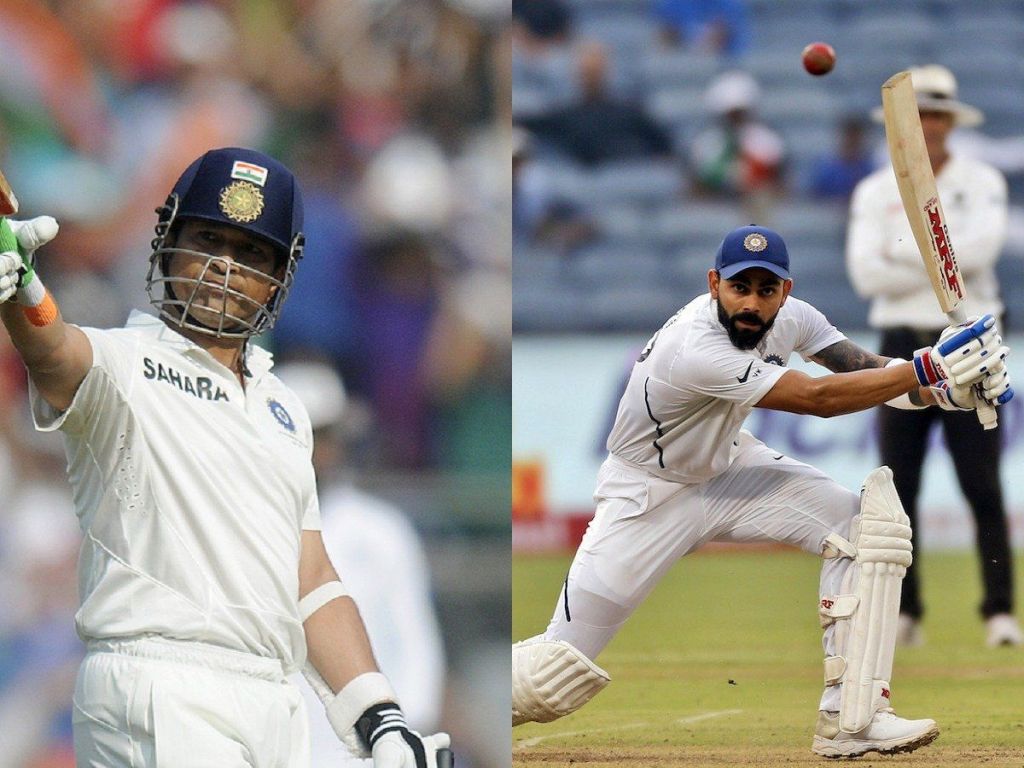
It won’t be wrong if you synchronize consistency with Kohli but his recent performance has made the synonym quite dubious and the reason being inconsistency of the one who is consistent.
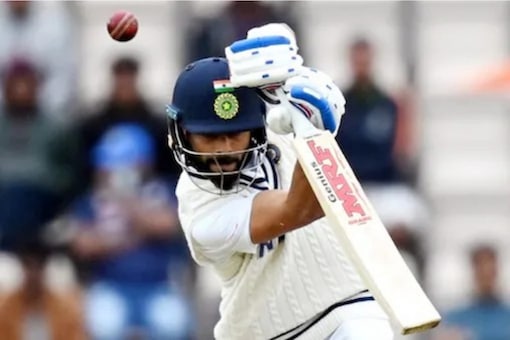
India’s tour of England made the unnamed heroes while the hero, the conqueror was tame on the Mecca of Cricket.The facts justify the reason as he has managed just 62 runs from the 2 Tests so far. Kohli has scores of 0, 42 and 20 so far in 3 innings at an average of 20.66.
Indian skipper lean phase with the willow has been a worrisome problem as it’s been 629 days since Virat Kohli hit his last international century.In fact, in 2021, Kohli holds an average of just 25.44 in the 9 outings he has done for India. His last 15 innings numbers are all the more disappointing which include 3 ducks and 3 single-digit scores.
This brings criticism at his door and Sachin Tendulkar brought to light what was Kohli’s weakness and that being there improper movement of his feet while batting and even moving too far across the stumps leading to cheap dismissals.
“Virat hasn’t had a great start. It is the mind that leads to technical errors and if the start isn’t good you start thinking about a lot of things. Because anxiety levels are high you tend to over compensate your movements. “When a batsman isn’t in good form you either go too far across or don’t move your feet at all. That happens to everyone. Form is also your state of mind along with the body working in harmony,”Tendulkar told PTI.
India beat England by 151 runs to win the second Test and take a 1-0 lead in the five-match series on Monday.
Chasing 272, England were bowled out for 120 in 51.5 overs with skipper Joe Root top-scoring with 33.India declared on 298-8 just after lunch to set England 272 to win in 60 overs.India’s pacemen starred with both bat and ball on Monday as Virat Kohli’s side thrashed England by 151 runs in the second Test at Lord’s. Victory gave India a 1-0 lead in a five-match series after just their third win in 19 Tests at the ‘home of cricket’ followed a rain-marred draw at Trent Bridge. England, set 272 to win in a minimum of 60 overs on the last day, were dismissed for 120. They were in dire straits at 1-2 after Jasprit Bumrah and Mohammed Shami removed openers Rory Burns and Dom Sibley for nought apiece.
Fellow paceman Mohammed Siraj then followed up with 4-32 — a return that saw him end the match by bowling No 11 James Anderson.
Earlier, Shami, with 56 not out, and Bumrah (34 not out) both hit their highest Test scores and shared an unbroken ninth-wicket stand of 89, during India’s secon innings which contributed to their win.
Copyright is a right given by the law to creators of literary, dramatic, musical and artistic works and producers of cinematograph films and sound recordings. In fact, it is a bundle of rights including, inter alia, rights of reproduction, communication to the public, adaption and translation of the work.
Copyright ensures certain minimum safeguards of the rights of authors over their creations, thereby protecting and rewarding creativity.
Copyright in the case of literary, dramatic or musical work:
1.Reproducing the work in any material form which includes storing of it in any medium by electronic means
2.Issuing copies of the work to the public which are not already in circulation.
3.Performing the work in public or communicating it to the public
4. Making any cinematograph film or sound recording in respect ot the work.
5.Making any translation or adaption of the work. Further any of the above mentioned acts in relation to work can be done in the case of translation or adaption of the work.
Copyright in the case of a computer programme:
1.To do any of the act specified in respect of a literary, dramatic or musical work
2.To sell or give on commercial rental or offer for sale or for commercial rental any copy of the computer programmes where the programme itself is not the essential object of the rental.
Copyright in case of artistic work:
1.To produce the work in any material form
2.Communicating the work to the public
3.Issuing copies of work to the public which are not already in existence.
4.Including work in any cinematograph film
5.Making adaption of the work, and to do any of the above acts in relation to an adaption of the work.
Copyright in the case of cinematograph film:
1.To make a copy of film
2.To sell or give on commercial rental or offer for sale or for such rental, any copy of the film
3.To communicate the film to the public
Copyright in case of sound recording
1. To make any other sound recording embodying it including storing of it in any medium by electronic or other means
2.To sell or give on commercial rental or offer for sale or for such rental, any copy of the sound recording
3.To communicate the sound recording to the public
Constitution of Copyright Board
1.It is constituted with minimum two and maximum fourteen members.
2.The chairman of the Copyright Board shall be a person who is or has been a Judge of a High Court or is qualified for appointment as a Judge of a High Court
3.The Copyright Board is deemed to be Civil Court and proceedings before it are deemed to be judicial proceedings.
Functions of Copyright Board
1.Settlement of disputes as to copies of any literary, dramatic or artistic work or records are issued to the public in sufficient numbers
2.Settlement of disputes with respect to assignment of copyright
3.Granting of compulsory licence in respect of Indian works withheld from public
4.Granting of compulsory licence in respect of Indian works withheld from public.
5.Rectification of Register of Copyright
6.Determination of royalties payable to the owner of copyright, etc.
The National Green Tribunal Act,2010 is an Act which enables creation of a special Tribunal to handle the expeditious disposal of cases pretaning to environmental issues. It was enacted under Indian Constitutional provision of Article 21.
OBJECTIVES
NGT is formed for effective disposal of cases relating to:-
1.Environmental protection
2.Conservation of forests
3.Other natural resources
4.Enforcement of any legal right relating to environment.
5.Giving relief and compensation for damages to persons and property.
Composition Of National Green Tribunal
1.The tribunal shall consist of-
– Full time chairperson
– Not less than 10 but maximum of 20 full time Judicial Member.
– Not less than 10 but maximum of 20 full time Expert Member.
2.The Chairperson of the Tribunal may invite any person having specialized knowledge and experience in a particular case before the Tribunal to assist the Tribunal in that case.
3.The Central Government by notification may specify the ordinary place of sitting of the Tribunal and the territorial jurisdiction.
4.The Central Government in consultation with the Chairperson of the Tribunal may make rules regulating the practices and procedure of the Tribunal including-
– The rules as to the persons who shall be entitled to appear before the Tribunal.
– The rules as to procedure for hearing applications and appeals and other matters.
– Rules relating to transfer of cases by the Chairperson from one place of sitting to other place of sitting.
POWERS OF NATIONAL GREEN TRIBUNAL
1.The Tribunal is not bound by the procedure laid down by the Code of Civil Procedure, 1908 but shall be guided by the principle of natural justice.
2.The Tribunal has power to regulate its own procedure.
3.The Tribunal shall also not be bound by the rules of evidence contained in the Indian Evidence Act,1872.
4.The tribunal shall have the same powers as are vested in a Civil Court while trying a suit, in respect of the following matters, namely:-
– Summoning and enforcing the attendance of any person and examining him on oath
– Requiring the discovery and production of documents
– Receiving evidence on affidavits
– Requisitioning any public record or documents or copy of such record or document
– Issuing commissions for the examination of witness or documents
– Reviewing its decision.
– Dismissing an application for default or deciding it ex-parte.
– Setting aside any order of dismissal of any application
– Pass an interim order including granting an injuction or stay
– Any other prescribed matter
COMPENSATION FOR DAMAGES
Heads under which compensation for damages can be claimed are:-
1.Death
2.Permanent, temporary, total or partial disability or other injury or sickness
3.Loss of wages due to total or partial disability or permanent or temporary disability
4.Damage to private property
5.Loss to local authority or government arising out of, or connected with, the activity causing any damage.
6.Loss of business or employment or both
7.Loss and destruction of any property other than private property
8.Claims on account of any harm, damage or destruction to the fauna including milch and draught animals and aquatic fauna
9.Claims on account of any harm, damage or destruction to the flora including aquatic flora, crops, vegetables, trees and orchards.
10.Expenses incurred by the Government or any local authority in providing relief, aid and rehabilitation to the affected persons.
11.Any other claim arising out of or connected with, any activity of handling of hazardous substance.
Pobitora, 35 km east of Guwahati, is a small wildlife sanctuary in Assam in India with the highest concentration of the Great One-Horned Rhinoceros in the world. The natural boundary of the sanctuary is the Garanga Beel on the South and the river Brahmaputra on the North. An hour-long drive from Guwahati along the river Brahmaputra, passing through the village of Mayong, is an exhilarating experience for visitors. Because of Pobitora’s proximity, to Guwahati one can choose to make a day visit to and from Guwahati one can choose to make a day visit to and from Guwahati and explore the sanctuary on elephant back or stay overnight. It is often referred to as the Kaziranga National Park’s showroom. It is ideal for visitors who have little time to spare and cannot visit Kaziranga.
Pobitora was originally a grazing reserve of the erstwhile Nagaon district of Assam in the flood plains of the river Brahmaputra. Pobitora, comprising of the flat flood plains and the hillock of Raja Mating, was thereafter declared a Reserved Forest in 1971 and a Wildlife Sanctuary in 1987.
FLORA AND FAUNA
Pobitora comprises of Assam alluvial grasslands with the hilly forest of the Raja Mayong Hill. The riverine composition of the forest with vast stretches of grassland is the ideal habitat for the Indian One-Horned rhino. However, though the total area of the sanctuary comprises of 38.81 square km, only 16 square km of this is suitable for rhino habitat. Pobitora is also home to other animals like the Asiatic buffalo, leopard, wild bear, wild boars, Chinese pangolins, civet cats, etc.
Pobitrota is a bird -watchers paradise, as both migratory and resident birds can be sighted here. A census done in January 2012 states that there are twenty-six species of birds at Pobitora. The Marsh Babbler, an endemic bird species of Assam, has been recorded in this sanctuary.
The Rajamayong Hill, which form the part of this Sanctuary, also harbors various species of animals like leopards, Lesser cats, barking deer, etc. This hill serves as a sheltering ground during the high floods which is common in the area during the monsoons.
SIGHTSEEING IN POBITORA
Tourist can enter the Sanctuary either on elephant back or in Jeep. The morning and evening elephant and jeep rides is the main attraction of the Sanctuary.
OTHER ACTIVITIES
1.The Haduk Hanging Bridge. There is also a picnic spot and a children’s park
2.A visit to the Gauranga Beel.
3.Enjoy the rural charm of Mating, famous for its tradition of black magic. Lying adjacent to the Pobitora Wildlife Sanctuary is the village of Mating, famous for its tradition of black magic. Remnants of old temple on hillocks surrounding Mayong is an indicator to its tantric or black magic past. The four most important temples in the area are the Kechaikhaiti shrine of Burha Mating, Narashinha Ashram of Hiloikhunda, Ganesh temple of Hatimuria and Shiva shrine of Kachashila. The village houses a community museum showcasing ancient magic literature and relics and also an old rock with undeciphered writings.
Chitrakoot, “the hill of many wonders, nestles peacefully in the northern spurs of the Vindhyas, a place of tranquil forest glades and quiet rivers and streams where calm and repose are all- pervading. This loveliest of Nature’s gifts is also hallowed ground, blessed by the gods and sanctified by the faith of pilgrims. For Chitrakoot’s spiritual legacy stretches back to legendary ages: it was in these deep forests that Rama and Sita spent eleven of their fourteen years of exile: here, that the great sage Atri and Sati Anusuya meditated; and here where the principal trinity of the Hindu pantheon, Brahma, Vishnu and Mahesh took their incarnations. Sufferers and seekers, poets and visionaries, princes and noblemen have, through the ages, sought and found solace in Chitrakoot, drawn inspiration from its sublime natural beauty, gained spiritual strength from its serene temples and, in turn, become part of the hallowed legend that is Chitra koot.
PLACES TO VISIT
RAMGHAT
The ghats that line the banks of the river Mandakini reveal a constantly moving and changing kaleidoscope of religious activity. Here, amidst the chanting of hymns and the sweet fragrance of incense, holy men in saffron robes sit in silent meditation or offer the solace of their wisdom to the countless pilgrims who converge here. With the very first rays of dawn that gleam upon the river, Ramghat stirs into life as the devout of all ages take the ritual, purifying dip in the waters and invoke the blessings of the gods. The activity builds up in a crescendo of colour and spontaneous expressions of faith through the day, past high noon, gently diminishing as the setting sun picks out the bright colours of flower petals floating down the river, while the evening ‘arti’ lends its melodious cadences to the deepening dusk.
KAMADGIRI
Kamadgiri, the original Chitrakoot, is a place of prime religious significance. A forested hill, it is skirted all along its base by a chain of temples and is venerated today, as the holy embodiment of Rama. The Bharat Milap temple is located here, marking the spot where Bharat is said to have met Rama to persuade him to return to the throne of Ayodhya. Many are the faithful who perform the ritual circuit (parikrama) of the sacred hill, to ask for a boon or a blessing.
SATI ANUSUYA
Sati Anusuya is located further upstream, set amidst thick forests that resound to the melody of birdsong all day. It was here that Atri Muni, his wife Anusuya, and their three sons (who were the three incarnations of Brahma, Vishnu and Mahesh), are said to have meditated. The Mandakini is believed to have been created by Anusuya through her meditation. Sati Anusuya lies about 16 km. from the town and can be reached by road.
SPHATIK SHILA
A few kilometers beyond Janaki Kund is again a densely forested area on the banks of the Mandakini. One can climb up to the boulder which bears the impression of Rama’s footprint and where Sita was pecked at, by Jayant in the form of a crow. There are large fish in the river here, easily visible in the pellucid water and a few temples.
HANUMAN DHARA
Located on a rock-face several hundred feet up a steep hillside is a spring, said to have been created by Rama to assuage Hanuman when the latter returned after setting Lanka afire. A couple of temples commemorate this spot which offers a panoramic view of Chitrakoot. There is an open, paved area here in the shade of a massive peepal tree, a lovely halting place after the long climb up.
ALSO VISIT: Janaki Kund, Gupt-Godavari, Deep Daan, Bharat Koop and Bharat Milap.
Shivpuri is steeped in the royal legacy of its past, when it was the summer capital of the Scindia rulers of Gwalior. And earlier, its dense forests were the hunting grounds of the Mughal emperors when great herds of elephants were captured by Emperor Akbar.
Much later, it was the tiger that roamed the wooded hills and many a magnificent beast was ‘bagged’ by royal shikaris. And, with its luxuriant forests and undulating hills, Shivpuri was a natural choice as the summer resort capital of the Scindias. Shivpuri’s royal ambiance lives on in the exquisite palaces and hunting lodges and graceful, intricately-embellished marble chhatris (cenotaphs) erected by the Scindia princes.
A sanctuary for rare wildlife and avifauna, Shivpuri has transformed a royal past into a vibrant, hopeful present.
MADHAV NATIONAL PARK
Madhav National Park is 156 sq km in area, the park is open throughout the year. With a varied terrain of wooded hills, the forests being dry, mixed and deciduous, and flat grasslands around the lake, it offers abundant opportunities for sighting a variety of wildlife. The predominant species that inhabits the park is the deer, of which the most easily sighted are the graceful little chinkara, the Indian gazelle and the chital. Other species that have their habitat in the park are nilgai, sambar, chausingha or four-horned antelope blackbuck, sloth bear, leopard and the ubiquitous common langur.
The National Park is equally rich in avifauna; the artificial lake, Chandpatta is winter home of migratory geese, pochard, pintail, teal, maillard and gadwall. A good site for bird watching is where the forest track crosses the wide rocky stream that flows from the Waste Weir. Species that frequent this spot are red-wattled lapwing, large-pied wagtail, pond heron and white breasted kingfisher. The avifauna also includes the cormorant, painted stork, white ibis, laggar falcon, purple sunbird, paradise flycatcher and golden oriole.
BARADARI
It is a building of Maratha style, built in 1921 as a night dancing hall. It has a gallery of paintings depicting real life and fantasized themes. The hall was also used for entertainment and religious purpose.
CHHATRIS
Set in a formal Mughal garden, with quiet nooks under flowering trees, intersected by pathways with ornamental balustrades and illuminated by Victorian lamps, is the complex in which the cenotaphs of the Scindias are set. Facing each other across a water tank are the chhatris of Madho Rao Scindia and the dowager queen Maharani Sakhya Raje Scindia, synthesising the architectural idioms of Hindu and Islamic styles with their shikhara-type spires and Rajput and Mughal pavilions.
The gittering white marble surface of Madho Rao Scindia’s cenctaph is inlaid in the pietra dura style, with lapis lazuli and onyx to create a spectacularly rich effect, heightened by the delicacy of the trellis work on the sides. The dowager queen’s cenotaph has a noble dignity of line and superb strucuctural harmony. Both memorials contain life-size images of the Scindias and these are tended to with extreme devotion by ceremonially-dressed retainers who perform the rituals of placing flowers and incense before the statues each day. In the evenings, the hush is broken by the sound of music as artists of the Gwalior gharana render classical ragas before the statues.
MADHAV VILAS PALACE
Standing upon a natural eminence, the elongated rose-pink summer palace of the Scindias is built in truly royal proportions. A fine example of colonial architecture, the Mahal, as it is called, is remarkable for its marble floors, iron columns, graceful terraces and the Ganapati Mandap. From the turrets, the view is a spectacular one of Shivpuri town and the park beyond.
SAKHYA SAGAR BOAT CLUB
Edging the forests of the Madhav National Park is the Sakhya Sagar lake, habitat of a variety of reptiles. Species that can be seen here are the marsh crocodile or mugger, Indian python and the monitor lizard. On the shores of the lake and connected to it by a broad pier is a Boat Club, an airy, delicate structure with glass panels.
BHADAIYA KUND
A scenic picnic spot by a natural spring. The water here is rich in minerals, supposedly of a curative nature.
ALSO VISIT: George Castle, Sultan Hotel, Kothi No.17, Madhav Vilas Palace and Sakhya Lake and Boat Club.
Manas National Park is located at the foothills of the Bhutan-Himalayas in Assam, it is a unique biodiversity landscape which is said to be one among the most stunning and pristine wildlife habitats of the world. It is declared as a UNESCO World Heritage Site in 1985 and a Biosphere Reserve in 1989, it was finally enlisted as a National Park in 1990. The Manas river, from which it derived its name, flows to the heart of the National Park. Total area of the park is about 500 square kms.
Manas is home to over 20 endangered species including the Royal Bengal Tiger. Manas National Park is densely forested and known for its endangered endemic wildlife like the Assam roofed turtle. Hispid Hare, Golden Langur and Wild Water Buffalo. The last population of Pygmy Hog survives in the wild of Manas and no where else in the world. Manas is the only landscape in the world where pristine Terai grasslands are seen merging with the Bhabar grasslands interspersed with diverse habitats ascending ti semi-evergreen forests and then to Bhutan Himalayas.
The sanctuary has recorded 50 species of mammals, 450 species of birds, 42 species of reptiles, 9 species of amphibians, 79 species of fish and over 200 butterfly species. Out of the mammals 21 are in Indian’s Schedule I and 31 of them are threatened.
ANIMALS FOUND
Tiger, leopard, Indian Great One-Horned Rhinoceros, Golden Langur, clouded leopard, Asian Golden Cat, Himalayan Black Bear, Smooth- Coated Otters, Capped Langur, Barking Deer, Hog Deer, Assamese Macaque, Slow Loris, Sambar Deer, Spotted Deer, Gaur, Asiatic Water Buffalo , Asian Elephant,etc.
BIRDS FOUND
Bengal Florican, Great Indian Hornbill, Egret, Pelican, White-Winged Wood Duck, Merganser, Red Headed Trogon, Magpie Robin, Comb Duck, Ibis Bill, Pied Hornbill, Serpent Eagle, Swamp Francolin, Bee- Eater, etc.
REPTILES
Assam Roofed Turtle, Monitor Lizard, Gharial, various species if snakes, etc.
VEGETATION
Manas has a unique bio-geographical location, being at the confluence of the Indo-Malayan , Indo-Chinese and Australasian pathways, which make it an important refuge for several endemic and charismatic wildlife species. It also provide an ideal habitat ranging from high altitude Himalayan dense canopied forests to the sub-tropical woodlands and alluvial flood-plain grassland and riverine ecosystem in the lower elevations.
SIGHT SEEING IN MANAS
Tourists can enter the National Park either on Elephant back or in a jeep. Jeep safaris and Elephant safaris are possible in the mornings and early evenings when the animals are most active. It is mandatory for tourists to ensure that a Forest Department’s guide accompanies them. Tourist can also experience thrilling river rafting adventure in the river Manas. Since there is only limited Elephant Rides it is advisable that prior reservations are made.
BEST TIME TO VISIT
Manas National Park is open all year round, but the best time to visit Manas National Park is between November to April.
HOW TO REACH MANAS NATIONAL PARK
By Air: Nearest airport is LGBI Airport, Guwahati about 170 km from the Manas National Park and is well connected by road to Manas National Park.
By Rail: Nearest railway station is Barpeta Road, about 20 km from the Manas National Park. The railway station is well connected by road to Manas National Park.
By Road: Barpeta Road is well connected to major cities and places by road network. There are a number of government and privately operated vehicles that go to Manas National Park at frequent intervals.
“Bailment”, “bailor” & “bailee” defined [Section 145]: Bailment is the delivery of goods, by one person to another, for some purpose, upon a contract that they shall, when the purpose is accomplished,be returned or otherwise disposed of, according to the instructions of the person delivering them. Bailor is the person delivering the goods. Bailee is the person to whom the goods are delivered. When a person, already in possession of goods belonging to another, contracts to hold them as bailee, he becomes the Bailee and the owner becomes Bailor, even though the goods may not have been delivered by way of bailment.
The essentials of bailment are:-
(1) Contract: Bailment may be express or implied.
(2) Delivery of the goods: Bailment involves delivery of possession of goods by bailer to bailee.
(3) Possession: Only possession in goods (and not ownership) is transferred.
(4) Modes of delivery [Section 149]: Delivery may be actual or constructive. Actual delivery is made by physically handing over the goods. Constructive or symbolic delivery means doing something which has the effect of giving delivery. e.g, delivery of railway receipt, handing over the key of car etc.
(5) Purpose: The delivery of goods must be for a certain purpose.
(6) Return of goods: The goods must be returned after the purpose in accomplished
(7) Consideration: The consideration is generally in the form of money payment either by the bailor or bailee. The detriment suffered by the bailor, in parting with possession of the goods, is a sufficient consideration to support the contract of bailment.
Duties of bailor are as follows:
(1) To disclose faults in goods [Section 150]:
–In case of gratuitous bailment: Bailor is bound to disclose known faults to bailee. If do not disclose then he may liable to bailee for damages from such non-disclosure.
–In case of non-gratuitous bailment: Bailor is liable for damages whether or not he was aware of the existence of faults.
(2) To bear expenses:
-In case of gratuitous bailment: Bailor shall repay all necessary expenses incurred by bailee for the purpose of bailment.
-In case of non-gratuitous bailment: Bailor is liable only extraordinary expenses, and not the ordinary expenses.
(3) Indemnify bailee for loss in case of premature termination of gratuitous bailment [Section 159]:
Bailor has the right to terminate the gratuitous bailment even it is for particular period. In such a case, Bailor has to indemnify the bailee the excess of loss over benefit.
(4) Indemnify bailee for loss when bailor’s title is defective [Section 164]: Bailor is responsible to the Bailee for any loss which the Bailee may sustain by reason that the Bailor was not entitled to make bailment.
Example: A lends an old discarded motor cycle to B gratuitously for 3 months. B incurs 500 on its repairs. If A asks for the return of the motor cycle after 1 month, he will have to compensate B for expenses incurred by B in excess of the benefit derived by him.
(5) Receipt of goods back on termination of bailment: When bailee returns the goods in accordance with the terms, the bailor should receive them. If the bailor refuses to accept goods tendered by
bailee, he shall compensate the bailee for all necessary and incidental expenses incurred by him in keeping the things in good condition.
Duties of bailee are as follows:
(1) To take care of goods (Sections 151 & 152): The bailee is bound to take care of the goods bailed to him as a man of ordinary prudence. If bailee takes care of goods bailed as man of ordinary prudence then he will not be liable if there is loss to goods.
(2) Not to make unauthorized use of goods [Section 153]: Bailee shall act in conformity with the terms of contract of bailment. Where he does any act with regard to the goods bailed, inconsistent
with the terms, the contract becomes voidable at the option of bailor. The bailee cannot set up an adverse title against the bailor.
(3) Compensation for damage to goods [Section 154]: Bailee shall use the goods according to terms and conditions of bailment. Where he does not use so and as a result, the goods suffer damage, he
shall duly compensate the bailor.
(a) Not to mix goods bailed with his own goods
(b) With bailor’s consent (Section 155): Where the bailee, mixes the goods bailed with his own goods, with the bailor’s consent, both of them shall have interest in proportion to their shares in the mixture produced.
(c) Without bailor’s consent: If the goods in the mixture:
-Can be separated [Section 156]: Property in the goods remains with the respective parties. Bailee bound to bear the expenses of separation or division, and also of any damage arising from the mixture.
-Cannot be separated [Section 157]: Bailee shall compensate the bailor for the loss of his goods.
(4) Return of the goods bailed [Section 160]: Bailee shall, without demand, return the goods bailed to the bailor, or deliver it according to his instructions. Such delivery shall be made as soon as the time for which they were bailed expires, or the purpose for which it had been bailed is accomplished.
(5) Compensation for failure to return [Section 161]: Where by the fault of the bailee, goods are not returned at the proper time and place. Bailee shall compensate bailor for any loss, destruction or deterioration of such goods from that time.
(6) To return any accretion to goods [Section 163]: If there is any profit or increase from goods bailed shall be delivered by the bailee to the bailor.
Example: A gives a cow to B. Cow has calf. B should deliver cow as well as calf.
(7) Delivery of goods to joint bailors [Section 165]: When goods are owned and bailed by joint owners, and in the absence of contract to the contrary, the bailee shall deliver them back to one of join owners, or according to the directions of one joint owners without the consent of all.
Sivasagar was the capital of the mighty Ahoms, who ruled Assam for more than six hundred years till the advent of British. The town, dedicated to Lord Shiva- its name literally meaning “the ocean of Shiva” is strewn with tell-tale ruins of a powerful empire. The most remarkable landscape of the town is the 280 years old Sivasagar tank comprising 129 good acres. Although situated within the heart of the town, the water level of the lake is above the level of town. On its bank are three temples- the Shivadol, the Vishnudol and the Devidol- all three built by Queen Madamika, wife of Shiva Singha in the year 1734. The Shivadol is believed to be the highest Shiva temple in Assam.
PLACES TO EXPLORE
RANG GHAR
Rang Ghar also known as “Colosseum of the East” the towering and expansive Rang Ghar stands tall in Sivasagar. The two storied oval shaped amphitheater was constructed by Ahom King Swargadeo Pramatta Singha (1744-1751) in the 18th Century and served as a pavilion from where royal and dignitaries watched various sports and games like buffalo-fight, cock-fight, wrestling and races, etc held in the Rupshi Pathar- the vast field in front of it.
KARENG GHAR AND TALATAL GHAR
A seven storied palace having three storeys underground known as Talatal Ghar and upper storeys known as Kareng Ghar built by Swargadeo Rudra Singha (1696-1714) stand majestically at 4 kms away from Sivasagar town. A well planned brick-wall compound, which housed the royal court and offices, as well as the strategic military headquarters of the Ahom Kingdom. It also had two underground tunnels from Talatal Ghar connecting Dikhow River and Gargaon Palace which were subsequently closed by East India Company.
GARGAON PALACE
Gargaon, the principal towns of Ahoms, built by the XV the king, Suklengmung in 1549, lies 13 kms east of Sivasagar. The old Palace was destroyed and the present seven palace was rebuilt around 1762 by King Rajeswar Singha.
NAMDANG STONE BRIDGE
The bridge, a cut out from a single rock over the Namdang river, 12 kms from Sivasagar town was constructed by workmen brought from Bengal during the reign of Swargodeo Rudra Singha in 1703. Today, the National Highway 37 passes over the bridge.
JOYSAGAR TANK
Considered as the largest man-made in India, the Joysagar Tank is an example if human excellence. Encompassing an area of about 318 acres, the tank was built by Swargadeo Rudra Singha (1696_1714) in the memory of his mother “Joymoti Kunwari” who was tortured to death by their enemies because she would not reveal her husband’s where-abouts, who later ascended the Ahom throne as Gadadhar Singha.
GAURISAGAR TANK AND TEMPLE
The Gaurisagar tank was built by Queen Phuleswari Devi (1722-1791) and was dedicated to Goddess Durga. It is 150 acres under water and on its banks stand the Devidol, Sivadol and the Vishnudol temples. Gaurisagar is only 12 kms from Sivasagar.
PANIDEHING BIRD SANCTUARY
A rich wetland Eco-system of 33.93 sq. km situated on the southern bank of river Brahmaputra in the Sivasagar district. This bird sanctuary is a paradise of migratory and resident birds; so far 165 species of birds have been identified and recorded.
ALSO VISIT: Rudrasagar Tank and Temple, Ajan Pir Dargah Sarif, Ramkhapith Devaloy and Pahugarh.
Most people in the world have a fear of snakes. Those with an abnormal fear have a whole fear named for them—“Ophidiophobia”. However, the fear seems perfectly rational seeing as how dangerous some of these snakes can be. But a question begs to be asked— Are snakes really that dangerous? The simple answer is that while a majority of the snakes are harmless, we still need to maintain a distance. Bites from venomous or non-venomous snakes can be extremely painful. There are quite a few dangerous snakes in the world and it is always better to know what kind of snake you are dealing with before you decide your next step. So, in order to be better informed we bring to you the top 10 deadliest snakes in the world.
Here are 5 most Venomous Snakes in the world and what make them so-
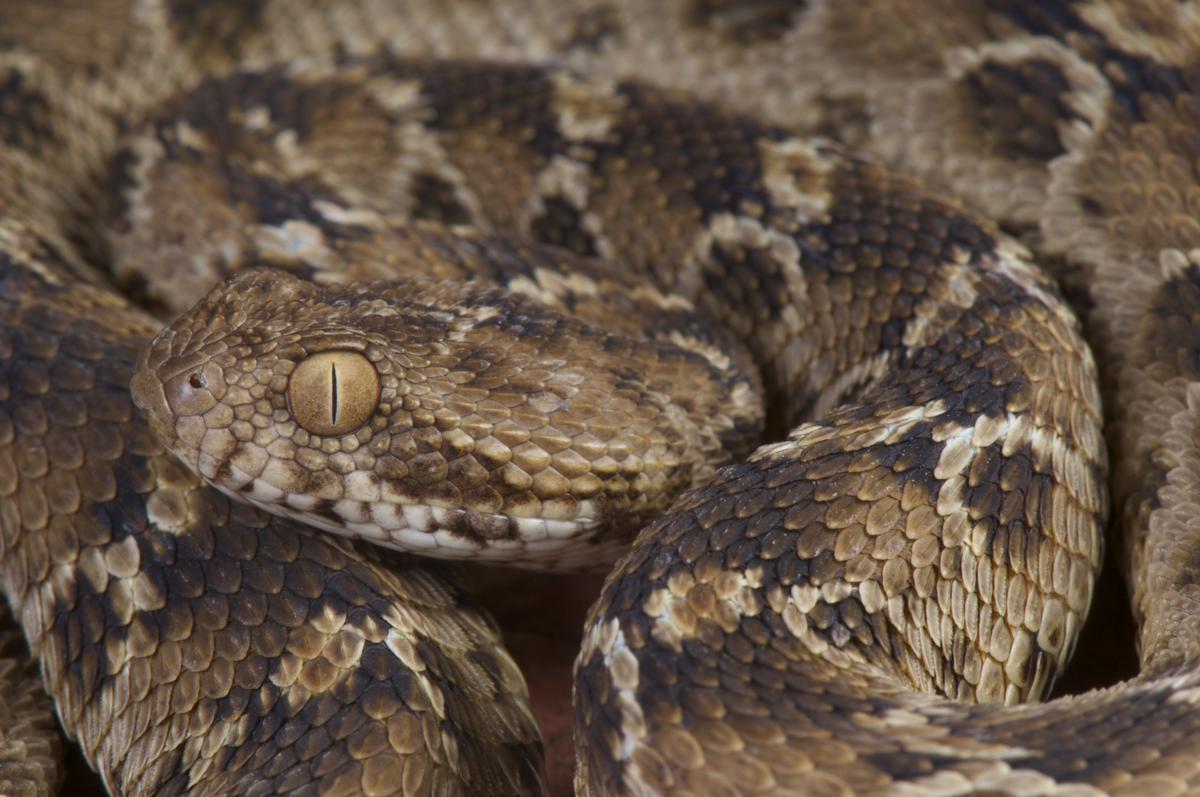
1. Saw-scaled Viper (Deadliest in the world)
Although its venom is not very potent, the Saw-Scaled Viper is considered as one of the world’s deadliest snakes as it is believed to be responsible for more human fatalities than all other snakes put together. These snakes have a stout body with a pear-shaped head which is distinct from the neck. Adult Saw-Scaled Vipers range in length from 0.3 to 0.9 metres and they come in shades of brown, grey, or orange with darker dorsal blotches and lateral spots. Unlike most snakes, the Saw-Scaled Viper moves sideways (sidewinding locomotion). They are nocturnal and feed on mammals, birds, other snakes, lizards, amphibians, scorpions and centipedes. They can be found in arid regions and dry savannahs north of the Equator across Africa, India, Sri Lanka, Pakistan, and the Middle East. Saw-Scaled Vipers are considered to be one of deadliest snakes of the world because they are often found in populated areas and a lack of readily accessible antivenom in rural areas adds to their lethality. So clearly, the potency of the venom has no bearing on the list of world’s deadliest snakes.
Some fun facts about the saw-scaled viper:
Saw-Scaled Vipers can live for up to 23 years.
Up to 80 per cent of these adults climb up bushes and trees when it rains.
In northern regions, they hibernate during winter.
2. King Cobra (World’s Longest Venomous Snake)
In India, the King Cobra is not only revered and worshipped but also feared, as they are one of the most venomous snakes of India. In one bite, a King Cobra delivers a tremendous amount of neurotoxins that induces paralysis. They are so fearsome that they find themselves on almost all lists of world’s deadliest snakes. King Cobra is dark olive or brown in colour with black bands and white and yellow crossbands with cream or pale yellow undersides. A King Cobra measures up to 3 to 4 metres in length and has blackheads with two crossbars near the snout and two behind the eyes. Young cobras are shiny black with narrow yellow bands. King Cobras are found in Bangladesh, Bhutan, Brunei, Cambodia, China, Hong Kong, India, Indonesia, Laos, Malaysia, Myanmar, Nepal, Philippines, Singapore, Thailand and Vietnam. The world’s longest venomous snake, a King Cobra’s venom is so strong that it can kill an elephant in just a few hours and can cause death in 50 to 60 per cent of untreated human cases.
Some fun facts about the King Cobra:
King Cobras (Ophiophagus Hannah) are monogamous, which means they mate with only one partner for life.
In the generic name, King Cobra Ophiophagus Hannah, Ophiophagus is derived from Greek and means “snake eater”.
The longest venomous snake, King Cobras have a slow metabolic rate and so, can go for months without food after a large meal.
A single bite from a King Cobra can kill an elephant.
The cobra only spreads its hood when it feels threatened or is disturbed. While most pictures showcase cobras with their hoods fanned, chances are you may spot a cobra without its distinctive hood, so be careful either way.
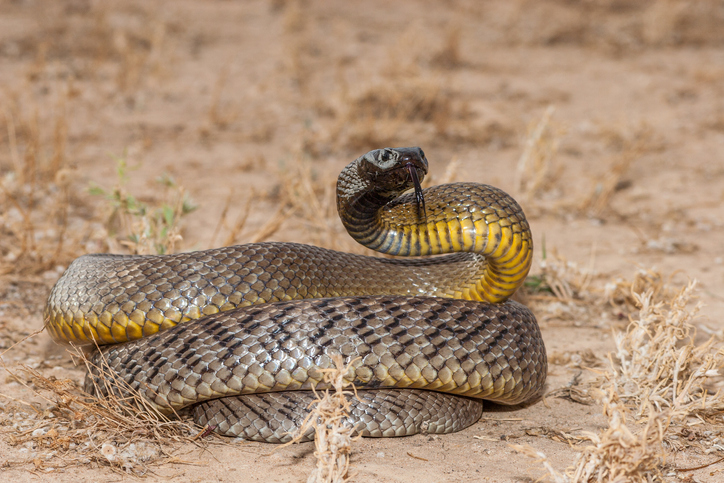
3. Inland Taipan (Deadliest Venom)
Also known as the “fierce snake”, the Inland Taipan is one of the world’s most venomous snakes. A bite from this variety of Taipan often causes paralysis of the victim’s nervous system and clots the blood. The Inland Taipan, one of three types of Taipans (Coastal, Inland and Central Ranges), is dark tan in colour, ranging from a rich, dark hue to a brownish light-green, depending on the season. This variety of Taipan is found to be smaller than the coastal variety and can grow up to 1.7 metres in length. Although the Inland Taipan is an extremely venomous and dangerous snake, they are usually shy and prefer to escape trouble. They will, however, defend themselves and strike if angered, mishandled or stopped from escaping, earning it a place on the list of the deadliest snakes in the world. The venom of an Inland Taipan consists of taipoxin, a complex mix of neurotoxins, procoagulants, and myotoxins that can hinder breathing, cause haemorrhaging in blood vessels and tissues, and paralyze and damage muscles. Respiratory paralysis can set in anywhere from two to six hours after you are bitten.
Some fun facts about the Inland Taipan:
Inland Taipans’ venom is specially adapted to kill warm-blooded animals.
It is an extremely fast and agile snake and can strike instantly with extreme accuracy.
It is called “fierce snake” for its venom, not its temperament.
They change the colour of their skin for thermoregulation, allowing them to absorb more light in colder months.
4. Blue Krait (Asia’s Most Venomous)
Also known as the Malayan Krait, the Blue Krait is a highly venomous snake of the elapid family. Its venom can paralyze its victim’s muscular system; a truly scary thought that has earned this snake a place on the list of the deadliest snakes in the world. The Blue Krait has a colour pattern of bluish-black crossbands separated by yellowish-white interspaces. They can grow up to lengths of approximately 1.1 metres. These Kraits are generally not aggressive or strongly defensive and tend to bite only when really provoked. While they primarily feed on other snakes, they also eat lizards, mice, frogs and other small animals. Blue Kraits have been found to be primarily nocturnal while hunting and have shown a preference for fields, holes, and sometimes even homes. A Blue Krait’s venom consists of extremely powerful neurotoxins made up of presynaptic and postsynaptic toxins. This mixture is known to directly attack an individual’s ability to speak or think clearly and can paralyze the muscular system. The venom also attacks an individual’s respiratory system, causing suffocation within hours. The bite causes no pain, giving the victim a false reassurance. However, if left untreated, death can come within four hours.
Some fun facts about the Blue Krait:
They are widespread in their regions, but encounters are uncommon.
They prefer the wet season.
Like other Kraits, they hide their heads under the coils of their body when threatened.
5. Black Mamba (Fastest Snake in the World)
The Black Mamba is the second-longest venomous snake after the King Cobra. They are known for their large size, quickness, and extremely potent venom, making them one of the deadliest snakes in the world. The inside of this snake’s mouth is black, hence its name – Black Mamba. They have a coffin-shaped head and can vary in colours from olive, yellowish-brown, khaki and gunmetal but they are rarely black. An average Black Mamba is 2–2.5 metres long, with a maximum length of 4.3 metres. While they have a reputation for being aggressive, Black Mambas are generally found to be shy and nervous. They primarily eat small mammals and birds. While they prefer warm-blooded prey, a black mamba will also feed on other snakes. They can be found in Angola, Botswana, Central African Republic, DR Congo, Eritrea, Ethiopia, Kenya, Malawi, Mozambique, Namibia, Somalia, South Africa, Tanzania, Uganda, Zambia, and Zimbabwe. f they are disturbed or cornered, Black Mambas will attack with repeated bites. Their venom is extremely toxic and just two drops are reportedly enough to kill most humans.
Some fun facts about the Black Mamba:
They are some of the world’s fastest snakes and are capable of speeds of more than 12 miles (19 km) per hour and hence will be the one which can kill the fastest.
In the wild, a black mamba can live for up to 11 years. In captivity, they can live for longer than 20 years.
In our everyday life, we study and see that new innovation is arising step by step. The degree of reasoning had changed. Our researchers have made a few exceptional things. Not many of them are identified with our knowledge. Presently we see that programmed machines, robots, satellites and our cell phones all are instances of man-made brainpower.
At all intricate terms, Artificial Intelligence suggests developing the ability to think and grasp and make decisions in a machine. Man-made thinking is seen as the most reformist kind of programming, and it makes a mind where the PC frontal cortex can think like individuals.
What is Artificial Intelligence?
Man-made mental ability (AI) or “man-made thinking” is a piece of computer programming, which is making machines that can think and work like individuals.
Not many models for this are: acknowledgment of sound or voice, issue dealing with and settling, educating, learning and arranging…
Tea might be native to China , but the entire world relishes this beverage . Each country has its unique way of preparing and consuming tea. Here is how tea is consumed around the globe ,
CHINA – China is the country who introduced tea to the world . It is believed that Chinese emperor Shennong when consuming hot water noticed that dried leaf had fell from a plant and his water tasted really good , and that is how tea was discovered . China has a wide variety of tea leaves from which they make their tea.
TAIWAN – People in Taiwan enjoy bubble tea , which is a fairly modern innovation . It is an iced tea served with tapioca pearls . Bubble tea sure has a lot of calories , but it is worth the calorie gain.
Ever since the Taliban has taken control over Afghanistan there is a big threat to the rights of afghan women & girls. Three Afghan women who worked at a media company were gunned down in Jalalabad in early March[1]. In January, unidentified gunmen killed two female Supreme Court judges in Kabul[2]. These are just some of the victims of the long list of assassinations of female activists and political leaders in Afghanistan. These assassinations have increased since the government of Afghanistan established connections with the Taliban.
The period of 1996-2001 when the Taliban ruled the country was the darkest time for afghan women. after Independence from the Taliban in 2001, Afghanistan had grown up a lot in terms of supporting women, educating them, and making them stand up for their feet. We have the famous women activists Sima Samar, Aryana Sayeed, and Roqia Abubakr all of who contributed a lot to the growth of Afghanistan. Today women compose around 27% of the Afghan Parliament, one of the highest rates of women’s political representation in the region[3].
Presently, as the Taliban have taken control over the country once again these women are at a worry for their safety and peace accord with the Taliban extremists. The oppressive rules of the Taliban for women make it their darkest times. Women are not being allowed to appear in the streets without a blood relative or without wearing a burqa, not allowing women’s to wear heels, not allowing women’s to speak or make any sound from their footsteps, depriving the right to education for women, these rules under the Sheria law are just too tyrannical. The fight with the Taliban is not just about women’s rights but about the basic rights that every human being needs which the afghan women are being disadvantaged under the rule of the Taliban. It is a platitude to say that, as the Taliban were expanding their territory in Afghanistan on 15th August 2021 afghan women were facing an uncertain future. On 16th August 2021, this uncertainty was replaced by fear and despair as President Ashraf Ghani fled the country, leaving the country in control of the Taliban[4]. Taliban, coming into power once again would lead to Afghanistan being 200 years back.
Afghan women now find themselves in the untenable position of looking for help from the international community. Today, the whole world is following the turbulent scenario in Afghanistan with a heavy heart and deep disquiet about what lies ahead. There is a need for the global call on this issue. Now is the time to stand as one, it is a call on all the international communities to use all available tools to uphold human rights in Afghanistan.








You must be logged in to post a comment.