


Top 8 solutions to reduce Global Warming !
As discussed, Global
warming is the process of increase in the temperature near the
earth’s surface.
The process has been observed over centuries and has extremely
disturbed the
weather and climatic conditions of the earth.

Has anyone wondered about
how we as people can do little things in order to save our
mother earth? Mentioned below are top 8 solutions to combat
global warming:
1. Use fluorescent bulbs: Use compact fluorescent light (CFL) bulbs as
such bulbs are
more energy efficient and consume less than 70% as compared to ordinary
bulbs. These
bulbs have a longer life as compared to ordinary bulbs.

2. Adopt Carpooling: Global
warming can also be reduced if you chose to drive less. One can adopt the
option of carpooling or cycling. Both of the methods will keep you fit. Not
only your fuel will be saved but the fumes generated by the largest
contributors that is oil and gasoline would be reduced and it would be a huge
step in reducing energy wastes.

3. Reduce, Reuse, Recycle: Use eco- friendly products and try to reduce small
amount of waste by not buying new products.

Reuse plastic
containers, old newspaper, bottles, cardboard boxes, any yogurt cups, bread
ties, and other items. By doing this you won’t need to buy new products as the
old ones can equally perform the same function well and your expenses would
also be reduced. One can also reuse disposable products in order to preserve
environment.

Recycling
unwanted paper, bottles, tables, furniture, aluminum foils, cans, newspapers
etc. This step would not only reduce landfills but it will also help in
preserving environment. This could also help in reducing global warming.
4. Avoid Overly Packaged Products: Buying overly packaged products would only result in increase in
waste. This is because one generally throws packaging away as a garbage which will
then fill landfill sites with more waste and harm the environment. Thus,
encourage people to not to buy overly packaged products.

5. Plant trees: Contribution
to greenery by planting trees would not only nurture the
environment but it would
act as a major contributor in reduction of global warming.

6. Regular Maintenance of vehicles: When one will
focus on making their vehicles efficient by focusing on its regular repair and maintenance,
the vehicle would emit less carbon dioxide. This would help in reducing global
warming.

7. Install Earth Preservation
Apps: Installing Earth Preservation Apps like Kil-Ur-Watts and
Wiser EMS helps in calculating energy costs. The apps also help in suggesting
ways and providing tools through which one can save energy and money. This
would also help in preserving the environment and help in reducing global warming.

8. Conserve
Water: In a year, hundreds of gallons of water can be saved and
conserved if one chooses to take 5-minute shower instead of baths. Using right
type of shower head will greatly help in conserving energy and would also help
in combating global warming. This is because showers consume less than 25% of water
than baths.

Conclusion
From this article one can conclude that all the
people through their little efforts can
combat global warming, making the mother
earth a better place to live in. The only
thing that we all have to do is to
practice and take one step at a time.

THE USE OF MOBILE PHONES.
The invention of mobile phones is one of the greatest achievement of humankind. The first mobile phone service was started in Japan in 1979 and within 42 years it has revolutionized the lives of people. Mobile phones usage is growing at a rapid rate, today the world is unimaginable without mobile phones.
Mobile phones is one of the quickest means of communication device. A person can communicate with their friends or family who lives miles apart. It has eradicated the olden system of letter delivery. In morden generation assess to internet has acted as miracle to many tech company to accumulate wealth for their companies. We can take phones in our pocket and roam anywhere. By use of mobile phones life has become more comfortable also phones now do the work of laptop’s; we can do NetBanking, send our important documents to the required place through email and many more.
Parent’s encourage their children to use mobile phones as it promotes learning. People can assess to google or youtube for educational purposes. In the current pandemic situation the world has shifted to virtual meating and imparting knowledge as socializing is prohibited in peron/groups. Parents also encourage their children to use mobile phones as it has GPS system so that they are assured of their child safety when they venture out in the world alone. Phones also serves as an entertainment purposes. People can assess to different apps for movies and shows to keep themselves busy. People can save their money due to introduction of eBooks. Many important date can be stored in our phone which out mind can’t remember. It’s helps a person to captured their sweetest memory for them to cherish.
Mobile phones has connected the world digitally through internet. People can know what is happening around the world through news. The current scenario has changed a lot now the world is leading itself to globalization. Branding and advertising are done through online platform it’s has made growth in many different industries. Different countries set their own cyber security so that there is no breach of people’s privacy. Many tech company hires professional hackers for their companies digital data so that no one can hack into their companies system.
“Mobile phones are neither good or bad it depends on the individual how they use “.
Power of Meditation
Another much needed and the topic to be discussed -the power of meditation. To lead a stable and peaceful life mediation is important. Meditation enhances our ability to understand and think deeper. Meditation involves focusing. It can be anything a thought or an activity but the main aim is to focus on to focus on yourself.
Meditation is a boon for us and is practiced since old times. A tradition which was present yet lost. Meditation is a practice where an individual uses a technique – such as mindfulness, or focusing the mind of a particular object, thought or activity- to train attention and awareness ,to achieve a mentally clear and emotionally calm and stable state. It can also be called as “healing process ” which relaxes and calms the soul of an individual.
These days, with greater need to reduce stress in the midst of our busy schedules and demanding lives, meditation is increasing in popularity. Although there isn’t a right or wrong way to meditate, it’s important to find a practice that meets your needs and complements your personality. There are several types of meditation. Some of them are – Mindfulness meditation, spiritual meditation, focused meditation, mantra meditation, visualized meditation and movement meditation.
Meditation is proved to be a stress buster in our complicated lives. Where there is pressure everywhere, by the practice of meditation we can achieve inner peace and relaxation of mind. This practice increases our ability to think, understand and remember things for future. It also lowers blood pressure, reduces anxiety, decreases pain, ease of symptoms of depression and improve sleep. It is scientifically proven that meditation is beneficial to an individual.
Hope you will like reading it…. Thank you!!!
Evils of terrorism
Today’s article discusses about the evils of terrorism. Terrorism is a world wide problem. A terrorist is a person who tries to create fear and panic among the people to gain his own ends. Their aim is to frighten the people and the government. In order to create panic they explode bombs and spread rumours. Terrorists change their hideouts. Sometimes the hard-core terrorists commit suicide or kill their associates when arrested.
Terrorists are usually young and the old behind them. They coordinate and guide the terrorists activities. Terrorists are extremists who act with great zeal. But they are misguided people who sometimes do not know what they are really acting for. Sometimes terrorists are helped by some foreign agencies in order to create disorder inside the country. In such cases, they are trained in the use of sophisticated weapons. They are also supplied with money and arms by agencies.
Terrorism is threatening peace and security all over the world. Many countries in the world have been hit by the cult of violence. As terrorism is an international problem, we can solve it by with the help of international cooperation. The countries of the world should not allow terrorists activity against another country. Terrorists have no religion and no faith in human values. Their only philosophy is bloodshed for political gains.
The genuine grievance of the people must be redressed and justice should be done to all. Terrorism has crossed borders and he developed into a global issue. We hope we could fight the evils and come back with peace and harmony in the near future. Today’s generation don’t want such sort of fear in their minds and want to lead a stable and happy life. It’s the responsibility of the organizations of WHO, UNSC to maintain peace all over the world.
Hope you will support… Thank you!!
A Clock of Atoms

The tickling of the clock always says about the nearing of the time either away from something or close to something, but the same ticking can also show you the whole timeline graph of the past and future just with the perfect tool in hand.
So to tackle the navigation problem of many light-years from our home earth in the web of space a new technology has been introduced and to name it we call it Deep Space Atomic Clock, a new navigation device which can help us in exploring many untouched parts of the space with quick and precise calculations.
The error percentage of this atomic clock is just 1sec in a span of 100 million years and that’s what makes it the best in the whole of human civilization.
But to know what and why makes it this strong of the contender in the game of at least time calculations we need to know everything about it, so to know it let’s get this reading on with the whoop.
Working
To know any device and its diversity among the unity with another we need to know how does it work.
The working of this clock is based on the time it takes for a resonating frequency of atoms to keep up with the higher and extreme frequency by noticing the time it will take in changing the energy level of the atoms present.
It is the same as when a spacecraft is situated somewhere outside the earth in space we just going the send the radiation or the signal with the speed of the light which can make a two-way journey from the earth to that spacecraft and then we can calculate the distance with speed and the time taken by the wave to return to us.
Now repeat this same process we can locate the whole trajectory of the object with the knowledge of where it is going and from where it might come.
Yes, we get it but the connection between the atom and clock?
The connection, and how the concept explained above could make this atomic watch worthwhile?
If you have the same wondering questions then I guess we need to find the missing dots and try once again to catch the concept.
Our clock uses the quartz crystal to measure the accurate time from our wrist band to the clock on the satellites by counting the number of the vibration they make in the unit of time because the quartz can vibrate at the precise frequency when given the required volt of energy.
The vibration of the quartz shows the lapse of the time but to calculate the exact location of the spacecraft we need something which can count even the zillionth fraction of the time and does producing the error of just 1 sec in the large period.
The clock need for this purpose should be consistent and stable as if measured over the long span of different timelines it should not show any difference.
Conclusion
Nasa has yet again found something which we can use to be more correct about the upcoming threats to the earth and its whole surrounding.
Why Qatar shouldn’t organize football world cup
Football world cup will be organized in 2022 in Qatar. When FIFA announced Qatar as host of 2022 world cup, questions started rising on suitability of Qatar as host country. Many media outlets, sports experts and human rights groups criticized FIFA for this decision and even alleged of them being bribed. Former UEFA president was also arrested in 2019 in relation to bribing case.
In addition of bribing scandal there are several reasons why world at Qatar is a disgrace. Let’s discuss them one by one:
Human rights

Violation of human rights is the biggest criticism of Qatar as world cup host. Treatment of workers hired to build infrastructure like stadium, hotels etc. was miserable. Kafala system left migrant workers vulnerable to systemic abuse. Workers may not change their job or even leave country. They were literally used as slaves in the process of building infrastructure. In 2013, Amnesty international reported serious exploitation of labors.
Due to heavy criticism, Qatar govt. stepped up and promised reforms in labor laws in 2014, But a little progress was made. The Nepalese ambassador to Qatar said that Qatar had become an open jail for migrant workers of south Asia. Companies forced workers to stay and work in poor conditions by denying them promised salaries and withholding worker ID permits. They faced exploitation to extent of modern day slavery. The Guardian did a investigation and found out horrible situations. Labors were forced to live in unsanitary conditions. Workers told the guardian that they were promised higher wages but their contracts were destroyed upon their arrival in Qatar. Some were not paid from months. They described having to beg for food and being beaten. Minimum monthly wage system was announced in 2020 , 10 years after announcement of hosting world cup. But this was also not sufficient to meet needs of workers as standard of living in Qatar is high.
Another problem is legal status of homosexuality in Qatar. Homosexuality is banned in Qatar with offenders facing fines and 7 years of imprisonment. LGBT fans may face problems. Many LGBT activists asked FIFA to cancel world cup but FIFA ensured that everyone will have right to watch the game in stadiums.
Climate
In addition to human rights violation climate is also a major problem as the world cup usually occurs during the northern hemisphere’s summer. Summer in Qatar sometimes become unbearable as temperature reaches 50 degree Celsius. It will affect the performance level of footballers and they will also need longer recovery time. Also lots of money will be required to create infrastructure of stadiums with cooling system
Solution of this problem is winter world world cup which is also a problem itself. World cup can’t be staged in January and February as it will clash with winter Olympics. Staging it in November December is also not feasible as it might clash with Christmas season. The Premier league also raised issues over moving world cup to winter as it will interfere with European domestic leagues and players from all over the world participates in these leagues. Broadcasters also raised voice as clash of world cup with major European leagues will be not profitable for them.
There are also some minor problems like transpiration, ban on use of alcohol in Qatar, huge cost etc. Qatar govt. is also taking some steps but they are not enough. So Qatar as a world cup hosting nation is a disgrace to football.
Is it better to learn in a classroom or online?
The surging technologies and digital era has paved the way for many leading developments over several domains like healthcare, agriculture, business, communication, networking, medicine, aviation etc and particularly in education. Gently we were perceiving many evolutions occurring in the educational environment like practical learning with the help of digital platforms, for a better learning experience for students. With the advancement in technologies and digital media many schools & colleges over the world implemented the idea of Educomp (smart classes) in every classroom to make learning effective for students and to enhance their understanding capability and cognition. When everybody of us were gradually moving towards a modern stratum in education to make things easily accessible and feasible for a finer learning environment, the pandemic has pushed us to a devastating state where education has taken a back seat and made learning intricate for students through online classes. The impingement of online learning has made the education dreadful/unpleasant at times. It is a mere exhaustion for students rather than imparting knowledge.

Students became bewildered with the circumstances revolving around them because it was entirely new for everyone, which nobody would have even dreamt of. Yes, indeed the e-learning ie. the online classes was like a silver lining to the dark cloud, because the covid-19 has resulted the schools and universities to shut down all over the world, whereby education has changed drastically and the teaching is undertaken virtually on a digital platform. With students shattered across various domain the online learning has been a key to make sure that the students are engaged with the syllabus. However , the online learning plays a pivotal role in the contemporary situation, its consequences cannot be neglected or ignored . A home cannot provide the ambience that a school creates.
Education is more than a black board and ahead of the school text books as there is much more fascinating activities and qualities associated with the school environment that a student acquires. It is a place where young inventive minds gather together and gain knowledge form one and another as peer learning is very vital in the educational domain. The digital medium can’t make a replica of the interpersonal interactions that the school facilitates by having the young generation together from diverse backgrounds and culture. It has refrained students from gaining practical knowledge. The peer group interaction in an education sphere is very prominent as it promotes very strong soft skills, but unfortunately the retention of all these factors was a great challenge and posed as a bane in the online classes. At home children are not bound to have the classroom professionalism.

In addition the students are exposed to many health issues, which are attributed due to the prolonged screen time, like eyesight problems with constant headaches, mental illness, uneven sleeping, stress due to the home confinement and rising level of anxiety. Classes at home have become like a pass time for students and curtails the concentration on the curriculum. At school, students would have more exploration towards the extra-curricular activities like sports, art which kindles their interests towards various fields. While speaking about the cons of the online classes that students experience, on the other hand the students in the rural area face many obstacles even in accessing the online classes due to the unavailability of smartphones, laptops and some distortions in the mobile network, so they are on a more frightful side.

To a larger extent we always raise opinions from a student’s point of view, the effects of e-learning that impacted a student. But the fact is, the teachers are affected by the same with parity, even they live a similar life as we do. Moreover we could derive to a phrase that, they are the ones who face so many challenges more than students. Initially many of them weren’t aware of how to make use of the digital platform and struggled with it. In fact they become skeptical whether the content delivered had reached all the students or were there any network interruptions midway. It becomes strenuous for the teachers to cope up with the academics in this pandemic. Teachers are also exposed to all the mental pressures and health issues as the students do. Thus the e-learning has impacted both the students and teachers on an equal proportion. People frame this as the new normal but the education system cannot be taken over like the same for many days. So it is very certain that online classes could be a substitute until the situation lets us get to the educational place but could never be a replacement. So let us hope that the pandemic ceases soon utterly and revive back to the classrooms for a better learning experience.
How COVID-19 affected our lives?

Have we ever thought there will be such a setback on our lives? It is really an unbelievable and unexplainable thing that affected our lives. This COVID-19 affected the whole world mentally as well as physically. The world has gone through so many but this is the most impacted pandemic. This pandemic has led to dramatic loss of human lives and an upredictable health issues and also the world of work. This economic and social distruption caused millions of people to fall into the line of extreme poverty, and the rate of malnourished also increased day by day.
Positive impacts of COVID-19
When we start to see the positive effects of COVID-19, we are running out time in our normal lives and spend very less time with families. This pandemic has paved way for that. Have you ever thought of sitting freely in your home and seeing the blue sky peacefully? No. But due to this pandemic has made that possible. We often get bored while we are at home. Now, we play carrom, chess and many indoor games and teach these 2k kids about these games. There is a high possiblity of addicted to mobile phones and due to the control of parents some may not get addicted. We get to try some new dishes every day so that we won’t get bored in our daily lives. Gardening, family time has become the major positive impacts of COVID-19.
Negative impacts of COVID-19
The first and foremost negative impact of this pandemic is the addiction to gadgets. Furthermore, mobile phone is the most addictive one. Pandemic has also affected knowledge of the students greatly. They find it more difficult to learn it online and enjoys the offline class more. The sadder impact is the students cannot get the knowledge of the subject they sutdy. There is also possiblity of getting sick often due to laziness. Heart attack, obesity, gastric problems, weight gain are very serious factors. Work from home make people very lazy and they are getting back pain, eye problems and so on.

Very happy that we have slightly overcame this pandemic stituation and return to our daily lives. Stay safe and be protective over yourselves.
Check this out for further;
NONI: INDIAN MULBERRY

Botanic name of Noni is Morinda Citrifolia. It is also called Indian Mulberry. It is an Ayurveda plant, found near the seas where temperature is below 25 degree Celsius. The noni tree is an evergreen shrub, up to 20 ft (6 m) tall, that grows in tropical areas of the South Pacific, including Australia, Malaysia, the West Indies, India, Vietnam, etc. Its branches and trunk are coarse, tough wood, and the leaves are glossy, oval, and dark green. Year-round, the tree yields a small fruit, which is cream-colored and about the size of a small potato. The noni fruit is noted for its bitter taste, unpleasant smell, and reportedly strong healing properties. It is very good for health. Noni has been in use from the bygone era. Noni is a great natural detoxifier. Today about 40 University are researching on Noni fruit and till now 164 nutrients have been found in it.
Noni has more than 150 nutrients. Compared to pineapple, Noni has 40 times more enzymes. It boost the immunity system. It is beneficial for health.
Noni is a rich source of vitamins B1, B2, B3, B5, B6, B12, C, E folate, beta, carotene and minerals such as calcium, potassium, magnesium, iron and phosphorus. Noni has Anti- oxidant, Anti-bacterial, Anti- inflammatory and Anti-wrinkle properties. It is a powerful food for cells and maintains the cell count. People of all ages can drink it. Noni juice is a strengthening drink that keeps the stress away, stimulates serotonin and endofrin, effects mood and emotions.
USES OF NONI
1.Noni contains fibers.
2.It is beneficial in reducing pressure on the intestine. It has vitamins and minerals which protects our intestine.
3.It prevents increase of tumor, due to which it helps in fighting with the cancer.
4.People suffering from Asthma should take Noni juice everyday in the morning and evening.
5.Noni juice works like an insulin and helps to regulate sugar levels.
6.Noni juice helps in making body disease free.
7.Intake of noni juice is beneficial in skin disease like eczema.Various parts of noni plant have been used to treat skin problems such as acne, water retention, inflammation and others. Noni contains anthraquinone which has anti-wrinkle properties, and thus, can slow down the aging process of skin. Noni juice has goodness of antioxidants which helps to fight against free radicals and thereby, prevents cell damage.
8.Noni reduces the effect of wine.
9.Noni regulates blood cholesterol levels.
10.Noni juice has shown positive effects in protecting heart health by improving the blood flow in the arteries. It also helps in regulating blood pressure which definitely helps in maintaining heart health.
11.Noni is effective in stress, pain in urine, leucorrhoea and periods.
12.Noni helps to increase memory power.
13.Noni is beneficial for every problem related to hair like baldness,dryness of hair and also good for growth of hair.
14.Useful for arthritis and joint pain.
15.Improves the nervous system.
16.As an effective anti-oxidant keeps the poisonous elements and pollution away.
17.Noni juice boost the Immunity System.
18.It helps to detoxify the body.
SWEAT EQUITY SHARES
Sweat Equity Shares [Section 2(88)]: Sweat equity shares means equity shares issued by a company to its directors or employees at a discount or for consideration, other than cash for providing know-how or making available rights in the nature of intellectual property rights or value additions, by whatever name called.
Issue of sweat equity shares [Section 54]: A company can issue sweat equity shares, of a class of shares already issued, if the following conditions are satisfied:
(1) The issue has been authorized by a special resolution passed by the company in the general meeting.
(2) Such special resolution should clearly specify:
-Number of shares
-Current market price
-Consideration and
-Classes of directors or employees to whom such equity shares are to be issued.
(3) At least 1 year should have elapsed from the date on which the company was entitled to commence business.
(4) A company whose shares are listed on a recognized stock exchange issuing sweat equity shares should comply with the SEBI (Issue of Sweat Equity) Regulations, 2002.
(5) A company whose shares are not so listed should comply with the Companies (Share Capital & Debentures) Rules, 2014. The rights, limitations, restrictions and provisions as are for the time being applicable to equity shares shall be applicable to the sweat equity shares issued and the holders of sweat equity shares shall rank pari passu (on an equal footing) with other equity shareholders. (Section 54 (2)). Register of Sweat Equity Shares [Rule 8 (14) of the Companies (Share Capital & Debentures) Rules, 2014]: The company shall maintain a Register of Sweat Equity Shares in Form No. SH. 3 and shall forthwith enter therein the particulars of issue of sweat equity shares. The Register of Sweat Equity Shares shall be maintained at the registered office of the company or such other place as the Board may decide. The entries in the register shall be authenticated by the Company Secretary of the company or by any other person authorized by the Board for the purpose.
Provisions of the Companies (Share Capital & Debentures) Rules, 2014 relating to sweat equity shares are as follows:
(1) Explanatory statement to contain certain particulars [Rule 8(2)]: The explanatory statement to be annexed to the notice of the general meeting shall contain the prescribed content like the date of the board meeting reasons or justification for the issue: the class of shares under which sweat equity shares are intended to be issued; total number of
shares, etc.
(2) Validity of special resolution [Rule 8(3)]: The special resolution shall be valid for making the allotment up to period of 12 months.
(3) Limits on issue of sweat equity shares [Rule 8(4)]: The company shall not issue sweat equity shares for more than 15% of the existing paid up equity share capital in a year or shares of the issue value of 5 Crores, whichever is higher. The issuance of sweat equity shall not exceed 25% of the paid up equity capital at any time.
(4) Lock-in-period [Rule 8(5)]: The sweat equity shares issued to directors or employees shall be locked in for a period of 3 years from the date of allotment and this fact shall be stamped in bold on the share certificate.
(5) Valuation Aspects [Rule 8(6) & (7) & (81] The sweat equity shares to be issued shall be valued at a price determined by a registered valuer as the fair price giving justification for such valuation. The valuation of intellectual property rights or of know how or value additions shall be carried out by a registered valuer. A copy of the valuation report shall be sent to the shareholders with the notice of the
general meeting.
(6) Sweat equity shares and compensation aspects [Rule 8(11) & (12)]:
(i) If the sweat equity shares issued pursuant to no acquisition of an asset. The accounting value (fair value) of sweat equity shares shall be treated as a form of compensation to the employee or the director in the financial statements.
(ii) If the shares are issued pursuant to acquisition of an asset: The value up to valuation report shall be carried in the balance sheet as per the Accounting Standards and such excess value over the value as per valuation report shall be treated as a form of compensation to the employee or the director in the financial statements of the company.
(7) Disclosure in Board’s Report [Rule 8(13)]: The details of issue of sweat equity shares shall be disclosed in the Directors Report for the year.
(8) Maintenance of Register [Rule 8(14)]: The company shall maintain a Register of Sweat Equity Shares in Form No. SH. 3. The Register shall be maintained at the registered office of the company or such other place as the Board may decide. The entries in the register shall be authenticated by the Company Secretary or by any other person authorized by the Board.
Global Warming
Global Warming
What is Global warming?
Global warming is the process
of increase in the temperature near the earth’s surface. The process has been
observed over centuries and has extremely disturbed the weather and climatic conditions
of the earth.

Causes of Global Warming:
Deforestation
Plants and trees
play a very crucial part in maintaining balance in ecosystem by taking in
carbon dioxide and releasing oxygen. Forests are being cut continuously for
domestic and commercial purposes which creates an imbalance in the ecosystem
which causes global warming.

Vehicle Usage
All the
vehicles, when in use, emit various gaseous emissions like carbon dioxide and
other toxic substances into the atmosphere. This leads to increase in
temperature which causes global warming.

Chlorofluorocarbon
The ozone rays play a very crucial part in
protecting the earth surface from harmful UV (ultra violet) rays. Excessive usage
of air conditioners and refrigerators by people have increased the number of CFCs
into the environment which negatively impacts the ozone layer.
Due to CFC’s,
ozone layer depletes which makes the entry of ultraviolet rays easier. This leads to increase in temperature which
causes global warming.

Industrialization
It can be observed
that the temperature of earth surface has also been increasing rapidly due to
advent of industrialization. It is because industries emit the harmful
emissions leading to increase in temperature of the earth leading to global warming.

Harmful Effects of Global Warming:
Increase in Temperature
The continuous rise
in earth’s temperature has led to increased melting of glaciers which have negatively
impacted the sea level. This could have harmful effects on coastal regions.

Danger to the Ecosystem
Increase in temperature
caused by global warming has affected the coral reefs in a negative manner. The
rising temperatures have increased the fragility of coral reefs and the plants
and animal lives were also severely affected.

Climatic imbalances
Climatic
imbalances are also one of the negative consequences of global warming. Some
places experience floods and some places face droughts due to the same.

Spreading of Diseases
Global warming
leads to the movement of disease carrying mosquitoes. This is because global
warming is responsible for changing patterns of heat and humidity.

Harms human life
Increase in
natural disasters such as floods, tsunamis, etc, the average death toll is
increasing very rapidly due to global warming. This can lead to spread of
diseases which could harm the human life.

Loss of Biodiversity
Due to global
change in climatic conditions, habitat of several plants and animals are lost. Due
to this, animals migrate from their natural habitat. Many species of plants and
animals have also become extinct. Thus, global warming has an adverse impact on
biodiversity too.

Conclusion
Through this article
one can understand how harmful global warming is and how harmful can it be to
the plants, animals and humans. This is a serious issue which needs to be
addressed by all the people as a united team.

LIFTING OF CORPORATE VIEL
When seven or more person in case of public company and two or more person in case of private company forms a company as per provisions of Companies Act, 2013 they are clothed with corporate personality and there association known by the name of the company. However, sometime this veil of corporate personality is used for some dishonest and fraudulent purpose in that case Court will look into reality and remove the corporate veil.
In the following case the courts have lifted the corporate veil-
(1) Prevention of fraud and misconduct: Where the medium of a company has been used for committing fraud or improper conduct, the Courts have lifted the veil and looked at the realities of the situation. Gilford Motor Co. vs. Horne [1933] Ch 935: In this case ‘Horne’ had been employed by the company under an agreement that he shall not solicit the customers of the company or compete with it for a certain period of time after having its employment. After ceasing to be employed by the plaintiff, ‘Horne’ formed a company which carried on a competing business and allotted whole of its shares to his wife and an employee of the company, who were appointed to be its directors. It was held that since the defendant (Horne) in fact controlled the company, its formation was a mere ‘cloak or sham’ to enable him to break his agreement with the plaintiff. Accordingly, an injunction was issued against him and against the company he had formed restraining them from soliciting the plaintiff’s customers.
(2) Company acting as agent: Where the company is in reality an agency or trust for someone else and the corporate facade is used to cover up that agency or trust. Re. FG Films Ltd. (1953) 1 All E.R. 615: FG films wanted Monsoon registered as a British film. It applied to be declared as the ‘maker’ under the Cinematography Films Act 1936-1948. The Board of Trade refused because it was made by the American Film Group Inc. The American company had promised to finance and provide facilities to the UK company for making the film. 90 shares were held by an American director and 10 by a British one. No shares were held by the third director, who was British. The film was made in India. It was held that the film could not be considered British made, even though the company owning the
rights was a UK company.
(3) Protection of public policy: Where the doctrine conflicts with public policy, Courts have lifted the corporation veil for protecting the public policy. Connors vs. Connors Ltd. (1940) 4 All E.R. 179: In this case the principle was applied against the managing directors he made use of his position contrary to public policy. In this case house of Lord determined the character of company as enemy company, since the person who de facto in control of its affairs where resident of Germany, which was at war with England at that time.
(4) Enemy character of company: Court will lift the corporate veil if the company has enemy character. Daimler Co. Ltd. vs. Continental Tyre & Rubber Co. Ltd. AIR 1927 Bombay 371: A Company was incorporated in London for the purpose of selling tyres manufactured in Germany by a German Company. Its majority shareholder and all the directors were Germans. On declaration of war between England and Germany in 1914, it was held that since both the decision making bodies, the Board of Directors and the general body of shareholders were controlled by Germans, the company was a German company and hence, an enemy company. Accordingly, the suit filed by the company to recover a trade debt was dismissed on the ground that such payment would amount to travelling with enemy.
(5) Evasion of taxes: Where the veil has been used for evasion of taxes and duties, the court upheld the piercing of the veil to look at the real transaction. [Re. Dinshaw Maneckjee Petit A.I.R. 1927 Bombay 371]
(6) To protect labour welfare legislation: Where the purpose of company formation was to avoid the welfare legislation, the Court will lift the corporate veil. Where it was found that the sole purpose for the formation of new company was to use it as a device to reduce the amount to be paid by way of bonus to workman the Supreme Court upheld the piercing of the veil to look at the transaction. [Workmen of Associated Rubber Industries Ltd. vs. Associated Rubber Industries Ltd. A.LR. 1986 SC 1]
(7) Use of corporate veil for hiding criminal activities: Where the defendant used the corporate structure as a device to conceal his criminal activities (evasion of customs and excise duties), the Court could lift the corporate veil and treat the assets of the company as the realizable property of the shareholder.
(8) To punish for contempt of Court: [Jyoti Limited vs. Kamwaljit Kaur Bhasin 32 (1987) DLT 198].
MUSIC : THE WONDER OF THE BEATS

In the world that we live in today, we are always surrounded by music everywhere. From slow to fast, calm to upbeat, from rock to hip-hop to metal and country, people all over the world appreciate the music in all its different forms, style and distinctiveness. Music connects people all over the world, whatever language or genre that it may have. It carries a universal message of love and togetherness that unites people from different parts of the globe, as they find a common hobby to bond over amidst all the differences and diversity they may have among themselves. We do not overexaggerate when people claim that “Music has saved them”. It is like a boat in the middle of the storm of life that helps them sail through the difficult time with ease and offers them a place to relax and unwind, allowing them time to reflect and introspect to understand themselves a little better. Music is a remedy for all of us and it accepts us with open arms wherever we go.
Some of the ways in which music is beneficial are mentioned below. They are as follows:-
#1 IT HELPS YOU CALM DOWN
Amidst the race and chaos we call life, we may not always get the time to relax and take out time for ourselves. In such situations, music can be our savior. A number of studies have suggested that listening to slow music for a minimum of 15 minutes a day can really help us ease down a bit, allowing our bodies to relax and live in the moment.
So, whenever you feel stressed, make sure to put your favorite tunes on and just relax!
#2 MUSIC MAY HELP YOU IMPROVE YOUR PERFORMANCE WHILE EXERCISING
Often, people prefer listening to upbeat and groovy music while trying to get in a workout. This is highly beneficial as it can truly help us stay motivated to give our best while doing exercise and may help us improve our daily performance. Many researches have shown that listening to happy and motivational music may help us get motivated to run even faster while running as well as help build our strength and stamina.
#3 MUSIC CAN HELP ELEVATE YOUR MOOD
Scientific studies have shown that music can actually help release dopamine, a feel good hormone, in our body and improve our mood a lot. Henceforth, listening to music about 30 minutes a day can make us significantly happier and elevate our mood!
#4 MUSIC IS GOOD FOR YOUR HEART
A number of scholars and professionals have stated that while music does make US happy, it also makes our heart happy too. This evident through the fact that listening to music helps the blood in our body to flow more easily and efficiently, while at the same time, it lowers our blood pressure as well. Not only this, listening to music can also help in lowering the cortisol levels in our body as well as increase the production of serotonin in our lood stream, making us less stressed and happier.
So, listen to music everyday while enjoying the journey of life!
GOOSEBERRY 🫒
Gooseberry (Ribes spp.) scientifically known as Phyllanthus emblica is a small spiny bush in the family Rosaceae which is grown for its edible fruit of the same name. It is also known as “fayberries” because of the ancient belief that fairies used bushes of gooseberry to hide from danger. The plant is native to Nepal, India and Sri Lanka, throughout South-East Asia to southern China. Apart from gooseberry it is also known as Amla, Emblic, Indian Gooseberry, Malacca Tree and Myrobalan. The bush begins fruiting 2-3 years after plantation. One gooseberry bush produces 8 to 10 pounds of fruit per season. Gooseberry can produce fruit and survive at least 20 years in the wild. Fredonia, Pixwell, Downing and Poorman are few of the popular varieties of Gooseberry.
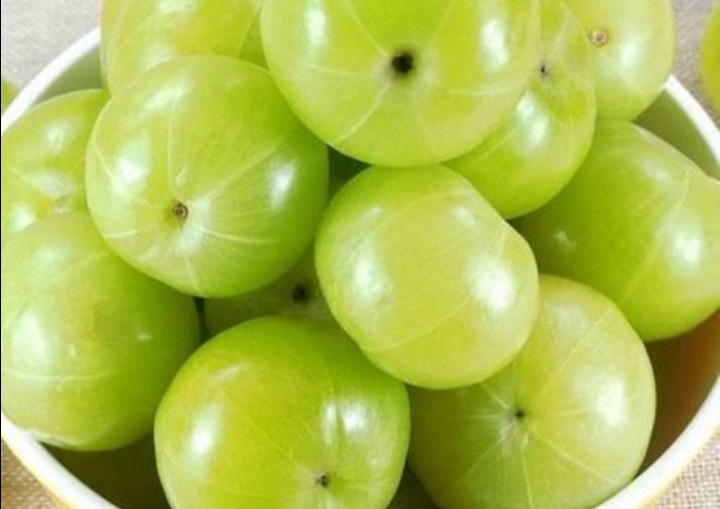
Gooseberry Quick Facts
Name : Gooseberry
Scientific Name: phyllanthus emblica
Origin : Nepal, India and Sri Lanka, throughout South-East Asia to southern China.
Colors : Pale green changing to yellow when mature
Shapes : Depressed globose drupe 2–4 cm in diameter, with six vertical striations
Taste : Sweet, slightly tart taste
Calories : 66 Kcal./cup
Major nutrients : Vitamin C (46.22%)
Total dietary Fiber (16.84%)
Carbohydrate (11.75%)
Copper (11.67%)
Manganese (9.39%)
Health benefits : Cancer, Improving Appetite, Diarrhea and Dysentery, Infection, Brain health,Heart Disease, Digestion, Diuretic Activity, Diabetes, Menstrual Cramps, Metabolic Activity, Aging, Calcium Absorption, Eye Care, Hair care
Plant
Gooseberry is a fast growing, small to medium-sized, low, deciduous tree, 5–25 m tall; trunk often crooked and gnarled, up to 35 cm in diameter; bark thin, smooth, grey, peeling in patches, with numerous knobs, main branches angular and densely pubescent. The plant has sharp thorns all along its woody branches. It is normally found growing in tropical and subtropical regions from near sea-level. It grows equally well in arid and wet or humid conditions. It is light demanding plant, common in grassy areas, brush and village groves. The plant is not fastidious of soil type and grows on a wide range of soil types ranging from sandy loam to clay, light or heavy, and slightly acidic to slightly alkaline. It flourishes in deep, fertile soil. It is moderately drought resistant but some cultivars may be sensitive to drought and frost. It is fire-resistant and is one of the first trees to recover after a fire. Branchlets are glabrous or finely pubescent, 10–20 cm long, usually deciduous.
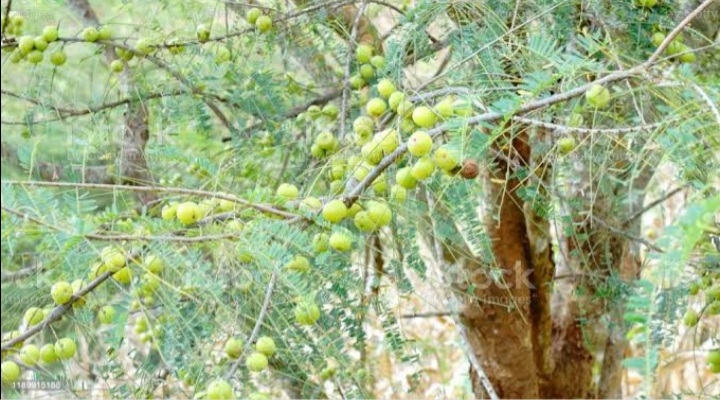
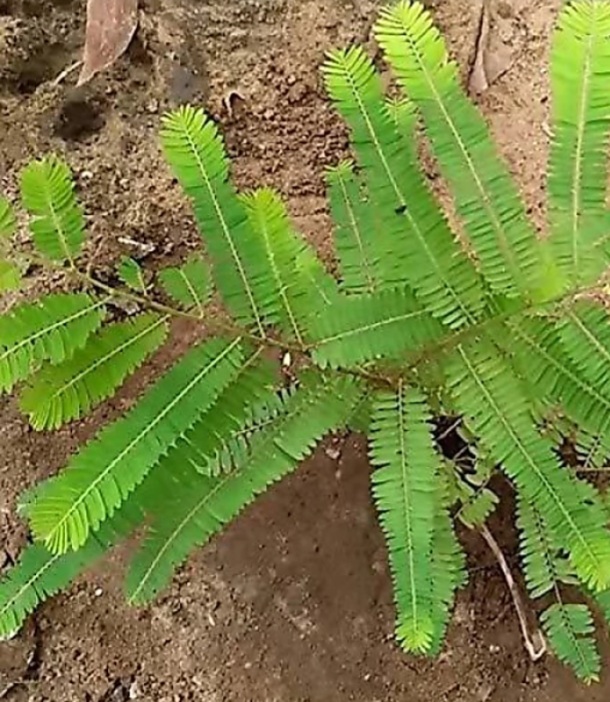
Leaves
The buds perk up early in the spring, dotting the stems with green when most other plants are still tawny. Leaves are alternate, single, deeply lobed, and glossy dark green (European types), or pale to gray-green and sometimes finely pubescent (American types). The stems are thin, becoming woody, with a large thorn at each axil. American gooseberry stems are densely bristly, with one or more additional thorns at each axil. Leaf size and number are reduced under heat or light stress, and are easily burned by intense sunlight. Plants that have been subject to drought may make a new growth flush after deep irrigation. If the roots are lost, regrowth will wait until the following spring.
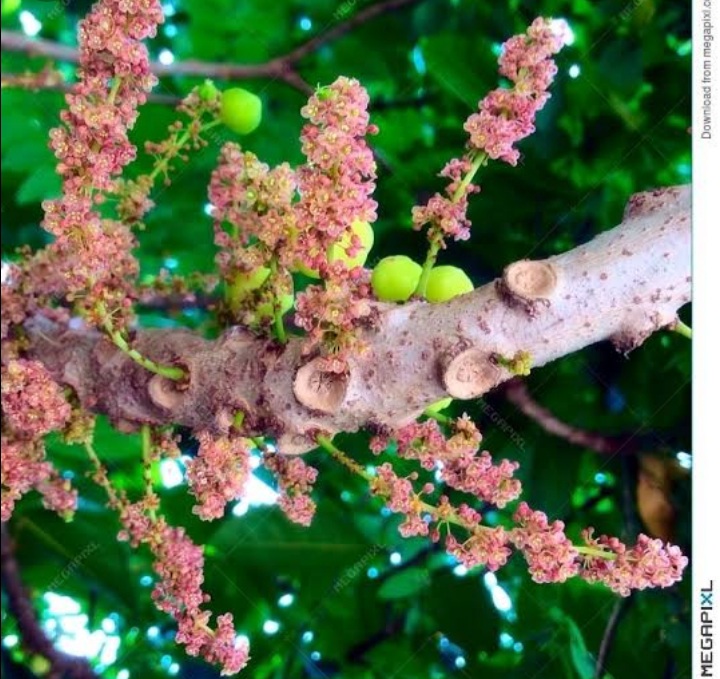
Flowers
Flowers are greenish-yellow, fascicled in axils of leaves or fallen leaves, unisexual. The male flowers are numerous at base of young twigs, the female flowers solitary and higher up the twig. Male flowers are shortly pedicellate, with six pale green perianth lobes 1.5–2.5 mm long and three entirely connate stamens, six disk glands alternating with the perianth lobes; female flowers sessile, with six somewhat larger perianth lobes, a cup-like six-angular disk, and a superior three celled, glabrous ovary crowned by three styles, connate for more than half of their length and deeply bifid at apex. The flowers are self-fertile and pollinated by wind and insects, including bees. Each flower bud opens to yield from one to four flowers, depending on cultivar.
Fruit
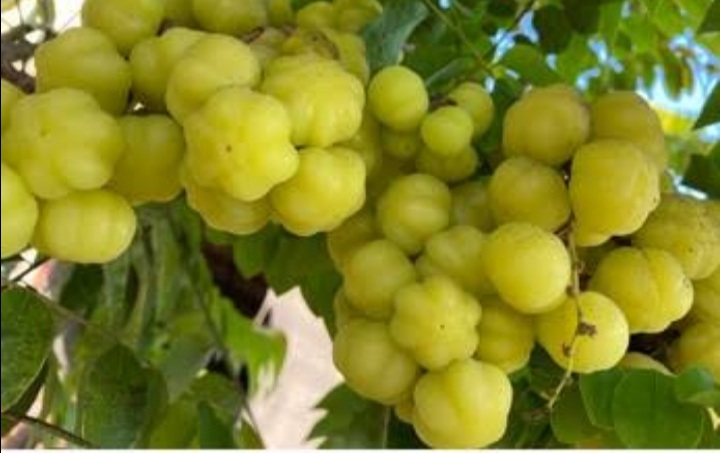
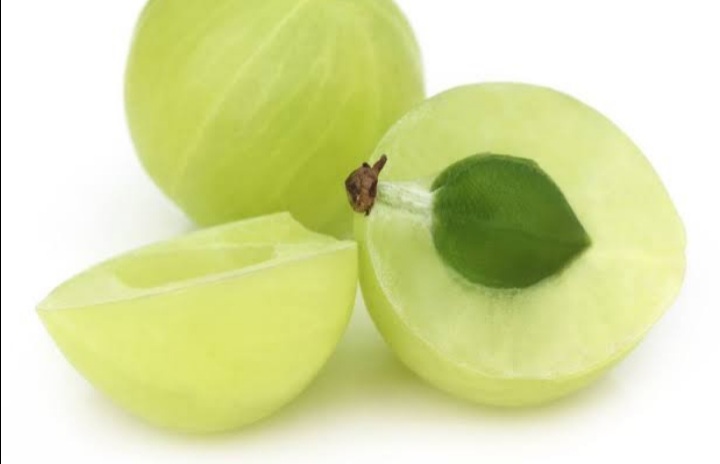
Fruit, borne singly or in pairs at the axils, is a berry with many minute seeds at the center. A gooseberry is depressed globose drupe 2–4 cm in diameter; with six vertical striations. The color of the berries is usually green, but there are red (to purple), yellow, and white variants. (Ribes hirtellum fruit can be green or dark purple to black. Fruits of the European gooseberry may be very large, like a small plum, but are usually 1 inch long, less in width. American gooseberry fruits are smaller (to 1/2 inch), perfectly round, all becoming pink to wine-red at maturity. In general, the berries weigh about 4 g to 10 g. The fruit skin is thin, translucent and adherent to the very crisp, juicy, concolorous flesh. Inside, a berry may hold 15-30 tiny edible seeds. Skin color is most intense in full sunlight. Berries generally drop when overripe. The fruit has a flavor all its own, the best dessert cultivars as luscious as the best apple, strawberry or grape.
History
Phyllanthus emblica commonly known as gooseberry is considered to have originated in Nepal, India and Sri Lanka, throughout South-East Asia to southern China. It is widely cultivated for its fruits throughout its natural area of distribution, particularly in India, and also in the Mascarene Islands (Réunion, Mauritius), the West Indies (Cuba, Trinidad), Central America (Honduras, Costa Rica), and the West Indies and Japan. Formerly it was cultivated in Madagascar. It is commonly cultivated in home gardens in India, Malaysia, Singapore and southern China. Nowadays because of its wonderful taste and health promoting benefits it is grown throughout the world.
Nutritional value
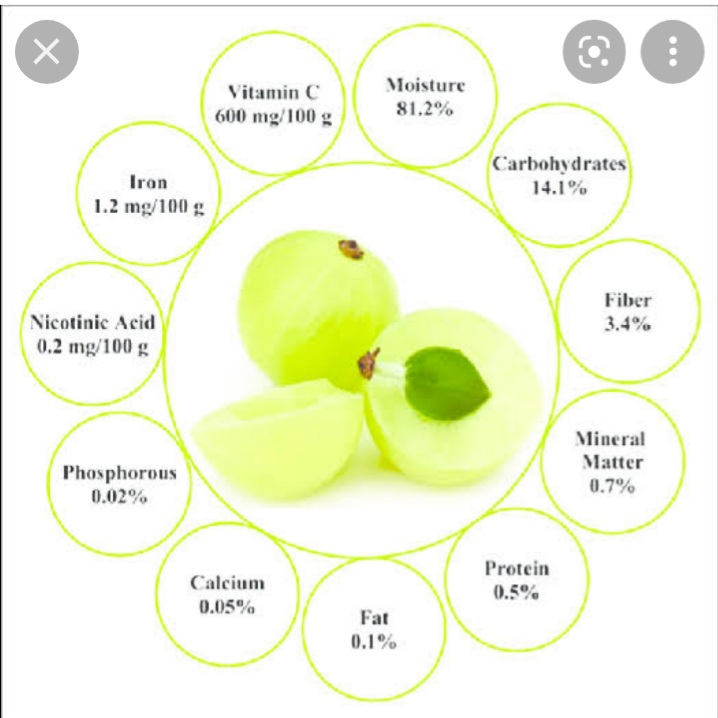
Apart from their sweet, slightly tart taste, gooseberry is a good source of nutrients, vitamins and minerals. Consuming 150 gram of gooseberry offers 41.6 mg of Vitamin C, 6.4 g of Total dietary Fiber, 15.27 g of Carbohydrate, 0.105 mg of Copper, 0.216 mg of Manganese, 0.12 mg of Vitamin B6, 0.429 mg of Vitamin B5, 297 mg of Potassium, 0.46 mg of Iron and 40 mg of Phosphorus.
Health benefits of Gooseberry
The gooseberry features a higher nutrient content and is also obtainable in white-colored, green, or even red types. One fourth of the everyday requisite of vitamin C is available in the average offering of gooseberries. Gooseberries usually have an acidic sour taste to them, yet recently, new versions have been discovered to become fairly sweet. These types of berries are generally utilized whilst producing jams, jellies as well as puddings.
Gooseberries are not typically the most popular of fruits, and lots of individuals don’t have any idea exactly what a gooseberry is, however this unusual, somewhat sour fruit has numerous health advantages. From assisting in avoiding ageing to maintaining the body powerful from problems, this particular remarkable gooseberry has numerous healthy and balanced advantages!
Some of the reasons to eat Gooseberry are listed below-
1. Eye Care
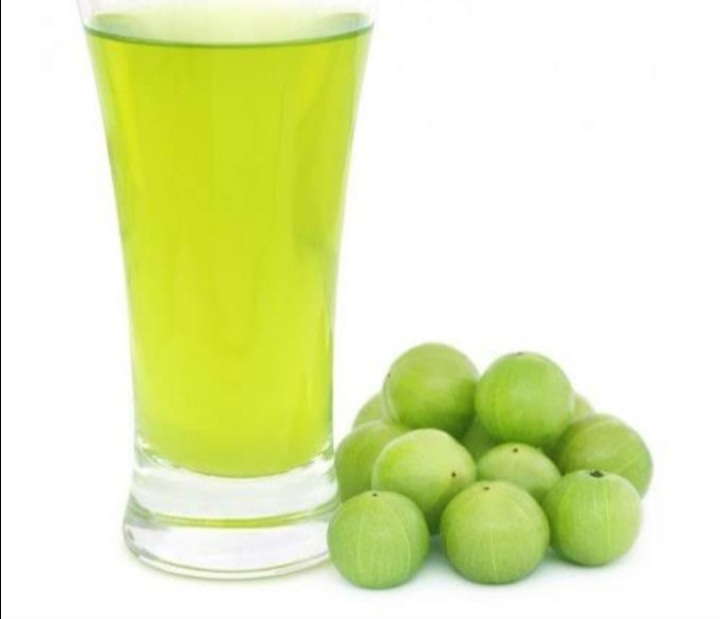
Regular consumption of Gooseberry juice along with honey is quite beneficial for improving eyesight, and research has shown it to improve nearsightedness and cataracts, while decreasing intra-ocular tension. This is mainly due to its remarkable content of carotene, which has long been known for their powerful effect on vision-related disorders, including those that stem from free radical activity. Vitamin A and carotenes reduce macular degeneration, night blindness, and strengthen your vision before the age-related degeneration from free radicals can occur
2. Digestion
Just like most of the fruits, gooseberry is very high in fiber. Fiber helps to add bulk to the stool and helps food move through the bowels and keeps bowel movements regular. This reduces the chances of constipation, and fiber bulk up loose stools and decrease diarrhea. Fiber also encourages the secretion of gastric and digestive juices, hence food is digested efficiently, nutrients are absorbed in an optimal way, and you feel lighter and healthier.
Reducing constipation can also help protect your from several gastrointestinal disorders, even colorectal cancer!
3. Diabetes
Gooseberry consists of chromium, which has a therapeutic value for diabetic patients. Indian Gooseberry encourages the isolated group of cells that secrete the hormone insulin, thus decreasing blood sugar in diabetic patients and keeping their body balanced as well as healthy. When blood sugar is reduced, it means that glucose is also being used by the cells as functional energy, thus the metabolism is stronger and you have more energy, without the plunges and spikes in blood sugar that are so dangerous for diabetic patients. Chromium also improves the effect of beta blockers, which are used for heart health, by decreasing the LDL cholesterol content of the body.
4. Calcium Absorption
Gooseberry helps the body absorb calcium in a positive way. Calcium is a crucial component of our bones, teeth, and nails, and also ensures that we have attractive lustrous hair. Thus, regular consumption of vitamin C-rich fruit like Indian gooseberries is a wonderful way to keep the body looking and feeling great!
5. Cancer
Gooseberry is a rich source of antioxidants which is effective to prevent DNA cell damage from free radicals. Similarly due to its high Oxidative Radiance Activity Capacity (ORAC) it protects cell damage from oxidative stress. The Best part of Gooseberry is that it doesn’t lose it nutrients value even in powered form. During research it was found that Gooseberry has tremendous effect on multiple cancers.
First, it slows down the growth of cancer. Later it starts killing the cancer cells. After complete slow down, it also starts to kill the cancer cells. Also, the major part is that it didn’t harm any healthy cells. It shows beneficial in preventing and protecting from cancer. It is effective to prevent growth and spread of cancer cell. It is effective to prevent tumor cell growth.
6. Menstrual Cramps
Gooseberry consists of huge variety of minerals and vitamins which is quite useful in the treatment of menstrual cramps. Since it takes a while for the necessary elements to accumulate in the body, it is better to consume gooseberry on a regular basis so it is always in the system and menstrual cramps can be prevented every month for women.
7. Brain health
Gooseberry consists of huge amount of vitamin and minerals that helps to improve brain health. Due to the high iron in the blood, it offers oxygen to the brain. Also, it improves memory.
Apart from that it contains a high amount of antioxidants; it is effective to prevent degeneration of brain caused due to oxygen free radicals. Therefore, it provides complete health benefits to the brain.
Additionally Gooseberry is effective to protect from Alzheimer’s disease but not to cure it.
8. Aging
Aging is common with the increase in age. But the process of aging is totally changed. Skin starts to show sign of aging at an early age.
These early signs of aging are due to unhealthy diet, pollution, stress and much more.
Gooseberry helps you fight the problem of aging due to its high antioxidants content. Oxidative Radiance Activity Capacity (ORAC) value is 3387 micromole per 100 g. Free radicals are known to damage healthy cells. They damage the healthy skin and accelerate the process of aging. But antioxidants fight these free radicals and slow down the process of aging.
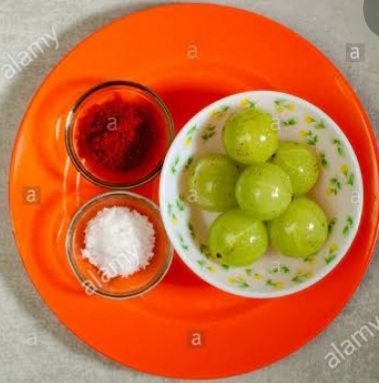
9. Diarrhea and Dysentery
Due to its strong cooling and laxative properties, Gooseberry is a wonderful component in remedies for diarrhea and dysentery. It offers great relief for gastric syndrome as well as hyperchlorhydria (burning sensation in the abdomen). As a laxative, it helps flush out toxins or harmful substances you may have eaten that are causing your discomfort or illness, thus removing it from your system so the healing process can begin, and cooling the burning and discomfort often felt when diarrhea occurs.
10. Hair care
Gooseberry is used in several hair tonics because it enhances hair growth and hair pigmentation. It fortifies the roots of hair, maintains color, and improves luster. Regular consumption of fresh gooseberry or applying its paste on hair roots improves hair growth and color. Gooseberry oil is quite popular in India because it has been shown to decrease the chances of hair loss and baldness. This quality is due to the carotene content of gooseberry, as well as its iron content and general antioxidant capacity, which reduces hair loss by not allowing free radicals to damage hair follicles or impact the hormones that can cause premature hair loss.
11. Improving Appetite
Regular consumption of Gooseberry powder with butter and honey before a meal improves appetite. It also helps to balance nitrogen levels, thus increasing weight in a healthy ways.
12. Heart Disease
Gooseberry helps to strengthen the heart muscles, so the heart pumps blood effortlessly throughout the body. By decreasing excess cholesterol buildup, the chromium can reduce the chances of atherosclerosis, or plaque buildup in the vessels and arteries. This reduces the chances of strokes and heart attacks. The iron content encourages the creation of new red blood cells, increasing circulation and the oxygenation of organs and cells to maximize growth and regeneration of tissue, while keeping the blood vessels and arteries clean.
13. Diuretic Activity
Besides being a fruit that is very high in water, Gooseberry is slightly diuretic in nature. This means that it increases the frequency as well as volume of urination. Urination helps to eliminate unwanted toxins and excess levels of water, salts, and uric acid from the body. Additionally, it can help you lose weight, since up to 4% of urine is actually composed of fat. Thus, a diuretic substance is always essential for keeping our kidneys healthy, and also preventing urinary infections and uterine infections. Gooseberry is a great way to do this.
14. Infection
Gooseberries have antibacterial and astringent attributes; so it protects the body against infection and improves the body’s immune response. They are also a very good source of vitamin C, which is eminent for its impressive antioxidant abilities and its stimulation of the immune system. It increases the white blood cell count in the body, which is the main line of defense for the immune system, since white blood cells attack and remove foreign toxins and substances in the bloodstream and throughout the body.
15. Metabolic Activity
Regular consumption of protein rich foods is one of the most significant ways to stay healthy, since proteins are an essential part of our body’s metabolic activities. Our enzymes can breakdown plant proteins into amino acids and reunite them into usable proteins for our body. Protein is essential for cellular growth; muscle development, organ health, and a wide range of other metabolic activities that we need to remain healthy and happy!
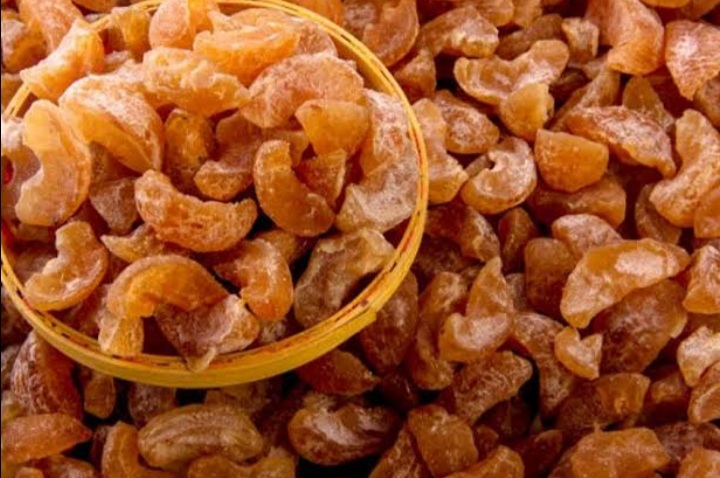
How to Eat
- Emblic fruit is extremely rich in vitamin C and edible fresh, cooked, dried or pickled.
- Fruit is cooked in various cuisines in a dhal (lentil) preparation and in a sweet dish amle ka murabbah indigenous to the northern part of India (wherein the berries are soaked in sugar syrup for a long time) which is traditionally consumed after meals in Andra Pradesh.
- Fresh fruits are also baked in tarts.
- It is a common practice for Indian housewives to cook the fruits with sugar and saffron and give one or two to a child every morning.
- Fruit is used to as sour seasoning in sambal and sayor in place of tamarind pulp in Indonesia and Malaysia.
- Ripe or half-ripe fruits are used to make sweetmeats, jams, jellies, “emblic myrobalan” fruit preserves, candies, emblic powder, chutney, pickles and relishes.
- Emblic preserves are manufactured and marketed in large quantities in India.
- Preserved amblics are available in enameled cans or crystallized as a confection.
- Emblic flesh can be dried and made into chips.
- Fruit juice is used to flavor vinegar.
- Fruit is extensively used by local Thais to quench the thirst when walking in the forest in Thailand.
- Phyllanthus drink prepared from fruit extract is commonly known, and wine made from fruit extract is sold in the market in China.
- Tart, astringent quality berries are favored in fish, poultry, and meat dishes.
- Berries are also used in muffins, pie-fillings, and ice creams.
- They are also used to flavor beverages such as sodas, flavored waters, or milk, and can be made into fruit wines and teas.
- Gooseberries can be preserved in the form of jams, dried fruit, or as the primary or a secondary ingredient in pickling, or stored in sugar syrup.


You must be logged in to post a comment.