WHAT IS A NOVEL

The novel owes its existence to man’s interest in other men and the great panorama of human passion and action. Both the drama and the novel are compounded of the same material but in drama and the literary element is bound up with the elements of stage settings and interpretations through acting. So, Marion Crawford terms the novel as “Pocket theatre”. The novel may be defined as long narrative prose detailing the actions of fictitious people. Meredith calls it a ‘summing of actual life’. The novel combines narration and description, history and philosophy, poetry and fantasy, social criticism, and a particular view of life.

Elements of the Novel:

The novel has various elements.

  1. In the first place, it should have a plot. The novel deals with elements and actions and how these are presented is the plot.
  2. Secondly, the men and women who are involved in these elements and actions appear as characters in the novel.
  3. The third element is the dialogue the mean of interaction among the characters.
  4. The fourth element is the scene and the time of action because the characters must interact, do or suffer at some place or time.
  5. The fifth element is the style in which the narration is done.
  6. The Sixth Element is the view of life presented by the novelist.

The Plot:

The plot in a novel is the organization of incidents. The theme should have substantial value and human interest. It is primarily concerned with the things which make life strenuous, intense, and morally significant.

There are two types of plots – organic and episodic. In the first, the characters and events are well interwoven that no character or incident can be removed from the novel without causing damages to the whole. The plot and Jane Austen novels are examples. The second type of plot is loosely formed and characters and incidents have no essential bearing on each other. The picaresque novels of Fielding and even some of the novels of Dickens have episodic plots. How the various elements in the plot or organized to achieve a definite artistic purpose is called the structure. Unity in structure and plot is to be observed.

The Characterization:

Characterization is the act of presenting the characters alive and real to our imagination. The men and women in the novel must move through it like living beings they should remain in the readers’ memory after the novel is laid aside. There are two types of characterization – the direct or the analytic and the indirect or dramatic. In the analytical method, the novelist portrays his Characters from outside, dissects their passion, thoughts, and feelings, and even passes judgment upon them.

The Dialogue:

Dialogue is well managed, gives vividness, and actually to the plot and the characters. Dialogue reveals the passion and the emotion of the character and advises the movement of the plot. Dialogue should Constitute an organic element in the story. It should be natural, appropriate, and dramatic. It should be in keeping with the personality of the speaker.

The Time and Place of Action:

Time and place of action in a novel refer to the whole setting of the story, both social and material. They are novels of sea life, military life, industrial life of district life, and life of different classes of people. There are novels with a regional background; there are novels written in the historical background. whatever may be the setting, the novelist should master its details and then present a lively picture of it.

The novel is concerned with life and so the novelist’s view of life may be revealed in the novel. A novelist may make creative observations on human life. By the selection and organization of the material, and by the presentation of character and development of the plot, the novelist can show us what he thinks of life. However, the novelist should not indulge in propaganda or preaching. His philosophy is a part of the structure of the novel and should reveal itself through the interpretation of life, thought, character, and temper of the work as a whole.
The chief characteristics of Shakespearean novels

Must read two books by Paulo Coelho-2

WHAT IS A NOVEL

The novel owes its existence to man’s interest in other men and the great panorama of human passion and action. Both the drama and the novel are compounded of the same material but in drama and the literary element is bound up with the elements of stage settings and interpretations through acting. So, Marion Crawford terms the novel as “Pocket theatre”. The novel may be defined as long narrative prose detailing the actions of fictitious people. Meredith calls it a ‘summing of actual life’. The novel combines narration and description, history and philosophy, poetry and fantasy, social criticism, and a particular view of life.

Elements of the Novel:

The novel has various elements.

  1. In the first place, it should have a plot. The novel deals with elements and actions and how these are presented is the plot.
  2. Secondly, the men and women who are involved in these elements and actions appear as characters in the novel.
  3. The third element is the dialogue the mean of interaction among the characters.
  4. The fourth element is the scene and the time of action because the characters must interact, do or suffer at some place or time.
  5. The fifth element is the style in which the narration is done.
  6. The Sixth Element is the view of life presented by the novelist.

The Plot:

The plot in a novel is the organization of incidents. The theme should have substantial value and human interest. It is primarily concerned with the things which make life strenuous, intense, and morally significant.

There are two types of plots – organic and episodic. In the first, the characters and events are well interwoven that no character or incident can be removed from the novel without causing damages to the whole. The plot and Jane Austen novels are examples. The second type of plot is loosely formed and characters and incidents have no essential bearing on each other. The picaresque novels of Fielding and even some of the novels of Dickens have episodic plots. How the various elements in the plot or organized to achieve a definite artistic purpose is called the structure. Unity in structure and plot is to be observed.

The Characterization:

Characterization is the act of presenting the characters alive and real to our imagination. The men and women in the novel must move through it like living beings they should remain in the readers’ memory after the novel is laid aside. There are two types of characterization – the direct or the analytic and the indirect or dramatic. In the analytical method, the novelist portrays his Characters from outside, dissects their passion, thoughts, and feelings, and even passes judgment upon them.

The Dialogue:

Dialogue is well managed, gives vividness, and actually to the plot and the characters. Dialogue reveals the passion and the emotion of the character and advises the movement of the plot. Dialogue should Constitute an organic element in the story. It should be natural, appropriate, and dramatic. It should be in keeping with the personality of the speaker.

The Time and Place of Action:

Time and place of action in a novel refer to the whole setting of the story, both social and material. They are novels of sea life, military life, industrial life of district life, and life of different classes of people. There are novels with a regional background; there are novels written in the historical background. whatever may be the setting, the novelist should master its details and then present a lively picture of it.

The novel is concerned with life and so the novelist’s view of life may be revealed in the novel. A novelist may make creative observations on human life. By the selection and organization of the material, and by the presentation of character and development of the plot, the novelist can show us what he thinks of life. However, the novelist should not indulge in propaganda or preaching. His philosophy is a part of the structure of the novel and should reveal itself through the interpretation of life, thought, character, and temper of the work as a whole.

The chief characteristics of Shakespearean novels

Must read two books by Paulo Coelho-2

Saina Nehwal

Every parents want to fullfil their unfulfilled dreams through their children. Rani Nehwal, mother of Saina Nehwal was a state level badminton player and had always dreamt of becoming national level player. Though she couldn’t achieve it , her daughter Saina Nehwal did not back off from her dream.

Saina Nehwal was born on 17th March 1990 in Hisar, Haryana. When her father was transferred from Hisar to Hyderabad , she took badminton as a means to communicate with others, as she didn’t know their language. She started playing badminton at the age of eight. She took her passion further by participating at Under-19 National Championship. She created history by winning “Asian Satellite Badminton Tournament” twice at the age of 16 and became the first player to do so.

She is former no 1 and has won many international titles and superseries titles. She has represented India in Olympics for three times and won bronze at her second appearance.

Her father and mother were the biggest supporter in her journey. Her father Harvir Singh , used his provident fund so that Saina could get professional training. Saina has evein got her biopic played by Pareeniti Chopra which was released on 26 March 2021.

Saina Nehwal

Every parents want to fullfil their unfulfilled dreams through their children. Rani Nehwal, mother of Saina Nehwal was a state level badminton player and had always dreamt of becoming national level player. Though she couldn’t achieve it , her daughter Saina Nehwal did not back off from her dream.

Saina Nehwal was born on 17th March 1990 in Hisar, Haryana. When her father was transferred from Hisar to Hyderabad , she took badminton as a means to communicate with others, as she didn’t know their language. She started playing badminton at the age of eight. She took her passion further by participating at Under-19 National Championship. She created history by winning “Asian Satellite Badminton Tournament” twice at the age of 16 and became the first player to do so.

She is former no 1 and has won many international titles and superseries titles. She has represented India in Olympics for three times and won bronze at her second appearance.

Her father and mother were the biggest supporter in her journey. Her father Harvir Singh , used his provident fund so that Saina could get professional training. Saina has evein got her biopic played by Pareeniti Chopra which was released on 26 March 2021.

World After the COVID 19 Pandemic

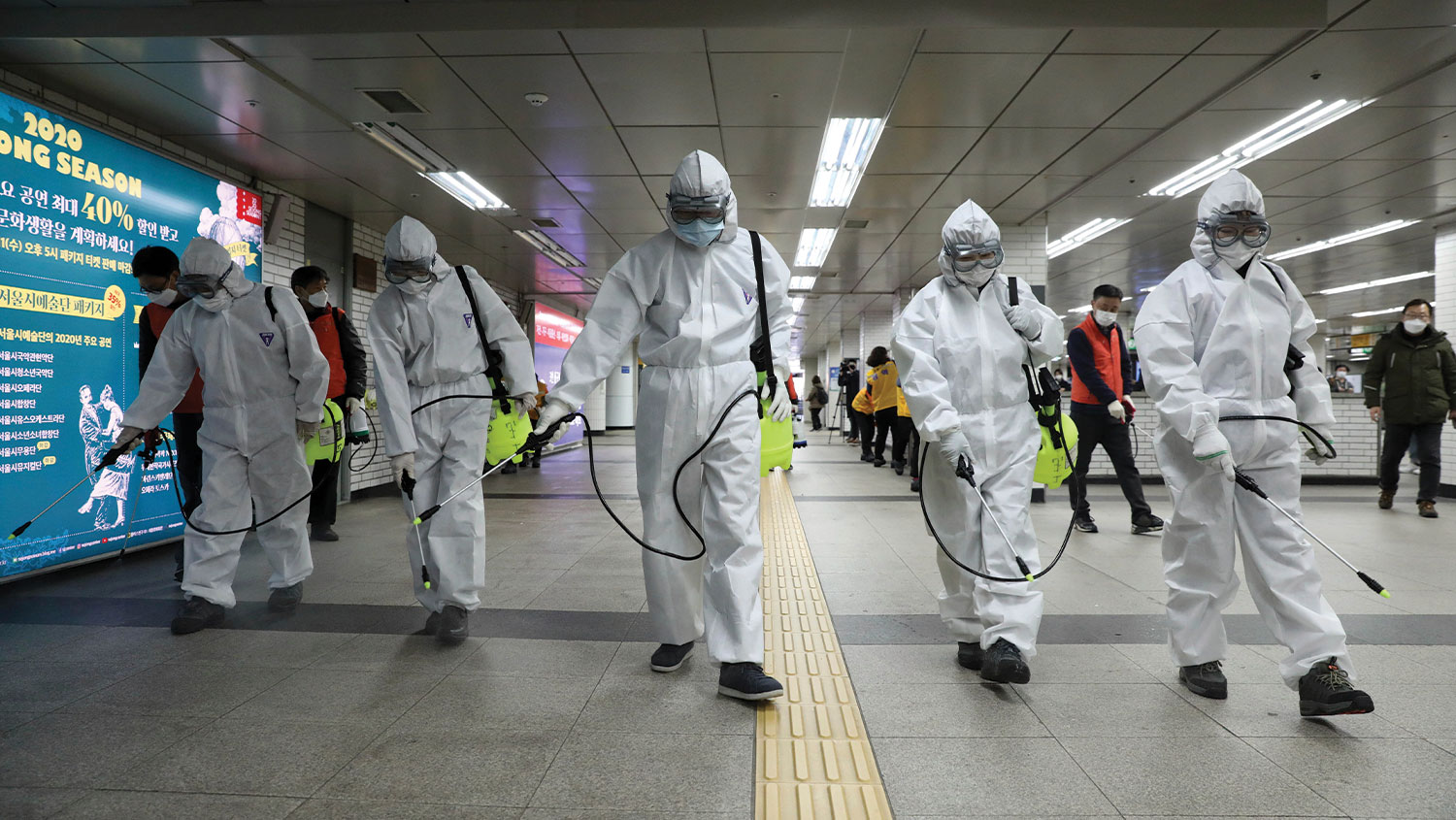
COVID-19 will reverse both of those trends, increasing the space both between countries and among people. Some will laud these changes for increasing safety and resilience. But a world that’s less global and fewer urban would even be less prosperous, less stable and fewer fulfilling. Future is shrouded in clouds of uncertainty, as resilient leaders steel oneself against all possible global outcomes, few are more prominent than others. These are two most predicted and certain scenarios of how the planet would begin of COVID 19. Less global, more isolated. Even before COVID-19, the decades-long trend toward ever-more globalization of trade, investment, supply chains and other people flow were starting to grind to a halt. We began to seem closer to range in terms of the products we produce and consume, the people with whom we interact, and where we get our energy and our money. In retrospect, we’ll come to look at the years right before the 2008 financial crisis as “peak globalization.” Since then, the mixture of recession, inequality and populism has created a growing anti-globalization and anti-immigration consensus in western countries, exemplified by the U.S. trade war with China. The reaction of developed economies to the coronavirus will only strengthen this consensus, as all things international are going to be viewed as incurring unnecessary and dangerous risks.

What WHO calling the coronavirus outbreak a pandemic means | Science News

What was a growing “anti-globalization” consensus is poised to crystalize into a “de-globalization” reality. We are being told this de-globalization will make us all more resilient. But it’ll also make us less prosperous — with less choice and better prices. it’s going to also make us less secure, as international cooperation will decrease and therefore the potential for international conflict will increase. Less density, more distance. Urbanization is probably going to be the opposite major casualty of the coronavirus. Unlike globalization, the trend of ever greater-urbanization was unaffected by the worldwide financial crisis. Even America — the land of all things suburban — joined the worldwide march into cities. People were interested in cities not just for economic opportunity but also for the urban lifestyle. After coronavirus, people are going to be more scared of crowded trains and buses, cafes and restaurants, theaters and stadiums, supermarkets and offices. Crowded spaces are the lifeblood of cities. But now crowds are seen as major health risks. People that have the power to exit the town will increasingly be tempted to try to do so. people that cannot leave will feel at increased risk, hunker down, and reduce their movements and contacts. it’s hard to believe Manhattan without the subway and 10-deep pedestrians on Fifth Avenue. But that will be the increasing post-COVID reality. De-urbanization would harm the economic process because cities generate enormous scale economies and have proved to be remarkably effective incubators of creativity and innovation. This might be particularly true in developing economies where the movement of individuals from rural areas to rapidly expanding cities has been perhaps the key driver of poverty reduction. But the shrinking of cities will produce other adverse effects too, from reducing cultural vibrancy and cosmopolitanism to exacerbating global climate change. Additionally, to be more productive, cities also tend to be more environmentally sustainable. A world that’s less global and fewer urban would be far less appealing to me, personally. But it’s also a world that might hurt economic prosperity, reduce shared understanding among disparate people, and increase the prospect of conflict among them. Our immediate reactions to COVID-19 will lead us to require both to de-globalize and to de-urbanize. But we must take fully under consideration the profound longer-term costs of doing so. Globalization and urbanization generate challenges we must confront, all the more so during a post-coronavirus world. the answer is to manage them, to not reverse them.

World After the COVID 19 Pandemic

COVID-19 will reverse both of those trends, increasing the space both between countries and among people. Some will laud these changes for increasing safety and resilience. But a world that’s less global and fewer urban would even be less prosperous, less stable and fewer fulfilling. Future is shrouded in clouds of uncertainty, as resilient leaders steel oneself against all possible global outcomes, few are more prominent than others. These are two most predicted and certain scenarios of how the planet would begin of COVID 19. Less global, more isolated. Even before COVID-19, the decades-long trend toward ever-more globalization of trade, investment, supply chains and other people flow were starting to grind to a halt. We began to seem closer to range in terms of the products we produce and consume, the people with whom we interact, and where we get our energy and our money. In retrospect, we’ll come to look at the years right before the 2008 financial crisis as “peak globalization.” Since then, the mixture of recession, inequality and populism has created a growing anti-globalization and anti-immigration consensus in western countries, exemplified by the U.S. trade war with China. The reaction of developed economies to the coronavirus will only strengthen this consensus, as all things international are going to be viewed as incurring unnecessary and dangerous risks.

What WHO calling the coronavirus outbreak a pandemic means | Science News

What was a growing “anti-globalization” consensus is poised to crystalize into a “de-globalization” reality. We are being told this de-globalization will make us all more resilient. But it’ll also make us less prosperous — with less choice and better prices. it’s going to also make us less secure, as international cooperation will decrease and therefore the potential for international conflict will increase. Less density, more distance. Urbanization is probably going to be the opposite major casualty of the coronavirus. Unlike globalization, the trend of ever greater-urbanization was unaffected by the worldwide financial crisis. Even America — the land of all things suburban — joined the worldwide march into cities. People were interested in cities not just for economic opportunity but also for the urban lifestyle. After coronavirus, people are going to be more scared of crowded trains and buses, cafes and restaurants, theaters and stadiums, supermarkets and offices. Crowded spaces are the lifeblood of cities. But now crowds are seen as major health risks. People that have the power to exit the town will increasingly be tempted to try to do so. people that cannot leave will feel at increased risk, hunker down, and reduce their movements and contacts. it’s hard to believe Manhattan without the subway and 10-deep pedestrians on Fifth Avenue. But that will be the increasing post-COVID reality. De-urbanization would harm the economic process because cities generate enormous scale economies and have proved to be remarkably effective incubators of creativity and innovation. This might be particularly true in developing economies where the movement of individuals from rural areas to rapidly expanding cities has been perhaps the key driver of poverty reduction. But the shrinking of cities will produce other adverse effects too, from reducing cultural vibrancy and cosmopolitanism to exacerbating global climate change. Additionally, to be more productive, cities also tend to be more environmentally sustainable. A world that’s less global and fewer urban would be far less appealing to me, personally. But it’s also a world that might hurt economic prosperity, reduce shared understanding among disparate people, and increase the prospect of conflict among them. Our immediate reactions to COVID-19 will lead us to require both to de-globalize and to de-urbanize. But we must take fully under consideration the profound longer-term costs of doing so. Globalization and urbanization generate challenges we must confront, all the more so during a post-coronavirus world. the answer is to manage them, to not reverse them.

FLAX SEEDS: Best for Health and Longevity

Flax seeds are also known as linseed. It is a flowering plant called Linum usitatissimum.It is a food and fiber crop grown in temperate region.

Flax seeds has been used for thousand of years and they also form an essential part of our diet. It is best for health and longevity of life. It contains 800 times more lignin than any other food plant. It is one of the best vegetarian source of omega-3 found in salmon. 50 gm of flax seeds is equivalent to that found in 3-ounce of salmon serving. It also contains omega-6 and omega-9. It is a rich source of iron,calcium and protein. Amino acid found in flax seed are the one’s which human body can’t generate on its own.
Uses of Flax Seeds
According to a research, intake of omega-3 provides benefit in many diseases. By consuming flax seeds, we have the following benefits:-
1.Presence of high fiber and low carbohydrates in flax seeds helps in controlling weight as it reduce our appetite.
2.Intake of flax seeds decreases the LDL cholesterol, which reduces the chance of having heart diseases.Omega-3 fats does not allow blood vessels to get blocked. Through this omega-3 cleans our blood vessels. It helps in smooth flow of the blood. Omega-3 is very useful for the blood vessels.
3.Flax seeds have different types of antiviral properties, which protects us from frequent cold and flu ailments.
4. Omega-3 present in flax seeds does not allow clotting of blood. As blood clots increases the chances of having stroke,heart attack, etc.
5. Omega-3 fatty acids and vitamin B that are present in flax seeds help to  reduce dark marks and spots on face. It makes the skin glow and prevents pimples.
6. Flax seeds keeps are digestive system healthy. Intake of these seeds helps to cure the swelling in the stomach.Person get a better health when problems related to digestion ends.
7. Omega-3 boost the memory and concentration. It is good for the brain. Effective in Alzheimer disease.
8. Omega-3 helps to improve eyesight. Also effective in cataract and glaucoma. Use of flax seed makes  the eyesight sharp.
9. Intake of 15-20 gm flax seeds with aloevera, helps to reduce constipation.
10.Flax seeds balances women hormones so that danger of early menopause can be eliminated. Intake of flax seeds in the breakfast helps to regulate periods and eases period cramps.
11.Flax seeds are effective in high blood pressure.
12.Old age problem of knee pain can be reduced by intake of flax seeds.
13.Presence of antioxidants in flax seeds helps to cure different types of cancer.
13.Omega-3 is called feel good food as it keeps our mind and soul happy.
14.Omega -3 is very beneficial for our hair and nails.
15.Flax seeds are extremely high in soluble and insoluble fibers.
16.Flax seeds detoxifies cells.
17.It is very rich in calcium and iron.
18.It helps to prevent anemia.
19.It helps to burn fats
Dosage
Roast the flax seeds before use to get a better taste.
Take 1 tablespoon of flax seeds three times a day after every meal.

Comparing Writing forms of two Indian Writers- Twinkle Khanna and Dr. Shashi Tharoor

Twinkle Khanna has disarmed the audience with her thought- provoking writing and her charming wit. She is a popular newspaper columnist, Indian author, interior designer, film producer and a former Bollywood actress. She writes columns in The Times of India and Daily News Analysis (DNA), her discernible writing skills and her liberal opinions have captured the attention of her readers. Her craft of penning down funny fables and satirical writing has set her apart. She firmly believes that in life nothing is more sacred than laughter.

  • She writes anecdotes about everyday situations that a woman has to go through. The situations are mundane yet significant incidents in life. Her columns are random, though interesting, slice of life entries, adds life to her words through her self-deprecatory humour and unmatched wit with bits and pieces of life- learnings.
  • Her Popular works include – Mrs.Funnybones, Pyjamas are forgiving, The Legend of Laxmi Prasad
  • Her style of writing can be described as discernible, easy to read and has a smooth way of expressing herself through her writings. If a person is not an adamant reader, they will still be able to understand the picture that she is framing through her writings. Her flow of words is effortless.

 She deals with a wide range of topics from focusing on women empowerment, mental health and normalizing finding love at the age of sixty to WhatsApp forwards and her staff members being a menace to her. She masterfully manages to never belittle a problem or the issue and never diminishes their relevance in any way. Through her columns she can give words to your thoughts. Her columns are an amalgamation of intelligence, sarcasm, practicality and adulation.

  • Her choice of words is interesting, mostly uses expressive adjectives which intensifies her anecdotes. Includes – details that are distinctive, uses similes in her work which adds humor in situations and uses satire and irony which conveys absurdity and silliness of people, situations and things.
  • Her tone is joyful, sarcastic and cheerful.
  • Mood – she is comical, humorous and maddening.
Twinkle Khanna is ready with her third book and it is all about 'pyjama  girls' | Lifestyle News,The Indian Express

Dr. Shashi Tharoor is a best-selling author, columnist and a politician. He is currently member of parliament of Thiruvananthapuram. He has also served as a peacemaker and an administrator in the United Nations for over three decades. He certainly did not let his political career stop his pen. He is known to be the man of having many skills. Over the years he has made a reputation of an impactful orator and a prolific writer.

  • His popular work includes- The paradoxical prime minister, An era of darkness: The British Empire in India, Why I am a Hindu
  • He writes about politics and topical issues of caste system, society, democracy, foreign policy, patriotism, citizenship, nationalism and modern India. He chooses an immersive narrative for all his books and columns. His way of writing exhibits the qualities of good research and personal knowledge which gives a different and a new perspective to readers.

Readers who are looking for a refined viewpoint on the current events that unfold in our country’s political system must read his work. His ability to include the application of critical analysis creates better understanding of important matters that the country is facing or has faced.

  • He is known for having an inimitable style of writing. He has an extensive vocabulary and many people cannot perceive his work easily and often call it obscure in a way. His books are not an easy read and takes a time and efforts to understand vast concepts, debates, history and terminologies that he includes in his columns.
  • His choice of words is complex and informative. His work is recognized for brilliancy in the usage of satire to deliver serious messages. In his columns he has shown that a strong and thoughtful argument can be presented in a humorous way to prevent monotonousness, yet he manages to deliver the required message. By inculcating satire in his work, he candidly expresses himself.
  • His tone is firm, serious and formal.
  • Mood – critical and humorous  

The similarities in their work are that both have chosen topics that are relevant in our country. They both have strong stands and a sense of individuality which sets them apart in their felid of work. They are not hesitant to candidly express themselves and explain their point of views to the readers. Both have an interesting way to put across their messages. There writings include a few scathing statements but are thought-provoking and will entice the readers.

Sixth Schedule of the Indian Constitution: Articles 244(2)

• Tribal Areas:- The tribal Areas in the States of Assam, Meghalaya, Tripura, Manipur are separately dealt with in Article 244(2), and provisions for their administration are to be found in the Sixth Schedule of the Indian Constitution.

• Sixth Schedule:- The 6th Schedule is related to the administration of the Tribal Areas in Assam, Meghalaya, Tripura, Manipur are specified in the table appended to the 6th Schedule( paragraph 20) of the Constitution, which has undergone several amendments originally. It consisted of two parts A and B. But since the creation of the State Nagaland, the table (as amended in 1972, 1984, 1988, 2003) includes 10 areas in four parts. These special provisions are provided under Article 244(2) and Article 275(1) of the Constitution.

Part I – (1) The North Cachar Hills District. (2) Karbi Anglong District. (3) Bodoland Territory Areas District.

Part II (I) – (1) Khasi Hills District. (2) Jaintia Hills District. (3) Garo Hills Districts (in Meghalaya)

Part II (A)- Tripura Tribal Areas District.

Part III – (1) The Chakma District. (2) The Mara District. (3) The Lai District

• Administration under Sixth Schedule:-

(1) Executive and Legislative powers- Under the provisions of the 6th Schedule of the Constitution of India, Autonomous District Councils can make laws, rules, and regulations in the areas like land management, water resources, forest management, agricultural, cultivation, formation of village councils, public health, sanitation, village, and town level planning, the appointment of traditional chiefs and headman, inheritance of property, marriage, and divorce, social customs, money-lending, mining and minerals.

• Judicial powers:- Autonomous District Councils have the powers to form courts to hear cases where both the parties are members of Scheduled Tribes and the maximum sentence, is less than 5years in prison. It has the power to settle certain types of civil and criminal cases also. Thus the councils under the 6th Schedule have been given more power than the local government under the 73rd and 74th Amendments of the Constitution 1992.

• Role of the Governor:- The Governor is empowered to determine areas under the administration of the councils. He has the authority to form a new Autonomous District. He can also increase or decrease the areas of any autonomous district, or district council. The act of Parliament or the State Legislature so not apply to Autonomous Districts and Autonomous Regions or apply by specified modifications and exceptions. He is also empowered to unite two or more districts or its part to carve out one autonomous district from it. The Governor can also define the boundaries or alter the name of any autonomous district.

• District Councils and Regional Councils:- Each District Council and Regional Council consists of not more than 30 members of which 4 are nominated by the Governor and the rest via elections. All of them remain in the power for a term of 5years. District Council and Regional Council under the 6th Schedule have the real power for making laws on various legislative subjects.

• Taxation Revenue:-

(1) The Regional Council and Autonomous District Councils have the powers to assess and collect revenue concerning such lands by the principles for the time being followed by the government of the State.

(2) They also have the power to levy/collect all taxes on lands, buildings, and tolls on a person resident within the area.

(3) It also has the power to levy/ collect all or any of the following taxes:

(i) Profession, trades, callings, employments.

(ii) Animals, vehicles, boats

(iii) Entry of goods into a market, and tolls on passengers, goods carried in ferries.

(iv) Maintenance of schools, dispensaries, or roads.

Comparing Writing forms of two Indian Writers- Twinkle Khanna and Dr. Shashi Tharoor

Twinkle Khanna has disarmed the audience with her thought- provoking writing and her charming wit. She is a popular newspaper columnist, Indian author, interior designer, film producer and a former Bollywood actress. She writes columns in The Times of India and Daily News Analysis (DNA), her discernible writing skills and her liberal opinions have captured the attention of her readers. Her craft of penning down funny fables and satirical writing has set her apart. She firmly believes that in life nothing is more sacred than laughter.

  • She writes anecdotes about everyday situations that a woman has to go through. The situations are mundane yet significant incidents in life. Her columns are random, though interesting, slice of life entries, adds life to her words through her self-deprecatory humour and unmatched wit with bits and pieces of life- learnings.
  • Her Popular works include – Mrs.Funnybones, Pyjamas are forgiving, The Legend of Laxmi Prasad
  • Her style of writing can be described as discernible, easy to read and has a smooth way of expressing herself through her writings. If a person is not an adamant reader, they will still be able to understand the picture that she is framing through her writings. Her flow of words is effortless.

 She deals with a wide range of topics from focusing on women empowerment, mental health and normalizing finding love at the age of sixty to WhatsApp forwards and her staff members being a menace to her. She masterfully manages to never belittle a problem or the issue and never diminishes their relevance in any way. Through her columns she can give words to your thoughts. Her columns are an amalgamation of intelligence, sarcasm, practicality and adulation.

  • Her choice of words is interesting, mostly uses expressive adjectives which intensifies her anecdotes. Includes – details that are distinctive, uses similes in her work which adds humor in situations and uses satire and irony which conveys absurdity and silliness of people, situations and things.
  • Her tone is joyful, sarcastic and cheerful.
  • Mood – she is comical, humorous and maddening.
Twinkle Khanna is ready with her third book and it is all about 'pyjama  girls' | Lifestyle News,The Indian Express

Dr. Shashi Tharoor is a best-selling author, columnist and a politician. He is currently member of parliament of Thiruvananthapuram. He has also served as a peacemaker and an administrator in the United Nations for over three decades. He certainly did not let his political career stop his pen. He is known to be the man of having many skills. Over the years he has made a reputation of an impactful orator and a prolific writer.

  • His popular work includes- The paradoxical prime minister, An era of darkness: The British Empire in India, Why I am a Hindu
  • He writes about politics and topical issues of caste system, society, democracy, foreign policy, patriotism, citizenship, nationalism and modern India. He chooses an immersive narrative for all his books and columns. His way of writing exhibits the qualities of good research and personal knowledge which gives a different and a new perspective to readers.

Readers who are looking for a refined viewpoint on the current events that unfold in our country’s political system must read his work. His ability to include the application of critical analysis creates better understanding of important matters that the country is facing or has faced.

  • He is known for having an inimitable style of writing. He has an extensive vocabulary and many people cannot perceive his work easily and often call it obscure in a way. His books are not an easy read and takes a time and efforts to understand vast concepts, debates, history and terminologies that he includes in his columns.
  • His choice of words is complex and informative. His work is recognized for brilliancy in the usage of satire to deliver serious messages. In his columns he has shown that a strong and thoughtful argument can be presented in a humorous way to prevent monotonousness, yet he manages to deliver the required message. By inculcating satire in his work, he candidly expresses himself.
  • His tone is firm, serious and formal.
  • Mood – critical and humorous  

The similarities in their work are that both have chosen topics that are relevant in our country. They both have strong stands and a sense of individuality which sets them apart in their felid of work. They are not hesitant to candidly express themselves and explain their point of views to the readers. Both have an interesting way to put across their messages. There writings include a few scathing statements but are thought-provoking and will entice the readers.

Sixth Schedule of the Indian Constitution: Articles 244(2)

• Tribal Areas:- The tribal Areas in the States of Assam, Meghalaya, Tripura, Manipur are separately dealt with in Article 244(2), and provisions for their administration are to be found in the Sixth Schedule of the Indian Constitution.

• Sixth Schedule:- The 6th Schedule is related to the administration of the Tribal Areas in Assam, Meghalaya, Tripura, Manipur are specified in the table appended to the 6th Schedule( paragraph 20) of the Constitution, which has undergone several amendments originally. It consisted of two parts A and B. But since the creation of the State Nagaland, the table (as amended in 1972, 1984, 1988, 2003) includes 10 areas in four parts. These special provisions are provided under Article 244(2) and Article 275(1) of the Constitution.

Part I – (1) The North Cachar Hills District. (2) Karbi Anglong District. (3) Bodoland Territory Areas District.

Part II (I) – (1) Khasi Hills District. (2) Jaintia Hills District. (3) Garo Hills Districts (in Meghalaya)

Part II (A)- Tripura Tribal Areas District.

Part III – (1) The Chakma District. (2) The Mara District. (3) The Lai District

• Administration under Sixth Schedule:-

(1) Executive and Legislative powers- Under the provisions of the 6th Schedule of the Constitution of India, Autonomous District Councils can make laws, rules, and regulations in the areas like land management, water resources, forest management, agricultural, cultivation, formation of village councils, public health, sanitation, village, and town level planning, the appointment of traditional chiefs and headman, inheritance of property, marriage, and divorce, social customs, money-lending, mining and minerals.

• Judicial powers:- Autonomous District Councils have the powers to form courts to hear cases where both the parties are members of Scheduled Tribes and the maximum sentence, is less than 5years in prison. It has the power to settle certain types of civil and criminal cases also. Thus the councils under the 6th Schedule have been given more power than the local government under the 73rd and 74th Amendments of the Constitution 1992.

• Role of the Governor:- The Governor is empowered to determine areas under the administration of the councils. He has the authority to form a new Autonomous District. He can also increase or decrease the areas of any autonomous district, or district council. The act of Parliament or the State Legislature so not apply to Autonomous Districts and Autonomous Regions or apply by specified modifications and exceptions. He is also empowered to unite two or more districts or its part to carve out one autonomous district from it. The Governor can also define the boundaries or alter the name of any autonomous district.

• District Councils and Regional Councils:- Each District Council and Regional Council consists of not more than 30 members of which 4 are nominated by the Governor and the rest via elections. All of them remain in the power for a term of 5years. District Council and Regional Council under the 6th Schedule have the real power for making laws on various legislative subjects.

• Taxation Revenue:-

(1) The Regional Council and Autonomous District Councils have the powers to assess and collect revenue concerning such lands by the principles for the time being followed by the government of the State.

(2) They also have the power to levy/collect all taxes on lands, buildings, and tolls on a person resident within the area.

(3) It also has the power to levy/ collect all or any of the following taxes:

(i) Profession, trades, callings, employments.

(ii) Animals, vehicles, boats

(iii) Entry of goods into a market, and tolls on passengers, goods carried in ferries.

(iv) Maintenance of schools, dispensaries, or roads.

India's long road: Rural development


“The village is the cell of the national body and the cell-life must be healthy and developed for the national body to be healthy and developed.” – well alluded by SRI AUROBINDO.

India as it is said is the “land of villages.” The heart of our nation resides in the rural areas. As quoted by the father of our nation, Mahatma Gandhi, “India lives in her seven hundred thousand villages.” Although the term “Rural development” has been widely used, what constitutes it seems to have changed significantly. So, the question is what exactly is rural development. Rural development means improving the living conditions of the people living in rural areas. There are many definitions to it. The fact is that today more than half of the Indian population lives in rural areas and most of them depends upon agriculture as their primary source of income. Agriculture is an integral part of many world economies, especially the developing ones, and hence plays a significant role in the rural development. The strength and prosperity of our nation depends upon the strength and prosperity of rural areas. Therefore, it is important to free the rural India from poverty.

Our government is trying its best to bring rapid growth and development in the villages. We derive major contributions to GDP from rural workers. Upwelling schemes for rural electrification, open defecation free villages, skill development, Prime Minister rural housing mission, Prime Minister Gram Sadak Yojana, Deen Dayal Upadhyaya Grameen Kaushalya Yojana, National Rural Livelihood Mission, National Rural Employment Guarantee Act, Sampoorna Grameen Rozgar Yojana, Sarv Siksha Abhiyan, Sansad Adarsh Gram Yojana, National Social Assistance Programme etc., has modified the doddering face of Indian villages.

Empowering rural economy through digitalization schemes, regeneration of traditional industries schemes, entrepreneurship schemes, water conservation schemes, MGNREGS, has further added to the rural development and has brought direct benefit transfer. Achieving hygiene and sanitation through government initiatives like SWACHH BHARAT MISSION has further added to the list.

According to the World Bank, “Rural development as a strategy designed to improve the economic and social life of a specific group of people – The rural (people) poor. It involves extending the benefits of development to the poorer among those who seek a livelihood in rural areas. The group includes small-scale farmers, tenants and the landless.” Rural development is a strategy that encompasses all the aspects and factors to achieve an overall spectrum of development and growth. This development is needed to benefit the poor and weaker sections of the society. Rural development seeks to transform all the sectors of rural economy – the primary sector, the secondary sector and the tertiary sector. It is concerned with the improvement of the standard of living of the rural people through the provision of health and medical facilities, employment opportunities including vocational training, educational facilities, etc. It brings about significant improvement in the socio-economic conditions of the scheduled castes, scheduled tribes, the landless agricultural labourers and the marginal and small farmers.

The village land of India is adorned with lush green land, protected livestock and unexplored pool of species which needs special attention of the government. The recent extent of India from the Regional Comprehensive Economic Partnership (RCEP) did mark the promise of self-sustained indigenous production of India. The decision was to safeguard the interests of industries like agriculture and dairy.

Rural development should include social, economic and overall development of a rural area. It should be an all- round project. Employment creation is the main component of rural development. Therefore, to generate employment opportunities in villages, there is a need to strengthen agriculture sector and also set up other industries. A digital platform should be built for active labourers to check the process of employment generation. Integrated and organic farming methods should be promoted. Economic models like Gig’s – economy must be brought in action to counter seasonal as well as disguised unemployment from rural economy. Better planning must be done by the government, to boost up local economy of a village. Better roads connectivity should be put in the major plan of action. Basic amenities should be made available.

“Education is the most powerful weapon which you can use to change the world”, well said by Nelson Mandela. Six Indian states account for about 70per cent of all illiterates in India. India currently has the largest population of illiterate adults in the world with 287 million people, with major proportion in the rural India. While India’s literacy rate rose from 48 per cent in 1991 to 63 per cent in 2006, “population growth cancelled the gains so there was no change in the number of illiterate adults”, says the UNESCO report.

Thus, education is the most important tool which can pave the way for the development of every other factors. The government has been trying to come up with schemes to strengthen education and integrated skill development of youth of rural India. Primary education has been made free and compulsory for the rural people so that the maximum number of the villages may be literate. Schemes like Beti Bachao Beti Padhao, has been proved effective. Women in rural India are still devoid of their ‘fare-share’ in the field of agriculture and labour. Strengthening of service sector has emerged as a boon for women. The problem of the ownership of the land should be resolved. The cottage industries should be established to further accelerate the growth. The villages should be in sync with the urban areas.

Another matter of concern is the crime rate which has increased in rural areas and specially against the marginalized sections of society. The death rates in rural areas due to domestic violence has also not seen any change. Banning of liquor consumption in states like Bihar has provided to be an effective step. People should be made aware and educated about the rights and wrongs. Proper healthcare facilities should also be provided with adequate number of doctors and nurses. Other robust steps should be adopted towards rural development.

It is often felt that the migration of people from rural to urban, in search of employment or better lifestyle, is putting severe pressure on urban amenities. The low wage migrants are thus left with no other option than to live in unhygienic condition. There is a need to make rural economy stronger and create employment opportunities in rural India. This will help in reducing the disparity in per capita income of rural and urban which has always remained high.  A significant growth is required in rural area. Non farming activities should also be encouraged.

The development of rural India is of utmost importance for the development of the country. If India needs to become the next superpower in the world, it needs to tap into the potential of rural India. Given its size and population, no business house can afford to neglect the consumer spending power of rural India. India has many heroes that rural population should look up, like M.S. Swaminathan, the father of the green revolution in India, Varghese Kurien, the father of the white revolution in India. The progress of a nation depends upon the progress of its villages. We can say that the rural areas are the backbone of a nation.

Our rural areas have undergone major changes since independence. We should try to keep in mind the Sustainable Development Goals (SDGs) while trying to achieve the rural development goal. We need to join our hands with the government in embellishing its goal of the development of rural India.


Kargil Vijay Diwas

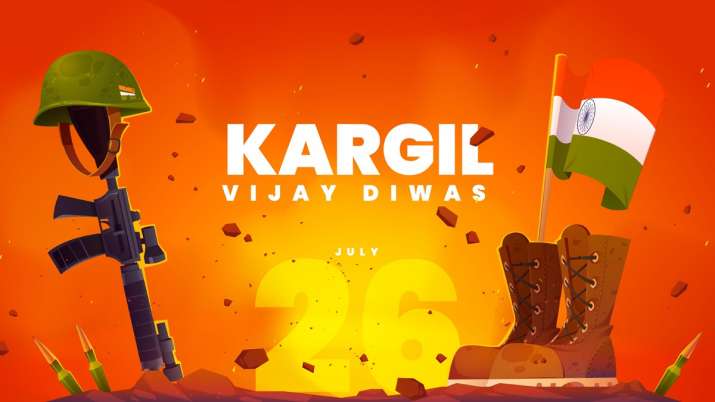
Today marks the 22nd anniversary of Kargil Vijay Diwas, which is being observed across the country. On Kargil Vijay Diwas, the nation remembers its war heroes and pays respect to Martyrs.

The day commemorates the success of Indian military forces in Operation Vijay in 1999, when they drove infiltrators supported by the Pakistani army out of high positions in the Kargil area.

President Ram Nath Kovind will visit the Kargil War Memorial in Drass, Ladakh, today to pay tribute to the Indian Armed Forces’ unwavering heroism and sacrifice during the Kargil Conflict in 1999.

The Prime Minister also shared a clip from All India Radio’s Mann Ki Baat show from last year. He stated that India will never forget the circumstances surrounding the Kargil conflict.

On the occasion of Kargil Vijay Diwas, Defence Minister Rajnath Singh today paid tribute to the Indian Army’s unwavering courage and sacrifice. Prime Minister Narendra Modi paid tribute to all those who died while defending our country. President of India Ram Nath Kovind will attend the 22nd anniversary of the Kargil War.

He will be the first President to visit the Kargil War Memorial in Drass and take part in the festivities. Air Force Chief Air Chief Marshal R K S Bhadauria and Navy Vice Chief Vice Admiral G Ashok Kumar also expressed their condolences.

“Operation Vijay was a perfect combination of strong and resolute political, military, and diplomatic efforts that helped us to turn an unfavourable situation into a military and diplomatic victory,” wrote General VP Malik, the Indian Army Chief during the Kargil War, in a 2002 essay.

The Kargil War in 1999 was the world’s first and only conflict between two nuclear-armed states. Every year on Kargil Vijay Diwas, India commemorates the heroism of its defence troops, headed by the Indian Army, which pulled off numerous notable successes in the line of fire.

Despite strategic disadvantages and hostile weather, India successfully pushed back the enemy after a nearly three-month operation that included intense warfare, synchronised political and militaristic pressure, and, most importantly, the sacrifices of many lionhearted patriots who will be remembered for the rest of their lives.

Kargil Vijay Diwas

Today marks the 22nd anniversary of Kargil Vijay Diwas, which is being observed across the country. On Kargil Vijay Diwas, the nation remembers its war heroes and pays respect to Martyrs.

The day commemorates the success of Indian military forces in Operation Vijay in 1999, when they drove infiltrators supported by the Pakistani army out of high positions in the Kargil area.

President Ram Nath Kovind will visit the Kargil War Memorial in Drass, Ladakh, today to pay tribute to the Indian Armed Forces’ unwavering heroism and sacrifice during the Kargil Conflict in 1999.

The Prime Minister also shared a clip from All India Radio’s Mann Ki Baat show from last year. He stated that India will never forget the circumstances surrounding the Kargil conflict.

On the occasion of Kargil Vijay Diwas, Defence Minister Rajnath Singh today paid tribute to the Indian Army’s unwavering courage and sacrifice. Prime Minister Narendra Modi paid tribute to all those who died while defending our country. President of India Ram Nath Kovind will attend the 22nd anniversary of the Kargil War.

He will be the first President to visit the Kargil War Memorial in Drass and take part in the festivities. Air Force Chief Air Chief Marshal R K S Bhadauria and Navy Vice Chief Vice Admiral G Ashok Kumar also expressed their condolences.

“Operation Vijay was a perfect combination of strong and resolute political, military, and diplomatic efforts that helped us to turn an unfavourable situation into a military and diplomatic victory,” wrote General VP Malik, the Indian Army Chief during the Kargil War, in a 2002 essay.

The Kargil War in 1999 was the world’s first and only conflict between two nuclear-armed states. Every year on Kargil Vijay Diwas, India commemorates the heroism of its defence troops, headed by the Indian Army, which pulled off numerous notable successes in the line of fire.

Despite strategic disadvantages and hostile weather, India successfully pushed back the enemy after a nearly three-month operation that included intense warfare, synchronised political and militaristic pressure, and, most importantly, the sacrifices of many lionhearted patriots who will be remembered for the rest of their lives.

Fifth Schedule of the Indian Constitution: Scheduled Areas Articles-244(1)

Scheduled Areas:- The Fifth Schedule Article-244(1), being a very important provision of the Constitution deals with the control and administration of the Scheduled Areas. The Constitution makes special provisions for the administration of certain areas called Scheduled Areas in the states other than Assam, Meghalaya, Tripura, Manipur despite such areas are situated within a State or Union Territory A- 244(1), probably because of the backwardness of the people of these areas.

Criterion:-

The criteria for declaring any areas as Scheduled Areas under the Fifth Schedule are as follows :

(1) Preponderance of Tribal population in such area.

(2) Compactness and reasonable size of the area.

(3) Viable administration entity such as a district, block, or Taluk, etc.

(4) Economic backwardness of the area as compared to the neighboring areas.

Features of the 5th Schedule-

(1) Declaration of Scheduled Areas- The Constitution empowers the President to declare any areas as Scheduled Areas. He can increase or decrease or even alter the boundaries of a Scheduled Area. He can also cancel such designation after consultation with the Governor of the concerned State or can make fresh orders to redefine any Scheduled Area.

(2) Executive powers of State and Union- Subject to the provisions of this schedule the executive powers of State extend to the Scheduled Areas therein. The executive powers of the Union are limited to giving directions to the State for the administration of such areas.

(3) Tribal Advisory Council- Any state having a Scheduled Area needs to establish a Tribal Advisory Council consisting of not more than 20 members of whom about 3/4 members should be the representative of the Scheduled Tribes in the Legislative Assembly of the State.

(4) Law Applicable to Scheduled Areas– The Governor is empowered to direct that any particular Act of Parliament or the Legislature of the State, does not apply directly to a Scheduled Area and is subject to such exceptions and modifications as he may specify in the notification:

(a) Prohibit the transfer of land by or among members of the Scheduled Tribe in such areas;

(b) Regulate the allotments of land to the members of the Scheduled Tribes in such areas;

(c) Regulate the carrying out of businesses as money lenders by persons who lend money to members of the Scheduled Tribes in such areas.

• States Under Fifth Schedule:-

The Fifth Schedule designates Tribal majority areas in the ten Tribal minority States within peninsular India including:

(1) Andhra Pradesh

(2) Himachal Pradesh

(3) Madhya Pradesh

(4) Odisha

(5) Rajasthan

(6) Jharkhand

(7) Gujarat

(8) Chhattisgarh

(9) Telangana

(10) Maharashtra

Some Important points:-

(1) Tribal Advisory Council(TAC) in Scheduled Areas do not perform administrative actions directly and do not have much autonomy.

(2) Panchayat Extension to Scheduled Areas is applicable here.

(3) PRIs in non-6th Scheduled Areas are liberally funded so direct funding of the Council is done under Article 280 of the Constitution.

(4) The Council in the 5th Schedule is the creation of the State Legislature.

(5) 5th Schedule Areas have an implementation of various schemes like MGNAREGA ( Mahatma Gandhi National Rural Employment Guarantee Act) 2005.