Factors influencing the rise of Bitcoin’s market price

  Bitcoin, the cryptocurrency that was created in 2009 gained its reputation in the year 2020 as it marked an alleged rise in value before the start of the pandemic. Bitcoin was at its lowest limit during the Covid period raking in $4,000 in value and reaching a stupendous amount of $30,000 at the end of the fiscal year. Within a few days, the value reached a peak of $40,000 and in 2021 it skyrocketed to over $65,000 for Bitcoin investors to sell them as assets and earned even billions and millions. Thus, it is essential to check the different factors involved before buying a cryptocurrency for trading purposes. Learn More

Over 18,000 different cryptocurrencies are in the existence among them Bitcoin stands tall. With the increase in the value of Bitcoins, other cryptocurrencies are also increasing in value over the longer term. However, there are several reasons why bitcoin shows such volatility and those reasons have marked the growth in the rates of Bitcoin cryptocurrency. A few of the essential factors are demonstrated below.

Factors influencing the rise of rates and values of Bitcoin cryptocurrency:

According to News reports, Bitcoin has staggered its way up from $0 in 2016 and now in 2022, it is around $20,600 as of November. Many factors are responsible for the increase in the values and rates of Bitcoin cryptocurrency. 

  1. Increase in Bitcoin investors:

The major reason for an increase in Bitcoin value and rates is because of the high increase in Bitcoin investors. Many organizations and service providers have staked in hefty amounts for buying Bitcoins for trading purposes. According to news sources-

  • companies like J.P. Morgan have invested quite heavily in cryptocurrencies. 
  • Companies like PayPal have introduced services for purchasing, selling, and trading purposes using Bitcoins. 
  • Visa has also been favorable to Bitcoins by introducing debit and credit cards for the trading platform Coinbase.
  • Many other mammoth organizations are accepting bitcoins as a payment method and also utilizing services for trading purposes. 

With the increase in investors, the Bitcoin applications such as bitcoin-prime.nl have become quite easy to login into accounts and trade over different cryptocurrencies. Digital wallets and private keys need to be kept safe from any unwanted intrusion into the Bitcoin account.

  • Inflation due to the Covid-19 pandemic:

Another increase in the value of Bitcoins is due to Covid 19 pandemic issues. This has evolved into banks printing more money and the government imposing extensive packages by driving up inflation. In the last financial year, the government of the United States deducted a 2% rise in the initial economic showdown. 

Therefore, keeping Bitcoins seems to be wiser for people. Possessing Bitcoins shortly can help investors in getting increased rates over the same. According to News agencies, the utilization of Bitcoin would go up in several folds and individuals would stick to Bitcoins for transactional purposes. Bitcoin is kept at a margin of 21 million units whereas around 18 million units of Bitcoins are been utilized to date by individuals.

  • Safe and secure cryptocurrency with strong policies:

Another important aspect of the rising values and rates of Bitcoins is that they are safe and secured cryptocurrencies utilized by many financial companies worldwide. The policy is also updated over stringent approvals where individuals have fewer chances of losing assets.

  • Some companies like Tesla and Expedia utilize Bitcoins for buying cars and booking hotels and flights. 
  • Companies like PayPal, Microsoft, and Shopify utilize Bitcoins for shopping purposes and individuals can purchase software, add-ons, mods, and even products to buy from such portals. 
  • Easily available cryptos for trading:

Another important aspect of the growing utilization of Bitcoins is that it is available to the general public easily. Bitcoins are quite volatile and prices may increase or decrease depending on the utilization of the cryptocurrency for trading purposes. Bitcoins have a really good store value and individuals can convert their cash to the bitcoin value and store it for prospects. Some even tend to buy assets utilizing bitcoins and store them for reselling purposes soon.

Bottom-line:

Thus, the above-mentioned points prove that saving Bitcoins can help with numerous advantages over the period. It is also essential to check with the different trading platforms for utilizing it in buying Bitcoins. Some trading platforms provide utilization of a decentralized process for storing bitcoins using a secure blockchain methodology. It is also advisable to check the different policies involved before buying Bitcoins for personal purposes.
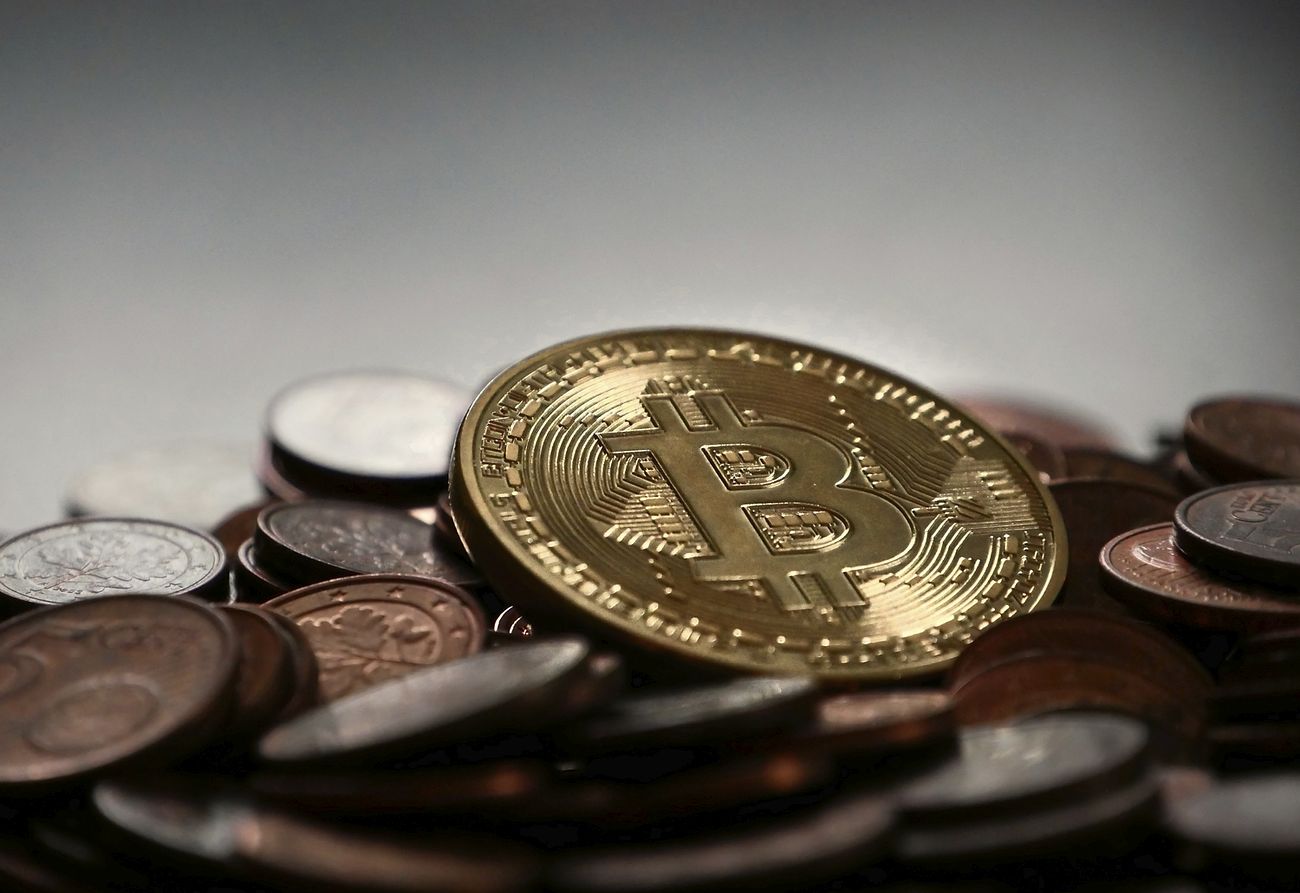
Bitcoin is becoming quite popular – Why?

  Bitcoin was the first digital currency that was invented in the year 2009, and it become quite popular across the globe over the years. However, its value is never stable as of now, and right from the beginning, it is continuously fluctuating. Therefore bitcoin, as a cryptocurrency is known as a highly volatile asset amongst all. For more detail about Bitcoin Application

These days, Bitcoin is used by many individuals and companies as a method of payment instead of conventional currencies. No one can deny that this particular cryptocurrency has made trading quite simple and lots of customers are accepting it in their businesses. Let us move forward and see the reasons behind the popularity of Bitcoin right now.

  1. Low fees for transactions:

Bitcoin attracts minimal costs, unlike conventional methods of payment. In fact, low transaction fees are one primary reason that attracts more people toward it. It makes sense for most individuals, particularly while making online payments for services or purchasing items online. Many people are using Bitcoin for sending money, particularly across borders.

  • Suitable asset to make a profit:

One more reason behind the popularity of Bitcoin is the fact that there is a huge potential for making a profit. In case you purchase Bitcoin when the price is low and sell it once the price becomes high, you will be able to make lots of profit in the long run. During the last several years, almost all the investors are doing short-term bitcoin trading and earning little but multiple profits by using the same strategy.

  • It is becoming simpler to use Bitcoin:

People are becoming more aware of Bitcoin which has helped it to become more popular these days. Lots of websites are accepting cryptocurrencies such as Bitcoin as payment which will become more widespread in the upcoming days. It can be rightly asserted that the usage of Bitcoin is becoming simpler every day since an increasing number of online companies are adopting it. Here, we like to mention that the usage of cryptocurrency debit cards has also started in some particular locations.

For instance, at present, the e-Yuan currency has been introduced in China and if you like to trade this particular currency, then it will be advisable to make use of the Yuan Pay App. Visit yuanpaygroup.nl for getting more information on this particular topic.

  • Less possibility of fraud:

Bitcoin is 100% digital, and therefore, many individuals are investing in this digital currency right now. Moreover, Bitcoin does not exist physically and it offers a decentralized platform where no central authority is there to regulate the transactions. Consequently, there is virtually no risk of fraud when it comes to the usage of Bitcoin.

  • Security:

The usage of Bitcoin happens to be safer compared to fiat money which can be stolen by getting hold of your physical wallet. But, bitcoin is safer as you use your private key for safeguarding your digital wallet. No person can get hold of your Bitcoin without this digital wallet key. Moreover, you will only share the address of your digital wallet while paying with Bitcoin, and there is no need to reveal any personal info. Bitcoin will allow you to safeguard your money and identity which matters a lot for most individuals out there.

  • Bitcoin is seen as the currency of the future:

According to many people, government-regulated currencies will be replaced by cryptocurrencies in the future. Bitcoin is loved by lots of individuals because of its innovativeness. Apart from this, this particular cryptocurrency also makes use of blockchain technology that has the power of transforming lots of social and economic sectors. Bitcoin is used by many people as a means of acclimatizing to technological innovation which has made it quite popular over time.

  • The simplicity of acquiring Bitcoin:

In the past, individuals were in the habit of mining Bitcoin for obtaining it. However, this process is somewhat complicated that requires one to solve math or computer problems are need high energy and highly proficient hardware. However, now it is not difficult to get Bitcoin anymore. You simply require a well-known crypto exchange for purchasing or trading this cryptocurrency.

Conclusion:

More and more traders are accepting Bitcoin these days as a convenient method of payment. Therefore, it can be rightly asserted that the popularity of this digital currency will go on increasing shortly. Moreover, Bitcoin is likely to allow individuals to preserve value, particularly when there is an economic crisis.

Performing Ethereum Trading With Excellence

  The trend of cryptocurrency in financial institutions is increasing because it benefits the people in the portfolio. The accountability of the people in acquiring the excellent choice in cryptocurrency trading is increasing, and they are perfectly managing their assets from . The outstanding efficiency of the people in having the same characteristics but with distinct nature makes them more different from the others. The tremendous development of cryptocurrency in earning profit and trading with the different elements makes them different in operating the modes and making the trading strategy.and join ethereum code platform 

Photo by RODNAE Productions on Pexels.com

The evolution of cryptocurrency in determining the operating and adopting market is bringing people closer to each other. The investors can simply apply the trading strategy and ideally focus on defining their end goal by establishing a fantastic decision. Digital selling and purchasing of the Cryptography establish the marketplace where the consumer can effectively learn about the person ready to dip into commerce. The article presents some effective strategies where the crypto traders can effectively meet the money secured on the platform and, without losing, can regularly make the judgment.

Crypto Trading And The Wonderful Strategy

Financial risk is necessary to mitigate, and it is possible only if effectiveness is applied in making the strategy. Common strategies typically bring a lot of changes, but advanced strategies can alter your future and make you a permanent part of cryptocurrency investment.

Day Trading

An efficient way a person can enter the market and exit after an unlimited period is adequate. Day trading is an exciting part of trading strategies, including a single-day investment. Most people who want to know about tea’s income sources utilize day trading. Typically more people understand Bitcoin volatility, and it is there to help everybody to make a profit in the moving market. The focus of everybody is to analyze the technical part and understand whether the strategy is consuming more risk or giving an accountable part of the suitable investment.

Future Trading

Another element that speaks loud while understanding future trading is the contract agreement on the participation of multiple people. In future trading, a person pre-determines the strategy and utilizes their money to invest according to the date and time. There is no option available, but most people are selected about the cryptocurrency, and to reduce the danger, they focus on future trading.

Top 4 Strategies

Risk management is essential, and to enhance the prosperity of any cryptocurrency, it is understood that the volatility must reduce, and risk should manage in a manner. People falling apart in management need to focus on the capital and the critical factor designed to minimize the actual losses. Risk management needs to define the prosperity and the portfolio that increases the confidence of a person to approach the cryptocurrency market.

Technical analysis is another part where a person cannot do several things from the chart and creates confidence to focus on the past moment of investment significantly. Typically people who are very analytic about their skills focus on getting the best benefit from the technical aspect.

Another fundamental analysis is again a part of Technical Analysis and a factor for understanding the software of Ethereum application. The cryptocurrency Ethereum is very technical, and the development team has executed the unit’s function very smartly. Unfortunately, the price fluctuated when the coin was launched for the first time, and the future was uncertain. However, people gather information from different websites and places about Ethereum using fundamental analysis.

Controlling emotion is essential for people who use money without understanding the percentage of danger involved in cryptocurrency. Many might feel that the volatility is attractive, but at the end of the day, the opportunity is necessary to excite the trader. Understanding that greed and frustration are part of the emotion and should not come between your investment is very systematic. Other than that, everything in cryptocurrency is a part of the investment. The future depends primarily on the factors and intelligent decisions a person will take to balance the portfolio.

To conclude, whenever a person uses any strategy to upgrade themself for the digital market. They focus on many other things that are vital and imperial for the target market.

Top companies with the maximum Bitcoin holdings this year

  Investing in Bitcoin has become quite well-known in many parts of the world right now. Every investor dreams of investing at least a small portion of their savings in this popular cryptocurrency individually. However, you will come across many companies that have invested significantly in Bitcoin these days. Bitcoin is largely being welcomed by them globally. Here, we will take a look at the companies with the maximum Bitcoin holdings this year. For more detail about Bitcoin the create an account and open account.

Photo by David McBee on Pexels.com
  1. MicroStrategy:

According to many individuals, this particular company happens to be the leading public company that has invested in Bitcoin. This company was one of the first ones to enter the Bitcoin market and it has already made a significant profit from its investment in Bitcoin. Michael Saylor, the CEO, supports the usage of Bitcoin and other cryptocurrencies since he’s of the notion that Bitcoin is vital for diversification. 

MicroStrategy has the distinction of holding as many as 114,041 bitcoin which happens to be the biggest holding of any public company at present. They have also invested a total amount of $3.1 billion whose worth is now $5.4 billion. It represents approximately 0.54% of the entire supply of Bitcoin.

  • Coinbase:

Coinbase happens to be the first crypto company that has gone public and other crypto companies have also followed it when it comes to going public. The public listing of this company had been a significant highlight of the crypto market last year. Right now, this particular exchange holds approximately 4,500 Bitcoin only which is smaller compared to most of the other companies mentioned on this list. However, it is nonetheless quite significant. Although the price of this purchase is not certain, the present value happens to be $214 million.

  • Voyager Digital LTD:

Voyager Digital LTD, a well-known crypto brokerage, holds approximately 12,260 Bitcoin whose worth is approximately $267 million at present prices. This company intends to offer a one-stop outlet for trading Bitcoin and other cryptocurrencies. Quarterly revenue of approximately $60 million was reported in the month of May last year. 

This company turned out to be amongst the most notable casualties of the crypto crash that took place in the year 2022. Nevertheless, it revealed an exposure of approximately $660 million in Bitcoin because of the existing market conditions to Three Arrows Capital, a struggling crypto investment company. Subsequently, Voyager Digital ended up filing for bankruptcy.

  • Square:

We are all aware of this payments company known as Square that has made significant investments in Bitcoin. Having about 8,000 Bitcoin in its coffers, this company holds Bitcoin whose worth is approximately $382 million right now. Incidentally, it was purchased by Square at only $220 million.

According to some experts, this company is perhaps the largest supporter of Bitcoin since it wants to make this cryptocurrency an integral part of its business. The Cash app of Square happens to be a convenient way to purchase Bitcoin right now.

5. Tesla

Although the aforementioned Microstrategy is considered to be the premier public company investing in Bitcoin, Tesla is perhaps the most well-known. Tesla came into the limelight when it announced that it will purchase Bitcoin in the long run. This particular decision made by this company took the world by surprise and a lot of attention was given to cryptocurrency.

This company has Bitcoin holdings of approximately 44,000 which happen to be $1.5 billion in purchase costs. This has turned out to be the second most lucrative Bitcoin investment done by a public company. 10% of its cryptocurrency holdings were sold by Tesla in 2021.

Galaxy Digital Holdings

This one is a merchant bank that emphasizes the usage of cryptocurrency and happens to be the biggest institutional Bitcoin holder that is involved with the cryptocurrency industry directly. Right now, Galaxy Digital can boast of holding 16,400 Bitcoin which is worth more than $357 million at present prices.

Galaxy Digital has partnered with Block.one and other crypto firms and it was established by Michael Novogratz in the year 2018. It is not surprising that Novogratz happens to be a patron of Bitcoin as well.

Conclusion:

It appears that companies can make use of cryptocurrency for diversifying their portfolio. However, one cannot deny that the number of companies investing in Bitcoin and other digital currencies is quite impressive in the long run. It can be rightly expected that more companies will be investing in this cryptocurrency in the upcoming days. For this context, you can also buy the currency and trade Bitcoin in a convenient manner using BitQT, an app that has become quite famous across the globe at present.

Typesetting: An In-Depth Look

Typesetting is the process of arranging and formatting text for publication. It involves the selection of font types, sizes, line lengths, line spacing, and the adjustment of space between groups of letters or individual letters. This process is critical in making printed and digital documents both legible and visually appealing. Typesetting has evolved from manual to digital processes, allowing for greater precision and flexibility.

1. Historical Background

  • Manual Typesetting: Originally, typesetting was performed by arranging physical blocks of type in a frame to prepare pages for printing. This was a meticulous and labor-intensive process.
  • Move to Digital: With the advent of computers and digital publishing software, typesetting has largely moved to a digital environment where text can be manipulated easily and printed or displayed electronically.

2. Components of Typesetting

  • Font Selection: Choosing an appropriate typeface that suits the content and purpose of the document.
  • Font Size: Determining the optimal font size for readability and fit.
  • Leading (Line Spacing): Adjusting the vertical space between lines of text to improve legibility and aesthetic appeal.
  • Kerning and Tracking: Adjusting the spacing between characters (kerning) and between larger blocks of text (tracking) to prevent awkward spaces and improve text flow.
  • Alignment and Justification: Aligning text to the left, right, center, or justifying it across the width of the page to meet design criteria.
  • Hyphenation and Line Breaking: Setting rules for dividing words at line ends to maintain a clean margin and enhance readability.

3. Digital Typesetting Tools

Modern typesetting is done using a variety of digital tools, each suited to different aspects of the typesetting process:

  • Adobe InDesign: Widely used in the publishing industry for its extensive features that facilitate layout and typesetting of complex documents.
  • QuarkXPress: Another powerful layout and typesetting software used by professionals to produce a wide range of publications.
  • LaTeX: A document preparation system that excels in typesetting documents that contain a lot of mathematical expressions but is also used for other academic and scientific publications due to its precision and quality.

4. The Typesetting Process

  • Layout Design: The first step involves creating a layout that defines the overall structure of the document, including margins, columns, and placement of figures and tables.
  • Text Flow: The main body text is flowed into the layout, ensuring that it adheres to the defined styles and formatting rules.
  • Refinement: This involves going through the document to adjust kerning, tracking, and leading where necessary, and to handle special cases like headings, captions, and footnotes.
  • Proofreading and Corrections: The typeset document is proofread to catch any errors in spelling, grammar, or layout before finalization.

5. Challenges in Typesetting

  • Balancing Aesthetics and Functionality: Ensuring the document is both attractive and easy to read.
  • Handling Complex Documents: Books with multiple sections, figures, and tables can be particularly challenging.
  • Cross-Media Publication: Typesetting for both print and digital platforms requires adjustments to accommodate different reading experiences.

6. Importance of Good Typesetting

  • Readability and Legibility: Good typesetting enhances the ease with which a reader can understand written text.
  • Professional Appearance: Well-typeset documents reflect professionalism and care in presentation.
  • Enhanced User Experience: In the digital realm, typesetting affects how readers interact with content across different devices and platforms.

Conclusion

Typesetting is a blend of art and technology, where aesthetic decisions meet the functionality of text presentation. As digital tools and publishing platforms evolve, the field of typesetting continues to expand, offering new opportunities for creativity and efficiency in how we communicate through text. Whether for print or digital media, effective typesetting is crucial for delivering information in a way that is both accessible and engaging to the audience.

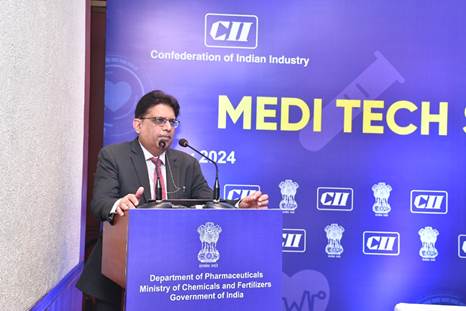
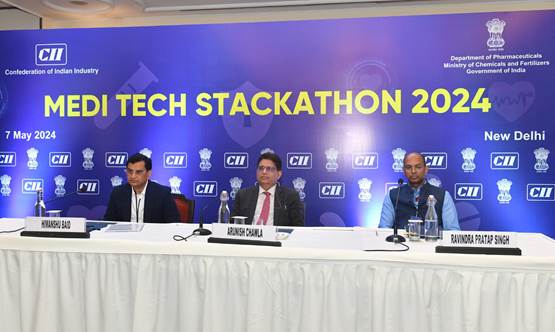
MEDITECH STACKATHON 2024 in collaboration with CII at New Delhi

 Secretary, Department of Pharmaceuticals, Ministry of Chemicals and Fertilizers Dr Arunish Chawla, launched the MEDITECH STACKATHON 2024 in collaboration with CII in New Delhi today. The MEDITECH STACKATHON is a groundbreaking initiative designed to catalyze transformative change within India’s burgeoning MedTech sector by undertaking a comprehensive value chain analysis of select medical devices. Through close consultation with industry leaders, policymakers, and experts, the STACKATHON aims to address critical challenges, foster domestic manufacturing, and reduce import dependence, thereby positioning India as a global leader in medical technology. Joint Secretary, Department of Pharmaceuticals Shri RP Singh and Chairman, CII National Medical Technology Forum Shri Himanshu Baid and other senior officials of the Department and representatives of the Industry were present on the occasion.

Addressing the gathering, Dr Arunish Chawla said that India’s MedTech industry holds immense potential, with projections estimating a growth rate of 28% annually, reaching a size of USD 50 billion by 2030. He said that currently, India is the 4th largest market for medical devices in Asia and among the top 20 globally. Net imports for 2022-23 stands at USD 4101 Million with import coverage ratio of 0.45.

The Secretary said that the sector has witnessed a surge in imports, driven primarily by countries like the US, China, and Germany, however, India’s robust policy ecosystem presents opportunities for export boosts and reducing import dependence through domestic manufacturing.

Pharma Secretary Shri Arunish Chawla emphasized on the importance of policymakers, industry coming together to draw up a sturdy policy stack for growth of medical devices industry in the country.

He highlighted the critical need to focus on quality to ensure that India becomes globally competitive.

Exports have overtaken imports in consumables and disposables during last year, he said, and urged the industry to continue with the momentum in other pillars of medi-tech sector.

Collaboration among stakeholders is essential to address these challenges and enhance both the ease and cost of doing business in the sector. By fostering partnerships, boosting investment in research and innovation, and streamlining value chain processes, we can achieve our shared goal of accessible and affordable healthcare for all, he added.

Through the STACKATHON, participants will delve into the complexities of different product segments within the medical devices industry to gain insights into their unique challenges and opportunities, analyze and map value chains across various segments of the medical devices industry to identify key stakeholders, processes, and dependencies, identify critical issues hindering the development of the medical devices industry, such as import dependence, regulatory hurdles, and technological gaps, Dr Chawla said in his address.

The STACKATHON would deliberate in eight focused groups namely Cancer Therapy, Imaging, Critical Care, Assistive Medical Devices, Body Implants, Surgical instruments and Hospital Equipment, Consumables & Disposables, and IVD Instruments and reagents, each tasked with specific objectives including segment-wise identification of important medical devices, assessment of import-export dynamics, examination of duty structures, and their implications across the entire value chain.

Preceding this workshop, group leads and members have undertaken extensive virtual discussions and preparatory work. The challenges persist in the sector, including cost competitiveness, quality assurance, and regulatory hurdles.

Shri Himanshu Baid, Chairman, CII highlighted a shared vision of collaborative excellence, wherein stakeholders unite to drive tangible outcomes and propel the MedTech industry towards unparalleled growth. He said that with India’s MedTech exports surpassing 4 billion dollars, the industry stands poised on a trajectory of remarkable expansion. However, he highlighted the need for enhanced data collation mechanisms to address gaps in product consumption and production within India. He stated that India’s MedTech landscape is brimming with promise, poised to capture 10% of the global market share over the next decade. Endowed with a robust ecosystem comprising world-class hospitals, skilled manpower, and cutting-edge resources, India is primed to emerge as a frontrunner in the global MedTech arena. He further underscored the importance of fostering industry-friendly policies, streamlining regulatory frameworks, and extending support to Micro, Small, and Medium Enterprises (MSMEs) through targeted incentives and technology funds.

Against this backdrop of immense potential, the MEDITECH STACKATHON 2024 seeks to harness the collective expertise of stakeholders to propel the industry towards unprecedented heights of innovation and self-reliance.

BRO celebrates its 65th Raising Day

 The Border Roads Organisation (BRO) is celebrating its 65th Raising Day on May 07, 2024. To mark the day, an event was organised in New Delhi, which was presided over by Defence Secretary Shri Giridhar Aramane. In his address, the Defence Secretary lauded the BRO for fulfilling its responsibilities successfully in inhospitable terrain and tough weather conditions. He termed the BRO an extremely crucial organisation which, through its infrastructure projects in border areas, is playing a major role in the security of the country, besides ensuring the socio-economic progress of far-flung areas.

Shri Giridhar Aramane commended the BRO for completing the projects in a time-bound manner, exuding confidence that the Karmayogis will continue to ensure border infrastructure development in a record time. He urged the BRO to infuse latest technology and techniques for faster completion of projects, through which human efforts will be reduced & utilised more efficiently. Automation and mechanisation will be key for the BRO in the future, he said.

The Defence Secretary also recalled the valuable contribution of the BRO personnel in the relief and rescue efforts during the Silkyara Tunnel Collapse and the Sikkim Floods. He added that the Organisation will play an important role in the Vibrant Villages Programme which envisages comprehensive development of select border villages.

Speaking on the occasion, Director General, Border Roads Lt Gen Raghu Srinivasan extended greetings to all ranks of the BRO. He stated that the pan-India presence of the BRO reflects its commitment to national security, connectivity and development. He added that the tagline ‘In the Silence of Our Great Mountains – Work Speaks’ speaks volumes of the Organisation’s dedication, perseverance and impact on the lives of the people residing in the remotest corners of the country. He exhorted all ranks to renew the pledge to continue ‘Connecting Places Connecting People’ and leaving a lasting legacy of progress, prosperity and unity.

The event also witnessed the unveiling of a compendium on Sela Tunnel as well as some books including ‘Oonchin Sadaken’, ‘Path Pradarshak’ and ‘Path Vikas’ by the Defence Secretary. He gave away Excellence Awards to the BRO personnel for the year 2023-24 and felicitated the women achievers of the Organisation. The Casual Paid Labourers who worked in various projects such as Sela Tunnel, as well as during Sikkim floods were also felicitated.

Raised with just two projects in 1960 – Project Tusker (now Vartak) in the East and Project Beacon in the North, the BRO has today become a vibrant organisation with 18 projects operating in 11 States and three Union Territories. It has now established its credentials as the leading infra construction agency in the high-altitude and difficult snow-bound areas.

The BRO executes road construction and maintenance works at altitude ranging from 9,000 ft up to 19,000 ft along the Northern and Western frontiers, primarily to meet the strategic requirements of the Armed Forces. In over six decades, it has constructed over 62,214 kms of roads, 1,005 bridges, seven tunnels and 21 airfields in adverse climatic and geographical conditions along India’s borders as well as in friendly countries, including Bhutan, Myanmar, Afghanistan & Tajikistan, thus contributing towards the nation’s strategic objectives.

In 2023-24, the BRO completed a total of 125 infrastructure projects worth Rs 3,611 crore. This includes the construction of Sela Tunnel in Arunachal Pradesh on Balipara-Chardwar-Tawang Road. The tunnel was dedicated to the Nation by Prime Minister Shri Narendra Modi recently from Itanagar virtually. The BRO will soon commence the construction on 4.10-km long Shinkun La Tunnel. Once completed, this tunnel will become the world’s highest tunnel at 15,800 ft bypassing Mila Tunnel in China at 15,590 ft.

The BRO accomplished the completion of two significant airfield projects namely Bagdogra and Barrackpore, marking yet another milestone in its journey of excellence. The foundation stone for Mudh Airfield Project was laid by Raksha Mantri Shri Rajnath Singh recently. The BRO aims to complete the project within just two working seasons.

Over the few years, the BRO has witnessed an exponential surge in budget expenditure, marking a remarkable leap forward in capabilities and impact. This increased budgetary support has empowered the organisation to undertake crucial projects, accelerate critical infrastructure development, and enhance its operational readiness.

The BRO has been at the forefront of promoting gender equality and inclusivity, offering key roles and opportunities to women. Officers like Col Ponung Doming is leading critical projects in Eastern Ladakh. Assistant Executive Engineer (Civ) Smt Nikita Chaudhary has played a pivotal role in successful completion of Sela Tunnel Project.

*****

Capacity Building on Design and Entrepreneurship (CBDE) program

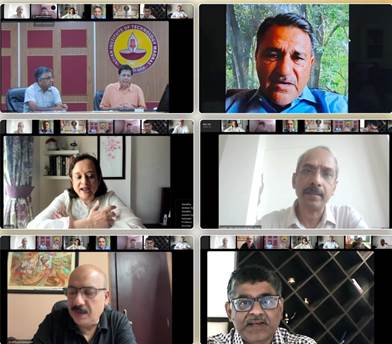
 Secretary, Department of Higher Education, Ministry of Education, Shri K. Sanjay Murthy today virtually launched the ‘Capacity Building on Design and Entrepreneurship (CBDE)’ program in presence of officials of the Department; members of the Program Advisory Council, CBDE; mentors from the industry; representatives of the shortlisted Higher Education Institutions (HEIs); Prof. Sudhir Varadarajan, Program Director, CBDE, and Principal Investigators and Co-Principal Investigators. More than 130 participants virtually attended the meeting.

Shri K. Sanjay Murthy in his address highlighted that the program will be led by industry and academia collaboration. He mentioned that industry experts are also providing the necessary guidance and support to HEIs through various initiatives under the banner of industry-academic linkage. He recognized the rigorous selection process instituted through which 30 HEIs have been identified to implement this program in their institution..

The Capacity Building Program is designed to equip identified HEIs and faculty members to focus on Design and Entrepreneurship development in their institution with the support of mentors from industry. At this stage, 30 HEIs have been selected through a process anchored by the IIITDM, Kancheepuram, a Malaviya Mission Teacher Training Center (MMTTC) as Nodal Centre for the program. This program will focus on instilling in students a problem-solving approach that encourages creative and innovative solutions to complex challenges and ultimately takes concrete steps in scaling up their ideas through stage-wise hand-holding support provided by mentors from the industry. The program includes one-to-one mentoring of faculty and promoting generative dialogue among faculty, student teams and HEI partners by a pool of expert mentors. The program is designed to provide mentor support to the identified HEIs to learn from the expertise gained through years of engagement in the industry setup.

During the meeting, industry experts including Shri Manoj Kohli, Chairperson, Program Advisory Council, CBDE, and Smt. Debjani Ghosh, President, NASSCOM expressed hope in the outcomes of this program. Shri Kohli suggested that during the execution of the initiatives, efforts will be made to ensure linkages and support to the startups from global investors and industry. In her remarks, Smt. Ghosh mentioned entrepreneurial mindset needs to be nourished in the young minds present in educational institutions. Problem-solving skills as demanded by the industry are required to complement the technical skills provided in the traditional pedagogical approach, she said.

In his address, Prof. V. Kamakoti, Director, IIT Madras envisioned that prioritization of locally relevant challenges to produce effective and sustainable solutions by young entrepreneurs/innovators would garner global recognition.

Mentors from the industry also shared their views about the program. Dr Miftahul Barbaruah, Member, Confederation of Indian Industry, Assam Chapter, and Shri Chandrasekaran Balakrishnan, former Chief Digital Data and Innovation Officer, Marsh McLennan Asia, highlighted that the program will build capacities of the HEIs to transform students into entrepreneurs and enable them to develop solutions to pressing challenges of the society.

Prof. Sudhir Varadarajan, Program Director, IIITDM Kancheepuram, shared the way forwardand guided the participating HEIs to follow the subsequent plan of action about implementation of the program.

***

CISCE empowers students with convenient access: Declaration of 2024 real-time examination results and availability of marksheets and certificates through DigiLocker

 In a pioneering digital transformation initiative, the Council for the Indian School Certificate Examinations (CISCE) integrated with DigiLocker platform to declare the ICSE (Class X) and ISC (Class XII) examination results for 2024 digitally via DigiLocker platform. Additionally, CISCE made available certificates and marksheets in real-time through DigiLocker.  A total of 2,43,617 students appeared for ICSE while 99,901 took ISC exams this year.

Over 3.43 lakh students can now seamlessly access their academic awards such as marksheets and certificates issued by CISCE on the DigiLocker instantly after results were announced.

The overall pass percentage for ICSE 2024 was an impressive 99.47% with Girls outperforming Boys (99.65% for Girls vs 99.31% for Boys). In the ISC exams, 98.19% students cleared with a similar trend of girls faring better than boys (98.92% vs 97.53%).

DigiLocker, the flagship platform under Digital India initiative, has enabled this revolutionary step by providing a secure, trusted and eco-friendly solution for issuing and accessing academic credentials in digital format by boards, universities and other bodies.

Key Highlights:

  • 2,42,328 students passed ICSE: 98,088 cleared ISC across India and abroad.
  • Marksheets, certificates instantly available on DigiLocker in digital format.
  • Students can access their authentic digital documents anytime, anywhere.

Dr Joseph Emmanuel, Chief Executive & Secretary of CISCE, announced that examination results are now accessible in real-time via DigiLocker and the CISCE website. Additionally, he discussed the availability of academic awards on the DigiLocker platform.

***

One-Day Workshop on State Mining Index in collaboration with IIT-ISM, Dhanbad

 Ministry of Mines, in collaboration with the Indian Institute of Technology – Indian School of Mines (IIT-ISM), Dhanbad will organize a one-day workshop tomorrow i.e., on 8th May, 2024 in Delhi to discuss the draft framework of the State Mining Index, envisaged to capture mining sector performance of States. The Secretary, Ministry of Mines, Shri V. L. Kantha Rao, will  chair the workshop, to be participated by the senior officials from States.

The mining sector is at the forefront of numerous value chains, supplying raw materials to key industrial domains such as steel, non-ferrous metals, cement, fertilizers, chemicals, and electronics. The States have a crucial role to play in the development of the country’s mining sector. For a mining sector vision that prioritizes resource use efficiency with equity, sustainability and responsibility, focussed attention is required on the exploration of India’s geography; taking actions for facilitating future mineral production and working for the interest and benefit of persons and areas affected by mining related operations. In such a national effort, a State’s relative contribution is important and needs to be reflected. As such, a State Mining Index has been envisaged to capture the mining sector performance as well as States’ future readiness in mining activity. The ambit of the index will be non-fuel major minerals and minor minerals. Ministry of Mines has commissioned IIT-ISM, Dhanbad to conduct a study for designing the framework, collecting data and formulating the index.

In order to make the process transparent and objective, States are being consulted at every stage of index development. The One-Day Workshop in Delhi is a part of this endeavour. Feedback from States at the workshop will help in finalizing the framework.

****

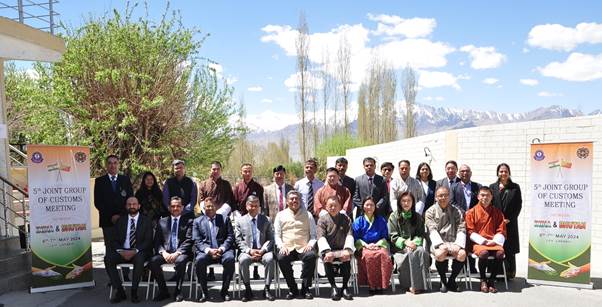
5th Joint Group of Customs (JGC) meeting between India and Bhutan

 The 5th Joint Group of Customs (JGC) meeting between India and Bhutan was held on 6th-7th May, 2024 in Leh, Ladakh. The meeting was co-chaired by Mr. Surjit Bhujabal, Special Secretary and Member (Customs), Central Board of Indirect Taxes and Customs, Government of India, and Mr. Sonam Jamtsho, Director General, Department of Revenue and Customs, Ministry of Finance, Royal Government of Bhutan.

The 5th JGC meeting discussed a host of bilateral issues such as opening of new Land Customs Stations and notifying new trade routes, development of infrastructure, automation and digitisation of transit processes, prevention of smuggling, coordinated cross-border management, pre-arrival exchange of Customs data, bilateral agreement on Customs cooperation and movement of transit cargo under electronic cargo system among others.

Bhutan thanked the Government of India and particularly the Central Board of Indirect Taxes and Customs for the continued support in providing capacity building, training and skill development through workshops, seminars and various training programmes, including the IRS programme to the Bhutan customs administration. Also, Bhutan expressed sincere appreciation to the Indian Government for initiating and promoting the cross-border trade and economic activities with Bhutan through the various bilateral agreements.


The India-Bhutan Joint Group of Customs meetings are held annually to discuss issues relating to re-defining and re-engineering of Customs procedures, promote Customs cooperation and cross-border trade facilitation with alignment to global best practices. These meetings play a vital role in enhancing connectivity and developing trade infrastructure for smooth customs clearance at land borders. There are 10 Land Customs Stations along the India-Bhuan Border in the States of West Bengal (6) and Assam (4).

India is Bhutan’s top trade partner both as an import source and as an export destination. Since 2014, India’s trade with Bhutan has more than tripled from $484 million in 2014-15 to $1,615 million in 2022-23, accounting for about 80% of Bhutan’s overall trade. Trade with Bhutan through the land Customs Stations is significant as Bhutan is a land-locked country.  Enhancing connectivity with Bhutan is pivotal to India’s ‘Neighbourhood First’ and the ‘Act East’ Policy.

The meeting concluded on an optimistic note. Both the countries agreed on discovering new strands of complementarities between India and Bhutan that can be maximised for mutual benefit, respond to the expectations and aspirations of the youth and adapt to the rapid changes related to new technologies and social innovations. Both sides also agreed to consider new developments for facilitating customs and trade cooperation for mutual prosperity. 

****

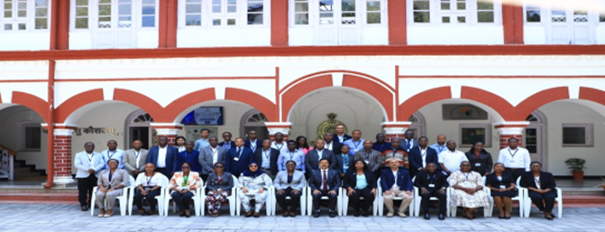
Two-Week Capacity Building Programme on Project and Risk Management for Public Works for officials of Tanzania at Mussoorie

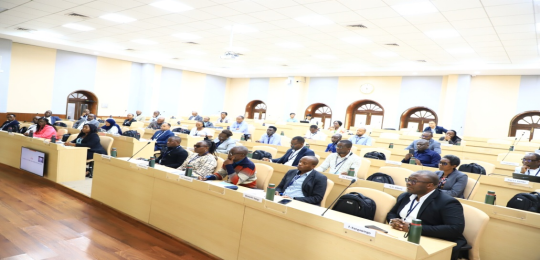
 The two weeks program on Capacity Building Programme on Project and Risk Management for Public Works for the officers from Republic of Tanzania commenced today at the National Centre for Good Governance (NCGG), Mussoorie. The program is being organized from 6th May, 2024 to 17th May, 2024 in partnership with the Ministry of External Affairs (MEA) Government of India. A total of 39 officers representing various organisations and ministries in Tanzania such as National Roads Agency, Ministry of Energy, Planning Commission, Tanzania Building Agency, Tanzania Railway Corporation, Housing investments, Rapid Transit Agency, E-government authority, Energy and Water Regulatory Authority, President’s Office Public Service Management and Good Governance, Regional Administration and Local Government, Livestock and Fisheries among others are attending the programme.

The NCGG, an autonomous institution under the Department of Administrative Reforms and Public Grievances, Ministry of Personnel, Public Grievances and Pensions, Government of India, is committed to action research, studies, and capacity building at both the national and international levels. NCGG’s efforts align with the Indian philosophy of ‘Vasudhaiva Kutumbakam’ i.e. “The world is one Family” and emphasizes strengthening bilateral ties and fostering cooperation with other countries. The capacity building program focuses on providing a rich cross country experience and a platform for policy dialogue, while sharing best practices focusing on project and risk management in various sectors. This will result in the officers gaining valuable insights into the manner in which projects are planned and executed and institutions are being transformed and people are getting closer to the government.

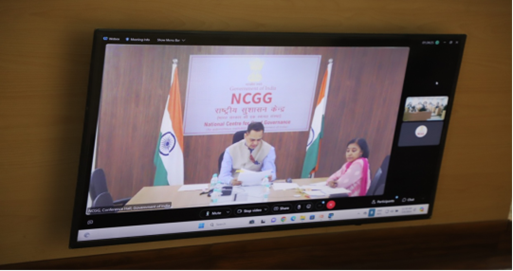
Shri V. Srinivas, Director General, National Centre for Good Governance (NCGG) and Secretary, Department of Administration Reform and Public Grievances (DARPG) in his inaugural address extended a warm welcome to the participating officers. During his address, he talked about the relations between the two nations and the outline of future collaborations in the area of capacity building programmes. He focused on the evolving landscape of governance and gave an elaborate presentation on the New Paradigms of Governance and emphasized on the transformative role of technology in maximizing governance efficiency and development thereby bringing citizens closer to government. He elaborated on National E- Service Delivery Assessment, India’s vision for 2047 and showcased exemplary governance models such as Aadhaar Card, Advancements in Fintech, Public Grievance Redressal Mechanisms like CPGRAMS, and the integration of Artificial Intelligence in administration.

Shri V. Srinivas, Director General, National Centre for Good Governance (NCGG) and Secretary, Department of Administration Reform and Public Grievances (DARPG)

Speaking on the occasion Mr. George Nsavike Ndatta, Head of the Delegation expressed gratitude to the Indian Government for extending such a warm hospitality and providing this immensely useful opportunity to facilitate knowledge exchange. He was of view that this will ultimately empower officers to implement and design effective projects thereby aiding development in the country.


Dr. B.S Bisht, Associate Professor and Course Coordinator gave a comprehensive presentation on the background and ongoing initiatives of the National Centre for Good Governance. He also highlighted the core objectives of the two-week training program, which is meticulously structured to equip officers with essential skills in Project and Risk Management for Public Works, while showcasing several projects and works in several important sectors relevant to the participants. He elaborated how the programme is designed for officers who are at decision making level and is aimed at equipping them with the cutting-edge knowledge, skills and tools to deliver and design effective public works projects, which will lead to achievement of good governance and ultimately sustainable development apart from providing a rich cross-country experience so that there is no need to reinvent the wheel.

He discussed how the programme covers a diverse range of topics such as Project Selection and Formulation, Project Management Framework and Processes, Project Risk Management, PPP in Infrastructure Projects, Smart and Resilient Cities, Innovation in Awarding Public Projects, and Managing Rural and Urban Housing Projects. Additionally, the program incorporates immersive field visits, with officers slated to visit key project sites such as Dakpathar Hydropower and Irrigation Dam, NHAI in Uttarakhand, Dwarka Expressway in New Delhi, Indira Paryavaran Bhawan, World Trade Centre NBCC in New Delhi, and the Delhi Metro Rail Corporation, culminating with a visit to the iconic Taj Mahal.  He also informed that in partnership with MEA, NCGG has imparted training to civil servants of 17 countries.

The entire capacity building programme will be supervised by Dr. B.S Bisht, Associate Professor and Course Coordinator, Dr. Sanjeev Sharma, Associate Course Coordinator and Shri Brijesh Bisht, Training Assistant, NCGG.

***

7th CONVOCATION OF CENTRAL UNIVERSITY OF HIMACHAL PRADESH

 The President of India, Smt Droupadi Murmu graced and addressed the 7th convocation of Central University of Himachal Pradesh at Dharamshala today (May 6, 2024). 

Speaking on the occasion, the President said that change is the law of nature. But, the pace of change was not so rapid in the past. Today we are in the era of the 4th Industrial Revolution. New areas like Artificial Intelligence, Machine Learning are emerging rapidly. Both the speed and magnitude of change are very high, due to which technology and required skills are changing very quickly. At the beginning of the 21st century no one knew what kind of skills people would need in the next 20 or 25 years. Similarly, many current skills will no longer be useful in the future. Therefore, we have to continuously adopt new skills. Our focus should be on developing flexible minds so that the young generation can keep pace with the rapid changes taking place. We have to strengthen the curiosity and the desire to learn in the students to prepare them for facing the challenges of the 21st century.

Addressing the teachers, the President said that education should be such that along with educating the students, it makes them self-reliant and builds their character and personality. The aim of education is also to bring awareness among the students about their culture, tradition and civilization. She stressed that the role of teachers is very important in this regard. Their scope of work is not limited to teaching only, and they have the huge responsibility of building the future of the nation.

The President said that our focus should be on ‘what to learn’ as well as ‘how to learn’. She underlined that when students learn independently, without any stress, their creativity and imagination take flight. In that case they do not consider education as just a synonym for livelihood. Rather, they innovate, find solutions to problems, and learn with curiosity.

Addressing the students, the President said that every person has the potential for both good and evil. She advised them to keep in mind that no matter how difficult the situation they are in, they should never let evil dominate them. They should always take the side of good. She urged them to make human values ​​like compassion, conscientiousness and sensitivity their ideals. She said that based on these values, they can live a successful and meaningful life.

The President said that the youth have immense potential for growth. They are the most important link to fulfil the resolve of a developed India. Therefore, they should dedicate themselves to the nation. This is not only their human, social and moral duty but also their duty as citizens.


Please click here to see the President’s Speech – 


***

Vice-President highlights India's historical eminence as the epicentre of knowledge and education

 The Vice-President, Shri Jagdeep Dhankhar today underscored India’s historical eminence as the epicentre of knowledge and education, and asserted that the country is firmly on its way to regain its past glory. Mentioning the illustrious legacy of institutions like Nalanda and Takshashila, Vice-President highlighted the paradigm shift & resurgence in India’s educational landscape in contemporary times.

Addressing the gathering at the 62nd Foundation Day Celebration of the School of Open Learning (SOL), University of Delhi, Vice-President applauded SOL for providing a transformative platform for diverse range of learners, from varied walks of life including working professionals, homemakers and students.

He further emphasized that SOL has opened doors for those previously handicapped by circumstances, enabling them to pursue education without disrupting their routine.  Shri Dhankhar commended SOL for offering a second chance to those who missed formal education earlier, empowering marginalized communities through knowledge and skills, thereby fostering an environment of true inclusivity. Shri Dhankhar further emphasized the pivotal role of faculty over infrastructure in shaping the essence and quality of educational institutions.

Highlighting Education as the most impactful transformational mechanism for change, Shri Dhankhar asserted that education is not merely a means to acquire knowledge; rather, it is the cornerstone of progress, empowerment, and social transformation. It is the key that unlocks the door to progress, prosperity, and empowerment. “Education is the greatest right and donation. There can be no fundamental right greater than education and no donation can be greater than education”, he added.

Drawing inspiration from the Chandrayaan journey where after initial setback it made a smooth landing on the south pole of the moon, Shri Dhankhar urged students to consider failure as a key to success. He underscored the need for a resilient mindset in navigating the complexities of the modern world.

Highlighting the pivotal role of The New Education Policy (NEP) in Indian Educational Landscape, Shri Dhankhar Stated that NEP heralds a transformative change, charting a roadmap for holistic learner development and creating a knowledgeable society equipped for the 21st century challenges. He underscored the emphasis of NEP on flexible learning pathways, technology integration, recognizing diverse needs and aspirations

He further expressed confidence that institutions like the School of Open Learning will play a pivotal role in expanding access to quality education and bridging long-standing gaps, as envisioned by NEP.

Prof. Yogesh Singh, Vice Chancellor, University of Delhi, Prof. Payal Mago, Director, Campus of Open learning, University of Delhi, faculty members, students and other dignitaries were present on the occasion.

*****

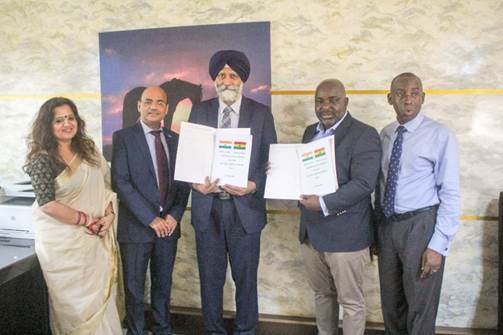
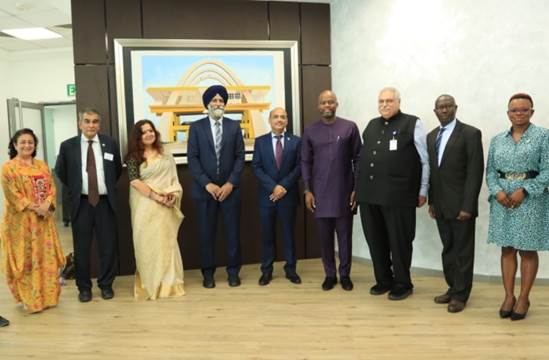
4th Session of India-Ghana Joint Trade Committee held in Accra

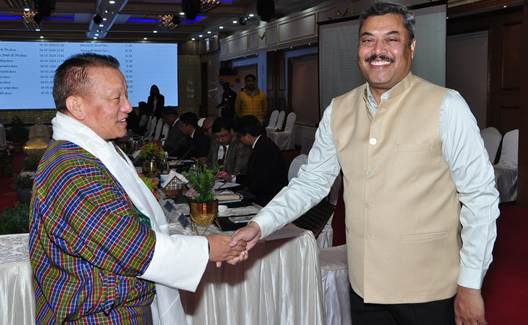
 A seven-member delegation from India led by Additional Secretary, Department of Commerce, Ministry of Commerce and Industry, Government of India, Shri Amardeep Singh Bhatia accompanied by High Commissioner of India to Republic of Ghana, Shri Manish Gupta and Economic Adviser, Department of Commerce, Ms. Priya P. Nair held a Joint Trade Committee (JTC) meeting with their Ghanaian counterparts in Accra from 2nd to 3rd May, 2024. The JTC was co-chaired by Deputy Minister for Trade and Industry, Republic of Ghana, Hon. Michael Okyere-Baafi; and Additional Secretary, Department of Commerce, Shri Amardeep Singh Bhatia.


In a comprehensive dialogue, both sides undertook a detailed review of recent developments in bilateral trade and investment ties and acknowledged the vast untapped potential for further expansion. Both sides agreed to work expeditiously towards the operationalization of Unified Payment Interface (UPI) of National Payments Corporation of (NPCI) on Ghana’s Ghana Interbank Payment and Settlement Systems (GHIPSS) within a period of 6 months. Both sides delved into discussions regarding the possibilities of a Memorandum of Understanding (MoU) on Digital transformation Solutions; Local Currency Settlement System and also deliberated on the opportunities offered by African Continental Free Trade Agreement (AfCFTA).

Both sides identified several areas of focus for enhancing both bilateral trade as well as mutually beneficial investments. These include cooperation in pharmaceuticals, healthcare, information and communication technology, agriculture and food processing, renewable energy, power sector, digital economy and digital infrastructure, critical minerals, textiles and garments, etc.

Official delegation from India consisted of officials from Geological Survey of India, EXIM Bank and the Indian Pharmacopoeia Commission. The officials of both India and Ghana actively engaged in the proceedings of the JTC.


A business delegation led by Confederation of Indian Industry (CII) also accompanied the official delegation with representatives from the varied sectors including power, fintech, Telecommunications, electrical machinery, pharmaceuticals sectors. The delegation including representatives of business also met Secretary General, AfCFTA and his team of officials wherein areas of cooperation including signing of an MoU, setting of standards, investments, participation in trade events in India, and increasing the depth of engagement between India and AfCFTA was discussed. Names of nodal officers to take the discussions forward were also exchanged.

Ghana is an important trading partner of India in Africa region. Bilateral trade between India and Ghana stood at USD 2.87 billion in 2022-23. India stands as a leading investor in Ghana and emerged as the third-largest investor. These investments traverse diverse sectors, encompassing pharmaceuticals, construction, manufacturing, trade services, agriculture, tourism, and more.

The deliberations of the 4th Session of India-Ghana JTC were cordial and forward-looking, indicative of the amicable and special relations between the two countries. There was enthusiastic response towards greater cooperation in addressing pending issues, boosting trade and investment and enhancing people to people contacts.

*****