INSPIRATIONAL QUOTES

“The soul of religion is one but encased in a multitude of forms. Wise men will ignore the outward crust and see the same soul living inside a variety of crusts.”– Mahatma Gandhi

“At the bottom of all tributes paid to democracy is the little man and woman, walking into a little booth, with that little pencil, making a little cross on paper- no amount of rhetoric or voluminous discussion can possibly diminish the overwhelming importance of the point.”– Winston Churchill

“Literacy in itself is no education. Literacy is not the end of education or even the beginning. By education I mean an all round drawing out of the best in the child and man- body, mind and spirit.” –Mahatma Gandhi

“Deliberation and debate is the way you stir the sole of our democracy.“- Jesse Jackson

“Freedom is not a matter of political decisions or new constitutions…. it is of the mind and heart and if the mind narrows itself and is befogged and heart is full of bitterness and hatred, then freedom is absent.”– Jawahar Lal Nehru

“India is the cradle of the human race, the birthplace of human speech, the mother of history, the grandmother of legend and the great grandmother of tradition. Our most valuable and most constructive materials in the history of man are treasured of India only.” – Mark Twain

“An investment in knowledge pays the best interest.“- Benjamin Franklin

“You can fool all the people some of the time and some of the people all the time but you cannot fool all the people all the time.” –Abraham Lincoln

“Workers of the world unite, you have nothing to lose but your chains; you have a world to win.” –Karl Marx

“I alone cannot change the world but I can cast a stone alone across the waters to create many ripples.” –Mother Teresa

“Just as a country cannot be ruled by another country, a class cannot be ruled by another class.” –BR Ambedkar

“It is impossible to think about the welfare of the world unless the condition of women is improved. It is impossible for a bird to fly on only one wing.“- Swami Vivekananda

NEGOTIATION SKILL: IS THERE ANY NEED TO POSSES ?

Need to invoke Negotiation Skills

Negotiation skills are not born with a child. These skills need to be developed and enhanced.

Negotiation skills teaches a person/child to be patient and understand the needs and opinions of others while giving importance to the requirements of all and finding a solution that is beneficial and acceptable to all the parties.

Negotiation skills are crucial and play an essential role in effective teamwork, decision making and managing differences and conflicts.

Thus, negotiation skills should be developed to improve the quality of communication and decisions.

Importance of Negotiation Skills

· Helps the negotiator to understand why the other party wants to make the deal.

· This understanding will help him/her to convince the party to agree with the results desired by the negotiator.

·Helps to detect the weak areas of the party and will use these areas to make the result of negotiation in favor of the negotiator.

· Enrich the presence of mind of a person.

· Makes the person analyse and reason himself/herself that why he/she is compromising for successful conduct of a deal and whether it is really beneficial to compromise for that deal or not.

Looking for tips about self improvement? Here it is.

SELF HELP

Are you aware of the phrase “change starts with you”? Here are some ways which can help you better your day to day activities and broaden your horizon. Don’t wait any further and let that positive change start from you.

https://edunewsnetwork.wordpress.com/2021/07/10/looking-for-tips-ab

1) CONCENTRATION.
• To do:
~ Meditate.
~ try playing games which requires a lot of concentration e.g. chess, puzzles and memory games.
~ get enough sleep
~ Exercise.
~ listen to music
• To avoid:
~ Loud background noise
~ avoid being around anything that can distract you
~ try not to multitask
~ avoid heavy foods
~ avoid zoning out

2) THINKING ANALYSIS.
• To do:
~ observe
~ think practically
~ ask questions
~ reasoning plays an important part in analytical thinking.
~ make sure to consider every aspect of the topic.
• To avoid:
~ don’t let emotions play a role.
~ don’t let personal conflicts cloud your judgement
~ don’t overthink it
~ don’t rush to make a decision
~ don’t stick to a single method

3) REASONING POWER:
• To do:
~ keep an open mind
~ to consider all options
~ learn more about the topic
~ frequent questioning
~ make notes
• To avoid:
~ try not to avoid others Point of view
~ don’t be quiet
~ don’t just focus on one topic but cover every topic possible
~ don’t neglect options
~ avoid being idle

4) MENTAL MATURITY.
• To do:
~ learn from experiences
~ be positive
~ accept criticism
~ be responsible
~ learn from the past
• To avoid:
~ blaming others for ones own failure.
~ don’t avoid something just because it’s difficult
~ avoid childish behavioural patterns
~ Don’t always expect positive results
~ don’t try to complete every task in a single day

5) ADJUSTMENT THINKING.
• To do:
~ empathize
~ an open mind is the key
~ consider others opinions
~ choose the best option
~ take your time
• To avoid:
~ Don’t be obsessed with just one solution
~ don’t be too headstrong
~ don’t be overconfident
~ avoid being too stressed about a situation
~ don’t be too anxious about change

6) INSIGHT
• To do:
~ ask questions like ‘why’ and ‘how’
~ take notes
~ think rationally
~ pay attention to details
~ take your time to analyze a topic.
• To avoid:
~ avoid being satisfied with the first solution
~ avoid drifting from the topic
~ Don’t be in a hurry to form a conclusion or form an analysis
~ try to avoid being a know-it-all
~ avoid being ignorant

7) MENTAL RESPONSIBILITIES.
• To do:
~ imagination
~ be creative
~ expand your horizons
~ get enough sleep
~ do something outside your comfort zone
• To avoid:
~ Don’t try to pressurize yourself.
~ don’t try to block out your thoughts
~ try not to be too invested in just one thing
~ avoid procrastination
~ avoid a negative mentality

8) ORIGINAL THINKING.
• To do:
~ find inspiration
~ read articles
~ research
~ be insightful
~ try to focus on quality rather than quality
• To avoid:
~ plagiarism
~ don’t be predicable
~ Don’t be dependent
~ don’t rely on others
~ don’t always think from your perspective

9) THOUGHT EXCHANGE.
• To do:
~ be open to opinions
~ try to listen
~ give and receive feedback
~ learn more about the topic
~ try to work with like minded people
• To avoid:
~ don’t be ignorant
~ don’t dismiss trust
~ don’t be unwilling to involve the other person
~ avoid thought stopping
~ Don’t always think from your thinking style

10) THE UNCONSCIOUS.
• To do:
~ try to remember your dreams
~ try to make sense of your dreams
~ try to understand what they’re trying to convey
~ be organised
~ be realistic
• To avoid:
~ avoid unpleasant thoughts
~ day dreaming
~ avoid not being a keen listener
~ avoid not being attentive
~ have compulsive behaviour

11) CLEAR THINKING.
• To do:
~ Go take a look at nature.
~ breathing exercise
~ get good sleep
~ listen to music
~ one thing at a time
• To avoid:
~ avoid noisy environment
~ try not to have a lot on your mind
~ avoid overlapping thoughts
~ avoid staying up for too long
~ don’t be too invested in a single problem

12) EMOTIONAL MATURITY.
• To do:
~ accept criticism
~ positive thoughts
~ always aim to reach a goal
~ take a pause and reflect
~ make wise decisions
• To avoid:
~ avoid not being straightforward
~ Don’t avoid difficult situations
~ try not to be too selfish
~ avoid thinking others have it easy
~ avoid negativity

13) LEARNING ABILITIES.
• To do:
~ read books
~ visit places
~ try to imagine yourself in a different situation
~ research
~ experience something new
• To avoid:
~ don’t try to stop learning just because you’re not immediately good at it
~ don’t move forward without a plan
~ don’t always stick to one kind of thought process
~ avoid doing all the tasks at once
~ Don’t always expect something in return

14) MIND ANIMATION.
• To do:
~ be original
~ create new things
~ have a clear mind
~ work towards a goal
~ find inspiration
• To avoid:
~ having a closed mind
~ being unprepared
~ stuck with one perspective
~ minimum understanding of the subject
~ being content with minimal information

Arts student job opportunity

As a arts student your opportunity not limited to Masters in Arts or UPSC and other government exam. Of course they are available for you. Today I will post some more amazing career option which you might not know.

MBA/MMS

Nowadays top B school are focusing on diversities. If your acads are low then the best exam would be MHCET. Many college in Mumbai don’t conduct gd-pi. If you communication skill is poor then you must aim for these mba/mms course(they mostly offer mms) .

CFA

If you are graduate (Final year) you can give CFA 1 exam. Then you will get an internship easily. And it will help you clear interview of Personal interview happens in bschool. In summer internship in mba program CFA certificate definitely help to crack it.

Law

Law give you opportunity to understand our legal system better and indepth. Many law firm recruit law graduate.

POLLINATION

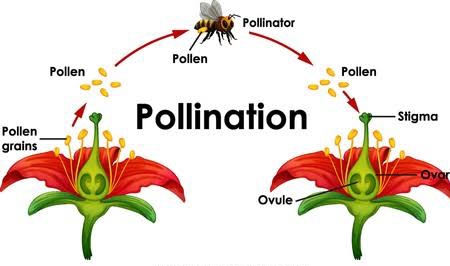
The transfer of pollen grains from anther to stigma of a flower is called as pollution.

Importance of pollination

✓It results in fertilization which leads to the formation of fruits and seed.
✓New varieties of plants are formed through new combination of genes in case of cross pollination.

Types of Pollination
✓Self-pollination
✓Cross Pollination

Self-pollination

Self-pollination is also known as autogamy. The transfer of pollen grains from the anther to the stigma of same flower or another flower borne on the same plant is known as self-pollination. E.g. Hibiscus.

Cross Pollination

Cross Pollination is the transfer of pollen from the anthers of a flower to the stigma of a flower on another plant of the same species e.g.apples, grapes, plum, etc.

Agents of Cross Pollination

In order to bring about cross pollination, it is necessary that the pollen should be carried from one flower to another of a different plant.
This takes place through the agency of animals, insects, wind and water.

Pollination by wind

The Pollination with the help of wind is called anemophily. The anemophilous flowers produce enormous amount of pollen grains. The pollen grains are small, smooth, dry and light in weight. Pollen of such plants are blown off at a distance of more than 1,000 km. The stigmas are comparatively large, protruding and sometimes hairy to trap the pollen grains. e.g. Grasses and some cacti.

Pollination by insects

Pollination with the help of insects like honey bees, flies are called entomophily. To attract insects these flowers are brightly coloured, have smell and nectar. The pollen grains are larger in size, the exine is pitted, spiny etc., so they can be adhered firmly on the sticky stigma. Approximately, 80% of the pollination done by the insects is carried by honey bees.

Pollination by water

The pollination with the help of water is called hydrophily. This takes place in aquatic plants.
Pollen grains are produced in large numbers.
Pollen grains float on surface of water till they land on the stigma of female flowers e.g.Hydrilla, Vallisneria.

Pollination by Animals

When pollution takes place with the help of animals, it is called Zoophily. Flowers of such plants attract animals by their bright color, size, scent etc. E.g. sun bird pollinates flowers of Canna, Gladioli, etc., Squirrels pollinate flowers of silk cotton tree.

Indian National Army

The Indian National Army (INA) or Azad Hind Fauj was an armed force formed by
Indian nationalists in 1942 in Southeast Asia during World War II.
The aim of the army was to overthrow the British Raj in colonial India, with Japanese
assistance. Initially composed of Indian prisoners of war captured by Japan in her
Malayan campaign and at Singapore, it later drew large numbers of volunteers from
Indian expatriate population in Malaya and Burma.
Initially formed in 1942 immediately after the fall of Singapore under Mohan Singh, the
first INA collapsed in December that year before it was revived under the leadership of
Subhas Chandra Bose in 1943 and proclaimed the army of Bose’s Arzi Hukumat-e- Azad
Hind (The Provisional Government of Free India). This second INA fought along with
the Imperial Japanese Army against the British and Commonwealth forces in the
campaigns in Burma, Imphal and Kohima, and later, against the successful Burma
Campaign of the Allies. The end of the war saw a large number of the troops repatriated
to India where some faced trial for treason and became a galvanising point of the Indian
Independence movement.
After Indian independence, the ex-INA members, with some exceptions, were refused
service in the Indian Army. However, a number of notable members later became
involved in public life in India and in Southeast Asia.
The legacy of the INA is controversial given its associations with Imperial Japan, the
course of Japanese occupations in Burma, Indonesia and other parts of Southeast Asia,
her alliance with Nazi Germany and Fascist Italy, as well as Japanese war crimes and the
alleged complicity of the troops of the INA in these. Also, its relative insignificance in
military terms, its obvious propaganda value to the Japanese, as well as wartime British
Intelligence propaganda of cowardice and stories that associated INA soldiers in
mistreatment of captured Allied troops, to some extent mires the history of the army.
However, after the war, the Red Fort trials of captured INA officers in India provoked
massive public outcries in support of their efforts to fight the Raj, eventually triggering
the Bombay mutiny in the British Indian forces. These events in the twilight of the Raj
are accepted to have played a crucial role in its hasty end.

Donate Blood, Save Lives!

See the source image
Your few drops of Blood can be someone’s new ray of hope.

“A drop of blood can save a life! Don’t waste it and donate blood.”

Blood donation is a vital part of worldwide healthcare. It relates to blood transfusion as a life-sustaining and life-saving procedure as well as a form of therapeutic phlebotomy as a primary medical intervention. Over one hundred million units of blood are donated each year throughout the world. Donation is the only way of obtaining blood. In the presence of medical and technological advances it is wrongly thought that blood can currently be made but the only source is through blood donation. In developed countries donors are volunteers who donate for their community and whereas in developing countries many people often donate only when their family and friends need it. The prospective donors are being checked that there blood is safe for use. Specialist medical staffs are available at all times during the donation drive and it safe and painless procedure. There is no risk for donors irrespective of the age factor. There is a constant need for regular blood supply because blood can be stored for only a limited time before use. Regular blood donations by a sufficient number of healthy people are needed to ensure that safe blood will be available whenever and wherever it is needed.

Why should you donate blood

Blood is the most precious gift that anyone can give to another person the gift of life. A decision to donate your blood can save a life, or even several if your blood is separated into its components – red cells, platelets and plasma – which can be used individually for patients with specific conditions.

The reason to donate is simple because it helps to save people’s lives. In fact, every two seconds of every day, someone needs blood. Since blood cannot be manufactured outside the body and has a limited shelf life, the supply must constantly be replenished by generous blood donors only.Many patients are waiting for operation in hospital but because of non-availability of blood donors they have to wait unless they find s reliable source they have to keep on waiting. Every two seconds someone in the world needs blood which are required for surgeries, cancer treatment, chronic illnesses, and traumatic injuries etc.

Who should not donate blood

  1. Pregnant or lactating women, or those who have recently had an abortion.
  2. Persons who are on steroids, hormonal supplements or certain specified medication.
  3. Persons with multiple sexual partners or those who are addicted to drugs.
  4. Persons who have had an attack of infection like jaundice, rubella, typhoid or malaria.
  5. Persons who have undergone surgery in the previous six months.
  6. Persons who have consumed alcohol in the 12 hours prior to donation.
  7. Women should avoid donation during their menstruating period.

Blood donation is a major concern to the society as donated blood is lifesaving for individuals who need it. Blood is scarce. There is a shortage to active blood donors to meet the need of increased blood demand. One of the biggest challenges to blood safety particularly is accessing safe and adequate quantities of blood and blood products. Safe supply of blood and blood components is essential, to enable a wide range of critical care procedures to be carried out in hospitals. Interactive awareness on blood donation should be organized to create awareness and opportunities for blood donation.

LUNG CANCER

See the source image

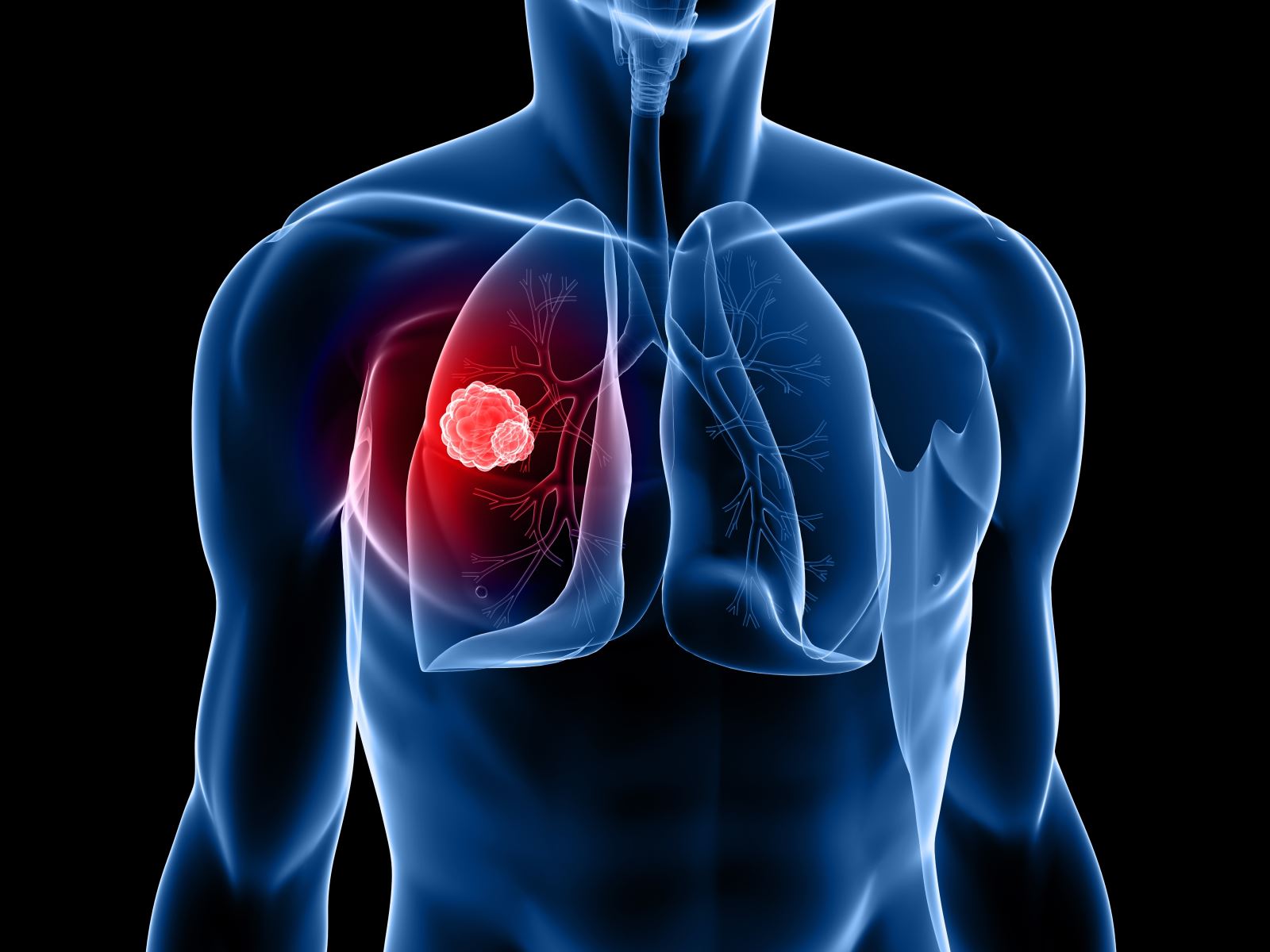
Lung cancer is a disease in which uncontrolled abnormal cell growth begins in the lungs. Lung cancer is a type of cancer that begins in the lungs. Your lungs are two spongy organs in your chest that take in oxygen when you inhale and release carbon dioxide when you exhale. Lung cancer begins in the lungs and may spread to lymph nodes or other organs in the body, such as the brain. Cancer from other organs also may spread to the lungs.  Lung cancer is the leading cause of cancer deaths worldwide. People who smoke have the greatest risk of lung cancer, though lung cancer can also occur in people who have never smoked. The risk of lung cancer increases with the length of time and number of cigarettes you’ve smoked. If you quit smoking, even after smoking for many years, you can significantly reduce your chances of developing lung cancer.

Causes of Lung Cancer:

  • Radon, a radioactive gas found naturally in soil and rocks
  • Smoking
  • Asbestos
  • Mineral and metal dust
  • Air pollution
  • Radiation treatment to your chest or breast
  • HIV/AIDS

Symptoms of Lung Cancer

Lung cancer typically doesn’t cause signs and symptoms in its earliest stages. Signs and symptoms of lung cancer typically occur when the disease is advanced. The symptoms are as follows

  • Chest pain that worsens when you breathe deeply, laugh, or a cough.
  • Hoarseness
  • A lingering or worsening cough
  • Shortness of breath
  • Wheezing
  • Weakness and fatigue
  • Loss of appetite and weight Loss
  • Coughing up phlegm or blood
  • Muscle Weakness
  • Nausea
  • Vomiting
  • High blood pressure and High blood sugar
  • Confusion
  • Coma

Prevention

  • Stop smoking. Stop smoking now. Quitting reduces your risk of lung cancer, even if you’ve smoked for years. Talk to your doctor about strategies and stop-smoking aids that can help you quit. Options include nicotine replacement products, medications and support groups.
  • Avoid secondhand smoke. If you live or work with a smoker, urge him or her to quit. At the very least, ask him or her to smoke outside. Avoid areas where people smoke, such as bars and restaurants, and seek out smoke-free options.
  • Avoid carcinogens at work. Take precautions to protect yourself from exposure to toxic chemicals at work. Follow your employer’s precautions. For instance, if you’re given a face mask for protection, always wear it. Ask your doctor what more you can do to protect yourself at work. Your risk of lung damage from workplace carcinogens increases if you smoke.
  • Eat a diet full of fruits and vegetables. Choose a healthy diet with a variety of fruits and vegetables. Food sources of vitamins and nutrients are best. Avoid taking large doses of vitamins in pill form, as they may be harmful. For instance, researchers hoping to reduce the risk of lung cancer in heavy smokers gave them beta carotene supplements. Results showed the supplements actually increased the risk of cancer in smokers.
  • Exercise most days of the week. If you don’t exercise regularly, start out slowly. Try to exercise most days of the week.

NEGOTIATION AND HOW IT ACTS BENEFICIAL

What is Negotiation

Negotiation is a very wide term which is essential everywhere.

It is not restricted within the boundaries of an organisation but is important and can be seen in our daily life.

It is a mode by which people resolve their differences.

It is a method by which adjustment or compromise is reached while avoiding quarrel or conflict.

Negotiation refers to an activity of discussing and convincing an individual, a party or a group of people to reach a state of mutual acceptance to decide or agree something.

How is Negotiation Fruitful

· Avoids disputes or arguments

· Gives a brief about strengths, weaknesses and mindset of parties involved.

· All the parties agree to compromise

· Mutual acceptance among parties

· Concludes reaching some form of settlement

· Results in best possible deals

OSCAR WILDE’S 🏆:

⭐Osar wild’s ‘The Model Millionaire’ gives a philanthropic (love for charity) view of life through his two characters,Hughie and The Baron.
⭐Hughie was a good looking youth who captivated (attracted) all with his clear profile, get eyes and crisp hair. He succeeded in everything but not in making money. This left him with two disadvantages- as a buoyant (delightful) handsome but ineffectual (worthless) youth ad not able to win hs lady love, Laura Merton’s hand in marriage. Laura’s father, retired Colonel was very frim that Hughie should prove his worth as a professional. Hughie should have ten thousand pounds of his own before he talked of engagement. Hughie could not forgive himself for his inability to do what the colonel wanted.


On his way to Holland Park one morning, he called on his friend, Alan Trevor, a painter. Trevor was quite unlike Hughie. He had a freckled face with a red ragged beard. But with his brush,he could produce portraits(sketches) that fetched him a good price.
⭐ Hughie found Trevor was about the finish a life-size portrait of a beggar. The model was standing looking pathetic (pitiable) in a corner of the studio on a platform.
⭐The beggar stood leaning on a rough stick with a coarse brown cloak flung on hisshoulders, a pair of petched boots and a hat held out as if asking for alms(charity). The cloak and the hat were battered and tattered (worn-out). His wrinkled old face and parched dry skin would have wrung (to cause great distress) any body’s heart.


⭐ Hughie commented that it was sad that the model earned only a shilling for every hour and the painter earned a fortune for the painting.
⭐Just then Travor was called as the frame-maker had come to see him. Trevor told Hughie not to leave till his return.
⭐Hughie could not help feeling sorry for the begger who was resting on a ench during Travor’s abanse. He Haggard (miserable) appearane and forlorn (lonely, forsaken) expression touched Hughie. He found some Copper coins and a sovereign in his packet. He slipped the sovereign into the beggar’s hands and the man(the beggar) expressed his gratitude.


⭐Hughie left after Trevor returned.
⭐The following day,at Trevor’s place, Hughie was surprised to hear that the model was very much interested to know everything about him. But Hughie was not very happy when he heard that Travor had revealed Hughie’s financial (money) status. He told Hughie that the beggar was his friend, Baron Hausberg ,one of the richest men in Europe.
⭐ Learning the true identity of the beggar Hughie felt embarrassed that he had given him a sovereign out of pity. It made Trevor burst into laughter. Also it explained the model’s interested in Hughie.


⭐The following morning, Hughie had a visitor from Baron Hausberg. Hughie stammered (stuttered) out his apologies (sorry). A letter was handed over to him with the words “A wedding present to Hugh Erakine- Hughie and Laura — from an ‘old beggar’. Hughie was surprised to find a cheque for ten thousand pounds — the Money he had to show to Laura’s father.”
⭐When his friend Travor heard of this, he remarked :-“Millionaires model are rare enough— Model Millionaires are rarer still !


⭐ According to Alan Travor, a millionaire used to o dress richly and luxuriously and would seldom pose as a beggar for a portrait. But in Hughie’s case, a millionaire who could be referred as a model (an example) of magnanimity (generosity) was extremely uncommon. To pay the price of ten thousand pounds in exchange for a sovereign (all that Hughie had, then) showed the good – heart of a rich man.

❣Oscar Wilde’s short stories always have surprised end, ad also convey some philosophy of life.❣

Coronavirus: Impact of Covid 19 Second Wave in India; Vaccination Policy; Third Wave Predictions

After the devastation caused by first wave in 2020, Coronavirus cases rose sharply in April and May 2021 causing the Second Wave. While Government and Industry thought that they had gained control of the situation by January 2021, the second wave found us wanting for basic necessities such as oxygen and medical supplies. It appears that the second wave is on its way out with daily cases coming down from the peaks of 4 lakh cases in April 2021, but we have lost almost 4.0 lakh lives to COVID-19. With the hope that the situation will improve in coming months, a SBI report predicts third wave in August-September, 2021.

Lower GDP Growth
In the wake of Second Wave of Covid 19, many economists and ratings agencies have lowered their FY22 GDP forecast for India in just a matter of months. While India’s March quarter (Q4FY21) GDP growth improved, economists believe that the gains have been eroded by the second wave of the pandemic. In June, the State Bank of India (SBI) slashed the country FY22 growth forecast to 7.9 per cent from the earlier 10.4 per cent. 

Rise in Unemployment hits Poor Households
Rising unemployment has emerged as the biggest economic concern during the second Covid-19 wave as it has mostly affected the poorer sections of society. Data suggests that the pace of employment increased sharply in May as smaller firms cut jobs at the fast pace. Think tank Centre for Monitoring Indian Economy had confirmed that one crore Indians have lost jobs during the second wave and the numbers are still rising. 

Weak Consumer Demand Hits Industry
Lack of demand and poor consumer sentiments during the second wave are factors that will significantly make India’s economic recovery harder. Consumers are not in a mood to spend freely after second wave, given the health and financial emergencies that shocked the households. The combination of slow demand growth and lack of consumer confidence could significantly derail the economy as people are likely to remain hesitant for a longer period before they start spending on discretionary items.

Loan Defaults on Rise
This negative impact is evident in the official data on rising loan defaults and cheque bounces. All Banks have reported a rise in loan defaults and cheque bounces during the second wave. It is a clear sign that middle class Indians are struggling to manage debts and liabilities. Cheque bounces rate for loan repayments have doubled to over 20 per cent from the year-ago period while credit card defaults rose to 18 per cent, says a Reuters report. Many banks have indicated that retail loan defaults are likely to rise in the coming months. HDFC Bank’s CEO Sashidhar Jagdishan recently stated during an investor call that the bank may not have a “grip of what is happening for the first time in so many years.”

Rural India Hit Hard
The second wave has seen stricter and longer lockdowns in the rural parts of the country too. Most APMC Mandis were closed for operations at the peak of Second Wave. Due to the closure of Mandis, vegetable vendors, and processing industries have also been hit. The average wage growth for the agriculture sector for the period of November 2020 to March 2021 has reduced to 2.9 percent (2nd wave) from 8.5 percent in April to August 2020 (1st wave).

Government Takes Steps

Government of India has taken many steps to support the Indian economy and industry. Here are the key steps:

  • In March 2020, the Government announced a Rs 1.70 lakh crore-Pradhan Mantri Garib Kalyan Yojana (PMGKP) to protect the poor and vulnerable from the impact of the pandemic.
  • In 2020, the Union government released the ‘Aatmanirbhar Bharat’ package to boost the economy and the overall stimulus was estimated to be worth around Rs 27.1 lakh crore.
  • Government and the RBI also came out with a series of packages in a phased manner totalling around Rs 30 lakh crore, which is 15 per cent of the national GDP.
  • To boost consumption during the festival season, in October 2020, Government announced measures that were worth close to Rs 73,000 crore to stimulate consumer spending.
  • Aatmanirbhar Bharat Abhiyaan 3.0 unveiled in November 2020, ahead of Diwali, was worth Rs 2.65 lakh crore. Of the total amount, the maximum of Rs 1.45 lakh crore was allocated to give a boost to manufacturing activites.
  • In June 2021, Finance Minister Nirmala Sitharaman announced some fresh relief measures for the economy, the first such package after the second COVID-19 wave, focusing largely on extending loan guarantees and concessional credit for pandemic-hit sectors and investments to ramp up healthcare capacities. The government pegged the total financial implications of the package, which included some changes earlier supports, at ₹6,28,993 crore. Ms. Sitharaman announced an expansion of the existing Emergency Credit Line Guarantee Scheme (ECLGS) by ₹1.5 lakh crore. She also announced a new ₹7,500 crore scheme to guarantee loans upto ₹1.25 lakh to small borrowers through micro-finance institutions.

COVID-19 Vaccination in India
On 16 January 2021 India started its national vaccination programme against the COVID-19 pandemic. The drive initially prioritises healthcare and frontline workers, and then those over the age of 60, and then those over the age of 45 and suffering from certain comorbidities.

A new policy for Covid-19 vaccination in India come into effect on June 21. Prime Minister Narendra Modi had said India will shift to centralised procurement of vaccines, after several states faced difficulties in procuring and managing the funding of vaccines. Centre will directly procure 75 per cent of the doses manufactured by vaccine companies, and distribute this among the states, to be administered for free. Private hospitals will have exclusive access to the remaining 25 per cent.  

India’s Third Covid-19 Wave from August, Peak in September: SBI

Unfortunately, it looks like that Coronavirus pandemic is not over yet. India is expected to see the Third Wave of the Coronavirus Pandemic from August 2021 and it would reach its peak in September, a report by the State Bank of India (SBI) has projected. “Going by the current data, India can experience daily Covid-19 cases around 10,000 somewhere around the second week of July. However, the cases can start rising by the second fortnight of August,” the SBI report said. An SBI report, published in June, said a possible second wave could be “as severe as second,” though it also said the number of coronavirus related fatalities would be less than the corresponding figures due to the second wave.

COVID 19 – India to emerge stronger
While there is a short-term negative impact on India, economists are of the opinion that the disruption caused by the virus in China could pave way for more long term foreign investments in emerging economies like India as the world looks to reduce dependency on China, the largest manufacturing hub in the world. Experts feel that India has a good chance of becoming an attractive manufacturing hub given the present situation, provided the government changes some of its trade policies to bring down commodity prices. An example of Vietnam, which has gained a huge growth boost due to higher density of electronics manufacturing, is before everyone.

According to the Chief Economic Advisor of India, Krishnamurthy Subramanian the coronavirus outbreak in China provides an opportunity for India to expand exports. India is one of China’s leading trade partners in Asia and has a huge trade deficit with that country. Sharing his views at IIM Calcutta, Subramanian said, “The coronavirus outbreak in China provides a good opportunity to India to expand trade and follow an export-driven model.”  He said that China imports a lot of components, parts, assembles and integrates and then exports them. “India has been following the same pattern in terms of mobile manufacturing in the country. So, if one looks from this perspective, it provides a good opportunity for India.” said Subramanian
 

Several reforms passed by Parliament since the pandemic set in, could lift medium-term growth prospects, including the Agricultural Reforms to give farmers more flexibility over where to sell their produce, it said. Stripping out middlemen, as the reform allows, could improve farmer incomes while reducing consumer prices.

Parliament has also passed Labour Reforms. Their intent, among other things, is to improve worker access to social security notably in the large unorganised sector, strengthen occupational safety requirements, speed up the resolution of labour disputes and ease migrant workers’ ability to move between states. In addition, employers will now only need prior state government approval for redundancies if they have over 300 workers, up from 100 previously, and state governments may raise this threshold. “These changes could support formalisation of India’s labour market and improve its flexibility, with positive efficiency gains, but our assumption is that in practice their impact will be modest,” experts added.

The government also intends to privatise some state-owned enterprises, of which more than 200 are owned by the central government and 800 by state governments. A wide-ranging privatisation push could be transformative, it said. Fitch said the process of reforms in India remains especially complex and implementation at times has proven difficult.  

India – the Pharmacy Capital of the World

Let’s start with some numbers that prove India’s global stature.

  1. Indian pharmaceutical sector supplies over 50% of the global demand for various vaccines, 40% of the generic demand for US and 25% of all medicines for UK.
  2. India contributes the second largest share of pharmaceutical and biotech workforce in the world.
  3. India’s domestic pharmaceutical market turnover reached Rs. 1.4 lakh crore (US$ 20.03 billion) in 2019, up 9.8% y-o-y from Rs. 1.29 lakh crore (US$ 18.12 billion) in 2018. In May 2020, pharmaceutical sales grew 9% y-o-y to Rs. 10,342 crore (US$ 1.47 billion).
  4. Indian drugs are exported to more than 200 countries in the world, with US being the key market. Generic drugs account for 20% of the global export in terms of volume, making the country the largest provider of generic medicines globally.
  5. The Indian pharmaceutical exports, including bulk drugs, intermediates, drug formulations, biologicals, Ayush & herbal products and surgical, reached US$ 16.28 billion in FY20. As of October 2020, India exported pharmaceuticals worth US$ 13.87 billion in FY21.
  6. Pharmaceutical exports from India stood at US$ 16.28 billion in FY20 and US$ 2.07 billion in October 2020.
  7. Medical devices industry in India has been growing 15.2% annually and is expected to reach US$ 8.16 billion by 2020 and US$ 25 billion by 2025.

Government’s Pharma Vision
The Union Cabinet has given its nod for the amendment of existing Foreign Direct Investment (FDI) policy in the pharmaceutical sector in order to allow FDI up to 100% under the automatic route for manufacturing of medical devices subject to certain conditions.

The drugs and pharmaceuticals sector attracted cumulative FDI inflow worth US$ 16.86 billion between April 2000 and September 2020 according to the data released by Department for Promotion of Industry and Internal Trade (DPIIT).

Some of the recent developments/investments in the Indian pharmaceutical sector are as follows:

  1. In December 2020, Piramal Pharma Solutions announced plans to invest Rs. 235 crore (US$ 32 million) to expand its facility in Michigan, US, with additional capacity and new capabilities for development and manufacturing of active pharmaceutical ingredients (APIs).
  2. In November 2020, Indian Immunologicals (IIL) commenced work on Rs. 75 crore (US$ 10.17 million) viral antigen manufacturing facility in Genome Valley, Telangana, that will enhance its vaccine production capacity by 35% by October 2021.
  3. In November 2020, the Indian Institute of Technology (IIT) Bombay has stepped up research and development (R&D) amid COVID-19 and researchers are developing products such as a portable sterilisation device and germicidal cabinet; wheeled sterilisation unit, especially for hospitals; portable and rechargeable car sanitiser; eco-friendly sprays, and alcohol-free and bleach-free sanitisers.
  4. In October 2020, six generic drug makers–Dr. Reddy’s Laboratories, Zydus Cadila, Glenmark Pharmaceuticals, Torrent Pharmaceuticals, Hetero Drugs and Ackerman Pharma signed a deal with Hidalgo,a state in Mexico, to establish a large pharmaceutical cluster for production and logistics in Mexico.
  5. In October 2020, Aurobindo Pharma acquired MViyeS Pharma Ventures for Rs. 274.22 crore (US$ 37.30 million).
  6. In May 2020, Jubilant Generics Ltd entered into a non-exclusive licencing agreement with US-based Gilead Sciences Inc to manufacture and sell the potential COVID-19 drug Remdesivir in 127 countries, including India.
  7. Affordable medicines under Pradhan Mantri Bhartiya Janaushadhi Pariyojana (PMBJP) achieved record sales turnover of Rs 52 crore (US$ 7.38 million) in the month of April 2020.
  8. During December 2019, on moving annual total (MAT) basis, industry growth was at 9.8%, with price growth at 5.3%, new product growth at 2.7%, while volume growth at 2% y-o-y.
  9. In October 2019, Telangana Government proposed Hyderabad Pharma City with financial assistance from the Central government of Rs 3,418 crore (US$ 489 million).
  10. In September 2020, the government announced production linked incentive (PLI) scheme for the pharmaceutical industry worth Rs. 15,000 crore (US$ 2.04 billion).
  11. Under Budget 2020-21, Rs. 65,012 crore (US$ 9.30 billion) has been allocated to the Ministry of Health and Family Welfare is. The Government has allocated Rs. 34,115 crore (US$ 4.88 billion) towards the National Health Mission under which rural and urban people will get benefited.
  12. Government of India unveiled ‘Pharma Vision 2020’ to make India a global leader in end-to-end drug manufacture. Approval time for new facilities has been reduced to boost investment.

Indeed, above achievements are commendable for Indian pharma sector. However, there has been criticism too. 

From the ‘pharmacy of the world’ to the ‘epicentre of the coronavirus pandemic’,

From the ‘pharmacy of the world’ to the ‘epicentre of the coronavirus pandemic’, India’s fall has been swift and dramatic. Newspapers across the world have criticised India as the second wave of the pandemic unfolds.

During the first wave in 2020, India was better off than countries such as Italy, the United States, and Brazil. India’s handling of the pandemic in 2020 won praise and was a pleasant surprise. Thanks partly to a strict lockdown and perhaps because of its demographic advantage, India managed much better than even developed countries. India played true to its strength as the ‘pharmacy of the world’, sending medicines and vaccines to many countries, thus winning goodwill and praise globally.

However, the second wave of the pandemic in 2021 has caught India unawares. The epic proportion of the tragedy has affected India’s international reputation at several levels.

First, the second wave has exposed the limitations of our health infrastructure (the result of years of inadequate allocation by successive governments), raising questions about the domestic capabilities. India spends just over 1 percent of its GDP on public health, a far cry from the 16 percent spent by the US and 10 percent by Japan, Canada, France, Germany, and Switzerland.

Second, questions are being asked about the advisability of sending vaccines and medicines abroad without ensuring domestic supplies first. Third, with India putting restrictions on exports of vaccines and medicines, other countries may face shortfalls in their supplies and could accuse India of being an undependable supplier. German Chancellor Angela Merkel’s rather un-empathetic statement that the European Union ‘allowed’ India to become such a large pharmaceutical producer and her concern about what could happen if supplies do not reach the West reflects the unhappiness of countries which have relied on Indian supplies.

Finally, the longest-term damage to India’s reputation will depend on how badly the pandemic affects India’s economy and its potential to provide basic needs to its populace. If it fails to do this, it could say goodbye to its dreams of becoming the next great power. India has already had to accept assistance from abroad despite its 2004 policy of not taking such help.

But some positives amidst all this. Perhaps, it is India’s generosity which has led to the outpouring of help from so many countries with leaders like the US President Joe Biden tweeting that “India was there for us, and we will be there for them” recalling India’s generosity to the US when it was facing a crisis.

Privatization of Public Sector in India: A right step or selling family silver?

Privatization of Public Sector: Key facts
Generally speaking privatization is a way of altering the relationship between the state and the private sector to enhance the role of the private sector in the functioning of the national economy as a whole. Accordingly, privatization broadly means any process that reduces the state’s dominant role in directly owning and running the economic activities of a nation. Many countries like China with state controlled economies have gone far enough to open the doors of economies to invite private players to achieve faster growth rate.  The craze for privatization has risen manifold after the ideological defeat and disintegration of the state controlled economy of the socialist bloc.

In a country like India, Privatization in today’s concept is seen as a means of increasing output, improving quality, reducing unit costs, curbing public spending and raising cash to reduce public debt. 

Privatization of Public Sector: Need of the Hour
As PM Modi says, Privatization is the need of the hour. As the world economy tends to become one global village, privatization as a policy norm seems to override political compulsions as an instrument for achieving competitive efficiency and resource optimization.

Privatization is beneficial for the growth and sustainability of the state-owned enterprises. Following the trend of privatization across the world, the Indian government in the 1990s also introduced privatization amid hue and cry from many of the political and social groups.

To achieve an increase in the output of the country there is a need for privatization at a rapid scale which will help in improving quality of the products by reducing unit costs, curbing public spending and raising cash to reduce public debt.

Privatisation always helps in keeping the consumer needs uppermost, it helps the governments pay their debts, it helps in increasing long-term jobs and promotes competitive efficiency and open market economy. In a rapidly rising economy like India there is a need for the government to realign its priorities in mobilizing the skills and resources of the private sector in the larger task of the development.

Nowadays privatization is being seen as a solution towards the problems of public enterprises as these enterprises on being transferred from the public to the private hands will become less politicized which as a result will help in ceasing the administrative corruption. It will also help n increasing the tax revenues from profits   and strengthening the public treasury.  The advantages of privatization can be perceived from both microeconomic and macroeconomic impacts that privatization exerts.

Indian economy has a tremendous potential for growth. The economy which used to rise at 3-4% of GDP had steadily registered rising growth from 7 to 9 percent after introduction of reforms.

Privatization will give ample space for creative and innovative thinking as well as systematic and strategic planning to realize the full potential of economy 

Privatization: Adverse Impact
However, some economists point to the adverse effect of privatization. They offer following arguments:

  • No Welfare State: The concept of welfare state may get defeated with the Privatization of economy. Private sector would not care about the society as its main objective is to earn profits.
  • Less Social Development: Government or Public sector companies also keep doing social work simultaneously. In case privatization happens, it will result in fewer funds for society because private companies have no obligation to do social work.
  • Unemployment: Privatization will also result in retrenchment of employees. In private sector enterprises there is emphasis on performance which indirectly results in work pressure and meeting deadlines or targets and individuals who have been doing work for years without much pressure find it difficult to adjust to new setting and many end up resigning from their service.
  • Long Term Risk: Risk of short term gains is prominent in private companies. There are decisions to start ventures which result in short term benefits but may not be good for long term.

A NECESSARY REVOLUTION.

An incapable, corrupted Government has always been considered a major reason for shortcomings in growth of our country. Innumerable debates are regularly put forward by citizens, officials, media and opposition against the decisions and steps taken by existing government. Despite the presence of years of mistrust and distress between Indian Government and it’s citizens, the Commencement of governance of Narendra Modi enlightened a ray of hope within the residents. Ever since, Mr. Narendra Modi came into power he has constantly been into the limelight , be it for his appreciable deeds or sometimes the trolled one. But one fact about his rule within all this time has remained common. That is., CHANGE which not just included some petite conclusions of his’s but a big bowl of immensely astonishing and striking shocks for whole of the Country. And here came yet another tremendous move by BJP ( Bhartiya janta party) officials. A wholesome Cabinet Reshuffle and expansion of PM Narendra Modi led government took place a few days back.

Image source

Descriptions In Detail

On 7th July, 2021. A total of 43 ministers in the Union Cabinet expansion took an oath at the Rashtrapati Bhavan. The President Of India Mr. Ramnath Govind welcomed a great number of new ministers as well as rearranged positionings of various existing Council of ministers. Along with that, a major buzz was created at the news of resignation by Ministers of Four one of the most important departments including Health Minister Harsh Vardhan, Chemicals and Fertilizers Minister D V Sadananda Gowda, Labour Minister Santosh Gangwar and Education Minister Dr Ramesh Pokhriyal Nishank. The reports state that PM modi now has 77 nee ministers and almost around half of them i.e. 36 ministers are new to the ministry. BJP has now set a record of having highest number of members from Other backward classes, by inculcating about 27 members from Other backward classes out of which 12 belong to SC/ST castes. Each of these members belong to different origins and category of classes. According to a reliable source, the council will now have a sum of 11 females too.Out of all these members, 68 ministers are graduates and Professionals comprising of 13 lawyers, 6 doctors, 5 engineers, 7 Civil Servants, 7 Phd holders and 3 MBAs. Another fact is that under this list the minimum age of a minister has decreased upto 38-40 years old.

Here’s the complete List of all the reshuffled ministers with the positions assigned to them;

Cabinet Ministers

1. Narayan Rane

2. Sarbananda Sonowal : Ports and Shipping, AYUSH Ministry.

3. Dr Virendra Kumar

4. Jyotiraditya Scindia : Civil Aviation.

5. Ramchandra Prasad Singh : Steel Ministry.

6. Ashwini Vaishnav : Railways, Communication & Electronics and Information Technology.

7. Pashu Pati Kumar Paras: Minister of Food Processing Industries.

8. Kiren Rijiju : Law and Justice Ministry.

9. Raj Kumar Singh : Power and Ministry of New and Renewable Energy.

10. Hardeep Singh Puri : Petroleum, Housing and Urban Development.

11. Mansukh Mandaviya : Chemicals and Fertilizers, Health Ministry.

12. Bhupender Yadav

13. Parshottam Rupala

14. G Kishen Reddy

15. Anurag Thakur : Information & Broadcasting and Sports.

Ministers of States

16. Pankaj Choudhary (Minister of State in the Ministry of Finance) .

17. Anupriya Singh Patel (Minister of State in the Ministry of Commerce and Industry).

18. Satya Pal Singh Baghel (Minister of State in the Ministry of Law and Justice).

19. Rajeev Chandrasekhar (Entrepreneurship; and Minister of State in the Ministry of Electronics and Information Technology).

20. Shobha Karandlaje (Minister of State in the Ministry of Agriculture and Farmers Welfare).

21. Bhanu Pratap Singh Verma (Minister of State in the Ministry of Micro, Small and Medium Enterprises).

22. Darshana Vikram Jardosh (Minister of State in the Ministry of Textiles; and
Minister of State in the Ministry of Railways).

23. Meenakshi Lekhi (Minister of State in the Ministry of External Affairs; and
Minister of State in the Ministry of Culture).

24. Annpurna Devi (Minister of State in the Ministry of Education).

25. A Narayanaswamy (Minister of State in the Ministry of Social Justice and Empowerment).

26. Kaushal Kishore (Minister of State in the Ministry of Housing and Urban Affairs).

27. Ajay Bhatt (Minister of State in the Ministry of Defence; and Minister of State in the Ministry of Tourism).

28. BL VermaMinister of State in the (Ministry of Development of North Eastern Region; and Minister of State in the Ministry of Cooperation).

29. Ajay Kumar (Minister of State in the Ministry of Home Affairs).

30. Chauhan Devusinh (Minister of State in the Ministry of Communications).

31. Bhagwanth Khuba (Minister of State in the Ministry of New and Renewable Energy; and Minister of State in the Ministry of Chemicals and Fertilizers).

32. Kapil Moreshwar Patil (Minister of State in the Ministry of Panchayati Raj).

33. Pratima Bhoumik (Minister of State in the Ministry of Social Justice and Empowerment).

34. Subhas Sarkar (Minister of State in the Ministry of Education).

35. Bhagwat Kishanrao Karad (Minister of State in the Ministry of Finance).

36. Rajkumar Ranjan Singh (Minister of State in the Ministry of External Affairs; and Minister of State in the Ministry of Education).

37. Bharati Pravin Pawar (Minister of State in the Ministry of Health and Family Welfare).

38. Bishweswar Tudu (Minister of State in the Ministry of Tribal Affairs; and
Minister of State in the Ministry of Jal Shakti).

39. Shantanu Thakur (Minister of State in the Ministry of Ports, Shipping and Waterways).

40. Dr Munjapara Mahendrabhai (Minister of State in the Ministry of Women and Child Development; and Minister of State in the Ministry of AYUSH).

41. John Barla (Minister of State in the Ministry of Minority Affairs).

42. Dr L Murugan (Minister of State in the Ministry of Fisheries, Animal Husbandry and Dairying; and Minister of State in the Ministry of Information and Broadcasting).

43. Nishith Pramanik (Minister of State in the Ministry of Home Affairs; and Minister of State in the Ministry of Youth Affairs and Sports).

Everything Have it’s Pros and Cons

According to a reliable source, A new report formed by the Association of for Democratic reforms (ADR) poll rights group says, that out of these new team of ministers 42% that is., 33 ministers have had Criminal cases against them. Out of these 24 have declared serious cases against them inclusive of murder, attempt to murder and robbery. Moreover, 90% of them are into Millionaires they hahavtotal assets amounting to 1 crore and above. While this huge step and the positive points about even distribution of authorities within ministers gave hopes for better growth opportunities, the ADR reports yet again drag down the expectations. However, Future is unpredictable and so is the Government. Thus, all left with common man to do is await and pray for decisions to work in their favour.

Is FDI Good for Indian Economy?

Foreign direct investment (FDI) is an investment made by a firm or an individual into business interests located in another country. Generally, FDI takes place when an investor establishes foreign business operations or acquires foreign business assets, including establishing ownership or controlling interest in a foreign company. It frequently involves more than just capital investment. It may include provisions of management or technology as well. The key feature of FDI is that it establishes either effective control of, or at least substantial influence over, the decision-making of a foreign business. 

FDI Categorization
FDI is commonly categorized into horizontal, vertical or conglomerate. A Horizontal FDI is when the investor establishes the same type of business operation in a foreign country. A Vertical FDI is when different but related business activities from the investor’s main business are established or acquired in a foreign country. A Conglomerate FDI is when a company or individual makes a foreign investment in a business that is unrelated to its existing business in the home country. It is mostly in the form of a joint venture.

Rising Trend of FDI in India
India is a developing nation, trying to make its way up the ladder in the world economy. To achieve its goal, it requires influx of investment, both national and international. Foreign nations often keep an eye on fast-growing economies and are keen to invest in markets where they expect great interests in the future. India allows FDI through two routes- Automatic and Government. Where in automatic route, no prior approval is required, the government route cannot be accessed without approval from Government of India.

The Government of India amended FDI policy in 2014 to increase the inflow of FDI. FDI in 25 sectors was increased to up to 100% along with up to 49% in insurance sector. Following this, India became the top destination for FDI overtaking China and USA. The sectors that cannot avail FDI include lottery business, chit funds, casinos, Nidhi companies, real estate, railways and a few others.

According to 2018 data, the main investor in India is Singapore, comprising 38.3% of the total FDI followed by Mauritius at 18.2%, Netherlands at 8.8% and USA at 7.1%. Other investors include Japan, UK, Germany, France, UAE and Cyprus. The main sectors availing these investments are chemical sector, accounting for 23.5% of the FDI, followed by services sector at 22.7% and computer software and hardware at 18.6%.

FDI helping to Boost Economy

  • Revenue Generation

Sometimes, when a giant venture is to be started, capital is hard to come by. At such times, FDI comes in handy as a saviour and provides with necessary revenue to meet the initial infrastructural demands required for a project. For example, in May 2018, Walmart acquired a 77 per cent stake in Flipkart for a consideration of USD 16 billion while in February 2018, Ikea announced its plans to invest up to Rs 4,000 crore (USD 612 million) in the state of Maharashtra to set up multi-format stores and experience centres.

  • Employment Generation

India is teeming with a wide work force but not enough jobs. When multi national businesses are established, it leads to job creation which the indigenous industries are not able to provide on such a wide scale. According to a report in the Business Today magazine, between 2000 and 2016, British FDI created 371,000 jobs. 10 per cent of all jobs created by FDI. The total number of people employed by British companies in India currently stands at 788,000-representing 5.3 per cent, or one in twenty, of private sector jobs.

  • Getting Latest Technology

Though India is developing, it still does not have access to cutting edge technology which comes in handy when working in collaboration with foreign businesses as they tend to bring in latest technology to maintain the quality of the products and services provided by them. It helps to get the products with latest technology. Moreover, it also opens up doorways to research opportunities in the concerned field on the domestic front. FDI in manufacturing sector often helps with the setup as well as better quality of product manufactured.

  • Cultural Exchange

Working shoulder-to-shoulder with people from different cultural backgrounds helps everyone evolve and develop a sense of comfort in any atmosphere if they have to live in it. Multinational businesses offer an opportunity of a multilevel cultural exchange which cannot be seen otherwise. It leads to a certain level of acceptability for the different cultures all over the world.

  • Infrastructure Development

With International brands pouring in to the domestic country, there is scope for better infrastructure, be it in the field of education, health care, information technology, constitutional bodies, construction of rail, road, vehicles among others. FDI also helps to make the Indian infrastructure at par with the facilities available in foreign countries.

In June 2018, Idea’s appeal for 100 per cent FDI was approved by Department of Telecommunication (DoT) followed by its Indian merger with Vodafone. This merger made Vodafone Idea the largest telecom operator in India resulting in better overall reach of the company.

  • Price Reduction

Better technology may further lead to a reduction in prices of the produced goods which in turn benefits the consumers. Moreover, when a new product is brought into the market, new research and development in the field will definitely lead to better price ranges for consumers in the future. Thus, FDI benefits consumers by reducing prices of goods and services in the long run.

  • Healthy Competition

With addition of a foreign player in the market, each company strives to do its best, thus increasing the healthy competition in market and in turn benefitting the customer. This benefit may come in form of a variety of products, reduced prices or introduction of a product that was not available in the domestic market before.

Harmful Impact of FDI

FDI Hinders Economic Growth so we should not over rely on FDI. Here are some of the logical arguments:

  • Foreign Investors are Volatile

Investors run after profit. If they see a better opportunity elsewhere, they may shift their interests as well as their investment to the better prospect in a heartbeat without any lieu of the consequences on the economy of the host country unless prior contracts have already been signed. This brings in the uncertainty factor when looking for FDI. This cancellation of contracts may in turn lead to devaluation of Rupee and a financial crisis at hand.

  • FDI Creates Imbalance

FDI is often concentrated either in the richer states of India or in the high skill sectors. This imbalance leads to a probable increase in the economic gap between the rich and the poor. FDI projects are often concentrated to already well-developed states like Delhi, Gujarat, Maharashtra while less developed states like Bihar and Jharkhand are left behind once again thus, increasing the regional economic gap further. Apart from this, in the current scenario, FDI focuses on service sector where skilled labour is required, but the brunt of our problems lie in the majority of unskilled and semi-skilled labour. FDI in sectors like construction, manufacturing and textiles should be further encouraged in order to create more jobs for them.

  • Tax Evasion

Profit-shifting behaviour among MNCs is induced by the huge tax arbitrage between jurisdictions. While the average effective corporate tax rate in China, Brazil and India ranges from around 17% to 32%, it is much lower in the tax havens of the world like Bermuda, Luxembourg and Netherlands. Corporate tax evasion is an issue that is even faced by the developed nations like US and UK and is thus something that India should take into consideration.

India has committed to the implementation of the Base Erosion and Profit Shifting (BEPS), according to a recent update by Ernst and Young. India has adopted the “country-by-country” reporting norms, which means that large MNCs will be mandated to disclose information about the entire group’s operations across the world to check if the company is shifting its profits to a low-tax jurisdiction to evade taxes

  • FDI Causes Money Laundering

Sometimes, proceeds of criminal activities may be used in FDI as a front to cover it up and set up legitimate businesses. The recent case of Air Asia is indicative of how lobbying can be a major factor that can hinder a business in the long run.

  • FDI harms Domestic Companies

When foreign companies open their businesses in the domestic market, they often have lower prices for products than the indigenous product prices which harms the local businesses to a certain extent. Sometimes, it may even make it hard to survive for the local businesses among the bounty of cheap products due to well-established infrastructures. FDI in retail also harms the local merchants.

  • Possibility of Inflation

There is also a possibility of inflation with prolonged increase in FDI which in turn causes better incomes, more expenditure by consumers. If this expenditure is balanced in form of an increased supply of goods required according to the demand, the inflation caused will be indicative of a progressing economy where as if the incomes increase without any change in availability of products for consumers, the inflation will be detrimental to the economy. For example, if the foreign borrowings were in the form of armaments, which are of no use to the common man, the economy may suffer.

  • Increase in Dependency

When FDI is availed, the host country often works on the foreign timeline and is dependent on the investing country for almost all of its operations from initial capital to laying of infrastructure to the way the business is to be carried forward. This increases dependency on foreign players and is often detrimental to the host country’s economy. For example, looking at the Mumbai-Ahmedabad Bullet Train Project, major funding is to be provided by Japan International Cooperation Agency (JICA). JICA till now had released only Rs 125 crore for the project out of the Rs 80,000 crore to be provided by JICA for the project. The project would cost roughly 1 lakh crore. This delay in funding is one of the causes for the delay of the project.

  • Political Involvement

Political parties often try to direct the inflow of FDI for personal benefits which leads to obstacles in the nation’s development and create controversies that if not resolved hamper the rate of economic progression. The most recent case of such a controversy is the Rafale Deal with France’s Dassault Aviations. The opposing party claimed that the ruling party (NDA) has made the deal at triple the price. Although the Supreme Court gave a ruling in favour of NDA, the deal is still a matter of immense controversy.