India is moving towards a faster decade

With the introduction of 5G in Hyderabad and Bangalore, India has been able to get into the era of 5G. It is going to be a major change in the technological advancement in India. 

On the network front, the trials are still going on for 5G in some other parts of our country. There will be an introduction of 5G in the rest of the country also. The introduction will happen very soon. The telcos are currently busy giving the final ok to the network performance for a better experience for the public. 

Among all this, companies like BSNL have not been able to launch even 4G in our country. As the latest development, the contract has been given to TCS for the installation of the towers and the technology which will be taking care of the entire system. It will be the biggest order for a home-grown technical implementation in India. 

Now, the next phase for BSNL will be to launch the 5G services along with 4G as soon as possible. For that, the work is going on. It is expected that BSNL will launch 4G by December or January and 5G will be rolled out by August next year.

On the private telcos front, Jio is the one which has launched 5G in Hyderabad and Bangalore. Airtel is also working hard to launch the latest 5G network in the market. 

In the field of internet-related technology and especially equipment, there are some companies which are considered the world leader. The companies are Nokia, Ericsson and Huawei. 

https://unsplash.com/photos/eYwn81sPkJ8

So, if India becomes successful in developing the technology for implementing such revolutions in a country like India. Then, India will be one of the few countries that have been able to implement indigenous built technology in the country.

For those, who are not in touch with such development, the private telcos are planning to launch the services in the metro cities at first. After that, the rest of the country will be able to experience it. 

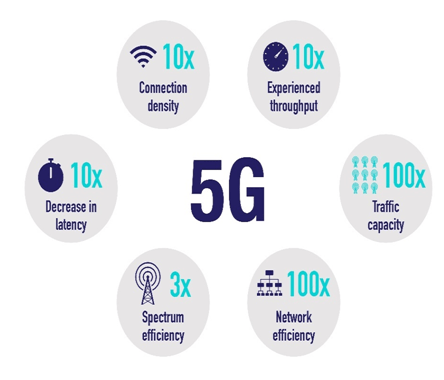
In case of advantages, 5G has better speeds than 4G. The network also provides a greater number of devices to be connected. The new network will also provide better stability than the previous generations.

These new implementations will also likely increase job opportunities in the tech field.

The new launch will also initiate more locally made technologies in the future. In recent times, even Tata has been able to get the opportunity to make iPhones in India.

There is also an initiative which will allow some companies to manufacture chips in our country. It is necessary as there is a shortage of chips in India. All of these changes will surely improve the scenario of the tech world in India.  There will also be some challenges to the implementation that the companies will have to tackle. It will also reveal some underlying concerns regarding the networks and the possible issues that the beta users will generally face during the trials. All of these factors will slowly disappear. Now, we will see how the 5G changes the face of our country. 
Japan to Counter china

Japan is stressed that US plans to pour billions of dollars into chip fabricating to battle off China might wrap up off what’s cleared out of a Japanese semiconductor industry that once overwhelmed the world.

After “three misplaced decades”, concurring to Japan’s industry service, the country’s share of worldwide chip fabricating has fallen from a half to a tenth because it spilled clients to cheaper rivals and fizzled to preserve a lead in cutting edge production.

As China and the Joined together States, driven by a exchange war and security concerns, incline up back for the fabricating of chips that run everything from smartphones to rockets, authorities stress Japan will be pressed out altogether. “We can’t just continue what we have been doing, we have to be do something on a totally distinctive level,” previous Prime Serve Shinzo Abe told individual administering LDP party individuals in May at a to begin with party assembly to examine how the nation can be a driving advanced economy.

Authorities fear that by attracting Asian chip foundry monsters such as Taiwan’s Semiconductor Fabricating Co (TSMC) to its soil, the Joined together States might entice these firms to follow.

“It’s conceivable for companies to construct in Japan and send out, but the closer you’ll be as a provider the superior, it’s simpler to trade data,” said Kazumi Nishikawa, executive of the IT industry at METI. While the move may not come instantly, “it seem happen over the long term,” he said.

The companies Nishikawa stresses almost incorporate wafer producers Shin-Etsu Chemical and Sumco photoresist provider JSR Corp and generation apparatus builders Screen Property and Tokyo Electron. “We are continuously arranged to reply to arrangement changes in each nation,” said a representative for JSR, which makes light delicate photoresist coatings utilized for etching chips in Japan, Belgium and the Joined together States. When inquired by Reuters, none of the companies said they right now arrange to move generation to the Joined together States.

To hold them, Japan needs chip foundries that will purchase their wafers, apparatus, and chemicals, and will moreover guarantee steady supplies of semiconductors for the country’s car companies and electronic gadget makers.

TSMC, which is looking to extend abroad in the midst of concern around the potential powerlessness of its Taiwan operations to terrain China’s regional aspirations, has set up a investigate and improvement middle close Tokyo. It is additionally looking into a arrange to construct a manufacture plant in Japan.

However, its greatest foreign venture by distant could be a $12 billion (roughly Rs. 89,140 crores) plant it is developing in Arizona within the Joined together States. In a offered to keep up within the innovation race, Prime Serve Yoshihide Suga’s government in June endorsed a procedure concocted by Nishikawa’s group at METI to guarantee Japan has sufficient chips to compete in advances that will drive future financial development, counting fake insights, high-speed 5G network, and self driving vehicles. One init

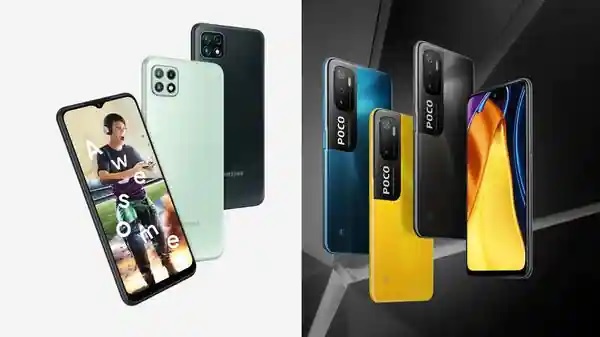
Samsung Galaxy A22 5G vs Poco M3 Pro 5G: Price, processor, specifications

Samsung just released the Galaxy A series, which includes its first 5G smartphone. In India, the Samsung Galaxy A22 5G was launched with the MediaTek Dimensity 700 processor. The Galaxy A22 5G has a 5,000mAh battery, a 90Hz display, and a 5G capability for around 20,000 rupees.

Poco M3 Pro 5G is another phone with the same chipset and 5G capability. It even costs ₹4,000 less than the Samsung Galaxy A22 5G and has been on the market for a few months.

Here’s how the two low-cost 5G smartphones with the same chipset match up against one another:

Performance

The MediaTek Dimensity 700 Processor is included in both the Samsung Galaxy A22 5G and the Poco M3 Pro 5G. The SoC has an octa-core arrangement and is built on a 7nm architecture.

The Dimensity 700 has been modified to operate the two high-speed cores at 2.2GHz and the remaining six cores at 2GHz on both phones.

Both phones are powered by a 5,000mAh battery, however, the Poco M3 Pro 5G’s battery may last longer due to the lack of a high refresh rate screen. The Samsung Galaxy A22 5G receives 15W charging, while the Poco phone supports 22.5W fast charging and comes with an 18W charger.

Memory and storage

The Samsung Galaxy A22 5G comes with 8GB of RAM and 128GB of internal storage in a single memory configuration. Poco M3 Pro 5G, on the other hand, comes in two versions: one with 4GB RAM and 64GB storage, and another with 6GB RAM and 128GB storage. The 4GB model of the Poco M3 Pro was released later.

Camera

Both phones feature a triple camera setup on the back and a single selfie camera on the front. A 48MP main camera, as well as 5MP and 2MP sensors, manage photography on the Samsung Galaxy A22 5G. The Poco M3 Pro, on the other hand, has a 48MP sensor and two 2MP sensors. Both phones have an 8-megapixel front camera.

Display

The Samsung Galaxy A22 5G has a 6.6-inch display with a resolution of 1080 x 2408. The screen has a refresh rate of 90Hz.

The screen of the Poco M3 Pro 5G is a 6.5-inch panel with a resolution of 2400×1080 pixels. It has an adaptive sync display with 30Hz, 50Hz, 60Hz, and 90Hz refresh rates.

Price

The Samsung Galaxy A22 5G has a single version that costs ₹19,999. The Poco M3 Pro 5G in 4GB trim costs ₹13,999, while the 6GB model costs ₹15,999.

5G Networking Technology

What is 5G Network?

In Telecommunications, 5G is the fifth generation technology standard for broadband cellular networks, which cellular phone companies began deploying worldwide in 2019, and is the planned successor to the 4G networks which provide connectivity to most current cell phones. 5G networks are predicted to have more than 1.7 billion subscribers worldwide by 2025, according to the GSM Association. Like its predecessors, 5G networks are cellular networks, in which the service area is divided into small geographical areas called cells. All 5G wireless devices in a cell are connected to the Internet and telephone network by radio waves through a local antenna in the cell.

In telecommunications, 5G is the fifth generation technology standard for broadband cellular networks, which cellular phone companies began deploying worldwide in 2019, and is the planned successor to the 4G networks which provide connectivity to most current cell phones. 5G networks are predicted to have more than 1.7 billion subscribers worldwide by 2025, according to the GSM Association. Like its predecessors, 5G networks are cellular networks, in which the service area is divided into small geographical areas called cells. All 5G wireless devices in a cell are connected to the Internet and telephone network by radio waves through a local antenna in the cell.

HOW DOES 5G WORK?

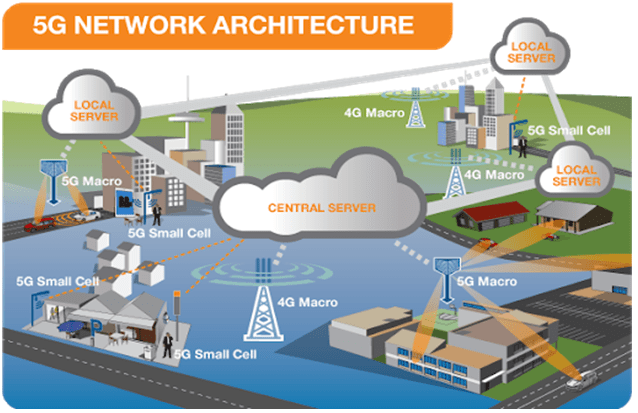
5G network architecture illustrating 5G and 4G working together, with central and local servers providing faster content to users and low latency applications.

A mobile network has two main components, the ‘Radio Access Network’ and the ‘Core Network’.

The Radio Access Network – consists of various types of facilities including small cells, towers, masts and dedicated in-building and home systems that connect mobile users and wireless devices to the main core network.

Small cells will be a major feature of 5G networks particularly at the new millimetre wave (mmWave) frequencies where the connection range is very short. To provide a continuous connection, small cells will be distributed in clusters depending on where users require connection which will complement the macro network that provides wide-area coverage.

5G Macro Cells will use MIMO (multiple input, multiple output) antennas that have multiple elements or connections to send and receive more data simultaneously. The benefit to users is that more people can simultaneously connect to the network and maintain high throughput.  Where MIMO antennas use very large numbers of antenna elements they are often referred to as ‘massive MIMO’, however, the physical size is similar to existing 3G and 4G base station antennas.

The Core Network – is the mobile exchange and data network that manages all of the mobile voice, data and internet connections. For 5G, the ‘core network’ is being redesigned to better integrate with the internet and cloud based services and also includes distributed servers across the network improving response times (reducing latency).

Many of the advanced features of 5G including network function virtualization and network slicing for different applications and services, will be managed in the core. The following illustration shows examples of local cloud servers providing faster content to users (movie streaming) and low latency applications for vehicle collision avoidance systems.

Example of a local server in a 5G network providing faster connection and lower response times

Network Slicing – enables a smart way to segment the network for a particular industry, business or application. For example emergency services could operate on a network slice independently from other users.

Network Function Virtualization (NVF) – is the ability to instantiate network functions in real time at any desired location within the operator’s cloud platform. Network functions that used to run on dedicated hardware for example a firewall and encryption at business premises can now operate on software on a virtual machine. NVF is crucial to enable the speed efficiency and agility to support new business applications and is an important technology for a 5G ready core.

When a 5G connection is established, the User Equipment (or device) will connect to both the 4G network to provide the control signalling and to the 5G network to help provide the fast data connection by adding to the existing 4G capacity.


Where there is limited 5G coverage, the data is carried on the 4G network providing the continuous connection. Essentially with this design, the 5G network is complementing the existing 4G network

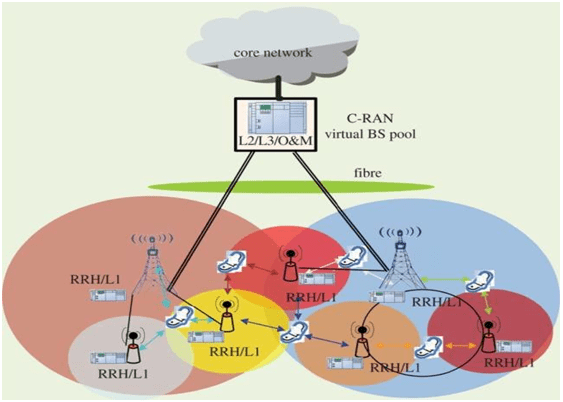
5G Configuration:-

Advantages of 5G Networking:-

High resolution and bi-directional large bandwidth shaping.

Technology to gather all networks on one platform.

More effective and efficient.

Technology to facilitate subscriber supervision tools for the quick action.

Most likely, will provide a huge broadcasting data (in Gigabit), which will support more than 60,000 connections.

Easily manageable with the previous generations.

Technological sound to support heterogeneous services (including private network).

Possible to provide uniform, uninterrupted, and consistent connectivity across the world.

Disadvantages of 5G Networking:-

Technology is still under process and research on its viability is going on.

The speed, this technology is claiming seems difficult to achieve (in future, it might be) because of the incompetent technological support in most parts of the world.

Many of the old devices would not be competent to 5G, hence, all of them need to be replaced with new one expensive deal.

Developing infrastructure needs high cost.

Security and privacy issue yet to be solved.

Conclusion

5G will be able to sustainably satisfy the requirement of the 1000-time traffic growth. 5G will provide users with fiber-like access data rate and “zero” latency user experience. 5G will be capable of connecting 100 billion devices.

ISRO’s GSLV 3.0 can boost 5G Dream Constellation : Super Exclusive !!!

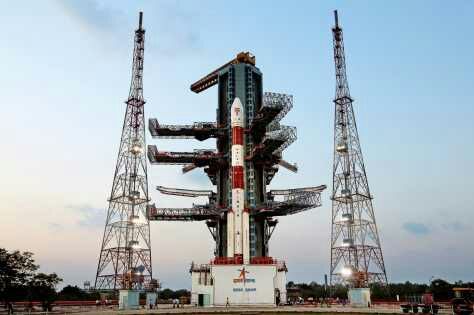
GSLV-F06 carrying GSAT-9 at the second launch pad” width=”660″ height=”auto” tw=”1200″ th=”801″ />In picture: The fully integrated GSLV-F06 carrying GSAT-9 at the second launch pad. India has long been yearning for uninhibited high-speed internet services, despite having the world’s second largest internet user base after China. The country has fallen behind numerous Asian countries in acquiring the fastest internet connectivity speeds due to infrastructure limitations and outdated satellite technology.

There is, however, some good news for the netizens of India as Indian Space Research Organisation (ISRO) has plans to introduce a new era of high-speed internet to the country with the launch of its three new communication satellites: GSAT-19 in June, followed by GSAT-11 and GSAT-20.

Credit : Third Party Reference

ISRO chairman Kiran Kumar said to Times of India (TOI):

We will launch three communication satellites. GSAT-19 in June and GSAT-11 and GSAT-20 thereafter. GSAT-19 will be launched by GSLV Mk III, Isro’s next-generation launch vehicle boosted by an indigenous cryogenic engine that is capable of carrying a four-tonne satellite to the geosynchronous transfer orbit. These satellites will use multiple spot beams (a special kind of transponder that operates on a high frequency) that will increase internet speed and connectivity. These multiple spot beams will cover the entire country.

Unlike the traditional broad beam, these new satellites will be using narrower beam known as “spot beam” which can travel faster and enable high-speed internet connectivity within a limited range of operation. As the name suggests, spot beams are concentrated high-power signals that can provide better signal reception within the specified boundaries and consequently the coverage will be limited.

The catch here is to reuse the beams multiple times over smaller areas, unlike the single broad beam sent across wider areas of coverage. The spot beams will not lose their signal strength which is the case with a single broad beam that has to travel longer distances and suffer from interference.

Tapan Misra (director of Ahmedabad-based Space Application Centre) sheds more light on the data-transfer speed comparison between the current-gen and next-gen GSAT satellites. Accordingly, the GSAT-19 is rated to be capable of reaching top data transfer speeds up to four gigabytes per second as opposed to existing data transfer speeds of one gigabyte per second. In other words, the GSAT-19 will offer a data transfer output which is equivalent to four existing GSATs and this output will be further multiplied with the use of up to eight beams.

The GSAT-11 (heavier version of GSAT-19) is touted to support up to 16 beams for a total attainable data transfer speed of 13 gigabytes per second. The GSAT-11 is expected to be launched by the end of 2017.

The GSAT-20 has a proposed launch set for the end of 2018 and it is expected to use two polarisations for each of its 40 beams. Thereby, it is expected to support a total of 80 beams for a net data throughput of 60-70 gigabytes per second. A recent report from the Internet and Mobile Association of India projects the country to reach a massive internet user-base of 450-465 million by June. In contrast, the country’s average connection speed is rated at a meagre 4.1Mbps.

Consequently, India has a lowly 105th position in the world’s fastest internet connectivity speed rankings behind other Asian countries, according to a recent survey report by a US-based cloud service provider. South Korea leads the pack with 26.3Mbps and followed by Hong Kong (20Mbps), Sri Lanka (6Mbps), Vietnam (6.3Mbps), and finally China (5.7Mbps).

Reference – divyanshspacetech.wordpresss.com